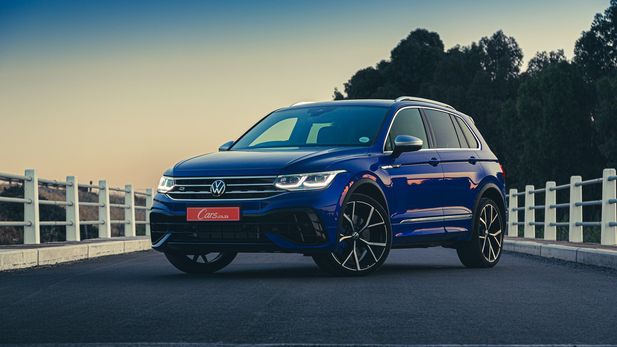
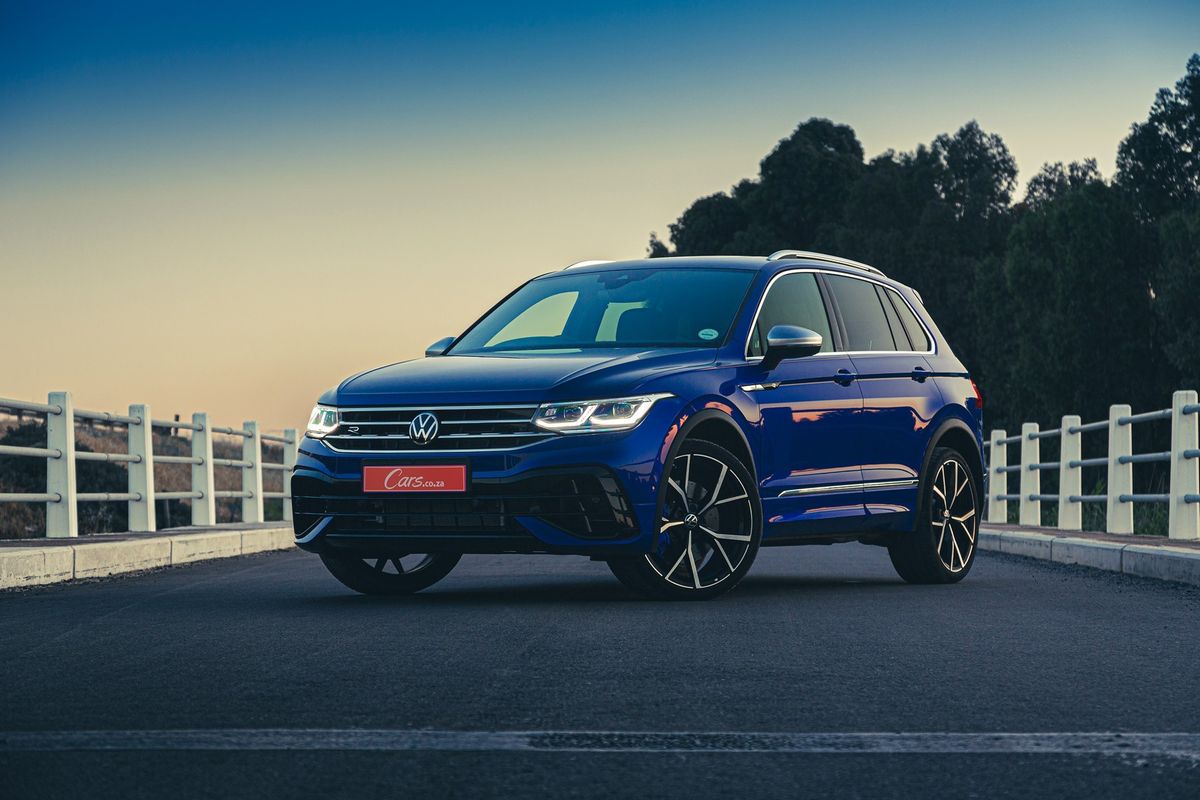
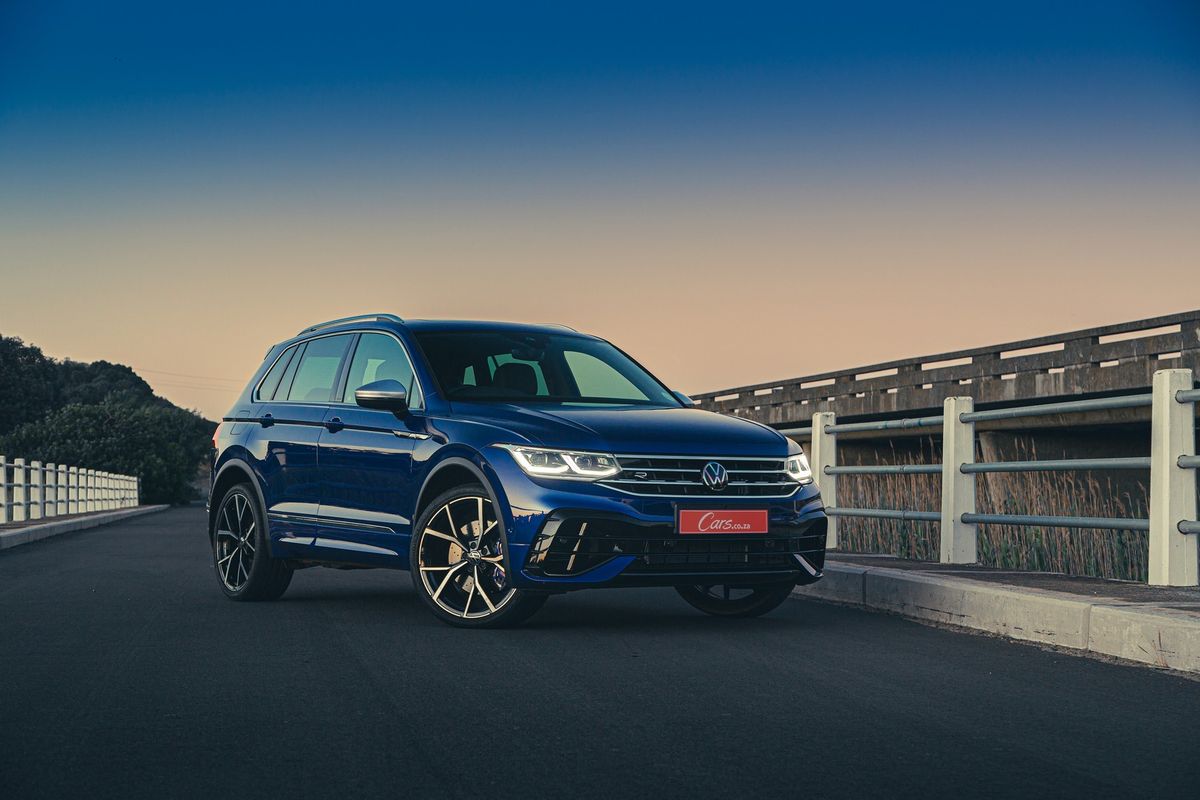
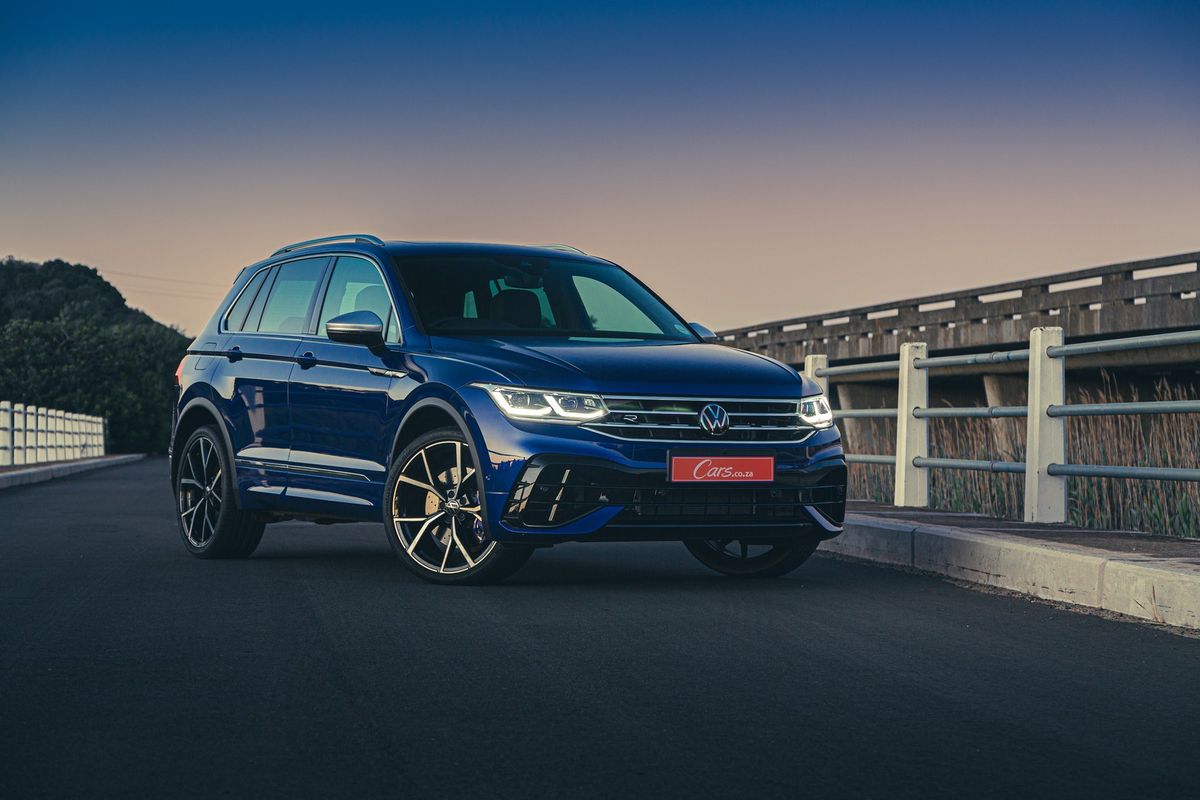
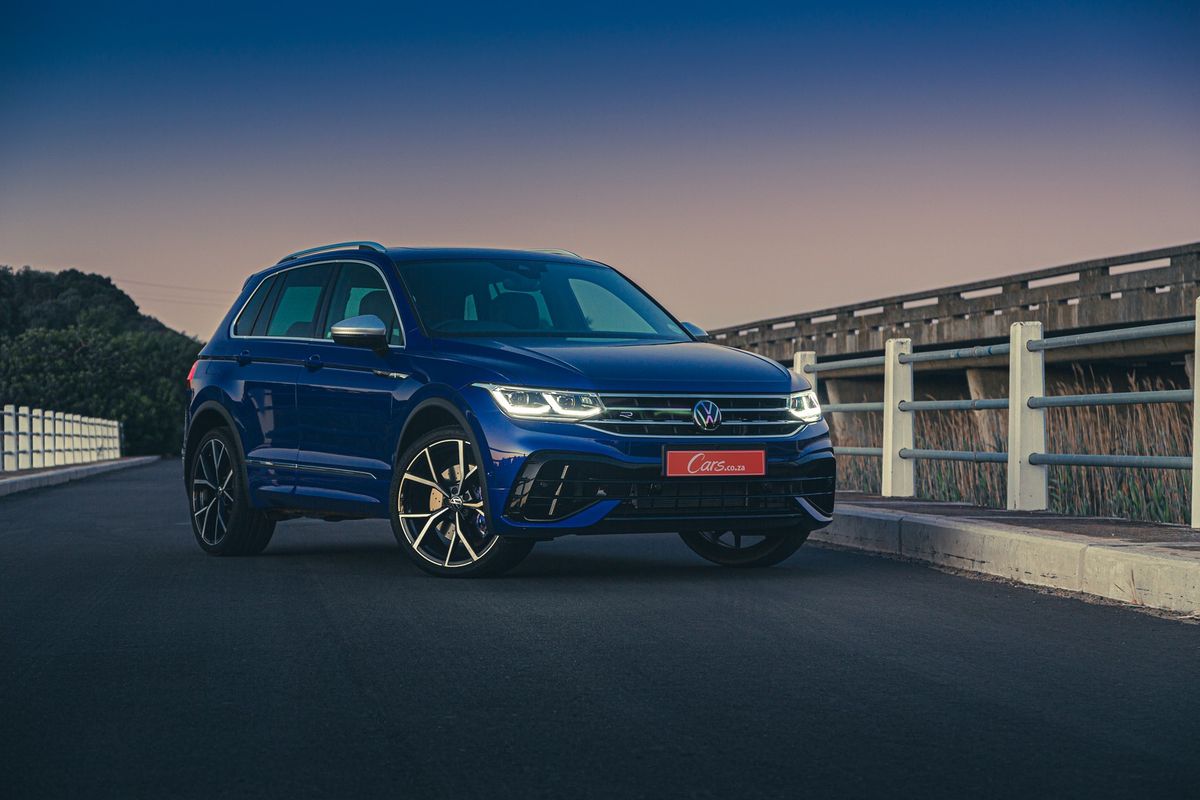
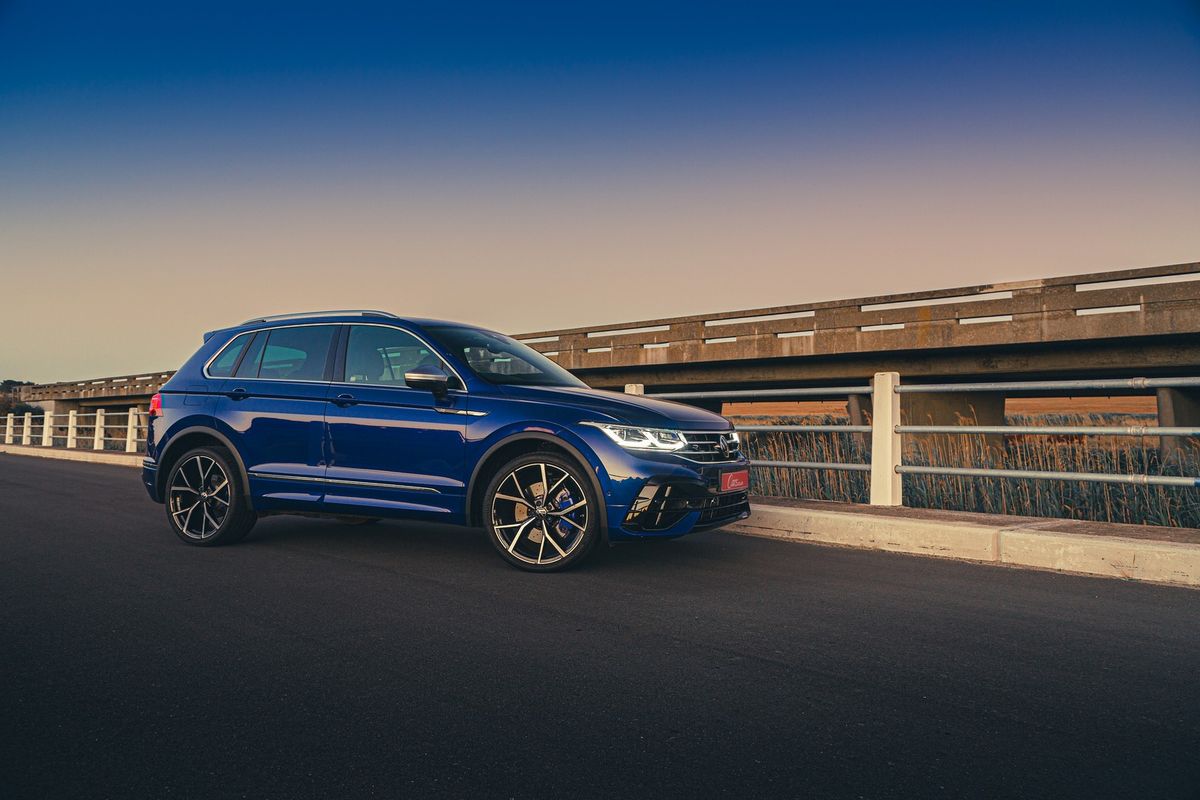
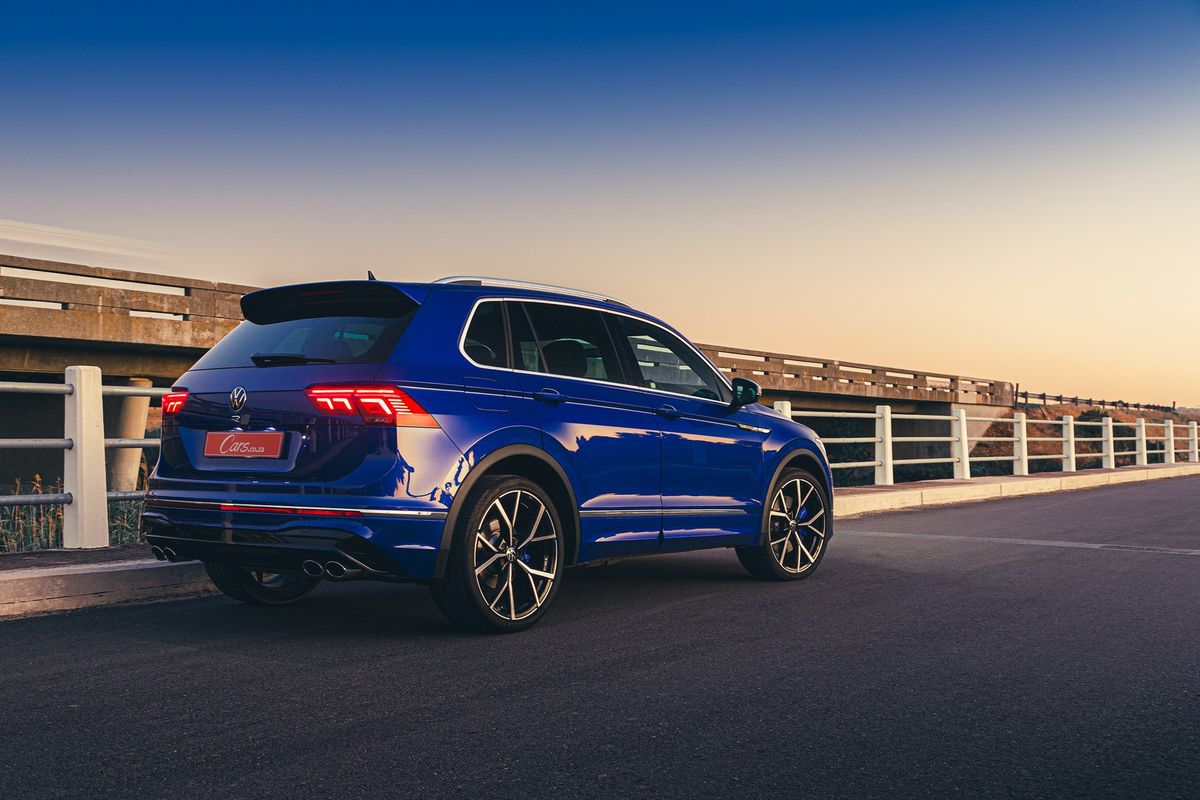
The Tiguan R is the potent new flagship of Volkswagen’s medium SUV. Does it retain most of the aspects that made its sibling derivatives so popular and, does the market need a 235-kW medium SUV that can sprint from 0 to 100 kph in 5 sec? We find out.
We like: Easily accessible performance, relative value for money, good spec and practicality.
We don’t like: Firm ride, steering wheel needs conventional buttons, tyre repair kit only.
FAST FACTS
- Model: Volkswagen Tiguan R
- Price: R999 900 (December 2022 – before options)
- Engine: 2.0-litre 4-cylinder turbopetrol
- Power/Torque: 235 kW and 400 Nm
- Transmission: 7-speed dual-clutch transmission
- Fuel consumption: 8.8 L/100 km
- 0-100 kph: 5.1 seconds (claimed)
- Luggage capacity: 520-615-1 655 litres
Serious about buying/selling?
Browse the latest Volkswagen Tiguan specs and prices.
Some dealerships regularly offer great deals. See our New Car Specials!
Looking to sell your car? Sell it on Cars.co.za for free
Where does the new Tiguan R fit in?
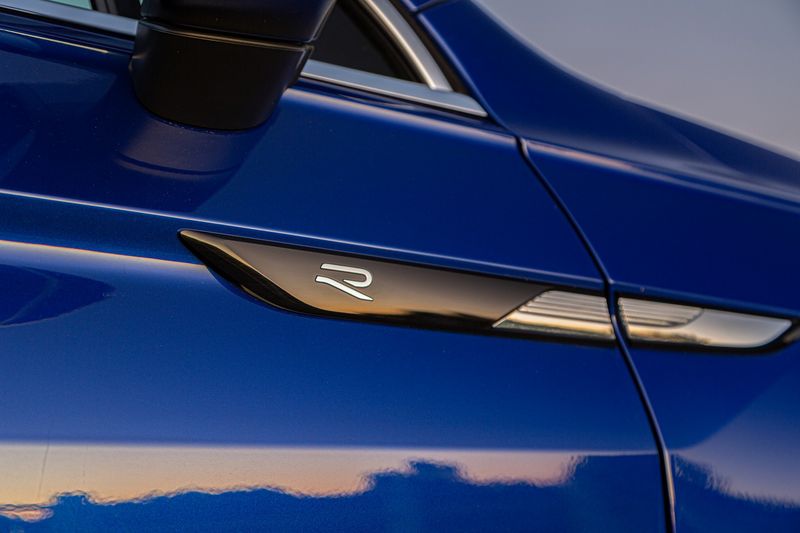
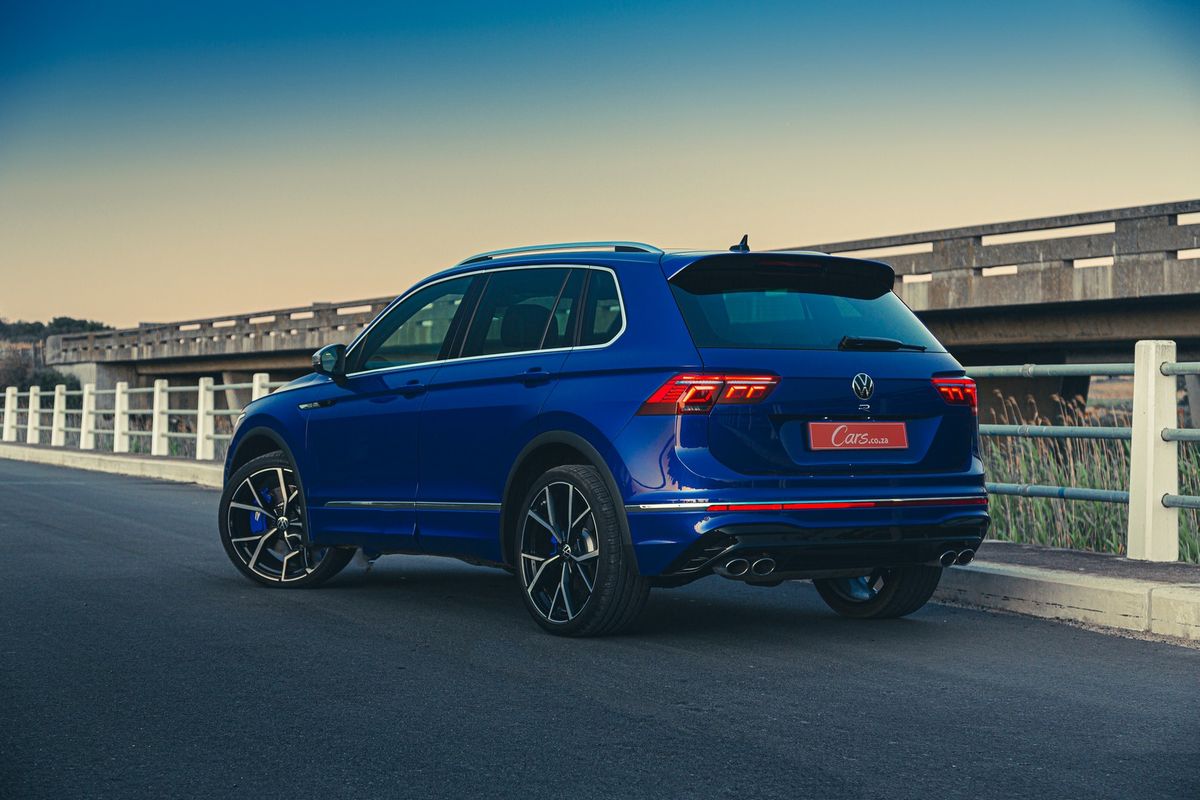
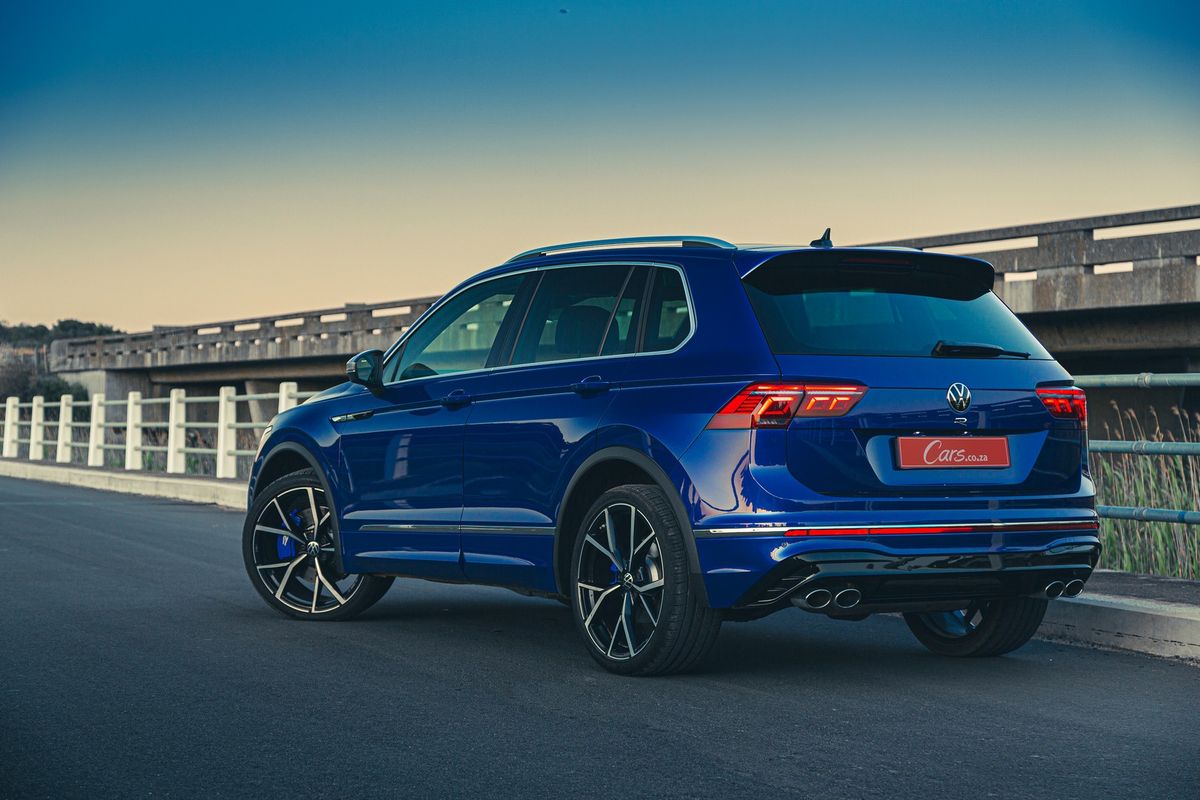
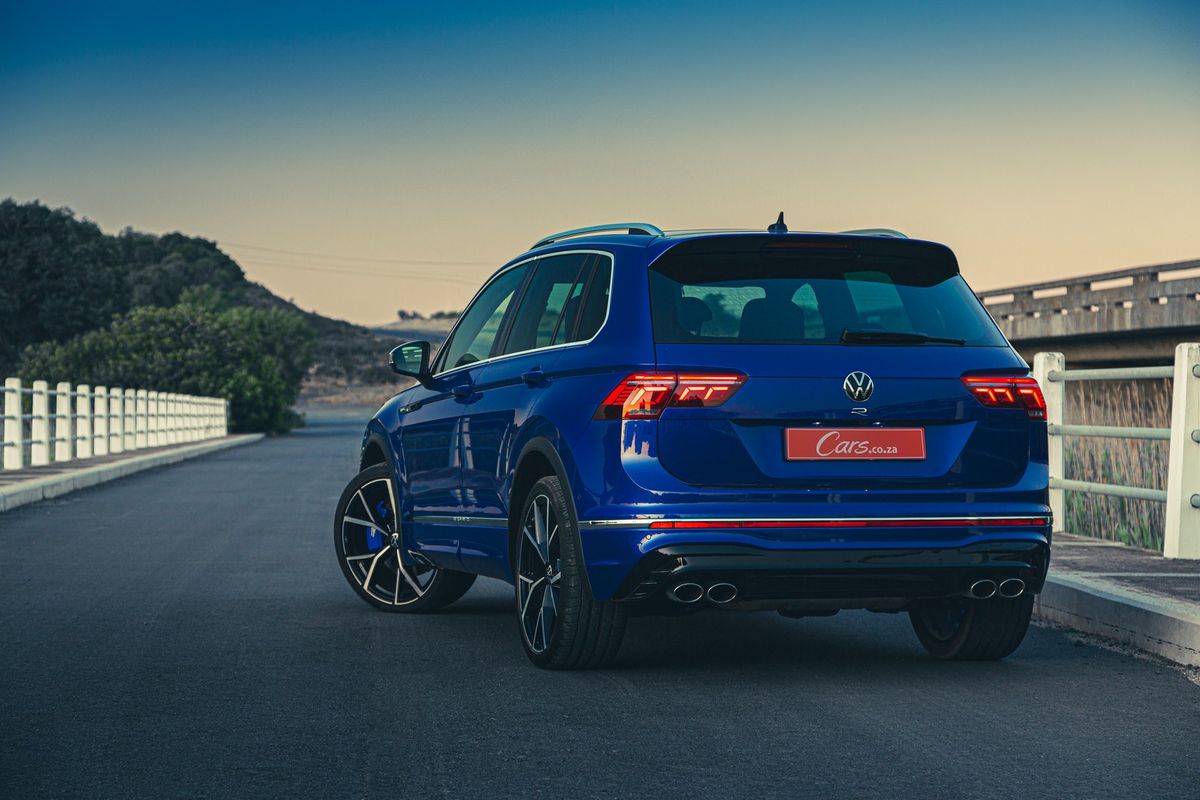
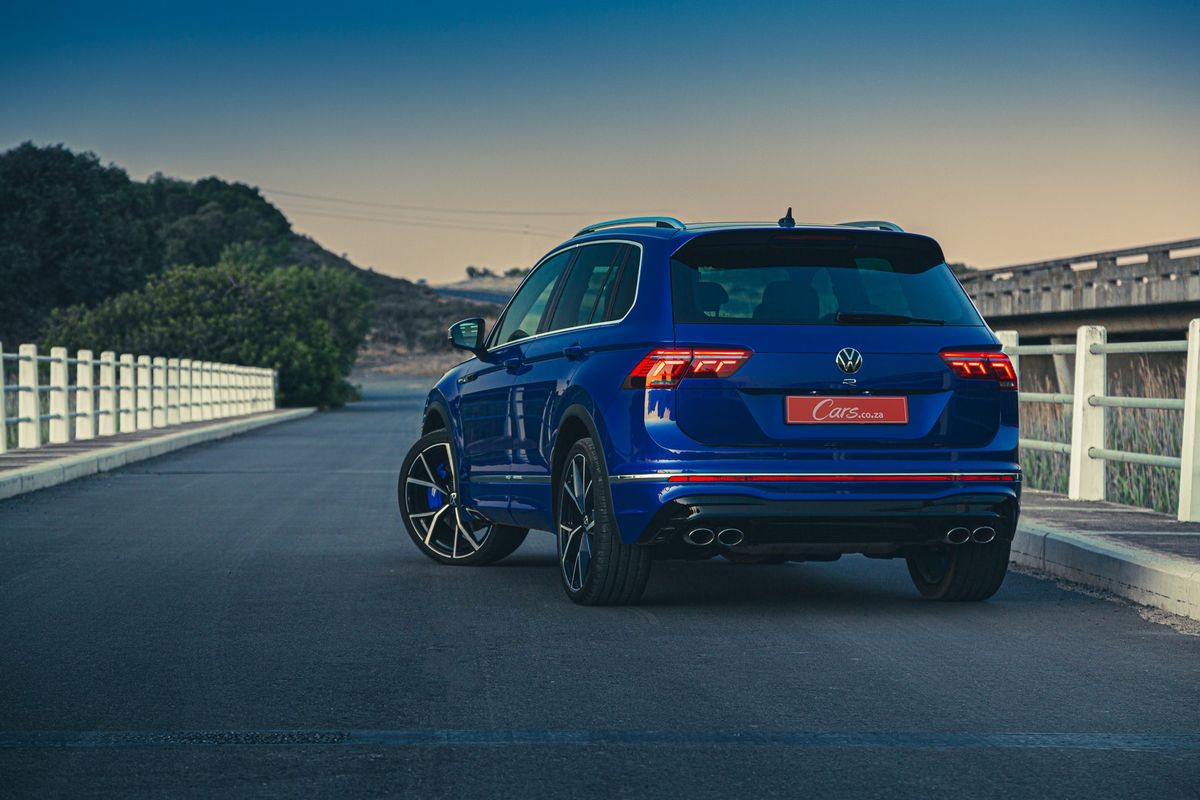
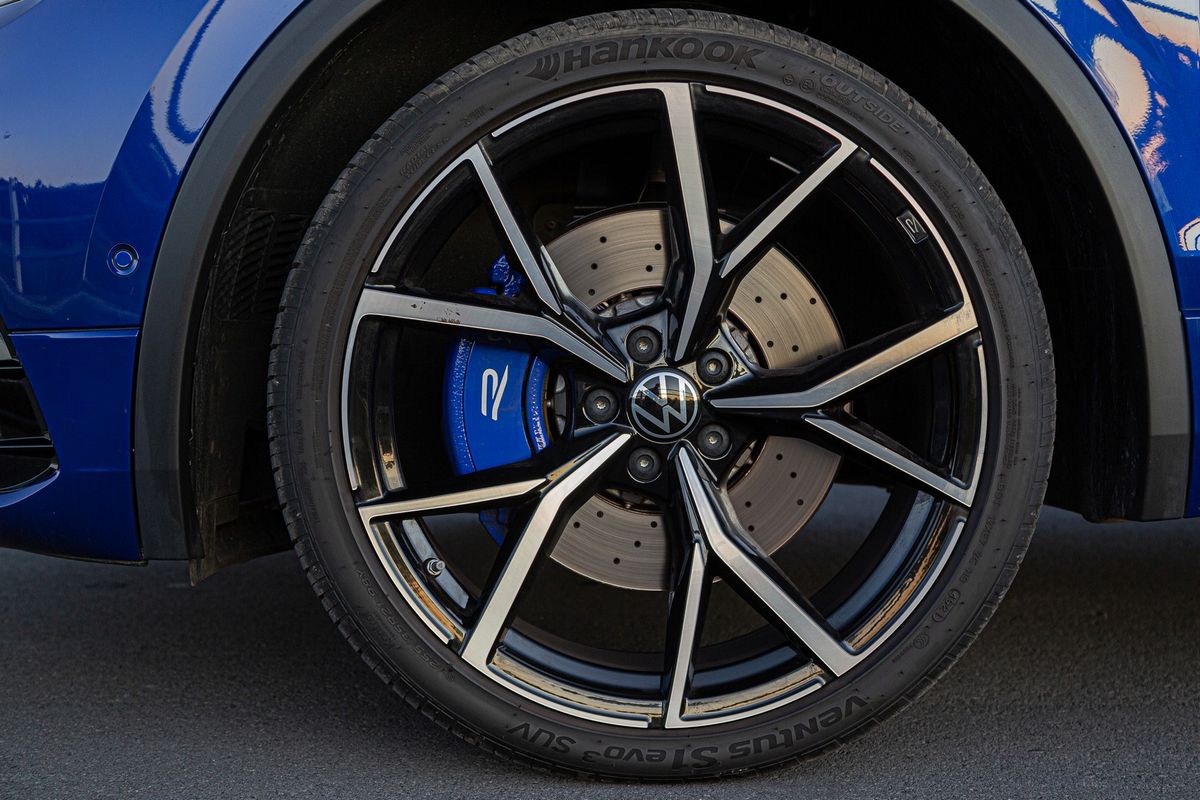
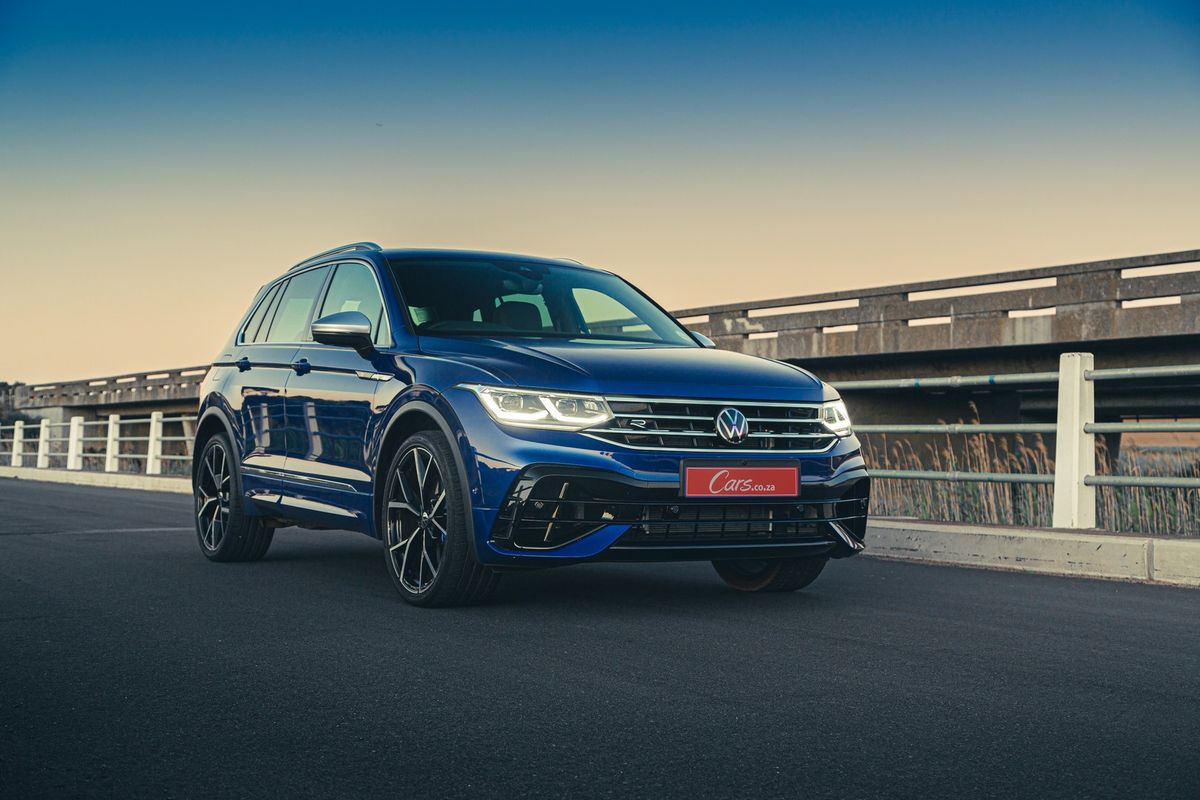
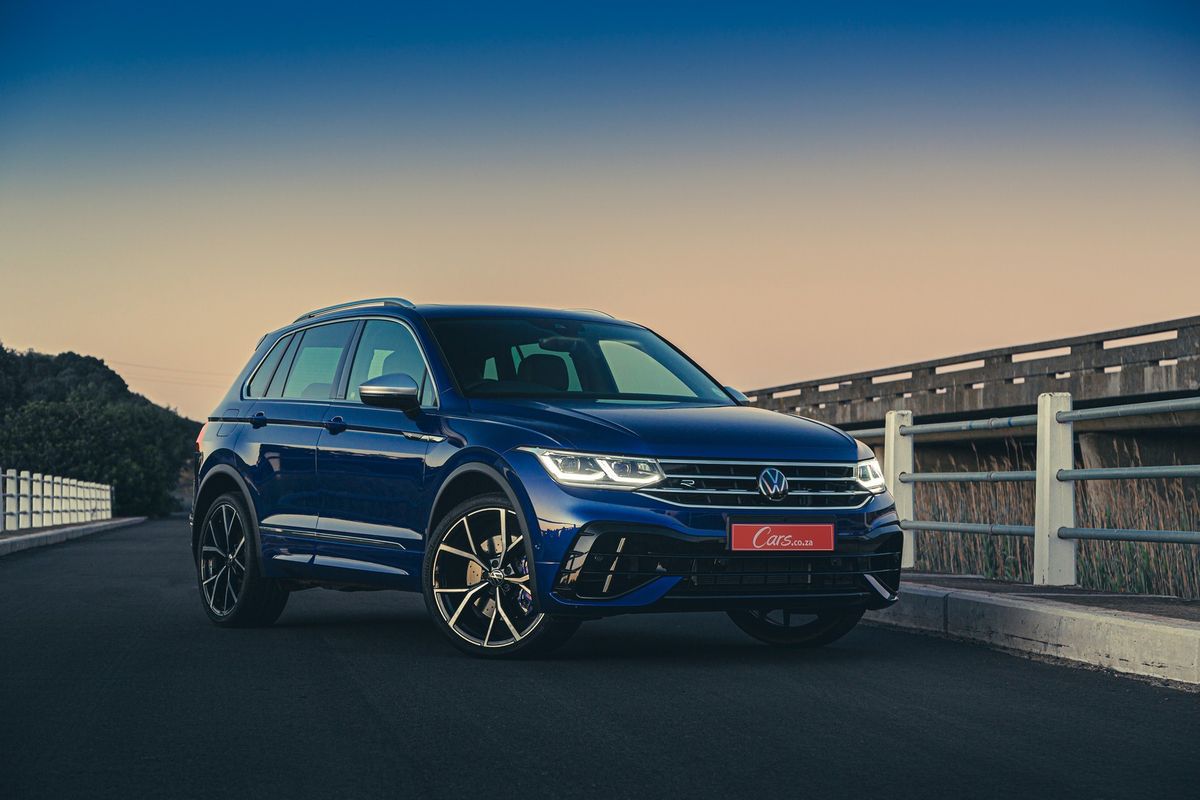
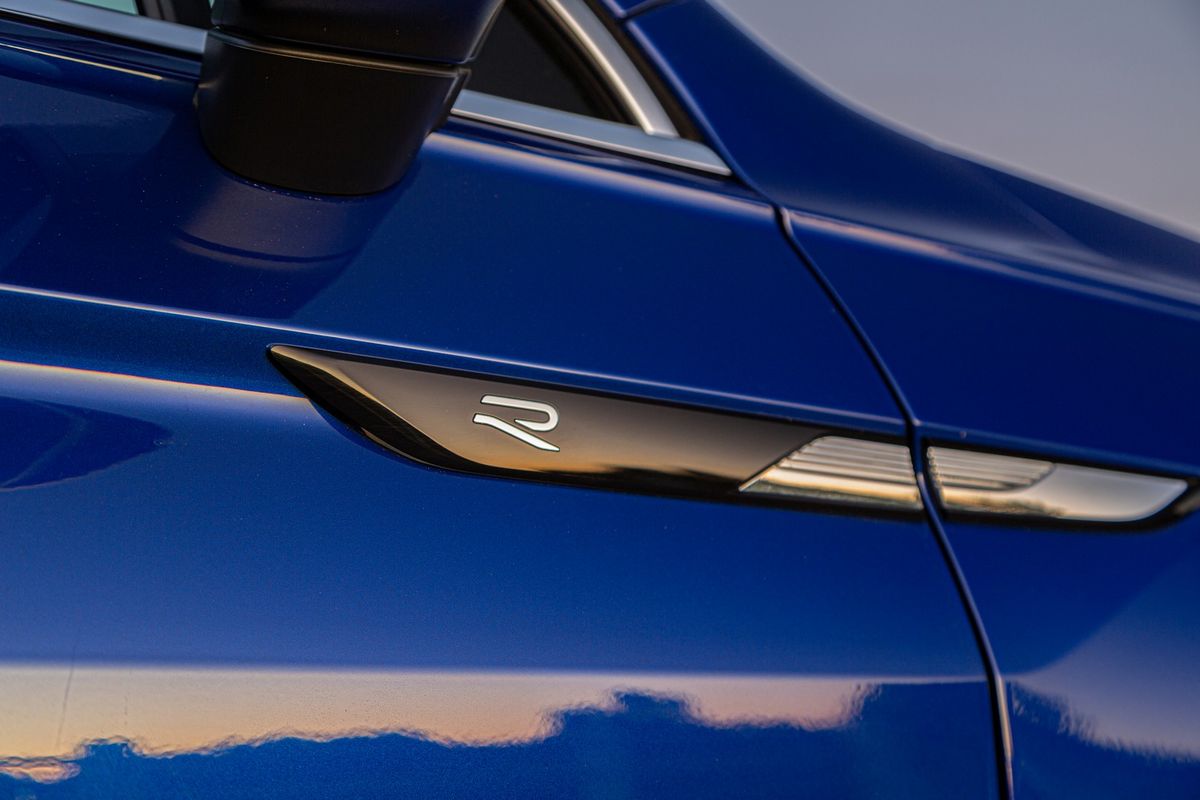
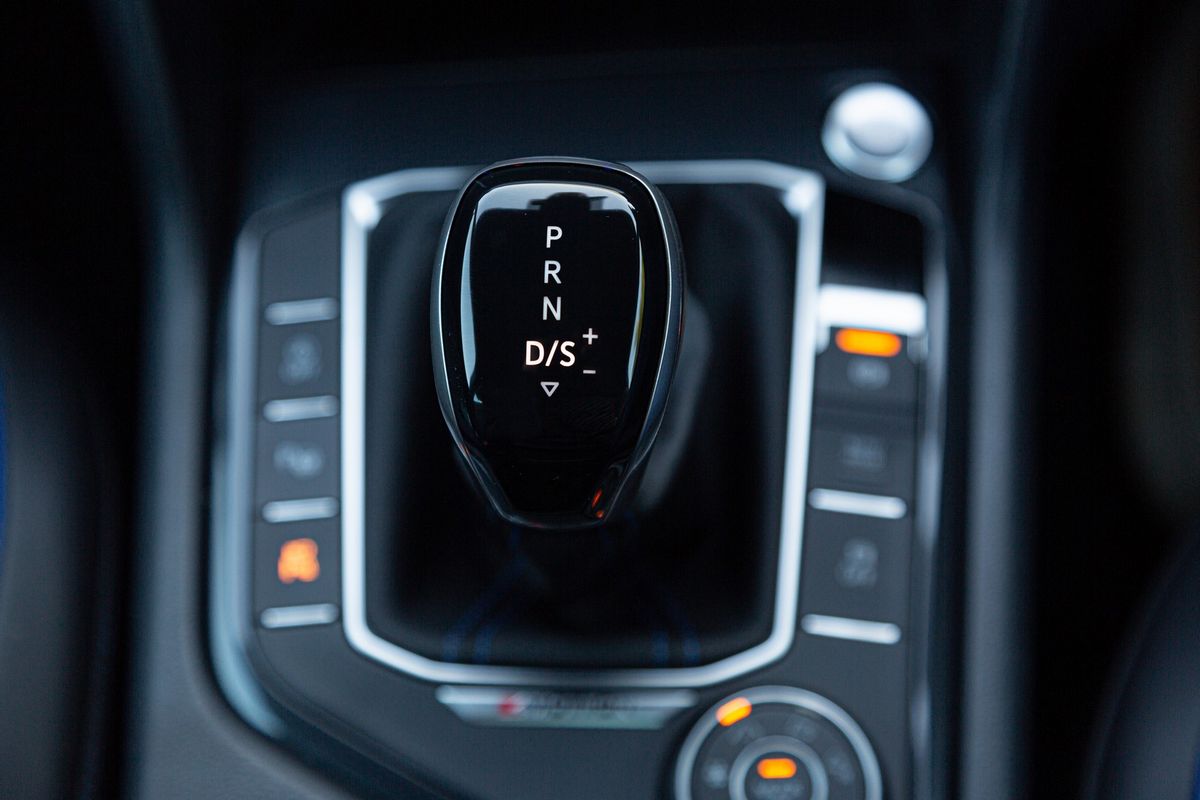
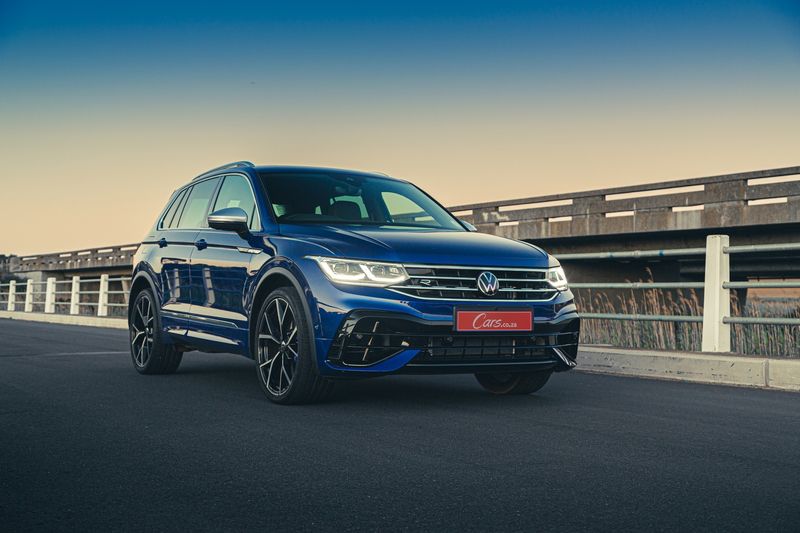
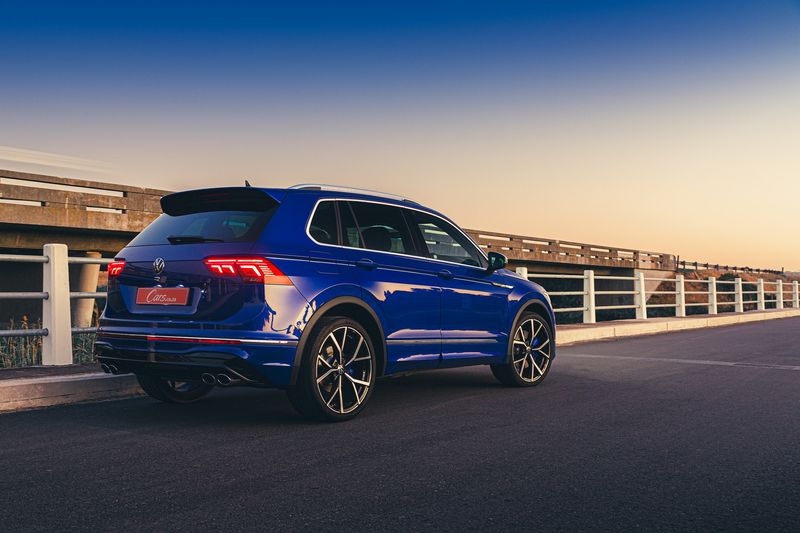
For years, the GTI-powered 2.0TSI 4Motion R-Line was the top-rung Tiguan; with all-wheel drive and 162 kW on tap, it’s no slouch! However, Volkswagen decided to slot the Golf 8 R’s more potent 2.0-litre 4-cylinder turbopetrol motor into the family SUV and, a few tweaks to the suspension and brakes later, the result was a rather rapid family SUV. The Tiguan R is a “sleeper” (it blends in with the rest of the range); Unless you spot the R badges, blue brake calipers and quad exhaust tips, you’d think it was just a Tiguan with an R-Design body kit.
The Tiguan is Volkswagen’s best-selling vehicle globally and it’s easy to understand why: apart from the fact that crossovers are in high demand, the Tiguan range has a diverse line-up, with petrol, diesel and electrified options. You can get 5- and a 7-seaters, 2-wheel- and all-wheel drive and now, a performance version. Given how the market’s appetite for fast SUVs has grown, the flexibility of the MQB platform and Volkswagen’s reputation for producing potent powertrains for compact cars, we’re surprised that the Tiguan R didn’t emerge sooner.
Visit our Buyer’s Guide to see which is the best SUV for you
Performance-oriented medium SUVs are niche models, but there are a few options around, or just above, the R1-million mark. The outgoing BMW X2 M35i also has a 2.0-litre turbopetrol engine and all-wheel drive, but it’s smaller than the Tiguan. The Audi RS Q3, which is based on the same platform as the Tiguan R, has a roaring 2.5-litre 5-cylinder engine, but it’s notably pricier. An interesting alternative is a Porsche Macan, albeit the entry-level version. Also, Mercedes-AMG will be launching its GLB 35 next year, if you’re prepared to wait for it.
Compare the Volkswagen Tiguan R to some of its rivals here
How the Tiguan R fares in terms of…
Performance and economy
The tried-and-trusted EA888 2.0-litre 4-cylinder turbopetrol engine has found its way into the Tiguan, its outputs have been cranked up to 235 kW/400 Nm – and the result is nothing short of spectacular. VWSA says the Tiguan R can hit 100 kph from a standstill in 5.1 sec, but we used our test equipment to find out for ourselves. With the aid of launch control, the Tiguan R completed the 0-100 kph sprint in 5.0 sec(!) and dispatched the quarter mile in 13.19 sec. Those are rather serious numbers for a vehicle that tips the scales at just over 1600 kg…
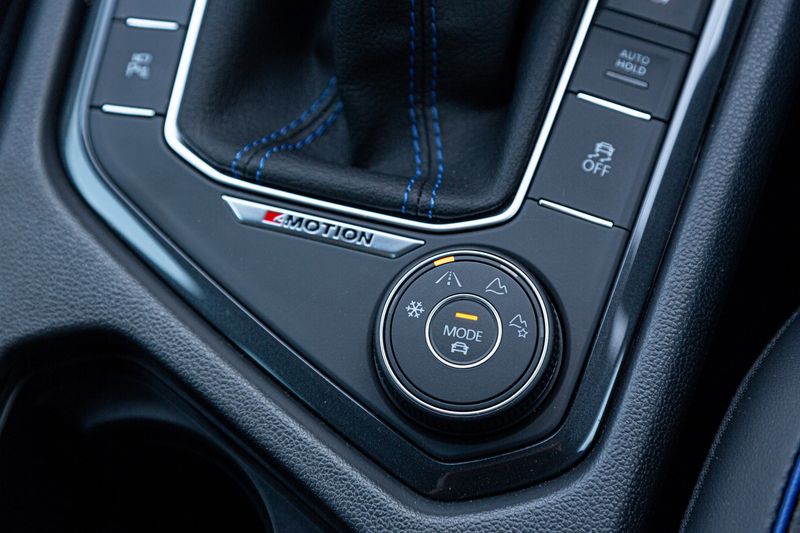
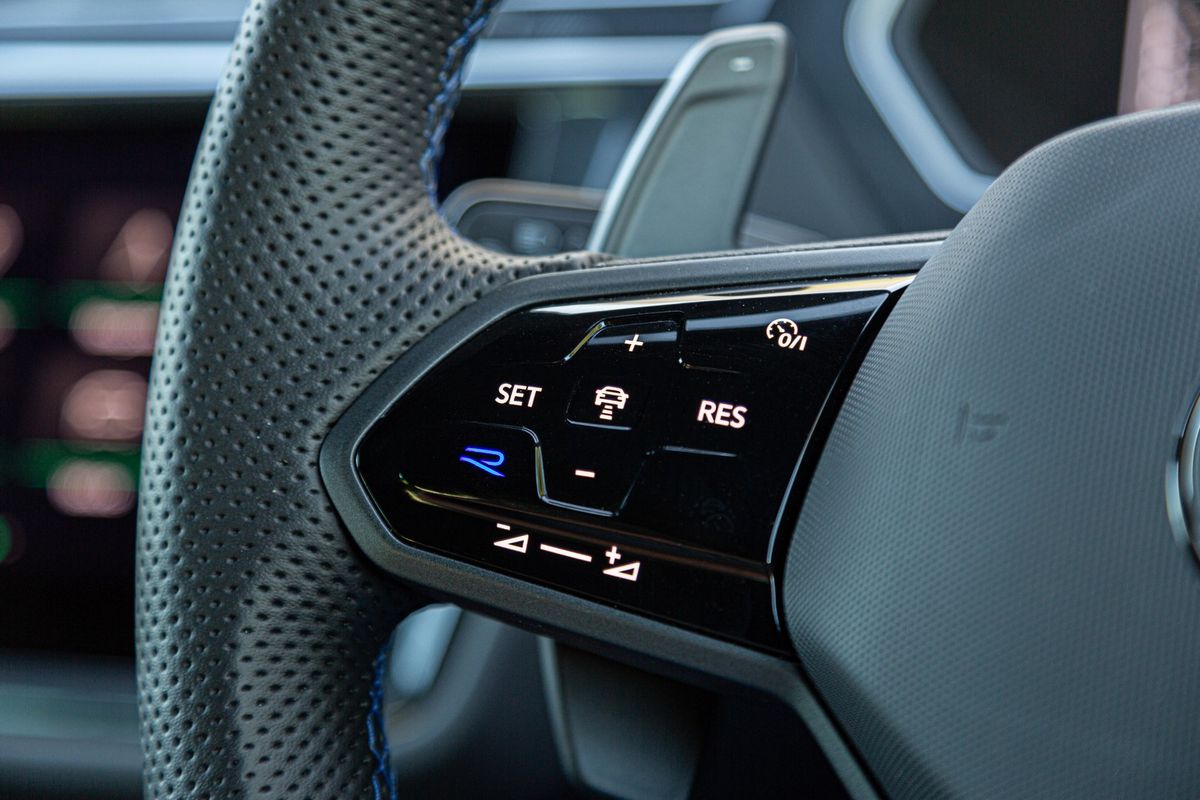
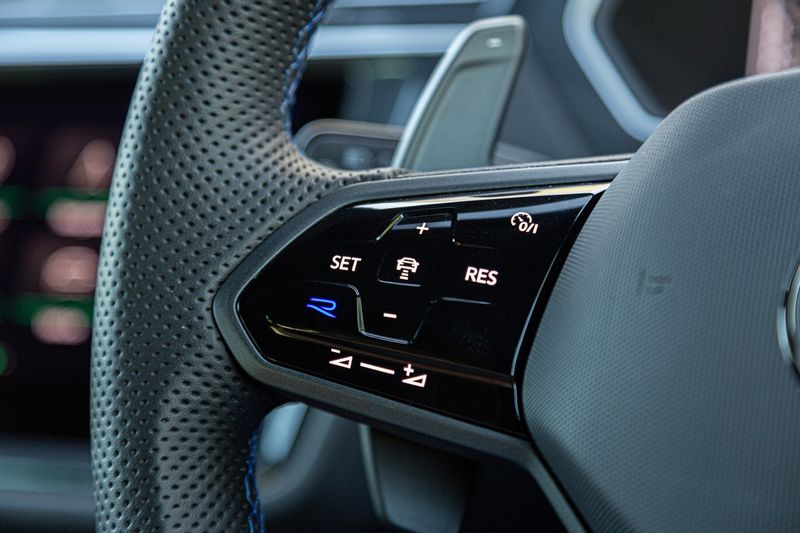
The combination of a potent powerplant, a rapid-shifting 7-speed dual-clutch automatic transmission and, of course, the generous traction availed by the 4Motion all-wheel-drive system gives the Tiguan R such a searing turn of speed. In Race Mode, the Tiguan R is a potent straight-line performer – both from a standstill and in terms of in-gear (overtaking) acceleration. Thanks to its 400 Nm of torque, the Tiguan R is always ready to surge, although in its Comfort drive mode, throttle- and shift responses are rather languid (to aid efficiency and refinement); simply press the blue R button (on the ‘wheel) to sharpen everything up.
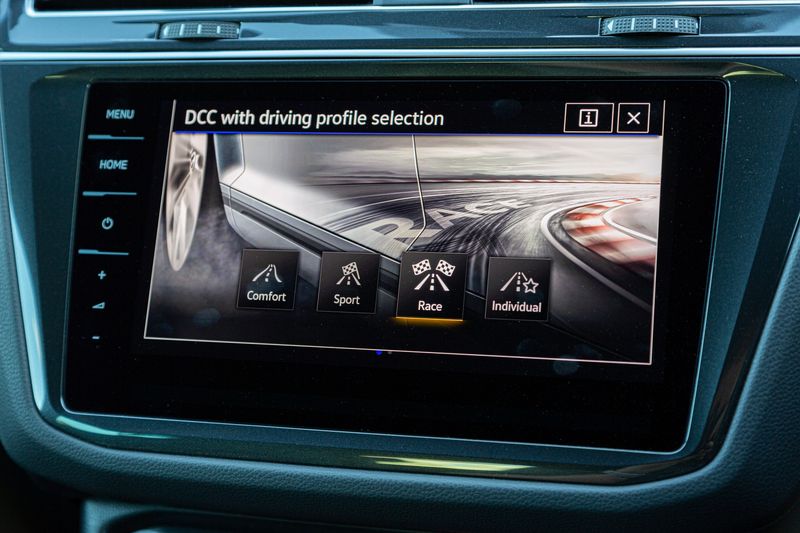
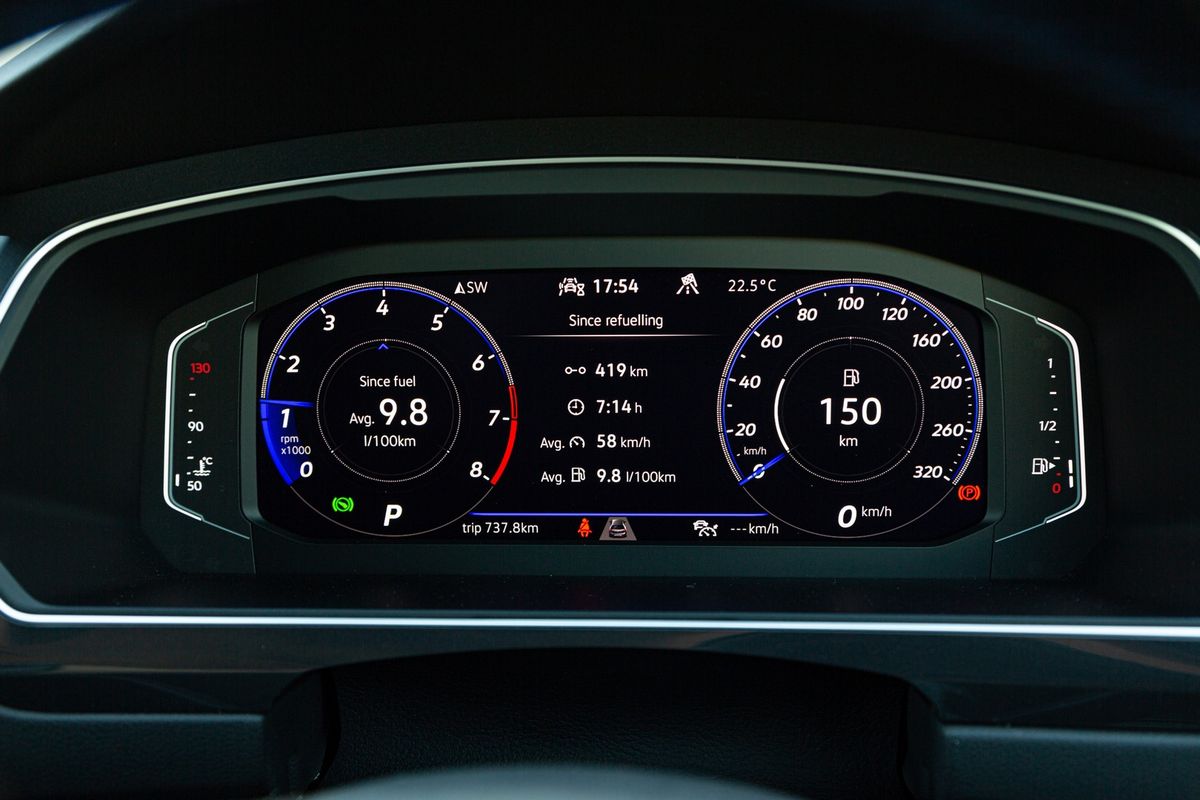
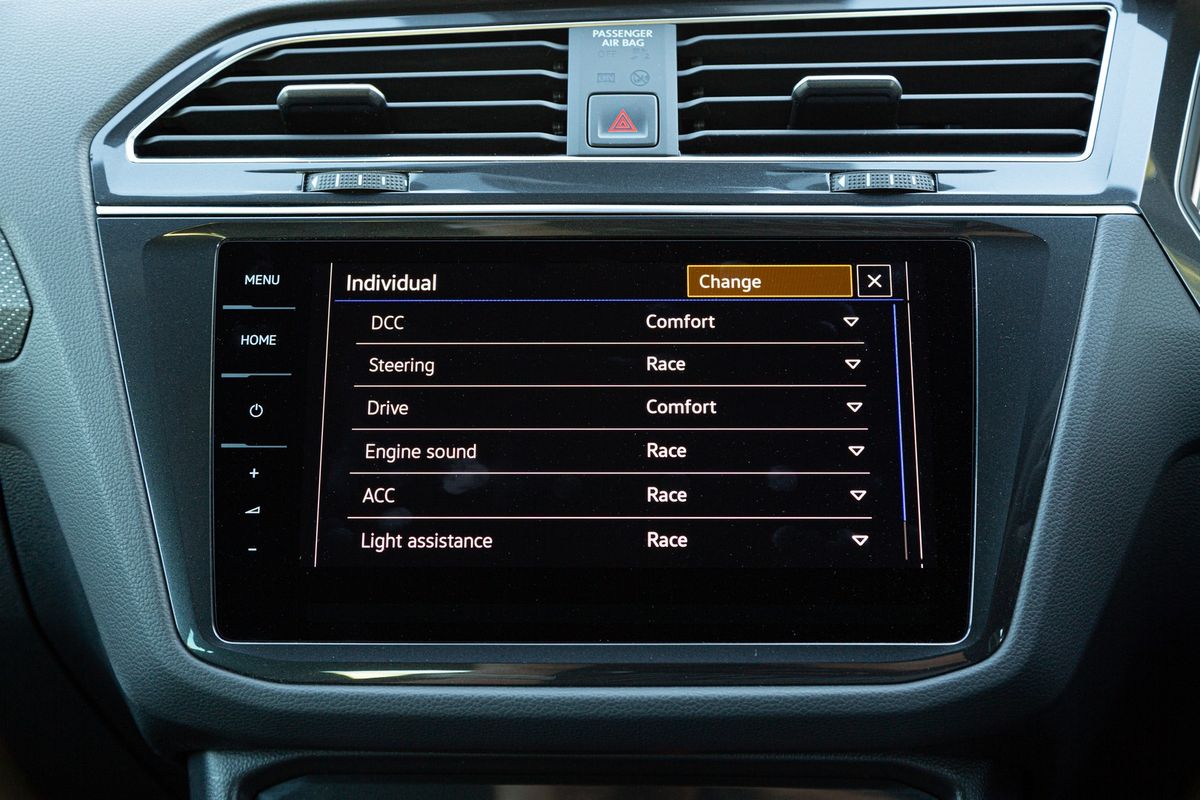
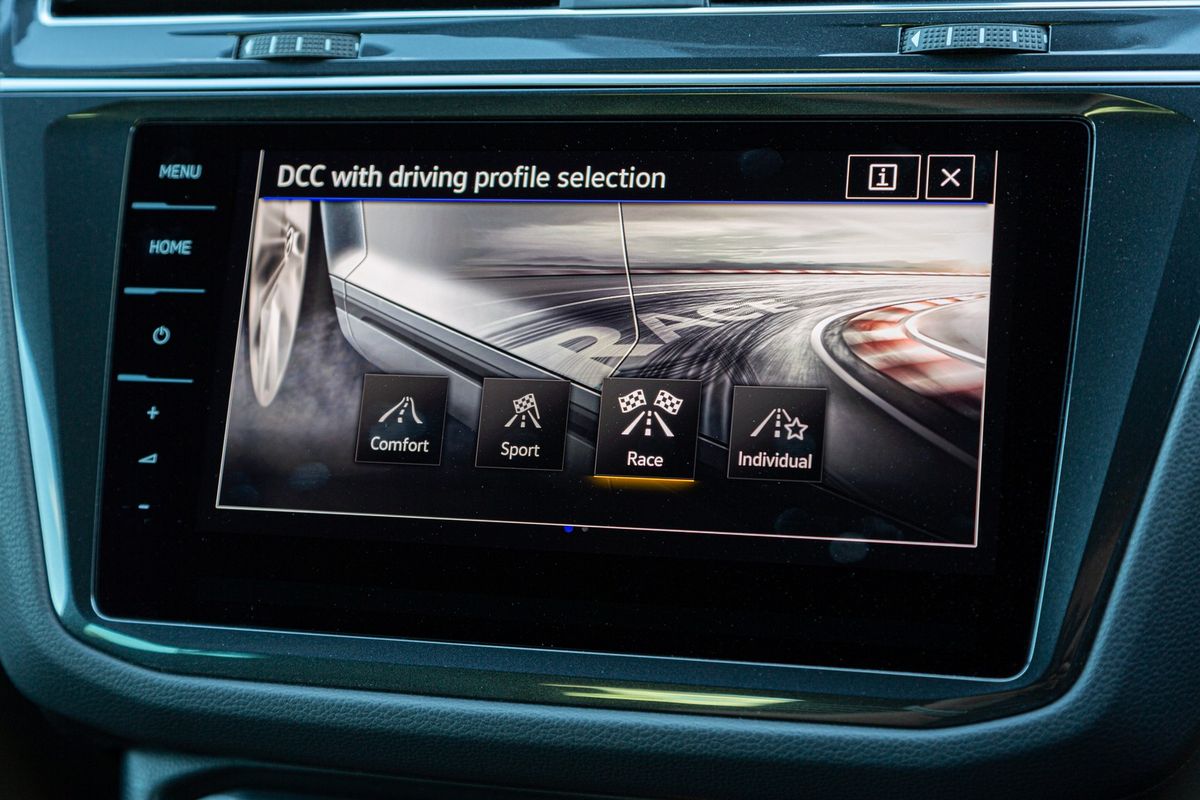
As is the case with many higher-end VW Group products, the Tiguan R offers its driver a host of drive modes to choose from. The R(ace) mode, for example, is best suited for short, sharp bursts when road and traffic conditions allow you to make the most of the newcomer’s performance and handling characteristics, but for the rest of the time, you can utilise Comfort (it puts the powertrain in full Eco mode), Sport and Individual. What’s more, every drive mode is accompanied by a different colour scheme on the digital instrument cluster: green for Comfort, red for Sport, blue for Race and, finally, yellow – when “off-road” mode is in use.
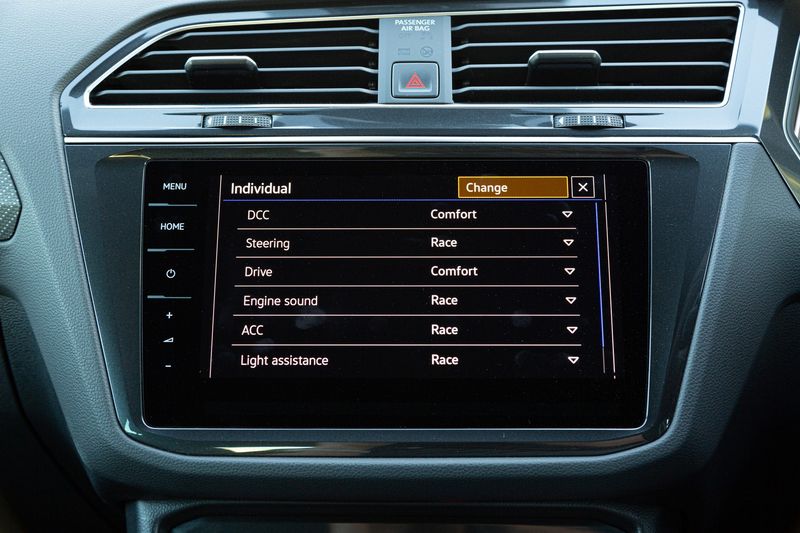
It’s totally worth experimenting with the myriad settings in Individual mode to find a setup that you prefer (our recommendations are in brackets). You can adjust the pliancy of the active dampers (Comfort – we’ll explain later), the light- or heaviness of the ‘wheel (Race), engine responsiveness (Sport offers the best of Comfort and Race) and even the intensity of the engine sound. If you’re not entirely happy with the sound of the standard exhaust (which is enhanced by the audio system), you can specify a louder Akrapovic exhaust for R69k.
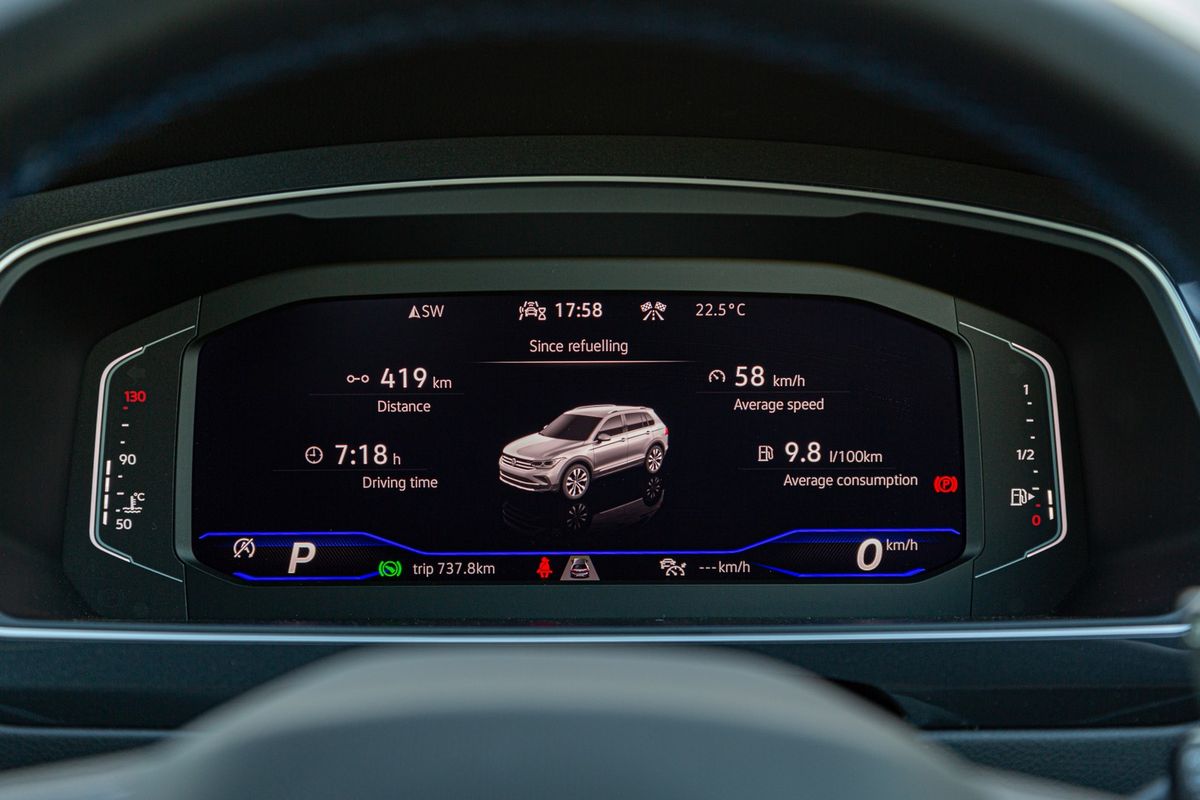
As for the Tiguan R’s real-world fuel consumption, we saw an average of 9.8 L/100 km by the end of the test car’s tenure in our fleet. That combined-cycle figure (for a mix of urban and freeway driving) is not significantly higher than VW’s claimed figure (8.8 L/100 km); it’s fair, considering the size and performance bent of the Tiguan R. The tank holds 58 litres.
Ride and handling
As befits a family car (even a fast one), the Tiguan R’s elevated driving position facilitates excellent all-round visibility. Even though the Volkswagen seems more at home on the open road/freeways than round town, its general driving experience is effortless and relaxed.
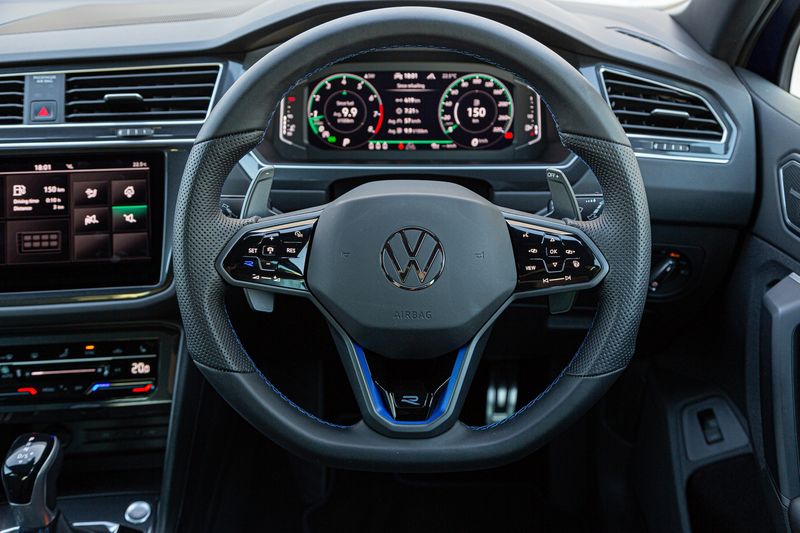
However, if you press that R button and make the Volkswagen carve up corners at a rapid rate, it won’t fail to impress. Previously, the Tiguan distinguished itself as a model with reassuring handling (even if its steering feel is somewhat anodyne – which is true for most medium SUVs, truth be told), but the Tiguan R takes it to a higher level with plenty of grip, stability, and poise. The steering setup is great too; it balances lightness and accuracy.
Thanks to a trick rear differential, the Tiguan R can shuffle most of its torque to the back axle to instil a livelier driving feel, but you’ll have to explore the car’s limits to feel that diff work.
Granted, the Tiguan R does demand a compromise in return for its stonking pace. You’ve guessed it: the SUV has a sporty suspension setup and, in its most performance-oriented mode, when running on optional 21-inch wheels, the VW’s ride quality is decidedly firm.
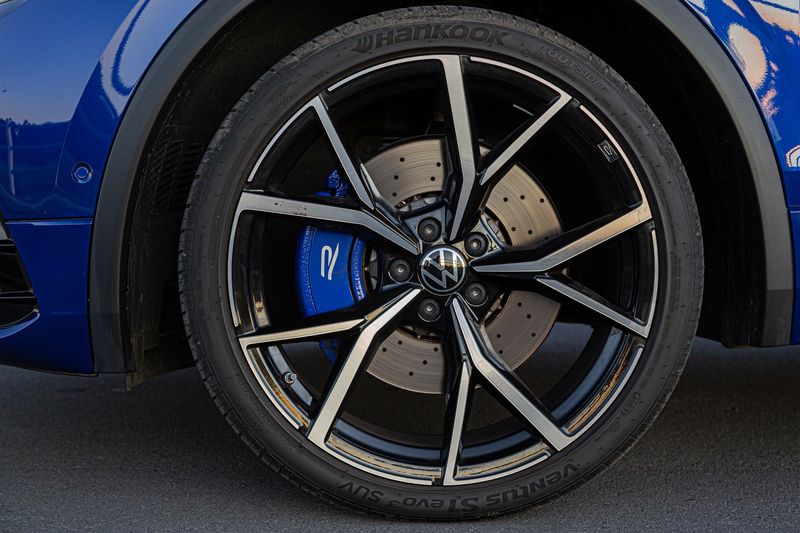
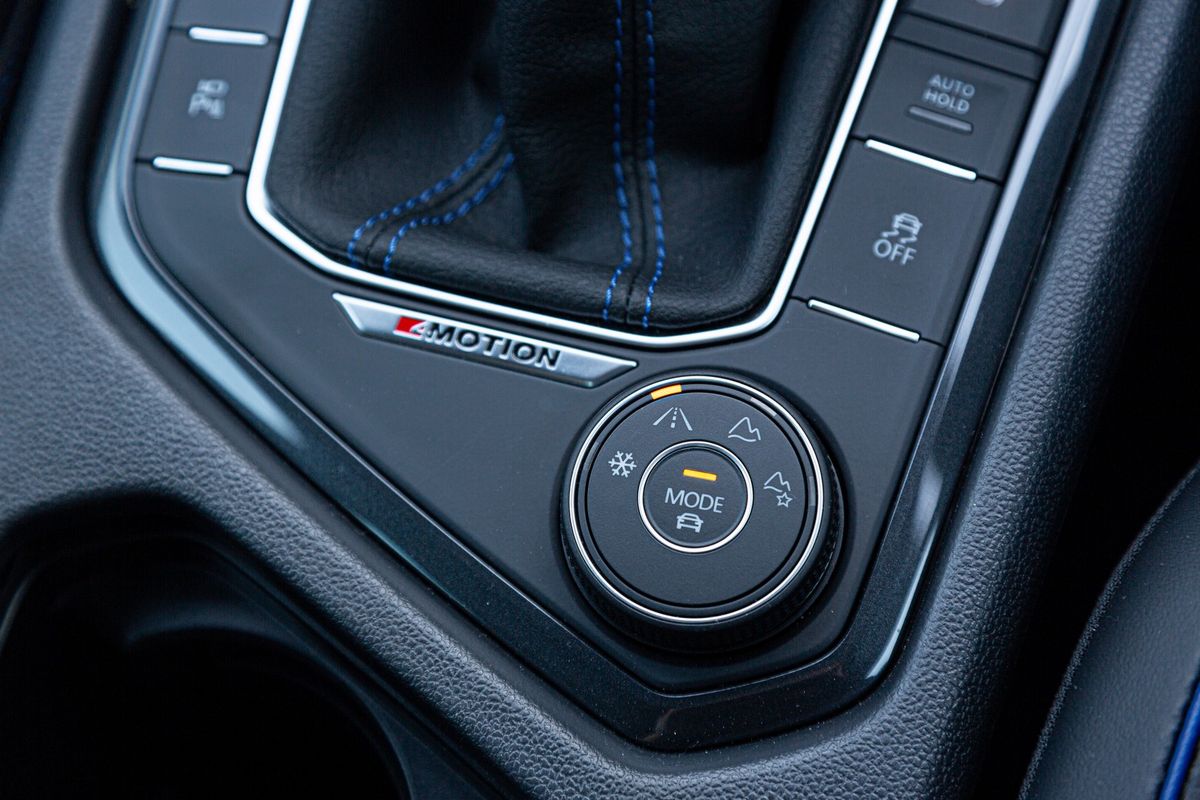
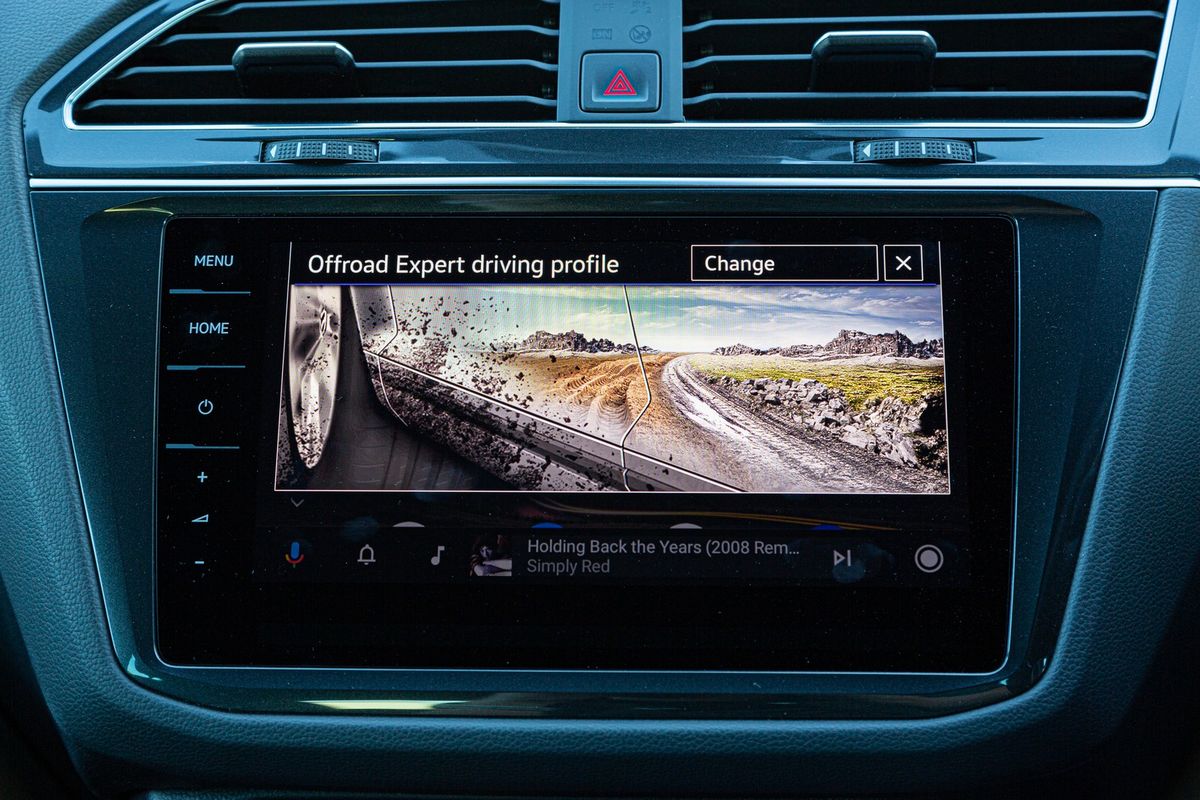
Also, those handsome 21-inch alloys shod with low-profile tyres felt appropriate for tar-road use only – smaller wheels fitted with plumper rubber would be better suited/more durable for the purpose of taking extended gravel-road journeys. You may ask: “Who’d ever drive a Tiguan R on any road other than an asphalt one?” Well, family SUVs need to be versatile; at least VW has equipped the Tiguan R with off-road modes (accessible via a centre console dial).
Features, tech and safety features
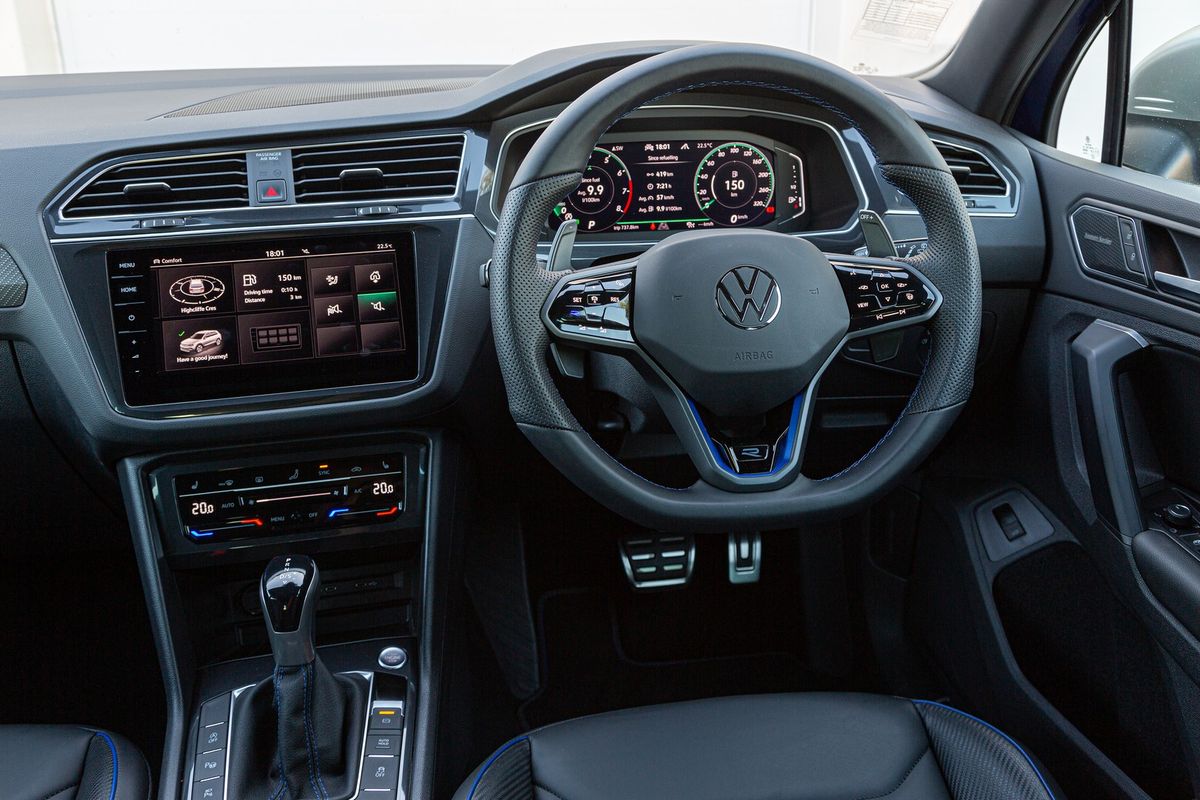
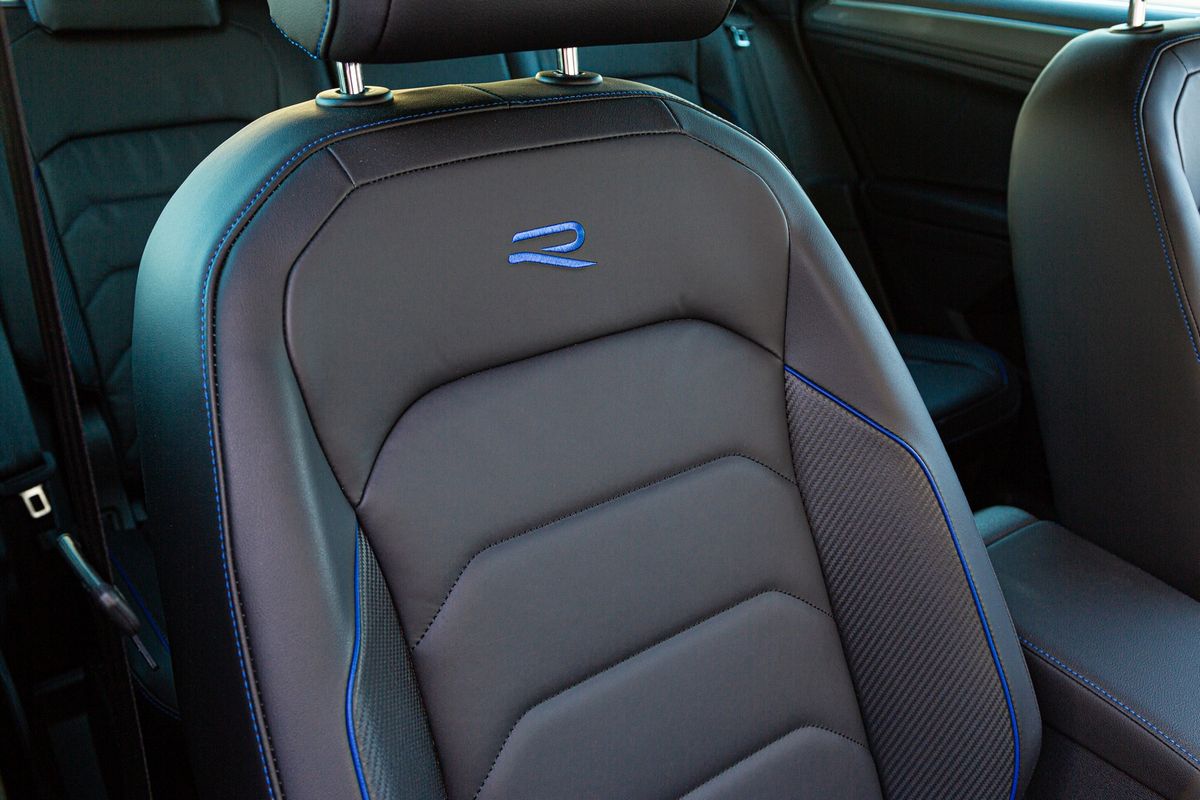
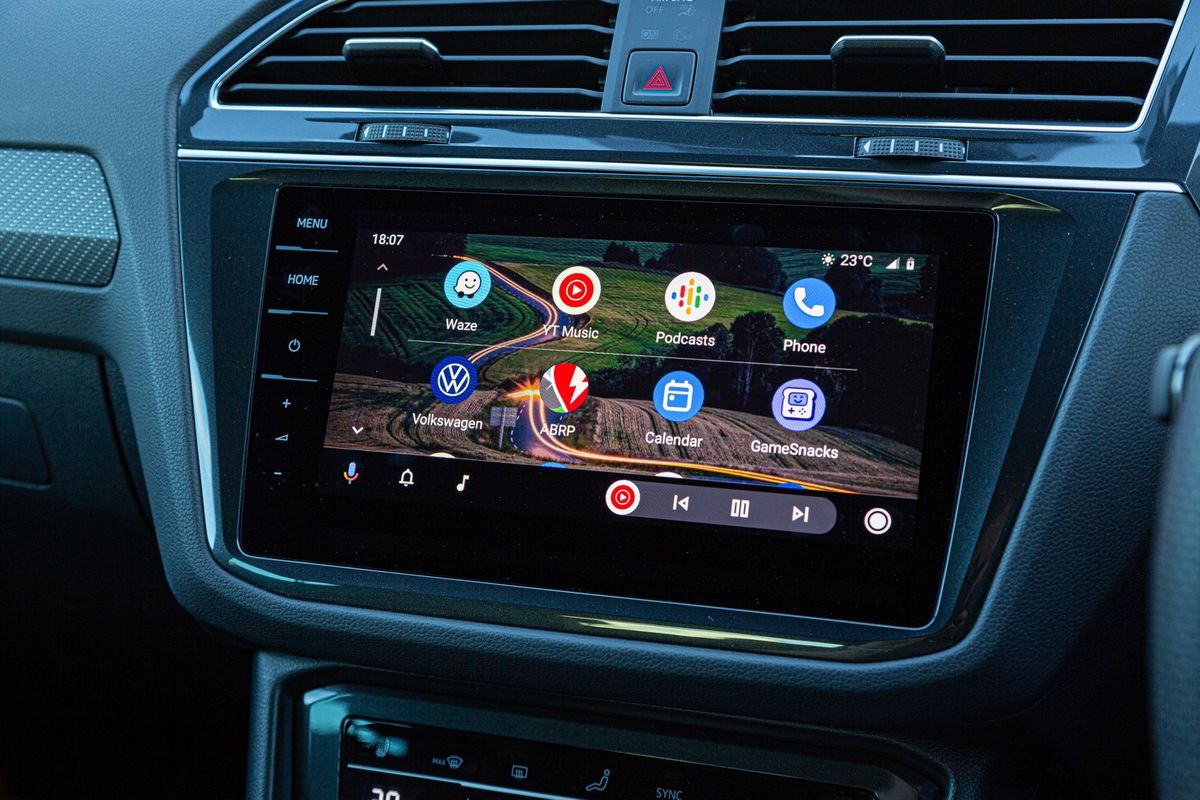
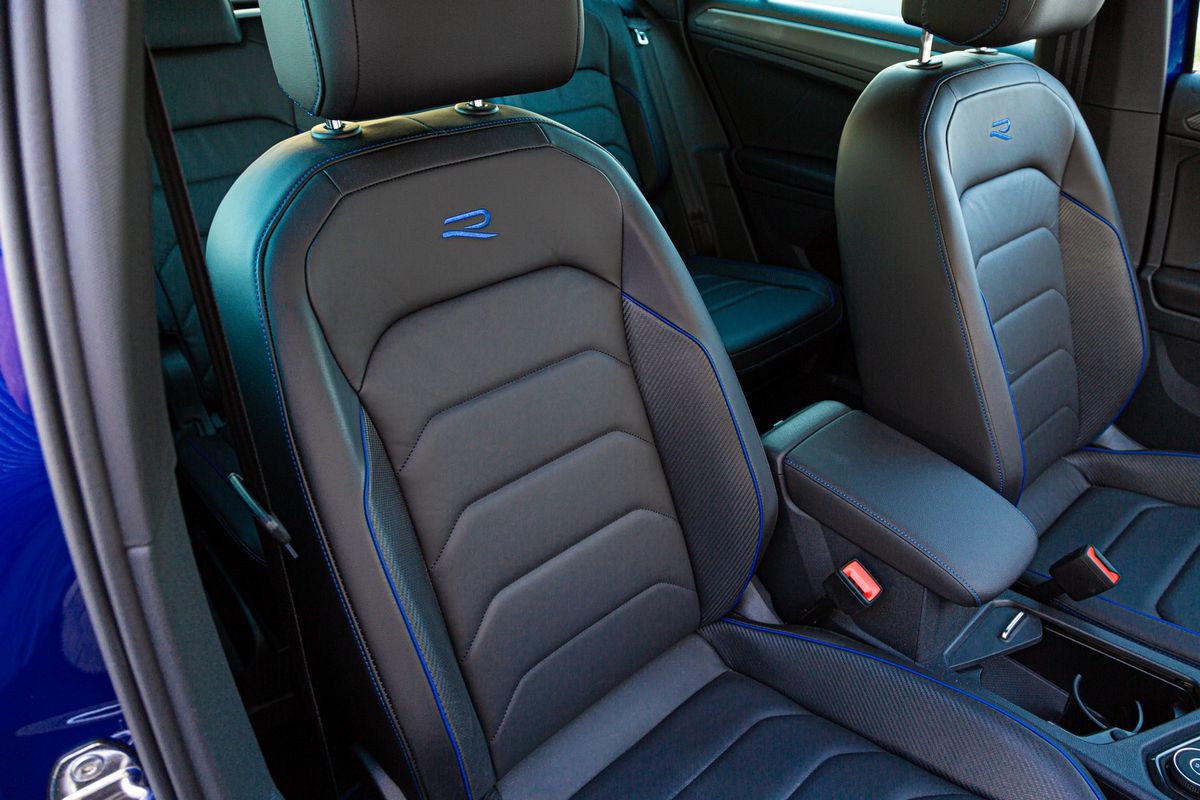
At this price point (R1 million), buyers will expect the Tiguan R to be well equipped – and indeed, it is. The Nappa leather trim feels grand and the electrically adjustable driver’s seat is comfortable and supportive (plus both front seats are heated). The digital instrument cluster’s display is customisable, while the Discover Pro touchscreen infotainment system comes with integrated satnav and is compatible with Apple CarPlay and Android Auto (wireless).
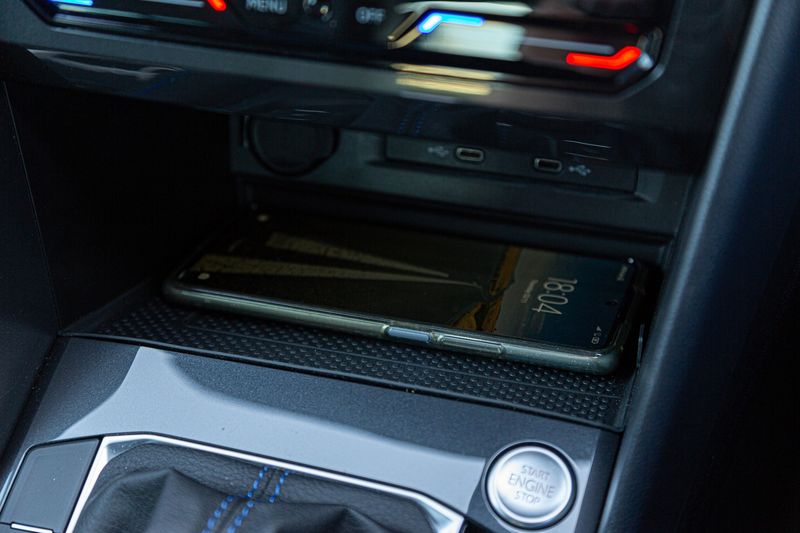
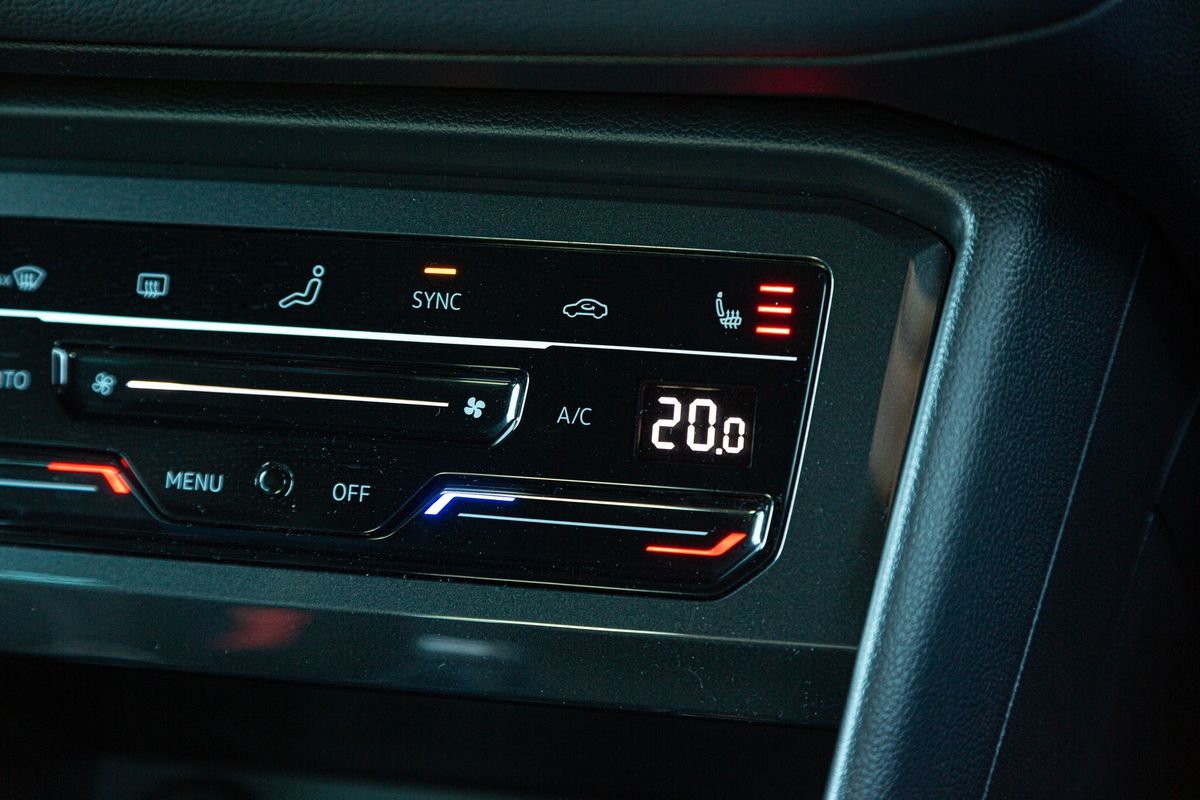
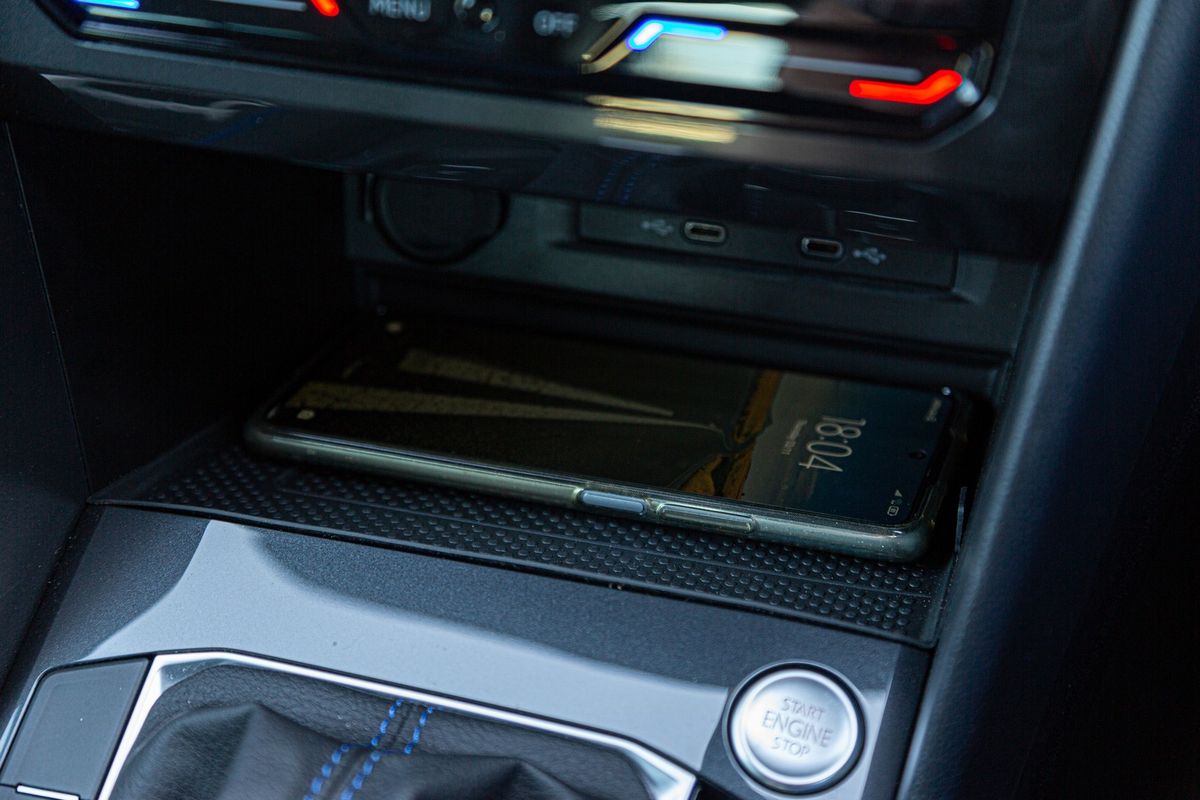
There’s an abundance of USB-C ports, while tri-zone climate control, cruise control with limiter, a panoramic sunroof and an electric tailgate round out the standard-features list. So, the Tiguan R’s well specced, but not generously equipped.
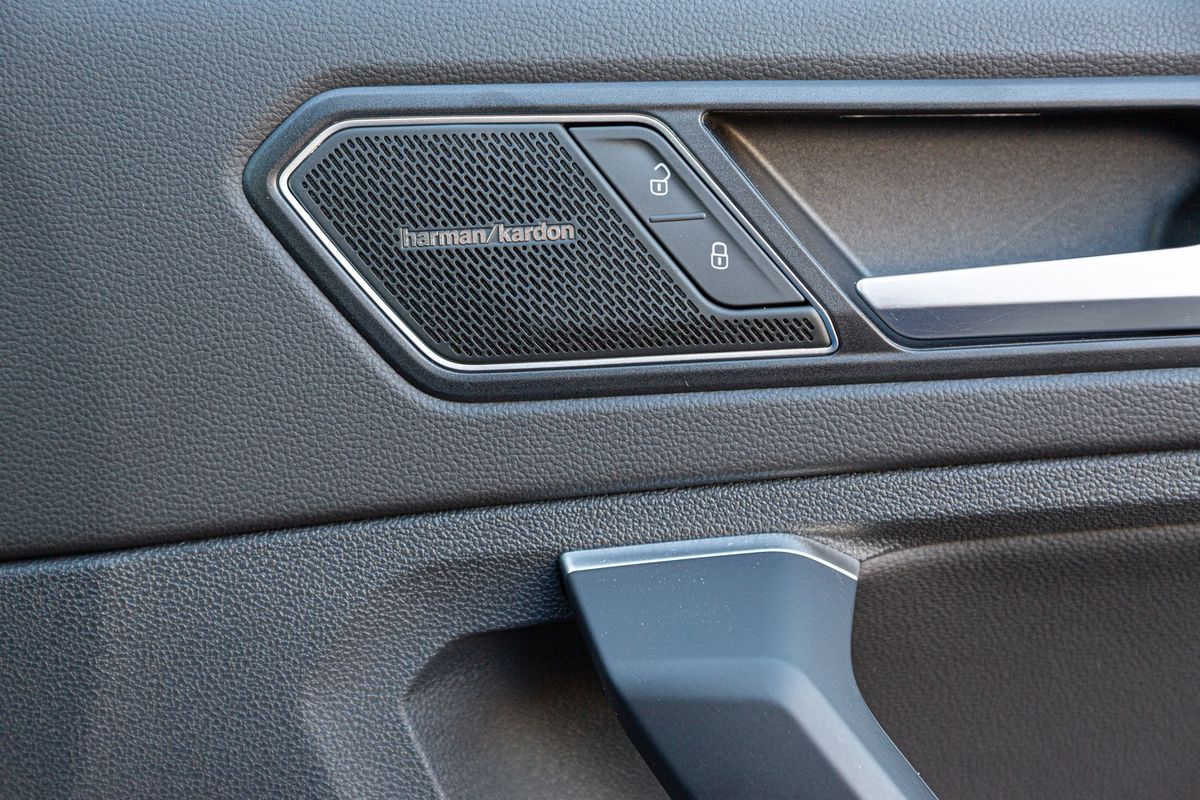
Our test unit came optioned with the 21-inch Estoril wheels (R21 000), Harman Kardon audio (R12 200) and Matrix LED headlights (R14 800), to name but a few of the extra-cost features. Customers can further add keyless entry (R11 900), a head-up display (R11 200), a wireless charging pad (R4 200), a reverse-view camera (R6 400), area (surround) view with park assist (R14 800), a tow bar (R9 900), as well as the aforementioned R-Performance exhaust (R69 000).
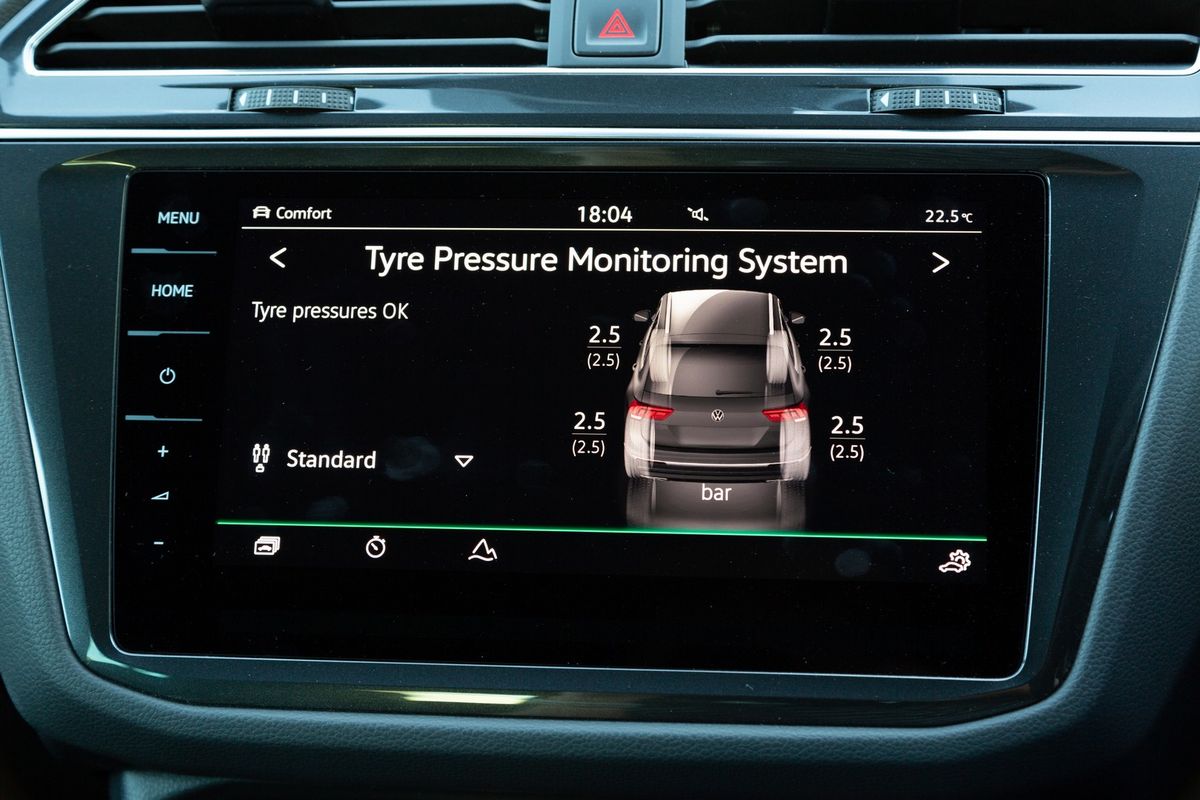
Safety equipment includes 6 airbags, ABS with EBD and brake assist, stability control, hill descent control, as well as tyre-pressure sensors, but, if you want semi-autonomous safety tech (including adaptive cruise control, a lane change system, Park Assist and autonomous emergency braking), you’ll need to dip into the options for the assortment of IQ Drive technology packages.
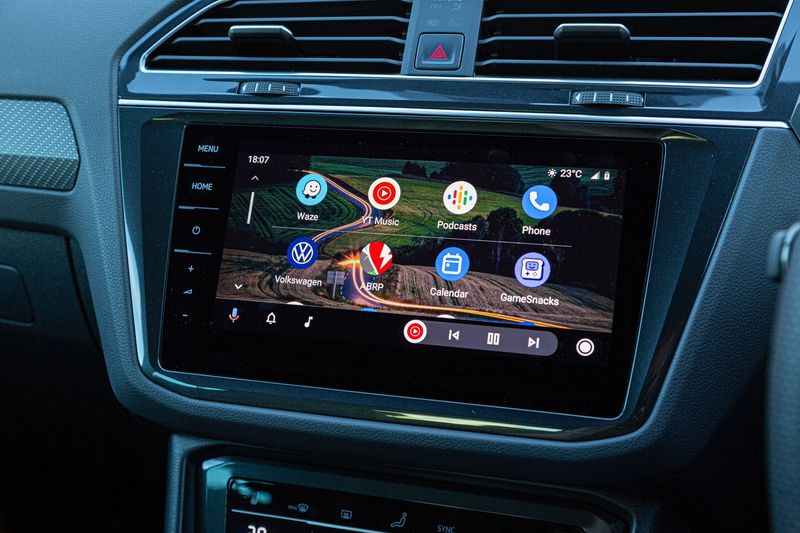
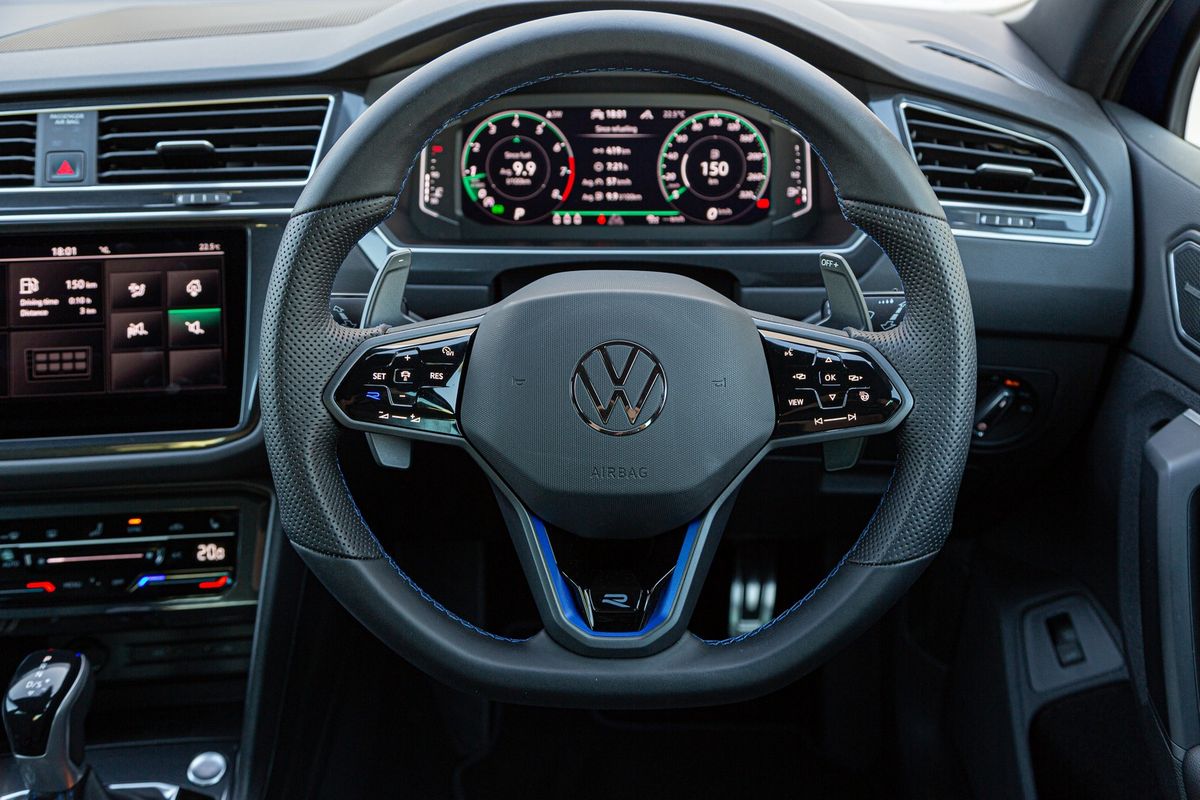
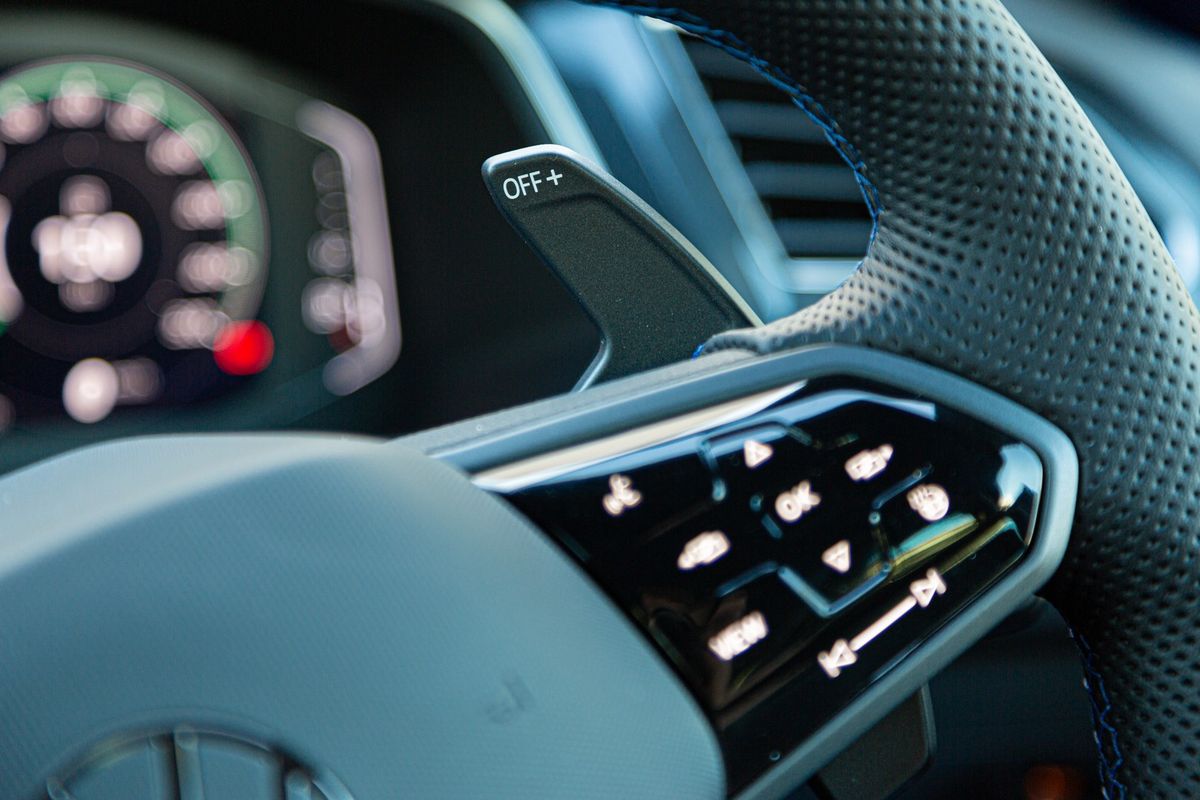
The Tiguan R’s cabin is as an eminently upmarket space and its fit-and-finish is generally good, but, on the downside, the multifunction steering wheel’s bespattered with (the latest iteration of Volkswagen’s) capacitive-touch buttons. They are frustratingly imprecise to use when the vehicle is in motion (when you’re supposed to keep your eyes glued to the road). You’ll get used to them eventually, but we’re relieved VW will phase them out in future.
Packaging and Practicality
While the R’s ride quality is firmer than those of Tiguan derivatives fitted with smaller alloys (despite the best efforts of the flagship’s adaptive suspension), it remains almost as practical as its siblings; a small family (and their luggage) can easily be accommodated in the VW.
With 520 litres of luggage space, the Tiguan’s load bay is more capacious than most in the segment. If you fold the rear seats down, you get up to 1 655 litres – enough to swallow an entire mountain bike and a set of golf clubs. The boot floor is height adjustable, but note there’s no spare wheel, just a tyre repair kit that consists of a 12V compressor and tyre sealant.
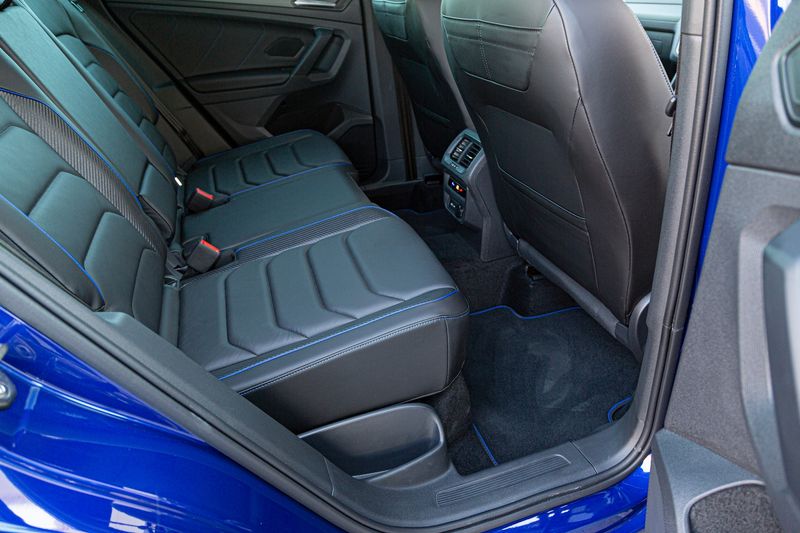
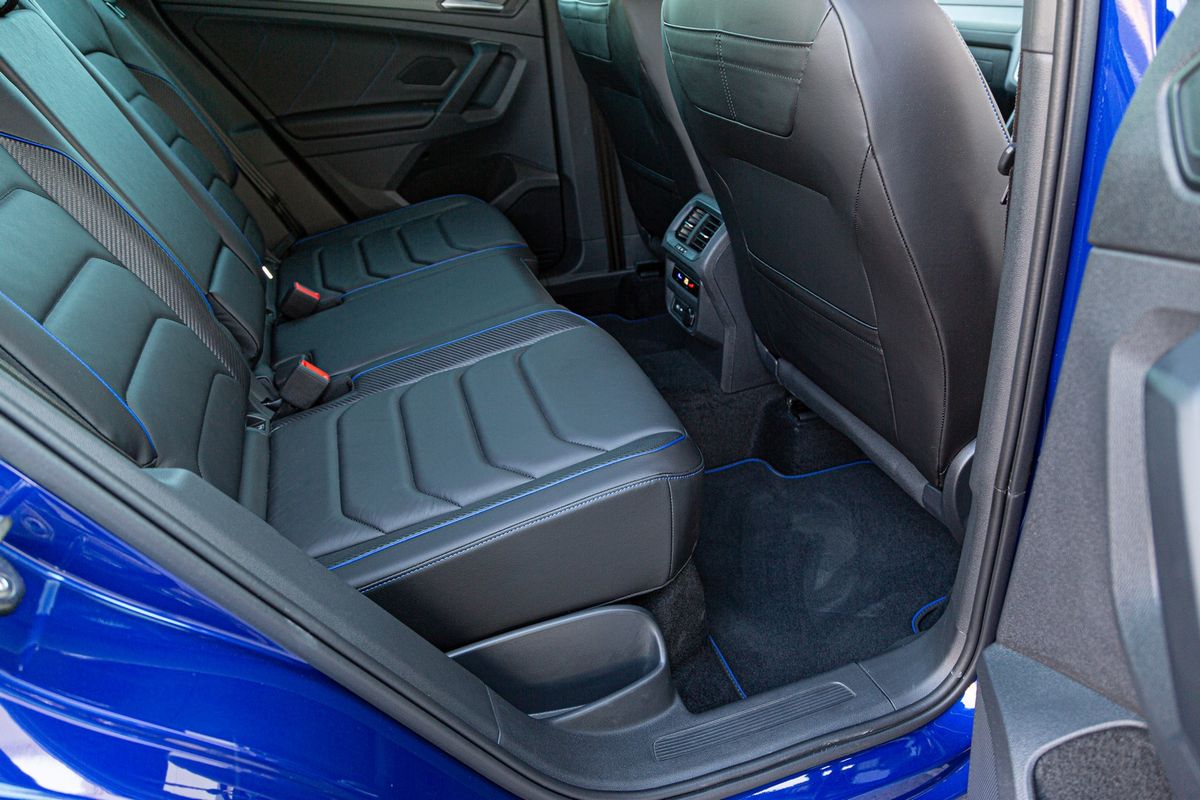
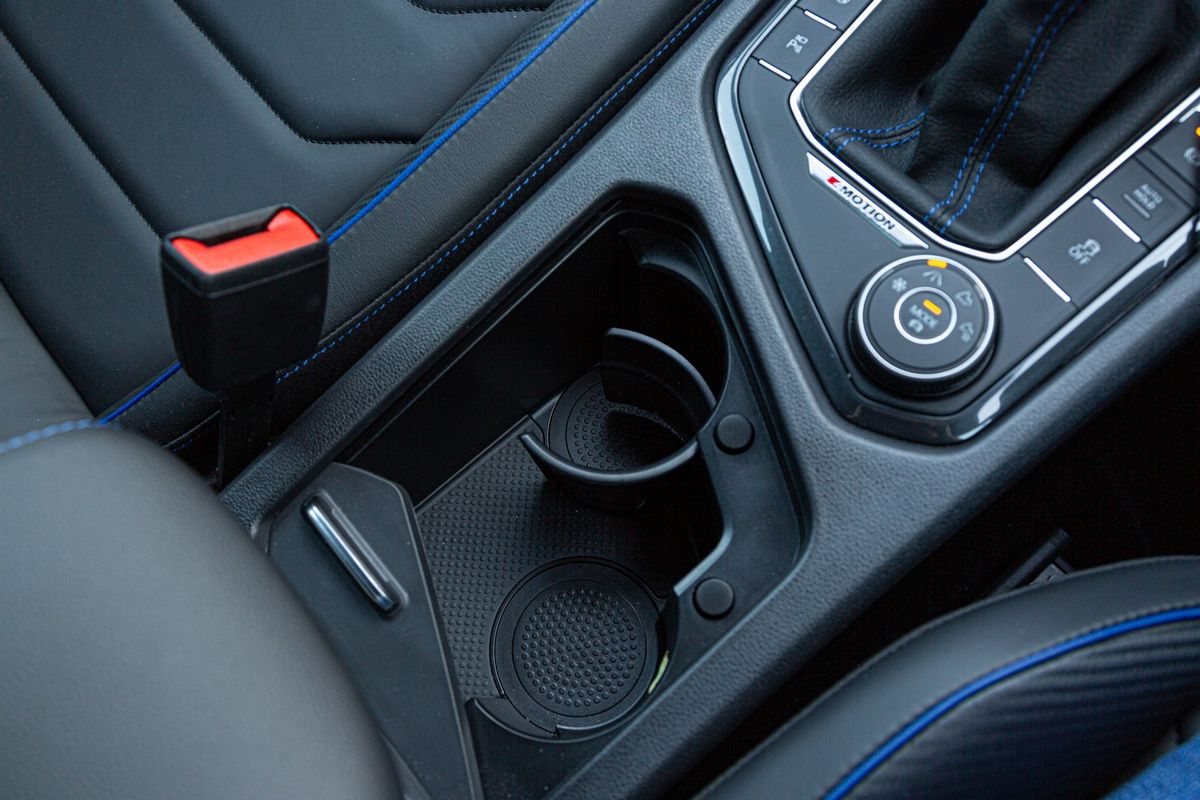
Not only does the Tiguan R’s interior look sporty with its blue stitching and detailing; it has no shortage of oddment storage spaces (we appreciated the cooled glovebox in particular). If you’re not going to be driving the “R”, at least you can enjoy the generous space in the back, where even the tallest of passengers have ample head- and legroom. The central rear armrest features deployable cupholders, while the rear bench can slide and recline for added comfort.
Looking to sell your car? Sell it on Cars.co.za for free
Tiguan R Price and After-sales support
The Volkswagen Tiguan R is priced at R999 900, which includes a 3-year/120 000 km warranty, a 5-year/100 000 km maintenance plan and a 12-year anti-corrosion warranty. Services are required once a year or every 15 000 km.
Verdict
Why did Volkswagen not produce a performance version of its popular family car sooner? Thanks to its R division, the Wolfsburg-based brand had the know-how – the ingredients, if you will, to create a compelling product that’s far more than just the sum of its parts. The Tiguan R looks every bit – and mostly is – a “sensible”, practical family vehicle, yet at the touch of that R button, it transforms into a fun-to-drive and suitably rapid medium SUV.
Should you buy one? R1 million sounds like a lot of money, but at that price point, there’s little to touch the Tiguan R as a sporty-yet-practical family car. Volkswagen’s flagship medium SUV trounces the slightly more affordable BMW X2 M35i in terms of practicality, has more power, but the same torque as the basic Porsche Macan, which costs north of R1.1 million and, yes, it produces 59 kW and 80 Nm less than the 2.5-litre 5-cylinder RS Q3, but considering that it costs almost R200k less than its cousin from Ingolstadt, does it matter?
Just make sure you avoid the largest (21-inch) wheels – they’re not really suited for gravel or mild off-road driving, and splurge on the Akrapovic exhaust for that authentic R experience.
David Taylor

Having contributed to multiple motoring titles as well helping run the public relations machine of the Johannesburg International Motor Show, Dave has experience in both sides of the motoring industry. He's based in the Western Cape and is responsible for the performance testing, photography & weekly YouTube news for Cars.co.za.