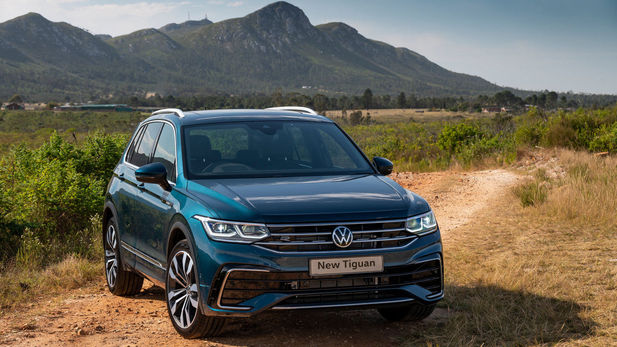


Volkswagen has applied a facelift to the Tiguan, which incorporates exterior styling tweaks, new technologies and interior updates. The names of the derivatives have also changed, but with the range’s prices trending upward, does VW’s best-selling family car (globally) still fit the bill?
What’s new on the Tiguan?

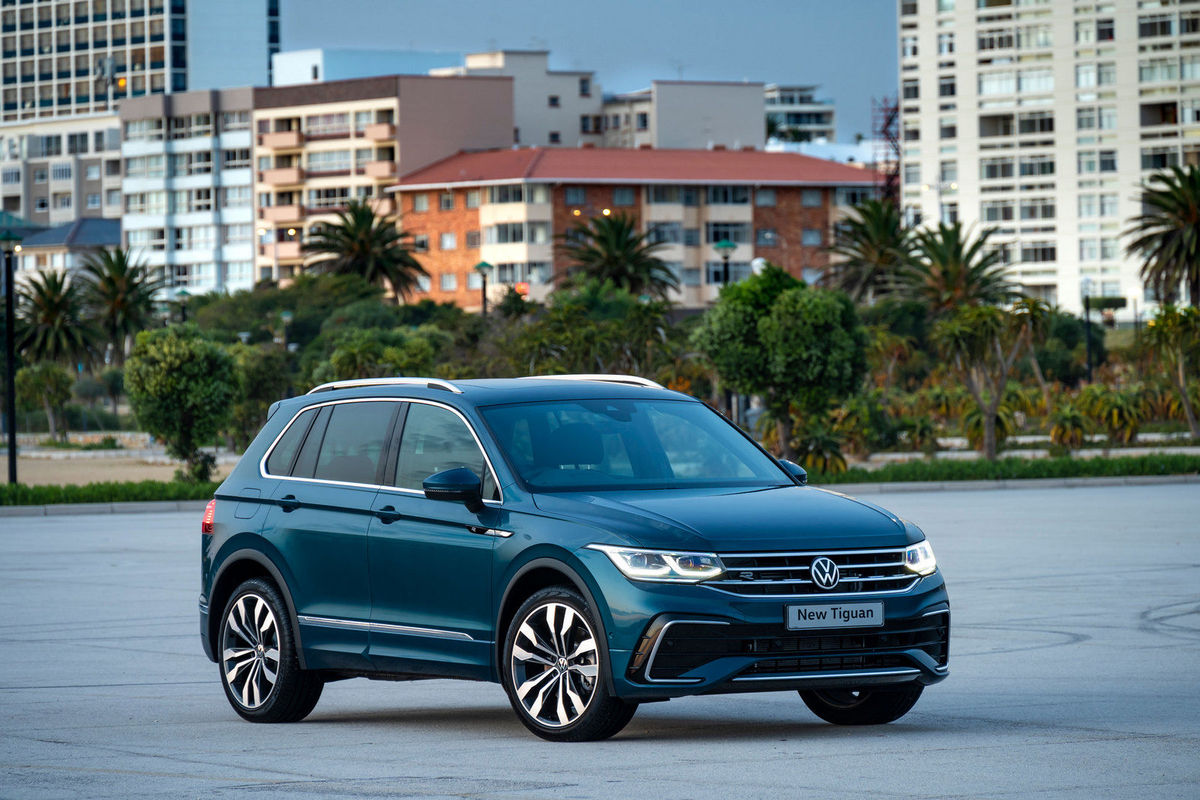
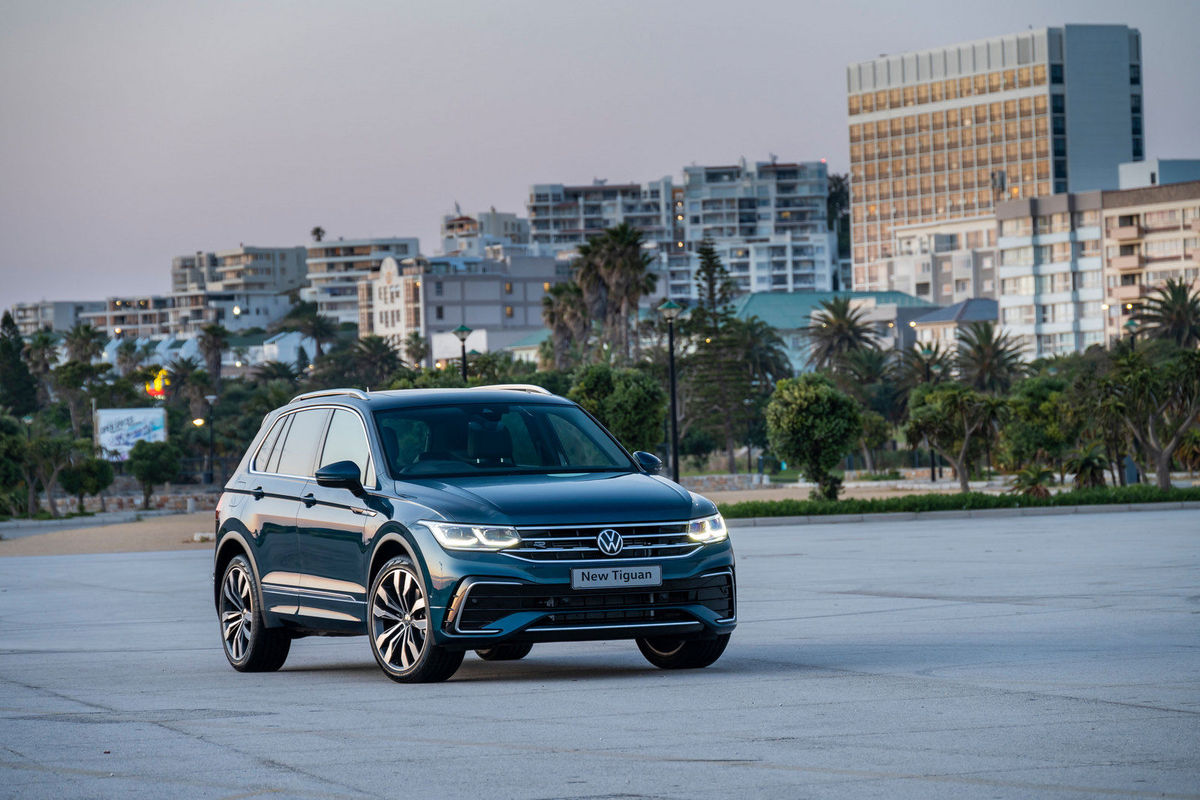
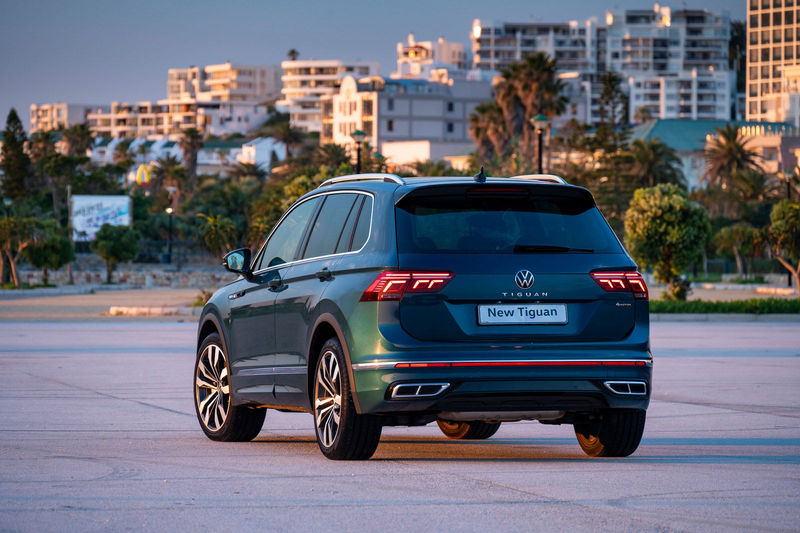
Revisions to the grille and bumpers, plus the fitment of LED lights are the major design changes to VW’s family car.
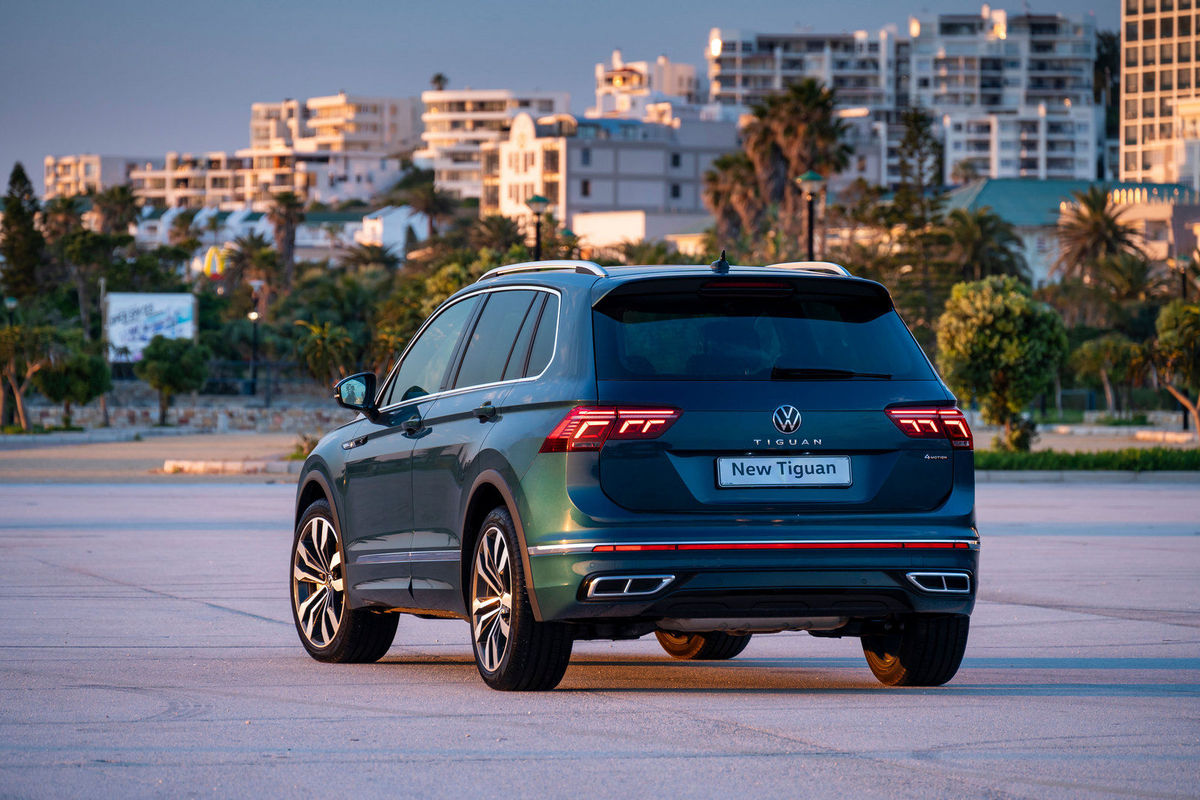
This generation of Tiguan has been extremely popular – globally and locally. The facelift incorporates modest styling updates, most of which have been applied to the front bumper area. The lower section of the bumper has brackets at either end [like in a sentence] to make it look a bit like a GTI. The grille, which was been widened and gained an extra slat, flows into the all-new IQ light system headlamps.
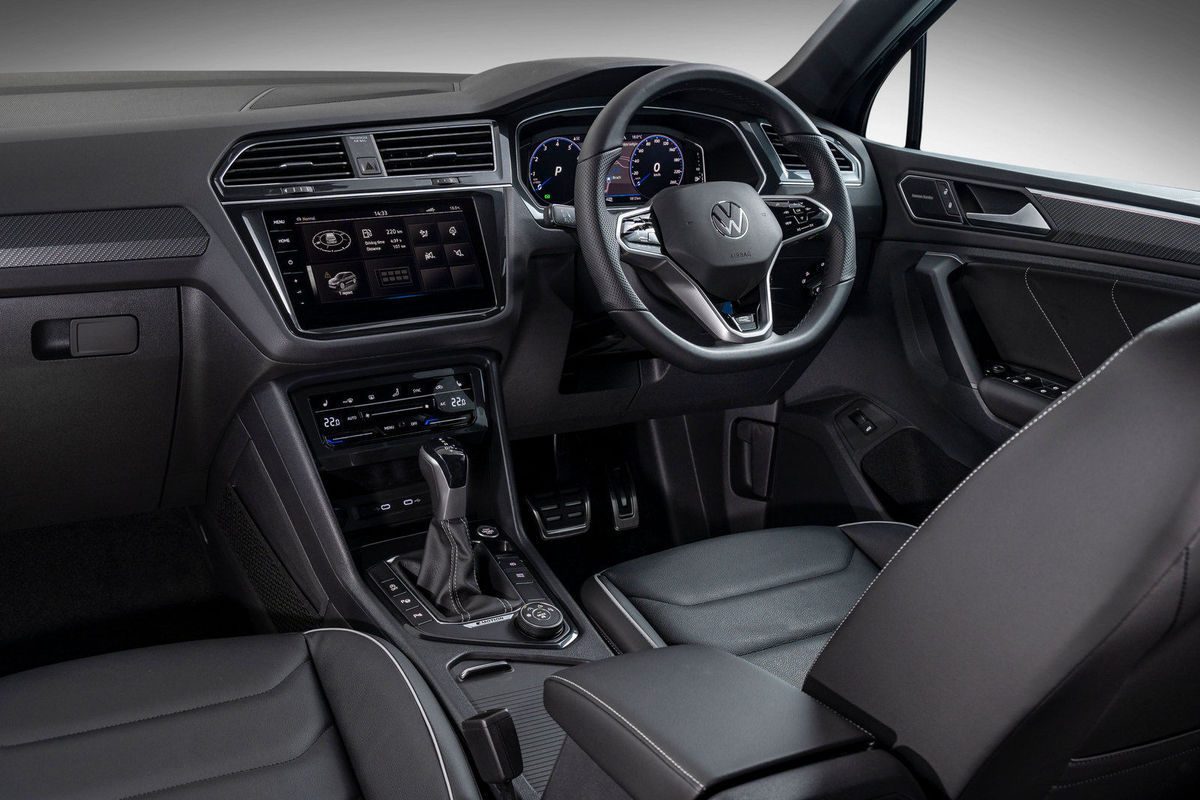
The interior is a veritable touch-fest where most onboard features are controlled by a swipe of this – or a touch of that – rather than physical buttons. Then there’s the addition of a new sound partner in Harmon Kardon and more passive safety features with lane-change assist and forward-collision alert.
The derivative names are different to those of the pre-facelift model, starting with the entry-level version, which is simply called Tiguan. The mid-spec version is the Tiguan Life and the range-topper is the Tiguan R-Line. We drove the very top-spec 2.0 TSI 4Motion R-Line for a weekend as part of the updated model’s local introduction programme.
Which engines does the Tiguan have?
The line-up consists only of petrol engines for now, but a turbodiesel will be added later in 2021.
At launch, there are only 2 engines available, but a turbodiesel unit will join the lineup later in the year. The range starts with a 1.4-litre turbopetrol motor, which produces 110 kW and 250 Nm of torque. This engine is only available in front-wheel-drive configuration and, apart from the base version, it is available in combination with either Life or R-Line trim.
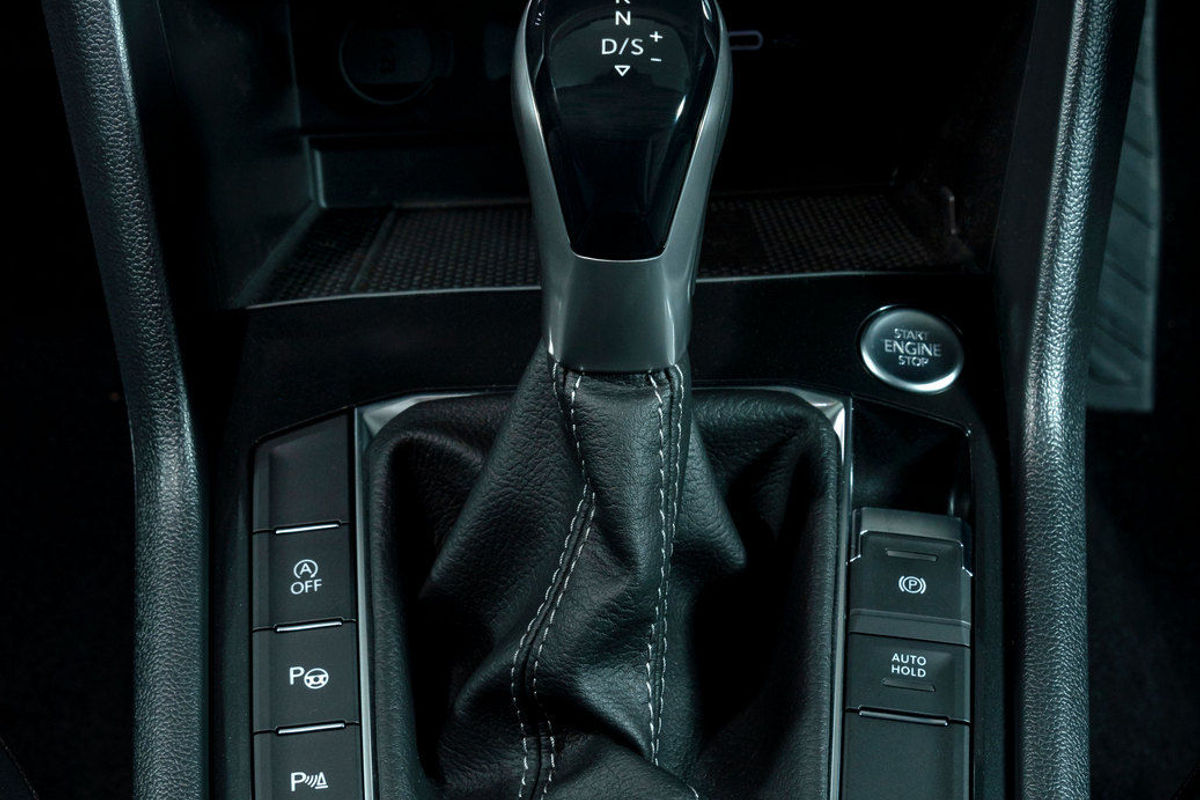
A 2.0-litre turbopetrol derivative, with peak outputs of 162 kW and 350 Nm of torque, tops the range. It’s equipped with 4Motion all-wheel-drive and is exclusively available in R-Line specification. This is the unit we drove for the weekend and while the 2.0TSI 162kW 4Motion R-Line is rather rapid for a family car, it never really felt quite as fast as the claimed 6.5-sec 0-100 kph sprint time would suggest. It has a Sport mode (accessible through the rotary dial in the centre console) that makes the throttle more responsive and adds that familiar GTI vrr-pah! sound to every upshift from the DSG transmission.
Fuel consumption may be a factor to consider when deciding between the engines; the 2.0 litre is quite thirsty round town, but if you intend to drive on the open road often, especially with a full complement of passengers on board, the 2.0TSI should not need to work quite as hard as the 1.4-litre motor (at least, in theory), so the powerplants’ real-world consumption figures should be closely matched. After clocking up 400 km with the test unit, we saw an indicated consumption of 9.6 L/100 km, but if efficiency is a major concern, it may be best to wait for the arrival of a turbodiesel derivative later this year.
What’s the Tiguan like to drive?
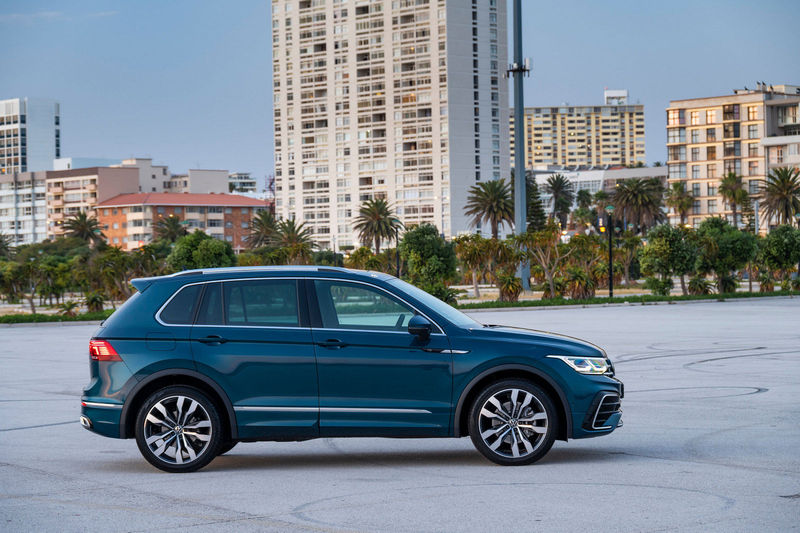
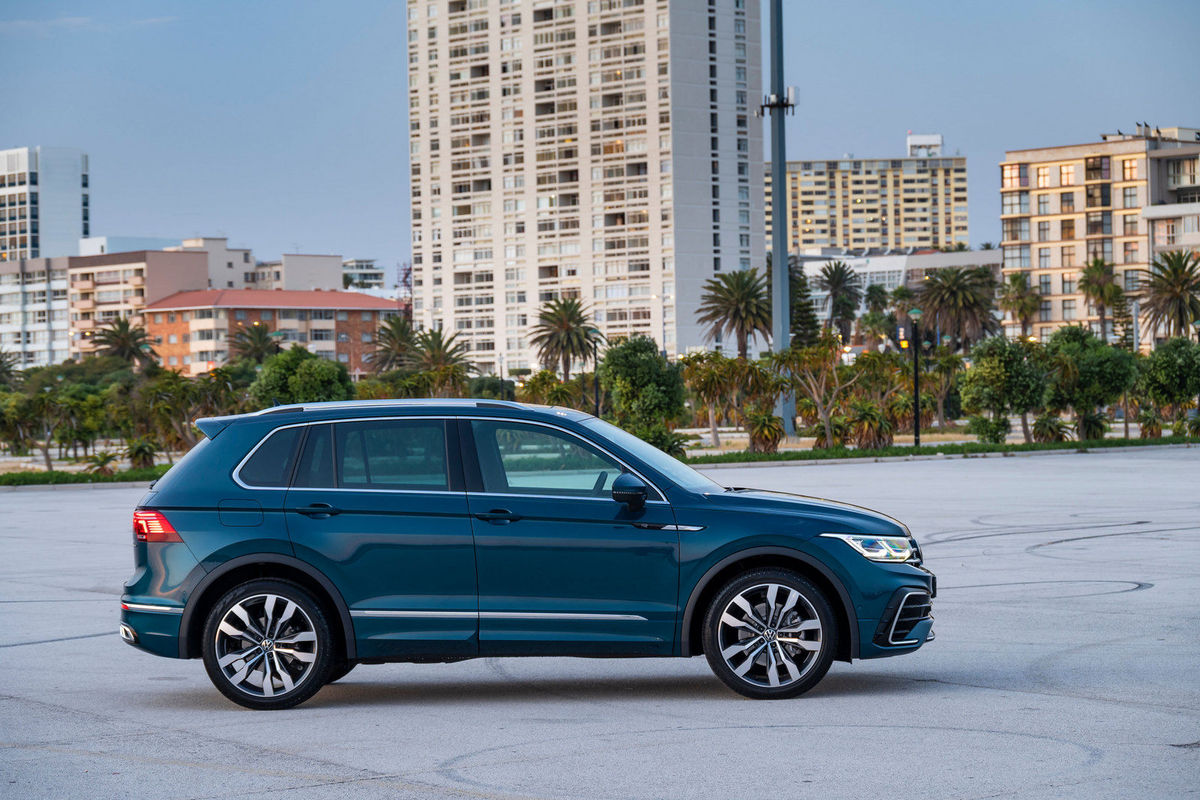
20-inch wheels are an optional extra on the R-Line model.
Considering that there haven’t been discernible changes to the MQB platform, which underpins the Tiguan, we weren’t expecting any major changes to the Volkswagen family car’s driving dynamics.
The optional 20-inch wheels (as fitted to the 2.0TSI 162kW 4Motion R-Line test unit we drove) certainly ramp up the Tiguan’s kerb presence, but they also exacerbate the family car’s firm ride quality! The MQB platform underpins several VW Group products and although it benefits the models’ ride refinement on tarred roads, it doesn’t fare particularly well when traversing potholed- or washboard gravel surfaces. Granted, the Tiguan’s on-road demeanour is not awful when you drive the family car on dirt roads, but the going is noticeably shakier than in some of the Volkswagen’s newer competitors.
Still, the Tiguan’s suspension setup is nicely suited to travelling on freeways and country roads where the firmness is put to good use to aid the vehicle’s body control and instil driver confidence through sure-footed road-holding. The driver’s seat offers good adjustability and provides impressive vision out of the Wolfsburg-based brand’s newcomer.
The 7-speed dual-clutch automatic transmission shifts even more smoothly than before; in the past, the ‘box could be caught out because it tended to shift up to the highest gear as quickly as possible (arguably, too soon). Now the ‘box holds onto gears for slightly longer, which means you don’t have that lull (while the software actuates multiple gear changes) before notable forward progress occurs.
The new IQ lighting package, which was also optionally fitted to the test unit, proved impressive. The Matrix LED headlamps light up the road, well, brilliantly – their main beams virtually mimic sunlight! The headlamps also come with an auto-dip function, which creates a dark patch for oncoming drivers so that they won’t be blinded by the intense light discharge, but perhaps the Matrix LEDs are a little too effective for their own good – on multiple occasions, oncoming vehicles’ lights were flashed at us even though those vehicles’ drivers weren’t supposed to have the Tiguan’s beams directly in their eyes.
What’s it like inside?

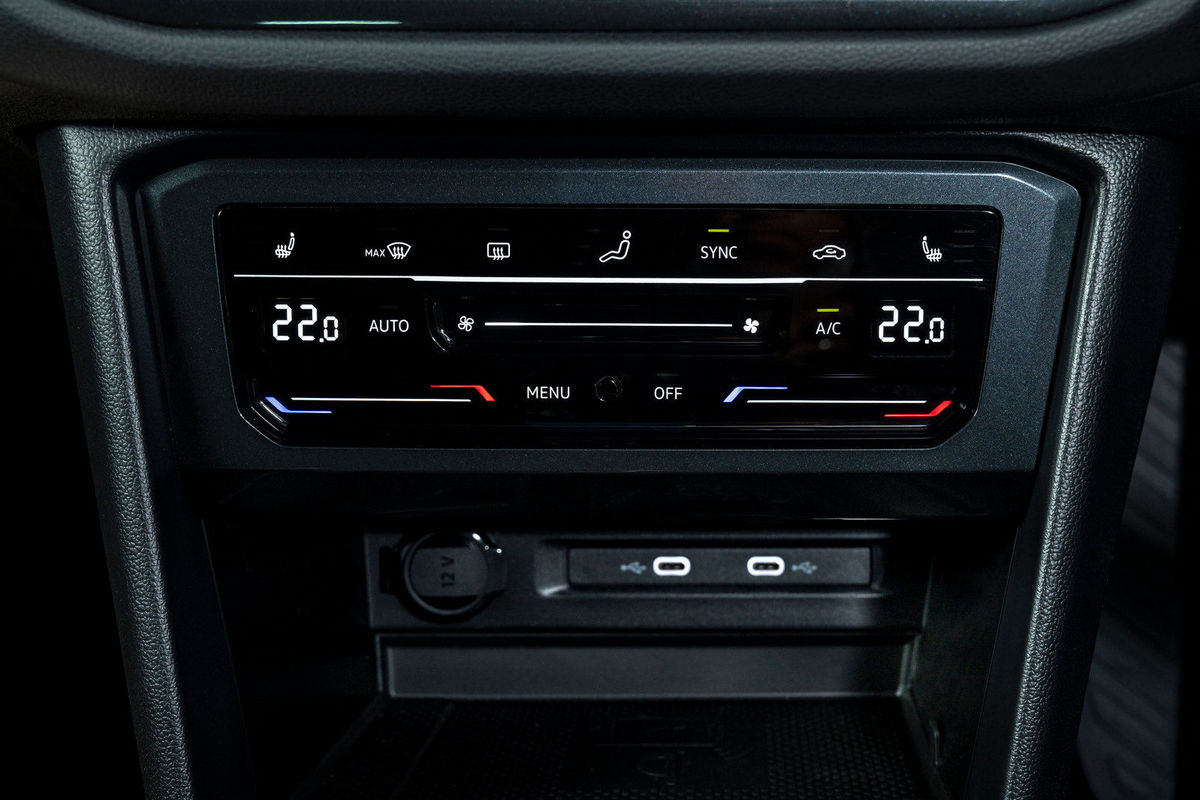
The Tiguan’s climate control buttons are all touch-sensitive now.
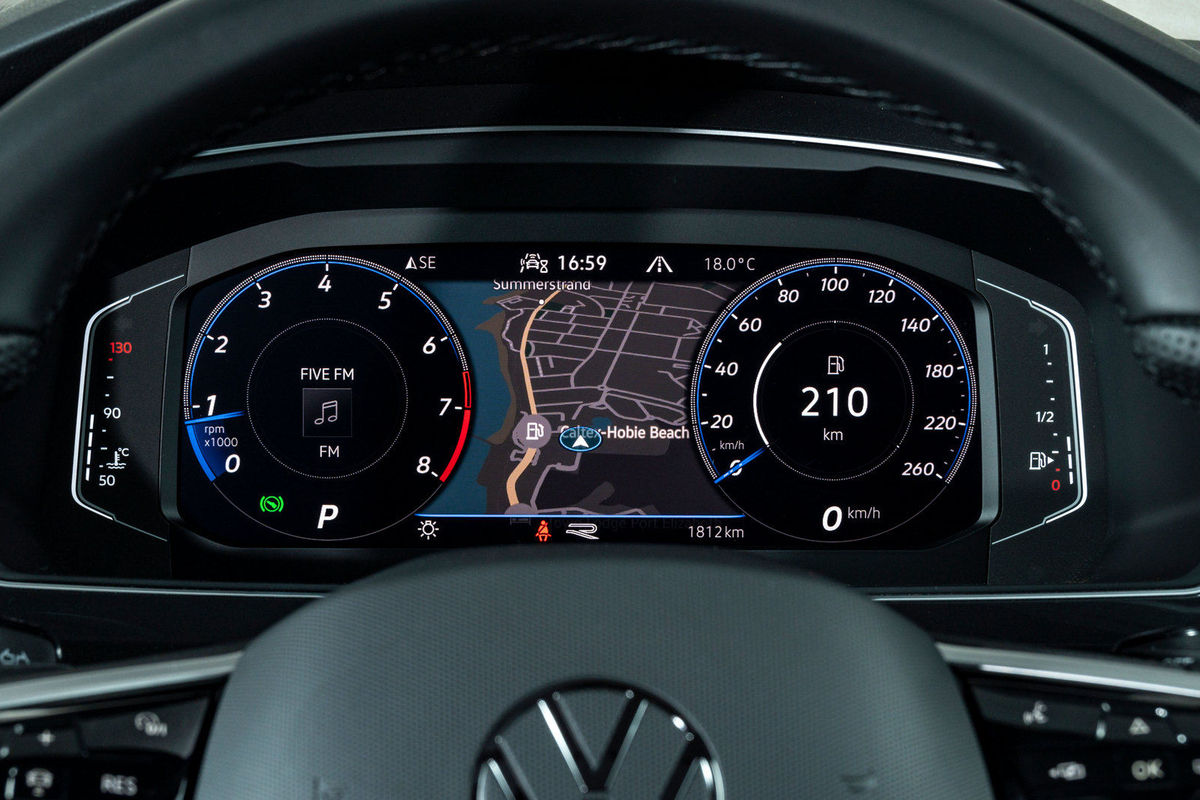
The Tiguan’s interior has been thoroughly modernised – it’s now a much more digitised affair. The toggles for the climate control console are touch-sensitive… or you can swipe your finger across the blue or red sections to make larger temperature adjustments. The instrument cluster, meanwhile, has a newer digital design that’s more colourful; it brings the cluster to life and is one of the best in the segment!
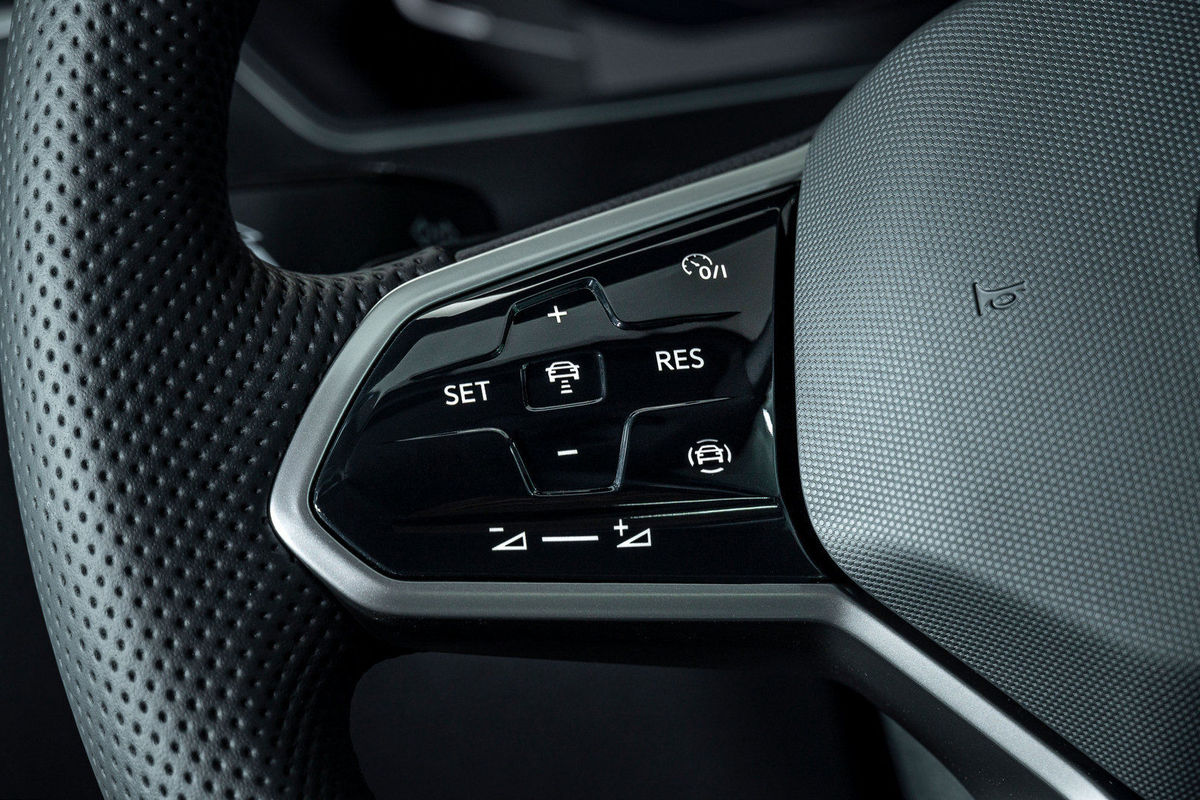
The steering wheel buttons are all touch-sensitive too and covered in a glossy Piano Black finish. These look great, but we found it a little difficult to make precise adjustments to the volume and cruise control settings; conventional physical buttons (aided by built-in resistance) would have worked just as well, if not better.
What’s more, the optional Discover Pro infotainment system comes with App-Connect, which makes activating Apple CarPlay and Android Auto as simple as initiating a wireless connection. This, in combination with the wireless charging pad located directly underneath the climate control console, represents a very user-friendly connectivity setup.
Space-wise, the Tiguan offers plenty of room for aft passengers and the ability to recline the rear seatbacks for more comfort is a boon. The claimed load-bay capacity is 520 litres and while the hold is quite deep, it isn’t as wide at the entry point as some of its rivals such as the Peugeot 3008 or Subaru Forester. With the rear seats folded down, the Volkswagen offers 1 655 litres of utility space.
Pricing and after-sales support
Prices continue to rise rapidly in the family car segment. The Tiguan range starts at R521 000 and tops off at R710 000. All derivatives are sold with a 3-year/120 000 km warranty and a 5-year/90 000 km service plan. For full specs and pricing click here.
Summary

Will the increase in pricing still make the Tiguan a popular choice in the family SUV segment?
Unless you are eagerly awaiting the arrival of the Tiguan R, there is little to choose between the driving experiences offered by pre-facelift and updated Tiguan derivatives. The Volkswagen remains an accomplished premium product within the family car/compact SUV segment, which is why it commands a premium over its rivals. The engine lineup remains good with a turbodiesel option in the pipeline.
The technology- and interior updates modernise the cabin and make it more upmarket, even if some of the touch-sensitive buttons are, paradoxically, slightly more difficult to use than conventional buttons.
There’s no doubt that buyers will want many of the features on the Tiguan’s options list – each of which pushes up the derivatives’ asking prices, of course. Given that these premium family cars are becoming rather expensive, it’ll be interesting to see if buyers will start looking to the upper end of the compact family car segment… or push on to the more 4×4-capable bakkie-based Adventure SUVs.
Ashley Oldfield

Ashley has been riding or driving some sort of motorised vehicle since his 4th birthday when he got a Yamaha PW50. Equipped with years of racing experience, Ashley took up journalism and became a writer for some of South Africa’s best motoring magazines and online publications. He is SA’s first (and only) GT Academy winner having raced professionally overseas. He now serves as the Content Manager at Cars.co.za, putting his wealth of racing and driving experience to good use.