Volkswagen is a major producer of battery-electric vehicles, but it offers none of them in the South African market. To find out about Volkswagen SA’s Electric Car Plan for 2023/2024, we chatted with VWSA’s head of passenger cars, Steffen Knapp.
We last chatted with Volkswagen SA about its electrification strategy back in October 2019, on the eve of the Frankfurt Motor Show, where Volkswagen unveiled its brand-new ID.3 to the world. Of course, a lot has happened throughout the past 3 years, with the pandemic, lockdowns, supply-chain maladies, logistical challenges, the war in Ukraine and so on. Since early 2020, the world has changed radically.
Right now, at the beginning of March 2023, there are many brands that offer battery-electric vehicles (BEVs) for sale. Granted, the overwhelming majority of those are premium car makers, with BMW Group, Audi, Porsche, Mercedes-Benz, Jaguar and Volvo offering models that produce zero carbon emissions.
This year will see a few more players join the market, with Haval’s ORA earmarked for introduction, while strong rumours persist that South Korean brands Kia and Hyundai’s local subsidiaries will bring in some of their flagship electric cars for testing/marketing purposes at some point in 2023. There’s also talk that the Chinese brand Build Your Dreams (BYD) will launch some of its offerings in Mzansi later this year.
Why the delay?
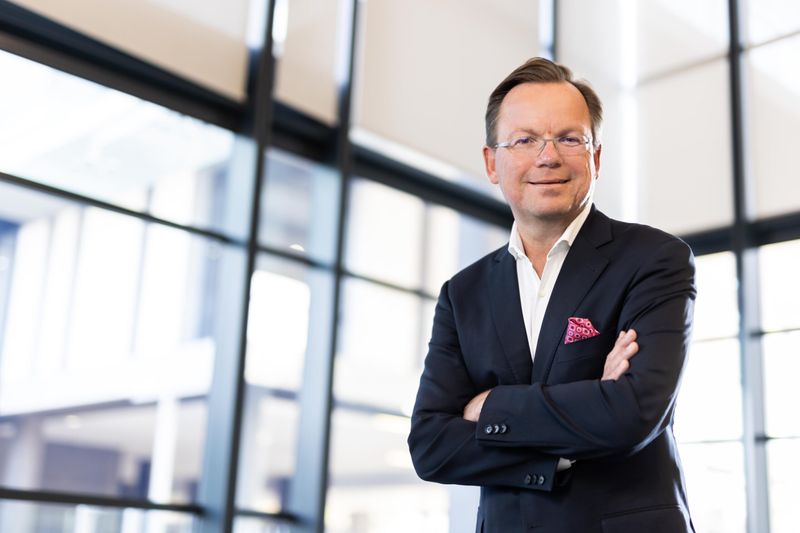
We’ve seen many comments on our social media platforms about why there aren’t any Volkswagen electric cars on sale in the Republic (at least, not yet) and Steffen Knapp, Head of Passenger Cars at Volkswagen South Africa (VWSA), was quick to point out that current sales of BEVs are nominal.
“First of all, when we (launch a BEV) it needs to achieve relevant sales volumes. If it’s going to achieve fewer than 500 unit sales (a year), in my point of view, it’s very difficult to justify (bringing it to market).
“We are a volume brand and perceive ourselves as the most aspirational volume brand in South Africa and to sell 3, 5 or 10 cars a month (of a BEV model), that’s not the scale.”
Evidently, Volkswagen SA is playing the long game here and has been testing the waters already.
“We ran multiple test fleets to gain an understanding of customers’ apprehensions (and) consider how we should launch a BEV in the South African market. We also learnt lessons from the launches of our competitors, which showed us that we need to be selling the vehicles in a different way,” he added.
You can bet that VWSA has been closely studying the marketing and sales performance of every electric car on sale in the local new-vehicle market! One of its test fleets comprised VW e-Golfs, which were driven by journalists, potential customers, dealers and VW staff. Last year, VWSA ran an ID.4 test fleet.
And what about vehicle availability?
“The ID.4 will be the first car we’ll launch (in South Africa),” Knapp told Cars.co.za.
That’s exciting news, but the ID.4 has been around for a couple of years (it was named the 2021 World Car of the Year). So, why the delay? Knapp points out that, initially, only one plant was building the ID.4.
“When the ID.4 was available, it was only available from one plant in Zwickau (Germany) and it was not possible to get the capacity, which delayed us to a certain extent. Now, the ID.4 is being built in the US, in China and in Zwickau, so the availability situation is much improved.”
What is Volkswagen SA’s electric car business strategy?
Most new-car sales in South Africa result from cash transactions and vehicle-finance agreements, but Volkswagen SA will be going the leasing route with its electric cars. VWSA operates a leasing programme called EasyFinance for its ICE vehicles and you’ll notice marketing efforts around that begin to ramp up.
“(A BEV) needs to be sold in a different way,” said Knapp. “We anticipate that consumers will grow to embrace leasing, but vehicle ownership is deeply ingrained in the mentality of South African motorists.”
But, as he pointed out (with a laugh), most new-car deals are financed, which means that unless you’ve paid off the car, you still won’t own it. “As a matter of fact, customers never own the vehicle, because 72% of them are financing. So we have to go to the using – not owning – philosophy,” he quipped.
Essentially, the leasing programme for BEVs is a guaranteed future-value product (GFV), Knapp explains.
“When the ownership is not with the customer anymore, the customer has three options: 1. Bring the car back and get the residual value paid, which is guaranteed, 2. Bring the car back to the dealer who sells them a new car, or 3. They decide to keep the car and refinance it for another two or three years.
“This concept is already a major shift in the mindset of South African customers,” Knapp added.
Leasing takes some sting out of depreciation
“I’m s**t scared to see the residual values of other brands’ BEVs in our market. That can destroy a brand, so if you go the leasing/guaranteed future value route, you define the value, and you can get the car back, meaning you can also control how the car is disposed of,” he added.
Pricing is a sticking point. Electric cars tend to be pricier than their petrol/diesel counterparts – not only because they cost more to produce, but Government imposes a higher tax on BEVs. However, VWSA is keen to point out that the numbers are favourable when you look at it from a running cost point of view.
“There’ll be a sales guy that will explain the costs of maintenance, fuel consumption, residual value, and insurance, so you (the customer) can get a Rands per kilometre price (for reference), and by doing this (even without any government subsidies), our business case shows that after 5 years, the electric vehicle is positive and more affordable basically than an internal combustion engine,” said Knapp.
If you already have a solar setup at home, there’s a strong potential to reduce your costs even more.
MORE: How many EVs and Hybrids were sold in SA in 2022?
What about load shedding?
Despite the country’s unreliable electricity supply and public fear of blackouts, Knapp is not bothered. “At the end of the day, you have to see how many kilometres a South African is driving per day. If I take myself as an example, I am commuting from Fourways to Sandton every day and that’s around 40 km back and forth. So, if I have a range of 500 km, I just need to plug it in at night and it’s charged again.”
It’s important to note that even when plugged into a household outlet (3.5 kWh) overnight, an average BEV should gain about 150 km in 10 hours, even with a 2 hour power cut factored in. If you opt for the OEM 7 kWh wall box, your charging speed doubles (but it does not need to be plugged in that long).
“If you are working for a company, like in our case, we have charging stations in our garage, with generator backup. In terms of energy supply, I don’t see it (load shedding) as a hindrance (or obstacle) to the local-market introduction of electric vehicles. It’s more about mindset,” Knapp adds.
Will Volkswagen SA invest in charging infrastructure?
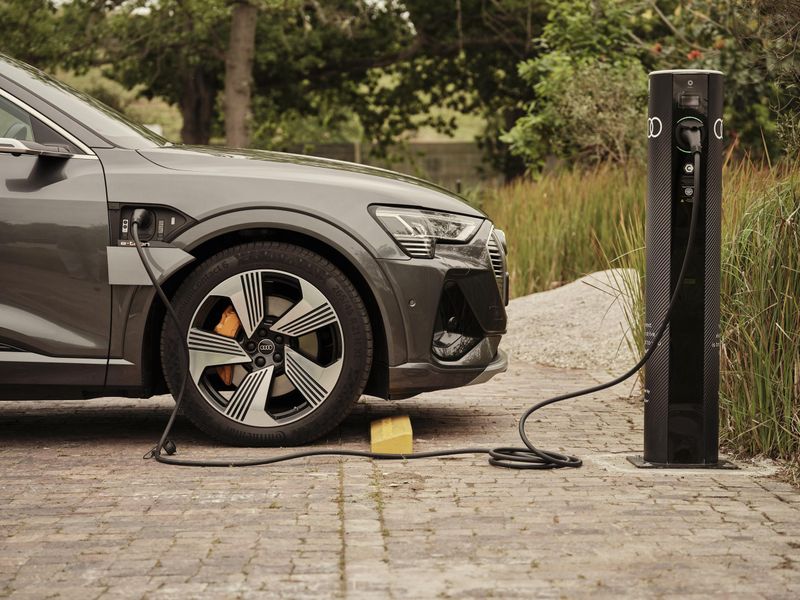
These days, there are far more electric-car chargers in South Africa than you may realise, especially in major metropolitan areas. “The penetration of electric car chargers in South Africa is one of the highest in the world. The next challenge is speed related, these chargers are not fast DC chargers. At the moment, I think people can handle it, but going forward, (we’ll) obviously have to work on this.”
MORE: See South Africa’s charging network right here
“So, going forward, our group (the Volkswagen Group of South Africa) will continue to invest in charging infrastructure,” said Knapp. “The EV-charging infrastructure has improved substantially, with Audi SA contributing significantly in that regard. The next wave, at least in theory, will be to equip each of about 4 500 service stations with an electric station that’s not 100% dependent on the grid. It’s all possible.”
MORE: Audi SA invests further into charging infrastructure in South Africa
Which electric cars are Volkswagen SA likely to offer?
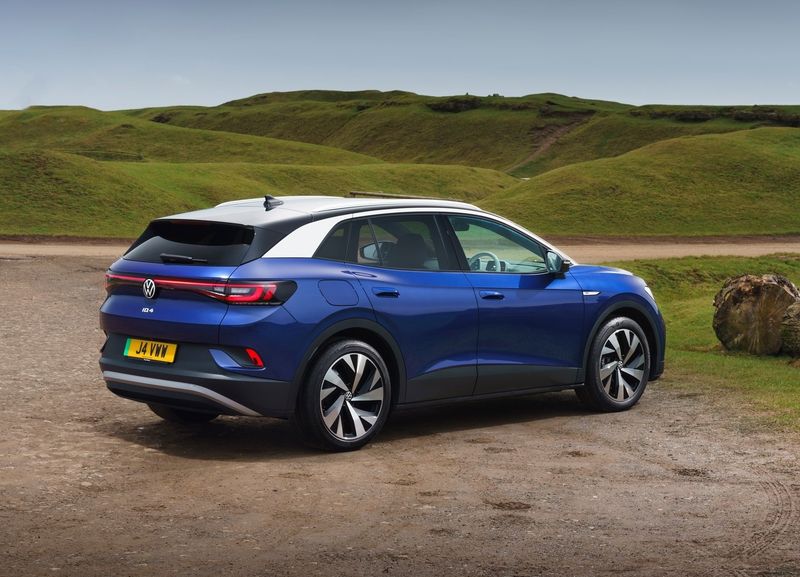
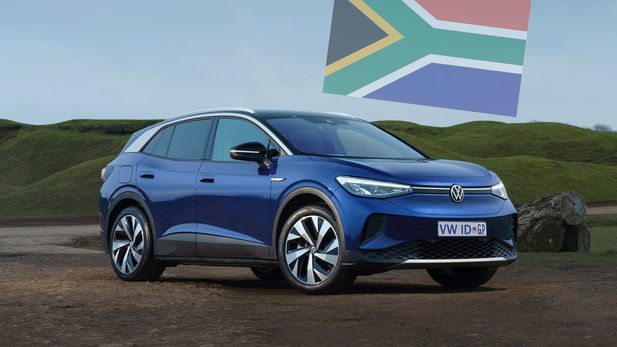
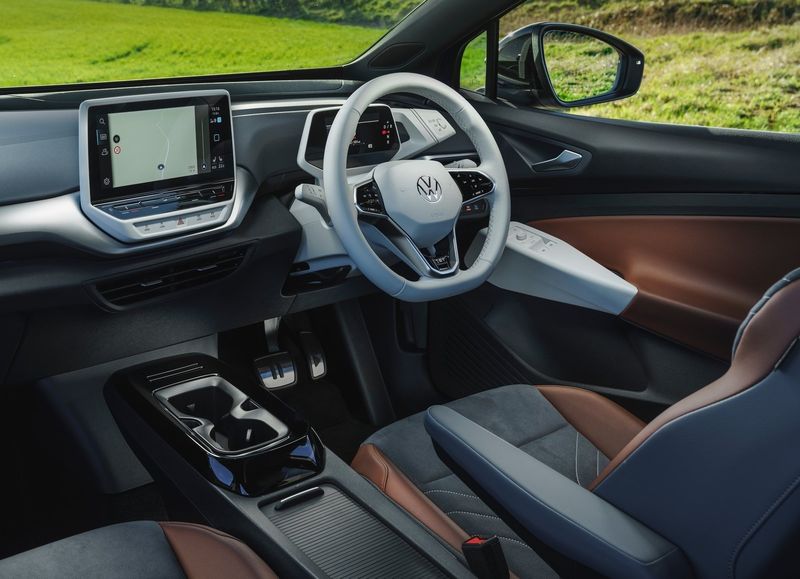
With the market showing a strong predilection for SUVs, it makes sense for VWSA to introduce only the crossover ID model. Meet the Volkswagen ID.4, an electric family-sized crossover. It’s fractionally larger than the Volkswagen Tiguan medium SUV, which should give you some sense of the ID.4’s dimensions.
The uptake of electric cars has been stymied by, yes, lofty purchase prices, but “range anxiety” as well. However, thanks to its 77 kWh battery, the ID.4 is claimed to travel up to 520 km on a full charge. It’s not going to be slow either, with 150 kW and 310 Nm on tap as well as an 8.5-second 0 to 100 kph time.
As we’ve mentioned, the ID.4 debuted overseas in 2021, but thanks to over-the-air updates VW is able to keep the model relevant and introduce UX improvements without the car needing to go to a dealer.
MORE: Volkswagen ID.4 is 2021 World Car of the Year
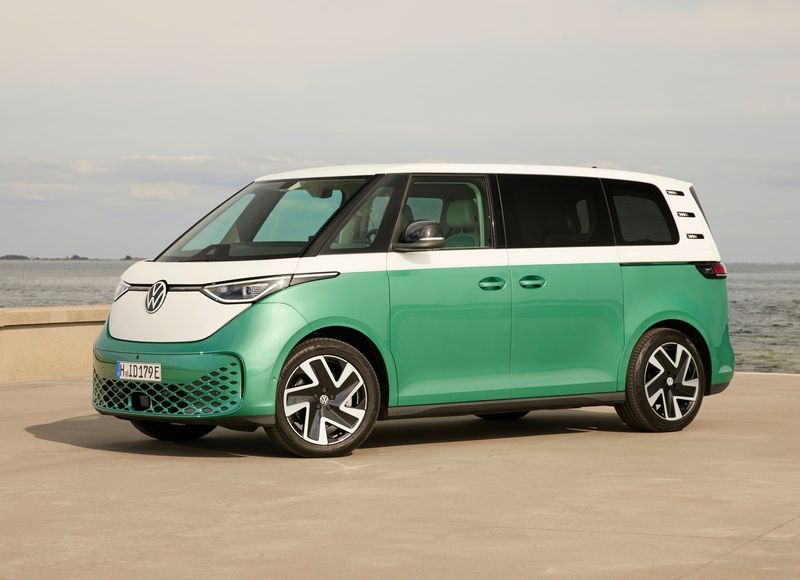
ID.4 is a great starting point for Volkswagen SA’s “new energy vehicle” line-up. Comparisons between the ID.4 and Tiguan will be inevitable, in terms of ownership and running costs. Of course, if it were up to us, we’d have the Volkswagen ID Buzz in a heartbeat – South Africans have a love affair with the Kombi!
At this stage, there’s no confirmation that the ID Buzz will be coming to Mzansi, but Knapp did say that it could come as a commercial vehicle in the future, so watch this space.
How soon will we see an electric VW on South African roads?
A lot sooner than you’d think, in actual fact. Some of you may even have seen the Volkswagen e-Golf research cars on SA roads and you’re likely to see the ID.4 test units in 2023. As for customer cars?
“I hope relatively soon – it could be before the end of this year (2023). It will depend on our supply chain situation (which has limited stock levels of some models severely), we are working to have (the ID.4) here by at least next year. An SUV is still, I believe, the best solution for mobility in South Africa and, based on sales data, the SUV market (continues to grow at a rapid rate),” Knapp concluded.
David Taylor

Having contributed to multiple motoring titles as well helping run the public relations machine of the Johannesburg International Motor Show, Dave has experience in both sides of the motoring industry. He's based in the Western Cape and is responsible for the performance testing, photography & weekly YouTube news for Cars.co.za.