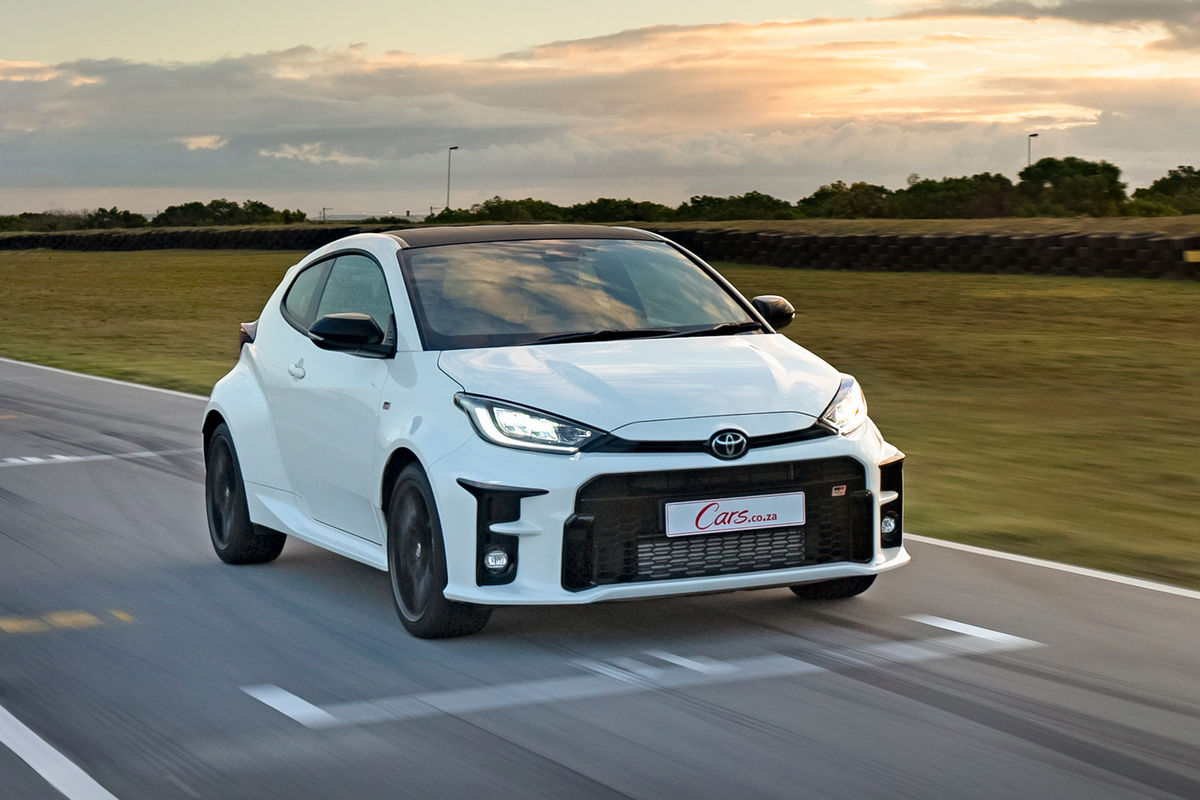
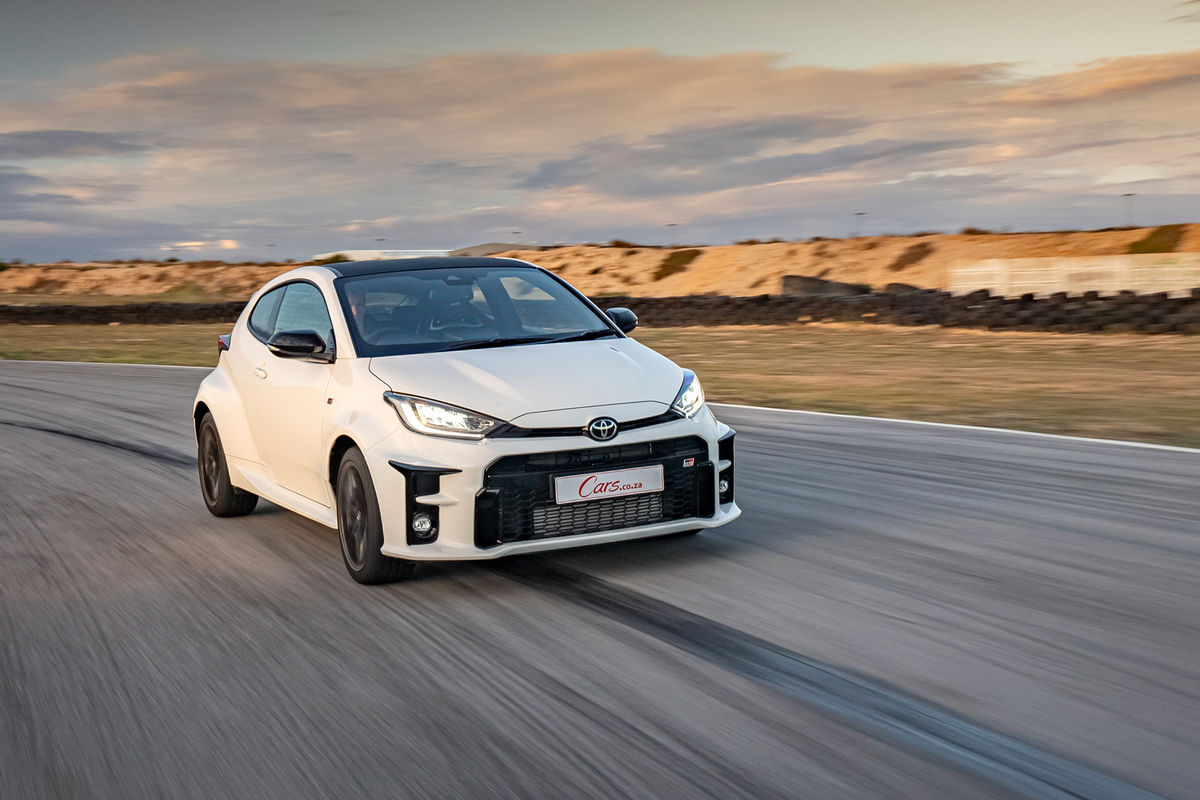
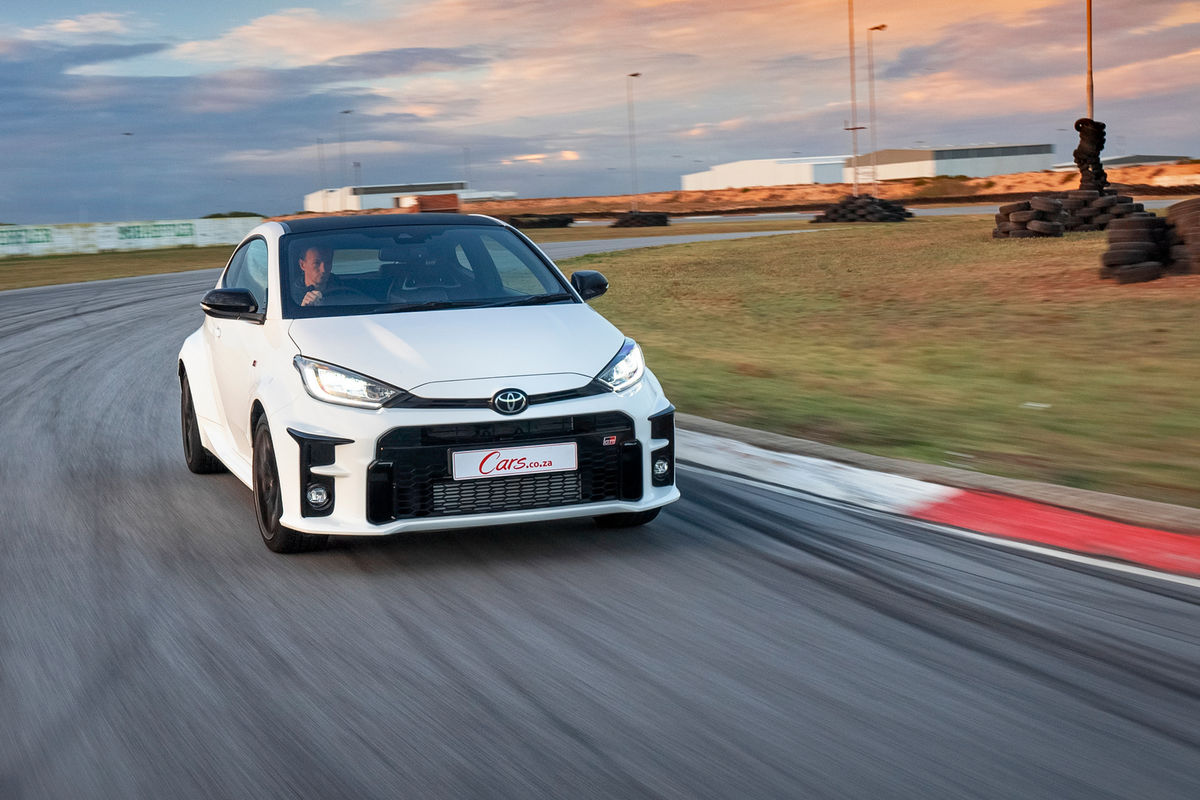
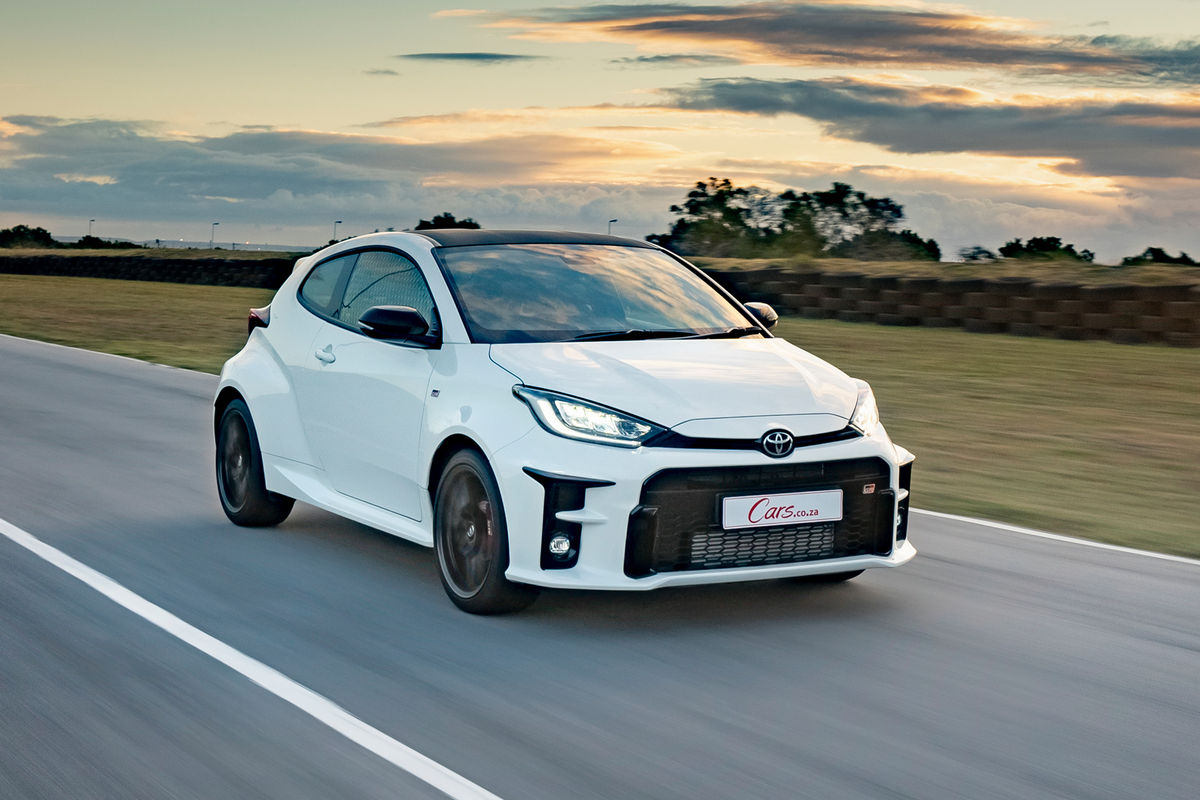
Toyota used to be widely criticised for being a mass producer of unremarkable cars with precious few true performance models in its line-up, but the Japanese auto giant has executed a complete 180 in the past 3 years. This exceptionally talented GR Yaris is a World Rally Championship homologation special, but just how well does a “rally car for the road” fare in real-world conditions? We spent 2 days thrashing the newcomer around the Aldo Scribante race circuit to find out.
We like: Unbelievably fun to drive, lightweight, 3-cylinder with insane power.
We don’t like: Why has it taken so long for Toyota to produce something this good? Maybe the interior could highlight how special this car is.
Fast Facts:
- Model Tested: GR Yaris
- Price: N/A (ETA July 2021)
- Engine: 1.6-litre 3-cylinder turbopetrol
- Power/Torque: 198 kW and 360 Nm
- Transmission: 6-speed manual
- Fuel efficiency: 7.6 L/100 km
- 0-100 kph: 5.5 sec (claimed)
- Top speed: 230 kph (claimed)
Serious about buying?
Some Toyota dealerships regularly offer great deals. See our Car Specials page here!
What makes it a GR Yaris?
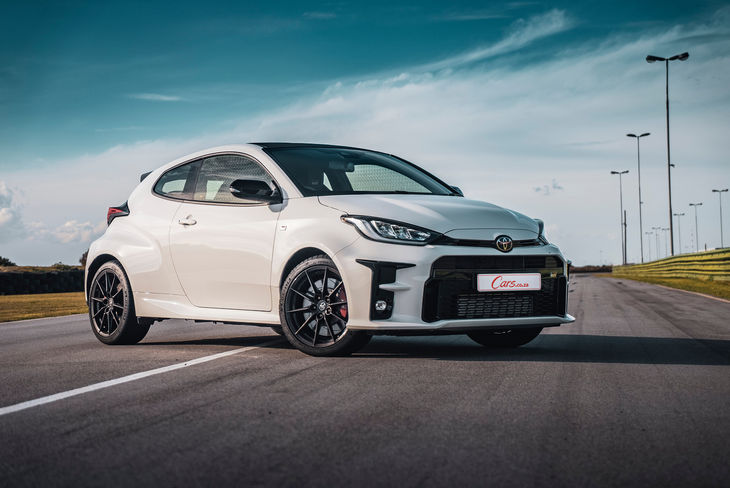
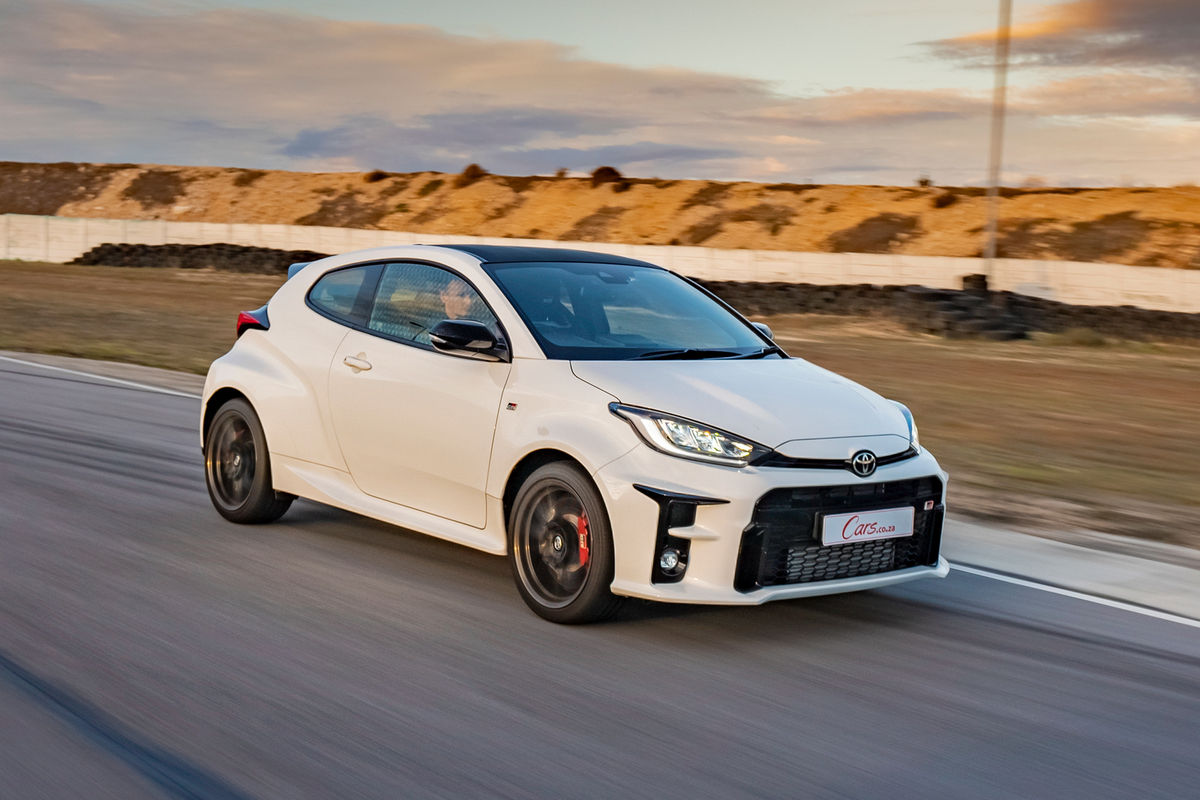
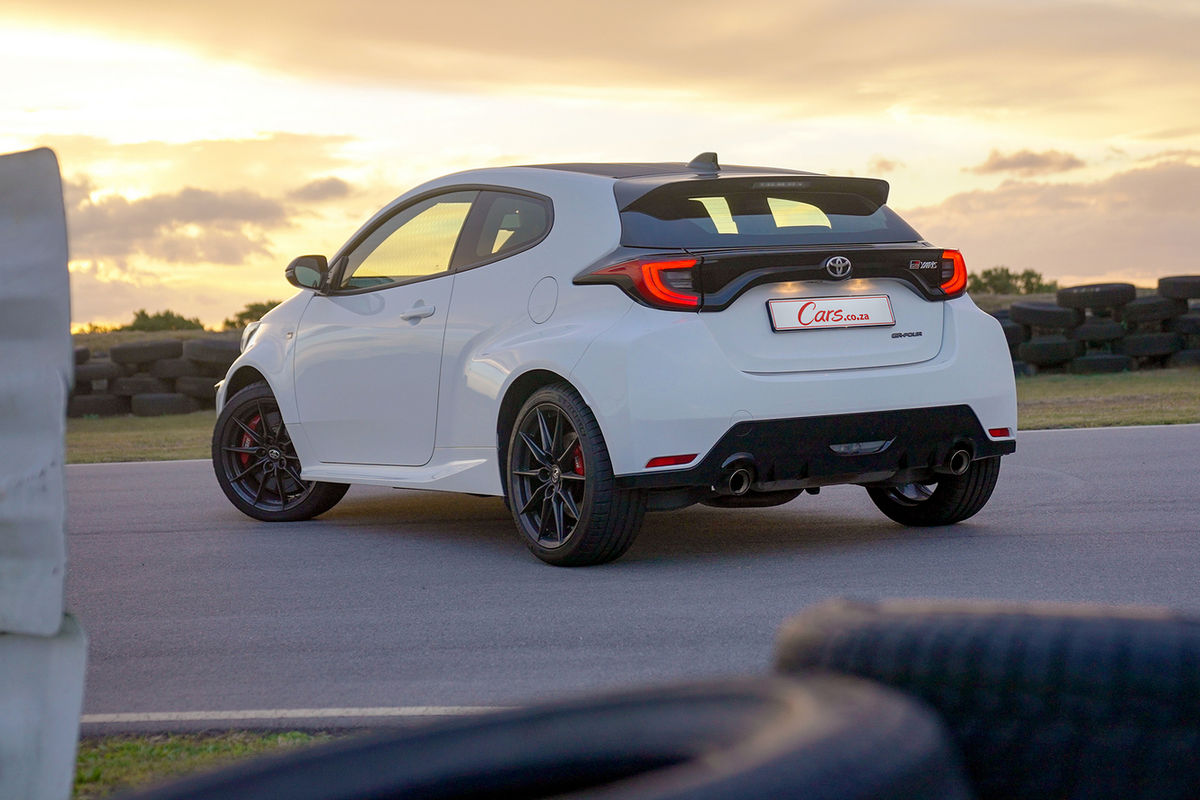
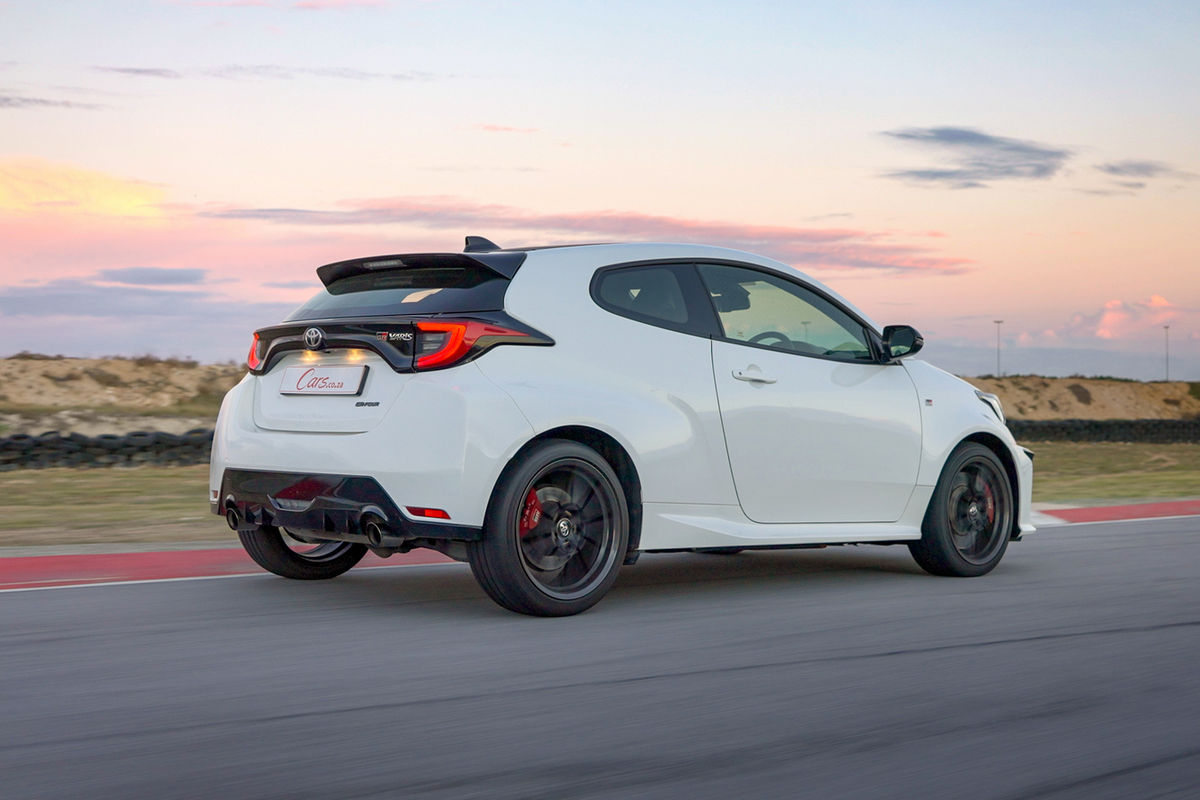
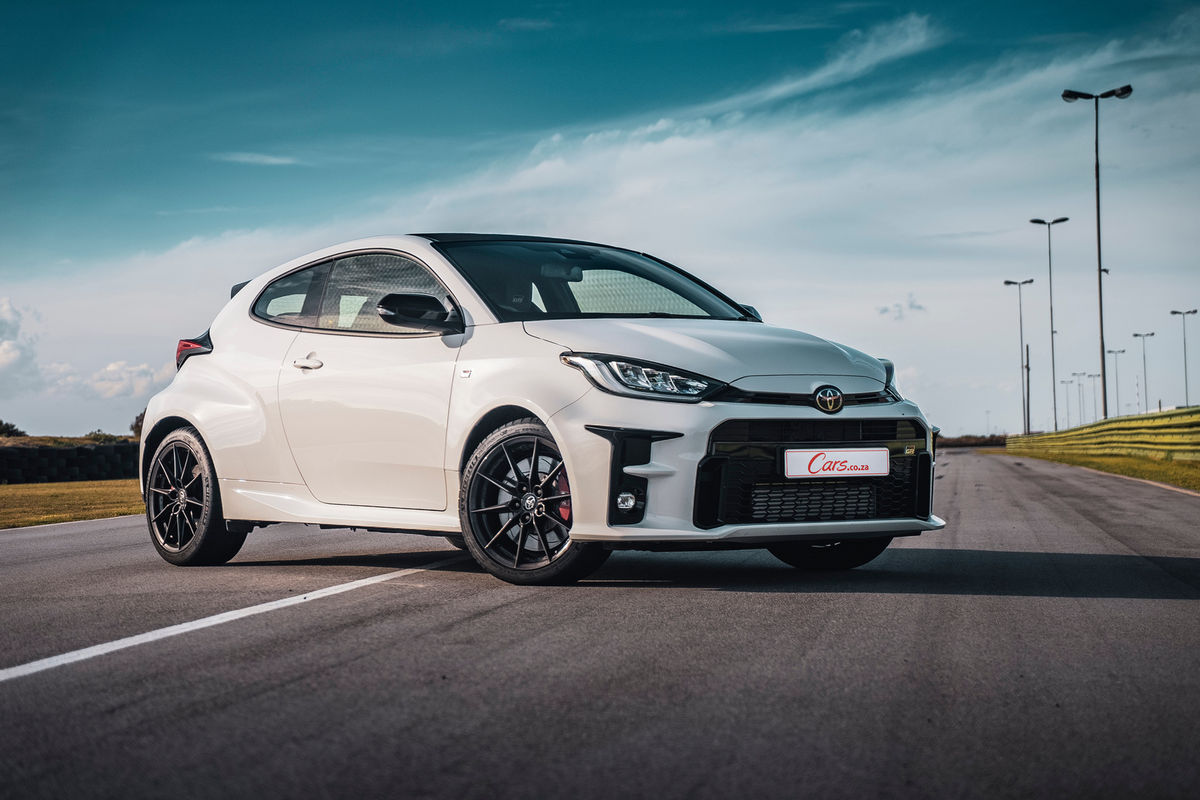
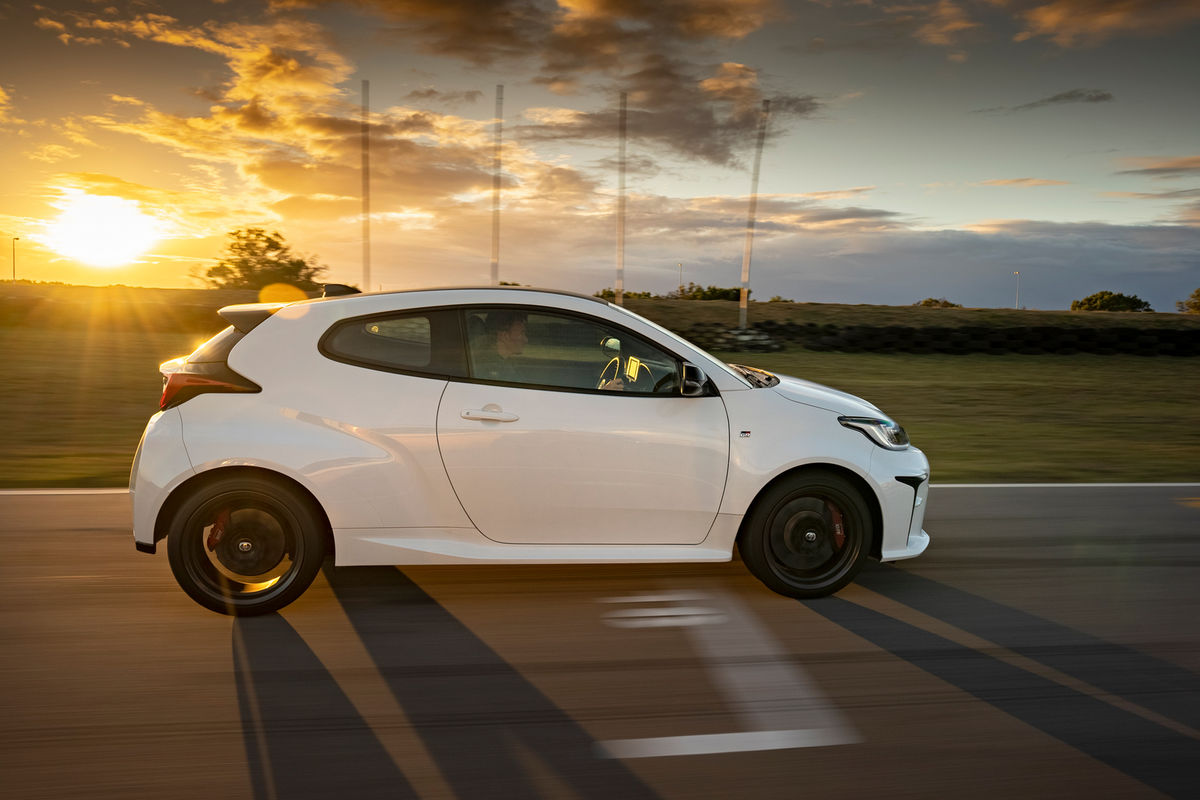
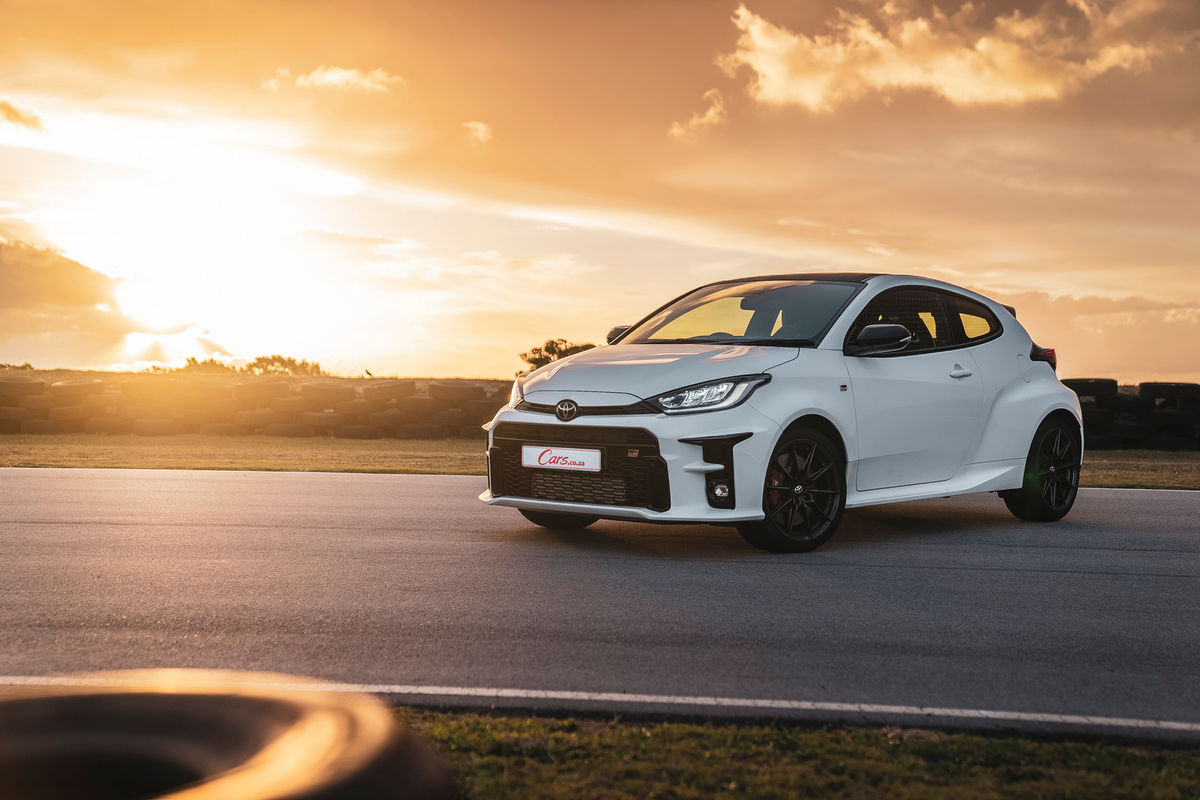
The roofline on the GR Yaris is 95 mm lower than the standard Yaris.
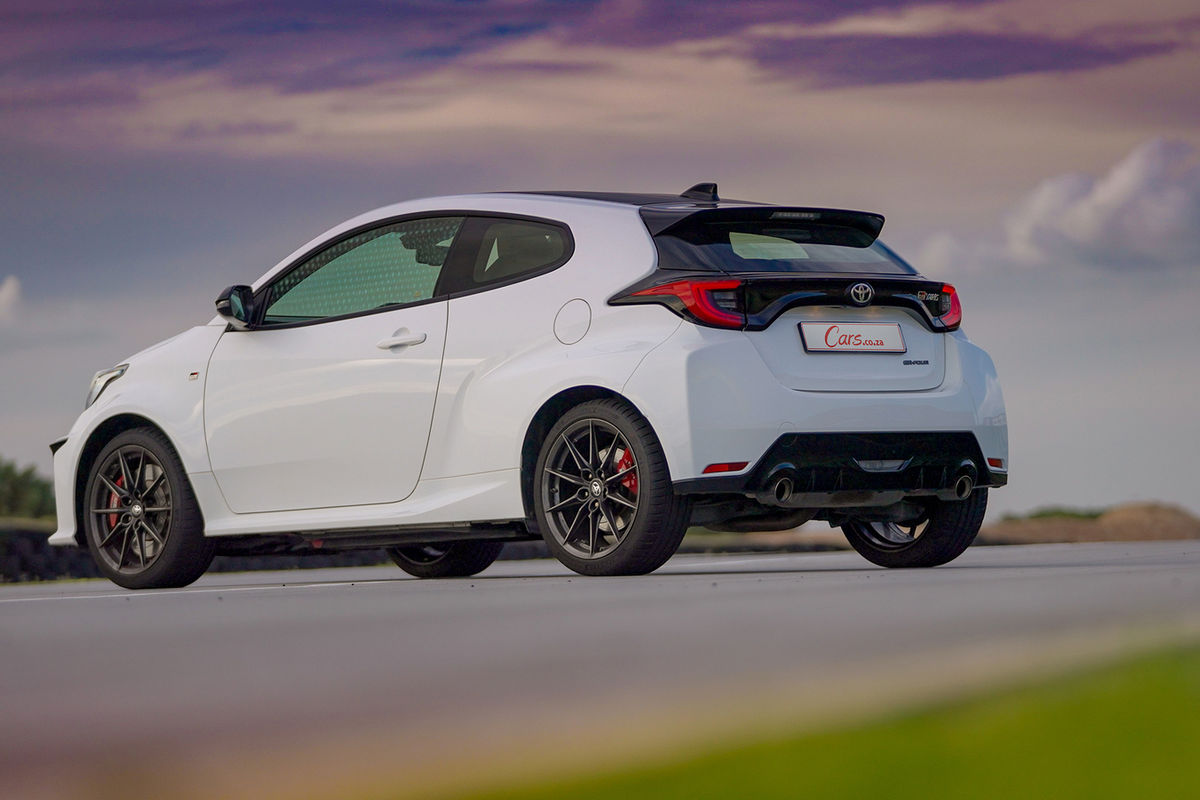
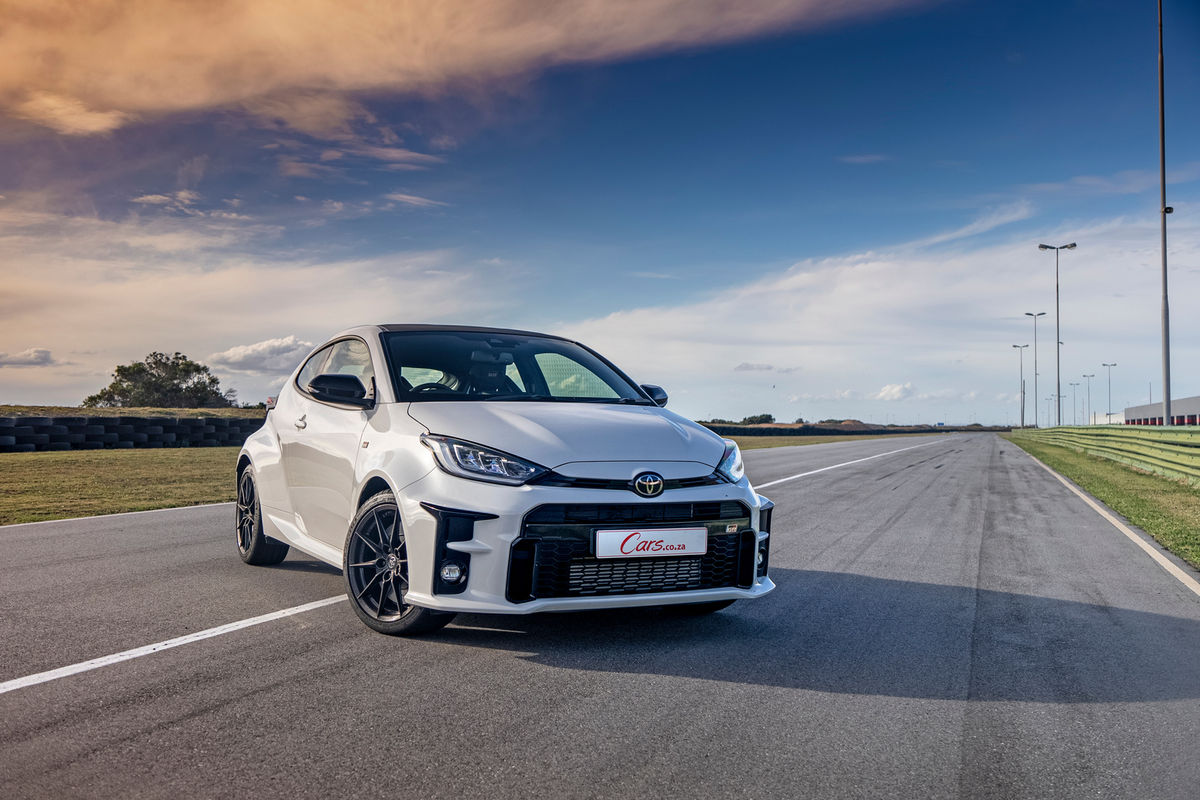
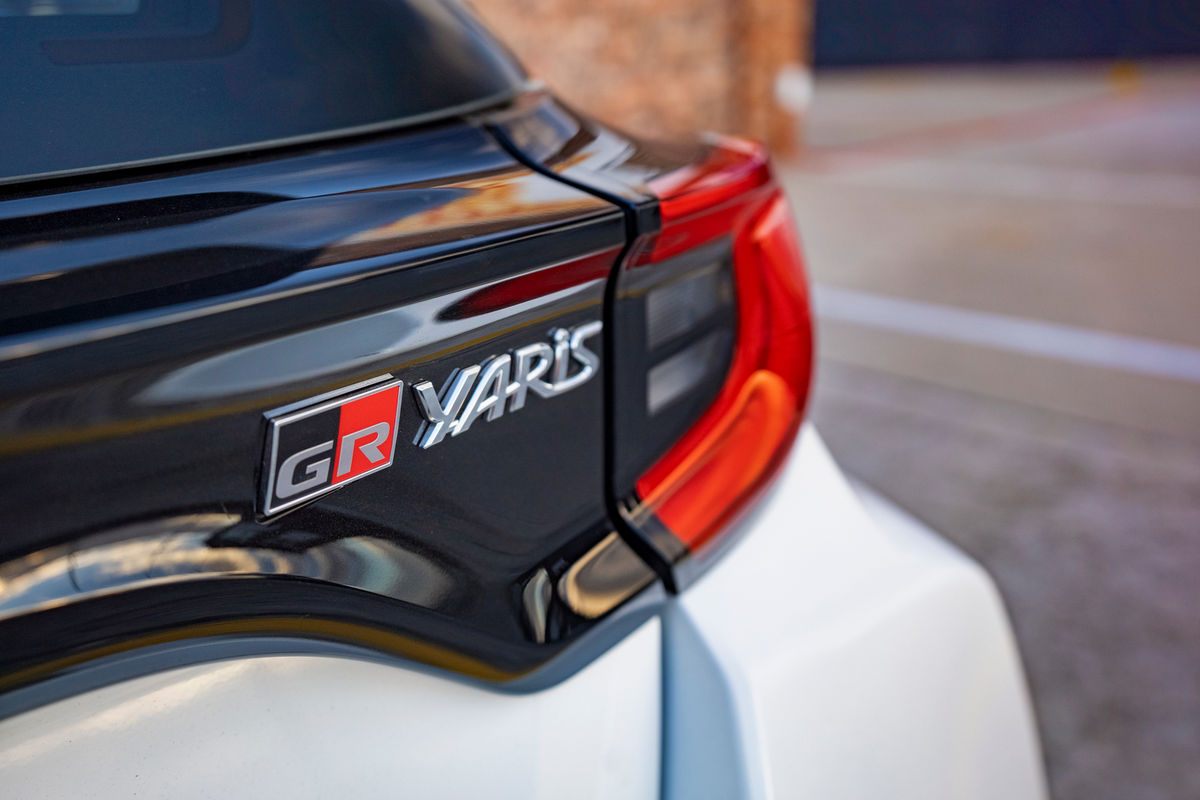
A section of the World Rally Championship rulebook states that in order for a car to be eligible to compete in the WRC, the rally version cannot be too dissimilar to its road-going sibling. So Toyota probably reasoned that the more practical alternative to adapting a regular Yaris for rallying (by adding myriad performance addenda to it), would be to create an entirely new rally car and slap a Yaris badge on it! The end result, the GR Yaris, has 3 doors to the normal Yaris’ 5 doors, has a 95-mm lower roofline and 4-wheel drive. In fact, the only parts it shares with the standard Yaris are the lights and wing mirrors…
Most performance cars that have been released throughout the past decade have been encumbered with excess weight. Why? Well, manufacturers have laced them with technology and safety equipment, plus, in general, cars have got bigger. The GR Yaris bucks this trend; it tips the scales at 1 280 kg (even with a 4-wheel-drive system) thanks to a carbon-fibre roof and aluminium bonnet, doors and tailgate.
To shift all of that Japanese lightness around as rapidly as the laws of physics would permit, Toyota has installed the world’s most powerful production 3-cylinder (1.6-litre) engine under the GR Yaris’ bonnet. It wasn’t too long ago that we were praising Ford for punching out 92 kW from a 3-cylinder turbopetrol, but things have moved on – and how! The Yaris’ powerplant has the same configuration as the Ford, but it doles out 195 kW and 360 Nm of torque and waves goodbye to the likes of the Volkswagen Golf GTI and BMW 128ti (both of which extract less power from their 2.0-litre 4-cylinder turbopetrol motors).
Launch control in the GR Yaris
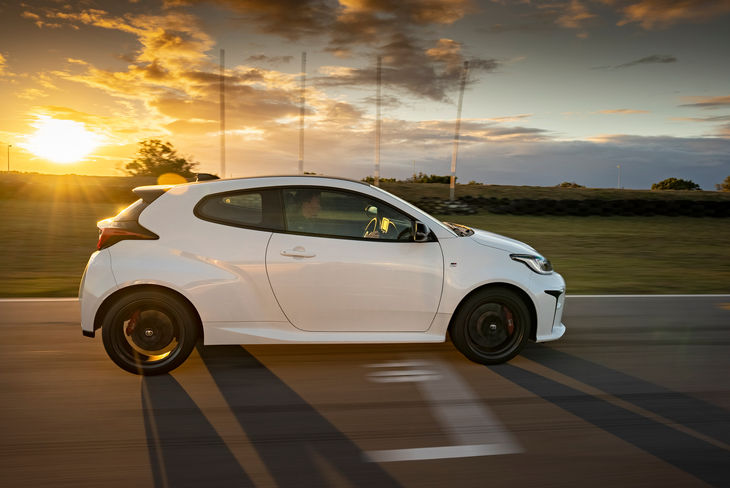
Bury your foot on the gas and drop the clutch and it leaps into action.
There is no launch control mode in the GR Yaris, at least officially, but it arguably doesn’t need one, considering the instantaneous way it rockets off the line – like it’s been shot from a cannon. We must have launched it more than 20 times during our 2 days at the track and to start with, we made the mistake of launching the Toyota like a regular car; one without sticky-as-syrup Michelin Pilot Sport 4S tyres.
In most cars, you can successfully execute an acceleration run from a standing start on a cold track surface from between 2 500 and 3 500 rpm (if you haven’t laid down any rubber beforehand). The GR Yaris? Well, we kept increasing the rpm with every launch attempt until we discovered that bouncing the motor’s revs off the 7 000-rpm limiter (before releasing the clutch pedal) produced the best results, as a matter of fact. It springs so hard off the line at that point that I’m fairly sure we “got some air”. This launch technique also reduces bogging off the line and turbo lag as the engine revs drop.
GR Yaris on track
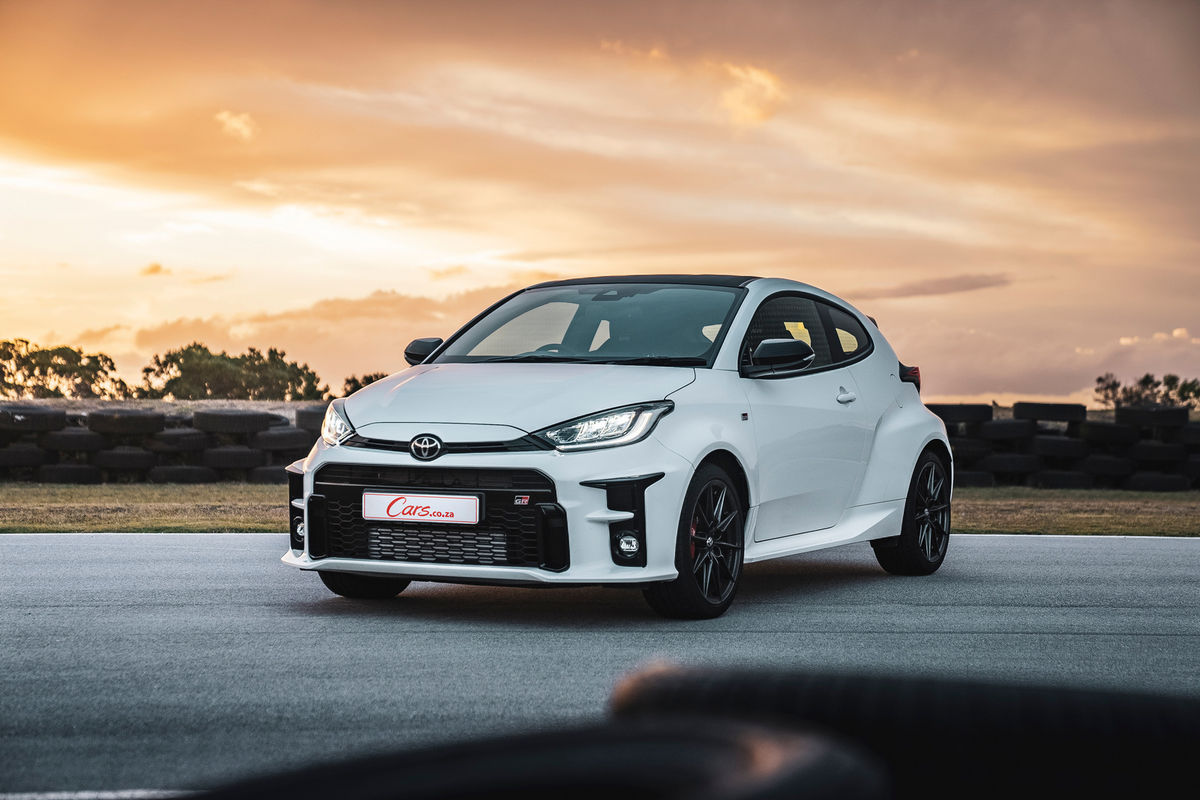
There really is no other way to say this: the benchmark for what a hot hatch is capable of has been shifted a long way from what we’ve previously experienced. You could spend R1 million on something like a Mercedes-AMG A45 S (with its trick differentials) and it would still feel dull and sluggish in the bends compared with the GR Yaris.
Turn-in is sharp and precise, but the real party piece is how quickly you can get back on the power (plant the accelerator pedal again). It’s unreal how soon you can pile on the speed when exiting corners – and get away with it. The GR Yaris has 3 drive modes that transfer drive to each axle. In Normal mode, you get a 60:40 split that’s front biased, in Sport it’s more playful with a 30:70 split in favour of the rear and then, in Track mode, it balances it 50:50, but maintains a rear bias for torque distribution as long as the stability control sensors don’t detect any wheel spin/slip at the front.
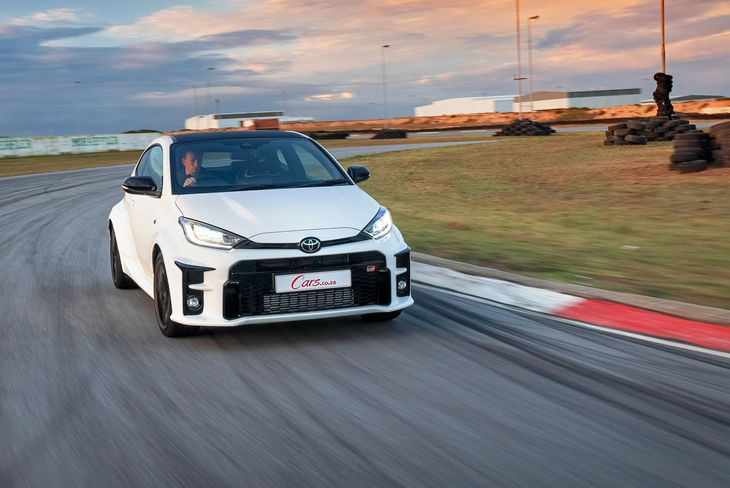
You can apply the throttle out of corners earlier than you ever thought possible.
Unusually for a performance car, you sit quite high in the GR Yaris. This makes for a car in which you feel as if you can hustle it around bends with abandon and figuratively get on top of it. The tyres and brakes don’t have to deal with heavy loads and they lasted for lap after lap without any signs of fade or overheating respectively. The fun can go on and on until you run the tank dry, and you will do that.
Even when its Sport mode is engaged, the GR Yaris is not the type of car that will allow you to drift it out of corners; in fact, the short wheelbase makes it incredibly reactive to driver inputs. Toyota’s hot little newcomer can change direction like a maniacal cursor; just point the car’s nose into a bend, rotate at the apex and pin the throttle (sooner, always sooner) and it will corner without a hint of understeer.
We assume that the GR Yaris might eventually misbehave/get out of shape, but also believe the Toyota would have to be seriously overdriven or manhandled before it will do that.
What’s it like inside?
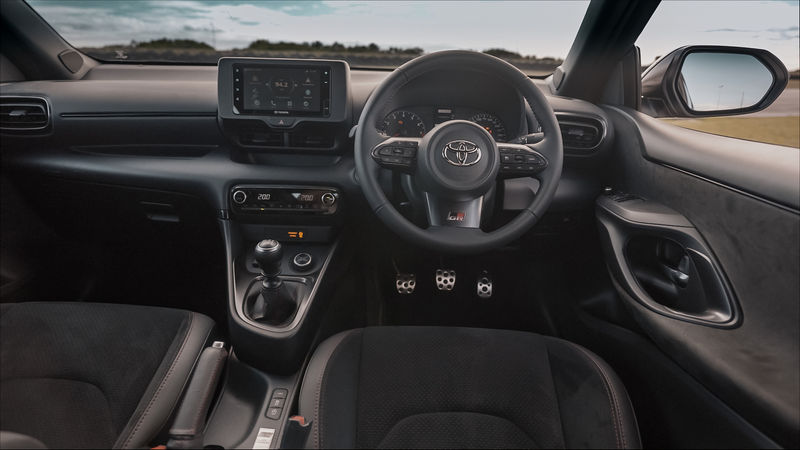
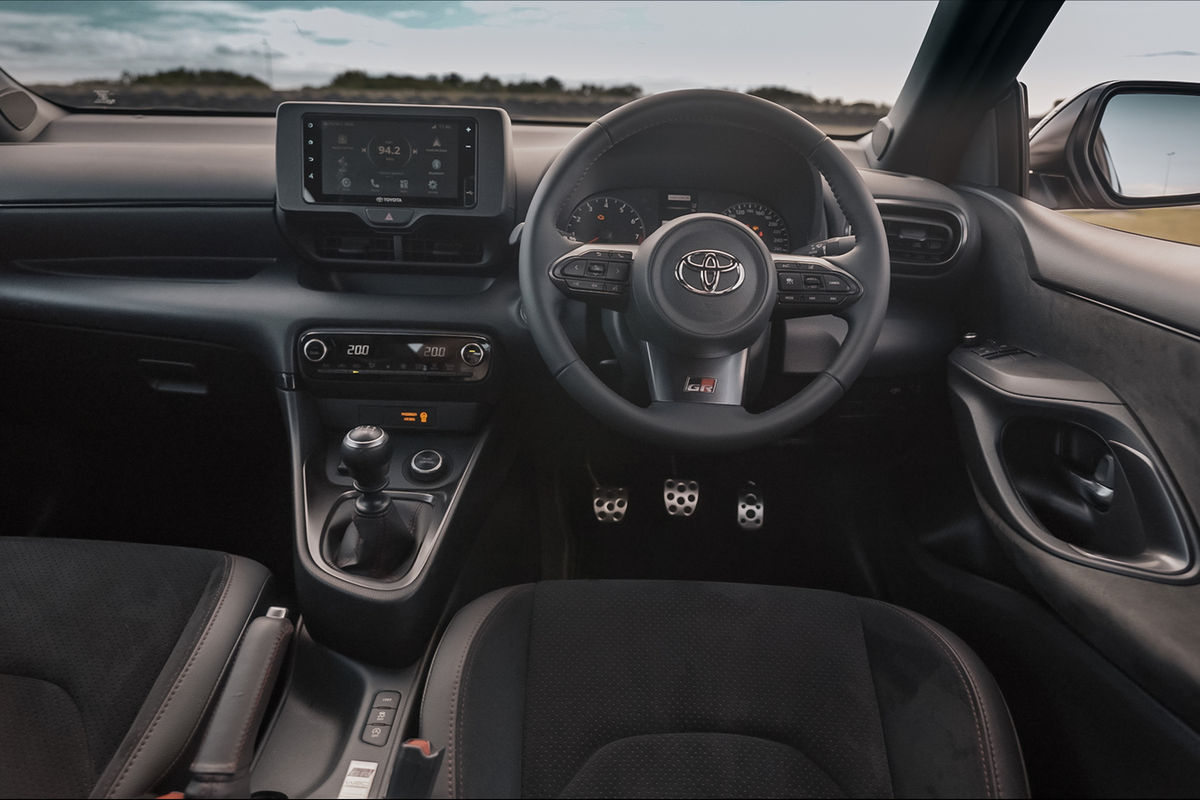
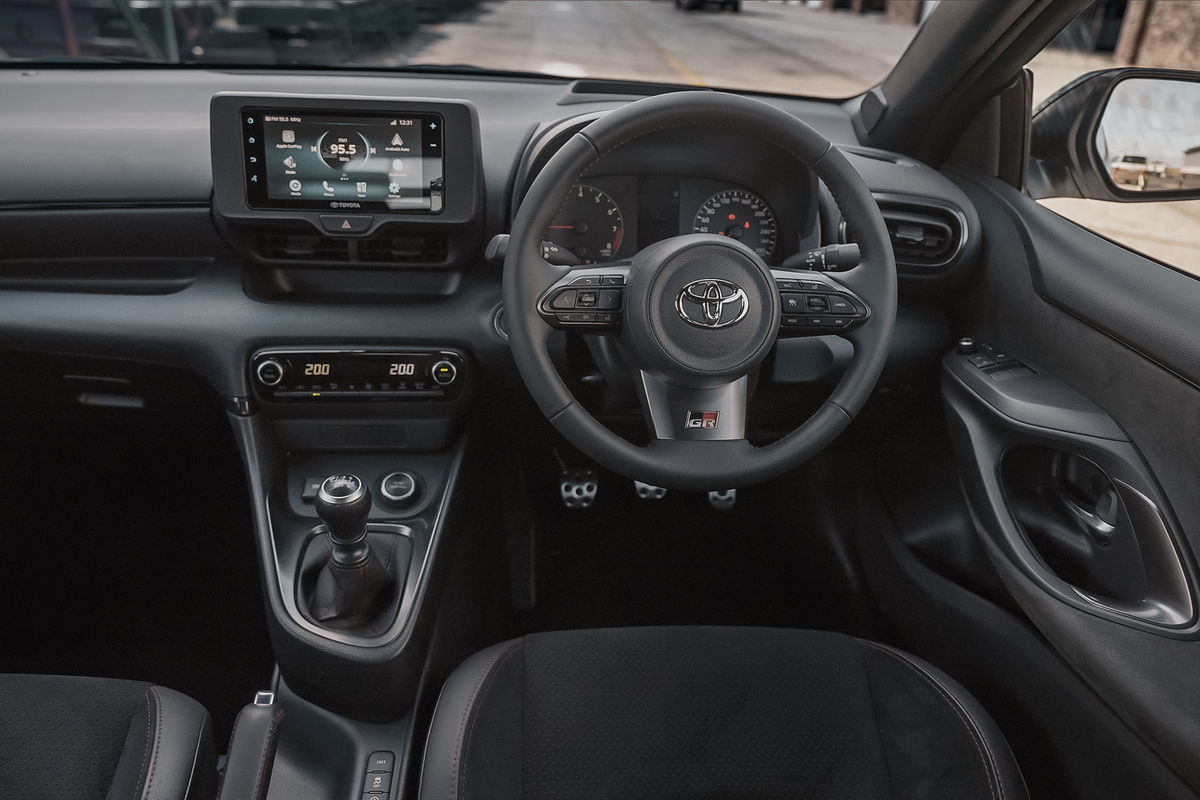
Alas, the GR Yaris’ interior is possibly its only letdown. It might be a miracle of engineering on the road or race track, but it’s just a Yaris on the inside and a little too normal for what lies beneath its sheet metal. The bucket seats are a sporty touch but could benefit from offering additional bolstering around the thigh area. There is GR badging on the steering wheel and a WRC homologation badge affixed below the drive mode selector knob. Other than that, it’s basic Yaris fare. We kept looking through the touchscreen interface to find some sort of telemetry package or g-force app, but didn’t find anything.
There is an exhaust button, however. When you press it, the GR Yaris amplifies its engine sound through the cabin speakers to add slightly more throaty bass than an off-beat 3-cylinder would usually have. The GR Yaris positively titillates your ears with distinctive sounds – some from the engine and the others from the turbocharger, which is constantly whooshing and spewing air out of its wastegate. It’s an extremely distinctive sound and one you’ll either love or hate, but when the “amplification button” is disengaged it’s a little calmer inside the cabin… if you’d prefer it that way.
Verdict
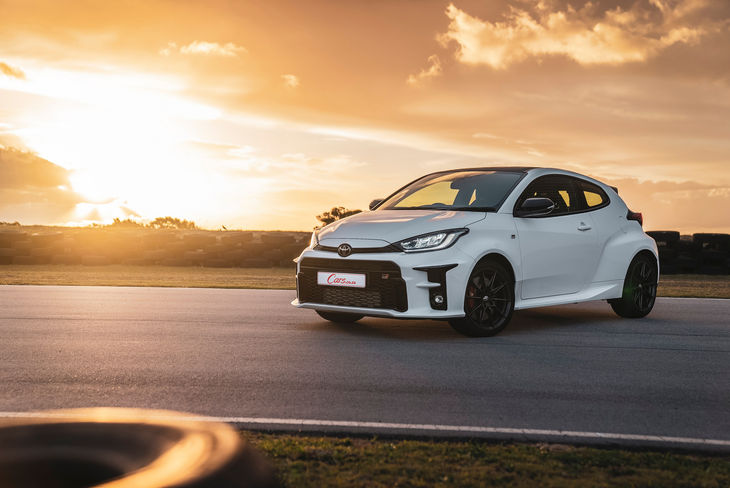
The GR Yaris has shifted perception of what a hot hatch can do.
The GR Yaris is Toyota’s best performance car for at least a decade, if not longer. The end. No, we’re not being dramatic for the sake of being so…
“Homologation special” models or derivatives used to be a thing of the past; in the South African context, think of cars like the Opel Kadett GSi 16V S “Superboss” and BMW 325iS, which were bred for circuit racing and in global terms, the made-for-rallying Lancia Stratos and Ford RS200, to name just a few. They all became instant (and absolute) classics and the GR Yaris looks set to join them.
The Toyota’s raucously powerful 3-pot turbo motor mated with a 6-speed manual box and rev-matching makes it easy to get to grips with. The 4-wheel-drive setup would normally be a hindrance to agility and you’d read the word “understeer” everywhere on the internet, but no, the GR Sport is simply brilliant at distributing its power; it enables you to get on the power earlier than your brain can comprehend.
Granted, it’s very much a weekend car. It can be used as a daily runabout, but you’ll find yourself trying to nail every single corner on the school run – that’s how addictive the performance and handling are.
Toyota hasn’t moved the bar for hot hatches incrementally, it’s teleported it to another planet altogether.