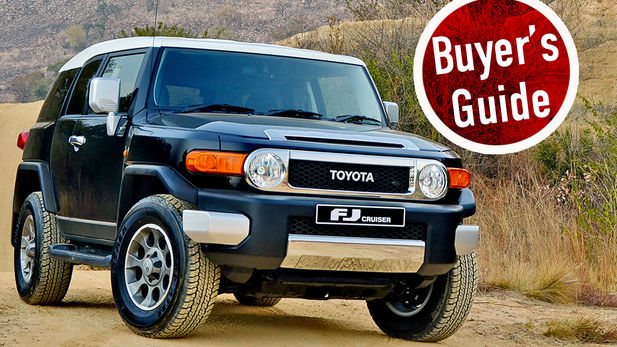
Despite its niche positioning, the Toyota FJ Cruiser spent 12 years on the market in South Africa. Here’s what you need to know when shopping for a used example of this retro-styled off-roader…
Toyota has long held a reputation for playing it safe. Indeed, for a lengthy period, before the debut of the first GR-branded production car in 2019 (a move that has since spawned a string of stirring performance cars, including the GR Yaris and GR Corolla), the Japanese giant’s bread-and-butter line-up consisted of decidedly conservative models. The Toyota FJ Cruiser, however, was a notable exception.
Of course, erring on the side of caution – be it in terms of exterior design, powertrain choice, engineering decisions or pretty much any other automotive metric – was an approach central to the Aichi-based manufacturer’s sustained dominance of the motor industry. But it’s also what made the reveal of the Toyota FJ Cruiser production model, way back in 2005, rather unexpected.
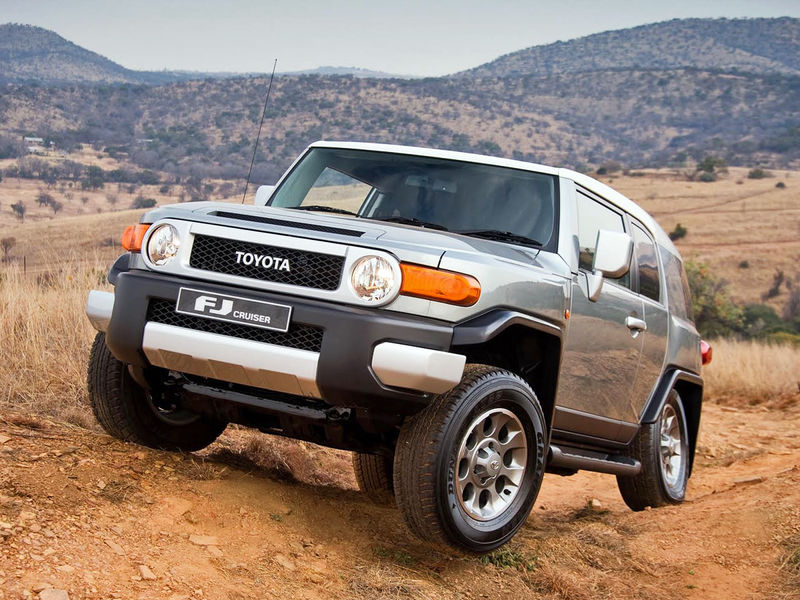
You see, the retro-styled 4×4 (incidentally, produced by Toyota subsidiary Hino in Japan) represented everything consumers didn’t expect from the otherwise strait-laced brand. It was an uncharacteristically rebellious departure from the path of convention that Toyota had followed for so very long.
Originally conceived with young North American buyers in mind – the FJ40-inspired concept was penned by a then-25-year-old working at the brand’s California-based design studio – the body-on-frame SUV borrowed many of its greasy bits from the highly capable J150-generation Land Cruiser Prado.
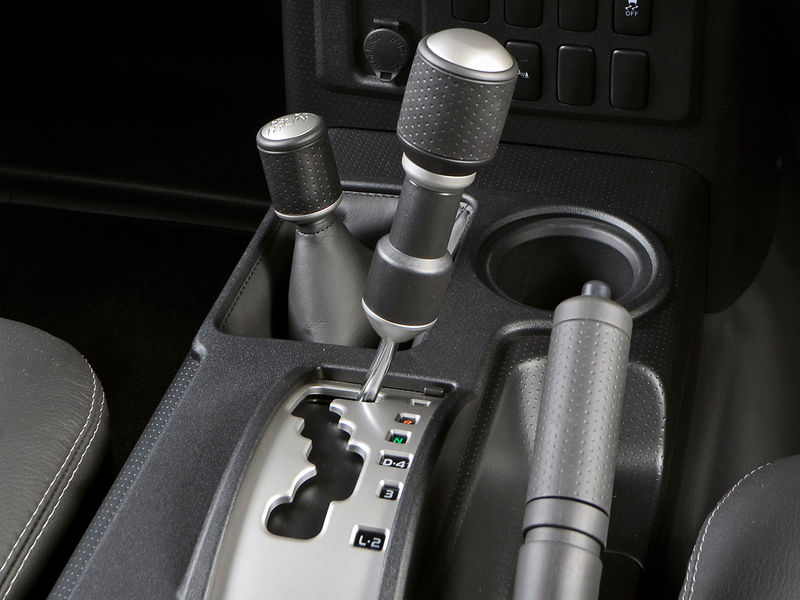
While the version offered in South Africa (our market had to wait 6 years for the FJ to arrive) came with part-time 4×4 and a 5-speed automatic transmission, North America also received a rear-wheel-drive derivative, as well as the option of a 6-speed manual gearbox in conjunction with permanent 4×4.
Fascinatingly, the low-volume off-roader was discontinued in the United States as early as 2014, with several other global markets following suit by 2017. However, despite the FJ’s niche positioning (and persistent rumours of its impending demise), it remained in production until December 2022, before Toyota SA Motors finally confirmed to Cars.co.za (in April 2023) that it had been put out to pasture.
That meant this 4×4 was a constant on Mzansi’s new-vehicle market for a considerable 12 years. For now, the FJ Cruiser remains a single-generation vehicle, but there are rumours that Toyota could revive the nameplate for use on a smaller (likely battery-powered) model, perhaps previewed by the clearly FJ-inspired Compact Cruiser EV concept of 2021…
Toyota FJ Cruiser model line-up in South Africa
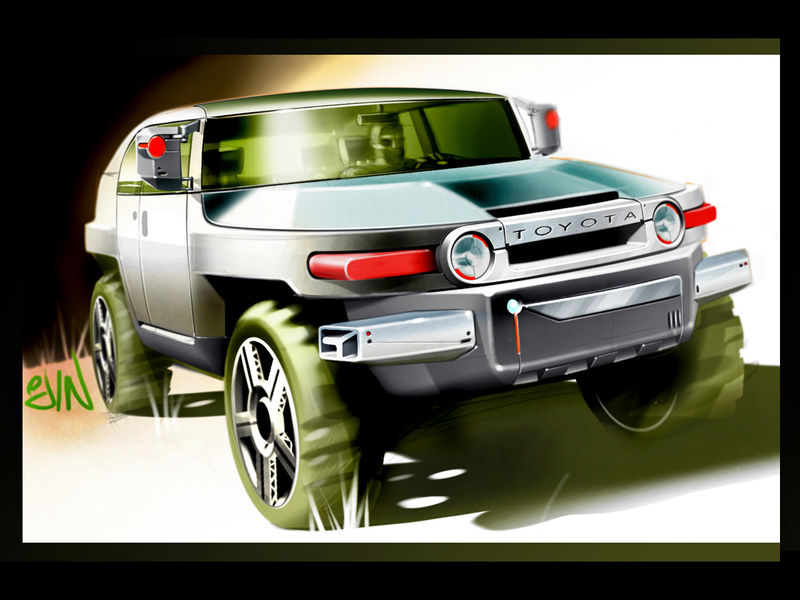
Displayed in show-car form in 2003, the production version of the FJ Cruiser was revealed at the 2005 North American International Auto Show in Detroit. The 4 670 mm-long SUV was initially built exclusively in left-hand-drive guise, with right-hand-drive production commencing only towards the end of 2010.
The availability of right-hooker units saw the FJ Cruiser finally greenlit for South Africa, with the local launch taking place in August 2011. The only powertrain on offer was Toyota’s ubiquitous naturally aspirated 4.0-litre V6 petrol engine (1GR-FE), which drove all 4 of the model’s wheels via a 5-speed automatic transmission as standard. The line-up initially comprised the following 4 derivatives:
- 4.0 V6 Base 4×4 5AT (200 kW/380 Nm)
- 4.0 V6 Sport 4×4 5AT (200 kW/380 Nm)
- 4.0 V6 Trail 4×4 5AT (200 kW/380 Nm)
- 4.0 V6 Desert 4×4 5AT (200 kW/380 Nm)
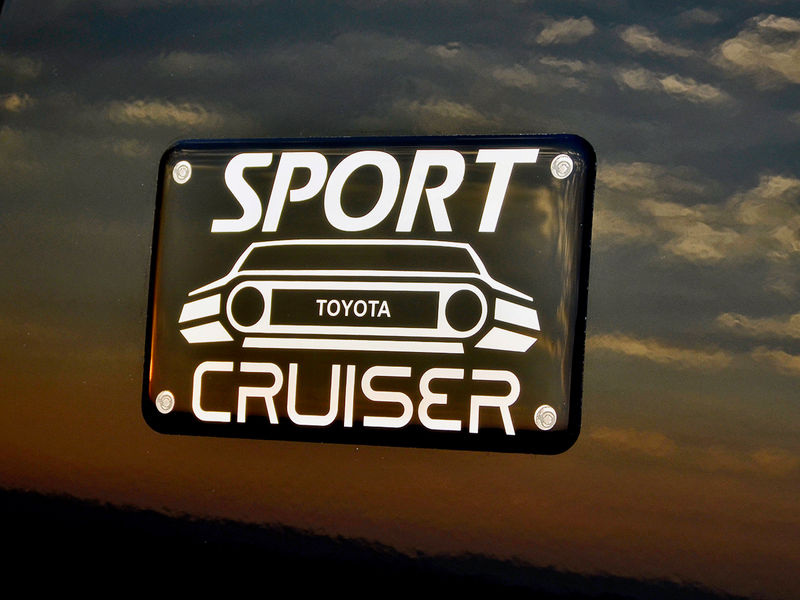
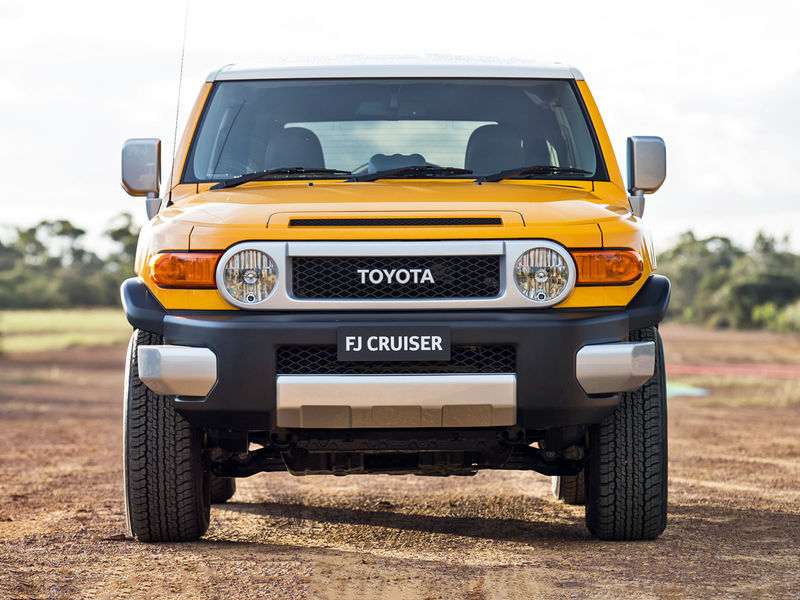
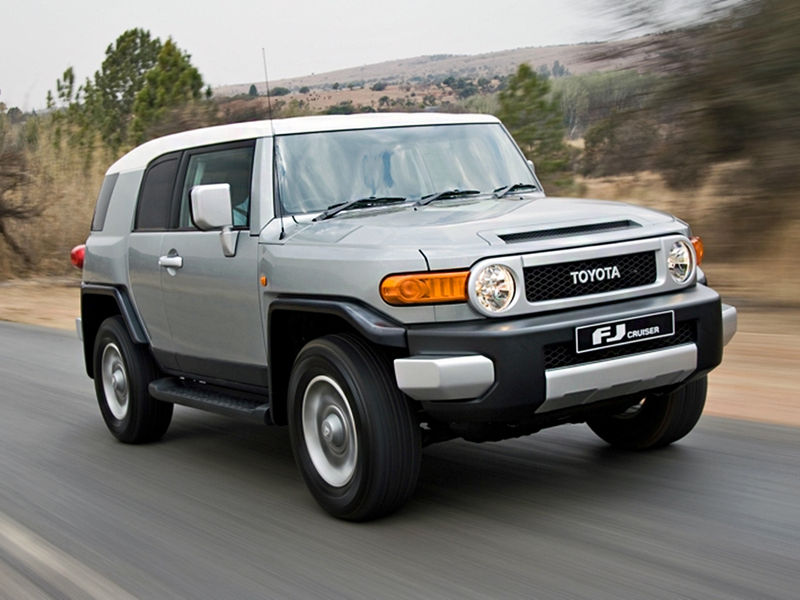
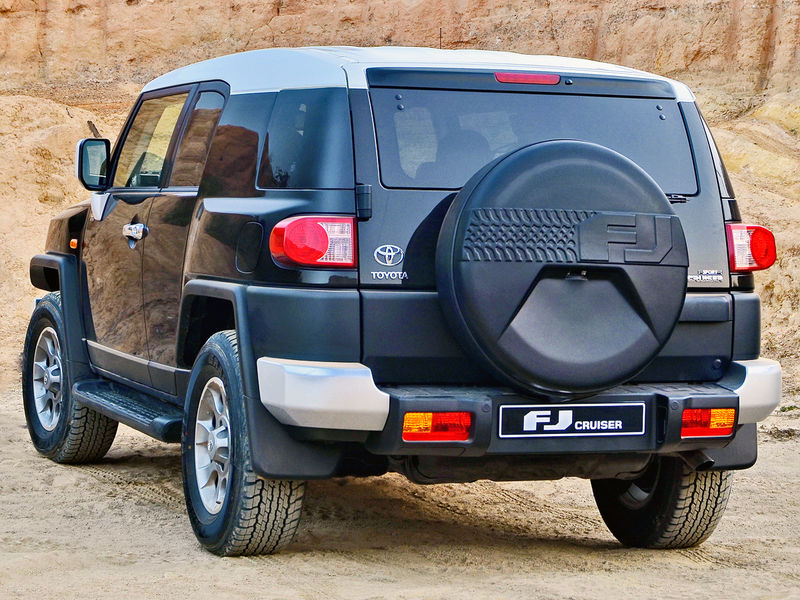
While the Base model was easily identifiable by its black grille, silver front-bumper section and fabric upholstery, the Sport variant was available only in Raven Black, a paint colour offset by extra chrome detailing. Meanwhile, the Trail derivative came exclusively in Grey Metallic and came fitted with items such as a roof rack (with integrated driving lamps) and special “Trail” badges. Finally, the Desert variant was fitted with a nudge bar, rock rails and a tow bar, and shipped in the distinctive Sandstorm hue.
Trail- and Desert-badged FJ Cruisers were effectively limited-edition versions, so had fallen away by the time Toyota SA Motors implemented one of the few updates to the local line-up in August 2013. At that point, the range comprised only the standard (previously Base) derivative and the Sport variant. Both, however, gained a Crawl Control function (operated via a speed-selector dial housed in a new overhead console) and – perhaps more importantly – an 87-litre supplementary fuel tank. The latter’s capacity eclipsed that of the 72-litre main tank and afforded the thirsty V6 a far more palatable cruising range.
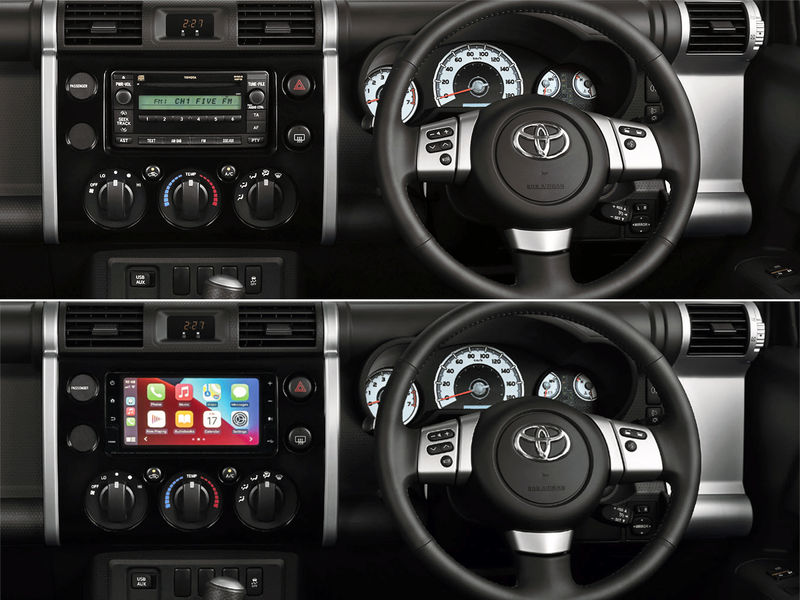
By the opening quarter of 2016, the Sport derivative had been scrapped, leaving the standard FJ Cruiser to soldier on virtually unchanged for a further 7 years. However, it’s worth noting this model was quietly handed an infotainment upgrade in 2022, which saw the addition of a touchscreen system, compatible with Apple CarPlay and Android Auto.
For the record, the majority of FJ Cruisers shipped in 2-tone form (with an Ivory White roof), though there were some monotone units (with a body finished in Ivory White or Red) available, too. All came with 6 airbags, ventilated brake discs (fore and aft), stability control, active traction control and rear ISOfix child-seat anchors.
What are the advantages of an FJ Cruiser?
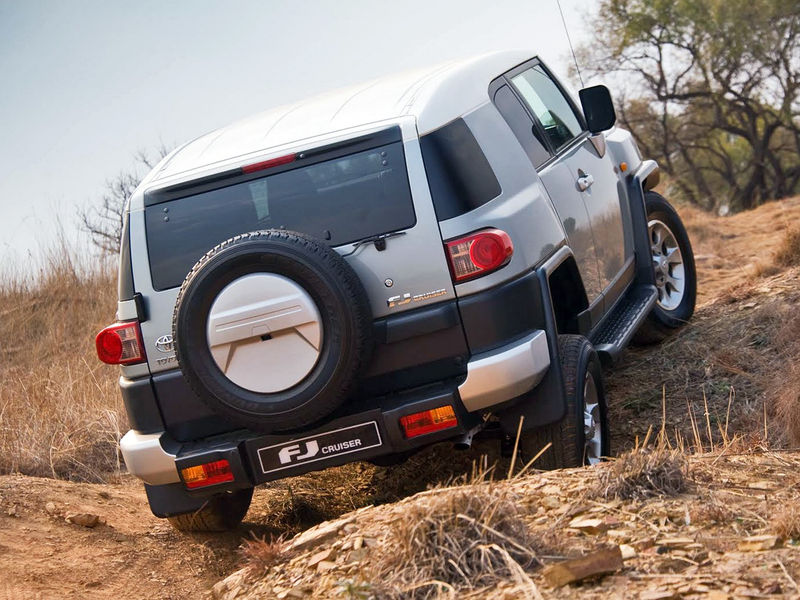
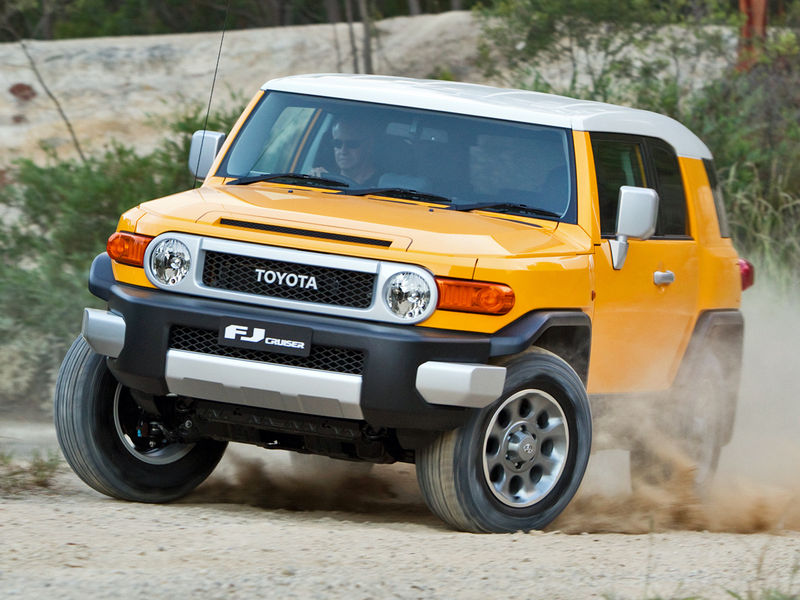
Proper off-road ability: The FJ was far more than merely an exercise in retro-inspired styling. Instead, the ladder-frame SUV was a proper Land Cruiser with genuine off-road ability. Fitted with a low-range transfer case, the part-time 4×4 system offered H2, H4 and L4 settings, allowing the driver to select a terrain-appropriate mode via the old-school transfer-case lever.
Employing a 100 mm shorter wheelbase (at 2 690 mm) than the J150-gen Prado, a whopping 245 mm of ground clearance and usefully stubby overhangs, the FJ Cruiser boasted a 34-degree approach angle, a 29-degree breakover angle and a 31-degree departure angle.
These impressive off-roading credentials were complemented by an electrically activated rear differential lock, Toyota’s clever selectable Active Traction Control (ATRC) system, the aforementioned Crawl Control function and a heavy-duty 4-link rear suspension set-up. While the suspension system afforded the FJ Cruiser a compliant on-road ride quality, it’s worth noting body roll through faster corners was pronounced (the SUV’s kerb weight was on the far side of 2 tonnes, after all).
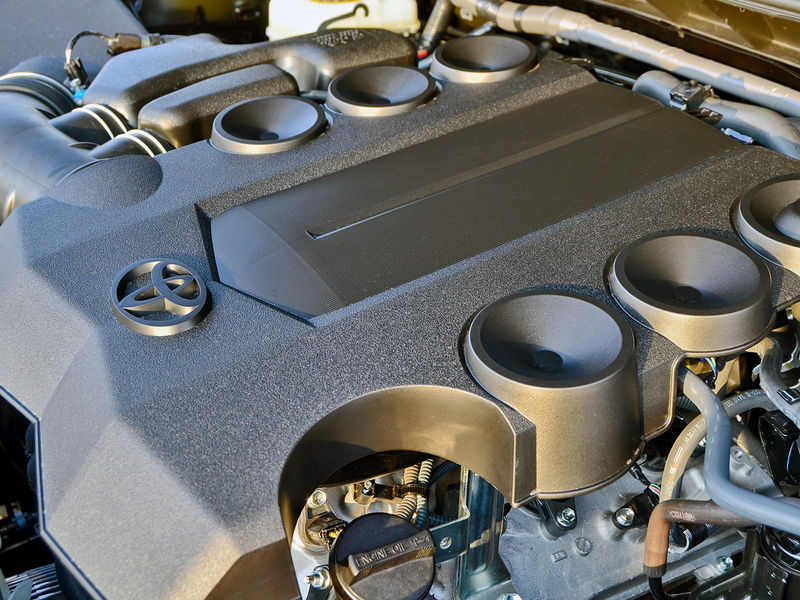
Well-proven engine: Throughout its 17-year global production run (and its 12-year life on the local market), the FJ Cruiser was available with just a single engine option: the atmospheric 4.0-litre V6 (1GR-FE) petrol motor. This dual-VVTi-equipped unit was well proven, having done duty in the likes of the Prado, Hilux, Fortuner and Land Cruiser 70 series over the years, not to mention multiple overseas products (think 4Runner, Tundra, Tacoma, etc).
Endowed with more power in FJ Cruiser guise than in 175 kW Hilux form, the 6-cylinder engine offered its 200 kW at 5 600 rpm, with peak twisting force of 380 Nm on tap from 4 400 rpm. Drawing its urge from this relatively large-capacity and free-revving petrol motor, the FJ Cruiser was rather well suited to dune driving. Note, however, that the recommended service intervals were relatively short at 10 000 km.
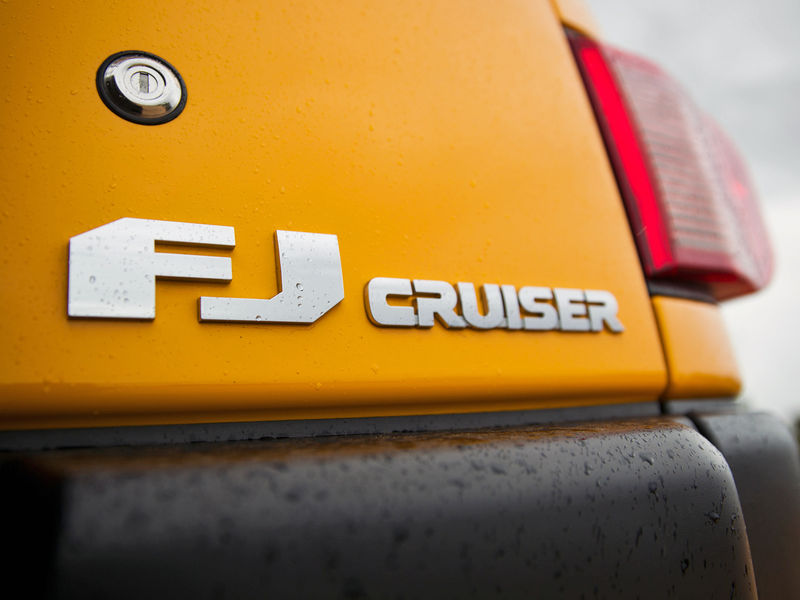
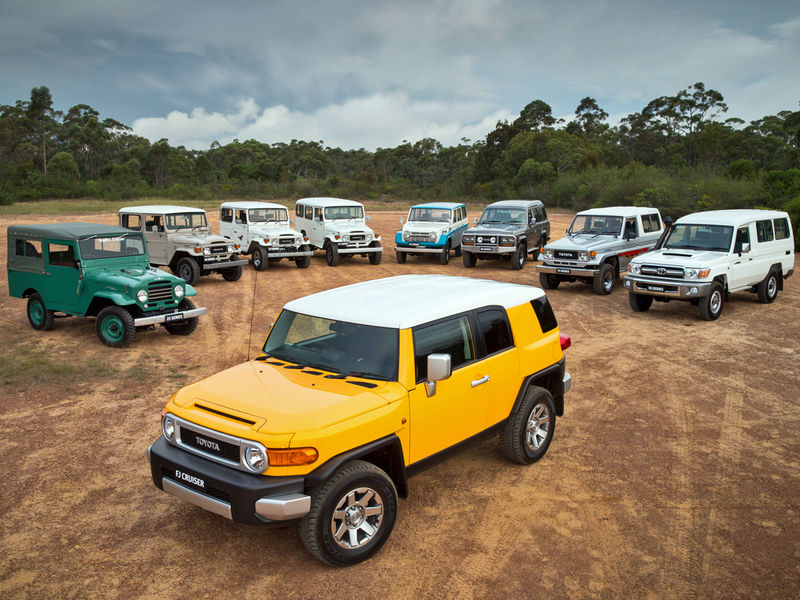
Bursting with character: Despite wearing a Toyota badge, the FJ Cruiser was anything but conservative. Drawing inspiration from the original 1960s FJ40 (note the mesh grille with bold “Toyota” lettering, the closely set circular headlamps and the bolt-upright windscreen), the chunky 4×4 screamed “retro cool”.
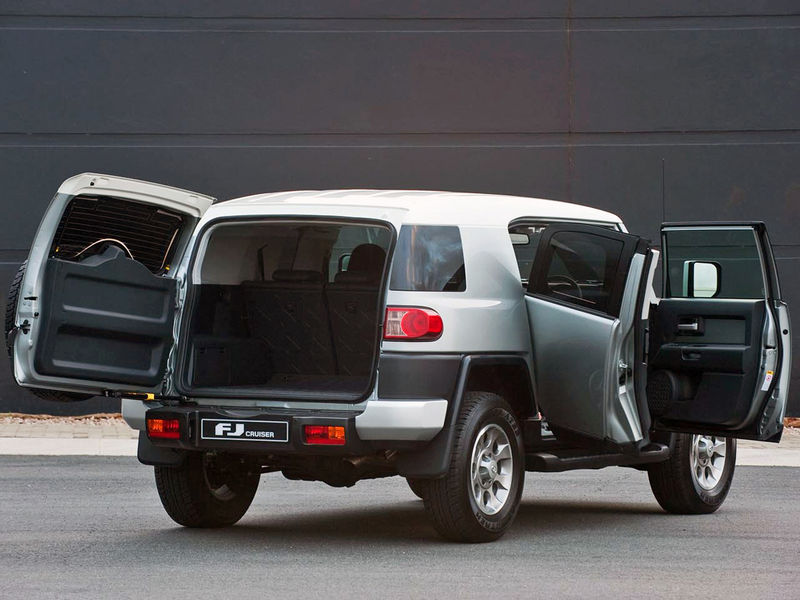
Other decidedly quirky touches included reverse-hinged (or so-called “suicide”) rear doors, a side-hinged tailgate (playing host to a spare wheel), a 3-arm front wiper system and a hose-down rubber floor (plus water-repellent upholstery for the seats in some derivatives).
In short, it was downright wacky for a Toyota and, for many, an instantly likeable vehicle.
What are the disadvantages of an FJ Cruiser?
No diesel option: Would the FJ Cruiser have been more popular if Toyota had made it available with a turbodiesel motor? Well, though the free-breathing V6 petrol fitted the SUV’s character to an absolute tee, one of Toyota’s trusty oil-burners (either the 3.0 D-4D or the 2.8 GD-6) would have made for an interesting alternative – and perhaps facilitated a slightly higher (than 1 500 kg) braked towing capacity.
After all, the 6-cylinder petrol unit was heavy on fuel, with Toyota listing a combined consumption figure of between 11.4 and 11.9 L/100 km (though real-world figures settled far higher). Still, at least the addition of a supplementary tank in 2013 afforded the FJ Cruiser a little more overlanding potential.
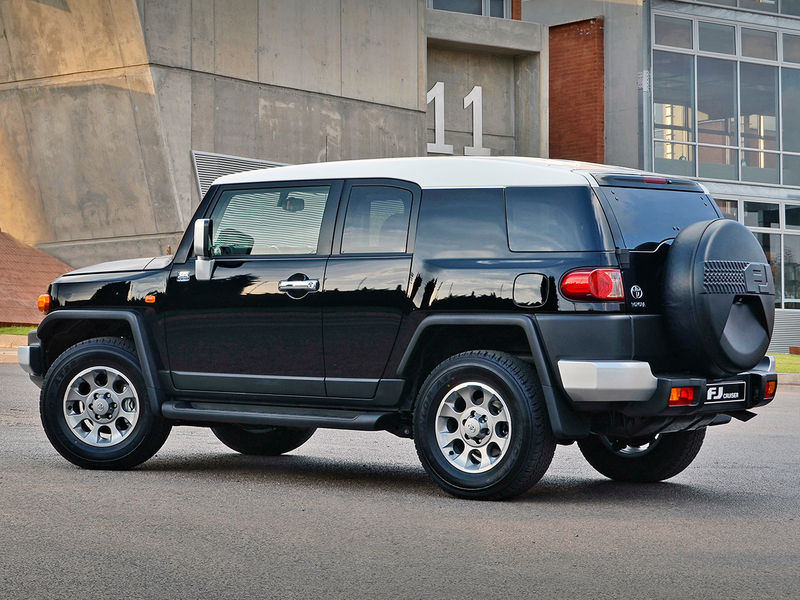
Poor outward visibility: Visibility issues are often a downside of an unconventional exterior design and that was certainly the case with the FJ Cruiser. Thanks to chunky C-pillars, the clamshell door arrangement, relatively small glass areas and the positioning of the spare wheel on the tailgate, the driver had to contend with significant blind spots.
Thankfully, the side mirrors were large and a reverse-view camera was standard on all South African derivatives (though projected its video feed to only a small section of the rear-view mirror). As an aside, keep in mind the upright positioning of the windscreen made the glass particularly prone to stone chips.
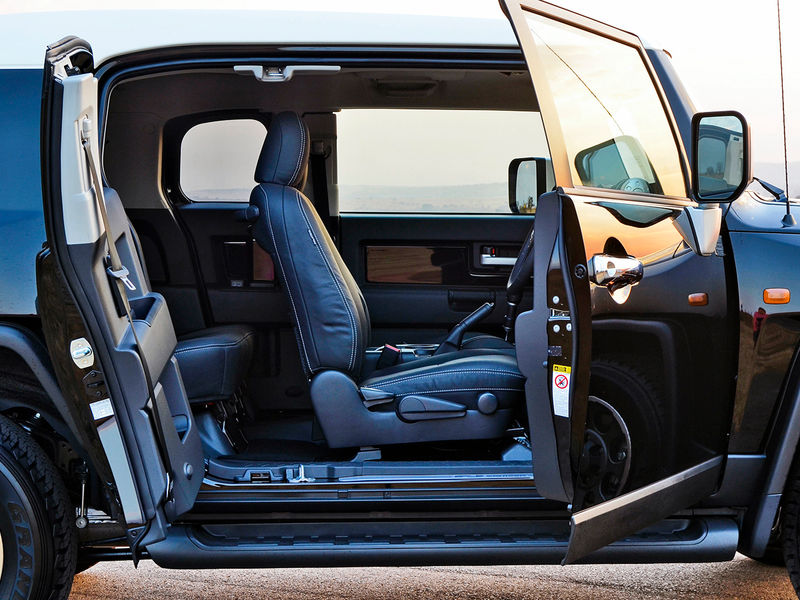
Claustrophobic rear quarters: Though the FJ Cruiser looked like a 3-door (the back portals were tiny and did without exterior handles), it was technically a 5-door capable of seating 5 occupants. However, the rear quarters were claustrophobic thanks to small, fixed windows and a distinct lack of natural light.
Access to the bench was awkward, too, since the reverse-hinged rear doors could be opened only once the front items were ajar. That said, Toyota listed the FJ Cruiser’s luggage capacity as 0.99 m³ (which translates to a scarcely believable 990 litres), while the double-folding rear bench featured removable cushions and could split 60:40. Furthermore, the side-hinged tailgate offered additional access to the luggage compartment via a nifty hatch-type rear window.
How much is a used Toyota FJ Cruiser in South Africa?
Initially, the Toyota FJ Cruiser shipped standard with a 3-year/100 000 km warranty and a 5-year/90 000 km service plan (the latter extendable up to 7 years or 200 000 km). However, in May 2018, Toyota SA Motors revised the terms of its standard service plans, switching from the “number of years” parameter to “number of services” instead. As such, the FJ’ shifted to a 9-service/90 000 km arrangement.
It’s interesting to note that FJ Cruiser owners tend to hang on to their vehicles for quite some time, which is perhaps part of the reason there’s anything but an oversupply on the used market.
This is also likely a ringing endorsement of the vehicle’s heady mix of reliability, off-road capability and downright likeability. In short, FJ Cruiser units remain highly sought after and, as a consequence, this nameplate holds its value very well (something that’s generally a Toyota strength anyway).
Of the handful of used Toyota FJ Cruiser models listed on Cars.co.za at the time of writing, more than 70% were registered before 2014 (with virtually no listed models in the 5-year period from 2015 to 2019). Indicated mileages ranged from just 9 000 km on a 2022 vehicle to 360 000 km on a 2011 model. In fact, almost a 3rd of all FJ Cruiser listed had more than 200 000 km on their respective clocks.
- Below R350 000: Predictably, all examples listed below this mark were from the opening 3 model years. In addition, every FJ Cruiser in this space showed in excess of 180 000 km on its odometer (with most well past the 200 000 km mark).
- From R350 000 to R450 000: This pricing bracket again featured only units registered in 2011, 2012 and 2013. That said, there were at least a few options in the sub-150 000 km segment here.
- From R450 000 to R700 000: Despite considerably wider pricing bookends than those above, we found even less choice here. Still, there were a couple of late model-year FJ Cruisers on offer, each showing considerably lower mileage.
- R700 000 and up: At the time of writing, spending upwards of R700 000 would get you behind the wheel of a 2021, 2022 or 2023 FJ Cruiser that had done well under 50 000 km. The most expensive example we could find was a 2022 model (with 13 000 km on the clock) priced at R889 990 – yes, far higher than the 2023 retail price of R813 000.
Which Toyota FJ Cruiser should I buy?
Considering the FJ Cruiser was only ever available with the 4.0-litre V6 petrol engine, mated with a 5-speed automatic transmission, there are no powertrain decisions to make here. Furthermore, special versions such as the Trail, Desert and even Sport are tough to come by on the used market, so most buyers will end up opting for a so-called Base or standard derivative.
What additional advice can we give you? Well, we’d recommend narrowing your search to a post-2013 example, as such examples came equipped with the factory-fitted supplementary fuel tank, which made a considerable difference to the cruising range.
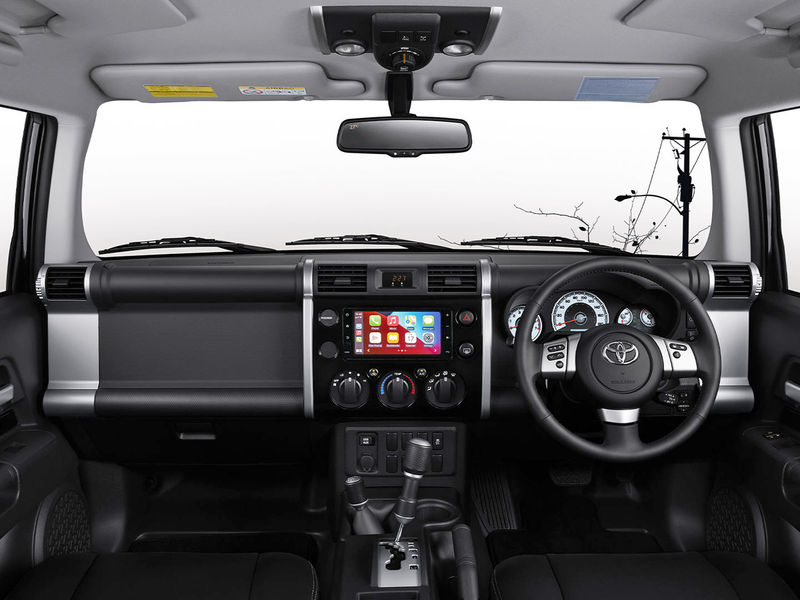
In addition, keep in mind you’ll likely have to search long and hard (and perhaps even pay a bit of a premium) should you wish to benefit from the 2022 infotainment upgrade.
Finally, we should point out that the FJ Cruiser has always been a popular base for off-roading accessories. While there’s no harm considering a vehicle fitted with aftermarket parts – which could range from steel bumpers and roof racks to full exhaust upgrades and lift kits – make sure the accessories come from reputable companies and that they’ve been fitted correctly.
The first prize remains a completely unmodified FJ’ – or one featuring Toyota-supplied accessories.
Is the Toyota FJ Cruiser a good used buy?
During its protracted run on South Africa’s new-vehicle market, the FJ Cruiser had few obvious rivals. The J150-gen Land Cruiser Prado may have been mechanically similar, but it was far more conventional than its quirky Hino-built cousin – and could furthermore be purchased in turbodiesel flavour.
Perhaps the closest thing to an FJ Cruiser competitor was the Jeep Wrangler (both the JK series and the current JL generation), which could likewise be had with an atmospheric V6 petrol motor. We’d argue the 3-door Wrangler was likely nearer to the FJ’ in spirit than the 5-door model.
Meanwhile, buyers shopping at the extreme ends of the off-roading market might have considered the Suzuki Jimny and the Mercedes-Benz G-Class (and even perhaps the original Land Rover Defender 90 somewhere in between), though neither was anything near a direct opponent to the FJ. And, of course, the revived Ford Bronco remains off the table for Mzansi as it’s still offered only in left-hand drive guise.
Ultimately, the FJ Cruiser stood apart – both in the Toyota stable and on the broader market. Though its undeniable road presence and retro-styled exterior may be what initially grabs your attention, rest assured that there’s “an abundance of substance” – not to mention genuine off-road ability – beneath that strangely shaped sheet metal. Despite its idiosyncrasies and compromises, the FJ Cruiser was both very much a part of the Land Cruiser family and a welcome departure from the norm for Toyota.
Looking for a used Toyota FJ Cruiser to buy?
Looking to sell your car? You can sell it to our dealer network here
Ryan Bubear

Having written about everything from sport and politics to crime, Ryan eventually settled on motoring. For well over 15 years, he's been penning articles – both online and in print – about the broader automotive industry, though he's particularly fascinated by vehicle-sales statistics. A freelance writer and editor, Ryan has owned a 1971 Austin Mini Mk3 for 20-plus years.