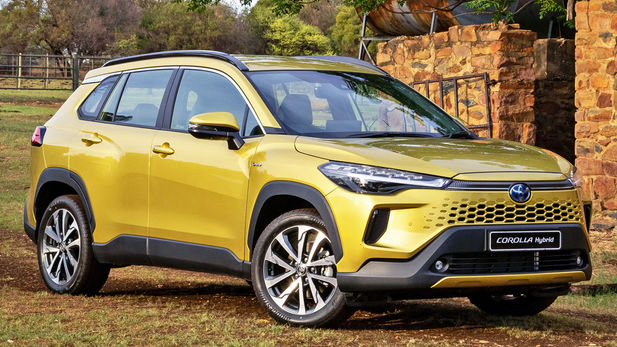
The Toyota Corolla Cross is one of South Africa’s most popular family cars, especially in XS trim. But is the HEV version worth the extra money over the normal petrol? We did the maths to help you choose the right variant for your needs.
Chinese hybrids may have brought more technology, features and affordability to the South African market, but Toyota can legitimately claim to have helped local buyers embrace hybrids.
The Corolla Cross was the model that brought meaningful monthly sales volumes to the hybrid market. Since its introduction in late 2021, it has consistently ranked among South Africa’s best-selling hybrids. Built on the proven Corolla platform, its non-plug-in hybrid (HEV) configuration has found wide appeal among local buyers.
With fuel prices putting pressure on household budgets, the HEV version of Toyota’s popular compact crossover should appeal more than ever. But how much petrol does it save? And does the premium over the standard 1.8-litre version really make sense?
The Corolla Cross value equation
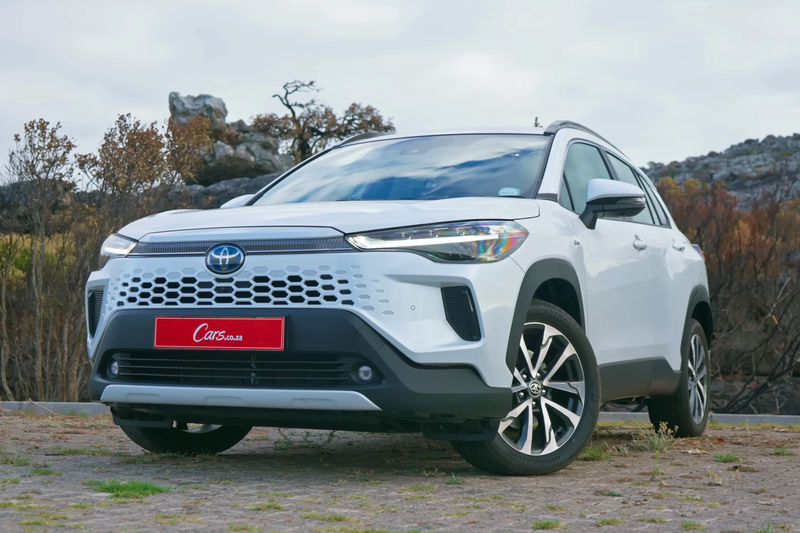
If you really know cars, you know that the lower mid-tier trim often offers the best value. In the Corolla Cross range, that’s the XS grade: R458 400 for the standard 1.8-litre petrol version and R501 100 for the HEV.
The XS grade features dual-zone climate control, LED headlamps, rear parking sensors, a reverse camera and a leather-trimmed cabin. That covers the family-car essentials, but the infotainment is less impressive.
The Corolla Cross XS supports Apple CarPlay and Android Auto through a 10.1-inch touchscreen. It is adequate, but its graphics, haptics, brightness and processing speed are not class-leading. Similarly priced Chinese rivals have set a much higher standard for infotainment in this segment.
Search for a Toyota Corolla Cross on Cars.co.za
Two very different 1.8 engines
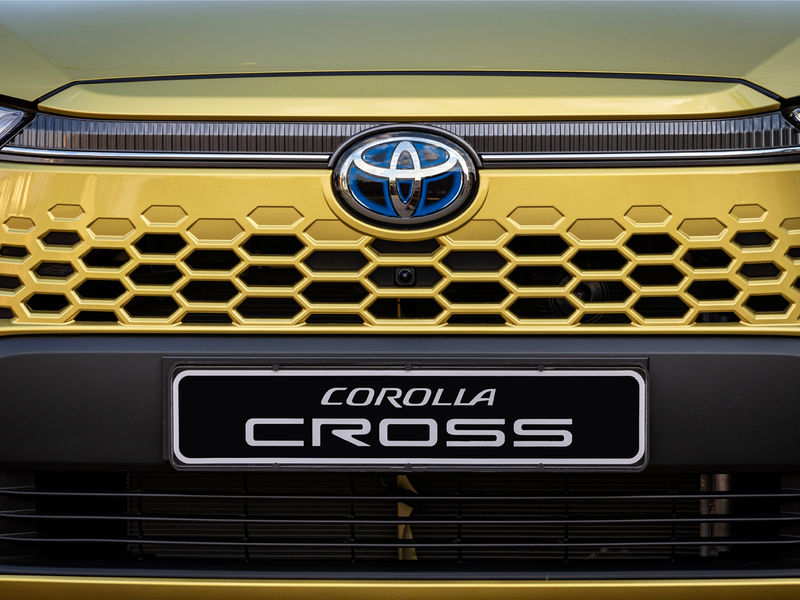
Both Corolla Cross XS versions use a 1.8-litre engine. Although they share a similar block and many components, their engines work quite differently.
The standard XS has a naturally aspirated 1.8-litre 4-cylinder engine producing 103 kW and 172 Nm. Those aren’t impressive but its simplicity makes it terrifically durable. There is no turbocharger, which is a disadvantage for inland drivers: naturally aspirated engines lose considerable power at altitude.
The HEV’s petrol engine produces 72 kW and 142 Nm – about 30% less peak power than the standard engine. Its Atkinson-cycle configuration uses different valve timing to prioritise efficiency over outright power. To make up for that reduced performance, Toyota pairs the engine with a 53 kW electric motor and a 1.3 kWh battery. The hybrid system’s combined output is 90 kW; the engine and motor’s peak outputs cannot simply be added together. Crucially for inland buyers, the HEV suffers less altitude-induced power loss than the standard petrol version.
Fuel-consumption comparison
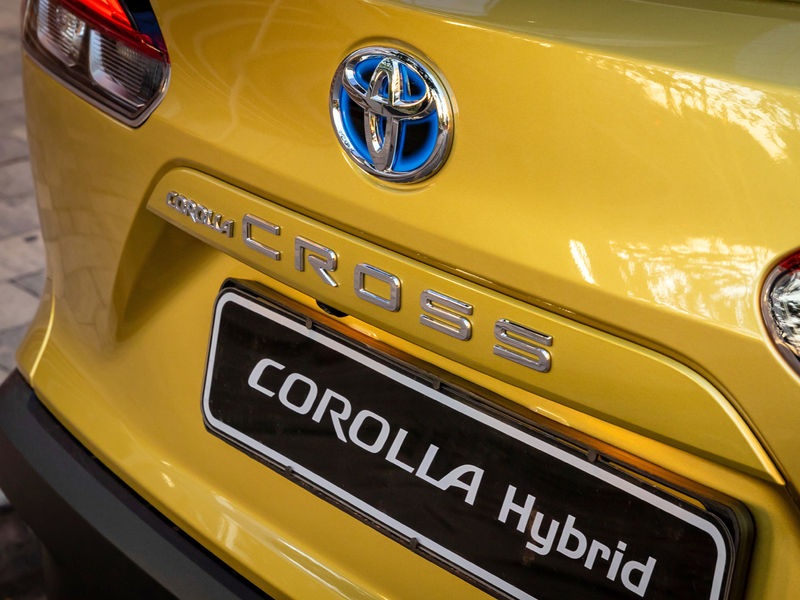
The powertrains are different, but what does that mean for your petrol budget?
The standard 1.8-litre Corolla Cross has a claimed fuel consumption of 6.8 L/100 km. With a 47-litre tank, that gives it a theoretical range of about 691 km. The HEV’s claimed consumption is just 4.3 L/100 km. Despite its smaller 36-litre tank, its theoretical range is 837 km. These figures are based on claimed consumption, not guaranteed real-world results.
Driving range matters to South Africans. Family holidays often involve much longer drives than those undertaken in Europe or Japan, so the distance between fuel stops counts.
On those claimed figures, the HEV uses about 37% less petrol, but its tank is about 23% smaller. That narrows its road-trip range advantage, even though it costs less to fuel over the same distance.
Search for a Toyota Corolla Cross on Cars.co.za
Is the Corolla Cross XS HEV worth the premium?
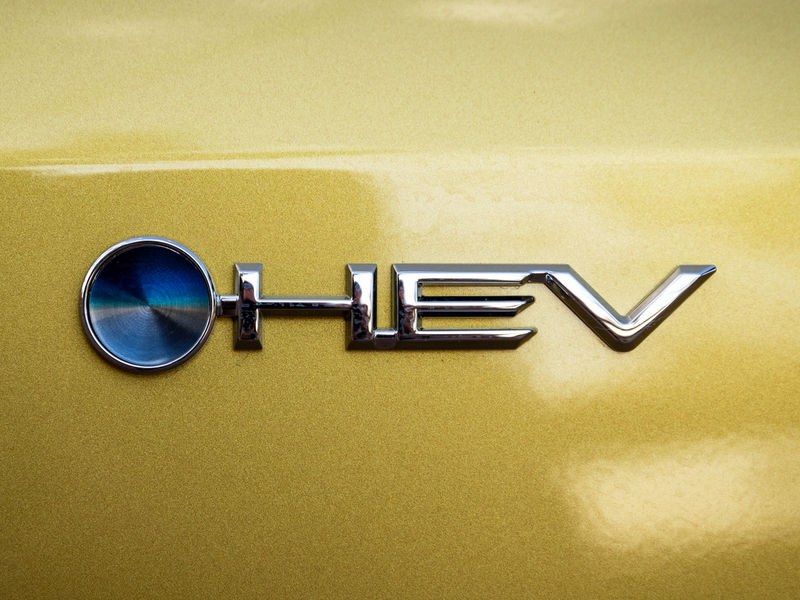
You cannot unsee the difference: the HEV uses roughly a third less petrol on the claimed figures. That is a meaningful saving at the pumps. But saving on fuel is not the same as saving money overall.
The HEV costs R42 700 more than the petrol XS. How far must you drive before its fuel savings cover that premium? The answer depends on the petrol price and the consumption you actually achieve.
To break even on the purchase-price premium, you need to cover enough kilometres for those fuel savings to add up to R42 700. If you plan to keep a Corolla Cross HEV for many years, well beyond its warranty and service plan, the long-term fuel-saving maths becomes more compelling. This is a fuel-only comparison, though, not a full ownership-cost calculation.
But if you are under budget pressure and do not expect to cover high mileages, the cheaper petrol XS may make more sense. The HEV saves at the pumps; whether it saves you money overall depends on how far you drive and how long you keep it.
Lance Branquinho

Lance Branquinho is a Namibian-born writer and photographer who has won numerous motoring journalism awards. He once smuggled parts to South America, in a minor contribution to help Giniel de Villiers finish on the podium at the Dakar. He fears for the eventual collapse of the air-cooled Porsche 911 market – and keenly awaits, in vain, the return of the brand's 928.