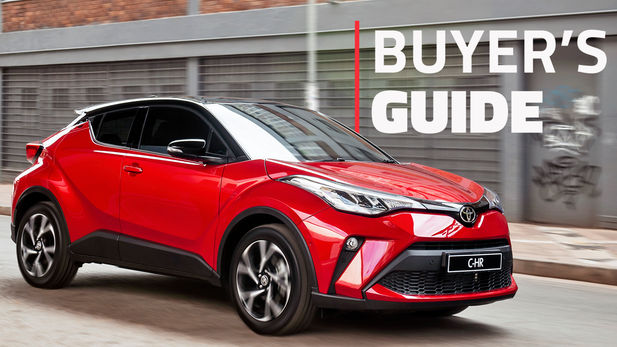
The original Toyota C-HR was in South Africa’s new-car market for over 7 years. Now that it’s discontinued (and its successor is unlikely to be launched in Mzansi), should you consider a used version of the distinctly styled small crossover? Here’s our take…
Concept-car styling? Check. Downsized turbopetrol engine? Affirmative. Toyota badge? Wait, what? Yes, in 2016, the original Toyota C-HR, which favoured radical looks and forced induction over practicality and tried-and-tested atmospheric power, was quite a departure for the otherwise strait-laced Japanese firm.
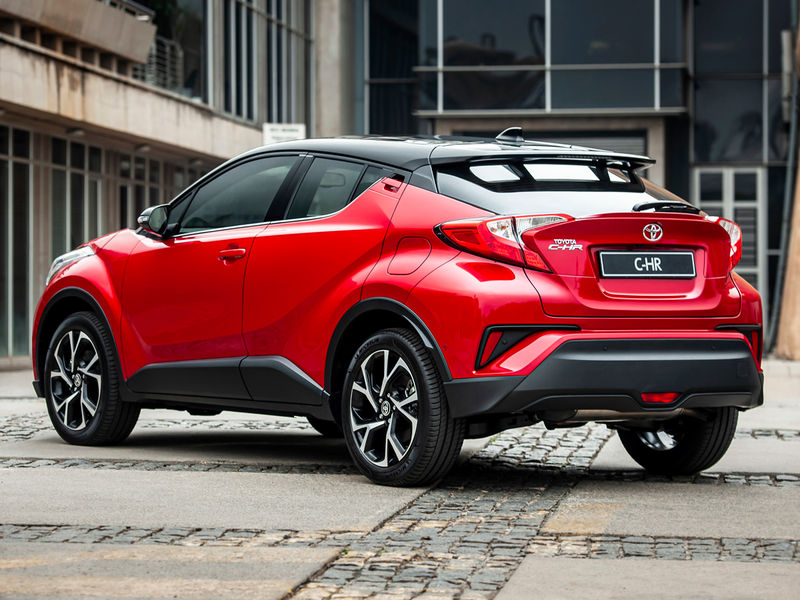
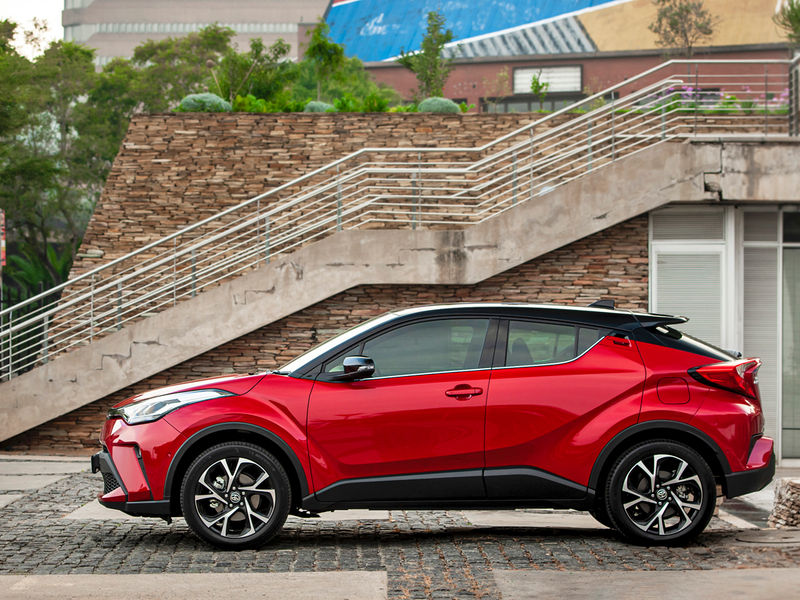
Part SUV, part hatchback, with more than a dash of coupe-like styling courtesy of cleverly disguised rear door handles and a notably sloped roofline, the AX10-series C-HR was anything but typical Toyota fare.
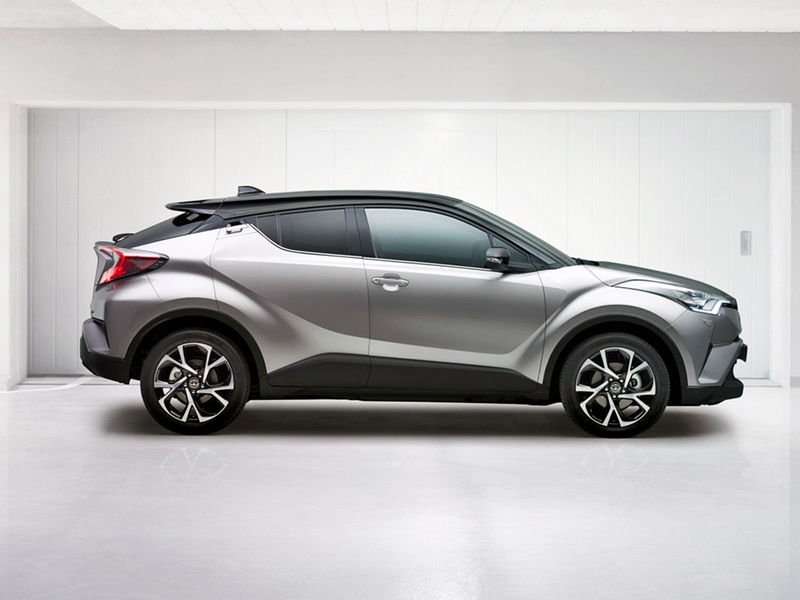
Still, there was plenty of substance beneath that dramatically surfaced sheet metal, thanks, in part, to the model’s TNGA-C underpinnings, which facilitated not only a lower-than-usual centre of gravity (for a crossover, anyway) but also a relatively sophisticated rear-suspension set-up.
As an aside, it’s interesting to note the Toyota C-HR was the first model locally to employ the Aichi-based automaker’s then-new 1.2-litre, 4-cylinder turbopetrol engine (while the model was never offered with a hybrid powertrain in our market). After all, Toyota SA Motors was deliberately late to the downsized turbo party, persisting with time-tested naturally aspirated motors longer than most of its rivals.
While the 1st-gen C-HR was produced in Japan, China, Thailand and Turkey, it’s our understanding that all SA-spec units were sourced from the Sakarya plant in the latter country. Incidentally, the 2nd-gen model is now built exclusively at this factory.
So, why isn’t the 2nd-gen C-HR offered in Mzansi? Well, Toyota SA Motors told us the AX20-series model is available only in hybrid form, putting it at a “higher price point” than its predecessor. Bear in mind that if the latest C-HR were to be imported into South Africa, it would compete with petrol-electric versions of the larger, locally built Corolla Cross. There is a healthy demand for those variants already…
Toyota C-HR model line-up in South Africa
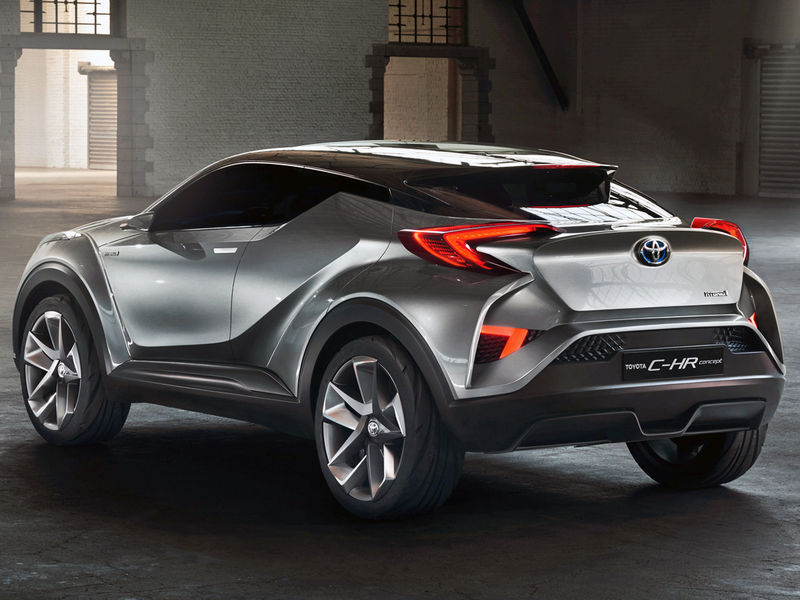
Previewed by both the C-HR Concept of 2014 and a further-refined show car unveiled about a year thereafter, the production version of the coupe-style crossover was revealed in March 2016.
By February 2017, it had arrived in South Africa, powered by a 1.2-litre 4-cylinder turbopetrol mill and available with either a 6-speed manual gearbox (complete with iMT controls that automatically adjusted engine rotations when shifting) or a continuously variable transmission (CVT). At launch, just a base trim level and a Plus specification were on offer, resulting in a 3-derivative line-up:
- C-HR 1.2T 6MT (85 kW/185 Nm)
- C-HR 1.2T Plus 6MT (85 kW/185 Nm)
- C-HR 1.2T Plus CVT (85 kW/185 Nm)
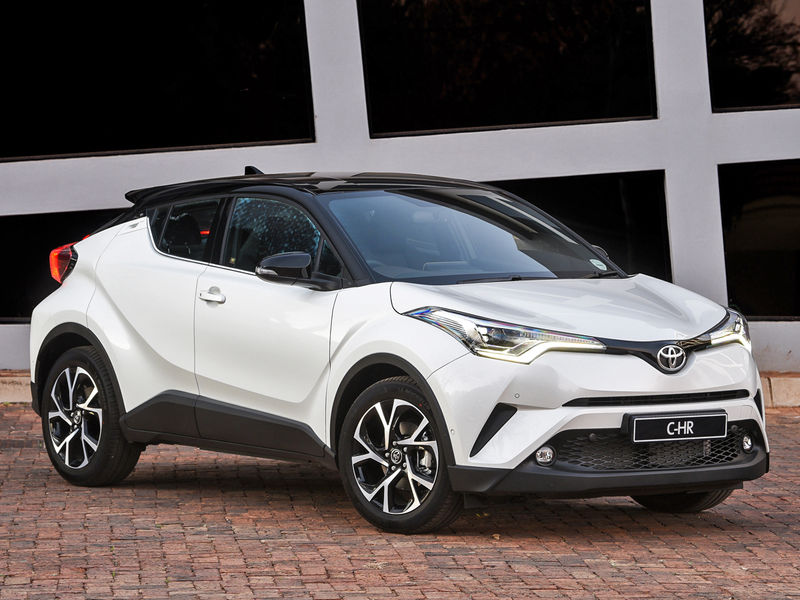
In August 2018, the long-awaited range-topping “Luxury” variant – not available locally right from launch ostensibly due to high global demand – touched down in South Africa, boasting a bi-tone exterior finish (effectively adding black finishes for the roof and side-mirror caps), LED head- and taillamps, leather upholstery, heated front seats, parking sensors, a parking-assist system and a raft of extra airbags.
- C-HR 1.2T Luxury CVT (85 kW/185 Nm)
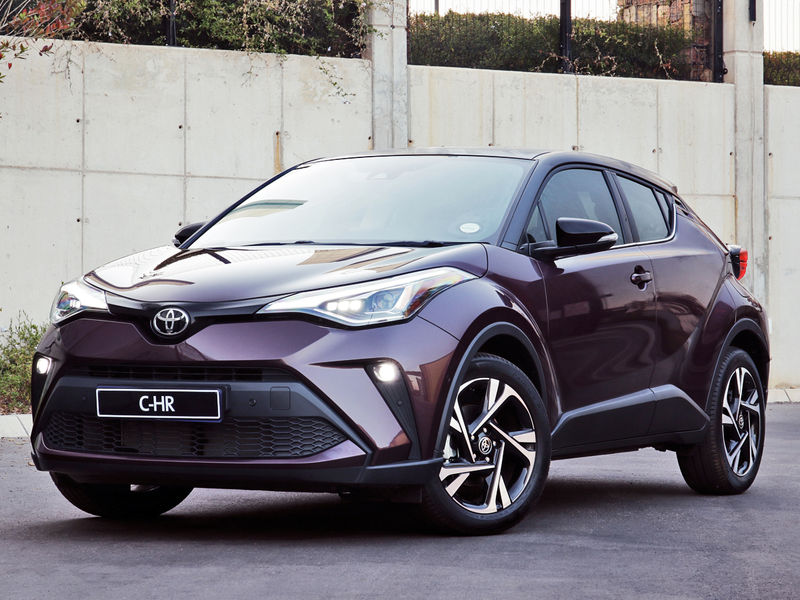
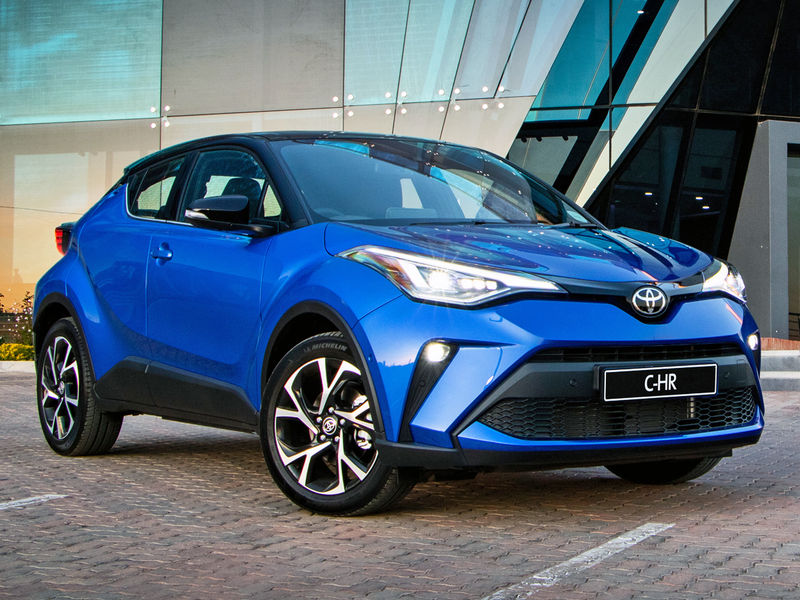
The C-HR received a facelift in February 2020, though stuck with the 1.2-litre engine and a 4-variant line-up. Styling revisions were implemented fore and aft, with the base derivative and the mid-tier Plus grade upgrading to LED headlights. Toyota said it tweaked the power steering to “improve feel” (feedback through the multifunction ‘wheel) and claimed to have raised refinement levels as well.
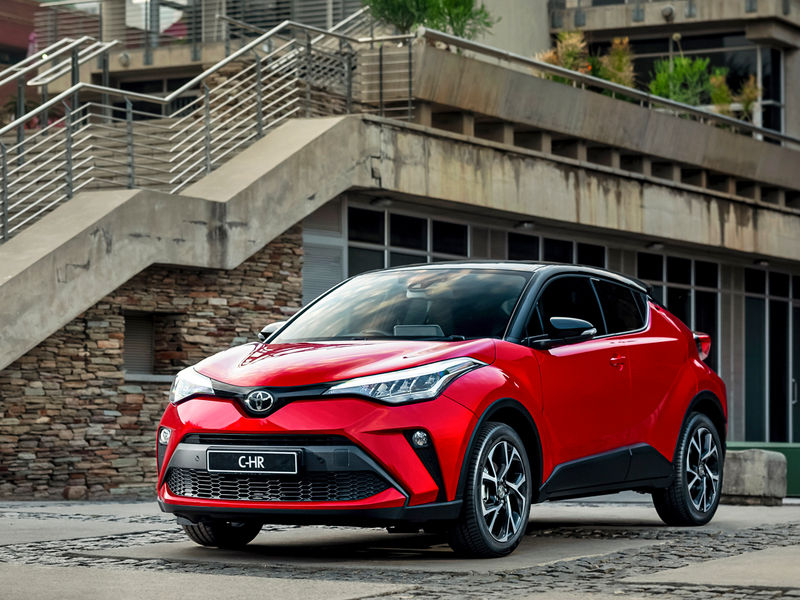
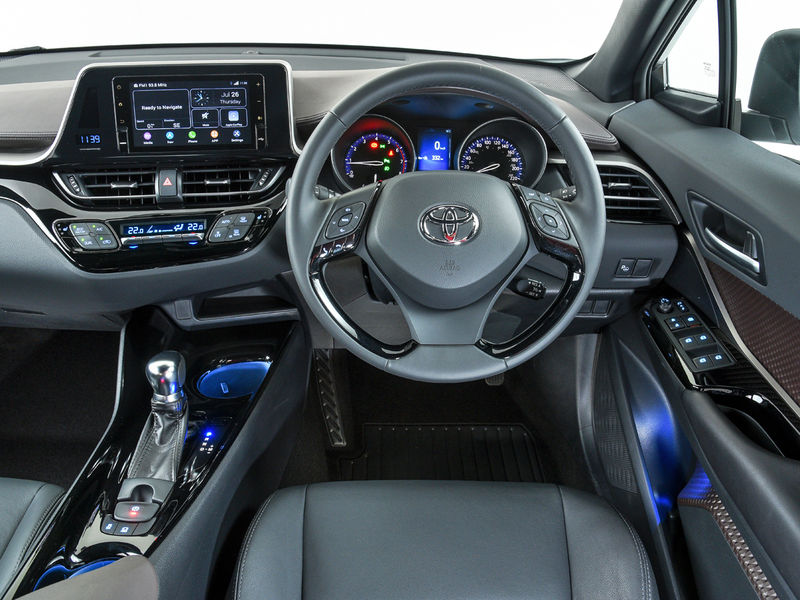
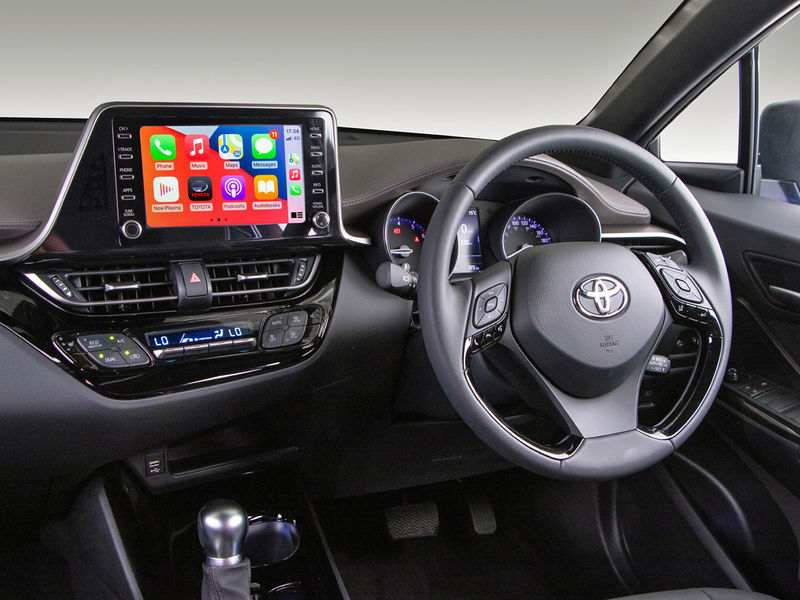
Inside, the old 6.1-inch infotainment system was ditched in favour of an 8-inch arrangement (replete with “full smartphone integration”), while the Plus variants’ instrument-cluster diameter grew to 4.2 inches.
However, perhaps the most significant mid-cycle upgrades came in the safety department, with the standard and Plus variants gaining extra airbags (and, in the case of the former, rear-seatbelt force limiters and pre-tensioners, too) and the Luxury derivative scoring blind-spot monitoring, lane-change assist, lane-keeping assist, rear cross-traffic alert and adaptive cruise control.
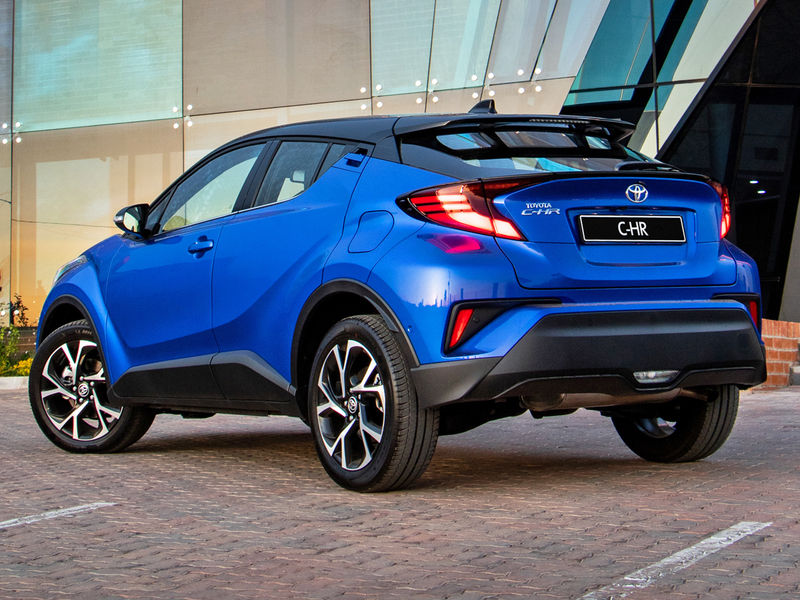
In June 2021, the Luxury flagship derivative received further attention, adopting sequential indicators and unique light-cluster arrangements, front and rear. Meanwhile, the adaptive cruise-control system gained all-speed functionality and the lane-departure alert system now incorporated lane-trace assist.
The final tweaks to the local C-HR portfolio came in August 2022, when the Plus and Luxury variants switched to a new alloy-wheel design, while fresh exterior colours were rolled out. Production ended late in 2023, though Toyota SA Motors removed the C-HR from its price lists only in September 2024.
What are the Toyota C-HR’s strengths?
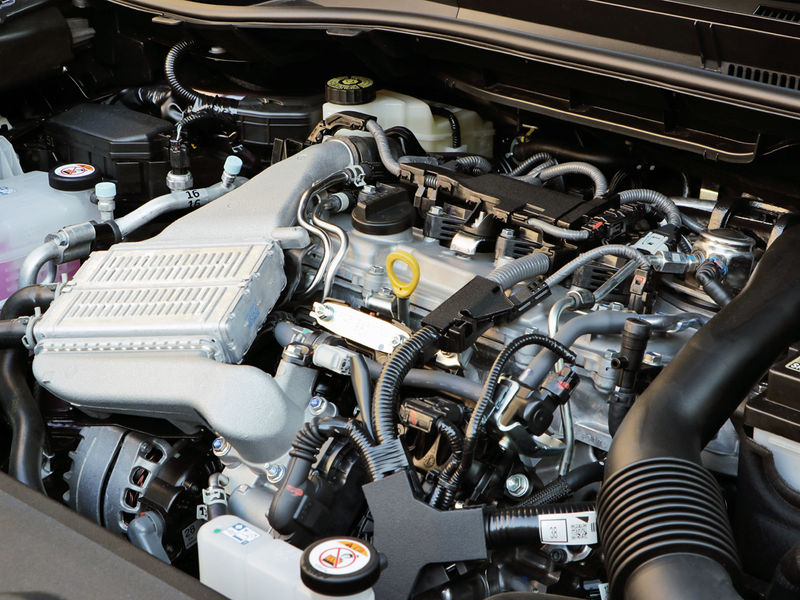
Punchy powertrain: Toyota’s 85 kW turbocharged 1.2-litre 4-pot (8NR-FTS) delivered its oomph in a pleasingly linear manner, with peak twisting force of 185 Nm on tap from 1 500- to 4 000 rpm. Though the C-HR’s kerb weight was about 1 400 kg, the refined little engine felt more than punchy enough.
Unusually, the 6-speed manual derivatives were slightly more efficient than their CVT-equipped siblings, with Toyota claiming combined figures of 6.3- and 6.4 L/100 km, respectively. As an aside, though some early units in North America were said to suffer from CVT issues, we could find no evidence of such maladies here in South Africa.
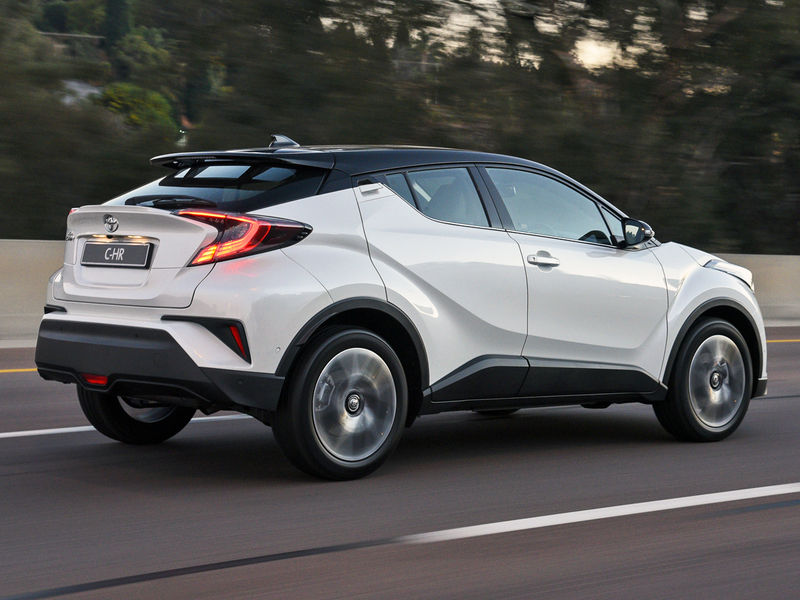
Well-sorted ride and handling: Endowed with a well-engineered chassis, the AX10-series Toyota C-HR was both dynamically adept (delivering impressive body control) and rode with a pleasing degree of pliancy. Much of this could be attributed to the crossover’s sophisticated double-wishbone rear suspension, which Toyota opted for over a more rudimentary torsion-beam arrangement.
In short, from behind the steering wheel, the composed Toyota C-HR felt more like a slightly raised hatchback than a high-riding crossover (in fact, at the time of this model’s reveal, chief engineer Hiroyuki Koba said he had “wanted to achieve performance on a par with a good C-segment hatchback”).
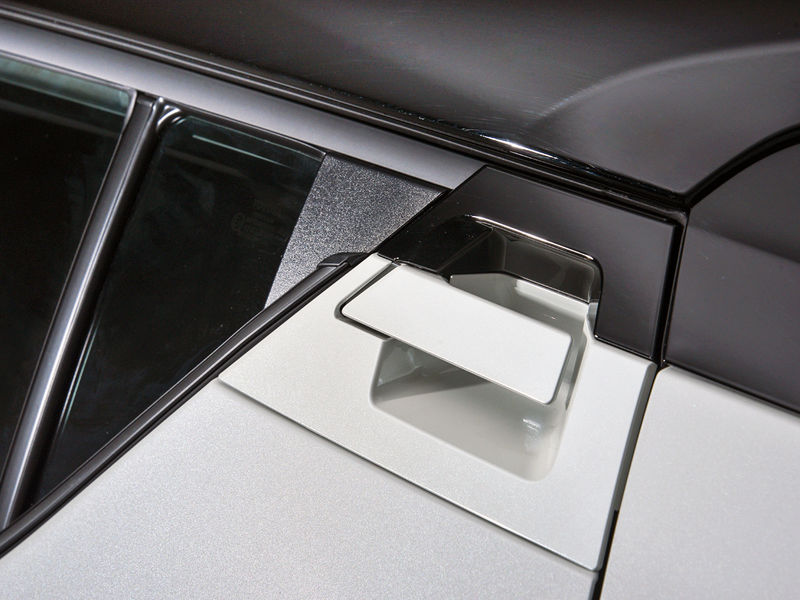
Concept-car styling: Every now and then, it seems Toyota’s designers are given free rein, resulting in – rather uncommonly for the brand – a vehicle that favours bold character over outright practicality. The FJ Cruiser is one such example and the C-HR is another.
At the C-HR’s unveiling in 2016, the Japanese automaker said its newest model represented then-president Akio Toyoda’s “determination to allow greater stylistic freedom”. Featuring flared arches, a coupe-like roofline and what the brand described as an array of “gemstone-like shapes”, the C-HR stayed largely true to the concept that preceded it.
What are the Toyota C-HR’s weaknesses?
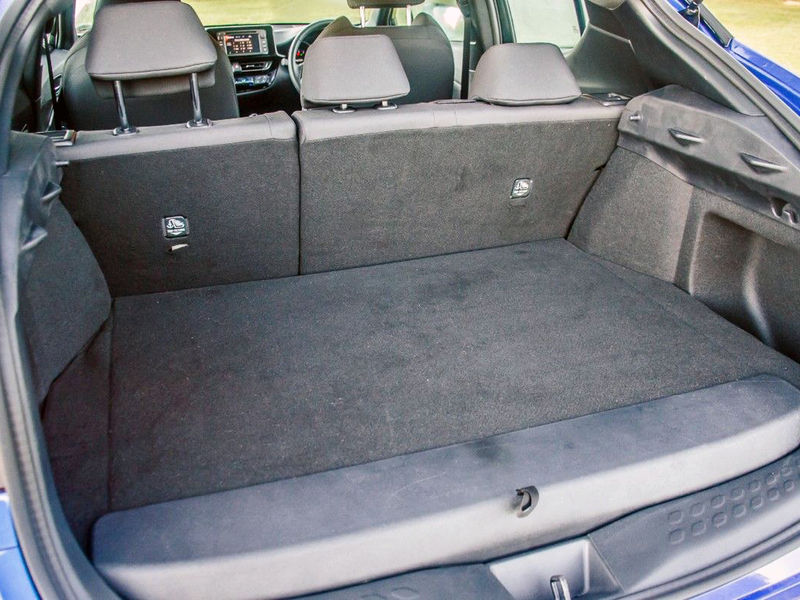
Below-average luggage space: Curiously, Toyota SA Motors claimed several separate luggage-capacity figures for the C-HR over the model’s local lifecycle. For instance, the 2017 spec sheet listed a figure of 377 litres, before this claim fell to 297 litres the following year and then further to 234 litres in 2021.
Regardless of the exact number, there was no escaping the fact the C-HR’s load bay was cramped compared with those of rivals. This was particularly evident at launch, when all derivatives shipped standard with a full-size spare wheel (wrapped in 215/60 R17 tyres) under the load floor, taking a substantial bite out of the compartment’s depth.
Toyota did eventually switch to a space-saver spare wheel, though it’s not clear exactly when that happened. So, if you’re inspecting a potential buy before test driving, we’d suggest having a peek in the luggage compartment and, indeed, under the load floor.
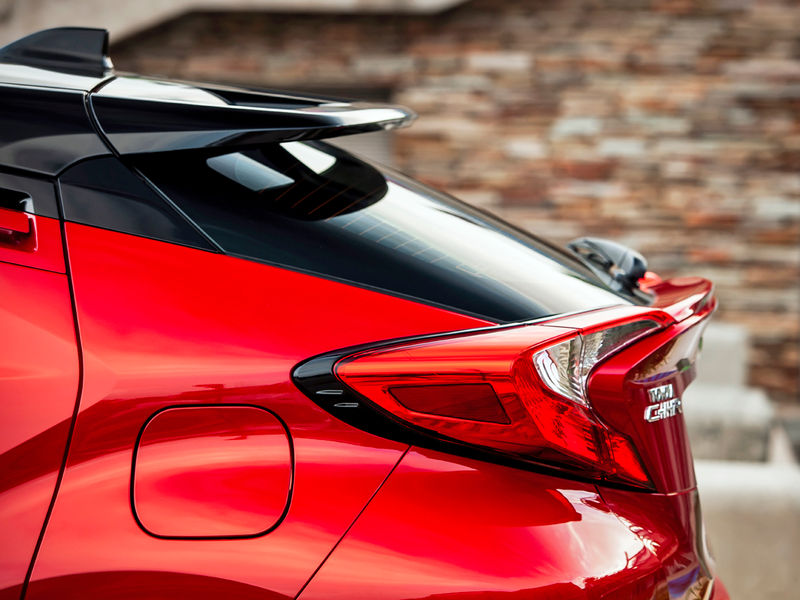
Compromised outward visibility: As we noted in our Toyota FJ Cruiser Buyer’s Guide, compromised outward visibility is often one of the downsides of an unconventional exterior design. That was certainly the case with the C-HR, too, with its high beltline, chunky C-pillars and titchy (not to mention steeply raked) rear screen conspiring to create significant over-the-shoulder blind spots.
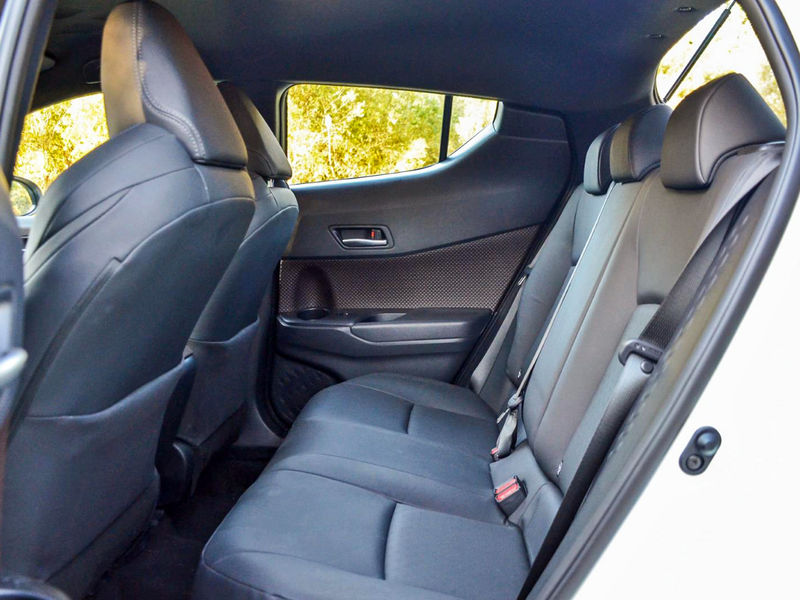
While early versions did without a reverse-view camera, this feature was thankfully rolled out across the range from August 2018. However, keep in mind that only the top-spec Luxury grade came with parking sensors. Also, note that the C-HR’s coupe-like design had a marked impact on rear passenger space (particularly headroom) and rendered the rear quarters more than a little claustrophobic.
Only 2 airbags for most pre-facelift variants: Though the C-HR wasn’t billed as a full-size family vehicle, it was nevertheless surprising – considering its positioning in the local market – that early versions shipped standard with just 2 (front) airbags. Of course, that changed when the Luxury derivative arrived in the 3rd quarter of 2018, which sported a full complement of 7 airbags, a treatment that was fortunately extended to all variants from the early 2020 facelift.
How much is a used Toyota C-HR in South Africa?
At launch in 2017, the AX10-series C-HR came with a 3-year/100 000 km warranty and a 5-year/90 000 km service plan, with the latter featuring intervals of 15 000 km. However, in 2018, Toyota SA Motors revised the terms of its standard service plans, switching from the “number of years” parameter to “number of services” instead. At that point, the C-HR moved to a 6-service/90 000 km arrangement.
More than 70% of the Toyota C-HR units listed on Cars.co.za at the time of writing were specified with a CVT, while around 55% came in the form of mid-tier Plus derivatives. Interestingly, the flagship Luxury variant (34%) was more prevalent than the base derivative (11%).
Indicated mileages ranged from just 101 km on a virtually new model to 168 000 km on a 2020 C-HR 1.2 Plus 6MT. Only 10% of listed examples showed an odometer reading higher than 100 000 km.
- Below R250 000: Slim pickings below this mark, where we found only 2018 and 2019 model years (though fascinatingly no examples from 2017). The split between manual and CVT was even here, though all but a single unit had covered more than 100 000 km.
- R250 000 to R350 000: Approximately 35% of listings fell between these pricing bookends at the time of writing. All model years bar 2024 were represented, with the overwhelming majority featuring the Plus specification.
- R350 000 to R450 000: Housing around 42% of all C-HR stock, this was the most popular pricing bracket. Facelifted examples dominated this space, with most having covered well under 50 000 km. Manual derivatives were few and far between here.
- R450 000 and up: Every unit listed above R450 000 came from the final 2 model years, with most featuring the top-spec Luxury trim level. The most expensive example we discovered was a 2024 C-HR 1.2T Luxury CVT (a model that would have cost R612 000 new) with 9 800 km on the clock and priced at R589 990.
Which Toyota C-HR derivative should I buy?
Since the C-HR was available in Mzansi exclusively with the 1.2-litre 4-cylinder turbopetrol engine, when it comes to the powertrain, used-car shoppers need only decide on their preferred transmission. Unless you regularly find yourself enduring bumper-to-bumper traffic, we’d suggest opting for the delightfully slick 6-speed manual gearbox over the CVT.
That, of course, would rule out the Luxury grade, which was offered only with the CVT. Still, we’d argue the Plus trim level covers all the basic specification requirements and more, particularly in the facelifted guise. The latter update, of course, included the full complement of airbags.
Is the Toyota C-HR a smart used purchase?
Since the original Toyota C-HR stuck around for more than 7 years, it faced several so-called “boutique-crossover” rivals. For instance, buyers in this space might also have considered the likes of the original Hyundai Kona, the Mazda CX-30, the Volkswagen T-Roc and, latterly, even the more compact Ford Puma and likewise smaller 2nd-gen Opel Mokka.
More conventional – and thus somewhat more practical – competitors included the Nissan Qashqai (the J11 generation and briefly the J12, too, before the latter’s local axing), the Honda HR-V (both the RU- and RV-series models) and even the Mitsubishi Eclipse Cross.
That said, if it was relative spaciousness and versatility the buyer wanted, Toyota would have directed them swiftly towards the Prospecton-built Corolla Cross (though this model launched locally only late in 2021). In short, the original C-HR was obviously not designed for growing families; indeed, back in 2017, Toyota SA Motors described its targeted customer base as “image-conscious urbanites”.
While the Toyota C-HR’s uncharacteristically bold exterior styling won’t appeal to everyone, there are certainly many who appreciate it (we think it has aged quite well). Add a high-quality cabin, a surprisingly sprightly driving experience and the Japanese brand’s enduring reputation for reliability, and you have a compelling option for buyers who want a Toyota – though not a conservatively styled one.
Looking for a used Toyota C-HR to buy?
Find a used Toyota CH-R listed for sale on Cars.co.za!
Looking to sell your car? You can sell it to our dealer network here