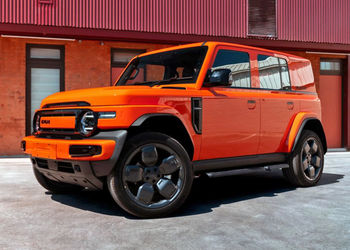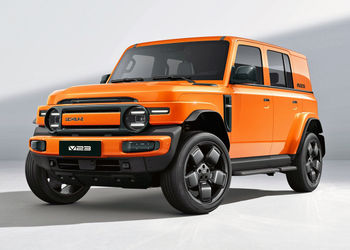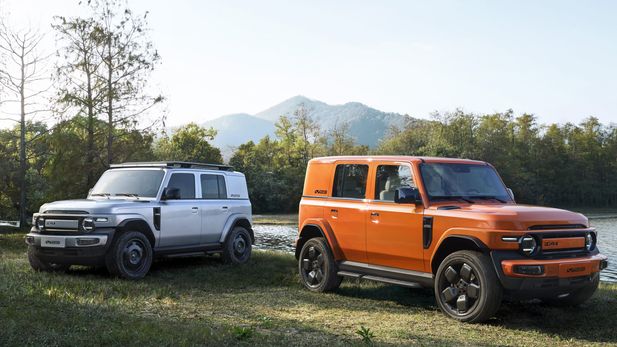
The iCaur V23 AWD is retro done right, at an unbelievable price. But does it make sense as a South African crossover SUV?
There is no automotive group with more brands trading in South Africa than Chery. Its strategy is to offer something for everyone – from entry-level first-car buyers to families wanting a large luxury crossover SUV. Of Chery’s sub-brands, the most outrageous is iCaur.
Chinese car design was a joke little more than a decade ago. Today, it is so bold and daring that it embarrasses legacy European design studios, producing concepts that would ordinarily never make it past the show-car stage at a traditional car company, yet become production models in record time. iCaur is proof of that shift.
You can’t buy more of a statement car for less money. But do these battery-powered crossover SUVs, with their extroverted looks, actually work as family vehicles in South African conditions?
Read more: Here’s how many units iCaur has sold in SA so far
It’s certainly not a derivative design
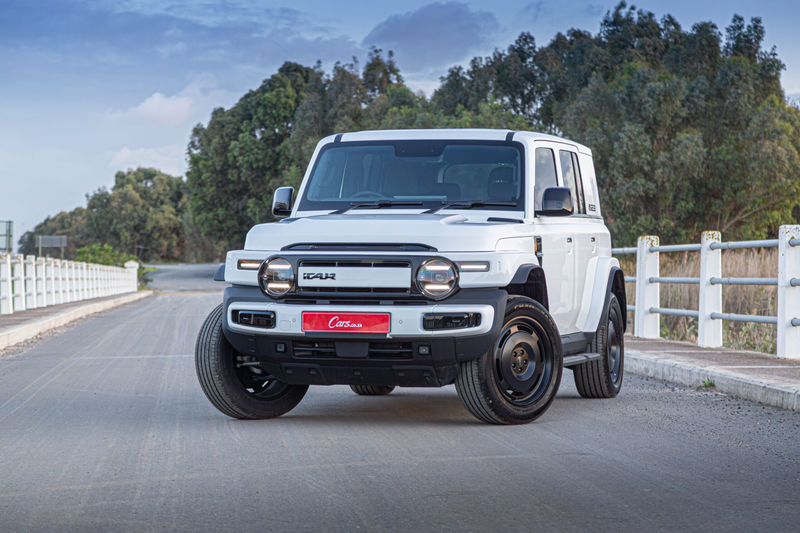
There is a lazy perception that Chinese cars are mere imitation designs but that isn’t entirely true. Chinese design teams aren’t constrained by legacy and tradition in the way designers at established car companies are.
Read more: iCaur 03T (2026) Review
At a European manufacturer, a model range might be in its 5th or 6th generation, shaped by decades of lineage. Those designs are constrained by the need to pay homage to history. Chinese studios don’t work like that. In a market with fierce competition for recognition, designers try to outdo each other with ever bolder shapes.
Search for an iCaur V23 on Cars.co.za
Why iCaur’s vehicles look so good
There is another reason Chinese car design is misunderstood. When traditional car companies create a new body panel, bonnet surface, grille, or light cluster, they choose from a limited pool of suppliers. If projected production volumes are too low, suppliers simply aren’t interested in tooling up differentiated components.
In China, the supply chain is far deeper. Designers wanting to take a risk with a unique shape can always find a supplier willing to produce it. That is the secret of modern Chinese car design: a supply chain capable of manufacturing whatever designers imagine.
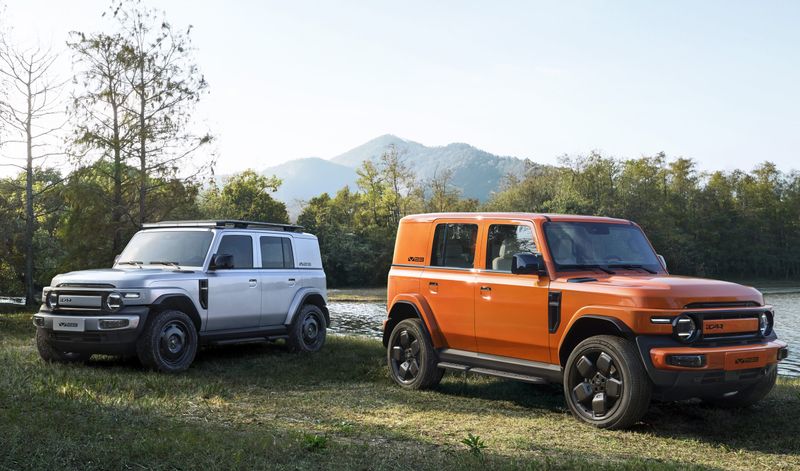
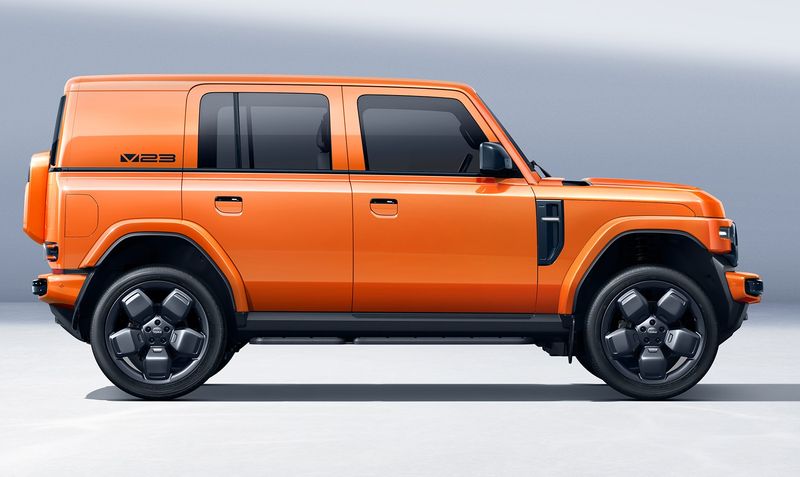
The retro-themed iCaur V23 looks better than almost anything else in its segment. Retro styling is risky because it can age rapidly, as VW learned with the New Beetle. Get it right, though, and it remains on-trend for decades.
For many local crossover buyers, styling and equipment levels are top priority. The V23 nails the visual appeal and packs a typically generous standard equipment list.
The spare wheel cover that isn’t
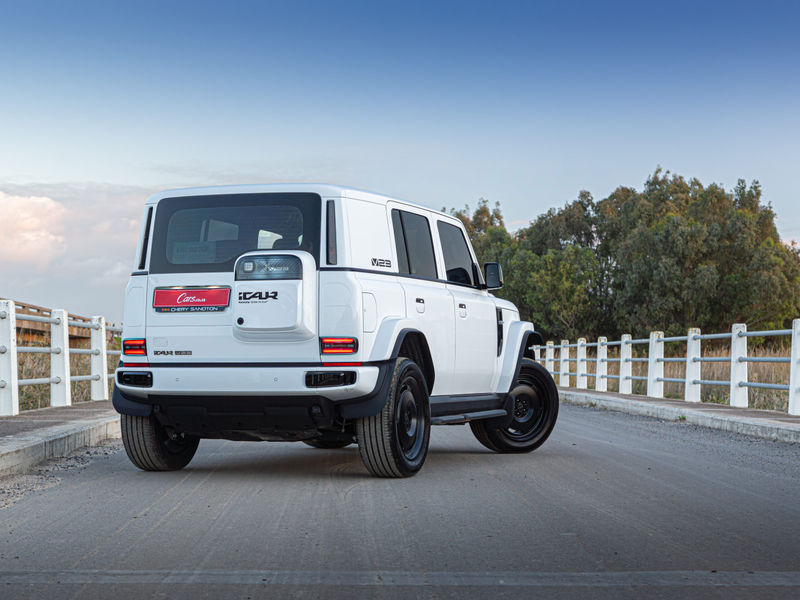
Designers at iCaur have proven that sometimes form follows function, but not always in a practical way. Take the external tailgate storage pod: it intentionally mimics a traditional adventure SUV’s tailgate spare-wheel mount, yet contains no wheel. It is simply a quick-access box for charging cables.
In theory, that tailgate pod could store muddy outdoor gear or wet beach towels on the journey home from summer vacation. Instead, it is dedicated solely to cable storage.
This fake spare-wheel pod highlights a real issue with many Chinese crossover SUVs in South Africa: the lack of a spare tyre. It reveals a poor understanding of how local buyers actually use their vehicles and the tyre risks present even on long-distance tar routes.
SA spec needs a spare wheel
Vehicle design and engineering have shifted dramatically as digitalisation takes centre stage, but all the software engineering in the world won’t help when you have a flat tyre and no spare.
In South Africa, where long-distance road trips are routine and scenic detours bring a risk of potholes and harsh gravel, a spare wheel is essential.
The irony is that the iCaur V23 AWD rides on rubber ill-suited to dirt roads, corrugated surfaces, or pothole strikes. Rolling on 21-inch rims wrapped in 265/45 R21 tyres, the V23 offers decent width for traction, but its low sidewall profile leaves precious little cushion to absorb impacts. That is not the tyre setup you want for exploring rural routes, especially without a spare on board.
The iCaur V23 AWD road-trip issue
The iCaur V23 AWD suffers from the same flaw as several other Chinese adventure-styled crossovers: limited real-world touring capability, whether due to payload or driving range.
Payload is less of an issue in China, where owners often prefer high-speed rail or flights for long-distance holidays. In South Africa, loading up a car with family and luggage for a road trip is standard practice.
Both the rear- and all-wheel-drive versions of the V23 carry a payload rating of 375 kg, which is low for a vehicle of this size. Carrying four 75 kg adults leaves just 75 kg for luggage. It isn’t unusable, but it is far from generous.
Then there is the highway efficiency. Given the V23’s boxy shape and high aerodynamic drag, high-speed cruising rapidly depletes range, making inter-provincial journeys impractical regardless of payload.
As an urban statement car, it boasts immense presence. If you have a substantial home solar installation enabling low-cost charging, the iCaur V23 AWD makes a characterful, spacious daily driver or third family car. But as a true crossover SUV, its drag-heavy body limits range, making it more of a stylish lifestyle statement than a sensible long-distance buy.