The Right to Repair guidelines, which took effect on 1 July 2021, represent possibly the largest change to the way new cars are sold and maintained in South Africa in decades. There are very important new rules and regulations in place which South African motorists and franchised car dealerships need to understand and follow going forward. Some of the issues are complex and we do have some concerns, which we’ll outline in this article.
What is the Right to Repair?
After years of lobbying the government, the Right to Repair Campaign (RTRC) sought to bring South African practices in line with current legislation that is in place across much of Europe. After extensive consultations with stakeholders and interested parties, the Competition Commission of South Africa has published new guidelines relating to the motoring industry, which franchised dealers must follow, or face punitive measures in cases brought to the Competition Commission by consumers.
The underlying legal basis is the existing Competitions Act, Act 89 of 1998.
It is important to note that these new guidelines do not affect, replace or negate existing consumer protection as enshrined in the Consumer Protection Act, a detailed explanation of which you will find here in our recent podcast with the highly regarded consumer journalist and veteran #CarsAwards judge, Wendy Knowler.
The new Right to Repair (RTR) guidelines only apply to the sale, servicing and repairs of new and used vehicles that are still within their original warranty period.
How does the Right to Repair work?
This is a complex and far-reaching new framework for buyers and sellers, and perhaps the best way to explain the intricacies is to follow the story of a fictional new car buyer. So allow us to introduce you to Luke Skywalker, who has arrived from a galaxy far, far away and would like to buy a new Volkswagen Polo to enjoy in his retirement.
Luke walks into a franchised VW dealership on 1 July 2021 and takes a look around. He falls in love with a 1.0TSI Comfortline R-Line and decides to buy it on the spot, through a finance deal.
When he sits down with the salesperson, the dealership’s representative must separately disclose the price of the vehicle (which includes the manufacturer warranty, which in this case is valid for 3 years or 120 000 km, whichever elapses first) and the cost of the service plan.
Previously, this would have been bundled together, and Luke would not have been able to see what the service plan would have cost on top of the price of the vehicle itself. Before RTR came into force, Luke would also not have had the option of servicing the car outside of the franchised dealer network. If he did so, his car’s warranty could be voided (partially or completely).
And so Luke decides to finance the car without a service plan and his journey of looking after his own car begins. The first thing Luke should do is familiarise himself with the vehicle’s service schedule, which would be included in the handbook of the car or, if he is still unsure, he can ask the dealer to provide a document outlining the service intervals and service descriptions for the vehicle.
It is also very important at this junction for Luke to familiarise himself with the warranty schedule of his new car, in other words, to know exactly which parts and systems are covered by the manufacturer warranty and, more importantly, which aren’t. For example, if the alternator (a part that is almost always covered by a manufacturer warranty) breaks down within the warranty period, then Luke must go directly to the dealer he bought the car from (or another franchised VW dealership) for the purposes of repairing or replacing the part at their workshop.
However, if Luke “burns through” the clutch in the warranty period (a part which is most often not covered under warranty) then Luke now has some options, which we’ll go through below.
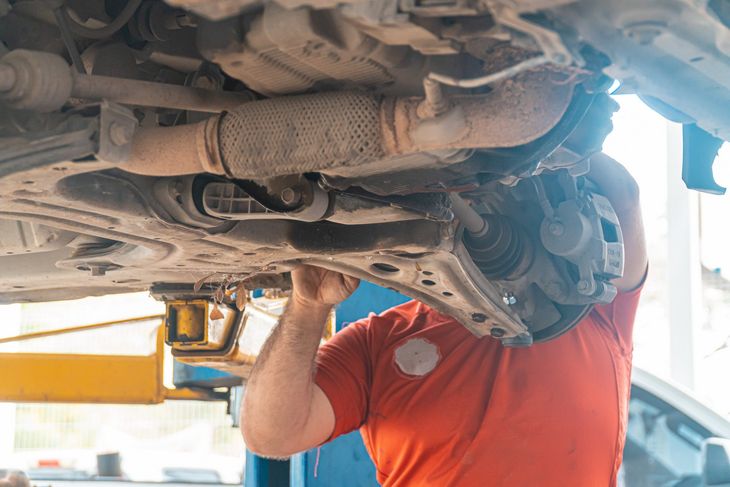
The next step is to find a trustworthy independent service provider (ISP, or third party workshop), which is where things can get quite tricky.
We highly advise that Mr Skywalker only takes the car to a MIWA-accredited service centre, preferably one that specialises in servicing and repairing Volkswagen models. MIWA is the Motor Industry Workshop Association of South Africa. They have roughly 3 000 accredited service providers that are all held to high standards of workmanship and importantly, carry liability insurance for defective parts or faulty workmanship. More information can be found here: www.miwa.org.za
At this point, liability insurance becomes vitally important. This is because if poor workmanship or the fitment of an inferior part causes damage to a part or system that is covered by the manufacturer’s warranty, the franchised dealer is within their rights to refuse to repair the part or system at their cost. This means that Luke will have to claim from the ISP, and the ISP will have to claim from their insurance.
In the example where Luke has burnt his clutch out before the RTR guidelines kicked in, he would have no choice but to pay the dealership for the parts and for the repair. Any other action would have resulted in voiding the warranty.
However, now Mr Skywalker can ask the dealership for a quote on the parts and repair. He can then shop around for a better price on the parts and the labour, and then make the choice himself. If he goes the third party route, he will not lose his vehicle warranty.
In this instance, it is likely that by pursuing the 3rd-party route, Luke will save money compared with opting to have the repair done at the franchised dealer.
However, let’s say the new clutch that was installed fails and damages the gearbox. The gearbox is a warranty item and so Luke takes it to the franchised dealer. The dealer assesses the issue and finds that the clutch was faulty (or installed poorly) and caused damage to the gearbox.
The dealer is within their rights, according to the new RTR framework, to refuse to repair or replace the gearbox. This means Luke has to go back to the ISP and make a claim there, where, hopefully, the insurance claim process goes smoothly, the workshop’s insurance pays out and Luke’s gearbox is swiftly replaced so that his car doesn’t stand there like a 2-tonne paperweight.
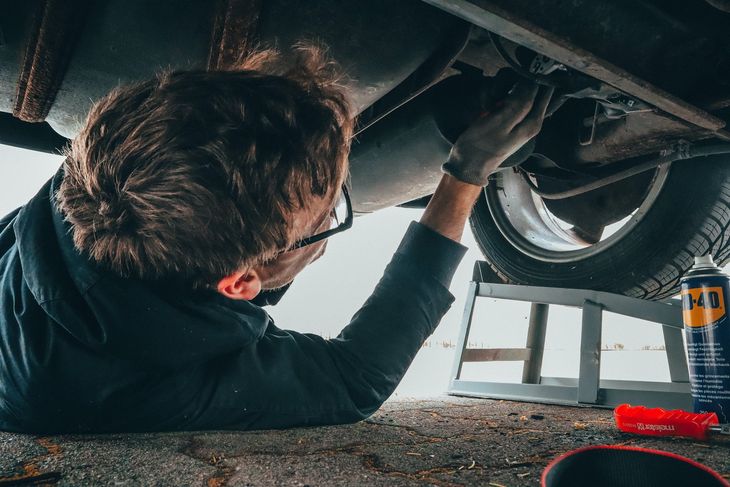
It is not clear in the guidelines if the 3rd-party workshop should replace the gearbox, or if Luke should be paid out and take the money to the dealership to replace the gearbox. However, there is the potential for real headaches here for Luke, where he could be caught in a Bermuda triangle of different parties pointing fingers at each other, never mind the sheer amount of paperwork and phone calls it would likely require to resolve this issue.
So, on with the story. For the next few years, Luke’s Polo ownership runs relatively smoothly and he sticks to the service schedule of the car, ensuring that the service book is stamped along the way.
Two years after buying the car, he decides that his car isn’t “doing it” for him anymore – he’s tired of having to fold the seats down to fit his lightsabre in the load bay. And so he decides that he wants to upgrade to an SUV… time to trade-in or sell the Polo, then.
Luke heads back to the dealer from which he bought the car and asks for a trade-in price. At this point, the dealer has the power to set the trade-in amount, and it remains to be seen as to whether dealers will choose to devalue cars that haven’t been serviced “in-house”. Equally, if Luke sold it privately, interested buyers might not be willing to offer what he’s asking because the car was serviced via 3rd party service centres.
Luke decides to take the dealer’s offer and upgrades to a Volkswagen Tiguan. Luke’s Polo hits the showroom floor and, as the car still has 1 year left on the warranty, the next buyer will have to make the same choice; whether to buy an in-house dealership service plan – or service the car privately.
How will Right To Repair affect me financially?

If you opt-out of buying a manufacturer service plan at the point of purchase, it is important to remember that you will now have to have the finances available when the time comes to service the car.
Traditionally, with the service plan cost bundled into the purchase price, the buyer would not “feel the sting” of servicing costs as they would simply be paying one complete instalment per month to the bank.
That being said, it is worth remembering that by financing your service plan, you are effectively paying interest on that amount for the duration of the finance period. In this sense, even if servicing the car yourself costs exactly the same amount as servicing through the dealer, it would still be cheaper as you are saving 5 or 6 years’ worth of interest.
How much will a service plan cost under Right to Repair in South Africa?
Well, this is a great question. We spent some time on the phone today chatting to franchised dealers, and as of 1 July, it appears they are not ready to separate the service plan from a new car’s price at the point of purchase. The reason for this is that dealerships do not set the price for service plans on new vehicles; this is set by “head office”, in other words, the car companies (OEMs).
We spoke to salespeople at Toyota and BMW dealerships in Cape Town and they admit they are in a tricky situation. If a customer walks in today and asks for the service plan to be unbundled, they would not necessarily be able to help. We are awaiting official replies from the respective car companies/OEMs and will add their comments to this article as soon as possible.
What does Right to Repair mean for the industry?

It is certainly early days, but the ripple effects from the new RTR guidelines are going to have deep and far-reaching effects on the industry… and some of those changes are already happening.
For instance, motor retail group Motus offers MotorHappy, a 3rd-party service plan product for new vehicles and vehicles still under warranty. The motorist pays one fee per month, and the plan includes all scheduled services, and a list of parts (consumables such as oils and spark plugs) that will be replaced under the plan. More information can be found here: www.motorhappy.co.za
We spoke to a MIWA-accredited workshop owner who says the RTR guidelines are having the desired effect, in that they are giving consumers more choice, and bringing down the cost of repairs, mostly because the OEMs’ franchised dealerships are having to reduce their parts and labour prices to be more competitive with the rest of the market.
The big losers here are the OEMs, as in the past they have made generally large margins on parts.
How will I know if I am being sold genuine parts?
Reputable and MIWA-accredited dealers should only fit genuine parts in your vehicle, and you are entitled to – and definitely should ask for – a list of those parts and their parts numbers to be included on your invoice. A thorough paper trail will definitely be a valuable tool should a dispute arise.
The reality is that many parts in your car, especially consumables such as filters and spark plugs, are not made by OEMs. They are made by brands such as Bosch and NGK for the big car brands. Independent workshops will often fit exactly the same part to your car that the franchised dealer would have fitted, except the part arrived in a white box instead of a box with a BMW logo on the side.
It is hugely important to ask which parts are being fitted to your car, especially in the event of a large part replacement, like a clutch.
How will an independent service provider know what to do with my car?
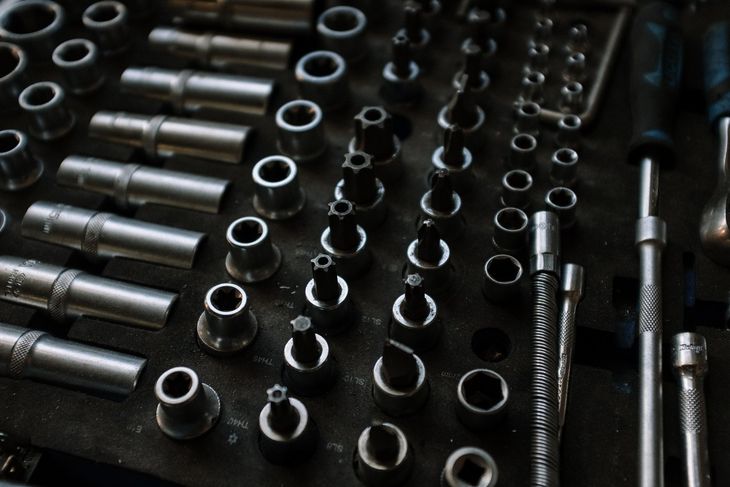
In markets like the USA and most of Europe, Right to Repair has been in place for at least 12 years now. In that time, car manufacturers have made all the important info available online… Wiring diagrams, parts replacement instructions, service schedules, major service requirements, technical drawings and other critical documents are all available to third party workshops to assist them in servicing cars.
It is unclear how this will work in South Africa. There is no specific agreement or guideline in place which compels local subsidiaries of car brands to provide this information to local independent service providers (ISPs). However, according to the owner of the ISP we spoke to, it is very easy to find all this information online already as there are dedicated online services that are in the business of collating all this information and providing it to workshops for a fee.
One of the issues that the workshop owner we spoke to was worried about was the issue of special tools. Very often, modern cars require proprietary tools to enable the mechanics to execute certain repairs. The guidelines state that the OEMs will have to make these tools available to ISPs, but the fear is that they will be prohibitively expensive.
How will a digital record of my car be kept?
One of the more useful aspects of car dealers handling all servicing and repairs up until now is that a thorough service history of used cars was available at the touch of a button, by simply running the car’s VIN number through the manufacturer’s database.
A motorist who chooses to use an ISP to service their vehicle may ask: How will the servicing information be recorded for my car? This issue has not been fully resolved, however, we have been told that a system is being built, which will allow ISPs to log services and service histories with the manufacturer, in a common system that all interested parties can access.
In summary
Make no mistake, the Right to Repair is a seismic shift in the motoring landscape of South Africa. Franchised dealers and OEMs are going to have to adapt and change their business models to be more competitive. Ultimately, and we suspect very soon, consumers will have far more choice at the point of purchase, as to whether they want to opt for an OEM service plan, a service plan that may be offered by the group company which owns the dealership or with an aftermarket service like MotorHappy.
We feel that what motorists really want is headache-free motoring. And the business model that offers the best combination of price and fewest headaches will almost certainly become the dominant way of doing business in years to come.
If you are about to buy a car and are leaning towards opting out of the OEM service plan, we strongly advise you to do extensive homework and conduct thorough research into how much it will cost to properly maintain the car that you’ve bought, and make an effort to select a reputable specialist who can look after the car. In fact, it might be better to find a specialist before buying the car!
Generally speaking, however, more choice was never a bad thing for the consumer.
Related content
Why a bad Credit Score will cost you thousands every month