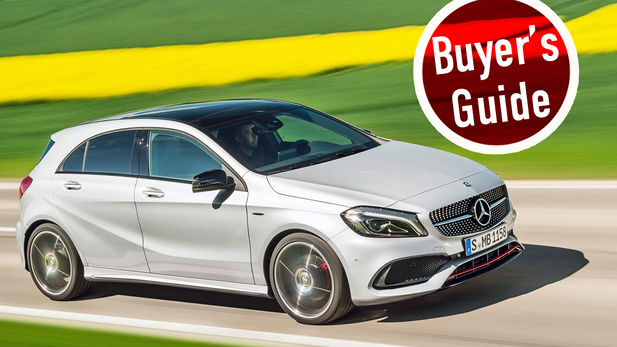
Considering a 3rd-generation Mercedes-Benz A-Class? Here’s everything you need to know about the W176 iteration of the Three-pointed Star’s premium hatchback, from its strengths and weakness to how much you can expect to pay on the used market…
While the first 2 Mercedes-Benz A-Class models – codenamed the W168 and W169, respectively – were more “baby MPV” than C-segment hatchback, the 3rd-generation version marked a fresh approach for the Sindelfingen-based brand’s entry-level nameplate. Designed to appeal to younger buyers, the W176 A-Class was pitched directly against the likes of the Audi A3 Sportback and BMW 1 Series hatchback.
Even though the earlier generations were rather successful (in terms of sales figures they notched up across the globe), the shift in strategy – ditching a top-heavy minivan shape in favour of a comparatively low-slung, stretched hatchback design – certainly paid dividends for the Stuttgart-based automaker, with the W176 A-Class achieving its goal of attracting scores of new young buyers to the brand.
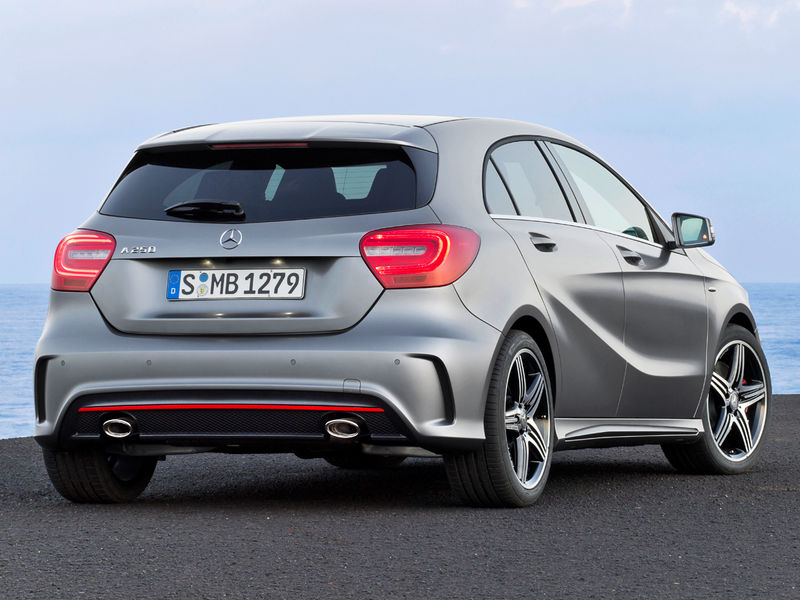
In fact, the W176 quickly became a best-seller for ‘Benz by taking advantage of what was then a fast-growing corner of the market. It ultimately proved a significant driver of not just volume, but also change, at Mercedes-Benz, setting the groundwork for what would become a broad family of compact models.
Riding on the German firm’s then-new MFA platform, the 3rd-generation A-Class also saw the introduction of a high-performance variant in the form of the A45 AMG 4Matic – a potent all-wheel-drive hot hatch that unlocked further new markets for the brand’s Affalterbach-based performance division.
Mercedes-Benz A-Class W176 model line-up
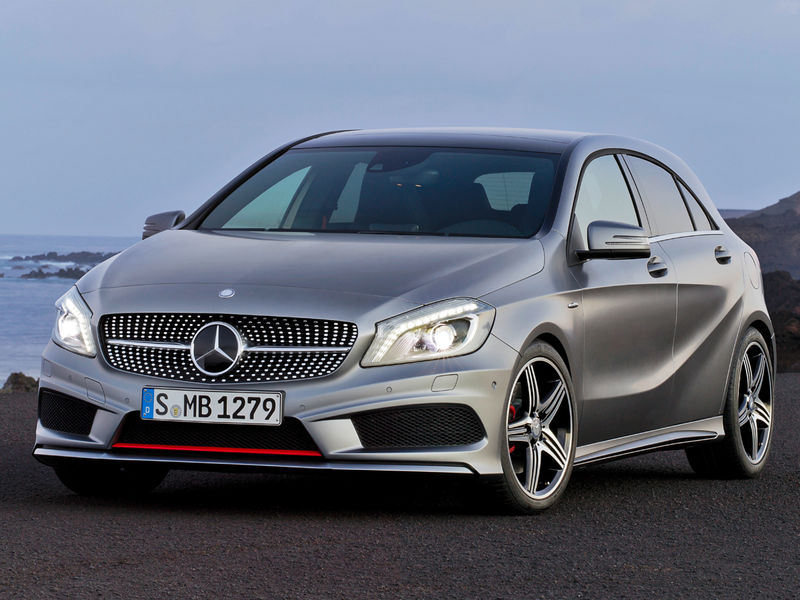
Around a year after the covers were whipped off the Concept A-Class in New York, Mercedes-Benz revealed the W176-generation production model at the Geneva International Motor Show in March 2012.
The 5-door newcomer hit the market in South Africa in April 2013 and was available in a trio of grades (Urban, Style and AMG Sport) and optional design packages (Night, Exclusive and AMG Exclusive).
At launch, the line-up comprised 5 derivatives. Most of these new engines wore the “BlueEfficiency” badge and were mated with either a 6-speed manual gearbox or a 7-speed dual-clutch cog-swapper:
- A180: 1.6-litre turbopetrol with 90 kW/200 Nm
- A200: 1.6-litre turbopetrol with 115 kW/250 Nm
- A180 CDI: 1.5-litre turbodiesel with 80 kW/260 Nm
- A220 CDI: 2.1-litre turbodiesel with 125 kW/350 Nm
- A250 Sport: 2.0-litre turbopetrol with 155 kW/350 Nm

By August 2013, the raucous A45 AMG had slotted in at the very summit of the local A-Class range, powered by what was then the most powerful production 4-cylinder engine in the world. At that point, the turbocharged 2.0-litre unit sent a considerable 265 kW and 450 Nm to all 4 corners (via a 7-speed dual-clutch automatic transmission), resulting in a claimed 0-100 kph time of just 4.6 seconds.
In February 2016, the facelifted A-Class arrived in South Africa, replete with freshened-up styling (inside and out), the option of adaptive damping, new driver-assistance technology and updates to the engine line-up and powertrain nomenclature. For instance, the A180- and A180 CDI were replaced by the A200d and A220d, with 2.1-litre turbodiesels that produced 100 kW/300 Nm and 130 kW/350 Nm, respectively.
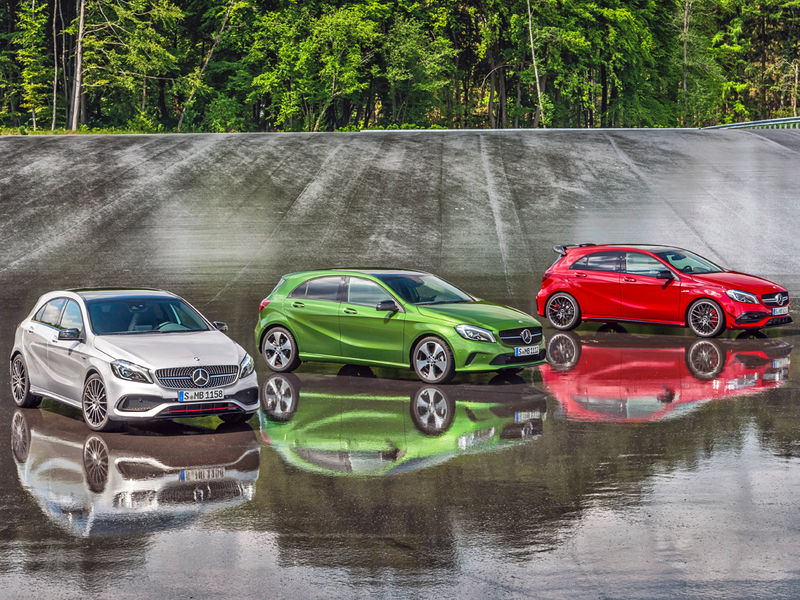
While the A200 powertrain continued unaltered, the A250 Sport – a rival for the Volkswagen Golf GTI of the era – scored an extra 5 kW, for a peak output of 160 kW.
In addition, the A45 AMG was renamed the Mercedes-AMG A45, with its M133 engine’s maximum outputs rising further still to 280 kW and 475 Nm. As a result, the apex A-Class managed to slice a full 4-tenths off its sprint time, which plummeted to a claimed 4.2 seconds.
The W177-generation A-Class was launched in South Africa in August 2018, bringing the W176’s time on the local market to an end. At that point, the then-CEO of Mercedes-Benz SA suggested the brand had become “noticeably more youthful since the introduction of the 3rd-generation compact models”.
What are the advantages of a Mercedes-Benz A-Class?
Lower barrier to ‘Benz ownership: Though the earlier, frumpier generations of A-Class certainly fulfilled an entry-level function, the W176 provided a far more alluring option for young buyers who aspired to own a Mercedes-Benz. Indeed, the base price for this premium hatchback at launch (in 2013) came in at R275 000, around what you would’ve paid for a mid-spec VW Golf at the time. Today, the W176 plays the same sort of role in the used market.
Big-car technology in a compact body: When the W176 hit the local market, Mercedes-Benz stated that “safety is not a question of price”, fitting all derivatives with a radar-based collision warning system featuring adaptive brake assist, for instance. In effect, the so-called “democratisation of safety” encompassed an array of driver-assistance features inherited from ‘Benz’s larger model series.
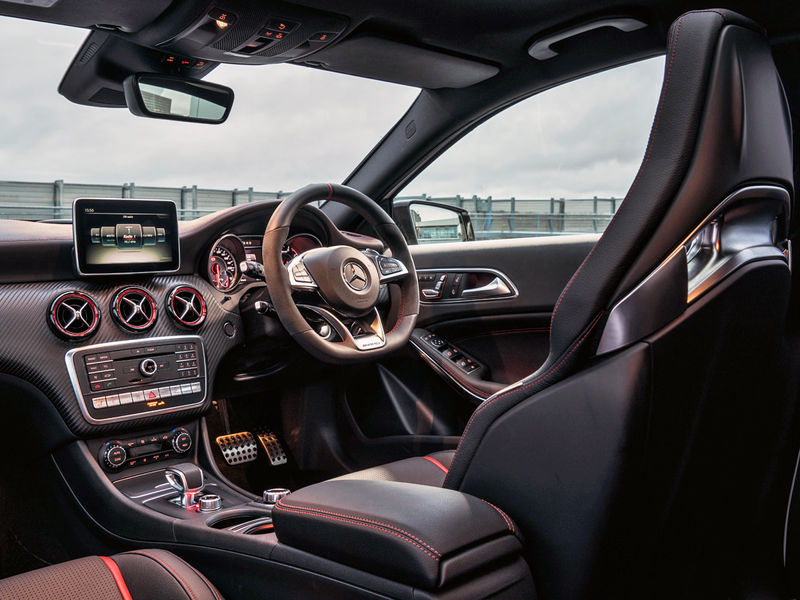
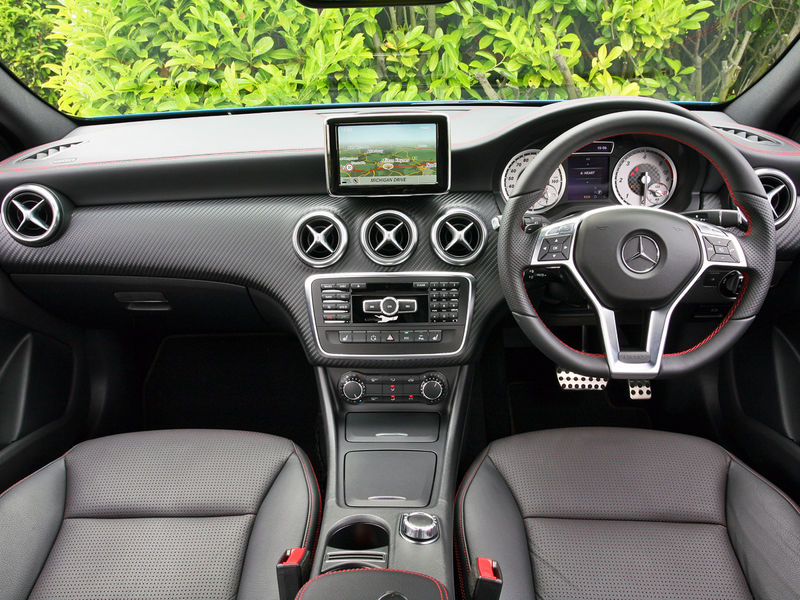
Other tech highlights included simple iPhone integration and internet access, providing what the company termed the “Facebook generation” with “its natural home on 4 wheels”. The Three-pointed Star took things a step further with the facelift, when the various driver-assistance functions were extended (or improved) and a larger version of the floating infotainment screen became available, along with items such as LED high-performance headlamps and ambient lighting.
Monster performance from the A45: The arrival of the A45 – the first high-performance compact model from AMG – changed the hot-hatch game, effectively marking the birth of the true “hyper hatch”. Despite employing a smaller engine than its foe from Ingolstadt, the A45 boasted more power than the original (250 kW) Audi RS3 Sportback. Though the AMG-badged A-Class was admittedly somewhat one-dimensional in its approach to performance, there was no denying its giant-slaying abilities, nor the enduring impact it would have on what has become a power-obsessed segment.
What are the disadvantages of a Mercedes-Benz A-Class?
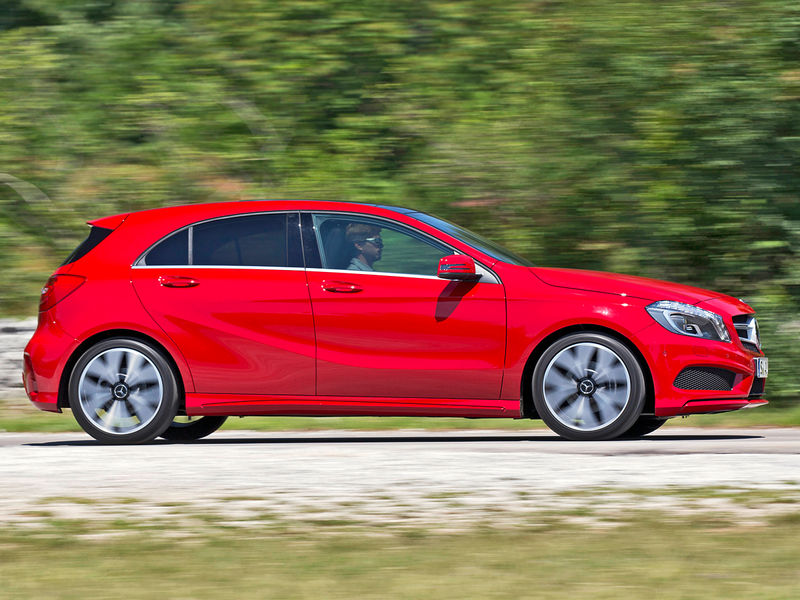
Harsh ride on anything but perfect tar: Despite boasting a 4-link rear suspension set-up rather than the more rudimentary torsion-beam arrangement, the W176 A-Class suffered from an overly firm ride quality, something that became obvious when the tarmac turned even a little uneven. Combining the so-called “comfort” chassis set-up with smaller alloys produced the best (but still below par) result, while the optional sports suspension and larger-diameter wheels – not to mention the presence of noisy runflat tyres on some derivatives – only served to amplify this flaw.
Though Mercedes-Benz rolled out adaptive damping in conjunction with new drive modes in an attempt to rectify this shortcoming when the A-Class was facelifted (quipping the updated model was “as comfortable as never before”), the W176 would ultimately never ride with the pliancy of something like the 7th-generation Volkswagen Golf. Low-speed comfort levels were further reduced in models specified with what was a somewhat sluggish dual-clutch transmission.
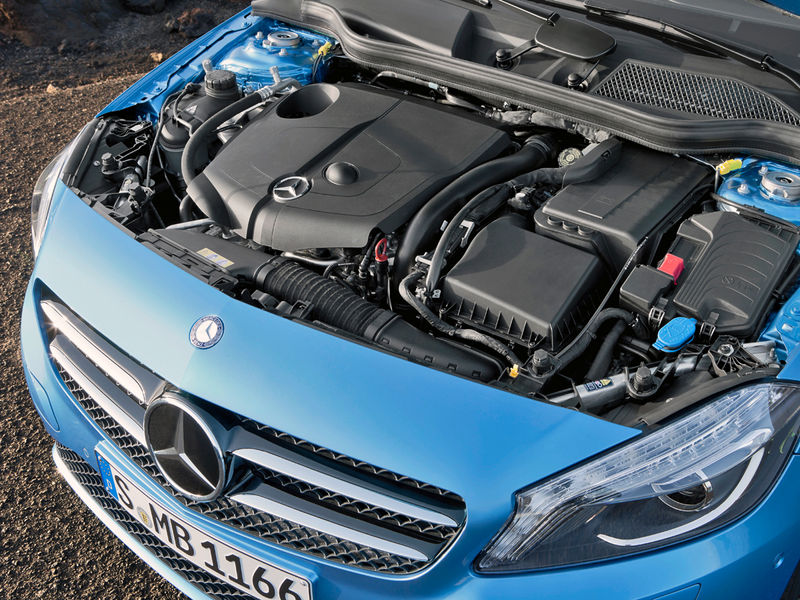
Gruff turbodiesel engines: Neither the Renault-sourced 1.5-litre turbodiesel (“OM607” in Mercedes speak or “K9K” in Renault parlance) nor Benz’s own 2.1-litre oil-burner (OM651) was exactly refined, a fact completely at odds with this model’s premium positioning. Both engines were rather gruff, particularly at city speeds, where diesel clatter easily penetrated the cabin. That said, they were far more fuel-efficient than their petrol-powered siblings, with the smaller unit sipping a claimed 3.8 L/100 km (when fitted with the 6-speed manual gearbox), while the larger mill was said to consume 4.3 L/100 km in the A220 CDI, 4.5 L/100 km in the A200d and 4.2 L/100 km in the A220d.
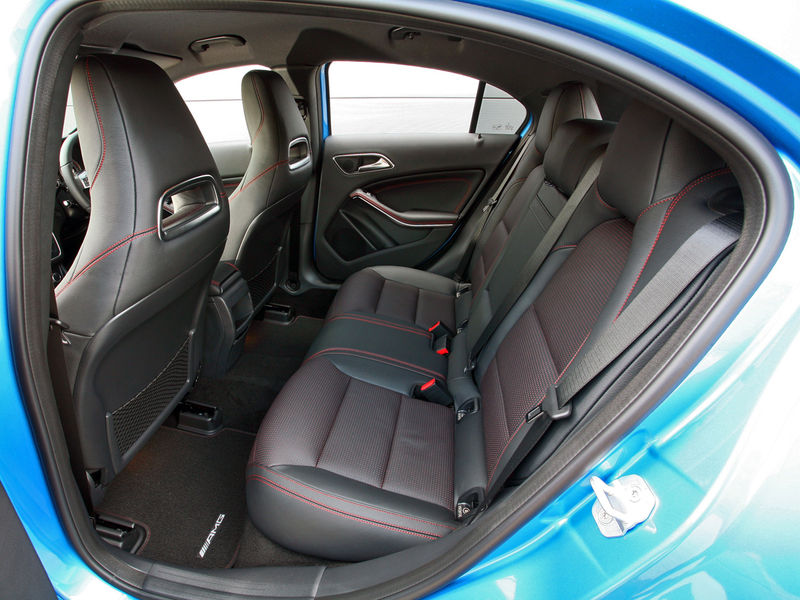
Relatively cramped cabin: While the original A-Class and its successor were optimised for practicality, the W176 model made a few utility sacrifices at the altar of style. The rear bench was rather cramped for even average-sized adult passengers (whose scalps bore the brunt of that low roofline) and, moreover, access to the back was tight because the rear doors didn’t open quite as wide as those of many A-Class competitors. Luggage space, too, was a little below class average, coming in at a claimed 341 litres.
Miscellaneous potential headaches: Our research identified a few potential complaints that were more isolated than those above but perhaps still worth mentioning. For instance, some examples developed dashboard rattles, while a handful suffered from electrical issues and airbag faults.
Certain early derivatives were recalled for defective dual-clutch automatic transmissions; some A45 variants endured turbocharged issues; and timing chains were known to wear prematurely (note only the Renault-sourced OM607 oil burner employed a belt, as opposed to a chain). Finally, we’ve seen a few complaints of diesel particulate filter (DPF) blockages, though this is admittedly a fairly regular issue with modern turbodiesel-engined cars that are mostly utilised to complete short journeys.
How much is a Mercedes-Benz A-Class in South Africa?

All versions of the W176 A-Class shipped standard with Mercedes-Benz SA’s 6-year/100 000 km “PremiumDrive” maintenance plan (though the contract could be optionally extended up to 8 years or 180 000 km). As such, it’s worth keeping in mind that early versions will, by now, be well out of plan. As always, the presence of a verifiable maintenance history is important here; we’d also suggest avoiding models wearing aftermarket body kits and wheels.
Of the used W176-gen Mercedes-Benz A-Class listings on Cars.co.za at the time of writing, 71% featured petrol engines (the most common being the A200, with a nearly 50% share), while almost 14% were range-topping A45 derivatives (as opposed to the A250 Sport’s stake of just 10%). A whopping 94% of all units were specified with the dual-clutch automatic transmission.
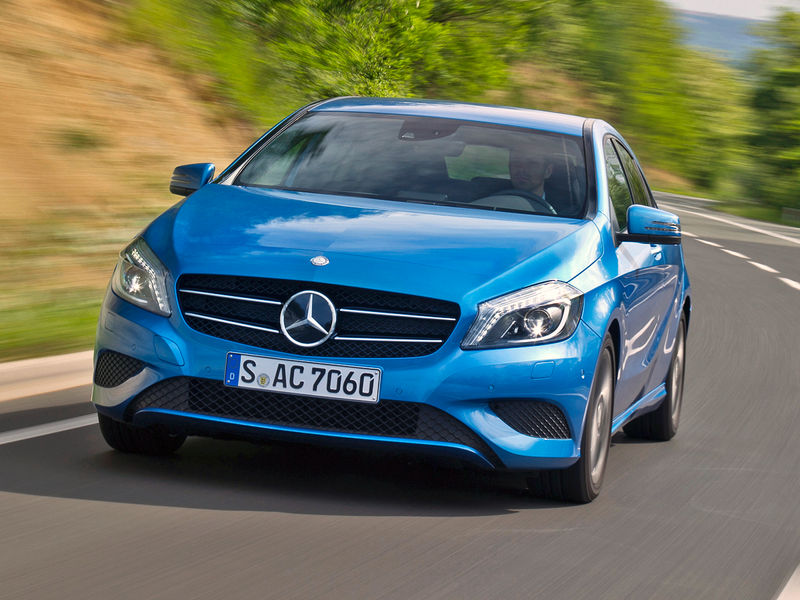
Listed mileages varied from just 14 000 km to 317 000 km, with the latter figure achieved by a 2016 A250 Sport (which incidentally featured A45-mimicking body modifications). We spotted a further 6 examples – including a 2013 A45 – each with more than 200 000 km on their respective odometers. Overall, the most common paint colour was white (39%), followed by silver (20%) and red (13%).
- Below R200 000: Predictably, the few W176 models listed below R200 000 were all early model-year examples (2013 and 2014), most of which had well in excess of 150 000 km on their odometers. We found only A180, A180d and A200 derivatives here.
- From R200 000 to R300 000: This was the most densely populated pricing bracket at the time of writing, with more than 40% of W176 listings positioned in this bracket. Every single powertrain variant was present (yes, there were even a few pre-facelift A45 examples), although the A200 – including a number of later model-year units – was again easily the most dominant.
- From R300 000 to R400 000: Should you be considering a facelifted mid- or high-spec A-Class, you’d likely be shopping in this space (though we discovered a few low-mileage pre-facelift examples here as well). Interestingly, flirting with the R400 000-mark could also potentially get you into a pre-owned base version of the current-gen W177 model.
- R400 000 and up: As you might expect, the majority of listings above this point were A45s, from early model-year, low-mileage examples through to a couple of facelifted units priced on the far side of R500 000. However, there were also some 2018 garden-variety derivatives here. Again, we should point out you have the option of upgrading to a used W177 for this sort of money.
Which W176 Mercedes-Benz A-Class should I buy?
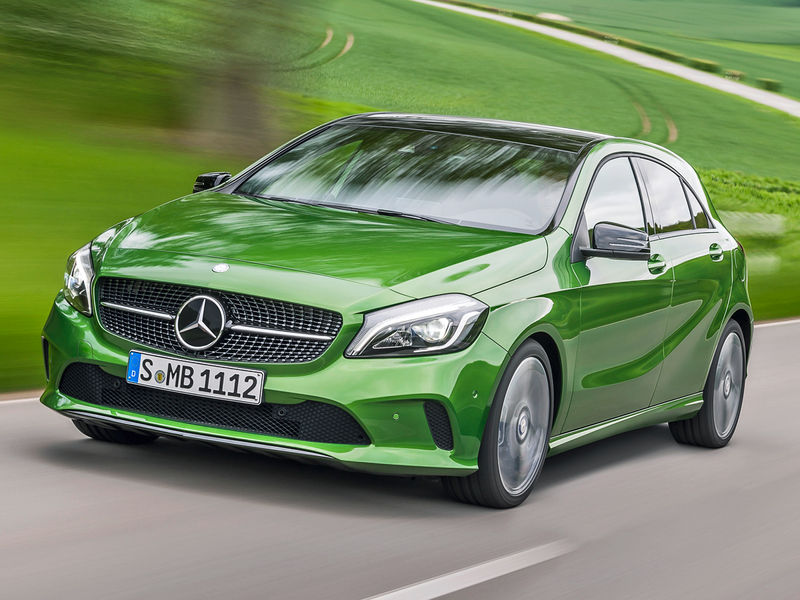
It’s often wise to steer well clear of the early examples of a generation and that advice rings particularly true with the W176. Indeed, initial versions suffered from various maladies, many of which we’ve touched on above. Thus, we’d suggest avoiding 2013 and perhaps 2014 derivatives, just to be on the safe side.
Similarly, it may be worth tightening your search to facelifted models (those with adaptive damping fitted) if you’re keen to mitigate the harsh ride as much as possible; you might also benefit from the optional larger touchscreen and a few extra equipment upgrades here. Another route would be to stick to lower-spec derivatives on smaller wheels shod in higher-profile rubber.
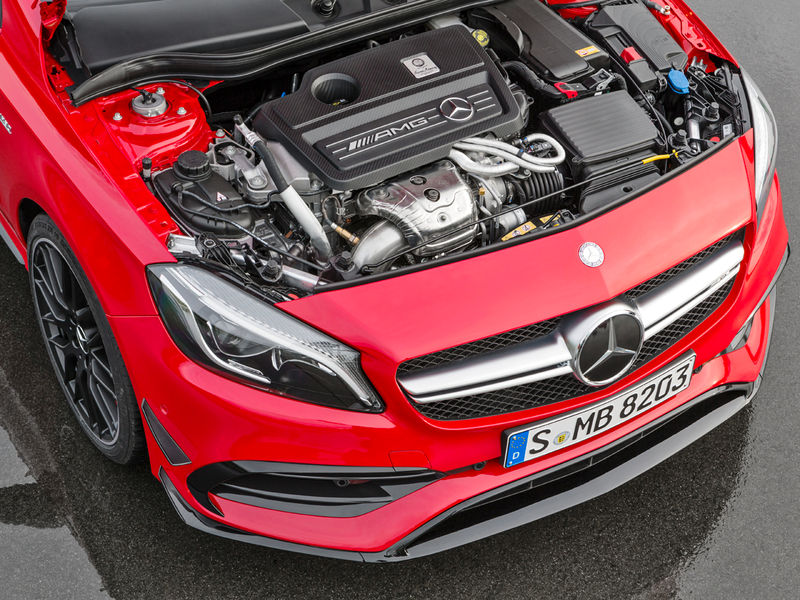
So, which engine derivative is the one to go for? Well, the answer depends mainly on your priorities. If you’re seeking the lowest possible running costs, we’d recommend the diesel-sipping A200d, though again be warned this engine is quite coarse on the ear. If refinement is more important to you, the petrol-powered A200 is perhaps your best bet. There’s also the A250 Sport as a somewhat under-appreciated alternative to the ubiquitous Golf GTI.
And the A45? Well, bar some issues with the very earliest examples, the AMG-fettled A-Class appears to be more reliable than you might think (when fastidiously looked after, of course). Still, it’s certainly the genre of car most likely to attract abuse from often mechanically unsympathetic owners, so pay particularly close attention to the maintenance history should you decide to take the plunge.
Is the Mercedes-Benz A-Class a good used buy?
The W176’s key rivals were the Audi A3 Sportback (Typ 8V) and rear-wheel-drive BMW 1 Series (F20), with Ingolstadt’s contender trouncing the A-Class in the cabin-quality and practicality departments, and Munich’s fighter triumphing when it came to driving dynamics. Though its badge didn’t hold quite the same level of premium appeal, the Volkswagen Golf (Mk7) was another mainstream option in this space. Still, all 3 lacked the “wow factor” of the then-box-fresh A-Class.
Left-field choices here included the under-appreciated Volvo V40, the hybrid-powered Lexus CT200h (which was effectively a Toyota Prius in Lexus attire) and perhaps even the Alfa Romeo Giulietta, though the latter shared a number of compromises – from a lack of rear passenger space to an unyielding ride quality – with the A-Class.
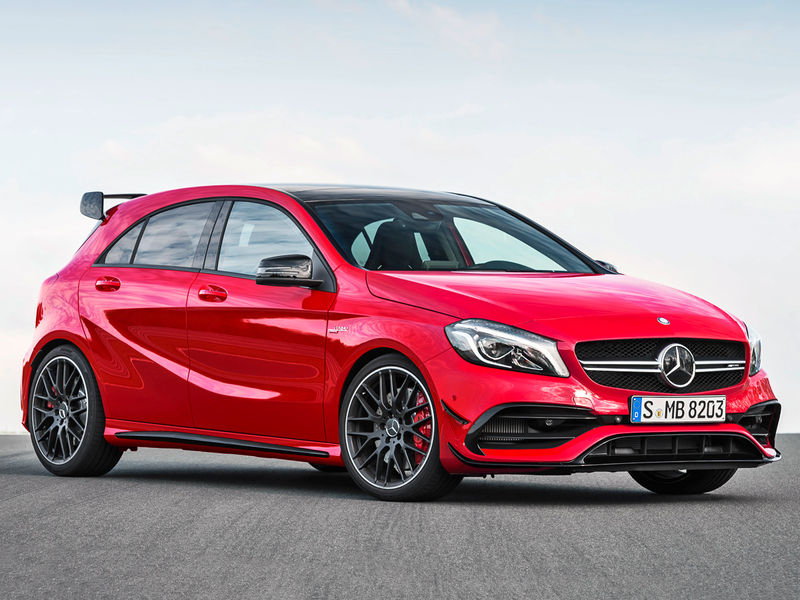
Meanwhile, the A45’s chief competitor was the RS3 Sportback, though other – admittedly lower-powered and less premium – options included the C346-generation Ford Focus RS and the Volkswagen Golf 7 R. Though it was an entirely different beast taking the form of a rear-driven coupe rather than an all-paw hyper hatch, the F87-generation BMW M2 represented a far more compelling alternative for keener drivers (something that could be said of the 6-cylinder M135i and M140i of the era, too).
Ultimately, while the A45 certainly pushed the power envelope, the broader W176 Mercedes-Benz A-Class range wasn’t class-leading in any meaningful way. But it certainly fulfilled its mandate of attracting younger buyers to the brand, largely thanks to the suave styling that stood in stark contrast to that of previous A-Class generations. The biggest question prospective buyers will have to answer is whether those looks are enough to offset the W176’s most significant weakness: its harsh ride.
Looking for a used Mercedes-Benz A-Class to buy?
Find one on Cars.co.za here.
Or sell your car here, for no charge.
Ryan Bubear

Having written about everything from sport and politics to crime, Ryan eventually settled on motoring. For well over 15 years, he's been penning articles – both online and in print – about the broader automotive industry, though he's particularly fascinated by vehicle-sales statistics. A freelance writer and editor, Ryan has owned a 1971 Austin Mini Mk3 for 20-plus years.