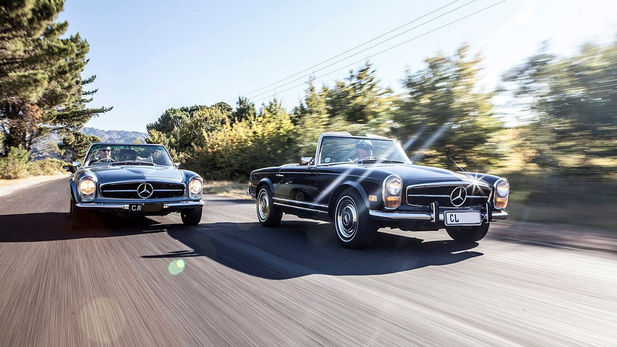
We go for a cruise in 2 stunning Mercedes-Benz “Pagoda” SL derivatives, both of which left the factory in 1969. One of them, however, is rather different to what it was when it rolled off the production line all those years ago…
For professional restoration companies such as Mechatronik in Pleidelsheim, Germany, the Pagoda achieved classic status many years ago, as a large number of clients have brought W113 SLs to them for restoration purposes or for a Mechatronik conversion. The latter choice is also often combined with a full restoration.
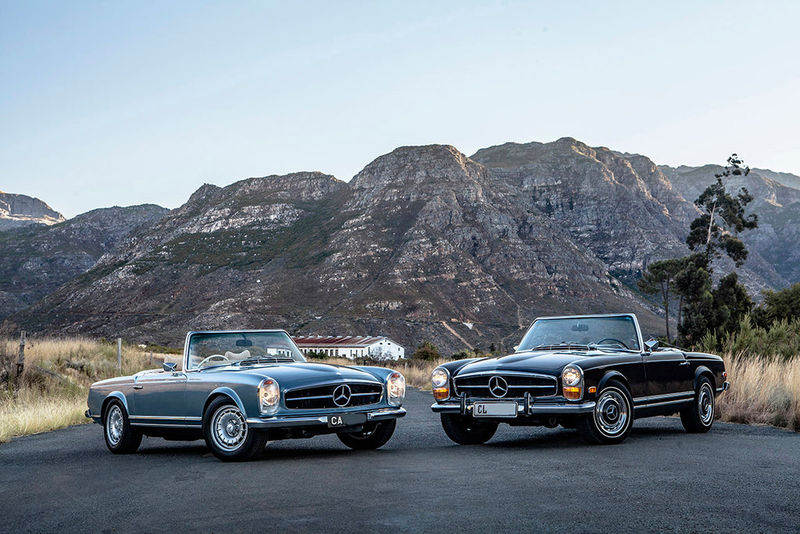
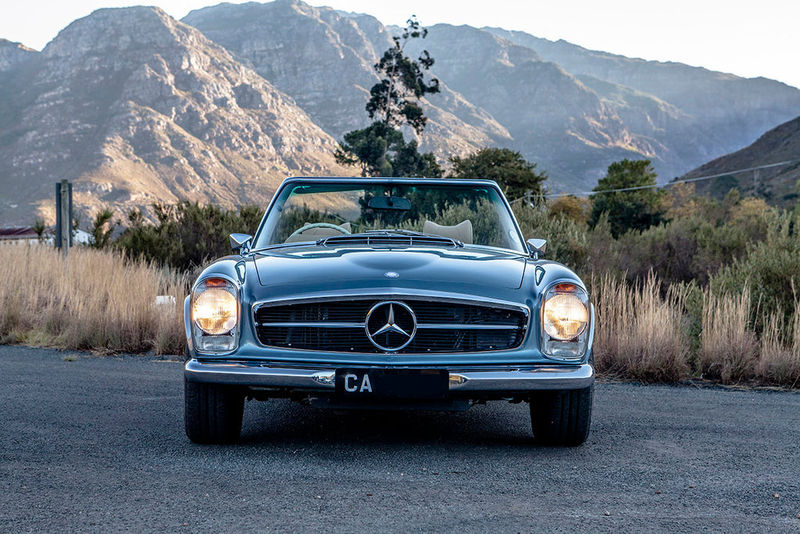
However, of all the Pagodas converted by Mechatronik (I was told a few years ago that it was around the 30 mark), only 3 have been right-hand drive examples, one of which was residing (at the time) in Cape Town.
Although there has been a flare-up of classic car restoration companies in recent years, Mechatronik was one of the earlier ones that started to focus on the rejuvenation and modernisation of classic Mercedes models.
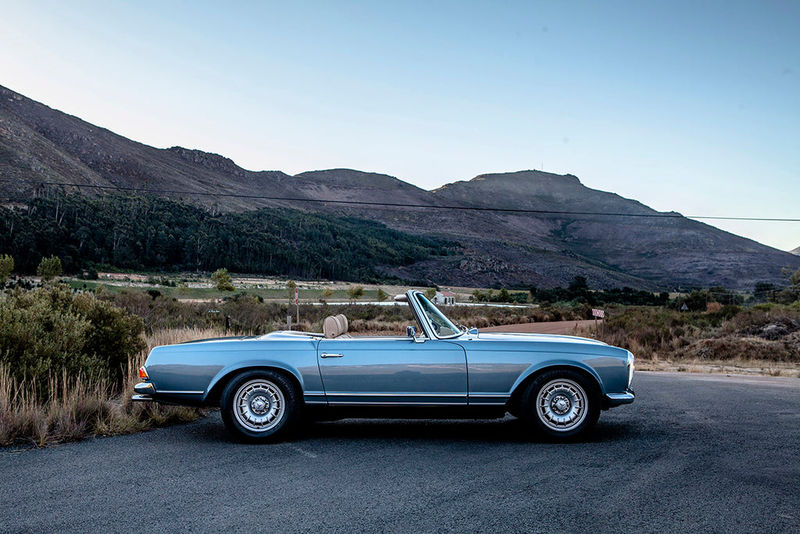
The company is highly respected for its attention to detail, although you will need a healthy bank balance and lots of patience to acquire a car such as the pristine blue example featured here. Should you find a neat 250SL or 280SL (a 230SL needs further strengthening for the modern treatment), a full conversion will set you back more than €110 000 and 8 months’ work.
However, when you opt for a nut-and-bolt restoration, including a full conversion that will include the installation of either a V6 engine or the choice of three V8 engines, that can take up to 2 years and cost around €250 000, excluding VAT. It comes as no surprise, then, that the owner of this M-SL 430 example has been offered multiples of that amount.
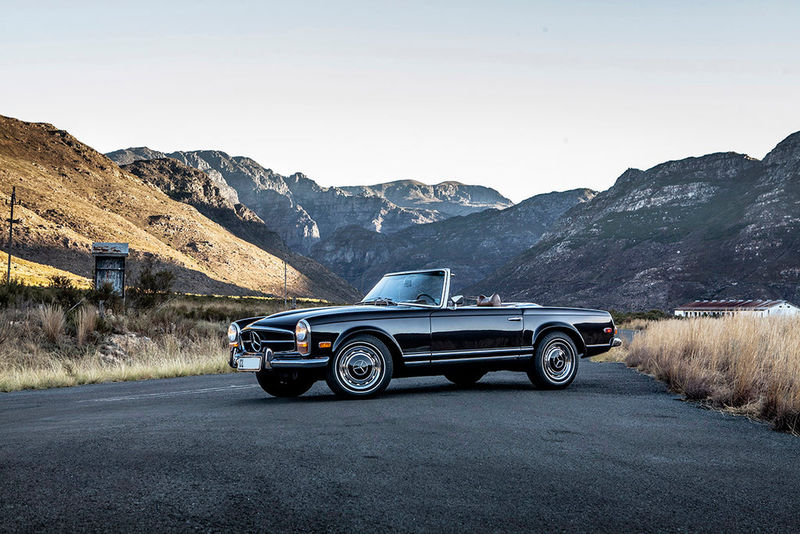
On a perfect autumn afternoon, I meet both owners in the Cape Winelands. These cars couldn’t be better suited to the area, the landscape and the stunning surroundings. The owners, both serious collectors and motoring enthusiasts, immediately start exchanging thoughts about cars while I have a closer look at both examples.
This 280SL was imported from the USA to South Africa in 2009. It is totally original and nearly spotless, and is enjoyed on a regular basis by its current owner. From a distance, you would be excused for thinking that both cars have simply been looked after over the years, but climb behind the wheel and there are vast differences, or simply take a peek underneath the car or open the engine lid.
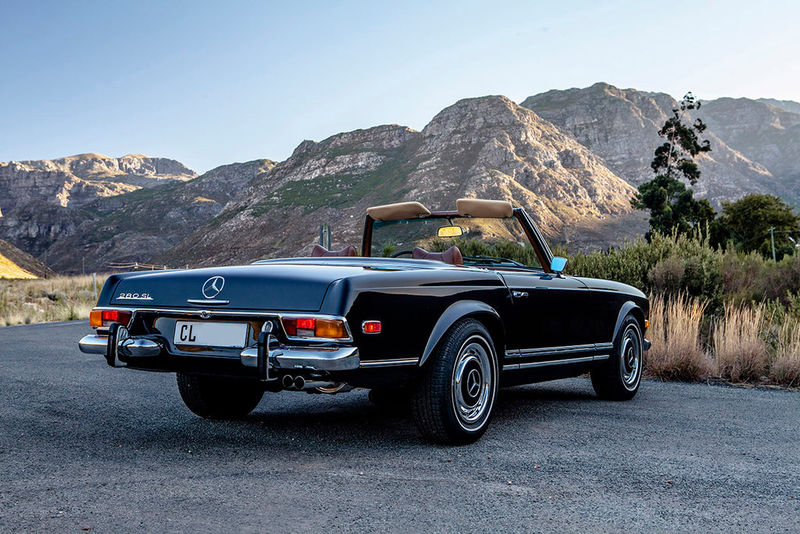
It would be wrong to immediately experience the opulent, luxurious V8 power the Mechatronik car has on offer, so I decide to get in to the 280SL first.
Specifications:
- Model: Mercedes-Benz (W113, “Pagoda”) 280SL
- Engine: M130 2.8-litre inline 6, petrol
- Power: 125 kW at 5 750 rpm
- Torque: 240 Nm at 4 500 rpm
- Transmission: 4-speed automatic, RWD
- Weight: 1 360 kg
- 0-100 kph: 9.0 sec (claimed)
- Top speed: 195 kph (claimed)
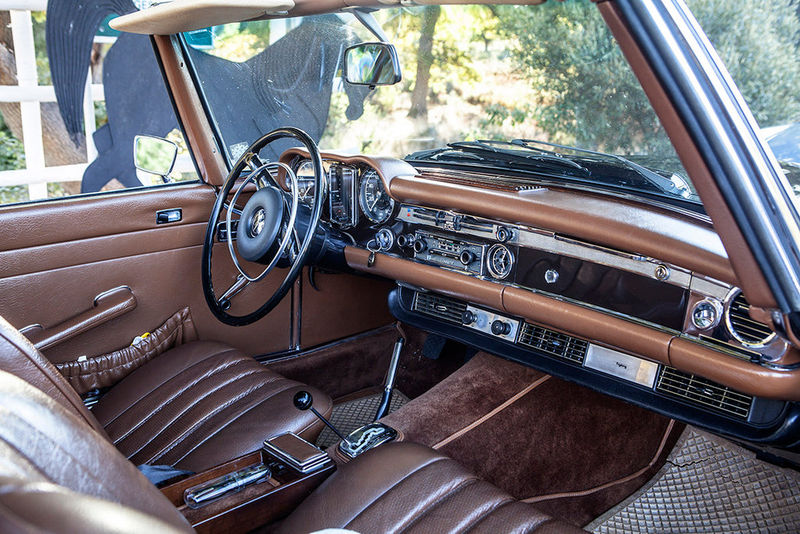
The interior is not unlike other Mercedes-Benz cars from the era. However, as soon as you start to press the throttle, and let the engine run through the rev range, there is a lightless – and almost nimbleness – to the way the engine and car behaves. It feels more sports car than cruiser, especially compared to the larger W111 of the same era.
As the 280 shifts to second gear, I press the throttle pedal down deeper, and the engine eagerly starts to pull. I watch the rev needle as it swings towards 4 000 rpm before changing gear. You can sense the engine is happy to be driven this way all day long.
The huge steering wheel makes changing direction effortless, and I’m also surprised, especially considering there is still an amount of play in the ‘wheel, by how quickly the car reacts to steering input. After all, it was a sports car of the time. If you are used to modern cars, the steering will, however, take a while to get used to.
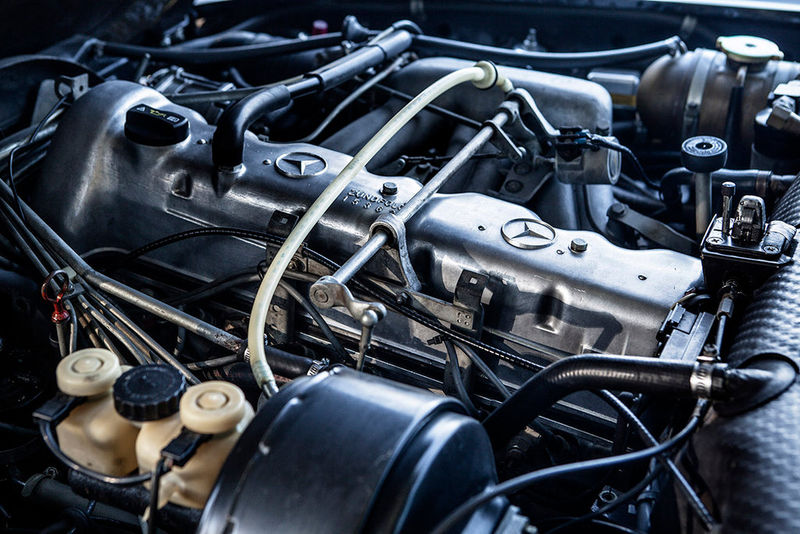
It doesn’t take long to realise that you can cover great distances in this car, but I think it will reward its driver more during short, spirited drives.
I have a perfect view over the bonnet with the slight ridge down the centre reminding you exactly what you are driving. The Cognac MB Tex seat coverings are still in a perfect condition and complement the darker exterior hue to a tee. This is the result of great care and effort by the two previous owners and the current “minder” who have all looked after this car for 45 years, and there are no signs that this is about to change.
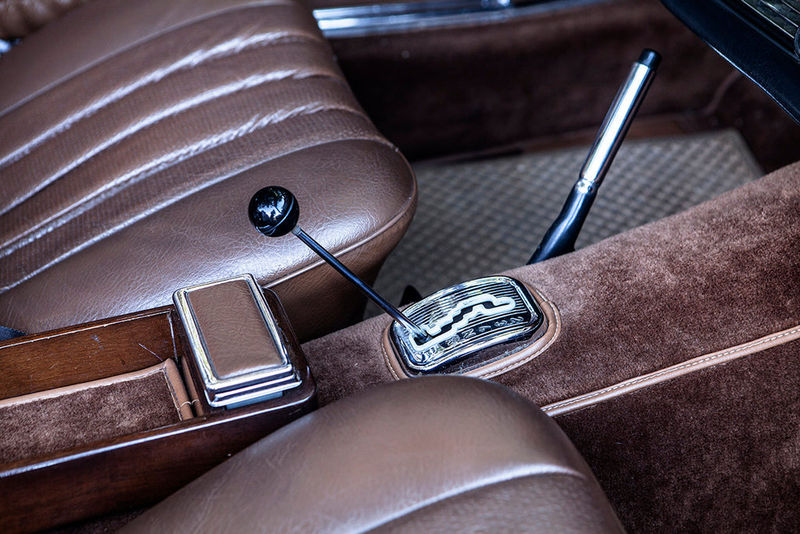
I pull into the layby where both owners chat enthusiastically about their cars, as the Mechatronik owner has allowed the 280SL owner to blast his car up and down the road – no wonder both are smiling!
As I position myself behind the wheel of the M-SL 430 and marvel at the quality of the cabin, the owner walks over and tells me: “Don’t play around with her. Press that throttle down and drive her hard, she’s built to be driven!” He used more colourful words, though, and the message was loud and clear.
Specifications:
- Model: Mercedes-Benz (W113 “Pagoda”) M-SL 430
- Engine: M113, 4,3-litre, V8
- Power: 205 kW at 5 750 rpm
- Torque: 400 Nm from 3 000 to 4 400 rpm
- Transmission: 5-speed automatic, RWD
- Weight: 1 472 kg
- 0-100 kph: 6.5 sec (claimed)
- Top speed: 220 kph (claimed)
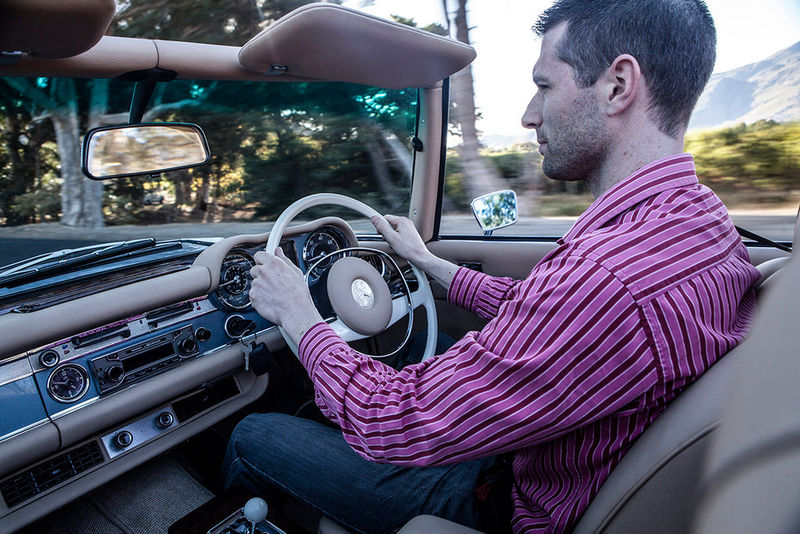
From the moment I shut the door, I can sense how much more solid the car feels compared to a standard Pagoda. There are simply fewer noises coming from the entire car – it feels newer, but fortunately nothing like a modern car, either. That is the result of a total rebuild.
The interior is done in such a stylish and classical way that you can sit in it for a long time, just appreciating every little detail and modern twist that is sprinkled on the buttons, levers, trimmings and finishes. But – and this is important – it never deviates from the original concept, layout and ambience of the original car, which is an achievement on its own.
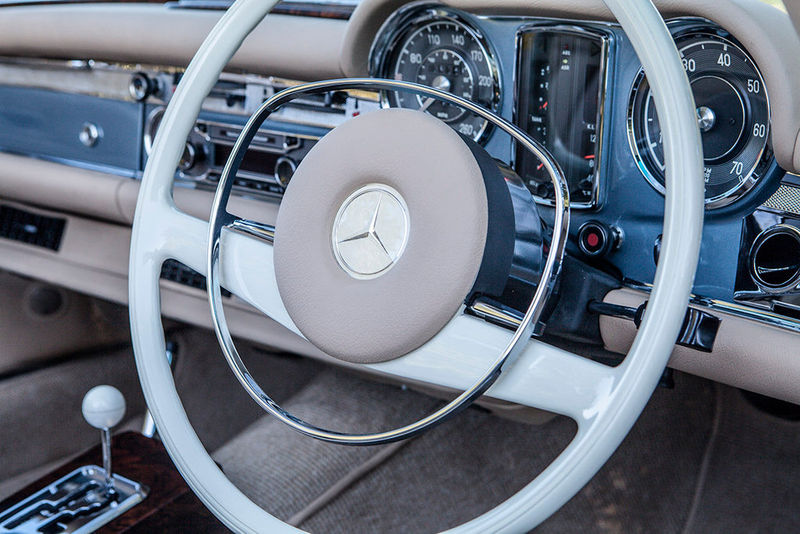
This experience is amplified the moment you press the accelerator for the first time. The 4.3-litre engine drops a gear (or two), and the modern V8’s revs climb through the rev range with a level of eagerness that highlights the four decades of engine research and development.
After what feels like only a few seconds, the speedometer reads 160 km/h and it’s time to slow down again. Even on part throttle, the 4.3 is quick. Use all the power and you will definitely leave a few bystanders and even car fanatics scratching their heads.
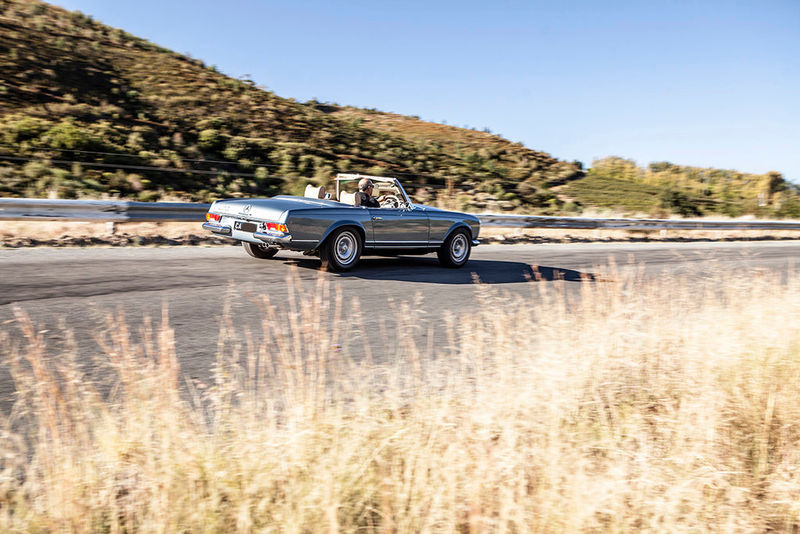
I’m not surprised when the owner tells me that he loves the sleeper effect of the car. He loves those moments when a modern sports car flashes lights at him to move over, and he simply puts his foot down, and makes his “pursuer” work a lot harder to overtake him than anticipated.
“People don’t understand it; it is a complete sleeper. Their assumption of what the car is capable of, and what it can actually do, are two totally different things. I love that about this car.”
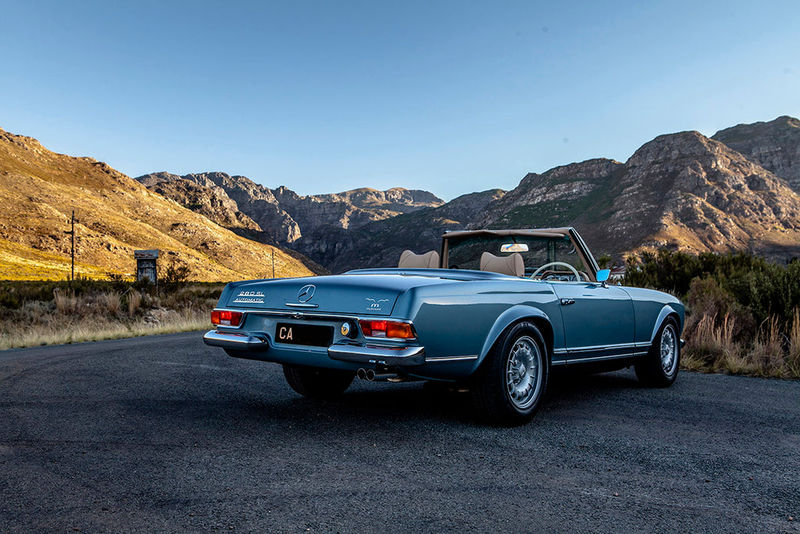
But it is not only the performance alone that places the Mechatronik car on another level; braking and handling are truly impressive.
Take into account that Mechatronik’s work also includes the installation of a special chassis that includes modification to the front and rear axles, plus a complete replacement of the braking system, and it is no wonder the car behaves so well on the road. In line with these overhauls, the company also installs a traction control system with an ABS braking system.
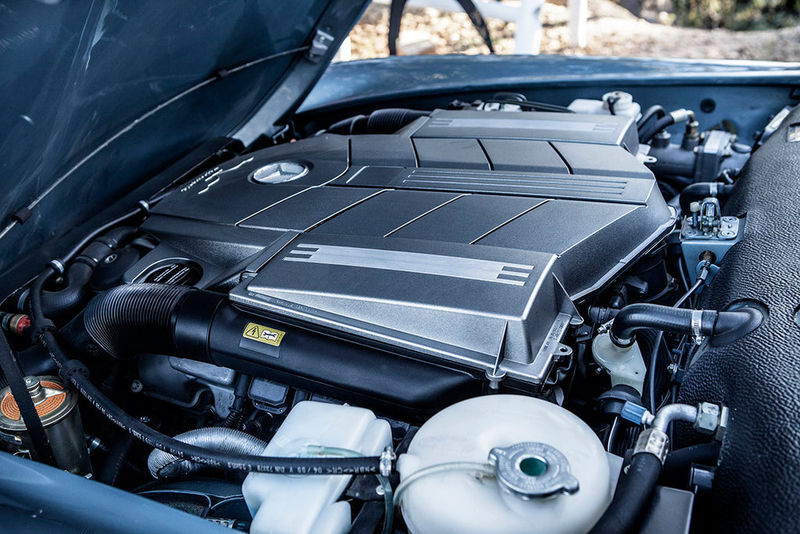
Even purists should applaud the fact that Mechatronik’s engineers manage to slot a V8 engine into the nose of the Pagoda. Although Mercedes-Benz never released a V8-engined production Pagoda, the company did experiment with a test mule on the Nürburgring Nordshleife.
That car was fitted with a heavy, large W100 600 Grosser’s 6.3-litre V8 engine! Needless to say, the 4.3-litre engine fitted by Mechantronik is significantly more compact and lighter.
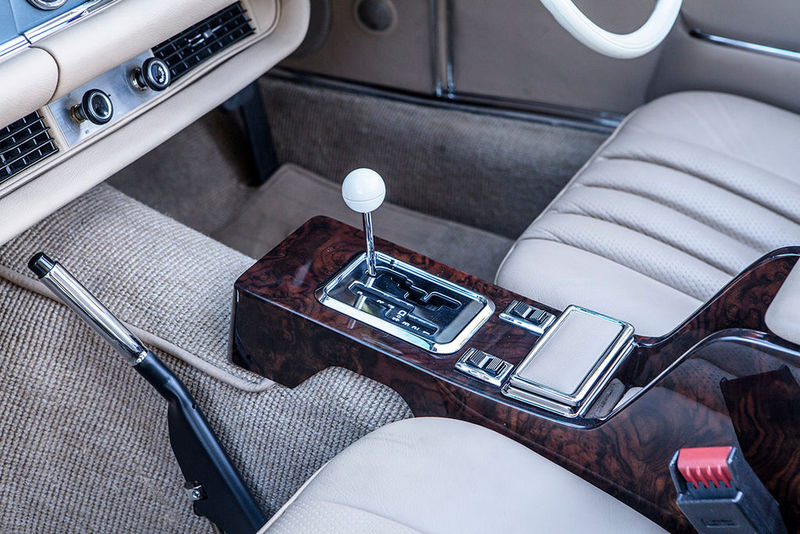
The beauty of the Pagoda has always been its shape. Paul Bracq’s dainty and perfect lines have never aged, and today this shape only seems to receive more acknowledgement from enthusiasts with every passing year.
The fact that it is one of the most compact classic Mercedes-Benzes must also count in its favour. Even the turning circle is quite impressive!
Although we might look at the Pagoda today as an iconic Mercedes-Benz that should be best used for cruising down your favourite stretch of road, when the car was launched, it was a proper sports car, and as is always the case, enthusiasts appraise cars differently.
The result was that, in 1963 – the same year the Pagoda was unveiled at the Geneva Motor Show – Stuttgart hotelier Eugen Böhringer, with his team mate Klaus Kaiser, won the year’s Liège-Sofia-Liège rally in a race-prepared 230SL, giving the Pagoda one of its early motorsport victories.
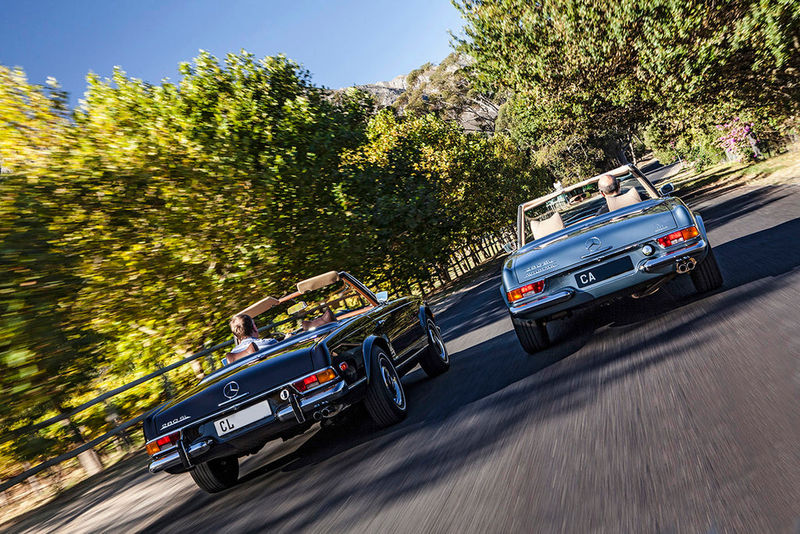
It is a fruitless exercise to try and pick a winner between these two cars. However, it does perfectly sum up how valuable and sought-after classic cars have become during the past 10 years. A company like Mechatronik, which restores, with a modern twist if needed, cars such as this Pagoda, make it possible to enjoy your classic, and at the same time embarrass modern sportscars in a traffic light grand prix.
Fortunately, there will also always be the original cars, the cars that allow us to travel back in time and experience what motoring was like, back then.
IMAGES: Kian Eriksen
Wilhelm Lutjeharms

A passionate car enthusiast from an early age, Wilhelm has been a motoring writer since 2006, having worked for more than 10 years at CAR magazine before turning to a full-time freelance career. He is also a contributing writer for UK, USA and European-based motoring titles.