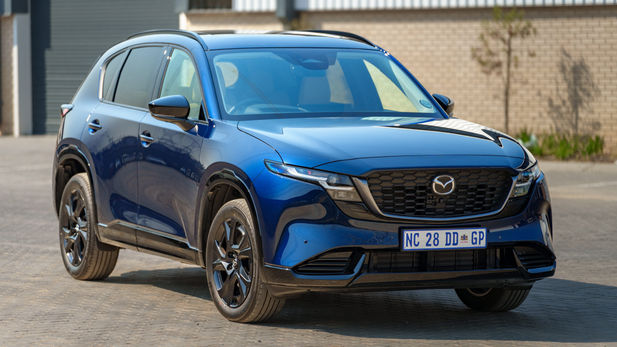
The Mazda CX-5 is the brand’s best-selling product locally, so the new model has a lot riding on it. It brings fresh looks, more technology, and a 2.5-litre naturally aspirated powerplant into a market where turbocharged engines rule the roost. Are these changes enough to bring the fight to the competition?
Let’s talk about the elephant in the room. In August 2026, Mazda South Africa sold 245 vehicles in total. Compare that middling number with GWM‘s 2 594 and Chery‘s 2 763 units retailed in the same month. This is concerning for consumers looking to buy into the brand, as lower monthly sales can often translate to weaker resale values. Because the Mazda CX-5 is the brand’s bread and butter, this new generation needs to thoroughly impress.
To make matters even trickier, the new CX-5 competes in a segment saturated with heavy-hitters like the Toyota RAV4, Hyundai Tucson, Volkswagen Tiguan, Haval H6, Jetour T2 and Jaecoo J7, to name a few. To say there’s a lot riding on the new Mazda CX-5‘s shoulders would be an understatement.
Read more: Mazda CX-5 (2026) Price & Specs
Evolution, not revolution
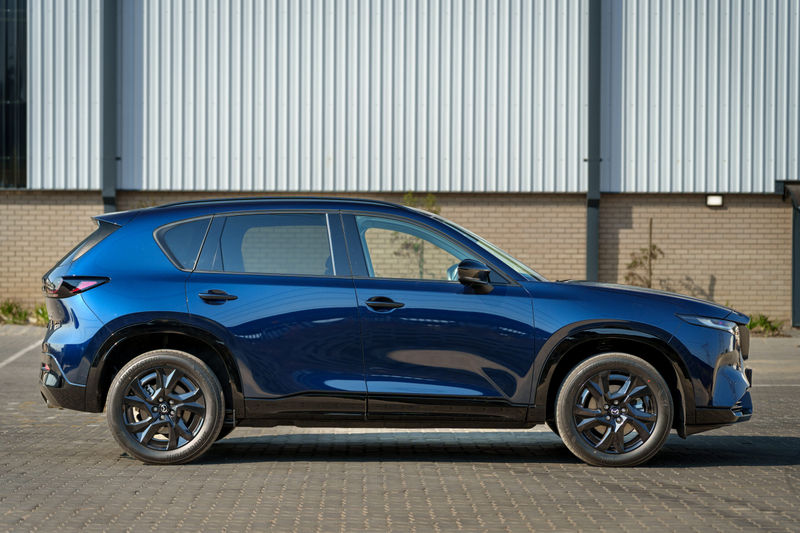
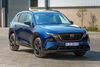
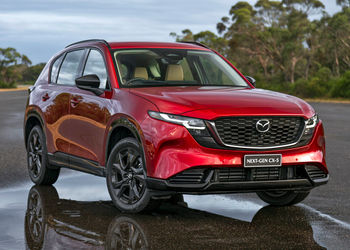
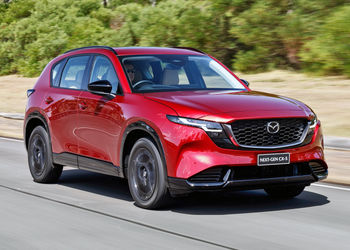
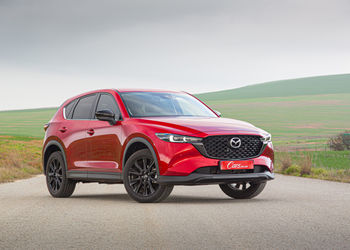
Mazda clearly believes in an evolutionary strategy for its design language. Looking at the new CX-5, you immediately know what it is. Thankfully, the previous generation was already a head-turner, meaning designers didn’t need to reinvent the wheel to keep it looking sharp. A few exterior tweaks here and there, and voilà.
The new headlights with LED technology blend neatly into a more aggressive front grille. The rear is sleeker too, aided by a light bar that stretches across to meet the Mazda badge at the center. It’s a handsome package overall.
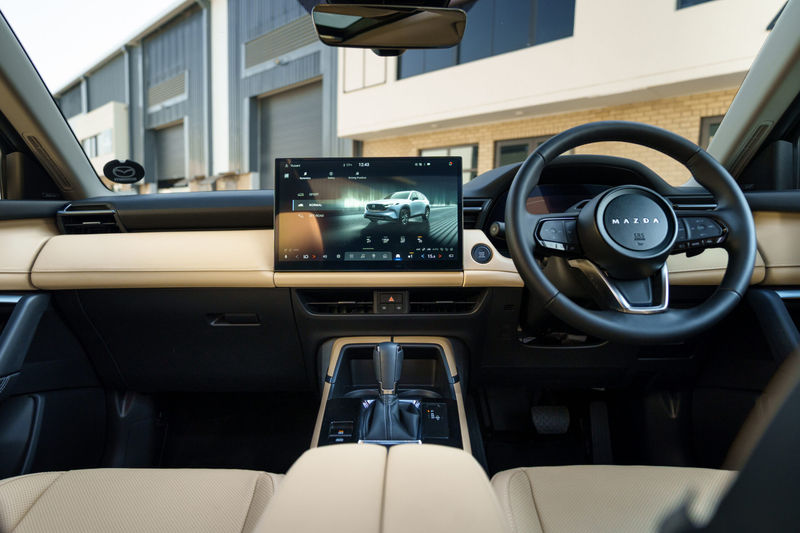
Where Mazda did try to revolutionise things is inside the cabin. Welcoming you is a crisp 12.9-inch touchscreen infotainment system, which stretches to 15.5 inches if you opt for the top-of-the-range Homura model. The instrument cluster is now fully digitised, adding a modern touch, and the brand has finally done away with its traditional rotary multimedia dial. A flatter-styled steering wheel rounds off a dashboard layout that is simple yet elegant. At the rear, legroom is generous, complemented by dedicated air-con vents and dual USB-C ports.
Overall, the interior impresses – not just due to the digitisation, but because the material quality remains remarkably high, living up to expectations of Japanese engineering.
From a practicality standpoint, the CX-5 offers 466 litres of boot space. While decent, it falls on the smaller side compared to rivals like the Haval H6 (560 litres) and the Toyota RAV4 (732 litres).
Read more: Mazda CX-5 – Why you should buy it
How does the new Mazda CX-5 drive?
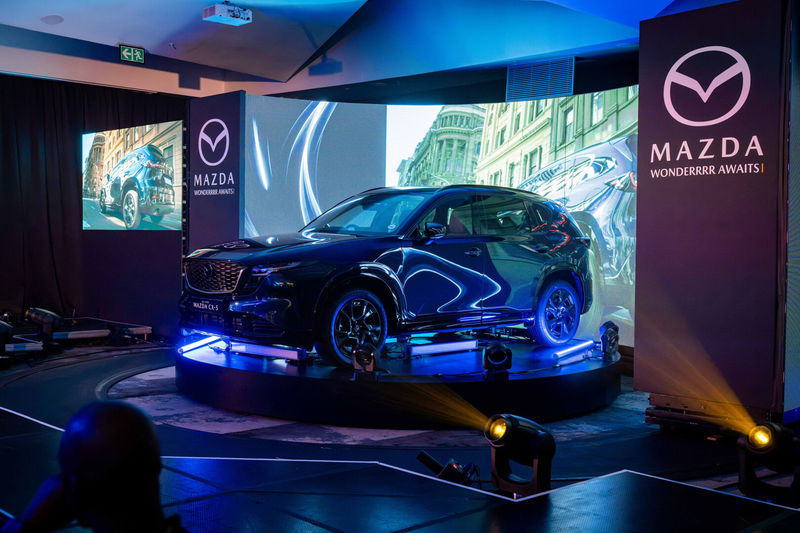
During the Q&A at the local launch presentation, I asked the burning question: “Will we see the 3.3-litre turbo-diesel from the CX-60 fitted into the CX-5?”
The answer was a firm no. The reasons cited were physical engine-bay constraints and a shift away from diesel powerplants globally. Instead, Mazda has stuck to its tried-and-tested 2.5-litre naturally aspirated engine, which here develops 132 kW and 240 Nm.
How does that translate on the road? Fairly well, if you aren’t chasing outright performance. For everyday driving, the acceleration is adequate. However, because most competitors lean on turbocharged engines, they feel undeniably punchier. Modern SUV buyers have grown accustomed to the low-down torque of a turbo, so opting for the naturally aspirated Mazda might feel like a step backward in powertrain innovation.
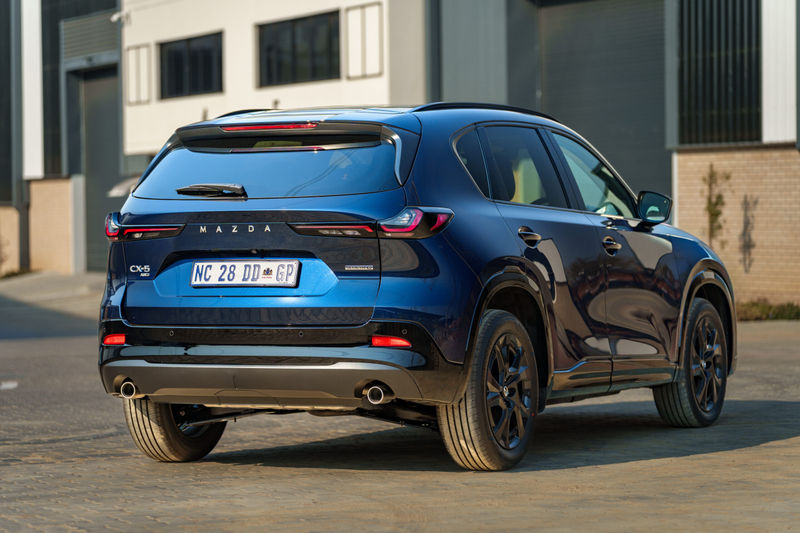
Dynamics-wise, however, the CX-5 drives brilliantly. Comfort and noise, vibration and harshness levels are exceptional. It possesses a genuine premium quality that makes it an effortless long-distance cruiser. This stems from a well-judged suspension setup: it’s firm enough to inspire confidence through corners, yet supple enough to soak up road imperfections.
Mazda claims a fuel consumption figure of 7.7 L/100 km, although real-world driving will likely see you sitting in the 9s depending on how heavy your right foot is.
Final thoughts
The new Mazda CX-5 is a lovely vehicle, but its Achilles’ heel remains its engine. With more low-down punch, it would easily be one of the top contenders in its segment. The CX-5 certainly has an undeniable “it” factor when it comes to aesthetics, ride comfort and cabin execution.
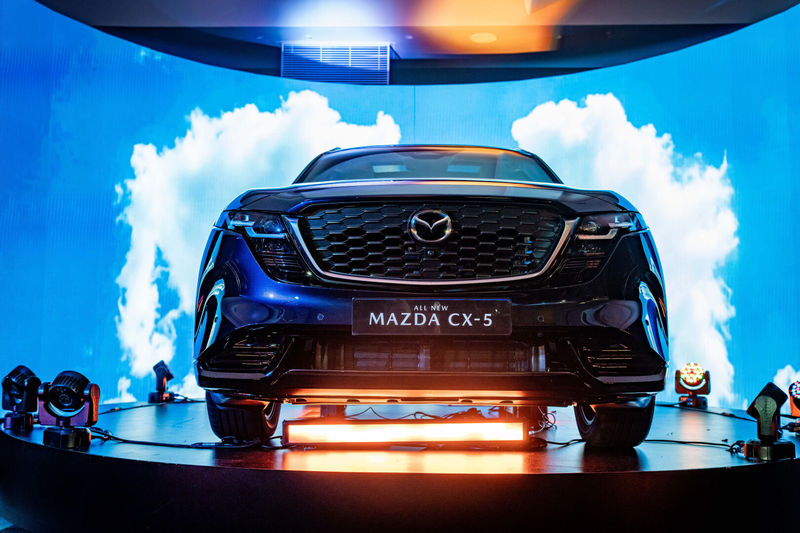
Pricing is another hurdle. The entry-level Active kicks off at R578 250, while the range-topping Homura AWD commands R749 100. For that kind of money, you could cross-shop a feature-packed Haval H6 4WD PHEV or a Toyota RAV4 HEV GX.
See how they compare: Mazda CX-5 vs Haval H6 vs Toyota RAV4
The question, then: Has Mazda done enough to remain competitive? Considering the lack of engine innovation, it’s a reluctant no – although its styling, comfort and refinement should still win some loyal hearts.