Shopping for a used 3rd-generation Kia Sportage? Here’s everything you need to know about what proved to be a game-changer for the Korean brand, including the family car’s pros and cons and what you should expect to pay for a good 2nd-hand example.
More often than not, an established nameplate’s move from one generation to the next is a visually subtle exercise – and sometimes even downright difficult to detect. Designers generally strive to maintain some sort of obvious lineage with the preceding model, habitually erring on the side of evolution over revolution. But the exact opposite was true with the introduction of the 3rd-gen Kia Sportage.
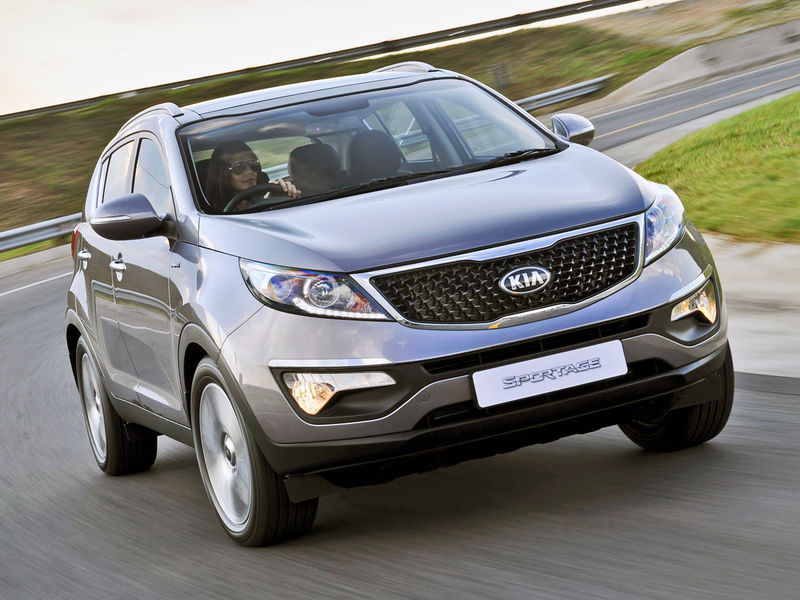
A radical departure if ever there was one, the SL series of Kia’s Sportage shared virtually nothing (other than its badge, of course) with its frankly drab predecessor. Much of the credit for this sophisticated makeover went to Peter Schreyer, the renowned German car designer perhaps best known for penning the original Audi TT. In fact, the eye-catching 3rd-gen Sportage was the first Kia drafted from scratch under Schreyer’s leadership and initiated a dramatic change in the South Korean firm’s design trajectory.
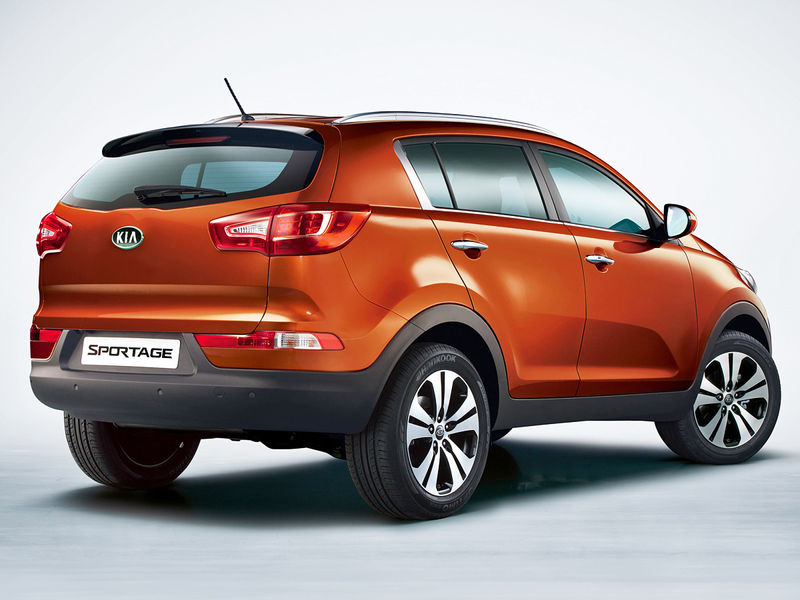
Likely largely as a result of its fresh persona, the Sportage quickly became one of Kia’s strongest-selling models, both globally and here in Mzansi. There was engineering substance beneath that bold exterior too, with Euro NCAP awarding the Sportage a full 5-star rating in 2010 (curiously, though, the 3rd-gen model didn’t rank particularly highly when it came to pedestrian safety, for which it scored just 49%).
Fascinatingly, despite the SL series’ sales success, Schreyer’s design team again thoroughly overhauled the model’s styling with the QL series that succeeded it, opting to hand the 4th iteration of the family car a markedly different face (as it has subsequently done with the current model). The QL-series Sportage arrived in SA in October 2016, ending the 3rd-gen model’s perception-shattering run on the local market.
Kia Sportage model line-up in South Africa
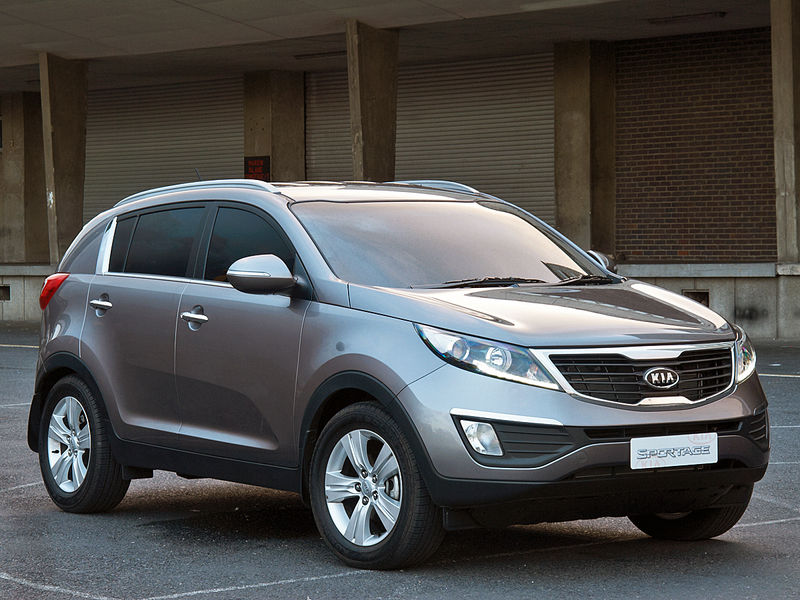
While the first official images of the 3rd-gen Kia Sportage were released in February 2010, the arrestingly styled medium SUV made its public debut at the Geneva International Motor Show the following month. By September 2010, the then-box-fresh Sportage had already arrived in South Africa.
Initially, the local line-up offered the choice of 3 transversely mounted, chain-driven engines (a pair of naturally aspirated petrol motors and a turbodiesel unit), 3 transmissions (a 5-speed manual, 6-speed manual and 6-speed auto) and the option of either front-wheel drive or all-wheel drive. As such, the range comprised the following 10 derivatives at launch, starting with the base Ignite grade:
- 2.0 5MT Ignite FWD: 122 kW/197 Nm
- 2.0 5MT FWD: 122 kW/197 Nm
- 2.0 6AT FWD: 122 kW/197 Nm
- 2.0 5MT AWD: 122 kW/197 Nm
- 2.0 6AT AWD: 122 kW/197 Nm
- 2.4 6AT AWD: 130 kW/227 Nm
- 2.0 CRDi 6MT FWD: 130 kW/392 Nm
- 2.0 CRDi 6AT FWD: 130 kW/392 Nm
- 2.0 CRDi 6MT AWD: 130 kW/392 Nm
- 2.0 CRDi 6AT AWD: 130 kW/392 Nm
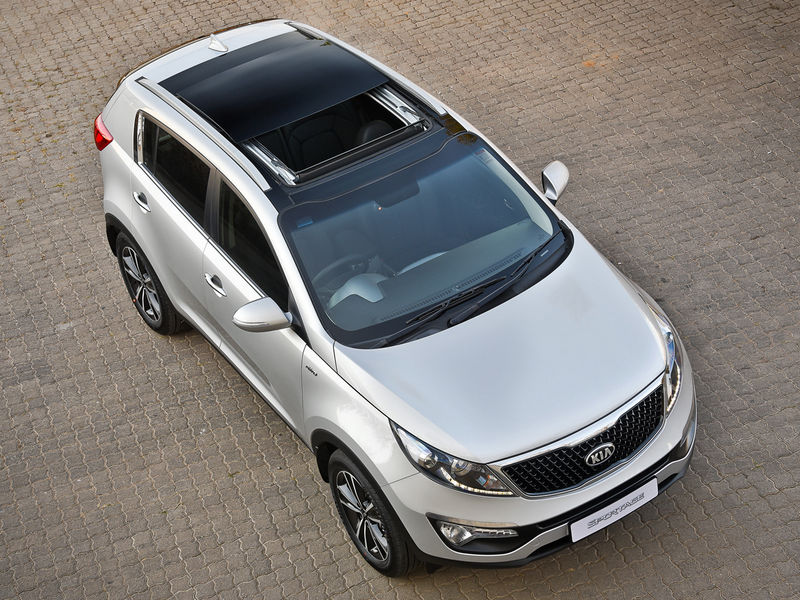
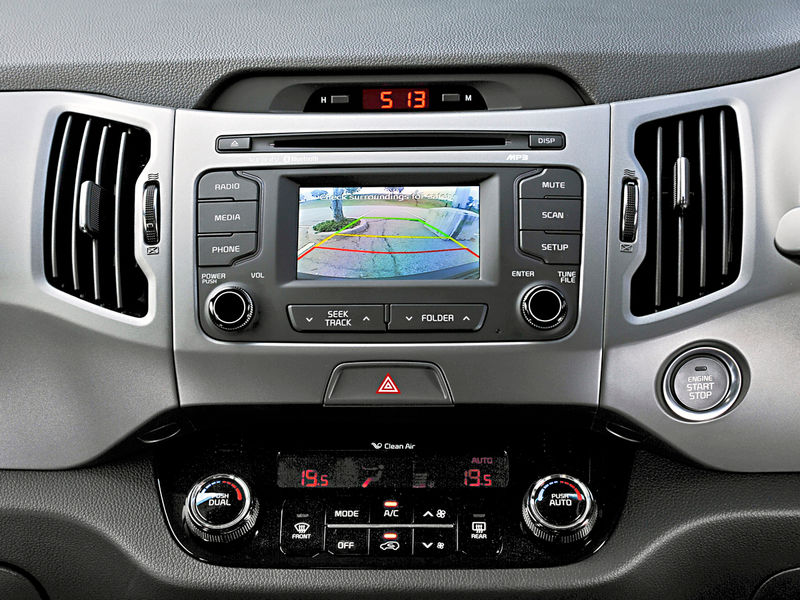
This line-up continued unchanged until February 2014, when the facelifted range made local landfall, complete with refinement upgrades. Styling tweaks included a lightly updated front end (incorporating a new grille, lower bumper and foglamps), fresh alloy wheels, redesigned taillights and the switch to a shark-fin roof antenna, while the upper trim on the inside of the doors scored soft padding. Flagship all-paw derivatives also gained a 4.2-inch TFT LCD instrument cluster and upgraded from the old dot-matrix centre display to a 4.3-inch touchscreen linked to a reverse-view camera and an Infinity audio system.
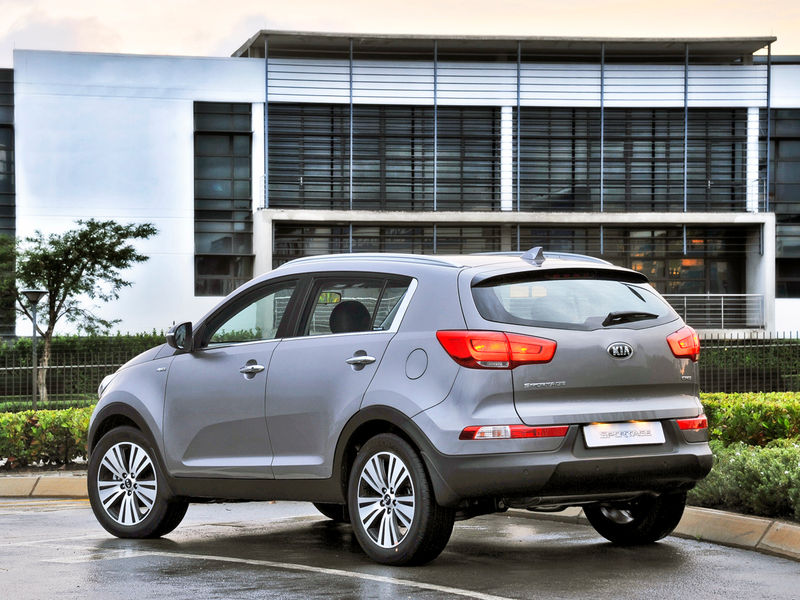
Interestingly, the 2.4-litre mill fell away at this point, while the likewise atmospheric 2.0-litre petrol unit was replaced with a version featuring slightly lower peak outputs of 116 kW and 192 Nm (ostensibly in the name of refinement and economy) and the old 5-speed stick-shift gave way to a 6-speed manual gearbox. The oil-burning 2.0 CRDi engine’s maximum power was unchanged at 130 kW, though its peak twisting force was now listed as 382 Nm. While pre-facelift SA-spec derivatives were built at the Gwangju factory in Korea, we understand the refreshed models came from the Žilina plant in Slovakia.
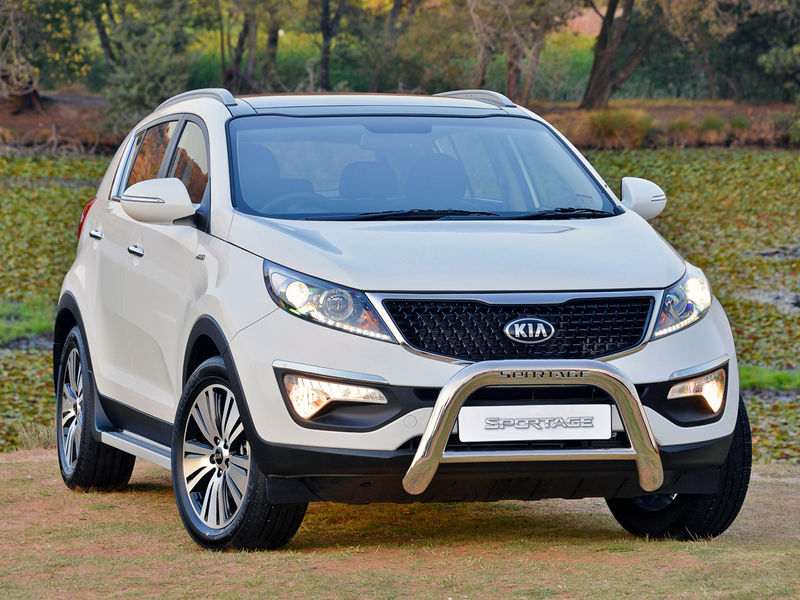
By December 2014, Kia Motors SA had introduced the Sportage Explore; it effectively fitted the 2.0 CRDi AWD 6AT with a smattering of parts from its “genuine accessories” catalogue to create a new flagship in the process. Upgrades included satellite navigation, a front nudge bar, side steps, a rear “styling” bar and a towbar, along with a subtle “Explore” branding on the tailgate, carpets and service-book wallet.
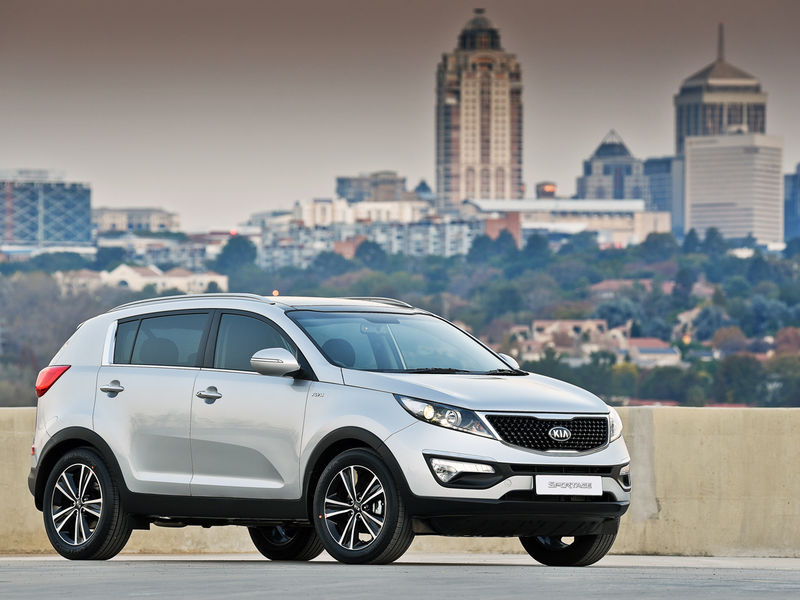
The final update to the SL-series range came in mid-2015, when Kia launched a pair of limited-edition TEC derivatives. Based on the 2.0 CRDi powertrain – either in front- or all-wheel-drive guise and fitted with the auto transmission – the TEC package added derivative-specific 18-inch alloy wheels, full LED taillights, privacy glass and a panoramic sunroof. Inside, the Korean firm threw in heated and ventilated front seats, while the front-wheel-drive version further gained Xenon headlights, a smart key, a start-stop button and a TFT LCD instrument cluster (items that were already standard on the all-paw variant).
What are the advantages of a Kia Sportage?
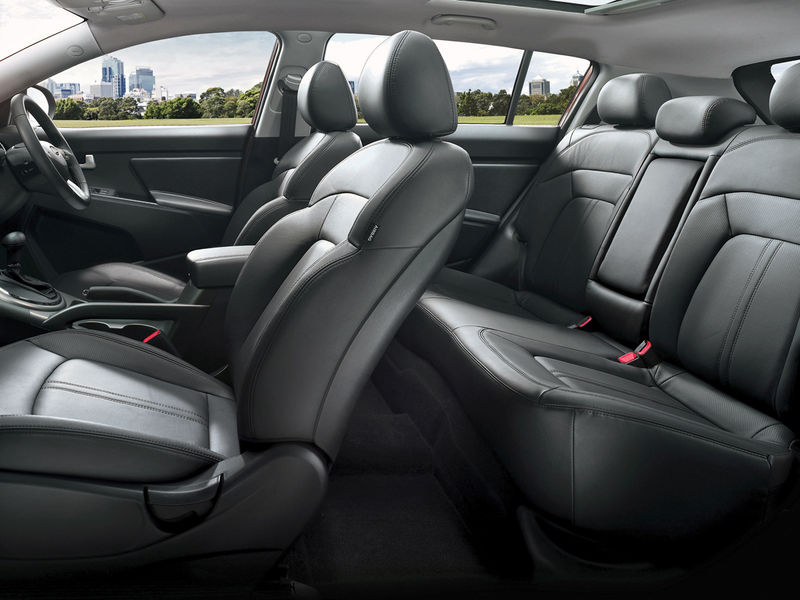
Space and practicality: Not only did the 3rd-gen Sportage look completely different to its predecessor – it was more spacious, too. Measuring 4 445 mm from nose to tail, the SL series was 95 mm longer than the model it replaced, while also gaining 15 mm in width and 10 mm between its axles.
The floor at the rear was almost completely flat (there was no bulky transmission tunnel that limited the centrally seated passenger’s foot room), while the load bay capacity grew to a generous 740 litres (or 1 547 litres with the rear seatback folded), thanks in part to a longer overhang and despite the provision of a full-size spare wheel. Even the seats and door sills were lowered to ease ingress and egress. Note, however, ground clearance was cut by 23 mm to 172 mm, compared with the previous version.
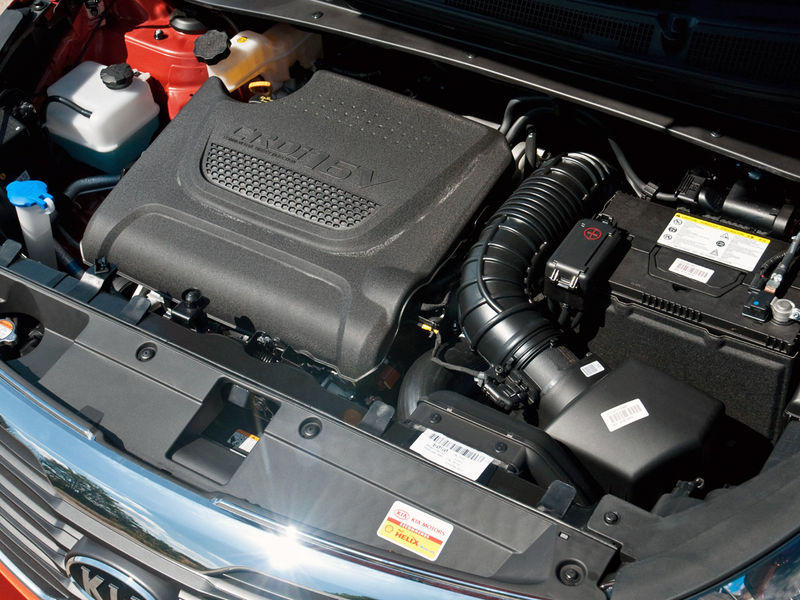
Diesel engine’s mix of punch and economy: Though the 3rd-gen Sportage wasn’t available locally with the excellent 1.7 CRDi engine employed by the Kia’s closely related Hyundai ix35 cousin of this period, the tractable 2.0-litre turbodiesel motor nevertheless offered a pleasing mix of in-gear punch (peak torque was available from as low as 1 800 through to 2 500 rpm) and potential for fuel frugality.
In fact, the front-wheel-drive 2.0 CRDi derivative – fitted with a 6-speed manual ‘box – was said to be both the fastest-accelerating (with a claimed 0-to-100 kph time of 9.4 seconds) AND the most fuel-efficient (with a claimed average consumption figure of 6.4 litres per 100 km) derivative in the range.
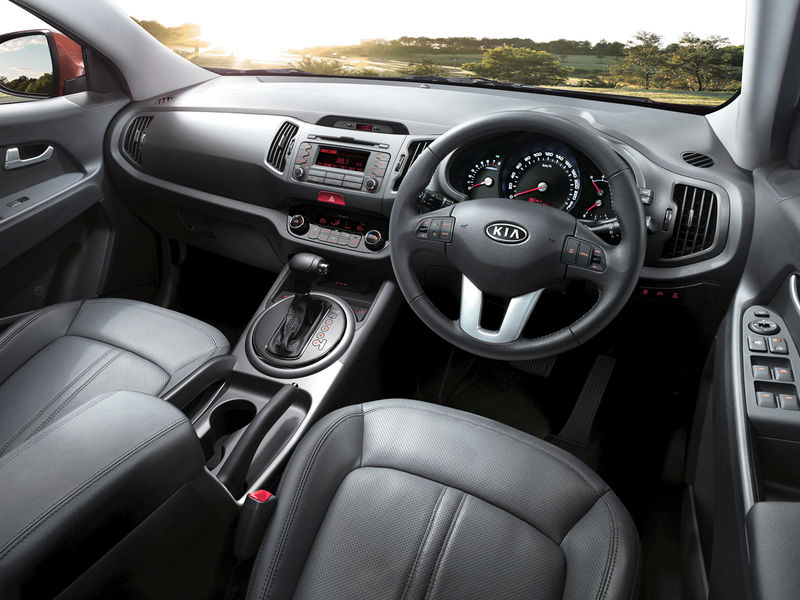
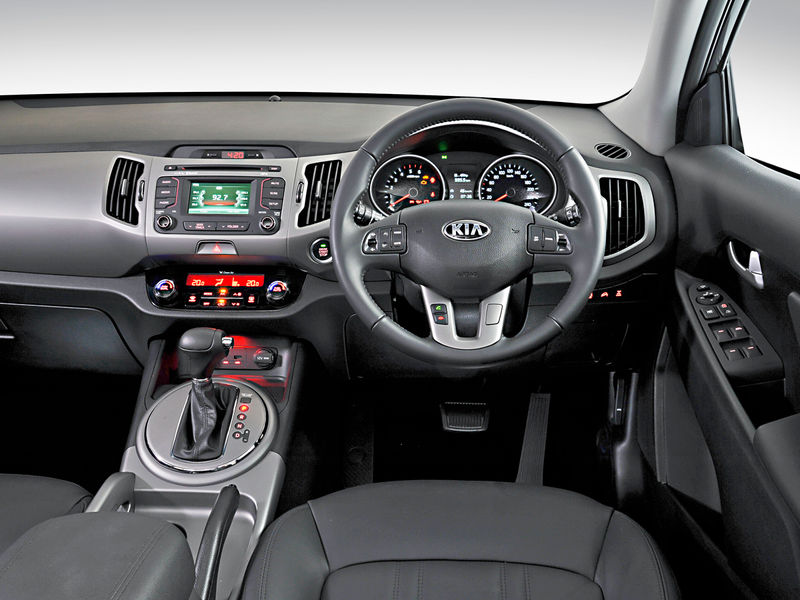
Generous standard kit: Most derivatives in the local 3rd-gen Kia Sportage range offered heaps of value thanks to their lengthy standard equipment lists. For instance, at launch, all derivatives bar the base Ignite boasted leather upholstery and dual-zone climate control (with the entry-level variant settling for cloth trim and manual air conditioning), along with LED daytime running lights, automatic headlamps, keyless entry, a power-adjustable driver seat and rear parking sensors.
Safety levels were lofty, too, and included ABS with EBD, brake assist, electronic stability control, traction control, cornering brake control, downhill brake control, hill-start assist control, 6 airbags and ISOfix child-seat anchors.
What are the disadvantages of a Kia Sportage?
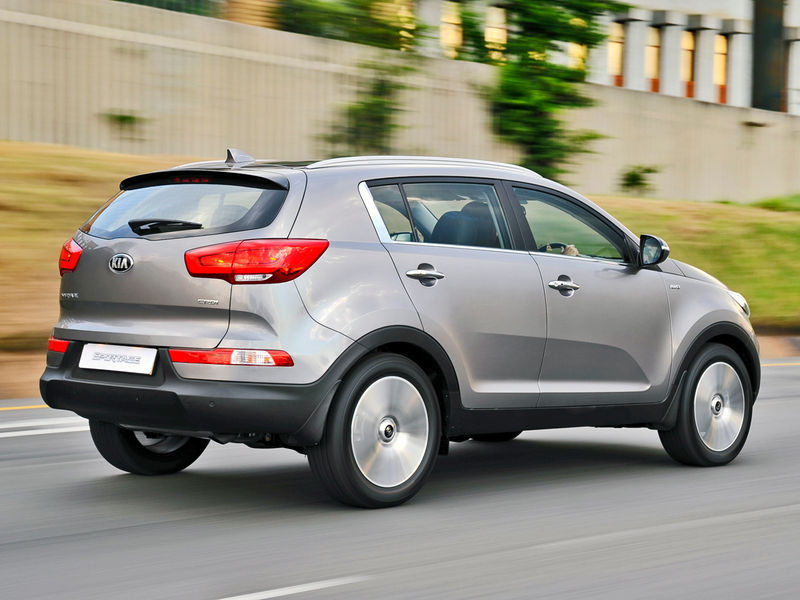
Compromised rear visibility: Though the Sportage offered a suitably raised driving position (and thus an excellent view out the front of the cabin), rear visibility wasn’t the best. While the chunky reverse-angled C-pillar was a design highlight, it hampered the driver’s over-the-shoulder view, with the relatively small rear screen making matters worse. Still, AWD derivatives came standard with a reverse-view camera, which transmitted a video feed to either an LCD display set in the interior rear-view mirror or to the nav screen, if the latter was optionally specified (or to the 4.3-inch touchscreen, in the case of the facelifted version).
Lifeless steering: Like most Korean vehicles of this era, the Sportage’s steering lacked in the feel department, displaying a particular “numbness around centre”. At launch, all versions employed a speed-sensitive hydraulic power-assisted rack-and-pinion arrangement, though the turbodiesel derivatives switched to motor-driven power steering at the facelift, which improved matters somewhat. In addition, note the Sportage’s tiller did without reach adjustment, though the driver’s seat was height adjustable.
Although all derivatives featured a multi-link, fully independent rear suspension system, the entry-level Ignite grade did without amplitude selective dampers, which ostensibly combined to deliver “firm control over bumpy roads and when travelling at higher speeds”, plus “a smoother city ride at lower speeds”.
Thirsty (and gruff) petrol engines: Neither the Sportage’s naturally aspirated 2.0-litre engine nor the 2.4-litre Theta II motor was especially fuel-efficient. Claimed combined figures ranged from 8.7 to 9.2 L/100 km (depending on displacement, transmissions and driven wheels), but real-world numbers were quite some way past 10. In addition, the pre-facelift petrol-powered mills were somewhat coarse on the ear, though the updated 2.0-litre unit was at least a little smoother (and further benefited from general improvements to body insulation).
How much does a 3rd-gen Kia Sportage cost in South Africa?
Initially, the 3rd-gen Kia Sportage was sold with a 5-year/100 000 km warranty and a service plan of the same duration. However, at the facelift, the Korean firm’s local division extended the warranty cover to 5 years or 150 000 km. Though these plans would have expired by now, give preference to vehicles that have full maintenance histories.
At the time of writing, around 62% of the used SL-generation Kia Sportage listings on Cars.co.za featured a petrol engine, with the 2.0-litre unit proving far more popular than the seldom-spotted 2.4-litre motor. Interestingly, automatic was the dominant transmission choice, accounting for 59% of all listings, while 65% of the listed derivatives had a front-wheel-drive configuration.
Mileages ranged from 61 000 km (on a 2016 Sportage 2.0) to 236 000 km (achieved by a 2012 Sportage 2.0 6AT), with a further 8 examples – most of which were 2.0 CRDi derivatives – showing more than 200 000 km on their respective odometers. Silver was the most common colour, accounting for 34% of listed vehicles, followed by white (29%) and red (10%).
- Below R125 000: Though there wasn’t a single SL-gen Sportage listed for 5 figures, we did find a few priced below R125 000. As you might have guessed, they were all early model-year and relatively high-mileage examples, most featuring the entry-level Ignite grade.
- From R125 000 to R150 000: Options were still fairly limited here and mileages were generally quite high, but interestingly, we discovered a couple of all-paw 2.0 CRDi derivatives between these pricing bookends (among a throng of 2.0 petrol models, of course).
- From R150 000 to R200 000: At the time of writing, this was the most densely populated bracket, with every model year and engine derivative represented. There were a number of sub-100 000 km examples in this space (though don’t let relatively high mileage put you off if evidence of fastidious maintenance is present).
- R200 000 and up: Most vehicles listed on the far side of the R200 000-mark were late model-year examples, with the 2.0 CRDi the dominant powertrain choice here. This was also where we found all special-edition TEC derivatives, though the most expensive listing was a 2016 Sportage 2.0 CRDi AWD 6AT with 92 000 km on the clock (for R299 900).
Which Kia Sportage derivative should I buy?
As you’ve likely gleaned from the sections above, there’s little doubt in our minds that the 2.0 CRDi engine is the pick of the bunch, so we’d certainly recommend a turbodiesel model over the petrol alternatives. Should you stick with the front-wheel-drive configuration or spring for an all-paw derivative? Well, though the answer depends largely on your intended usage, it’s worth noting that front-wheel-drive variants are lighter, accelerate faster and are more fuel efficient (not to mention more affordable).
In addition, keep in mind turbodiesel-powered variants fitted with the 6-speed manual gearbox have a braked towing capacity of 2 000 kg, compared with the 6-speed auto’s maximum figure of 1 600 kg. These numbers apply to both front- and all-wheel-drive examples of the 3rd-gen Kia Sportage, although serial towers may well appreciate the extra grip offered by the latter configuration.
Whether you opt for an earlier model or a facelifted example would depend on your budget, of course, but we should point out the updated version benefited from improvements to the steering system, cabin-material quality and sound-deadening measures.
Is the 3rd-gen Kia Sportage a good used buy?
The 3rd-gen Kia Sportage’s closest rival was the Hyundai ix35 from within the same group, seeing as it offered identical powertrains (as well as a 1.7 CRDi motor) and similar levels of kit. Buyers in this space could also consider a Nissan Qashqai (either a late model-year J10 or an early model-year J11) and the 4th iteration of the Toyota RAV4, which was available with the Japanese firm’s trusty 2.2 D-4D engine.
Volkswagen also marketed the original Tiguan around this time (though these remain fairly pricey in comparison), while the 4th-gen Honda CR-V offered quite a bit more interior space. There was also the original Mazda CX-5 as well as the Mitsubishi ASX (not to mention the closely related Citroën C4 Aircross and Peugeot 4008 cousins). Finally, it would be remiss of us not to mention the C520-generation Ford Kuga, though many buyers would likely be put off by the Blue Oval brand’s well-publicised fire scandal.
Ultimately, the SL-series Sportage was a model that shattered perceptions of the Kia brand (in a good way) and helped the Korean firm establish itself as a mainstream contender in numerous markets around the world, including right here in Mzansi. Though its exterior design – which continues to age well – was likely at the root of this step change, the 3rd-gen Sportage was certainly far more than just a pretty face.
Looking for a used Kia Sportage to buy?
Find one on Cars.co.za here.
Looking to sell your car? You can sell it for free to our dealer network here.
Ryan Bubear

Having written about everything from sport and politics to crime, Ryan eventually settled on motoring. For well over 15 years, he's been penning articles – both online and in print – about the broader automotive industry, though he's particularly fascinated by vehicle-sales statistics. A freelance writer and editor, Ryan has owned a 1971 Austin Mini Mk3 for 20-plus years.