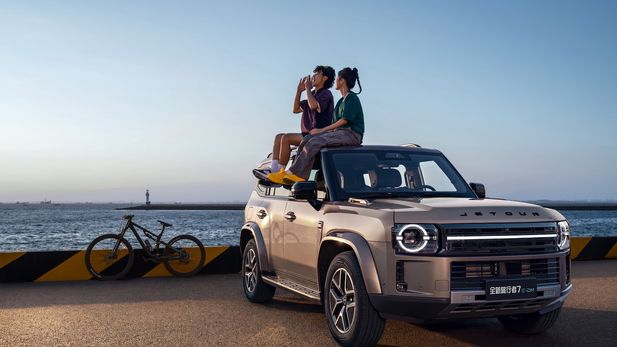
Jetour is gearing up for a major product offensive in South Africa in 2027. Around 10 new or updated models are in the pipeline, including a powerful plug-in hybrid bakkie, a compact electric vehicle and a trio of premium off-roaders. Local production of the T2 is also on the cards (plus a facelift).
A little over two years after entering the South African market, Jetour is selling around 2 000 vehicles a month, while its T2 off-roader has secured the coveted South African Car of the Year title. Now, the Chinese manufacturer is looking to expand its footprint considerably.
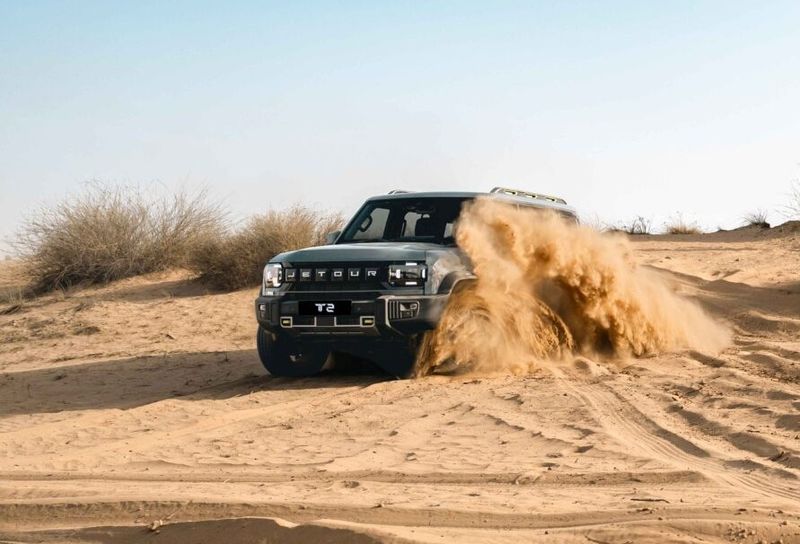
Around 10 new or updated products are earmarked for local introduction in 2027. The company says its objective is to increase monthly sales to more than 2 500 units by the end of next year.
Among the newcomers are a plug-in hybrid (PHEV) double-cab bakkie that could comfortably eclipse the outputs of SA’s most powerful bakkies, a compact electric vehicle (EV) and several new derivatives of existing models.
Read more: Jetour T2 facelift revealed
Which Jetour models are coming to SA in 2027?
| Model | Description | Expected arrival |
|---|---|---|
| T2 Sandstorm | Limited-edition T2 with brown upholstery and bespoke badging | Q1 2027 |
| TX4 (codename) | B-segment battery-electric vehicle | Q2 2027 |
| GAIA G700 | Large, ladder-frame luxury PHEV SUV | Q3 2027 |
| GAIA F700 | PHEV double-cab bakkie | Q3 2027 |
| GAIA G600 | Smaller premium SUV | Q3 2027 |
| T2 facelift | An update of the current T2 | Q3 or Q4 2027 |
| T1 and T2 i-DM AWD | All-wheel-drive versions of the existing PHEVs | Late 2027 |
| New Dashing and X70 | New-generation versions of both SUVs | Late 2027 or early 2028 |
Jetour is expanding its product portfolio in two directions, with a compact EV at one end and the premium GAIA sub-brand at the other. The latter will introduce significantly more sophisticated off-road vehicles to the local market.
Perhaps equally significant is the prospect of local production. The Jetour T2 is earmarked for assembly at parent company Chery’s recently acquired ex-Nissan Rosslyn plant towards the end of 2027.
Jetour F700: SA’s next most powerful bakkie?
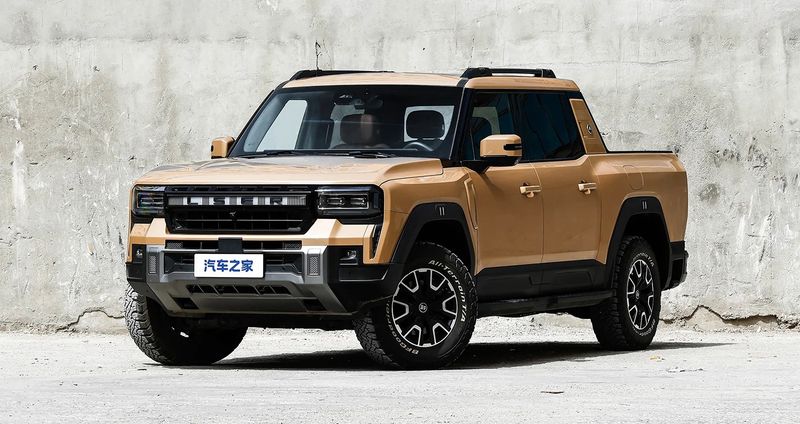
The Jetour F700 will be the Chinese brand’s first double-cab bakkie in South Africa. It shares its ladder-frame underpinnings and sophisticated plug-in hybrid powertrain with the G700 luxury SUV.
The powertrain comprises a 2.0-litre, 4-cylinder turbopetrol engine paired with dual electric motors, delivering combined peak outputs of 665 kW and 1 135 Nm. Should the F700 arrive in SA with those figures intact, it would offer 90% more power than the BYD Shark 6 Performance, currently the country’s most powerful production double-cab bakkie.
How does the newcomer compare with the range-topping Shark 6 and Ford Ranger Raptor?
| Specification | Jetour F700 | BYD Shark 6 Performance | Ford Ranger Raptor |
|---|---|---|---|
| Powertrain | 2.0T PHEV | 2.0T PHEV | 3.0-litre twin-turbo V6 petrol |
| Peak power | 665 kW | 350 kW | 292 kW |
| Peak torque | 1 135 Nm | 700 Nm | 583 Nm |
| Driven wheels | AWD | AWD | 4WD |
| Braked towing capacity | Approx. 3 500 kg | 3 500 kg | 2 500 kg |
| Electric-only range | 75 km (WLTC) | Up to 80 km | N/A |
| Price | TBC | R1 149 900 | R1 307 300 |
According to Jetour’s international specifications, the F700 features a 34.13 kWh battery pack and an 800-volt electrical architecture. Preliminary engineering figures also suggest a payload of up to 880 kg, although its locally homologated load-carrying capacity remains to be confirmed.
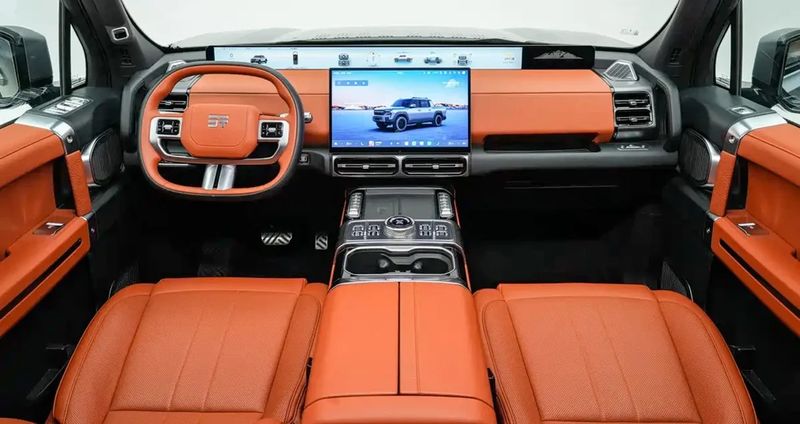
Where the F700 will be positioned in terms of pricing remains to be seen. Given its sophisticated powertrain and premium positioning, however, the newcomer could well find itself competing with the flagship Shark 6 and Ford Ranger Raptor.
Right-hand-drive development and local homologation remain important milestones ahead of the F700’s anticipated South African introduction.
Jetour to enter SA’s compact EV segment
While the F700’s substantial outputs will undoubtedly attract plenty of attention, Jetour’s forthcoming compact EV could prove particularly significant from a sales-volume perspective.
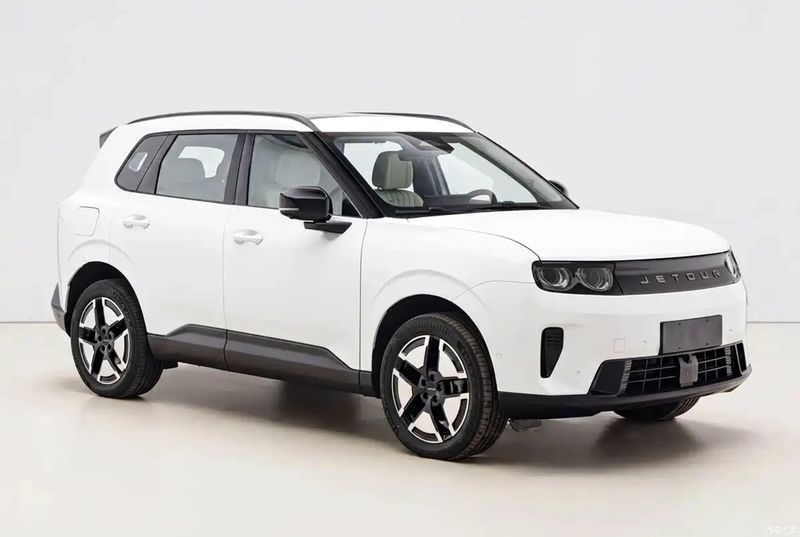
Currently known by its TX4 codename, the B-segment battery-electric vehicle is provisionally scheduled to arrive in the 2nd quarter of 2027. Jetour has yet to disclose details of its powertrain, battery capacity, range or pricing.
South Africa’s more affordable electric vehicle market is becoming increasingly competitive, and an aggressively priced compact EV could help Jetour reach a considerably broader audience.
Much will depend on where the TX4 is positioned relative to its rivals, particularly if Jetour manages to introduce it at less than R500 000.
T1 and T2: what’s happening with the payload ratings?
Jetour’s ambitious expansion plans come amid ongoing scrutiny of the payload ratings of its popular T1 and T2 SUVs, as well as a reported instance of body-panel deformation on a T1.
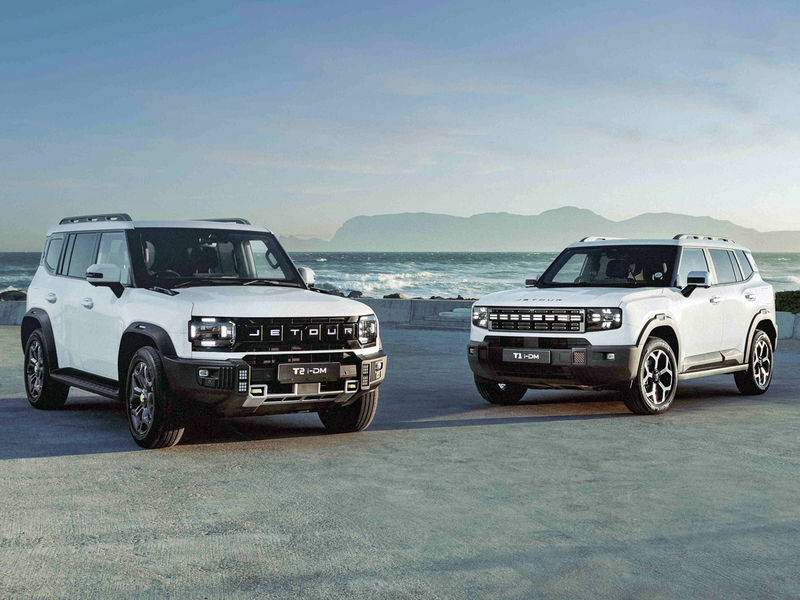
The brand says the original payload discrepancy resulted from a misinterpretation of South African vehicle-weight regulations. Jetour initially used the international Mass in Running Order (MIRO) measurement rather than the locally required tare calculation.
This resulted in a declared payload of 300 kg rather than the 375 kg that would have been calculated using the correct measurement.
Jetour subsequently applied to increase the payload rating to 475 kg (inclusive of the driver), with the revised figure intended to better accommodate the requirements of local customers travelling with passengers, luggage and accessories.
Although Jetour previously announced an increased payload rating for both models, the National Regulator for Compulsory Specifications (NRCS) has approved the T2’s revised rating, while final approval for the T1 remains outstanding.
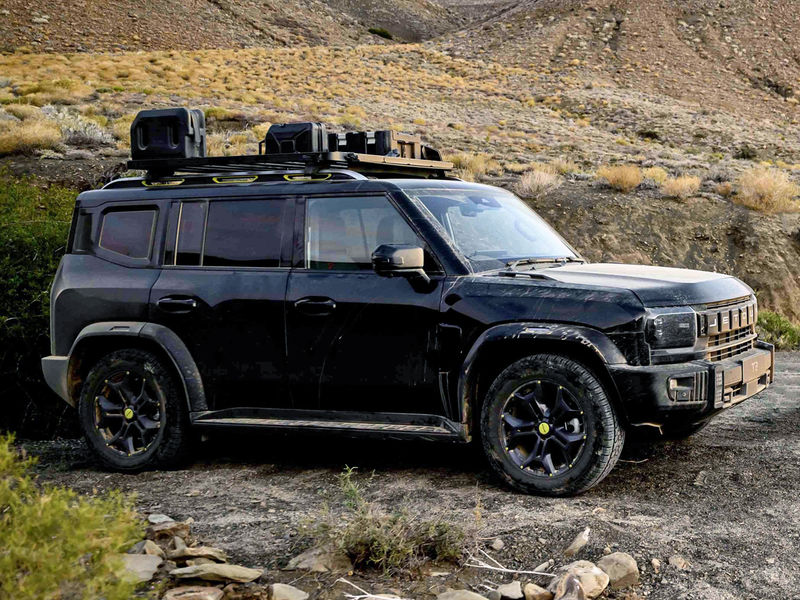
Jetour is also working with the relevant authorities to update the tare and gross vehicle mass (GVM) information of existing vehicles, potentially necessitating the issuing of revised licence discs. The company hopes to conclude this process during the 1st quarter of 2027.
Meanwhile, the Automobile Association of South Africa (AA) has raised concerns regarding an instance of deformation around the roof side panels of a Jetour T1. Jetour has since bought back the affected vehicle and is conducting a further assessment.
According to Jetour’s aftersales division, no similar incidents have been identified locally or internationally. The cause of the deformation, however, has yet to be established publicly.
Summary
Jetour’s plans for 2027 represent a significant expansion of its South African operations. The F700 could redefine performance expectations in the double-cab bakkie segment, while the TX4 has the potential to make electric motoring more accessible. There’s also the welcome prospect of local production of the T2.
As Jetour moves into more premium segments, however, resolving outstanding homologation issues and ensuring existing customers receive the necessary updated documentation will be important in maintaining consumer confidence.
With several new manufacturers preparing to enter SA’s lucrative double-cab bakkie market, 2027 is shaping up to be a fascinating year. The F700 is certainly among the more intriguing newcomers, although much will depend on its final local specifications and pricing.
Related content:
Cars.co.za

Providing you with the latest motoring news, new car releases and the simplest way to buy and sell cars.