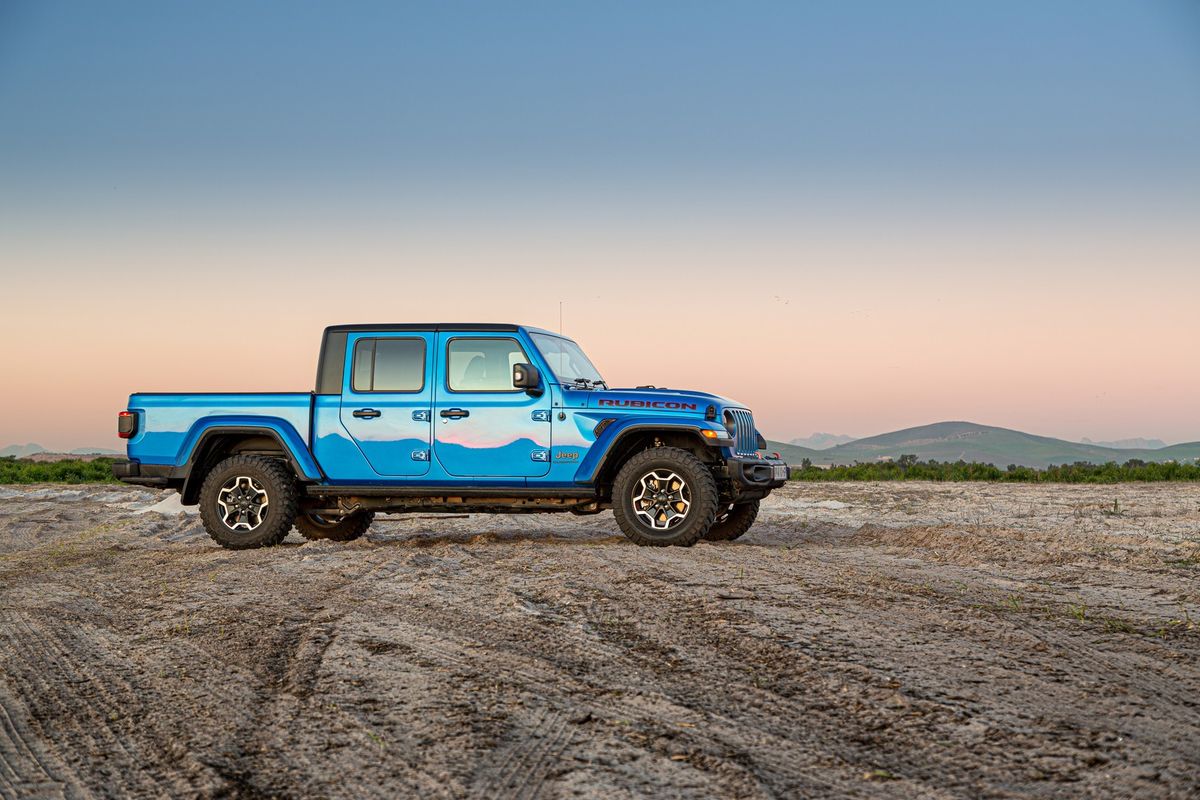
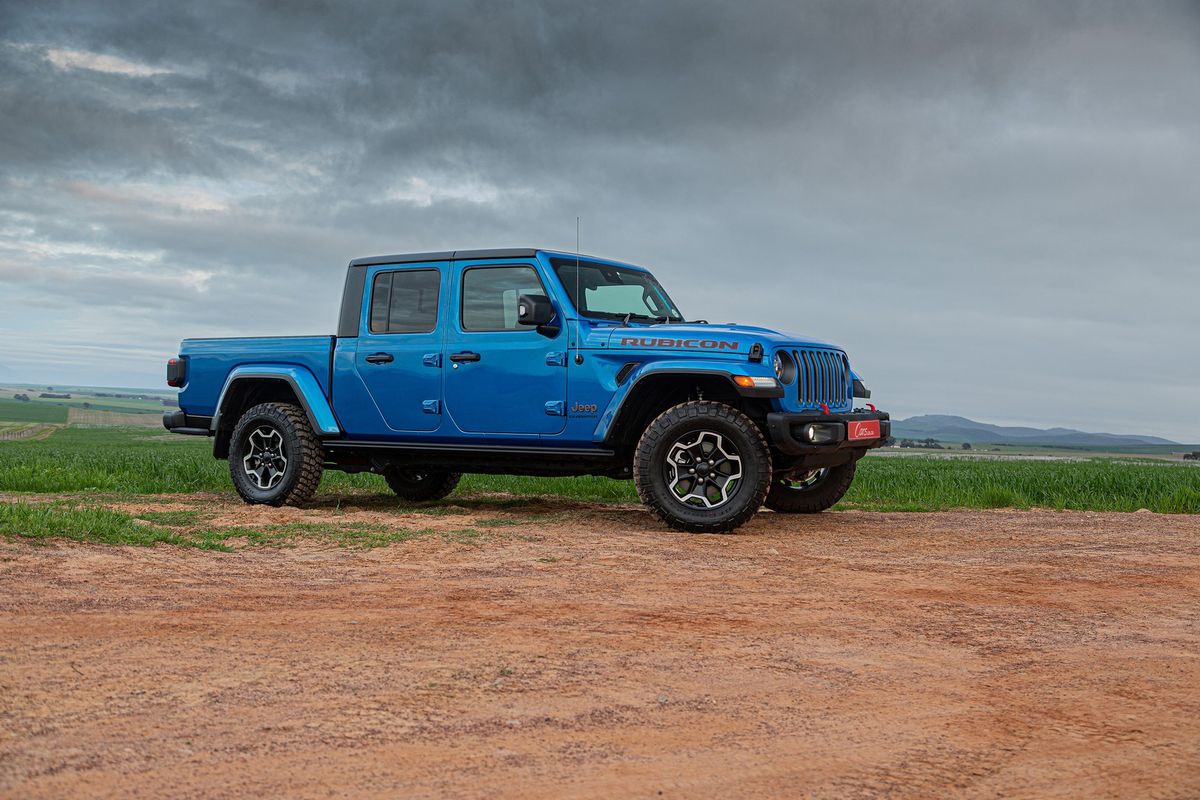
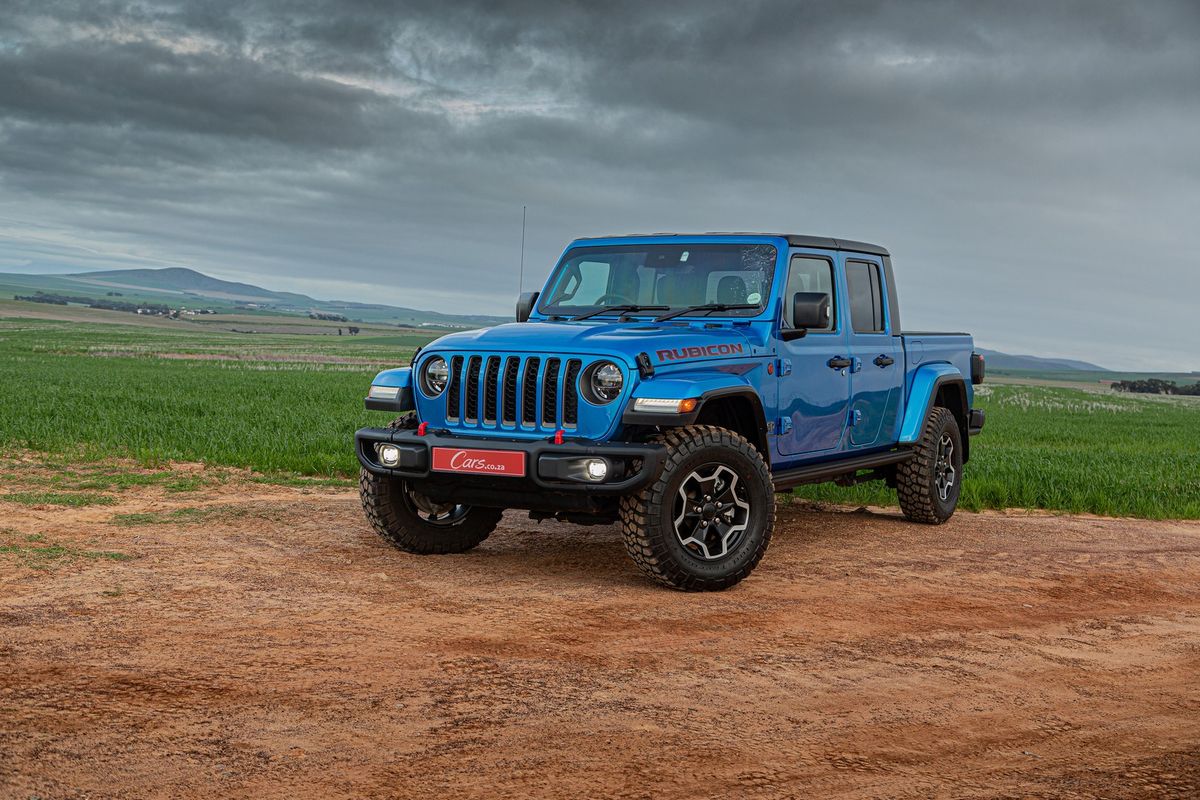
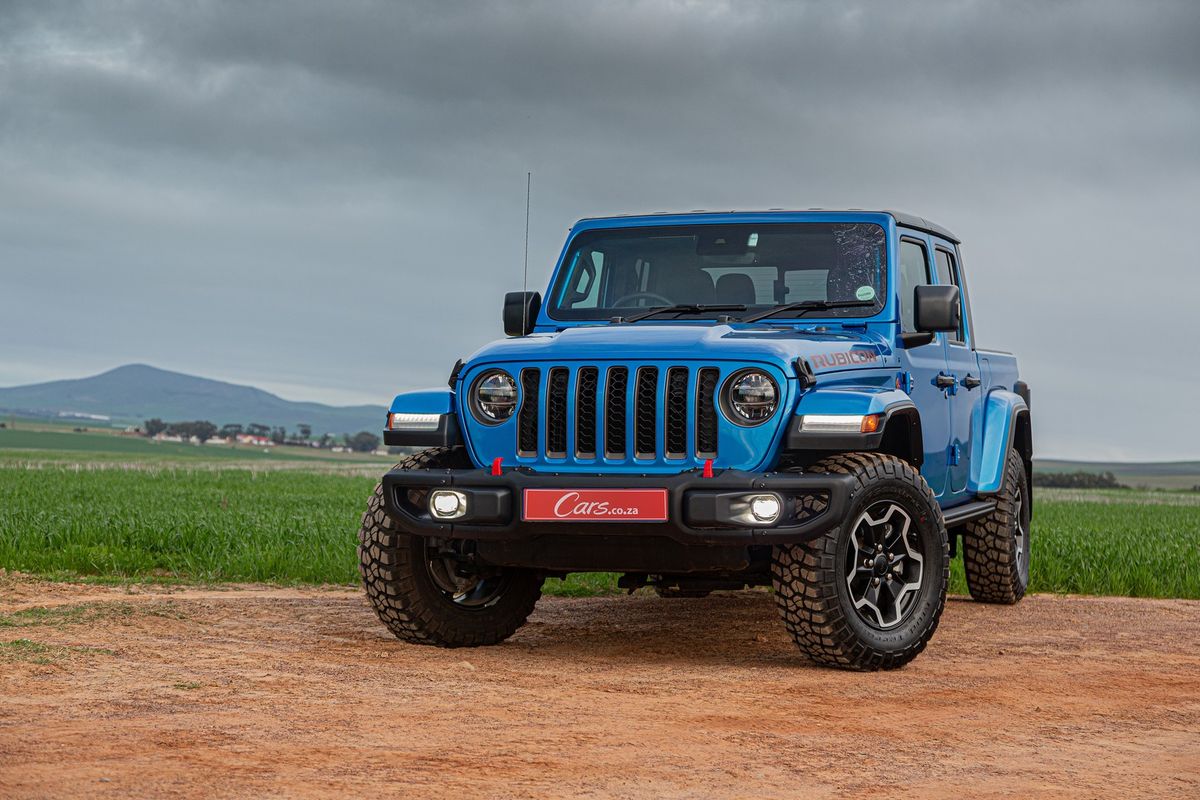
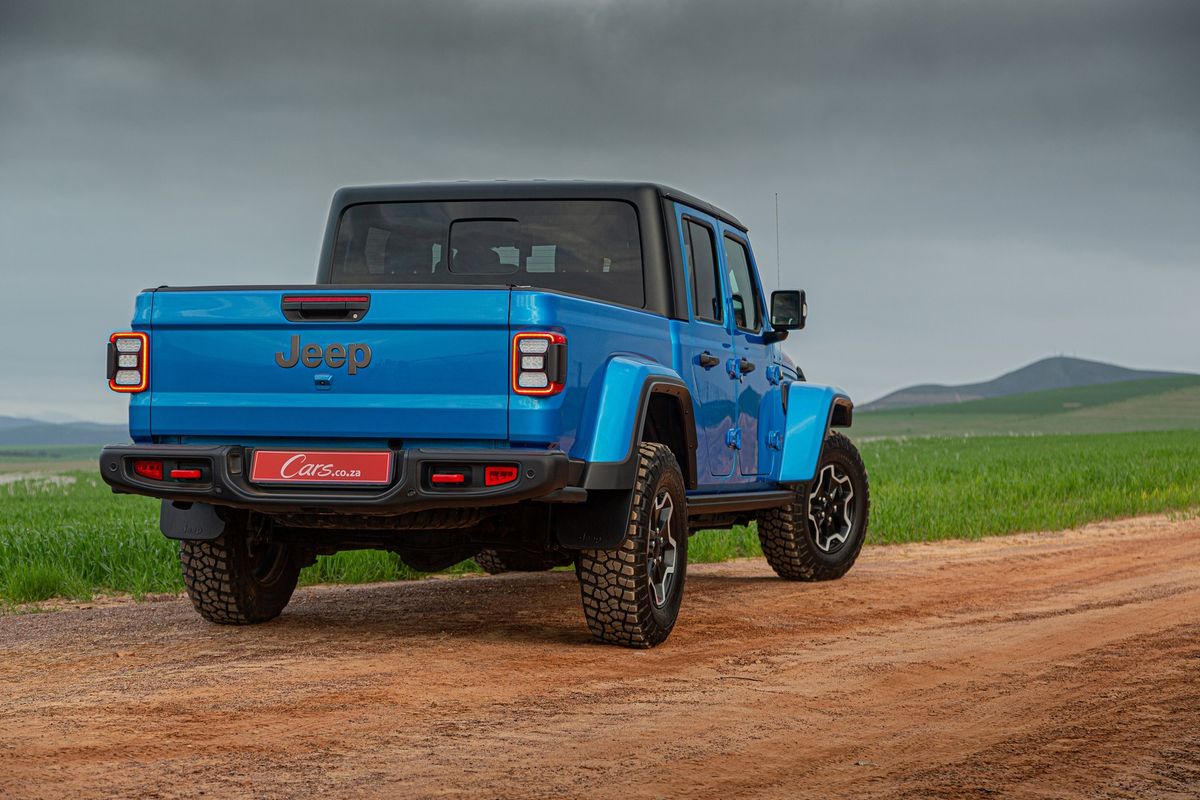
With a price tag in excess of R1 million, the Jeep Gladiator 3.6 Rubicon is the most expensive – and powerful – double-cab bakkie in South Africa’s new-vehicle market. Is it worth breaking the bank to get your hands on one of the coolest vehicles to reach our shores in quite a while? Read on…
We like: Outrageous presence, off-road capability, engine note, comprehensive list of standard features, sheer cool factor.
We don’t like: Thirst for unleaded, huge dimensions, no front parking sensors, some gimmicks.
FAST FACTS
- Model: Jeep Gladiator 3.6 Rubicon
- Price: R1 259 900
- Engine: 3.6-litre 6-cylinder petrol
- Power/Torque: 209 kW and 347 Nm
- Transmission: 8-speed automatic
- Fuel consumption: 12.4 L/100 km (claimed)
- 0-100 kph: 8.5 sec (claimed)
- Payload capacity: 693 kg
Serious about buying/selling?
Some Jeep dealerships regularly offer great deals. See our New Car Specials!
Looking to sell your car? You can sell your car to SA’s biggest dealer network
Search for a new or used Jeep.
Where does the Jeep Gladiator fit in?
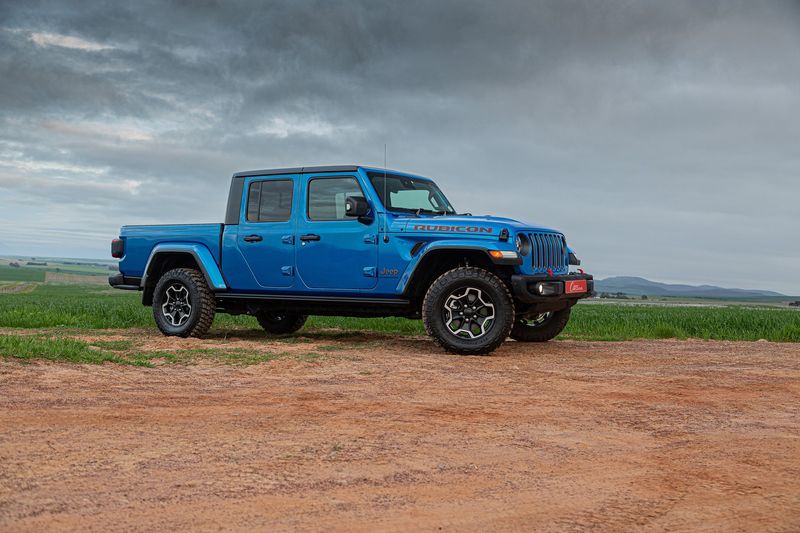
A double-cab Jeep is an interesting prospect and makes quite the statement.
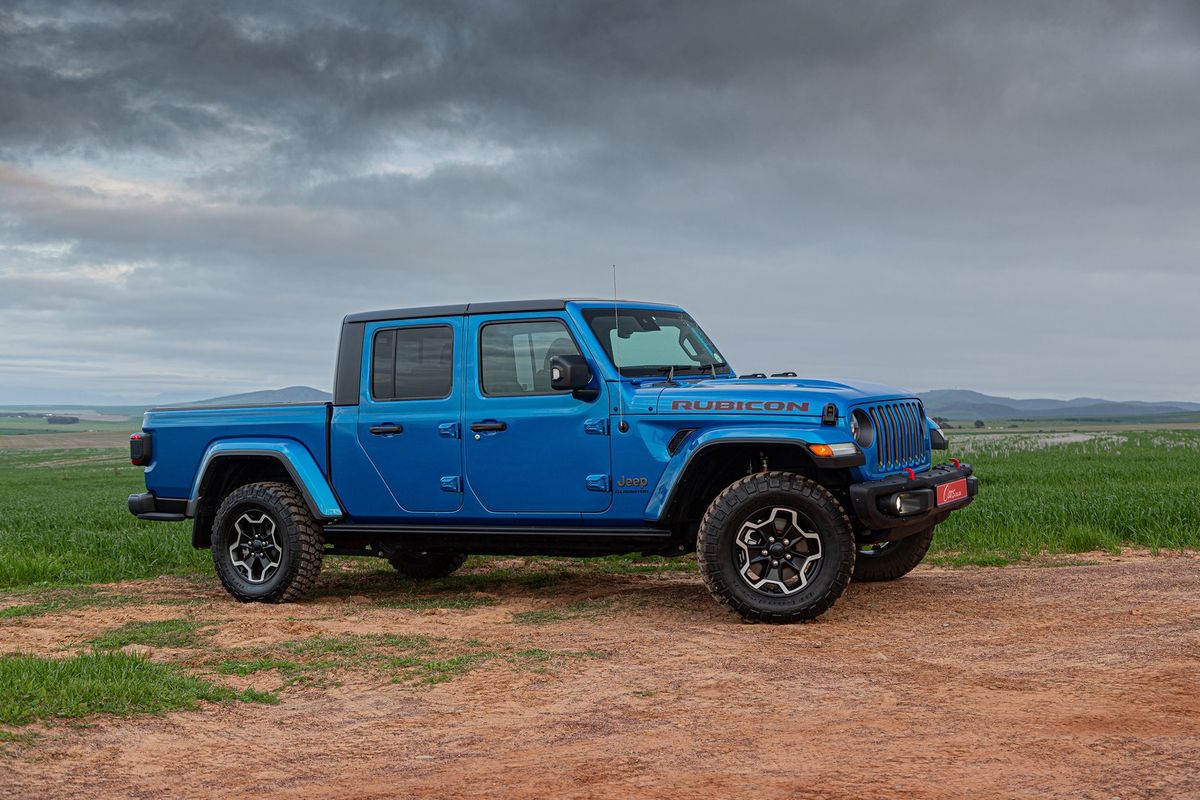
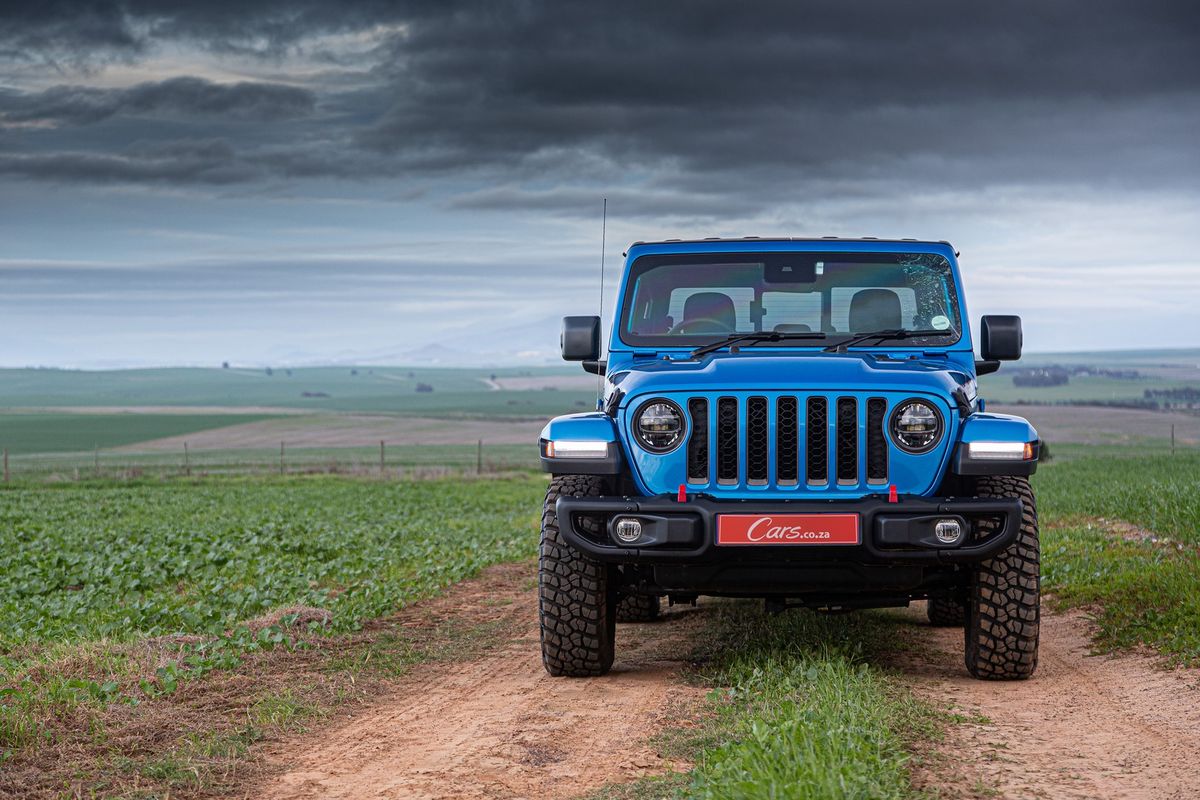
The Jeep Gladiator is in an intriguing proposition – to put it very mildly. Yes, it’s technically a double-cab, which means it will be closely scrutinised by brand-loyal bakkie enthusiasts – as you probably know, South Africans take their pick-ups extremely seriously. What’s more, because the model has that characteristic Jeep grille on its bluff front end, it needs to tick specific boxes to do justice to the American brand’s image and off-road cred.
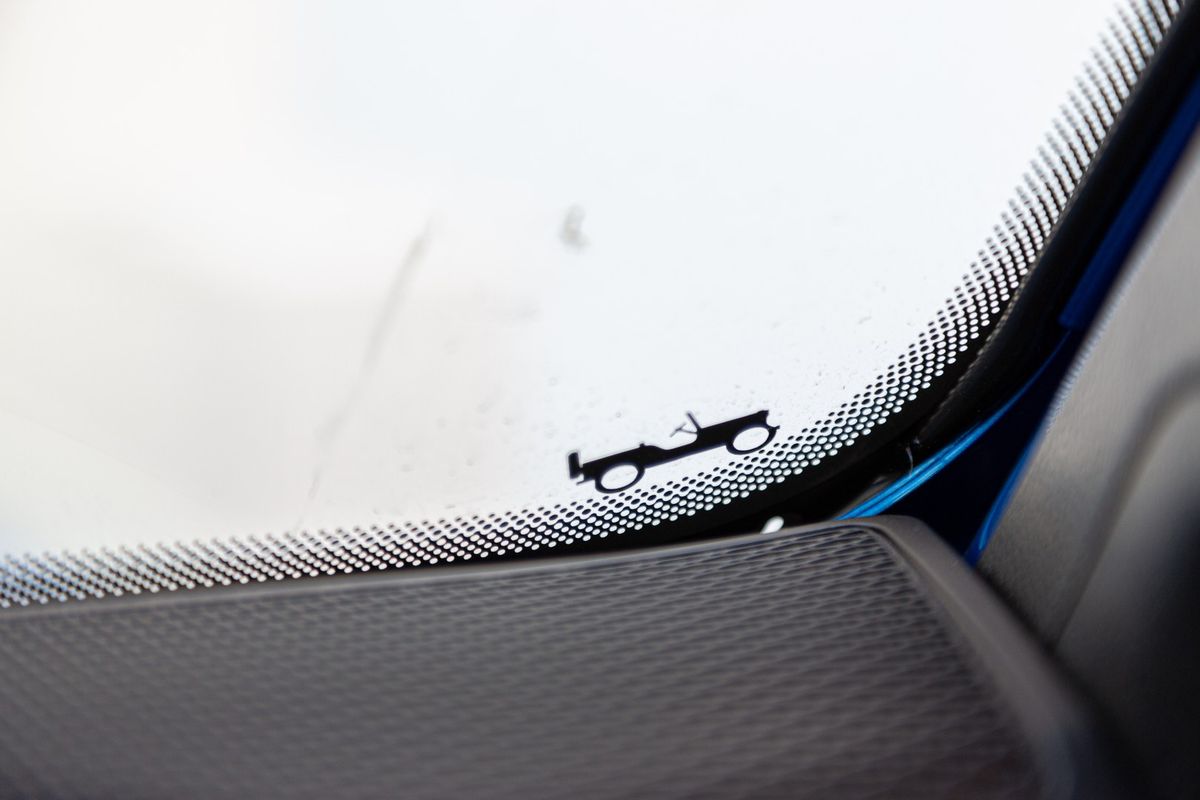
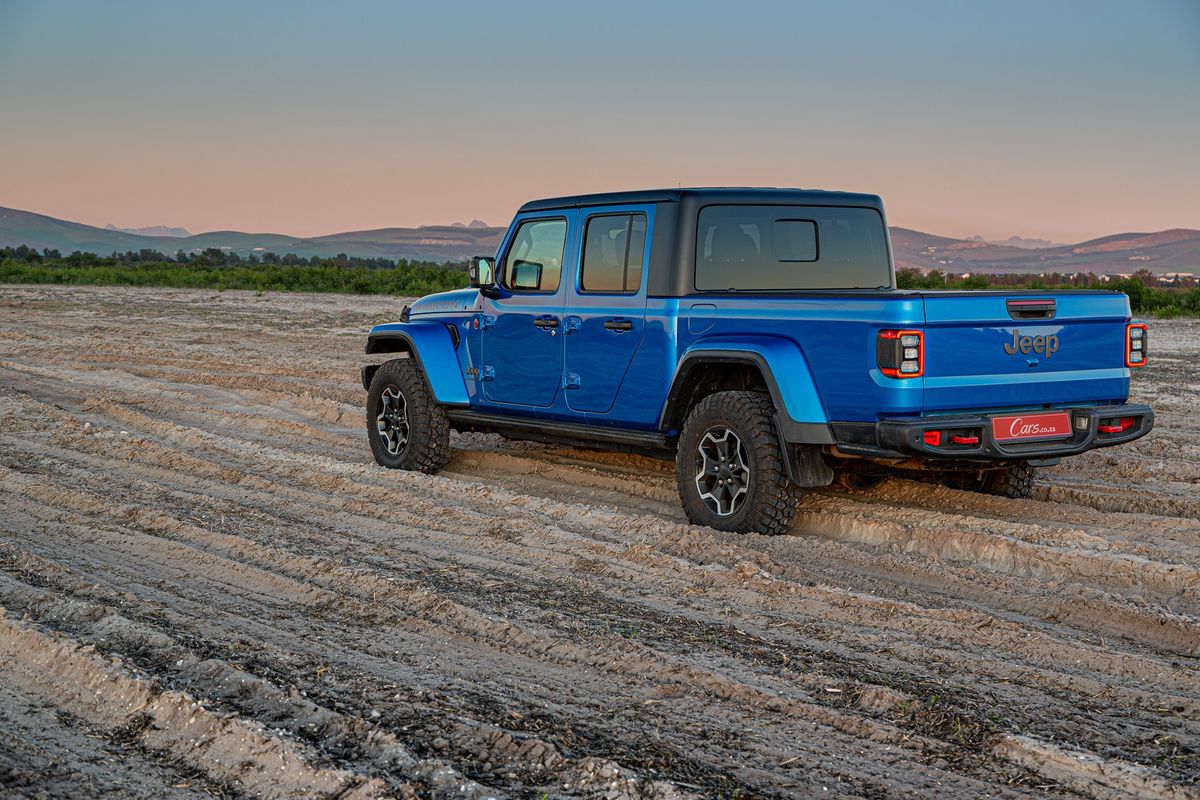
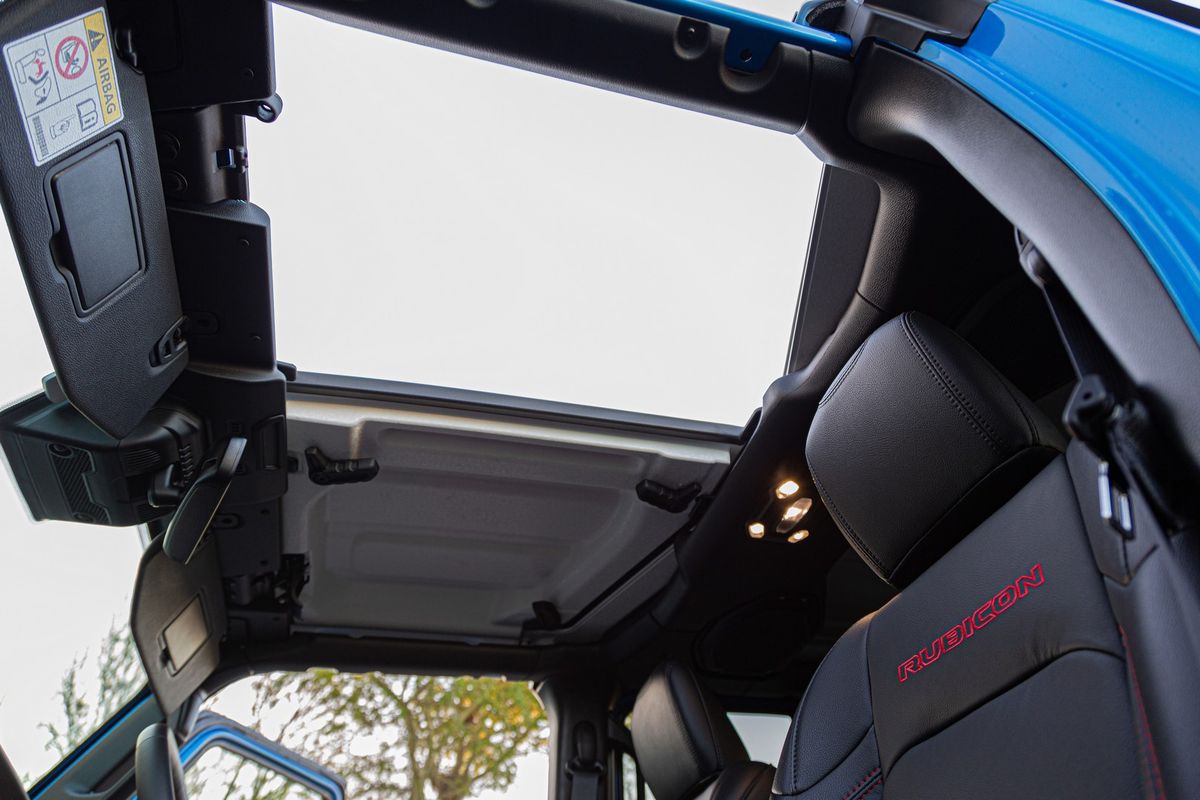
Think of the Gladiator as a stretched-out 4-door Wrangler equipped with a load bin. Like its brethren, it has rugged looks and a functional interior layout, but also interesting quirks/gimmicks (such as the ability to fold the windscreen down, detach the doors and remove the roof). We don’t see the point of flopping the windscreen forward and couldn’t work out how to take the doors off, but open-topped jaunts on balmy summer days could be fun (removing the top is easy).
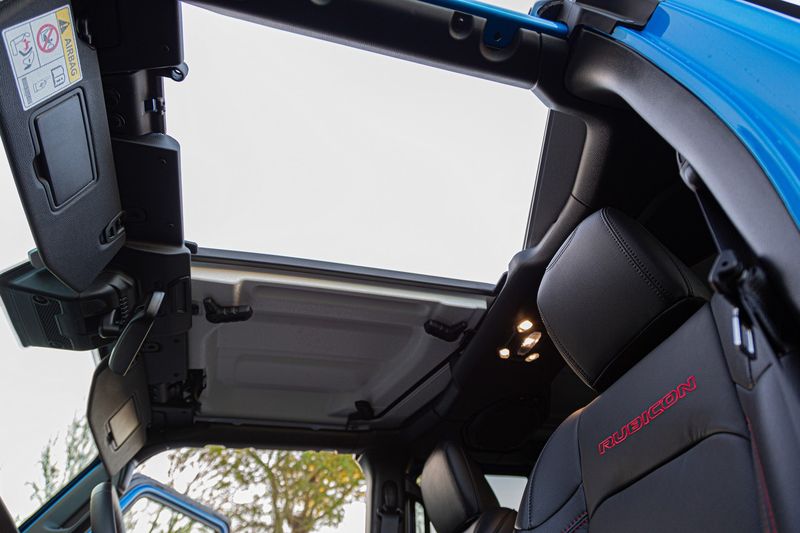
The detachable roof of the Jeep Gladiator is an entertaining alternative to a sunroof.
Stellantis South Africa is currently reshuffling its Jeep portfolio and, at the time of writing (July 2022), it was preparing to launch a raft of new products. The current range (including Wrangler, Gladiator, Renegade and Grand Cherokee) will continue, but expect to see models (such as the Grand Cherokee L) make their way to our shores soon.
At this end of the market, where lifestyle, luxury and off-road capability intersect, the Gladiator 3.6 Rubicon has only 2 rivals, well, at least for now… The outgoing Ford Ranger Raptor offers tremendous off-road fun in a boldly-styled package, while the Toyota Land Cruiser 79 is a legendary off-roader with unimpeachable reliability, even if it arguably belongs in the Smithsonian.
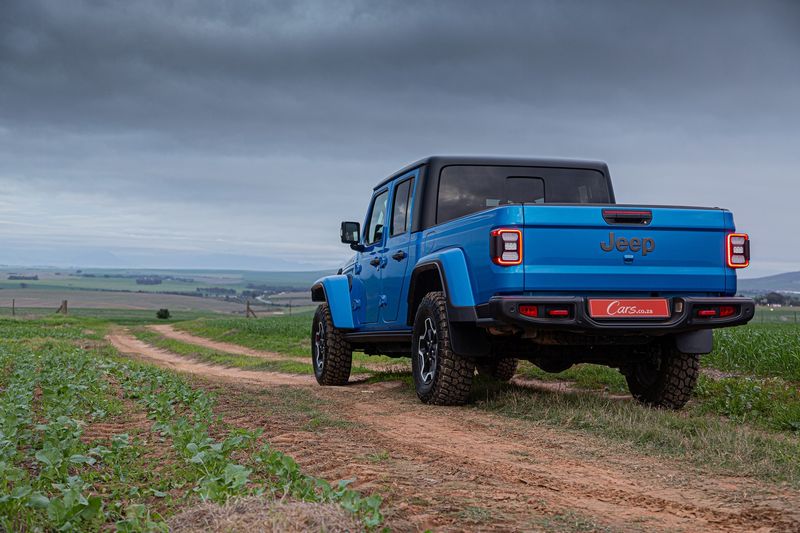
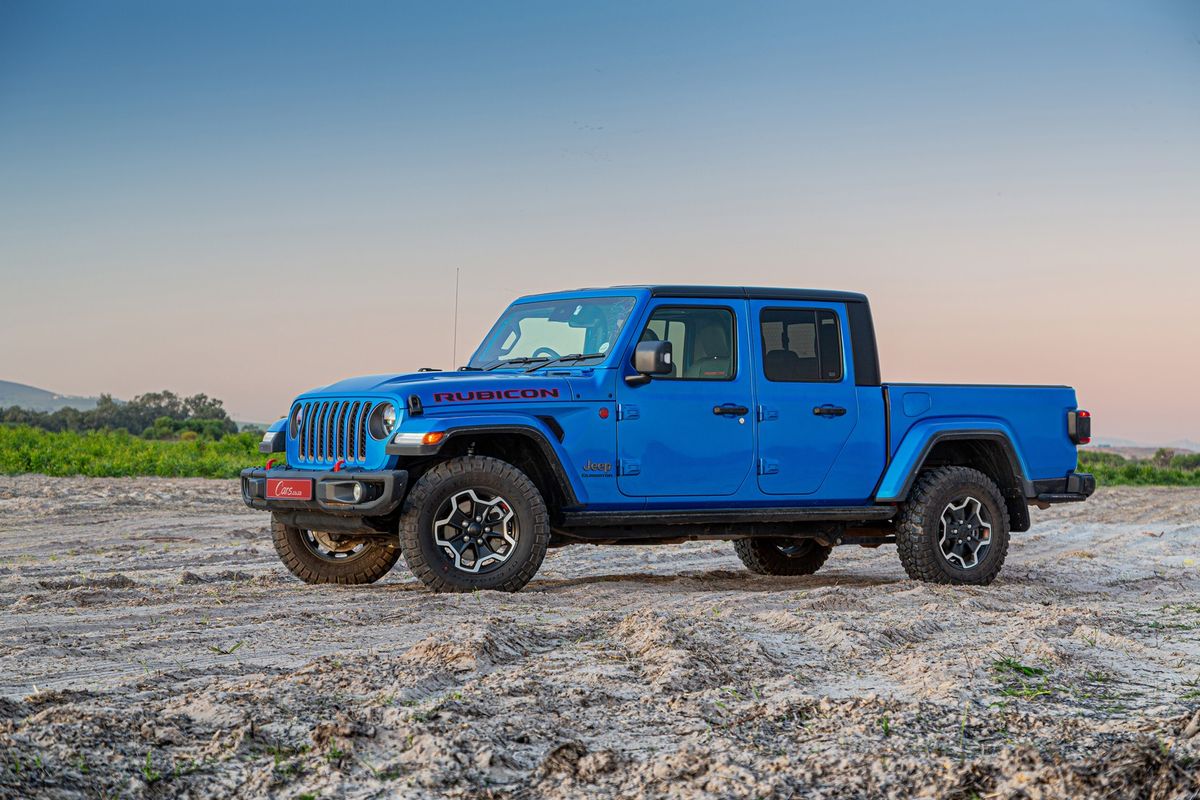
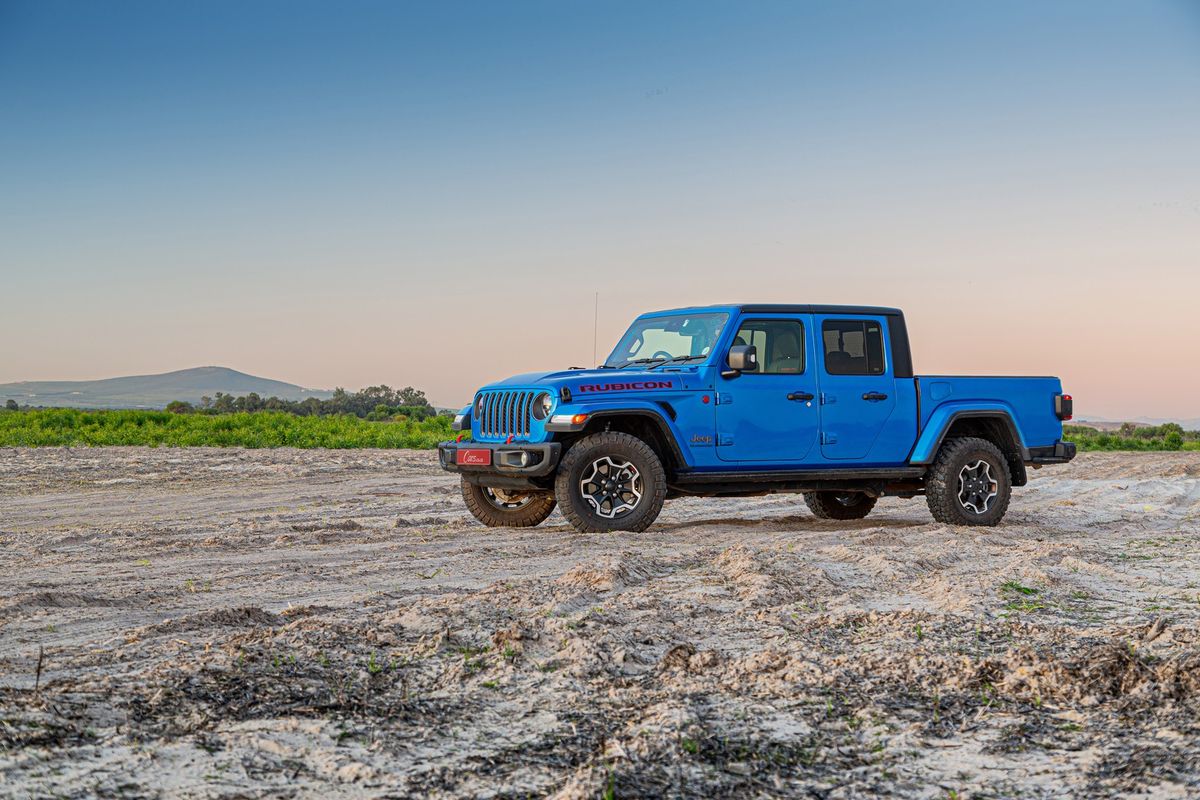
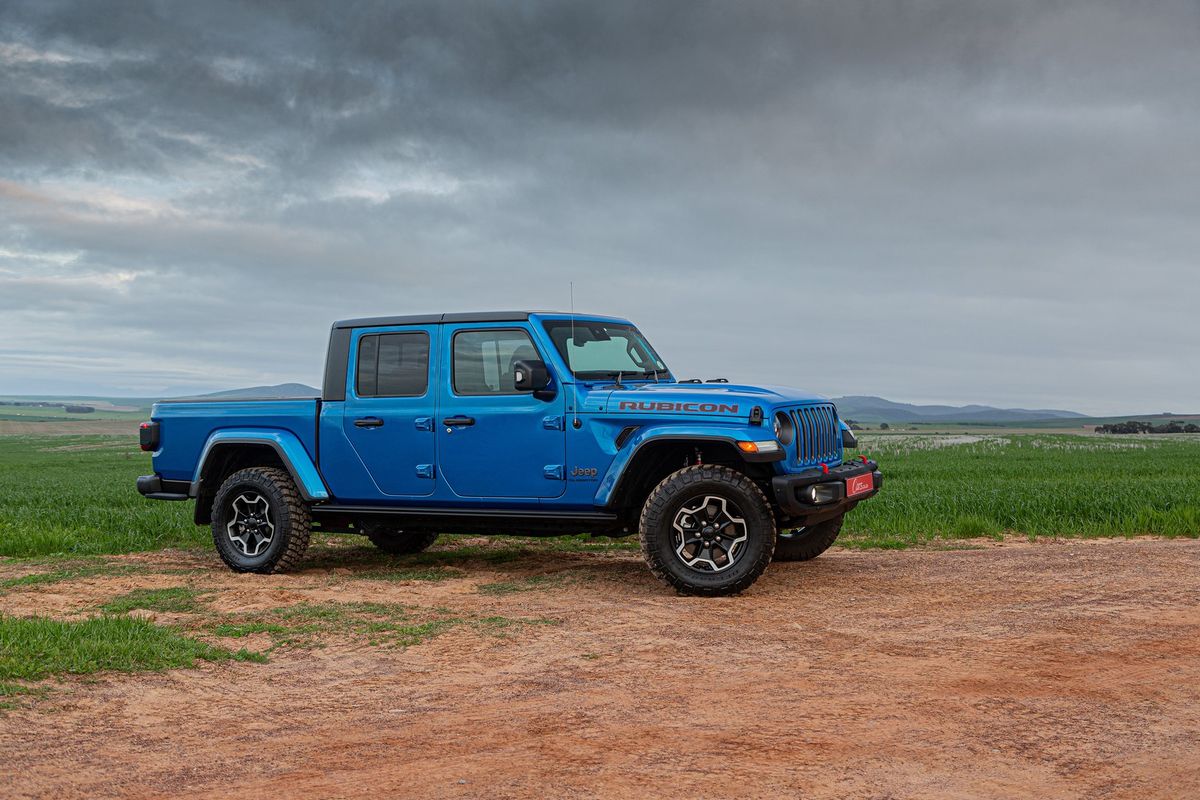
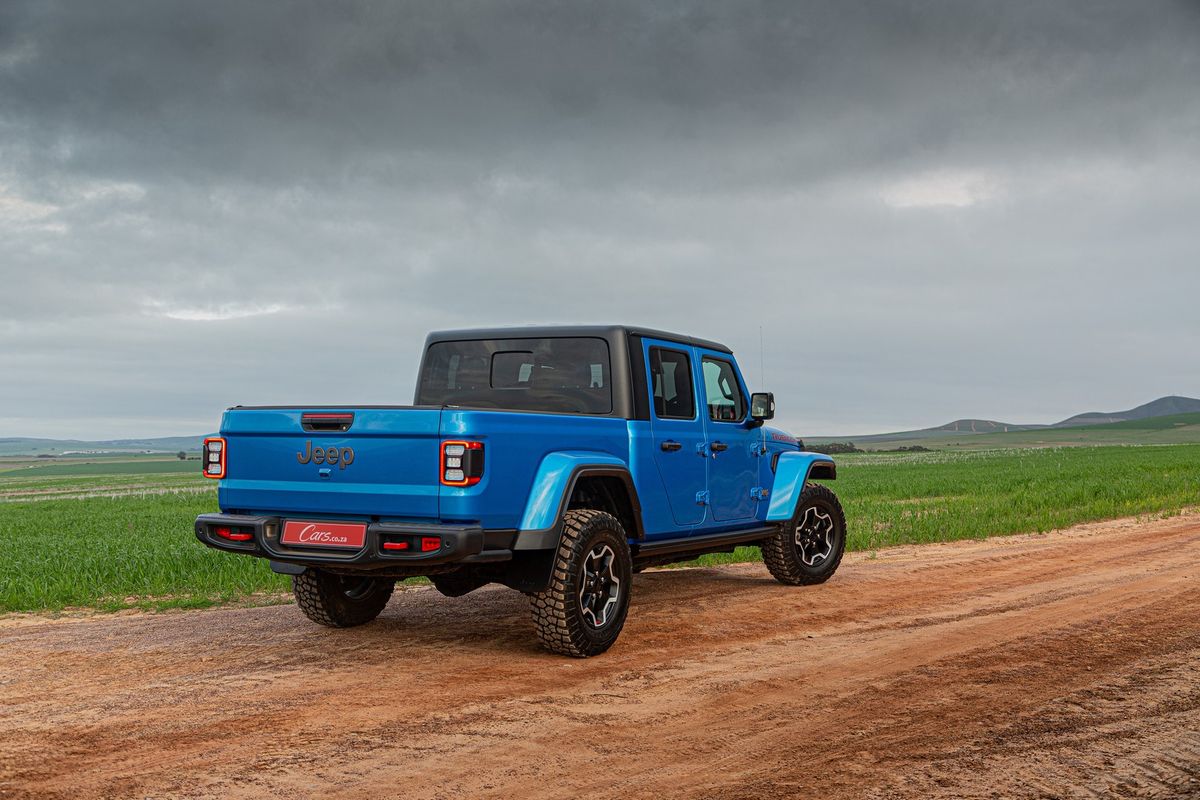
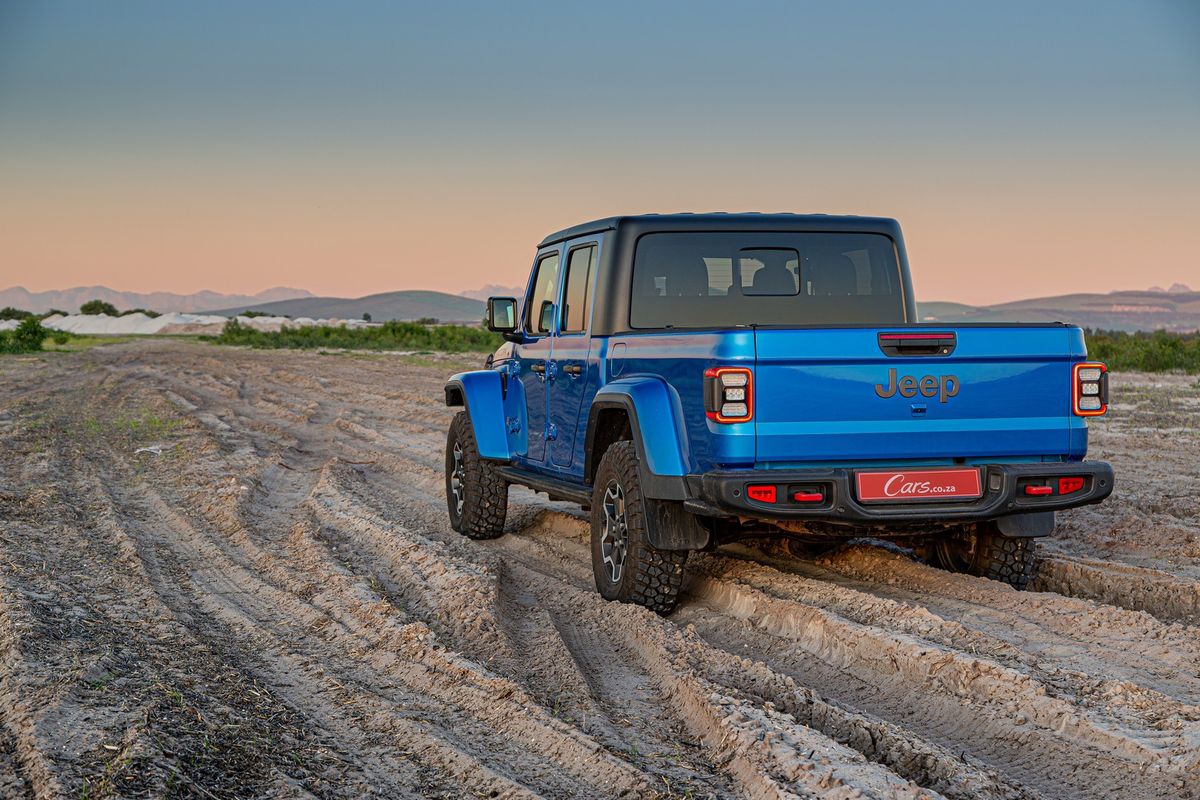
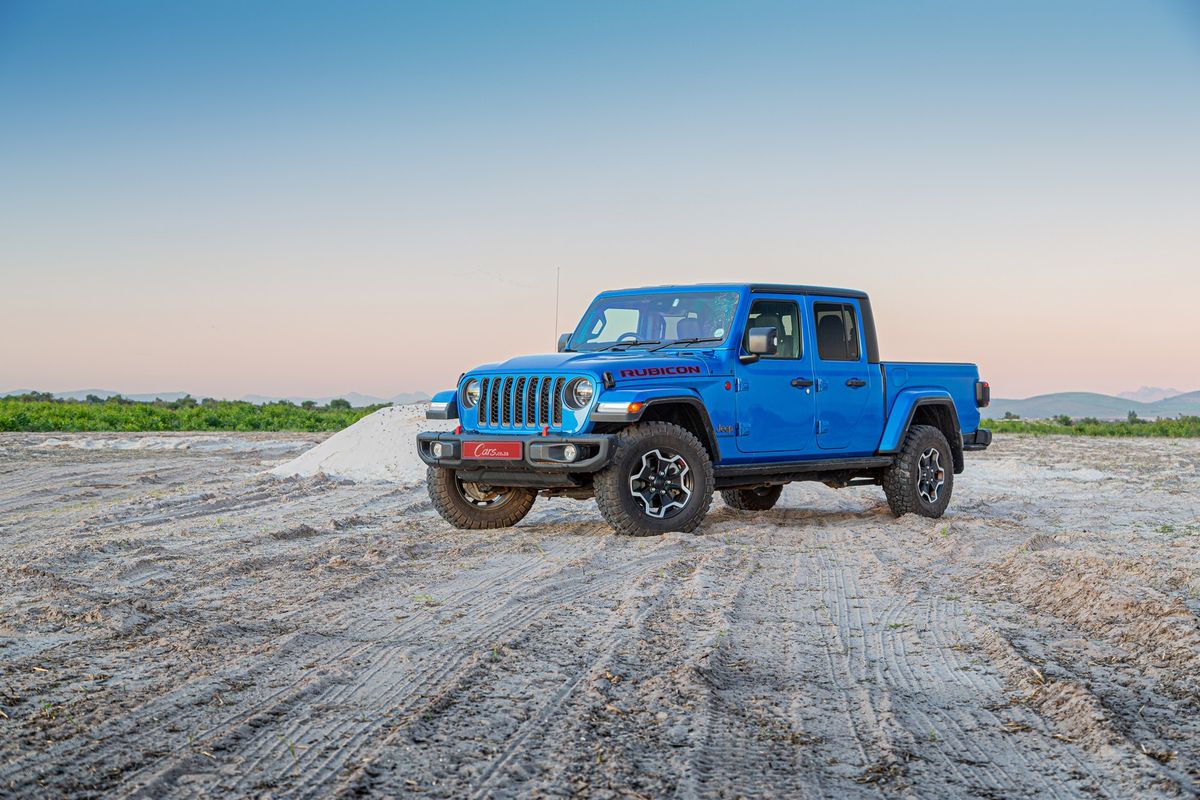
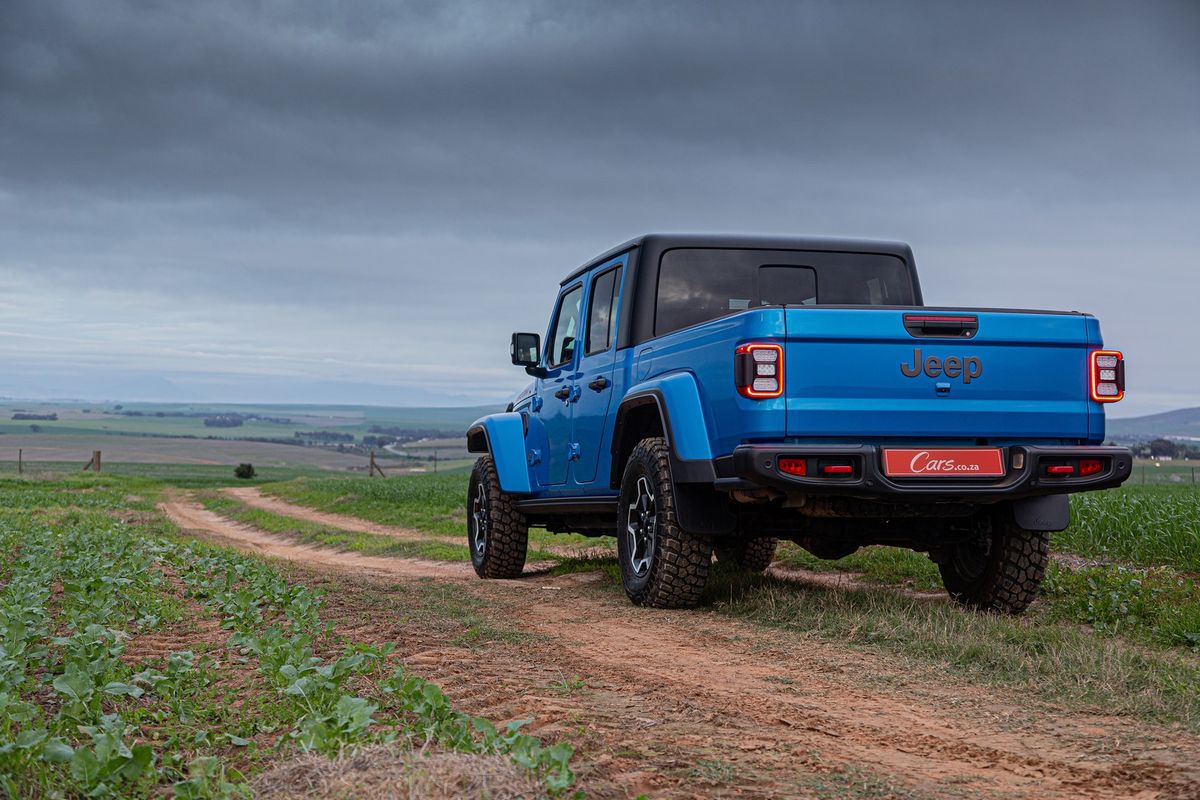
The Jeep Gladiator is happiest when the road surface changes from asphalt to dirt.
Some may say that the Jeep Gladiator is overpriced, but we’ve yet to see how much the new 3.0-litre turbodiesel V6-powered Ford Ranger and Volkswagen Amarok will cost when they arrive on the local market in the next few months… As for the sticker price of the upcoming Raptor version of the Blue Oval’s bakkie, well, it won’t be a steal.
Compare the Jeep Gladiator to the Ford Ranger Raptor and the Toyota Land Cruiser 79 here
How the Gladiator fares in terms of…
Design and Packaging
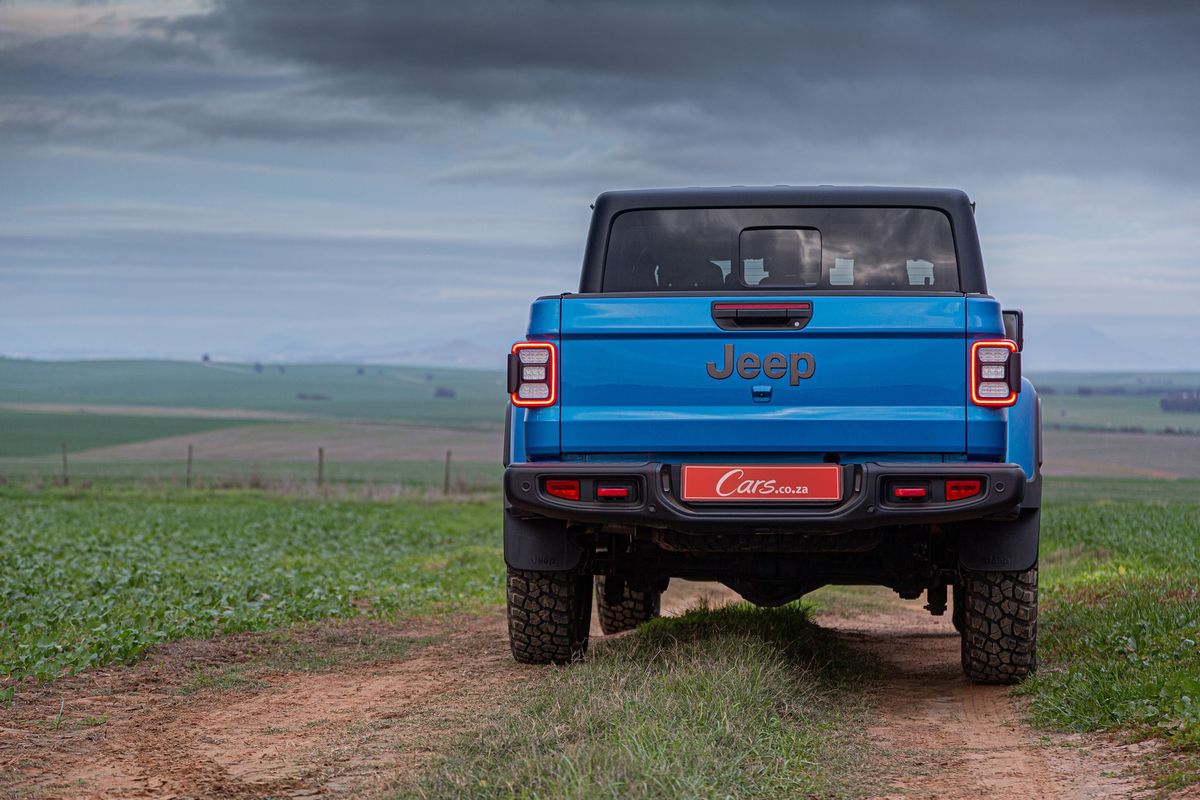
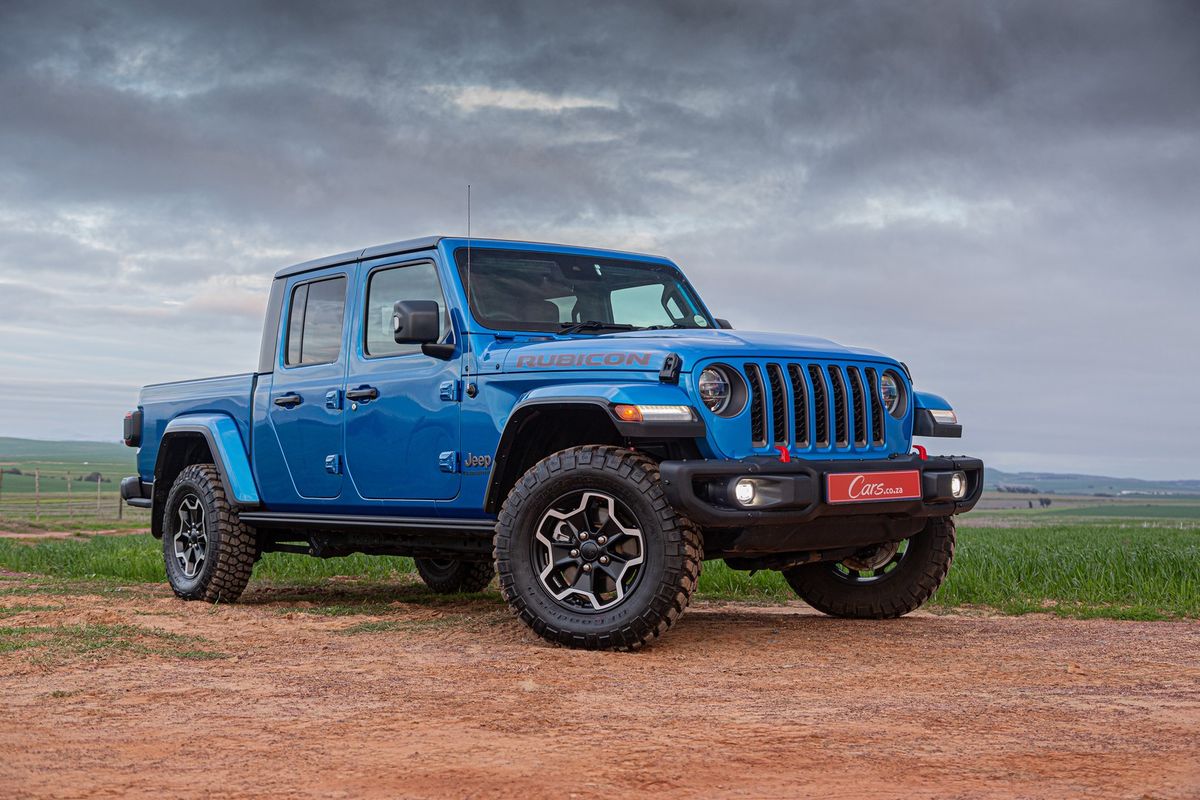
Well, just look at it! Jeep models exude standout kerb appeal (especially the brand’s hardcore off-roaders) and, in an era in which distinctive design seems much less of a priority than aerodynamic efficiency, practicality and safety, it’s refreshing to see something that looks radically different. It’s even more impressive when you consider the design constraints of a double-cab pickup – somehow, Jeep has hewn the Gladiator in a way that it’s guaranteed to turn heads.
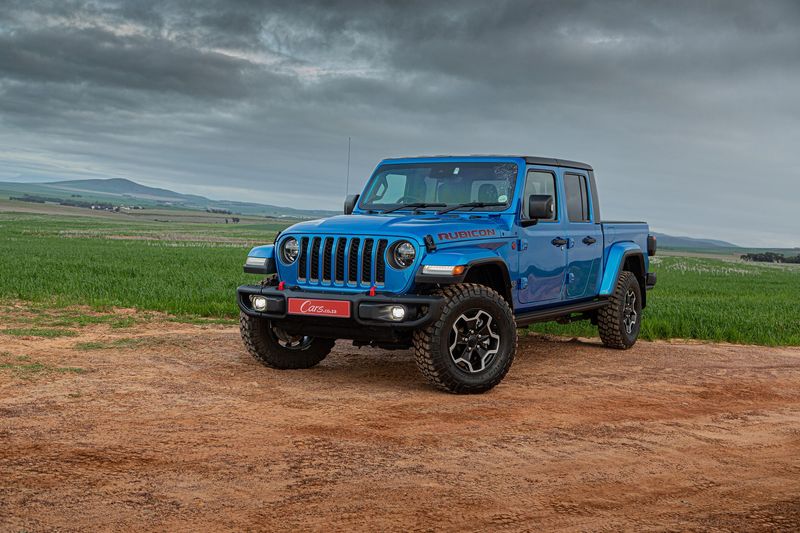
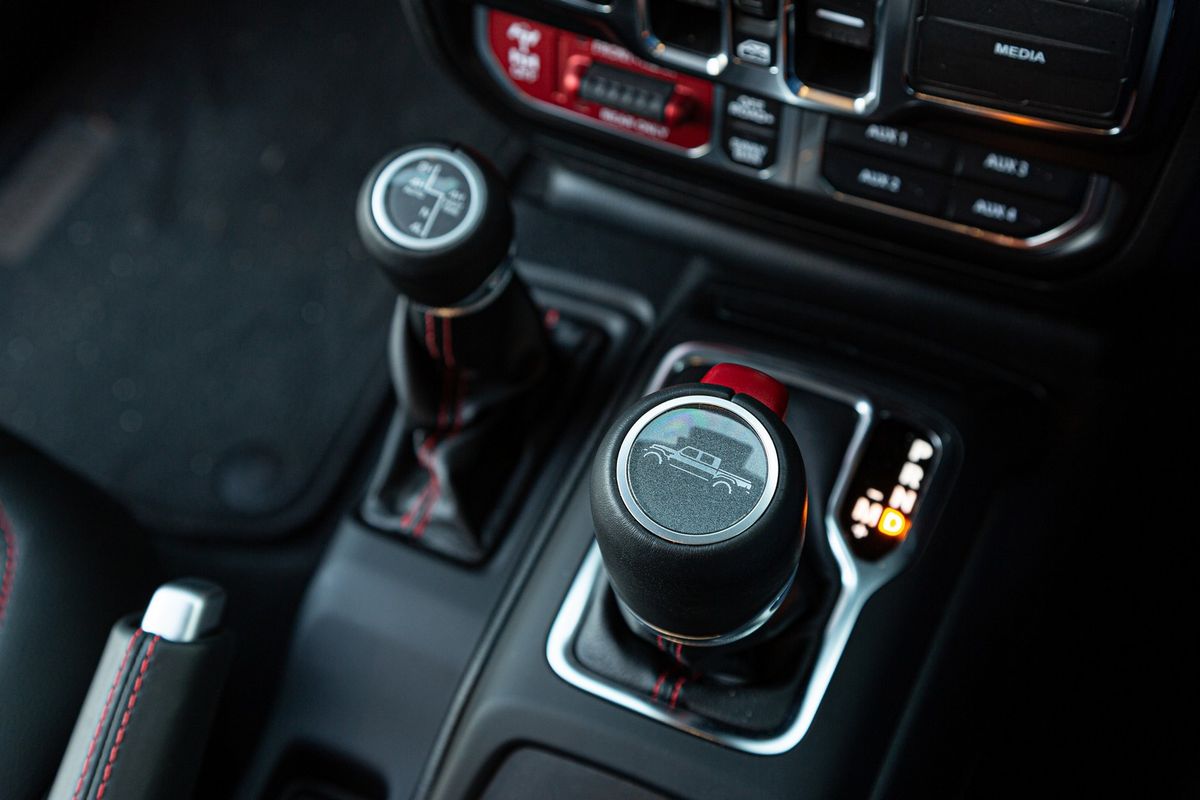
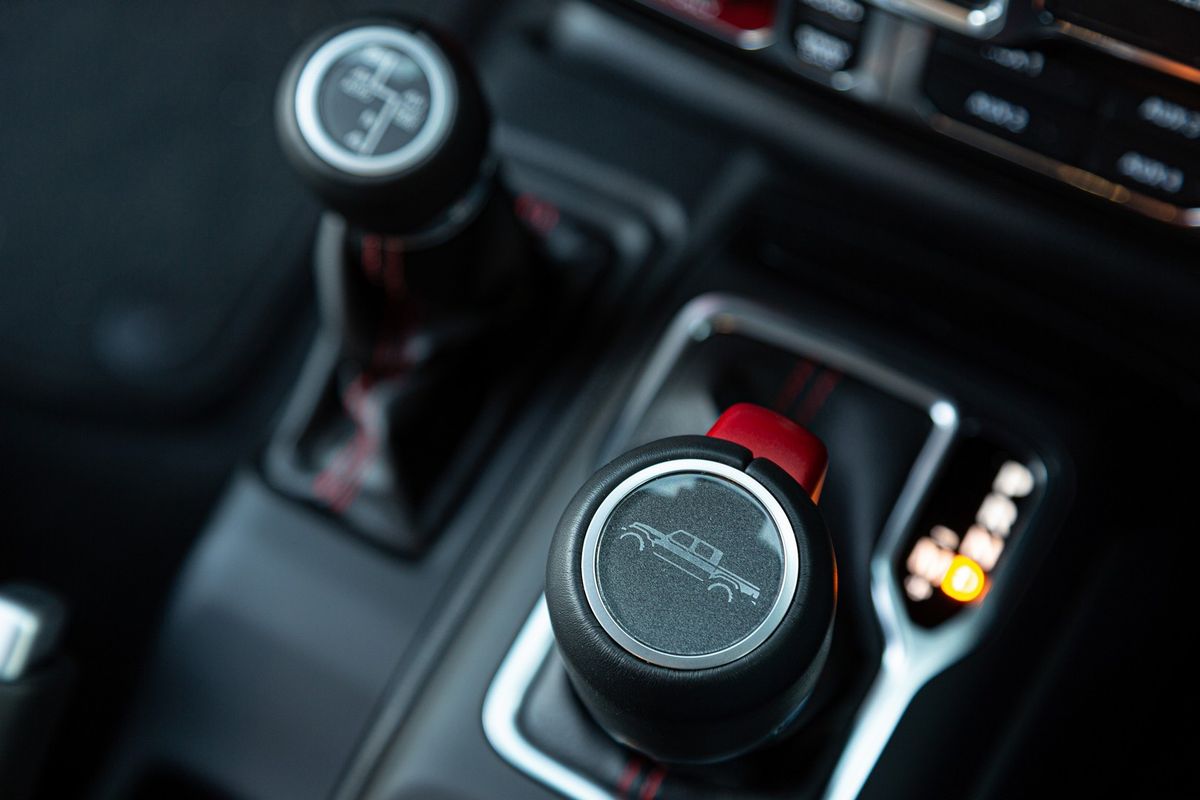
There’s just one engine and gearbox combination in the local-spec Gladiator.
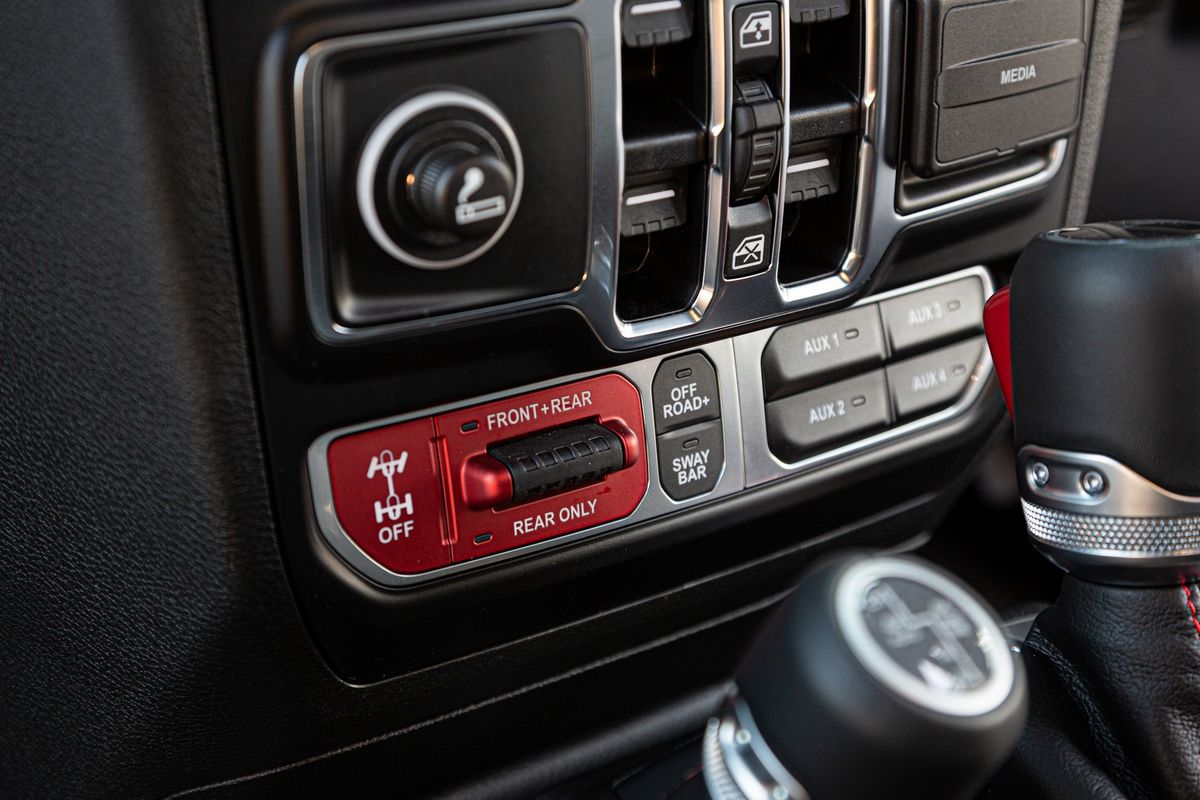
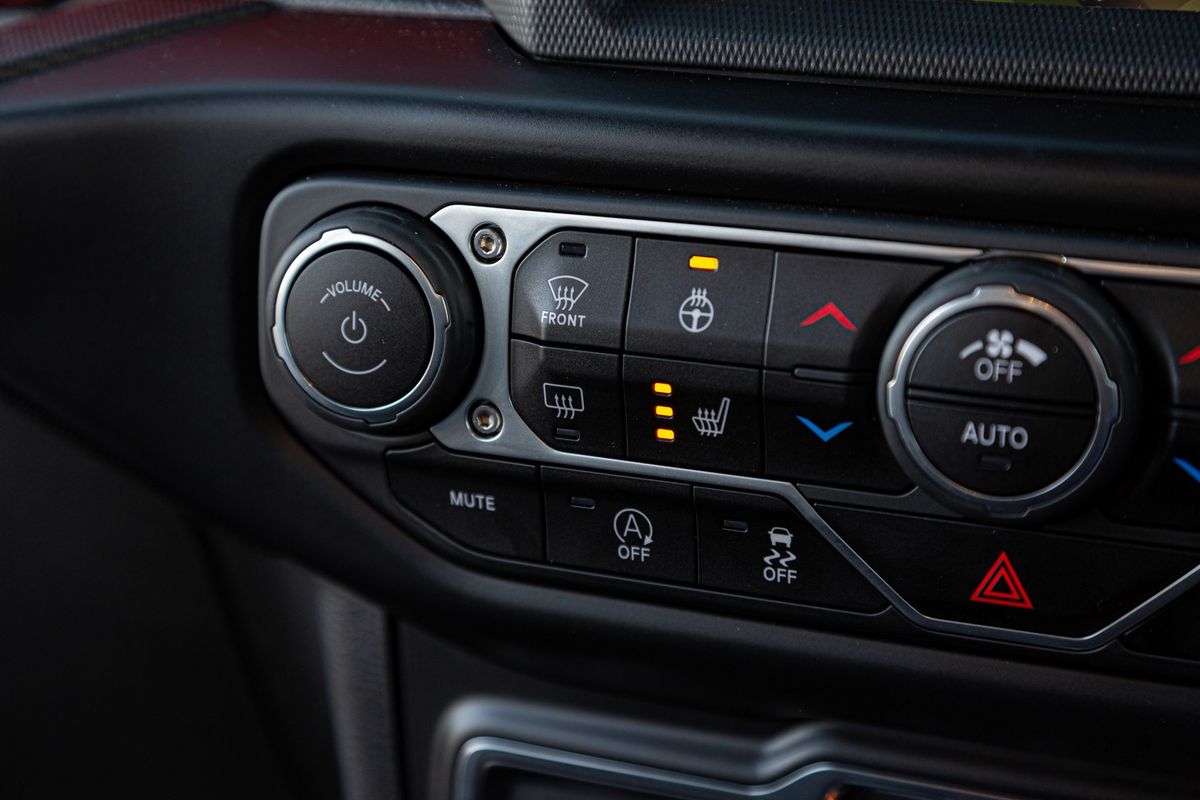
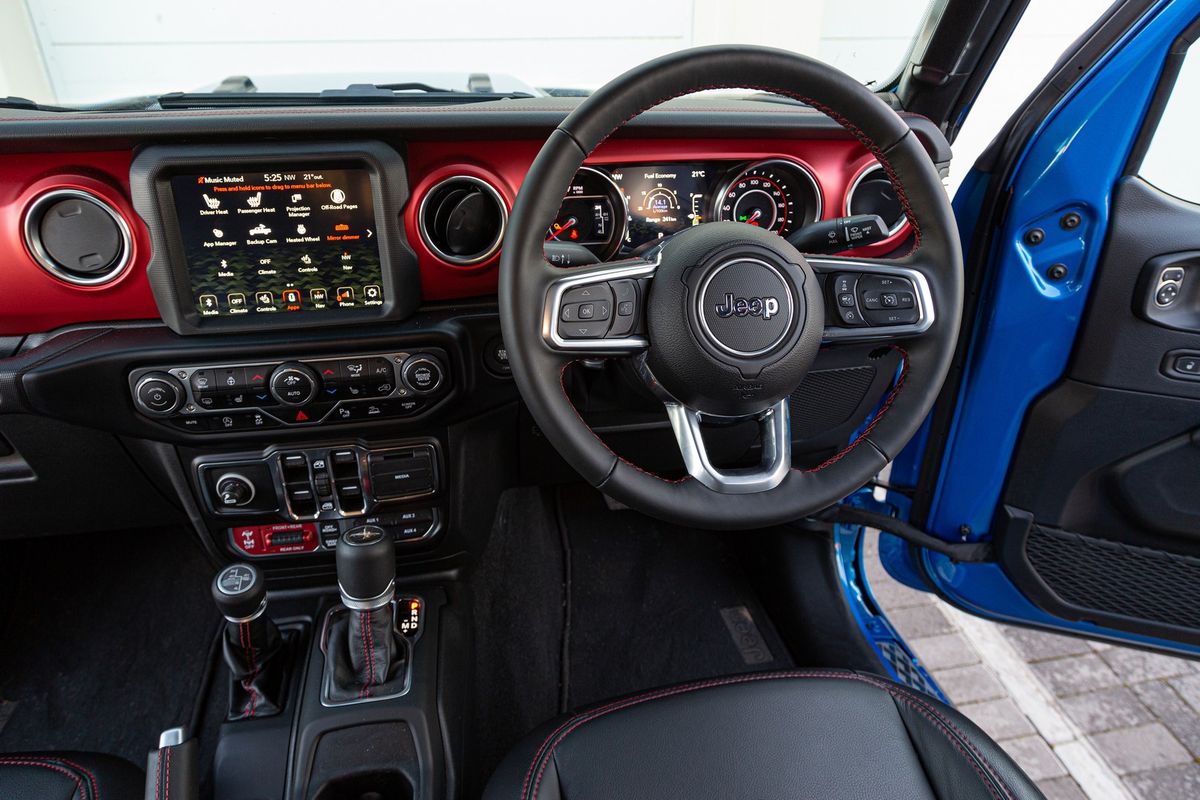
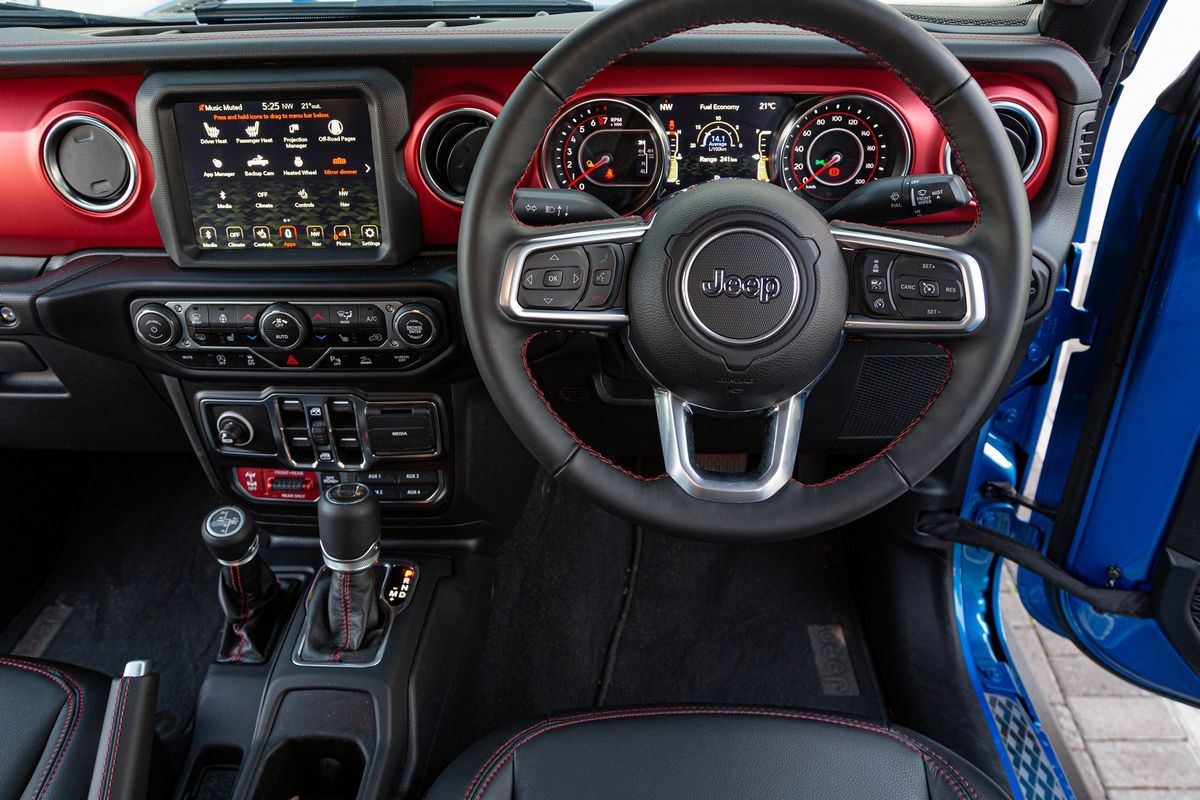
Inside, the driver’s seat position is excellent – you sit high enough to look down on full-size family SUVs. Annoyingly, there’s no place to rest your left foot (perhaps a hangover of the left- to right-hand drive conversion?). The dashboard layout is a little imposing as there’s an array of buttons and switches. It’s good to see Jeep resorting to a “button-centric” approach, as opposed to brands (like Mercedes-Benz) that endeavour to incorporate every function into the main touchscreen.
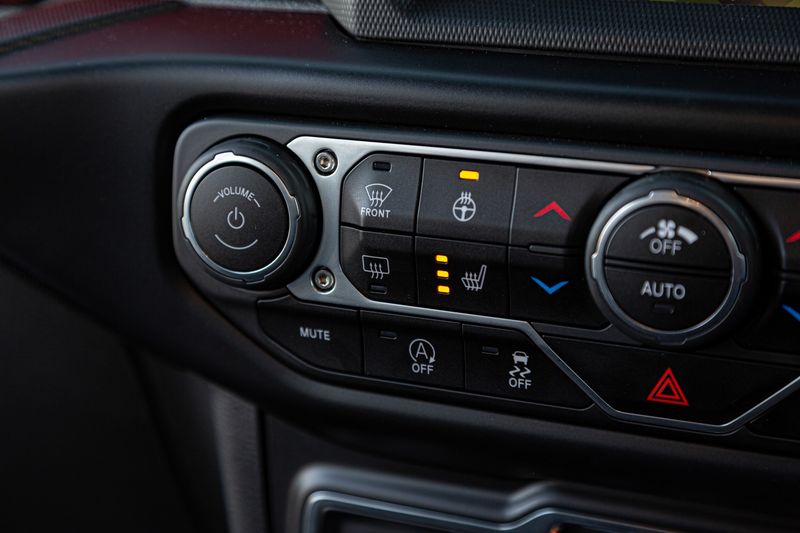
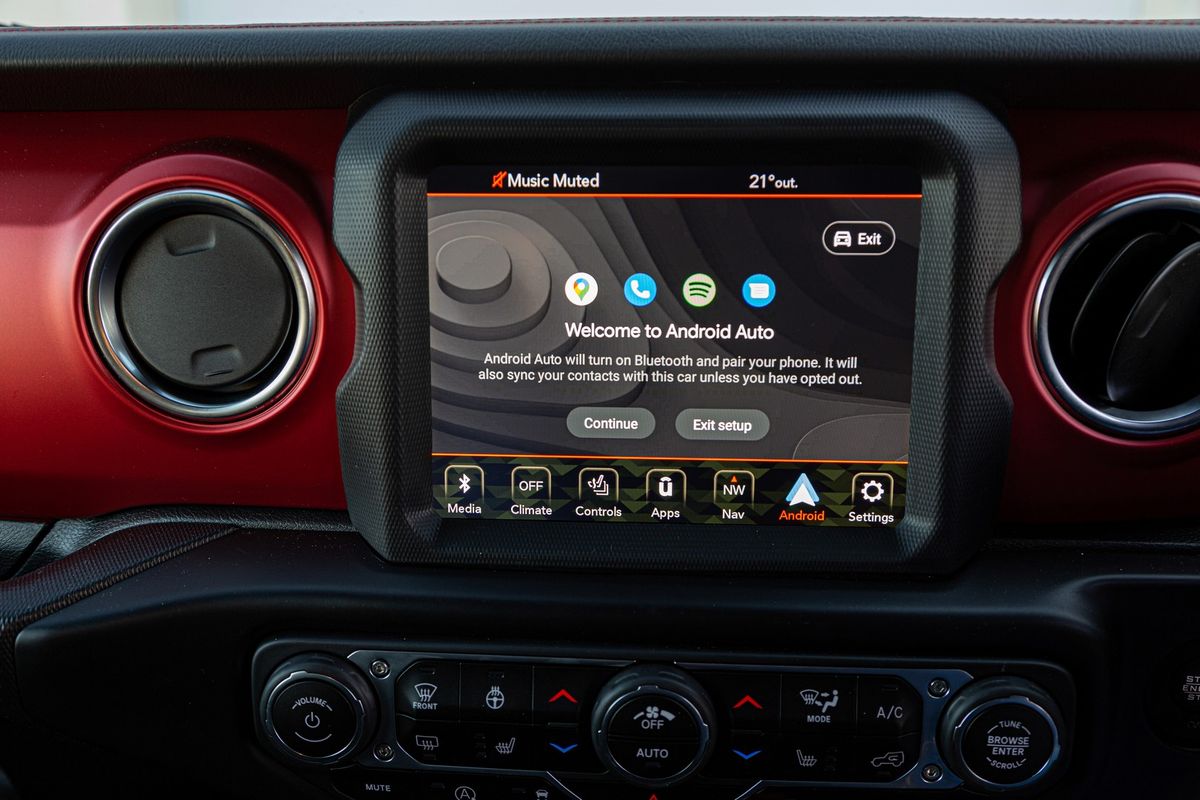
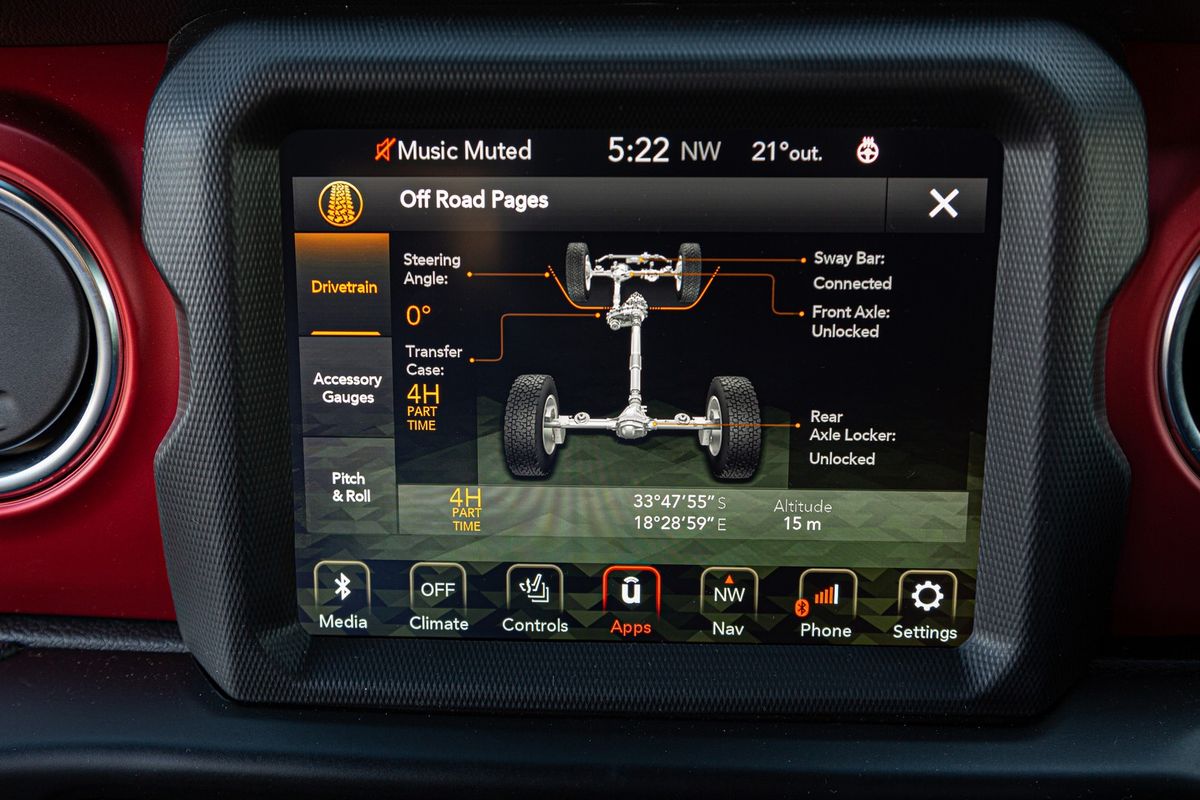
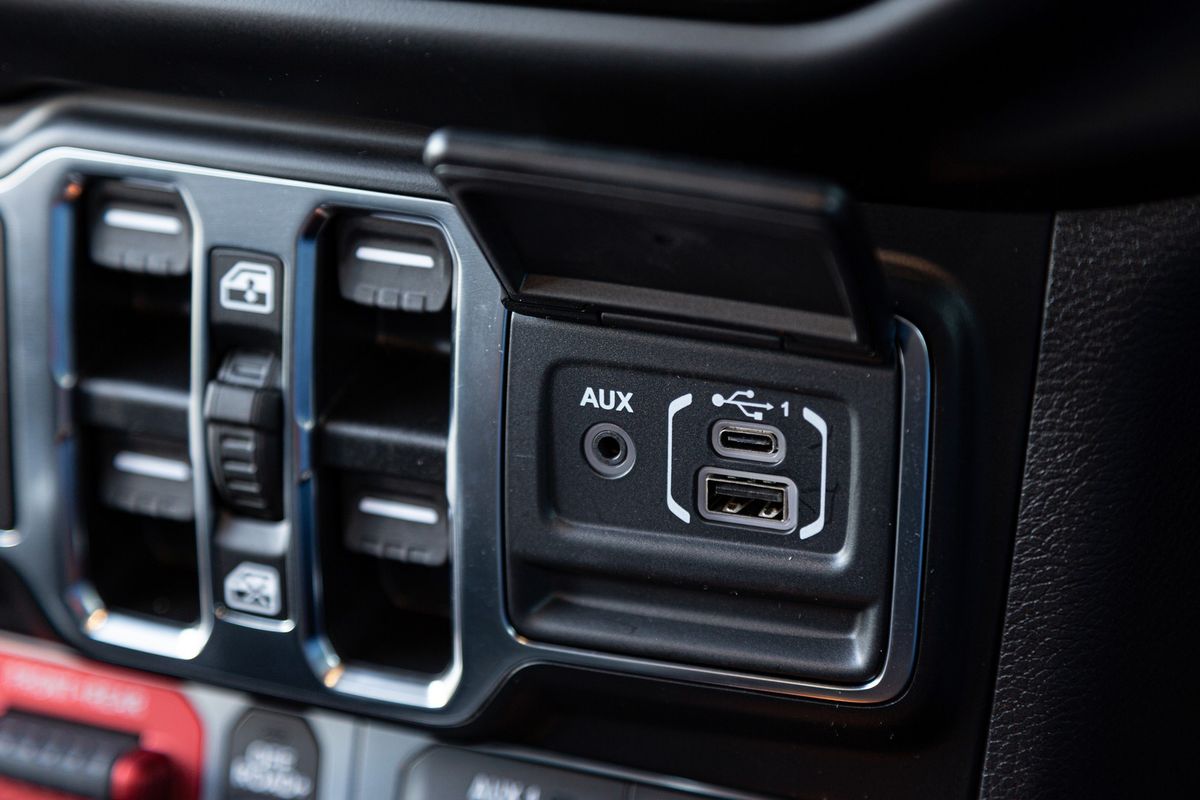
In top-of-the-line Rubicon trim, the Gladiator comes with almost every conceivable “mod con” you’d ever need and the cabin, although comfortable, has a tough-and-rugged ambience. Heated leather seats and a -multifunction steering wheel, an excellent reverse-view camera, USB-A and USB-C ports, Apple CarPlay/Android Auto, plus the ability to plug in accessories (such as winches and additional lights) are some of the highlights. The UConnect infotainment system is good too.
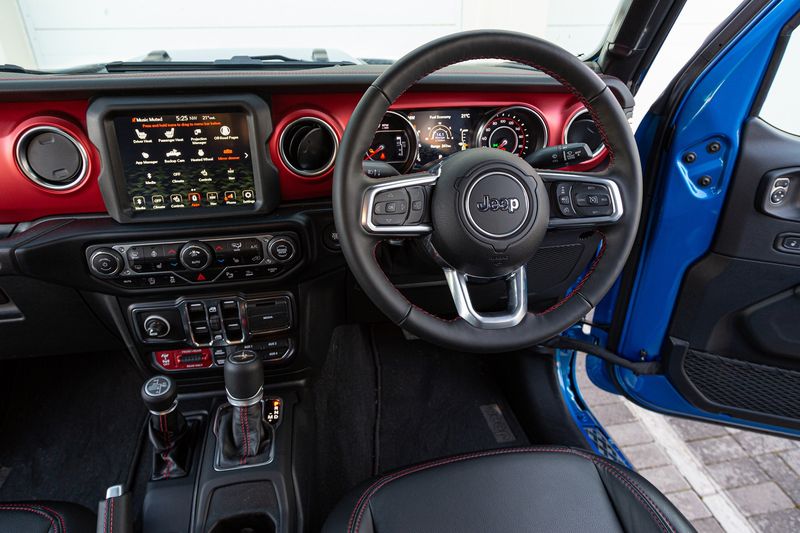
The Gladiator cabin is typically Jeep – non-conformist and cool!
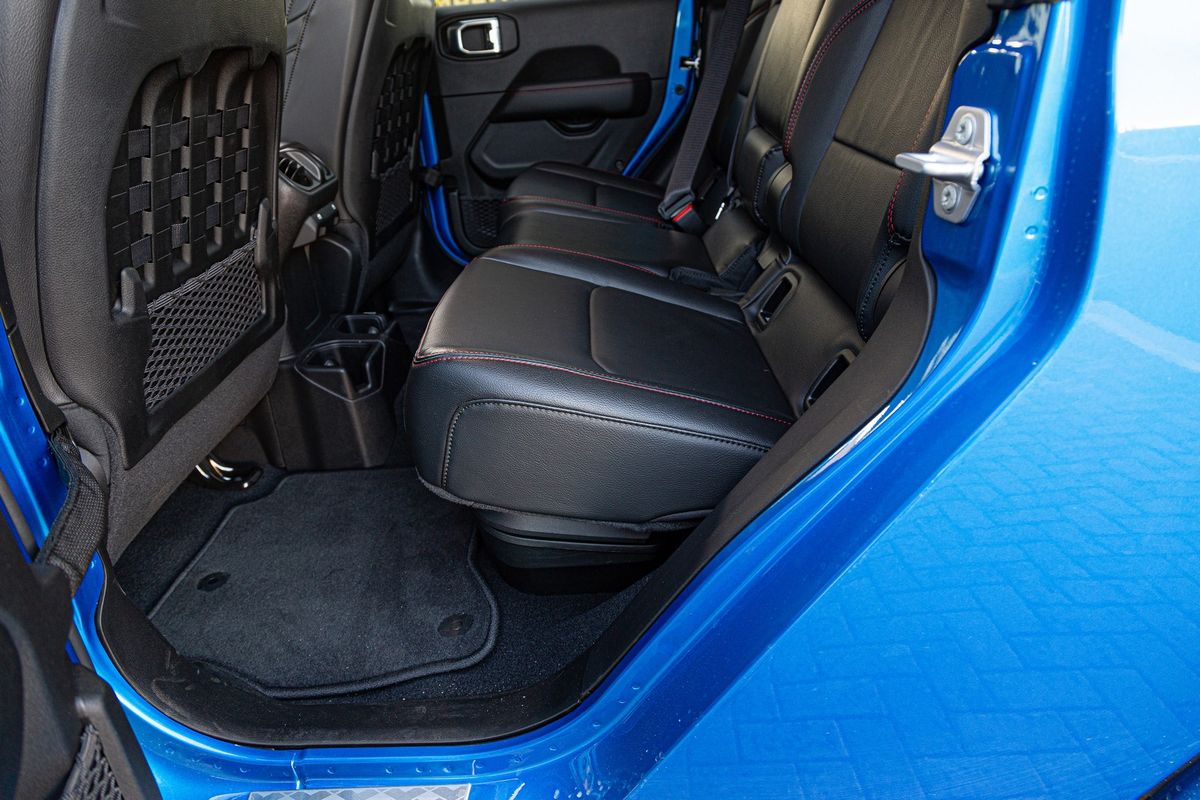
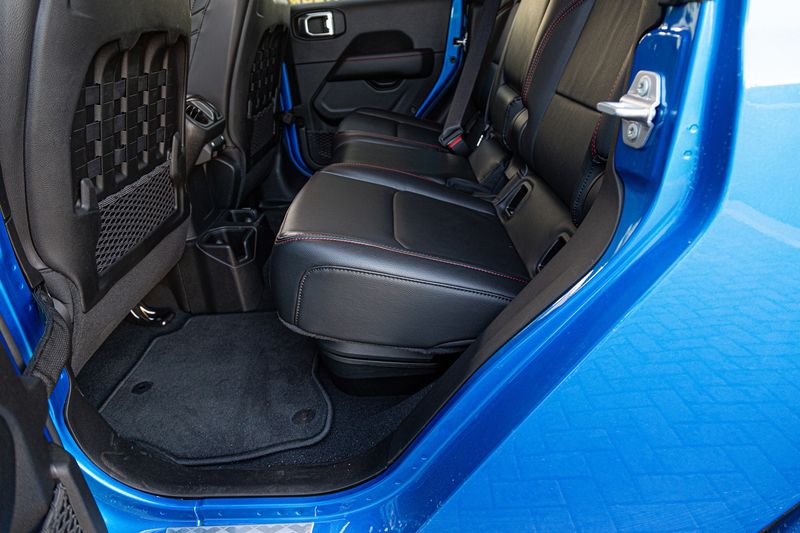
The practicality offered by the Gladiator’s cabin is commendable too; there are plenty of storage solutions and cupholders for the front passengers, while the squab of the rear bench can be lifted up to expose lockable storage bins.
Gripes? We have a few. Access for rear passengers is a bit tricky, because the aft doors are small and parts of the bodywork jut out into their apertures. Then there’s the load-bay capacity, or at least, the lack thereof. At 693 kg, its capacity is on the smaller side (by segment standards), which is odd, considering the extended dimensions of the Gladiator, which can tow up to 2.7-tonne braked trailers. Also, the windows don’t have one-touch functionality, including the driver’s pane.
In our opinion, there’s enough safety tech, high-end comfort features and gadgets to justify the Gladiator’s price tag. It’s good to see semi-autonomous emergency braking, blind-spot sensors, adaptive cruise control and rear-cross traffic alert included in the package.
Performance and Efficiency
At the heart of the Gladiator lies a 3.6-litre V6 petrol motor, which sends power to the wheels via an 8-speed automatic transmission (sadly, a turbodiesel or thundering supercharged petrol V8 aren’t offered in the range). As far as performance is concerned, Jeep claims a 0-100 kph time of 8.5 seconds courtesy of its peak outputs of 209 kW and 347 Nm; the sprint time feels just about accurate considering the Gladiator’s 2.2-tonne kerb weight.
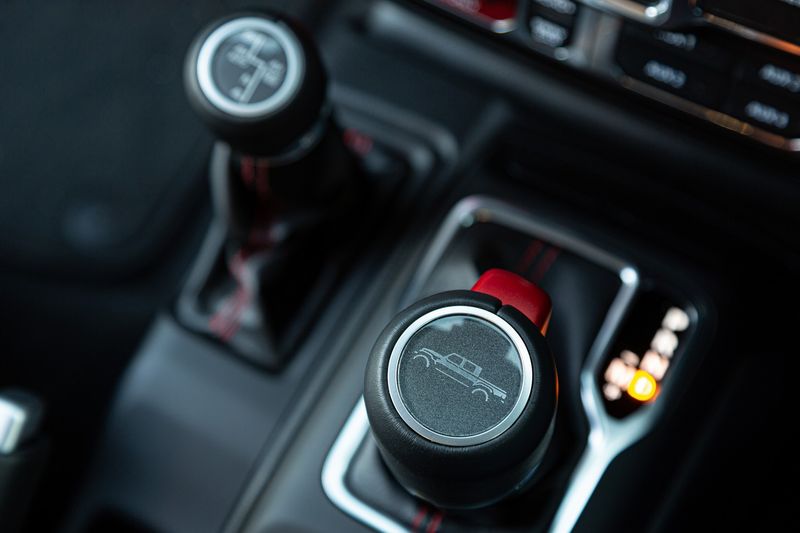
Its in-gear performance is entertaining; the 8-speed slushbox changes up and down relatively smoothly and without hesitation. The engine enjoys being revved out and a delicious V6 howl fills the cabin as the motor spins eagerly to its redline.
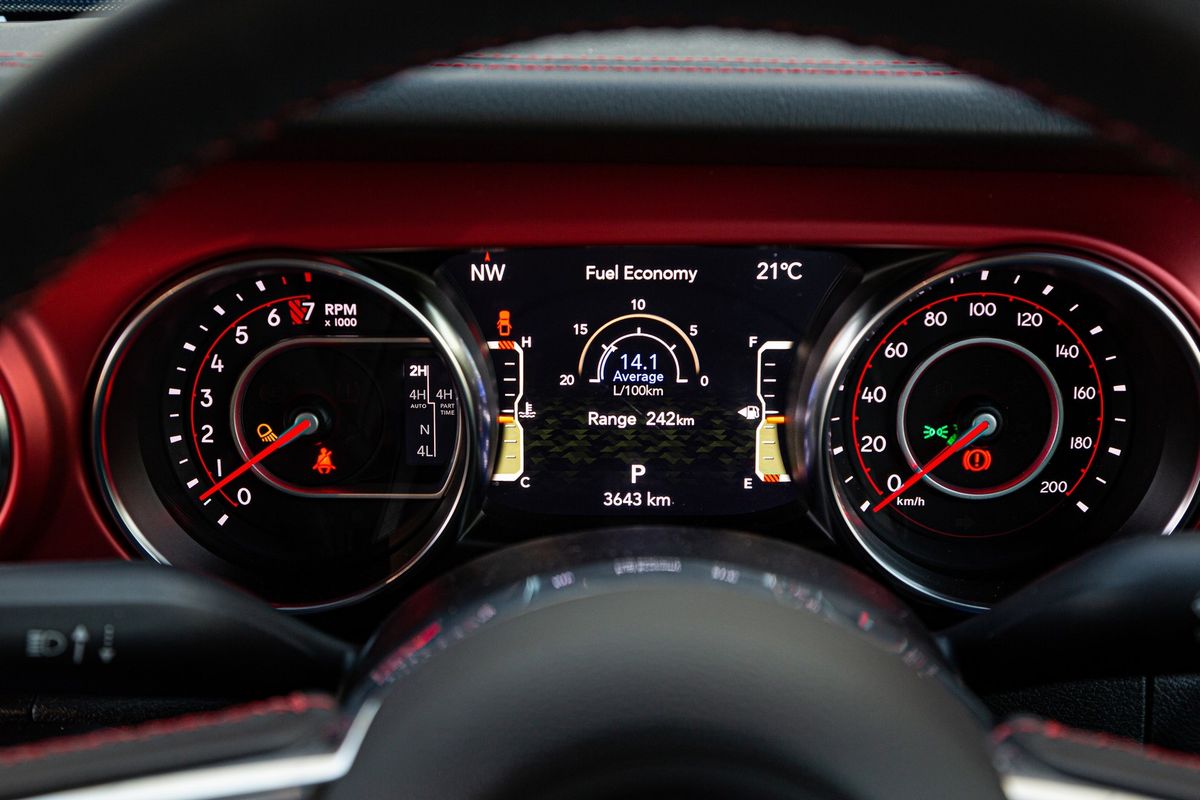
The downside? Unsurprisingly, efficiency is not the Gladiator’s strong point (its hefty weight and blocky shape count against it). Indeed, Jeep’s double cab is about as aerodynamic as a Tupperware container and that V6 engine needs to work hard to push the 4×4 through the air. On our test route, we recorded 14.7 L/100 km, but after some open-road driving, that came down to 14.1 L/100 km. The tank has a capacity of 83 litres, which gives the model a theoretical range of 660 km.
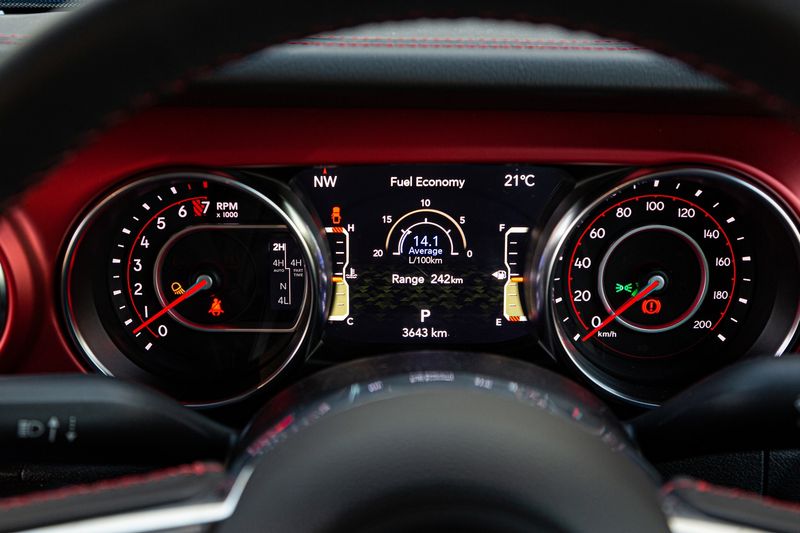
The Gladiator’s large-capacity V6 works hard and its fuel economy suffers for it.
Ride and Handling
Remember the Ever Given, that mega container ship that came a cropper in the Suez Canal and blocked the vital sea-freight route for 6 days in 2021? The sheer size of the vessel made it an impossible task to perform tight manoeuvres, and the Jeep has similar traits (by road-car standards) if you hope to navigate the tight confines of a city. Both the length and the width of the vehicle make it imposing and if you’re a masochist, try parallel parking the Gladiator in a busy street…
The rear parking sensors and (fortunately excellent) reverse-view camera make it less stressful to execute low-speed manoeuvres, but the Gladiator would certainly benefit from the fitment of a 360-camera and front-facing sensors. These would come in handy as you try to take up only one parking bay at your local mall. The Gladiator is also too long to squeeze into a modern suburban home’s garage, we found.
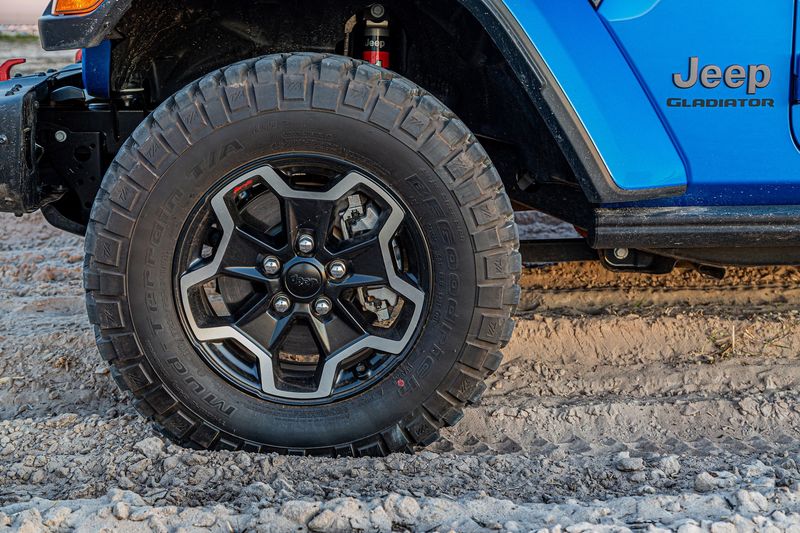
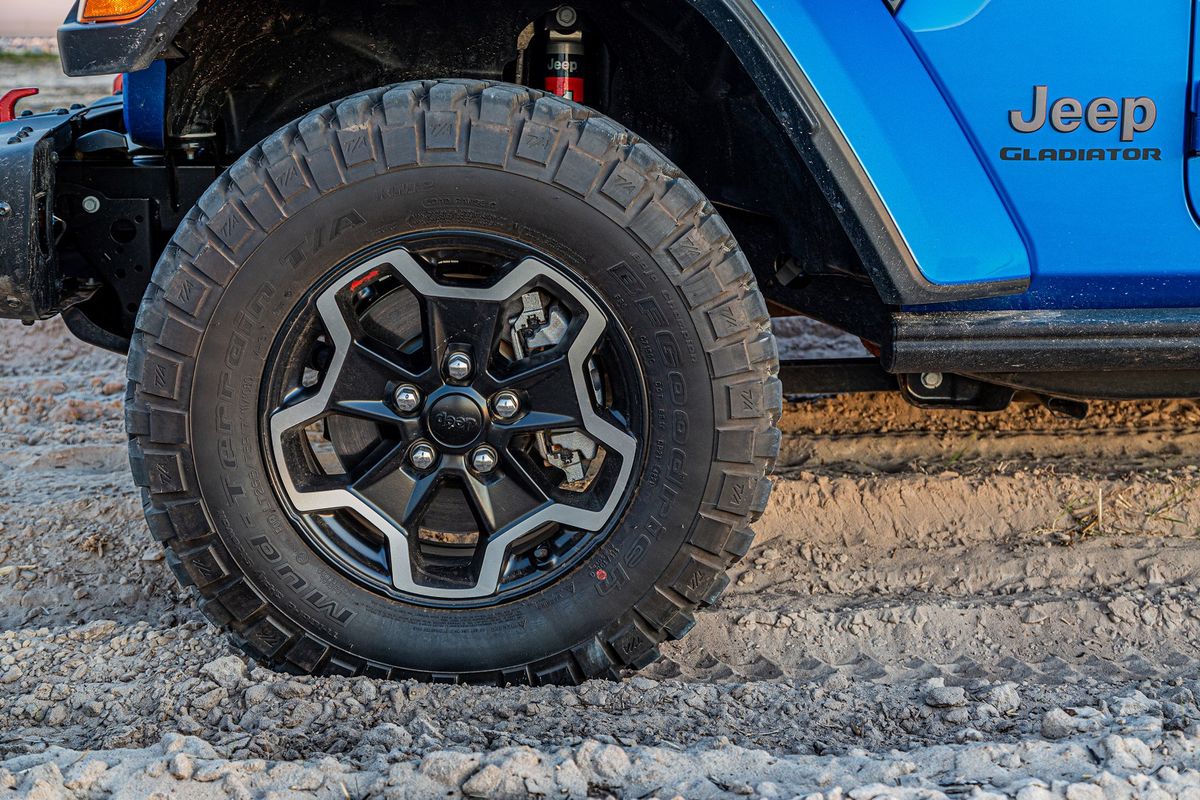
Once you leave the city and hit the open road, the first thing you’ll notice is the excess road noise generated by the offroad-biased tyres. The BF Goodrich Mud Terrain tackies more than prove their worth when you’re traversing an off-road course (as we’ll explain later), but at triple-digit speeds, the tyres’ grumble needs to be drowned out by the excellent audio system. In terms of general ride quality, the Jeep does tend to fidget, which our testers attribute to the knobbly tyres.
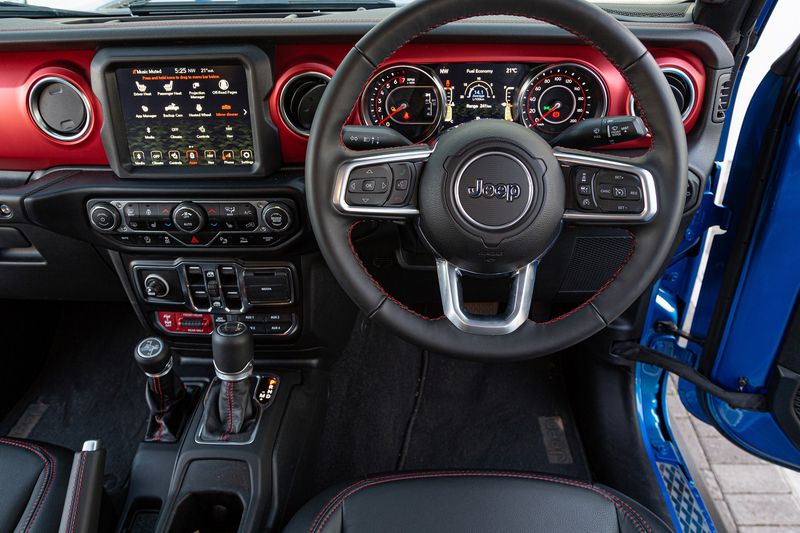
On-road, the steering setup lacks directness and feel, and there’s a lot of play in the ‘wheel’s movement. You’ll find yourself making small steering inputs constantly, which may prove tiresome on longer trips. The upside is that the tiller is light to operate, which is a relief (considering Jeep’s huge turning circle). The Gladiator is neither as refined nor as precise as its rivals in the ride and handling stakes, but it more than makes up for it when the tar ends and the dirt begins.
Off-road capability
We’ve already had first-hand experience of what the Jeep Gladiator is like to drive on the most challenging terrain. The Hennops Off-road Trail, which we traversed during the newcomer’s media launch event, was extremely challenging and would have taxed even the toughest of 4x4s, but the Gladiator emerged unscathed from that white-knuckled excursion…
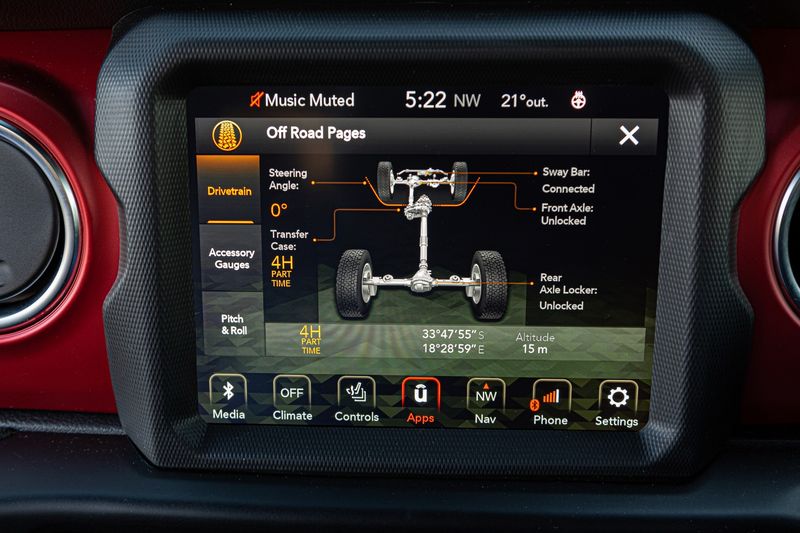
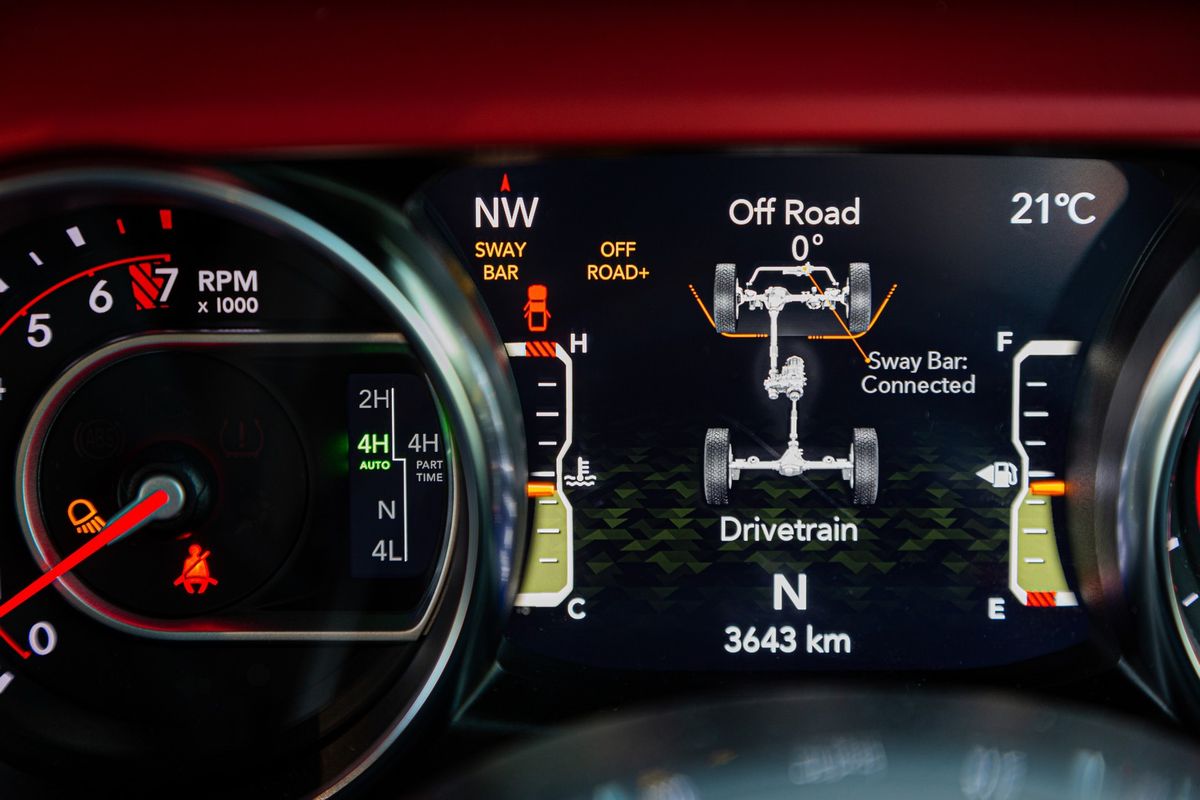
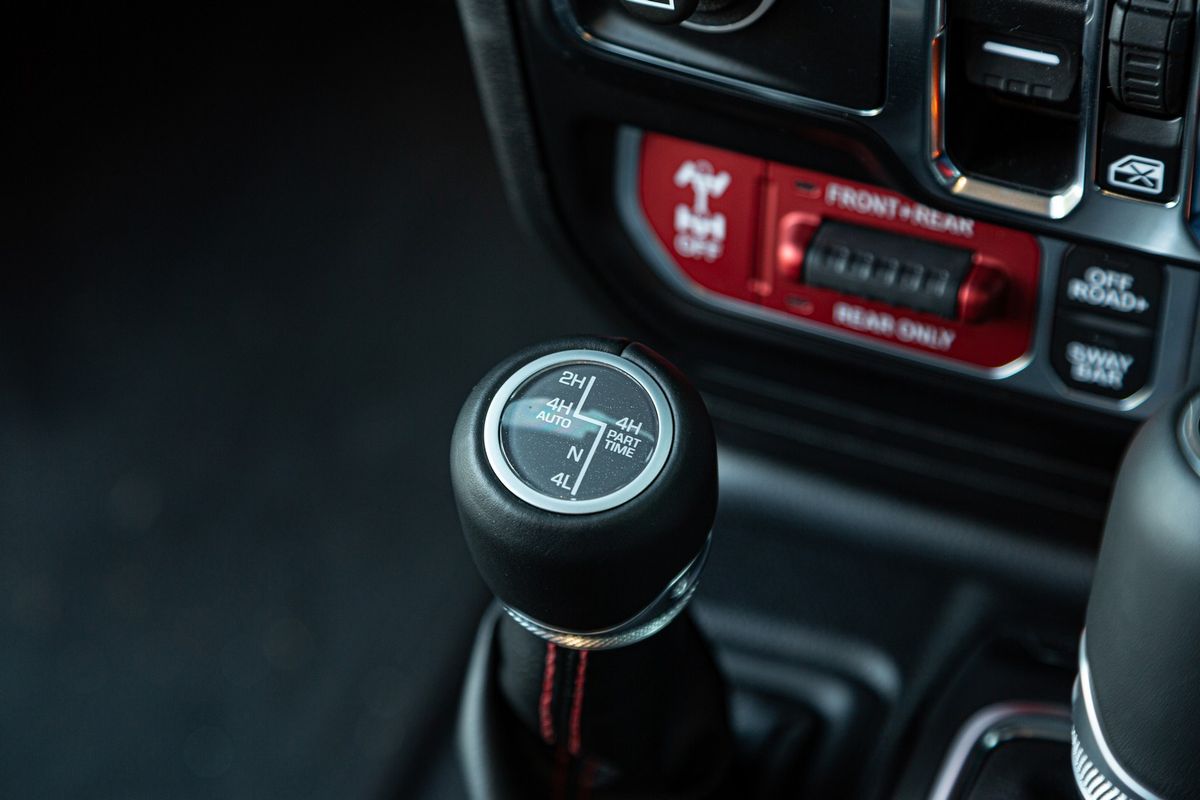
The Gladiator’s arsenal of off-road assistance systems is exhaustive – the 4×4 setup features 2WD, part-time 4WD, permanent 4WD and low-range functionality, there are multiple locking differentials, an off-road traction mode, plus the sway bar can be disconnected. The numbers are impressive too, with approach/breakover/departure angles of 43.6, 20.3 and 26 degrees respectively. A ground clearance of 249 mm and a water-fording depth of 800 mm are claimed.
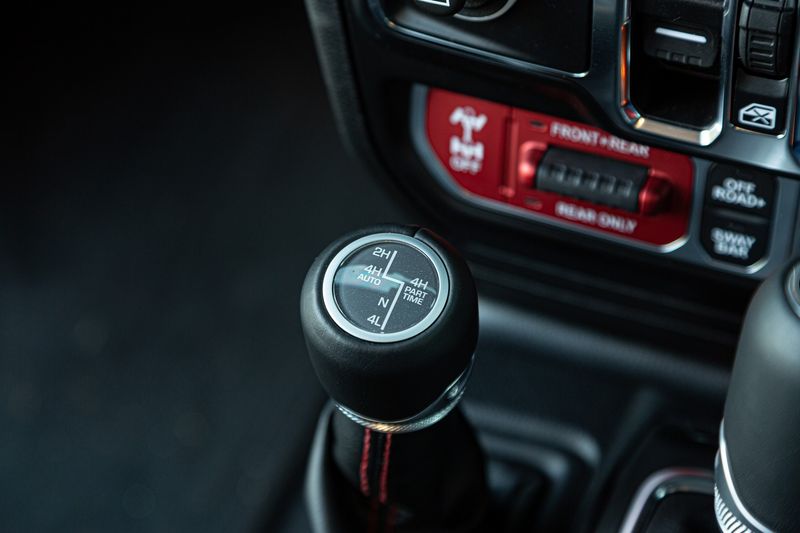
So, for the purpose of this review, we opted not to engage any of those systems (other than part-time 4WD) to see how far the Jeep would get in our local “sandpit” before the heavy artillery of low-range and lockable diffs needed to be called into action.
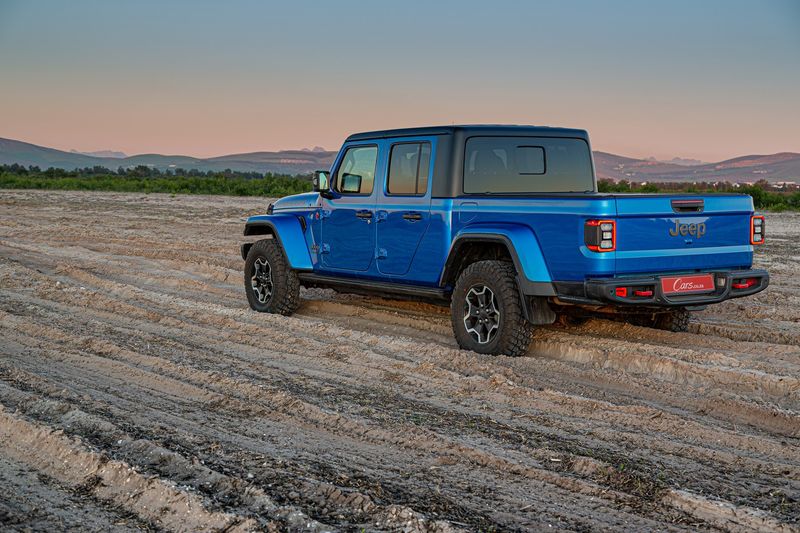
As it happens we got quite far, with the Gladiator easily dealing with the piles of sand, mud and deep ruts we made it drive over (or through). The test unit’s BF Goodrich off-road tyres and the Fox suspension put in an admirable performance; suffice to say, off-road enthusiasts are unlikely to be disappointed.
Price and After-sales support
The Jeep Gladiator retails for R1 259 900 and is sold with a 3-year/100 000 km maintenance plan, as well as a 5-year/100 000 km warranty.
Some Jeep dealerships regularly offer great deals. See our New Car Specials!
Looking to sell your car? You can sell your car to SA’s biggest dealer network
Verdict
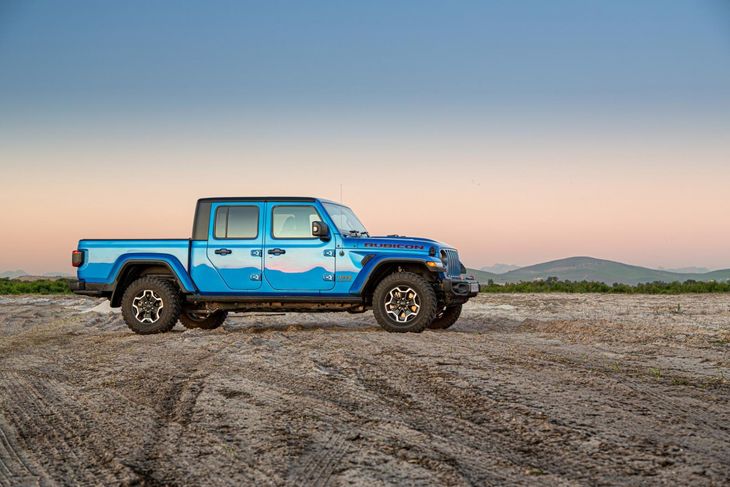
We welcome new arrivals in the top-end of the bakkie market. Despite its eccentricities and gimmicks (such as the removable doors – so dramatic!), the fun-loving image, easy charm and crushing off-road capability of the Jeep Gladiator will win it many fans. During its tenure in our test fleet, it drew much attention and positive feedback. Most onlookers were amazed by the Jeep’s sheer size and outrageous presence. Inside, the cabin is unmistakably Jeep – utilitarian, yet cool.
So, should you buy one? Objectively, Jeep’s new double-cab offering is far from perfect. However, few people buy a vehicle based on its merit alone, especially when the asking price is beyond the 7-figure mark. There’s an emotional element to making a purchasing decision and you can’t help but fall in love with the Gladiator – it reminds us of a clumsy Great Dane puppy that trips over its paws as it chases after the neighbour’s cat. You can’t help but laugh at, and love, this Jeep.
In a market that’s brimming with prudently packaged mainstream offerings, the Gladiator’s a breath of fresh air and oh-so captivating. Yes, it’s a big toy, but it doesn’t pretend to be a sensible family car that happens to have a load box.
Some Jeep dealerships regularly offer great deals. See our New Car Specials!
Looking to sell your car? You can sell your car to SA’s biggest dealer network
David Taylor

Having contributed to multiple motoring titles as well helping run the public relations machine of the Johannesburg International Motor Show, Dave has experience in both sides of the motoring industry. He's based in the Western Cape and is responsible for the performance testing, photography & weekly YouTube news for Cars.co.za.