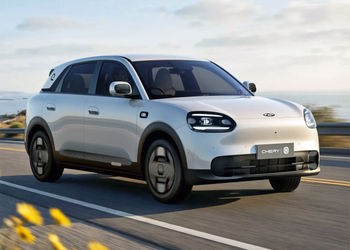
With 335 kW, a claimed range of 1 000 km and Land Rover Defender 110-like proportions, the iCaur V27 makes a compelling case for itself at R929 900. But how does it stack up against the Chery Tiggo 9 CSH and Leapmotor C10, and can a range-extended electric vehicle really save you money?
South Africa has a new flagship (in its range, at least) SUV that looks like it should cost R1.5 million. The iCaur V27 measures 5 045 mm in length, making it 27 mm longer than a Land Rover Defender 110, rides on 21-inch alloy wheels, carries a spare wheel on its tailgate and sprints from 0 to 100 kph in a claimed 5.9 seconds.
Yet it costs a comparatively little R929 900.

The V27 was launched in November 2026 as the flagship model of iCaur, the Chery Group’s new-energy brand that made its local debut in May with the fully electric 03T and V23.
We’ve already covered what the iCaur V27 costs and what you get for your money. The bigger question is whether its powertrain is right for you, because a range-extended electric vehicle can make a great deal of financial sense for some motorists, but considerably less for others.
What is a range-extended electric vehicle?
The V27 is a range-extended electric vehicle (REEV). Its wheels are driven exclusively by electric motors: a 150 kW/205 Nm unit up front and a 185 kW/300 Nm unit at the rear, delivering combined peak outputs of 335 kW and 505 Nm.
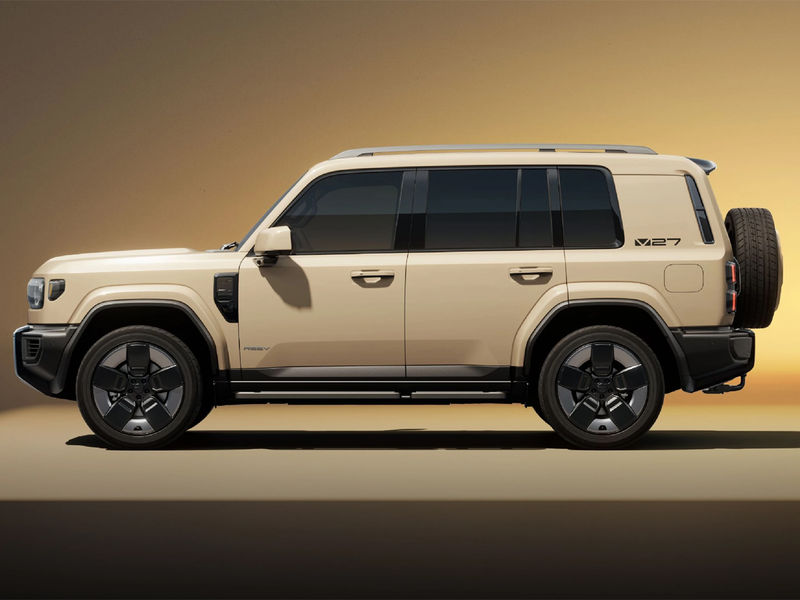
Under the bonnet is a 1.5-litre turbopetrol engine (100 kW/220 Nm), but it never directly drives the wheels. Instead, it acts as a generator, producing electricity when required.
iCaur claims the 34.31 kWh lithium iron phosphate (LFP) battery facilitates an electric-only range of 150 km, while a fully charged battery and a full 60-litre fuel tank provide a total range of 1 000 km.
Both figures are based on the relatively generous NEDC testing cycle.
That’s different from a conventional plug-in hybrid electric vehicle (PHEV) such as the Chery Tiggo 9 CSH, in which the petrol engine can also drive the wheels directly.

Both types of vehicle allow you to commute on electricity and undertake longer journeys using petrol, but a REEV retains the driving characteristics of an electric vehicle (EV), even when its petrol engine is running.
Also read: Choosing your next car: EV, PHEV, REEV … or stick with ICE?
How the iCaur V27 stacks up against its closest rivals
There’s nothing else in South Africa that quite matches the V27’s recipe, but if you’re shopping for a spacious, electrified family SUV priced between R650 000 and R1 million, these are some of the models worth considering.
| iCaur V27 REEV AWD | Leapmotor C10 REEV Style | Chery Tiggo 9 CSH Pinnacle | Chery Tiggo 9 CSH Vanguard AWD | |
|---|---|---|---|---|
| Price | R929 900 | R759 900 (R659 900 on promotion) | R839 900 | R989 900 |
| Powertrain | REEV, AWD | REEV, RWD | PHEV, FWD | PHEV, AWD |
| Power/torque | 335 kW/505 Nm | 158 kW/320 Nm | 280 kW/610 Nm | 455 kW/920 Nm |
| 0-100 kph (claimed) | 5.9 sec | 8.5 sec | Not stated | Not stated |
| Battery capacity | 34.31 kWh | 28.4 kWh | 18.3 kWh | 34.4 kWh |
| Claimed electric range | 150 km | 145 km | 90 km | 160 km |
| Claimed total range | 1 000 km | 970 km | 1 400 km | 1 400 km |
| Fuel consumption (depleted battery) | 7.1 L/100 km | Not confirmed | 5.5 L/100 km | 6.2 L/100 km |
| Seating capacity | 5 | 5 | 7 | 7 |
| Length | 5 045 mm | Approx. 4 730 mm | 4 810 mm | 4 810 mm |
| Vehicle warranty | 8 years/200 000 km | 5 years/100 000 km | 7 years/200 000 km | 7 years/200 000 km |
| Service plan | 6 years/90 000 km | 5 years/100 000 km | 7 years/90 000 km | 7 years/90 000 km |
A few things stand out. The V27 is substantially larger and quicker than the Leapmotor C10 and boasts the longest general vehicle warranty of the quartet, measured in years.

The Tiggo 9 CSH Pinnacle, meanwhile, is R90 000 cheaper and offers 2 additional seats. And the C10, at its advertised promotional price, undercuts the V27 by a substantial R270 000 (R170 000 at its original list price), albeit with less than half the power and more subdued styling.
Also read: 9 most affordable PHEVs in South Africa (2026)
The maths: Why it pays to plug in
Here’s where the financial benefits of a range-extended electric vehicle become apparent. Using November 2026’s inland price for 95 unleaded petrol (R30.24 per litre) and Johannesburg City Power’s Residential Prepaid High tariff for the first 350 units purchased per month (334.03c/kWh, including VAT), we’ve calculated what it costs to travel 100 km based on the manufacturers’ claimed consumption figures.
| Cost per 100 km | Claimed consumption | Estimated cost |
|---|---|---|
| iCaur V27 on home electricity | 22.8 kWh/100 km | R76 |
| iCaur V27 on petrol (depleted battery) | 7.1 L/100 km | R215 |
| Tiggo 9 CSH Vanguard on petrol (low battery charge) | 6.2 L/100 km | R187 |
| Tiggo 9 CSH Pinnacle on petrol (low battery charge) | 5.5 L/100 km | R166 |
| Tiggo 9 2.0T Pinnacle (non-hybrid) | 7.9 L/100 km | R239 |
When running solely on electricity charged at home, the V27’s energy costs are roughly a third of what they would be when relying on petrol.
Rely primarily on its range-extender, however, and the V27’s claimed fuel consumption is only 0.8 L/100 km lower than that of a conventional petrol-powered Tiggo 9 2.0T. It also consumes more fuel than either of the Tiggo 9 CSH derivatives when their batteries are running low, according to the manufacturers’ respective claims.

In other words, if you don’t regularly charge the V27, you’re not fully exploiting one of its powertrain’s biggest advantages.
Electricity tariffs vary considerably by municipality and household consumption. Charging an EV may also push your household into a more expensive tariff bracket, while charging losses and real-world energy consumption will influence your running costs.
The principle remains the same, though: the more of your daily driving you can do on relatively inexpensive electricity, the stronger the financial case for the V27 becomes.

Also read: Petrol vs plug-in hybrid: Which is right for you?
Which SUV should you buy?
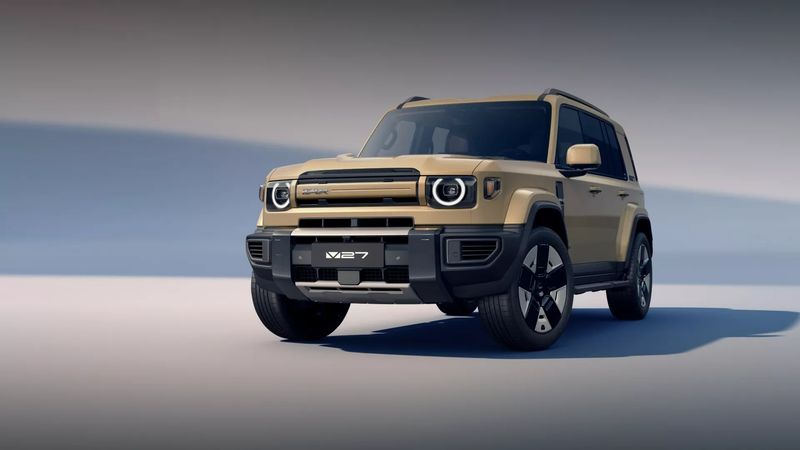
Consider the iCaur V27 if you have access to convenient home charging, your daily driving requirements fall comfortably within its real-world electric range and you want something that looks like a R1.5-million SUV. Its 6 kW vehicle-to-load (V2L) functionality also makes it an appealing companion on camping trips.
View the iCaur V27’s full specifications
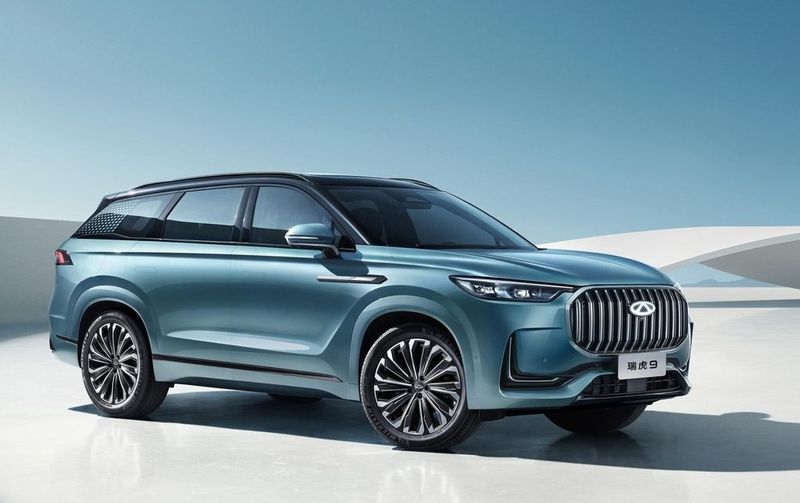
Consider the Chery Tiggo 9 CSH Pinnacle if you need 7 seats. It’s R90 000 cheaper than the V27, boasts a longer claimed total range and, on paper, is more fuel-efficient when the battery’s state of charge is low.
Compare Chery Tiggo 9 derivatives, prices and specifications
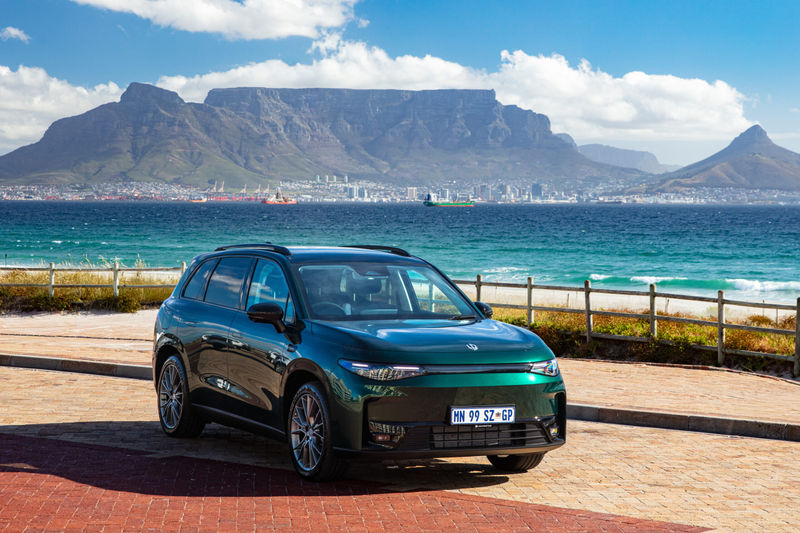
Consider the Leapmotor C10 if you like the range-extender concept but not the V27’s price. Its advertised promotional price makes it the value pick here, although it’s worth confirming the availability of that offer with your dealer.
Watch our Leapmotor C10 REEV video review
Consider a conventional hybrid if you can’t conveniently charge at home or at work. If reducing your fuel bill is your primary motivation, a conventional hybrid (HEV) may represent a more cost-effective purchase without requiring access to charging infrastructure.
See South Africa’s 5 most affordable traditional hybrids
Verdict
The iCaur V27 is arguably one of the most interesting new SUVs to arrive in South Africa this year. It’s quick, generously proportioned and backed by a comprehensive warranty. And, at R929 900, it undercuts the Tiggo 9 CSH Vanguard AWD by R60 000 while offering a broadly similar claimed electric-only range.
It’s a compelling flagship offering from a brand most South Africans hadn’t heard of a year ago, but that has already made encouraging inroads into the local new-vehicle market.
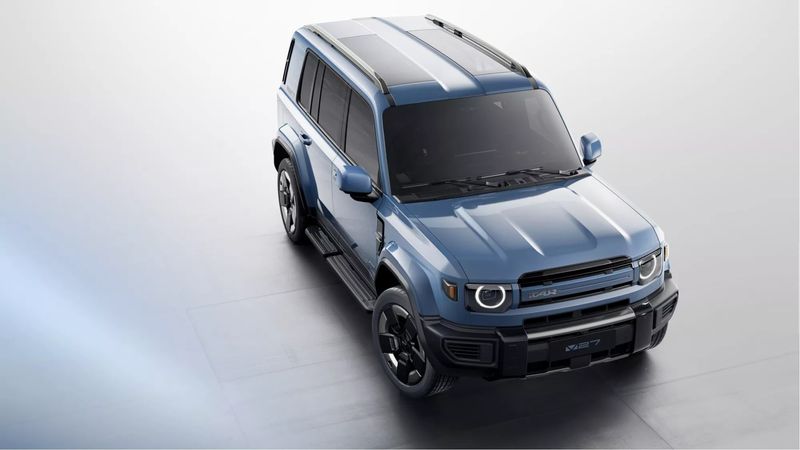
But to make the most of the V27’s powertrain, there’s a condition attached. Charge it regularly and you could enjoy the relatively low running costs and refinement of a large electric SUV, without having to rely on public charging infrastructure on longer journeys.
Treat it primarily as a petrol-powered SUV, however, and much of that running-cost advantage falls away. It’s worth establishing which type of owner you’re likely to be before signing on the dotted line.
Frequently asked questions about the iCaur V27
How much does the iCaur V27 cost in South Africa?
The iCaur V27 REEV AWD is priced at R929 900 in South Africa. It comes with an 8-year/200 000 km vehicle warranty, an 8-year/160 000 km battery warranty and a 6-year/90 000 km service plan.
Is the iCaur V27 a fully electric vehicle or a hybrid?
The iCaur V27 is a range-extended electric vehicle (REEV). Its wheels are driven exclusively by 2 electric motors, while a 1.5-litre turbopetrol engine acts as a generator to produce electricity when required.
What is the electric range of the iCaur V27?
The iCaur V27 has a 34.31 kWh battery that provides a claimed electric-only range of 150 km. With a fully charged battery and a full 60-litre fuel tank, its claimed total range is 1 000 km. Both figures are based on the NEDC testing cycle.
Do you need to plug in the iCaur V27?
No, the iCaur V27 can operate using its petrol-powered range-extender to generate electricity. However, regularly charging its battery at home or work allows owners to maximise the vehicle’s potential running-cost savings.
What is the fuel consumption of the iCaur V27?
The iCaur V27 has a claimed fuel consumption figure of 7.1 L/100 km when its battery charge is depleted. Its estimated electric energy consumption is approximately 22.8 kWh/100 km. Actual consumption will depend on driving conditions, driving style and charging habits.
How does the iCaur V27 compare with the Chery Tiggo 9 CSH?
The iCaur V27 is a 5-seater range-extended electric SUV with 335 kW and 505 Nm, whereas the Chery Tiggo 9 CSH is a 7-seater plug-in hybrid. The V27 is R90 000 more expensive than the Tiggo 9 CSH Pinnacle but R60 000 cheaper than the flagship Vanguard AWD derivative.
What is the difference between the iCaur V27 and Leapmotor C10 REEV?
Both are range-extended electric SUVs, but the iCaur V27 is larger, more powerful and features all-wheel drive. The Leapmotor C10 REEV produces 158 kW and 320 Nm, features rear-wheel drive and is considerably more affordable.
Cars.co.za

Providing you with the latest motoring news, new car releases and the simplest way to buy and sell cars.