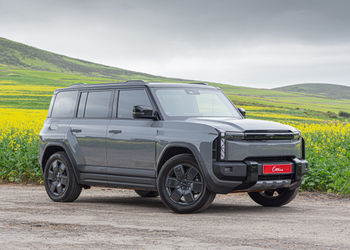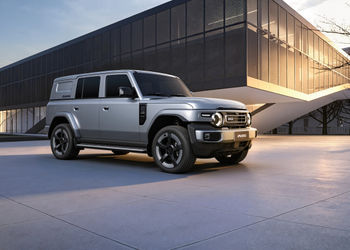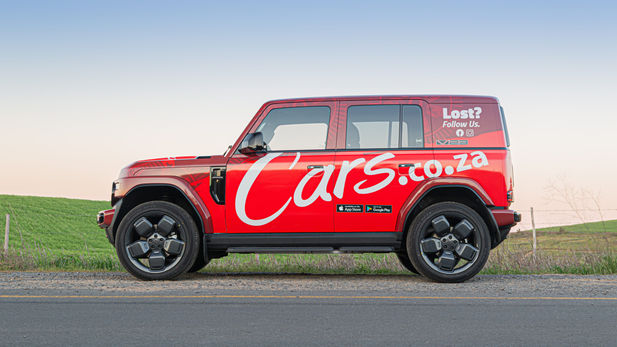
With a desirable retro-inspired exterior design on top of a modern electric twin-motor package, the iCaur V23 iWD has proven popular. But what’s it like to live with? We spent two months getting to know the new cool kid.
The iCaur V23 has been one of the coolest-looking additions to South Africa’s roads. The brand itself is new, too, having opened showrooms in 2026. While there are only two models available at the time of writing in September 2026, the range will see a third larger model called the V27 being introduced, as well as some range-extender powertrains, which will help alleviate range anxiety.
See detailed specifications and pricing of the iCaur range
iCaur has had a pretty impressive start, with over 30 dealers open and by the end of August 2026, over 650 units sold, with the V23 taking up the bulk of the orders. The iCaur V23 iWD is the more capable and sportier of the two-model line-up. Thanks to a second motor giving it all-wheel drive capability and considerable straight-line performance, the iWD derivative also boasts more range.
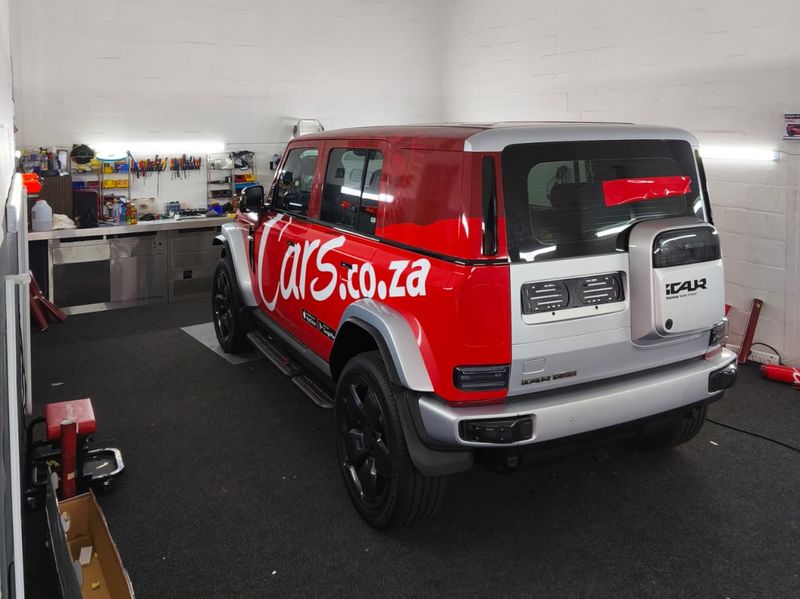
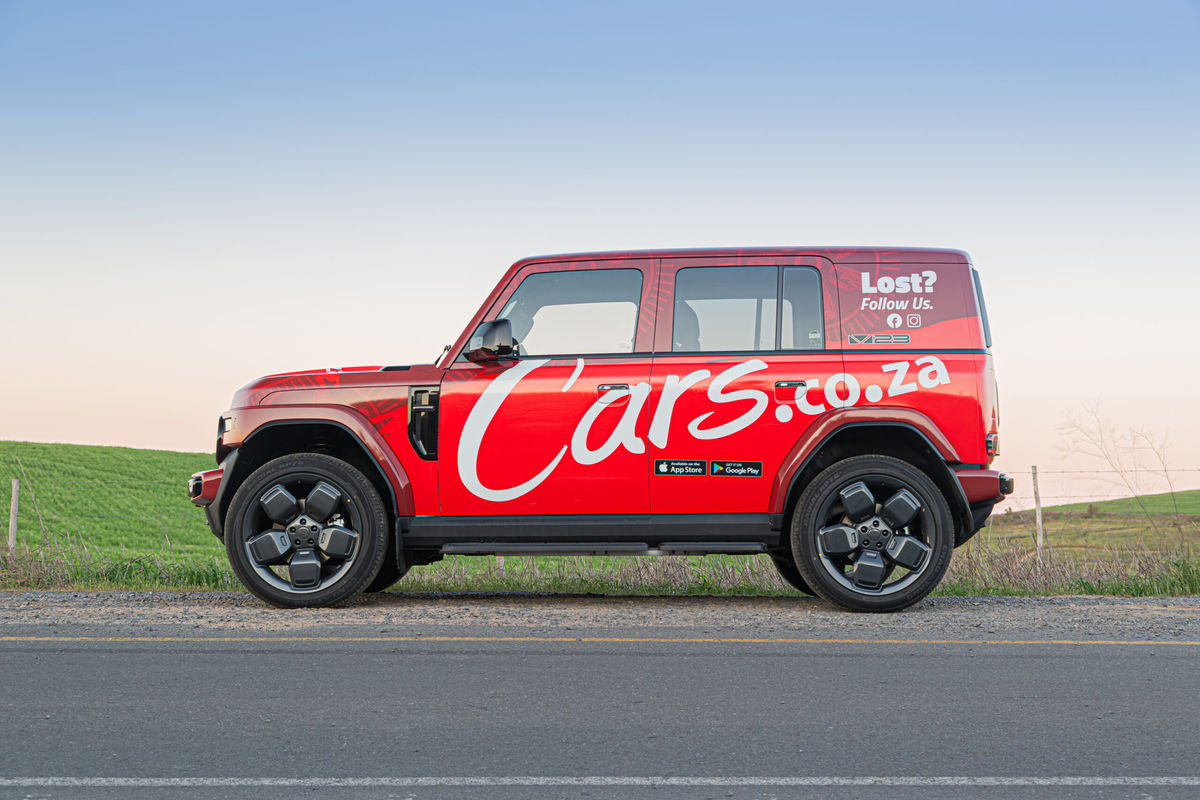
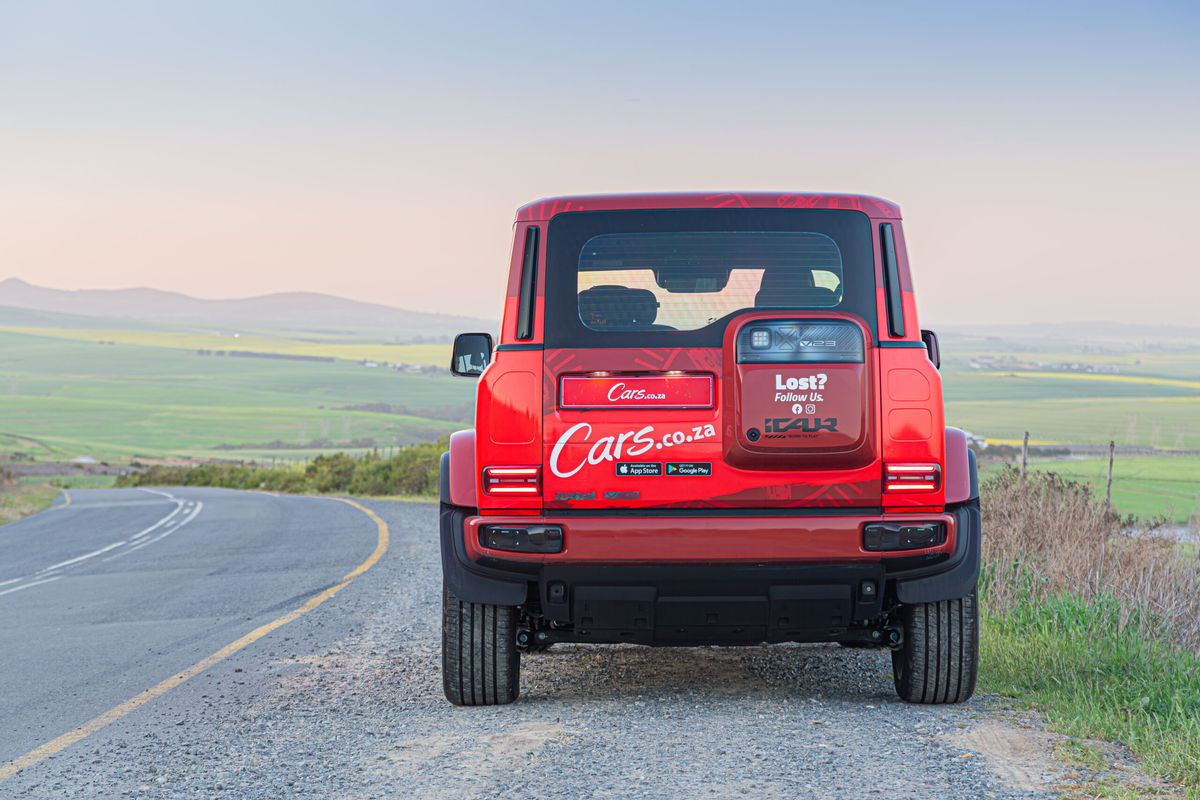
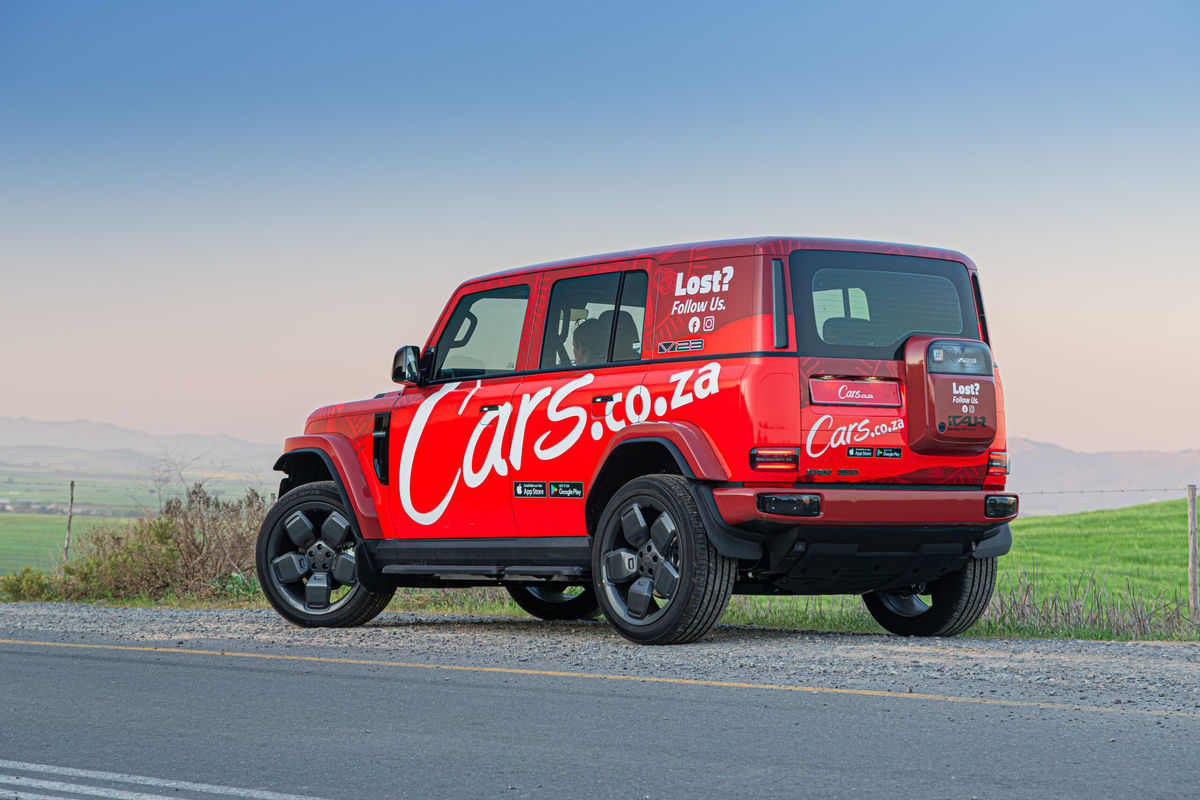
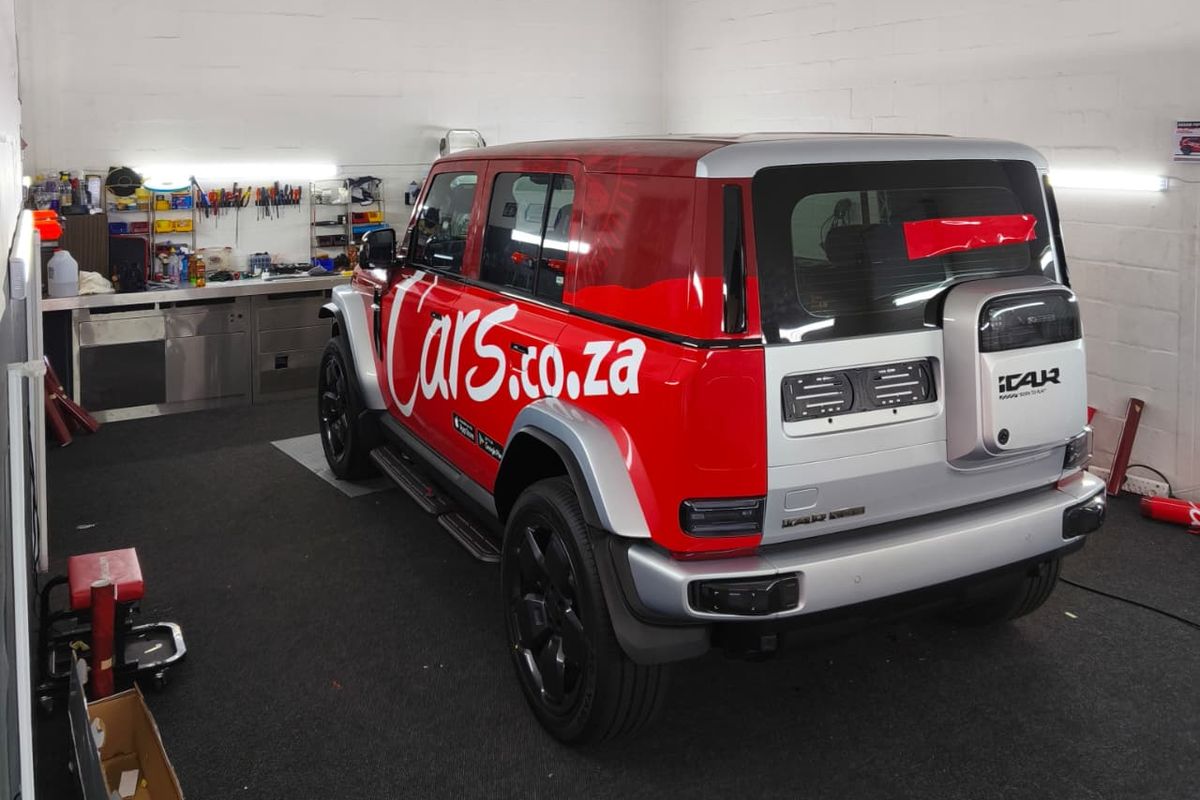
iCaur South Africa sent us a box-fresh Starlight Silver V23 iWD on delivery miles. Now, before you’re wondering why the vehicle here isn’t silver, iCaur SA has an extensive customisation program which extends to exterior wraps (both entire and partial) and a whole host of accessories. With the brand being so new, the list of cool gadgets and features available is only going to grow.
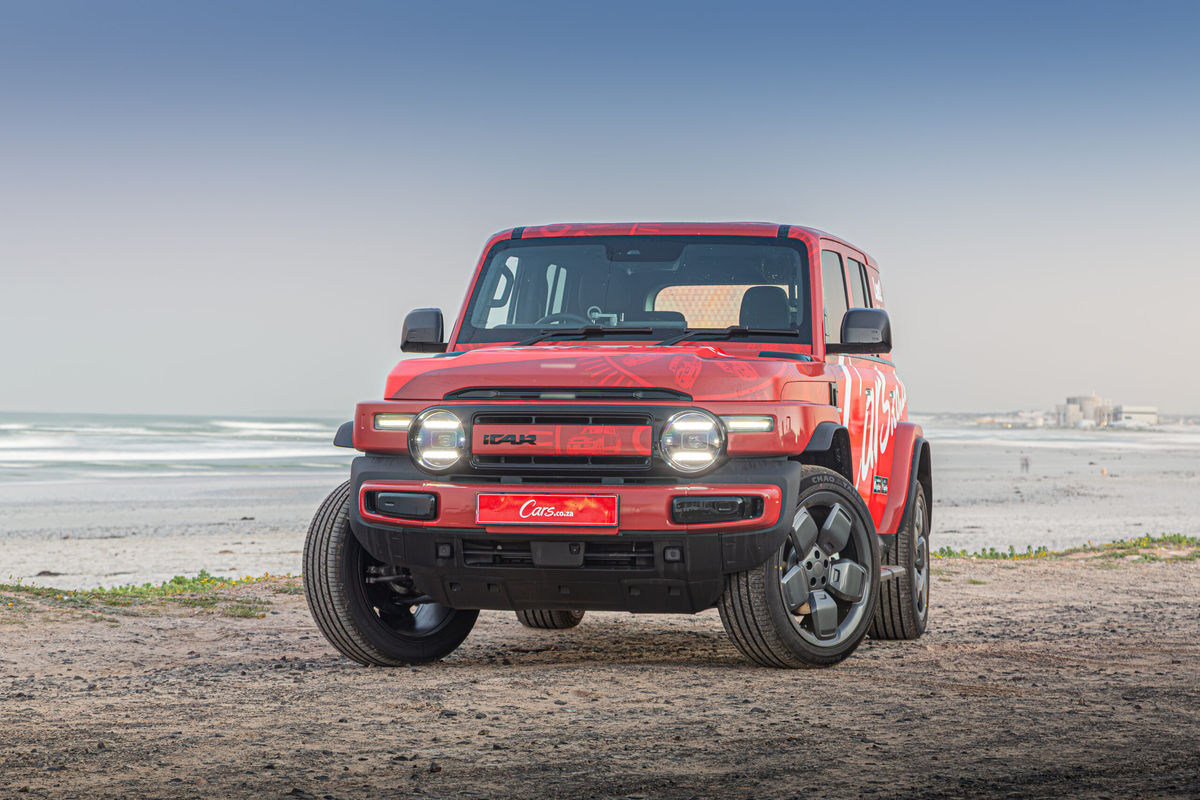
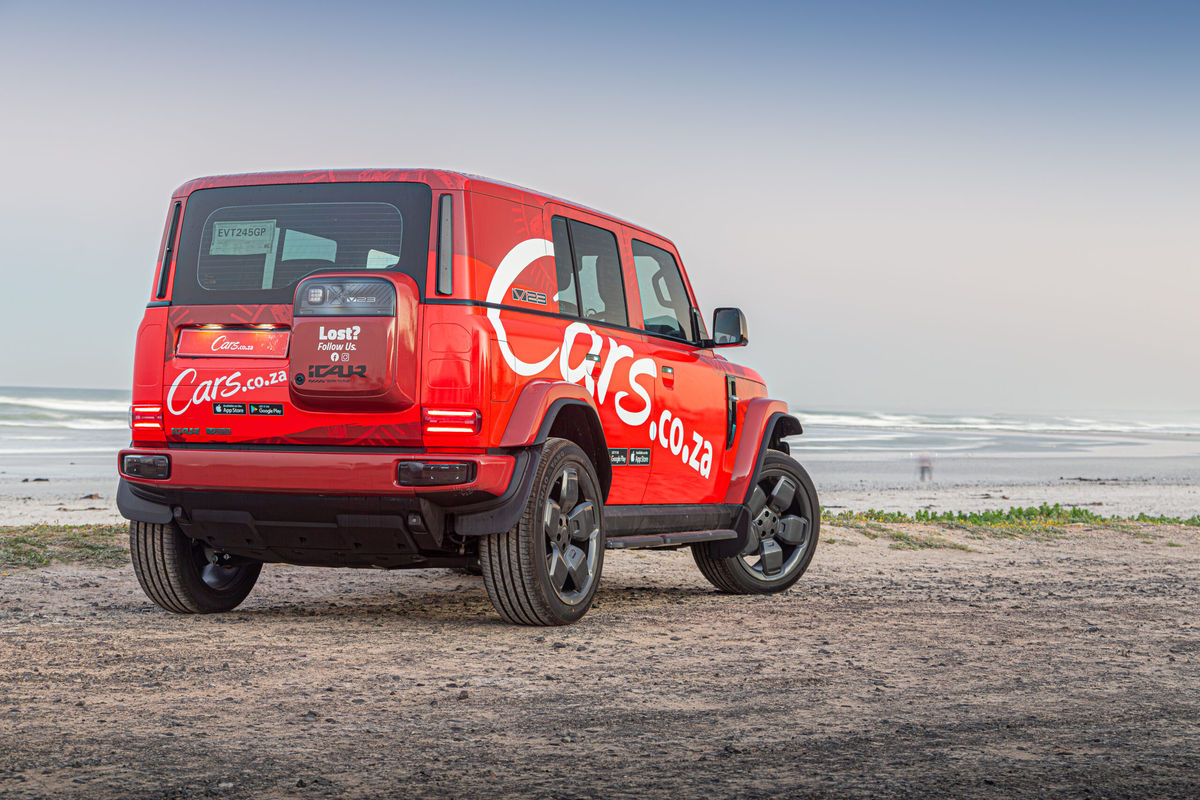
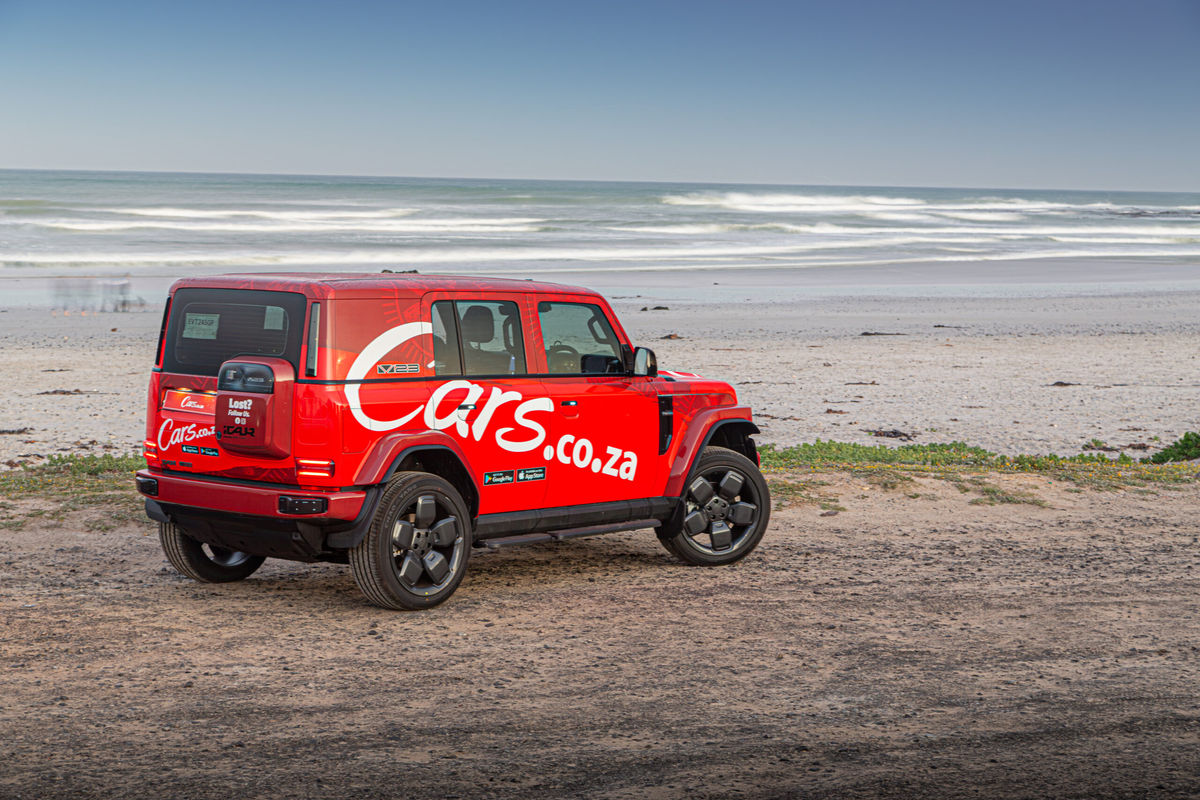
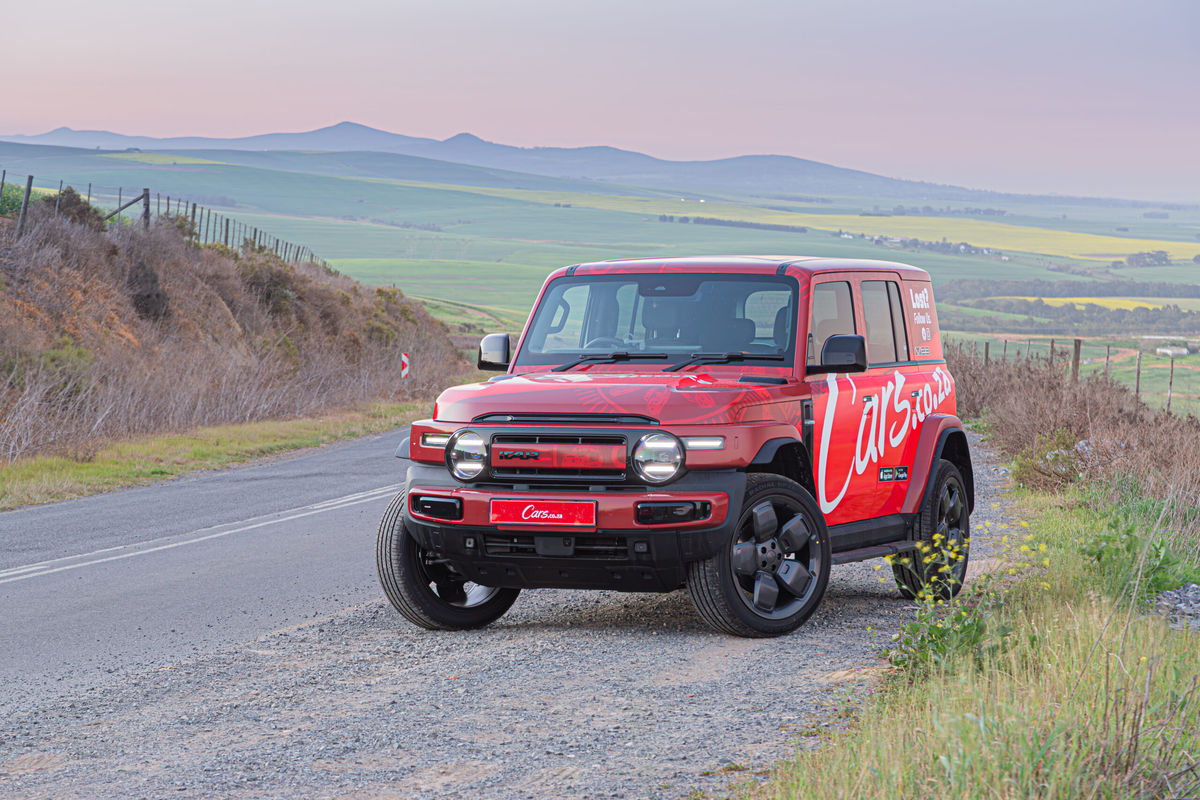
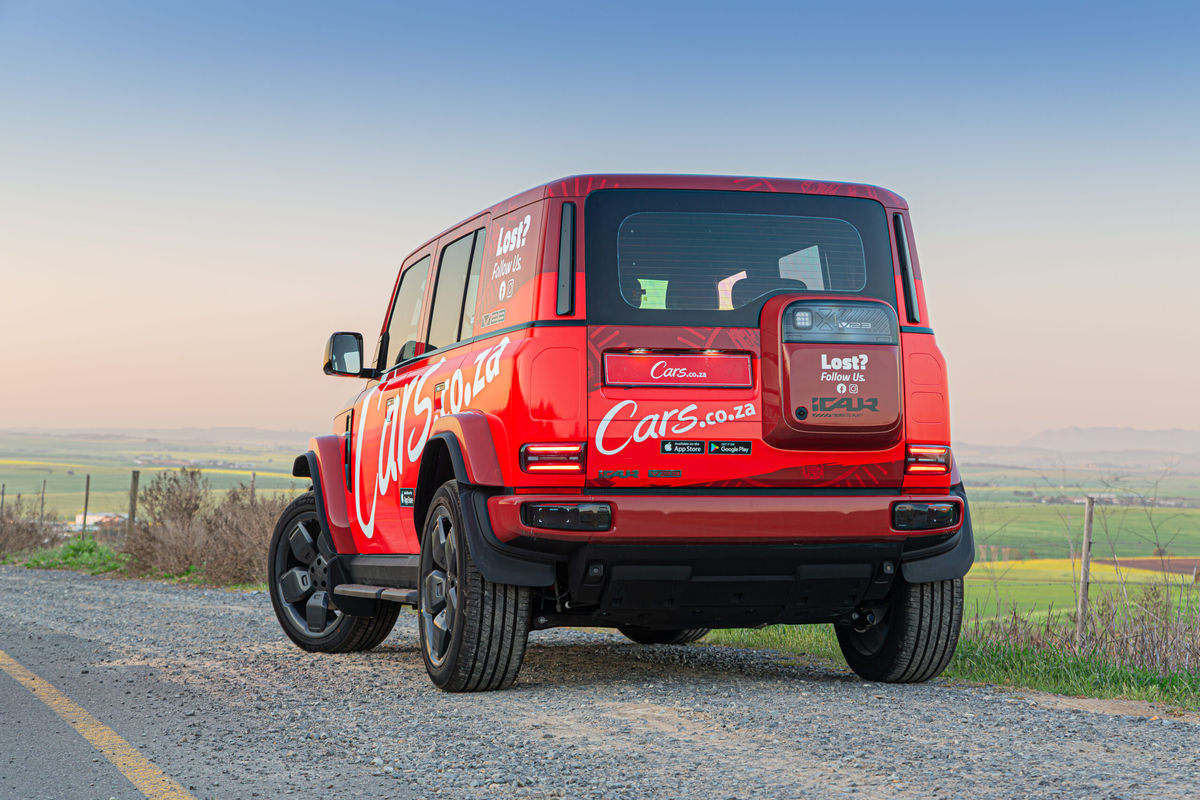
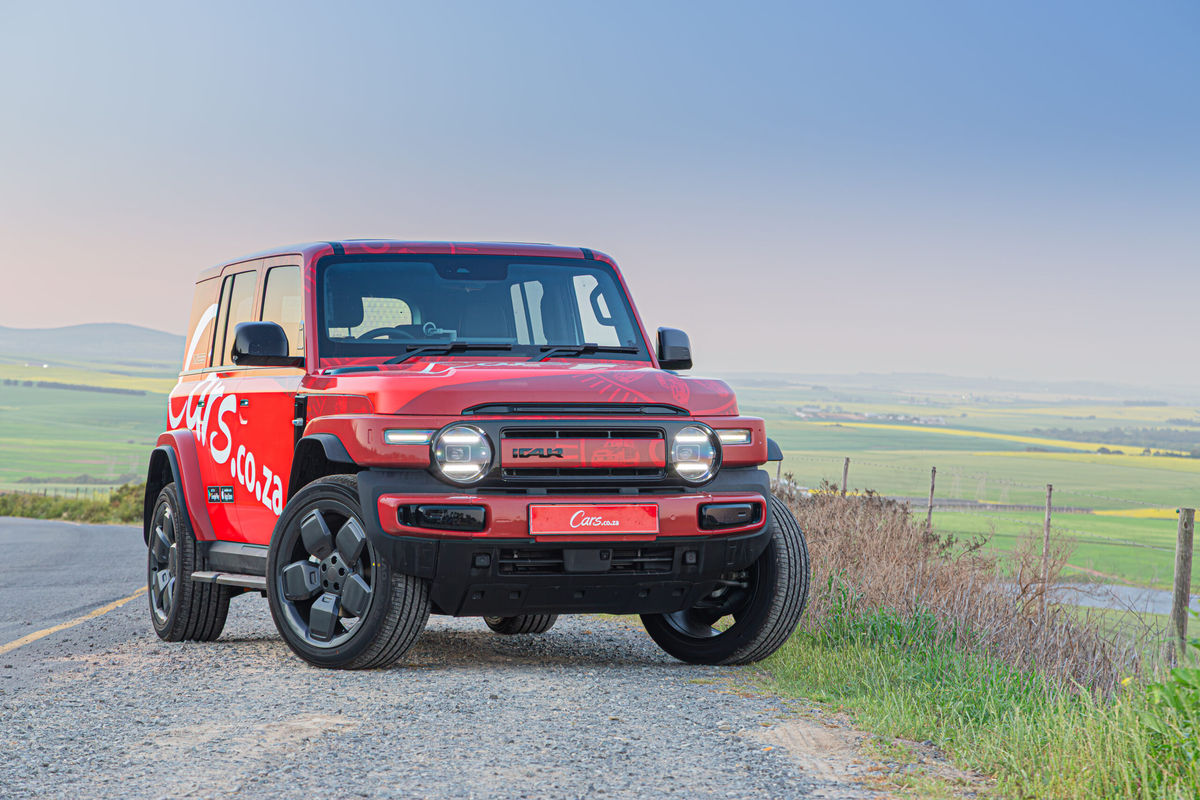
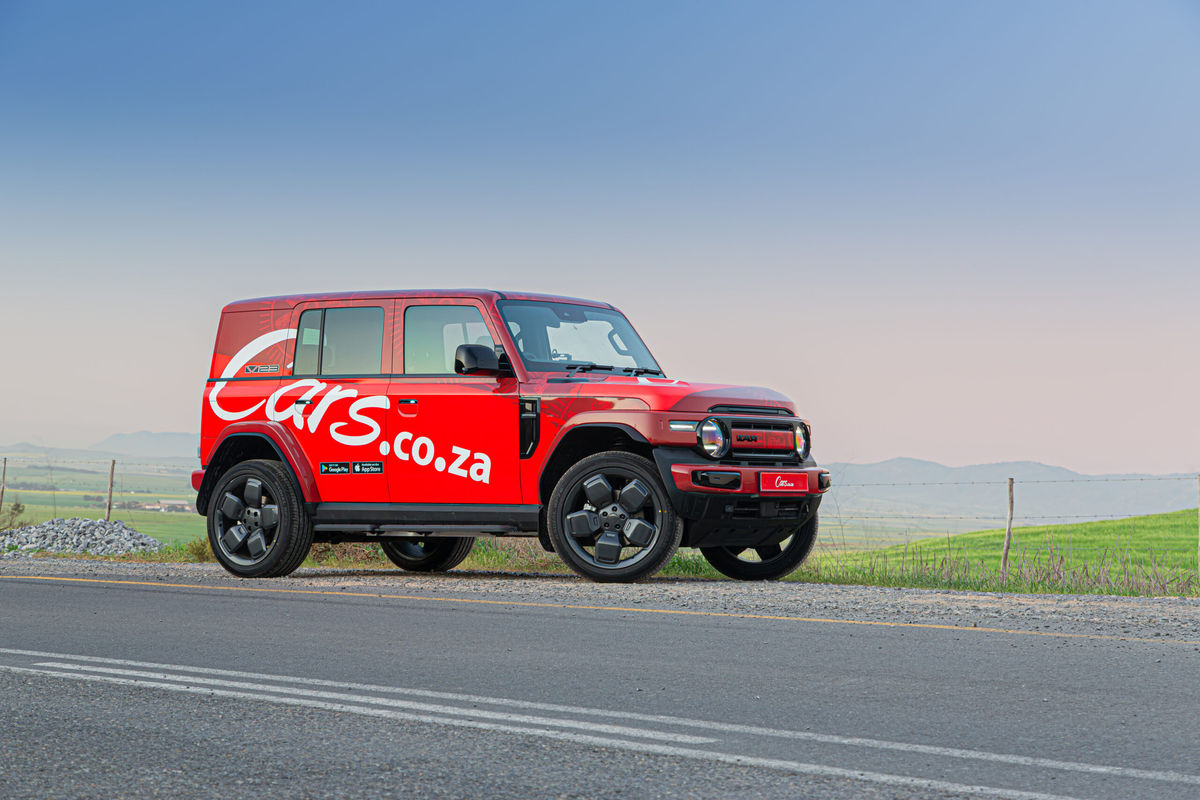
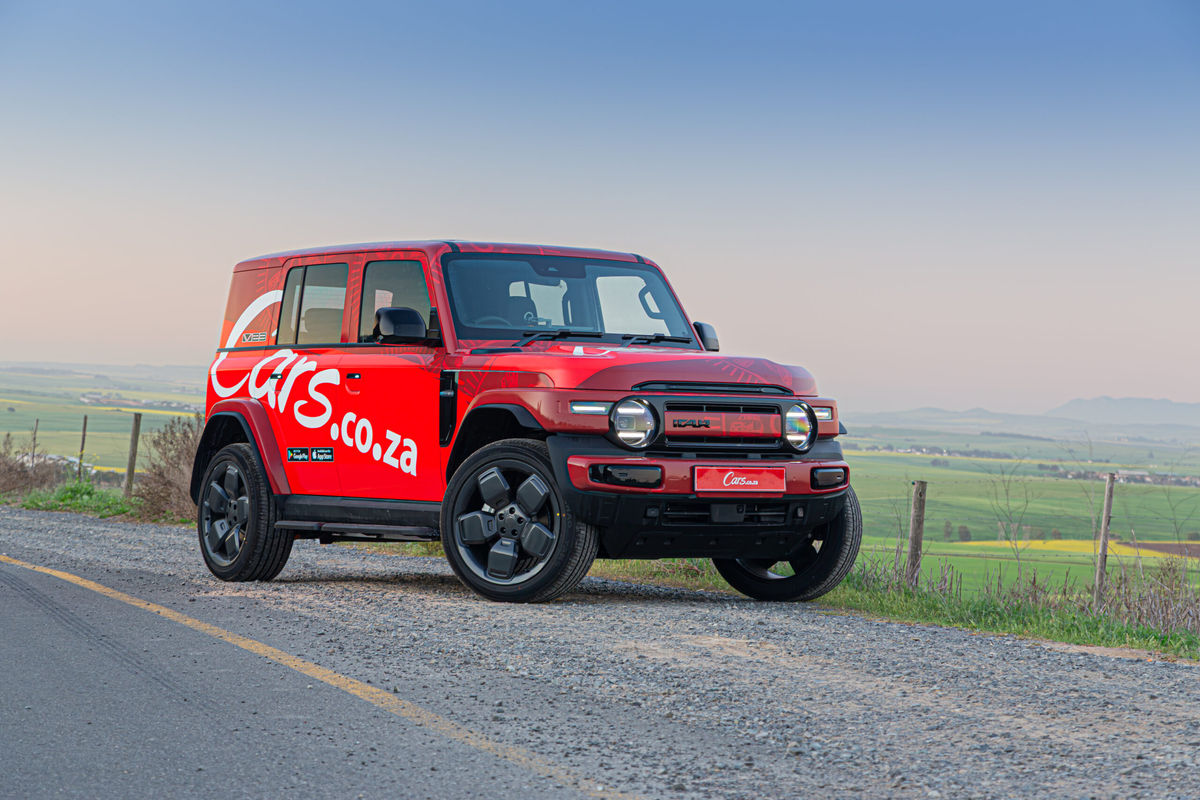
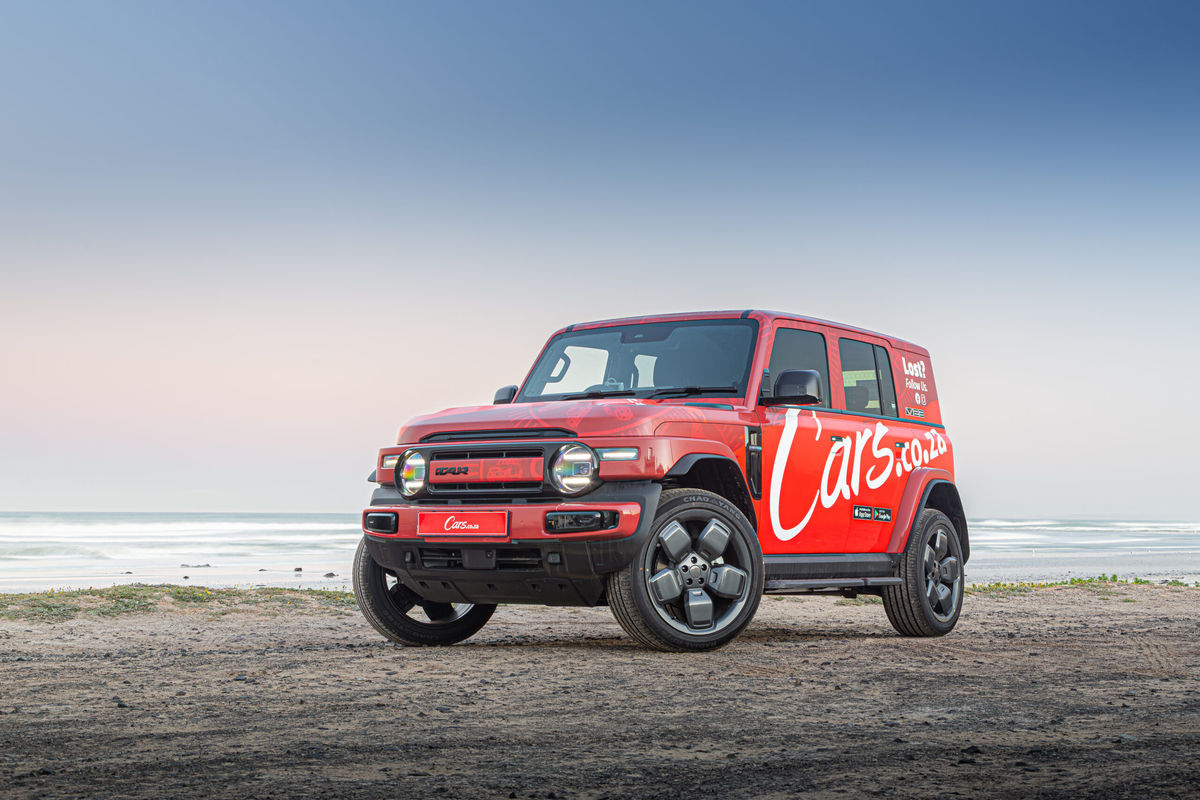
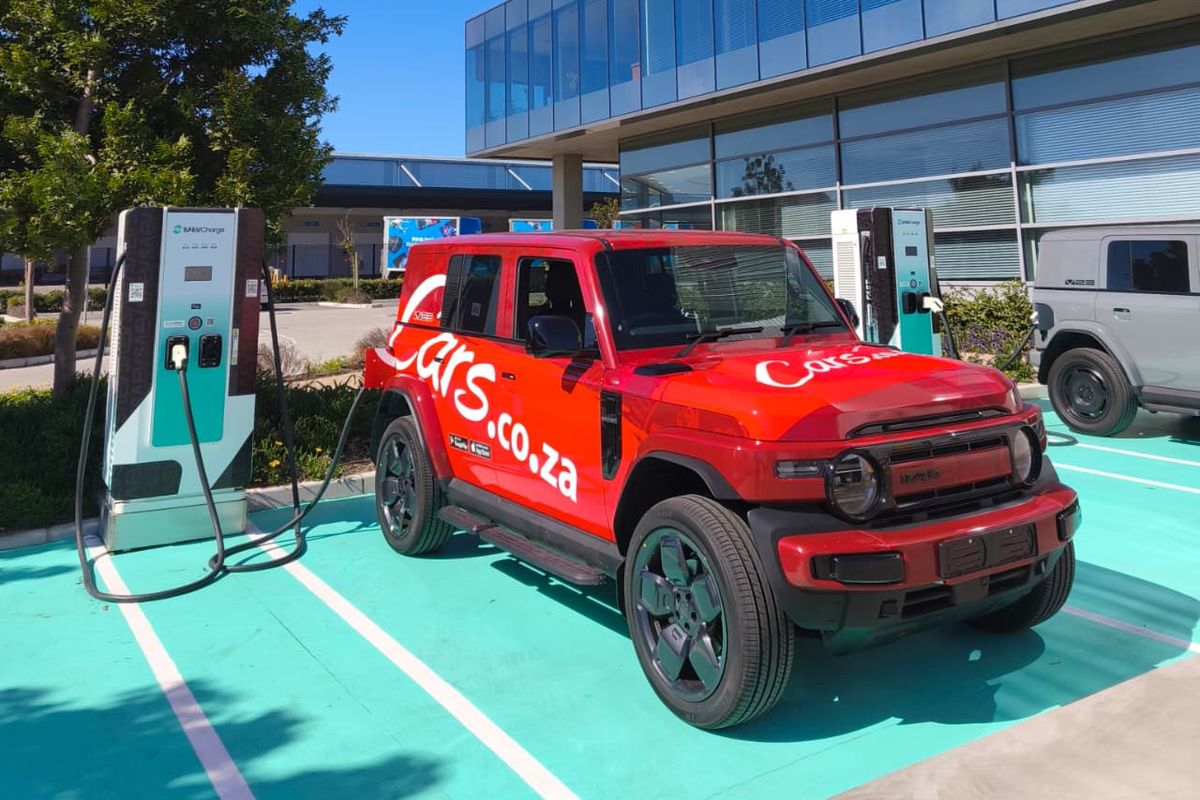
We were encouraged to go wild and we reckon the results speak for themselves. On went a gloss-and-matte-red wrap with Cars.co.za branding, which made the car stand out even more. Interestingly, iCaur SA doesn’t offer red in its palette; what you see here is a limited edition!

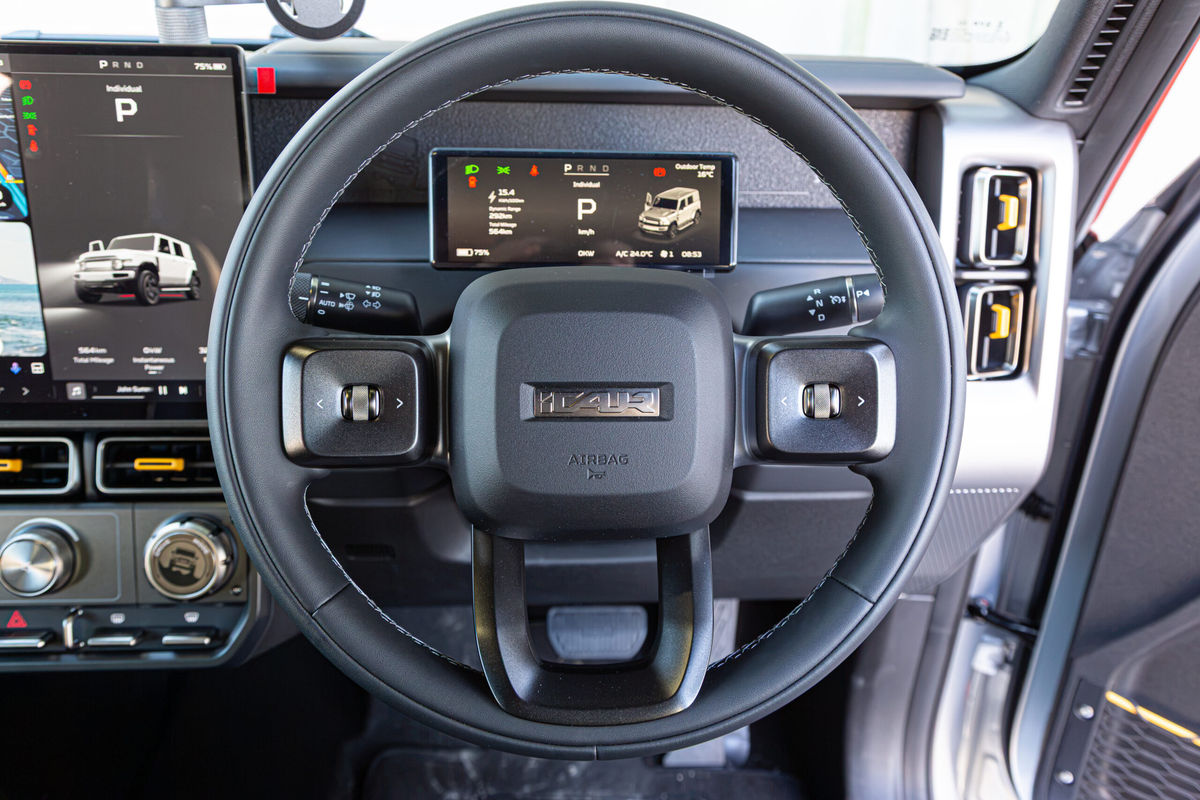
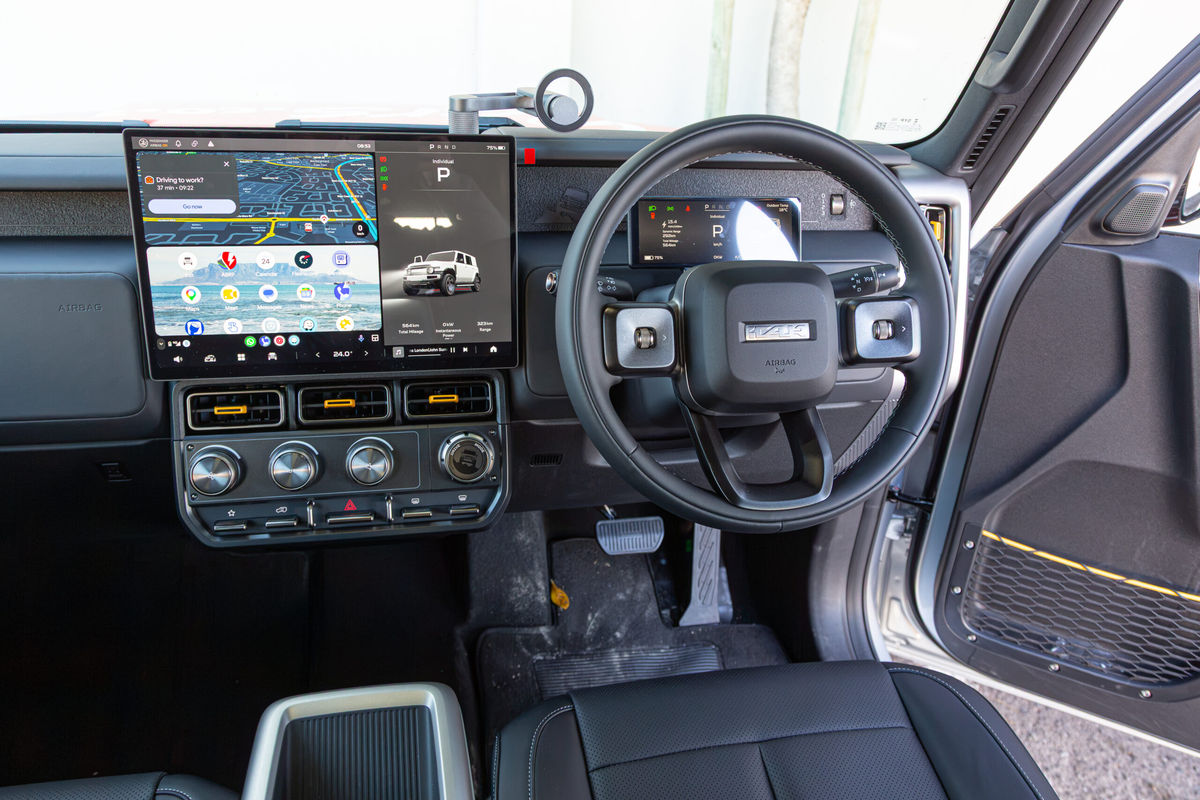
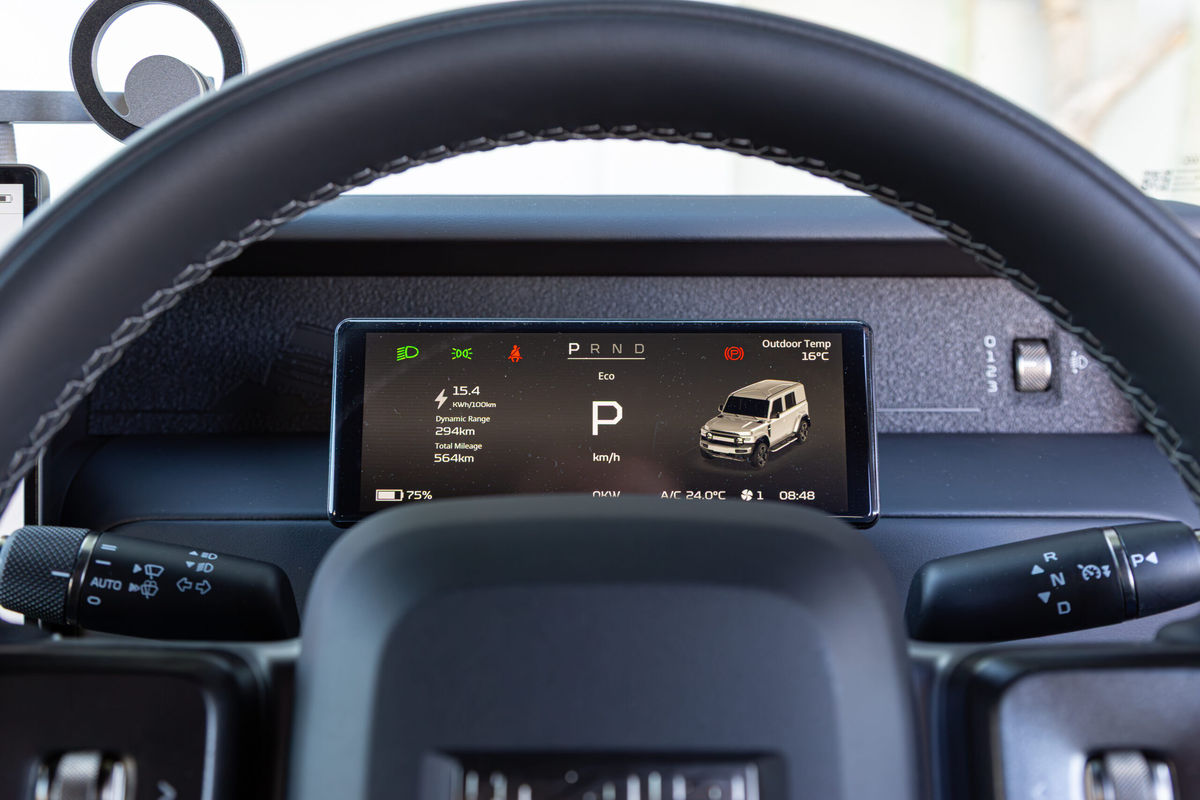
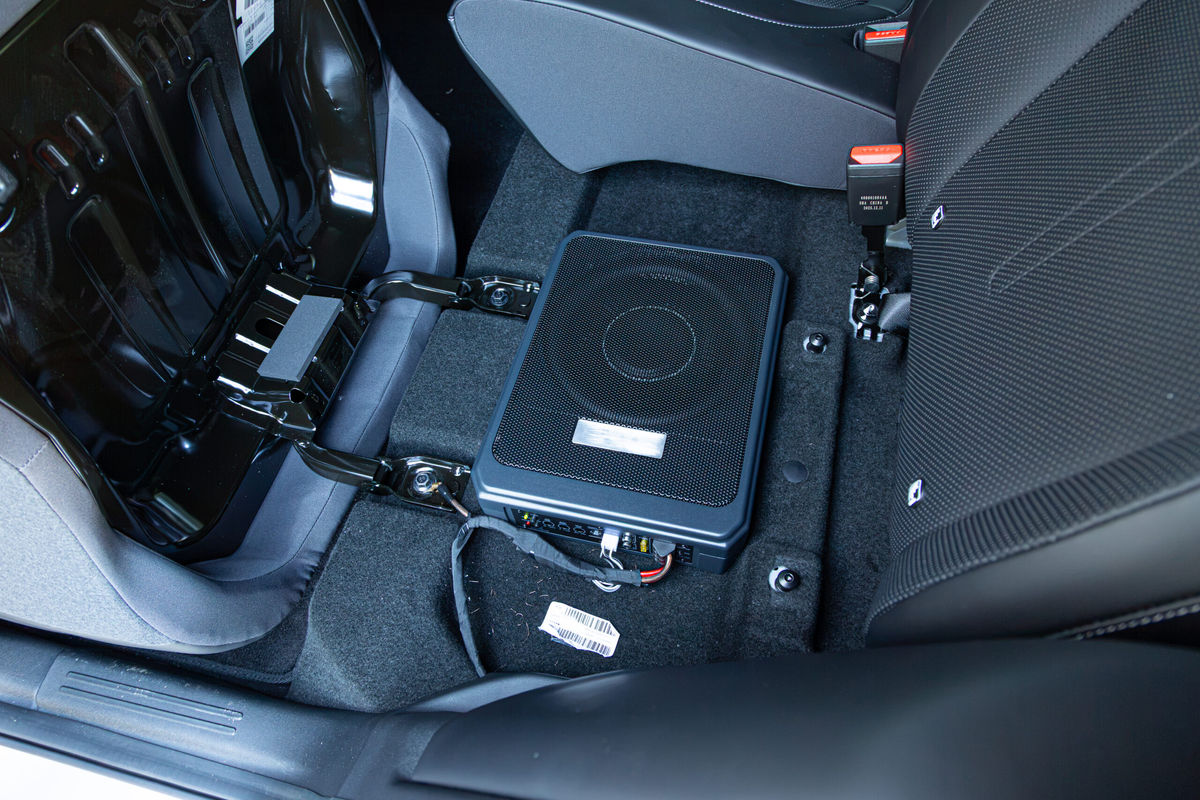
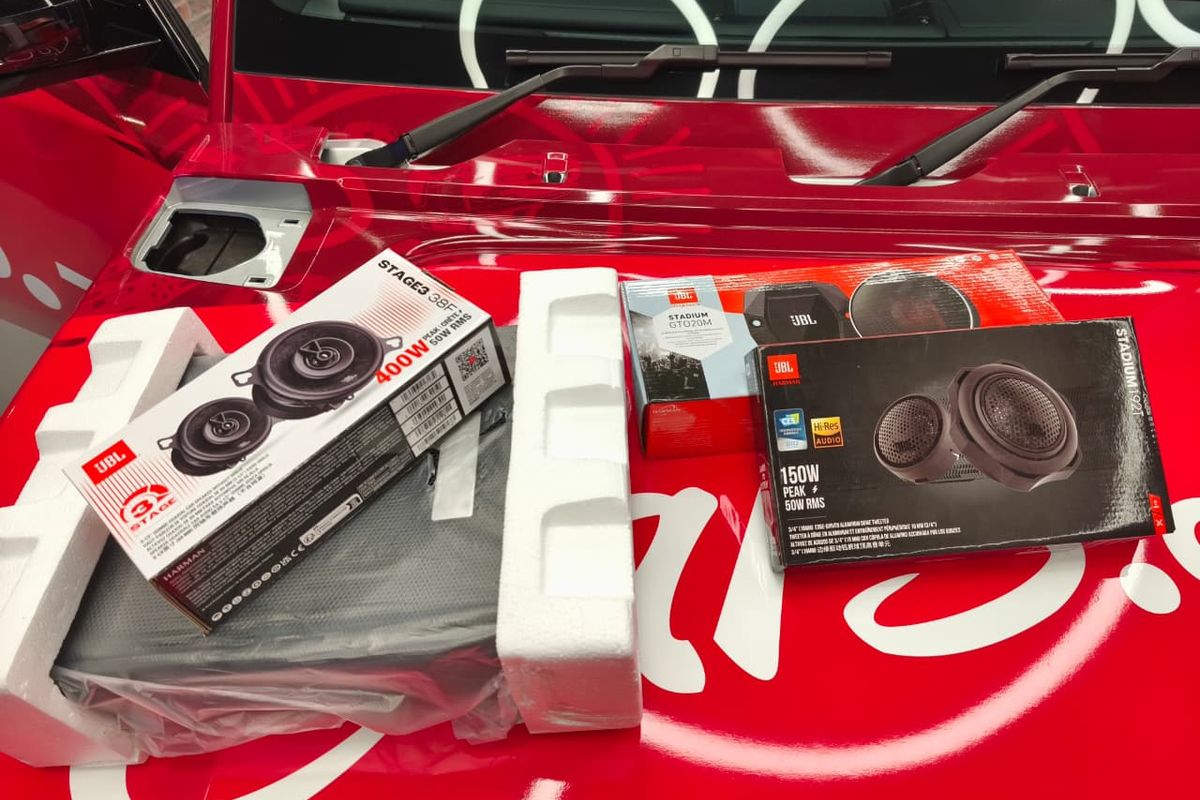
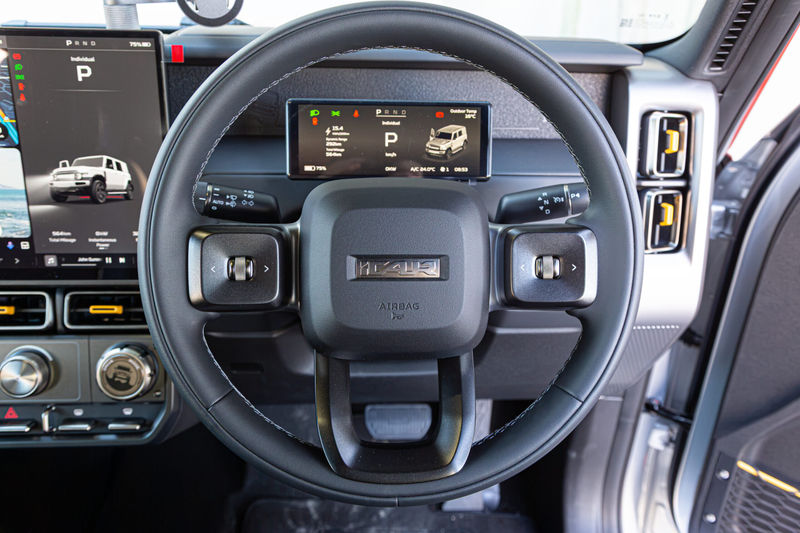
We were also offered an audio upgrade in the form of a JBL speaker and subwoofer, as well as a magnetic phone mount. While the standard audio unit was sufficient, the punchier bass and audio depth was greatly appreciated. Our favourite accessory was the neat instrument cluster positioned behind the steering wheel; it has all the critical driving information you’d need.
What we like about the iCaur V23 iWD
Design & Visual appeal
When you’re next on the road and see a V23 on the road, try resist not having a second look. Even in duller tones, it’s a striking and bold design. Yes, it is taking full advantage of the box-shaped retro 4×4 design trend, but somehow it manages to combine both ultra modern and retro in one compact package with oversized wheels on each corner. You can imagine the attention a fire-engine red V23 garnered…
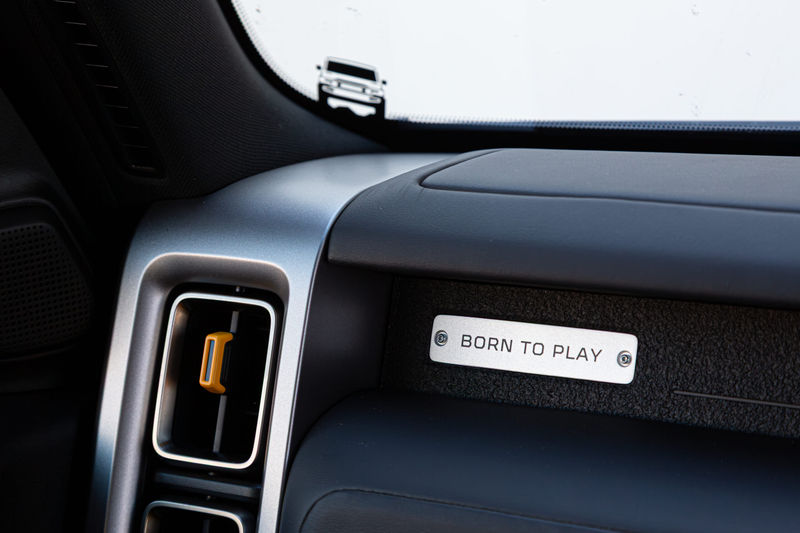
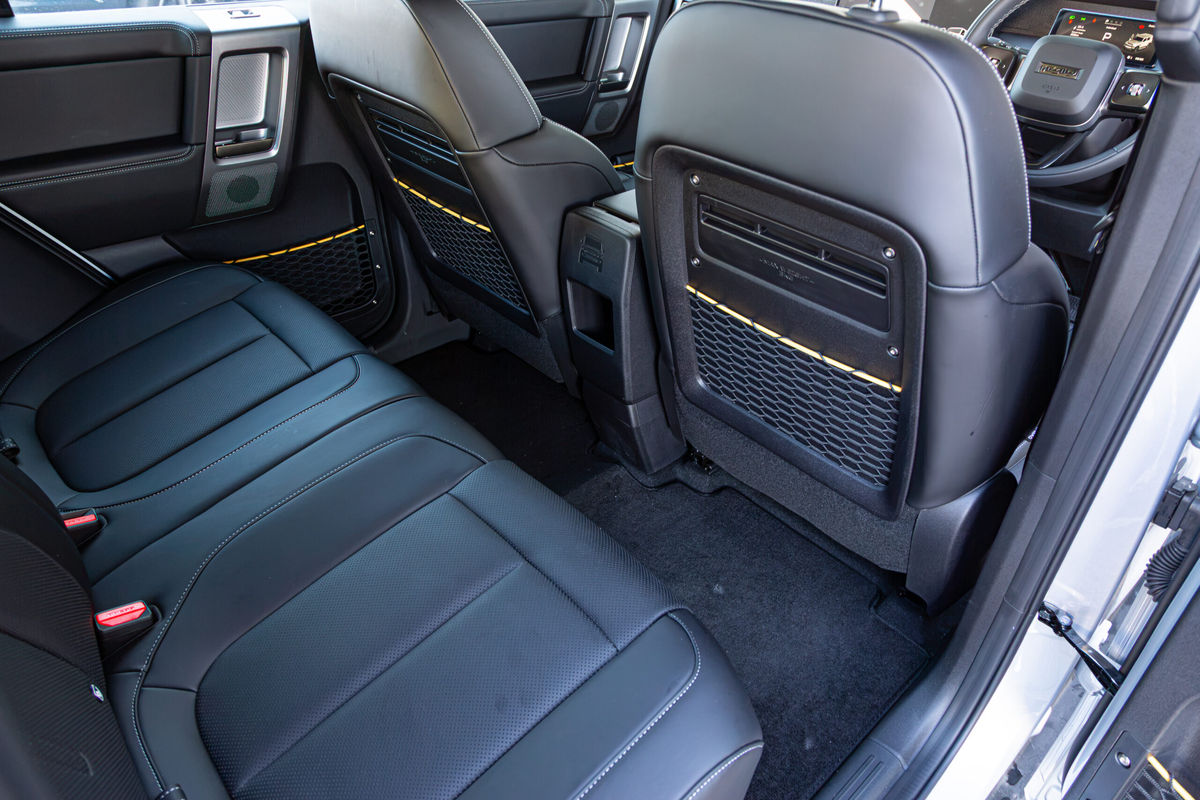
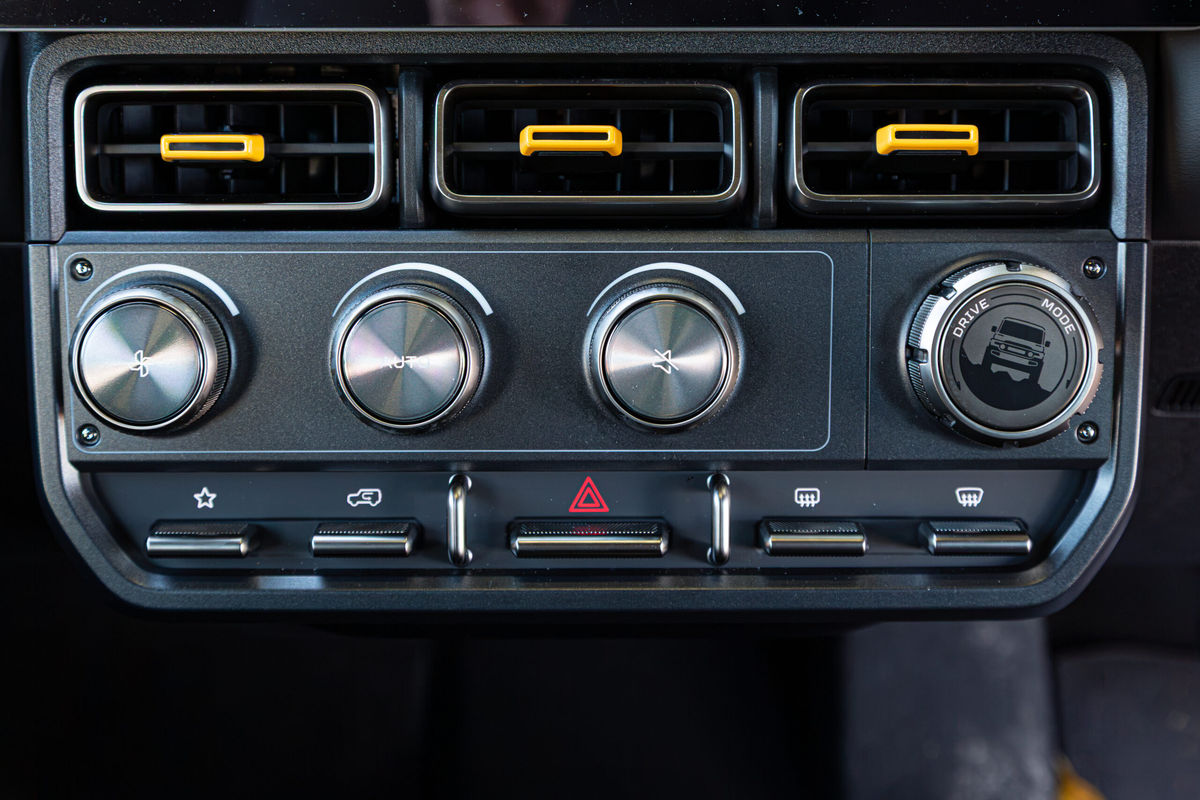
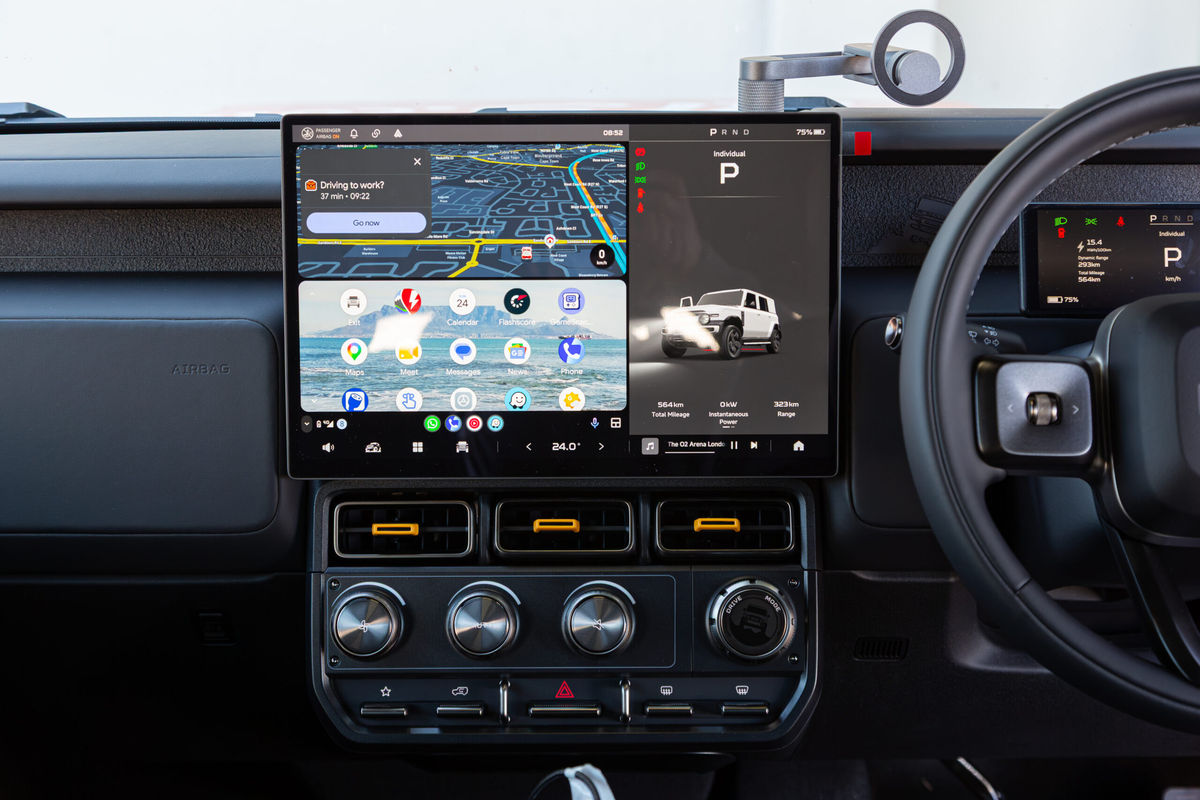
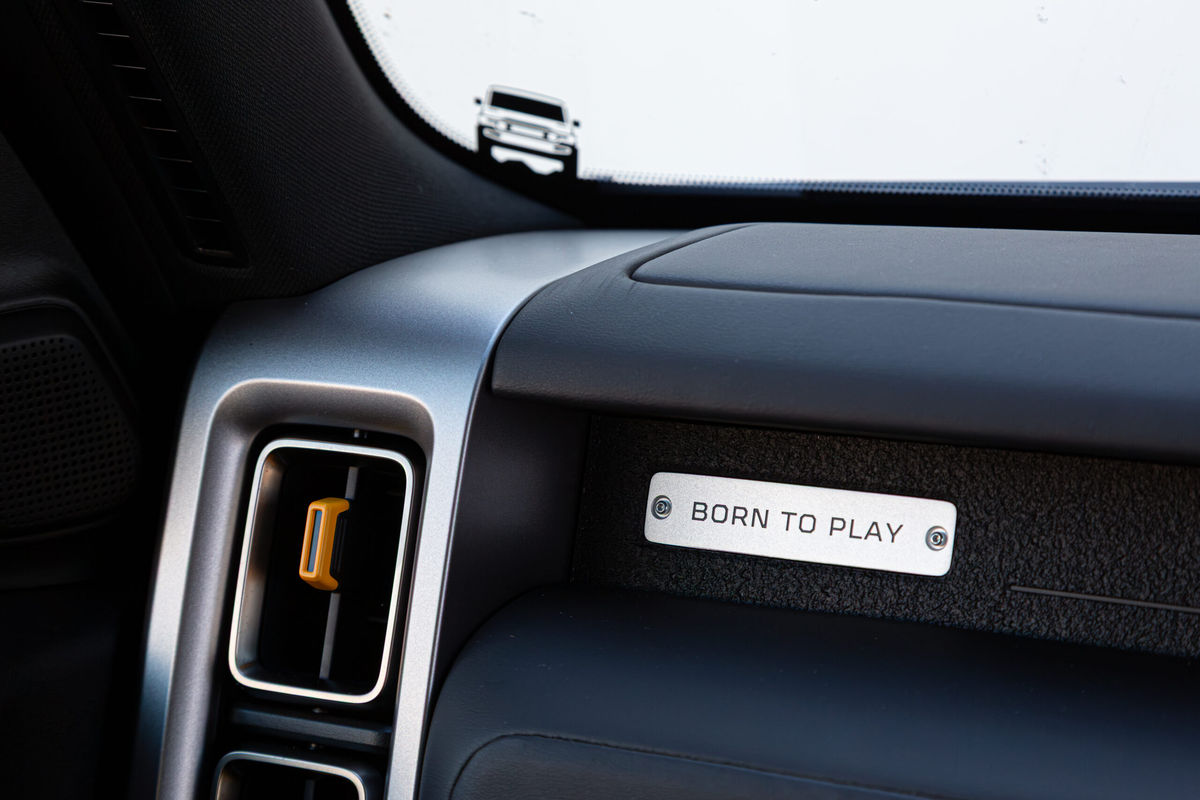
The visual fun doesn’t stop with the exterior design either, as the cabin is interesting and non-conformist. There are some fun and joyful touches, like the iCaur vector on the base of the windscreen as well as the drive mode selector. We’re grateful that Chery Group, which owns iCaur, didn’t opt for a fully digital setup like the 03T sibling and there are plenty of solid-feeling chunky dials and tactile-pleasing switchgear.
Performance
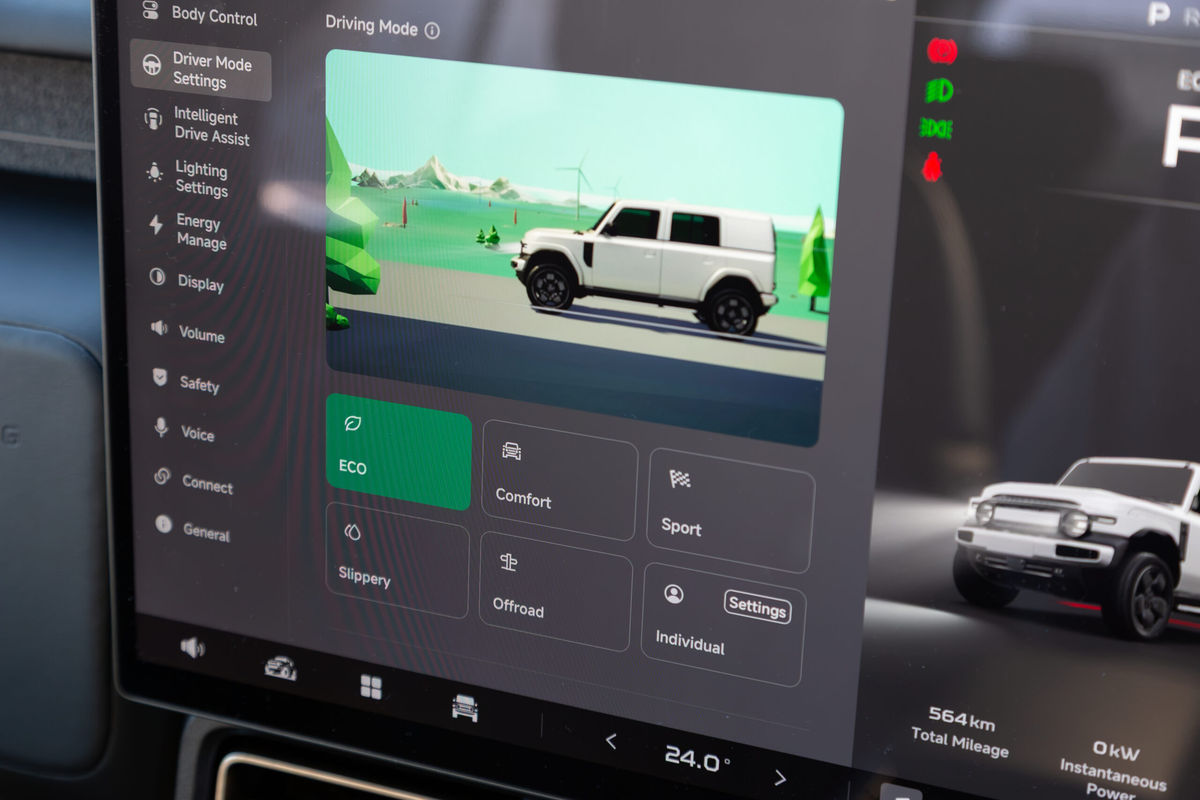
With substantially more firepower, or should that be lightning, underfoot, the V23 iWD is the quicker of the two models. Thanks to a combined power output of 155 kW and 292 Nm, this little pocket rocket effortlessly eclipsed its claimed acceleration time of 7.5 seconds with an impressive 7.17-second dash. You don’t have to rely on the sport mode, either, as it’s responsive even in its default setting. Accessing sport mode is a simple affair – simply turn the big dial which dominates the central control panel.
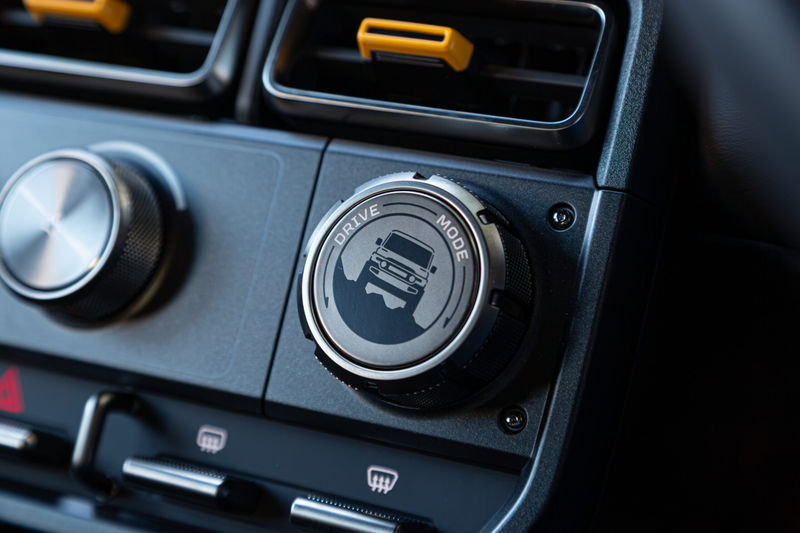
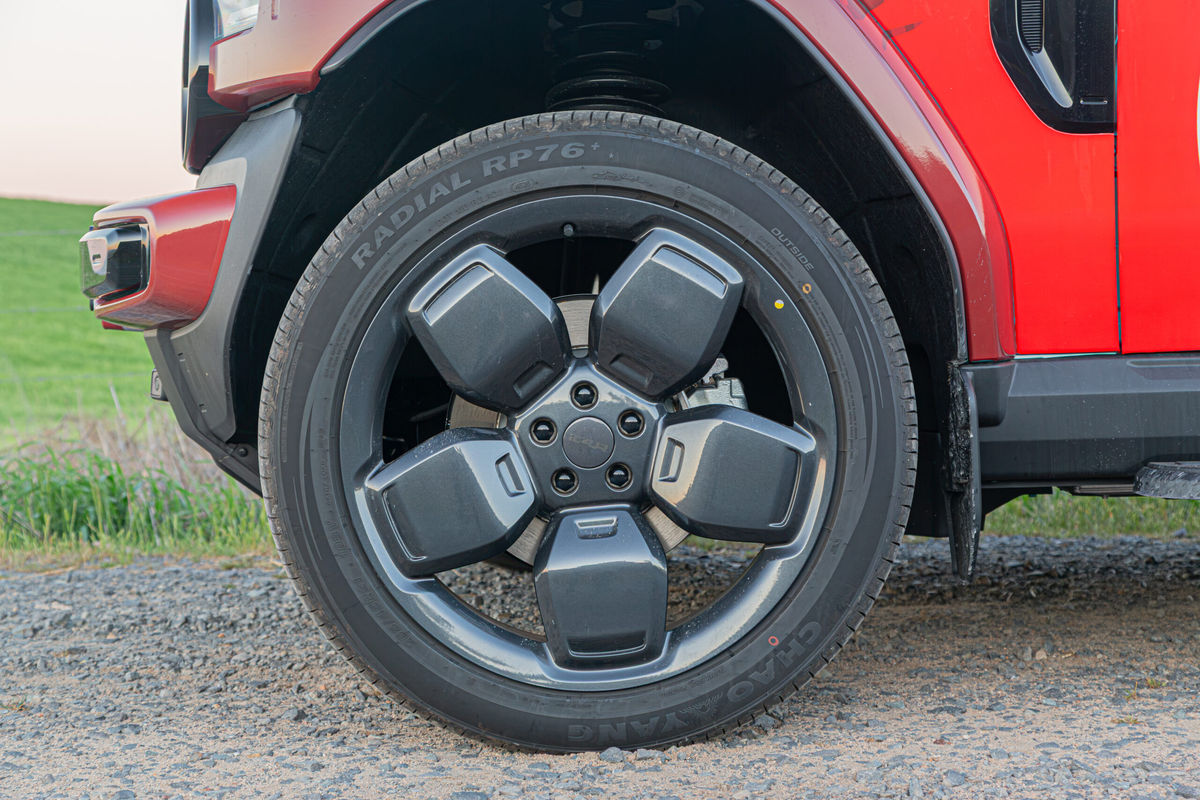
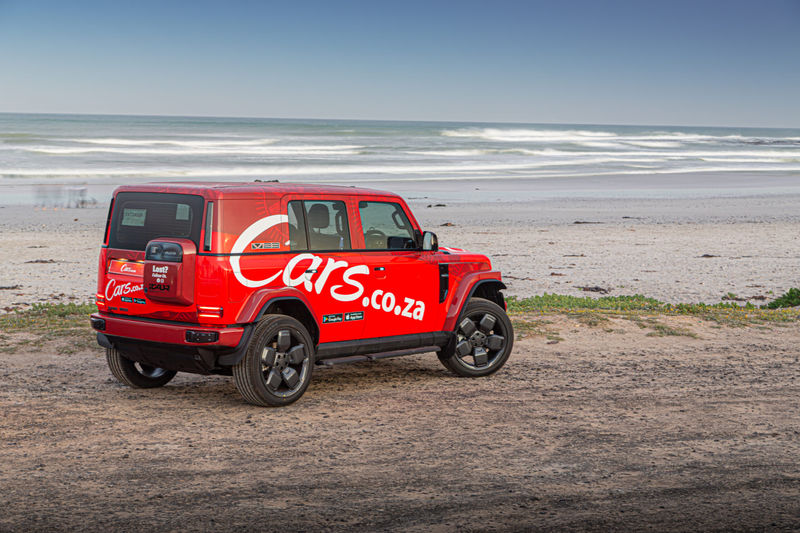
We’d say its marketed as a modern and fashionable urban vehicle, but when you have ground clearance of 210 mm and some off-road modes, it would be rude if we didn’t at least try leave the tar. Disclaimer: the tyres are strict on-road units and there’s no spare, so don’t attempt anything more than a gravel road to your local farm stall or wine farm, and in our case, the beach for a sunrise photoshoot.
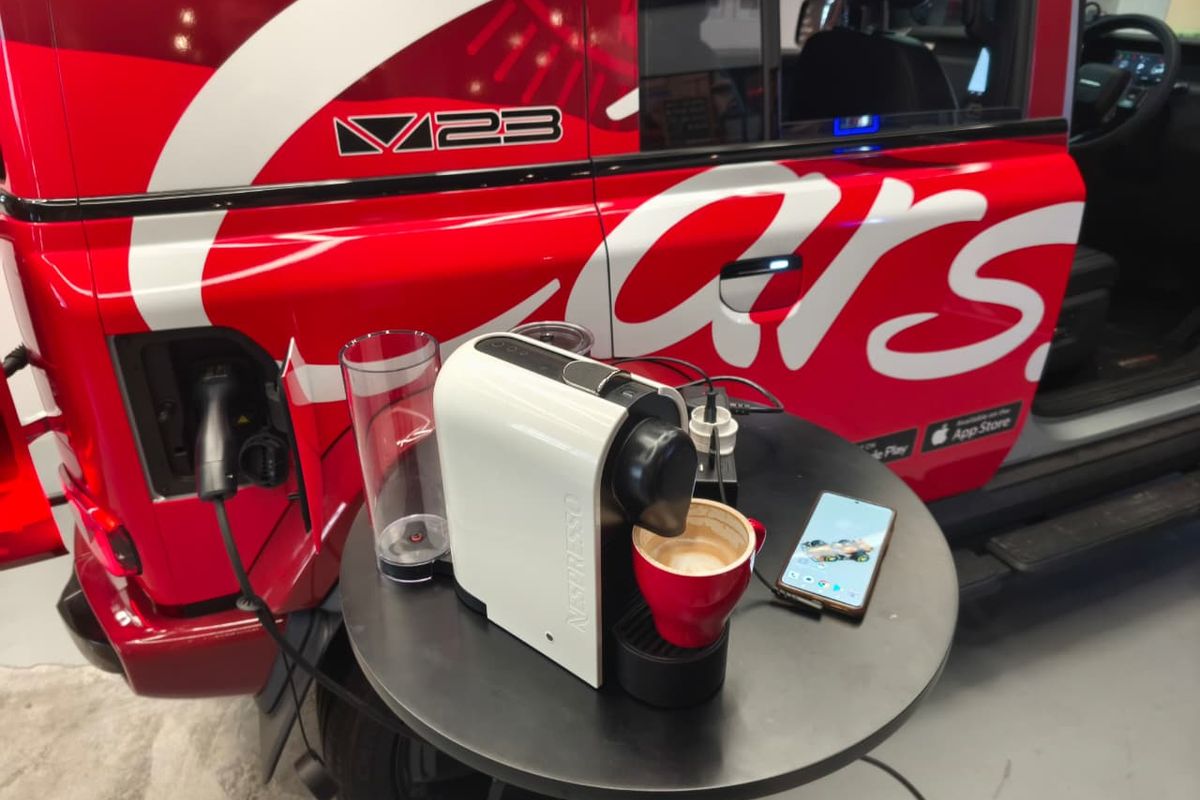
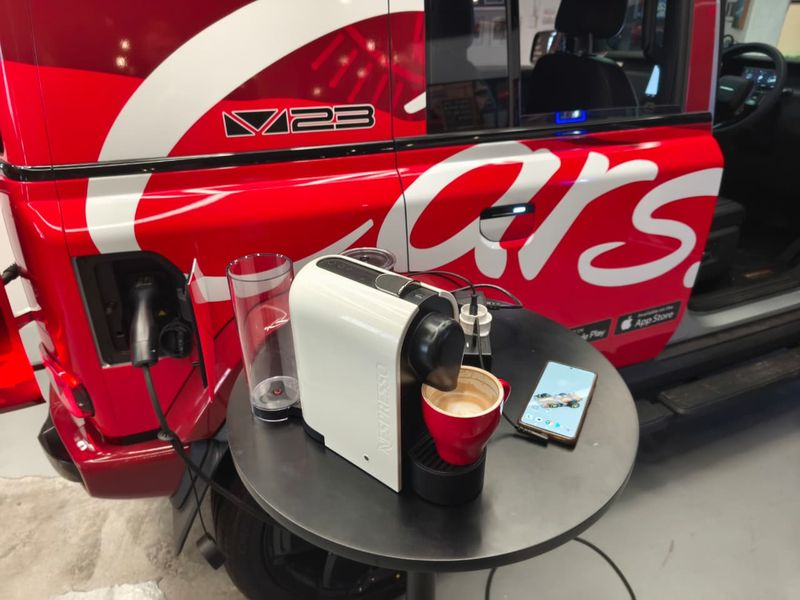
The electric powertrain supports vehicle-to-load (V2L) functionality. While this tech is still in its infancy, the potential for our market is large. Essentially, the parked vehicle becomes a power bank that’s able to run appliances and tools. The V23 is able to support 3.3 kW so if you decide to go camping, then pack the coffee machine and induction cooker.
Tech, Features & Comfort
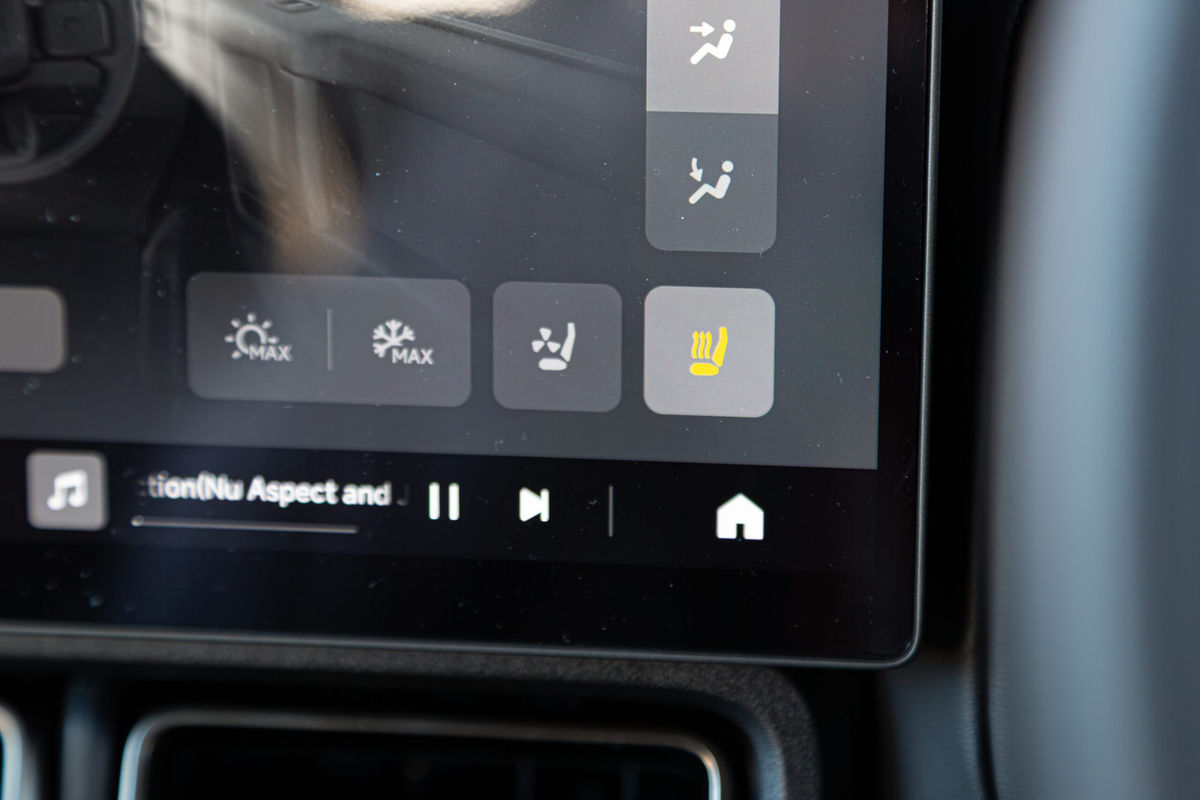
Opting for the iWD model over the single-motor V23 is not only about the additional performance, as there’s additional content which we think helps justify the R150 000 difference. Both vehicles get ventilated seats, which are lovely as we head into the summer months, but the iWD gains heating functionality for the front two seats.
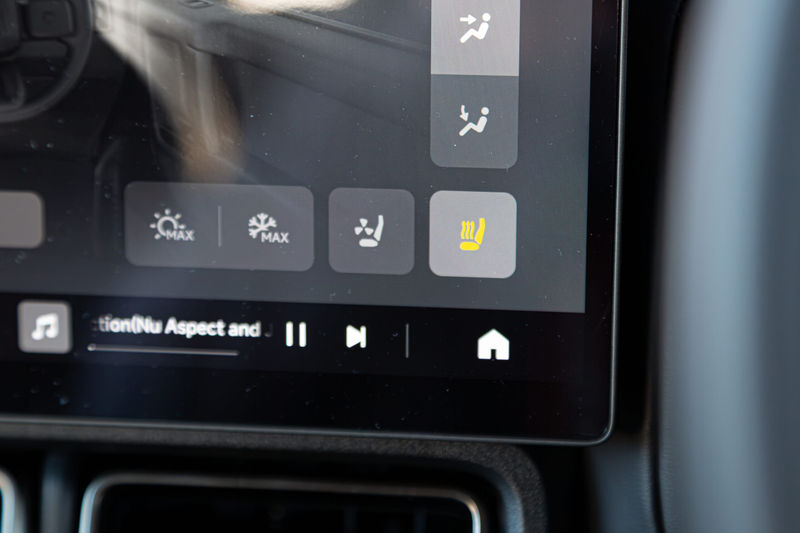
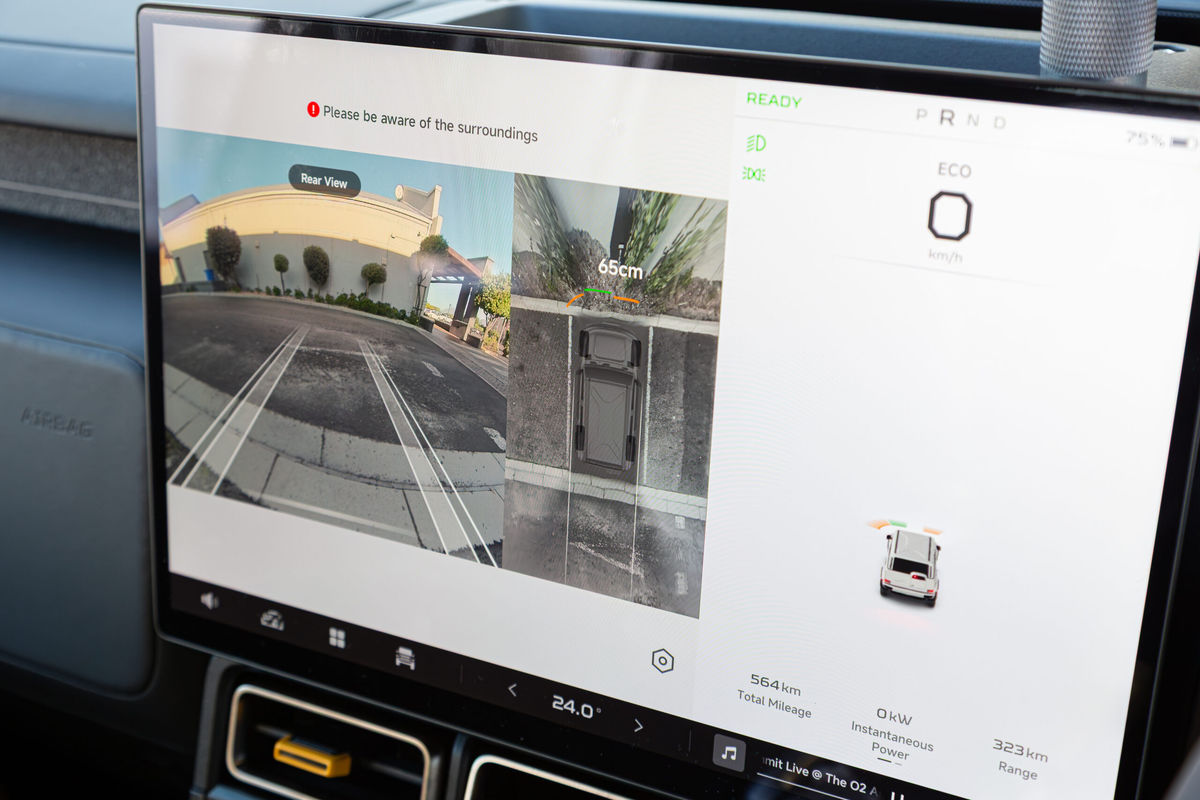
The iWD comes with a full-house Advanced Driver Assistance Systems (ADAS) suite which includes things like adaptive cruise control, automatic emergency braking, forward/rear collision warning, lane keeping assist and a personal favourite; rear cross traffic alert, which is most helpful in shopping mall parking lots. It is worth noting some of the features, like lane-keeping, can be a tad intrusive, but they can be easily deactivated. There’s also a crisp and clear surround-view parking camera.
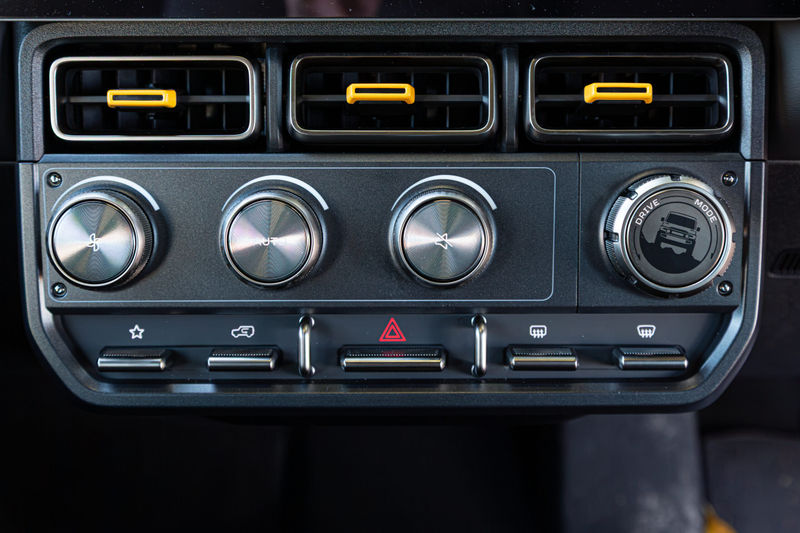
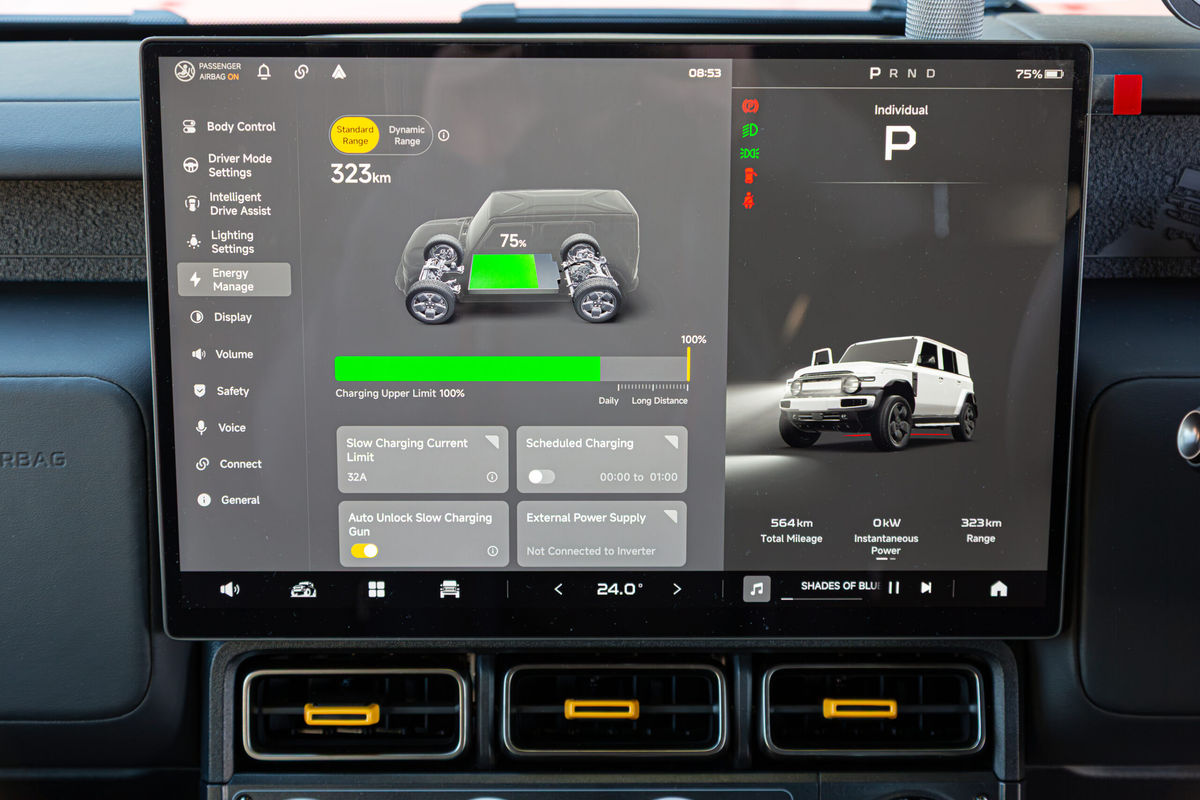
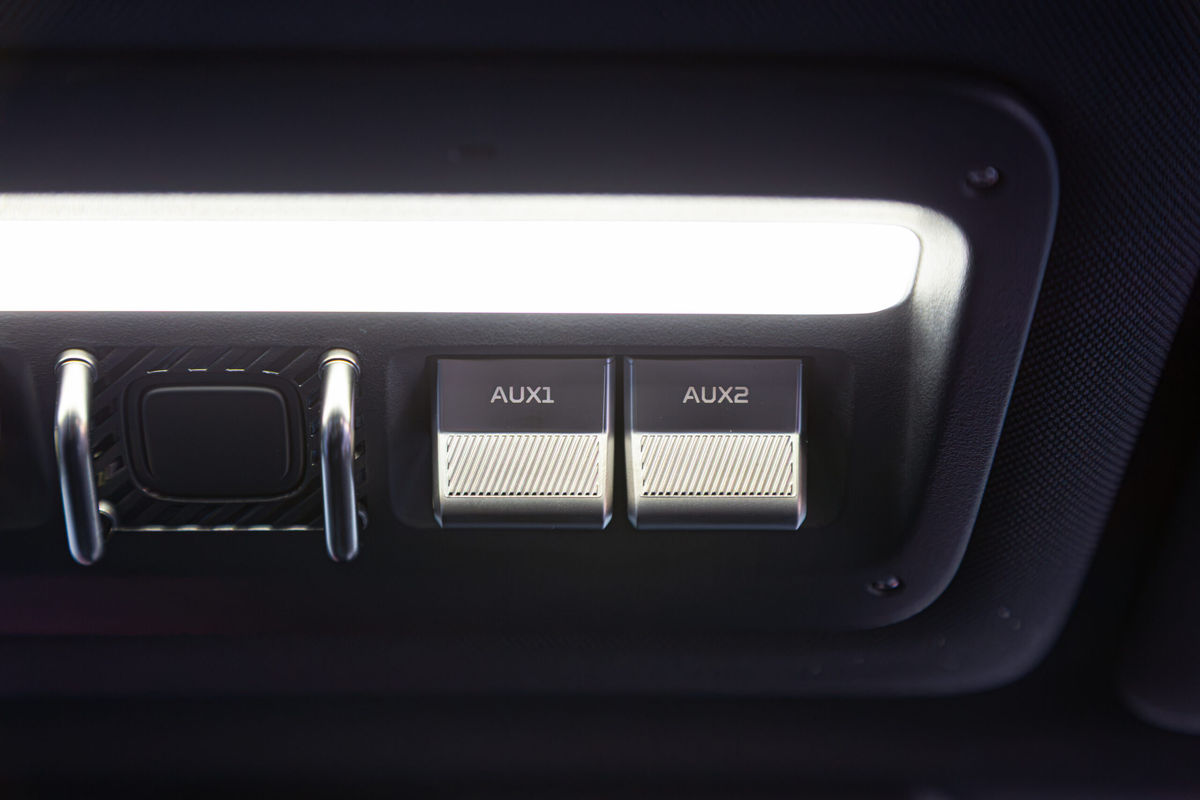
As far as tech goes, the wireless Android Auto/Apple CarPlay both works well and looks great on the ultra-responsive 15.4-inch infotainment screen. As mentioned, iCaur has bucked the trend of incorporating all functionality into this admittedly user-friendly setup, and there are some solid-feeling ventilation and volume controls below it. iCaur is trying to encourage owners to customise their cars and has fitted auxiliary switches into the roof, which helps reduce the wiring complexity of aftermarket gadgets.
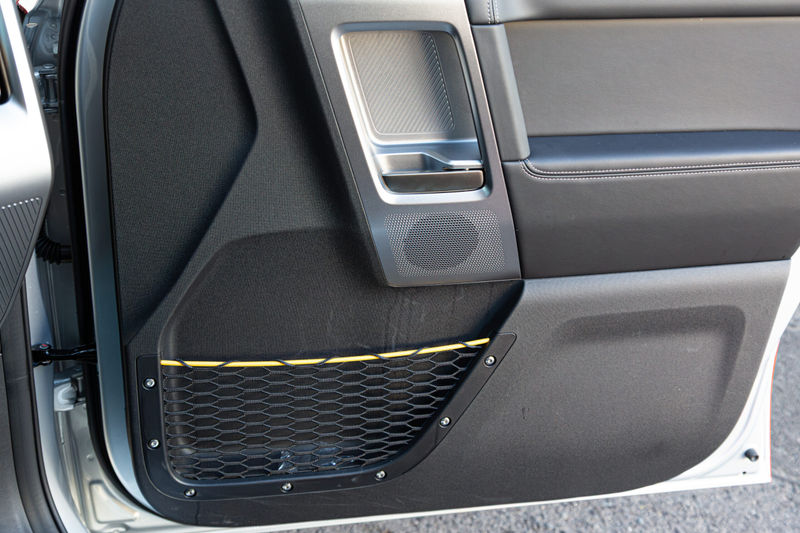
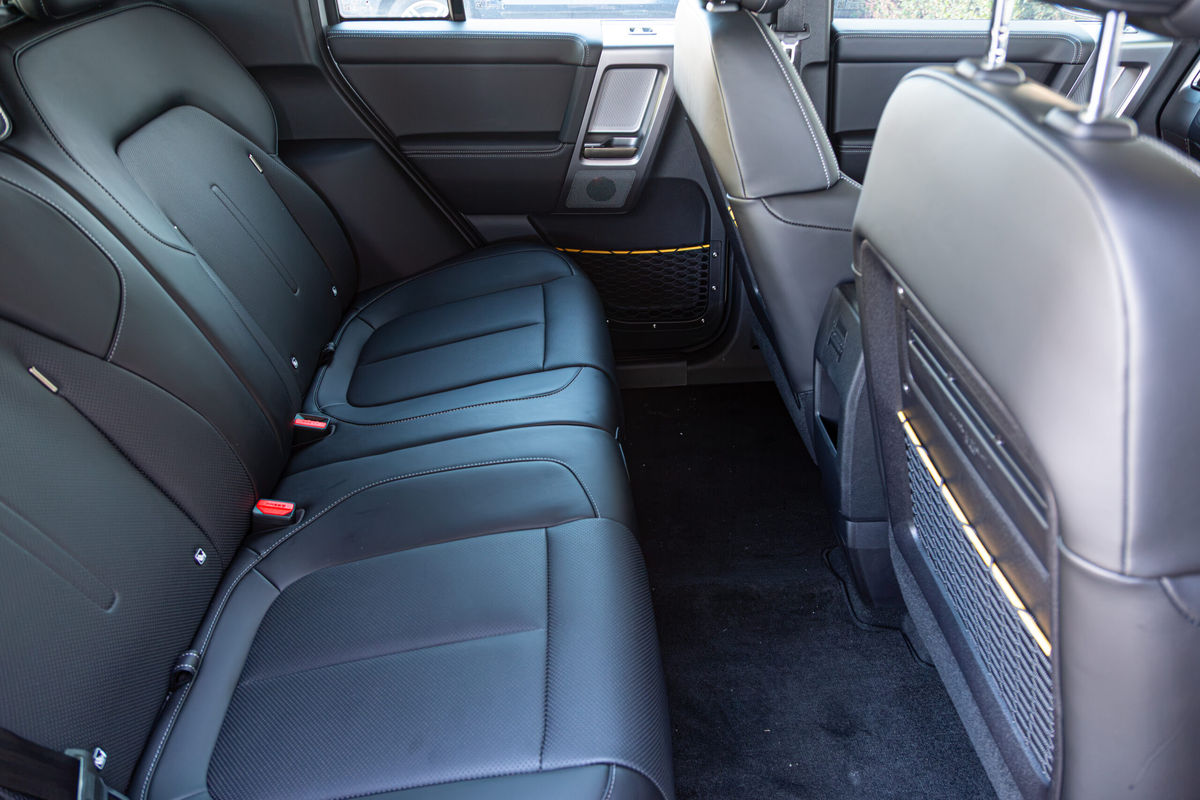
Finally, the fit and finish, and general feeling of quality… At just under R700 000, the V23 iWD is approaching premium territory and we can report that the unkind slur of ‘cheap Chinese quality’ can be well and truly banished – this is a plush cabin. The materials used in the common touch areas not only look great, but feel premium.
Dislikes?
The range
One of the biggest issues we had with the single-motor iCaur V23 was with the range. The retro-styled box shape is not especially aerodynamic and triple-digit speeds on highways tended to decimate the remaining kilometres at an alarming rate. iCaur claims that model consumes 20 kWh/100 km which is on the higher side. The NEDC claim of 360 km was extremely optimistic and if we were lucky, we’d get 300 km.
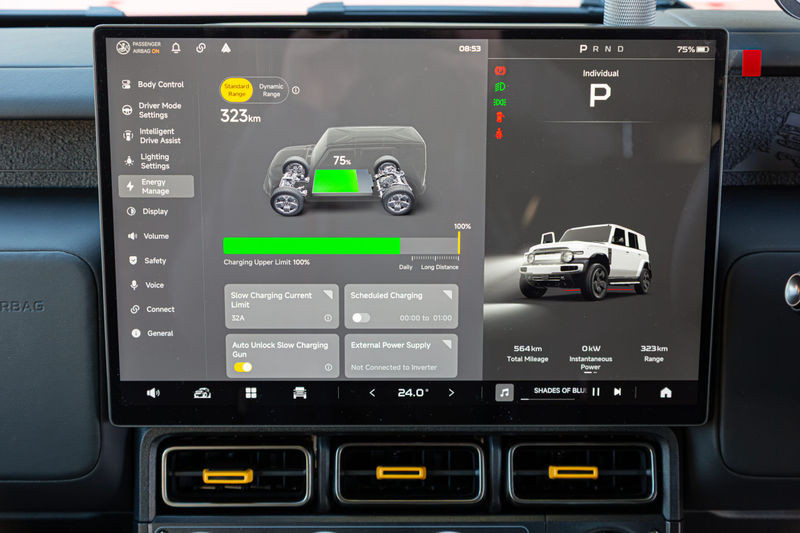
When it comes to range, the iWD is superior thanks primarily to a larger battery capacity of 81.8 kWh as opposed to the single motor’s 59.93 kWh. The efficiency and range are also enhanced by the vehicle’s ability to capture energy via brake regeneration and momentum from not one, but two axles. Now, while the twin-motor iWD’s claimed economy is a touch higher than the single motor’s at 22 kWh/100 km, our testing in similar conditions resulted in an average consumption of 15.4 kWh/100 km around town.
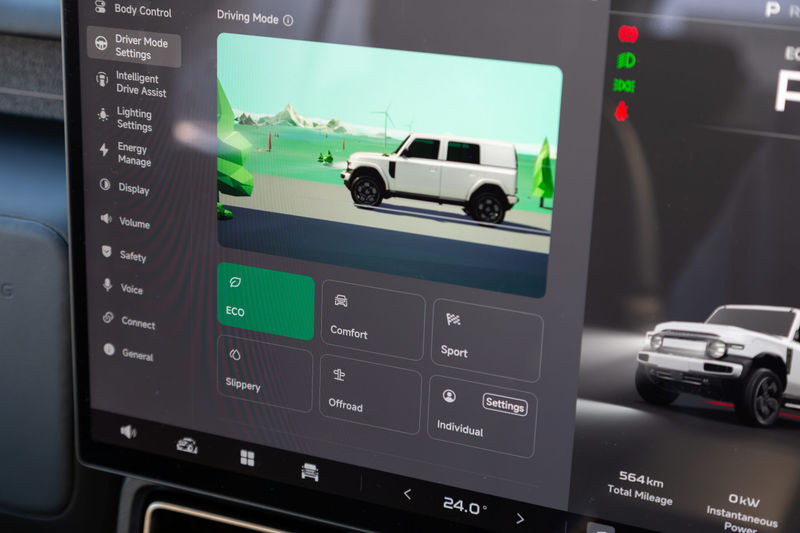
Use the punchy acceleration often on the highways and you’ll surpass that claimed figure. The NEDC range of the dual-motor V23 is claimed at 430 km and in reality, we were getting between 350 and 390 km. We’ll blame our spirited driving habits. Oh, it’s also worth noting the vehicle has a top speed of 140 kph… It’s telling that when you explore the iCaur marketing material, there’s very little mention of the range and efficiency. If you’re doing lots of driving, especially on highways, this might not be the car for you.
Lack of a spare tyre and parcel shelf
Given the varying quality of South Africa’s roads, a spare tyre (or at least the option of some run-flat tyres )would have been appreciated. In iCaur’s defence, very few new-energy vehicles offer spare tyres and off the top of our heads, its only the Jaecoo J5 which has a space-saver wheel.
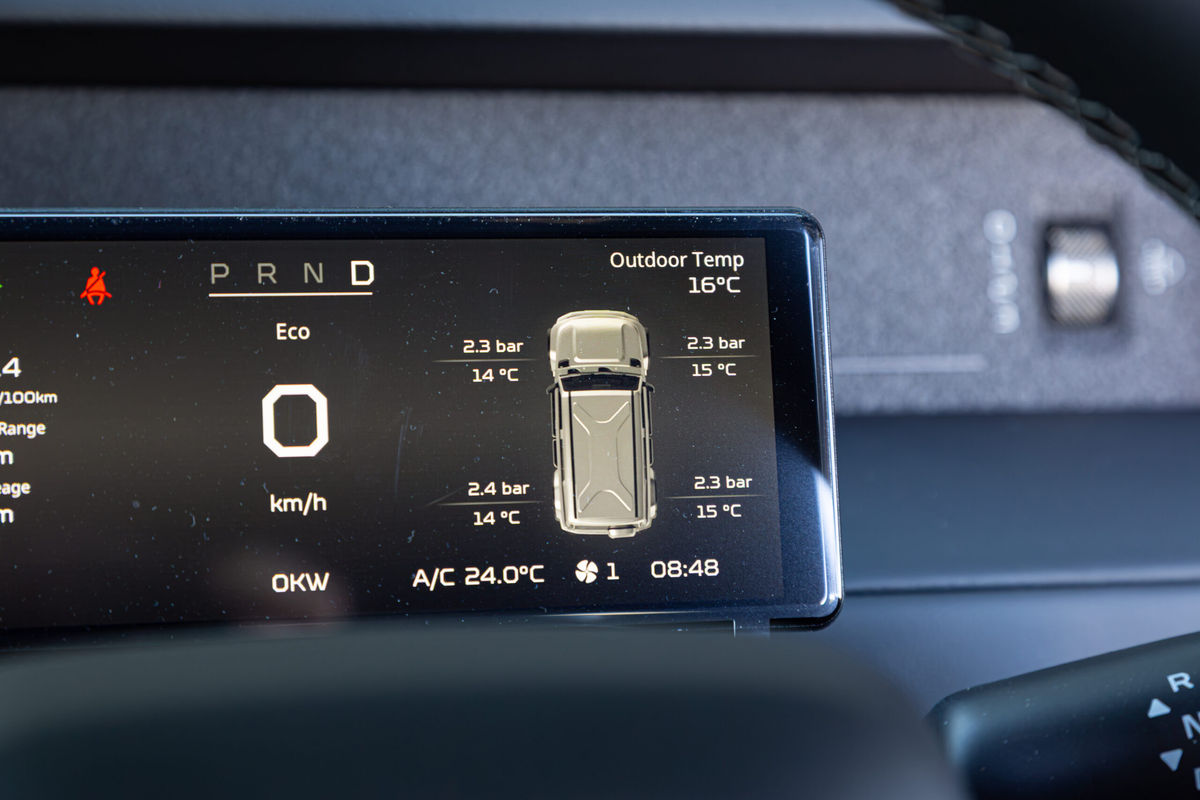
Instead, you get a tyre repair kit and a compressor to reinflate the wheel. We’ve never had any luck with those; good thing there’s eight years of roadside assistance included. There are tyre-pressure sensors for additional peace of mind.
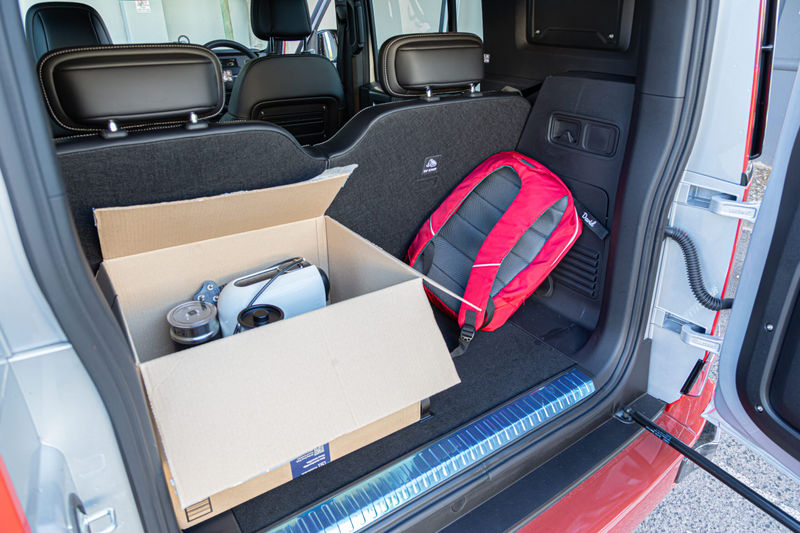
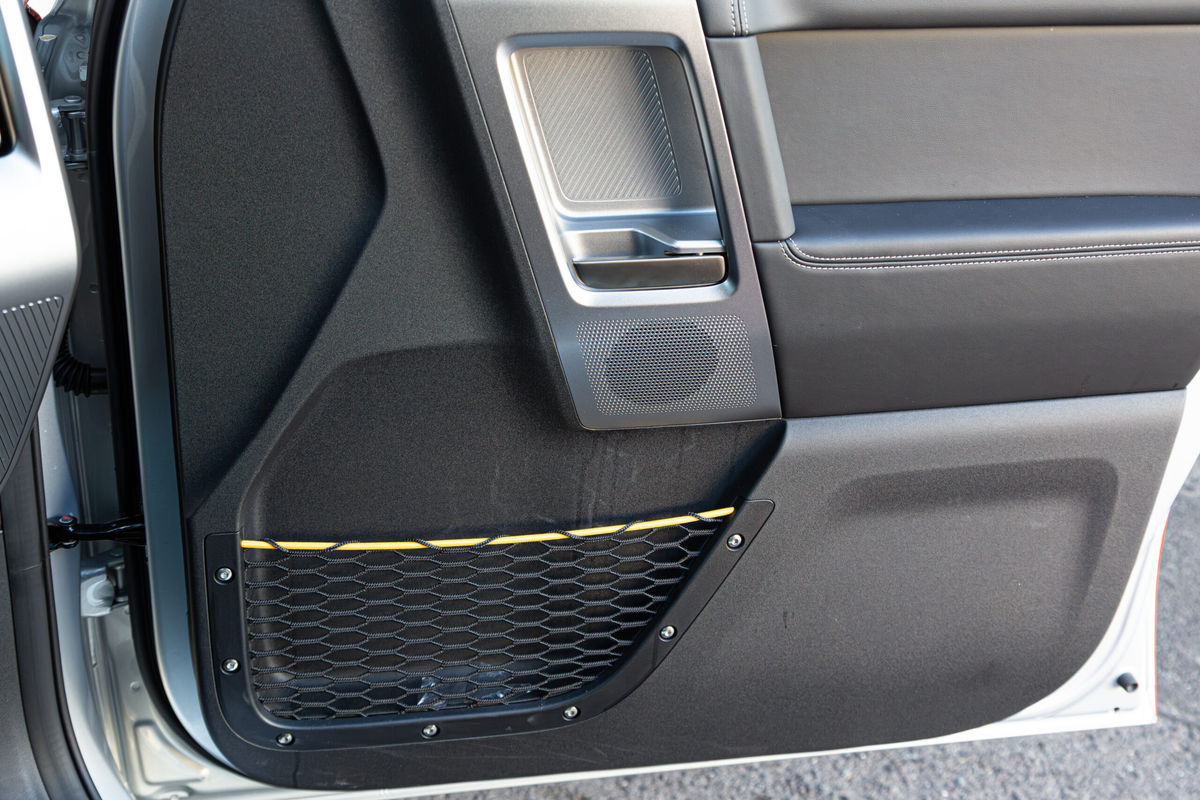
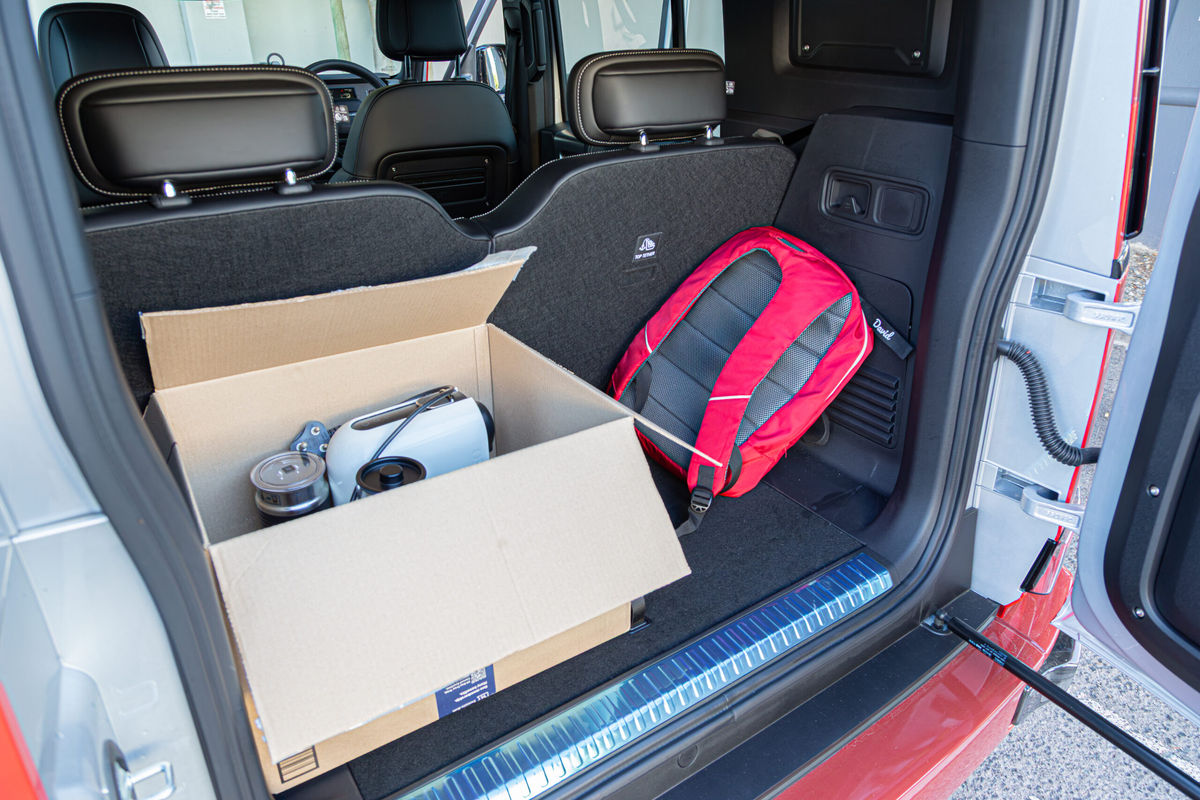
In another unique South African scenario, a parcel shelf to shield the boot’s contents from prying eyes wouldn’t have gone amiss, either. There is a false floor which offers some privacy, but that’s quickly filled and the boot space isn’t the largest. Interestingly, some third-party suppliers are starting to sell them as accessories and it wouldn’t surprise us if iCaur SA adds this to its growing catalogue.
iCaur V23 iWD charging costs
As the price of both petrol and diesel heads upwards and we’re potentially looking at R40 per litre by Christmas, interest in new-energy vehicles like EVs and plug-in hybrids (PHEVs) has increased. We’re happy to report that there are now a number of charging providers in South Africa and the public charging infrastructure is growing.
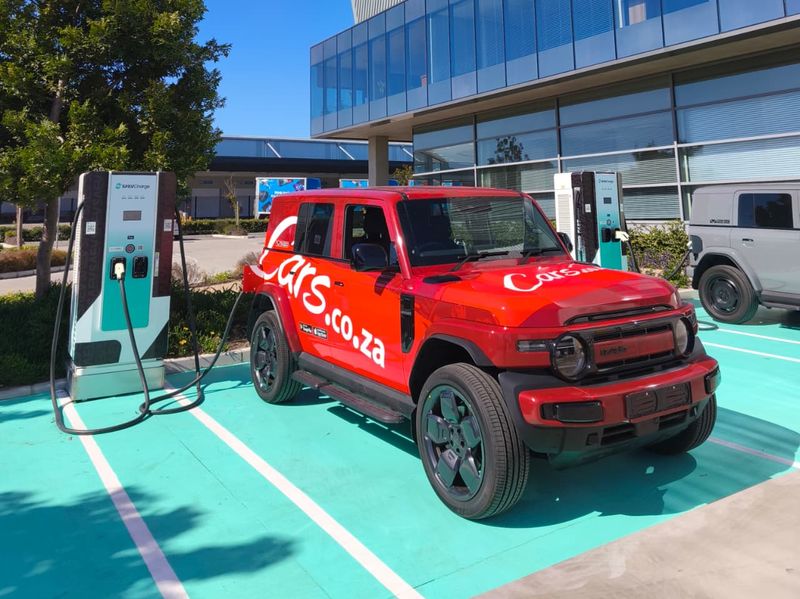
We’d always maintain that, if you’re wanting a vehicle that needs to be plugged in, the best place to charge is at home. Bonus if you have a home solar system, because then your cost per kilometre suddenly becomes very appealing. As a reference point, both petrol and diesel running costs are above R2.00/km.
| Supplier | Rate per kWh | Cost (10% to 80%/57.26 kWh) | Cost per km |
|---|---|---|---|
| Residential home | ~R3.50 / kWh | R200.41 | R0.77 / km |
| Public AC charging | ~R5.88 / kWh | R336.69 | R1.29 / km |
| Public DC fast charging | ~R7.25 / kWh | R415.14 | R1.60 / km |
| Public ultra-fast DC charging | ~R8.35 / kWh | R478.12 | R1.84 / km |
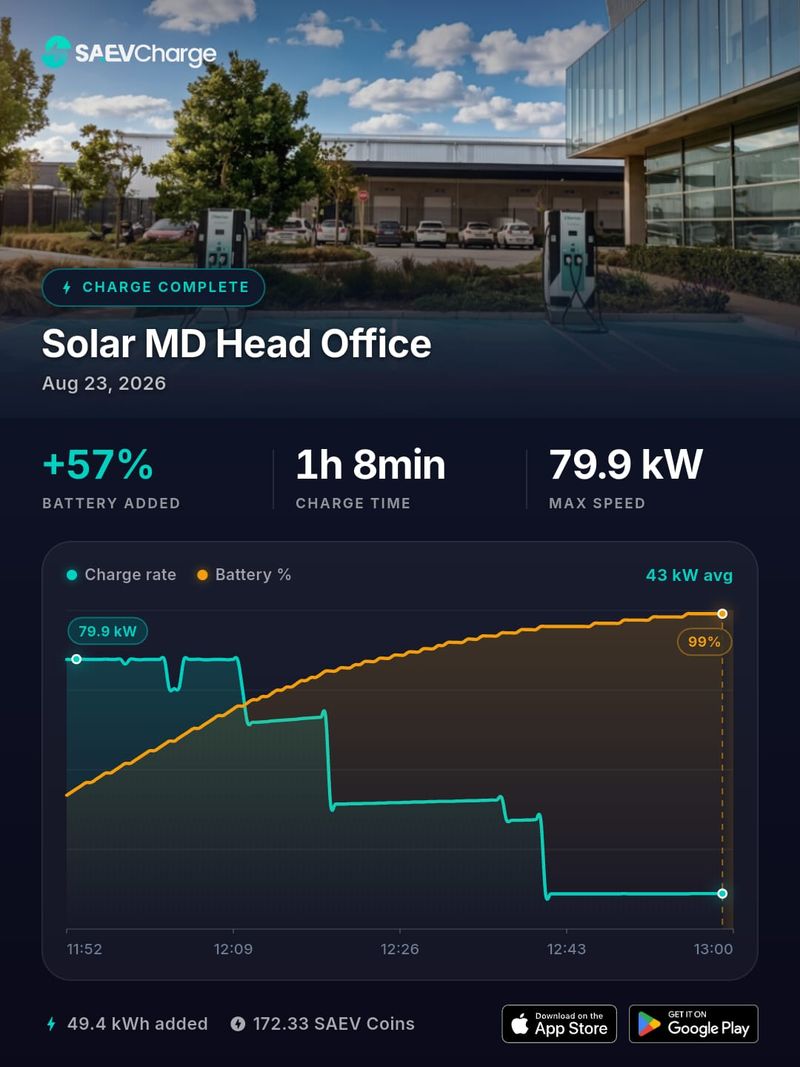
In terms of battery management and charging rates, the iCaur V23 iWD can support 6 kW AC and up to 85kW DC charging. Our charge test showed a max charge rate of 79.9 kW, adding 49.4 kWh and taking it from 39% to 100% in one hour and eight minutes. Remember that charging from 90-100% always takes longer as the charge rate slows down considerably to protect the battery. In a rush? Charge to 80%.
iCaur V23 iWD Price & After-sales support
The V23 range is covered by an 8-year/200 000 km vehicle warranty, an 8-year/160 000 km power battery warranty and a five-year/100 000 km service plan. There’s also roadside assistance for 8 years and 200 000 km. There are 32 dealers in South Africa.
| iCaur V23 2WD | R519 900 |
| iCaur V23 iWD | R669 900 |
Verdict
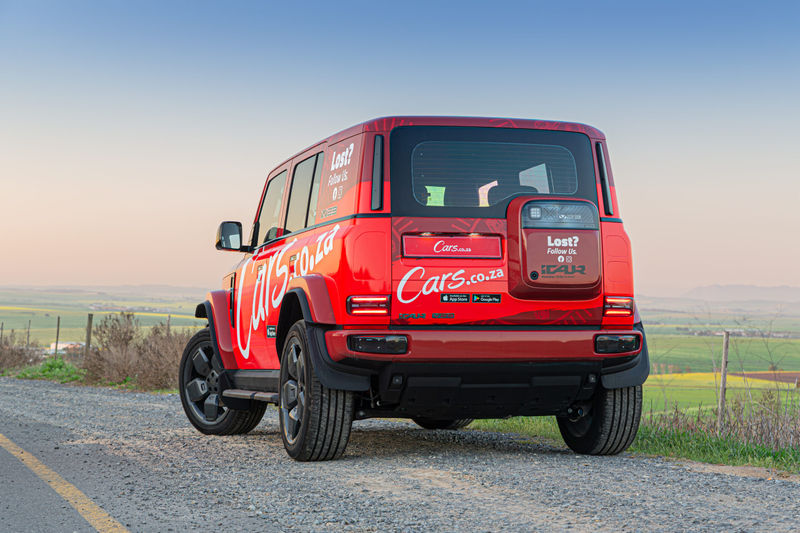
The iCaur V23 iWD is a vehicle which will cause conflict between your head and heart. The numbers don’t lie, especially when it comes to efficiency and range. Based on a mathematical analysis, the V23 isn’t a particularly outstanding electric car, primarily due to its aerodynamics.
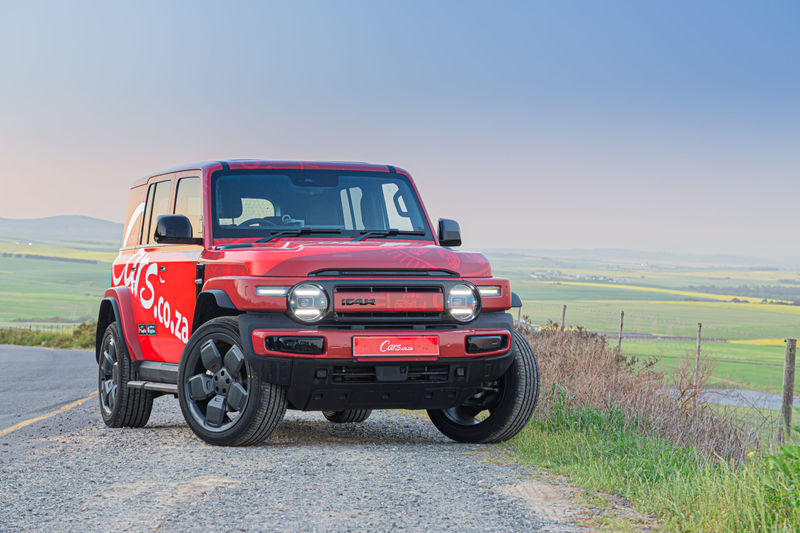
But, that design! Toss all logic aside and look at it from a joy and uniqueness point of view. I’ll bet the impressive sales numbers are achieved based on those retro modern looks alone. Climb inside and this is a cabin that’s intriguing and full of fun secrets and surprises. This vehicle oozes charm and cool, but is it enough to offset its so-so range? Life’s short – buy the fun car and enjoy yourself.
Further reading
All the latest iCaur news and reviews
Want to purchase a new or used iCaur? Browse vehicles for sale
David Taylor

Having contributed to multiple motoring titles as well helping run the public relations machine of the Johannesburg International Motor Show, Dave has experience in both sides of the motoring industry. He's based in the Western Cape and is responsible for the performance testing, photography & weekly YouTube news for Cars.co.za.