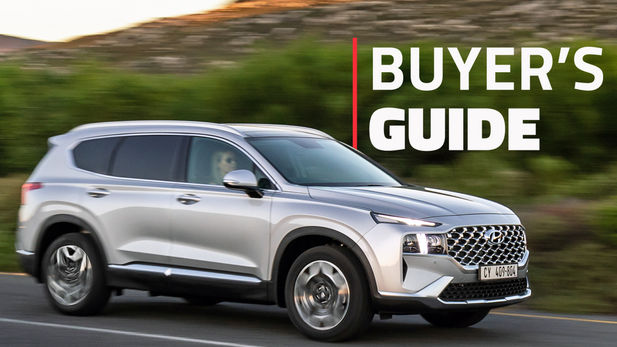
Looking for a spacious 7-seater SUV but don’t require serious off-road ability? Let’s examine the 4th-gen Hyundai Santa Fe’s strengths and weaknesses – and see what you can expect to pay for a neat used example…
The Toyota Fortuner has long been the default choice for South African motorists who require a 7-seater SUV. What’s that got to do with the Hyundai Santa Fe, you ask? The absolute dominance of the former saw several highly competent offerings – including the 4th-gen Santa Fe – largely overlooked in Mzansi!
Yes, despite arriving as an utterly compelling package, Hyundai’s unibody Santa Fe found itself competing not only with Toyota’s Prospecton-built stalwart, but other bakkie-based adventure SUVs such as the 2nd-gen Ford Everest, Isuzu’s RJ-series MU-X and Mitsubishi’s 3rd-gen Pajero Sport.
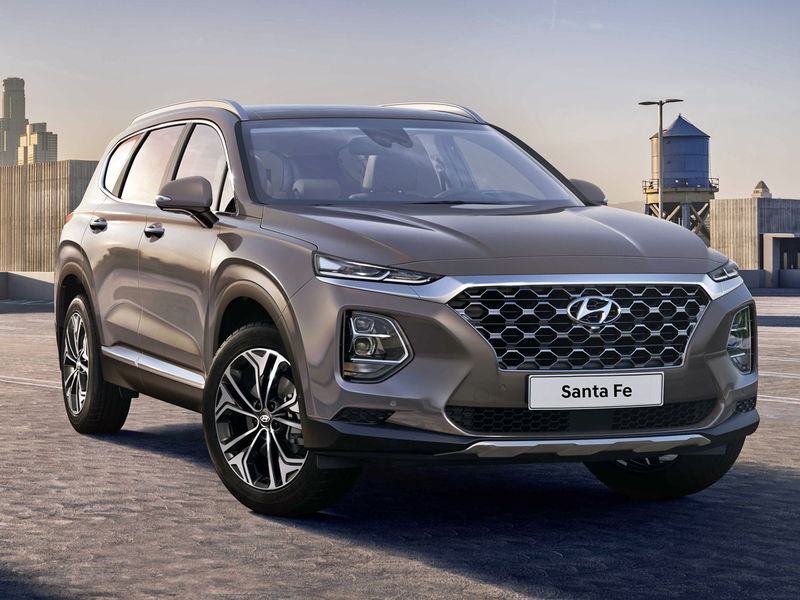
With SA buyers seemingly preferring these rugged body-on-frame contenders – which furthermore offered loftier off-road credentials – local sales of the TM-series Santa Fe (which was based on a front-wheel-drive platform) were decidedly slow. For instance, just 177 units were sold across South Africa in the whole of 2023, a figure that fell to a mere 86 units in 2024.
To complicate matters, Hyundai Automotive SA aimed rather high with its Santa Fe, listing premium-badged SUVs such as the Land Rover Discovery Sport, Audi Q5, Volvo XC60 and BMW X3 as direct rivals. As such, the Korean firm’s 7-seater ultimately found itself in something of a “no man’s land” between cheaper bakkie-based offerings and more expensive executive SUVs.
As an aside, it’s worth noting the Santa Fe was Hyundai’s flagship product in Mzansi until September 2021, when the larger and even more expensive Palisade touched down to assume that mantle.
Hyundai Santa Fe model line-up in South Africa
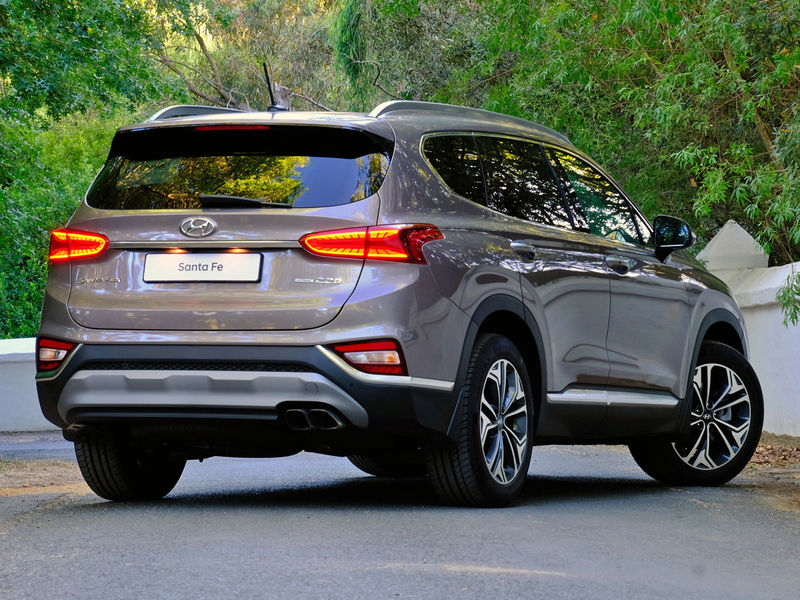
The first official images of the 4th-gen Hyundai Santa Fe were released in February 2018 ahead of this model’s world premiere at the Geneva International Motor Show the very next month.
It wasn’t long before the TM-series Santa Fe arrived in South Africa, hitting the local market in November 2018. It inherited its predecessor’s 2.2-litre, 4-cylinder turbodiesel engine, though upgraded from the old 6-speed automatic transmission to a fresh 8-speed item. At launch, the Santa Fe line-up comprised a trio of derivatives, with only the flagship boasting all-wheel drive:
- Santa Fe 2.2D Premium 8AT FWD (142 kW/440 Nm)
- Santa Fe 2.2D Executive 8AT FWD (142 kW/440 Nm)
- Santa Fe 2.2D Elite 8AT AWD (142 kW/440 Nm)
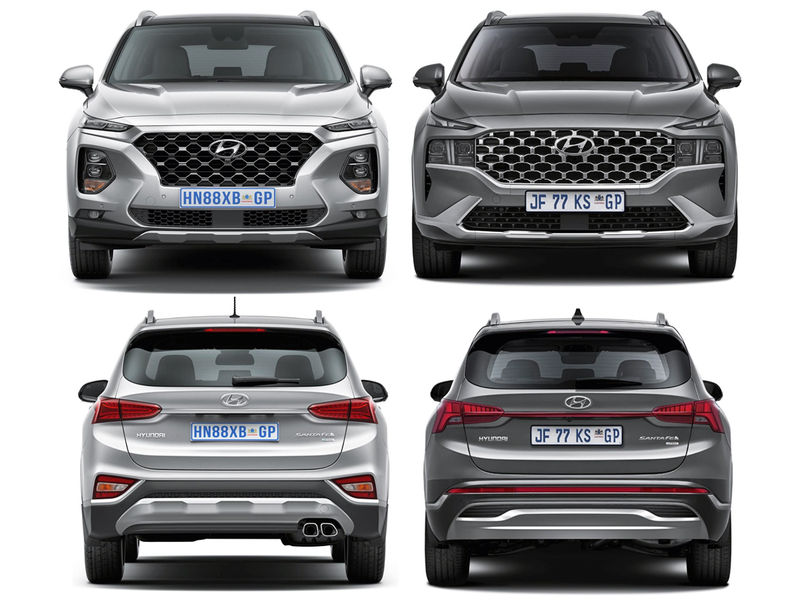
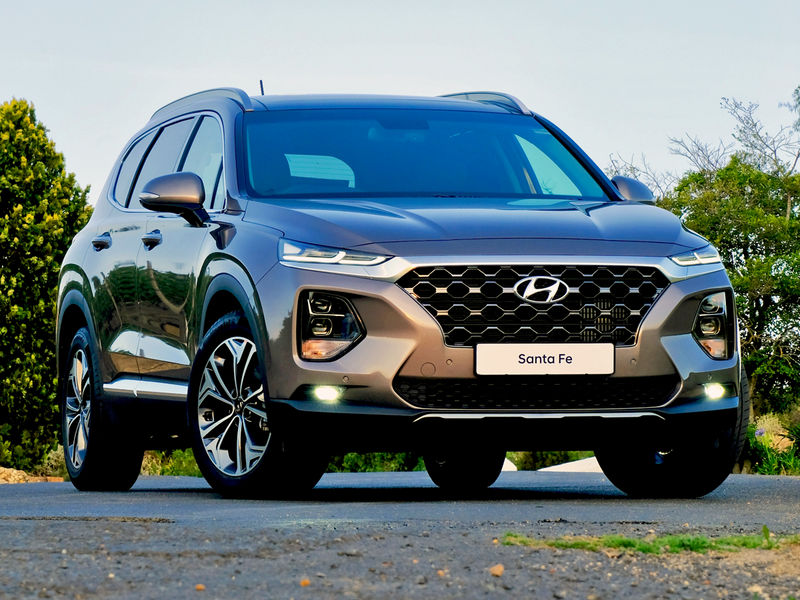
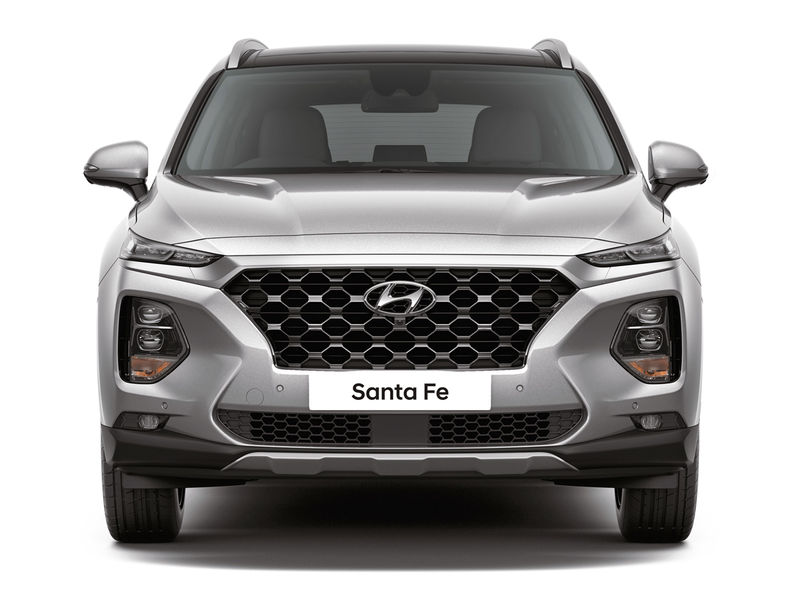
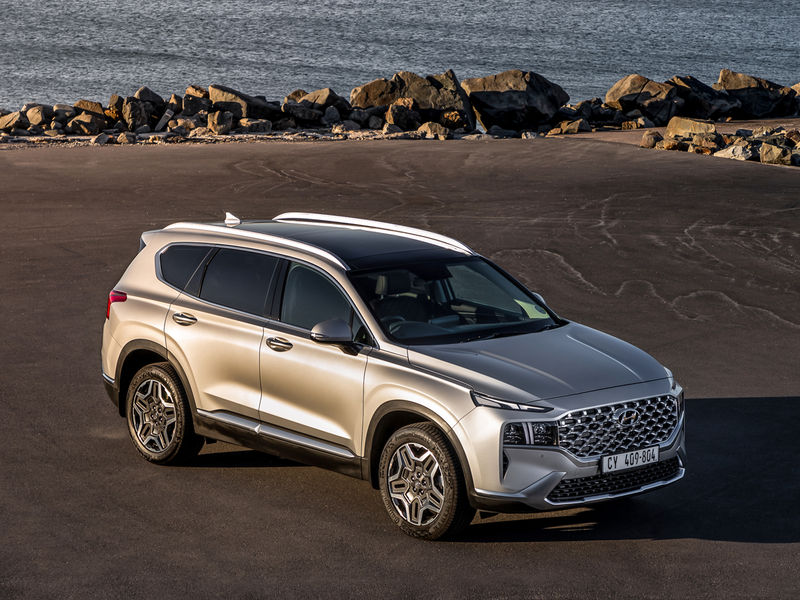
Little changed until April 2021, when the refreshed Santa Fe made local landfall, with Hyundai describing the updated model as more than a “mere facelift”. Indeed, this mid-cycle revision – which saw the local range rationalised to 2 derivatives – included not only more striking styling (largely courtesy of that giant grille) but also platform tweaks and significant mechanical alterations.
For instance, the updated Santa Fe switched to the automaker’s latest “Smartstream” CRDi turbodiesel engine, which featured an aluminium (rather than iron) block, a higher (2 200-bar) injection system and a new turbocharger design. Despite its slightly smaller displacement (2 151 cm3 versus 2 199 cm3) and lower weight, the new motor’s peak outputs increased to 148 kW and 441 Nm.
- Santa Fe 2.2D Executive 8DCT FWD (148 kW/441 Nm)
- Santa Fe 2.2D Elite 8DCT AWD (148 kW/441 Nm)
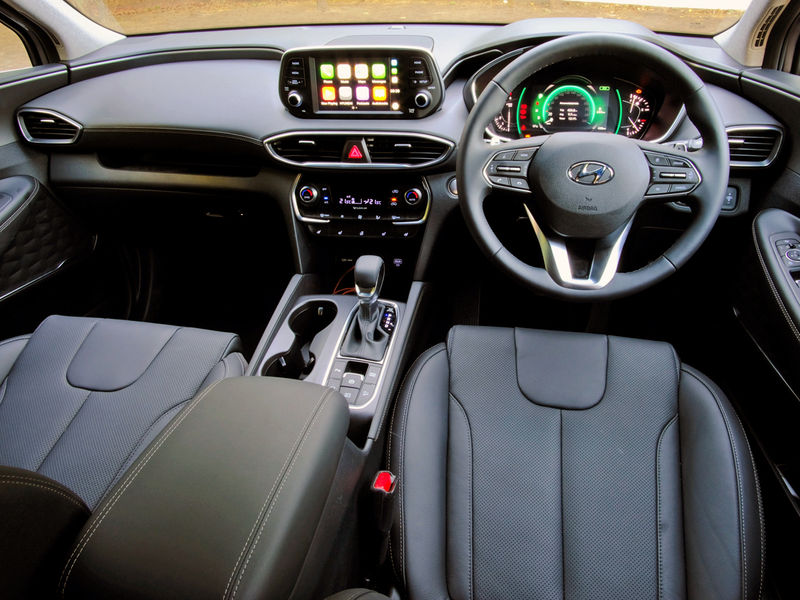
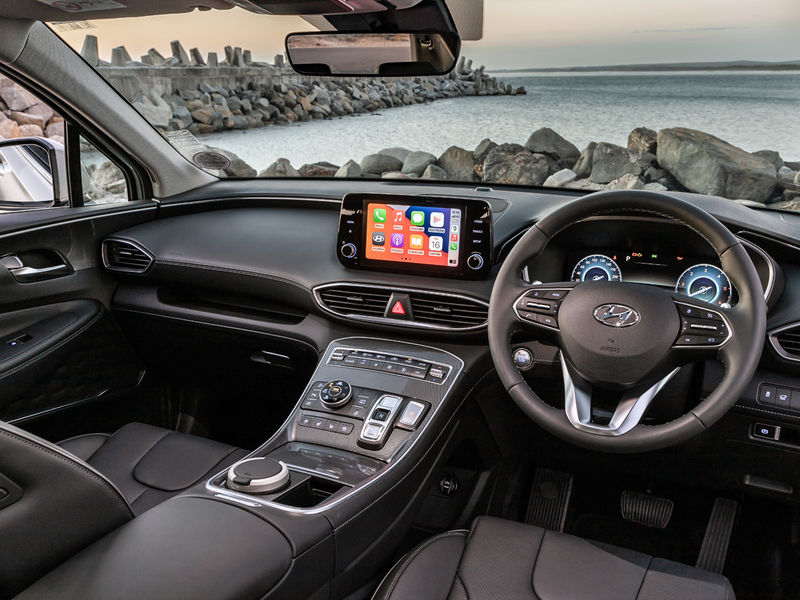
In addition, the torque-converter automatic transmission fell away at this point; it was replaced by a “wet” 8-speed dual-clutch transmission operated through new shift-by-wire buttons rather than a traditional lever. Meanwhile, the overhauled cabin boasted a new floating centre-console design, while also upgrading from a 7-inch touchscreen infotainment screen to an 8-inch item.
Then, for the 2023 model year, the AWD-equipped Elite derivative quietly became available with a raft of additional driver-assistance equipment, including lane-departure warning, lane-follow assist, fatigue detection, driver-attention warning, forward-collision avoidance assist and rear cross-traffic collision avoidance assist.
Local sales of the 4th-gen Santa Fe petered out late in 2024, while Hyundai Automotive SA deliberated on whether or not to introduce the 5th-gen model, which is interestingly not built in turbodiesel form.
What are the Hyundai Santa Fe’s strengths?
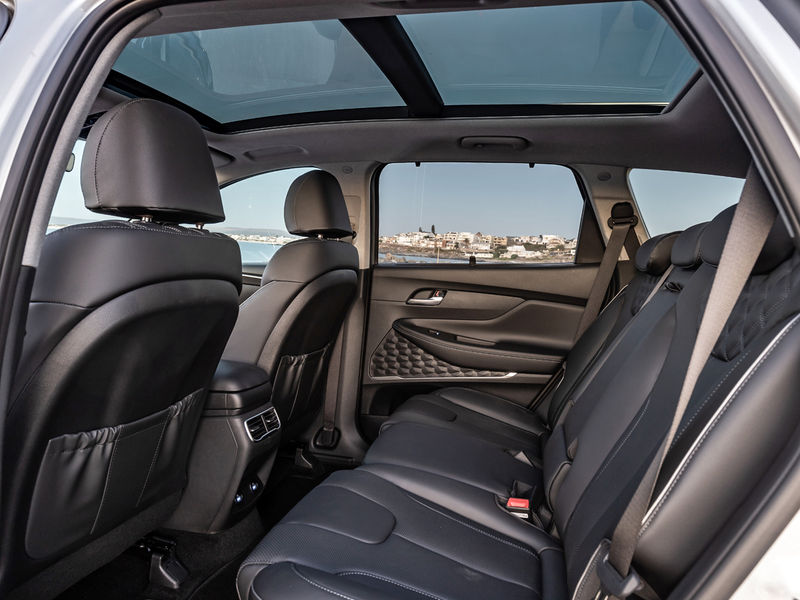
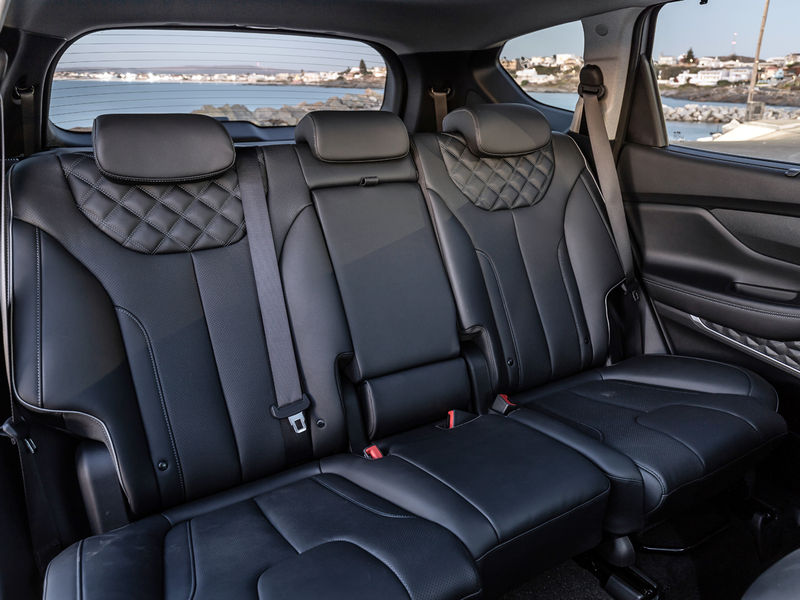
Roomy, versatile interior: The TM-series Santa Fe was larger than its forebear, with much of the extra wheelbase length translating to additional 2nd- and 3rd-row legroom. Access to the final row of pews – which was spacious enough to comfortably accommodate young children – was furthermore simplified by the introduction of a clever “1-touch walk-in” function (at the prod of a button, the 2nd row slid forward and folded out of the way).
With all seats in place, luggage capacity was a modest 130 litres (admittedly slightly more than before), though this figure increased to 547 litres with the 3rd row stowed and a whopping 1 625 litres with the 2nd row also folded down. Interestingly, the facelifted Santa Fe grew 15 mm in length to 4 785 mm, and that helped Hyundai to free up even more 2nd-row legroom – as well as a smidge extra cargo capacity.
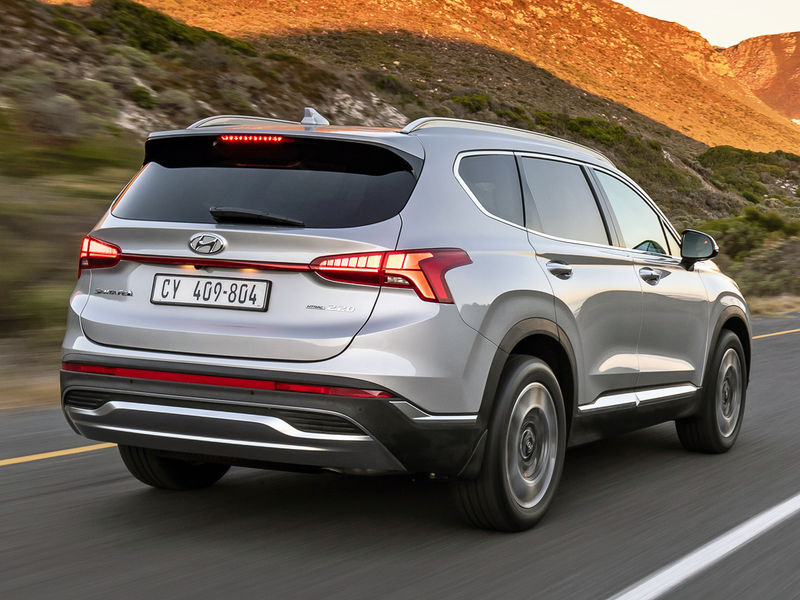
Ride quality and refinement: Endowed with a multi-link rear suspension arrangement and dampers clearly tuned for comfort, the Santa Fe offered a commendable ride quality and lofty levels of refinement. The latter quality was particularly evident on the facelifted model, which seemingly benefitted from additional sound insulation.
In short, compared with its bakkie-based rivals, Hyundai’s 7-seater SUV displayed impeccable road manners, easily soaking up road imperfections even when specified with the largest alloy wheels available (20-inch items wrapped in 255/45 R20 tyres in the case of the facelifted Elite).
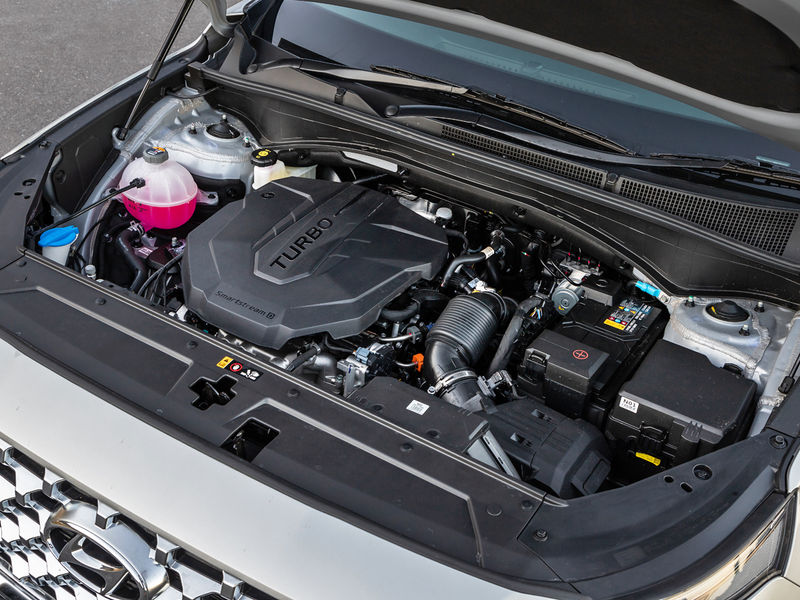
Oomph and efficiency: While there certainly were noteworthy differences between the pair of 2.2-litre, 4-cylinder turbodiesel engines offered during this Santa Fe’s local lifecycle, both delivered suitable levels of punch. Indeed, peak twisting force was on tap from as low as 1 750 rpm in each case, lending this big SUV a pleasing degree of tractability.
These oil-burning motors were also capable of returning wallet-friendly fuel consumption. For the pre-facelift FWD derivatives, Hyundai claimed a figure of just 7.8 L/100 km, a number that grew to 8.2 L/100 km in the case of the AWD variant. With the new engine rolled out at the mid-cycle update, the South Korean firm listed a claim of 7.9 L/100 km for both the front- and all-wheel-drive derivatives.
A brief aside on another key difference between these 2 engines: the earlier unit used a chain-driven cam, while the newer mill (which had a narrower bore, but longer stroke) switched to a belt. Though the latter was quieter, the belt theoretically had a shorter service life than the chain.
What are the Hyundai Santa Fe’s weaknesses?
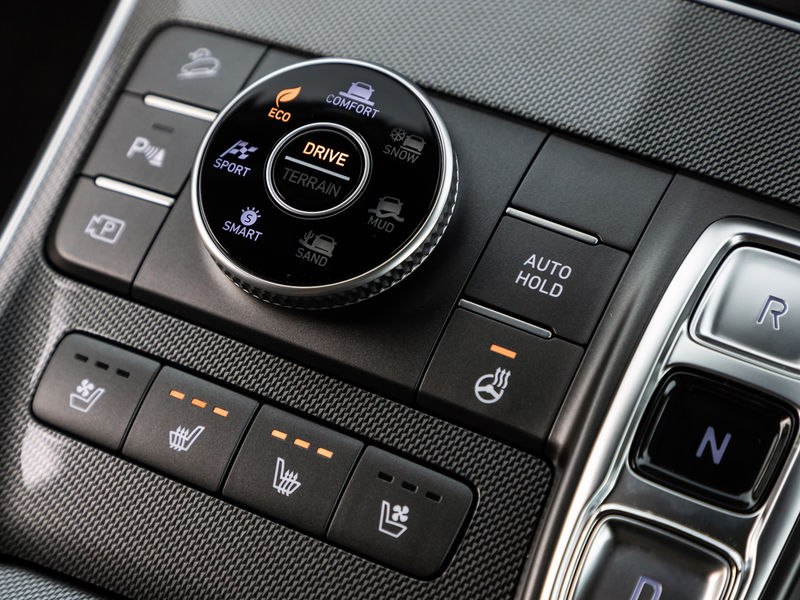
Lacked bakkie-based rivals’ off-road ability: While the 4th-gen Santa Fe was streets ahead of its bakkie-based competitors in terms of ride comfort, it simply couldn’t match them on the rough stuff. Sure, Hyundai added a trio of “terrain modes” (sand, snow and mud) to the all-paw Elite flagship at the facelift, but this remained a decidedly road-biased SUV.
Still, the Santa Fe was certainly more than capable of handling the average gravel road, with the early version featuring a ground clearance of 185 mm, a figure that fell to 176 mm in the case of the facelifted FWD variant and grew to 206 mm on the refreshed AWD derivative.
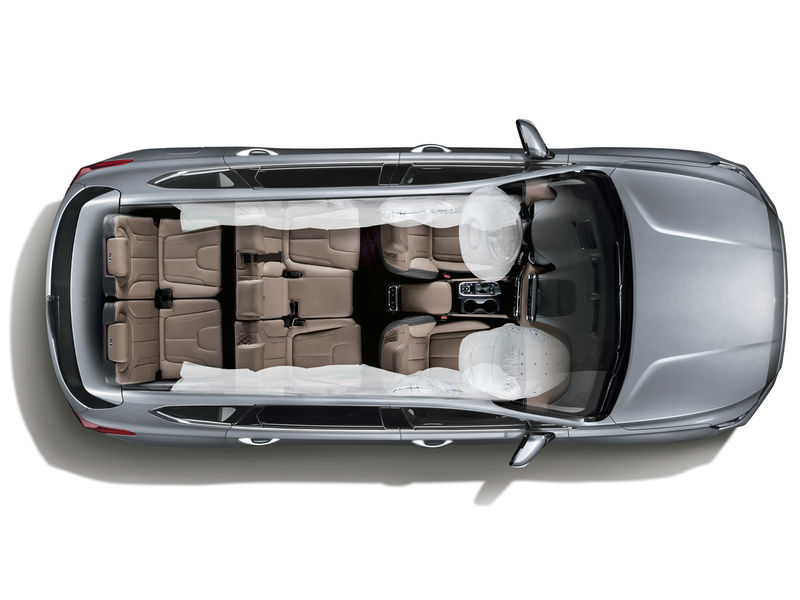
Limited airbag coverage for 3rd row: Though all versions of the TM-series Hyundai Santa Fe sold in South Africa were equipped with 6 airbags, it’s important to note the curtain airbags did not provide comprehensive coverage for the 3rd row of seats (an issue Hyundai resolved on the 5th-gen model).
In effect, the curtain airbags stopped short of the C-pillars, meaning the rearmost occupants didn’t benefit from full protection. While some coverage is undoubtedly better than none (certain of SA’s budget 7-seaters make do with only dual airbags, after all), it’s not great news for families keen on frequently filling all 7 seats.
Not many on the used market: Is this really a weakness? Well, though it’s perhaps it’s a little unfair on the Santa Fe (but also an indication that there’s little else to criticise from a product perspective), a lack of used stock makes it challenging for those shopping for a 2nd-hand example.
Fascinatingly, the 2nd iteration (2 681 units) was by far the most popular Santa Fe in South Africa, before local sales slipped slightly to 1 980 units with the 3rd-gen model. While we don’t have confirmed figures for the TM-series model, we’ve no doubt it failed to match its forebears’ respective volumes.
How much is a used Hyundai Santa Fe in SA?
Throughout the 4th-gen Santa Fe’s local lifecycle, a 5-year/150 000 km warranty, supplemented by an additional 2-year/50 000 km powertrain warranty, shipped standard. Initially, Hyundai Automotive SA offered a 5-year/90 000 km service plan (with intervals of 15 000 km), though later upgraded to a 6-year/90 000 km arrangement.
At the time of writing, we found fewer than 50 units of the TM-series Hyundai Santa Fe listed on Cars.co.za. Interestingly, the split between FWD and AWD derivatives was almost even (leaning slightly in the favour of the latter), with the Elite the marginally more prevalent trim grade.
Indicated mileages varied from just 50 km on a virtually brand-new example to 154 000 km achieved by a 2019 Elite AWD unit. A whopping 88% of listed examples showed under 100 000 km on their respective odometers. Though listings were relatively evenly distributed between model years, the most popular was 2021, which accounted for around 27%.
- Below R400 000: Around 14% of TM-series Santa Fe listings were priced below R400 000, most being base Premium derivatives from the opening 2 model years. That said, the most affordable example we found was a 2019 Elite variant (with 83 000 km on the clock) priced at R349 900.
- R400 000 to R600 000: Approximately half of all listed 4th-gen Santa Fe units were positioned between these pricing bookends. Interestingly, we found slightly more refreshed models here than pre-facelift versions, with the Executive FWD being the most common variant by a small margin.
- R600 000 to R800 000: Accounting for nearly 22%, this pricing bracket featured only facelifted examples (chiefly from the 2023 model year), with an almost even split between the Executive FWD derivative and the Elite AWD variant.
- Above R800 000: The final 14% of 4th-gen Santa Fe stock was priced above R800 000. These units were all from the final 2 model years, the majority with mileage well under 15 000 km. The most expensive example we found was a virtually new Elite AWD with 100 km on the clock and priced at R1 049 000.
Which Hyundai Santa Fe derivative should you buy?
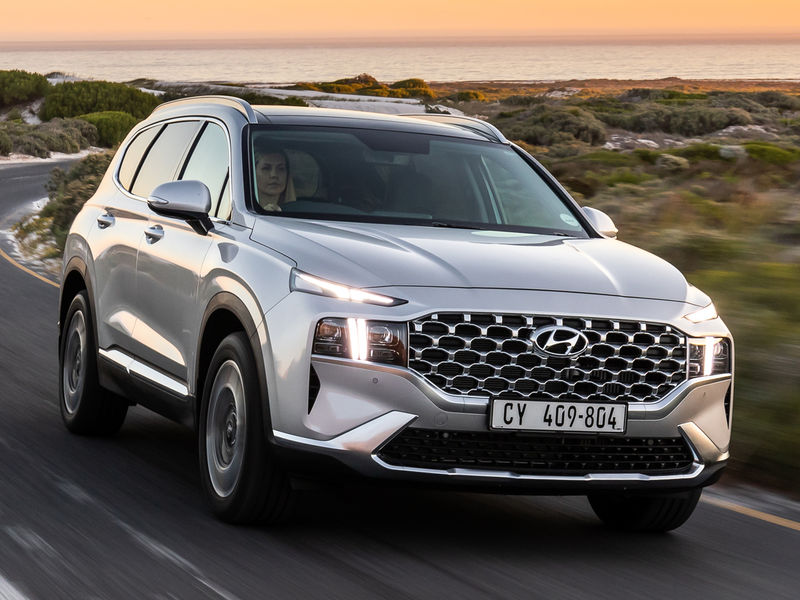
Since styling is a largely subjective matter, we’ll leave you to decide whether you prefer the more restrained exterior design of the pre-facelift Santa Fe or the bolder look of the updated model. That said, keep in mind there were several under-the-skin differences, too.
While we can’t definitively state which of the 2 engines is more reliable, we’d posit that risk-averse buyers who intend on keeping their vehicle for many, many years might be better served by the earlier chain-driven motor and torque-converter automatic transmission.
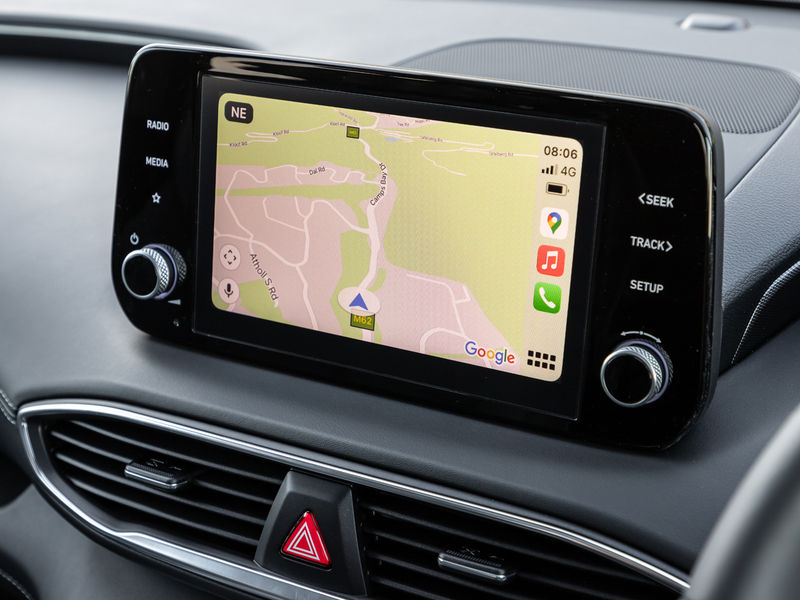
On the other hand, the newer powertrain in the facelifted Santa Fe was a little gutsier and more efficient, while the updated cabin felt a mite more upmarket. So, with that lengthy warranty in mind, we’d probably point to the facelifted Executive FWD as the most compelling variant for the average buyer, on balance.
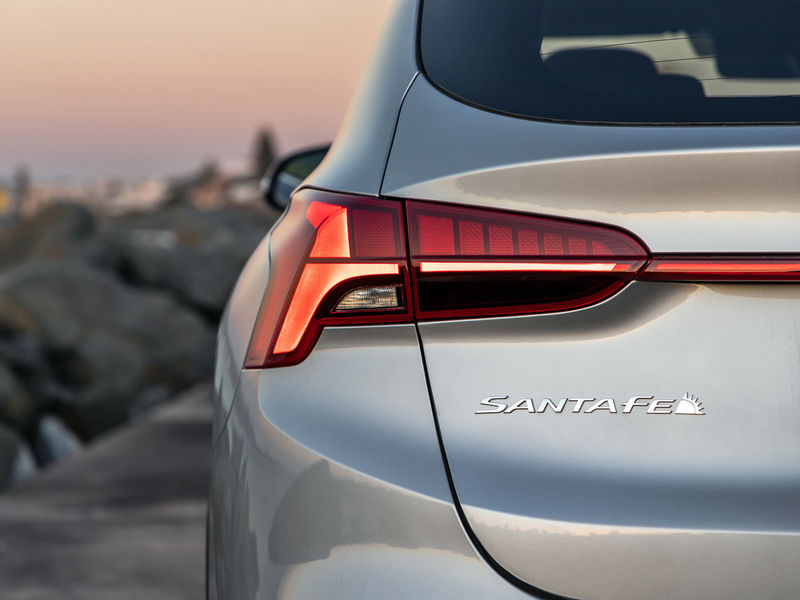
Why not the Elite AWD? Well, if your budget allows, we certainly wouldn’t blame you for opting for this flagship variant instead (after all, it gained items such as larger alloys, LED taillamps, a panoramic sunroof, rear-seat alert and a heating-and-ventilation function for the front seats), though we’d argue the all-wheel-drive system would prove largely superfluous for most buyers.
What are some alternatives to the Santa Fe?
Besides the ladder-frame models and premium-badged SUVs mentioned at the outset of this Buyer’s Guide, what other vehicles competed directly with the 4th-gen Hyundai Santa Fe? Well, local shoppers would certainly also have considered the closely related MQ4-series Kia Sorento.
The Allspace version of the 2nd-gen Volkswagen Tiguan was another compelling 7-seater unibody SUV, though it was somewhat more compact and affordable than the Santa Fe. This German offering was furthermore available with a wide range of powertrains, though keep in mind the turbodiesel engine fell away at the facelift.
There was also the Mitsubishi Outlander (but both the 3rd- and 4th-gen models were offered exclusively in naturally aspirated petrol form in Mzansi), while the 6th-gen Honda CR-V (another petrol-only affair) that hit local roads towards the end of the Santa Fe’s lifecycle upgraded to 7 seats.
Still, like the latter 2 models, Hyundai’s TM-series Santa Fe was ultimately a low-volume product. Blessed with a practical yet decidedly premium interior as well as gutsy turbodiesel powertrains, it was a real shame this family-friendly model was largely overlooked by South Africans in favour of bakkie-based rivals and smaller premium-badged executive SUVs.
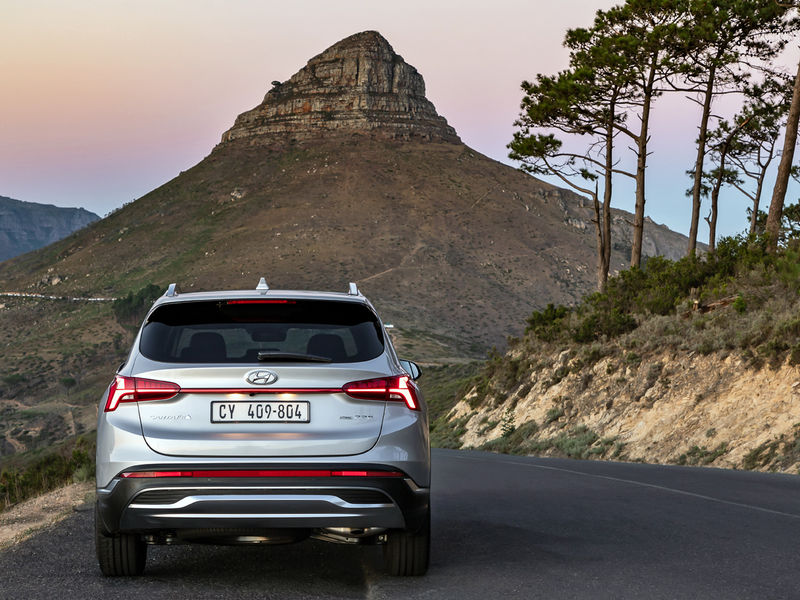
Perhaps the TM-series Hyundai Santa Fe simply found itself in the wrong market at the wrong time – and arguably at the wrong price. Whatever the case, there’s no denying the value this model offers in the used space today.
Looking for a used Hyundai Santa Fe to buy?
Looking to sell your car? You can sell it to our dealer network here