Hyundai’s (not so) compact family car will get a facelift soon – an updated model, replete with sharper “Sensuous Sportiness” design cues and a 1.5-litre turbopetrol flagship derivative equipped with a DCT ‘box, will debut in India later this month.
Upon its introduction in South Africa in 2017, the (then 1st-gen) Hyundai Creta was one of the first “upsized” compact family cars to bridge the gap between small crossovers and family cars (medium SUVs). Since the 2nd-gen model arrived in 2020, followed by a new-look version in 2022, the sub-segment has grown to include the Grand Creta, Kia Seltos, Toyota Corolla Cross and others.
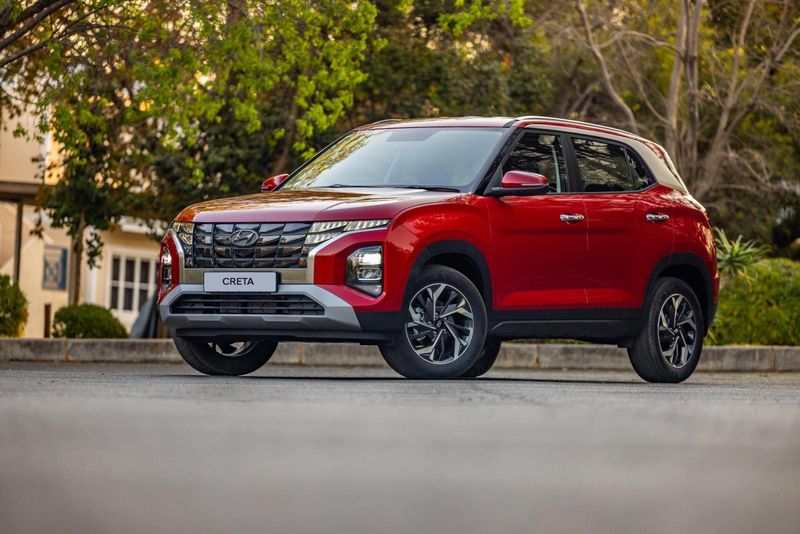
At the time the new-look model was launched in Mzansi, we were surprised that Hyundai had chosen to update its product less than 2 years after the local introduction, but, as it turned out, Hyundai Automotive SA had begun sourcing Creta units from the brand’s Indonesian- (as opposed to Indian) assembly plant.
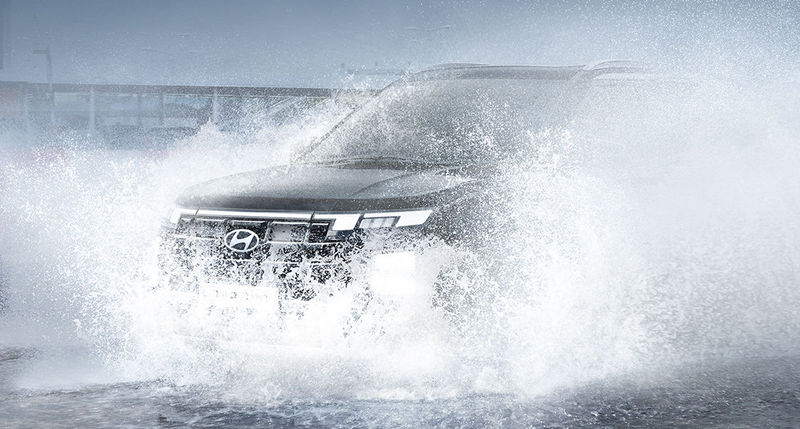
Granted, the current SA model sports elements of the NX4-gen Tucson’s “Sensuous Sportiness” design language (including the compound and segmented grille that incorporates “hidden” headlamp units), but judging from these fresh teaser images of the upcoming Indian-market facelift model, the South Korean brand is looking to roll out an even more distinctive iteration of the Creta, replete with bolder styling.

The front-end styling of the updated Creta (to reiterate, only confirmed for the Indian market at this stage) incorporates an upright bonnet design, full-width LED DRLs, quad-beam LED headlamps (with rhombus-shaped surrounds) and redesigned bumpers with squared-off dark grey garnishes. The tailgate is bisected by an LED light bar, and the taillamp clusters have a blocky lighting signature.
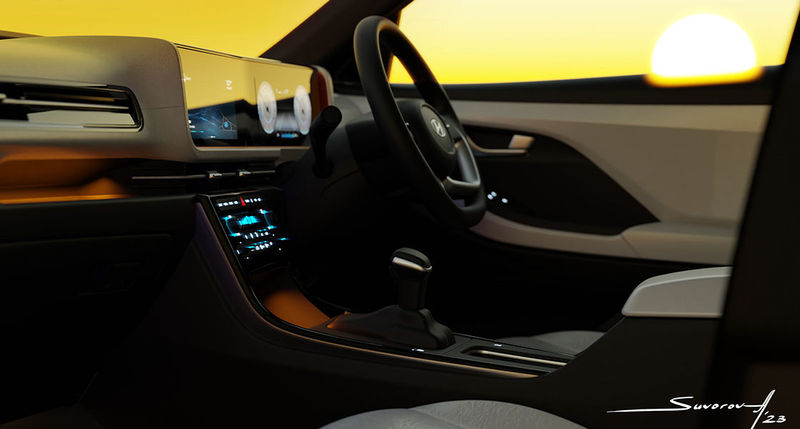
The interior, meanwhile, dispenses with the conventional “plunging fascia flanked by a cowled gauge cluster” in favour of a panel that integrates the infotainment touchscreen and digital instrumentation. Below the central ventilation outlets, Hyundai has further fitted a touch panel for the HVAC controls.
According to Autocar India, the high-spec derivatives of the Creta will be equipped with dual-zone climate control, a 360-degree camera system, as well as advanced driver assistance systems (ADAS).

As for powertrains, the facelifted Hyundai Creta line-up includes a 1.5-litre 4-cylinder naturally aspirated engine mated with a 6-speed manual gearbox or Intelligent Variable (automatic) transmission – as in the South African market – but it will notably be headed by a 119 kW (says Autocar India) 1.5-litre 4-cylinder turbopetrol (Kappa Turbo GDi) engine mated with a 7-speed dual-clutch automatic transmission.
Will this Hyundai Creta facelift come to SA?
Seeing as the Indonesian market’s Creta model is offered in South Africa, does that mean the revisions to the Indian model are irrelevant to our market? The fact that the newcomer appears decidedly more upmarket than the prudently-specified iteration currently on sale in Mzansi is not an encouraging sign…
Bear in mind, however, that 4 years have elapsed since the launch of the 2nd-gen model, which means that a formal mid-product-lifecycle facelift (as opposed to the rollout of a differently styled model, as what happened in our market in 2022) is now imminent.
Although we anticipate that the new Kona boutique crossover will arrive in South Africa sooner rather than later, these updates to the Creta will probably be applied to the Indonesian-built (and therefore SA-delivered) model at some point during 2024.
We’ll update this article as soon as new local market information becomes available.
Related content:
Hyundai Creta (2022) Launch Review
New Hyundai Creta Specs & Prices in South Africa