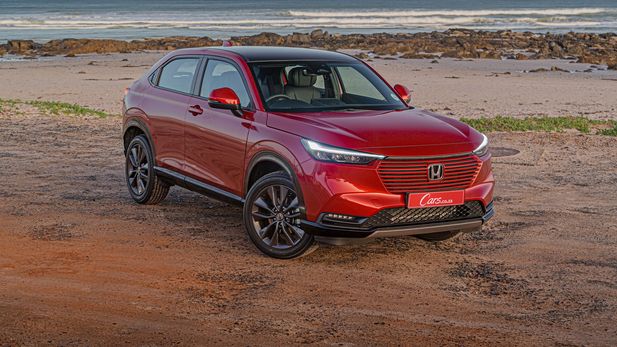
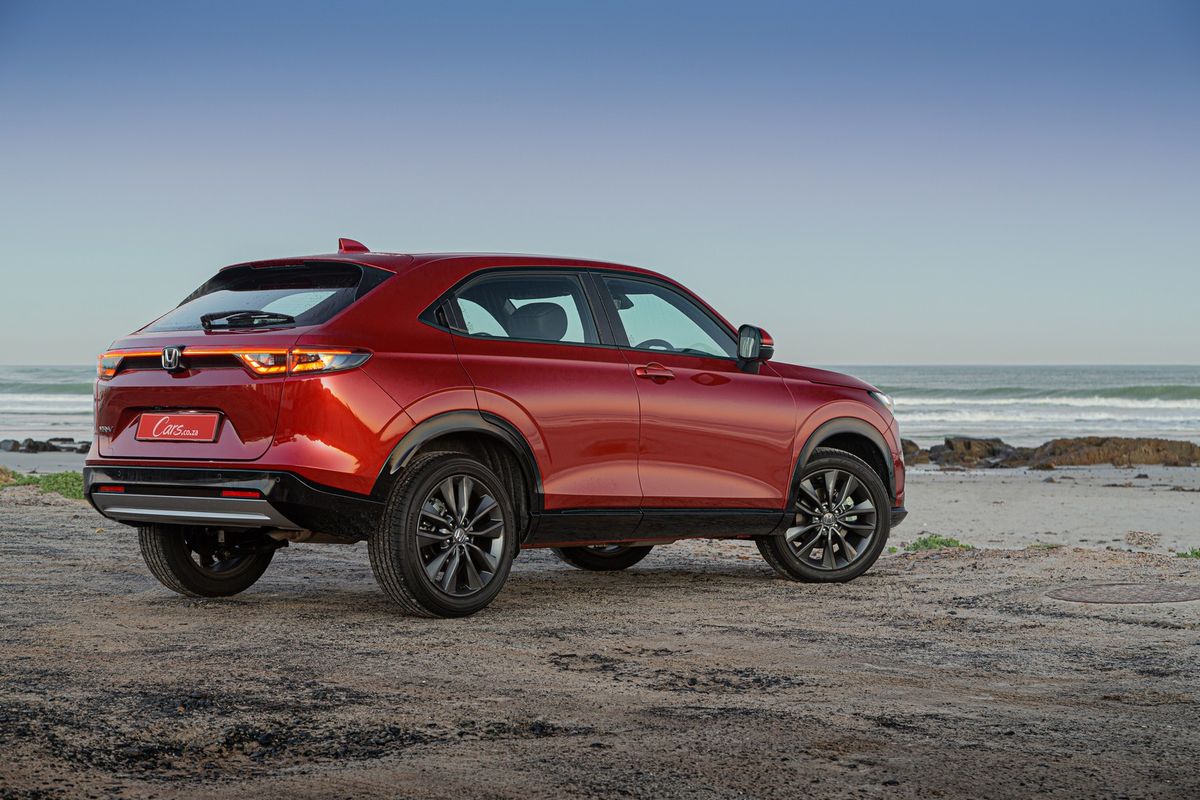
Whereas its predecessor was a conservative compact family car, the new Honda HR-V is more of a stylish small crossover. However, the once-popular Japanese brand is now increasingly viewed as a boutique offering in our market – is the new HR-V impressive enough to stand out in a hotly-contested segment?
We like: Good spec, safety tech and cabin space, relaxed cruiser, Magic Seats
We don’t like: Underpowered engine, variable fit-and-finish quality, expensive
FAST FACTS
- Model: Honda HR-V 1.5 Executive
- Price: R554 500
- Engine: 1.5-litre 4-cylinder petrol
- Power/Torque: 89 kW and 145 Nm
- Transmission: CVT
- Fuel consumption: 6.0 L/100 km
- Luggage capacity: 304–1 274 litres
Serious about buying/selling?
Some Honda dealerships regularly offer great deals. See our New Car Specials!
Looking to sell your car? You can sell your car to SA’s biggest dealer network
Search for a new or used Honda
Where does the Honda HR-V fit in?
The HR-V is Honda’s compact family car, which slots above the WR-V and BR-V, but below the CR-V. There’s one powertrain in the range and 2 levels of trim: Comfort and Executive. The key difference between the two is that the latter has an advanced safety package fitted.
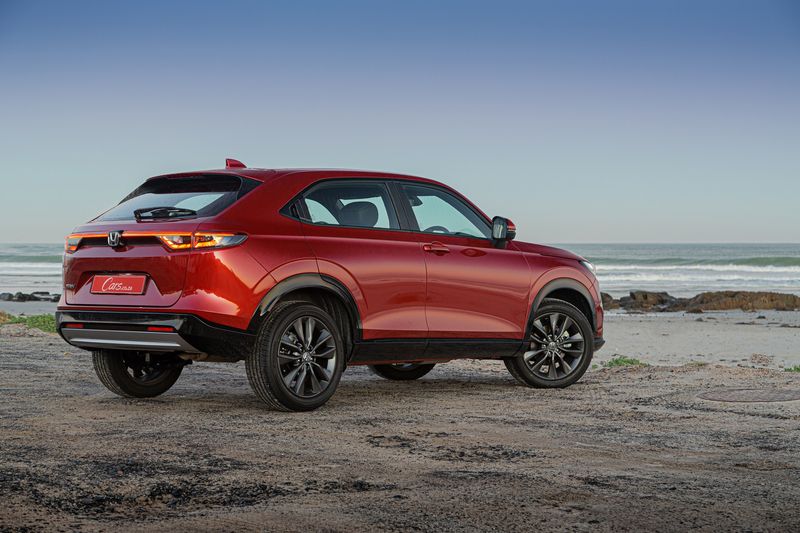
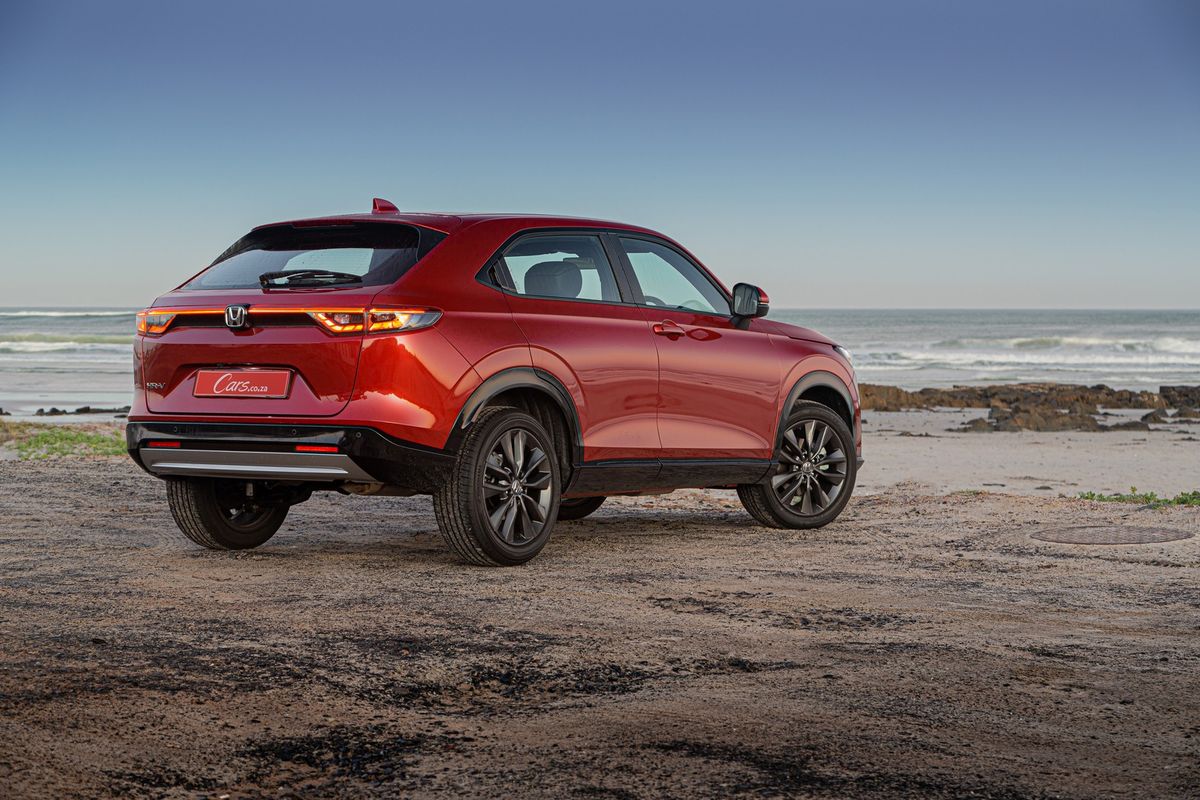
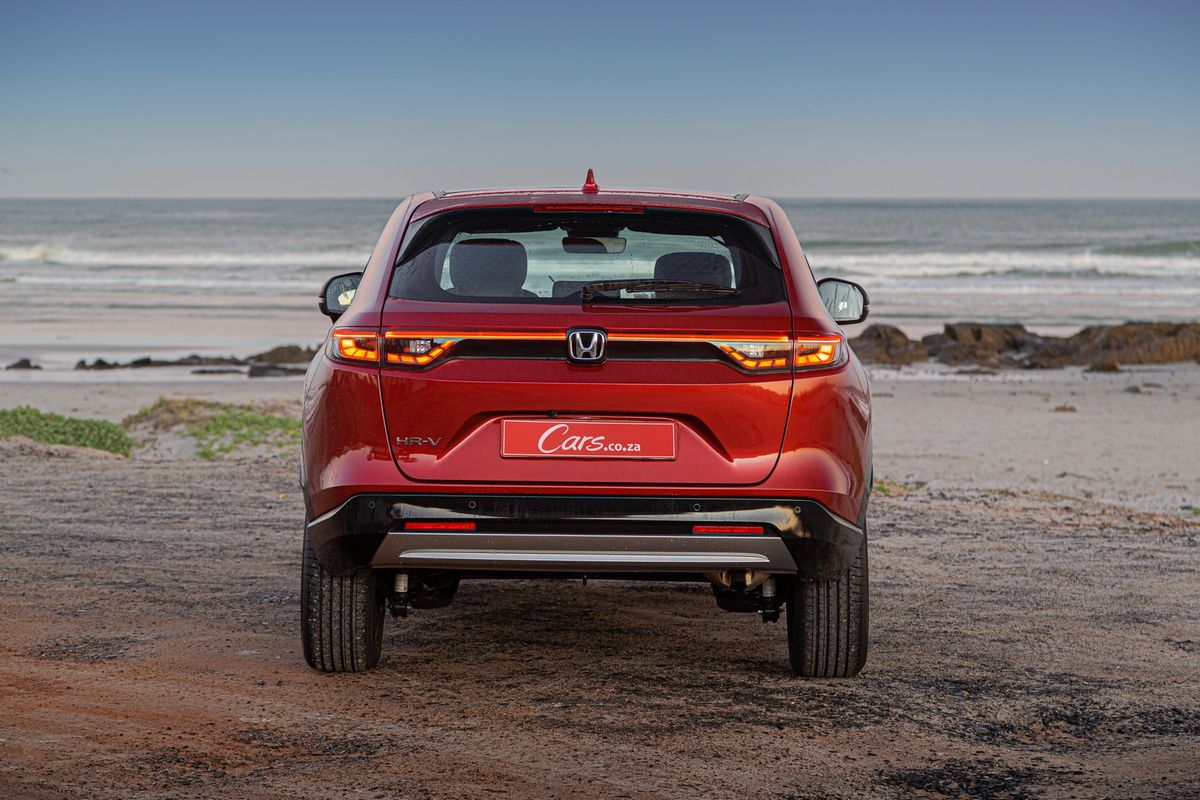
The LED tail-light clusters, connected by a light bar, are very fashionable right now.
This segment of the market is booming, with well-established brands’ models competing against aggressively priced wares from newcomers such as Haval and Chery. By using the Cars.co.za Buyer’s Guide and our Comparison Tool, we’ve narrowed down the rivals to the HR-V based on price and other selling points, such as powertrain, after-sales and features.
Compare the Honda HR-V to the Haval H6 and Chery Tiggo 7 Pro here.
Compare the Honda HR-V to the Hyundai Grand Creta and Toyota Corolla Cross here.
You could also look at the Kia Seltos, Volkswagen Taigo, Opel Mokka, Jeep Renegade, Mitsubishi Eclipse Cross, Mazda CX-30, Suzuki Vitara, and Subaru XV to name but a few.
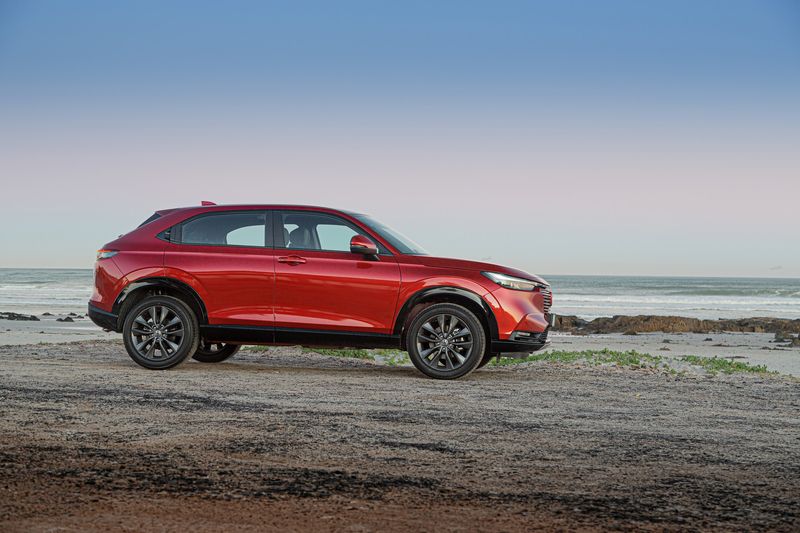
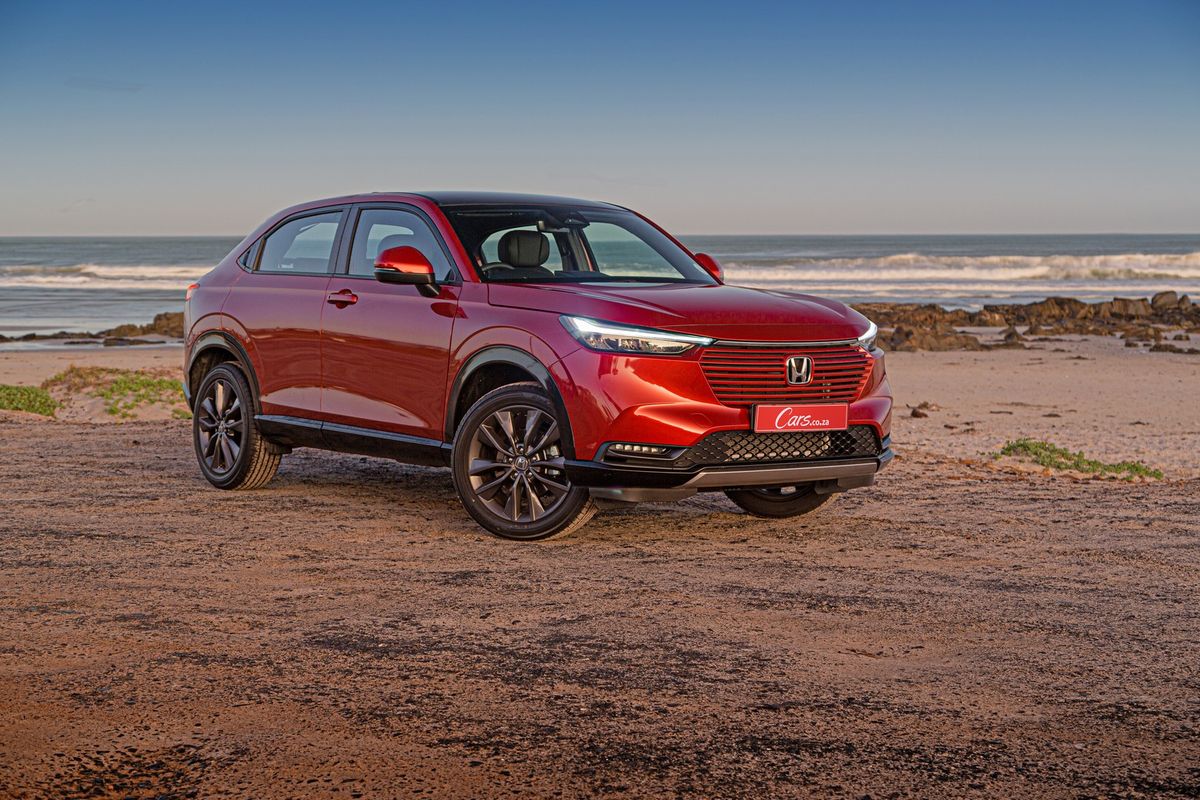
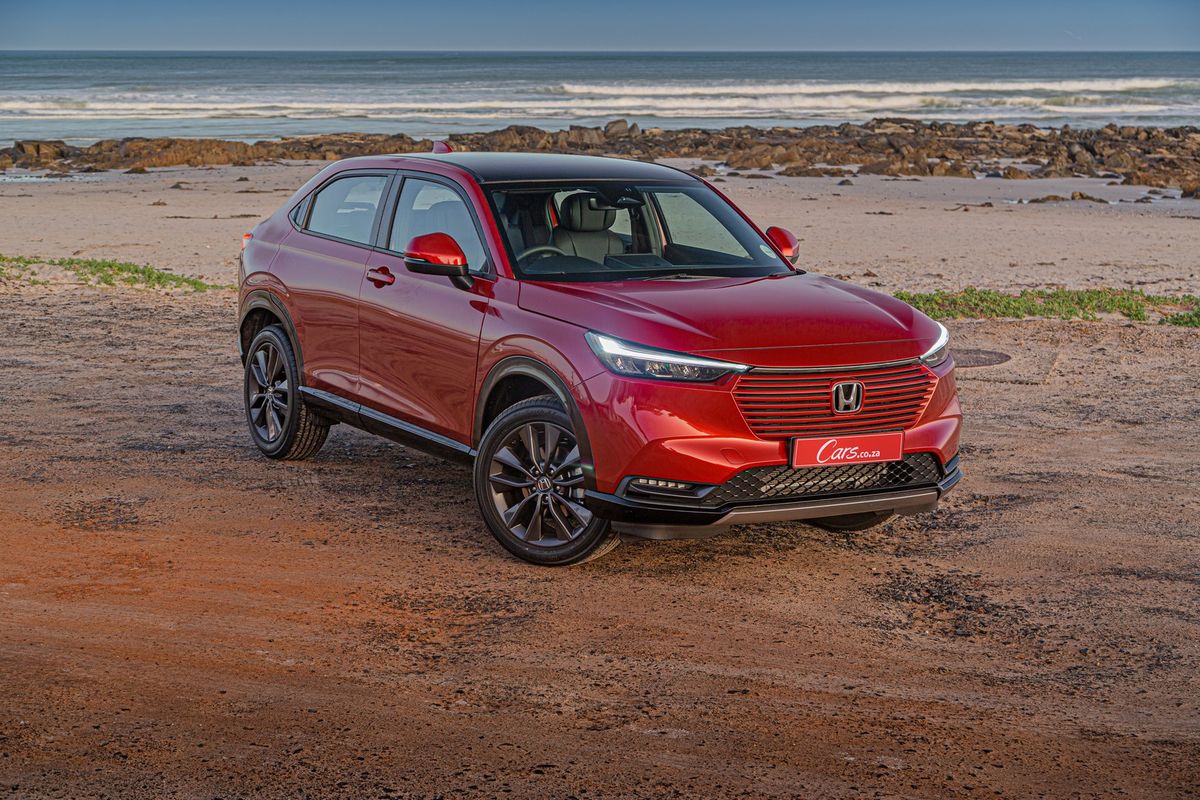
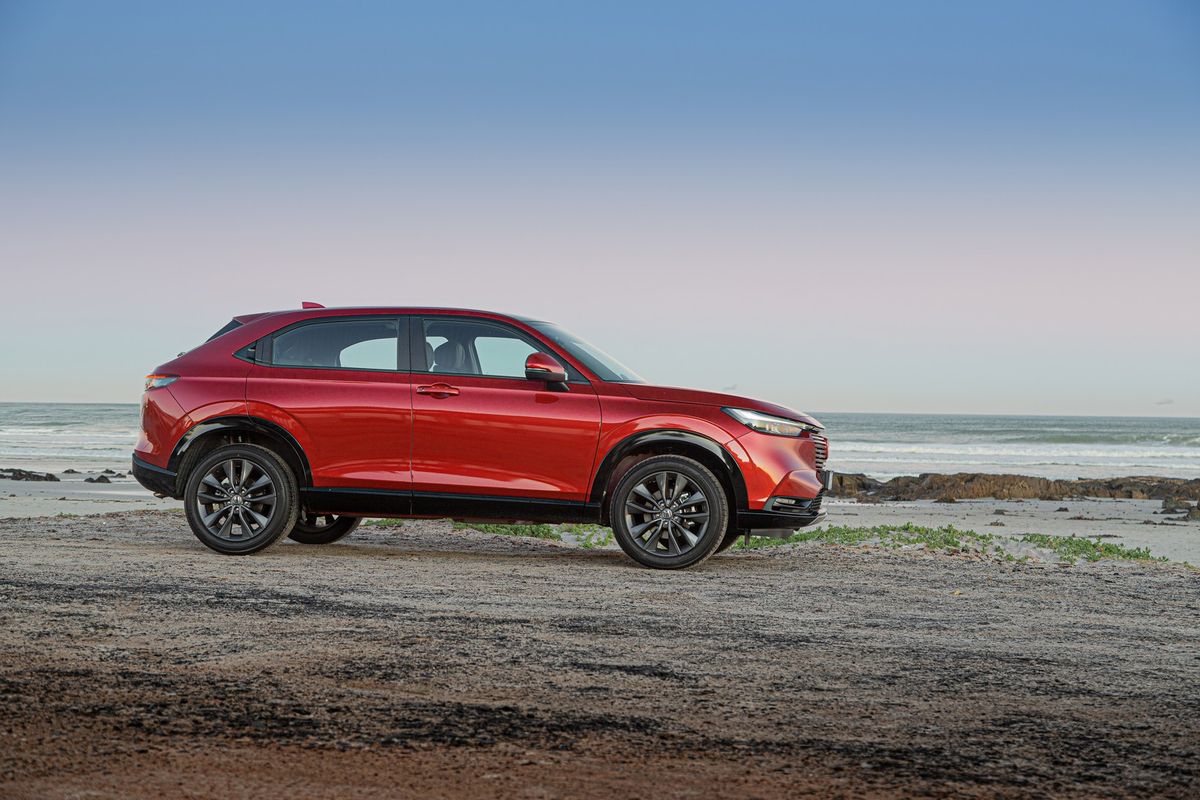
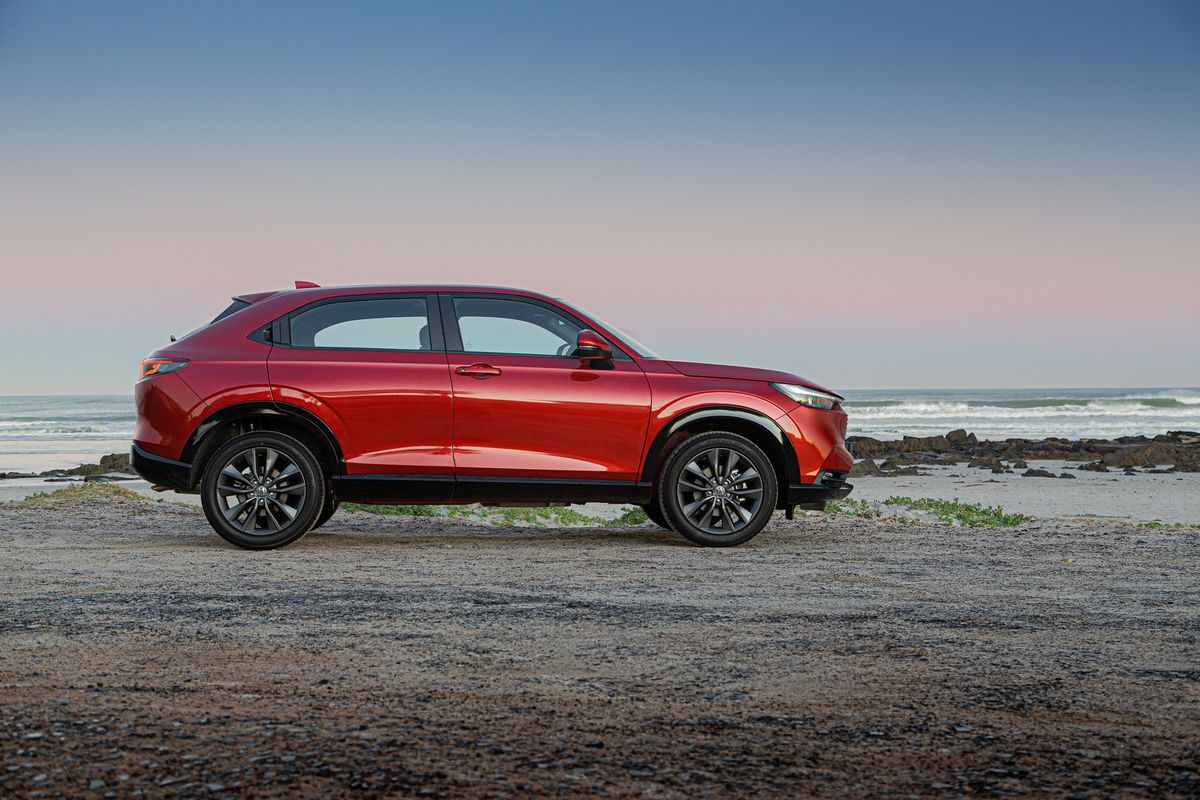
A fresh design has endowed the Honda HR-V with a more distinctive kerb presence.
How the Honda HR-V fares in terms of…
Design and Packaging
It’s certainly quite an interesting vehicle to look at with its colour-matched front grille and the LED light bar that brilliantly spans the tailgate at night – both elements are very trendy.
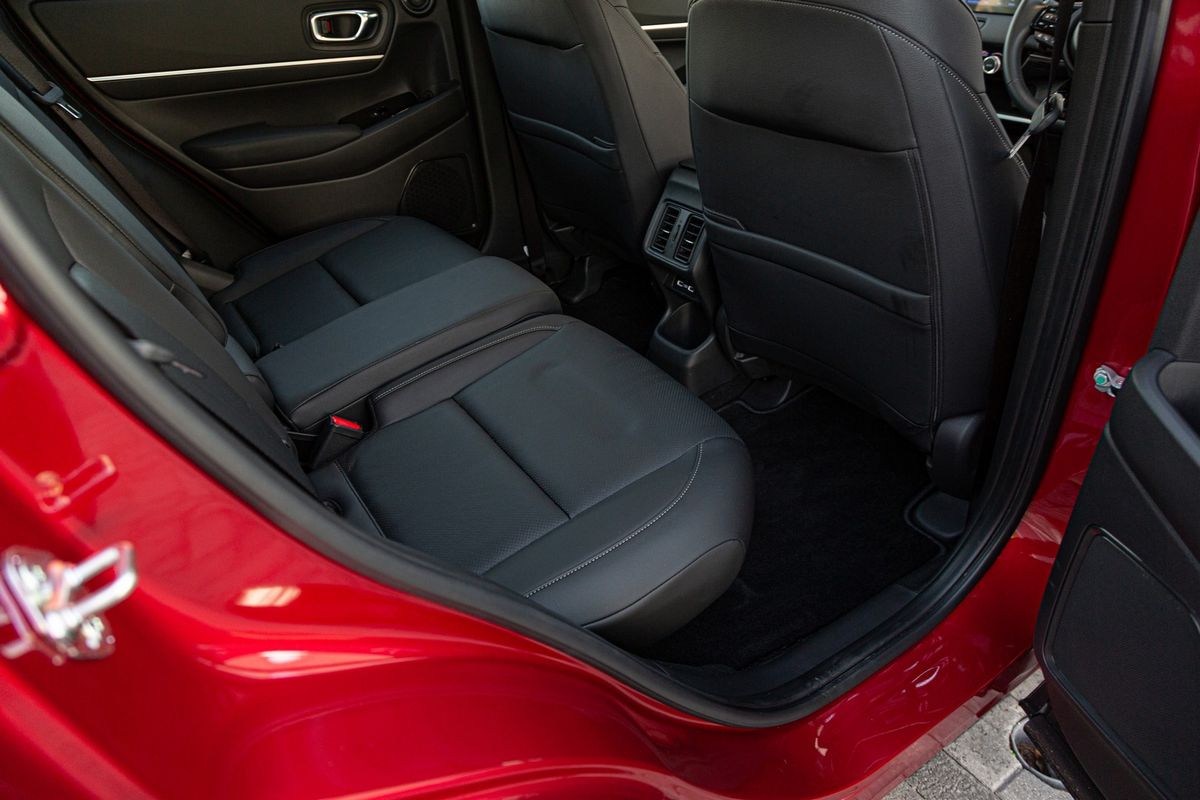
Size-wise, the new-generation Honda HR-V is much the same as the outgoing model, but clever repackaging has resulted in improved occupant space… Rear legroom is good for tall adults, plus the pair of sunroofs will no doubt add to the feeling of airiness in the cabin.
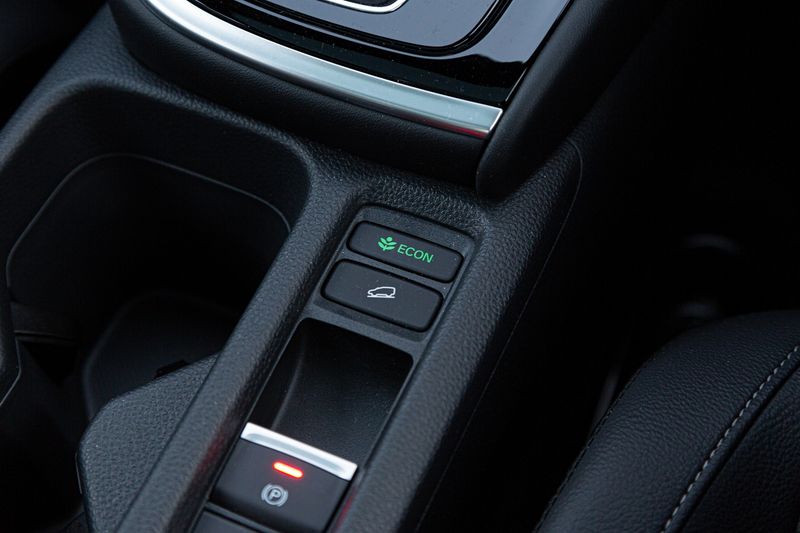
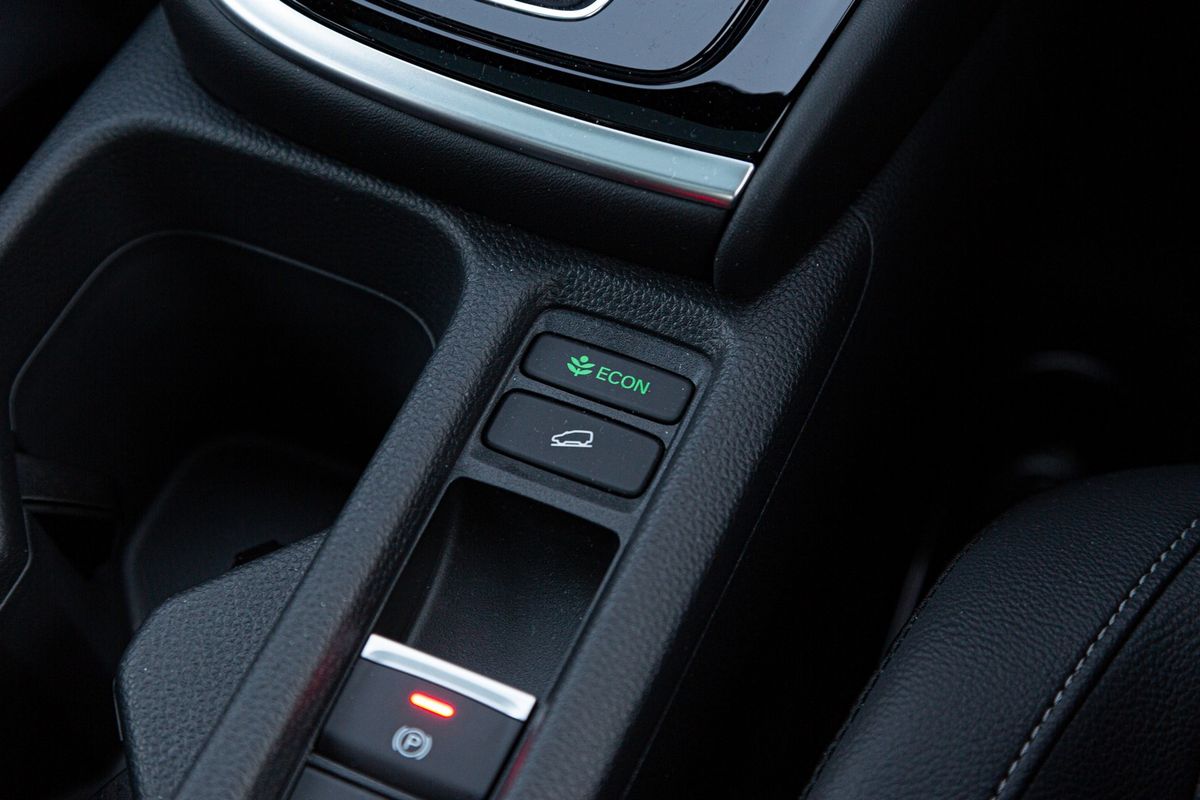
For the first time, the HR-V features hill descent control.
Magic Seats – a seating system that allows the rear bench to fold completely flat (to make it easier to fit bulky or oddly shaped items in the load bay), remains a highlight of the HR-V.
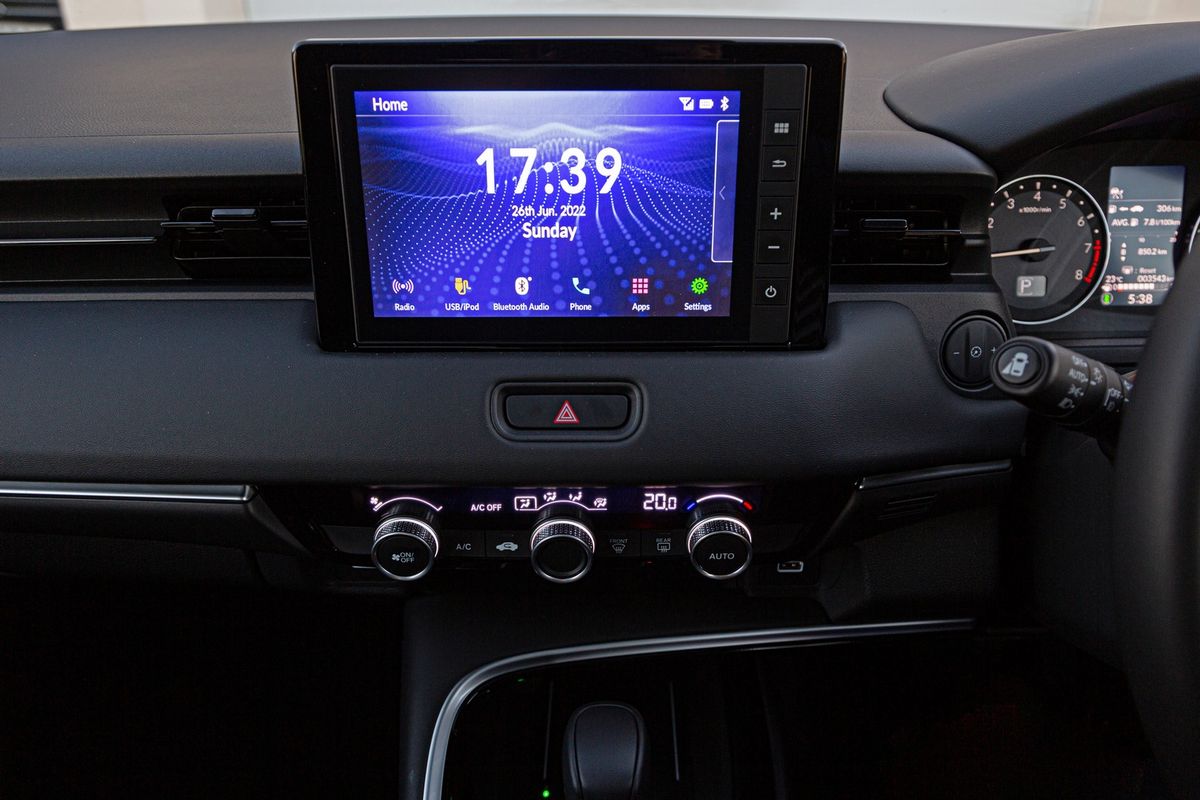
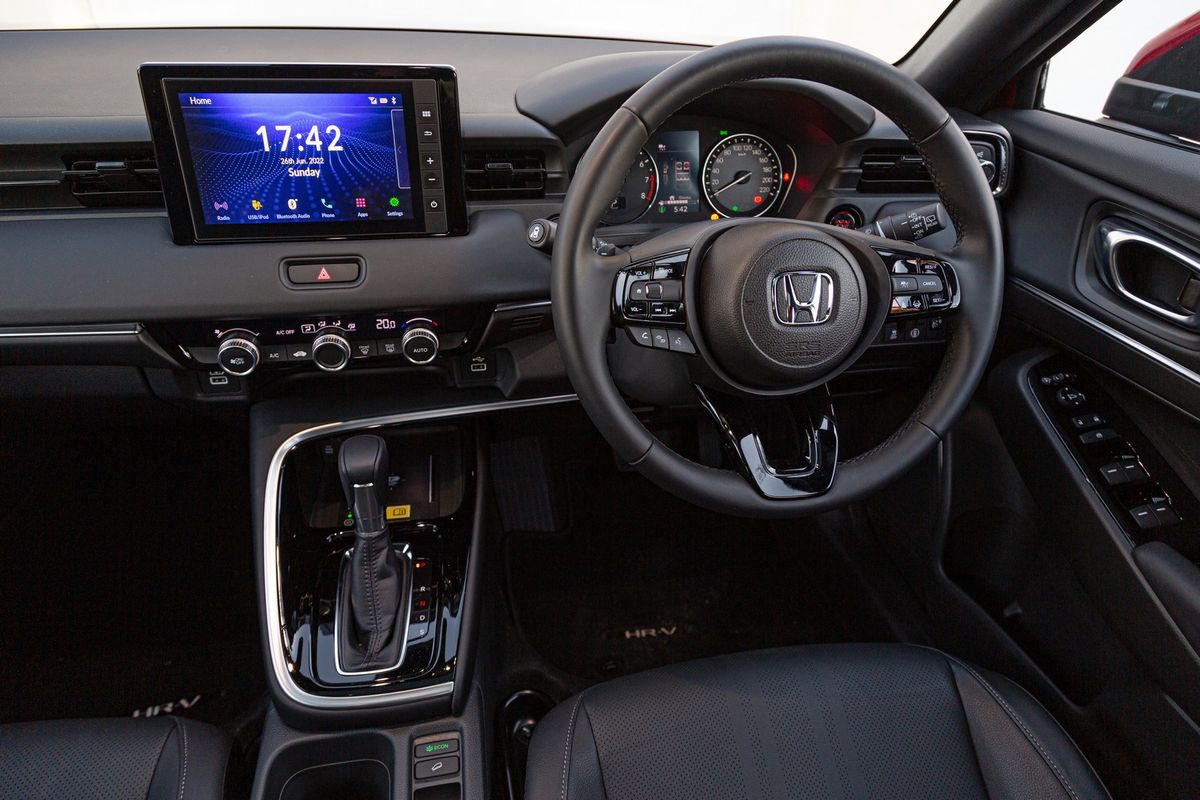
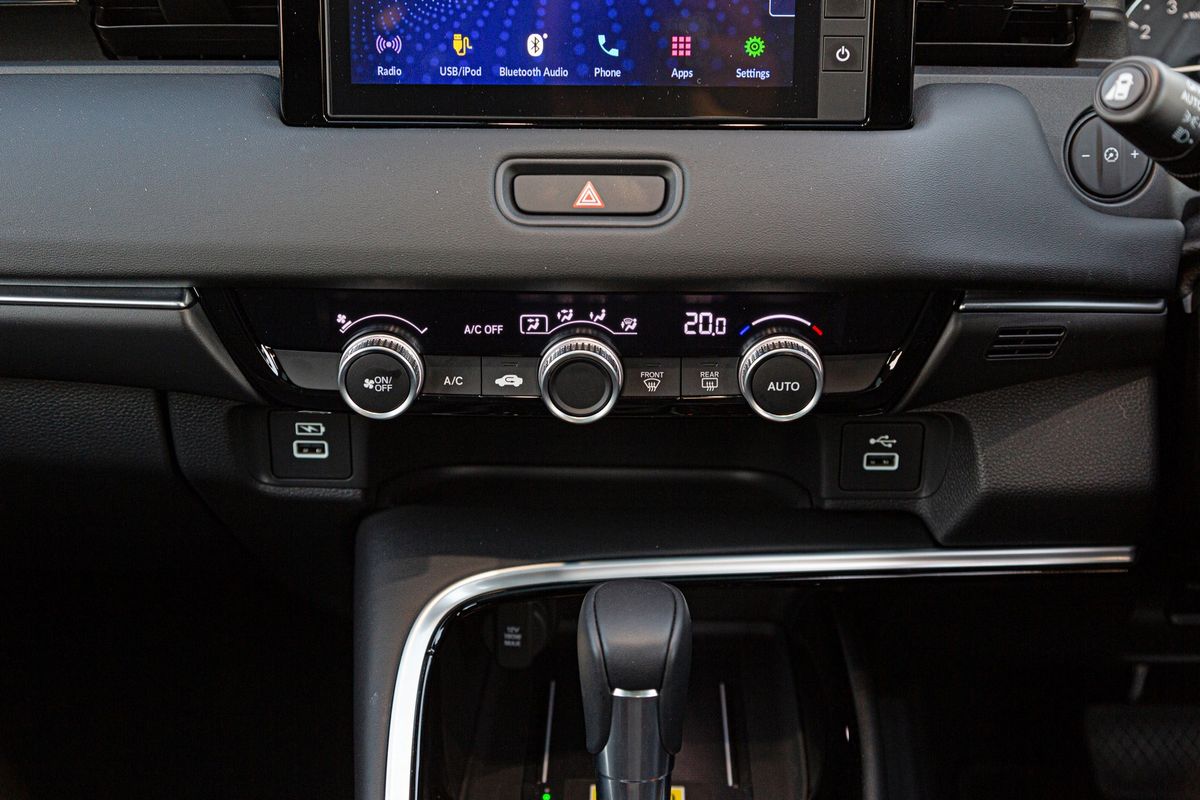
From the driver’s point of view, the cabin ambience is pleasant, and the fascia design ergonomically sound. Some of the cabin materials and fixtures feel high-end (such as the ventilation outlets and climate-control knobs), but some aren’t quite upmarket enough for a vehicle at this price point.
The touchscreen infotainment system incorporates most expected functions, but Android Auto/Apple CarPlay connectivity enhances that appreciably. A wireless charging pad and two USB ports are provided at the front, while the rear features two USBs (to charge devices).
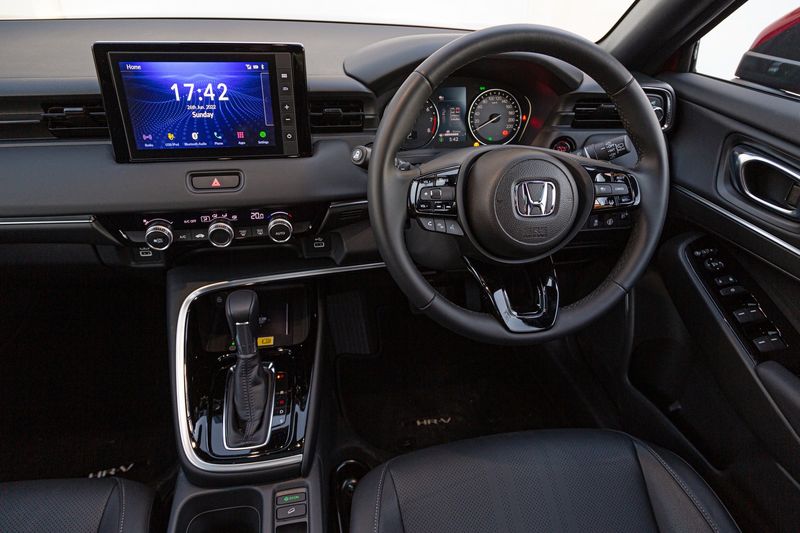
The Honda HR-V cabin architecture is well thought out.
One of the main reasons that this flagship Executive derivative has such a premium asking price is because it comes fitted with additional driver-assistance technology. Grouped under the Honda Sensing suite, the test unit’s active safety features included autonomous collision-mitigation braking, adaptive cruise control, lane-keeping assist and road-departure mitigation.
To put it as simply as possible, these systems will intervene if the vehicle drifts out of its lane or detects that a front collision is imminent (and deems that the driver hasn’t reacted to onboard warnings in time). There are 6 airbags fitted, whereas the Comfort derivative has 4.
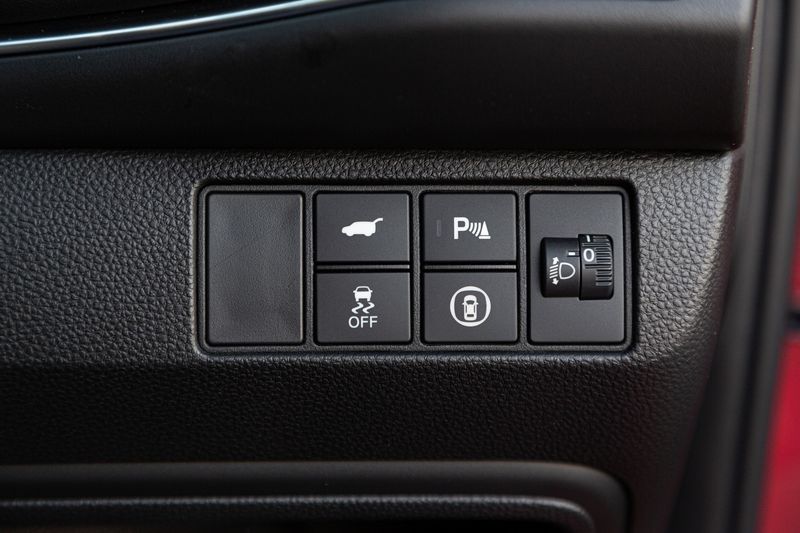
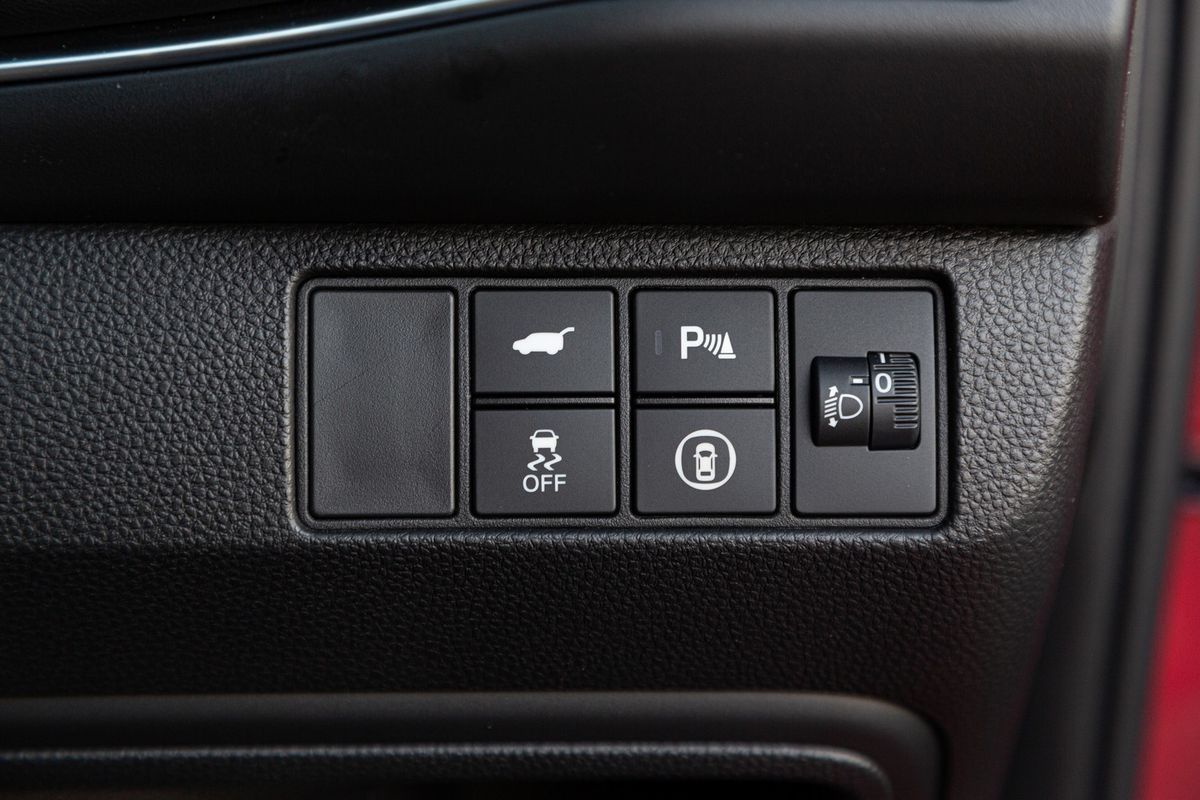
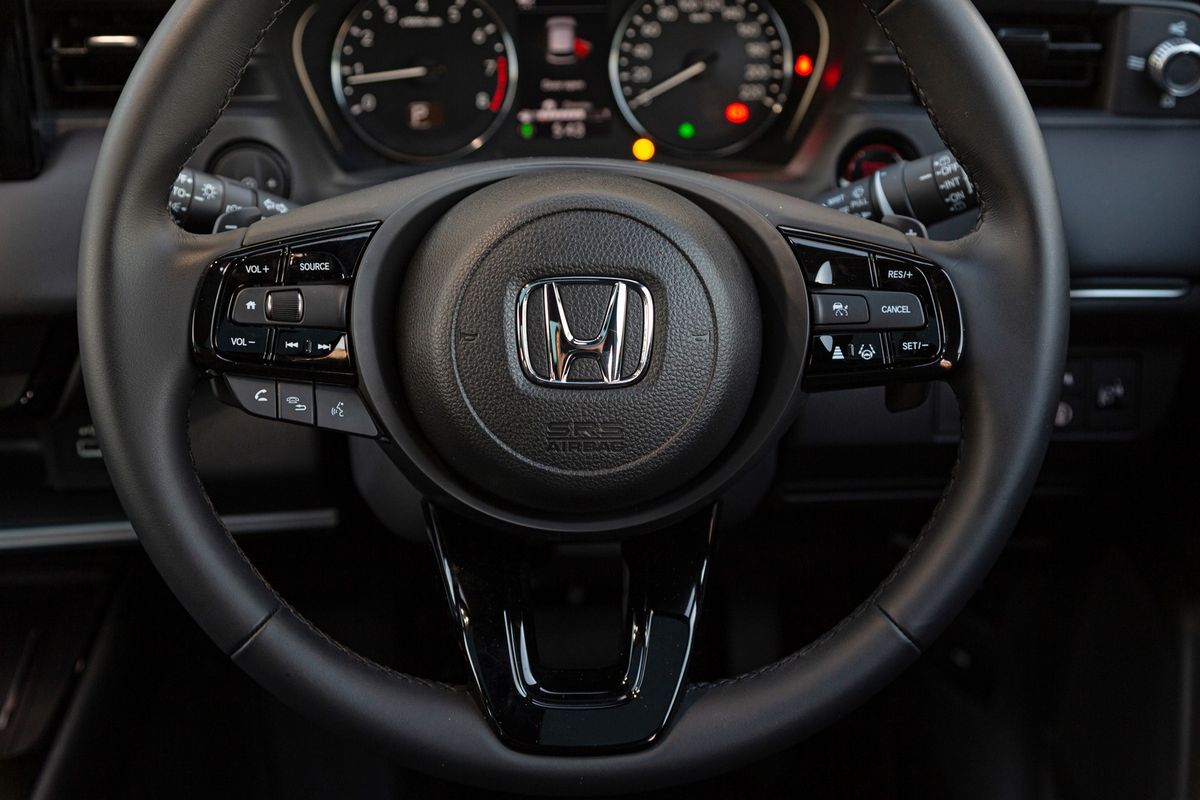
The buttons operated the electric tailgate, stability control, park distance, and driver-assistance controls.
Another interesting safety-focused feature is the LaneWatch camera, which is automatically activated when the vehicle’s indicator is on and provides the driver a view of their blind spot.
Other noteworthy features are the 8-speaker audio system (there is a 4-speaker setup on the Comfort), automated tailgate, keyless entry, push-button start, hill-descent control, electronic handbrake, steering wheel controls, and auto high-beam headlights (always a plus).
Performance and Efficiency
The outgoing HR-V was available with either a 1.5- or 1.8-litre petrol engine, the latter of which delivered a good blend of performance and fuel economy. In the new HR-V, however, there’s only a 1.5-litre 4-cylinder naturally aspirated petrol motor with 89 kW and 145 Nm; power goes to the front wheels via a continuously variable automatic transmission (CVT).
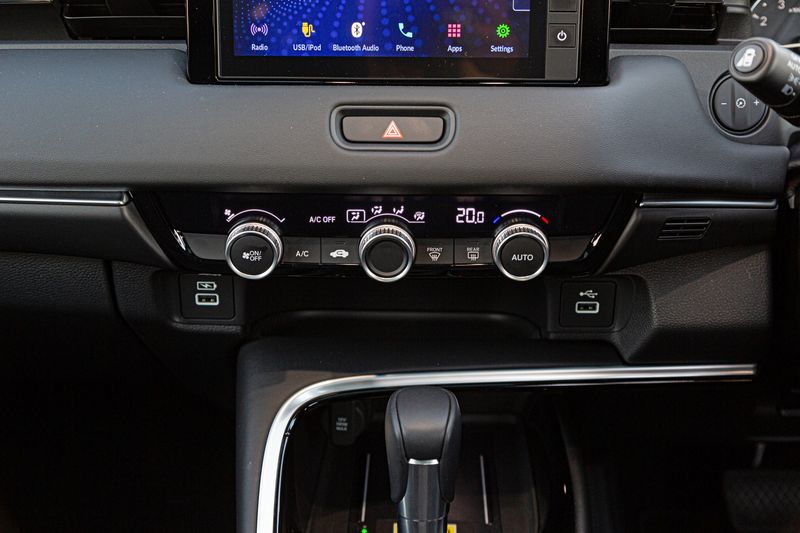
Cabin quality is a bit inconsistent. Those HVAC controls feel substantial.
Those outputs look mediocre “on paper” and indeed, the HR-V feels gutless compared with its rivals, most of which are turbocharged (in other words, offer their peak torque outputs at low revs). The engine does not propel the 1 300-kg Honda with any meaningful urge and, to make matters worse, the CVT blunts performance further. Executing an overtaking manoeuvre at freeway speeds can be a rather noisy affair – the engine sounds strained beyond 3500 rpm.
The rate at which a car can accelerate from 80- to 120 kph is a good indicator of in-gear performance, but the Honda… ambles. We appreciate that compact family cars are meant to be practical first and fleet-footed last, but we conducted our test at sea level, with a single occupant on board. In Gauteng (where the Honda will lose 17% of its power due to the thinner air), a fully occupied (and loaded) HR-V is likely to be frustratingly slow to pilot.
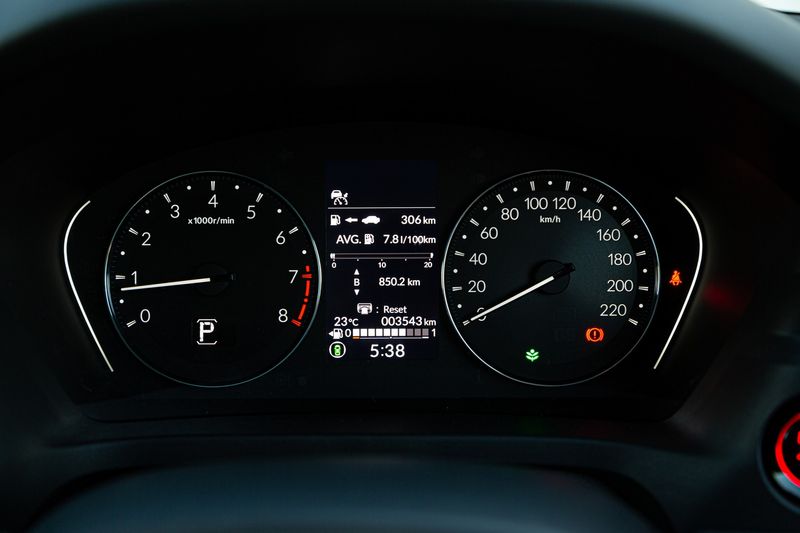
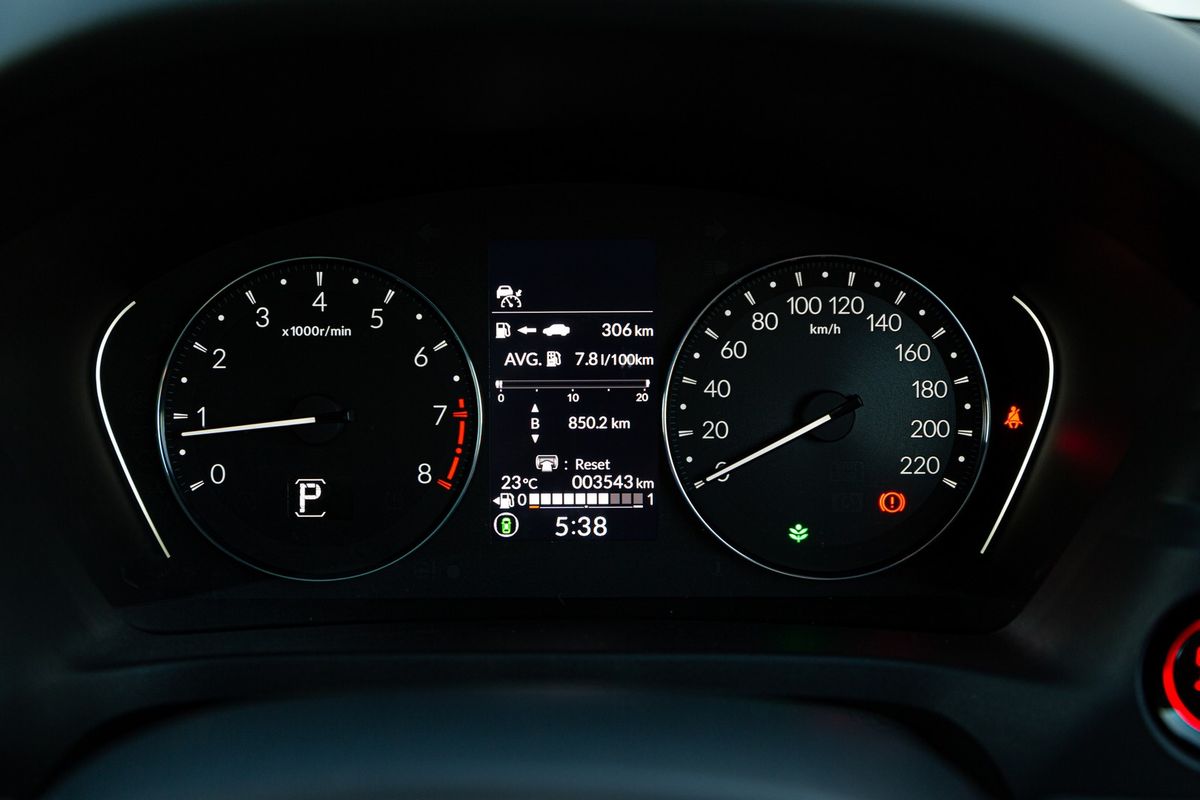
Clear instrumentation along with the test unit’s (good) indicated fuel-economy figure.
Having said that, if you’re in no hurry whatsoever, the CVT will keep the HR-V’s engine revs very low and facilitate relaxed cruising. That, of course, benefits fuel economy. While some way off the claim of 6 L/100 km, we felt that dipping under 8 L/100 km was a fair result.
We assume that Honda SA chose the 1.5-litre non-turbocharged powerplant for the sake of offering the HR-V at a reasonably competitive price, but the Civic’s 127 kW/220 Nm 1.5-litre turbopetrol engine would have been a better fit. We understand that a petrol-electric hybrid version is on the cards for South Africa in the near future, but alas, it will be pricey.
Ride and Handling
Despite its frustrating lack of urge, the HR-V isn’t bad to pilot… once the newcomer is well up to speed. If you adopt a laid-back driving style, it cruises in a quiet and refined manner, which is okay for the daily commute, but unlikely to attract younger buyers to the model.
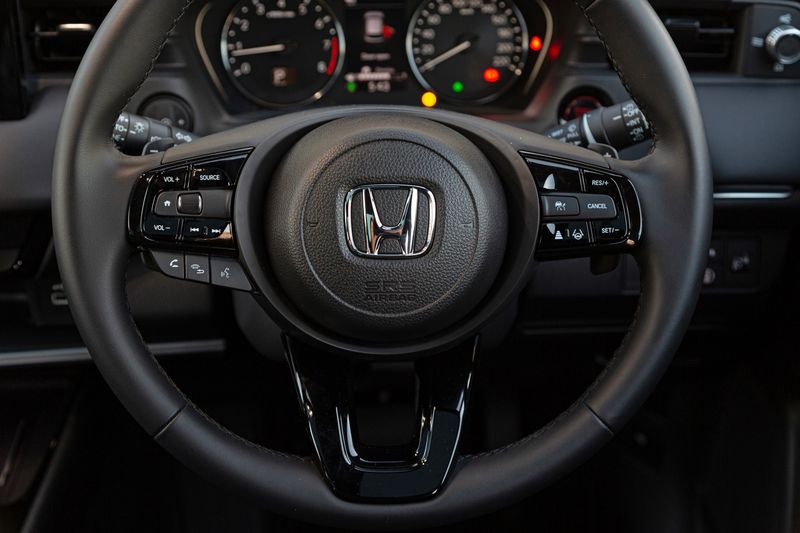
The HR-V’s multifunction steering wheel, replete with assisted-driving tech buttons.
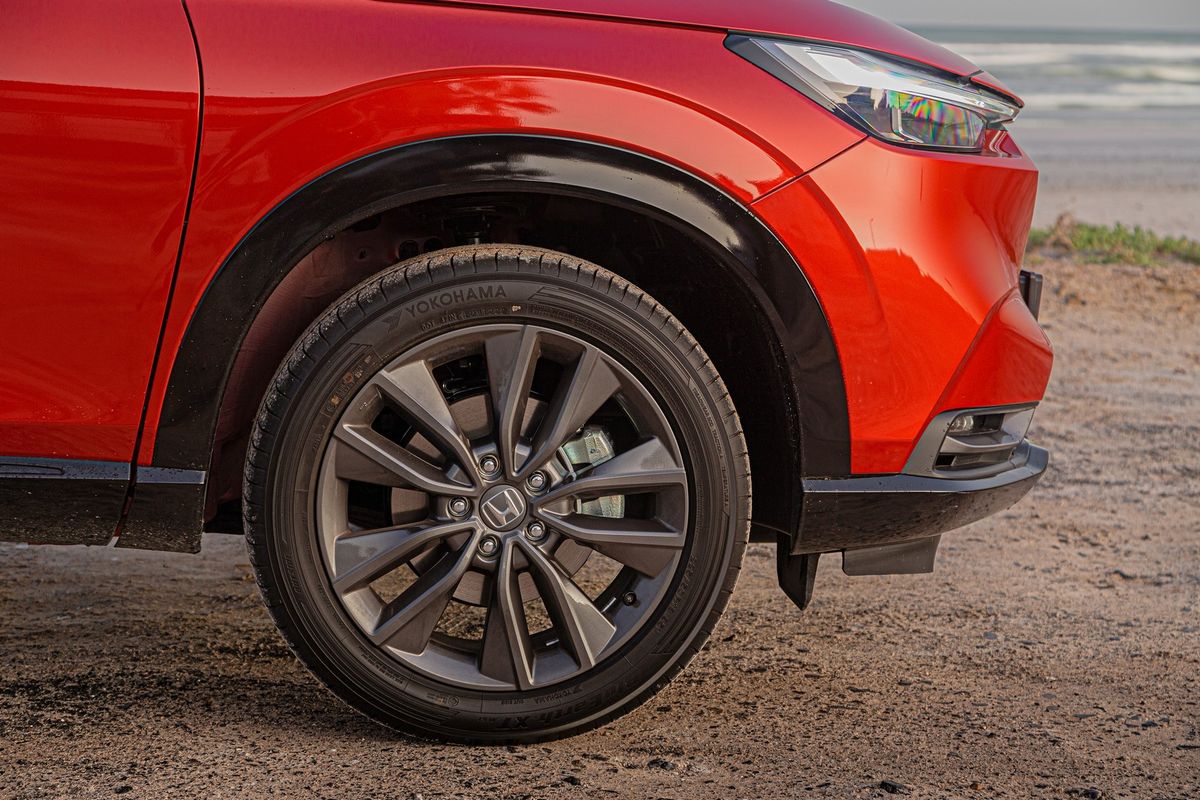
The ride quality is fair, with the 18-inch tyres doing a good job of soaking up most of the road imperfections. On some surfaces, we experienced higher-than-expected road noise, but that can be drowned out by the in-car entertainment system. Mzansi’s roads are generally in a poor state, so we’re happy to report that the HR-V comes fitted with a full-sized spare wheel.
The steering setup is well-weighted; it evokes the feeling of piloting a reassuringly substantial vehicle. An interesting inclusion is Honda’s Agile Handling Assist system, which cleverly brakes the inside wheel when you’re going around corners – it sharpens the handling slightly.
It’s a gimmick in something as leisurely paced as the HR-V, but the tech does work – the car feels a bit more wieldy than a small SUV should. Now if only it had a bit more gusto…
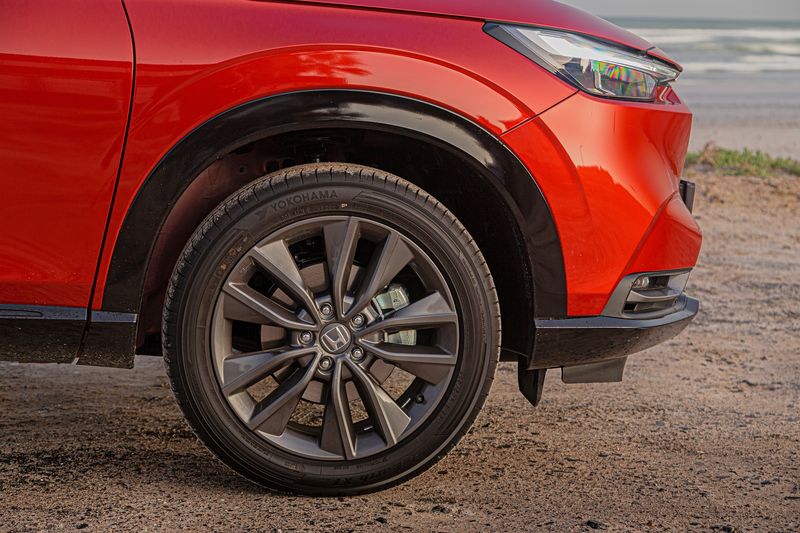
18-inch wheels, shod with reasonably plump tyres, contribute to a fair ride quality.
Price and After-sales support
The Honda HR-V is sold with a 5-year/200 000 km warranty and a 4-year/60 000 km service plan. Service intervals are every 15 000 km.
| Honda HR-V Comfort CVT | R469 000 |
| Honda HR-V Executive CVT | R554 500 |
Some Honda dealerships regularly offer great deals. See our New Car Specials here!
Looking to sell your car? You can sell your car to SA’s biggest dealer network here
Search for a new or used Honda here
Verdict
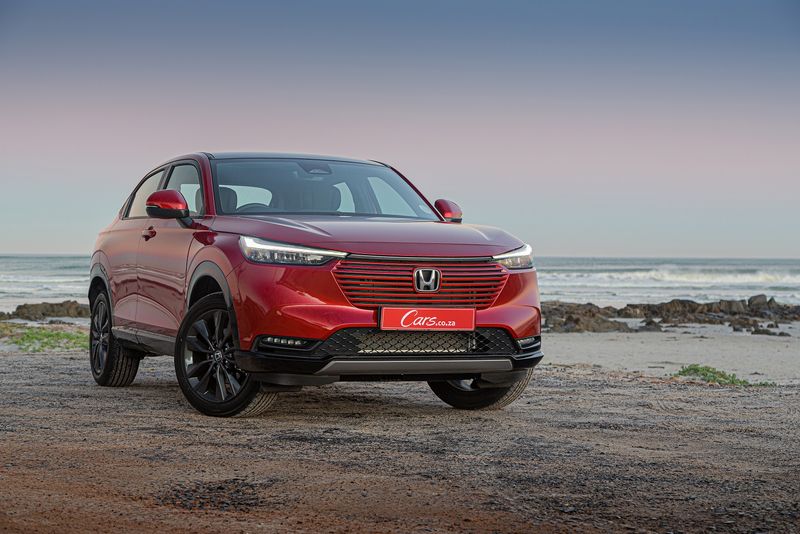
If the competition wasn’t so stiff and a punchier engine was available, the HR-V would be easier to recommend.
So, should you buy one? The new Honda HR-V is an unremarkable offering. Apart from more adventurous styling and slightly better occupant space – it does not move the game forward in any area, at least not enough to position it near the top of its segment. The Executive derivative’s driver-assistance tech is great and would appeal to buyers who want to “buy down” from medium- and executive SUVs, but at R554k, it’s not a steal.
Given the exceptionally strong rivals the HR-V is up against, we can easily recommend at least 5 other models that are nicer to drive, better finished and offer more value for money.
If you are prepared to accept the newcomer’s pedestrian performance (Honda’s traditional clientele won’t mind) and can negotiate a good deal from a Honda dealer, then perhaps it is worth a closer look, but we think the competition is just too stiff for the HR-V to thrive.
David Taylor

Having contributed to multiple motoring titles as well helping run the public relations machine of the Johannesburg International Motor Show, Dave has experience in both sides of the motoring industry. He's based in the Western Cape and is responsible for the performance testing, photography & weekly YouTube news for Cars.co.za.