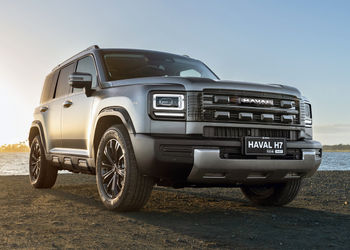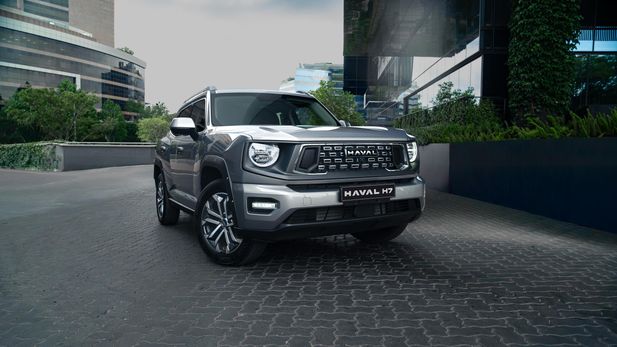
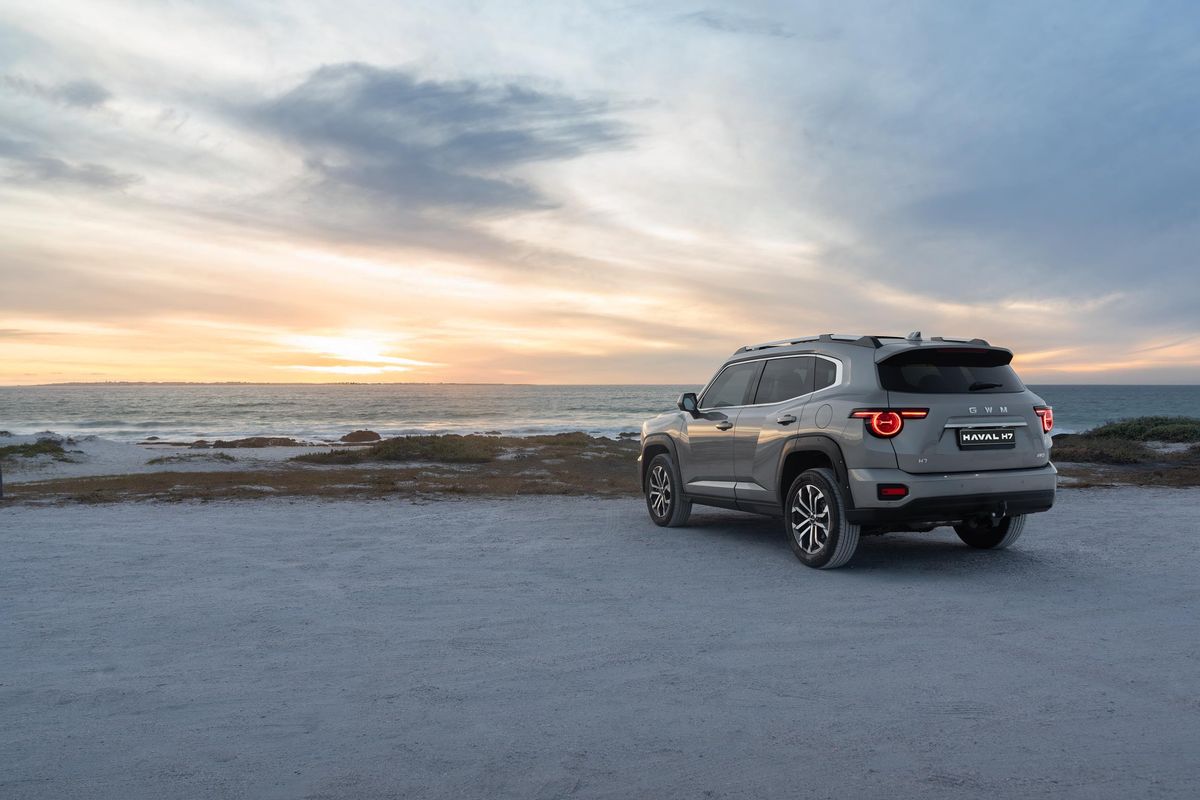

The Haval H7 – aimed squarely at adventure-seekers – has debuted in South Africa with a 3-pronged line-up. We get behind the new model’s ‘wheel in Gauteng.
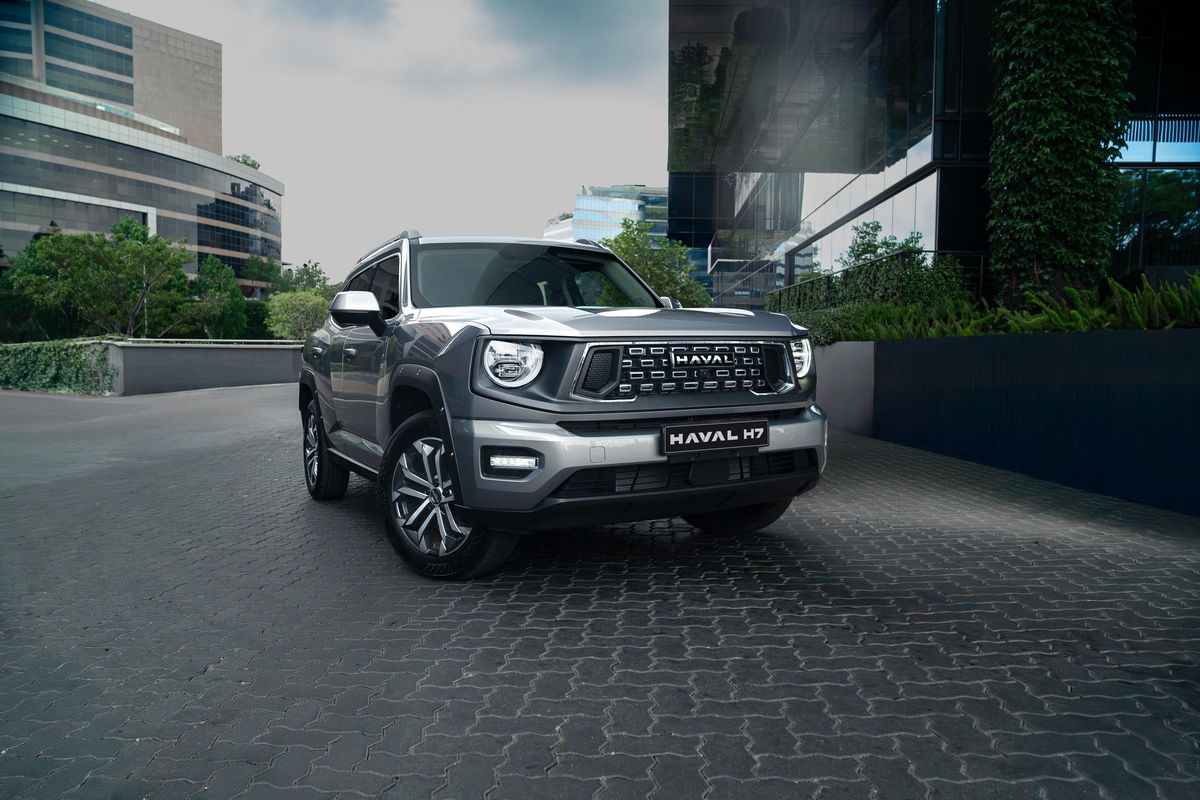
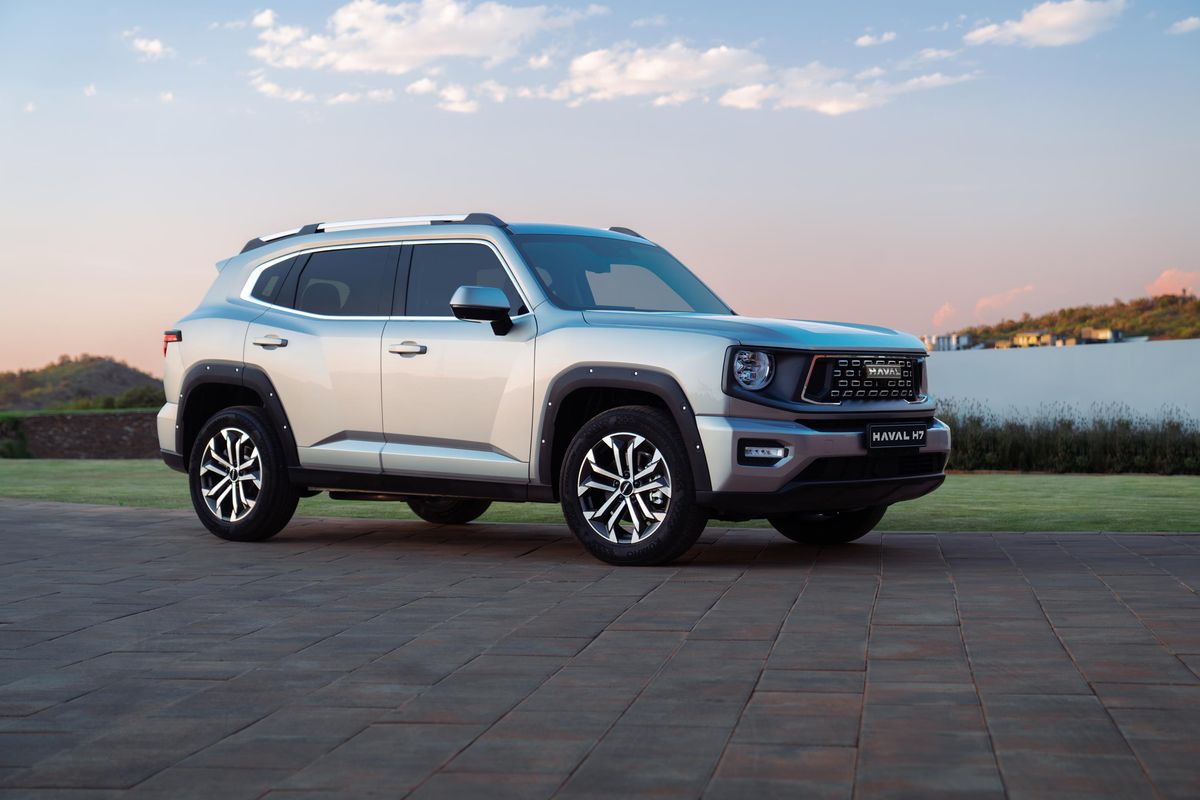
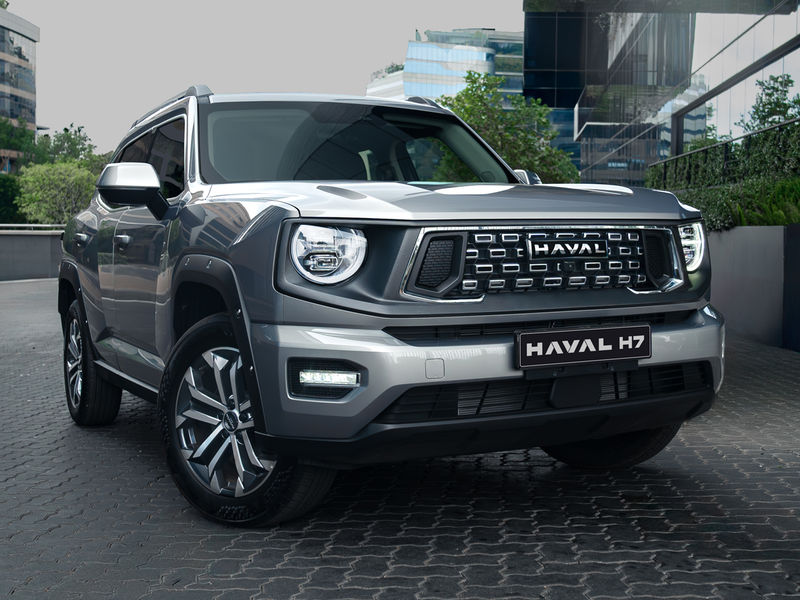
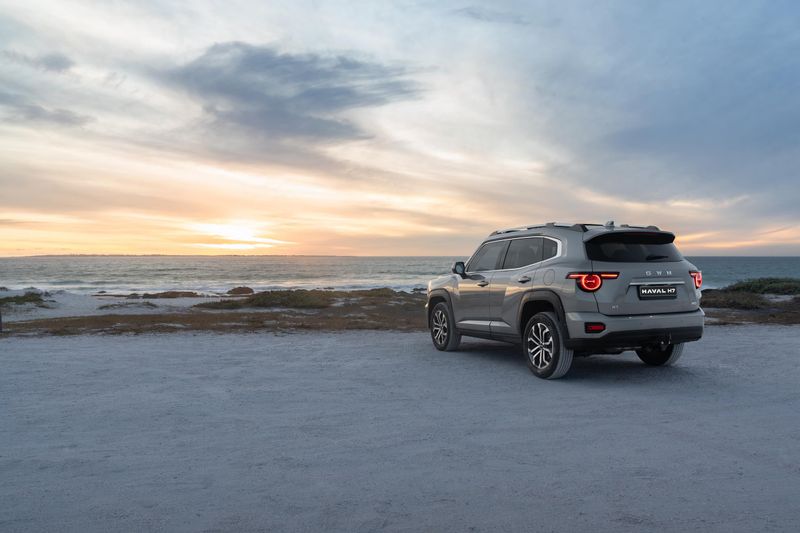
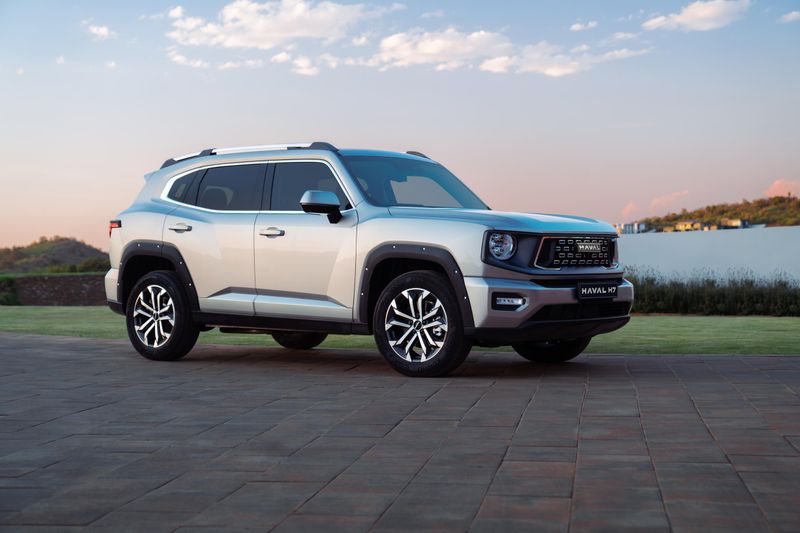
The Haval H7 is here – a family SUV that’s styled to resemble an old-school off-roader and positioned as a rival to the Toyota RAV4, Volkswagen Tiguan, Kia Sportage, Hyundai Tucson etc.
With plenty of features, a surprisingly large passenger area and a brand-new engine, the Haval H7 looks set to emulate the success of its H6 sibling, which is a more conventional medium SUV. It will be a busy year for GWM, with the facelifted H6, diesel-powered Tank 300 and an updated P300 bakkie to come.
What’s on offer?

Under the bonnet of the newcomer is a new-generation 2.0-litre 4-cylinder turbopetrol motor that develops 170 kW/380 Nm and is mated with a 9-speed dual-clutch automatic transmission. A 1.5-litre petrol-hybrid version, with outputs of 179 kW and 530 Nm, will go on sale in the 2nd quarter of 2025.
See also: Haval H7 (2025) Price & Specs
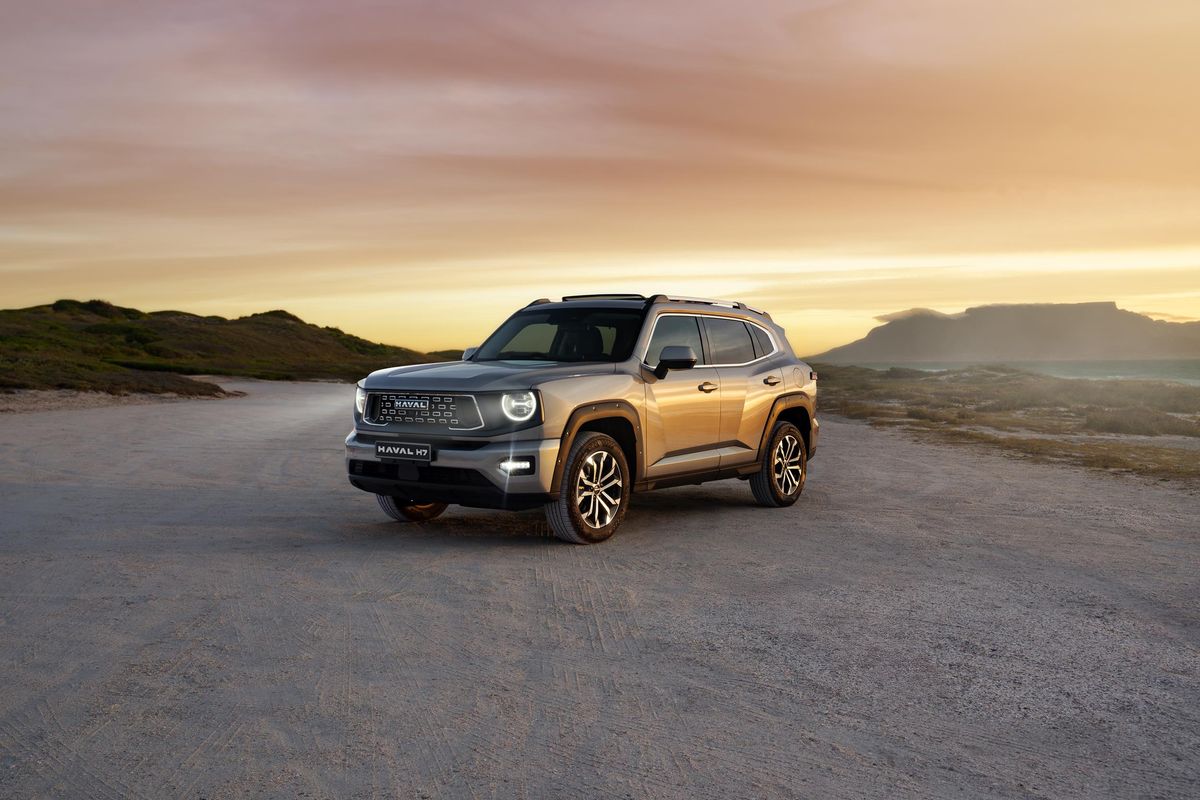
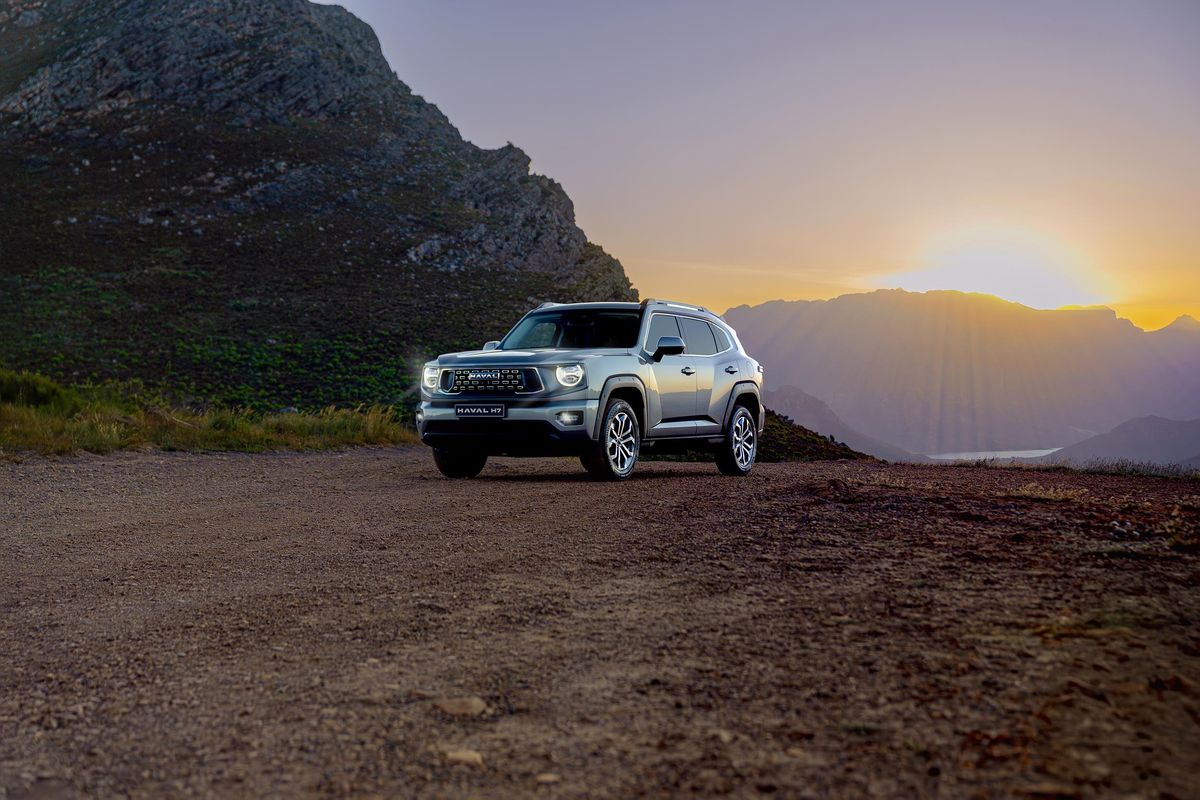
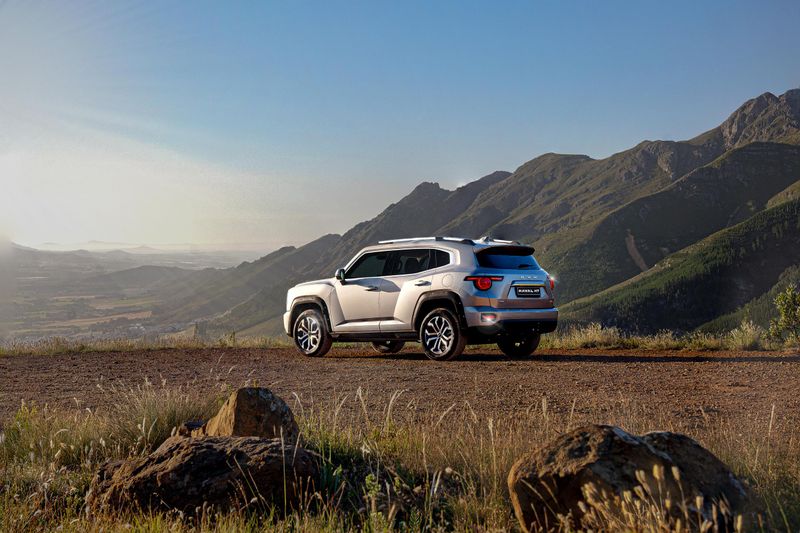
If you intend to go off-road often, the (for now, range-topping) 2.0T Super Luxury DCT 4WD’s ground clearance of 200 mm, lockable rear differential and 9 off-road modes, should fit the bill. But, if you seek serious 4×4 capability, consider the Tank 300, which has a low-range transfer case and a ladder-frame chassis. For what it’s worth, the H7 4WD has a 24-degree approach- and 30-degree departure angle.
That being said, the front-wheel-drive H7 2.0T Luxury DCT has the same ground clearance and plump 235/60 19-inch tyres, so it should be more than capable of facilitating slight to mild “gravel travel”.
There are 2 trim grades: Luxury and Super Luxury, the latter being exclusive to the 4WD and hybrid derivatives. As is usually the case with Chinese brands’ wares, the H7’s specification is comprehensive.
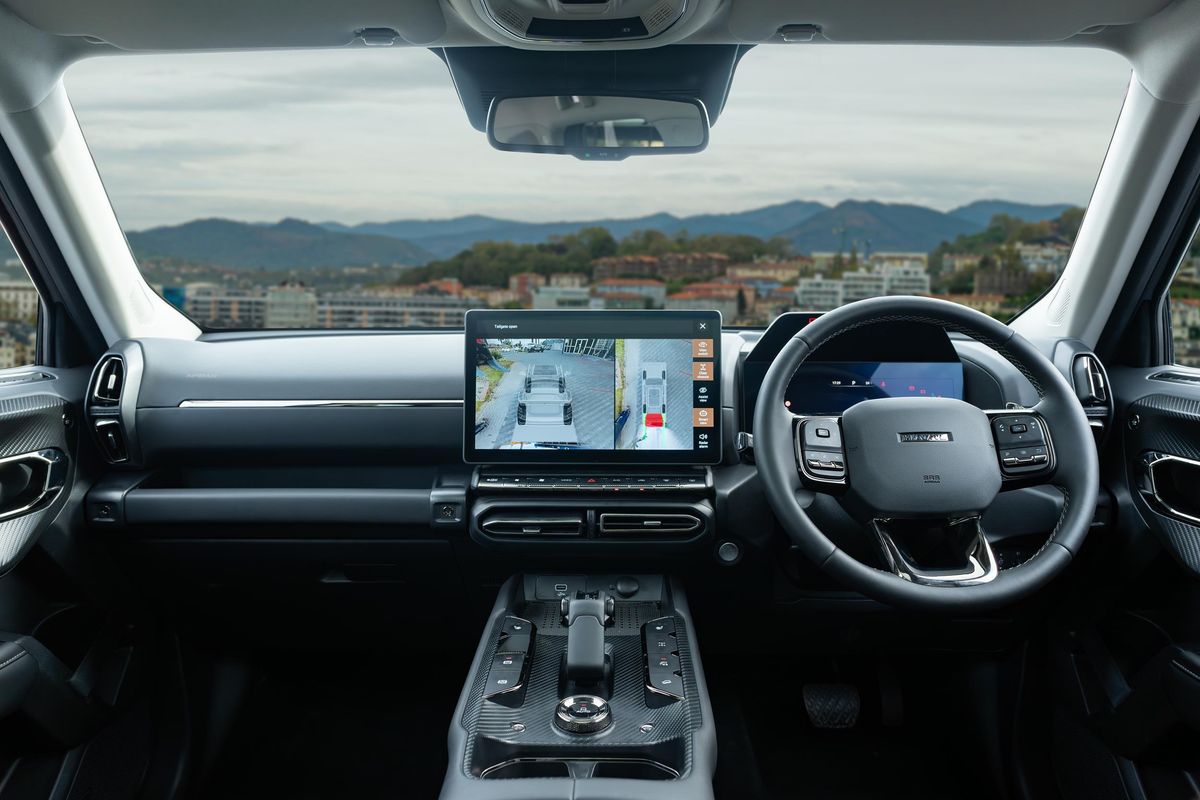
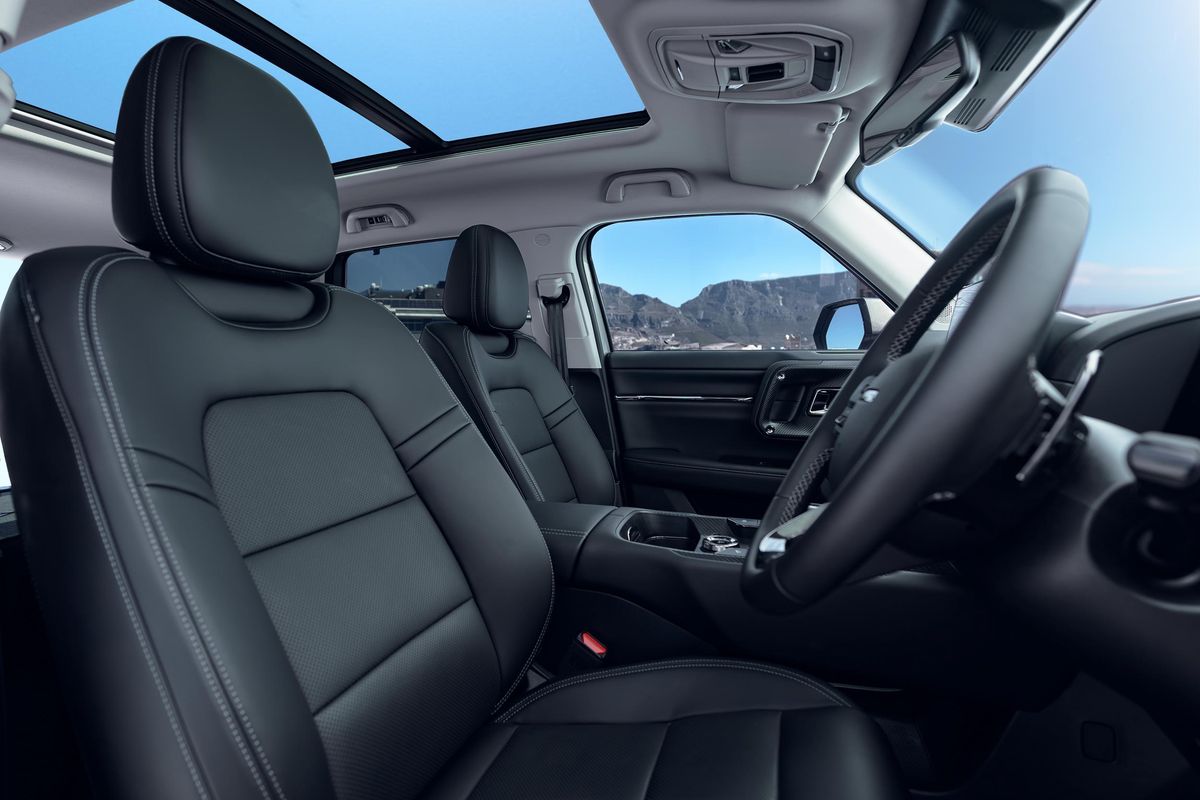
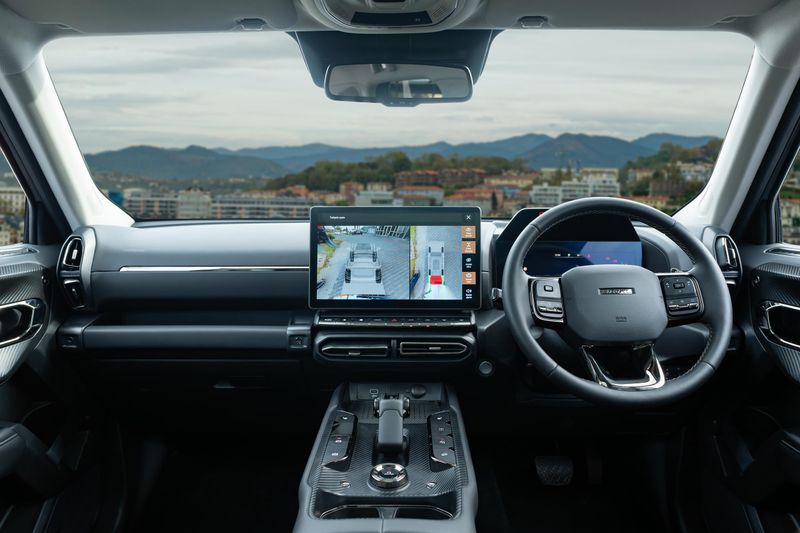
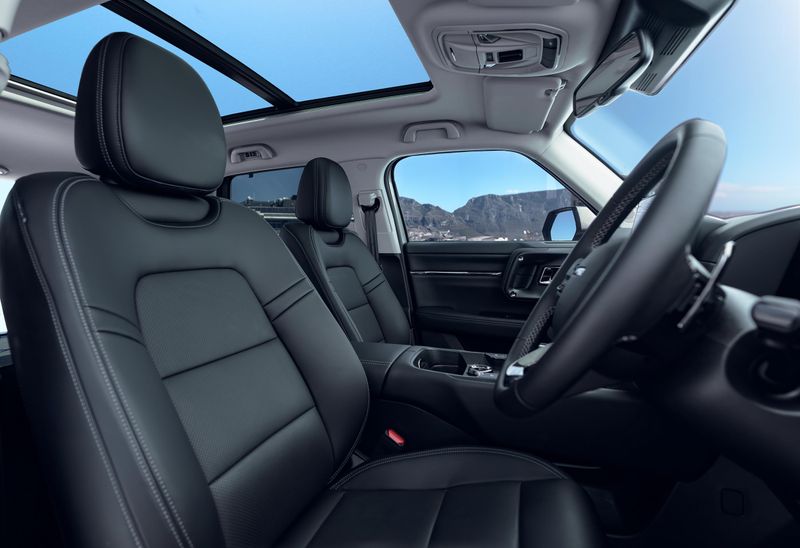
The entry-level variant features a 14.6-inch infotainment system, 12.3-inch digital instrument cluster, panoramic sunroof, wireless Apple CarPlay/Android Auto, heated seats and the usual complement of semi-autonomous safety tech, along with 6 airbags.
Super Luxury adds a head-up display, hands-free electric tailgate, 50W wireless charging pad, ventilated seats with memory function, and ambient LED interior lighting to name but a few features.
A quick look around the cabin highlights a utilitarian modern layout with some plush-feeling surfaces and fair ergonomics. There’s a good balance between responsive touchscreen functionality as well as physical buttons.
What’s the Haval H7 like to drive?
For our launch route, we drove on urban roads north of OR Tambo airport. While behind the ‘wheel of the 2.0T Luxury DCT, our first thought was: “Do you truly need all-wheel drive?” Granted, the additional spec offered in Super Luxury trim may sway you, but for day-to-day driving, the entry-level variant is just fine.
With numerous trucks on the road, we had opportunities to test the flexibility of the new powerplant, which proved responsive, especially in its Sport drive mode. In Eco mode, the motor still delivered a commendable performance, with the transmission proving responsive enough to shift down efficiently.
Performance aside, we were most impressed by the engine’s refinement/lack of mechanical noise. Haval’s turbopetrol motors have tended to be noisy at high revs, so it seems progress has been made.
Another prior criticism of Haval’s powerplants (and those of other Chinese car brands, for that matter) was less-than-stellar fuel economy and we feel the H7 has improved in this department as well.
Although we indulged in some spirited driving at times – when we made extensive use of the H7’s liberal overtaking urge – we saw an indicated consumption of around 9 L/100 km, which was quite reasonable.
Interestingly, our car suddenly went into limp mode and the GWM support team deserves kudos for assisting us promptly. We tried the usual reset procedures, but the H7 flatly refused to right itself.
Given the varying quality of fuel in South Africa and the fact that none of the other vehicles on the launch were affected by this glitch, we believe some contaminated fuel may have triggered the test car’s engine management system’s “protection mode”. Due to this issue, we were unable to test the H7 on the gravel section of the route – a pity, because the vehicle would probably have coped admirably with a dirt road.
And what about the newcomer’s ride quality? Seeing as the Haval H7 shares a platform with its H6 sibling (unfortunately named LEMON; it’s anything but that), we were satisfied with the way it coped with the (to be kind) inconsistent quality of the Gauteng province’s road surfaces. The monocoque (unibody) construction and slightly sporty suspension tune give it a slightly firm, but still comfortable, demeanour.
How much does the Haval H7 cost in South Africa?
*Pricing is accurate as of July 2025
| Haval H7 2.0T Luxury DCT | R604 950 |
| Haval H7 2.0T Super Luxury DCT 4WD | R674 950 |
| Haval H7 1.5T HEV Super Luxury DHT | R734 950 |
Prices include a 7-year/200 000 km warranty, 7-year unlimited roadside assistance, and 7-year/75 000 km service plan. The hybrid derivative adds on an additional 8-year/150 000 km components warranty.
Verdict
The Haval H7 makes quite a bold statement, right from the get-go. It’s a distinctively styled family car with a new-gen engine that is sufficiently punchy, as well as refined. It’ll be fascinating to see if the H7’s fuel consumption figures will be on par with those of its legacy-brand rivals (we’ll test it in due course).
But, as is often the case with Chinese brands’ new vehicles, the Haval’s value proposition is strong. In today’s money, R600k (around the price of the entry-level H7 variant) barely gets you into a Volkswagen T-Roc and the Haval comfortably outguns that model in terms of size, specification and performance.
Frequently Asked Questions about the Haval H7 in South Africa
What is the price of the Haval H7 in South Africa?
The price of the Haval H7 in South Africa varies by model. The 2.0-litre turbocharged petrol models start from approximately R604,950 for the Luxury trim and R674,950 for the Super Luxury 4WD. The top-of-the-range 1.5-litre HEV (Hybrid Electric Vehicle) is priced from around R734,950.
What are the warranty and service plan details for the Haval H7?
The Haval H7 comes with a comprehensive 7-year/200,000 km warranty and a 7-year/75,000 km service plan. For the Hybrid Electric Vehicle (HEV) model, there is an additional 8-year/150,000 km warranty specifically for the high-voltage battery system.
What are the engine and performance specifications of the Haval H7?
The Haval H7 is available with two engine options. The standard engine is a 2.0-litre turbocharged petrol unit producing 170 kW and 380 Nm of torque. The hybrid model features a 1.5-litre turbocharged engine combined with an electric motor, delivering a total output of 179 kW and 530 Nm.
How fuel-efficient is the Haval H7?
The claimed fuel consumption for the 2.0-litre petrol model is around 8.1 L/100km for the FWD version and 9.1 L/100km for the AWD version. The more fuel-efficient hybrid model has a claimed consumption of 5.7 L/100km.
What features come standard on the Haval H7 in South Africa?
Standard features on the Haval H7 include a 14.6-inch touchscreen infotainment system, a 12.3-inch digital instrument cluster, a panoramic sunroof, and a comprehensive suite of advanced safety systems such as Adaptive Cruise Control and a 360-degree camera system.
Related content:
Haval H7 (2025) Specs & Price in South Africa
Haval Cars for Sale in South Africa (2025)
Reviews
David Taylor

Having contributed to multiple motoring titles as well helping run the public relations machine of the Johannesburg International Motor Show, Dave has experience in both sides of the motoring industry. He's based in the Western Cape and is responsible for the performance testing, photography & weekly YouTube news for Cars.co.za.