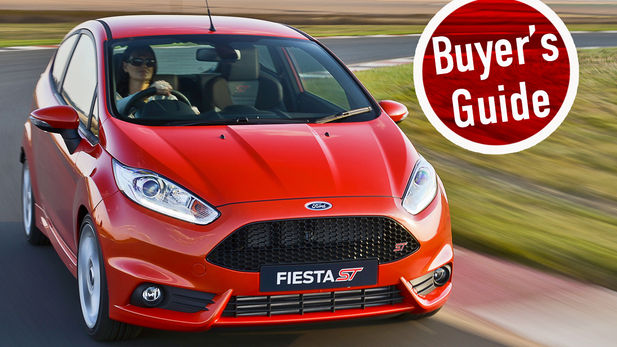
Though the Ford Fiesta ST is no longer in production, it remains a cracking compact hot hatch that enthusiasts crave. With prices on the used-car market having fallen to temptingly low levels, now’s the time to take a closer look at the 6th-gen Fiesta ST…
Remember when the archetypal hot hatch offered grin-inducing performance at an affordable price? Well, as carmakers have pushed the performance envelope – culminating in all-paw hyper hatches endowed with north of 300 kW – such models have become increasingly inaccessible. For many buyers, today’s hot hatchbacks are simply far too expensive. And that brings us neatly to the Ford Fiesta ST.
The world had to wait quite some time for the so-called Fiesta ST180, which went into production a considerable 5 years after the standard 6th-gen model had started rolling off the Blue Oval’s Cologne assembly line in Germany. But, as we’d soon find out, it was well worth the wait, with the hottest Fiesta quickly becoming the best bang-for-buck OEM hot hatch in the automotive market.
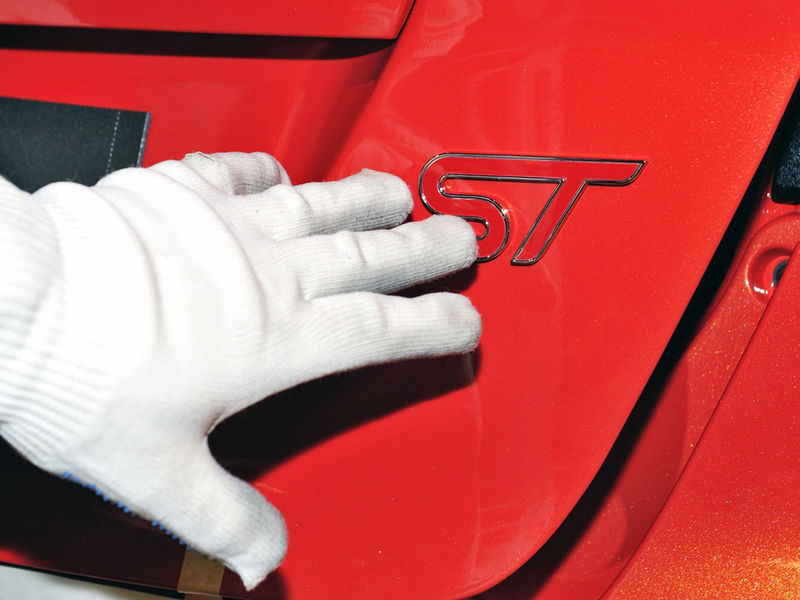
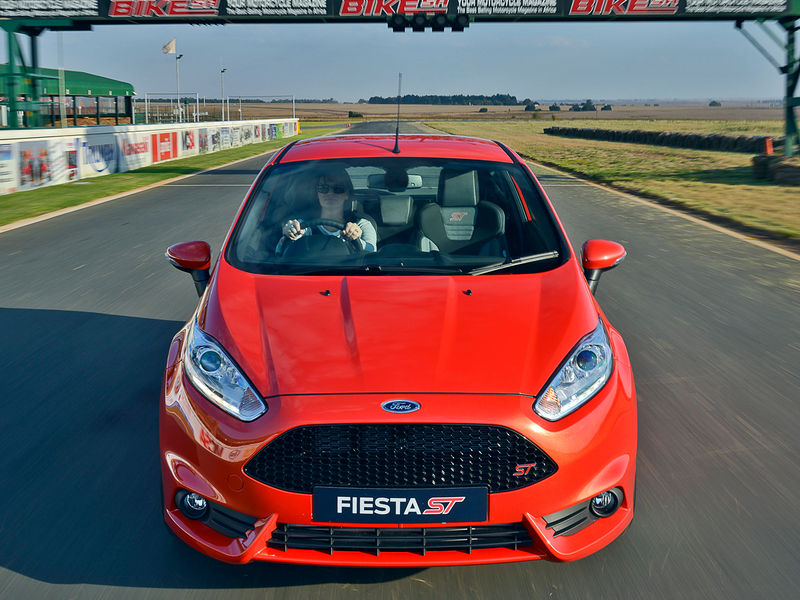
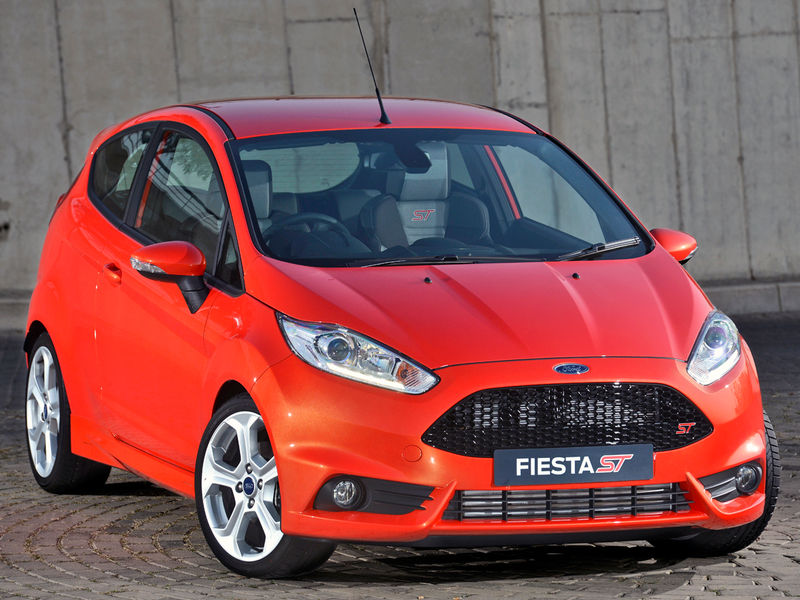
For this 6th-gen Fiesta ST, Ford followed the traditional hot-hatch recipe, combining a front-wheel-drive configuration with a 6-speed manual gearbox and a sporty 3-door body style. While the Volkswagen Polo GTI and Renault Clio RenaultSport (RS) of the era moved to 5-door body shells and adopted dual-clutch automatic transmissions, the Fiesta ST resolutely stuck to what was a time-honoured formula.
In effect, the Blue Oval’s smallest hot hatch – which was, interestingly, also available in certain markets in 5-door guise – eschewed the “growing up” trend and was all the better for it, soldiering on as one of the very last to offer old-school hot-hatch thrills. It’s thus a shame the ST version of the 7th-gen Fiesta – featuring a 1.5-litre 3-cylinder turbopetrol motor – didn’t make it to Mzansi. And, of course, even more of a pity that the storied Fiesta nameplate was axed globally in 2023 (though it exited SA even before that).
Ford Fiesta ST in South Africa
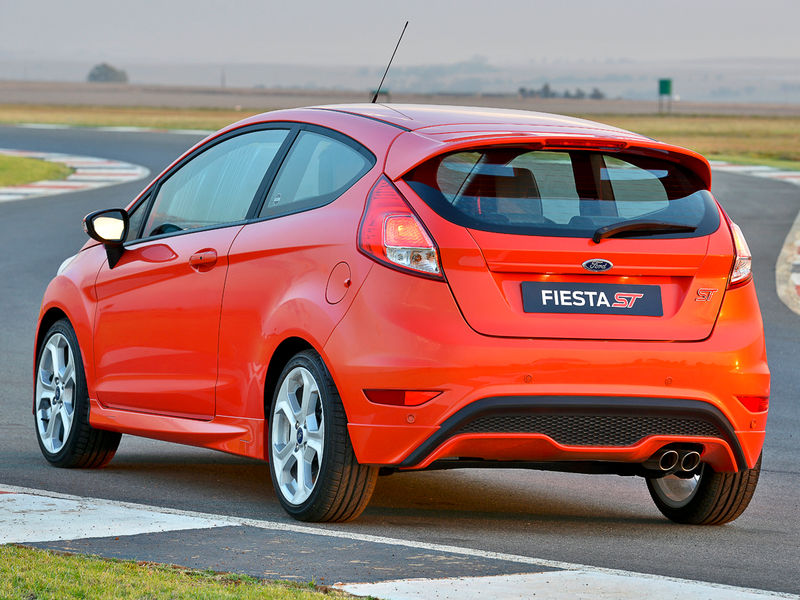
At the Frankfurt Motor Show in September 2011, the Dearborn-based firm unwrapped the Fiesta ST Concept. The production version of the pocket rocket followed at the Geneva International Motor Show in March 2012, with the first example rolling off the line in Germany in February 2013.
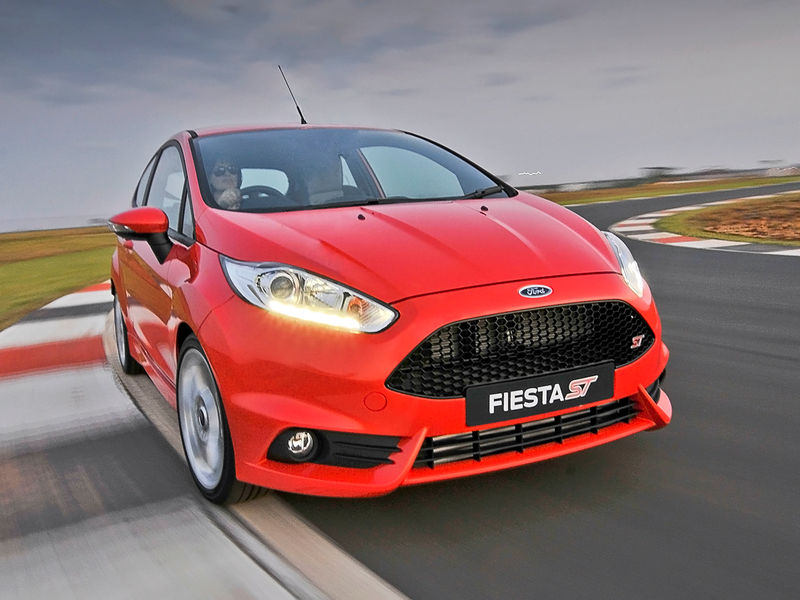
Not too much later (in May 2013, in fact), the Fiesta ST touched down in South Africa, billed as Ford’s “fastest and most dynamic small production performance car ever”. At launch, just a single derivative was on offer, with its 1.6-litre, 4-cylinder turbopetrol engine delivering 134 kW and 240 Nm of torque (the latter on tap from 1 600 to 5 000 rpm) to the front wheels via a 6-speed manual cog-swapper.
- Fiesta ST 1.6 GDTi 6MT 3-door (134 kW/240 Nm)
The Fiesta ST’s claimed 0-100 kph sprint time was 6.9 seconds, with its top speed limited to 220 kph. Ford listed a combined-cycle fuel economy figure of just 5.9 L/100 km (best of luck achieving that, though).
The only options available were metallic paint, rear parking sensors and an uprated Thatcham alarm (as opposed to the standard perimeter alarm with double dead-locking). Exterior colour choices were limited to Race Red, Frozen White, Molten Orange Metallic, Spirit Blue Metallic and Panther Black Metallic.
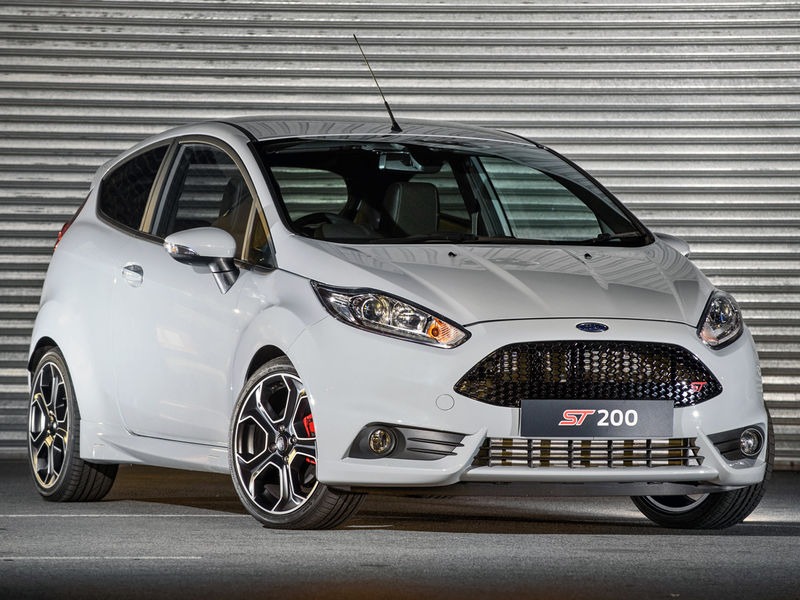
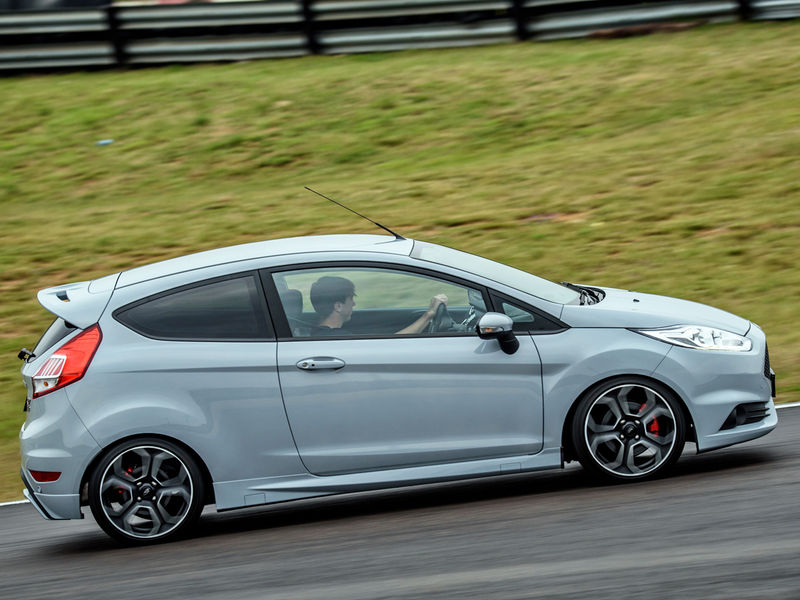
Though the Fiesta ST200 was revealed in February 2016, this swansong derivative made local landfall only in May 2017, commanding a tantalising R14k premium over the standard ST. In Mzansi, the ST200 was marketed as a “special edition”, with just 160 examples set aside for our market – each finished in model-specific “Storm Grey” metallic paint (detractors quipped that it closely resembled a primer coat).
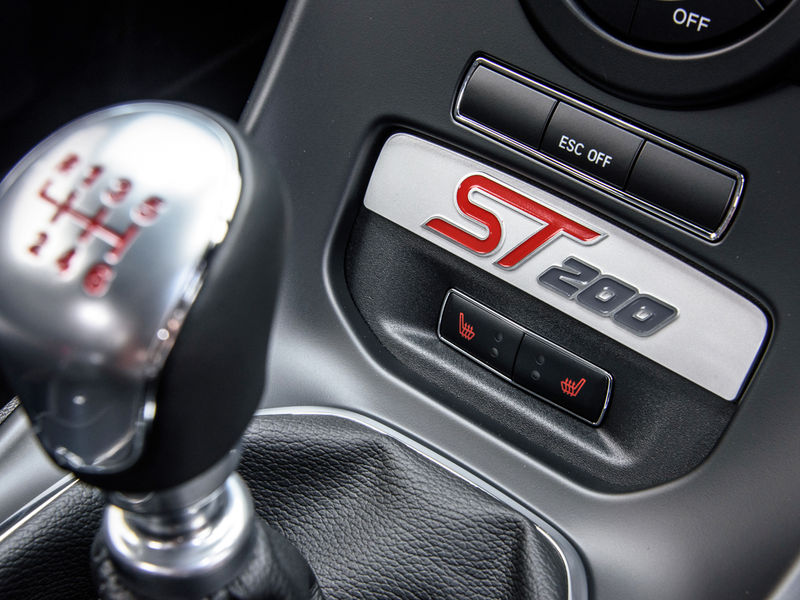
In ST200 form, the 1.6-litre EcoBoost motor had its peak outputs hiked to 149 kW and 290 Nm. In addition, a further 11 kW and 30 Nm were available “for up to 20 seconds” thanks to the lively 4-pot’s transient overboost function. Making the most of the 6-speed manual gearbox’s shorter final drive ratio (which was cut from 3.82 to 4.06), the Fiesta ST200 was said to be capable of hitting the 3-figure-kph mark from standstill in a claimed 6.7 seconds, before topping out at 230 kph.
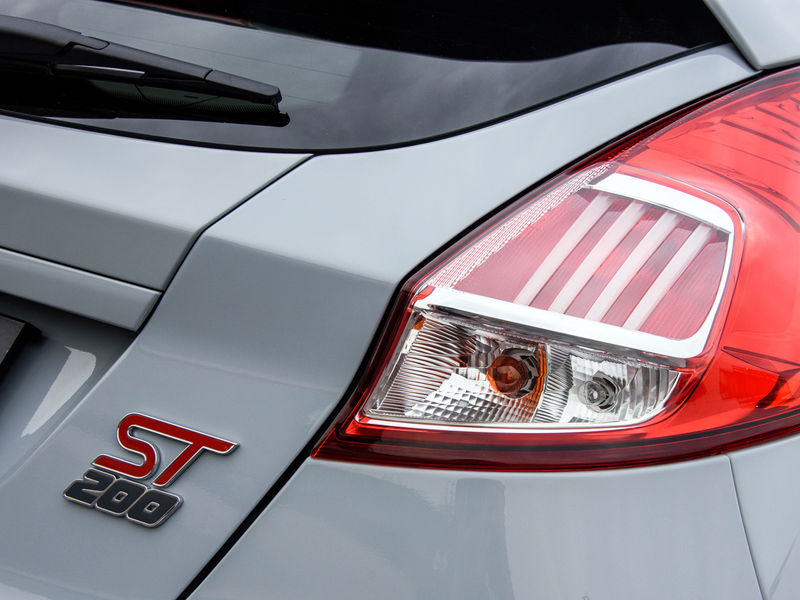
Moreover, the ST200 gained tweaks to its power-steering system as well as upgraded suspension, the latter including a rear twistbeam with 27% more roll stiffness, an increase in diameter for the front anti-roll bar (from 19 to 21 mm) and new damper specifications for “better impact absorption”. Though the Ford Motor Company of Southern Africa (FMCSA) didn’t ever make any official announcements on the matter, it’s believed that this suspension configuration was inherited by the standard ST derivative (exactly when, however, is unknown, but most estimates put it as early as mid-2015 production).
According to our info, FMCSA removed the standard ST and ST200 from its range in July 2018, shortly before surprising all and sundry with the news that the 3-cylinder 7th-gen Fiesta ST would not be offered in Mzansi (ostensibly due to fuel-quality concerns). And that was the end of the Fiesta ST in SA…
What are the advantages of a Ford Fiesta ST?
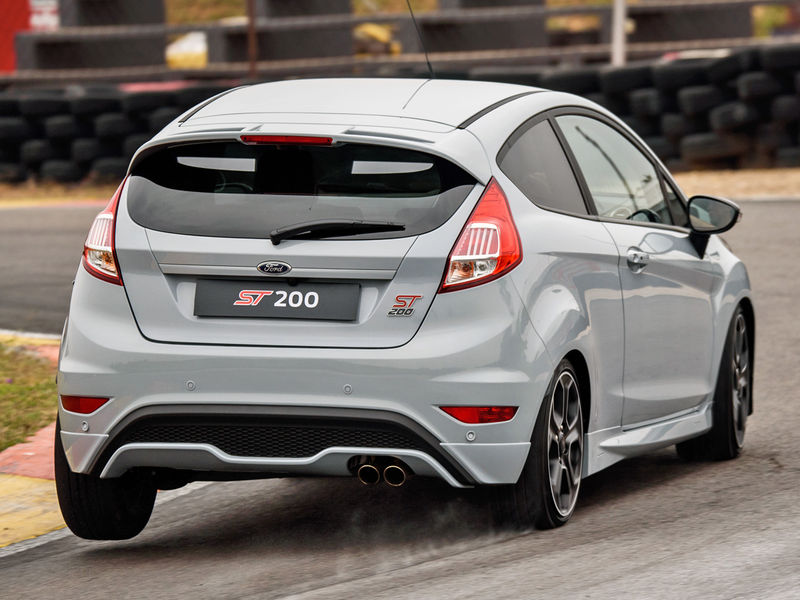
Fantastic fun to drive: In our opinion, there was nothing in the B-segment hatchback market that offered a more entertaining driving experience than the dynamically gifted 6th-gen Fiesta ST. Boasting quick steering, a positive gearshift action and superb mid-corner poise (thanks to its well-sorted chassis and a clever torque-vectoring control system that helped to minimise understeer), the playful ST-badged Fiesta was undeniably the segment’s superior “driver’s car”.
Although it was not the most powerful model in its class, the Fiesta ST punched well above its weight; consider the facelifted Polo GTI (released in 2015) offered 141 kW from its 1.8-litre engine, while the 4th-gen Clio RS made 147 kW in standard guise and 162 kW in 220 Trophy form. That said, it’s worth noting even the stock ST benefitted from a nifty overboost function, which briefly boosted torque by 50 Nm.
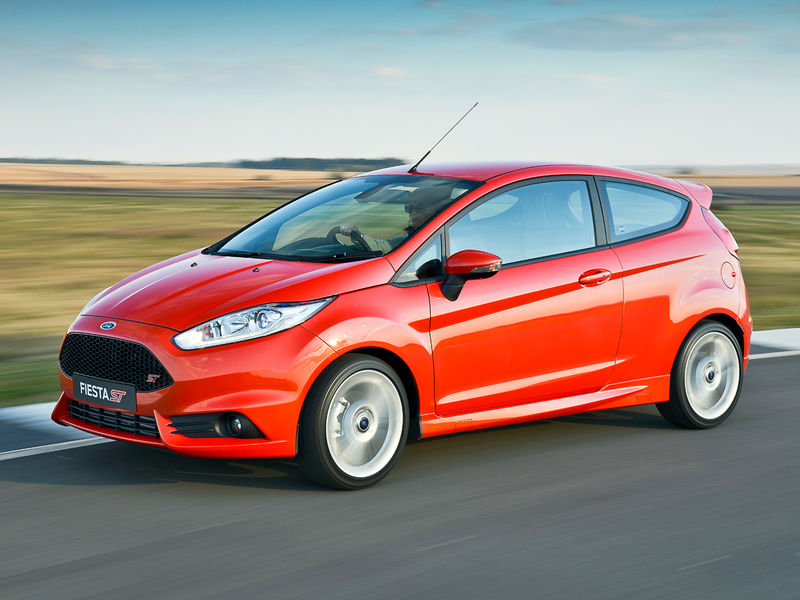
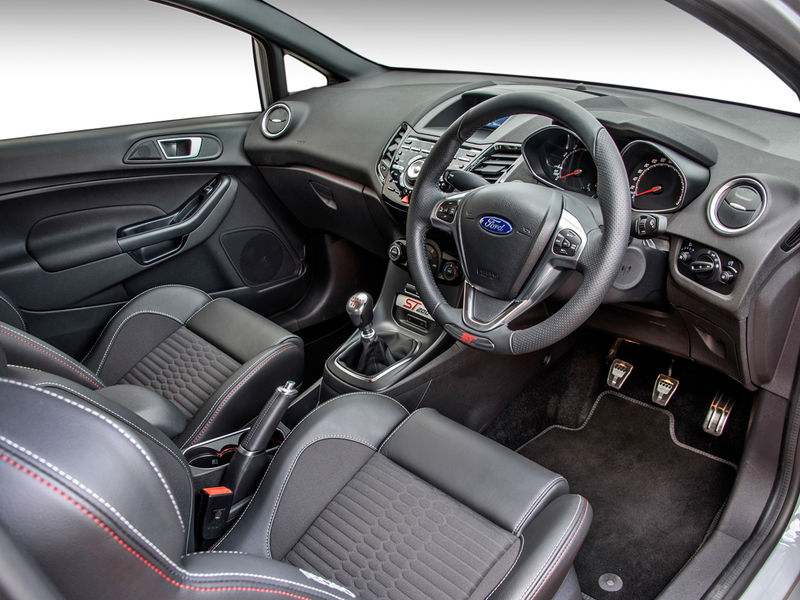
Well equipped as standard: Since just a single trim level was offered at launch (while certain other markets had ST1, ST2 and ST3 grades), the SA-spec Fiesta ST was well equipped as standard – particularly considering the price. The list of features included keyless entry, 6-way adjustable Recaro front seats, a 3-spoke leather-trimmed steering wheel, climate control, cruise control, a 6-speaker Sony audio system, LED ambient cabin lighting, an electro-chromatic rear-view mirror, automatic headlamps, rain-sensing wipers, heated side mirrors and 17-inch alloy wheels (wrapped in 205/40 R17 tyres).
Meanwhile, the safety kit included 7 airbags, ABS with EBD, 3-mode electronic stability control, hill-launch assist and ISOfix child-seat anchors for the rear outboard seats. There were also plenty of ST-specific features, including a full body kit (including that cheeky rear spoiler), a 15 mm lower ride height, ST-branded sill plates, dual chrome tailpipe extensions and alloy finishes for the pedals and gear knob.
The Fiesta ST200 added matte-black 5-spoke 17-inch alloy wheels (framing red brake callipers), LED taillamps, heated (partial-leather) Recaro front seats, dual-tone seatbelts, illuminated scuff plates, rear privacy glass, a reverse-view camera and the requisite smattering of ST200 badges.
Huge bang for buck: The Fiesta ST was not only well equipped, but also delivered massive bang for its buyer’s buck. For much of its local lifecycle, Ford’s baby hot hatch undercut its rivals – some of which were admittedly fitted with (typically more costly) dual-clutch transmissions – offering not only a more entertaining drive, but also far stronger value. That trend continues in the used market today.
What are the downsides of a Ford Fiesta ST?
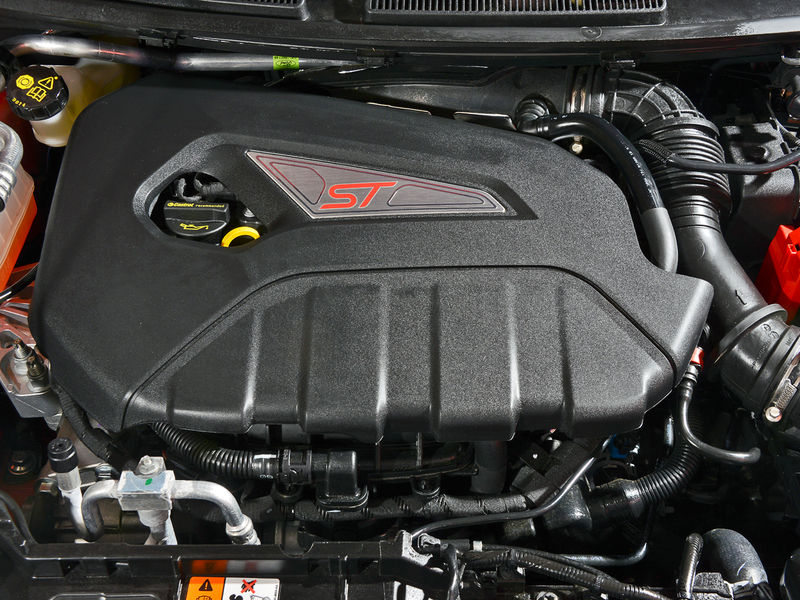
Recall for engine fire risk: You’re probably familiar with the widely reported Kuga fire scandal, but you may not know that Ford’s related safety recall campaign was extended to include the Fiesta ST’s motor in March 2017. According to a statement by the Blue Oval, insufficient coolant circulation could cause the engine to overheat, resulting in a crack in the cylinder head, which could, in turn, lead to a pressurised oil leak. This oil could then come into contact with a hot engine surface, increasing the risk of a fire.
FMCSA said that the safety recall included approximately 1 078 units of the Fiesta ST (examples produced between September 2012 and December 2014). So, depending on the model year, check whether the vehicle was taken in for the applicable hardware and software upgrades. In addition, we should point out that we’ve heard of a few (local) instances of ring-land failure on this engine as well.
Brittle low-speed ride: Though you might argue we’re being a touch unfair by calling out a hot hatch for its less-than-stellar ride comfort, we feel compelled to point out that the Fiesta ST’s low-speed ride was a trifle brittle. However, the suspension enhancements made to the ST200 (and later implemented on the standard version) resulted in a slight but certainly noticeable improvement to pliancy over rougher roads.
Driving position and dated cabin: While the Fiesta ST’s figure-hugging Recaro driver’s seat offered terrific lateral support, it was sited a smidgen too high for most tastes. The pilot’s perch was indeed equipped with height adjustment, but in practice it “pivoted” rather than moved straight up or down, making it tricky to dial in the perfect driving position.
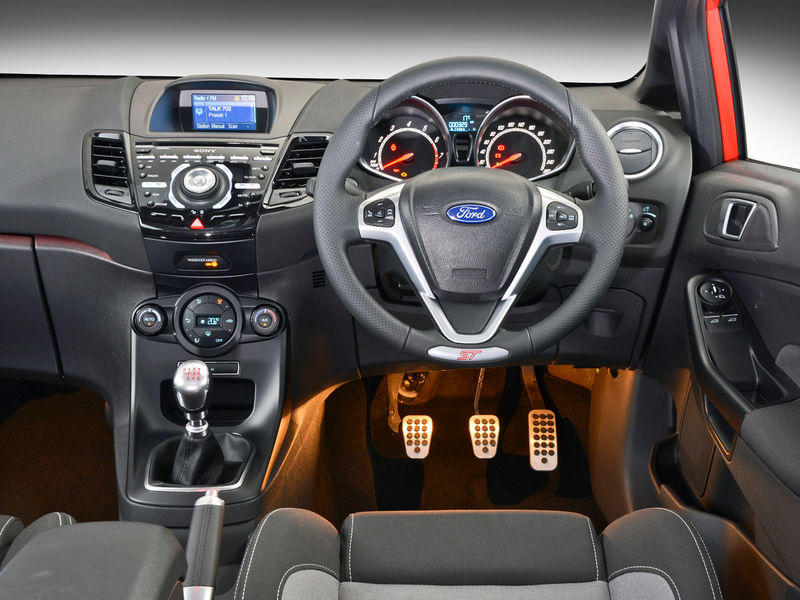
Furthermore, just like the standard Fiesta, the ST’s cabin quickly became dated. Compared with the displays in most rivals, the 4.2-inch TFT infotainment screen (running the overly fussy SYNC 1 system) was tiny and positioned above a cluttered, button-festooned centre console.
There were also plenty of hard plastics (far more than in the Volkswagen Polo GTI of the era, for example), though these were at least quite hard-wearing. Thankfully, despite its 3-door body style, the Fiesta ST was relatively practical, with its luggage compartment able to handle a claimed 276 litres (while also housing a space-saver spare wheel).
How much is a used Ford Fiesta ST in South Africa?
The purchase price of the Fiesta ST included a 4-year/120 000 km warranty and a 4-year/60 000 km service plan, with intervals required every 20 000 km – or, interestingly, 15 000 km in the case of the ST200. Note that this 1.6-litre EcoBoost turbopetrol engine used a timing belt (rather than a chain), which Ford recommended be changed every 7 years or 100 000 km.
At the time of writing, more than 40 examples of the Fiesta ST were listed on Cars.co.za. Interestingly, 34% of listings were from the first 2 model years (2013 and 2014), with 2017 next on 28%. Mileages ranged from 50 000 km on a 2017 ST200 to 190 000 km on a 2014 ST. A further 9 examples showed more than 150 000 km on their respective odometers.
- Below R150 000: Slim pickings below the R150 000 mark, with just a single example listed in this space at the time of writing. Unfortunately, this 2013 unit’s seats looked worse for wear, while it wore aftermarket items such as larger alloy wheels and tinted taillamp lenses.
- From R150 000 to R200 000: Nearly 60% of all Fiesta ST listings were positioned between these pricing bookends, with every model year bar 2018 represented. We found 3 examples here with less than 75 000 km on their respective clocks, along with 8 units showing more than 150 000 km.
- From R200 000 to R250 000: Though there were somewhat fewer options here, there was a definite bias towards the final 2 model years. Mileage, too, tended to be lower, though we still noted several examples riding on aftermarket rims. Clued-up buyers could certainly find a bargain here.
- R250 000 and up: Spending upwards of R250 000 should get you into a late model-year ST with relatively low mileage, but be aware we found just 8 listings above this point. The most expensive example was the only ST200 listed, a 2017 model with 50 000 km on the clock and priced at R339 950 (a whisker above the R339 900 retail price this model commanded at launch in May 2017).
Which Ford Fiesta ST derivative should I buy?
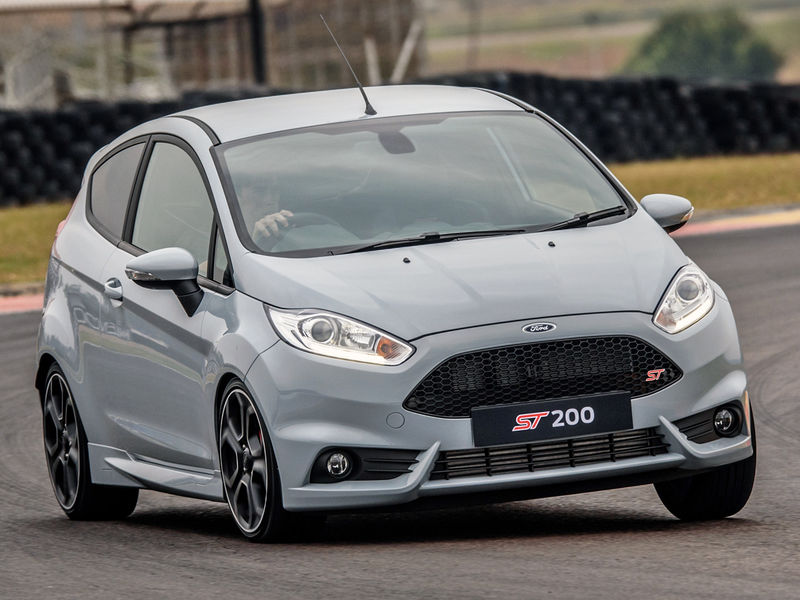
Since just a single Fiesta ST derivative was on offer over most of the nameplate’s 5-year local lifecycle (with examples of the limited-run ST200 proving exceedingly difficult to find on today’s used market), there are no complex decisions to be made here. In fact, all we’d suggest is leaning towards later model-year cars that benefitted from the suspension upgrades. That said, the first prize remains a clean ST200.
The Fiesta ST also had a reputation for being highly tuneable, with popular modifications including everything from lowering springs and short shifters to induction kits, aftermarket downpipes/exhausts and software updates. As always, we’d strongly recommend sticking to stock-standard vehicles.
On a related note, here’s the obligatory caveat about buying a 2nd-hand performance car: bear in mind that hot hatches such as the Fiesta ST tend to be driven extremely hard, which makes evidence of regular and fastidious maintenance all the more important. Buyer beware.
Is the Ford Fiesta ST a good used buy?
Whereas today’s B-segment hot-hatch class is decidedly light on contenders, the Ford Fiesta ST faced a few interesting rivals in its day. A fan favourite in Mzansi was the Typ 6R Volkswagen Polo GTI, which was initially offered in twin-charged 1.4 TSI form (132 kW) and then later in facelifted 1.8 TSI guise (141 kW).
There were also RS versions of the Renault Clio 4 (including the RS18 special edition and range-topping Trophy), as well as Opel’s 141 kW Corsa OPC (don’t forget the limited-run 154 kW Nurburgring Edition). The German firm’s B-segment hot hatch, however, was put out to pasture locally as early as 2015.
The highly underrated 147 kW Peugeot 208 GTi, meanwhile, was axed in South Africa during the opening half of 2017. Buyers might also have considered the somewhat pricier F55-gen Mini Cooper S (141 kW) and perhaps even the brawnier Audi S1 (170 kW). The naturally aspirated AZG-gen Suzuki Swift Sport (100 kW), however, was perhaps a little short on power to trouble the Fiesta ST.
As an aside, buyers combing through SA’s new-vehicle market for B-segment hot hatches will find very few options. The most obvious is the Kariega-built VW Polo GTI (which now makes 147 kW, but is offered in DSG guise only), while the all-paw Toyota GR Yaris – complete with 3 doors and a manual gearbox – churns out a whopping 198 kW… but will cost you more than R850 000. The outgoing Mini Cooper S is also still around (just), while the current-gen Swift Sport remains a warm-, rather than hot, hatch.
That means there’s nothing with the sort of hot-hatch purity – nor accessibility – of the Fiesta ST. While that’s a great pity, it also makes us appreciate Ford’s visceral little hot hatch even more.
By delivering a refreshingly analogue driving experience in an increasingly digital automotive world, the Ford Fiesta ST continues to offer tremendous “bang for buck” as a used buy.
Providing more grins per kilometre than most performance vehicles many times its price, the Fiesta ST was our favourite B-segment blaster when new and remains our pick on the used market today. This fast little Ford was one of the last old-school B-segment hot hatches – and, fittingly, one of the very best.
Looking for a used Ford Fiesta ST to buy?
Looking to sell your car? You can sell it to our dealer network here.
Ryan Bubear

Having written about everything from sport and politics to crime, Ryan eventually settled on motoring. For well over 15 years, he's been penning articles – both online and in print – about the broader automotive industry, though he's particularly fascinated by vehicle-sales statistics. A freelance writer and editor, Ryan has owned a 1971 Austin Mini Mk3 for 20-plus years.