We were deeply impressed with the range-topping Ford Everest 3.0 V6 Platinum, but if you don’t need 6-cylinder power, and are willing to sacrifice some tech, the more affordable 2.0 BiTurbo 4×4 Sport derivative offers significant appeal too.
We like: Design, ride/handling balance for a ladder-frame chassis vehicle, practical cabin
We don’t like: Lacks some features at the price, still quite thirsty
FAST FACTS
- Model: Ford Everest 2.0 BiTurbo 4×4 Sport
- Price: R1 020 300 (August 2023)
- Engine: 2.0-litre 4-cylinder twin-turbodiesel
- Power/Torque: 154 kW/500 Nm
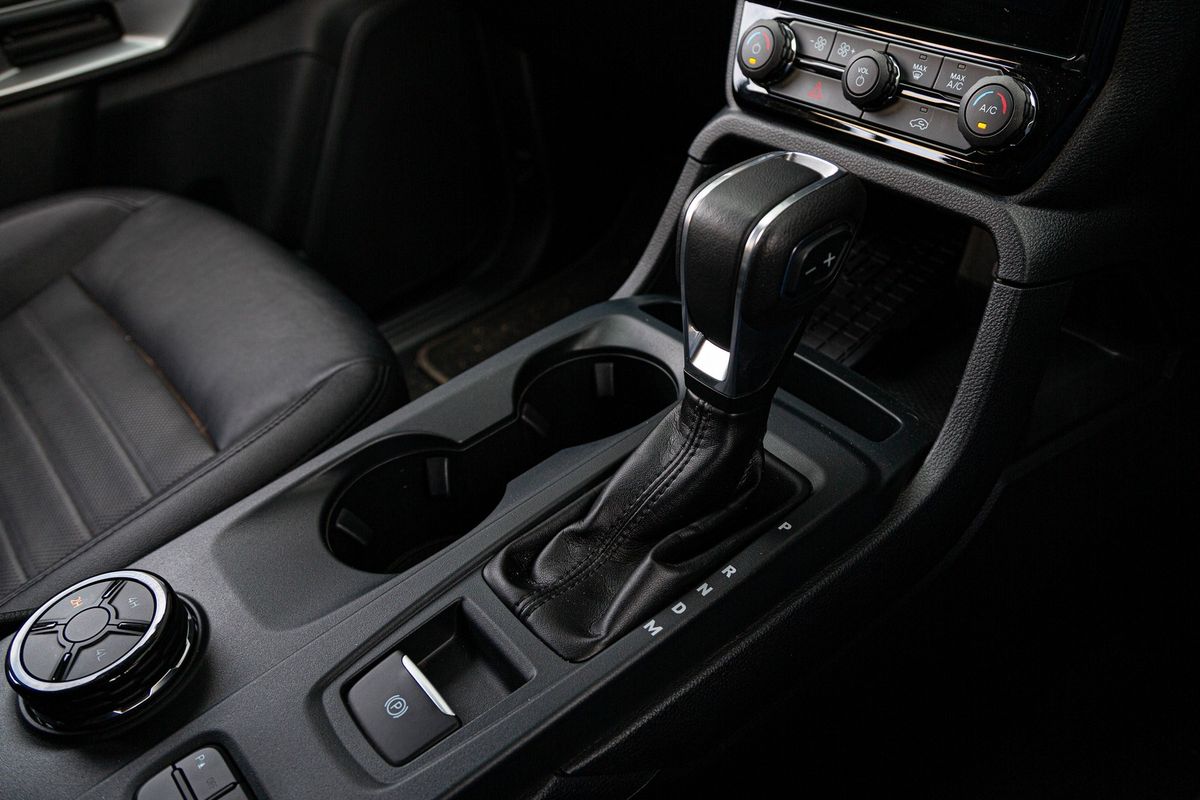
- Transmission: 10-speed automatic
- 0-100kph: 9.85 sec (tested)
- Fuel consumption: 7.5 L/100 km (claimed)
- Luggage/Utility space: 259/898/1 823 litres
Serious about buying/selling?
Some dealerships regularly offer great deals. See our New Car Specials!
Looking to sell your car? Sell it on Cars.co.za for free
Where does the Ford Everest Sport fit in?
It’s fair to say that when the new Ford Everest was introduced last year, its price positioning raised eyebrows – it breached the R1-million mark and slotted in well above the asking prices of its traditional Toyota Fortuner rival. But after spending a significant amount of time with the flagship Platinum variant, we were convinced (by and large) that Ford had done enough to justify the heady price tag. It is a significantly more polished product than the ageing Fortuner and even Isuzu’s relatively fresh MU-X.
Though the Ford Everest range has since grown to also include Wildtrak and XLT derivatives, which notably made the 7-seat adventure SUV more accessible at a lower price point, the subject of this review was part of the initial launch line-up. Powered by the marque’s highly-regarded 2.0-litre 4-cylinder bi-turbodiesel engine and kitted out in attractive Sport trim, could this Everest be the sweet spot in the line-up? It is worth noting that it is the most affordable 4×4 variant in the revised and extended line-up.
Compare Ford Everest Sport’s specs with those of its Toyota Fortuner and Isuzu MU-X counterparts
How the Ford Everest Sport fares in terms of…
Design and Packaging
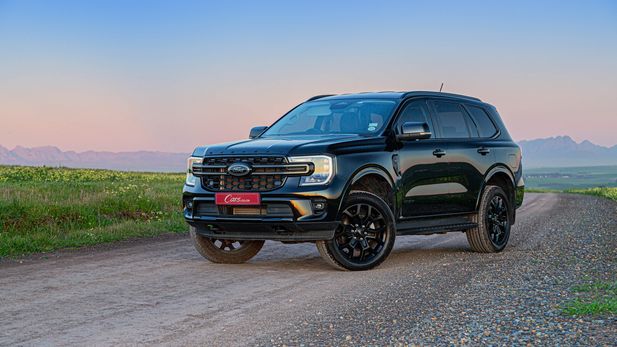
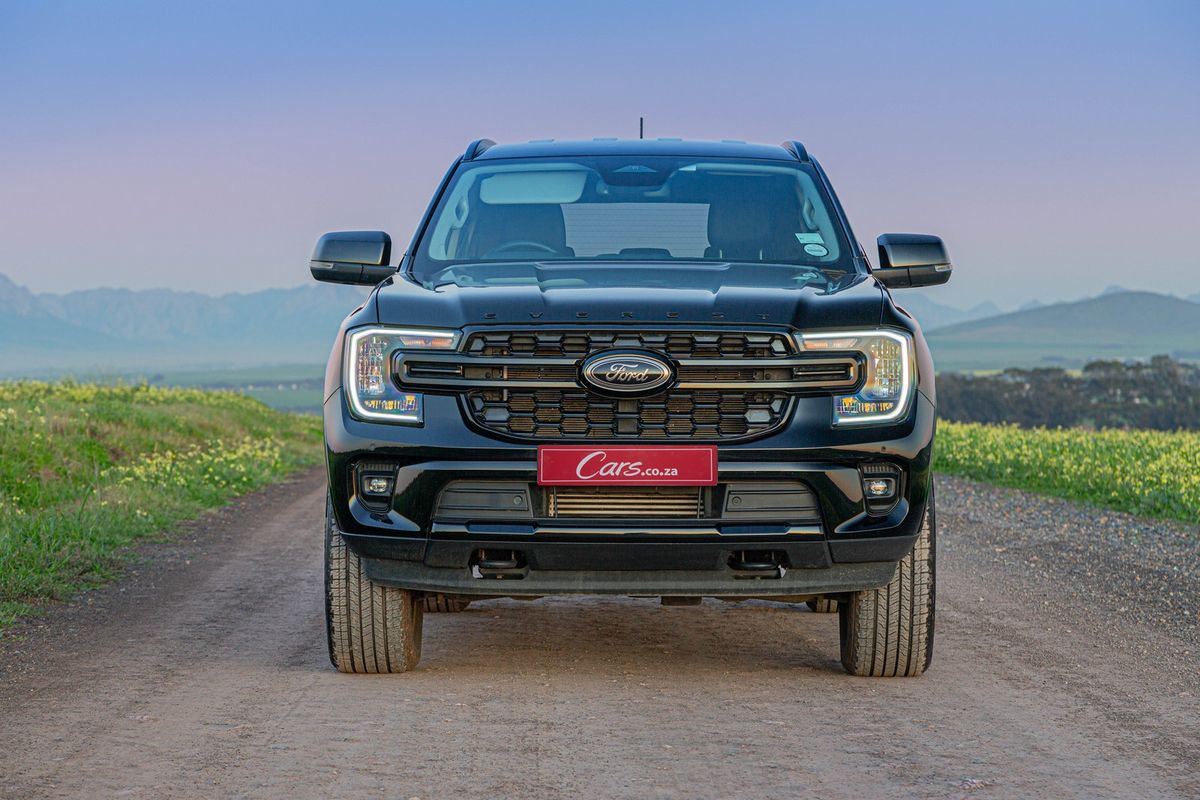
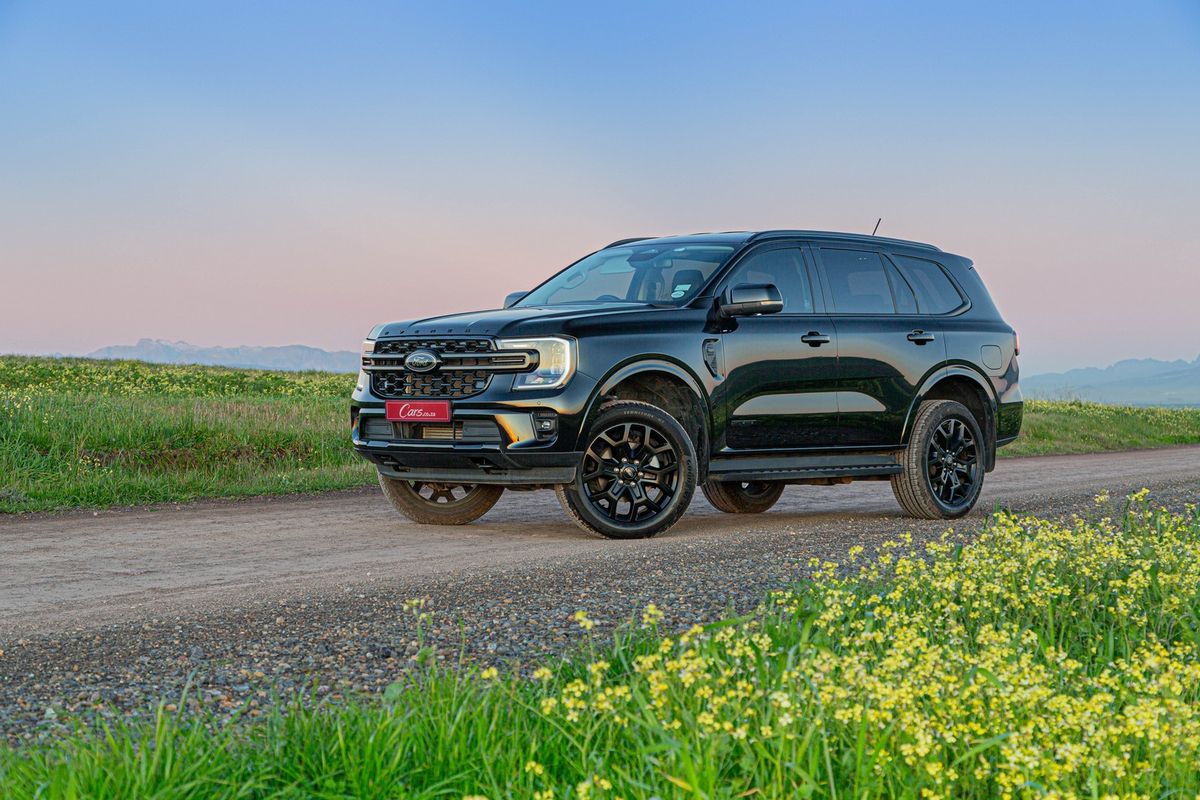
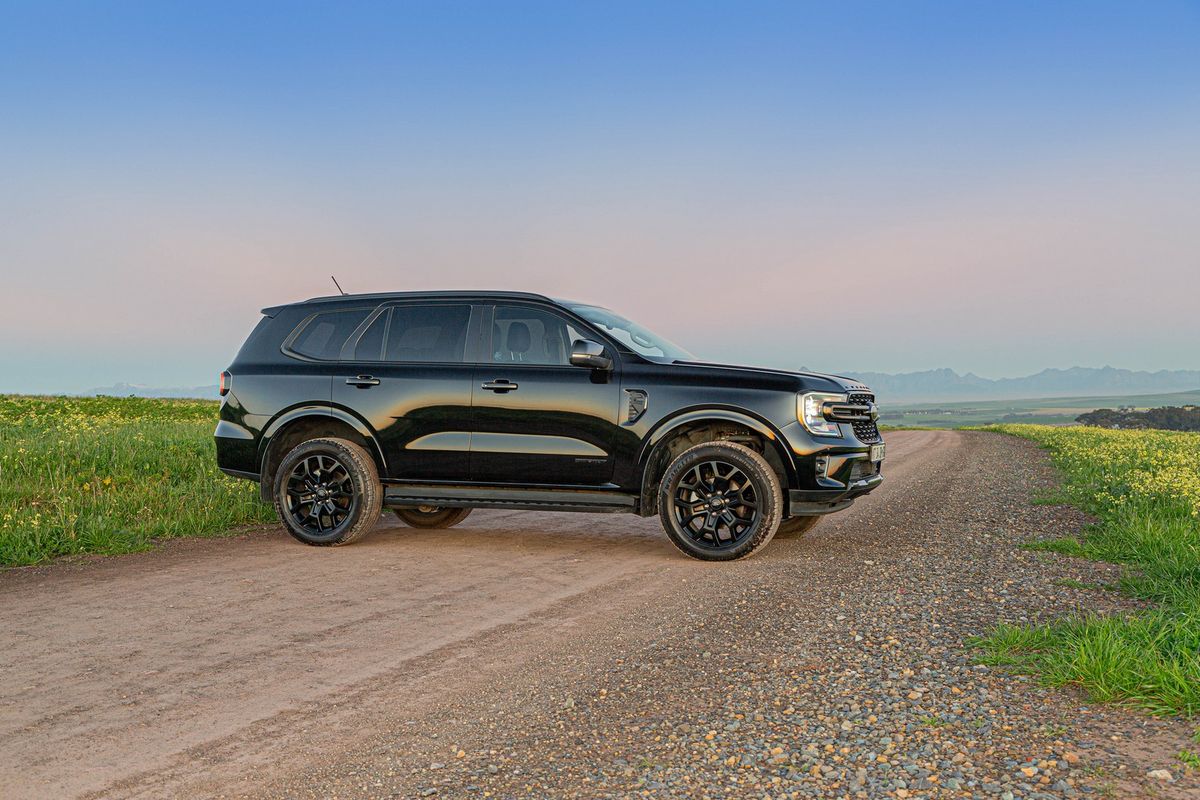
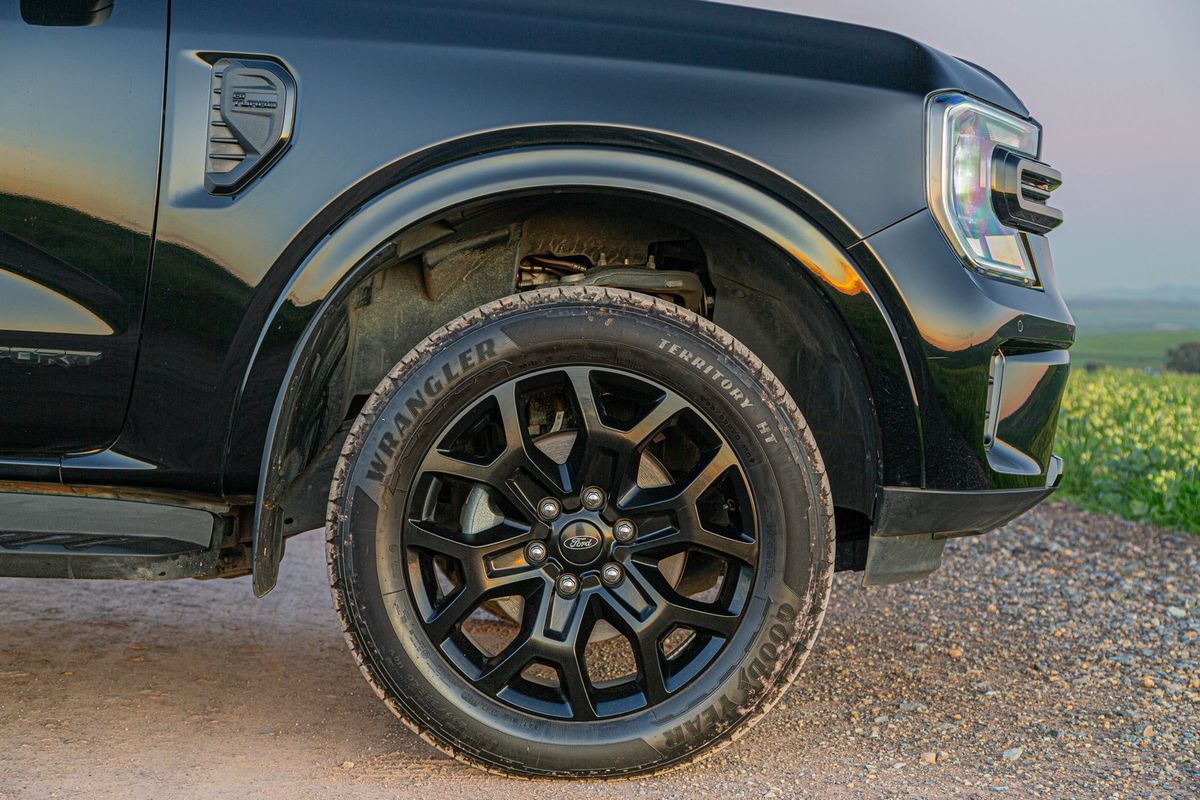
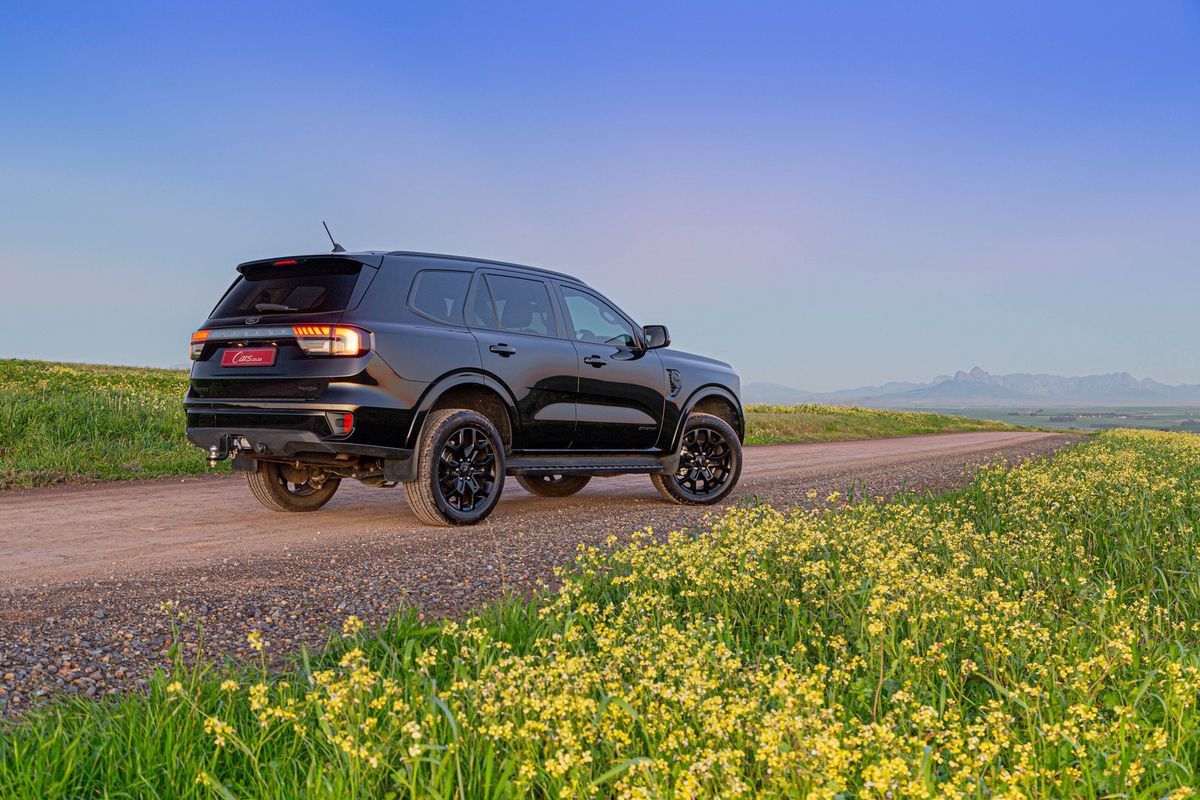
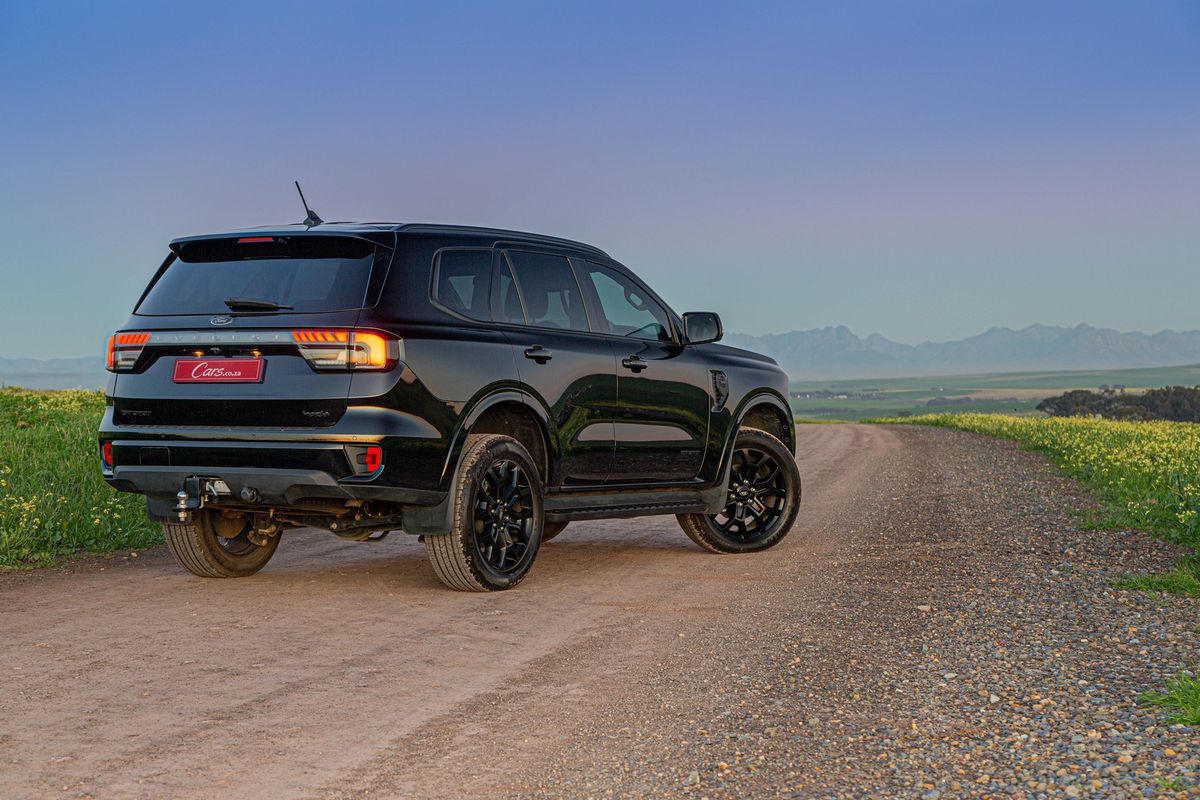
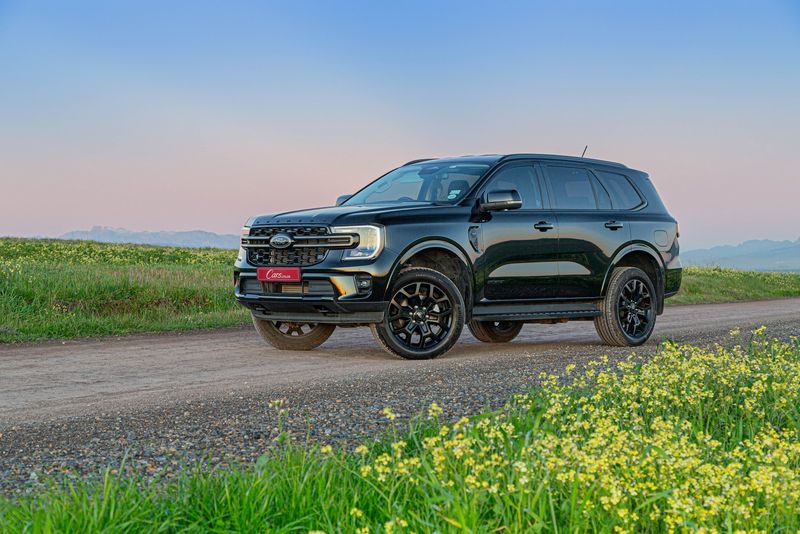
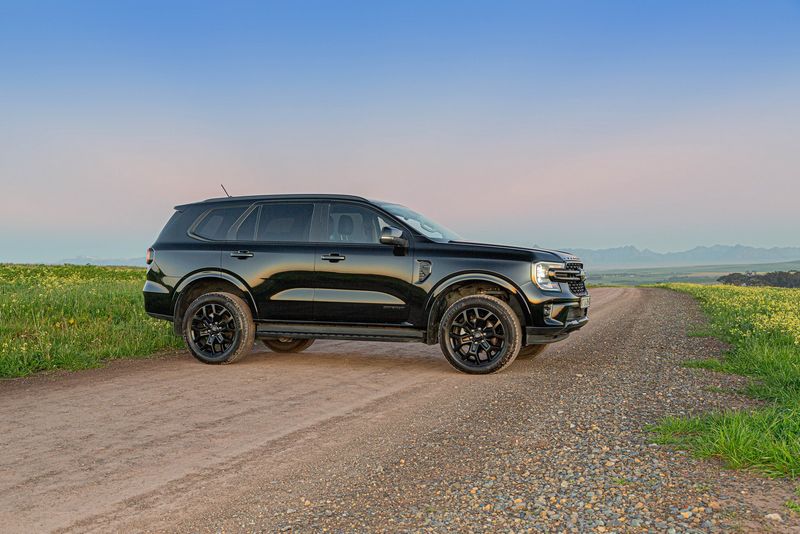
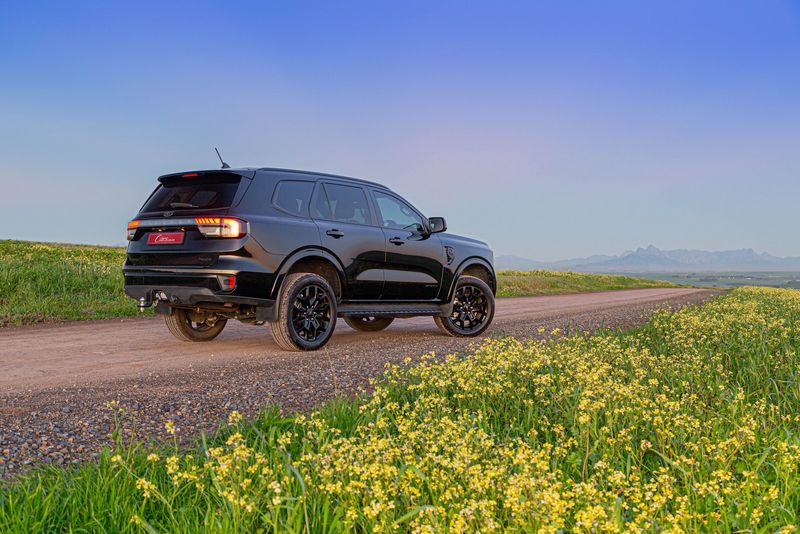
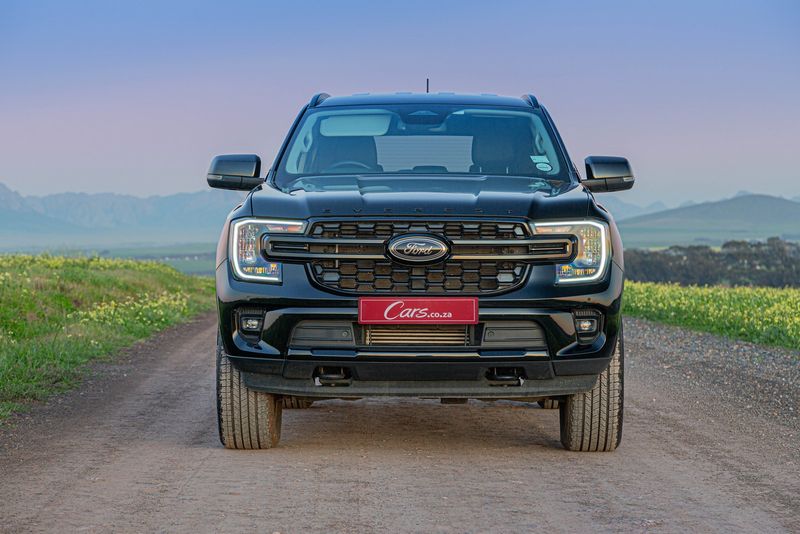
Sport trim features primarily black detailing and, when coupled with the shimmering black paint finish of our test unit, it endows the Ford Everest Sport with a particularly menacing, upmarket look. The bracket-shaped LEDs provide some welcome contrast, seeing as even the wheels (20-inch alloys, which are standard fitment) are painted black. For a number of our testers, the 2.0 BiTurbo 4×4 Sport’s look was more appealing than that of the Platinum, which is awash with chrome finishes. But, to each their own.
Besides the black trim, it’s indeed difficult to spot notable differences between the Platinum and Sport. The wheels are one size smaller and there is no dual-panel moon roof. Interestingly, the Sport rides 3mm higher than the Platinum, which gives it a slight approach/departure angle benefit, but if you read the fine print, you’ll realise that while underbody protection is optional on the Sport, it’s standard on the Platinum.
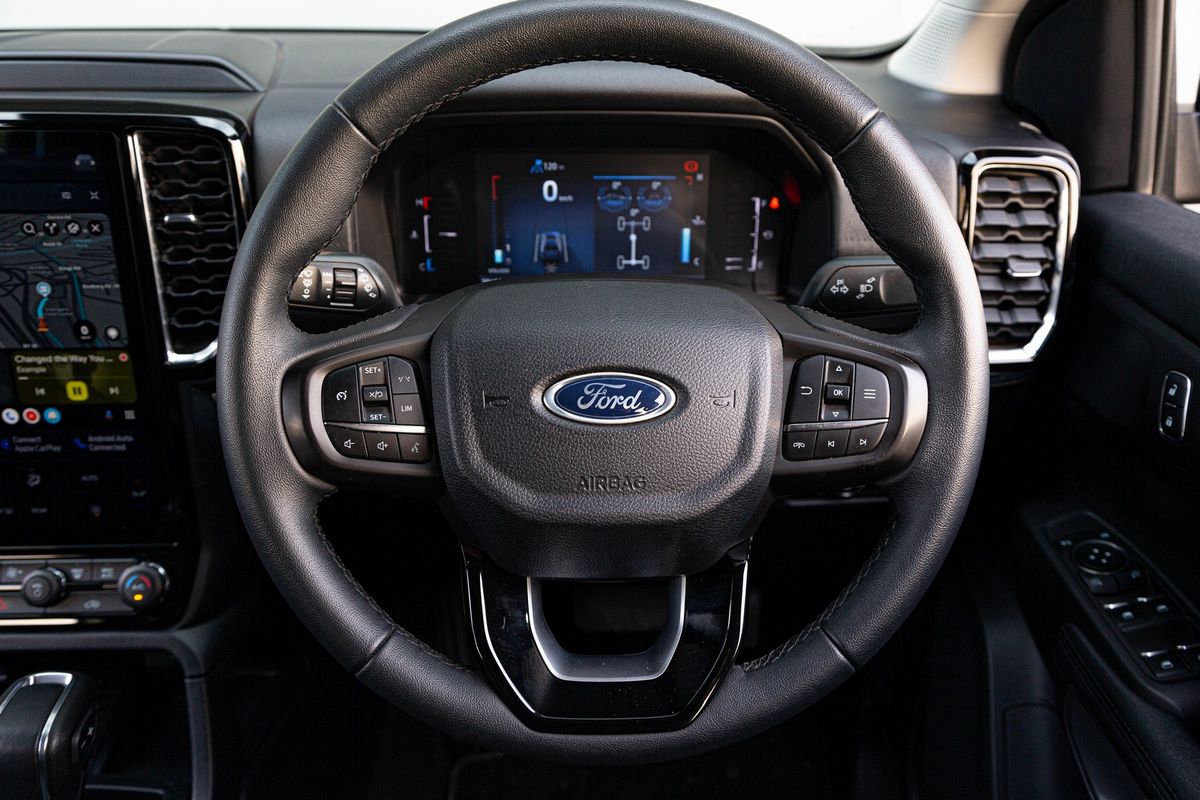
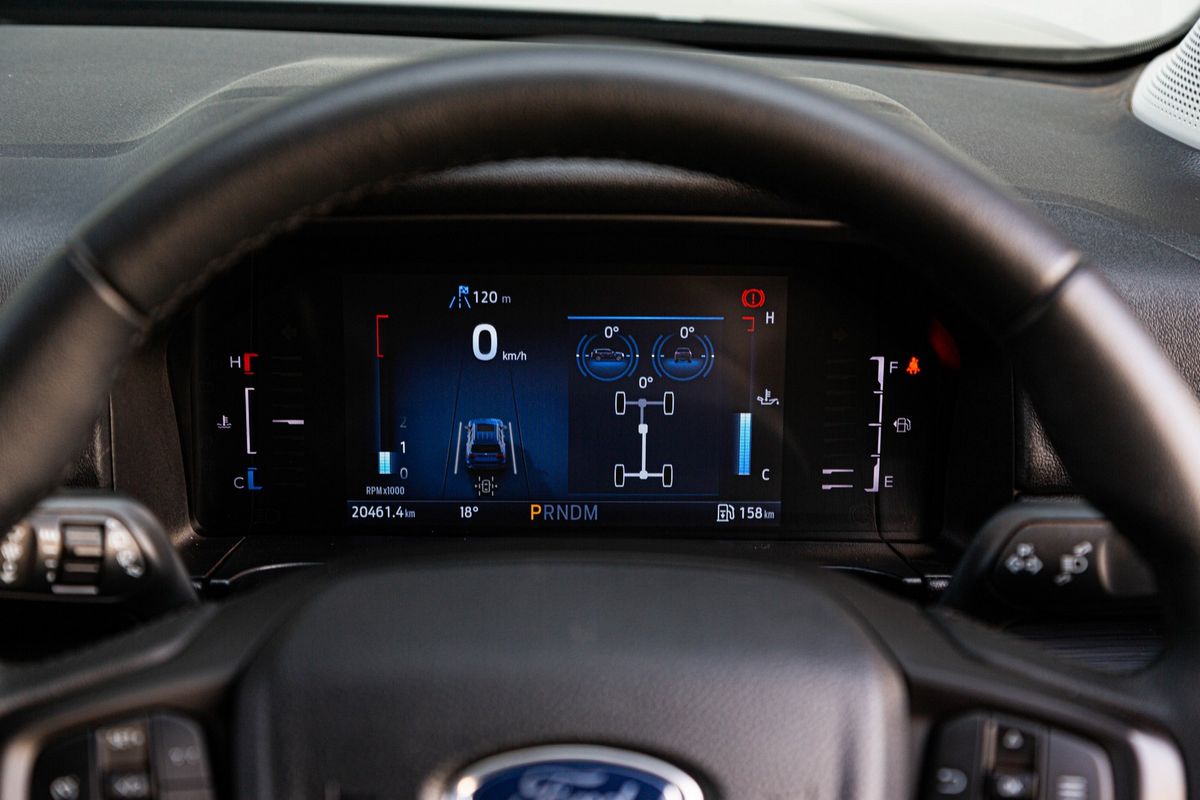
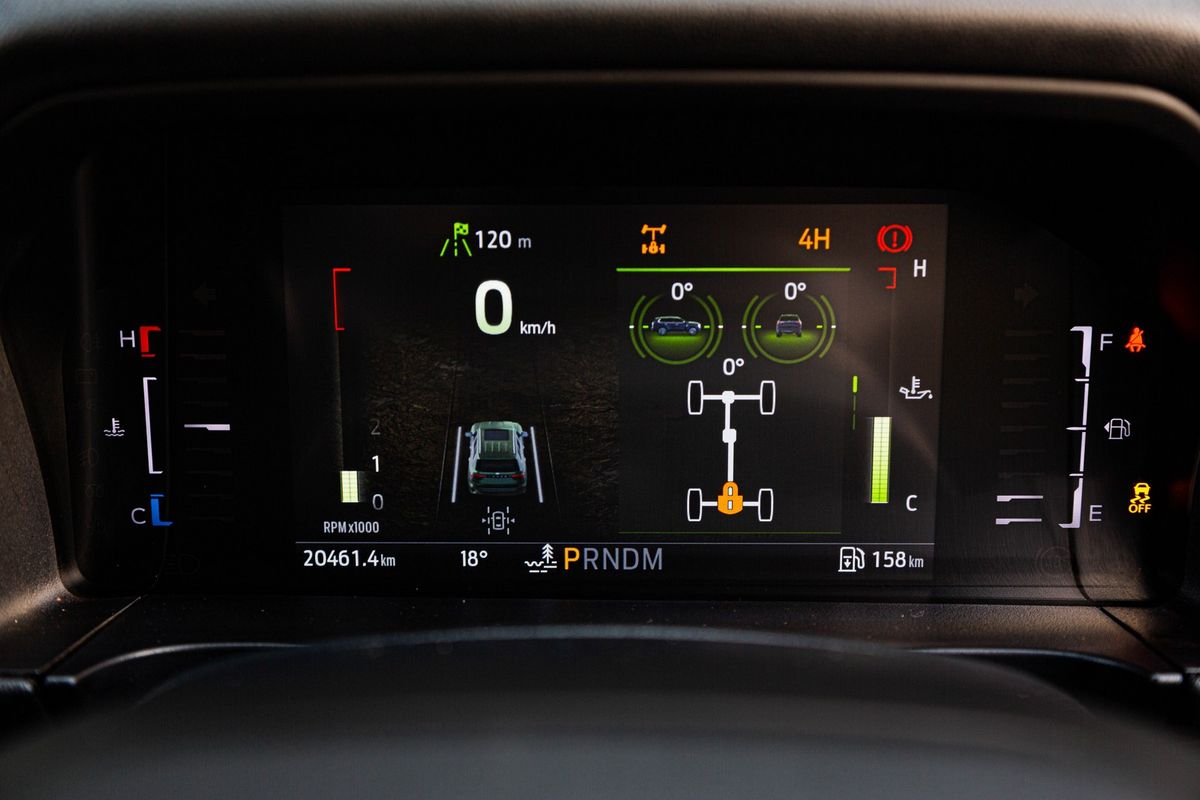
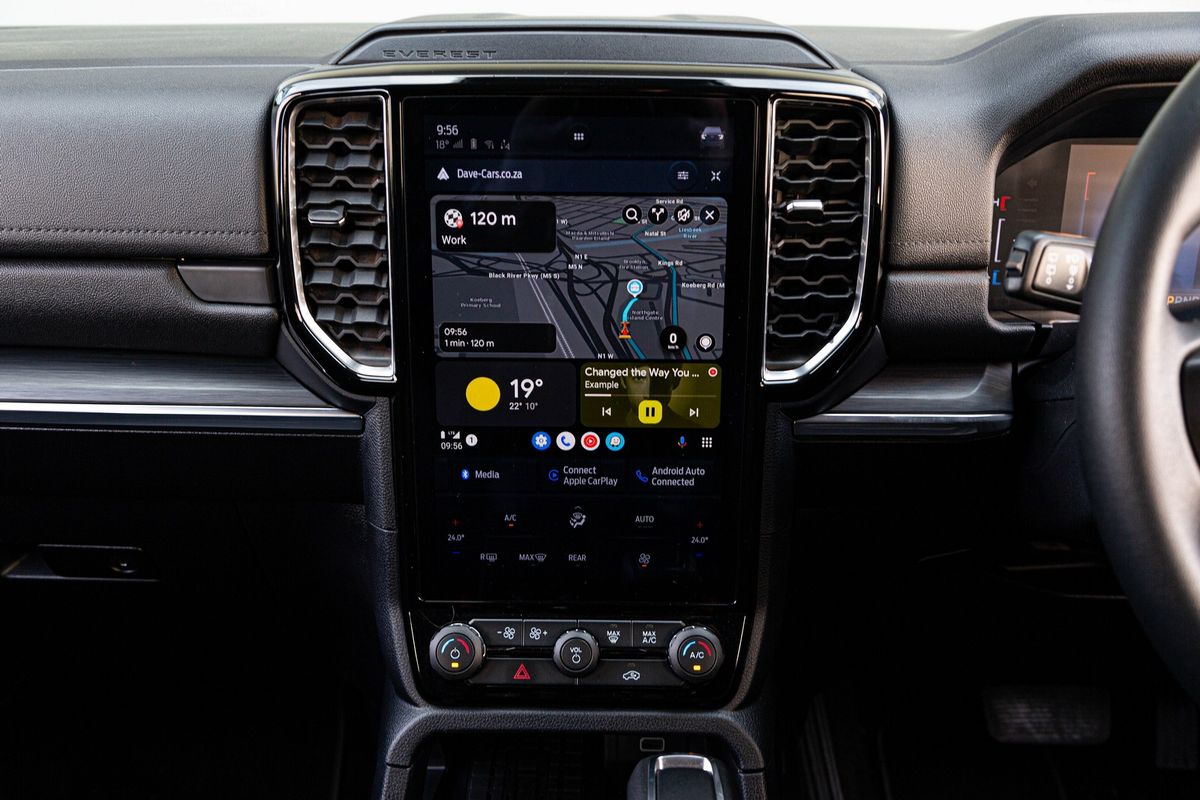
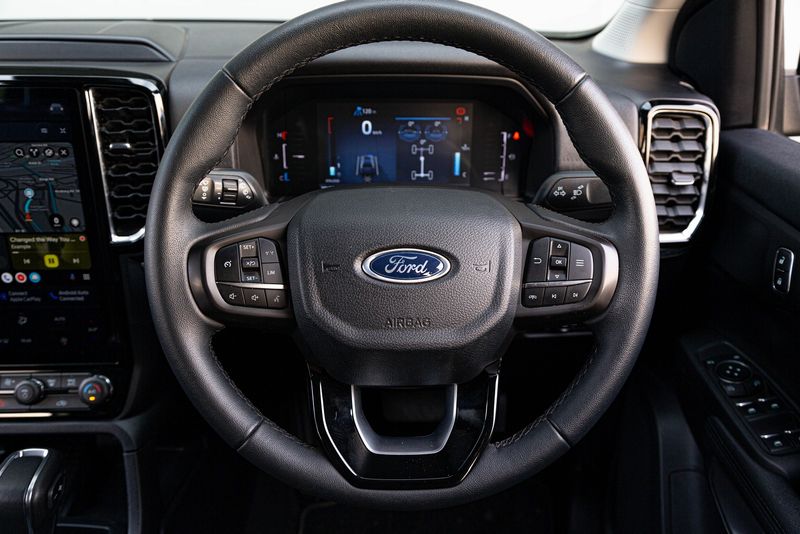
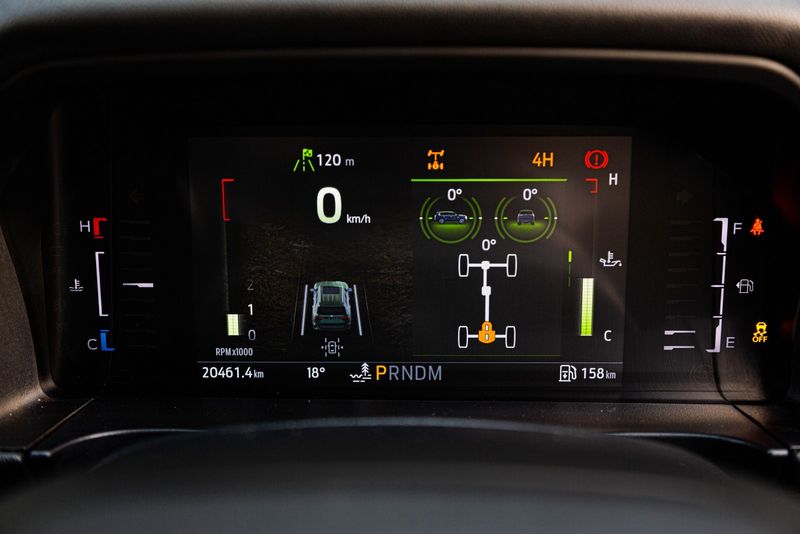
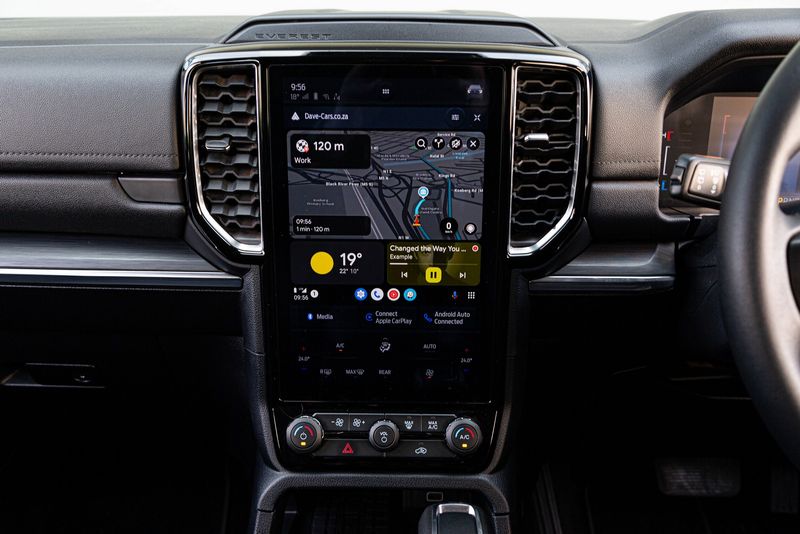
As for the cabin, the Everest Sport looks every bit like a R1-million vehicle on the inside. Predominantly black finishes abound, but it somehow comes across as “premium” and not overbearingly sombre. This is largely due to the presence of the same 12-inch “tablet-style” touchscreen in the centre of the fascia, as well as an 8-inch digital instrument cluster (it is, admittedly, smaller than the Platinum’s 12-inch item).
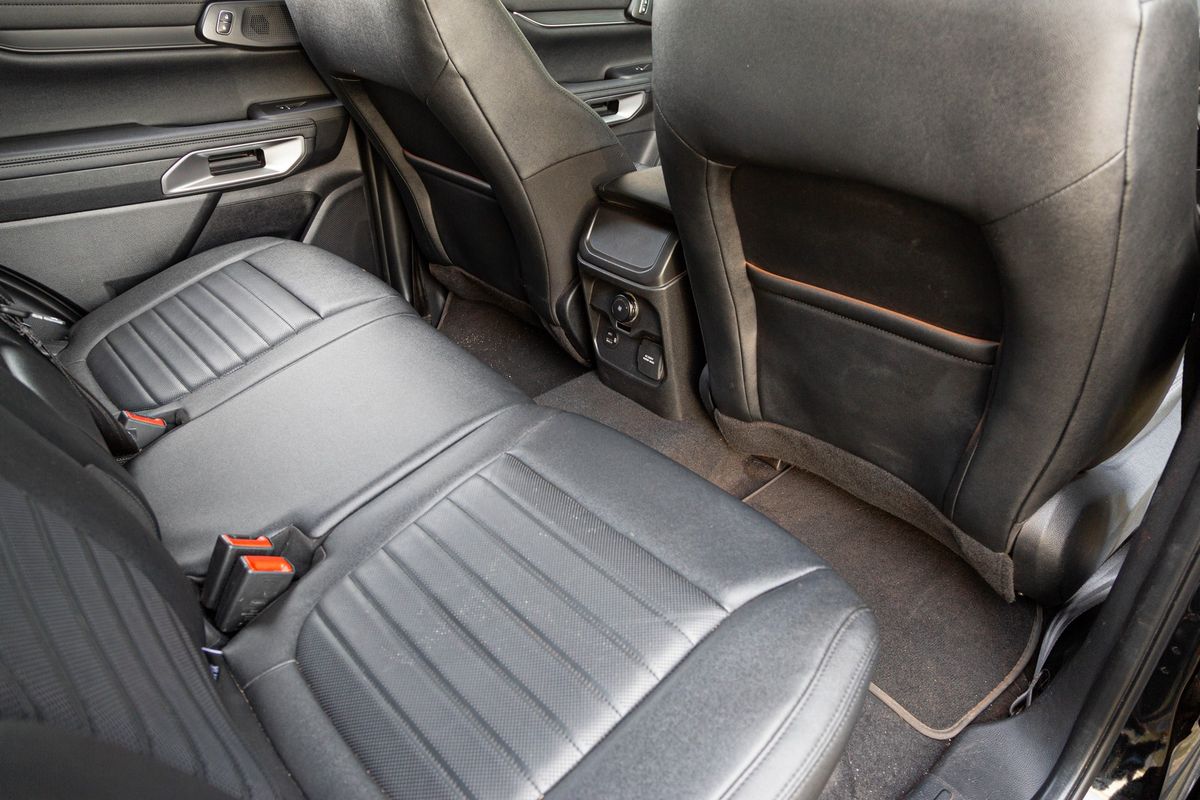
As expected, the Everest Sport’s cabin is largely identical to that of the Platinum (in terms of practicality and configuration), but again, if you inspect the specification sheet closely, you may notice some interesting differences. Due to the lack of the vast dual-panel moon roof, the headroom in the 1st and 2nd rows of the Everest Sport is, in fact, superior to that of the Platinum (by a not-insignificant 4 cm).
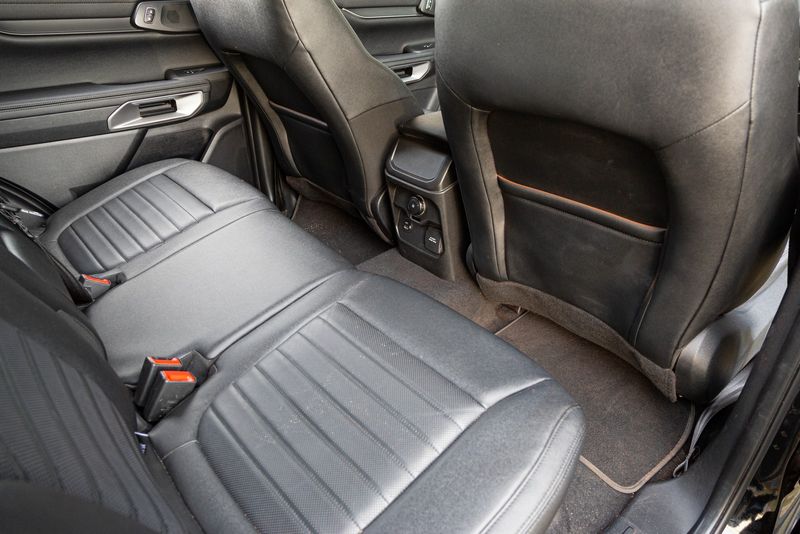
The front seats are electrically adjustable (including lumbar support), but lack heating/cooling (standard in Platinum), while the 2nd row also forgoes the flagship’s heating function. Perhaps more importantly, the 3rd row lacks the auto-fold function featured in the Platinum. So, quite a few nice-to-haves have been sacrificed. Upholstery is partial leather, as opposed to full “premium” leather in the flagship.
Performance and Efficiency
Under the bonnet is Ford’s proven 2.0 BiTurbo diesel engine that develops 154 kW and 500 Nm, with maximum torque available from 1 750 to 2 000 rpm. Although the peak figures are obviously lower than those of the Platinum’s 3.0-litre V6, they are very competitive with the outputs of the 2.8- and 3.0-litre engines in the Fortuner and MU-X. The motor is mated with a 10-speed automatic transmission.
In day-to-day driving conditions, the drivetrain is more than up to the task of propelling the Ford Everest Sport with sufficient verve (our test equipment indicated it could accelerate from 0-100 kph in 9.85 sec), but there are moments when a sudden throttle application can catch out the transmission, leading to some “hunting” (in other words, the ‘box would hurriedly shift down one or more ratios at a time).
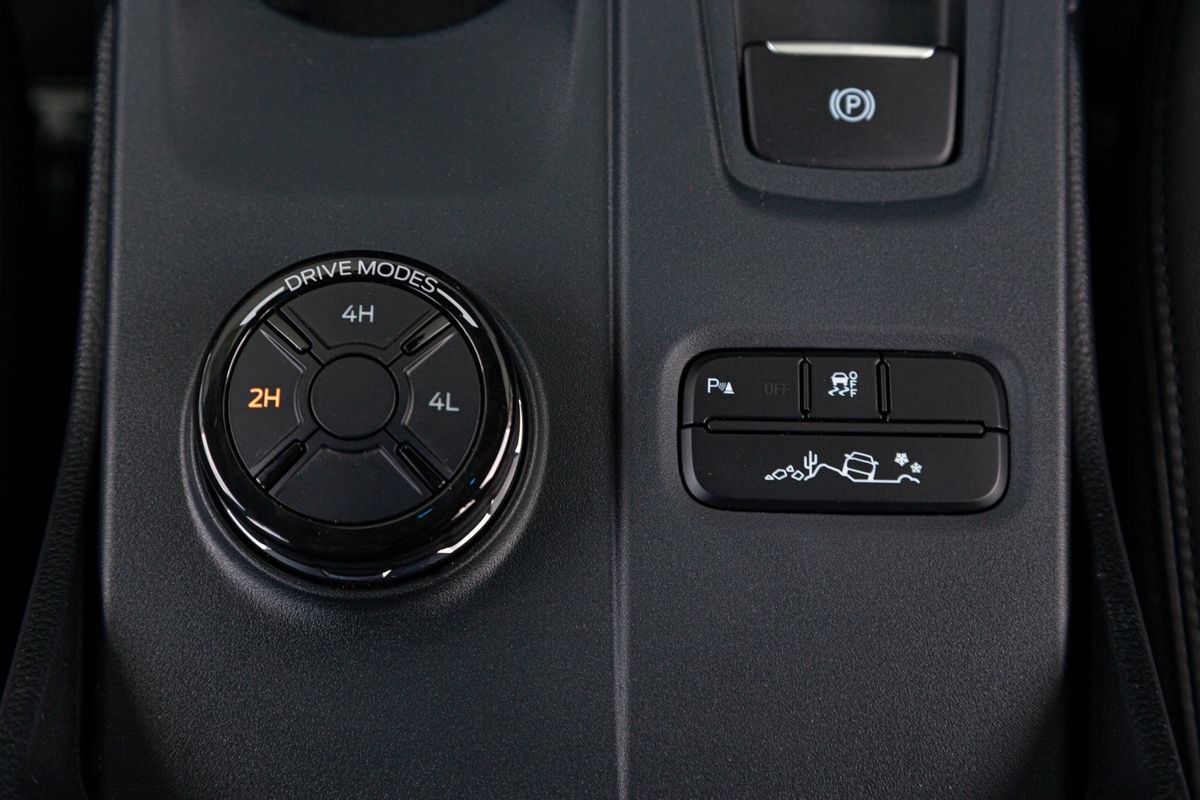
Another interesting difference between the Ford Everest Sport and its Platinum sibling is that the latter features a full-time 4-wheel-drive configuration, whereas the former gets a part-time electronic shift-on-the-fly 4-wheel-drive system, which includes 2H, 4H and 4L (the last is for tricky off-road conditions).
One of the main benefits of utilising a smaller-capacity turbodiesel motor (instead of a 3.0-litre V6) is that the Sport should offer better fuel efficiency than its Platinum sibling. During our test of the 3.0 V6 Platinum, we found the test unit quite thirsty, with an average consumption of 10.5 to 11 L/100 km (the claimed figure was 8.5 L/100 km). Unfortunately, although Ford claims an average consumption of 7.5 L/100 km for the Sport, we achieved around 10.5 L/100 km again. It is worth noting, however, that our test period with the Platinum involved a lot of long-distance touring, which was not the case with the Sport.
The good news for those who need a capable towing vehicle is that the Ford Everest 2.0 BiTurbo 4×4 Sport’s tow rating (braked) is the same as the flagship derivative: a not-insignificant 3 500 kg.
Comfort and Features
As mentioned earlier in this review, the Ford Everest Sport’s cabin is largely similar to that of the Platinum derivative. The extra width in the cabin (compared with its predecessor) and the attention to detail make the Everest’s cabin a significantly more pleasant space to occupy than those of a Fortuner and MU-X.
And while the 2.0 BiTurbo 4×4 Sport’s features list is comprehensive, it does require buyers to make do without some nice-to-have active safety- and infotainment features found in the Platinum version.
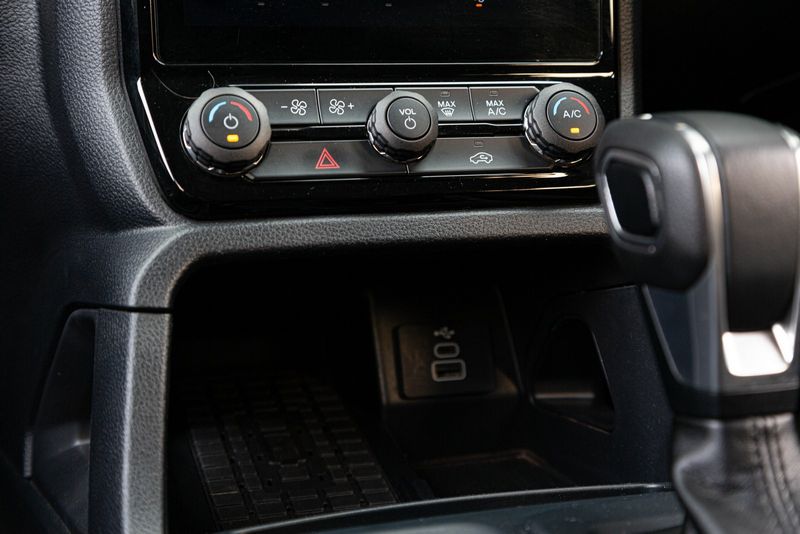
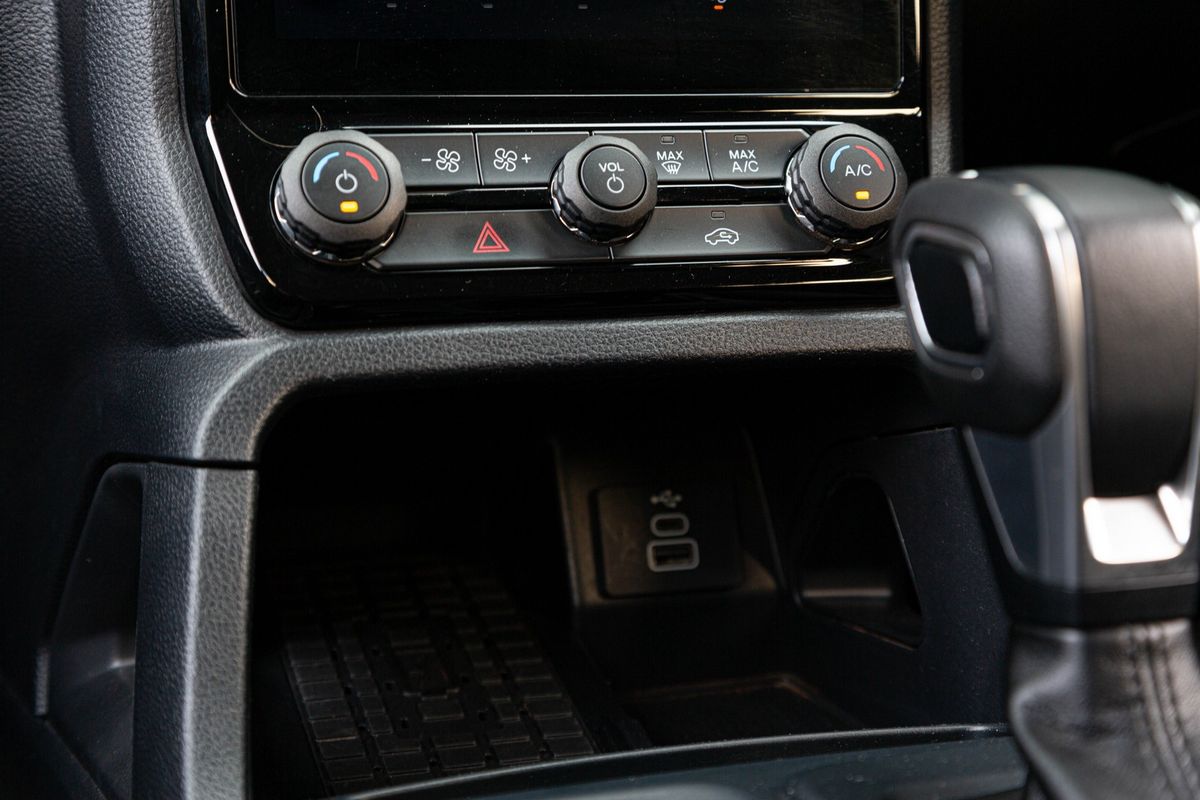
But let’s start with the positives; you still get numerous (5) USB outlets, a 400W inverter, wireless charging pad, dual-zone climate control, rear air-conditioning panel with ventilation outlets for the 2nd and 3rd rows, a power tailgate, rain-sensing wipers, towbar, cross-traffic alert and lane-keep assist.
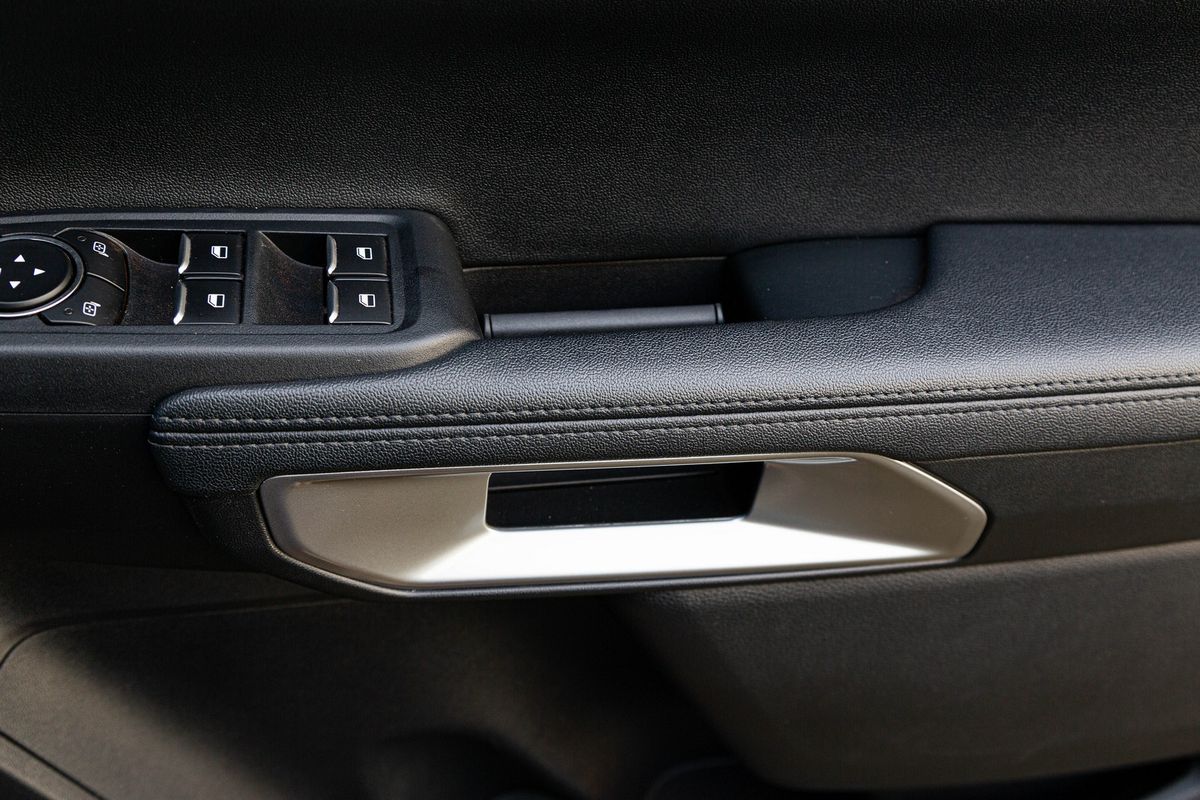
It lacks the Platinum’s heated steering wheel, however, and you only get one-touch up/down windows at the front. Strangely, the rear seatbelt reminder functionality is not offered on the Sport. You also have to forego ambient lighting and the nice B&O-branded audio system of the flagship derivative.
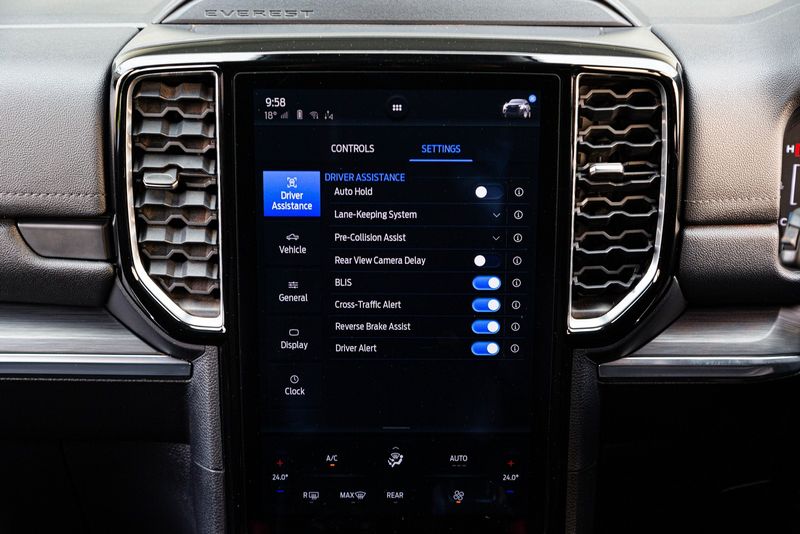
Cruise control is standard (but not adaptive, as in the Platinum) and you lose Active Park Assist, tyre pressure monitoring and the surround view display. There is a reverse-view camera, though. A “lighter” version of the advanced Pre-Collision Assist system does not feature “evasive steer assist”, for example.
Overall, you’re still likely to find the cabin supremely comfortable and refined, but the handful of missing features do add up – the price difference between the Sport and Platinum versions is “only” R150 000.
Ride and Handling
As we noted in our review of the Platinum, the Everest feels the most “un-bakkie-like” of all the ladder-frame-based 7-seat SUVs on the market. The wider track, well-tuned suspension and road-biased tyres, as well as impressively low levels of NVH (noise, vibration, harshness), contribute to its premium feel.
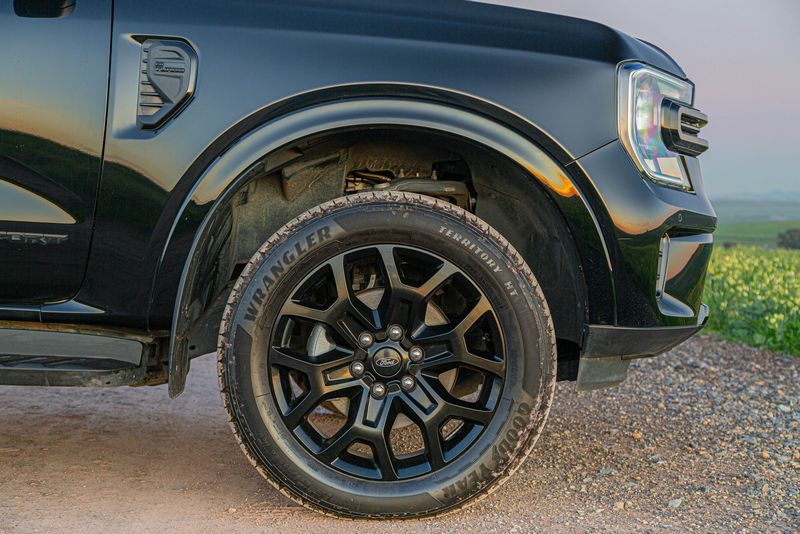
If you intend to traverse challenging off-road terrain, such as technical 4×4 courses, with your vehicle on regular occasions, you have the option of fitting 18-inch wheels that are shod with more suitable all-terrain tyres. If you go that route, you may want to additionally specify extra underbody protection.
The Everest is a close match for a vehicle such as Toyota’s Prado in terms of its approach and departure angles (just mind the towbar!) and you can fine-tune the vehicle’s drive settings using a switch on the centre console. Normal, Eco, Tow Haul, Slippery, Mud&Ruts and Sand drive modes are available.
Price and After-Sales Support
The 2023 Ford Everest 2.0 BiTurbo 4×4 Sport costs R1 020 300 (before options, August 2023). The price includes a 4-year/120 000 km vehicle warranty, but service or maintenance plans are optional.
Verdict
There’s a lot to like about the Ford Everest Sport, particularly in terms of its overall look, but on reflection, we wonder whether it is not ultimately worth stretching your budget to buy the Platinum version… or opt for one of the cheaper Everest variants (if you’re willing to do without 4-wheel drive) instead. The dip in power compared with the V6 is noticeable and besides, our test unit wasn’t particularly fuel efficient.
And then, given the relatively small price gap of R150k to the Platinum, and the long list of features that that apex derivative offers, we’d say favour the flagship over the Everest Sport. If, however, that is not an option, and you’re looking for a brand new off-road-capable 7-seater adventure SUV for around R1 million, we do rate the Everest Sport as a superior offering to its Fortuner and MU-X equivalents.
Related content:
Ford Everest (2023) Living with it
Ford Everest vs Toyota Fortuner: What to buy?
Hannes Oosthuizen

With the ultimate goal of spending his life writing about cars, Hannes studied journalism at the University of Stellenbosch. A brief stint as a sports editor for Paarl Post followed, before he joined CAR magazine in 2001. He eventually became the (youngest-ever) editor of CAR in 2011, a position he occupied for two years. During his career at CAR he became a member of the WCOTY (World Car of the Year) panel, wrote a book (Cranked Up: Confessions of a Petrolhead) and was named by the Mail & Guardian as one of the Top 200 South Africans to take to lunch in its 2008 Youth Day supplement, and by The Media magazine as one of the most influential media professionals under 40 (2012). He left CAR in 2013 to experience the \other\" side of the industry