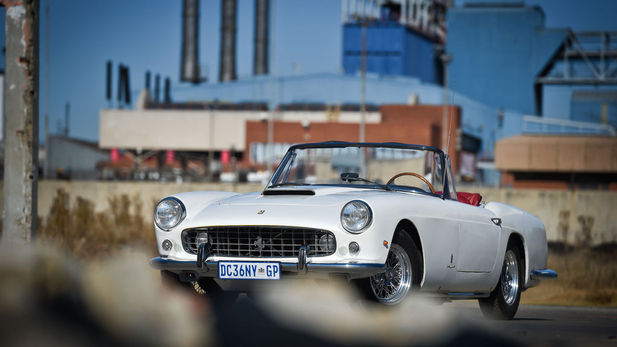
It’s not often that you see a ’60s Ferrari with 3 layers of paint. However, a full restoration was never on the cards when this car’s owner finally bought his dream Ferrari – a 250 GT Cabriolet Pinin Farina Series II – after waiting patiently for 15 years.
If you think of a Ferrari 250 GT, most associations that come to mind will likely involve events such as the Pebble Beach Concours and fancy auctions where pristine vintage cars command millions of dollars. Or, maybe, vintage tours and races across the globe, where the legendary 3.0-litre V12 can sing freely and owners and spectators alike can enjoy seeing these cars being used as Enzo Ferrari intended.
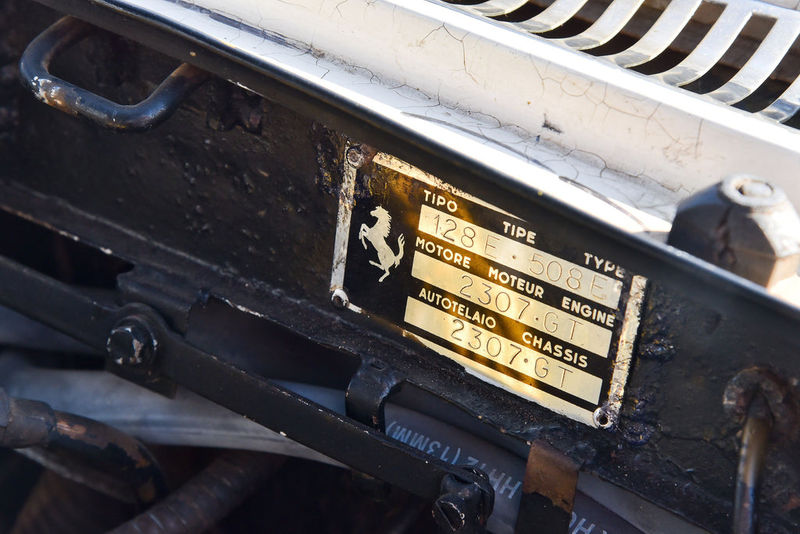
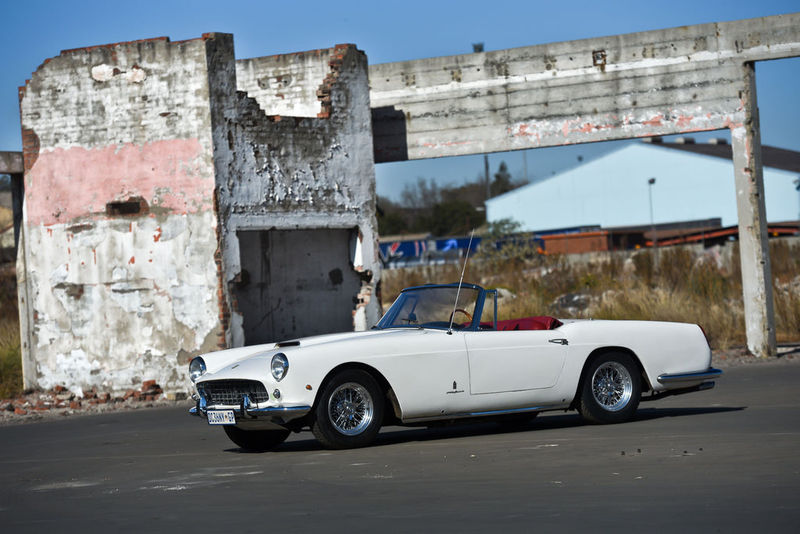
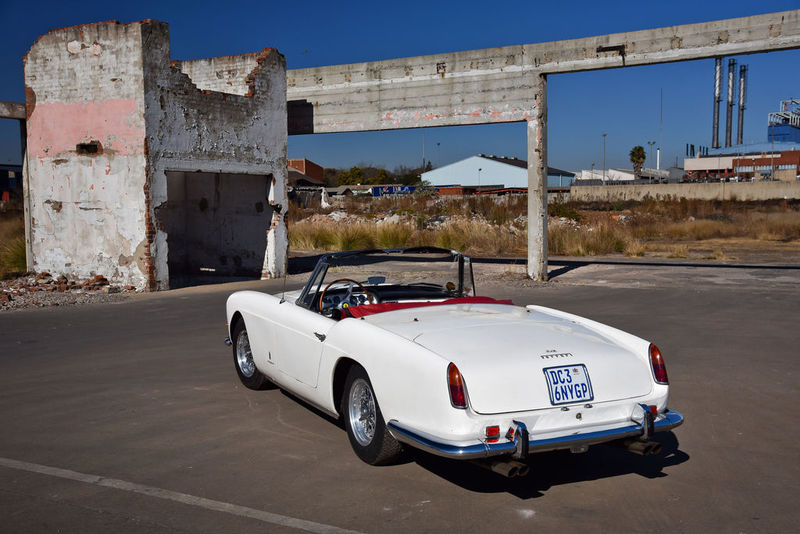
And then there’s this 1962 Ferrari 250 GT Cabriolet Pinin Farina Series II (s/n 2307GT) – the only example of such a car in Mzansi (that we know of). As I walk around the Ferrari, there’s no hiding its age… There are several dings and dents in the sheet metal, while the paintwork behind the cabin is clearly cracked.
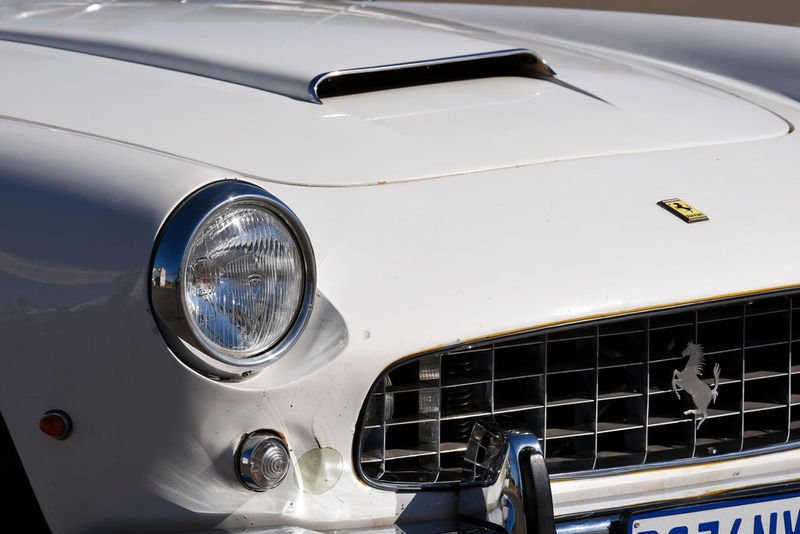
“It stood outside, sometimes partially covered, from around 1983 until we bought it a few years ago,” says Russell Haselau, who maintains the Ferrari for its current owner. “You’ll notice the 2 circular stains above the front bumper. At some point in the car’s past, reflectors were fitted here. The car spent some time in Zimbabwe, where front reflectors had to be fitted to conform with local legislation.”
There are more shocks in the 250 GT Cabriolet’s back story. Not only had the Ferrari been abandoned to the elements, but before his death, the previous owner had attempted a restoration (of sorts) – he never completed it. “The car was about 75% stripped (when purchased from his estate),” Haselau continues.
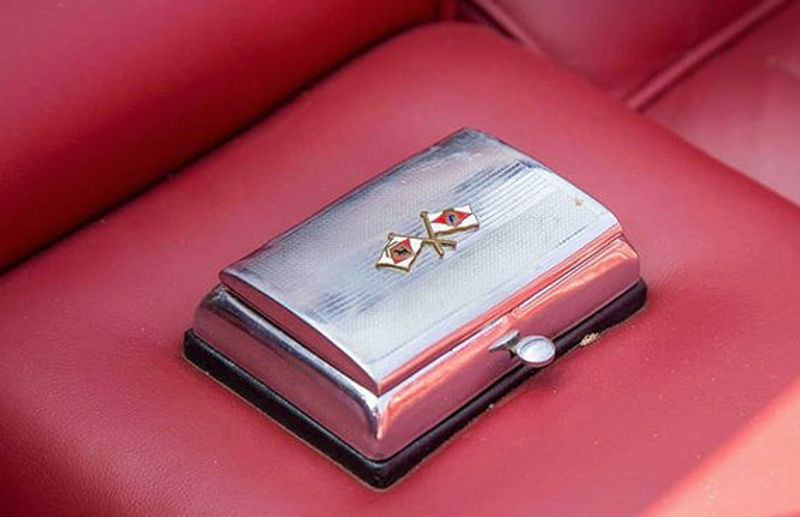
“As we thoroughly searched the garage, including several boxes and shelves, however, we fortunately found almost every part. We also found the car’s original ashtray (shown below) – it sat on the previous owner’s veranda, where he used it as an ashtray! Needless to say, the rare item, bearing the crossed flags of Ferrari and Pinin Farina, has been returned to its proper position between the car’s seats.
The new owner decided not to embark on a nut-and-bolt restoration, because that would have kept the Ferrari off the road for at least 2, if not 3, years.
“I had been chasing this car for about 15 years,” he says, “and I don’t think I will restore it. I don’t want to waste driving time with the car by having it sitting on blocks while being restored!”
But that doesn’t mean that bringing the Ferrari 250 GT Cabriolet back to life was a quick or simple task.
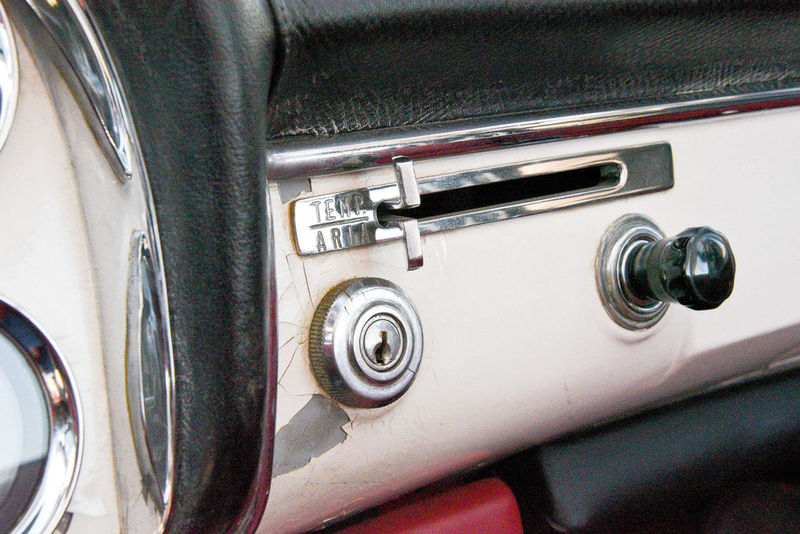
“It is not always easy working on such an old Ferrari,” explains Haselau. “With other cars, you can do a lot of research on the internet, but there isn’t a lot of information or details out there regarding working on or maintaining these types of cars.”
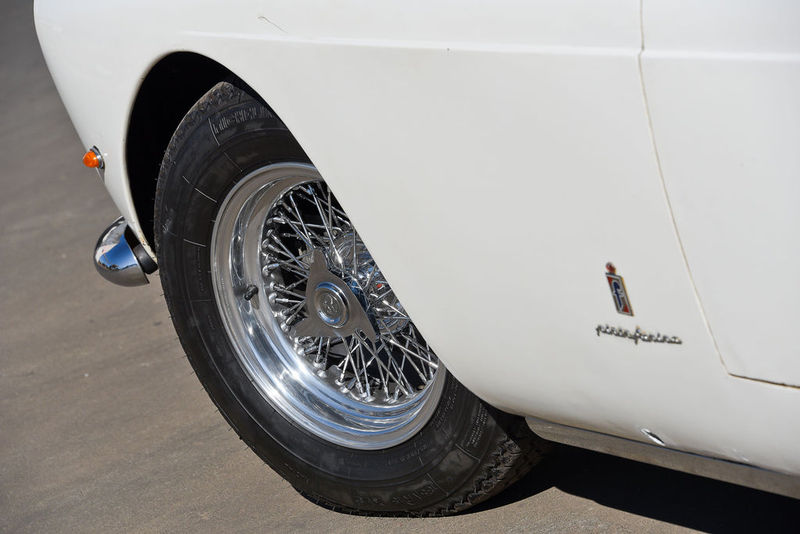
The 1st step was to drain and refill all the Ferrari’s fluids. Next up was the braking system, which was overhauled. The original wheels, which were painted, were still on the car, but they’d been damaged by errant swings of a hammer (used to remove/refit the dual-ear knock-offs). Period-correct chromed replacements were ordered and fitted with period-correct Michelin 185VR-15 XVS radial tyres.
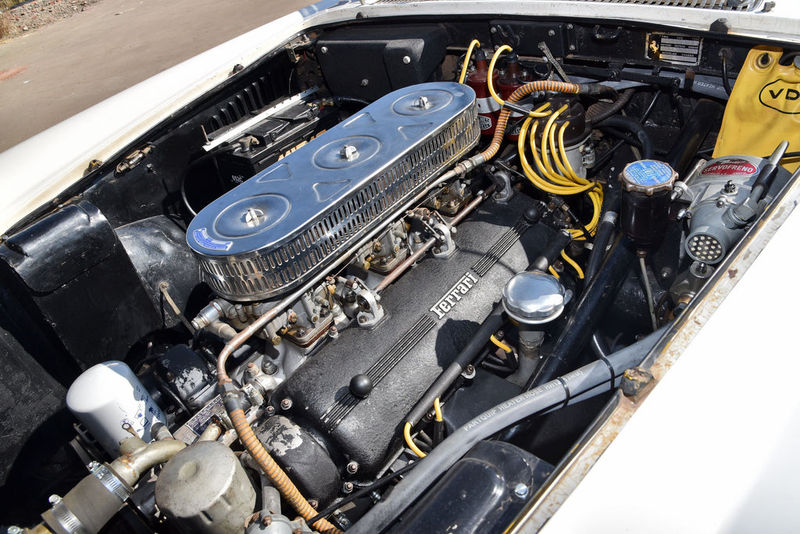
A more challenging task involved resuscitating the gearbox. “The selectors needed some work,” says Haselau. “It has some rubber bushes, and all of them were worn out. We also restored the cooling and ignition systems. Then we replaced a number of the exterior lights.
“These were but a few of a small number of parts of the Ferrari 250 GT Cabriolet that we could not find when we bought the car. Following a trip to Europe, we were able to source most of these lights. Then we replaced the belly plate, which was also missing.”
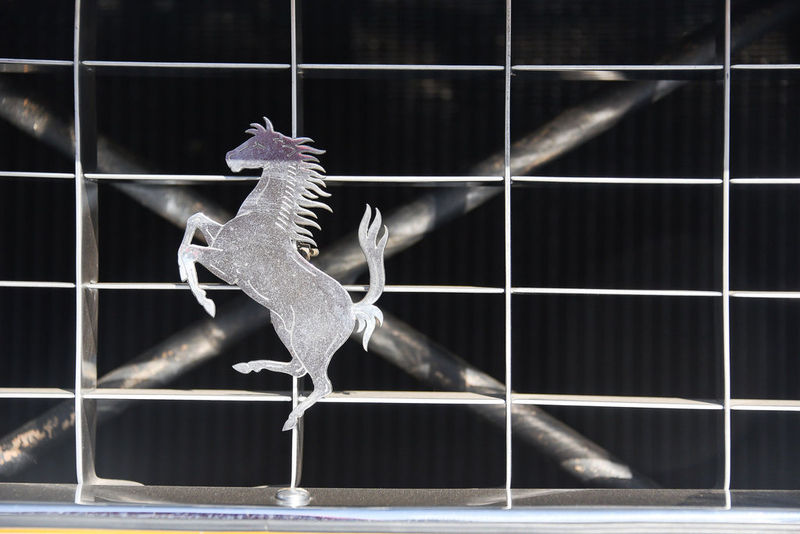
It was during this partial restoration that more details about the Ferrari’s history were uncovered. Below the current beige paint, there’s a layer of yellow; it’s clearly visible around the front grille.
Further investigation showed that when the car arrived in South Africa (from Italy) in 1967, it was yellow. However, checking the car’s serial number against Ferrari’s records revealed the 250’s original colour was, as a matter of fact, Shell Grey, meaning the car wears no fewer than 3 discrete layers of paint.
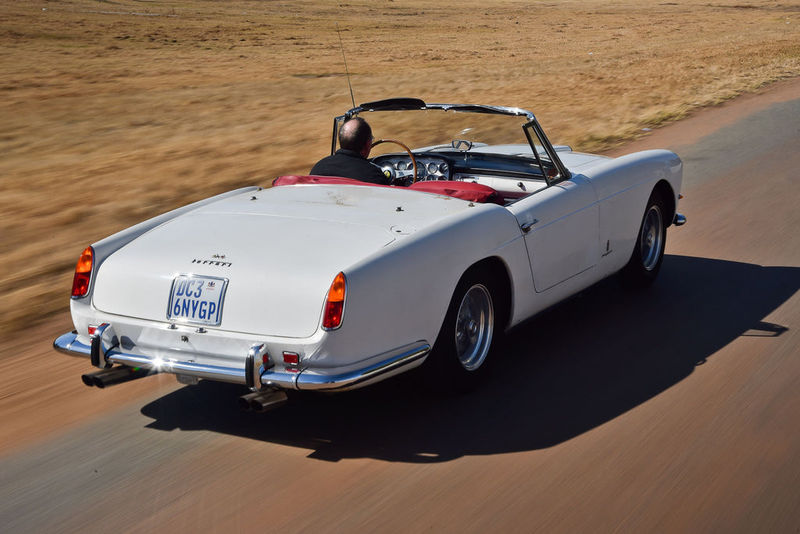
The focus then shifted to the Ferrari’s interior. The seats and other trim areas, such as the transmission tunnel and lower part of the fascia, were reupholstered. Finally, a new soft top was fitted.
The model came with a rare hard top, which gives the car a very coupe-like look when fitted. That’s not too surprising, since the Coupe and Cabriolet versions are essentially identical below the waistline.
Initially, there was very little interest at the factory to build a topless version of the 250 GT Pinin Farina; Ferrari was already producing the prettier 250 GT Cabriolet Pinin Farina Series I.
But the firm’s North American distributors pushed for the production of the variant, which was unveiled at the Paris Motor Show in 1959. The Series II remained in production until 1962; 202 units were made.
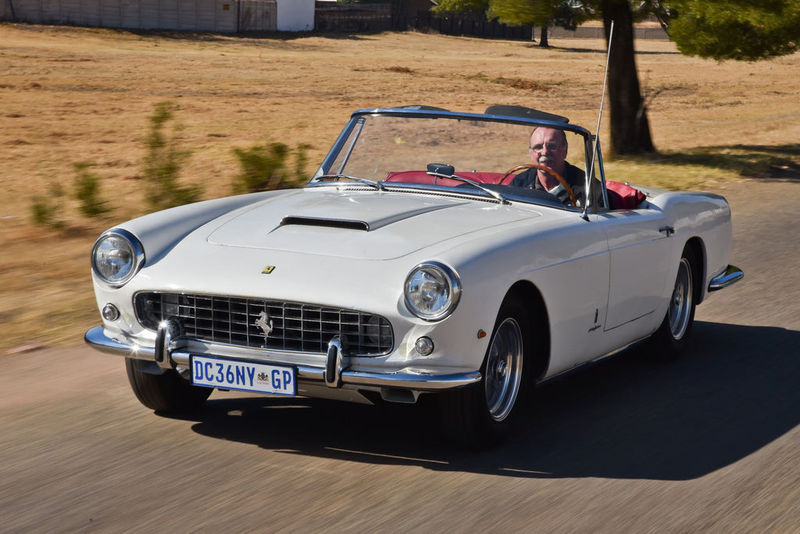
Specifications:
- Model: 1962 Ferrari 250 GT Cabriolet Pinin Farina Series II
- Years produced: 1959–1962
- Engine: 3.0-litre V12, petrol w/3 Weber 36 DCF carburettors
- Gearbox: 4-speed manual
- Power: 176 kW at 7 000 rpm
- Chassis: tubular steel
- Kerb weight: 1 200 kg
- Fuel tank: 100 litres
- Top speed: 250 kph
What the Ferrari 250 GT Cabriolet is like to drive
I pull the Ferrari 250 GT Cabriolet door open, then slide into its driver’s seat. These red leather pews are suitably comfortable, although, unlike in modern cars, there’s no support for your upper body; the seat’s backrest ends just below my shoulder blades. But, to be fair, you wouldn’t expect it to be any other way.
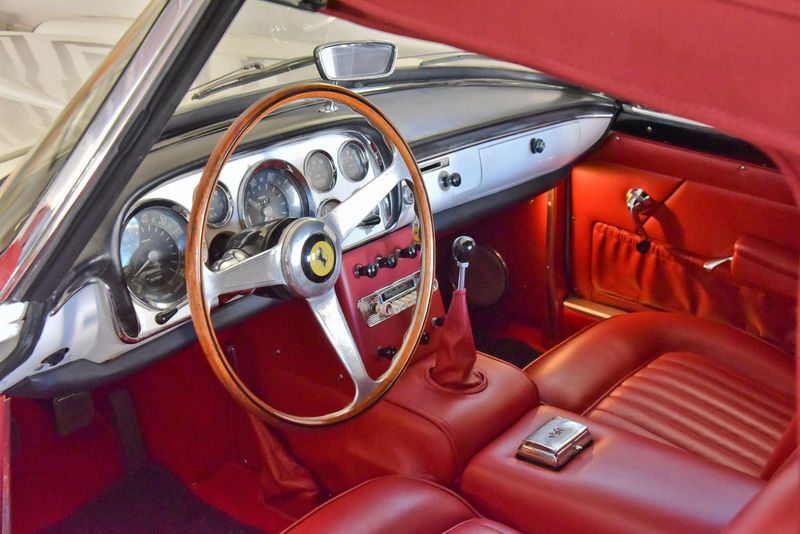
The rest of the red leather interior contrasts starkly with the car’s off-white exterior and dashboard – not only because of the lush colour, but how it thoroughly dominates the interior: The seats, gear lever boot, transmission tunnel, footwells, and door cards are all trimmed in the bright hue. The carpet’s red, too.
I sit very close to the simple wood-rimmed 3-spoke steering wheel, replete with the black Prancing Horse on a yellow background in its centre. Behind the tiller are no fewer than 7 (yes, you read that correctly) dials: the large speedometer and tachometer bracket a small oil pressure gauge, with a quartet of gauges (for oil and water temperature, fuel level, and the analogue clock) located to their right.
It is believed that this car (s/n 2307GT) was originally earmarked for Italy, as evidenced by the Italian words dotted about the cabin; for instance, the oil-pressure gauge reads olio.
I enjoy a very commanding view of the road ahead. Through the windshield, I can see the rear of the bonnet’s modest air intake, a small reminder of the performance potential 3.0-litre Colombo V12.
The gear lever is perfectly positioned to my right, on the raised transmission tunnel. To start the car, slot the key upside down into the ignition, turn it clockwise 180 degrees, then press inwards. The motor catches immediately and settles into a smooth idle, burbling through the car’s quad exhaust tips.
Once underway, I discover the engine is fairly tractable, but it doesn’t pull strongly below 1 500 rpm. As I slowly put my right foot down, the engine quickly gains momentum, and the timbre of the V12 deepens. Pottering around in traffic clearly isn’t the engine’s strong suit – it wants revs and needs an open road.
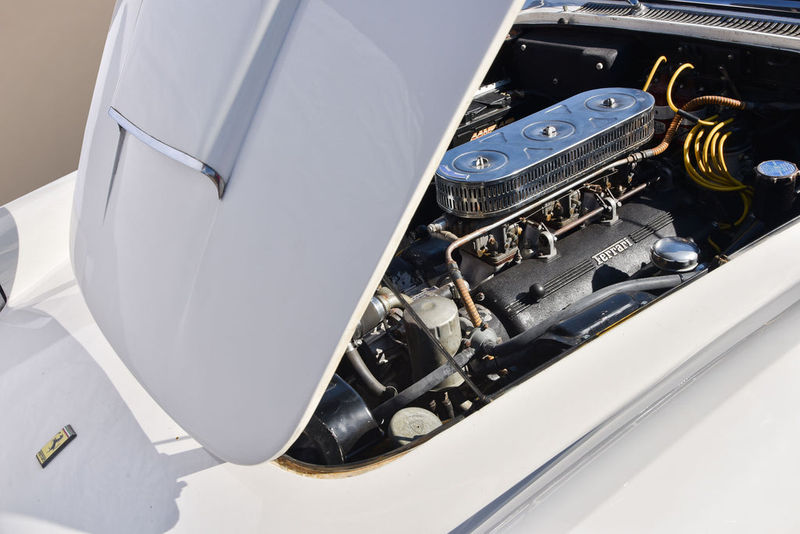
Out of respect for the 58-year-old engine, which ostensibly remains unopened since it left the factory, I upshift at roughly 5 000 rpm. Ferrari rated the engine at 176 kW at a significantly higher 7 000 rpm, yet the 250 GT Cabriolet still moves along quite briskly, helped by the car’s trim kerb weight (a claimed 1 200 kg). I can only imagine how punchy and aurally enticing it must feel during that final 2 000 rpm…
While the V12 revs easily, changing gears requires solid effort from my right arm. However, the shift action is wonderfully engaging – there’s a pure mechanical metal-on-metal feeling to each cog swap.
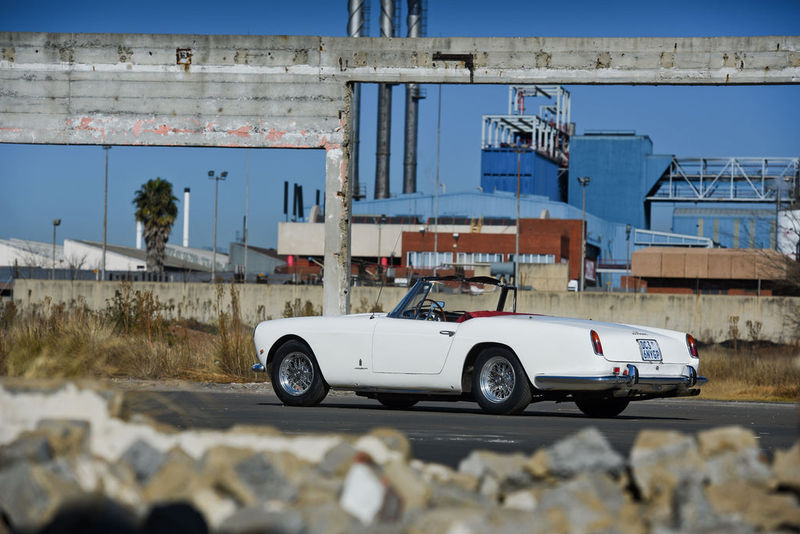
When it’s time to slow for bends, the reconditioned brakes feel strong and entirely capable of scrubbing off speed. When I rotate the large steering wheel, the Ferrari changes direction with minimal effort.
For most of the morning, we drive with the roof down, which only heightens the senses of speed and involvement that the Ferrari 250 GT Cabriolet instils. Johannesburg cannot be compared to Italy, of course, but I get a sense of what it must be like to drive this car through the hills of its home country.
It’s an enlightening experience; it immediately brings home why these vintage cars are still revered.
Summary
“The 250 range is one of Ferrari’s most special models,” agrees the 250 GT Cabriolet’s owner. “It has a visionary engine, which did a lot to establish Ferrari back in the day. Once you’ve become smitten with Ferrari, other car brands pale in comparison. For me, it was the 250 LM, which raced several decades ago at the 9 Hour (endurance race at Kyalami), that kickstarted my interest and love for the brand.”
“Another highlight is the car’s ride quality,” he adds. “It’s better to drive than some of the later Ferraris, such as the 365.” And that is what he plans to do: drive it. “It can be restored at any time in the future,” notes Haselau, but for now, this car needs to be driven, because it was off the road for far too long.”
Find a new/used Ferrari model on Cars.co.za
Find exclusive car-themed merchandise at the SentiMETAL Shop
Related content:
Ferrari F12tdf vs 365 GTB/4 Daytona: Classic Comparison
Ferrari 400 vs 456M GT vs 612 Scaglietti: Classic Comparison
Ferrari 550 Barchetta vs 812 GTS: Classic Comparison
Naturally aspirated Ferrari 12Cilindri revs up
Ferrari F355 Challenge: Classic Drive