With Ford ending its vehicle production in India, what does that mean for local customers of the Blue Oval’s budget cars and compact family cars?
For Ford Motor Company of Southern Africa (FMCSA), the Figo and the EcoSport are linchpins of its passenger-car lineup. Although the 2nd generation of the (admittedly slightly larger) Figo has not quite fared as well as its plucky predecessor, the EcoSport helped to create the small crossover segment when it arrived locally in 2013 and has held a significant presence in the new-vehicle market ever since.
When FMCSA’s family car/compact SUV sales collapsed in the wake of the company’s well-reported Kuga issues (the Silverton-based firm opted not to introduce the successor to the Kuga in the local market), robust demand for the EcoSport offset some of the sales that Ford lost. However, things might have become a touch complicated for the popular Ford “budget gravel traveller”…

Two generations of the Ford Figo has served South African budget-car buyers.
Ford has announced that it no longer plans to have a manufacturing presence in India, which is where South Africa’s Figo and some EcoSport derivatives are imported from. In a shock announcement, the Blue Oval has confirmed that its Indian production assets in Chennai (EcoSport) and Sanand (Figo) would be closed after suffering the equivalent of R28 billion in losses during the past decade.
India was hailed as a robust future demand- and production market by many automotive companies… Ford is certainly not the only company to have invested huge amounts of capital there and the EcoSport was one of its biggest automotive exports. But somehow, the numbers that triggered that original business case never materialised.
The question is, what will happen to FMCSA’s EcoSport and Figo supply and parts stability in light of the Indian plant closure? Both vehicles have been sourced from India for many years, which was by far the world’s biggest growth market for right-hand drive vehicles in the last few years.
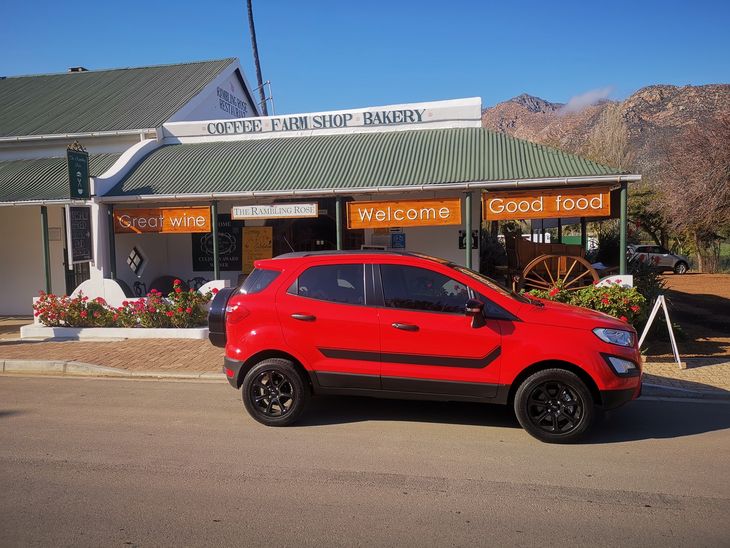
Cars.co.za’s David Taylor recently reviewed the recently introduced Ford EcoSport Black.
Sourcing right-hand drive product globally is not easy. It is something that South African product planners are often hampered by and India provided the scale in its domestic market, with the added benefit of production capacity to also supply right-hand-drive markets like South Africa.
So, what will happen now? Ford has not said much beyond confirming the disengagement from its Indian auto assembly business. The direct impact won’t be immediately felt in South Africa, as production at Ford’s Indian assembly facilities will be tapered off; it won’t cease overnight.
Where will FMSCA source its future EcoSport and Figo units from beyond the second quarter of 2022? That is an interesting question…
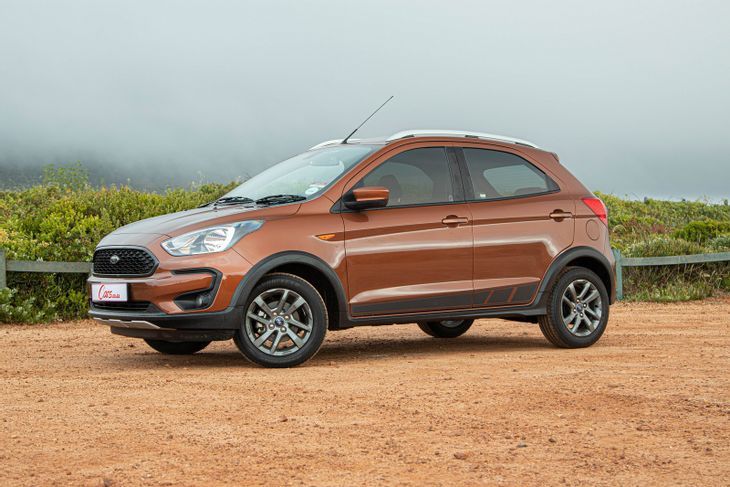
Cars.co.za published a review of the Ford Figo Freestyle last year.
There are several global production options for the EcoSport, which was conceived to be a “truly global crossover”; Ford invested in many production locations, including one in Romania, which supplies the 1.0-litre 3-cylinder EcoBoost derivatives to our market. This factory, which also supplies right-hand drive EcoSports for the UK market, could become the exclusive source for FMCSA.
What might be challenging, is the landed cost of EcoSport units procured from the EU. European labour rates, even those in Romania, are higher than in India. And the Euro-specification EcoSport is a comprehensively equipped version, unlike the lower content (read: budget market-oriented) units that are built in India, which may cause the entry price point of the model to become more expensive.
The Figo is a bigger problem. It has only one global production hub, which is the Ford facility in Sanand, India – yes, the one that is being decommissioned.
As FMCSA’s most affordable car, the Figo is an important contact point for the brand with local customers; its target market includes buyers who are either thinking of purchasing their first new car – or buying down. Where the Figo will be built after the Sanand factory is closed (unless, of course, Ford decides to discontinue the model) remains to be seen, however.
Related content:
The car chip crisis: How do we deal with the semiconductor shortage?
Lance Branquinho

Lance Branquinho is a Namibian-born writer and photographer who has won numerous motoring journalism awards. He once smuggled parts to South America, in a minor contribution to help Giniel de Villiers finish on the podium at the Dakar. He fears for the eventual collapse of the air-cooled Porsche 911 market – and keenly awaits, in vain, the return of the brand's 928.