These days you’ll be hard-pressed to find a new car that doesn’t have some form of safety system, and if you do, you should think twice before buying it.
Most, if not all new cars on the market today will have some basic safety systems in place to help keep rubber on the road and passengers safe. Advancements in car safety systems is nothing short of astounding with new safety systems being introduced on a regular basis. This is all good and well, but the amount of safety systems and technical jargon can easily overwhelm an unknowing car buyer, but it needn’t be so. Safety is something that is, and should be, on every car buyer’s checklist and it therefore helps to know and understand what some of these safety systems are and what they actually do.
To help you get your head around all this safety talk, we have compiled a shortlist of common safety systems for cars along with helpful descriptions of each, just to put your mind at ease. Bare in mind some manufacturers have their own brand-specific names and terms for what’s essentially the same technology.
Know Your Car Safety Systems
Anti-lock Braking System – ABS
ABS is one of the most common safety systems fitted as standard on most new cars and is designed to help the driver maintain a level of steering ability under hard braking. ABS allows the driver to brake and steer simultaneously while preventing the wheels from locking and skidding across the road surface during emergency braking.
Adaptive Cruise Control – ACC
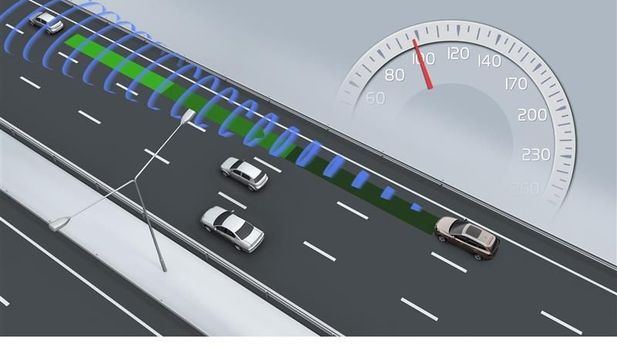
ACC is a form of cruise control where the driver sets the maximum travelling speed and a radar sensor locks onto the vehicle ahead and maintains a prescribed following distance. ACC is capable of adjusting speed according to the traffic situation and can both accelerate and brake if necessary. ACC does not require inputs from the driver but the system will disengage when the driver applies the brakes. ACC is also sometimes referred to as Intelligent Cruise Control or Active Cruise Control. In 1995, Mitsubishi was the first automaker to offer laser-based ACC on its Diamante model.
Adaptive Forward Lighting – AFL
AFL is an advanced lighting system that adjusts illumination depending on the steering direction and traffic situation. When turning into a corner, the headlamps will swivel or rotate to improve illumination into the corner and provide the driver with increased visibility of the road ahead.
Blind Spot Warning – BSW
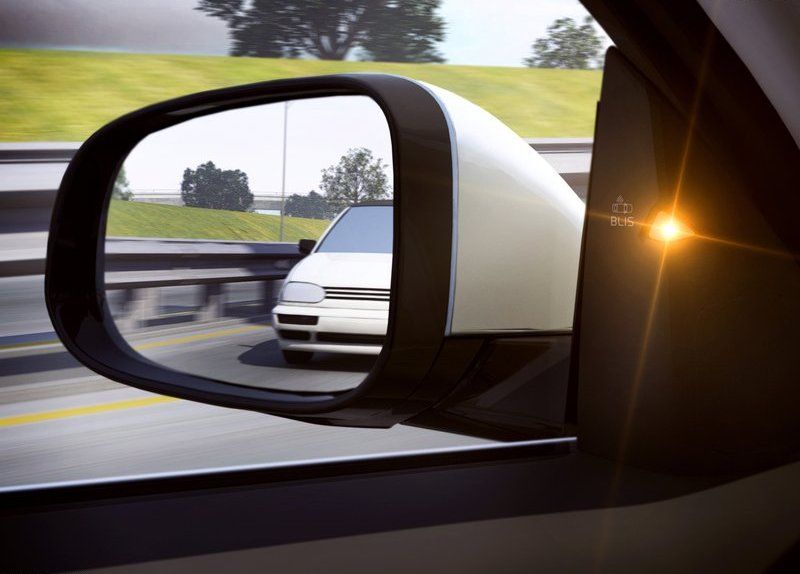
Blind Spot Warning or Blind Spot Monitoring detects vehicles to the rear and side of your car using a vehicle-based sensor. When a vehicle is detected in the blind-spot, the driver will be alerted to the danger with either a flashing light or audible noise, or both. BSW is also sometimes referred to as Blind Spot Information System (BLIS).
Dynamic Stability Control – DSC
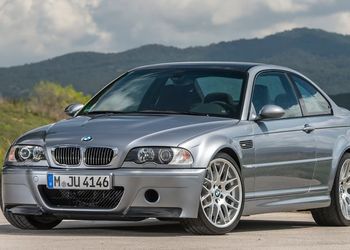
DSC is a computerised safety system that improves vehicle stability. Using sensors, DSC detects loss of control of the vehicle and takes the necessary action to regain control, such as braking or reducing engine power. DSC is also commonly known as Electronic Stability Control (ESC), Electronic Stability Program (ESP) or Vehicle Stability Control (VSC). Both BMW and Mercedes-Benz pioneered DSC technology from 1987 onwards.
Electronic Brake-force Distribution – EBD
EBD works in conjunction with ABS and allows braking force to be applied automatically to specific wheels with the help of sensors. Depending on specific conditions, such as the weight of the car and speed, the EBD sensors will determine which wheels need additional brake force and then apply that force as required to maintain control of the vehicle. EBD provides improved braking in all conditions.
Emergency Brake Assist – EBA
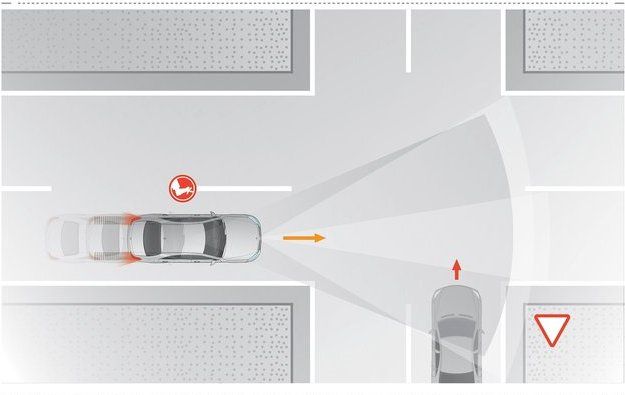
EBA is an active safety feature that helps the driver bring the vehicle to a stop faster in an emergency braking situation. The EBA system is designed to detect an emergency braking situation and applies additional braking force to help bring the vehicle to a safe stop. With Brake Assist, a vehicle’s stopping distance is drastically reduced. The Mercedes-Benz S-Class was the first model fitted with Brake Assist in 1996 and became a standard safety feature on all Merc models in 1998.
Head-Up Display – HUD
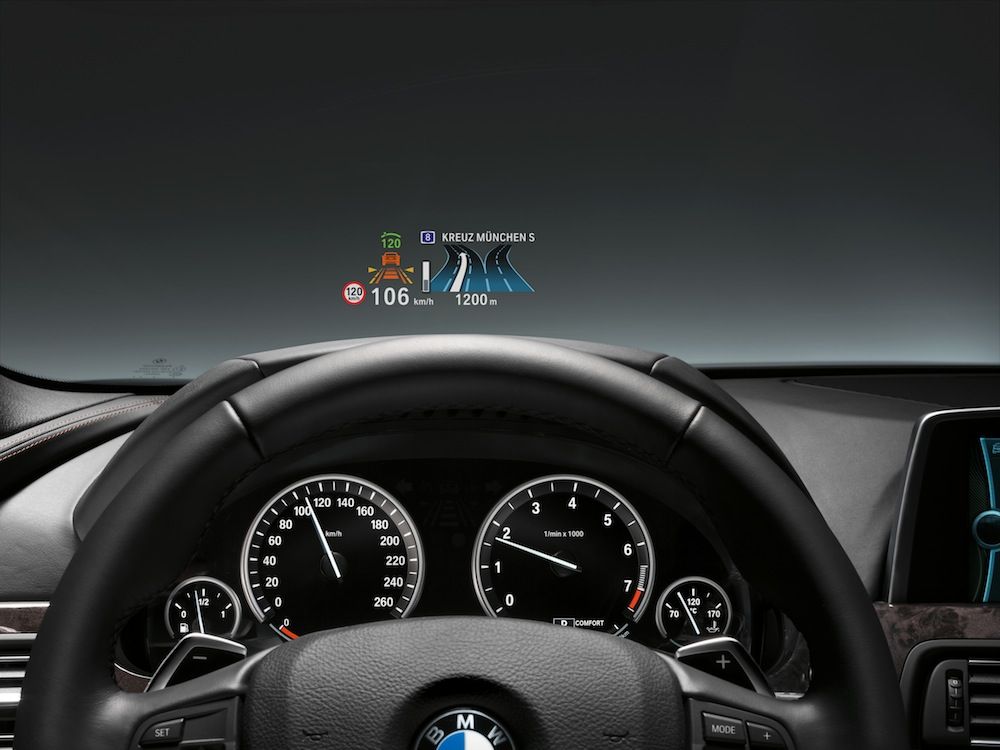
A HUD is a transparent display that communicates various information such as speed, revs and navigation to the driver. The information is usually projected onto the windscreen directly in front of the driver. A HUD helps keep the driver’s attention on the road while providing useful information.
Lane Departure Warning System – LDWS
LDWS is designed to warn a driver when the vehicle is veering out of its lane. The warning is communicated to the driver either via a flashing light, audible noise, vibration of the steering wheel/seats or a combination of warnings. In certain vehicles, if no action is taken, Lane Keeping Assist (LFA) will automatically intervene and keep the vehicle in its lane. Nissan was the first car brand to feature LDWS on its Cima model (Infiniti Q45).
Daytime Running Lights – DRLs
Daytime Running Lights are a common feature on modern cars and increase vehicle visibility during the day while using less energy than low-beam. DRLs switch on automatically and are turned off when the driver switches on the headlights.

TRC- Traction Control
TRC is a safety system designed to limit or reduce tyre slip. Sensors measure the difference in wheel speeds to determine if a wheel has lost traction and applies the brakes to that wheel to reduce wheel slip. Some TRC systems may even reduce engine power to specific wheels to prevent slip. Note that traction control cannot increase traction but can only help prevent wheels from spinning. TRC is also sometimes referred to as Electronic Traction Control (ETC).
TPMS – Tyre Pressure Monitoring System
A TPMS is designed to monitor tyre pressure and relay this information to the driver via a guage, pictogram or warning light. A TPMS alerts the driver to under-inflated tyres who can then rectify the problem. Properly inflated tyres are not only important for safety but also reduce rolling resistance which helps reduce overall fuel consumption.
Park Distance Control – PDC
PDC, also commonly known as Park Assist, helps drivers navigate into parking bays using parking or proximity sensors which detect obstacles while performing a parking maneuver. Warnings are communicated to the driver through audible noises or visual aids, or both.
Gero Lilleike

Gero Lilleike is a published writer and photographer with most of his work appearing in the fields of travel and motoring. Gero has worked as a motoring journalist for Cars.co.za for the past 8 years and takes every opportunity to go on an adventure whether it be offroad or in the ocean. For Gero, a car's worth is measured by how many surfboards it's able to carry.