If you are buying a second hand car, you’d be wise to use the checklist below to help you assess the car in the best way possible to ultimately make the best buying decision!
Buying a second hand car instead of a new car is a decision that can save you money. However, there is also a higher risk and if that risk isn’t managed properly, you can buy a lemon and lose money and that’s what you want to avoid at all costs!
This article aims to help you make the best buying decision possible when buying a second hand car.
Let’s assume that you’ve used the Cars.co.za Used Car Search Tool and managed to find a car that you might be interested in buying. What should you do next?
Buying a second hand car – What should you do?
1. Do Research
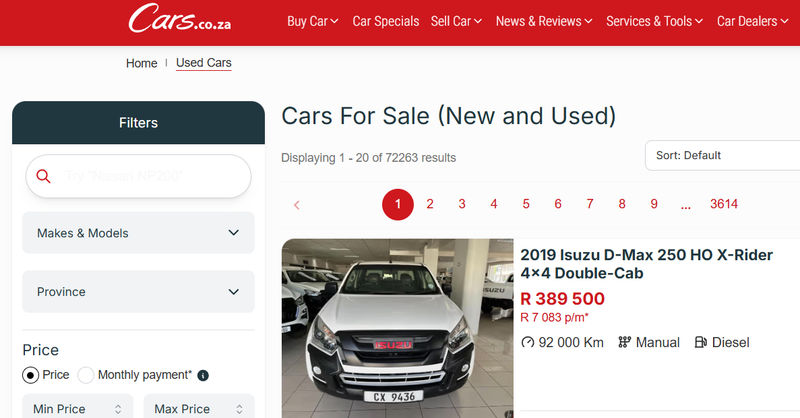
Using the Cars.co.za Used Car Search Tool, take extra time to examine other car listings of the same model you are interested in with similar model year, mileage and condition. This exercise will help you determine if the listed price is in line with similar stock for sale.
If the price of the car is significantly lower than similar examples for sale then it’s likely that there’s either a mechanical or cosmetic reason for the variance, even if it’s not directly stated on the listing and it would be advisable to get clarity from the seller/dealer as to why that’s the case.
Similarly, if the price is significantly higher than other similar listings, further investigation is also necessary. The reasons for an inflated price can vary greatly from vehicle condition, added features or simply that the seller or dealer is overly ambitious with his or her pricing expectations. This scenario can be used to negotiate a better price that is more in line with the current market.
2. Arrange to view the car
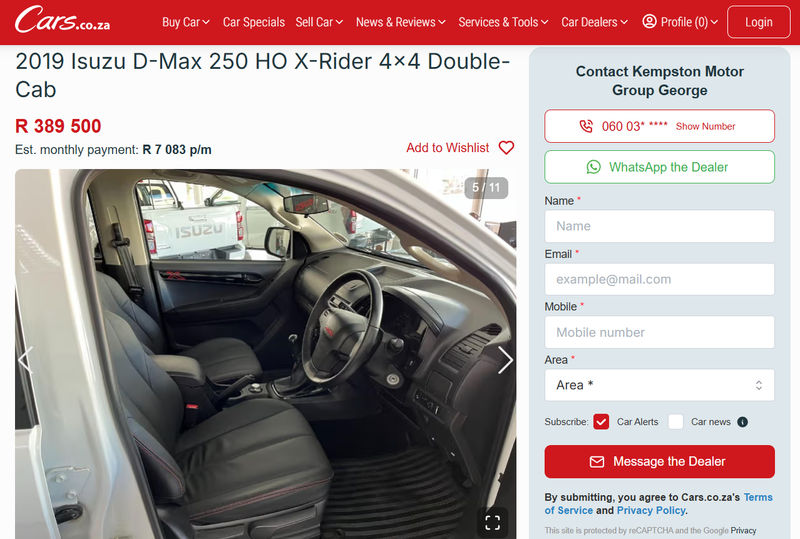
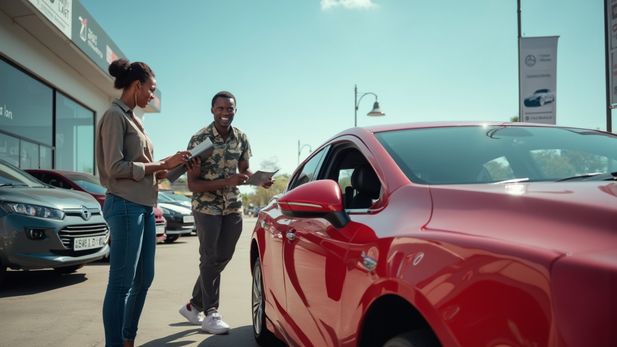
Once you have shortlisted a second car to buy, you can contact the dealer or seller directly to set up a viewing appointment from the listing by either calling the dealer directly, connecting with the dealer via WhatsApp or filling out the Contact Form and sending it to the dealer.
If the vehicle is being sold privately, make sure that you meet the seller in a safe location to view the car and consider taking a friend or family member with you.
3. Do an exterior and interior inspection
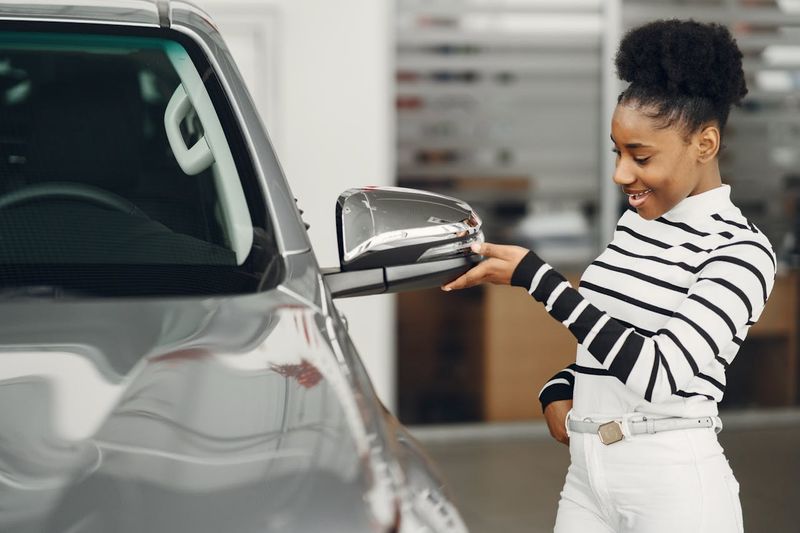
Do a thorough exterior walk around of the car and take note of any major body damage, dents, scratches, paint defects and rust. Check the tyres for wear and also try look at the undercarriage by putting the car on a lift (if possible) which will give you the opportunity to check for underbody damage or rust.
Similarly, inspect the interior and look for areas of wear and tear on the seats, door cards, upper and lower dashboard, switchgear, steering wheel and headliner. Check that all the controls work including lights, indicators, electric windows, air conditioning controls and radio functionality. Also, remember to check the boot as well as the spare wheel and tools (including car jack and wheel spanner).
4. Do an engine / mechanical inspection
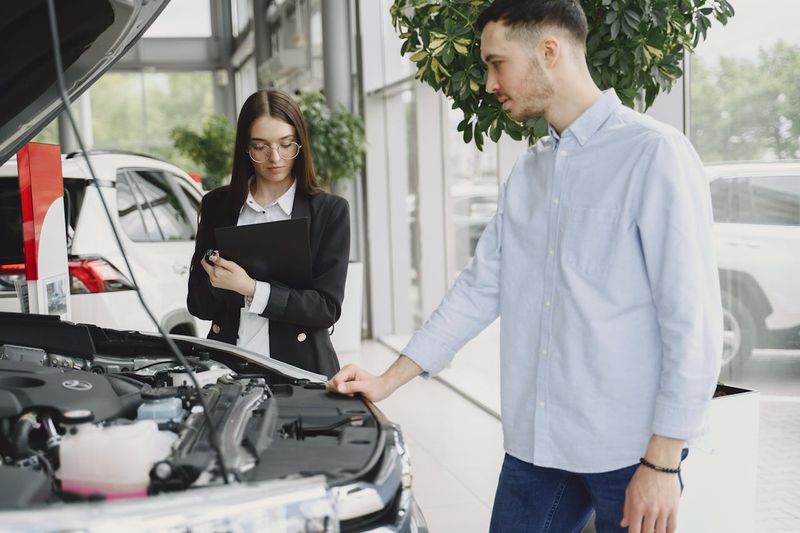
Open the bonnet lid and carefully examine the engine bay. Look for general cleanliness but importantly look for any signs of leaks or seepage. Take note of any rusted components and also look carefully at the condition of pipes and hoses to make sure they’re not brittle or cracked.
Start the engine and observe the engine and components for leaks and listen for any unusual sounds that might point to further mechanical defects.
If at all possible, before you make any decision to buy any car, arrange to have a professional mechanic examine the car to make sure that you are in fact buying a car that’s in good working order. You might need to set up a seperate appointment for this purpose, but the effort will be worth it.
5. Take the car for a test drive
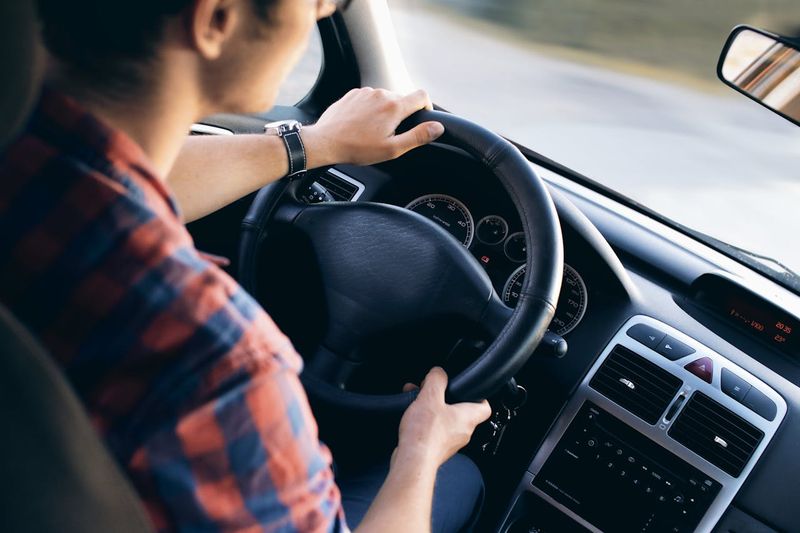
The test drive is one of the most important aspects of buying a car because the experience will ultimately determine whether you buy the car or not.
Things to check for include:
- Engine noise. Is the engine running smoothly?
- Ride quality. How comfortable is the ride? Is the ride to firm or too soft?
- Transmission. Do all the gears change easily or is there resistance?
- Acceleration. Does the car have enough acceleration for your needs? Remember, acceleration will be slower if you plan on carrying more people and goods.
- Braking. Do the brakes offer good stopping power? Do you hear any noises while braking?
- Steering. How responsive is the steering wheel to inputs? Is it light or difficult to turn?
- Handling. How stable is the car during cornering?
- Noise Vibration Harshness (NVH). Listen for wind noise, road noise and any harsh vibrations from the cabin.
See this: How to Test Drive a Car
6. Check Paperwork
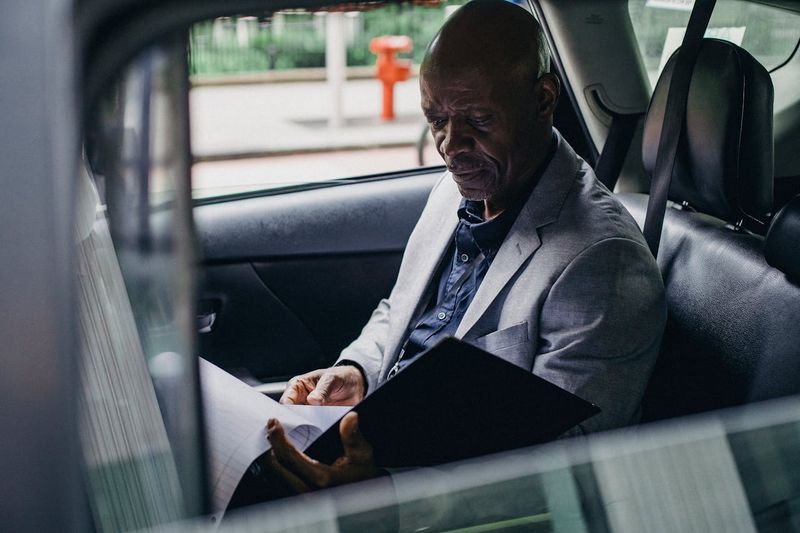
Buying a car with all its paperwork in order will save you time and money.
- Check the car’s service history booklet and make sure that, as far as possible, the car has been regularly serviced. Buying a car with a comprehensive service history is ideal, but if there are gaps in the service history then you should proceed with caution and it would be advisable to have the car inspected by a mechanic before making any purchasing decision.
- Check that the car has a valid roadworthy certificate and make sure that the seller has the original Vehicle Registration Certificate. If the car has not been through a roadworthy, a Roadworthy Certificate can be obtained from any public or private Roadworthy testing stations around the country, at a fee.
The seller must complete and submit form NCO (Notification of Change of Ownership) and the buyer must complete form RLV (Application for Registration and Licensing of Motor Vehicle).
Note that if you decide to purchase the car, you will need Proof of Purchase and your Identity Document to register the car in your name.
See this: How to Register and License your Car
7. Negotiate with the dealer/seller

Based on the information gathered from the experience above, you might be in a position to negotiate a better price with the dealer/seller. Be aware that dealerships will offer you added extras with the car such as extended warranty and service plans, paint protection, anti-theft protection, tyre insurance, privacy glass and so forth but choose wisely as these extras will inflate the overall cost of the purchase.
8. Decide how you’re going to pay for the car

Deciding how to pay for a car is an important step that deserves careful consideration.
Buying a car in cash is the best way to buy a car as you will avoid the cost of financing a car but most people simply don’t have large sums of cash for this purpose and so car finance makes buying a car far more accessible to many people, but only if you qualify!
See this: Top Tips for Financing a Car: A Comprehensive Guide for South Africans
If you qualify for car finance, consider putting down a deposit. A deposit is simply whatever amount you are able to afford but it’s important because it will reduce your overall cost and you will be able to reduce your monthly instalments.
You can use our Car Finance Calculator to work out estimated monthly instalments.
Not sure what you are able to afford? Use our Car Affordability Calculator to help determine how much you can afford to spend on a car!
The dealer will help you apply for finance and assist with curating a finance deal that is suitable for your particular budget and needs. Note that factors such as the interest rate you secure (Prime or Fixed), length of the contract term and a balloon payment will have a major impact on the overall cost of the car purchase.

Remember: Generally, the shorter the contract term, the higher your monthly instalment will be but you pay less interest over time. The longer the contract term, the less your instalment will be but you pay more interest over time.
Car finance is all about finding a manageable financial balance of what you’re able to afford but we would advise that you try and pay off your car loan as soon as possible to reduce the cost of interest over time.
If you’re blacklisted, you’re unlikely to qualify for car finance but buying a second hand car is still possible. You will therefore have to consider other options such as buying a cheaper used car in cash or opt for a rent-to-own option, but the latter option is expensive and not recommended if you’re already experiencing financial difficulties.
It’s important to remember that buying a car comes with additional financial responsibility and you also have to budget for car insurance, ongoing maintenance (regular servicing, tyres etc) and fuel.
Cars.co.za has a lot of useful resources to help you navigate the complexities of buying a car and we encourage you to read as much as possible so that you can make the best car buying decision possible.
Please take the time to visit our Car Finance page for more information.
Enjoy your ride!
Buy a car on Cars.co.za today!
Gero Lilleike

Gero Lilleike is a published writer and photographer with most of his work appearing in the fields of travel and motoring. Gero has worked as a motoring journalist for Cars.co.za for the past 8 years and takes every opportunity to go on an adventure whether it be offroad or in the ocean. For Gero, a car's worth is measured by how many surfboards it's able to carry.