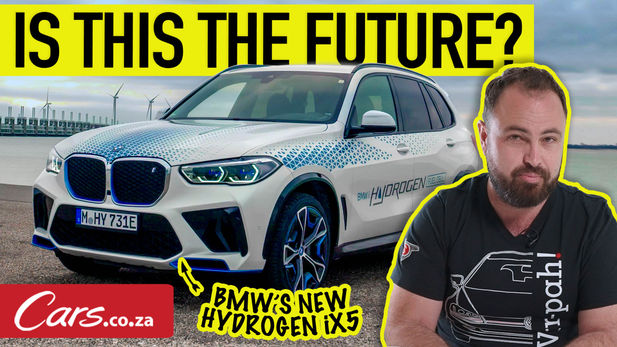
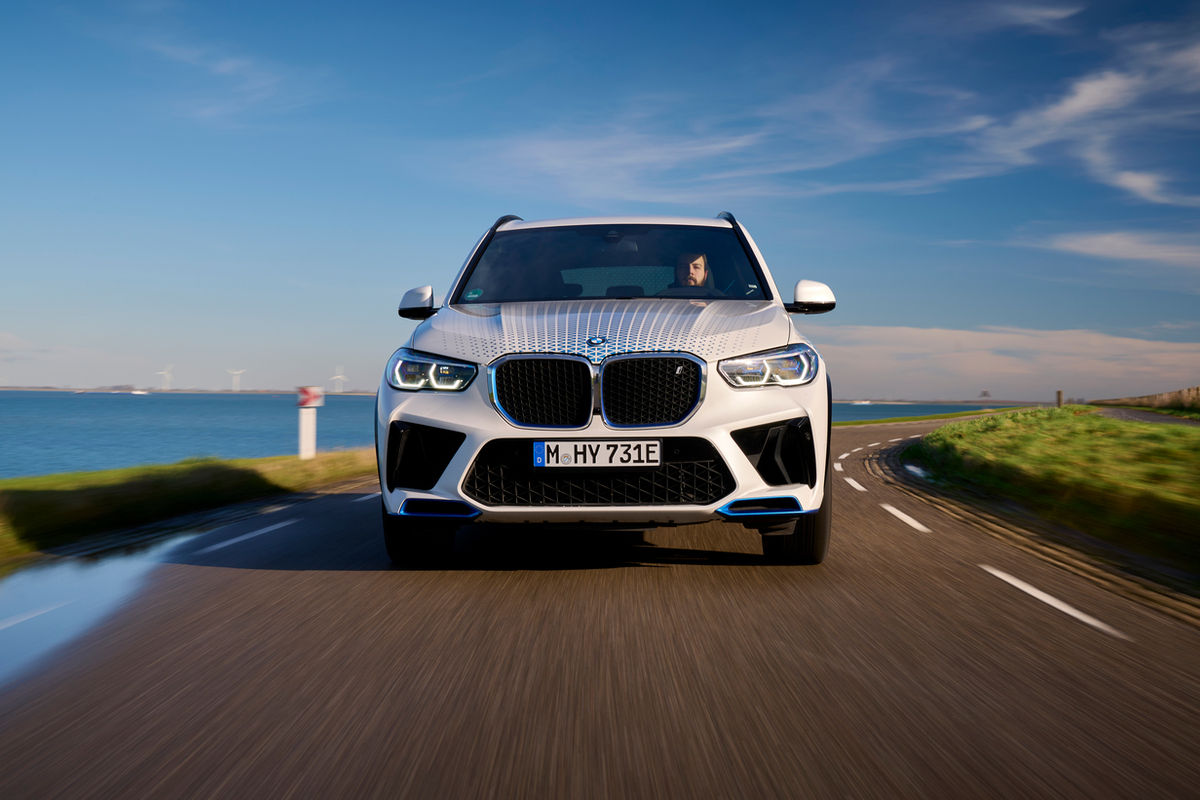
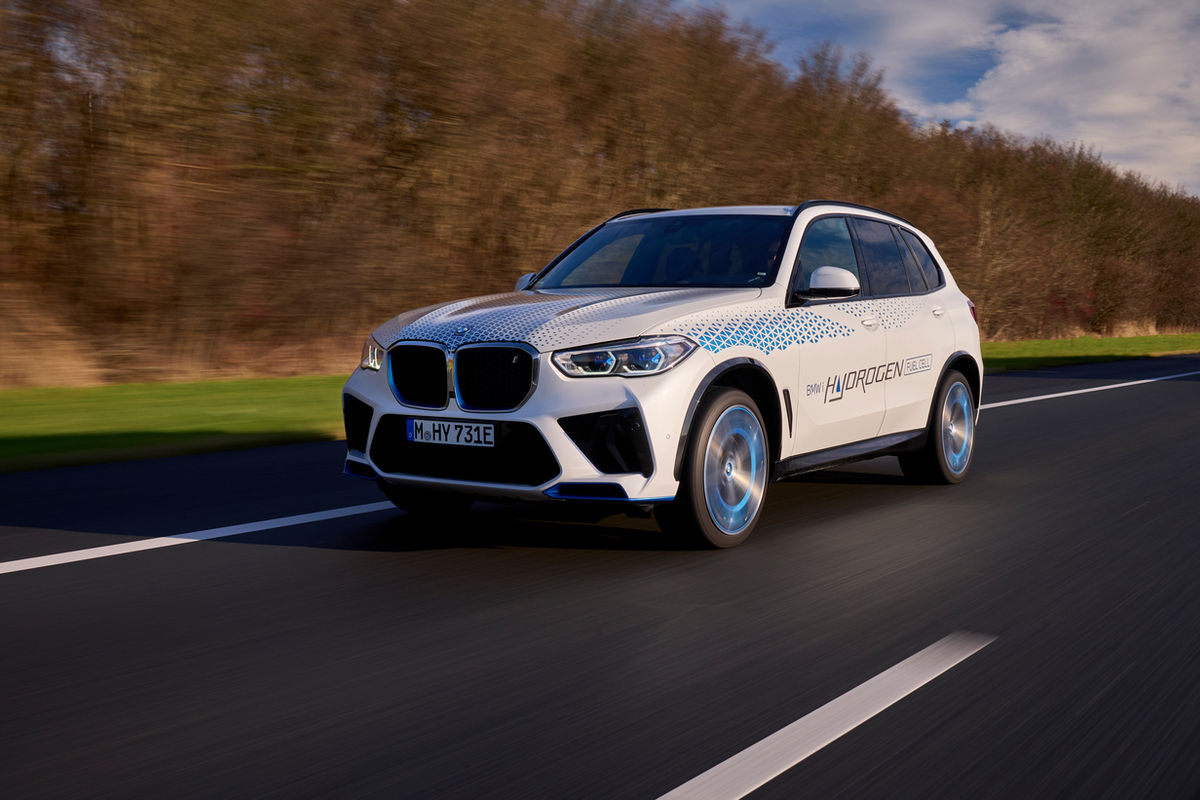
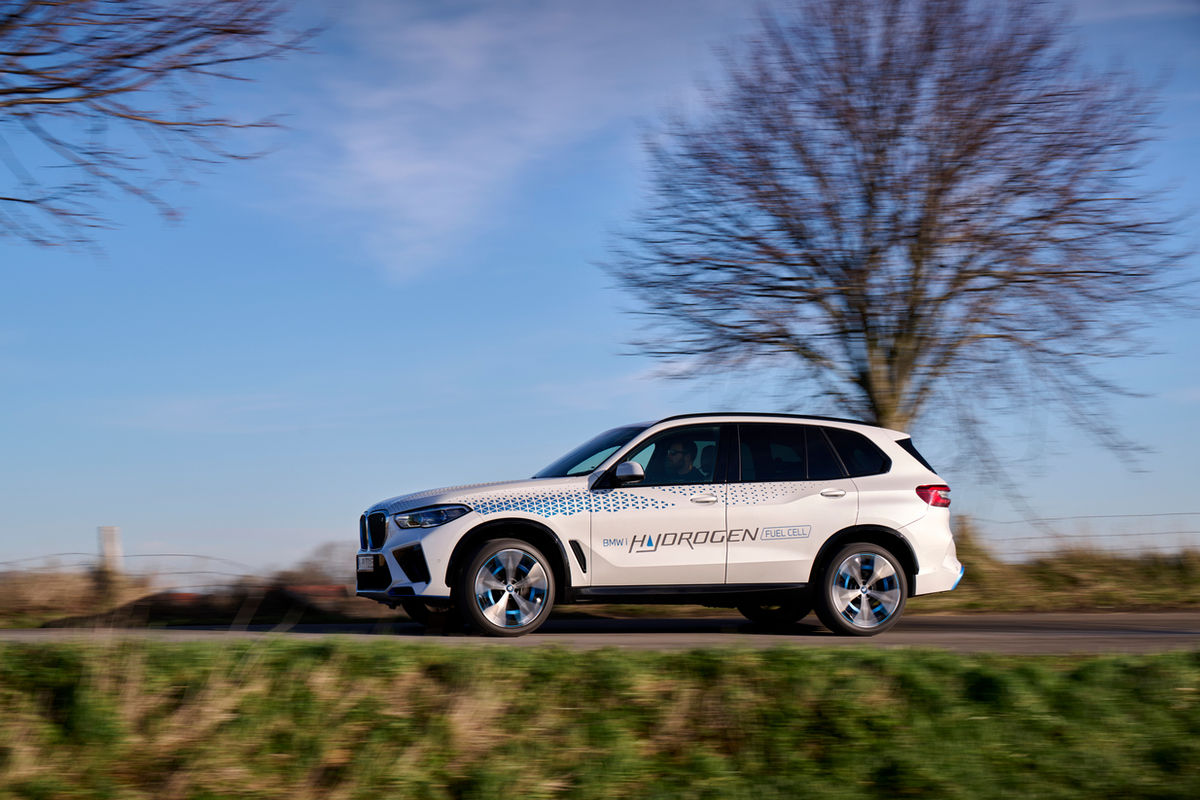
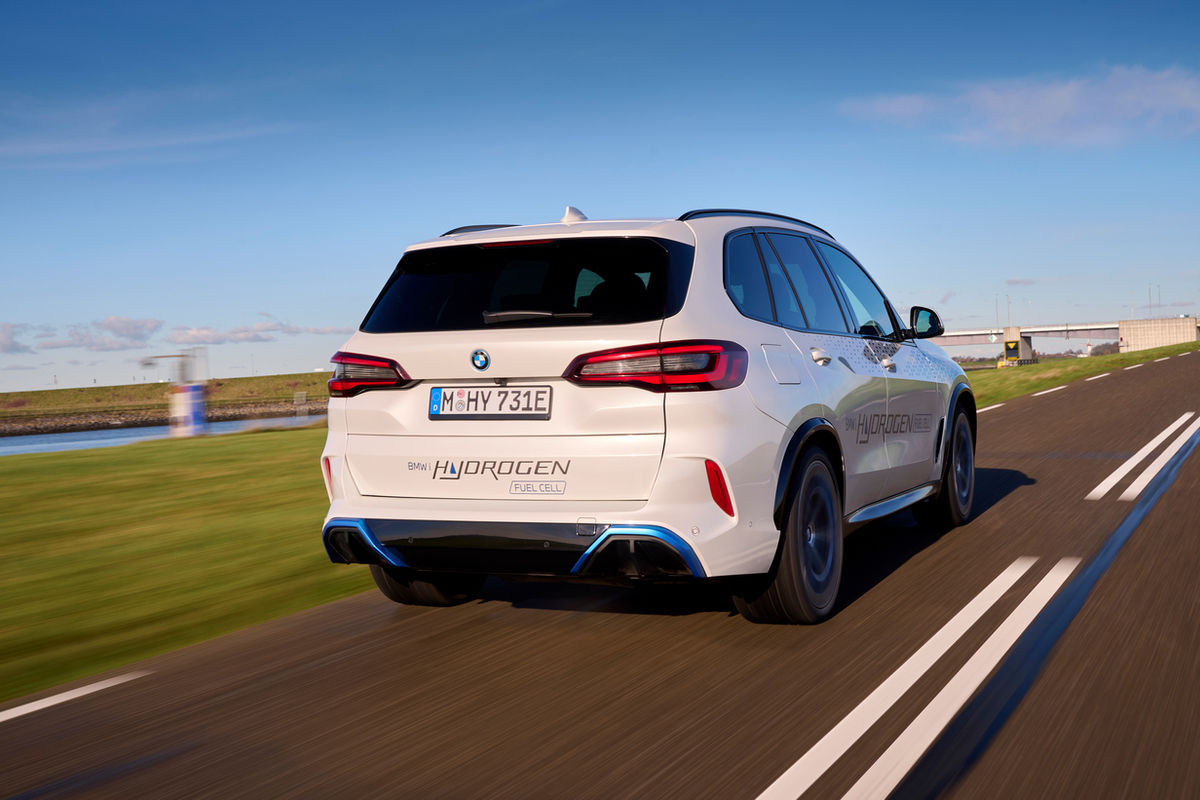
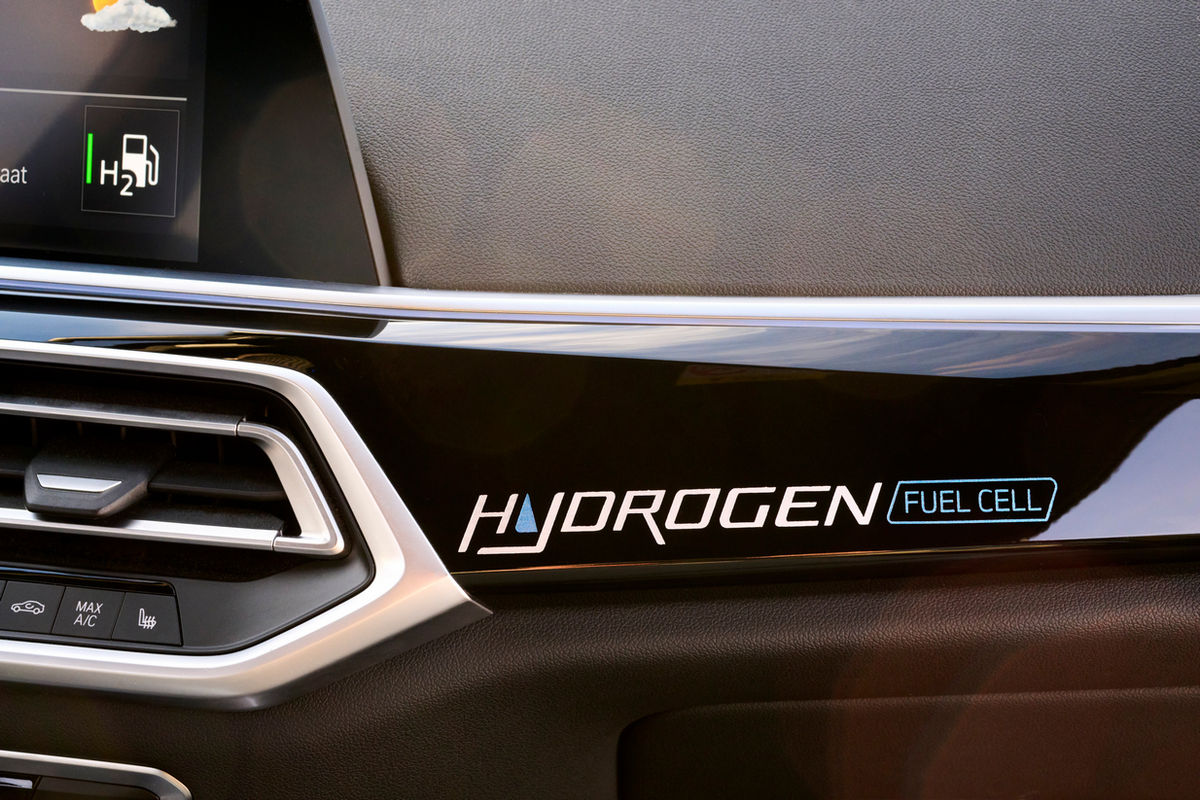
Underneath this BMW X5’s sheet metal hides technology that may be the missing link in the decarbonisation race. In the preview video, Ciro De Siena details the BMW iX5 Hydrogen fuel-cell vehicle; Hannes Oosthuizen drove the prototype in Belgium.
Let’s get a few facts out of the way up front. I am a big fan of battery-electric vehicles (BEVs) – I love the driving experience that they offer, which is characterised by instant power delivery, rapid acceleration and… near-silent running. As a commuter vehicle around the city, I would have one in a heartbeat.
I also admire the “theory” that BEVs are less harmful to the environment (because they don’t generate harmful emissions), but the reality is that in South Africa, all-electric vehicles are powered by electricity generated by burning coal, which is anything but “clean energy”. And, as much as I appreciate the ever-increasing ranges of EVs, the reality is that – at present – you pay a hefty premium for that tech (thanks, in part, to the Government’s higher tax on battery-electric vehicles). So, for a number of people, EVs are just not practical, but what if you still want to play your part in the efforts to curtail climate change?
Hydrogen is a highly-hyped technology at present, so I arrived in Belgium, where I would drive the BMW iX5 Hydrogen, with a degree of scepticism. After all, BMW has been on-off with hydrogen for decades. Even in Belgium and Germany, where there are a decent number of hydrogen refuelling stations, only 2 brands offer fuel-cell electric vehicles (FCEVs): Toyota (Mirai) and Hyundai (Nexo). Other brands have dipped their toes into hydrogen in the past, but for the moment, most appear entirely focused on BEVs.
Why is BMW pursuing hydrogen as a solution?
BMW believes that 1 technology alone won’t be enough to achieve “climate-neutral” mobility worldwide.
“Hydrogen is a versatile energy source that has a key role to play in the energy transition process and therefore in climate protection. After all, it is one of the most efficient ways of storing and transporting renewable energies”, says Oliver Zipse, the chairman of the Board of Management of BMW AG.
“We should use this potential to also accelerate the transformation of the mobility sector. Hydrogen is the missing piece in the jigsaw when it comes to emission-free mobility,” he adds.
Of course, there are some caveats. As is the case with electricity generation, there are “clean” ways to produce hydrogen (called green hydrogen), and ways to produce it that emit carbon dioxide. What’s more, hydrogen infrastructure needs to be created in most parts of the world. In South Africa, there is only 1 hydrogen station suitable to refuel Toyota South Africa’s lone Mirai test unit – in Potchefstroom!
But then there are very persuasive counter-arguments as well. The European Commission’s AFIR (its directive on the deployment of alternative fuels infrastructure) has introduced new rules to ensure the build-up of alternative refuelling points across Europe with common standards for their design and use.
So, what does this mean in practice? Essentially, at least one hydrogen refuelling station must be made available for every 100 km of the TEN-T (Trans-European Transport Network) in the near future. So, the infrastructure will come… It is interesting to note that Germany has more than 100 hydrogen stations already; therefore, owning a hydrogen-fuelled vehicle is a viable option in that country. It just goes to show that when there is political will and decisiveness, things do get moving in the right direction.
What does all of this mean for South Africa? Well, according to Jorgo Chatzimarkakis, who is the CEO of Hydrogen Europe and the man who fights for the hydrogen cause at the highest political decision-making level in the EU, South Africa has been identified as a critical source region, not only for platinum (a fuel-cell component) – but clean hydrogen itself. South Africa has an abundance of sun and wind, which, if harnessed appropriately, could see the Republic become a hydrogen-production hub.
Indeed, Anglo American is investigating setting up a “Hydrogen Valley” with Mogalakwena (Limpopo), Johannesburg and Durban/Richards Bay identified as hubs. In fact, Anglo American is already producing “green” hydrogen in Mzansi and has launched a hydrogen fuel-cell mine haul truck. The benefits of hydrogen as an energy storage medium, compared with, say, a lithium-ion battery, are obvious.
Refuelling a hydrogen-powered passenger vehicle such as the BMW iX5 takes about 5 minutes, and the H2 pump looks much like its petrol or diesel-delivering equivalents. You don’t need special gloves or protective gear. Hydrogen is easy to store and transport. It will likely be more efficient for European nations to import their hydrogen from South Africa, provided ships are powered by hydrogen as well.
Furthermore, transforming a normal petrol station into a hydrogen station is relatively simple and cost-effective, particularly compared with building a new electric charging station/infrastructure. Much of a traditional petrol station can be reused, and the cost is estimated at around €1.4 million (roughly R27 million) per station, though that number obviously depends on the size of the outlet’s forecourt.
And what is the cost of filling up? Well, at the moment the price is not regulated, so in Europe, you are likely to pay anywhere between €10 and €20 (about R195 and R390) per kg.
Another very important benefit of BMW’s two-pronged strategy is that it lessens dependence on only a few critical raw materials. Already there are concerns that Lithium supply will come under pressure as BEVs grow in market dominance. Fuel-Cell passenger cars use (on average) 23kg less critical raw materials (CRMs). As an example, a BEV SUV with a 80kWh Li-NMC battery requires 14.4kg of cobalt and 8.8kg of lithium, compared with 0.27kg and 0.17kg respectively for a FCEV SUV with a 95kW fuel cell and 1.5kWh Li-NMC battery. FCEVs therefore puts far less pressure on supply chains.
The BMW iX5 Hydrogen Fuel-Cell Vehicle
Much like the original electric Mini prototypes were used to gather information prior to the launch of the BMW i3, the Munich-based marque’s iX5 Hydrogen vehicle fleet (of fewer than 100 units) will be used to gather real-world information and to expose decision-makers to the technology. If all goes to plan – and the infrastructure roll-out happens as quickly as predicted – a production vehicle is likely to be launched in the second half of this decade. In all likelihood, it will be a derivative of the next-generation X5.
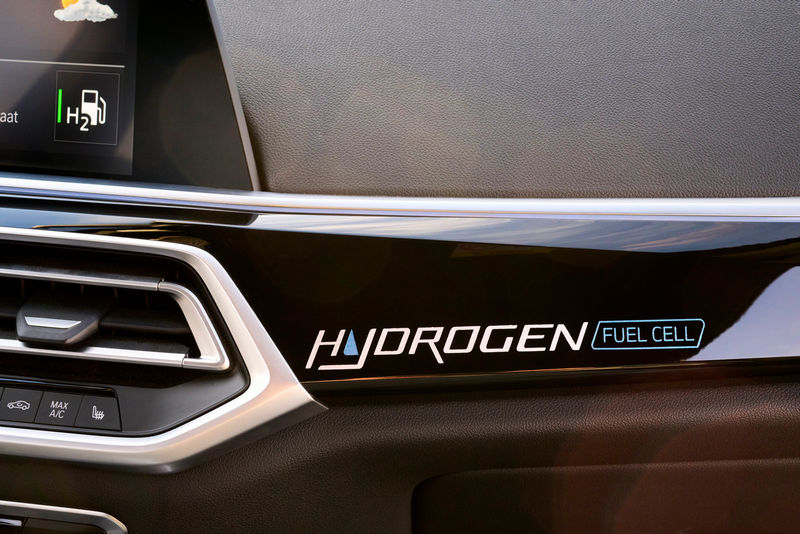
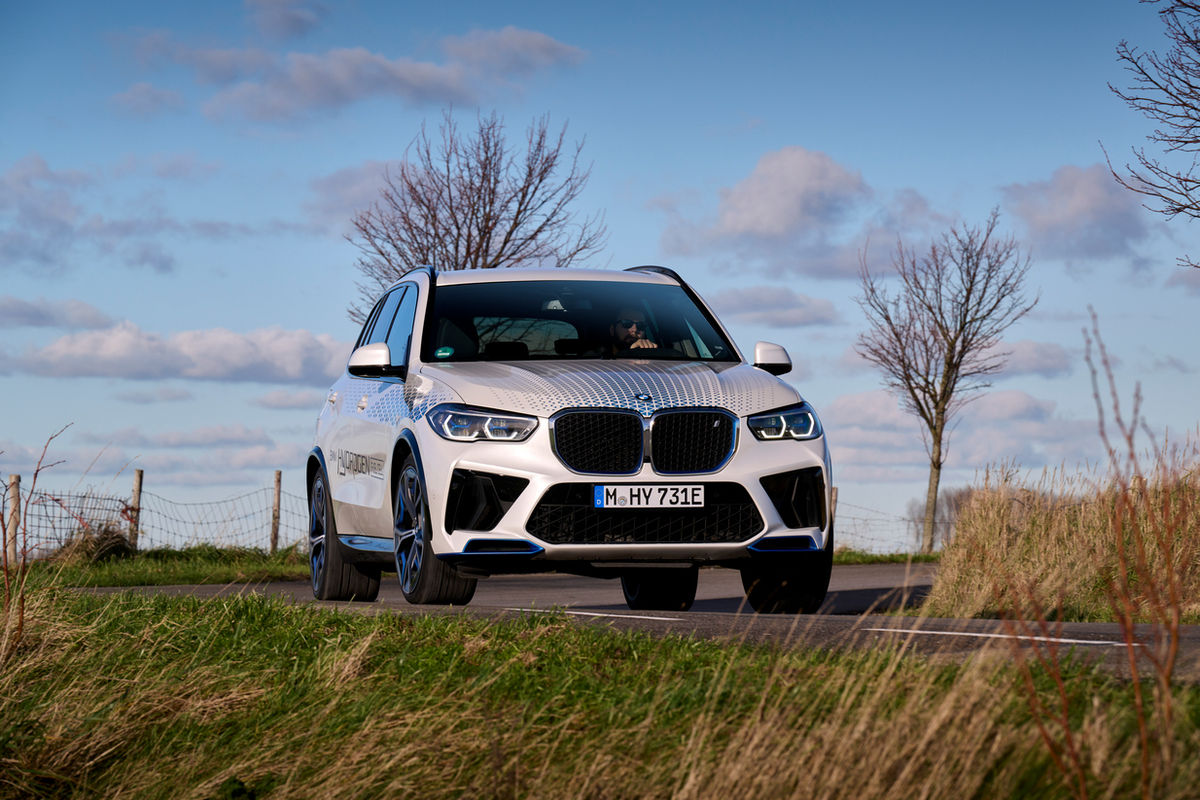
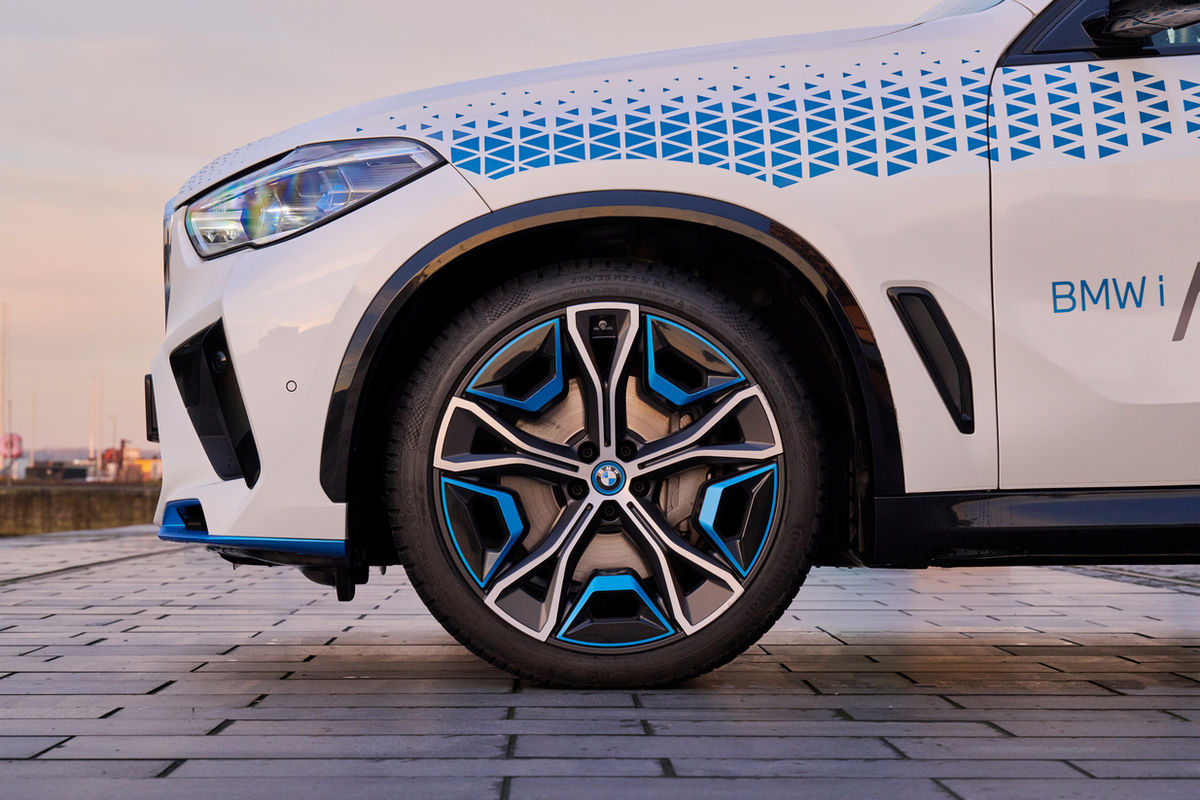
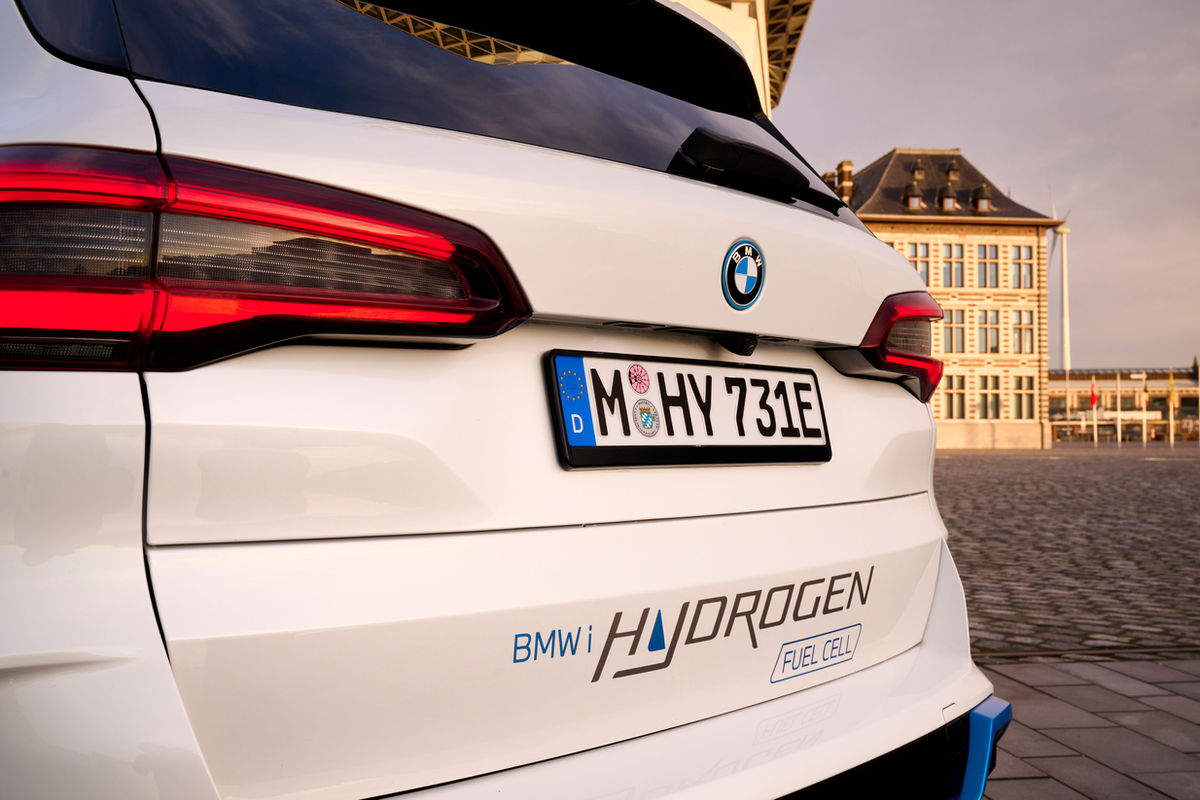
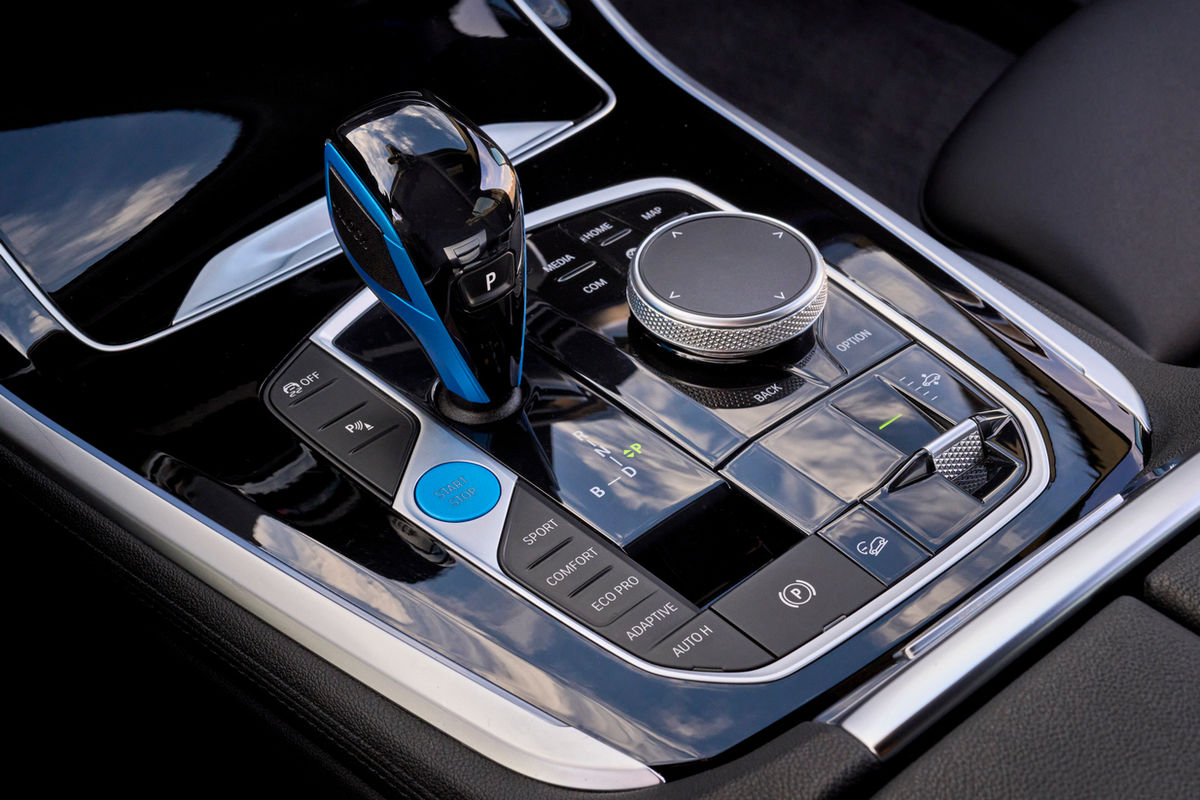
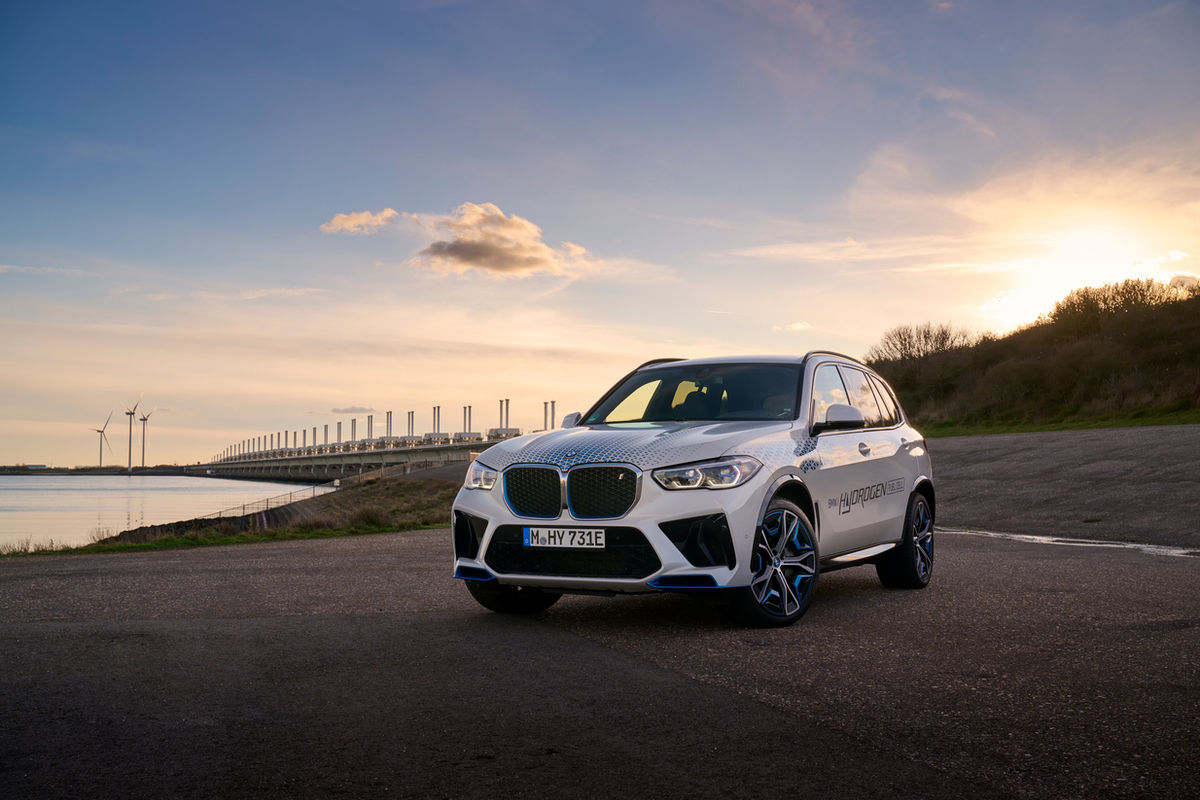
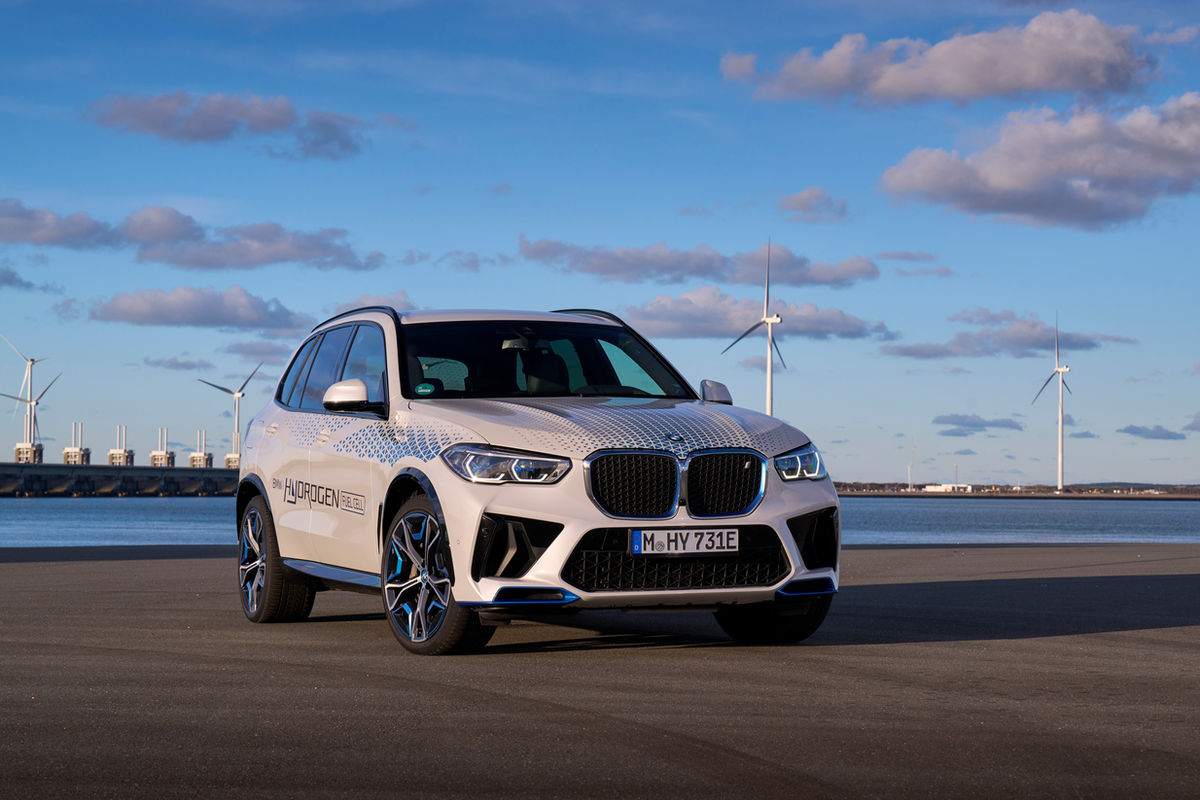
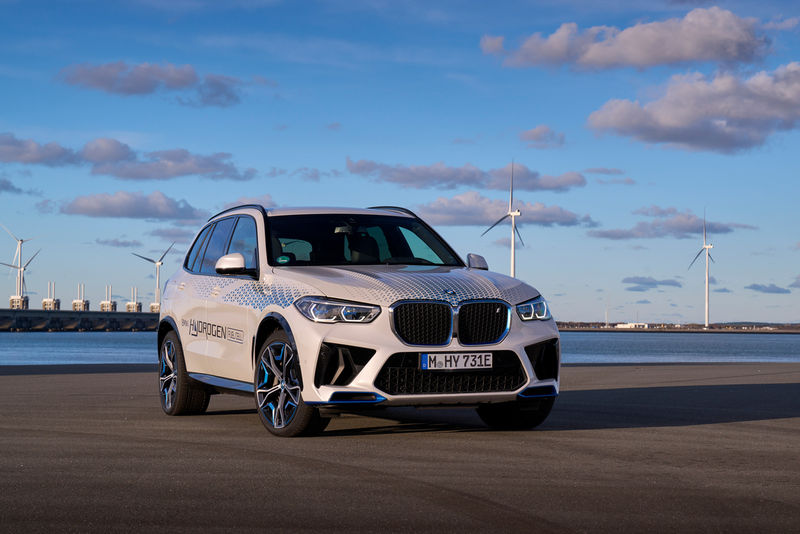
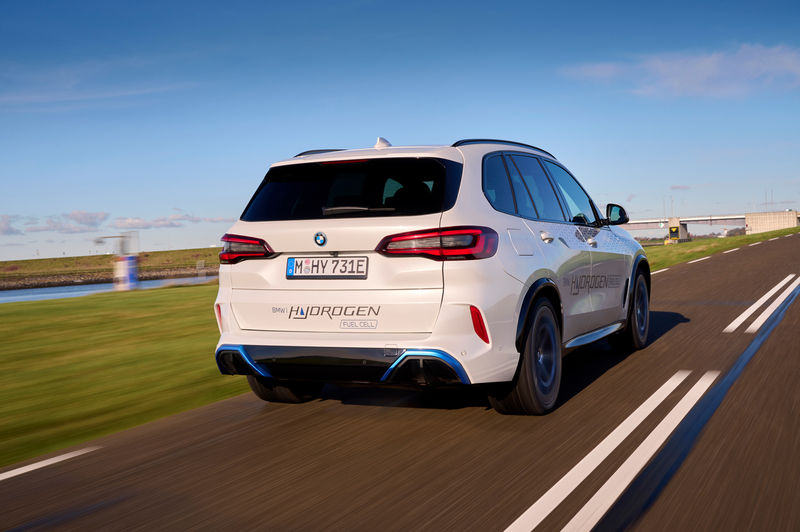
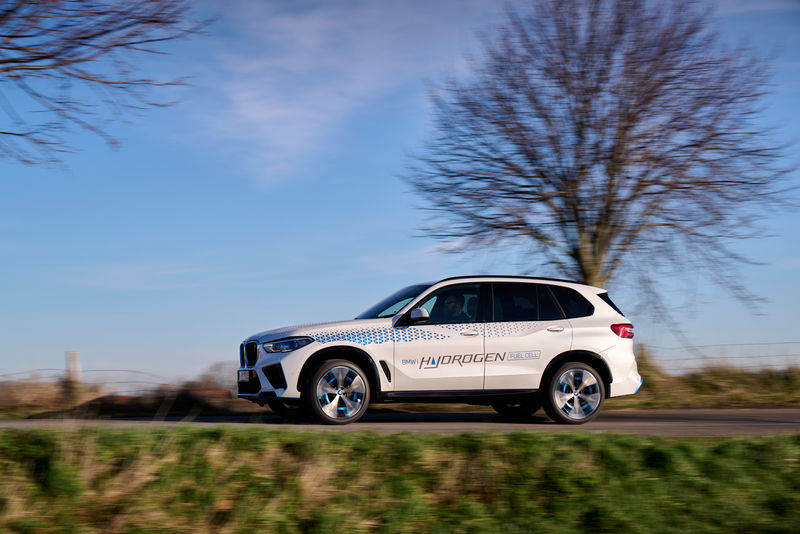
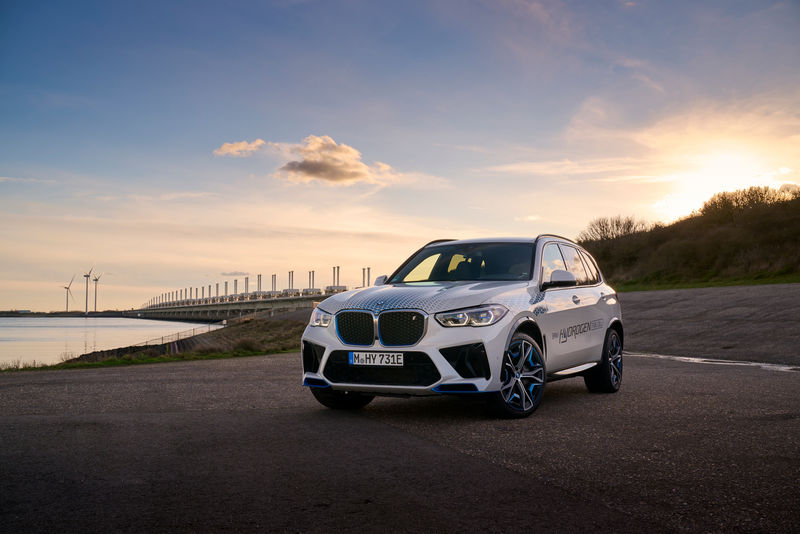
There is precious little to distinguish the iX5 from an X5 derivative powered by an internal combustion engine (ICE), but eagle-eyed observers will notice that the grille is ever-so-slightly different and that the exhaust exits about a metre before the rear axle (you’d have to crouch down to see that). Of course, the numerous blue design details and special tyres (made from recycled materials) are more obvious clues.
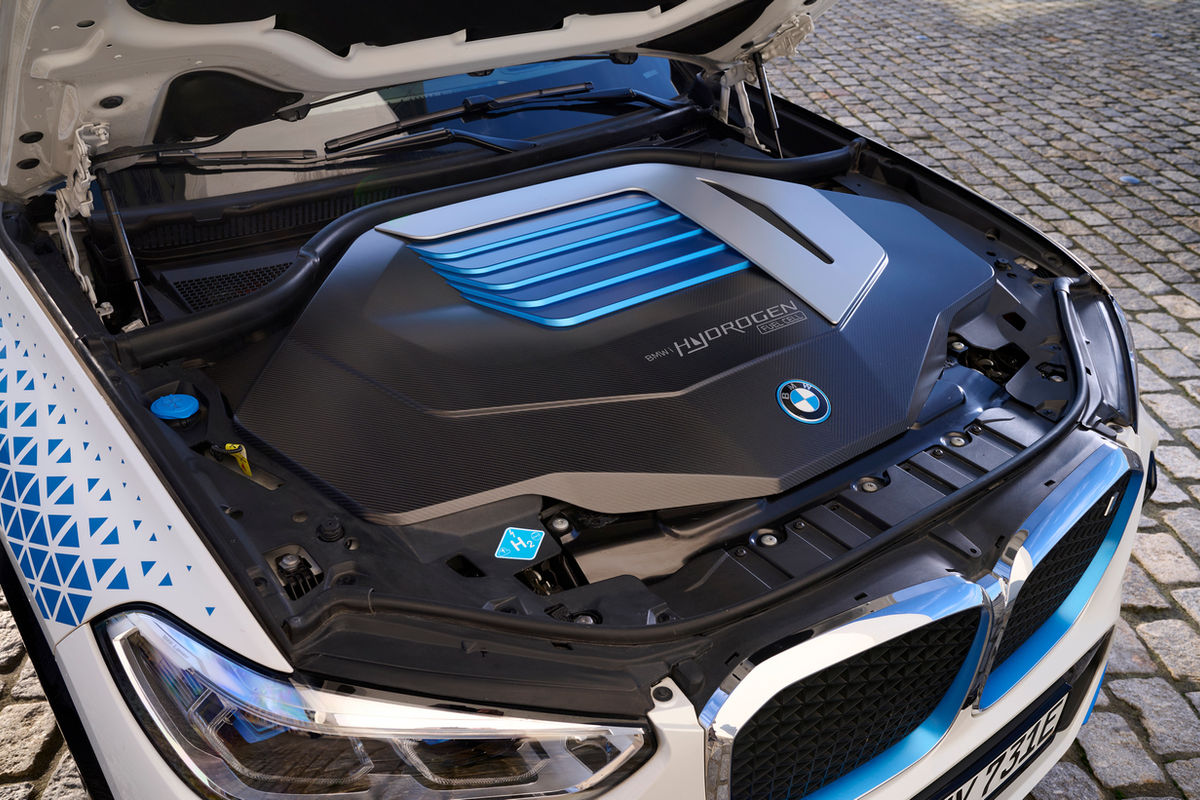
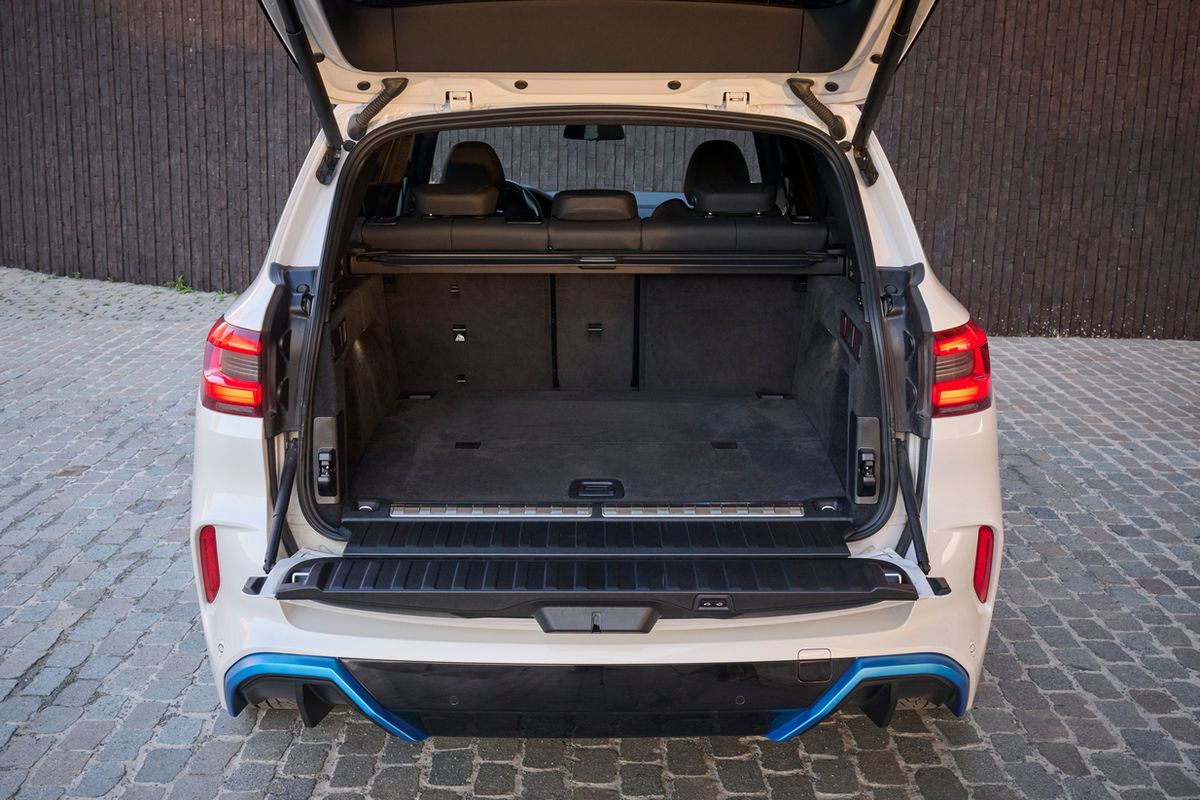
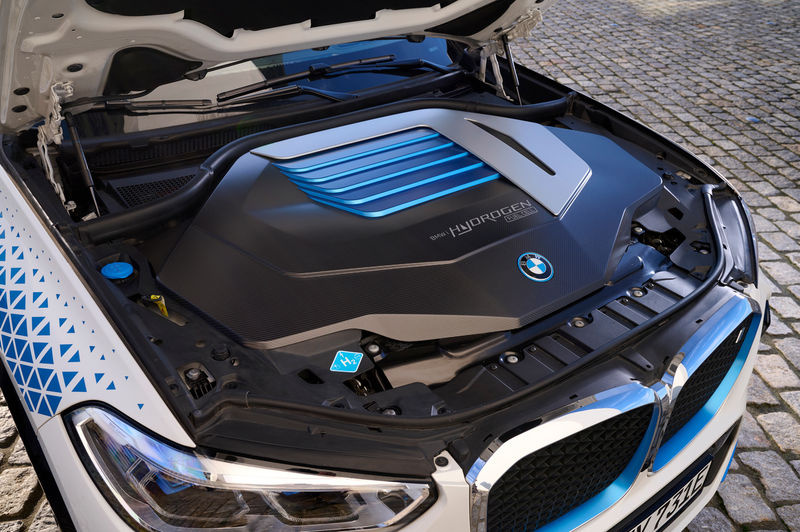
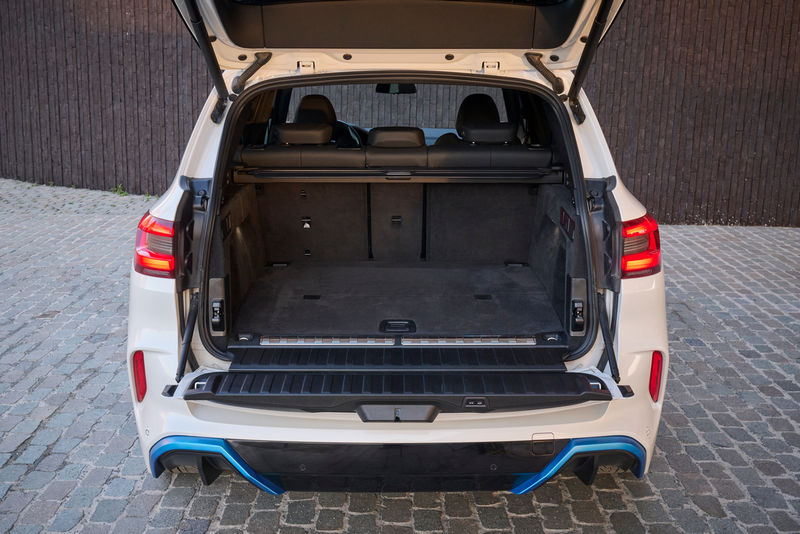
Interestingly, BMW has fitted the hydrogen fuel-cell drivetrain in the X5 without any impact on its cabin space. The load bay has exactly the same luggage capacity as before, and the secondary hydrogen tank is positioned neatly in the transmission tunnel. Speaking of which, the iX5 has a pair of hydrogen tanks with a combined capacity of 6 kg. The hydrogen fuel cell is mounted at the front and, at the rear, you’ll find the same electric motor and battery as in the BMW iX. Not only does the fuel cell power the wheels – it also feeds into the battery pack; as a result, you’ll never have to “plug in” the iX5 Hydrogen anywhere.
BMW gets its fuel cells from Toyota – its long-standing technical partner – but the rest of the drivetrain is proprietary. How does it all work? A chemical reaction takes place in the fuel cell between gaseous hydrogen (from the two 700-bar tanks, made from carbon-fibre-reinforced plastic) and oxygen from the air. The fuel cell delivers 125 kW, while the e-motor adds a further 170 kW, for a total output of 295 kW.
295 kW on tap – 0-100 kph in under 6 sec
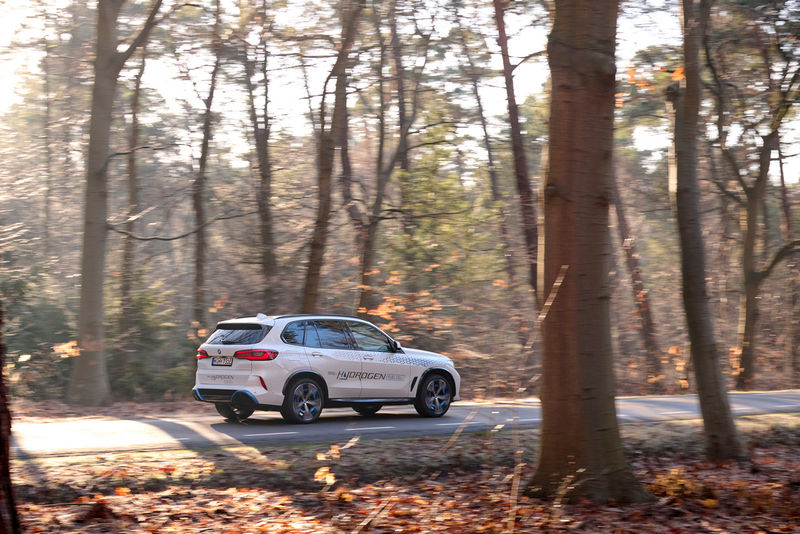
All of this means the iX5 Hydrogen’s driving experience is akin to what you would experience in an electric X5 – there’s quick acceleration (BMW claims the prototype will zoom from 0 to 100 kph in less than 6 seconds and go on to a top speed of in excess of 180 kph). It’s no slouch – that’s evident; one could be forgiven for thinking you are at the ‘wheel of a conventional battery-electric vehicle. There is no noise, the responsiveness is great and what comes out of the exhaust pipe is water vapour and hot air.
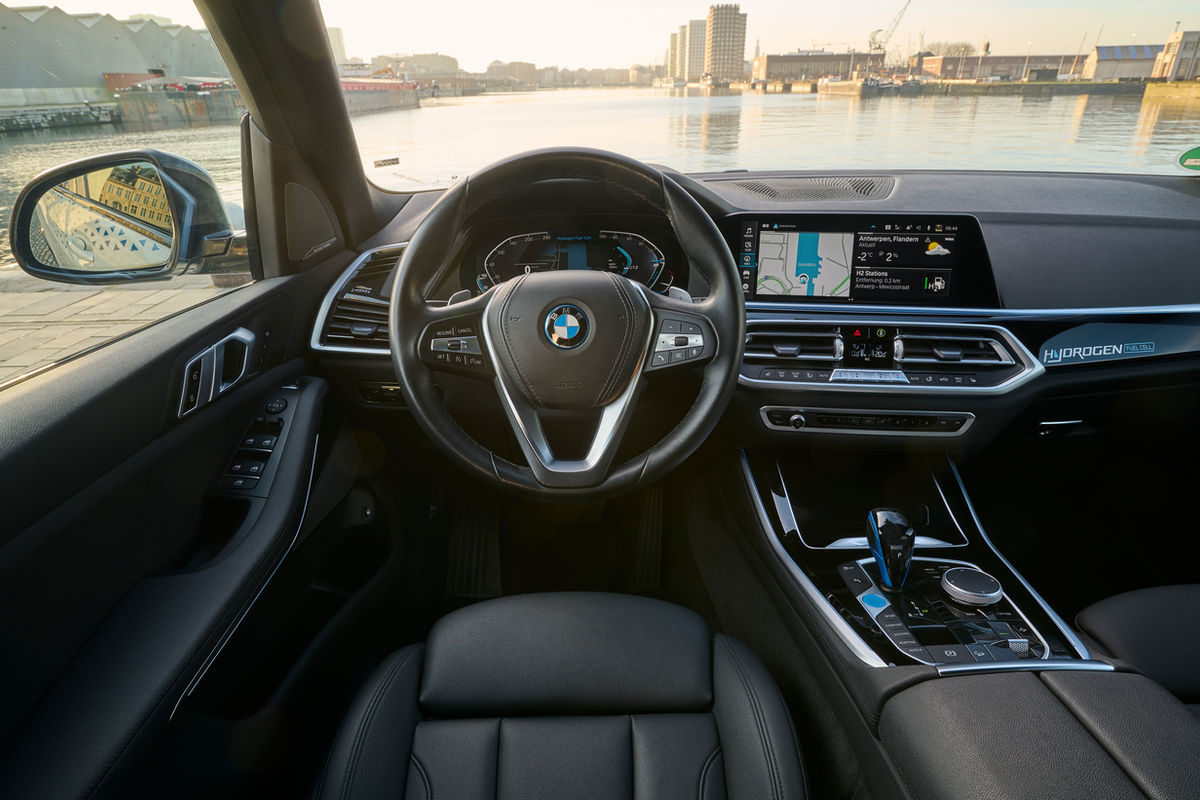
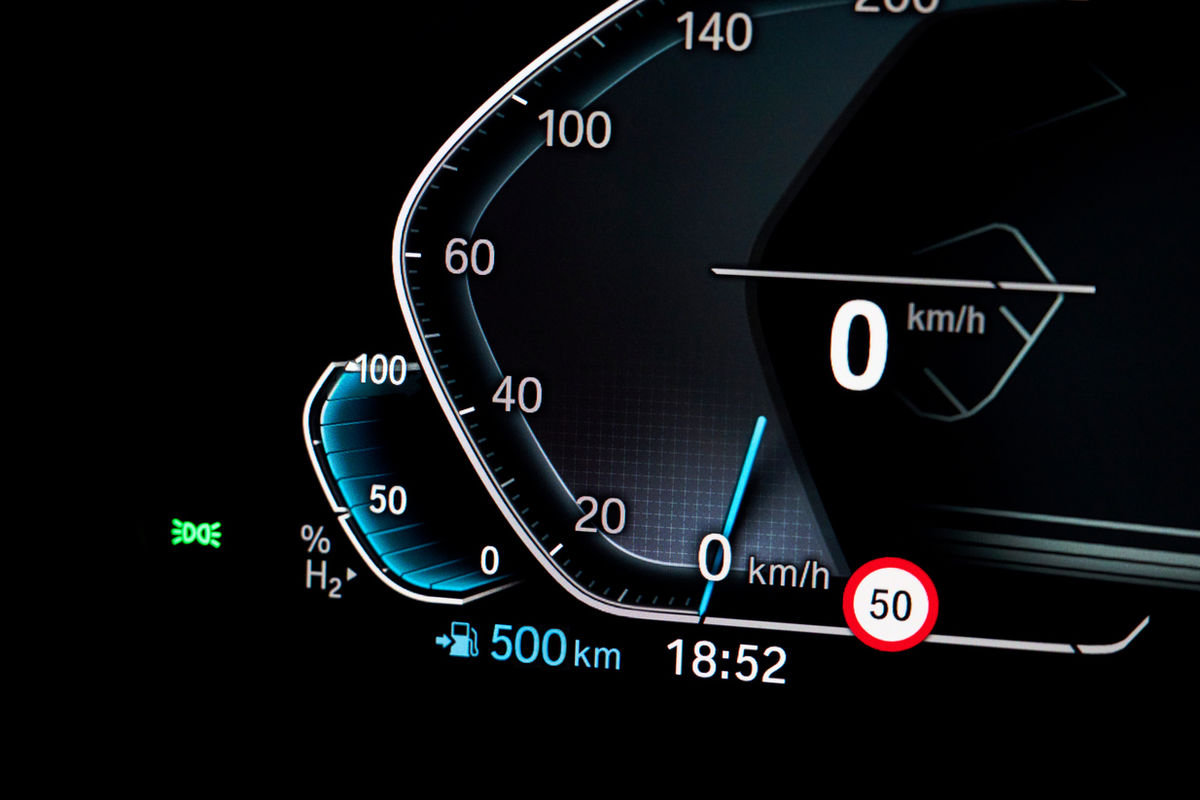
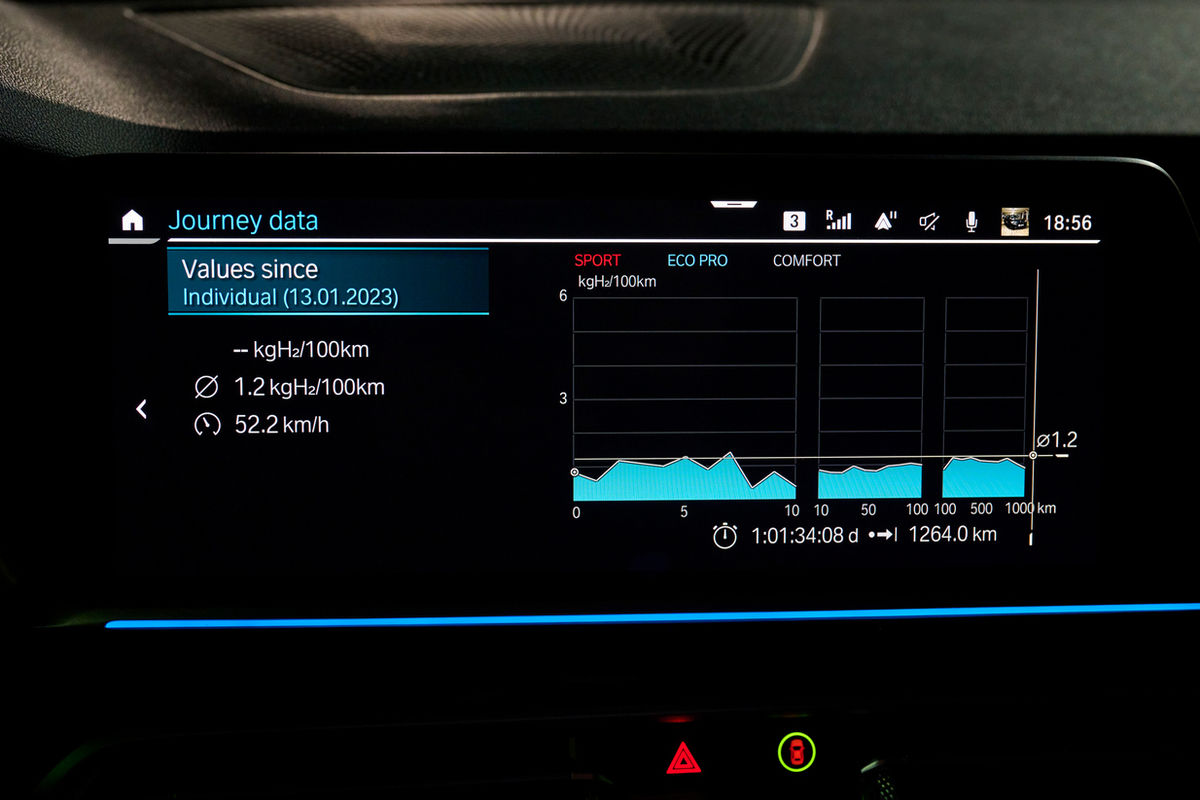
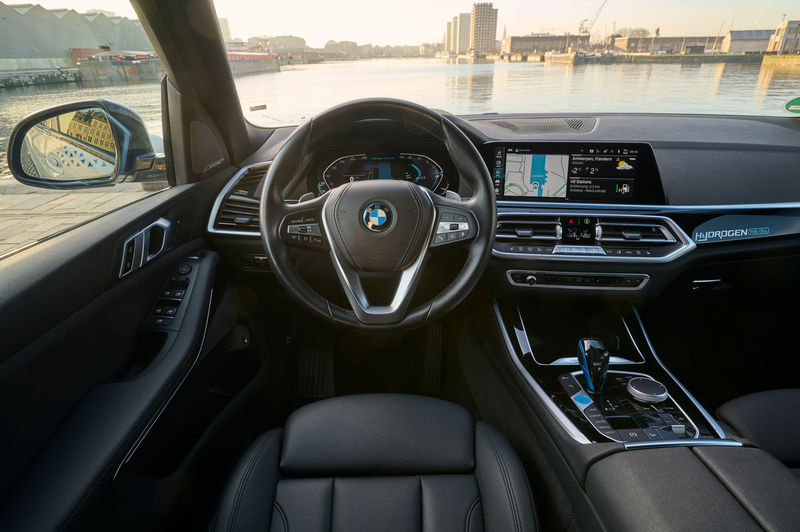
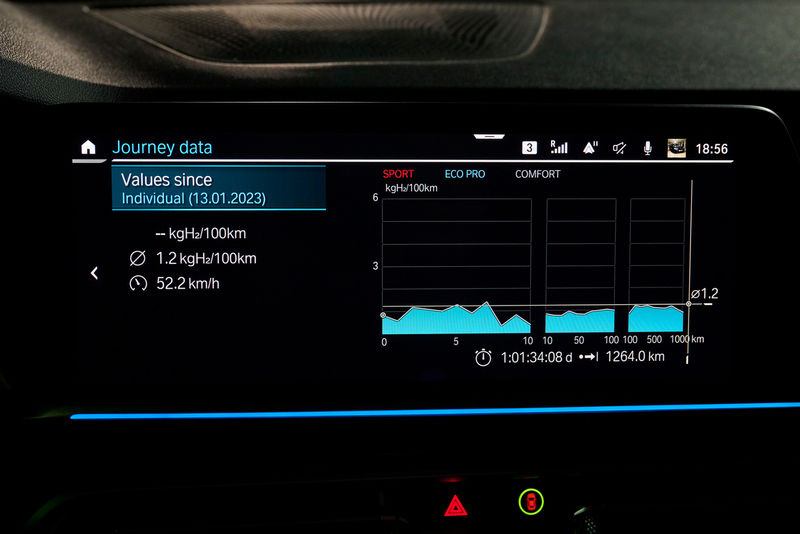
In fact, there is nothing about the car that suggests it is a prototype, even the instrumentation has been updated to show consumption in kg/100 km. I achieved 1.4 kg/100 km on our test route, which included a lot of stop/go traffic and some highway cruising. Still, BMW is adamant this SUV will never be produced.
And what about costs? According to BMW, a hydrogen-fuelled X5 like this should cost about the same as a battery-electric vehicle of a similar size. As hydrogen becomes more readily available, refuelling costs are likely to come down as well, but as things stand (late February 2023), it would cost approximately R1 170 to fill the iX5’s 6-kg tanks. The range is just over 500 km when fully fuelled. A petrol-fed BMW X5 has a tank capacity of 83 litres, which would cost about R1 745 to fill (calculated at R21.03 per litre). So running costs will be in the ballpark, but bear in mind that there are far fewer service items on an FCEV…
Summary
BMW says that the FCEV is not a replacement for the BEV and that it will continue to offer models of the latter in the future. However, BMW believes hydrogen provides the “second leg of its alternative energy strategy” and that it will appeal to consumers who drive very regularly, who don’t have easy access to public charging facilities, who often tow trailers and who live in cold-climate countries. As I drove around Antwerpen with the BMW iX5 Hydrogen, I couldn’t help but wonder whether this is not indeed the “silver bullet tech” we’ve hankered for. After all, it can power trucks, ships and trains, plus it’s cost-effective. The new tech is safe (BMW has performed numerous crash tests and fire exercises). And… maybe, just maybe, it could be the tech that accelerates our own country’s energy transition. I’m holding thumbs!
Related content:
BMW X5 / X6 Updated, Coming to SA in 2023
BMW iX Review: What it’s like to live with
Hannes Oosthuizen

With the ultimate goal of spending his life writing about cars, Hannes studied journalism at the University of Stellenbosch. A brief stint as a sports editor for Paarl Post followed, before he joined CAR magazine in 2001. He eventually became the (youngest-ever) editor of CAR in 2011, a position he occupied for two years. During his career at CAR he became a member of the WCOTY (World Car of the Year) panel, wrote a book (Cranked Up: Confessions of a Petrolhead) and was named by the Mail & Guardian as one of the Top 200 South Africans to take to lunch in its 2008 Youth Day supplement, and by The Media magazine as one of the most influential media professionals under 40 (2012). He left CAR in 2013 to experience the \other\" side of the industry