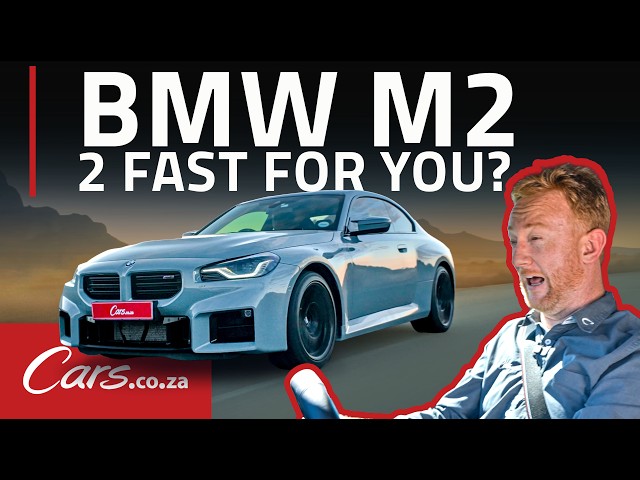
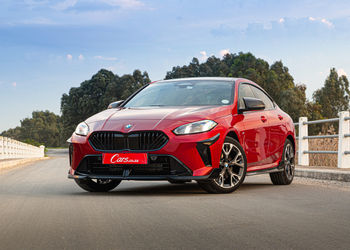
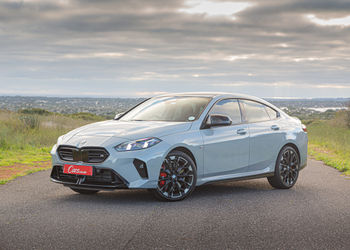
Lets be kind and say the BMW 1 Series has had a dramatic birth. When first images of the Munich-based firms new C-segment hatchback first hit the internet, the response was an almost universal thumbs-down. But proving once and for all (again) that one should never judge a modern BMW by viewing two-dimensional images, the 1 Series has quickly found itself a sizeable fan-base. In the metal, its so-called flame-surfacing design comes alive and while it is hardly pretty, it is certainly distinctive and eye-catching. For the young and trendy at whom the 1 Series is aimed, that is seemingly enough.
But enough of the styling youll know whether you like it or not. Of more importance is BMWs controversial decision to stick to a crucial element of the company DNA in an all-out effort to make sure that the 1 Series would be regarded as a true BMW. A hatchback is already a sizeable stretch for the BMW brand, but a front-wheel drive hatchback was thought to be too much of a risk. Consequently, the 1 Series is the first rear-wheel drive compact hatchback of any significance in a few decades. This drivetrain layout, of course, brings some fairly important consequences. The question is whether the benefits of rear-wheel drive (sharper dynamics, purer steering) outweigh the negative (tight rear seat space). Lets have a closer look at the BMW 120i to find out…
Problems in the rear for BMW 120i
Lets deal with the rear-seat accommodation first. The severe slope of the rear door means the aperture is narrow, especially around the feet area, so ingress/egress is not easy. Rear legroom is, to put it bluntly, poor. But BMWs designers did try hard to improve matters the 1 Series has one of the longest wheelbases in its segment and the front seatbacks feature indentations to allow for more knee-space but these efforts have not succeeded in delivering comfortable rear accommodation. Matters are made worse by the fat transmission tunnel, which essentially turns the 1 Series into a 2+2. By comparison the boot is actually larger than you may expect, but then again it should be. The BMW 120i rides on run-flat tyres and as such there is no spare wheel in the boot.
The situation is far better up front, where the BMW 120i offers very good space and a fantastic driving position, courtesy of a rake/reach adjustable steering and height-adjustment for both front seats. The facia design is driver oriented in the mould of some slightly older BMW models, and also minimalistic in its control layout. Unfortunately the quality is perhaps not quite what youd expect from a BMW with some signs of cost-cutting in the plastics used.
Considering the 120is competitive pricing (compared with mainstream brands such as VW and Alfa Romeo), this BMWs standard features list is actually quite comprehensive, boasting such items as dual front, side and curtain airbags, radio/CD, air-conditioning, electric windows and mirrors, tyre pressure sensors and front foglamps. BMWs iDrive control system is not standard but forms part of both of the optional navigation systems.
On the road
Initial driving impressions are mixed. The low-speed ride is firm on those run-flat tyres. The engine sounds surprisingly rough and lacks low-down torque. The steering is heavy, too. No, it is only when you start driving faster and engage enthusiastically with the car that the benefits of rear-wheel drive start to shine. The engine loves to rev to the 6 600 rpm limit and the six-speed transmission is so beautifully precise and slick that the frequent down- or up-shifting in search of the power band is never a chore. Sure, the 110 kW 2,0-litre engine does not possess enough firepower to turn the BMW 120i into a hot hatch, but theres certainly fun to be had.
Things get even better in the twisties. Because the front wheels only have to steer and dont transmit power to the road, as a front-wheel drive car would, the steering feel is beautifully uncorrupted and linear. Power assistance is hydraulic, so theres no electronic interference either. And while the steering is heavy at low speeds, the weightiness is actually desirable when grabbing the car by the scruff of the neck and pushing harder. The rear-wheel drive set-up has a further benefit in improved weight distribution front to rear. Resultantly theres an inherent handling balance to the 1 Series that just cries out for more power to be properly exploited.
BMW 120i – Verdict
The BMW 120i has its flaws, for sure. Rear seat accommodation is poor, the facia finish could be more upmarket and it can be a bit flat-footed at times, which is a shame, as it has the chassis to be a very entertaining warm-ish hatchback. Ultimately its biggest drawcard is the BMW roundel on the nose. Only you will know whether that makes up for its shortcomings.
We like:
- Pin-sharp dynamics
- Pure steering
- Slick transmission
- Fuel economy
- Premium badge
We dont like:
- Tight rear space and access
- Awkward styling
- Lack of low-down grunt
Fast facts
Engine: 2,0-litre, four-cylinder, petrol
Power: 110 kW @ 6 200 rpm
Torque: 200 N.m @ 3 600 rpm
Transmission: Six-speed manual
Wheels: 16-inch alloy (17-inch optional)
Top speed: 213 km/h
0-100 km/h: 10,9 seconds
Fuel economy: 10,98 litres/100 km
Source: www.um.co.za
Also consider:
- Audi A3 2,0 FSI Ambition: Extremely popular for a good reason the A3 is a stylish, polished product. It is not as good as the BMW 120i dynamically, but it certainly is more practical, with better rear seat space. A very close contest!
- Alfa Romeo 147 2,0 5-dr: Alfa Romeo would desperately like to be considered being in the same league as the A3 and 1 Series, but the 147 doesnt quite cut it. The steering is great and the design beautiful, but it cant match the Germans for refinement and quality.
- VW Golf (5) 2,0 FSI Sport: It may not have a prestige badge, but the Golf is a solid, capable offering that is unlikely to date too fast. Shares its punchy engine with the A3. Looks a bit hum-drum in this company.