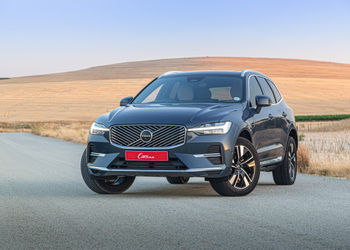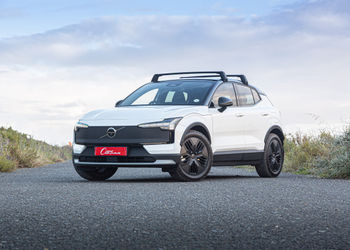

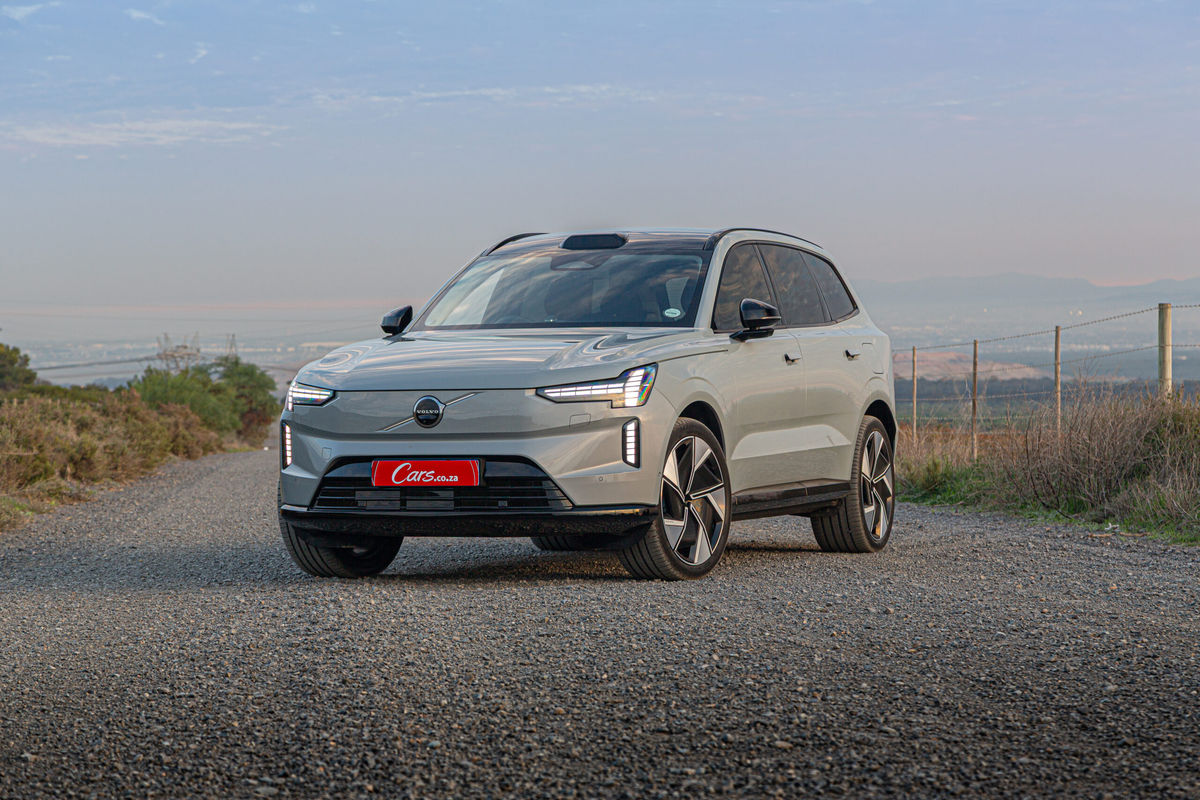
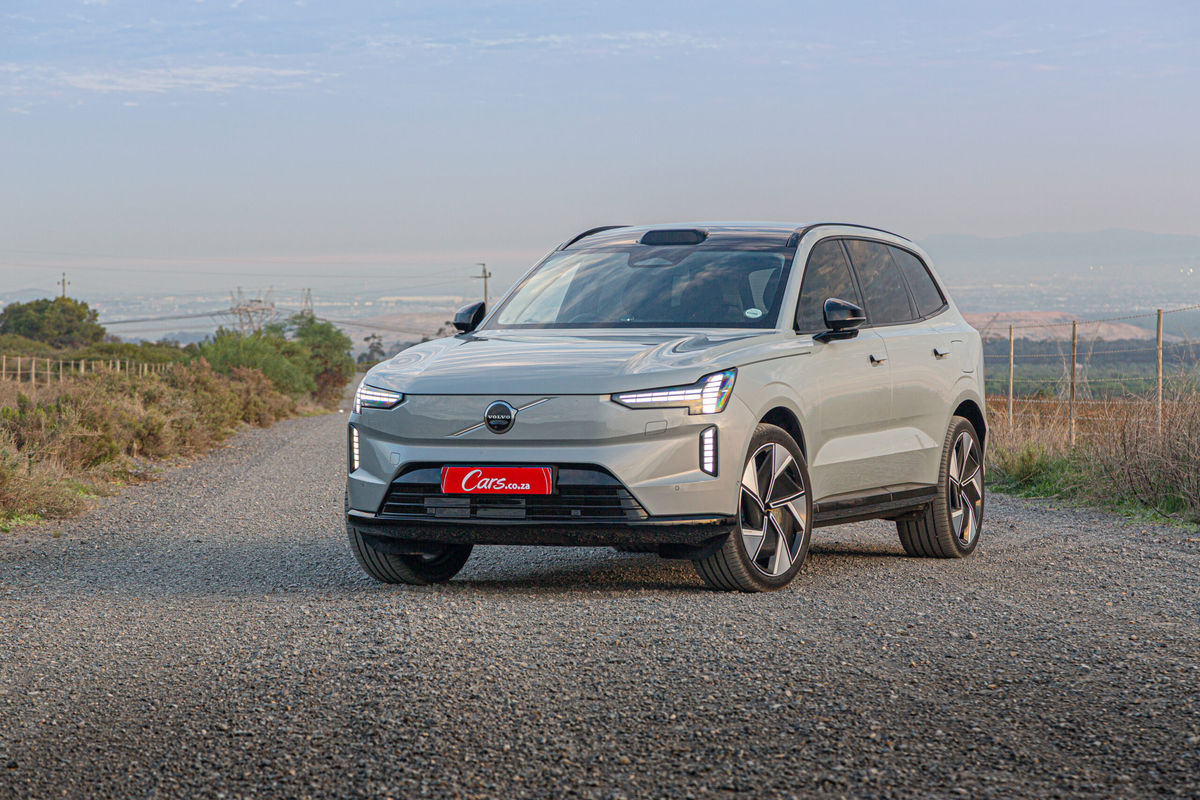
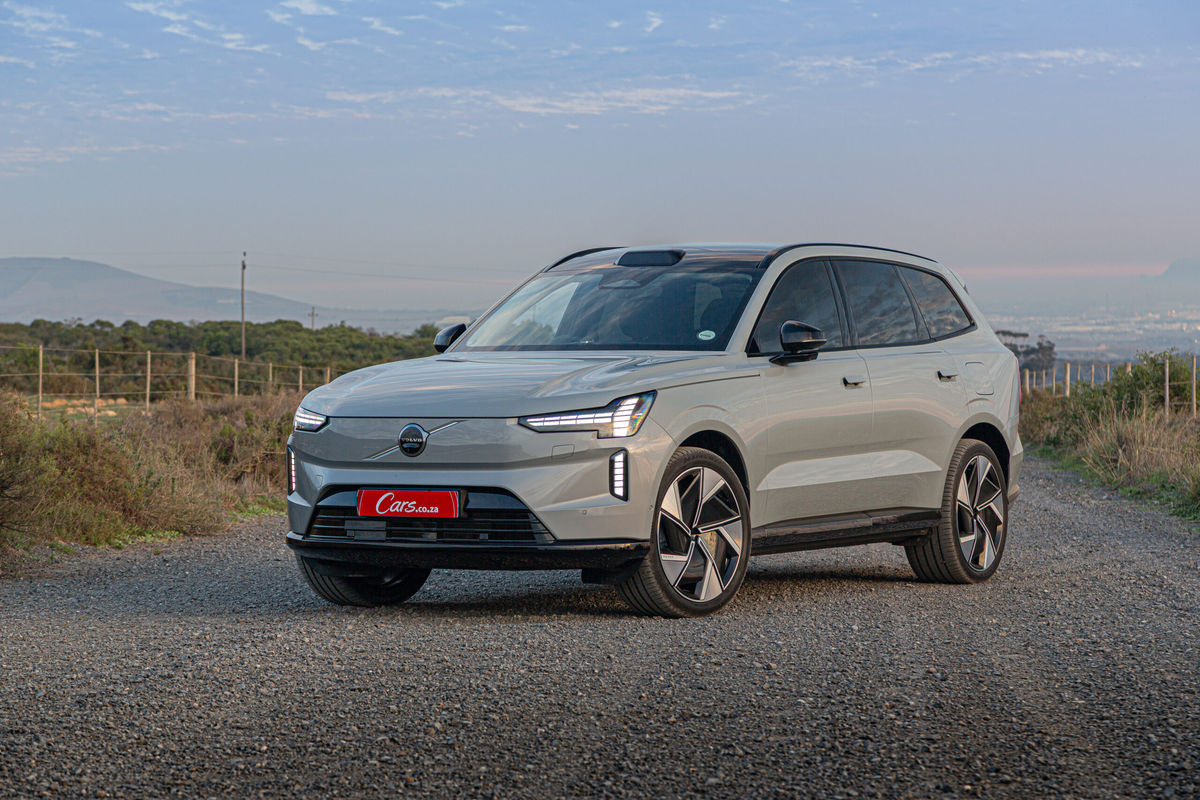
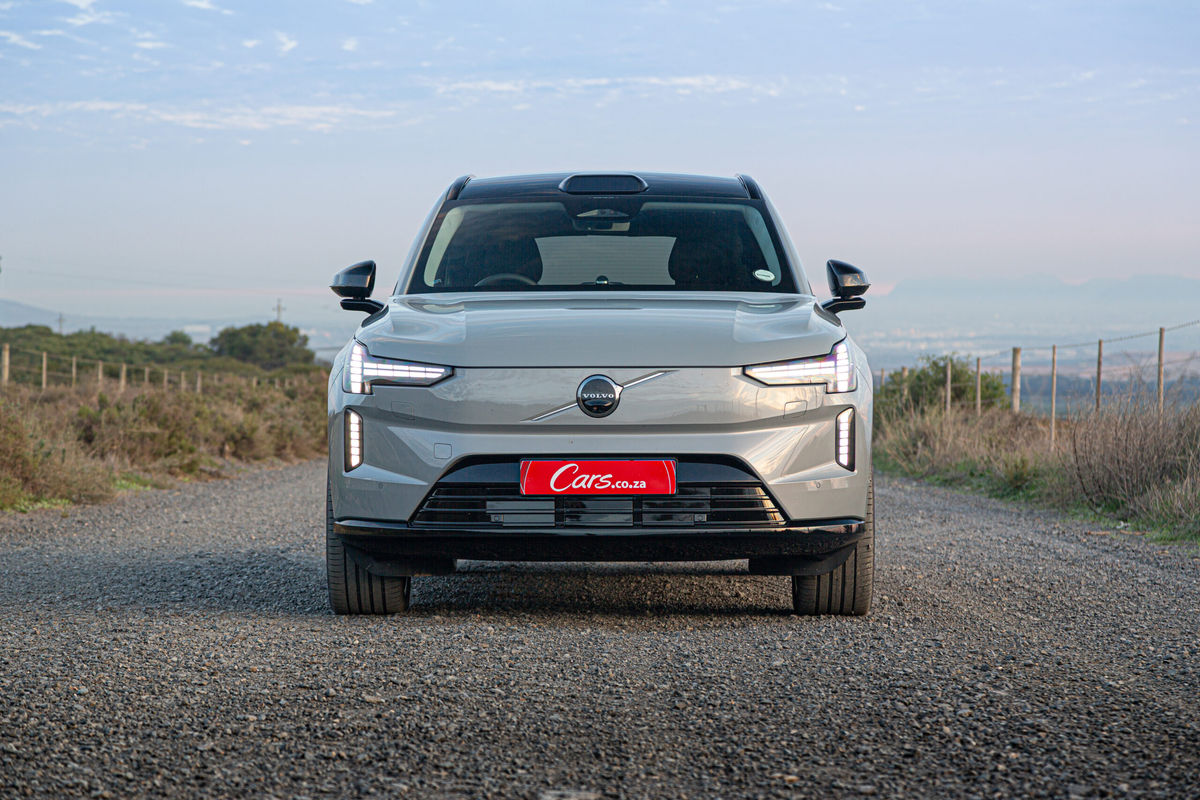
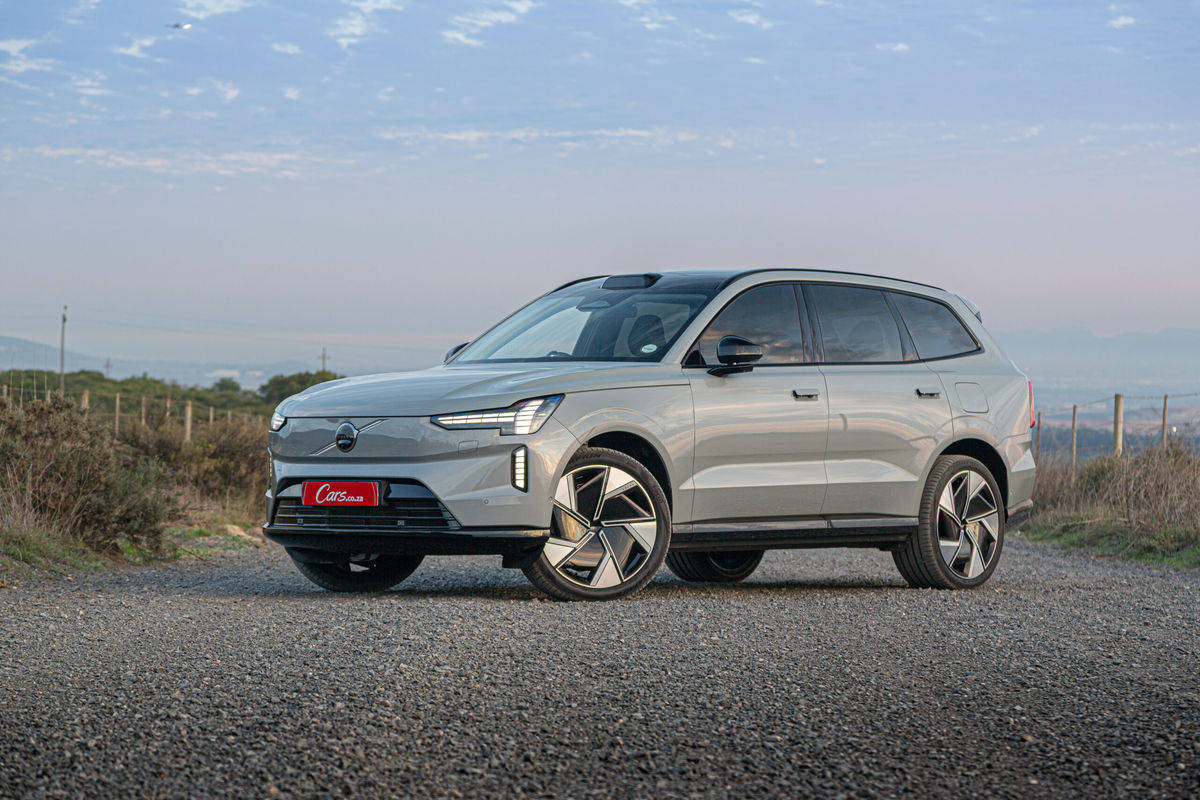
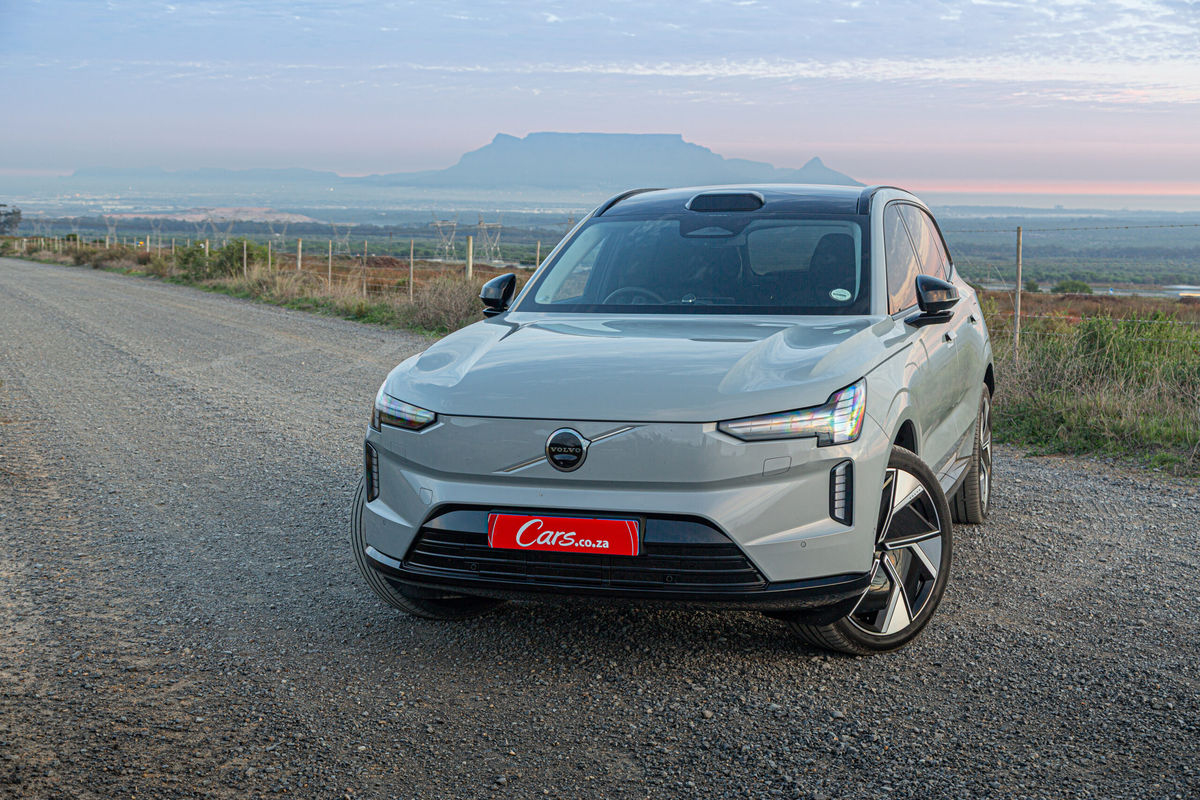
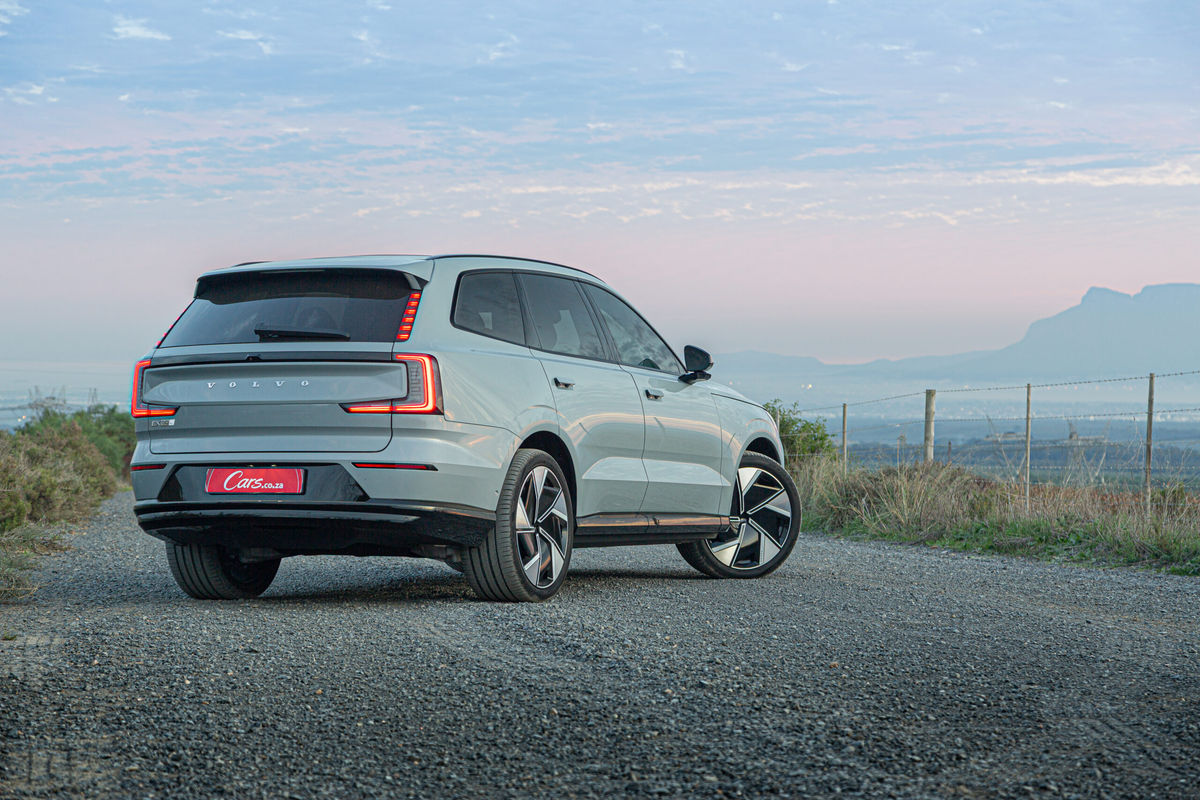
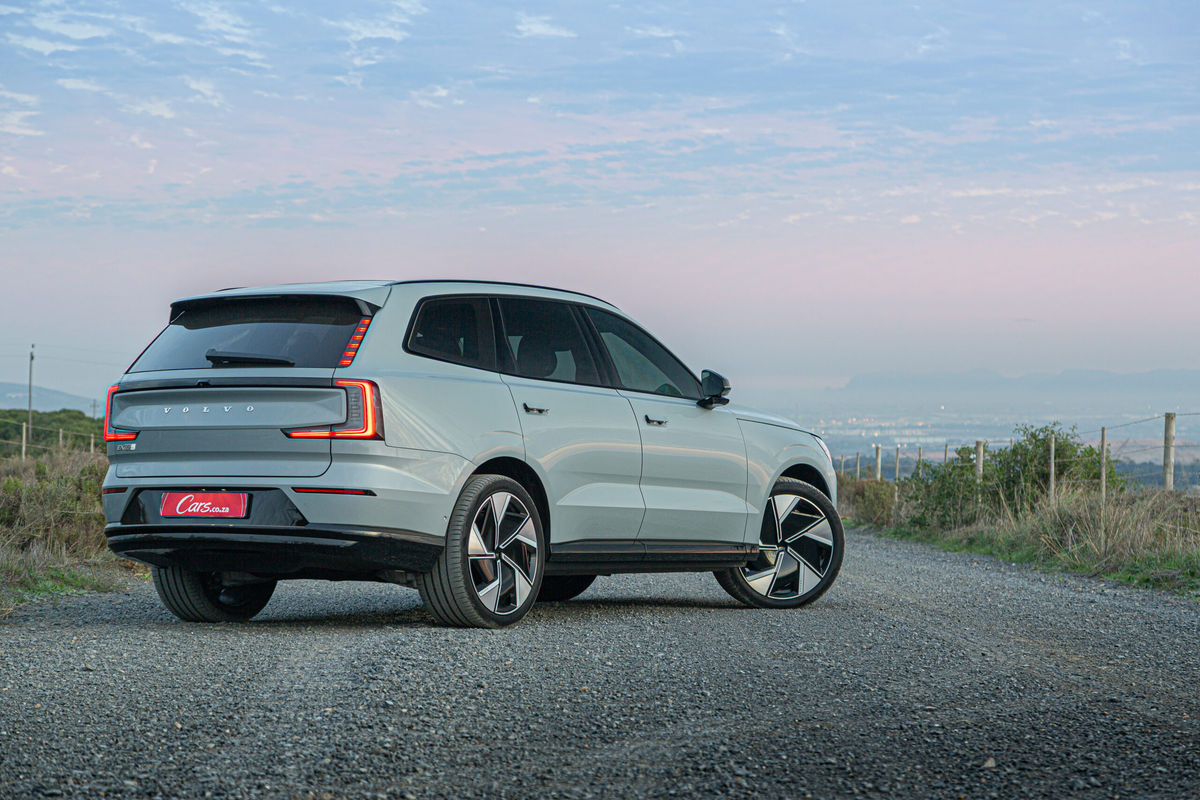
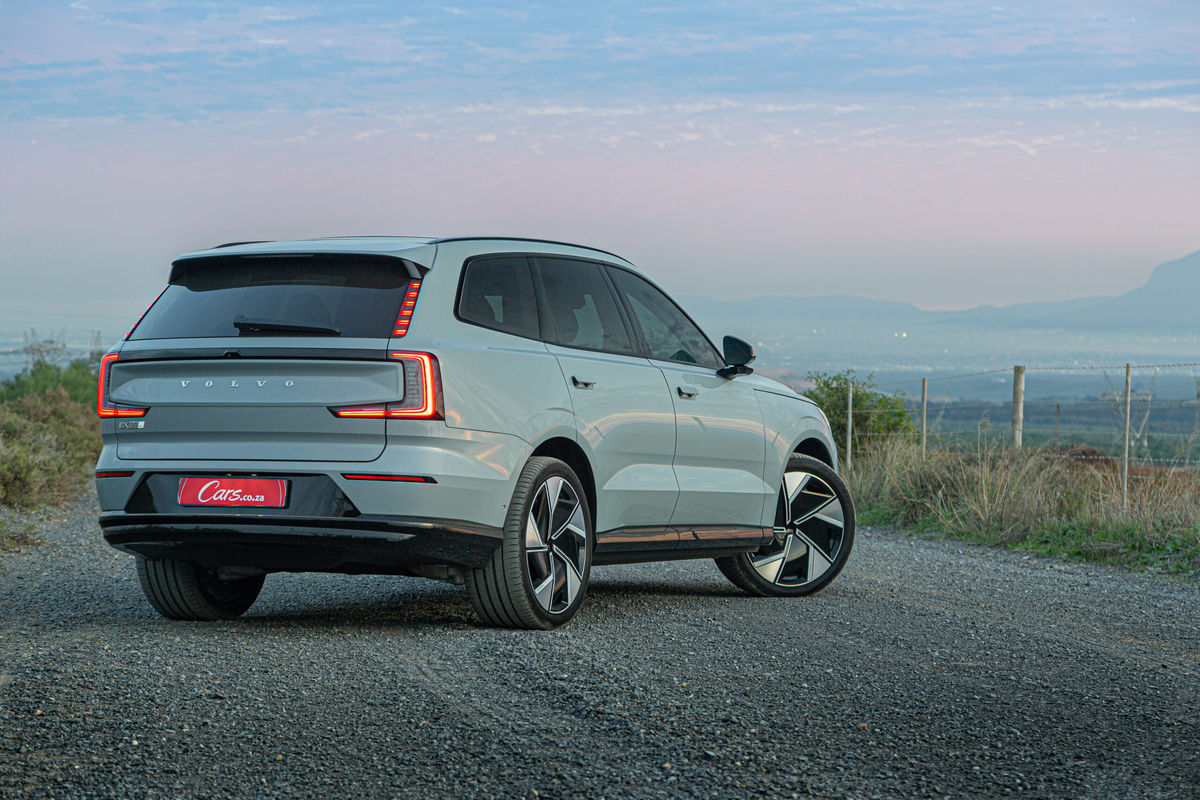
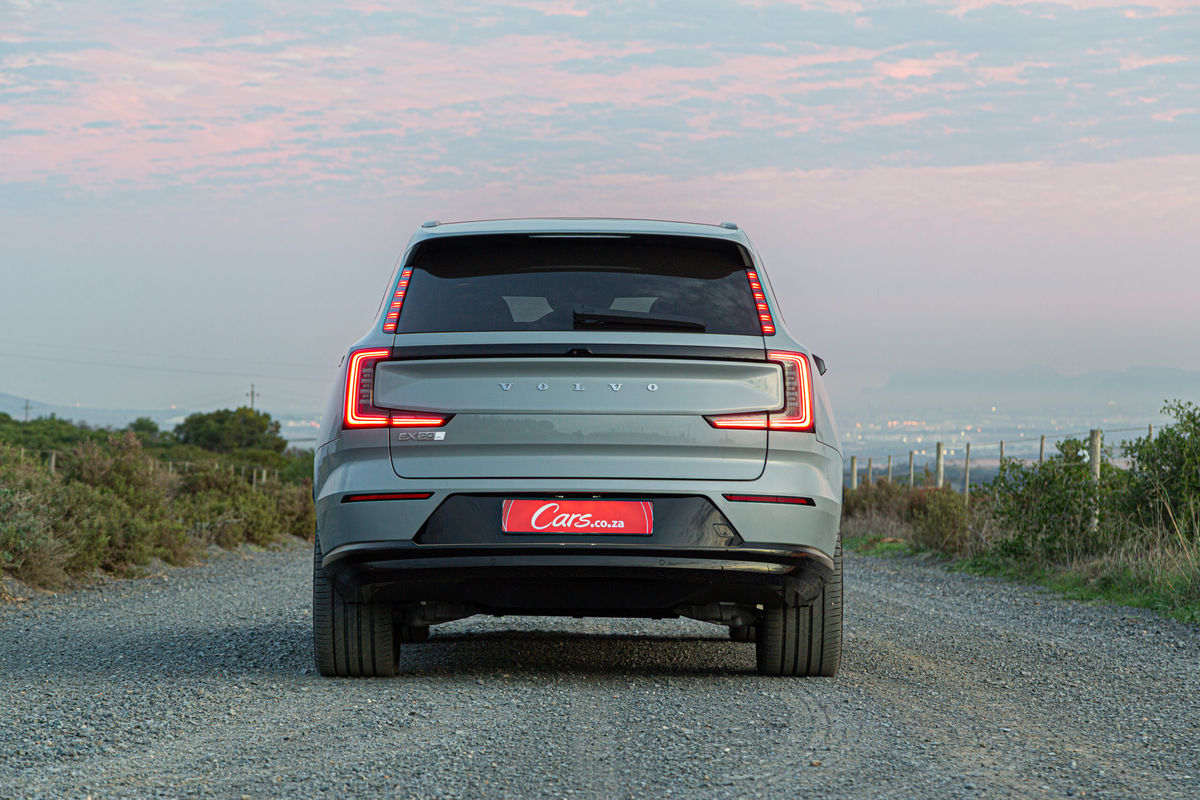
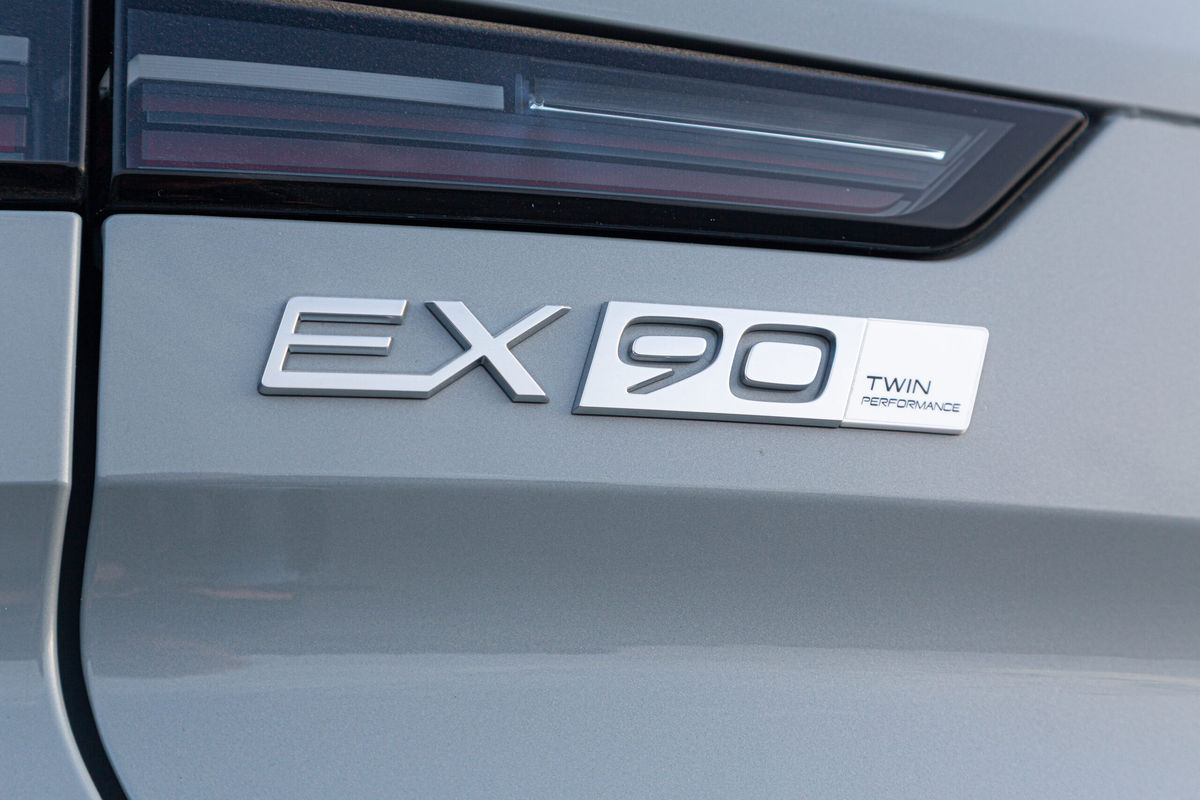
The all-electric Volvo EX90 Ultra Twin Performance – the Swedish brand’s most powerful, advanced and luxurious model – recently landed in Mzansi, but is it a well-resolved product?
We like: Hushed cabin, build quality, minimalist clean design, balance of performance and range.
We don’t like: Software bugs, luxury pricing
FAST FACTS
- Model: 2025 Volvo EX90 Ultra Twin Performance
- Price: R2 650 000
- Engine: Two electric motors
- Transmission: Automatic
- Power/Torque: 380 kW/910 Nm
- 0-100 kph: 4.9 sec (claimed)
- Claimed consumption: 20.7 kWh/100km (claimed)
- Luggage capacity: 324-697-1316 litres
Serious about buying/selling?
Some dealerships regularly offer great deals. See our New Car Specials!
Looking to sell your car? Sell it on Cars.co.za for free
Where does the 2025 Volvo EX90 fit in?
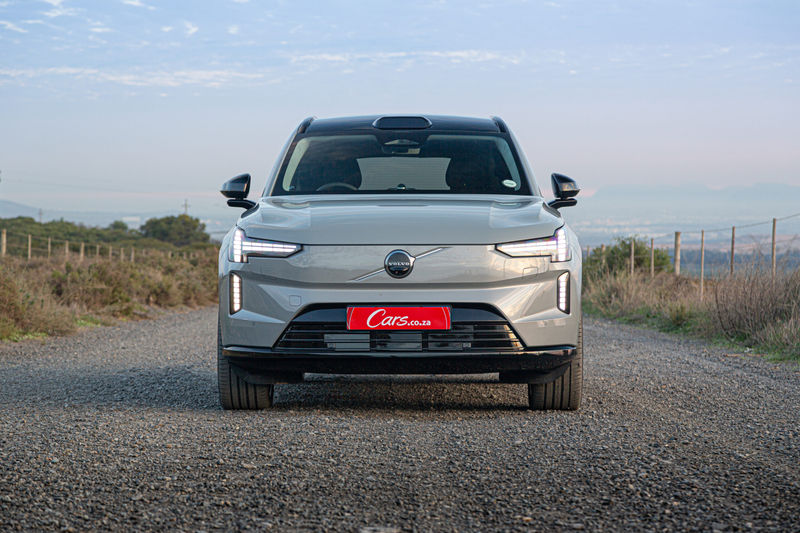
The author of this review has followed the gestation of Volvo’s sleek, all-electric, 3-row premium SUV closely since the model’s global reveal in late 2022 – he even attended the international media launch in Los Angeles in 2024. Cars.co.za can now finally conduct a comprehensive test of the EX90 on home soil.
See also: Volvo EX90 (2025) International Launch Review
But, before we get stuck in, note those dates. There’s quite a time gap between the announcement of the model (2022) and the start of production at the Charleston, South Carolina plant in June 2024, which speaks volumes for the sheer complexity of this new-gen vehicle. Volvo says the 2025 EX90 is not just a car but rather a high-tech supercomputer on wheels, and unsurprisingly, it has had teething troubles.
Case in point, the international launch cars at the Los Angeles launch event lacked some (of what we’d deem) must-have features, especially at the price, such as Apple CarPlay, the full Bang & Olufsen audio suite as well as EV-specific functionality like Vehicle to Load (V2L) where the car can power your house.
Volvo promised that those missing features would be activated by a substantial update (sent to the cars via over-the-air tech), and the South African-spec EX90 went on sale in April 2025, a few days after Volvo globally rolled out its then eagerly-awaited (1.2.15) software update. Impeccable timing, then?
Now, to the product itself. At the moment, there’s no other BEV in South Africa that offers the Volvo’s levels of all-electric performance and specification in a 3-row (7-seat) configuration. The EX90’s 2 chief rivals – BMW iX and Mercedes-Benz EQS – are from Germany and should be able to match the Swedish newcomer’s performance and price, but what about the standard features list? More about that later on.
Compare the specs of the 2025 Volvo EX90 with those of the BMW iX and Mercedes-Benz EQS
Which other 3-row premium SUVs can you get when you’re playing in the R2.5 million bracket? If you’re not completely sold on pure electric power, consider these models:
Compare the specs of the BMW X7 with those of the Mercedes-Benz GLS and Land Rover Discovery
How the Volvo EX90 fares in terms of…
Performance and Efficiency
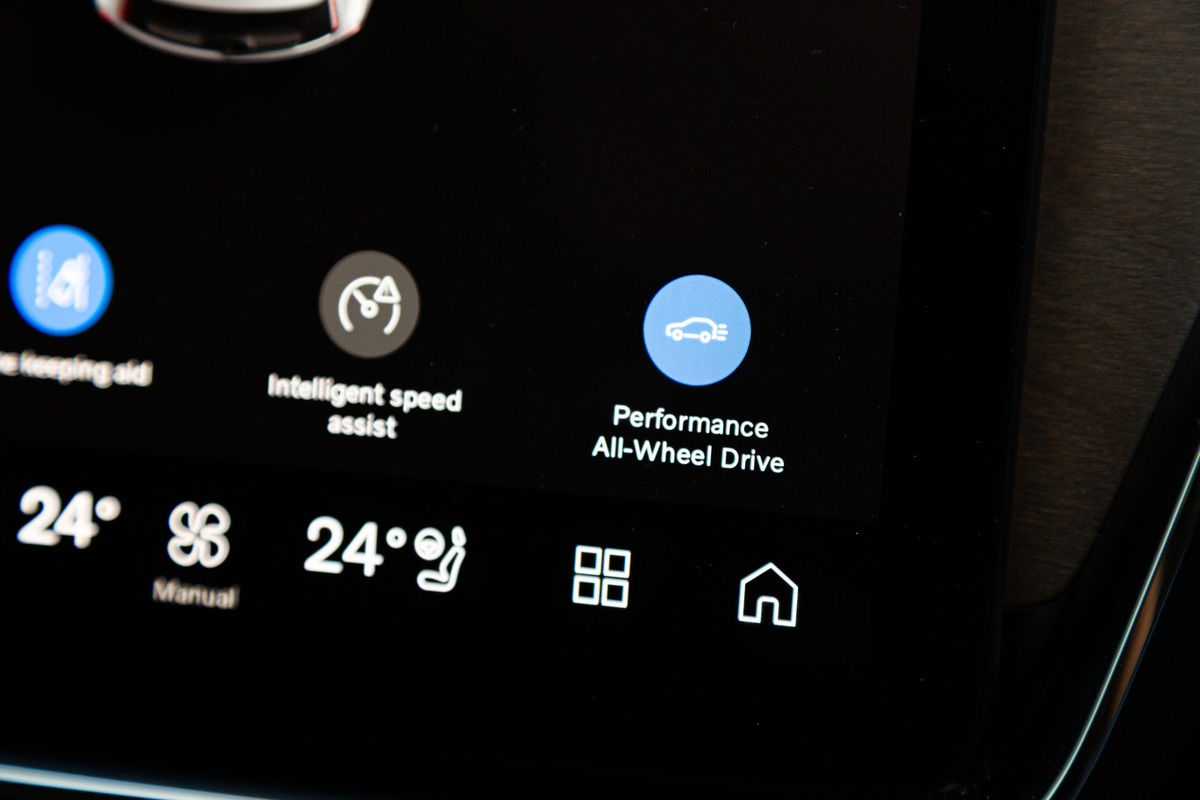
Volvo Car South Africa offers the EX90 in Twin Motor Performance spec (with an electric motor for each axle). With peak outputs of 380 kW and 910 Nm, the EX90 drives all 4 of its wheels via an automatic transmission. There are no drive modes, just a simple, discreet Performance All-Wheel Drive button.
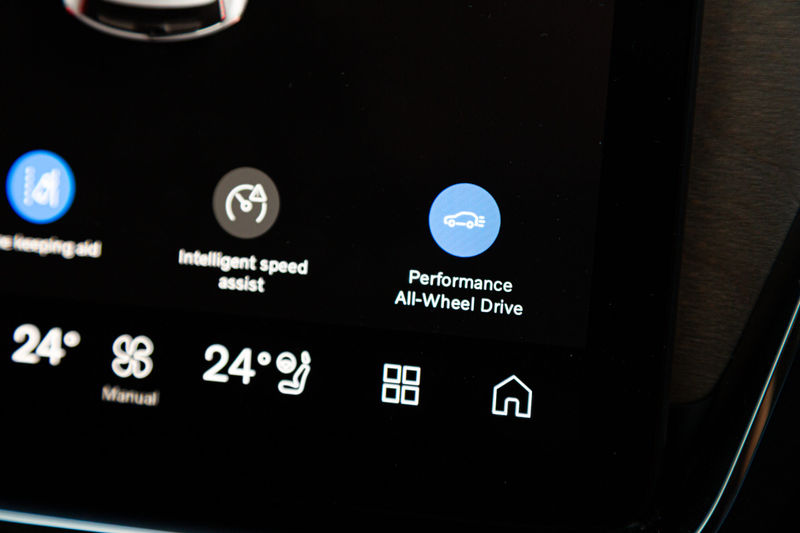
With that mode activated, our test unit bolted from standstill to 100 kph in just 4.79 sec (compared with Volvo’s claimed 0-100 kph time of 4.9 sec) and completed the quarter mile sprint in a touch over 13 sec.
Those performance figures (according to our test equipment) are deeply impressive for something that tips the scales at almost 3 tonnes. As usual, Volvo has fitted an electronic speed limiter of 180 kph.
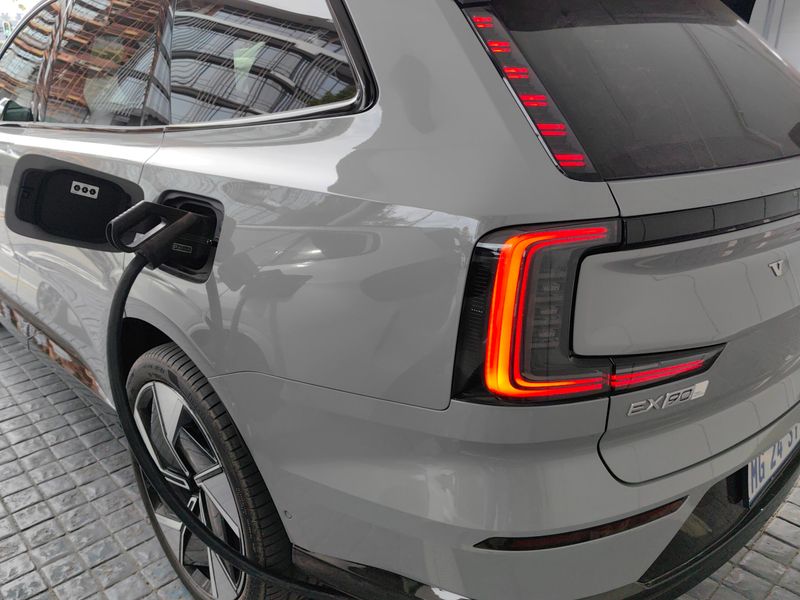
When it comes to range, Volvo claims the EX90 can extract over 600 km from its fully charged 111 kWh battery (of which 107 kWh is usable). That claim is ambitious because true battery range depends on factors such as ambient temperature, style of driving and speed. Suffice it to say, EVs are at their most efficient in a low-speed urban driving scenario, which is where you are likely to get closest to 600 km.
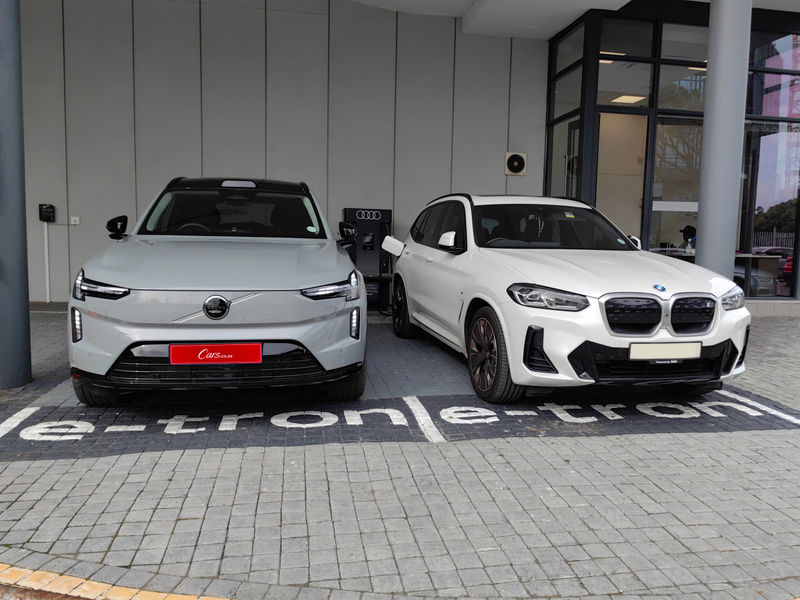
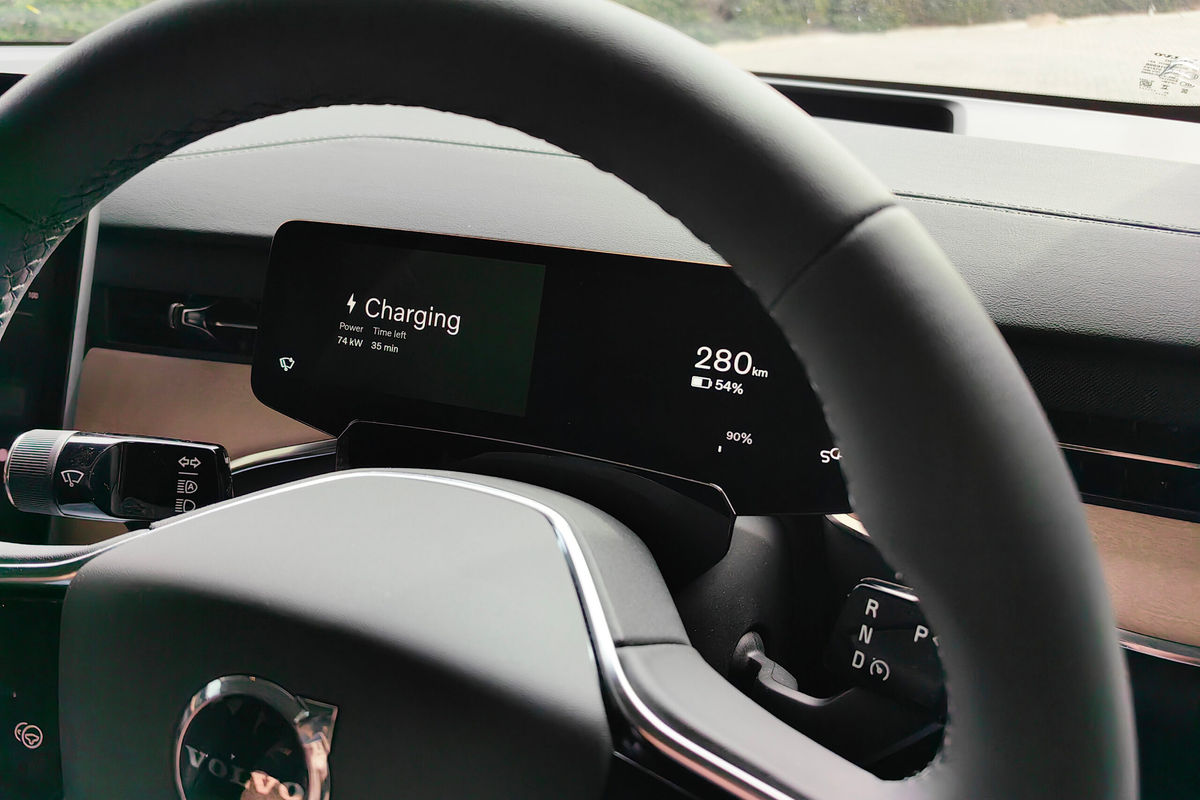
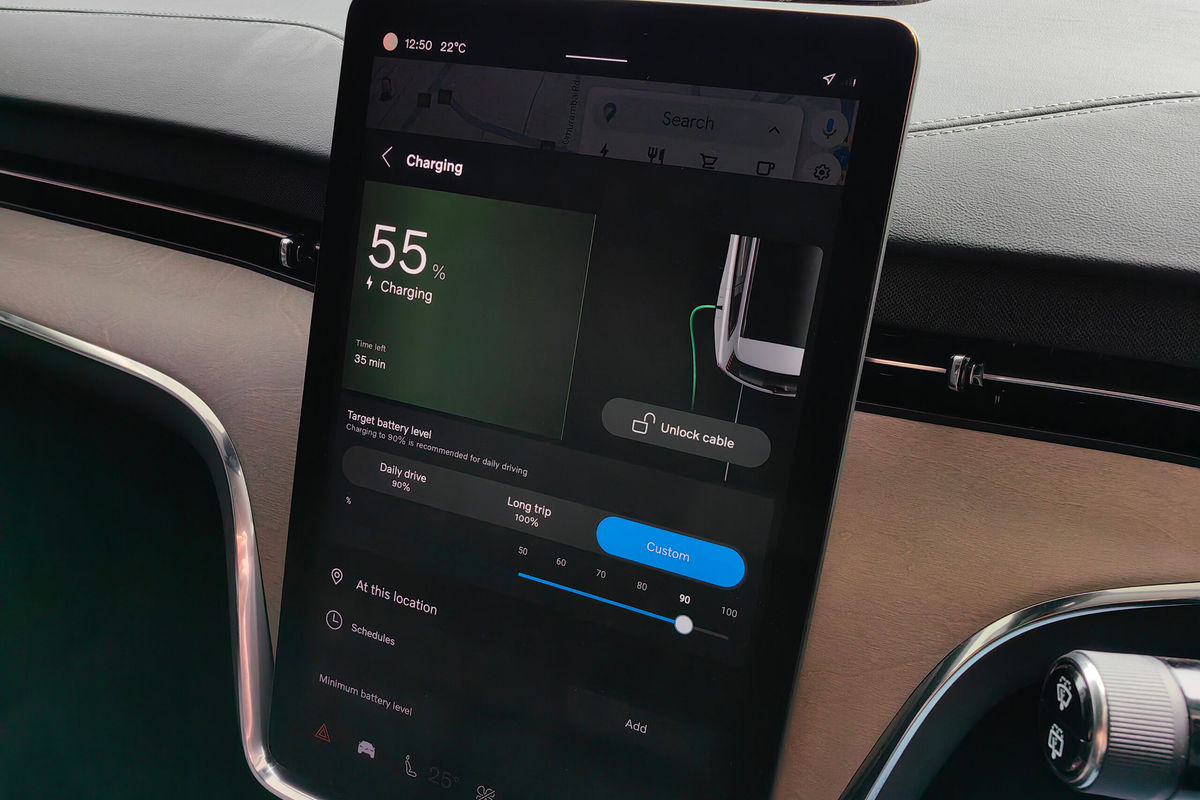
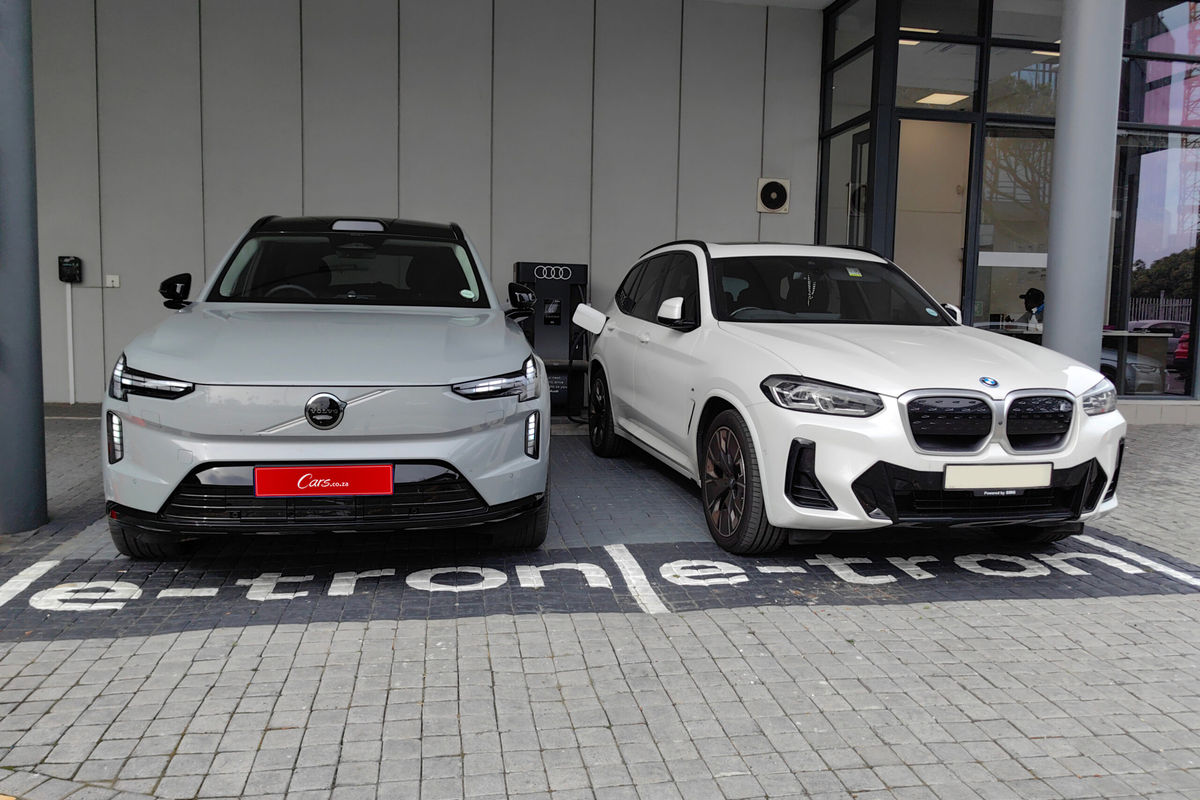
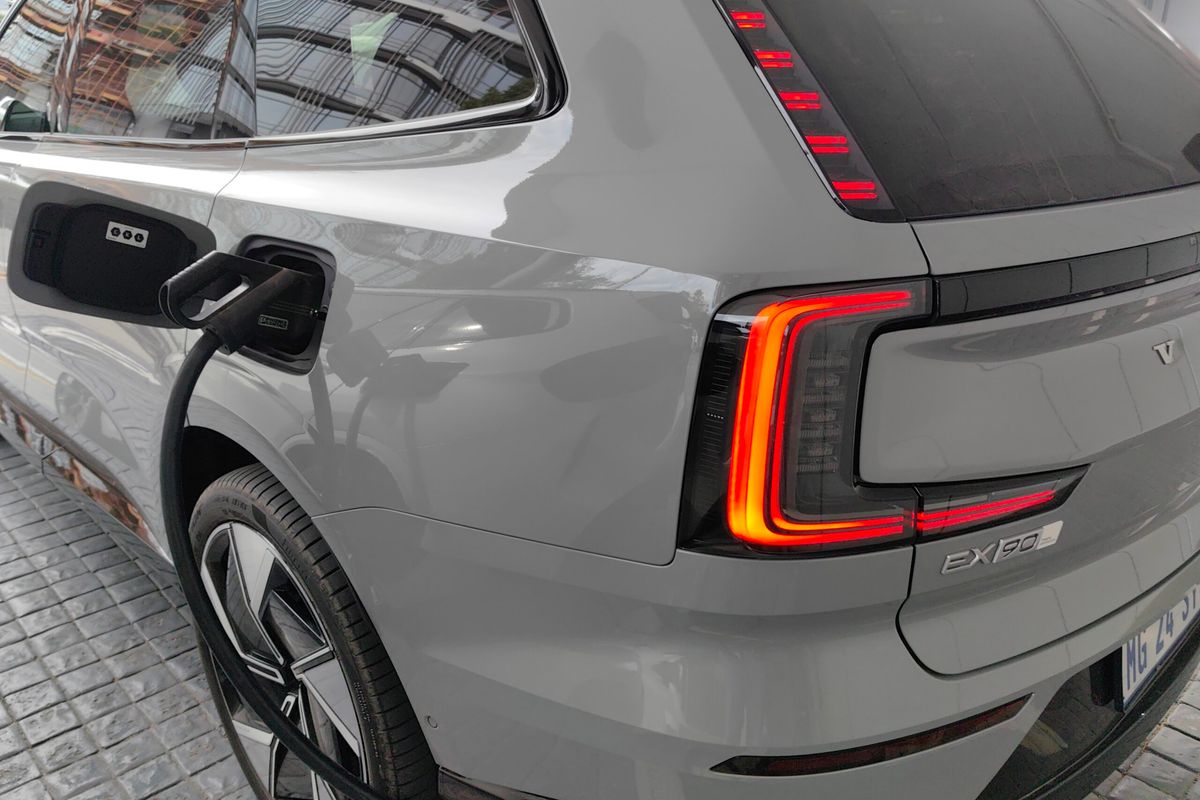
As far as charging goes, the EX90 supports up to 250 kW DC fast-charging, but as far as we’re aware, the fastest charger in South Africa is 150 kW. Still, 30 minutes at our local 75 kW DC box was enough to gain plenty of range, with time to check emails and enjoy that outstanding audio system while we waited.
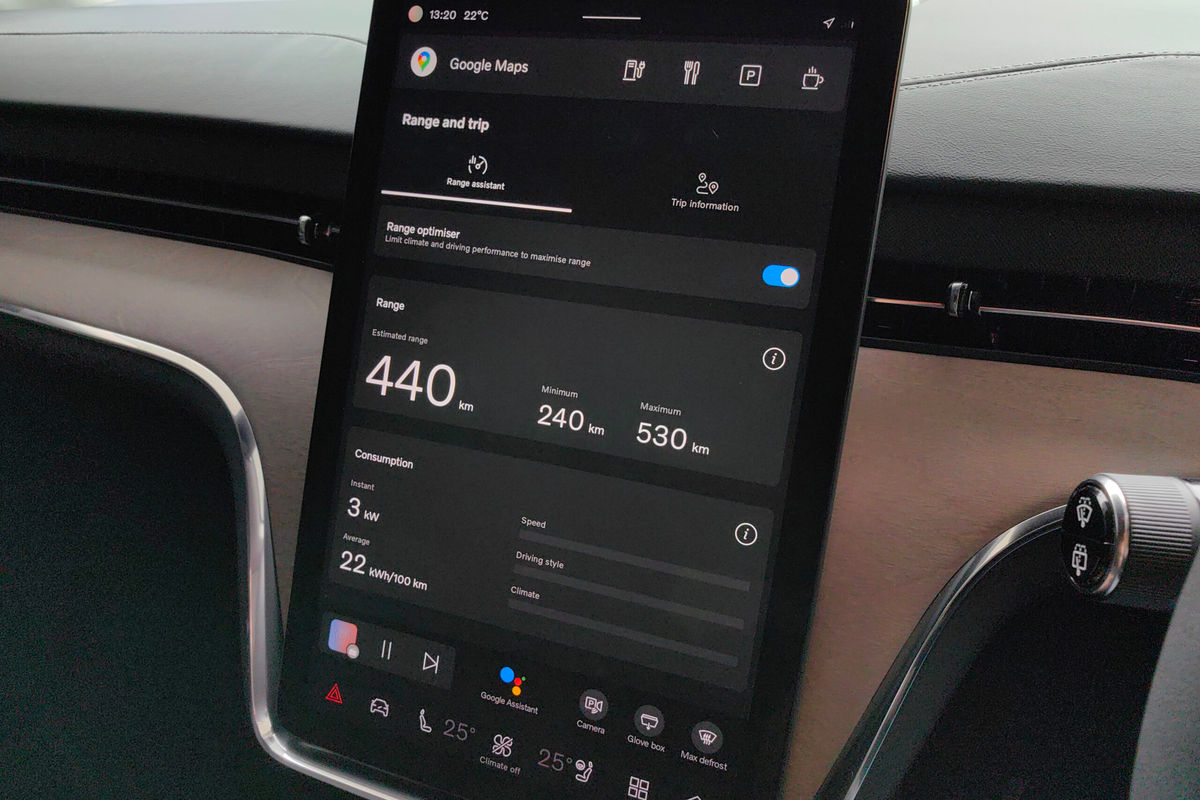
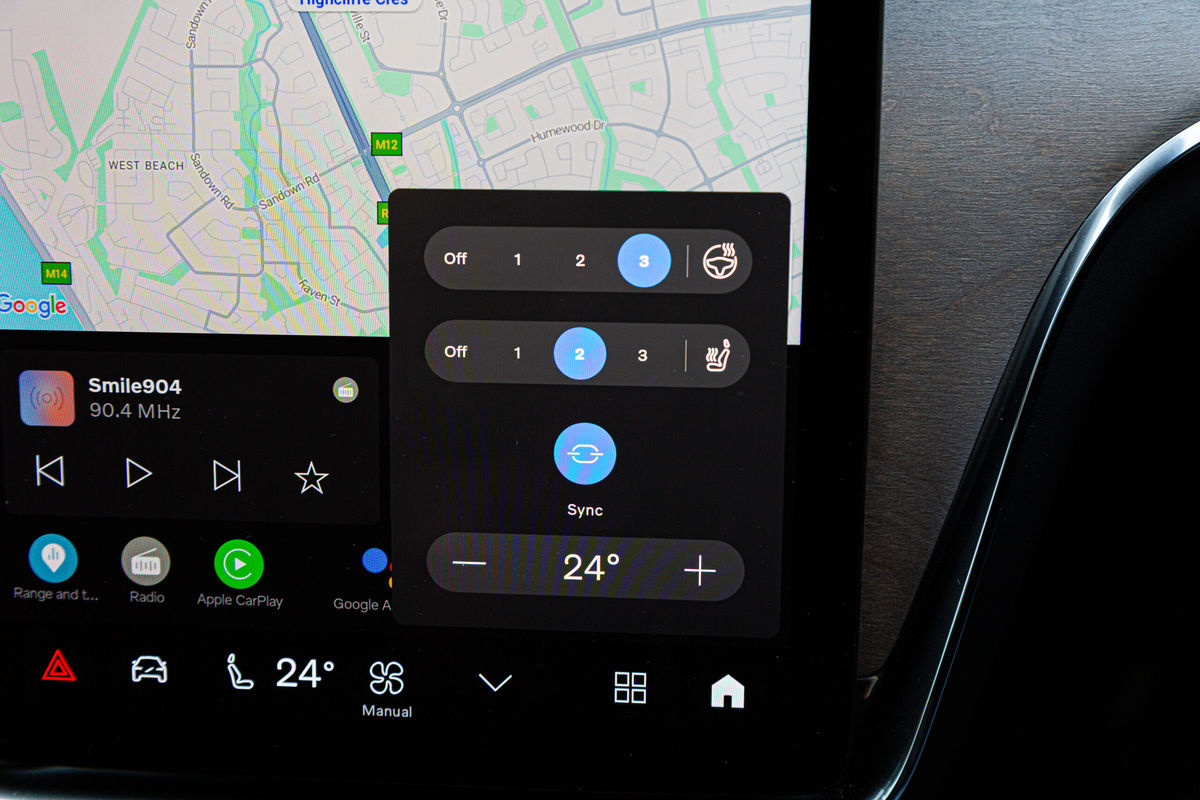
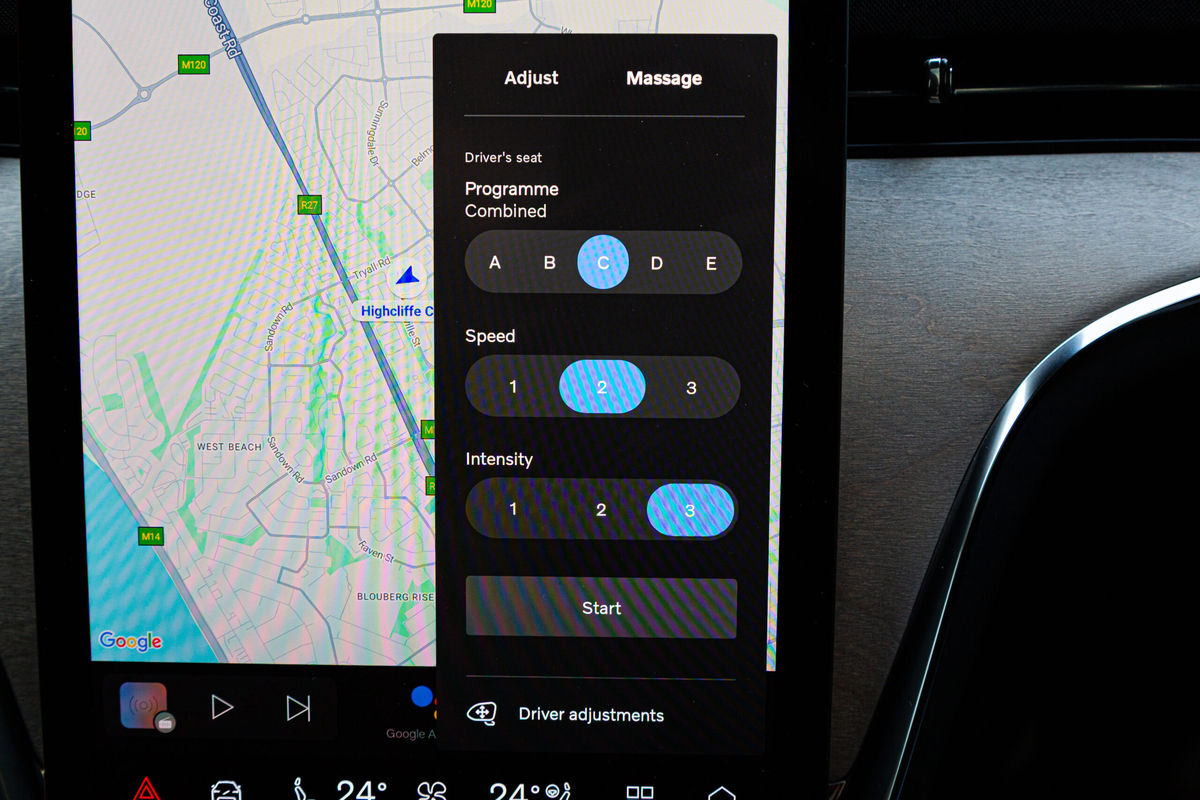
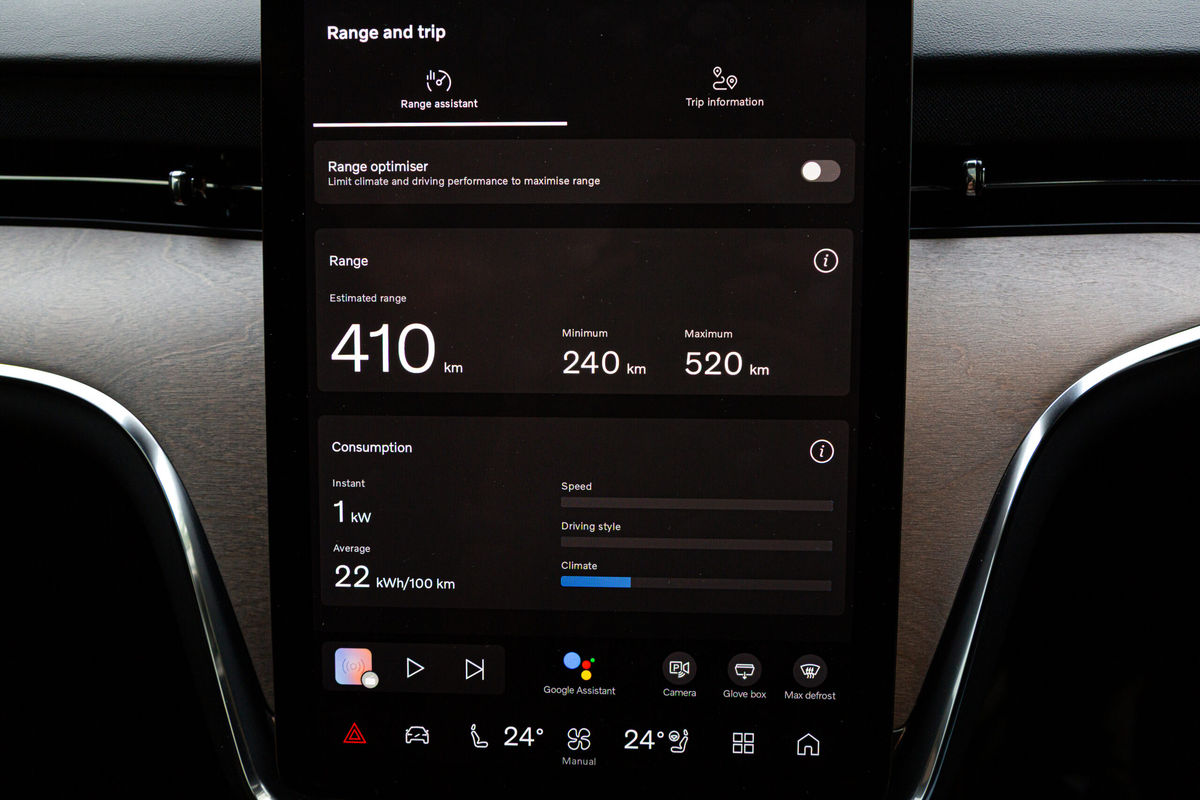
During its tenure in our test fleet, the EX90 consumed 22 kWh/100 km – fractionally higher than claimed, but to be fair, we often enjoyed the addictive nature of the Volvo’s powertrain, which allowed us to surge past slower traffic effortlessly. Interestingly, the infotainment system’s consumption readout highlighted just how power-intensive some functions are. For example, we listened to music and enjoyed a massage (with the heating function on) while the Volvo was being recharged, and those actions consumed 3 kW.
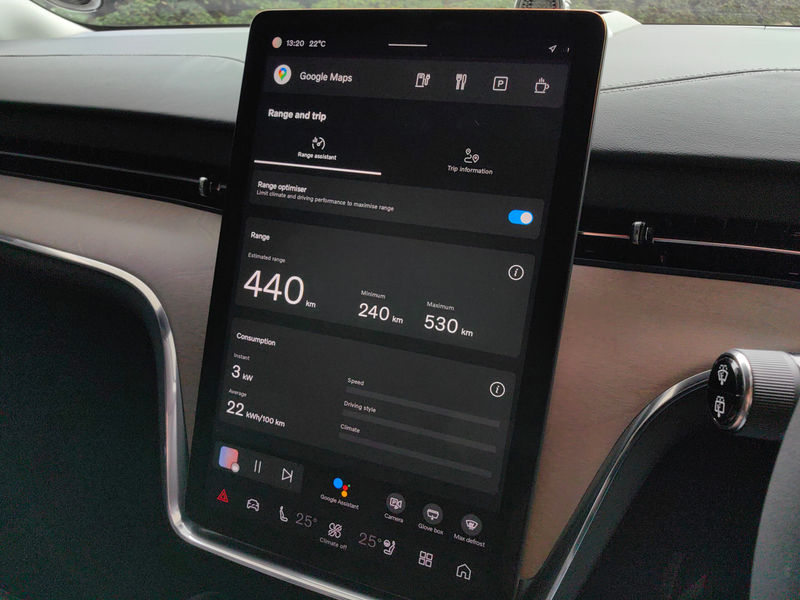
With the car charged to 90% (you extend the battery’s lifespan if you don’t charge it to 100% often), the EX90 indicated 3 ranges: if you drove spiritedly at triple-digit speeds, you’d get a minimum of 240 km, if you drove extremely conservatively at urban speeds, 530 km was possible and the final projected range was 440 km, based on mixed driving conditions, which was arguably the most realistic figure.
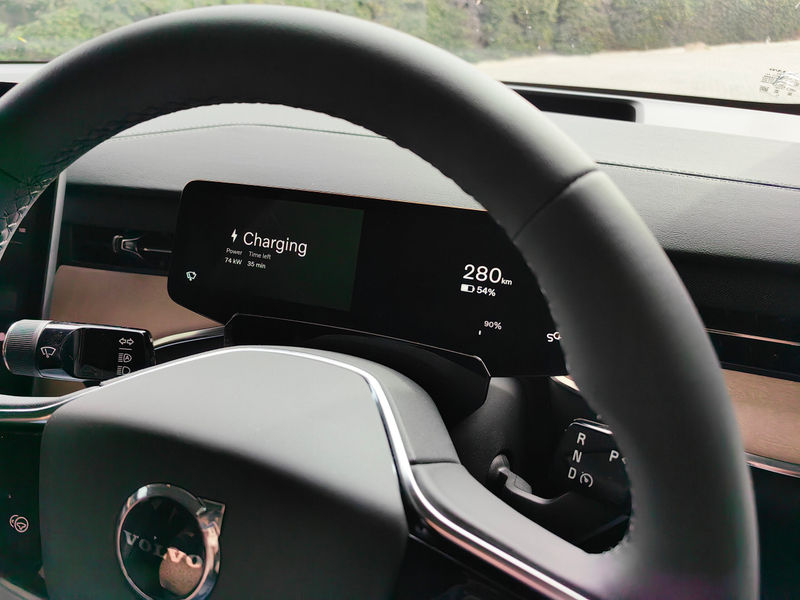
To sweeten the EX90’s value proposition, Volvo Car SA includes R7 500 towards the installation of a GridCars wall box charger at your house (useful for those overnight trickle charges), as well as a R12 000 public charging voucher (valid for 24 months) that you can utilise at your shopping mall, dealerships etc. There are more public EV chargers than you think and the infrastructure has grown at an impressive rate.
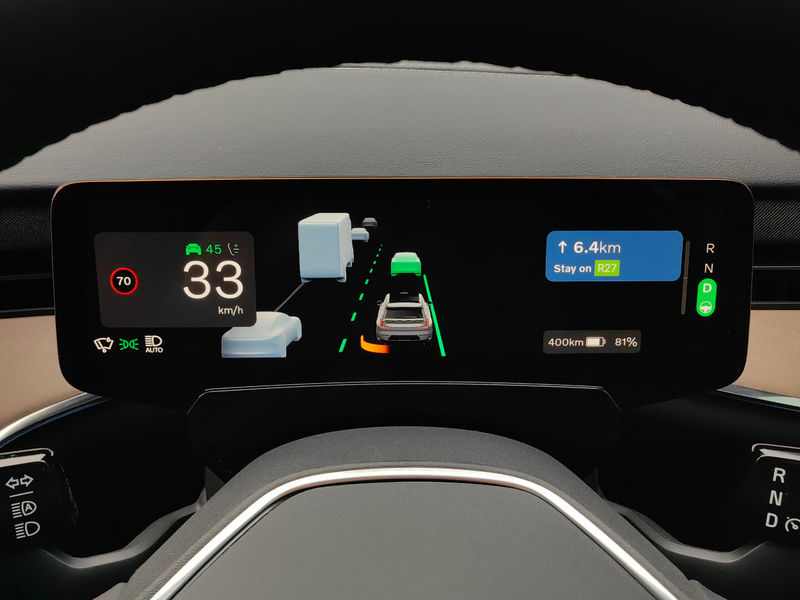
The EX90’s 1-pedal operation is one of the best we’ve ever assessed, and the Pilot Assist assisted driving tech remains excellent. There’s no need to dab the accelerator and brake pedals repeatedly in dense traffic as the car does most of the work for you, but remember the Volvo’s adaptive cruise control strictly adheres to its following-distance setting; other road users will slip into the large gaps it leaves.
Features and Practicality
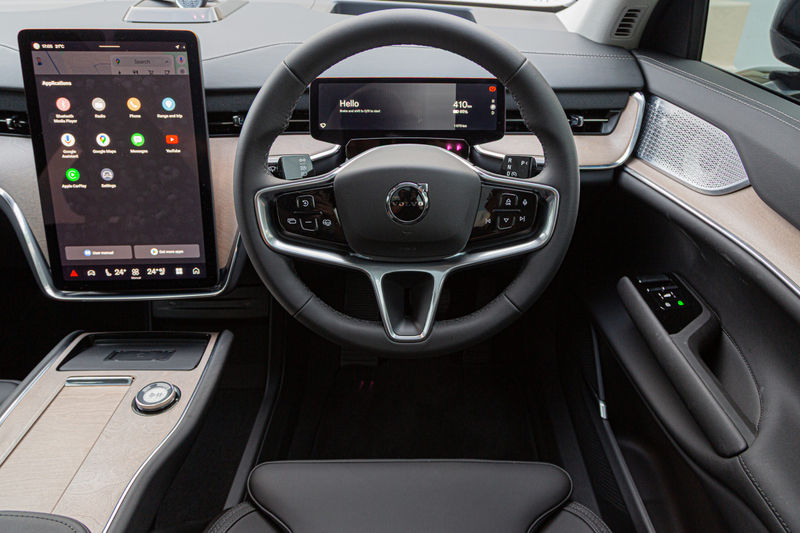
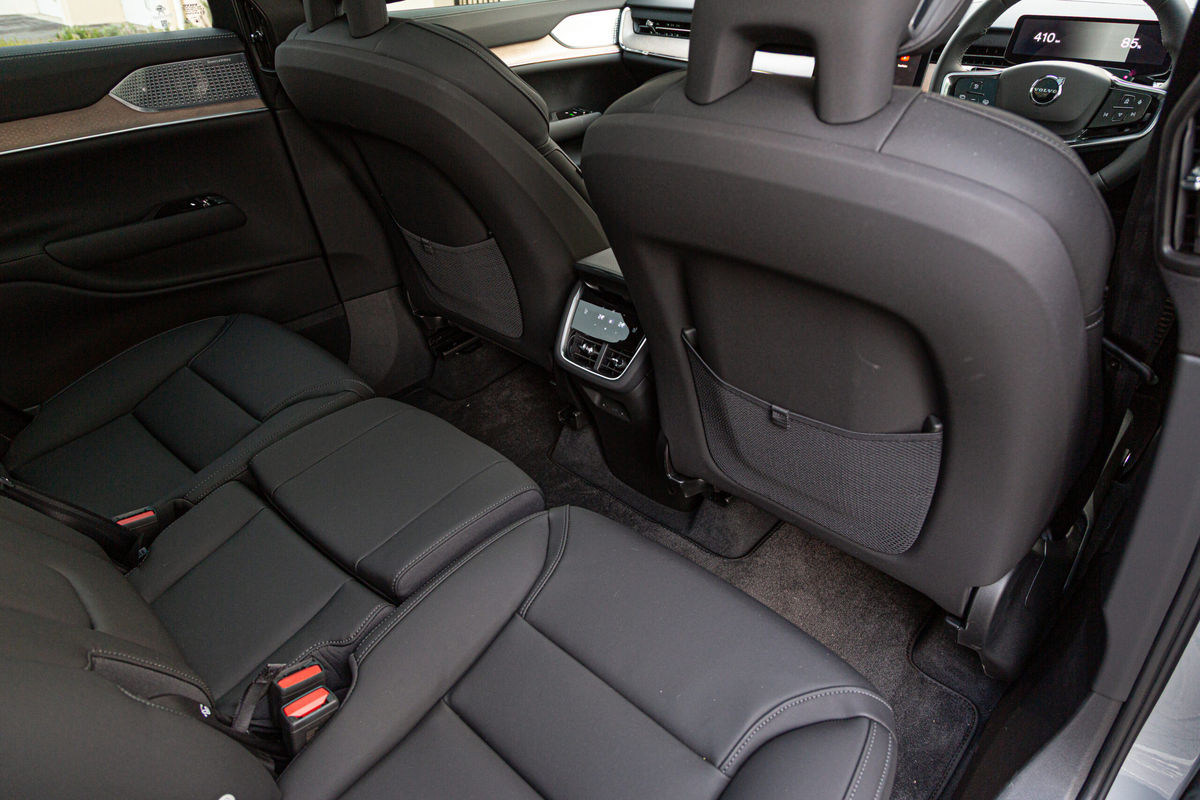
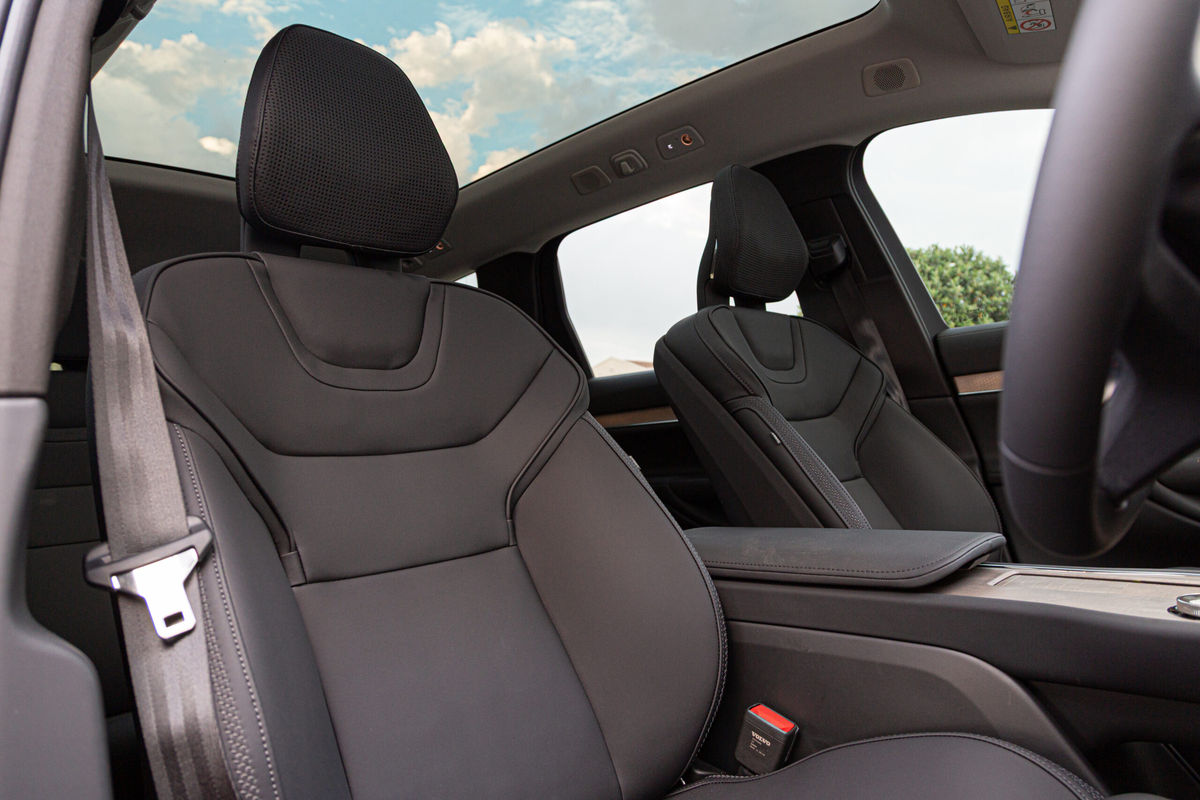
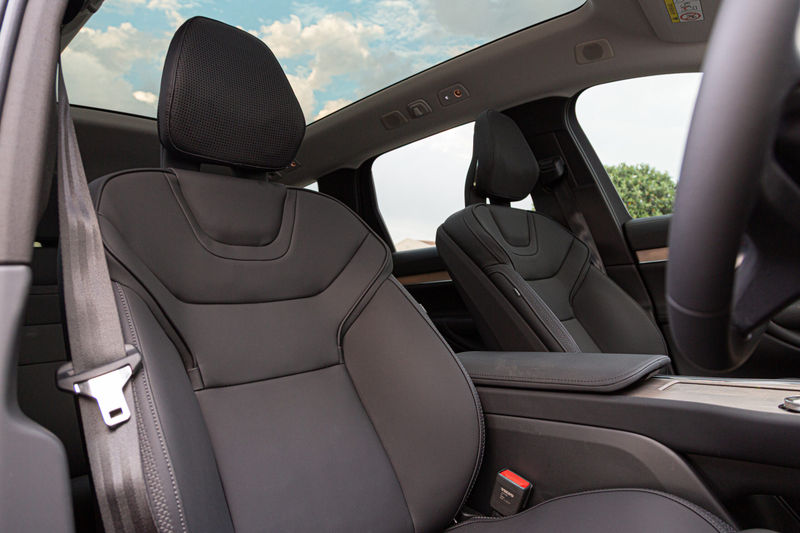
The 2025 Volvo EX90’s cabin is superb, both in terms of minimalist design and trim quality. Recycled and sustainable materials are used extensively, and the front seats offer class-leading levels of comfort and support. With this flagship (Ultra) specification, the seats also offer heating and massage functions.
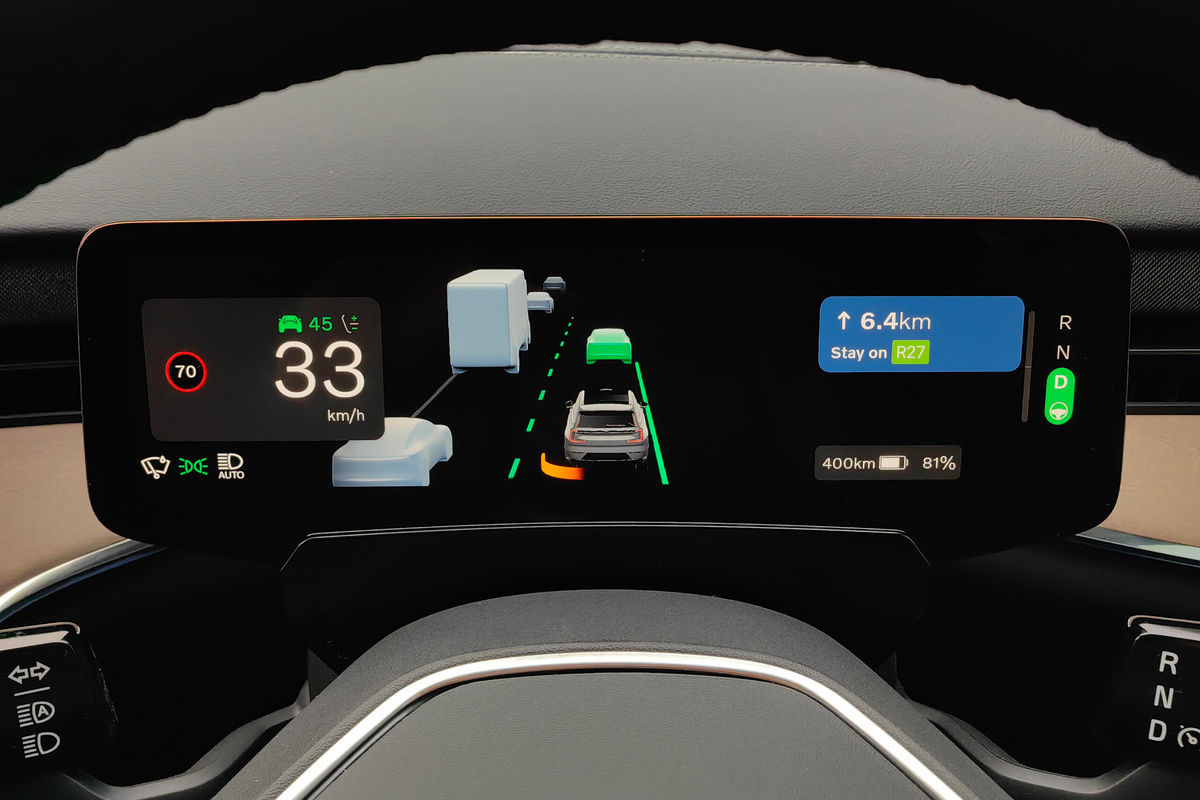
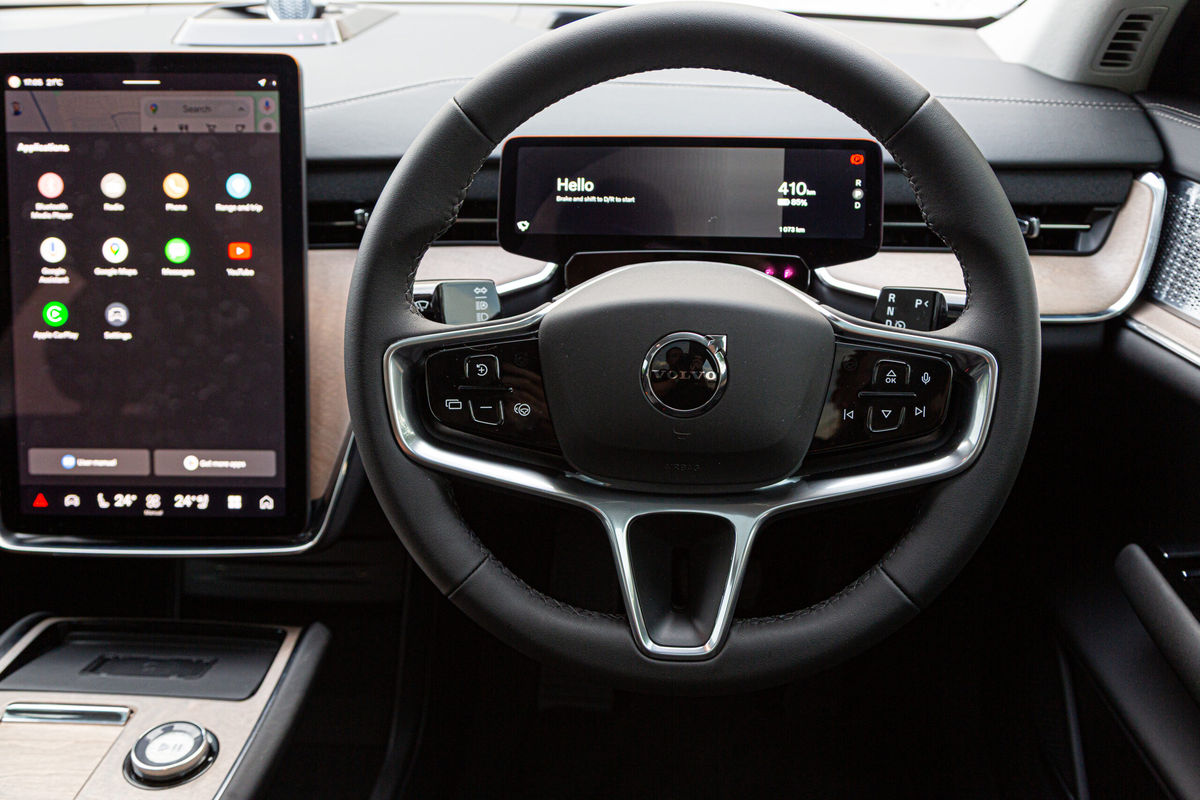
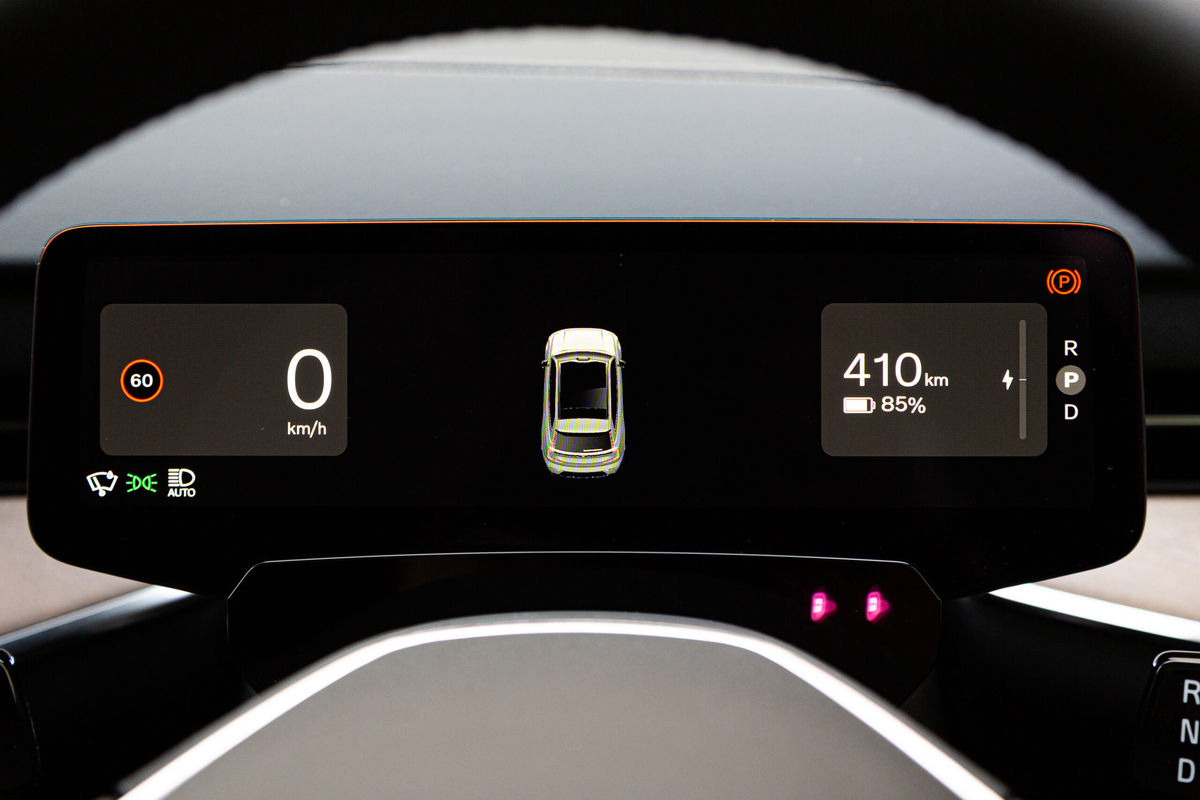
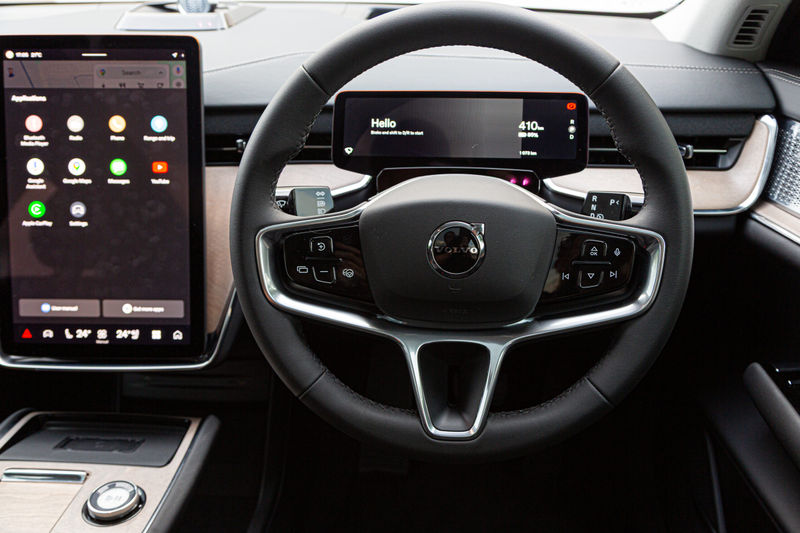
Unlike the Volvo EX30, the EX90 has a neat digital instrument panel behind its tiller. It may look simple, but it displays the essentials: speed, range, and satnav directions. It’ll also show you what the SUV can see in terms of other vehicles, and it can recognise the differences between cars, trucks, scooters, etc.
The Ultra Twin Performance’s standard spec is comprehensive, but then, given the EX90’s list price of almost R2.7 million, it should be! We suspect that lower-specced and less-powerful variants (such as a single-motor EX90) will be offered locally in future, but we have no official confirmation of that yet.
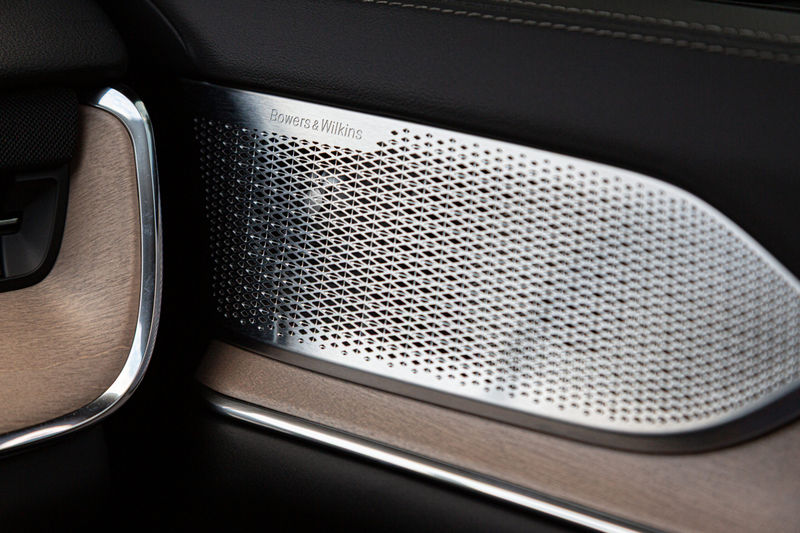
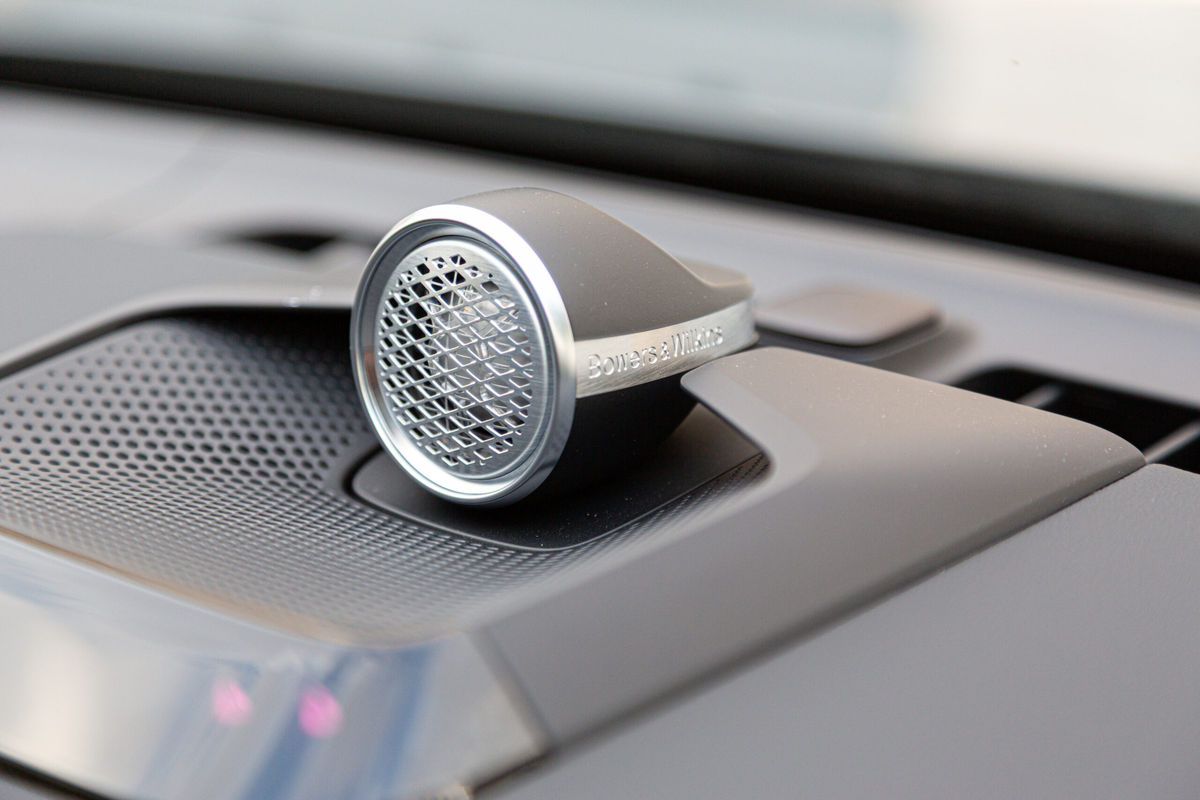
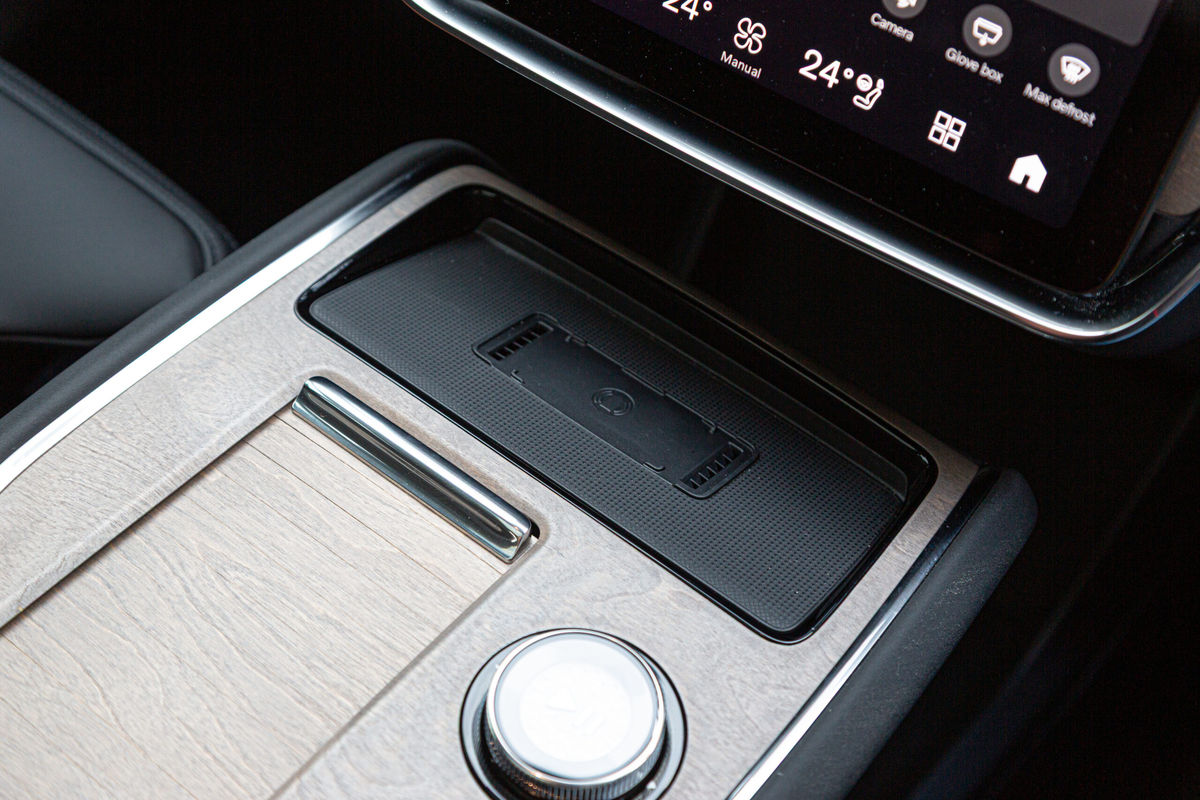
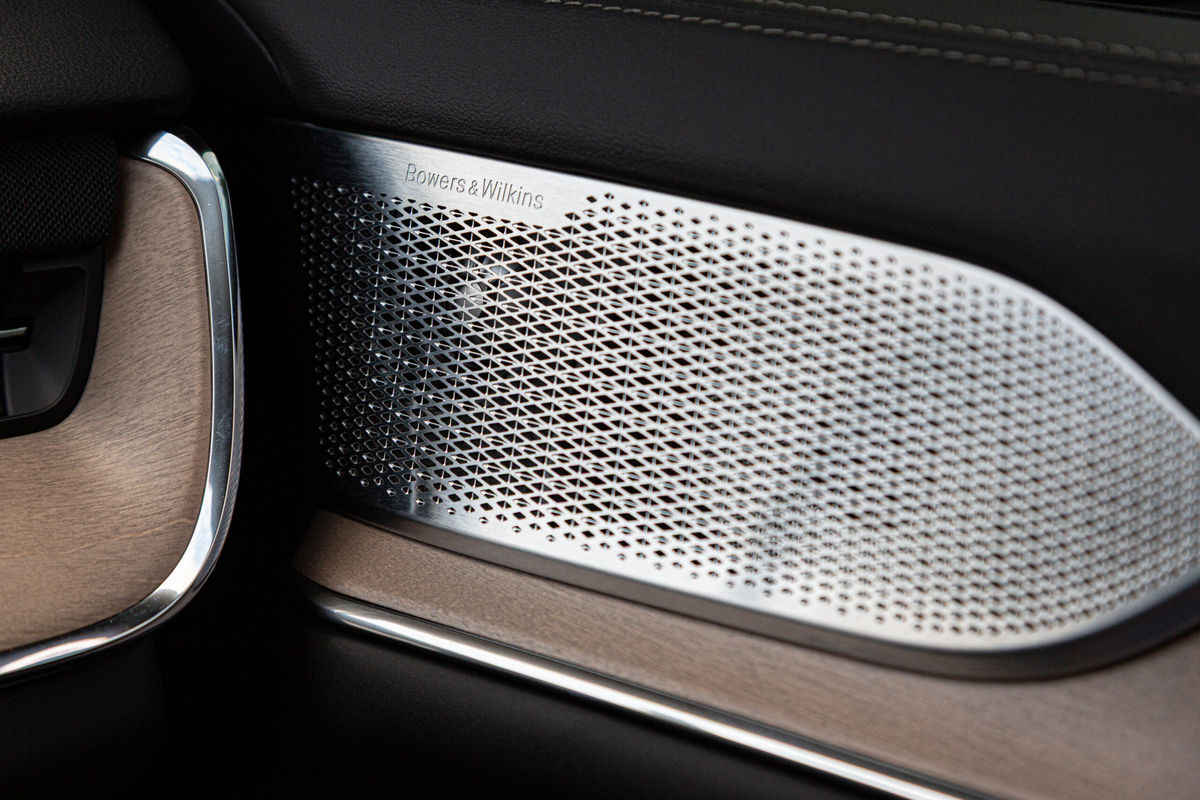
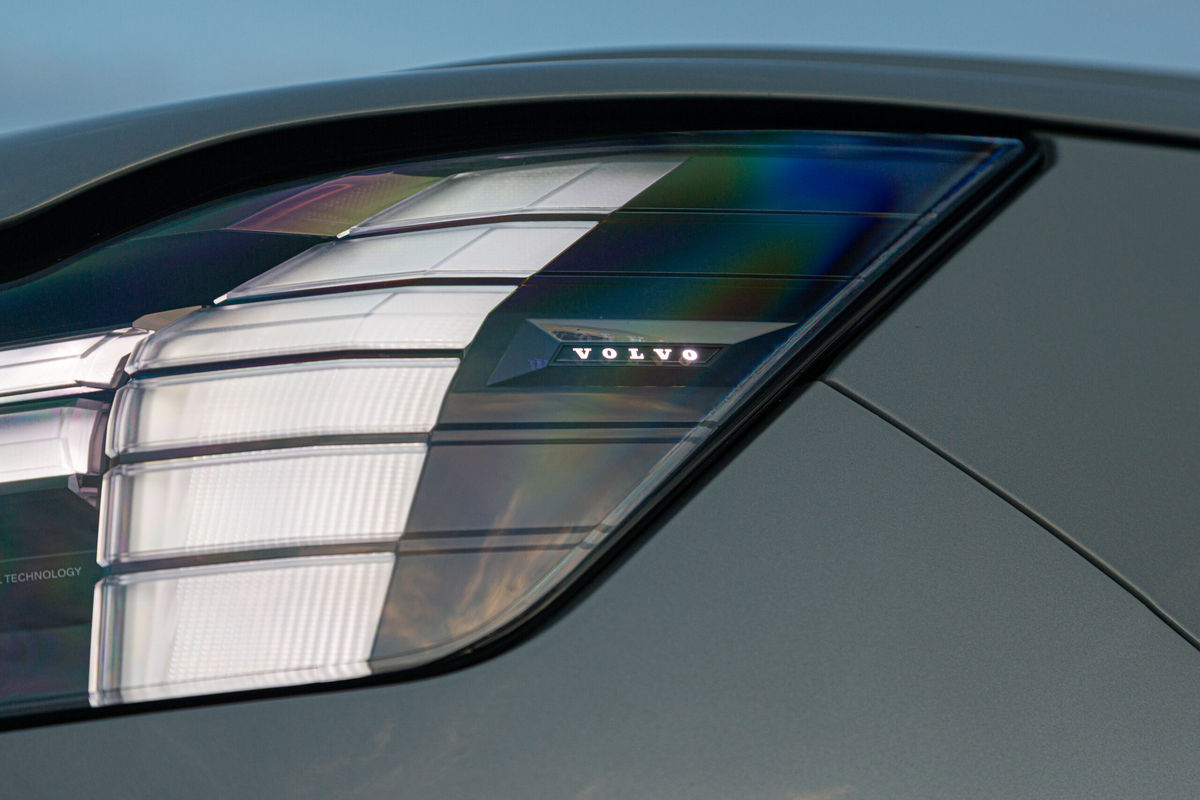
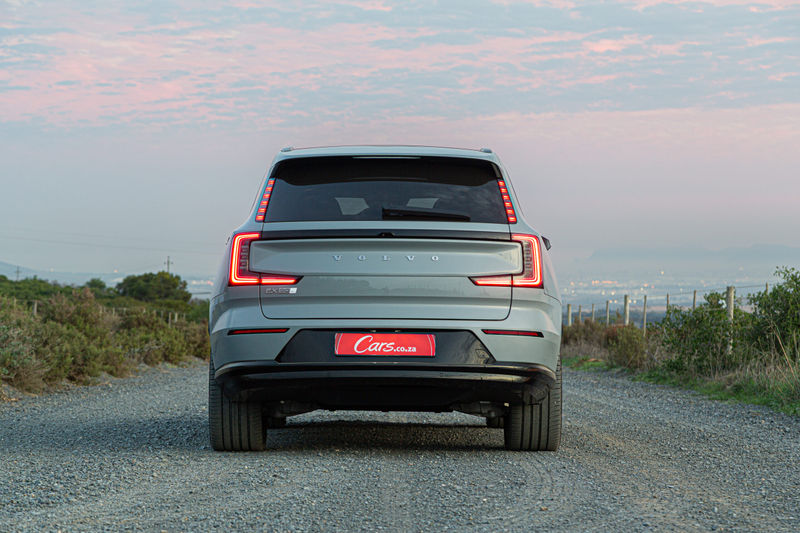
Features such as soft-closing doors, a sensational 25-speaker Bowers & Wilkins audio system, heated seats with a massage function, a heated steering wheel, a wireless charger and USB charging ports are just some of the highlights of the EX90 Ultra Twin Performance‘s specification. Speaking of lights, we just loved how the horizontal elements of the Volvo’s DRL arrays split to reveal the headlamps.
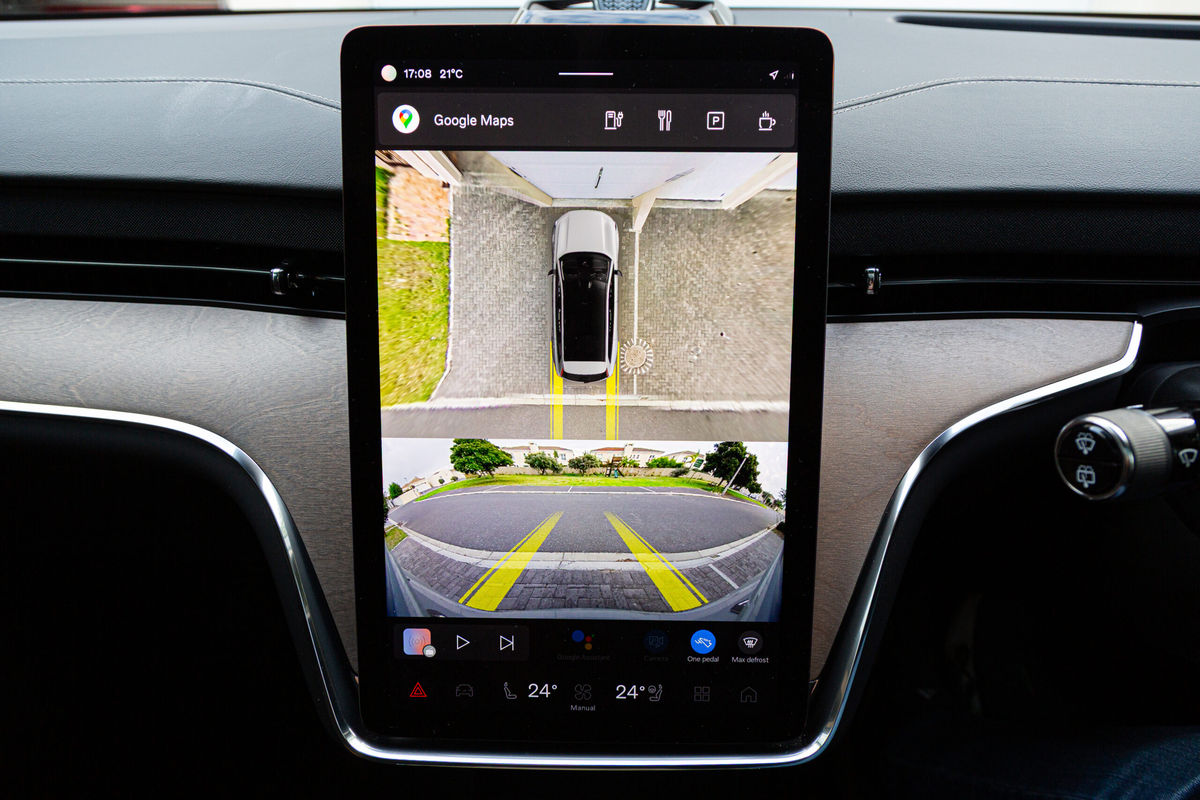
Safety-wise, the EX90 sports hardware such as a 360-degree camera system, lane-keeping aid, blind-spot info system, cross-traffic alert, road-sign information, plus its Pilot Assist assisted driving tech.
Now, while Volvo’s flagship SUV has LiDAR (light detection and ranging), radar and cameras to scan the road and detect vehicles in its vicinity, not all of it has been activated, but future over-the-air (OTA) updates should put that right (version 1.3.17 dropped on 16 June 2025). Functions such as Vehicle-to-Load, through which the car can power appliances and even your house, will be available one day.
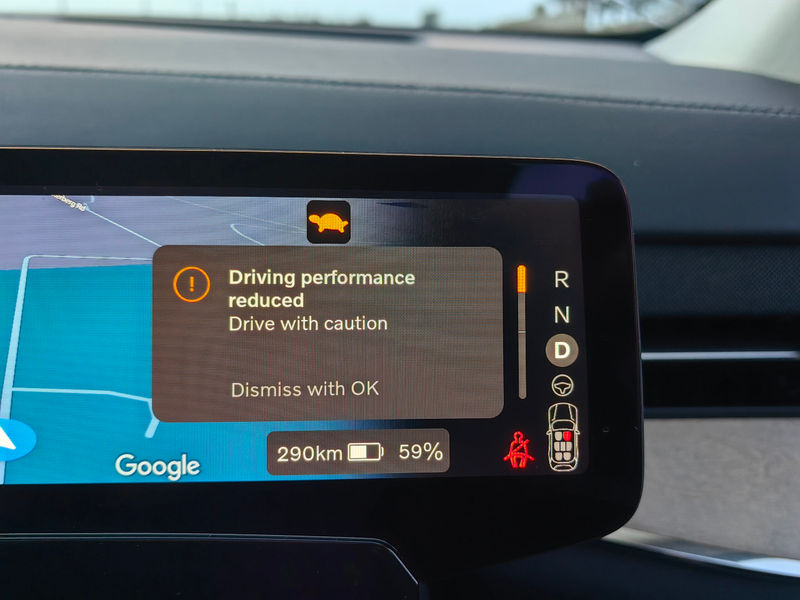
But apart from activating features of the EX90 that are not available yet, those OTA updates can’t come quickly enough to iron out the software glitches, several of which we encountered with Volvo’s test unit.
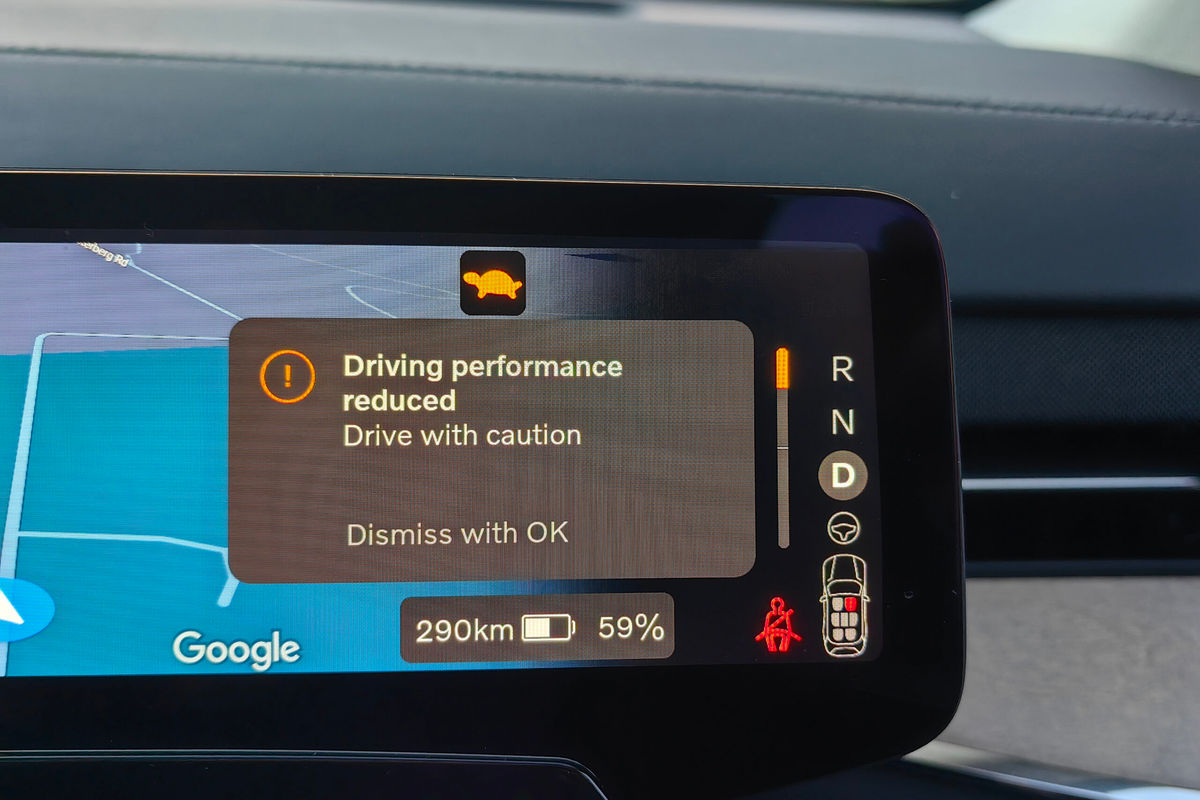
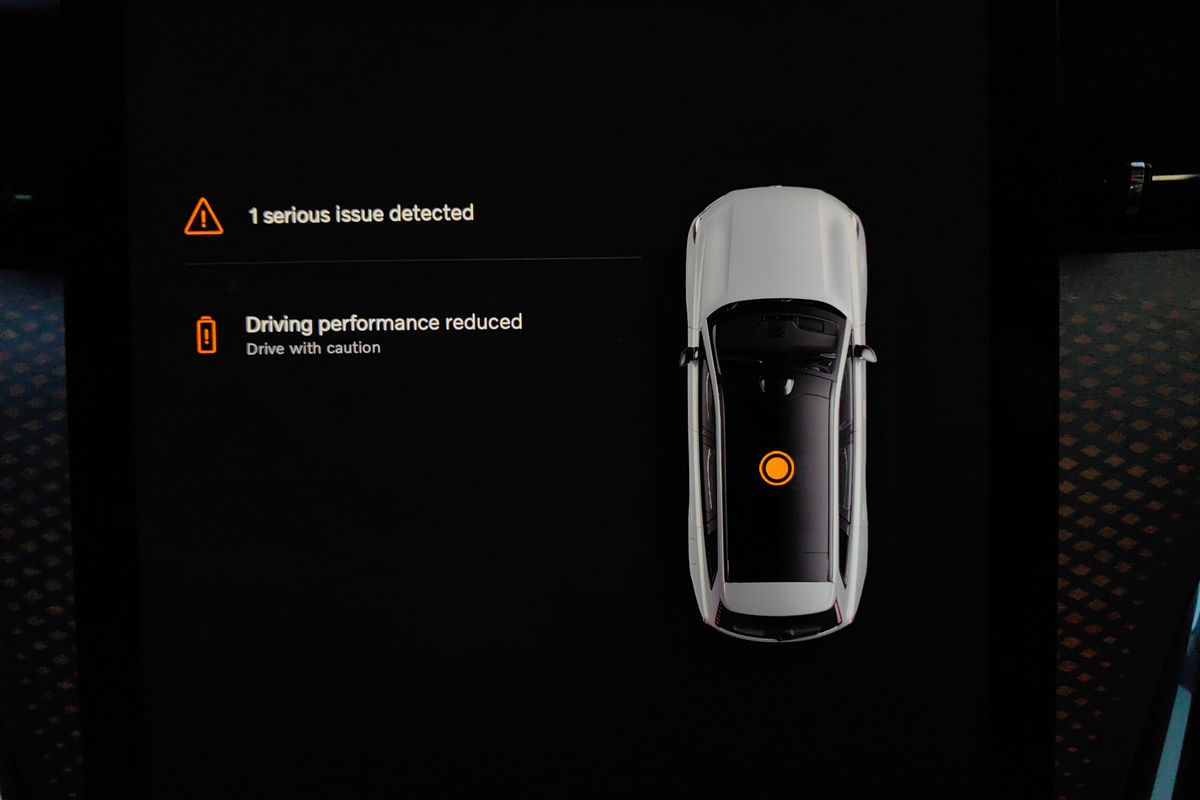
We encountered an air suspension failure message (which resolved itself after we locked, unlocked and restarted the car); we struggled for 45 minutes to get the Volvo to recognise its key tag to allow keyless entry (in other words, unlock itself – 1.3.17’s release notes say the update addresses this issue); finally, while we conducted the photoshoot, the EX90 showed a “Driving performance reduced” message (after which the Volvo was effectively in limp mode). We drove home at (an electronically limited) 80 kph, and the following day, the test unit started and performed normally, as if no such problem had occurred…
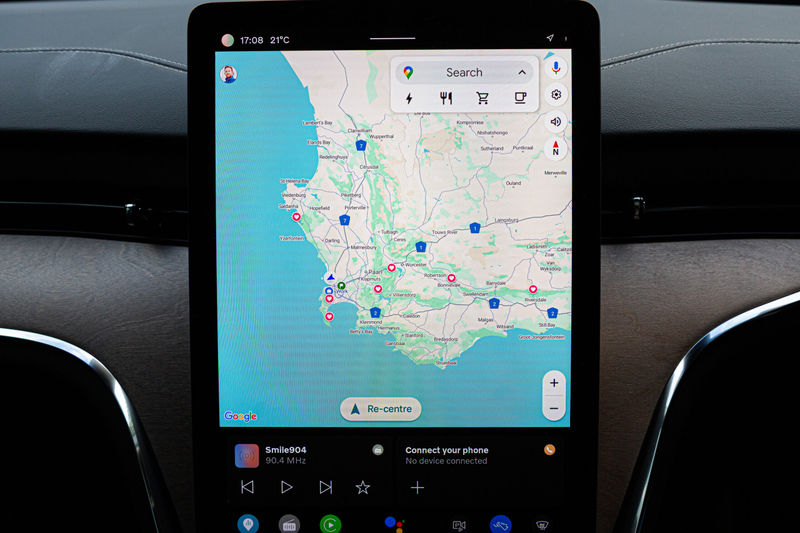
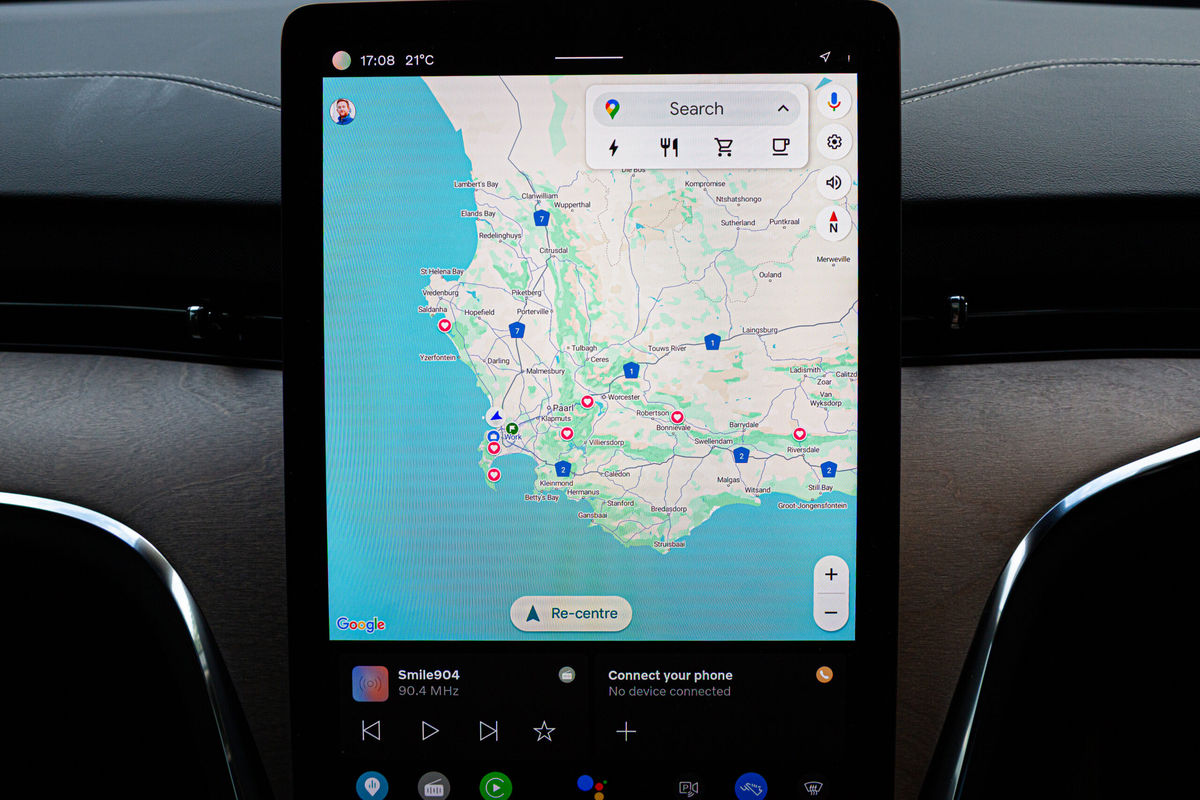
A Google-based system is at the heart of the EX90’s UX. Android Automotive – not to be confused with Google’s Android Auto smartphone-mirroring tech – powers the Volvo’s infotainment system. If you’re an Android acolyte, you’ll appreciate the Google suite, including Maps, Assistant, and critically, access to the Google Play store, where you can download even more apps like YouTube, games, Spotify and so on.
Are you an Apple disciple? Well, fear not, as we tested Apple CarPlay in the 2025 Volvo EX90 and it ran beautifully on the test unit’s massive (14.5-inch) centre screen. This SUV requires a data connection for all functionality, and Volvo SA supplies 10 GB of in-car data from Vodacom every month for 36 months.
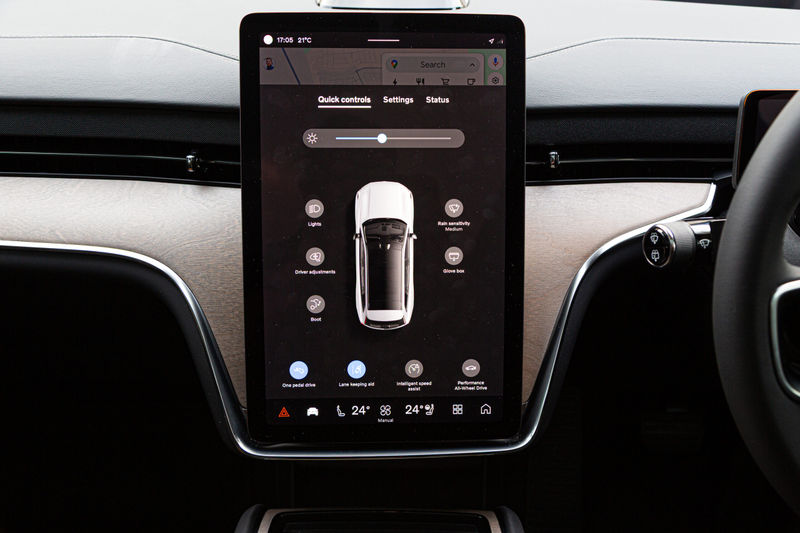
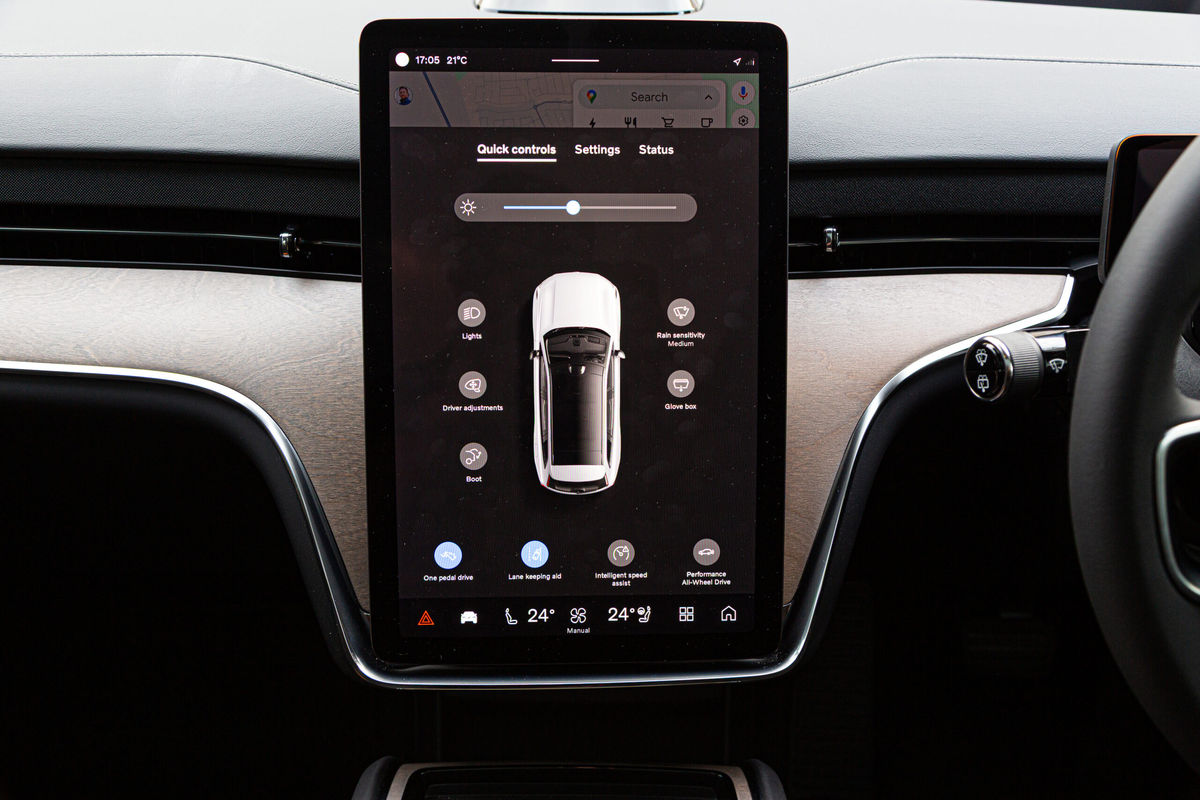
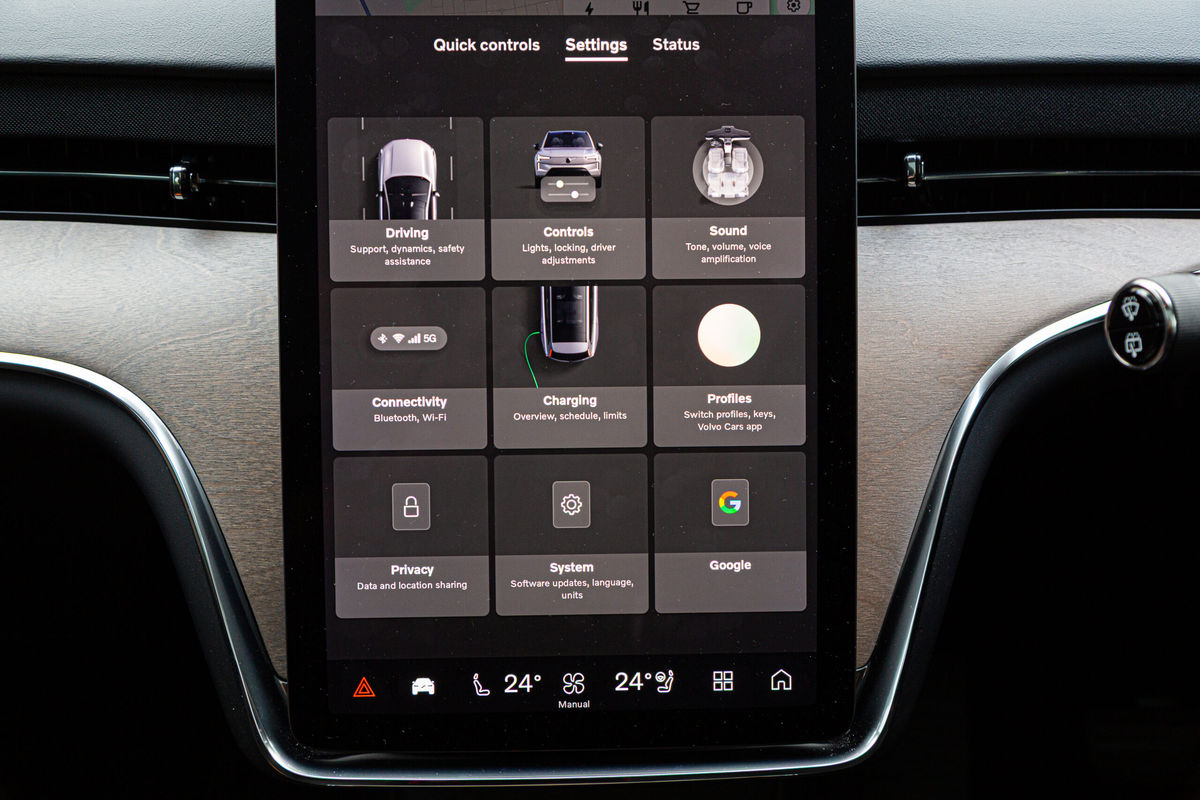
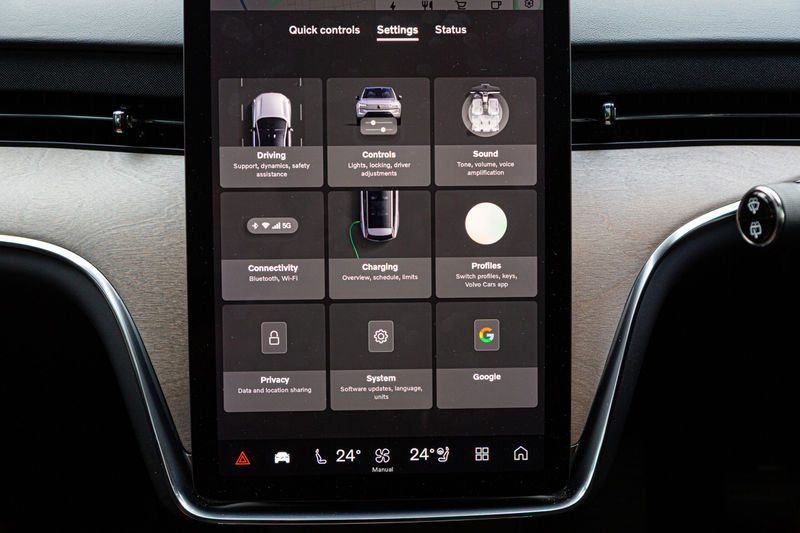
Although the infotainment system’s interface is undeniably slick, we were mildly frustrated that access to many onboard functions is built into the touchscreen menu. You need to tap the touchscreen to perform simple tasks such as opening the glovebox and tailgate, or adjusting the steering column and mirrors.
Granted, a driver won’t need to adjust the 2025 Volvo EX90’s side mirrors to their preference that often, but it was irksome nonetheless. The menu system doesn’t seem intuitive at 1st, but Volvo says the car will learn what users access often and then automatically create shortcuts on the home screen. Clever!
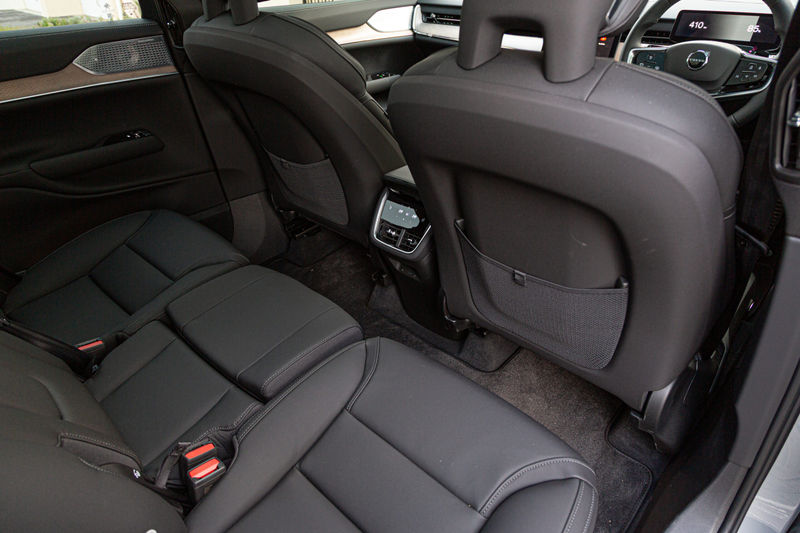
Seeing as the EX90 is a luxurious 7-seat family car, it’s expected to have an abundance of occupant and cargo space, and, to a degree, it does. The front- and 2nd-row seats offer ample head- and legroom.
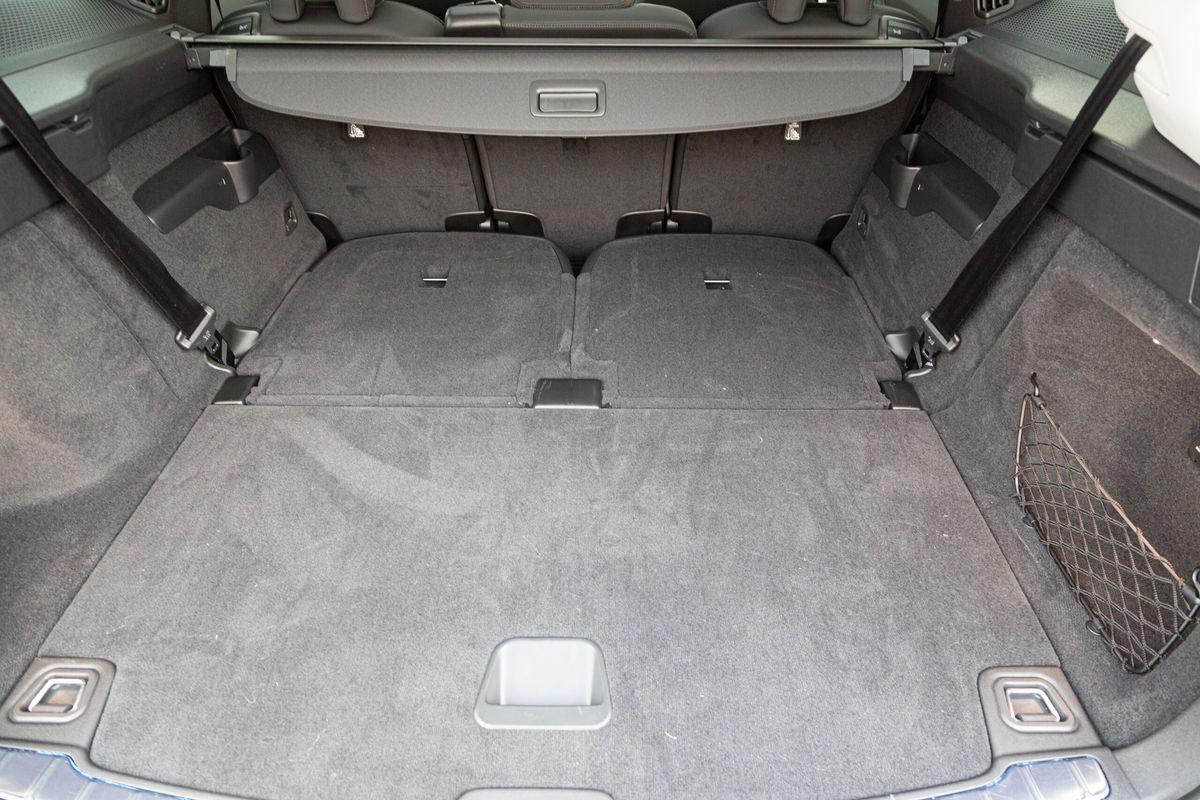
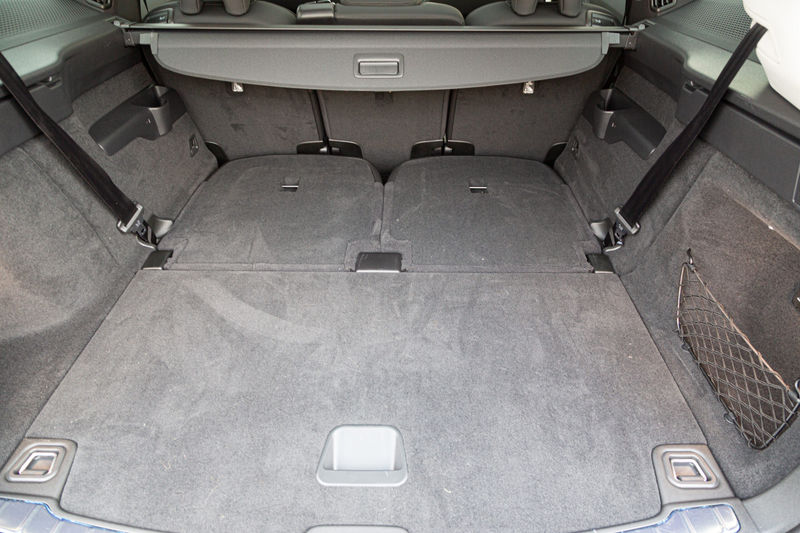
The 3rd-row seats are best suited for kids, but if you only need to transport 5 occupants, the rearmost row stows neatly into the load-bay floor, which is practically shaped and sized (324 to 697 litres). You can use the air-suspension control console to lower the rear of the car to make it easier to load cargo.
Ride and Handling
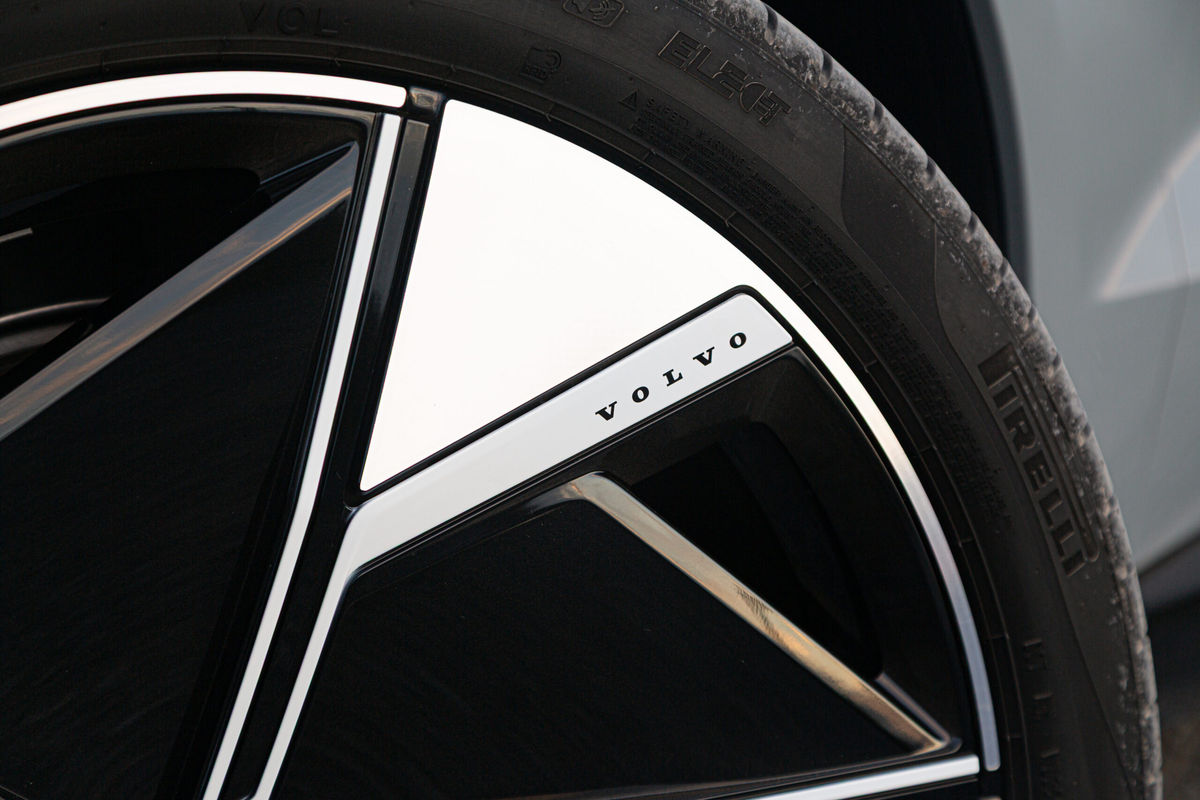
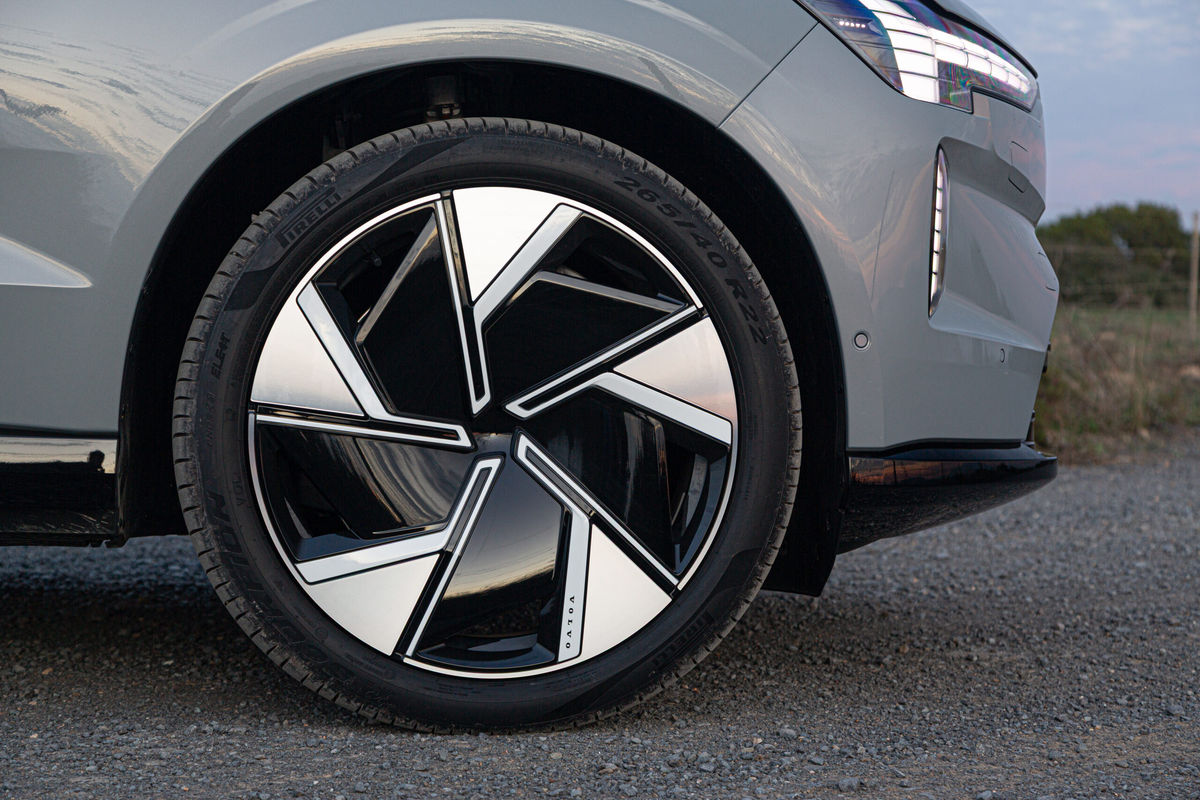
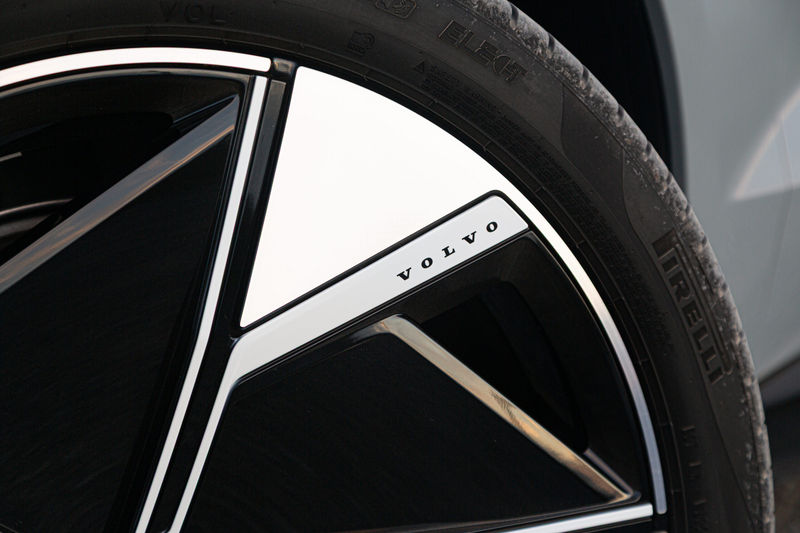
When we saw the EX90 Ultra Twin Performance‘s gorgeous (but rather sizeable) 22-inch alloy wheels, shod with skinny 265/40 tyres, we were worried they’d negatively impact the Volvo’s overall ride quality, but our fears were unfounded. Okay, the ride’s not flawless – it’s still firm at low speeds – but once you’re on the move, the EX90 floats along beautifully. Few cars that run on 22s offer such lofty ride refinement!
The secret to the forgiving ride quality is the fitment of adaptive air suspension, which enables the Volvo to quietly absorb all but the worst road imperfections, of which there are many on South African roads. In terms of the driving experience, it’s plug and play: there isn’t a multitude of confusing drive modes, you only need to choose between 2 suspension- and 2 steering feel settings. How refreshingly simple!
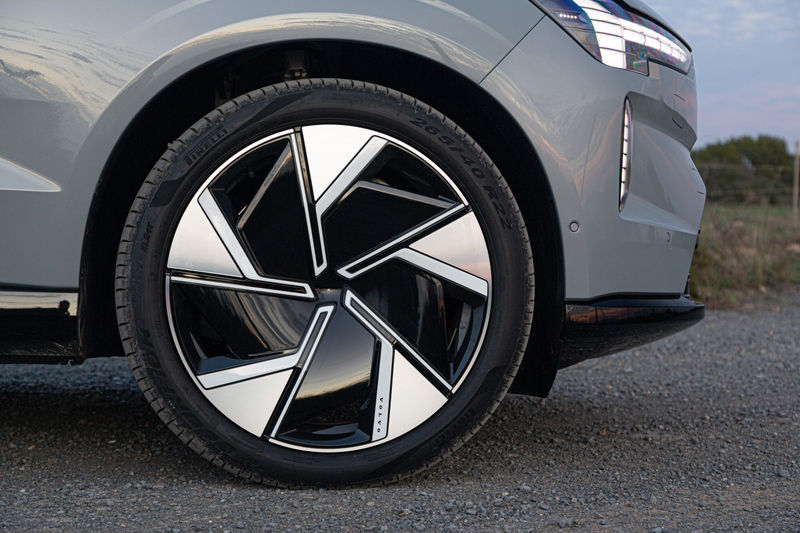
Has Volvo Car SA missed a trick by not fitting wheels shod with higher-profile tyres, which would better suit local conditions, in conjunction with a spare wheel, or does the Volvo’s sheer heft (as a large battery-electric vehicle) prohibit that? An all-wheel-drive family SUV should be able to drive on tar and gravel with ease, but even when travelling to our photoshoot location, we worried about getting a puncture!
Another thing that really impressed us about the EX90 package was the hushed cabin. There’s an eerie spookiness to driving along in near silence with only the slightest of road noise intrusions; unlike some of its rivals, Volvo has chosen NOT to pipe in futuristic noise (soundscapes) through the EX90’s speakers.
At over 5 metres in length, the almost 2.8-tonne EX90 is not a compact or nimble vehicle; it can be a bit stressful to manoeuvre the SUV into tight parking spaces, but its sensors and cameras are invaluable in that regard. That said, for a R2.6+ million car, the camera feed isn’t of great quality, especially in low light.
The EX90’s all-new SPA2 platform (shared with no other Volvos, for now) incorporates a trick torque-vectoring system, which means the SUV can corner reasonably deftly if it needs to. While most family cars won’t be driven briskly through sweeping bends, it’s comforting to know the Volvo’s up to the task.
Price and After-sales support
The 2025 Volvo EX90 Ultra Twin Performance retails for R2 650 000 (June 2025), which includes R7 500 towards the installation of a GridCars wall box charger at your home, a R12 000 charging voucher (valid for 24 months) for public charging, and 10 GB of in-car data per month (Vodacom) for 36 months.
The EX90’s price includes a 5-year/100 000 km warranty and a 3-year/60 000 km full maintenance plan.
Search for a new/used Volvo listed for sale on Cars.co.za
See also: Volvo Specs & Prices in South Africa
Verdict
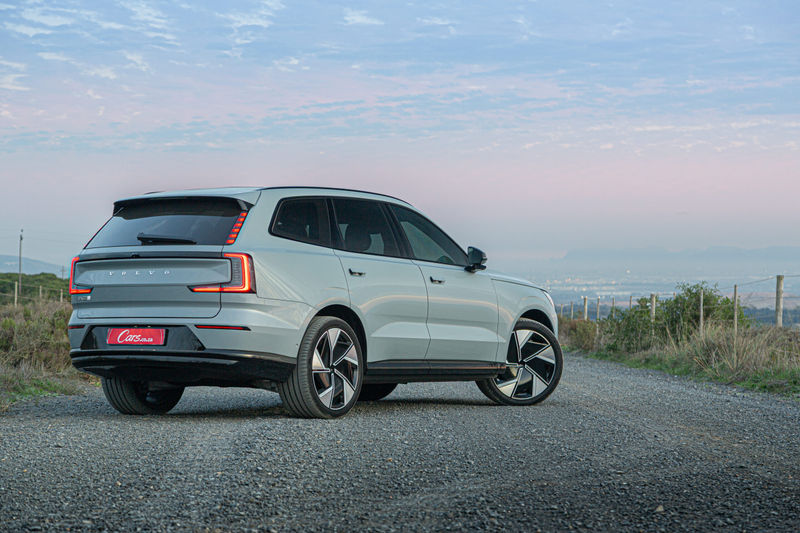
The 2025 Volvo EX90 marks a new chapter for the Gothenburg-based brand, and while the compact EX30 BEV landed in SA first, its big(gest) brother has been in development for much longer. There’s an awful lot to like, such as the incredibly quiet cabin, the sensational seats, 1 of the finest audio systems ever installed in a car, an impressive range, and let’s not forget that blistering acceleration either.
If you’re interested in buying a new EX90, should you take the plunge? Our answer, at this time (June 2025), is: No, wait a while. This Swedish diamond needs some finishing touches, and thanks to the magic of over-the-air updates, you can bet that bug fixes and tech upgrades will be rolled out rapidly throughout this year and beyond. This car should, in theory, get better and gain more features with time.
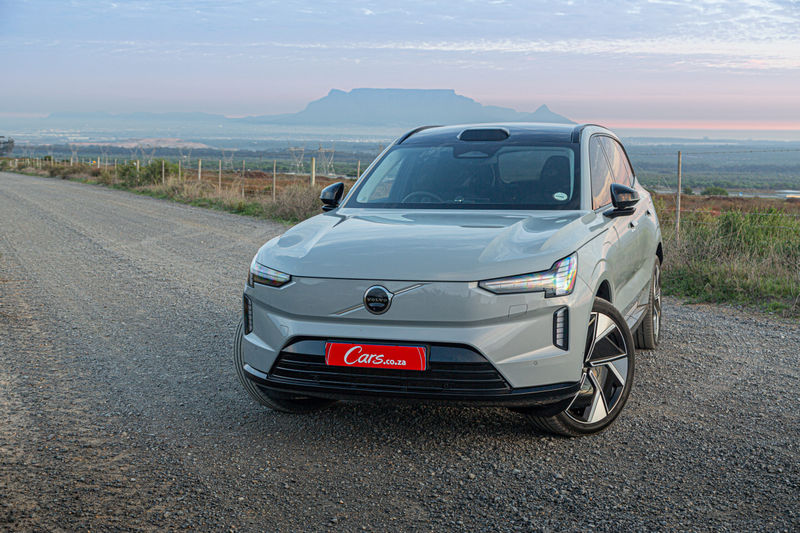
We took a deep dive into online Volvo EX90 owner forums and learnt about some eye-opening issues with the model beyond those that we experienced. We’ll spare you the details, but suggest that if you’re serious about acquiring an EX90, you have to do your research and understand what you’re getting into.
In Volvo’s defence, this is one of its very first software-based vehicles, so some teething troubles should be expected. There’s no mistaking that if you look beyond buggy software, this is a deeply impressive, if pricey, offering. Watch this space, the only way is up for the Volvo EX90, but there’s a long way to go. We hope to get another loan unit in the future to fully experience what this model is truly capable of.