Want a performance vehicle with space for the family? We take a closer look at the short-lived Volkswagen Tiguan R (based on the 2nd iteration of the Wolfsburg-based brand’s family car) and determine whether it’s a good proposition as a used buy…
When the wraps finally came off the Volkswagen Tiguan R in mid-2020, fast SUVs were hardly a novel concept. In fact, to many motoring enthusiasts, it was downright mind-boggling that the German auto giant had taken so long to roll out a spicier version of its exceedingly strong-selling family SUV.
So, the Wolfsburg-based brand was a little late to the performance-SUV game; the Tiguan had been around for some 13 years at that point! Well, tardy or not, Volkswagen R GmbH’s chosen formula was entirely familiar: drop the ubiquitous EA888 motor into the engine bay and direct drive to all 4 corners.
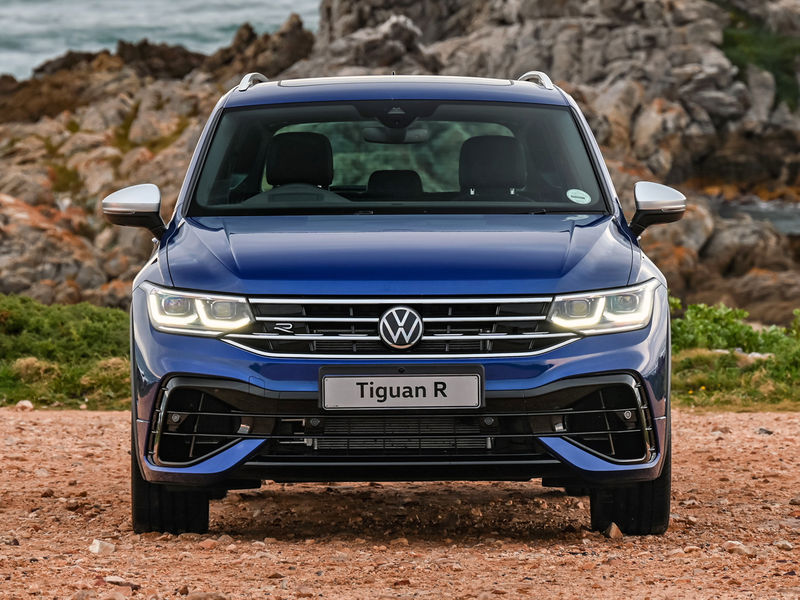
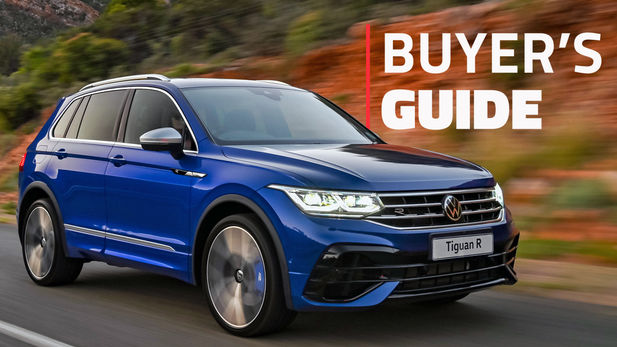
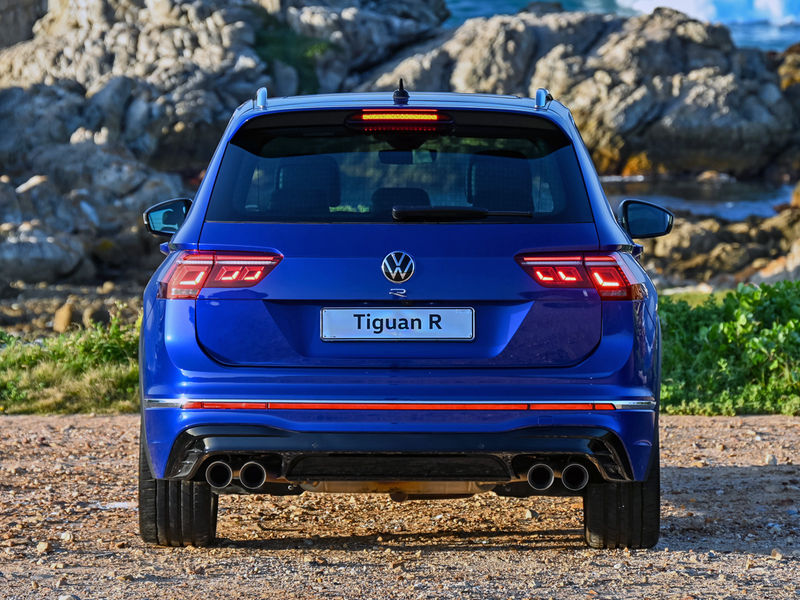
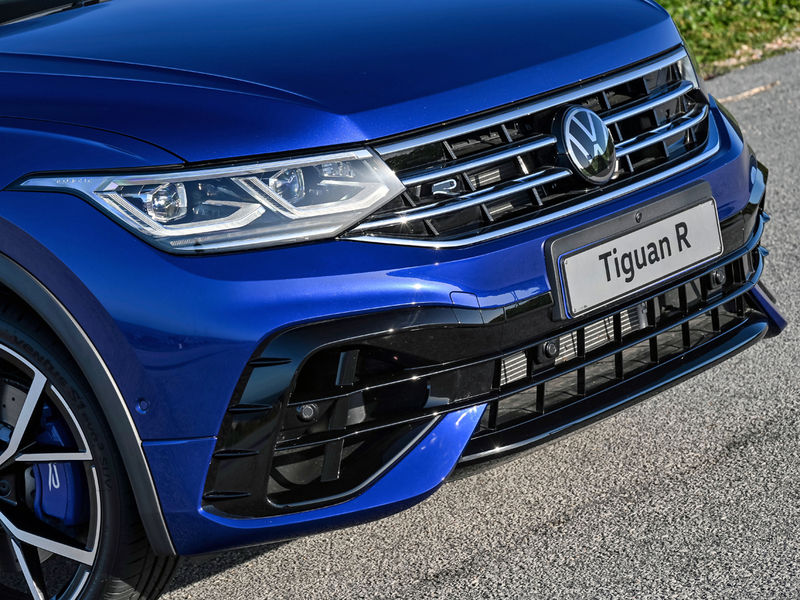
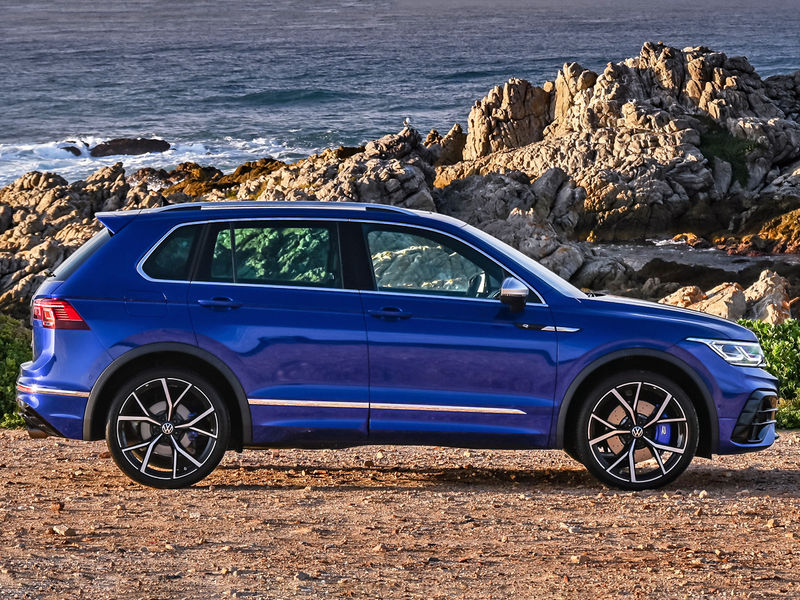
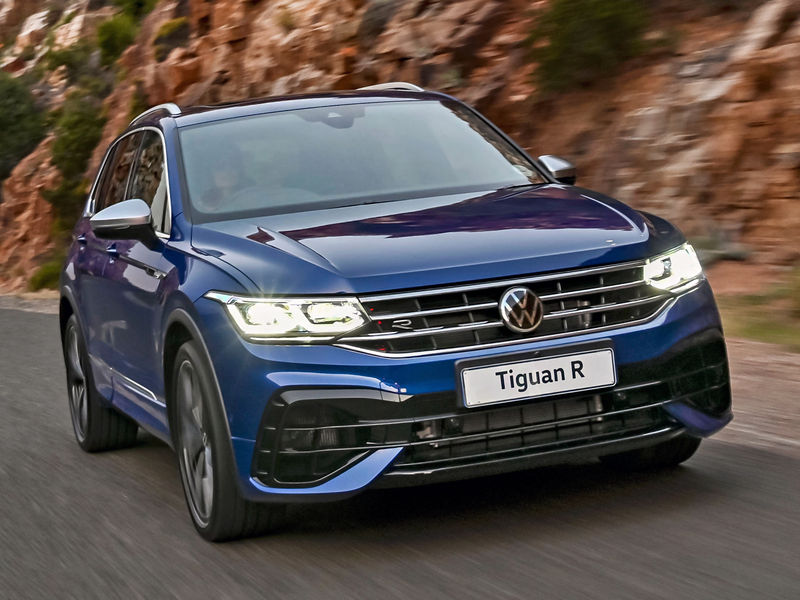
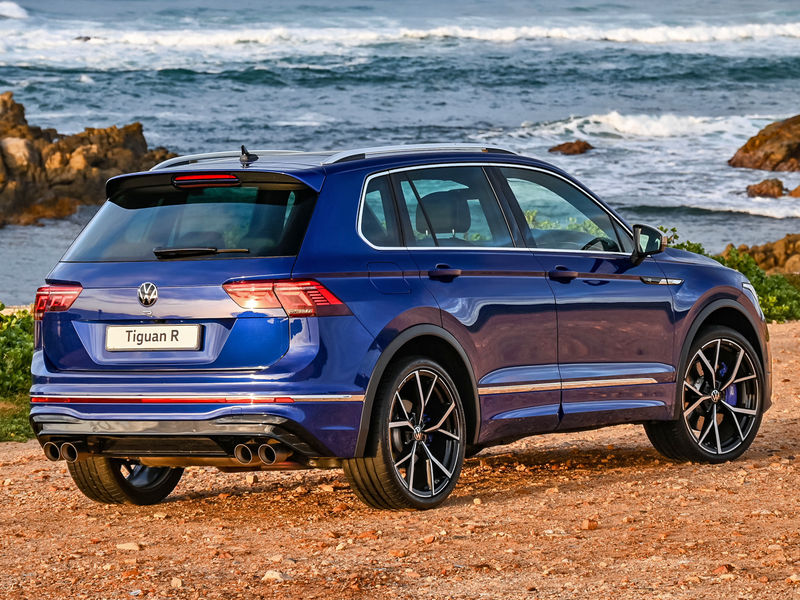
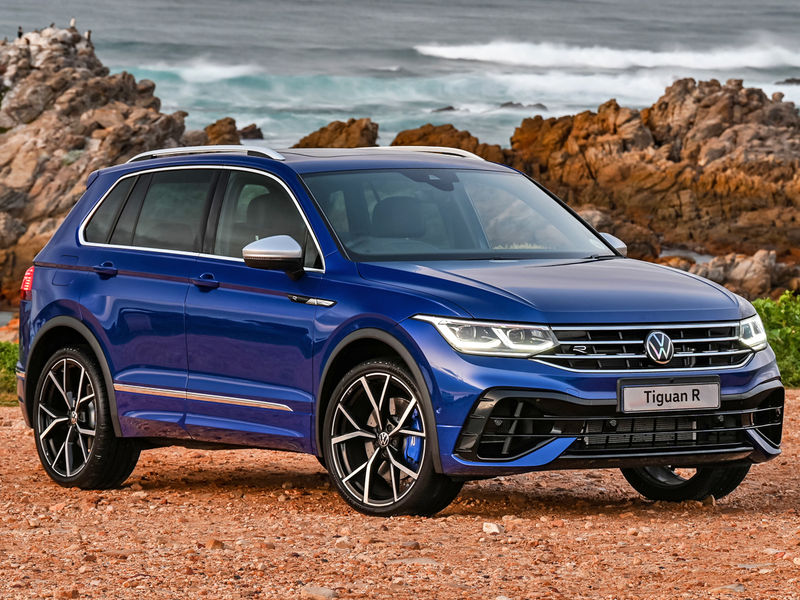
The concomitant exterior makeover was similarly predictable, with VW’s designers taking a relatively restrained approach. Indeed, the flagship Tiguan derivative was visually set apart from its lesser siblings by little more than sportier bumpers, a gloss-black rear diffuser, quad tailpipes, subtle blue brake callipers, a matte-chrome finish for the side-mirror caps and 20-inch “Misano” alloy wheels.
Still, we suspect a large contingent of VW fans greatly appreciated the Tiguan R’s somewhat under-the-radar styling, which was emphasised when the variant was specified in white rather than the more head-turning “Lapiz Blue” hue seen here (a total of 6 exterior colours were available locally).
As an aside, the Tiguan R wasn’t the first VW-badged SUV to be handed the full-fat “R” treatment, with that honour instead going to the mighty Touareg R50. The latter model launched in Mzansi late in 2008, powered by a brawny 5.0-litre V10 turbodiesel engine that churned out a whopping 850 Nm.
In addition, the T-Roc R was revealed a little over a year before the Tiguan R, although it never made it to South Africa – despite being very much “under consideration”. Like the Golf R, Arteon R (another not-for-SA model) and indeed Tiguan R, the hottest T-Roc employed VW’s familiar 2.0-litre, 4-cylinder TSI motor.
Volkswagen Tiguan R in South Africa
The Tiguan R was revealed in July 2020 alongside the facelifted 2nd-gen Tiguan range. Though the R-badged variant’s local launch was initially pencilled in for late in 2021, it ended up hitting the market in Mzansi only in October 2022 (we have a certain global pandemic to thank for that), priced at R999 900:
- Tiguan R 2.0TSI DSG 4Motion (235 kW/400 Nm)
In SA-spec form, the Tiguan R’s 2.0-litre, 4-cylinder turbopetrol engine sent 235 kW and 400 Nm to all 4 wheels via VW’s 7-speed dual-clutch (DQ500) transmission. The Wolfsburg-based brand claimed the flagship Tiguan could sprint from zero to 100 kph in 5.1 seconds and achieve a top speed of 250 kph.
Little changed (other than the price) over the next couple of years. However, in March 2024, Cars.co.za noticed that the Tiguan R was no longer listed on the brand’s local configurator. Soon thereafter, VW Group Africa confirmed to us that its stock would last “until run-out in the 2nd half of 2024”.
The last base price we saw for this flagship derivative before it disappeared from the configurator was R1 080 200. By August 2024, the variant had been officially discontinued in Mzansi, meaning it was on the market for a shade under 2 years. From what we understand, fewer than 450 units were sold in SA.
What are the VW Tiguan R’s strengths?
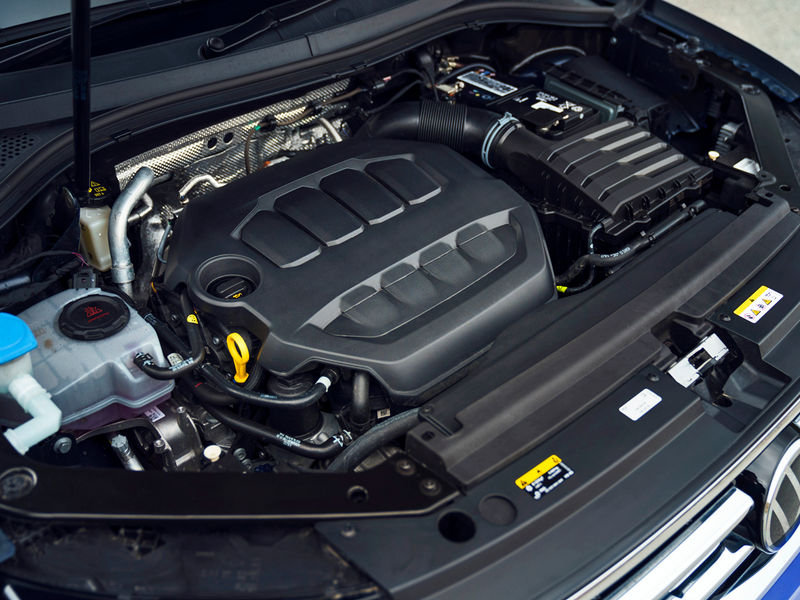
Easily accessible performance: The Tiguan R’s familiar 4-cylinder turbopetrol motor was a highly tractable thing, with peak twisting force on tap from 2 100- all the way to 5 350 rpm. It thus boasted plenty of in-gear shove. Coupled with a fast-shifting transmission (complete with paddle shifters) and lofty levels of grip, this surefooted performance SUV was an absolute cinch to drive quickly.
In fact, with launch control activated and “Race” mode selected, we managed to hustle the 1 600+ kg SUV from standstill to 100 kph in an impressive 5.0 sec, a 10th quicker than claimed. Furthermore, we saw the quarter mile dispatched in only 13.19 sec. Read our 2022 Volkswagen Tiguan R review.
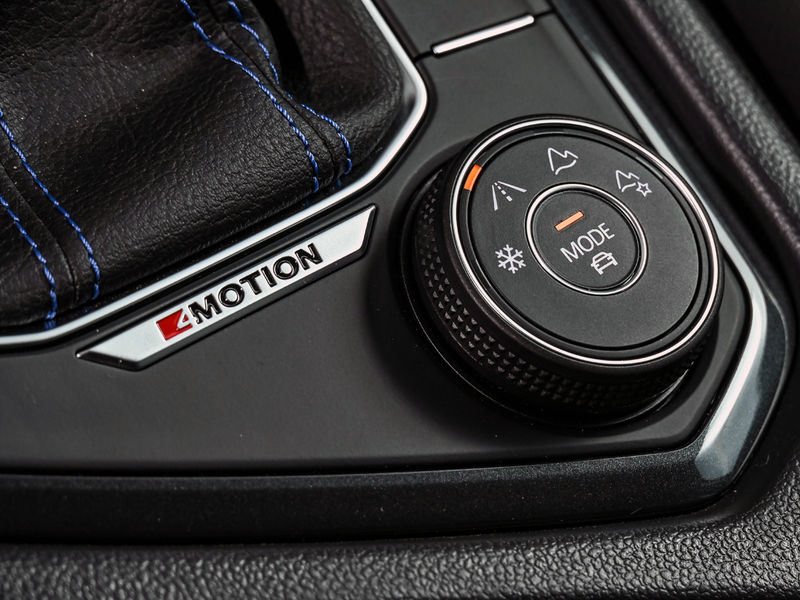
For the record, the Tiguan R did not use a Haldex all-wheel-drive design, but rather what VW termed a then-new “4Motion with R-Performance Torque Vectoring” setup. The presence of a torque-vectoring rear differential with 2 multiplate clutches meant oomph was distributed not only between the front and rear axles, but also variably between the left and right rear wheels.
Interestingly, the SA-market Tiguan R was slightly detuned, losing 20 Nm compared with the (420 Nm) Euro-spec model. As a result, our version was said to be 2-tenths of a second slower to 100 kph.
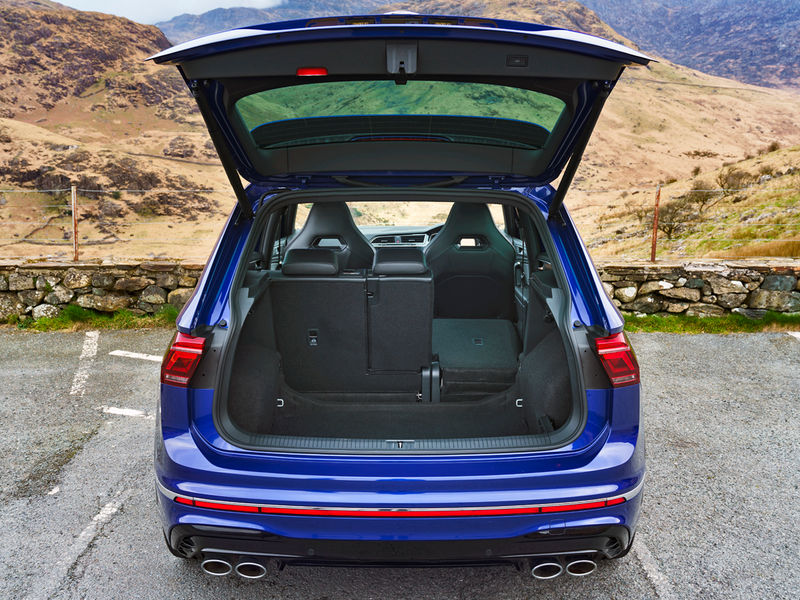
More practical than a hot hatch: The flagship R retained virtually everything that made the 2nd-gen Tiguan such a compelling family vehicle – just with added performance. In short, it was more practical than a typical hot hatch, both in terms of its interior space and its modicum of extra ride height.
The Tiguan’s load bay – with a claimed capacity of 615 litres and a height-adjustable floor – was more capacious than most in the segment (with 1 655 litres of utility space available if you fold the split rear bench). What’s more, the rear occupant space was generous (the back seats could slide fore and aft).
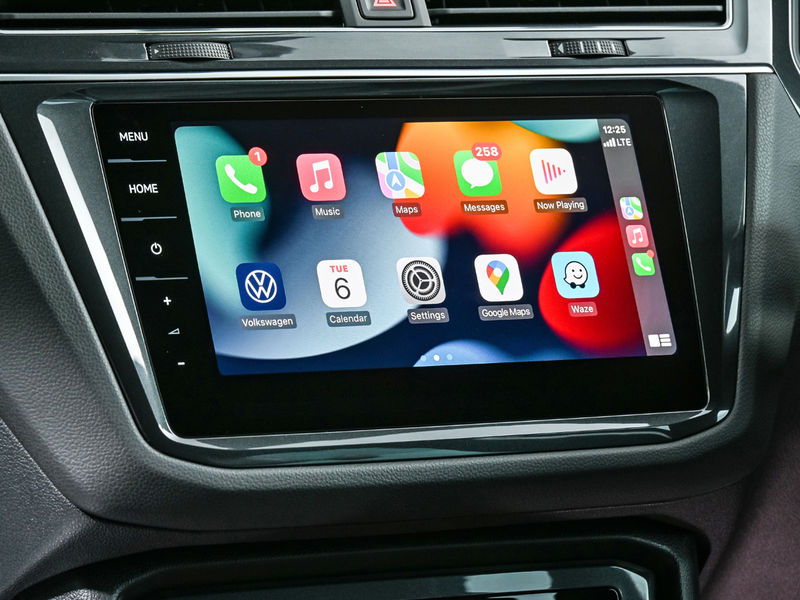
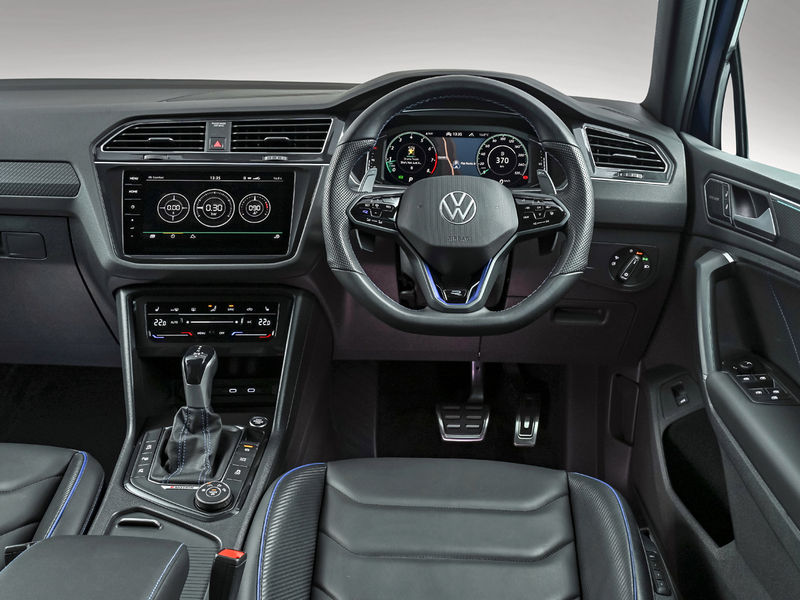
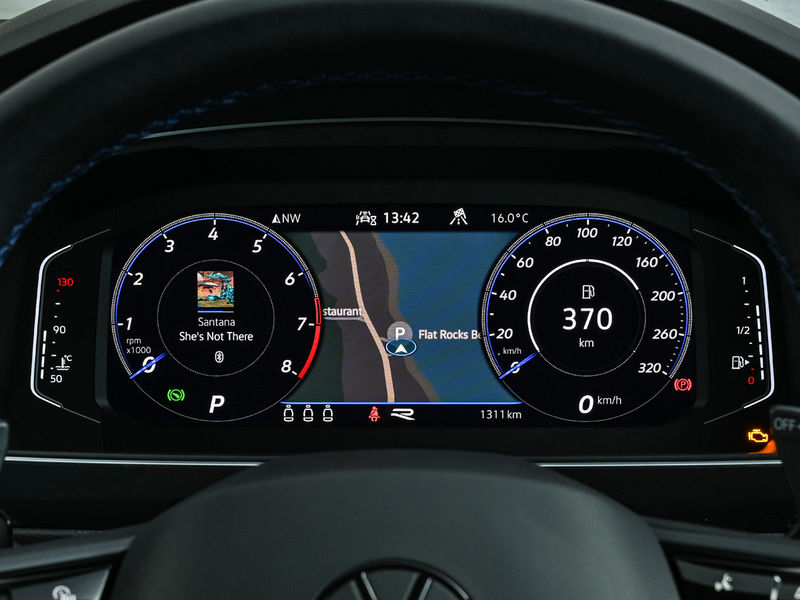
Decent standard spec: In South Africa, the Tiguan R came relatively well specified as standard, shipping with features such as a tilt-and-slide panoramic roof, Nappa leather upholstery, the 9.2-inch “Discover Pro” infotainment system, built-in satellite navigation, a digital instrument cluster, keyless entry, parking sensors (front and rear), an electrically operated tailgate and the “Lights and Vision” package.
Other standard items included electrically adjustable (and heated) front seats, a heated steering wheel, automatic LED matrix headlamps, cruise control, 3-zone climate control, 30-colour ambient lighting and tyre-pressure monitoring. VW’s dynamic chassis control (DCC) system was also included in the price.
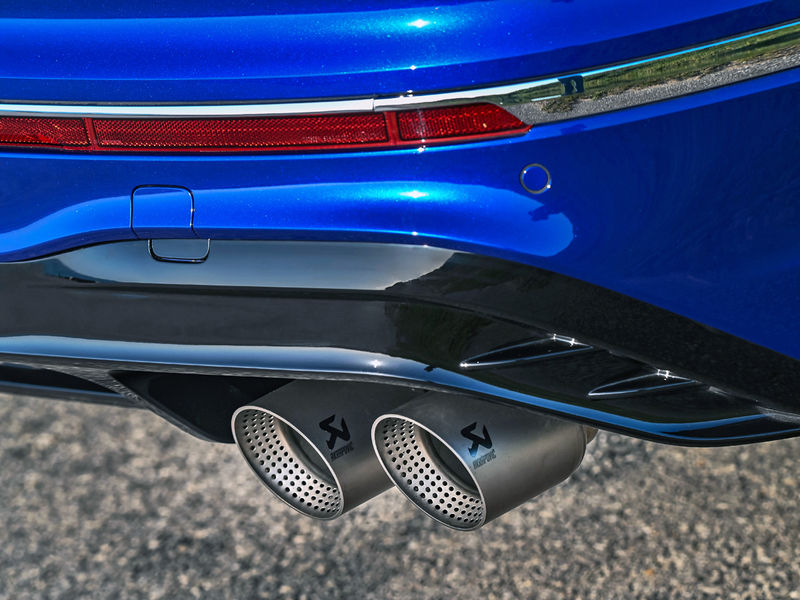
That said, VW did offer several options, from uprated “IQ.Light” LED matrix headlights, an Akrapovič exhaust system (a box that was well worth ticking, if you ask us) and 21-inch “Estoril” alloy wheels to a head-up display, inductive smartphone charging, a Harman Kardon audio system, adaptive cruise control, an R-specific “Black Style” package, a trailer hitch and a reverse-view camera (we can’t help but feel the latter should’ve been standard, however).
What are the VW Tiguan R’s weaknesses?
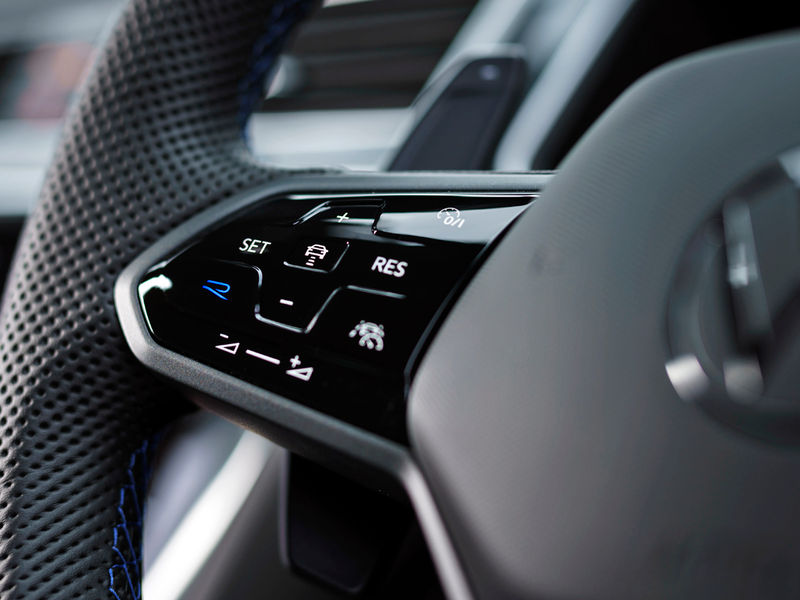
Fiddly “touch” controls: Though the Tiguan R’s cabin was as an eminently upmarket space, the leather-trimmed ‘wheel was unfortunately saddled with VW’s decidedly fiddly “touch” controls. At the time, VW described these as a “highlight” of the broader Tiguan range, but we’d argue they were anything but.
In practice, the touch-sensitive controls on the tiller – which were designed to respond to both deliberate pushes and light swiping actions – were frustratingly imprecise to use, particularly when the vehicle was in motion. Drivers even sometimes found themselves unwittingly activating some or other function (unintentionally heating the steering wheel, for example).
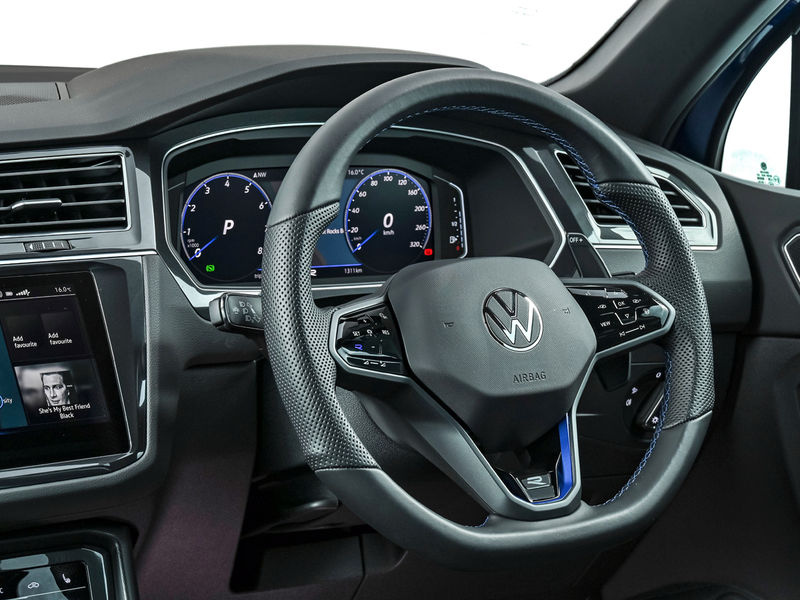
VW likewise digitalised the climate-control functions in the facelifted Tiguan and Tiguan R by means of what it called “touch sliders” and “touch buttons” (rather than rotary knobs and standard buttons), which were equally awkward to use on the move. While a similar design has since been employed in the 3rd-gen Tiguan, it’s telling that VW reverted to physical buttons on the steering wheel for the newer model.
Firm ride quality: Like most stiffly-sprung performance vehicles, the Volkswagen Tiguan R demands some compromises in terms of its ride quality. Large alloy wheels, low-profile tyres (255/40 R20 in standard form and 255/35 R21 with the optional rims selected) and a suspension dropped by 10 mm conspired to add a degree of brittleness to the ride. That said, this was mitigated by the fact VW included adaptive dampers as standard, which certainly took the edge off in the comfiest of settings.
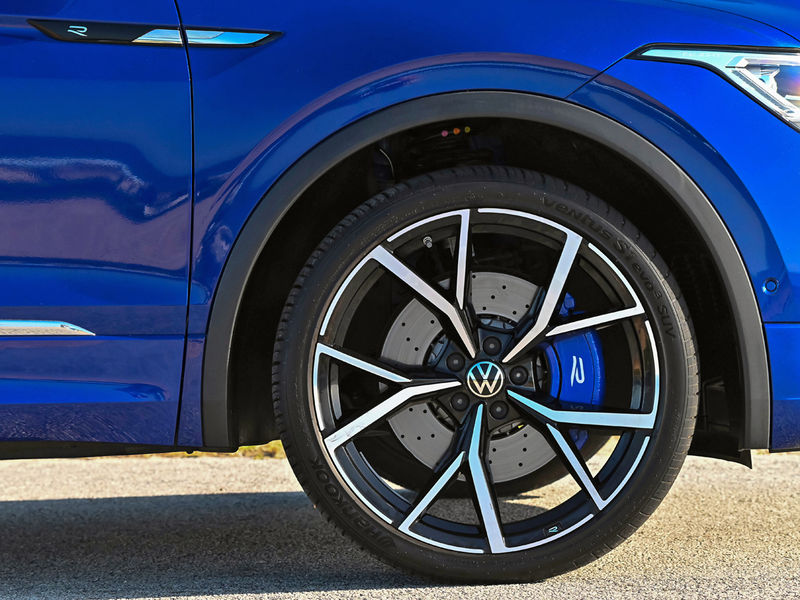
No spare wheel: Whereas every other facelifted 2nd-gen Tiguan variant came equipped with a space-saving spare wheel, the R flagship had to make do with a tyre-repair kit. This so-called “tyre mobility set” comprised a 12V compressor and tyre sealant, arguably not ideal for South Africa’s pothole-ridden roads.
As an aside, it’s difficult to comment definitively on the Tiguan R’s reliability in a local context since so few examples made it to local roads (and because this model hasn’t been around for all that long). Still, we could perhaps look to other applications of the ubiquitous EA888 motor for general clues on this engine’s dependability.
How much is a used VW Tiguan R in South Africa?
The Tiguan R came with a 3-year/120 000 km warranty, a 5-year/100 000 km maintenance plan (as opposed to the 5-year/90 000 km service plan of the standard variants) and a 12-year anti-corrosion warranty. Service intervals were set at 15 000 km.
At the time of writing, just 8 units of the Tiguan R were listed on Cars.co.za. Asking prices ran from R879 499 for a 2022 example to R999 990 for a model from the same year, though the latter had far fewer kilometres on its clock.
Interestingly, only the 2022 and 2023 model years were represented in this small group; mileages varied from a low of 3 000 km to a high of 43 000 km. Available colours included white, blue and black.
Considering very few examples of the Tiguan R were sold in South Africa, it’s perhaps not surprising this model appears to have retained its value very well. After all, demand outstripped supply on the new-vehicle market, a phenomenon that is now mirrored in the used space.
Should I buy a Tiguan R or a Golf 8 R?
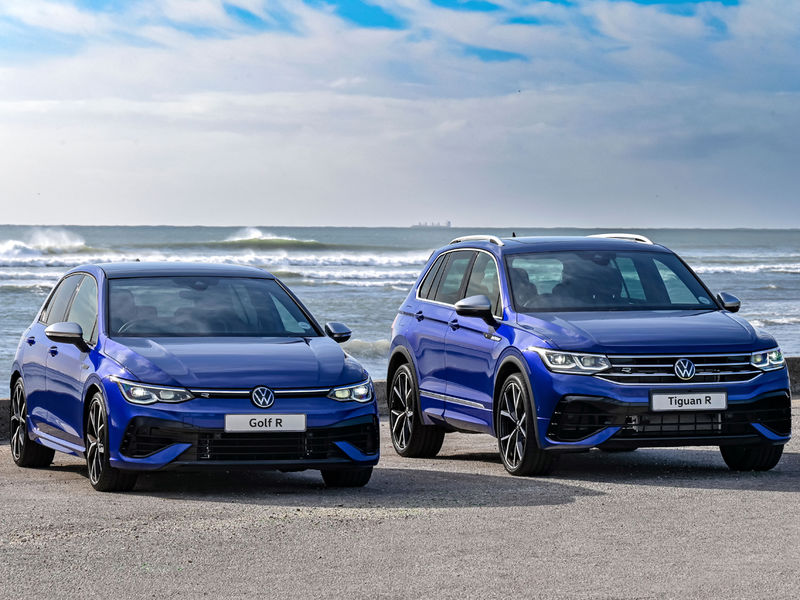
While the Tiguan R and the Golf 8 R shared a potent powertrain, they were distinct in several ways. And that meant they may well have appealed to different sorts of buyers. So, which 1 should you consider?
Well, here’s how we would summarise the differences between the Rs: the Tiguan R offered more practicality and was better suited to general family duties (with the bonus of a braked towing capacity of 2 200 kg), while the Golf 8 R – though still relatively versatile – was more of an enthusiast’s choice.
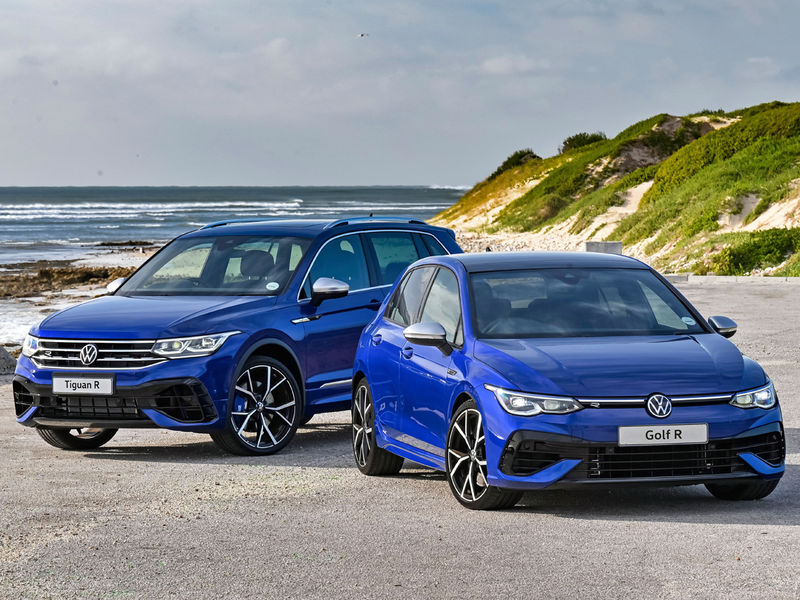
Yes, thanks largely to its lower centre of gravity (and the fact that it wasn’t quite as heavy as its family car sibling), the Golf 8 R made palpably fewer compromises in the performance department – which, in turn, rendered it not only quicker but also more exciting to drive quickly.
Another consideration, of course, is the fact the Golf 8 R is in far greater supply on the used market today, with nearly 6 times more on sale at the time of writing. That means it should be both easier to find a suitable example in the used space as well as potentially more affordable to buy it.
Is the VW Tiguan R a worthwhile used purchase?
Interestingly, though the Tiguan R joined a local market featuring numerous performance SUVs, hardly any were considered direct rivals. The 294 kW Audi RSQ3, for instance, offered substantially more power from its sonorous 5-cylinder engine, while Porsche’s Macan and Macan S were both likewise pricier.
The H247-gen Mercedes-AMG GLA35 (225 kW) never made it to South African shores, while the U11-series BMW X1 M35i (233 kW) arrived only in September 2024. Though the F39-gen BMW X2 M35i (225 kW) was on the market alongside the Tiguan R (and similarly priced), it was also far smaller/less practical.
The Hyundai Kona N, too, was a significantly more compact offering and effectively played in a segment below the VW, offering less power at a far lower price. So, in South Africa at least, the Tiguan R didn’t face much in the way of direct competition, but perhaps that mattered little considering its short stay.
Either way, we’ve no doubt VW Group Africa would’ve sold plenty more examples of this rapid SUV had supply to Mzansi been healthier. This was, after all, an excellent all-rounder, adding a properly zesty powertrain to a package already lauded for its overall competency.
Viewed in this light, the Volkswagen Tiguan R made heaps of sense as a lively family vehicle. Sure, it wasn’t the last word in performance (particularly when juxtaposed with its more agile Golf 8 R sibling), but we should keep in mind that a hot medium SUV is by definition compromised. Moreover, the R-badged Tiguan’s duality was arguably at the very centre of its appeal.
So, we certainly wouldn’t blame you if the Volkswagen Tiguan R tickled your automotive fancy, particularly if you have a family to cart around. But if you’re ready to embark on a search for a used version, just be prepared to hunt high and low – and brace yourself for those lofty residual values…
Looking for a used Volkswagen Tiguan R to buy?
Looking to sell your car? You can sell it to our dealer network here
Ryan Bubear

Having written about everything from sport and politics to crime, Ryan eventually settled on motoring. For well over 15 years, he's been penning articles – both online and in print – about the broader automotive industry, though he's particularly fascinated by vehicle-sales statistics. A freelance writer and editor, Ryan has owned a 1971 Austin Mini Mk3 for 20-plus years.