Run-flats are designed to get you home safely if your tyre is losing air. That’s if home isn’t too far away… Here we look at the pros and cons of run-flat tyres within a South African context.
Run-flat tyres were designed to solve a European luxury car problem. What happens if you start losing air and don’t want to stop and change the tyre, because stopping next to a highway is dangerous and illegal in parts of Europe? The engineered solution was the run-flat tyre.
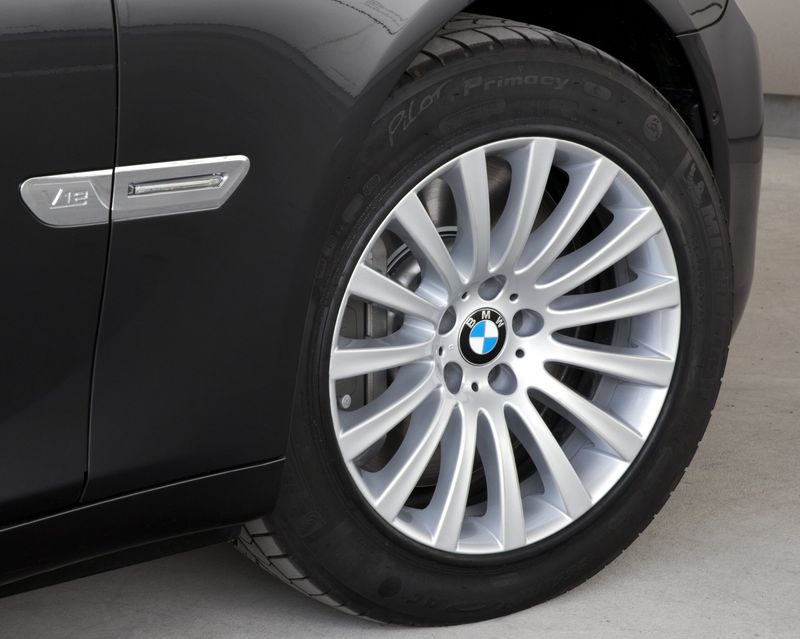
But run-flat tyres, locally pioneered by BMW with the E90 3 Series, were created for a driving environment very different from South Africa’s. In Europe, the driving distances between home, office, social venues and garage forecourts are much shorter than in South Africa. The run-flat tyre principle was a convenience feature. You could drive a few kilometres home safely, then worry about tyre replacement the next day.
In South Africa, these special tyres have enormous safety benefits, but some of our roads also complicate the issue.
Here we’ve created an all-you-need-to-know guide about the tyres that can get you home when they’ve run out of air. We also touch on the important question of run-flat tyres and their use on bakkies and ladder-frame SUVs. This is worth thinking about because many traditional German luxury sedan buyers have now become double-cab and SUV owners. The run-flat tyre options for these vehicles are not quite the same as those for a German luxury sedan.
How do run-flat tyres work?
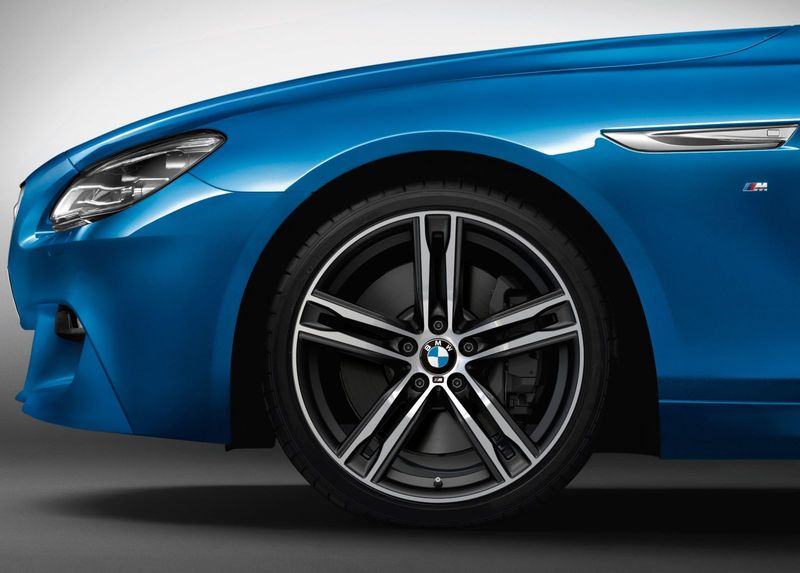
Lots of very clever mechanical and chemical engineering. The concept is very simple: A tyre supports your vehicle’s weight through a combination of its structural integrity, which is the tyre sidewall, and the volume of air inside it.
When you lose the support of that air on a conventional tyre, the sidewall is too weak to carry the vehicle’s corner-load weight on its own. To address this issue, a run-flat tyre is over-engineered by a significant margin. Its sidewalls are much stronger and use materials with greater heat resistance because when the total loading on those sidewalls increases, they heat up and risk deformation and failure.
How well do run-flats work? In ideal scenarios, like on an unloaded vehicle driving along a perfectly smooth highway at less than 80 kph, a run-flat allows you to drive for up to 80 km. That’s a real benefit in Gauteng, or if you are on the N2 in Cape Town. But if you are in the middle of nowhere in the Northern Cape?
Run-flat tyres prevent catastrophic blowouts
Gauteng and greater Cape Town often look like a permanent construction site. That means lots of fasteners (like bolts, nails and screws) that fall off during transportation and end up on the road surface. This building debris, especially fasteners, is a huge risk to tyres.
Run-flats are great at preventing that nail-in-the-tyre annoyance from becoming a total disaster. Stopping next to a South African highway to change a flat tyre, especially at night, is a huge risk. With run-flats, you can keep driving and get home.
Aside from avoiding the personal security hazard of having to stop in a high-risk area to change a tyre, a run-flat tyre has another real benefit: preventing high-speed blowouts. Not all vehicles driving at highway speeds in South Africa have tyre-pressure-monitoring systems. These sensors warn you when you have a tyre suddenly losing pressure and is at risk of suffering a structural collapse. A ‘blowout’ at highway cruising speeds, especially if it is a front tyre on the steered axle, can be catastrophic and very hard to control.
If you have a slow puncture on one of your tyres and don’t have a tyre-pressure-monitoring system to warn you the tyre is deflating, a run-flat will prevent that tyre from sudden and complete structural collapse.
Why aren’t all tyres run-flats?
If run-flats are so good at reducing the risk of being stranded next to a highway or avoiding a blowout, why aren’t they standard across most new vehicles?
Like everything in automotive engineering, run-flat tyres have compromises. The first is cost. Compared to a conventionally structured tyre of the same size, rubber compound and tread pattern, run-flats are more expensive.
The second issue is weight. Run-flats are engineered to carry the full load of a car when deflated, creating heavier tyres. That means a lot more rotational/unsprung weight, increasing fuel consumption.
Those overengineered run-flat sidewalls can also mean a harsher ride quality. Because the sidewalls are designed to be much stronger than those of a conventional tyre, they have less vertical bump absorption. That means run-flats have an impact on ride quality.
For South African buyer preferences and travel conditions, run-flats also have specific limitations that don’t apply to Europe…
Run-flat tyres and double-cabs/rugged SUVs
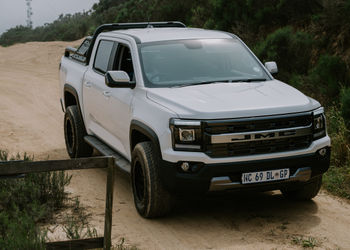
South Africa’s most popular vehicle is the Toyota Hilux. South Africa’s most popular full-size SUV is its 5-door twin, the Fortuner. Double-cab bakkies and body-on-frame SUVs are popular family vehicles in South Africa because they are tough and versatile. They’re capable of journeying with ease on the most challenging, corrugated dirt roads.
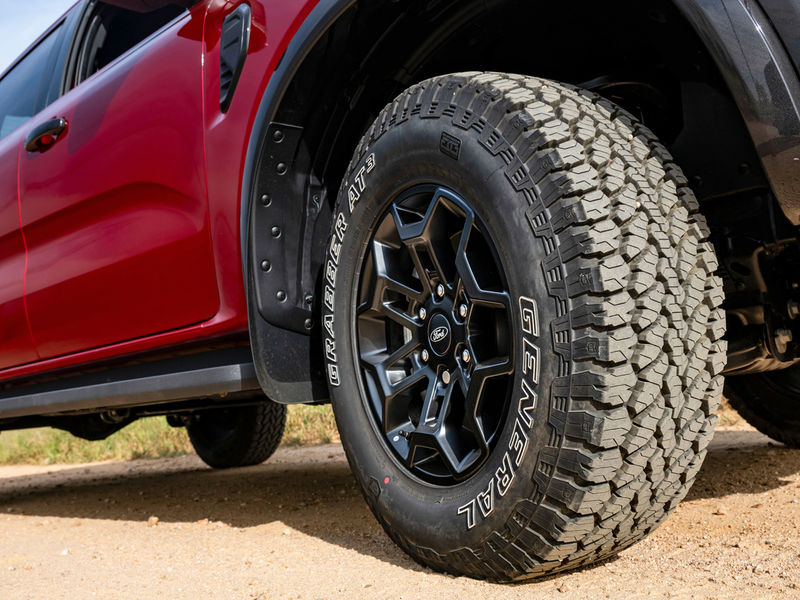
Part of what makes double-cab bakkies and body-on-frame SUVs so good for all-terrain road trips is the tyres they use. Usually, they’re large-volume, all-terrain tyres. You’ll really struggle to find run-flat tyres in the sizes that work on double cabs or body-on-frame SUVs.
Another issue is the feature that makes a run-flat what it is – that ultra-rigid sidewall – is exactly what double-cab bakkie and SUV drivers don’t want. Why? Well, large-volume all-terrain tyres need a sidewall that can deform. This allows the tyre to create that elongated tread pattern when aired down. This increases traction, a crucial need for nearly all double-cab bakkie drivers who venture out of the city.
In comparison, run-flats don’t allow the tread pattern to elongate when aired down, making them unsuitable for off-road drivers.
Run-flat tyres in SA conditions
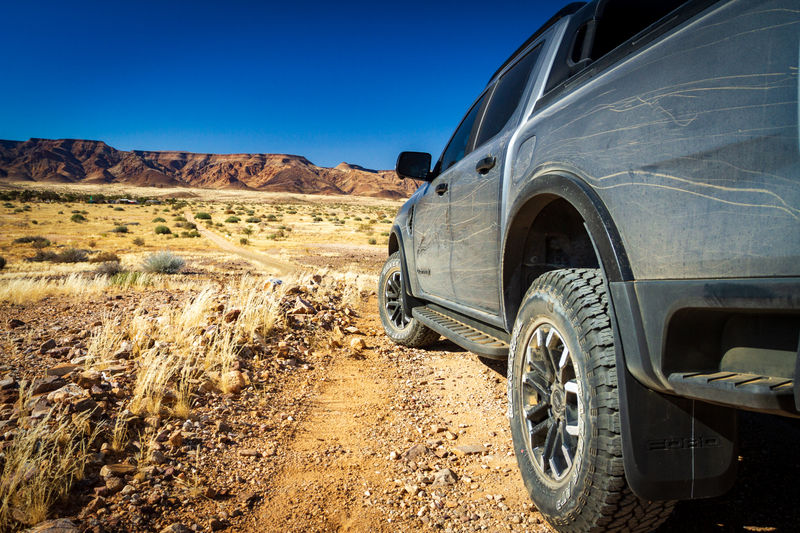
Possibly the biggest challenge for the use of run-flats in South Africa is our country’s amazing dirt road network. Nearly every great family road trip includes a long dirt road. And dirt roads don’t play nice with run flats.
On severe gravel routes, you want high-volume tyre casings with tall, flexible sidewalls that absorb corrugation shocks. The rigid sidewall structure of a run-flat does exactly the opposite. It transfers all the corrugation harshness to the suspension components and therefore the cabin.
Then there’s the issue of what happens during longer driving distances on poor rural roads. Once they run out of air pressure, run-flat tyres impose speed and distance limitations. At 80 kph for 80 km, a deflated run-flat tyre might not get you to the next town in the Karoo or Northern Cape. And that’s under ideal conditions on a smooth highway…
Local dirt roads are harsh on tyres. A family vehicle at its gross vehicle-mass limit (fully loaded with passengers and cargo) will severely test a run-flat tyre’s ability to reach the full 80 km driving distance.
For urban use on passenger vehicles such as sedans, crossovers and monocoque SUVs, run-flat tyres hold real-world safety benefits. And that makes them worth the cost. However, be mindful of how vulnerable they can be if you’re planning a road trip involving a lot of dirt-road driving.