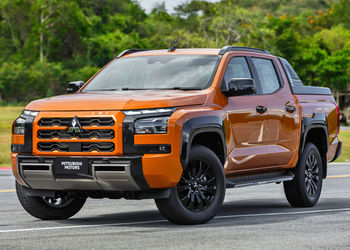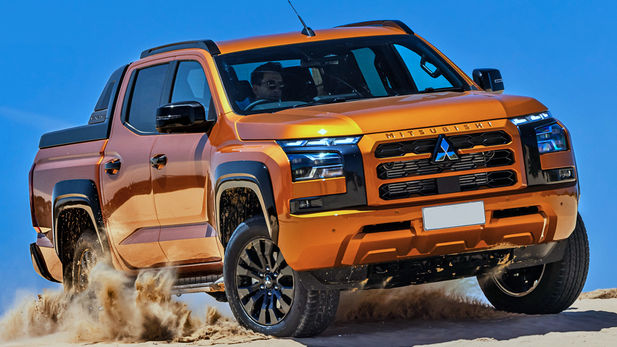
The new Mitsubishi Triton is set to hit SA towards the middle of November 2024, with the Japanese firm’s local division saying the bakkie will be launched in “3 phases”…
Mitsubishi Motors South Africa says the new Triton will be rolled out locally in 3 phases, with the first scheduled to commence in November 2024.
“We’re quite excited about the launch of new Triton. It’s been launched in many other markets globally – in Australia, Southeast Asia as well – and it’s done exceptionally well in [those] markets,” Thato Magasa, Managing Director of Mitsubishi Motors SA, told Cars.co.za at Naamsa’s recent South African Auto Week 2024 in Cape Town.
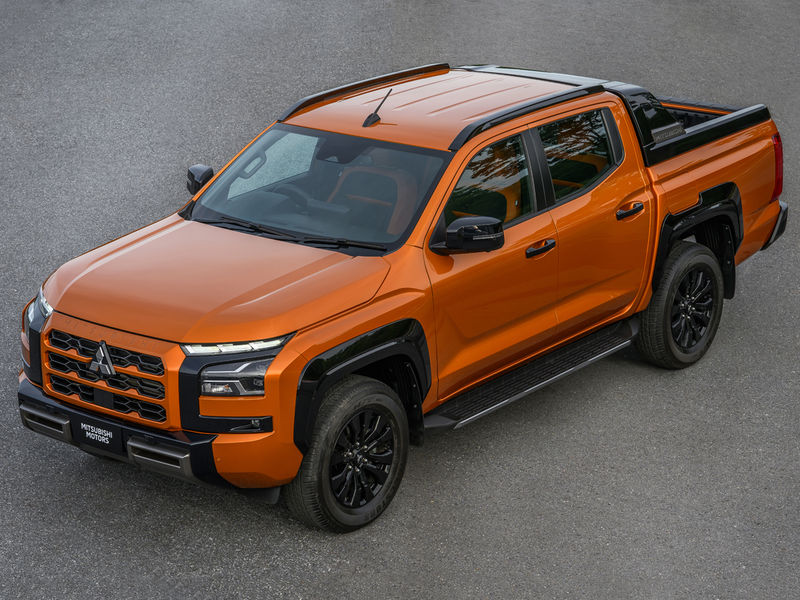
Interestingly, Magasa confirmed to us that the 6th-generation Triton range – which wears the L200 nameplate in some countries – will be rolled out locally in 3 phases.
“We are looking to launch different engines over time, which will be a ‘phased’ approach, though I don’t want give too much away,” he said.
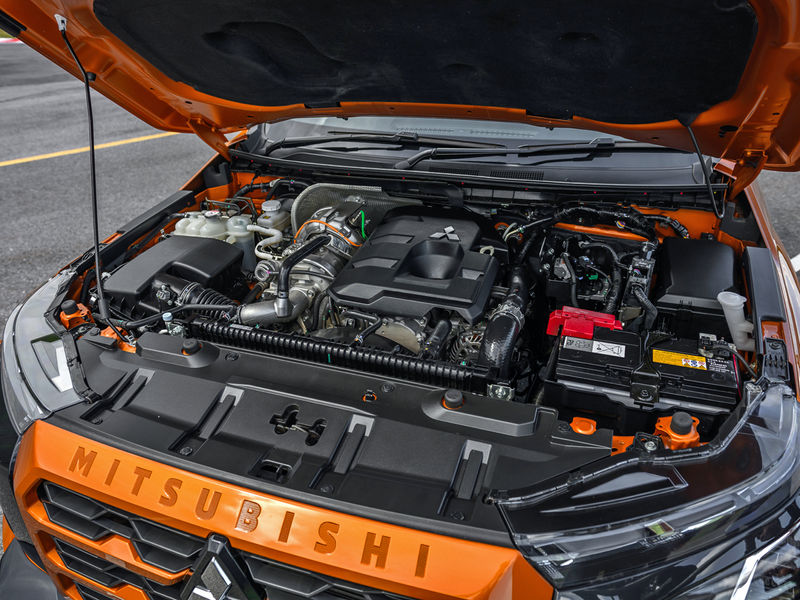
At this stage, the outputs of the initial variants to be launched locally are unclear. For the record, though, the Triton’s “newly developed” 2.4-litre turbodiesel (4N16) engine is offered overseas in a trio of tunes. The high-output 150 kW/470 Nm version features twin turbochargers, while a 135 kW/430 Nm configuration and a 110 kW/330 Nm tune are also available, each using a single turbo.
Mitsubishi Motors SA appears to have high hopes for the new Triton, which it had on display at SA Auto Week 2024. In fact, Magasa told us he sees the brand’s growth coming from the bakkie market – which is dominated by locally built models in the form of the Toyota Hilux, Ford Ranger and Isuzu D-Max – despite this segment’s “cut-throat” nature.
“If you look at the bakkie market in South Africa, it’s cut-throat. It’s one part of the market where it’s very difficult to enter and to penetrate. A lot of the brands that have done well – barring Ford – in the local market are Japanese brands.
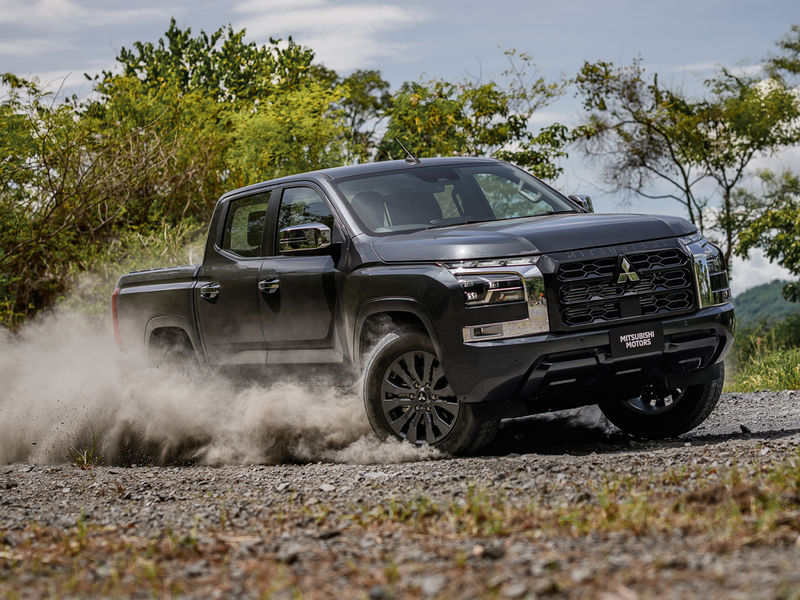
“There’s a pedigree of durability and reliability that most of these brands have – and it’s something [of which] we boast an abundance. We’re quite confident that our bakkie can actually walk the walk and not just talk the talk.
“If you look at where we’re seeing our growth coming from in the future, it’s definitely in the bakkie market. We probably want to see our bakkies – in the end, once the full portfolio has launched, because we want to launch in 3 phases, with this being the first phase – at about 40% of our product mix,” Magasa said.
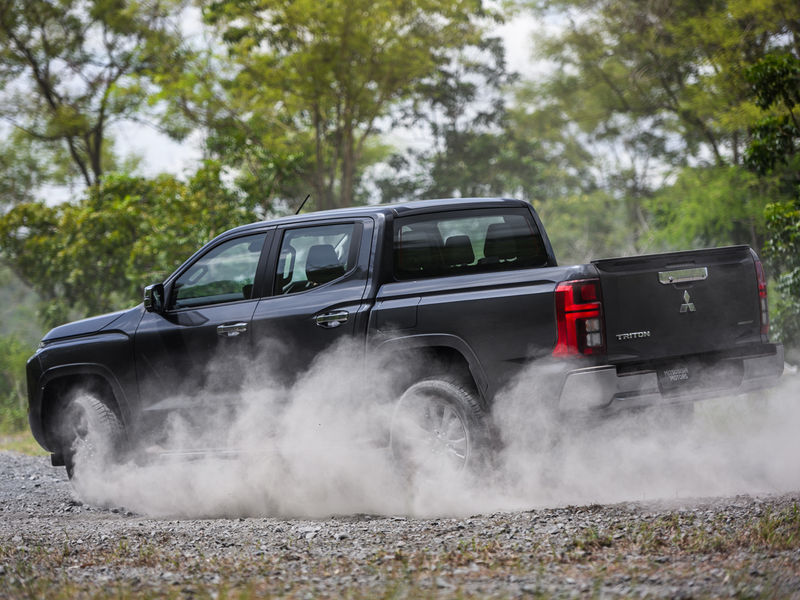
Revealed in July 2023, the new Triton has been “completely reimagined”, according to the Japanese automaker, from the interior and exterior design to the chassis, ladder frame and powertrain. The fresh-faced model features what Mitsubishi describes as a “beefed-up body size” compared to its forebear and is built on a “newly developed” ladder-frame platform.
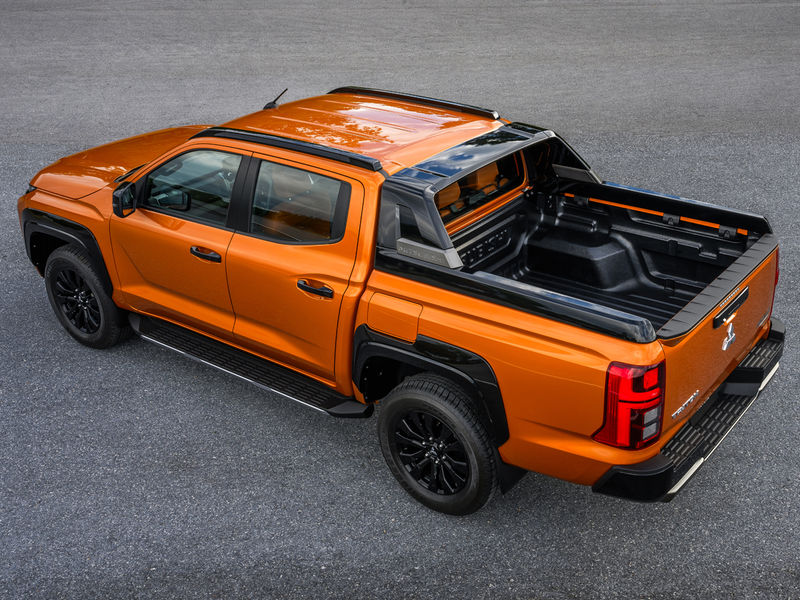
The new bakkie measures 5 320 mm (+15 mm) long and 1 865 mm (+50 mm) wide, while the wheelbase has been stretched 130 mm to 3 130 mm. The braked towing capacity of top-spec models is rated at 3 500 kg, representing a 400 kg increase.
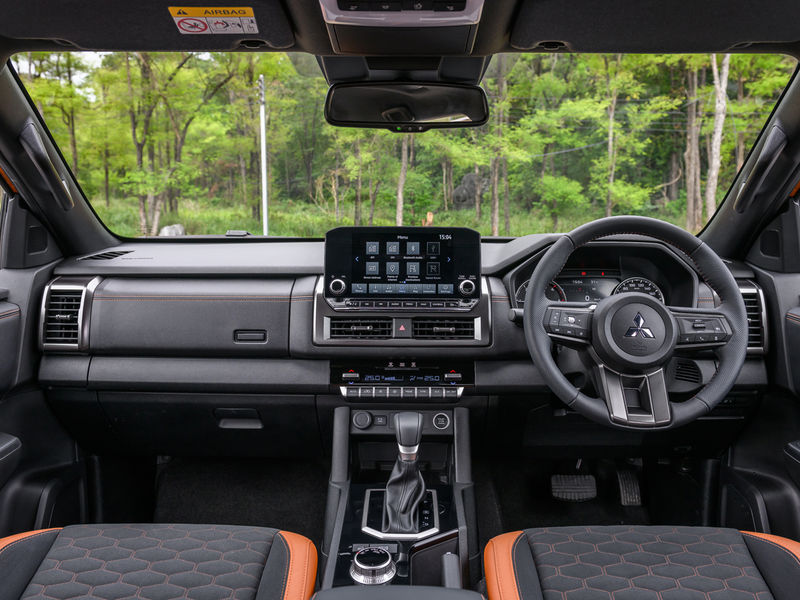
The load-bay length is 35 mm up on that of the preceding model (at 1 555 mm), while the load-bed height has been lowered by 45 mm to 820 mm, with the upper surface area of the bumper corner enlarged and reinforced, allowing it to be used as a step.
The outgoing Triton has been somewhat under-appreciated by South African bakkie buyers of late, with just 393 units sold locally over the opening 9 months of 2024 (some potential buyers may have been waiting for the new model, of course). In 2023, the Japanese bakkie attracted 729 sales (a year-on-year increase of 8.3%), seeing it rank just outside of the top 10.
Related content
Mitsubishi SA boss hits out at Chinese brands
Ryan Bubear

Having written about everything from sport and politics to crime, Ryan eventually settled on motoring. For well over 15 years, he's been penning articles – both online and in print – about the broader automotive industry, though he's particularly fascinated by vehicle-sales statistics. A freelance writer and editor, Ryan has owned a 1971 Austin Mini Mk3 for 20-plus years.