With one of the most unmistakable shapes of all time and an almost unrivalled rally pedigree, the Lancia Delta HF Integrale remains a dream car for many a petrolhead. But is it as good to drive as one would hope?
Group B rallying will always stand out as a high-water mark in the world of sport, not only motorsport, of the 20th century. The cars that competed in the (then) pinnacle of rallying developed crazy levels of power and achieved speeds on the ground, and in the air (!) that still beggars belief. And the drivers that were (barely) in control of those growling beasts were all real-life superheroes.
Perhaps inevitably, the series had to come to an end, following a number of fatal accidents. But the world rally championship (WRC) endured. In fact, it went from strength to strength…
It’s fair to say that some of the most iconic rally cars of all time (particularly from Lancia and Subaru) emerged from the shadow of Group B and continued to achieve celebrity status in this sport. Many would agree that the most memorable rally car of the ’80s and ’90s was indeed the Lancia Delta HF Integrale…
History
After the demise of Group B and, as a consequence, Lancia’s Delta S4 rally weapon, the Italian marque chose the most unlikely of platforms to underpin its next rally monster: the Delta compact hatchback.
Initially offered as a demure front-wheel drive rival for the likes of the Volkswagen Golf and Opel Kadett (Astra), an all-wheel-drive Delta variant was launched in 1986, incorporating lessons learnt during the S4’s development. To compete in Group A of the WRC in 1987, Lancia homologated the newcomer.
Specifications
- Model: 1989 Lancia Delta HF Integrale 16V
- Engine: 2.0-litre, four-cylinder, turbopetrol
- Power: 147 kW at 5 500 rpm
- Torque: 298 N.m at 3 000 rpm
- Transmission: 5-speed manual, AWD
- Weight: 1 291 kg
- 0-100 kph: 6.1 sec (claimed)
- Top speed: 212 kph (claimed)
Design
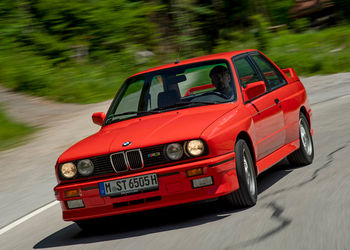
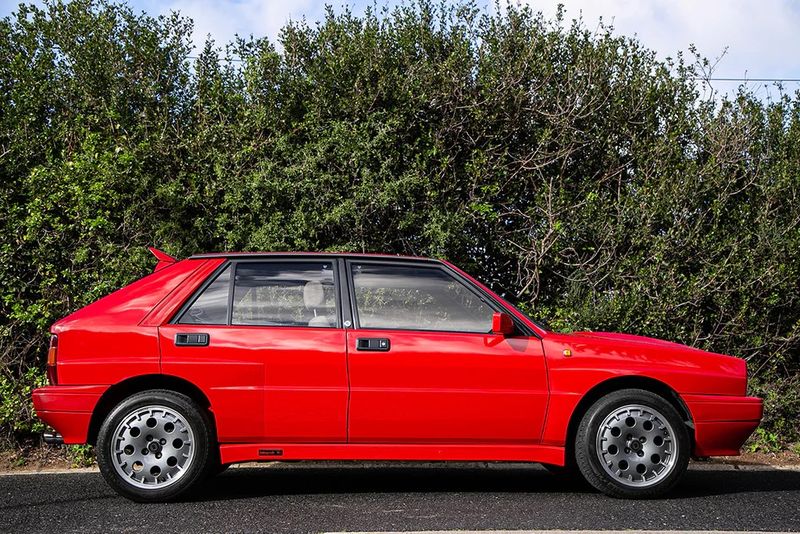
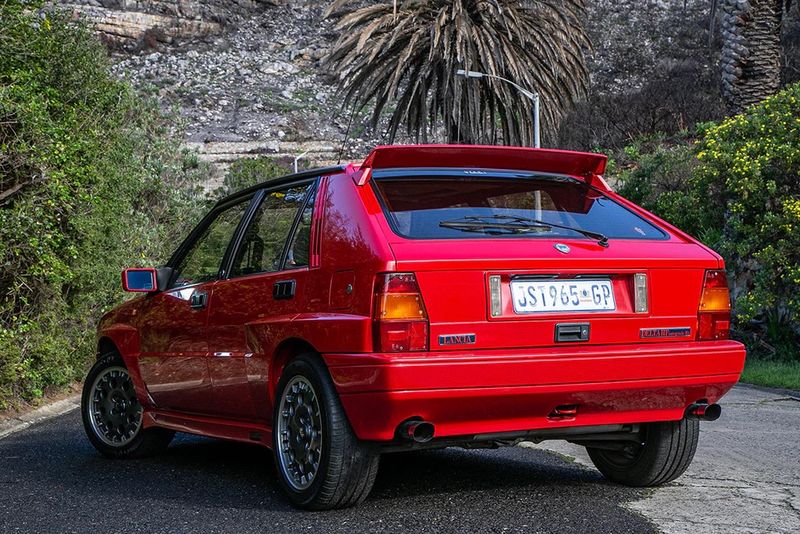
If you appreciate the boxy design of ’80s cars such as the E30 BMW 3 Series, especially the M3 with its flared arches, the Delta Integrale will be right up your alley. Designed by none other than Giorgetto Giugiaro, the original Delta hatch looked rather plain, but it was developed and improved over the years, gaining a far more macho appearance in the process, particularly so with the Evo and Evo II variants.
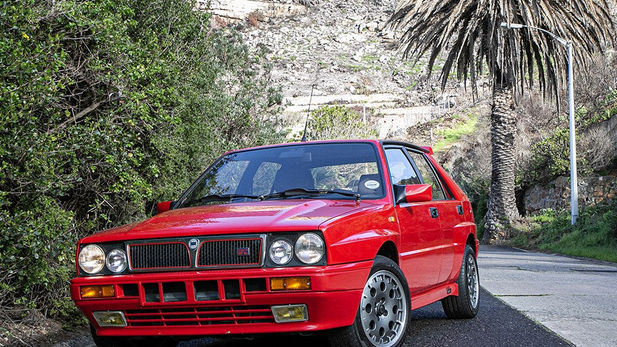
Even the Delta’s adjustable rear wing has a clean-cut and angular design. At the front, the blunt nose features a sudden drop and is studded with the legendary 4 headlights and multiple air intakes.
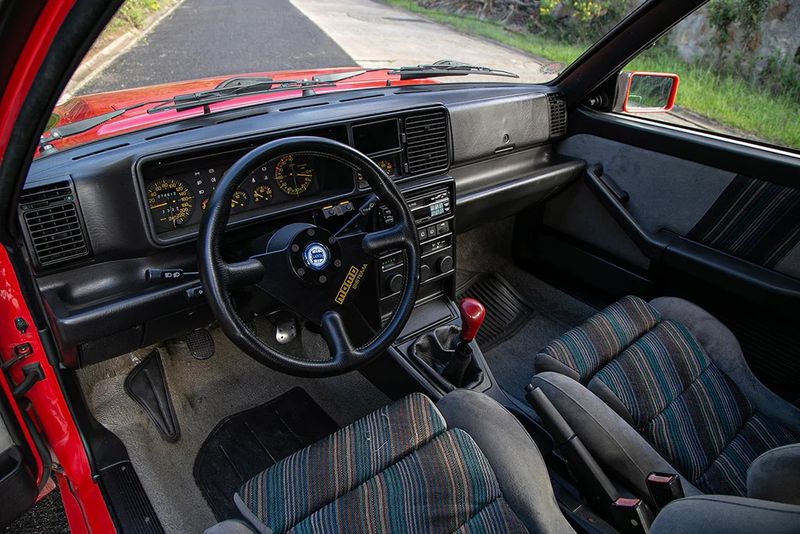
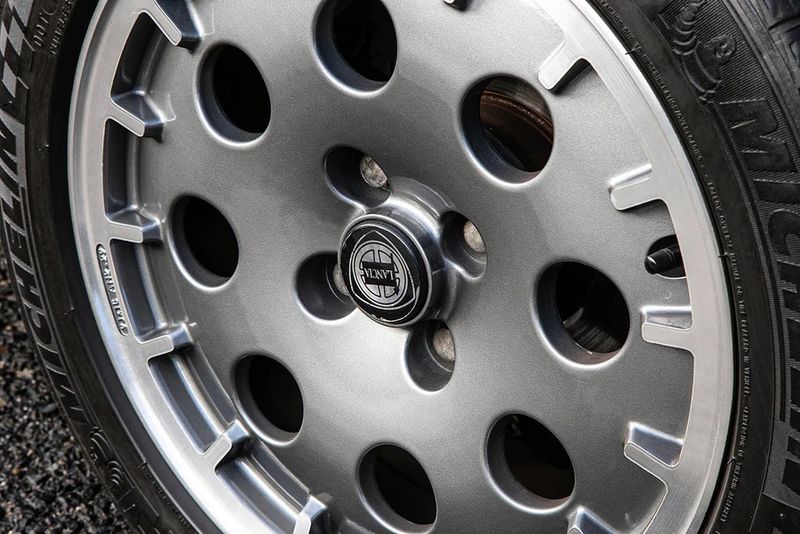
There are also the famous telephone dial (“teledial”) wheels and, most notably, a very vibrant interior design when you open the door. The Recaro cloth-upholstered seats are generously bolstered and have a neat multi-stripe theme in the centre cushions that is a further (delightful) throwback to the late-’80s.
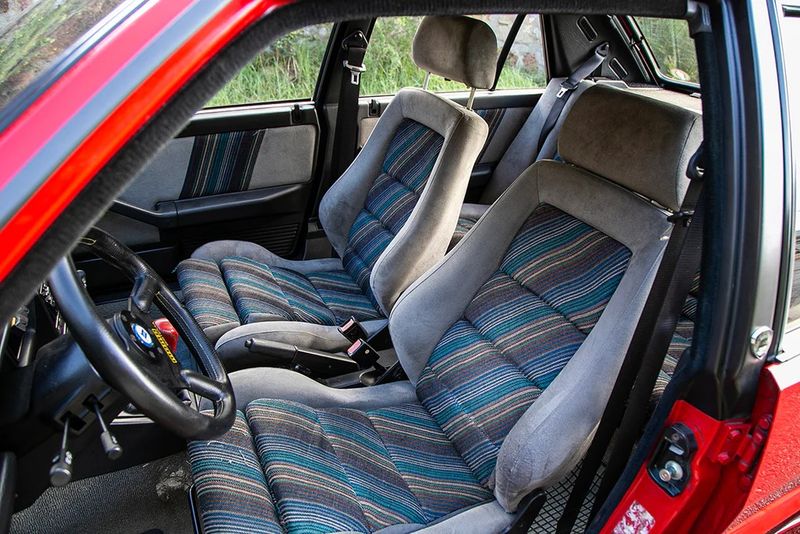
Once seated behind the Lancia’s ‘wheel, the square design approach of the exterior is replicated in front of you. The dashboard design is all angular, quite Germanic, actually – and perfectly period-correct.
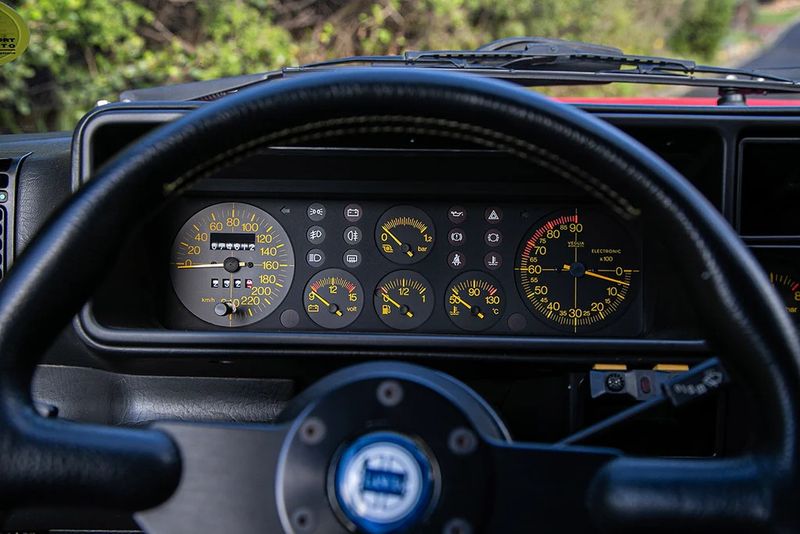
Even the layout of the dials is beautifully straightforward with the speedometer to the left, smaller dials in the centre and the rev counter to the right. It really does take you back to the ’80s!
Powertrain
The Lancia Delta HF Integrale 16V was powered by a 2.0-litre, 4-cylinder, 16-valve (the double overhead camshaft configuration was a very important differentiator, back then) turbocharged and intercooled petrol engine that was mated with a 5-speed manual gearbox that powered all 4 wheels, all the time.
The all-wheel-drive system featured an epicyclic centre differential (that normally distributed the torque as follows: 56% to the front axle, 44% to the rear), a Ferguson viscous coupling (to vary that torque split between the axles depending on road conditions and tyre grip), as well as a Torsen rear differential that further divided the torque delivered to each rear wheel according to grip available.
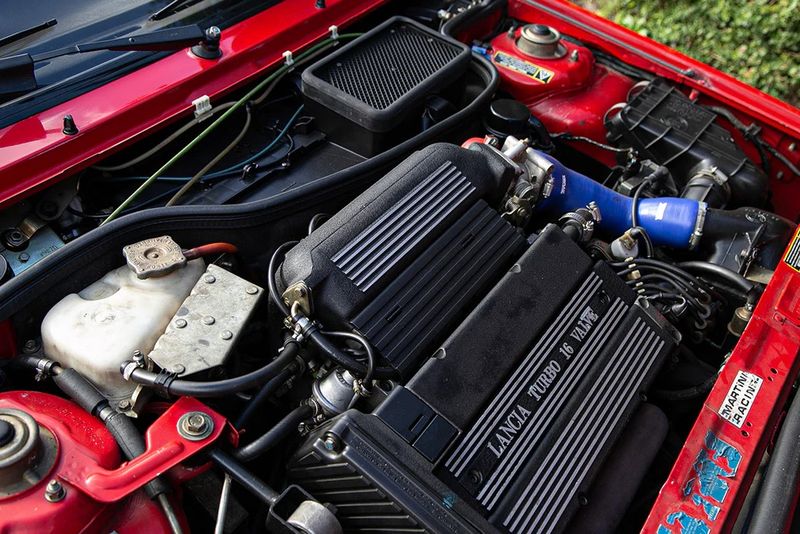
The engine developed 147 kW and 298 Nm and propelled the Delta HF Integrale 16V from a standstill to 100 kph in a claimed 6.1 sec and, if you’re a Volkswagen Golf GTI fan, those outputs may sound familiar.
The 5th-gen Volkswagen Golf GTI of the mid-2000s(!) produced 147 kW and 280 Nm! Suddenly the Delta HF Integrale 16V’s numbers look very impressive, wouldn’t you agree? Also, keep in mind that the Lancia is lighter than the Golf 5 GTI and was launched a decade and a half before the Volkswagen!
Behind the ‘wheel
When pottering around in traffic, there is never a sense that you need to mash the accelerator pedal to the floor; this is a comfortable car to drive slowly. The gear lever moves between the ratios with ease and even though it is a left-hand-drive car, because of its small footprint, all-round visibility is still very good.
I head to a quieter road, as you should with a car such as this that begs to be driven with enthusiasm, to open the Lancia’s proverbial taps a little… and when you keep your right foot on the long pedal for just a bit longer, you are treated to the full, old-school, turbocharged experience, which is deeply impressive.
It builds slowly in a typical turbocharged manner (no fancy twin-scroll tech here), but then, just before 4 000 rpm, the motor dumps all its torque through the drivetrain. You have another 2 500 rpm – which goes by rather quickly! – to enjoy this level of performance before you need to shift to the next gear.
Keep your foot flat and you will again surf the crest of the torque wave. If not, you will just have to wait a moment for the boost to build up again. The Lancia is a car that rewards the dedicated driver – one who is willing to learn its ways. If you corner with a little bit more gusto, the high level of grip (7JX15, 205/50 R15 front and rear) is reassuring. I was pleasantly surprised by the performance of this 35-year-old car!
The steering wheel also provides a good level of feedback, while the Delta HF Integrale also feels compact at all times – which is a rare occurrence considering today’s much larger and heavier cars.
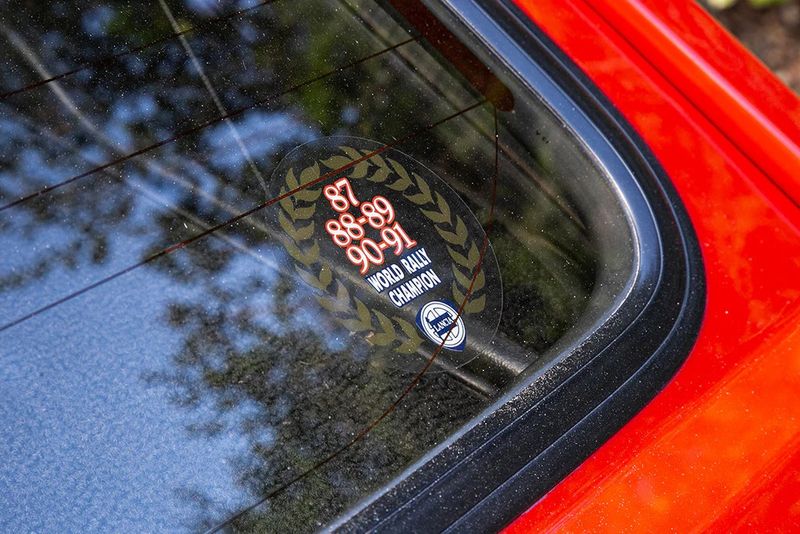
The fact that you can also manually adjust the rear wing is another interesting feature for enthusiasts, and so is the sticker in the rear window reminding one of Lancia’s WRC success from 1987 to 1991!
Summary
From my limited time with this car, it was evident that it had been well looked after. Therefore, it didn’t come as a surprise when I learnt that this example, supplied by Moto Village, quickly found a new owner.
After all, the Lancia Delta HF Integrale shares a bloodline with immensely memorable rally car versions that the Italian marque campaigned in the WRC. This is a hero you won’t be disappointed to meet!
Search for a classic car listed for sale on Cars.co.za
Search for a classic car listed by Moto Village
Find exclusive car-themed merchandise at the SentiMETAL Shop
Related content:
The 21st-century hot hatch is fading – get one while you can
Wilhelm Lutjeharms

A passionate car enthusiast from an early age, Wilhelm has been a motoring writer since 2006, having worked for more than 10 years at CAR magazine before turning to a full-time freelance career. He is also a contributing writer for UK, USA and European-based motoring titles.