In May 2026, South Africa’s new-vehicle market registered its 20th consecutive month of year-on-year growth, with Jetour retaining its top-10 spot on the back of record sales…
- New-vehicle sales up 12.8% year-on-year in May
- South Africa’s highest May sales total since 2013
- Toyota still leads but market share slips to 20.9%
- Jetour breaks through 2 000-unit mark to keep 8th
- Mahindra and Isuzu return to top 10 in May 2026
In May 2026, sales in South Africa’s new-vehicle market increased 12.8% year on year to 51 071 units, representing the local industry’s 20th straight month of year-on-year growth as well as its strongest May showing since 2013.
Furthermore, that figure – again breaching the 50 000-unit barrier – was 6.4% up on April 2026’s performance. In contrast, new-vehicle exports from South Africa dropped 4.8% year on year to 29 392 units in May 2026.
Industry-representative body Naamsa said an estimated 90.1% of May 2026’s total reported domestic figure of 51 071 units represented sales via the dealership channel, while 5.3% were sales to the new-vehicle rental industry, 2.5% to industry corporate fleets and 2.1% to government.
Mzansi’s new passenger-vehicle market ended May 2026 on 36 871 units (with rental sales accounting for 6.0% of that number), an increase of 16.3% compared to the same month in 2025. Meanwhile, local sales of new light commercial vehicles (LCVs) came in at 11 251 units, up 2.5% year on year.
- ALSO READ: SA’s top vehicle-export markets revealed
Meanwhile, Brandon Cohen, National Chairperson of the National Automobile Dealers Association (NADA), said the local market’s performance continued to “confound industry commentators”.
“Given the recent interest-rate increase, ongoing cost-of-living pressures and concerns around consumer affordability, many expected vehicle demand to come under greater pressure. Instead, the market continues to show surprising resilience, supported by replacement demand and consumers’ ongoing need for personal mobility,” said Cohen.
- ALSO READ: New BYD Ti 7 firming for South Africa
Thanda Sithole, Senior Economist at WesBank, described May 2026’s market performance as “encouraging”, pointing out that “growth was led by passenger cars, while the commercial vehicle segments also remained positive, suggesting that the recovery has breadth”.
New-vehicle sales summary for May 2026
- Aggregate new-vehicle sales of 51 071 units increased by 12.8% (5 784 units) compared to May 2025.
- New passenger-vehicle sales of 36 871 units increased by 16.3% (5 170 units) compared to May 2025.
- New light-commercial vehicle sales of 11 251 units increased by 2.5% (273 units) compared to May 2025.
- Export sales of 29 392 units decreased by 4.8% (1 467 units) compared to May 2025.
10 best-selling automakers in SA in May 2026
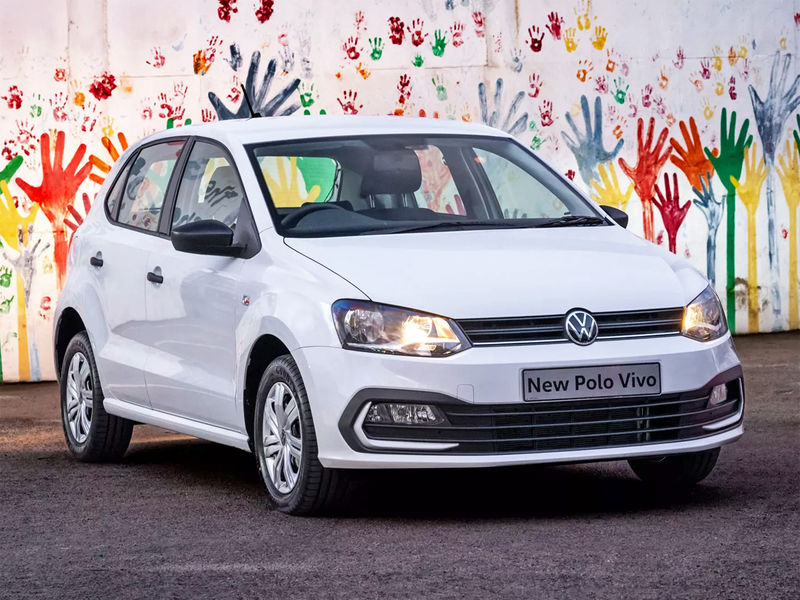
Toyota SA Motors held steady right at the top of the table, again ranking as South Africa’s best-selling automaker by quite some margin. In May 2026, the Japanese company (including its Lexus and Hino brands) registered 10 667 units in Mzansi, up 4.7% on April’s effort. Still, the company’s market share slipped slightly to 20.9%, down from 21.2% in April and 22.8% in March.
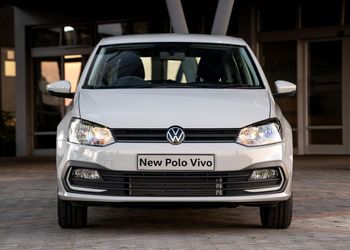
While Suzuki Auto SA retained 2nd position in May with a total of 5 546 units (up 3.4% month on month), 3rd-placed Volkswagen Group Africa (including Audi) narrowed the gap somewhat. In the end, the German company increased its tally 10.0% compared to April, ending on 5 295 units – or just 251 units behind Suzuki.
Meanwhile, Hyundai Automotive SA (3 054 units; up 6.9% month on month) and Ford Motor Company of SA (2 932 units; up 8.5% month on month) remained in 4th and 5th position, respectively, though there were only 122 units between them.
Similarly, a mere 36 units separated Chinese firms GWM SA (up 4.8% month on month to 2 605 units) and Chery SA (up 4.3% month on month to 2 569 units), with these automakers keeping hold of 6th and 7th place, respectively.
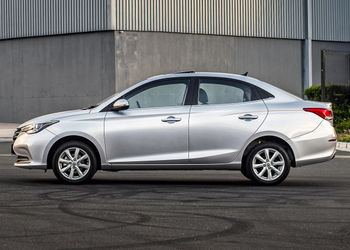
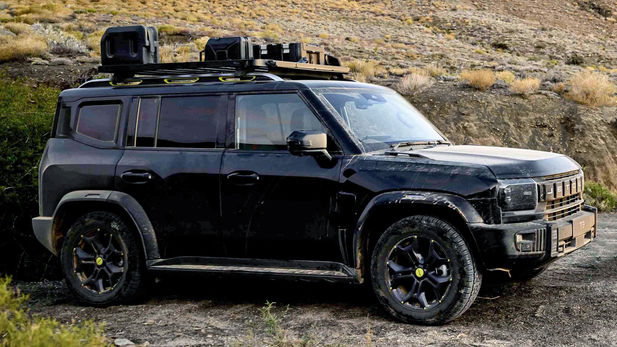
After climbing to a new high of 8th in April, Jetour SA – which falls under the Chery Group umbrella globally but seemingly operates independently in Mzansi – not only retained this top-10 spot in May but also registered record sales. The Chinese company cracked the 2 000-unit mark for the first time, growing its tally 12.0% month on month to 2 020 units.
Mahindra SA (1 429 units; up 30.1% month on month) and Isuzu Motors SA (1 371 units; up 3.9% month on month) both returned to the top 10 in May 2026. As such, after breaking into the top 10 for the first time in April, Omoda & Jaecoo SA (1 369 units) narrowly missed out in May, with BMW Group SA (on a Naamsa-estimated 1 349 units, including the Mini brand) likewise dropping off the table (to 12th).
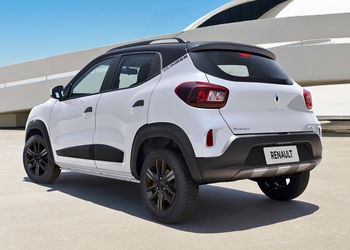
Finally, Kia SA (1 312 units) slipped a ranking to 13th, while Renault SA (1 240 units) dropped a spot to 14th. Stellantis SA closed out the top 15 on 811 units in May 2026, forcing Nissan SA (789 units) out of the picture.
1. Toyota – 10 667 units
2. Suzuki – 5 546 units
3. Volkswagen Group – 5 295 units
4. Hyundai – 3 054 units
5. Ford – 2 932 units
6. GWM – 2 605 units
7. Chery – 2 569 units
8. Jetour – 2 020 units
9. Mahindra – 1 429 units
10. Isuzu – 1 371 units
SA’s new-vehicle sales outlook for the rest of the year
So, where to from here for South Africa’s new-vehicle market? Well, Naamsa says the economic backdrop that “underpinned the vehicle market’s recovery through the first quarter of 2026 is gradually giving way to a more challenging set of conditions”.
“Rising fuel prices, mounting inflation risks and a changing interest-rate outlook have altered the trajectory of the broader economy, introducing new pressures on household budgets and business operating costs,” the industry-representative body points out, adding that these developments are “likely to influence both vehicle affordability and purchasing behaviour”.
- ALSO READ: Jaecoo J5 EV locked in for South Africa…
Similarly, NADA’s Cohen suggests the coming months will provide a far clearer indication of how these higher borrowing costs and related economic headwinds will impact consumer behaviour in South Africa’s new-vehicle market.
“The challenge for the remainder of the year will be whether consumers can continue to absorb higher financing costs and rising living expenses. For now, however, the market’s performance demonstrates that South Africans continue to prioritise mobility, even in a demanding economic environment,” says Cohen.
- ALSO READ: 3 powertrains confirmed for GWM Ora 5
WesBank’s Sithole adds the “shift in the interest-rate environment and renewed fuel-price pressure mean affordability will remain a key consideration for households and businesses in the months ahead”.
“The second half of 2026 will require consumers to stay informed and make decisions grounded in their own financial position, but the future looks positive,” says Sithole.
Related content
Just how many cars did China ship to SA in 2025?
Ryan Bubear

Having written about everything from sport and politics to crime, Ryan eventually settled on motoring. For well over 15 years, he's been penning articles – both online and in print – about the broader automotive industry, though he's particularly fascinated by vehicle-sales statistics. A freelance writer and editor, Ryan has owned a 1971 Austin Mini Mk3 for 20-plus years.