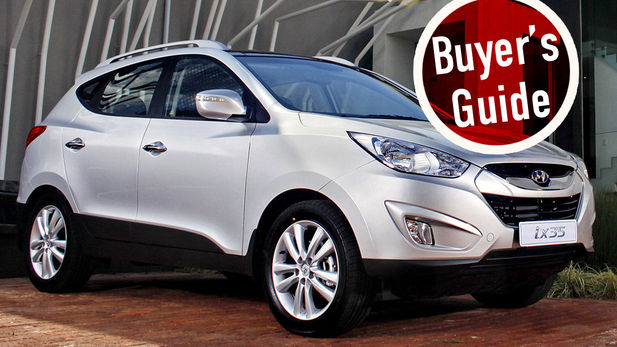
As the successor to the popular Tucson, the Hyundai ix35 represented a big step up from the original. So, what should you look out for when shopping on the used market and which one should you buy? Let’s dig in…
While Hyundai’s original JM-generation Tucson was a fairly generically styled compact crossover, the ix35 that followed adopted all manner of sweeping (dare we say coupé-like) lines, along with a smartly upgraded cabin, more efficient powertrain options and a raft of extra features. In short, it represented a significant step forward for the brand.
Although the Seoul-based automaker has since switched back to the Tucson nameplate, the ix35 remains a popular choice on South Africa’s used market, having sold in impressive numbers for the 6 years it was marketed locally.
Have a Hyundai ix35 you want to sell? Sell it to SA’s largest dealer network for free here
Hyundai ix35 model line-up
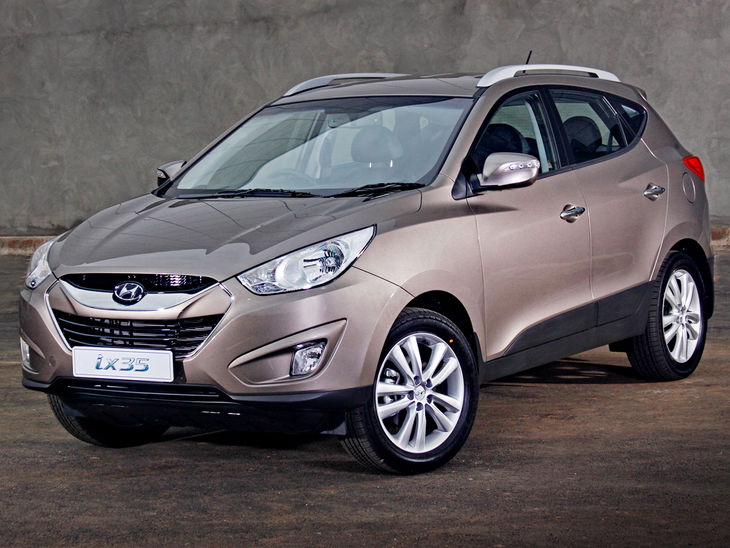
The original ix35 range included this 2.4-litre petrol model, boasting 4×4 and a 6-speed automatic cog-swapper.
The ix35 arrived in South Africa in mid-2010, replacing the Tucson and debuting a badge that adopted the same prefix as other passenger cars in Hyundai’s line-up (thus falling in line with the alphanumeric nomenclature employed by the i10, i20 and i30).
At launch, the ix35 was available in six variants (four petrol and two diesel):
- 2.0 GL (122 kW/197 Nm) 5-speed manual
- 2.0 GLS (122 kW/197 Nm) 5-speed manual
- 2.0 GLS (122 kW/197 Nm) 6-speed automatic
- 2.4 GLS 4×4 (130 kW/227 Nm) 6-speed automatic
- 2.0 CRDi GLS (130 kW/383 Nm) 6-speed manual
- 2.0 CRDi GLS 4×4 (130 kW/392 Nm) 6-speed automatic
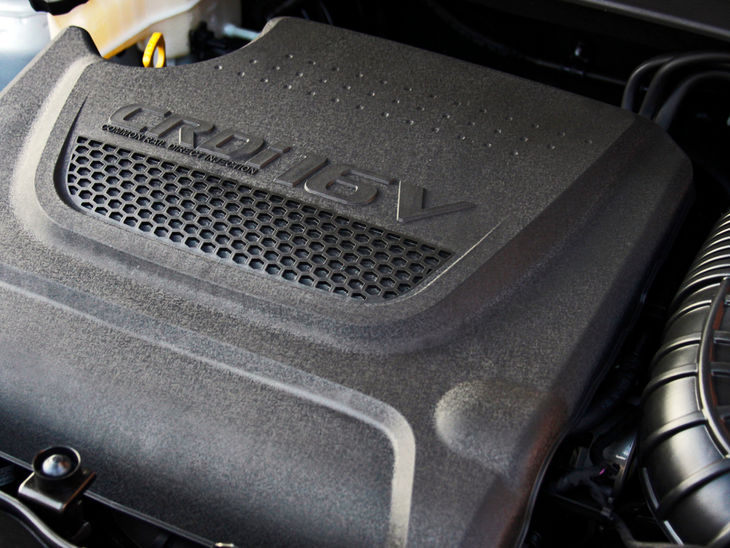
At launch, a 2.0-litre CRDi engine powered the flagship derivatives.
Interestingly, the ix35 was initially imported into South Africa from South Korea, before Hyundai Automotive SA quietly started sourcing its units from the Czech Republic instead, apparently in a bid to secure a steadier flow of stock.
In 2014, the upgraded range touched down in South Africa, headlined by a new 2.0-litre petrol engine (which made do with slightly lower peak outputs of 116 kW and 192 Nm, but was somewhat lighter on unleaded) and fresh gearboxes. Hyundai furthermore took the opportunity to roll out new trim levels alongside the requisite (though fairly minor) exterior redesign and smattering of extra standard kit.
The rejig also resulted in the demise of the 2.4-litre 4×4 derivative. However, later in 2014, the range expanded with the addition of a downsized oil-burning option. This frugal 1.7-litre turbodiesel engine was mated with a 6-speed manual gearbox, and offered 85 kW and 260 Nm.
| Date of introduction | Hyundai ix35 model derivative |
| May 2010 | 2.0 GL (122 kW/197 Nm) 5-spd MT 2.0 GLS (122 kW/197 Nm) 5-spd MT 2.0 GLS (122 kW/197 Nm) 6-spd AT 2.4 GLS 4×4 (130 kW/227 Nm) 6-spd AT 2.0 CRDi GLS (130 kW/383 Nm) 6-spd MT 2.0 CRDi GLS 4×4 (130 kW/392 Nm) 6-spd AT |
| March 2014 | 2.0 Premium (116 kW/192 Nm) 6-spd MT 2.0 Premium (116 kW/192 Nm) 6-spd AT 2.0 Executive (116 kW/192 Nm) 6-spd MT 2.0 Elite (116 kW/192 Nm) 6-spd AT 2.0 CRDi Elite (130 kW/392 Nm) 6-spd AT 2.0 CRDi Elite 4×4 (130 kW/392 Nm) 6-spd AT |
| November 2014 | 1.7 CRDi Premium (85 kW/260 Nm) 6-spd MT |
Product strengths
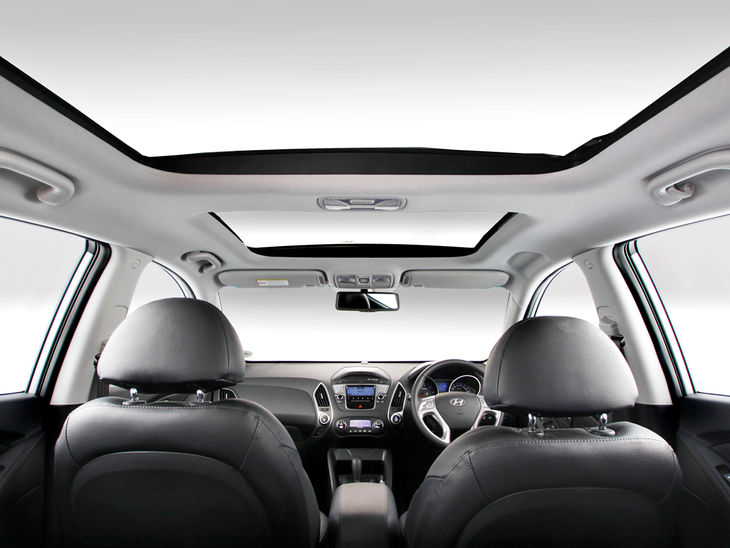
Plenty of space inside the ix35, with the range-topping diesel model furthermore boasting dual sunroofs.
The ix35 was 85 mm longer and 20 mm wider than the Tucson it replaced, while it gained 10 mm more space between its axles. The result was a relatively roomy cabin and a class-competitive luggage compartment (which also had the job of housing a full-size spare wheel). Compared with its forebear, the ix35’s interior felt solidly built and palpably more upmarket.
Furthermore, the list of included equipment was generous. At launch in 2010, items of kit that were standard across the range included a reversing camera, a leather-trimmed steering wheel and alloy wheels. All but the base petrol models were additionally equipped with black leather upholstery, dual-zone climate control, electric folding mirrors and cruise control, while the diesel flagship boasted an electrically adjustable driver’s seat, dual panoramic sunroofs, push-button start and even a separate amplifier for the 6-speaker sound system.
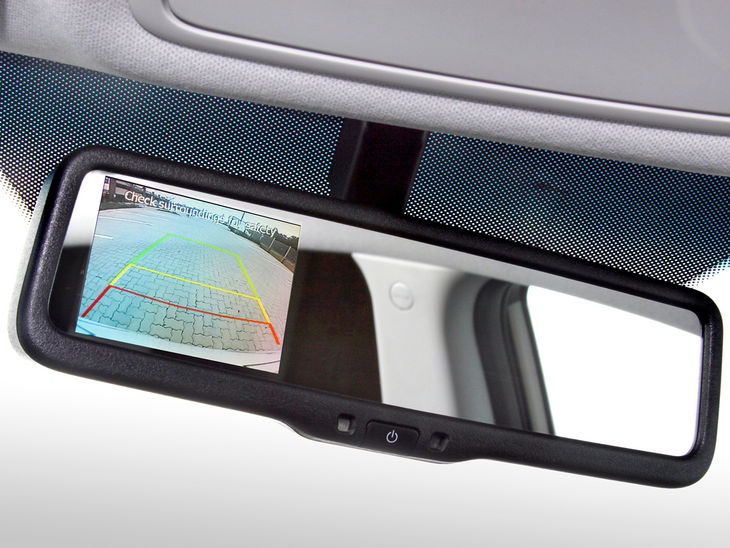
All variants in the original line-up featured a reversing camera, with the display integrated into the rearview mirror.
Another big selling point was the fuel economy potential of the diesel engines. According to Hyundai, the front-wheel-drive, manual-equipped version of the 2.0-litre CRDi model sipped at 6.4 L/100 km (a figure that interestingly climbed to 6.5 with the 2014 update). However, it was the later 1.7-litre unit that really allowed budding hyper-milers to wring every last kilometre from the 58-litre tank.
Product weaknesses
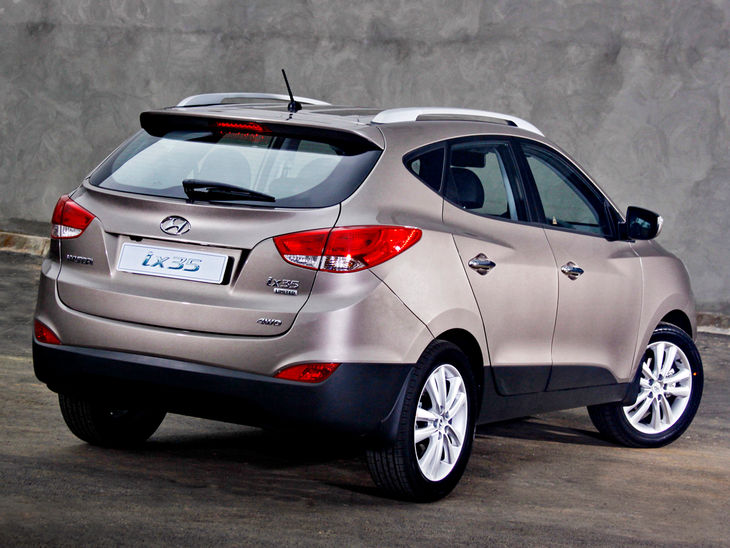
The suspension was perhaps a little too firmly sprung compared with some rivals.
Of course, the ix35 wasn’t without its foibles. The pre-facelift range, for instance, went without reach adjustment on the steering column, making it tricky to dial in a comfortable driving position. Thankfully, Hyundai remedied this with the 2014 update, adding telescopic adjustment to all but the entry-level Premium-spec models.
In addition, like so many Korean products of the era, the steering lacked both weight and feel. The ride, meanwhile, was regarded as slightly too firm at low speeds, while all front-driven variants in the original line-up shipped without electronic stability control. Again, however, mid-and top-spec derivatives gained this safety feature with the 2014 update.
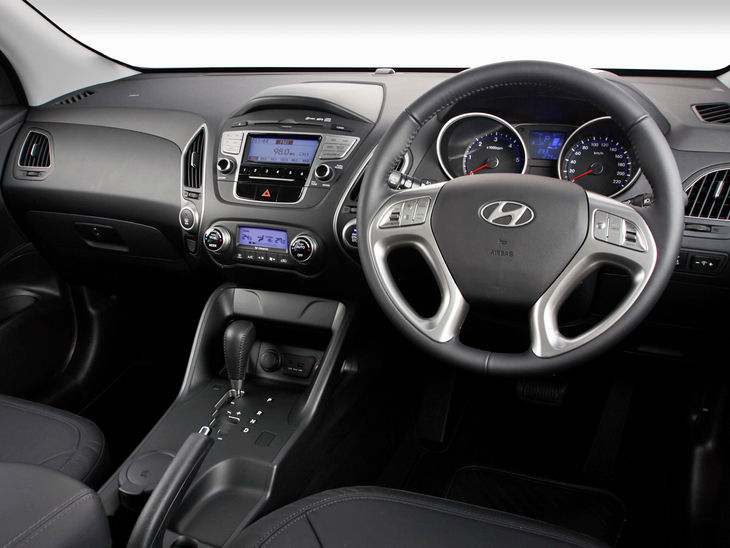
Look out for excessive peeling of the trim on the steering wheel.
While the ix35 has built up a solid reputation for mechanical dependability (when maintained properly, of course), owners have reported a few issues. For example, some early manual models apparently suffered from clutch problems, though this tended to occur at fairly low mileage. We’d also recommend evaluating the air-conditioning system during your test drive, as some owners have complained about poor HVAC performance.
Furthermore, we’ve heard of numerous instances of steering-wheel trim peeling excessively after just a handful of years (Hyundai even issued a technical service bulletin on this topic in certain parts of the world). While some wear is to be expected on as frequent a touch point such as this, it’s worth closely examining the tiller of a vehicle you’re considering.
Thankfully, all engines in the ix35 range are chain driven, which means there’s no (often expensive) scheduled cambelt replacement about which to worry.
What to pay?
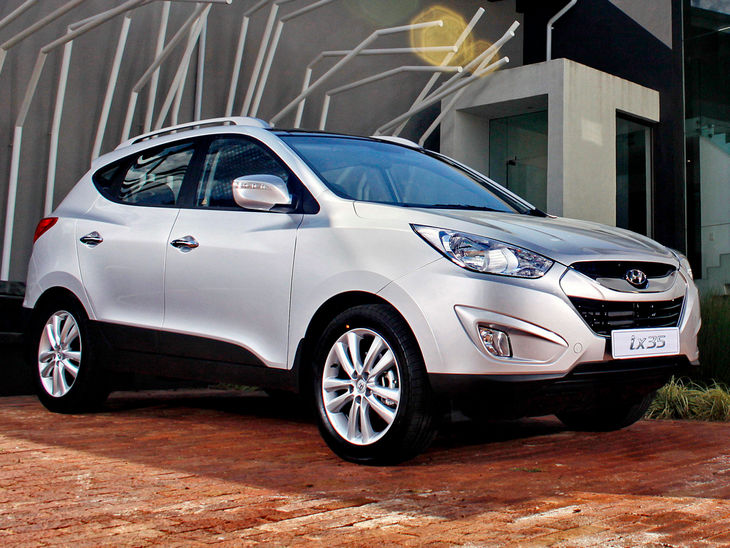
Most of the country’s ix35 stock is listed for between R150 000 and R200 000.
If you head over to Cars.co.za’s dedicated listings section for the Hyundai ix35, you’ll find a wide array of options. As always, first prize is a fastidiously maintained example with as long a service history as possible. Since the majority of ix35s would have been used as family haulers, finding one with minimal wear and tear in the cabin might prove tricky. Still, it’s certainly not impossible if you’re prepared to be patient.
- Below R125 000: At the time of writing, prices kick off at a shade over R100 000, though only a few are on offer below R125 000. Interestingly, most examples at this low price point are listed with less than 100 000 km on the clock.
- From R125 000 to R150 000: There are more options – including a couple with well in excess of 220 000 km on the odometer – in this price bracket, though most of them take the form of 2.0-litre petrol models.
- From R150 000 to R200 000: The overwhelming majority of used stock is found between these bookends (this is where you’ll come across most of the diesels, too). We managed to pick out quite a few well-looked-after examples, many with partial service history at the agents and reasonable mileage.
- R200 000 and up: If you prefer as late a model year as possible (which would have just come out of its 5-year service plan), there’s a fair choice above the R200 000 mark, many featuring mid- and top-spec trim levels. We even came across a couple of 2.0 CRDi derivatives priced well in excess of R300 000!
Pick of the range?
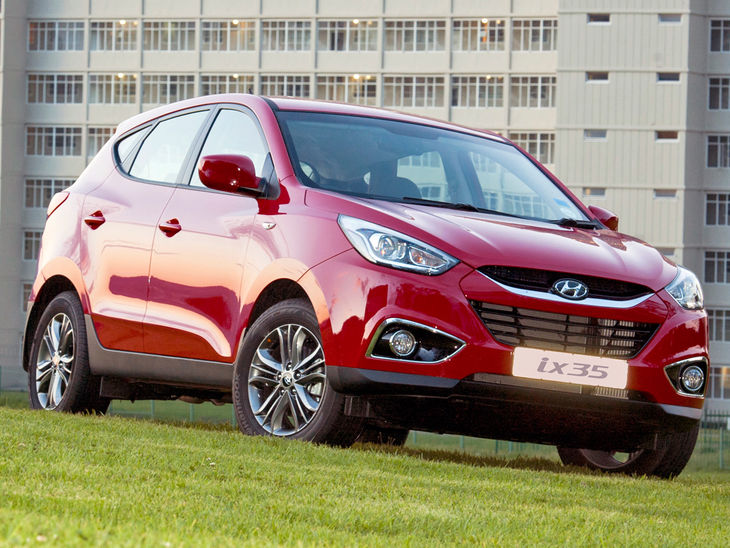
The 1.7 CRDi Premium that arrived in 2014 features the most balanced powertrain in the range.
Though the 2.0-litre petrol models – both with the earlier Theta-II engine and the later NU lump – are easily the most common, the 1.7 CRDi Premium arguably has the most compelling powertrain in the ix35 range. It’s far more frugal than the naturally aspirated petrol powerplants and a mite smoother and more refined than the brawnier 2.0 CRDi unit, too.
Unfortunately, since it was on the market for only around two years, the 1.7 CRDi Premium is in comparatively short supply, which means you’ll have to hunt hard to find a meticulously maintained one. Also, be aware this derivative was available only with a 6-speed manual gearbox (and no traction control), so you’d have to consider one of the other variants should you require a self-shifting vehicle. The same goes for buyers searching for something with all the bells and whistles; the Premium specification level, though generous, was positioned below Executive and Elite grades.
Verdict
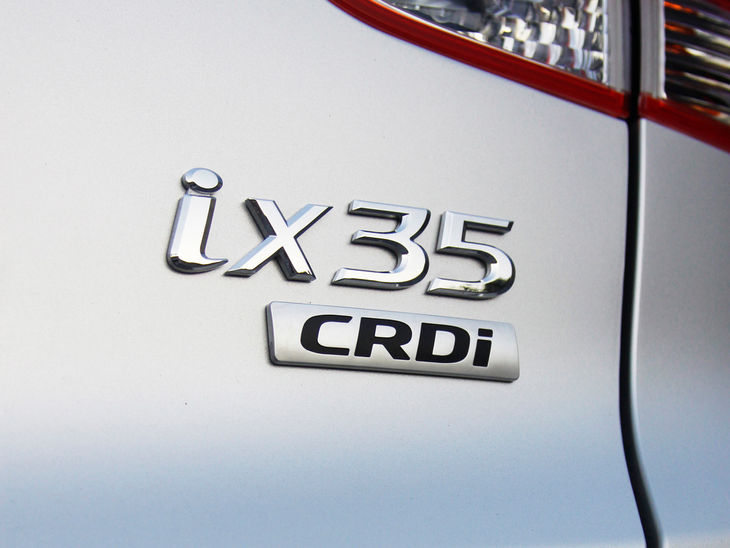
If you value efficiency, concentrate on the turbodiesel derivatives.
Keep your eyes peeled and it’s perfectly possible to pick up a clean example of Hyundai’s ix35, a vehicle that helped cement the Korean brand’s now rock-solid reputation. Since this model sold in appreciable numbers in South Africa, there’s a fair amount of stock on the used market (though, again, most are petrol flavoured) from which to choose.
What are some credible alternatives to the ix35? Well, there are many, though the closely related third-generation Kia Sportage is perhaps the most obvious rival. It’s also possible to bag a late-year, first-generation Nissan Qashqai (or even an early second-gen model) for similar money. Another Japanese-built alternative is the fourth-generation Toyota RAV4 (complete with the option of the brand’s revered 2.2 D-4D engine), though since it has retained its value a little better, it will likely cost you more. Of course, Volkswagen also offered the original Tiguan around this time, but these also remain fairly pricey in comparison, while Honda had the CR-V and Mazda the CX-5.
Even in a sea of capable rivals, the Hyundai ix35 comes highly recommended, offering buyers a heady mix of practicality, standard specification and fuel efficiency (when equipped with one of the turbodiesel engines, that is).
Looking for a Hyundai ix35 to buy?
Find one on Cars.co.za here