Now armed with a quick-shifting dual-clutch automatic transmission, the facelifted Hyundai i30 N offers much improved usability, but how good is it really? We travelled more than 1 500 km in the newcomer – arguably the only true rival to the VW Golf 8 GTI in the new-vehicle market – so that we could compile this comprehensive assessment.
We like: Arresting appearance, generous list of standard features, drive-mode customisation, exhaust note, performance, handling.
We don’t like: Notably firm ride quality, fuel consumption can creep up, unexciting interior.
FAST FACTS
- Model: Hyundai i30 N
- Price: R749 900
- Engine: 2.0-litre 4-cylinder turbo petrol
- Power/Torque: 206 kW/392 Nm
- Transmission: 8-speed dual-clutch transmission
- Fuel consumption: 8.9 L/100 km (claimed)
- 0-100 kph: 5.4 sec (claimed)
- Boot capacity: 381–1 287 litres
Serious about buying/selling?
Some Hyundai dealerships regularly offer great deals. See our New Car Specials!
Looking to sell your car? You can sell your car to SA’s biggest dealer network
Search for a new or used Hyundai
Where does the i30 N fit in?
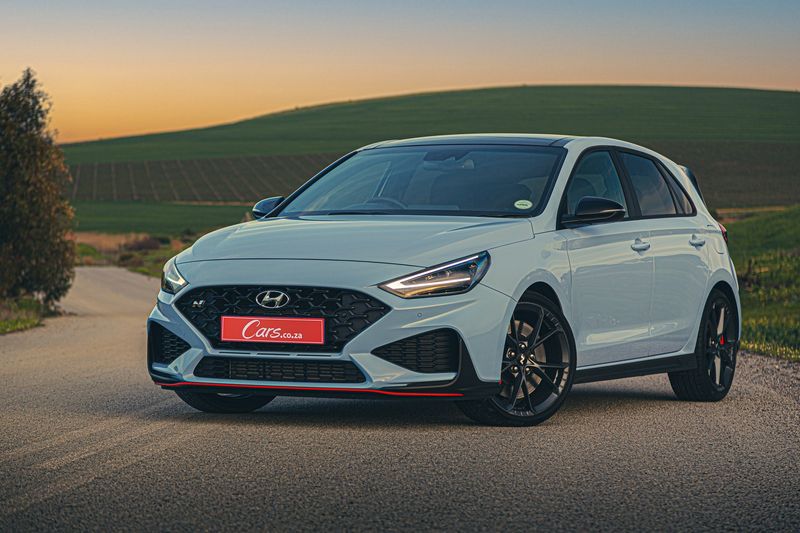
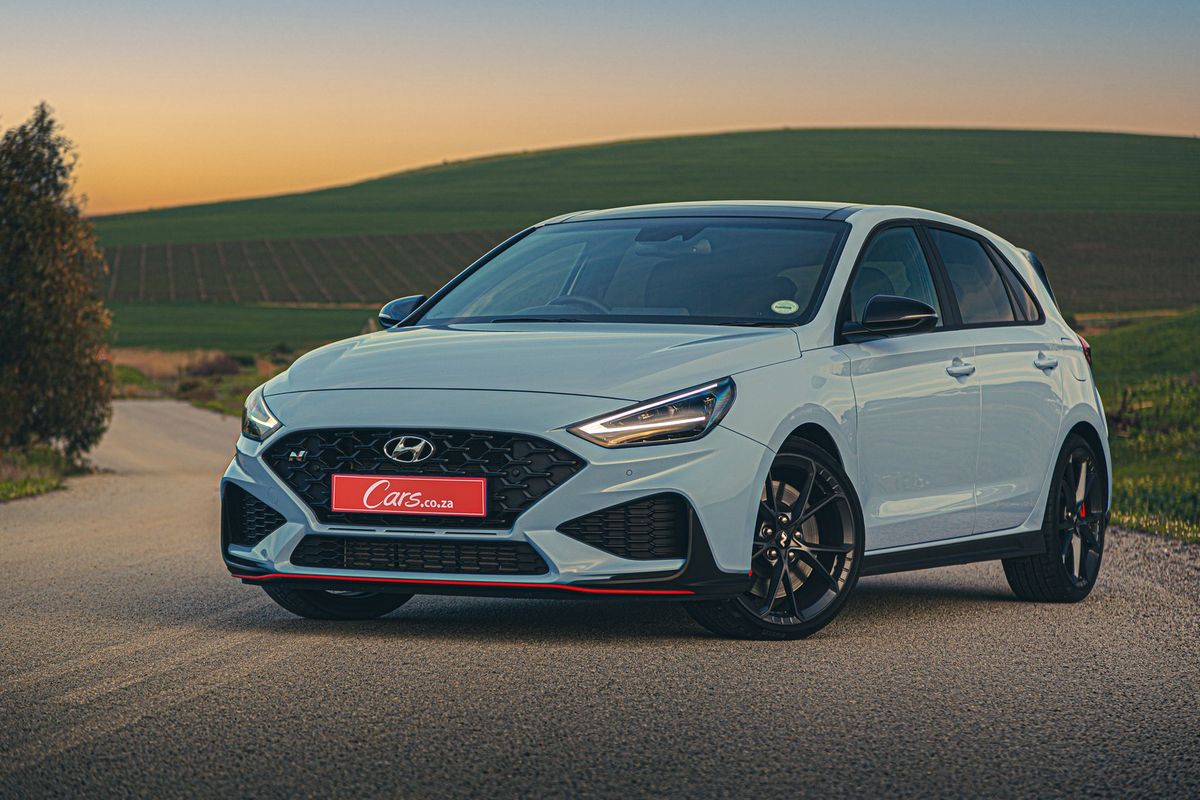
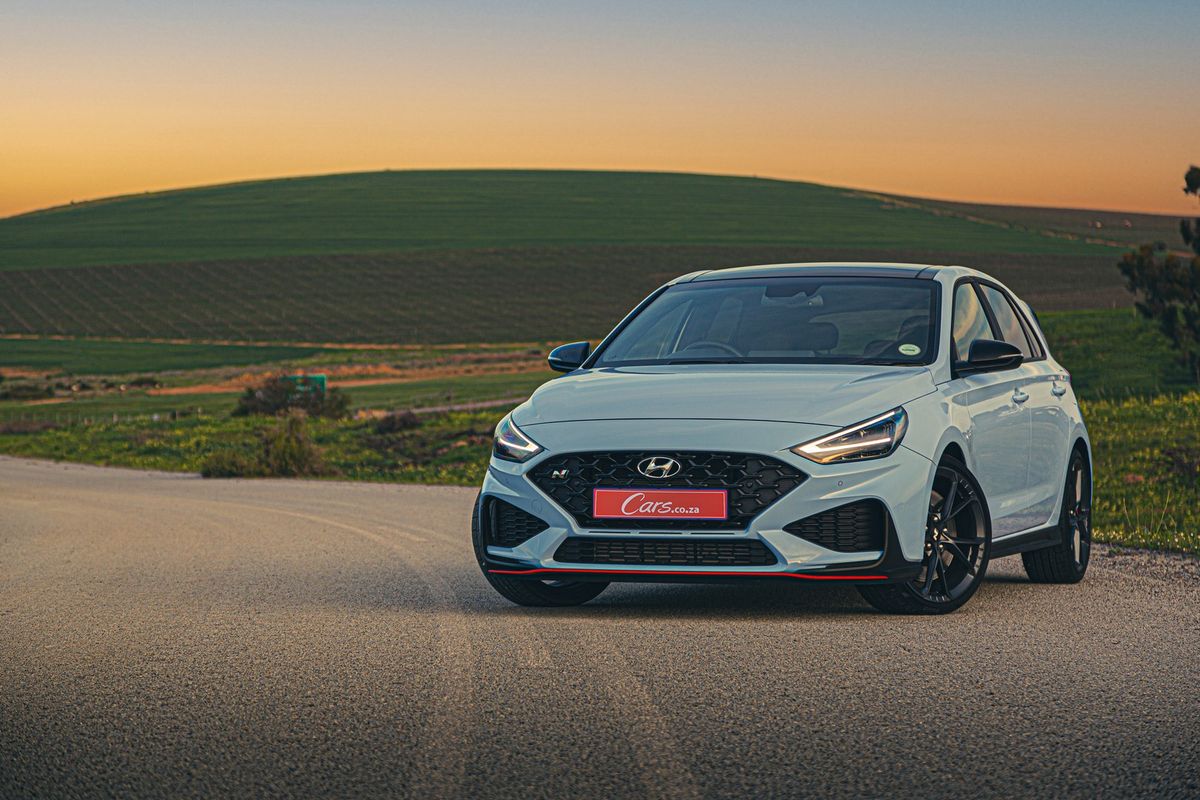
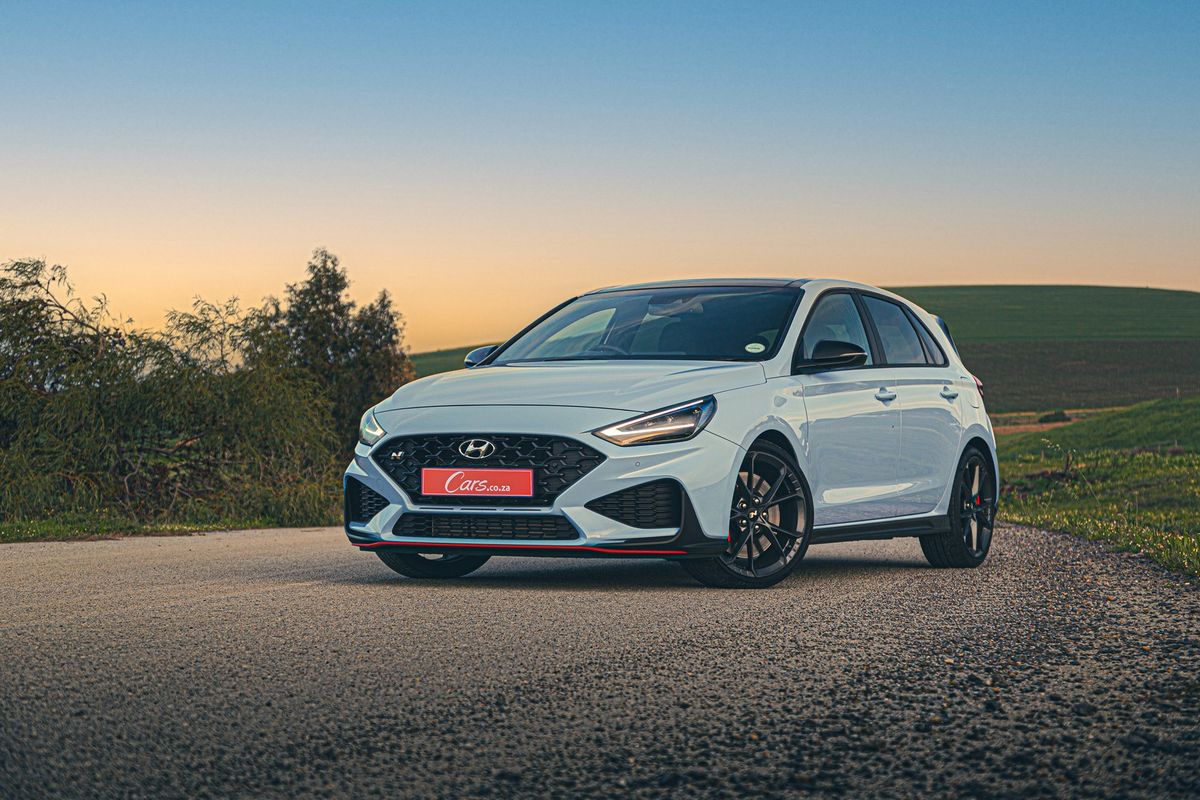
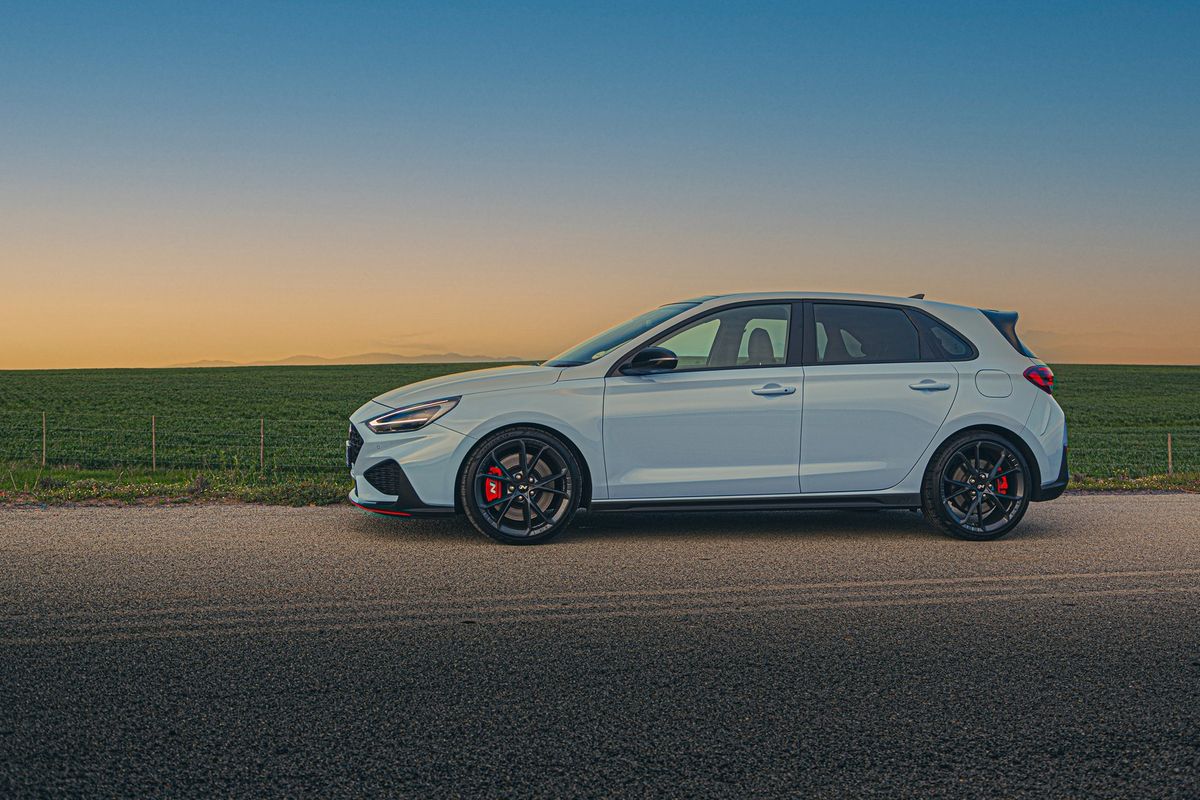
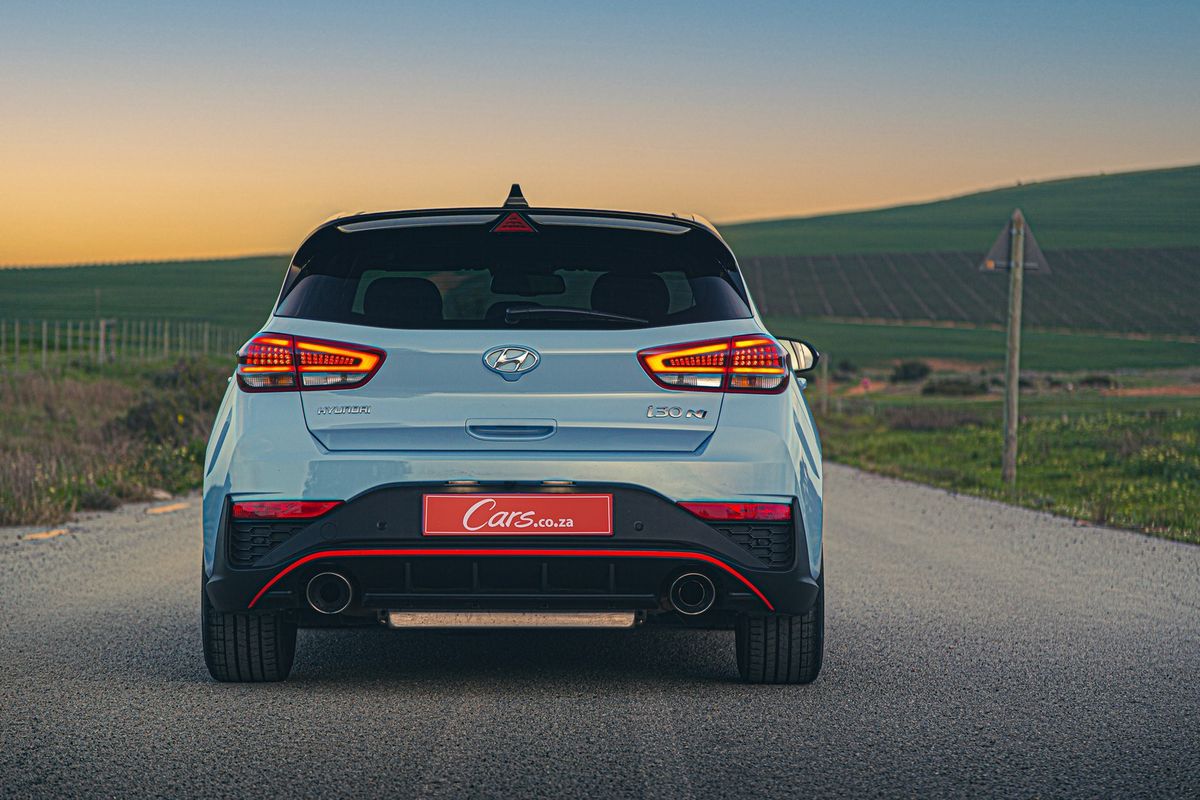
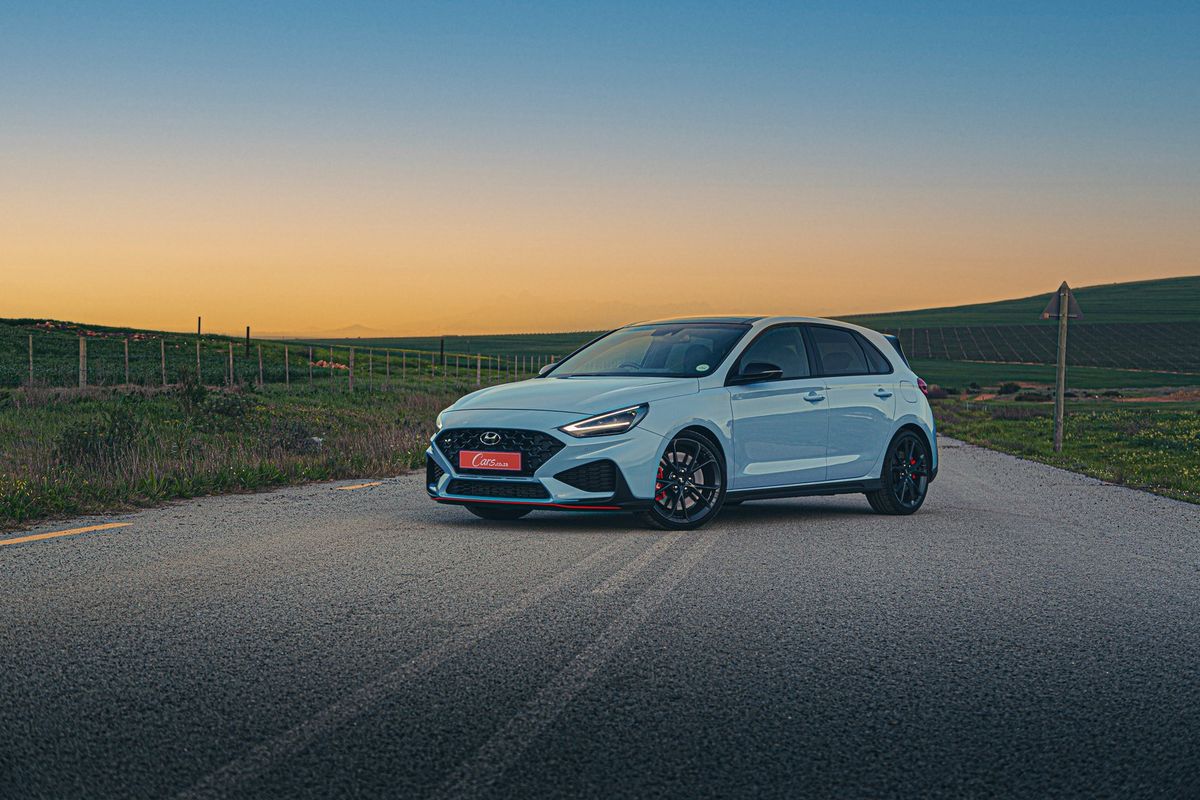
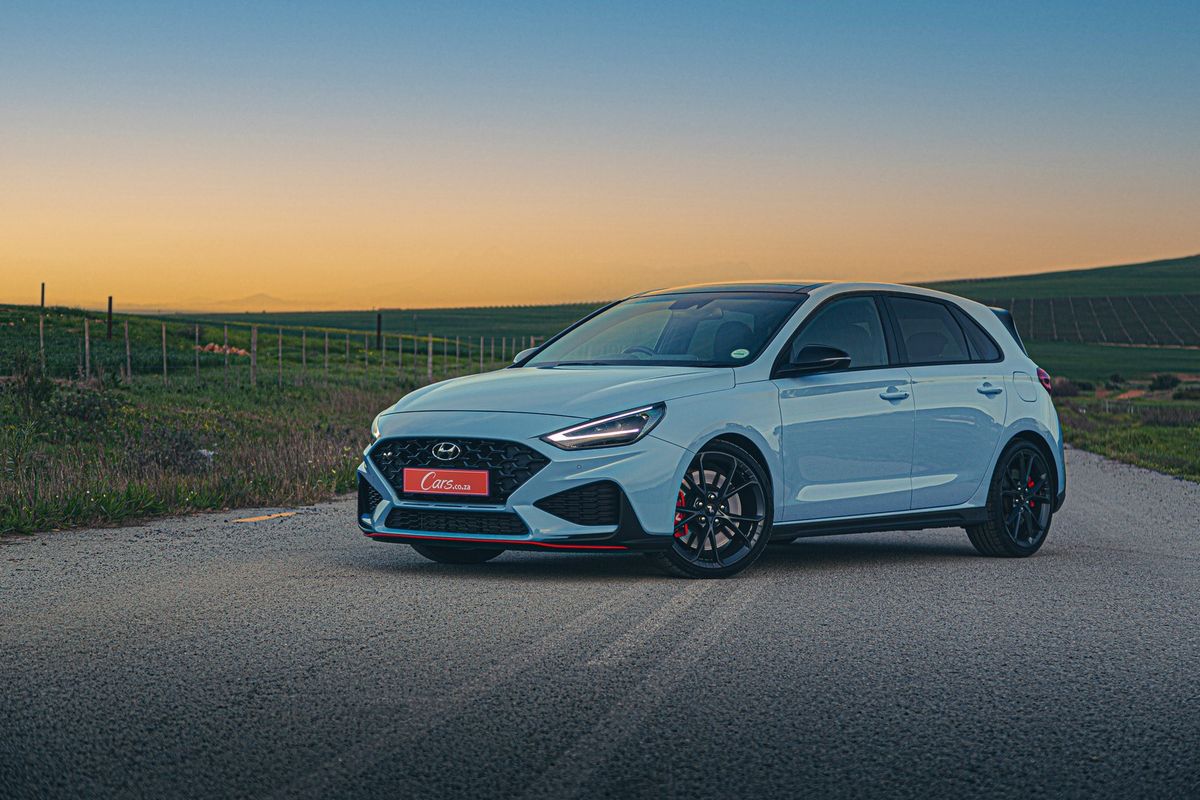
Hyundai i30 N finished in Performance Blue Metallic – the best colour for it!
Not all that long ago, several mainstream manufacturers produced front-wheel-drive (FWD) hot hatches. Remember when the Ford Focus ST, Honda Civic Type R, Mazda3 MPS, Opel Astra OPC and Renault Mégane RS were snapping at the wheels of Volkswagen’s segment-leading Golf GTI? These days, just a handful of compact FWD hot hatches remain, with the VW (now in its 8th generation) still leading the pack, in terms of sales numbers, anyway.
Hyundai’s goal with its i30 N – the 1st product of the brand’s N (performance) division – was simple, but lofty: take on and beat the Golf GTI. Many have tried, but the GTI has stayed on top of the pile by virtue of its all-round usability, combined with sufficient, if not class-leading, performance and dynamism. Other brands have been able to make hot hatches that are faster and more engaging to drive, but usually at the expense of general driveability.
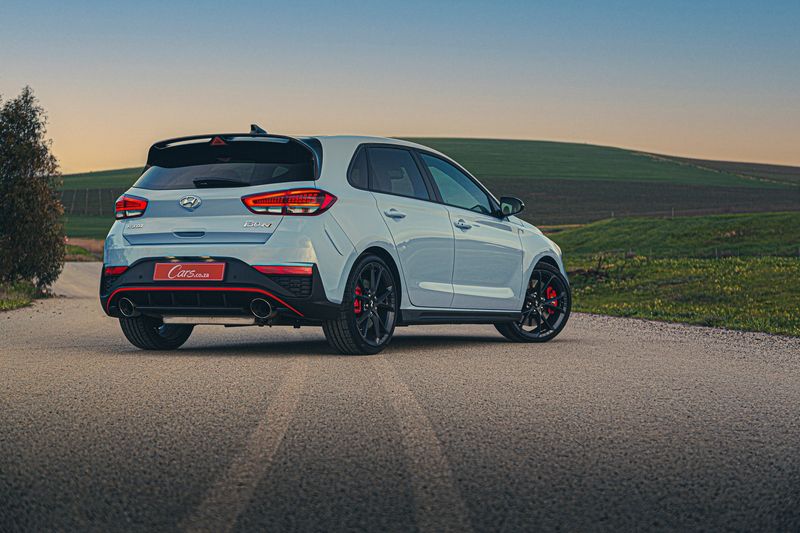
Has Hyundai nailed the hot hatch brief? Yes, by and large.
The Korean brand is well aware of the fine balance it needs to achieve between entertaining driving dynamics and punchiness on the one hand, and comfort, luxury, plus practicality, on the other. The pre-facelift version of the Hyundai i30 N was offered exclusively with a 6-speed manual ‘box in South Africa, which pleased the purists, but limited its general appeal.
There’s a reason why the Golf GTI is no longer offered in our market with a three-pedal setup – the overwhelming majority of buyers want that vrrr-pha! (and practicality) that the DSG automatic offers. We peeked at the used stock on our site and found a low-mileage manual-shift i30 N is listed at about the same price as a brand-new Volkswagen Polo GTI…
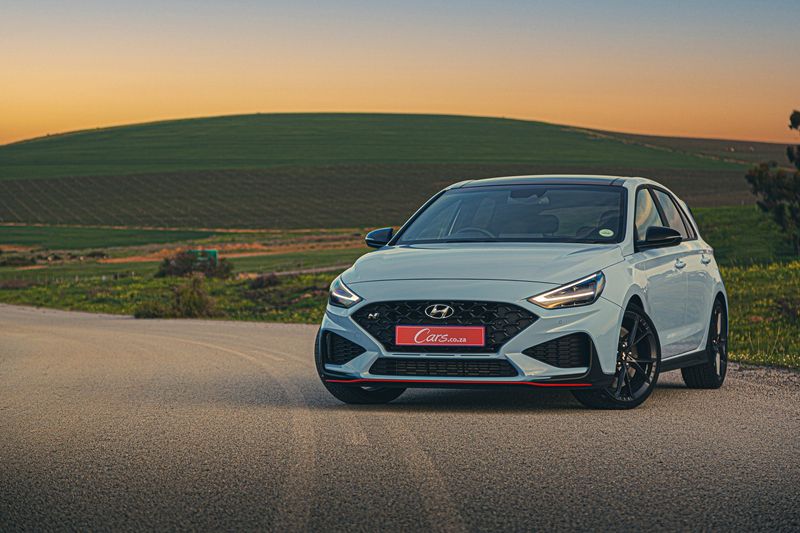
A Golf GTI, a Civic Type R… or this? FWD hot-hatch choices are limited these days.
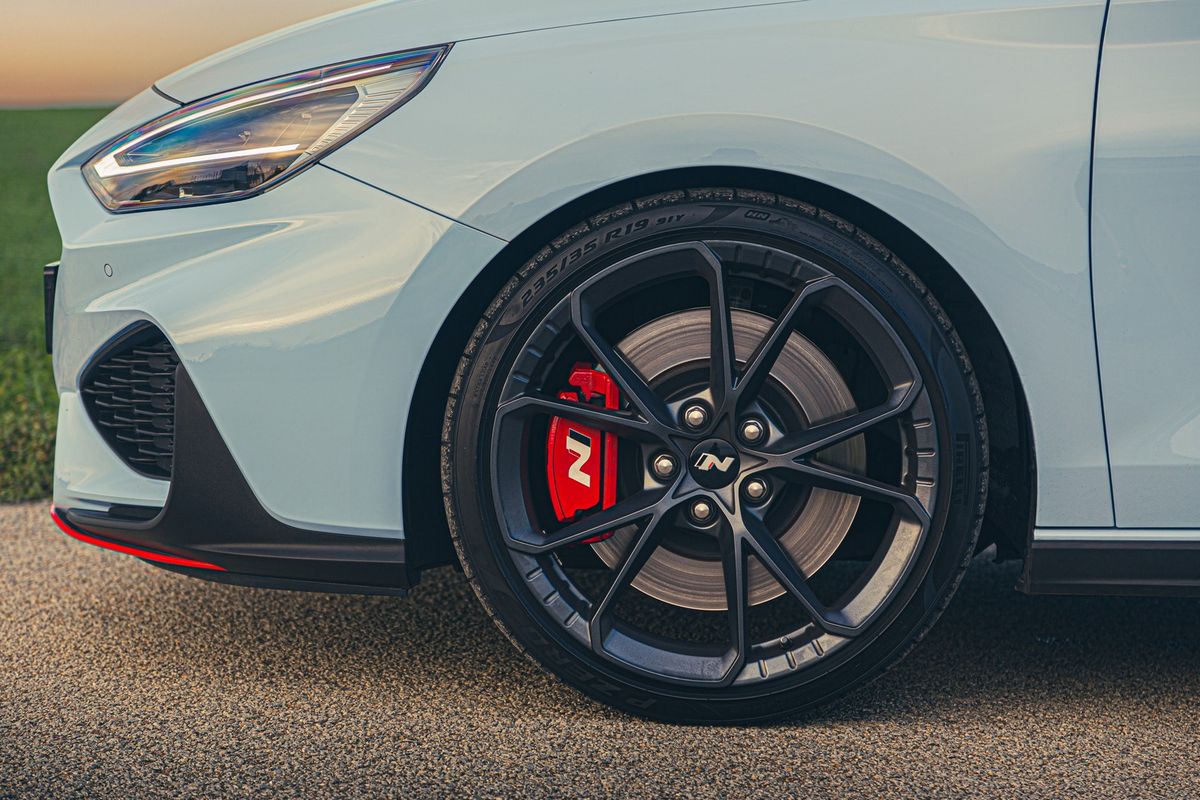
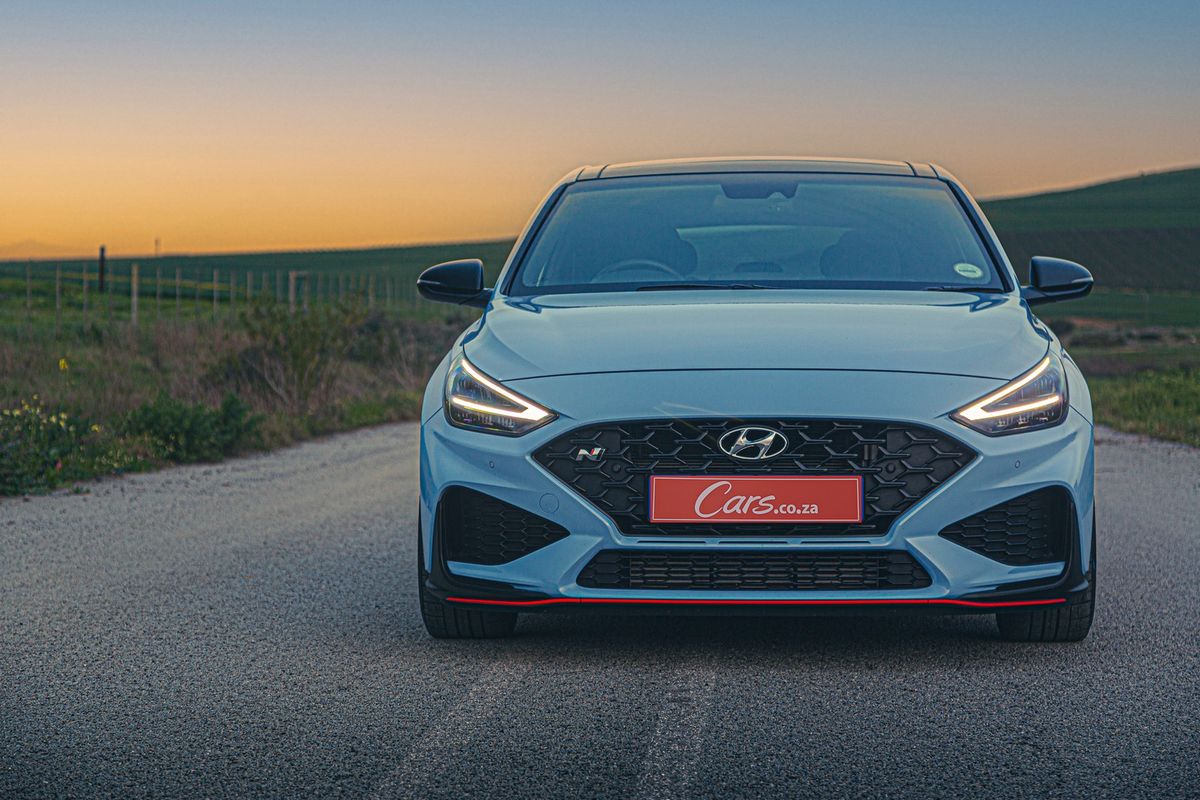
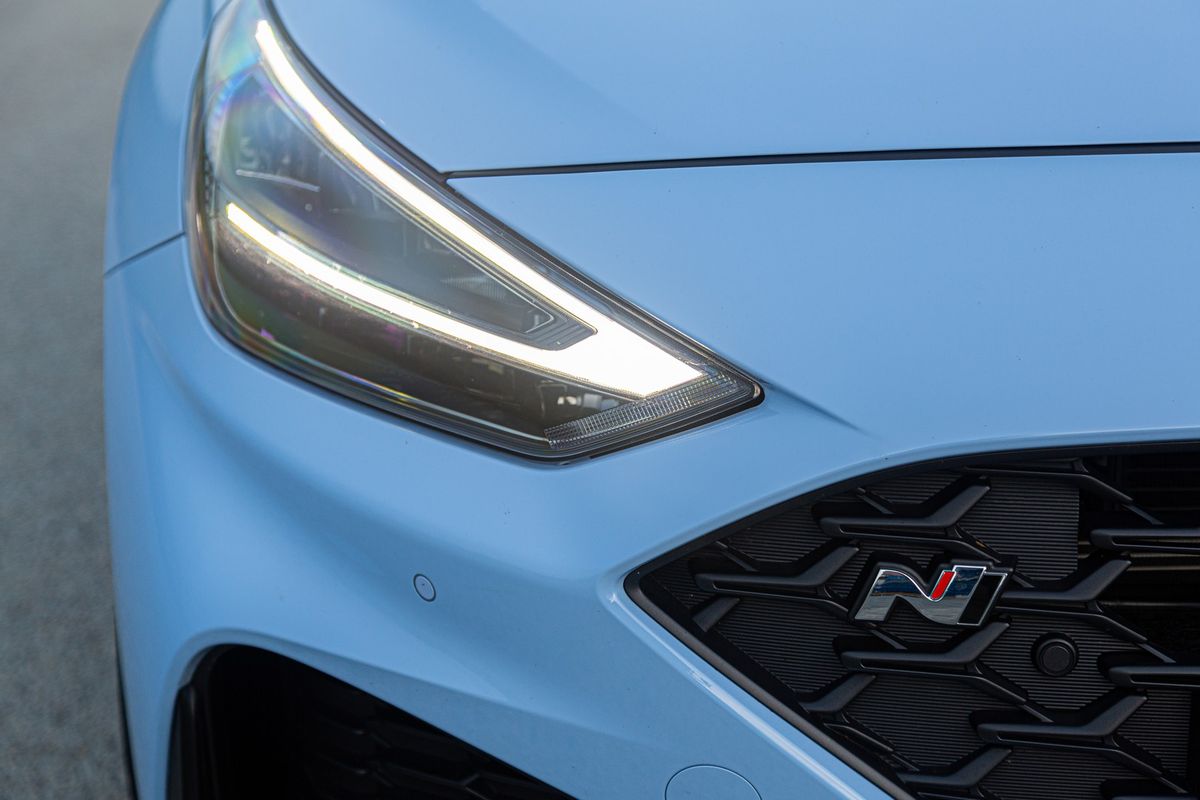
However, for 2022, the facelifted Hyundai i30 N comes to market with an 8-speed dual-clutch automatic transmission. The updated i30 N is fractionally longer and lower than the outgoing derivative, fitted with forged alloy wheels that save 14 kg of weight and the new-look front end is adorned with neater daytime-running lights integrated into the headlamps.
As for the Hyundai’s rivals, at the top of the list is the Golf 8 GTI, followed by the outgoing Honda Civic Type R (the new model will arrive in Mzansi early next year). If you’re looking for a premium-badged model, consider the BMW 128ti, Mercedes-Benz A250 as well as the Mini JCW.
Compare the Hyundai i30N to the Volkswagen Golf 8 GTI and Honda Civic Type R here.
How the Hyundai i30N fares in terms of…
Design and Packaging
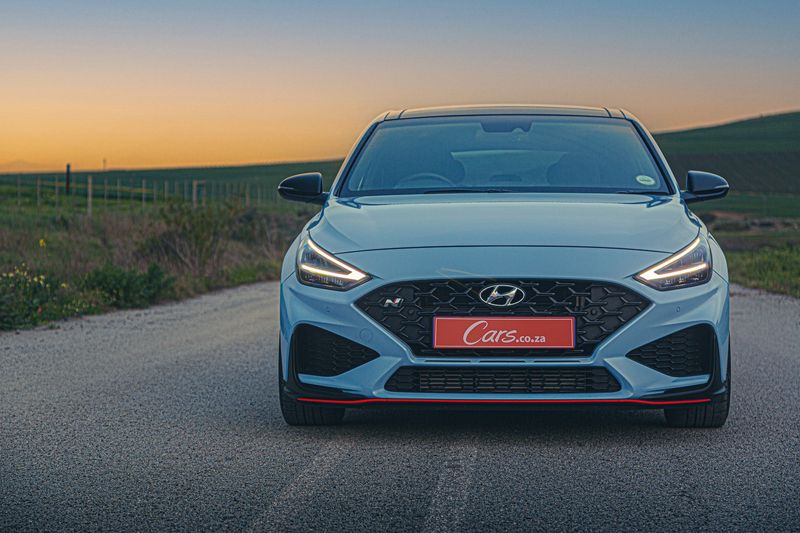
The facelift features neater-looking daytime running lights.
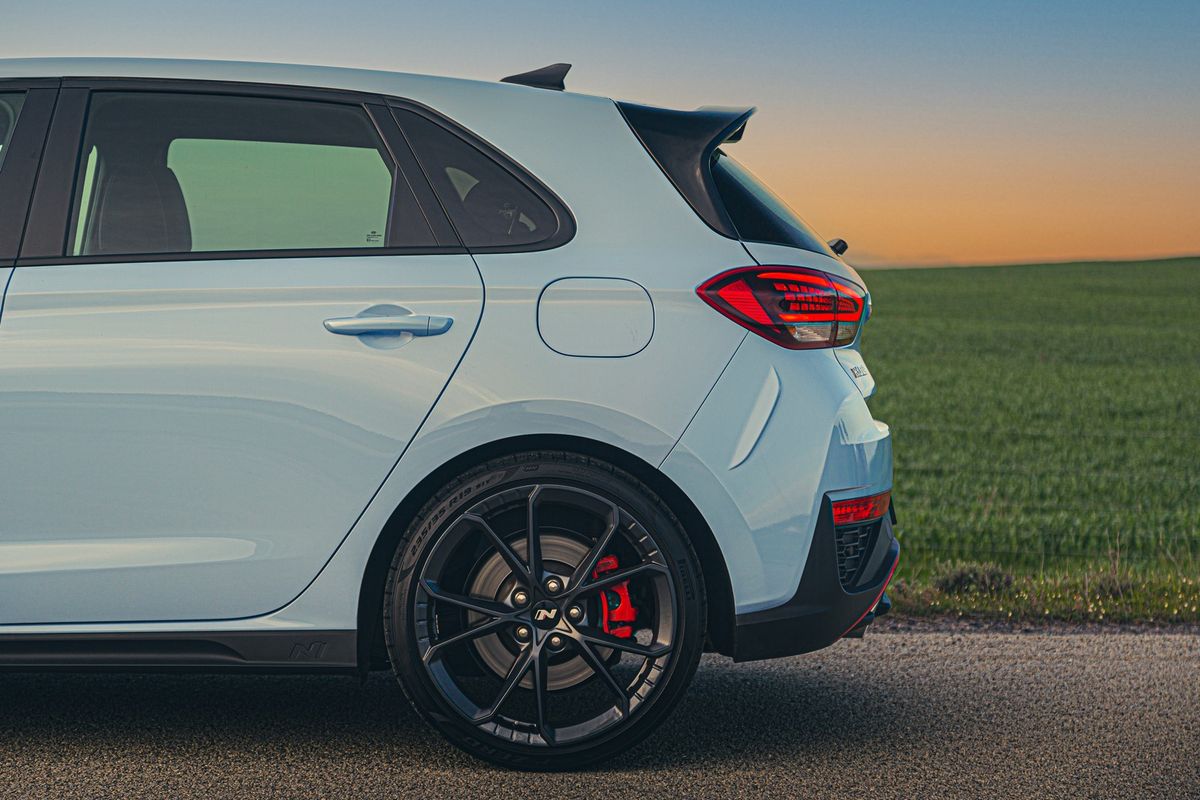
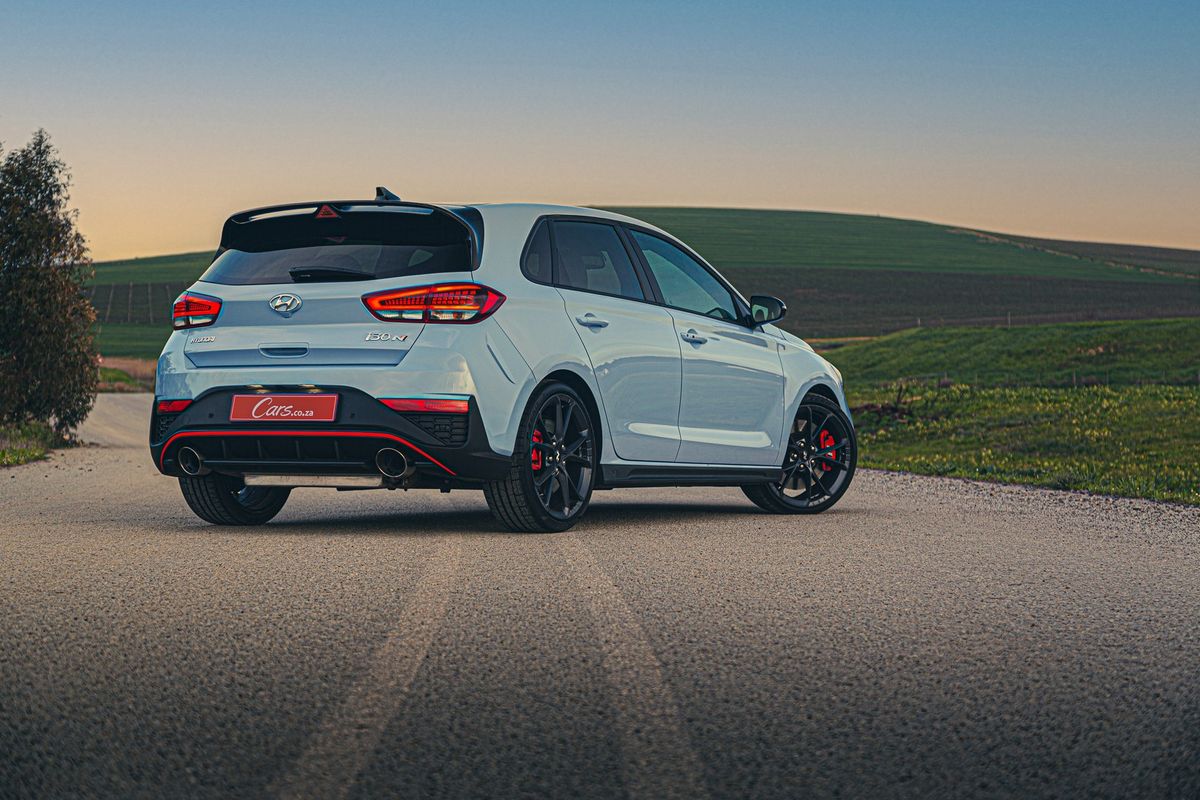
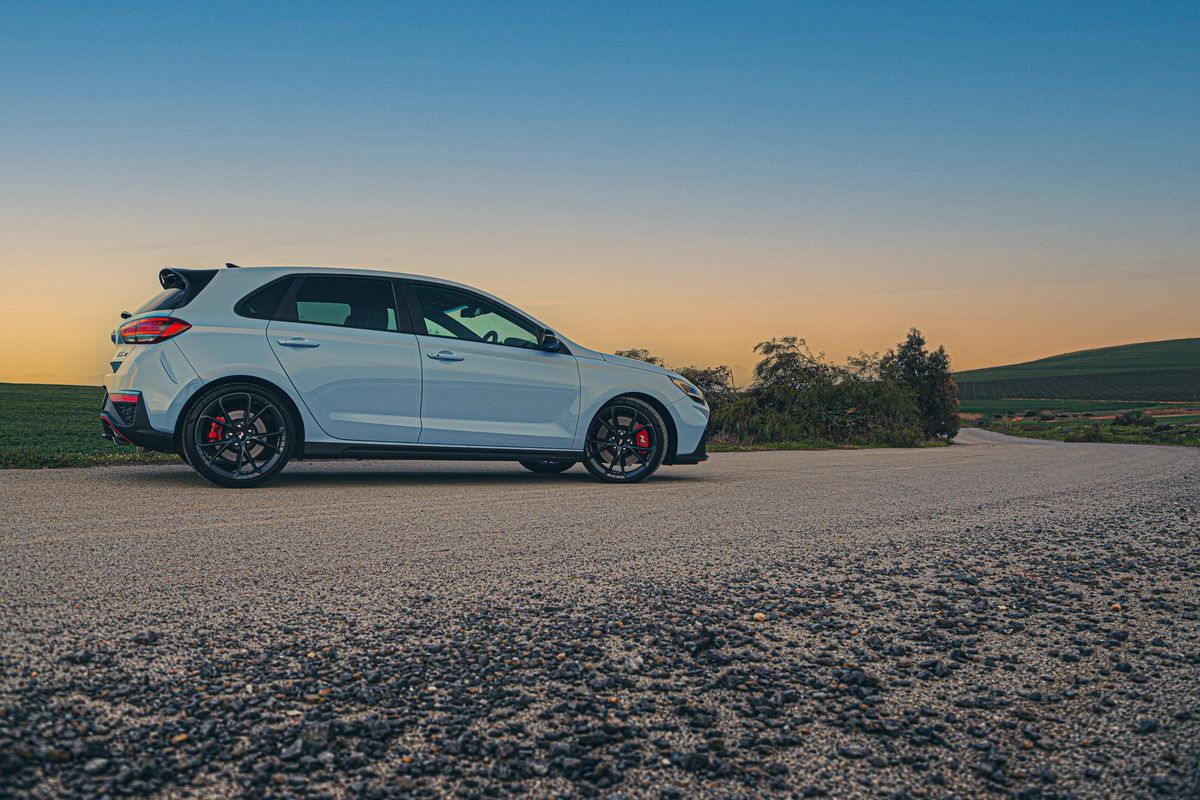
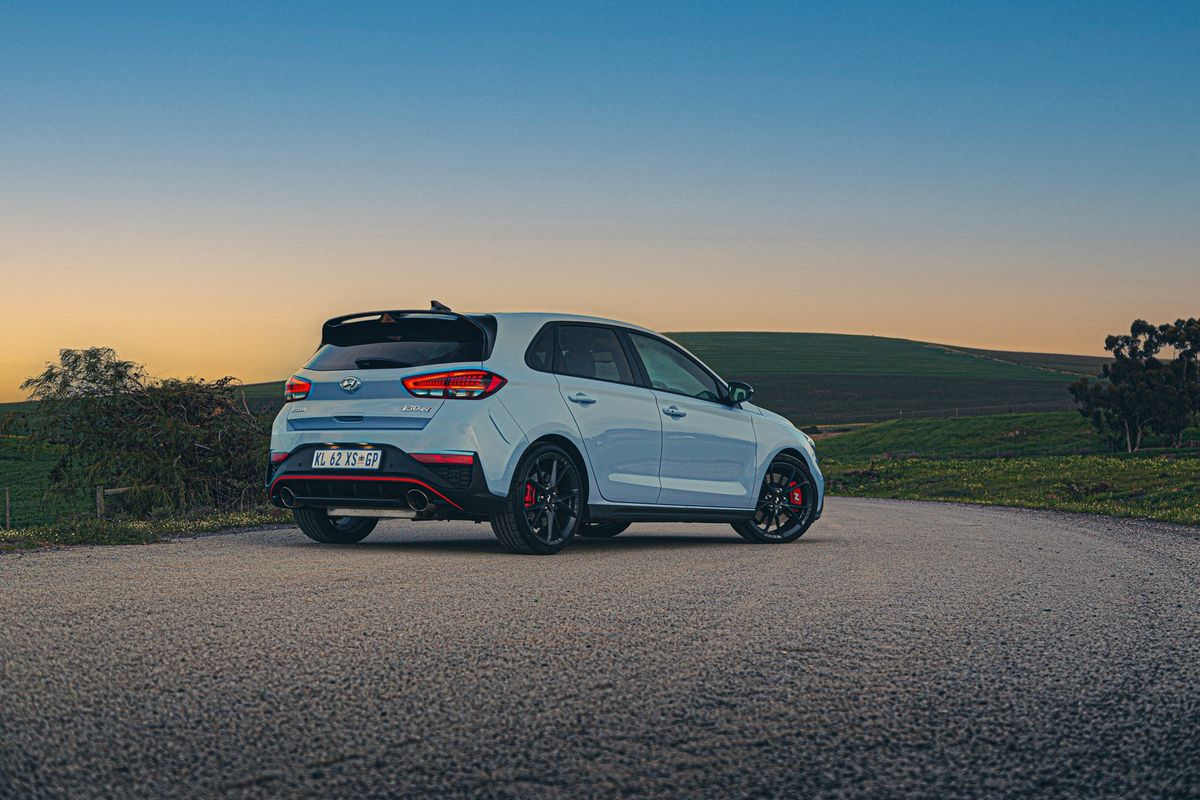
With a sharper-looking front end, complemented by red detailing and subtle N badges, the Hyundai i30 N looks suitably purposeful. Some would say the overall look is overdone, but then this is a hot hatch – it needs to make a statement even before you’ve blipped the throttle. At each corner is a smart-looking alloy wheel wrapped in a Pirelli P Zero 235/35 R19, the tailgate is adorned with a sizeable gloss-black wing and a pair of cannon-barrel-sized exhaust ends jut out at either end of the diffuser (they’re not just for show, but more about that later).
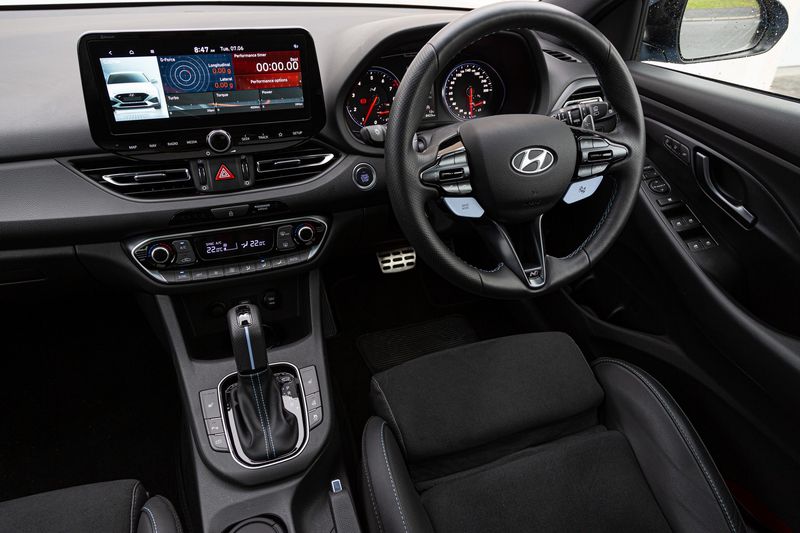
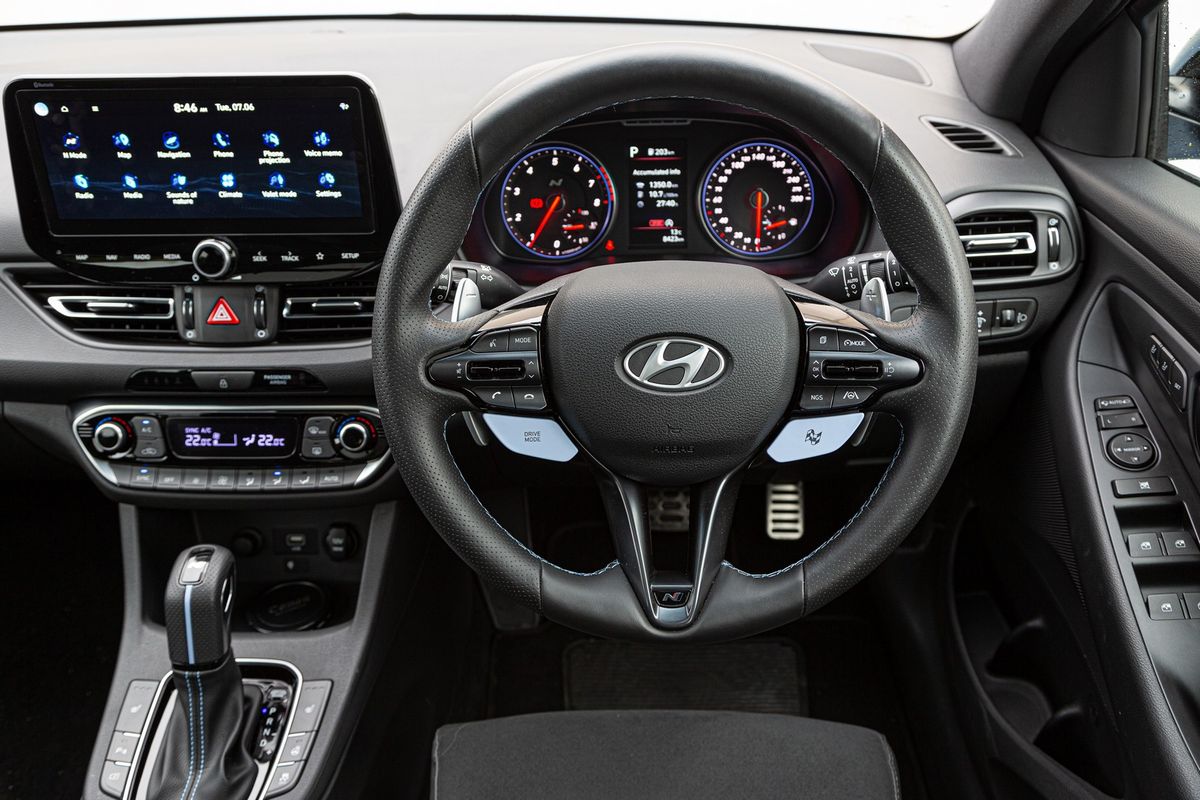
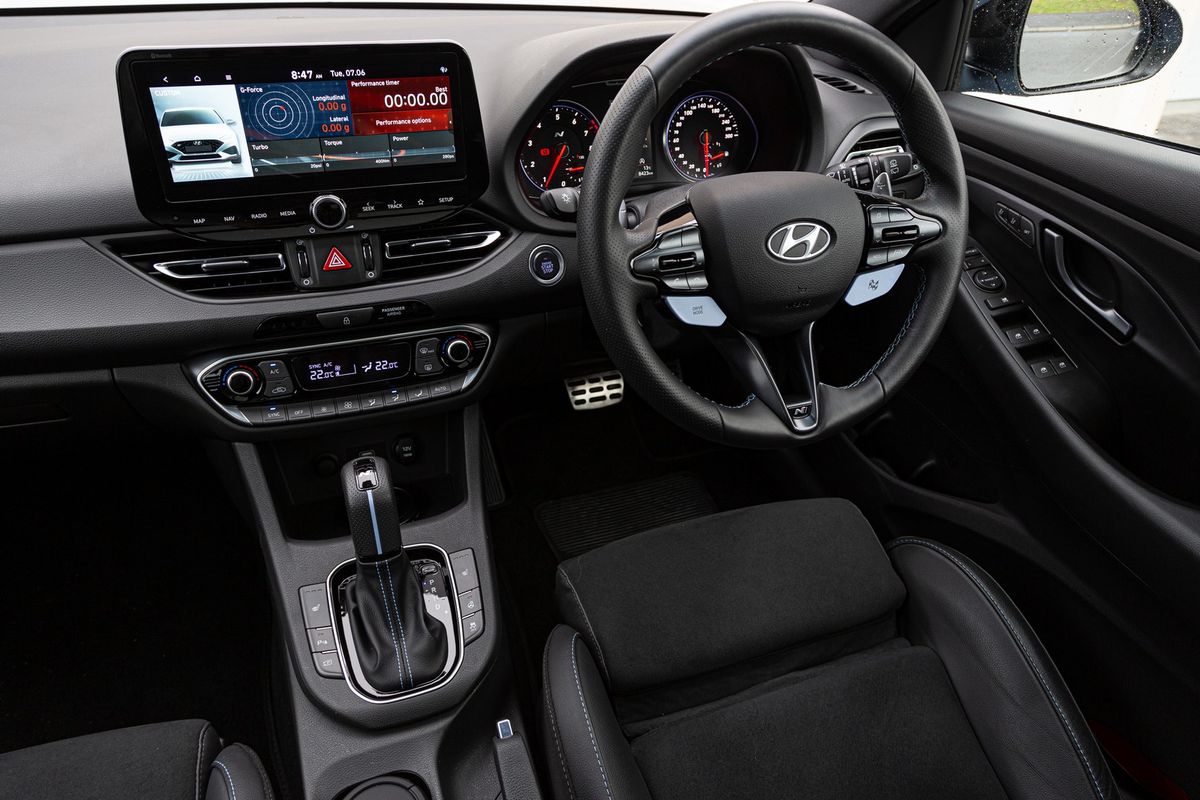
Not the most inspiring of cabins, with its black-on-black colour scheme, but it’s nicely finished.
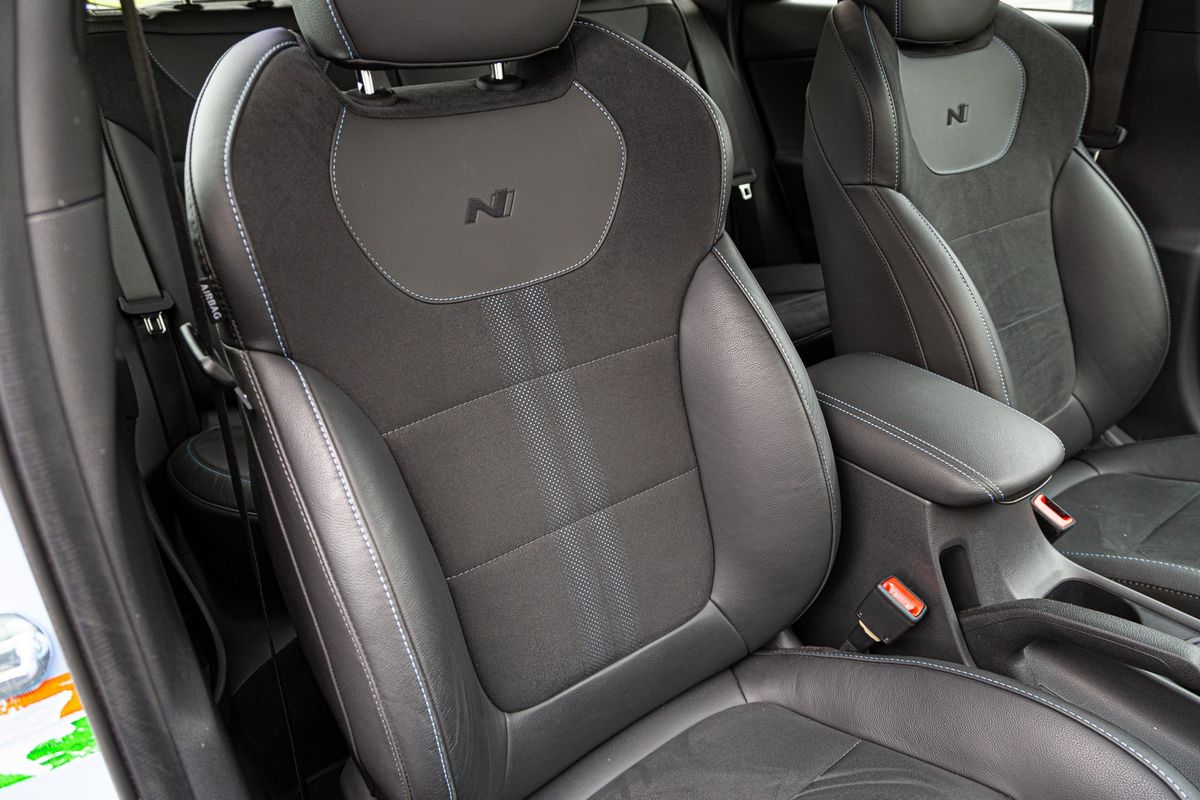
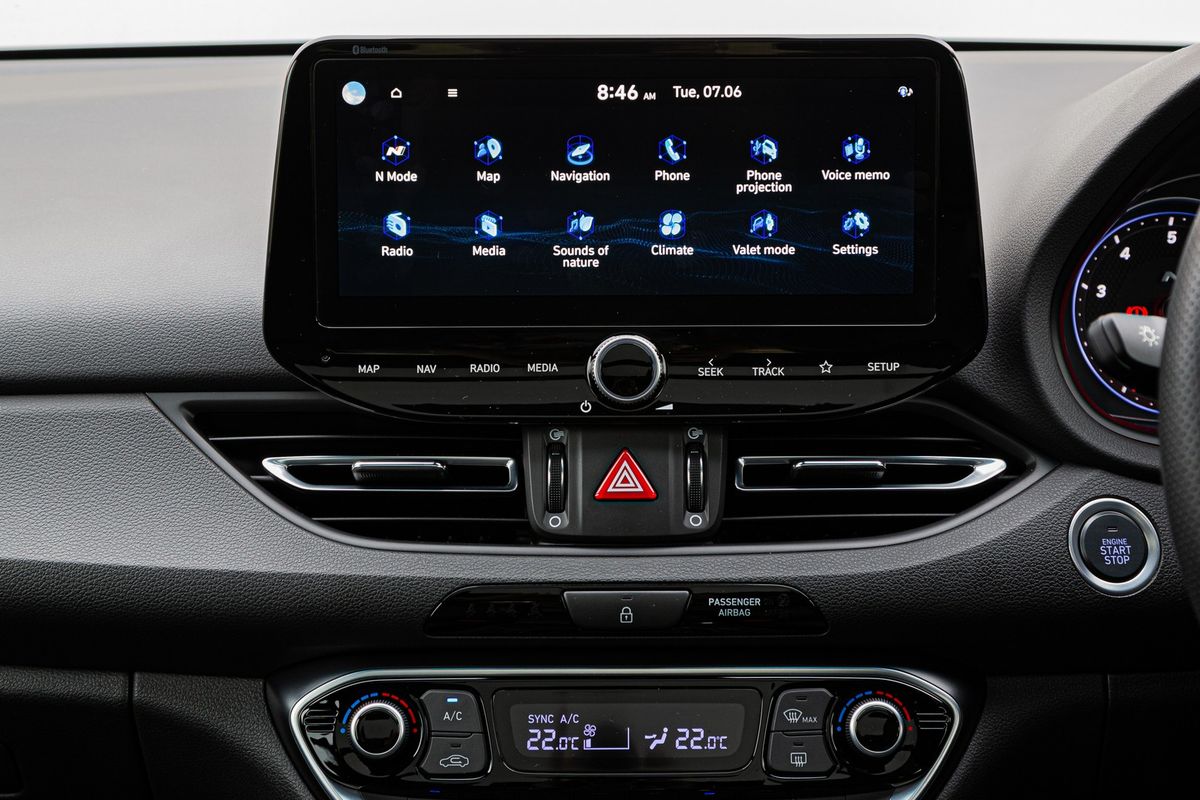
Compared with the i30 N’s attention-grabbing exterior execution, the interior seems a trifle underwhelming. However, once you’re seated in the form-hugging suede/leather-trimmed sport driver’s seat (both front seats are heated and offer various avenues of adjustment) and take stock of your surroundings, you get the full effect. The cabin materials feel plush to the touch and the layout is ergonomically sound. The centrally-mounted infotainment screen is a European-spec item (the vehicle is built in the Czech Republic) and thus looks considerably more upmarket than those fitted in Hyundai SA’s more, um, budget-oriented hatchbacks.
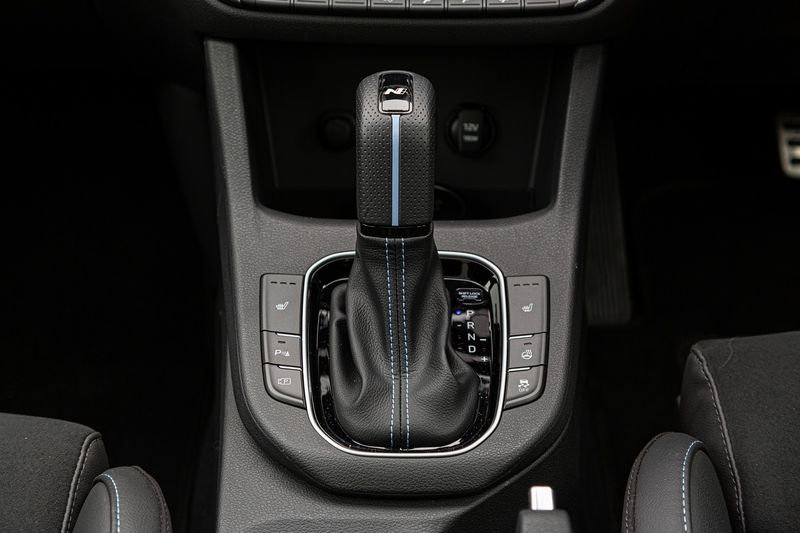
Who knew that an 8-speed DCT would make all the difference?
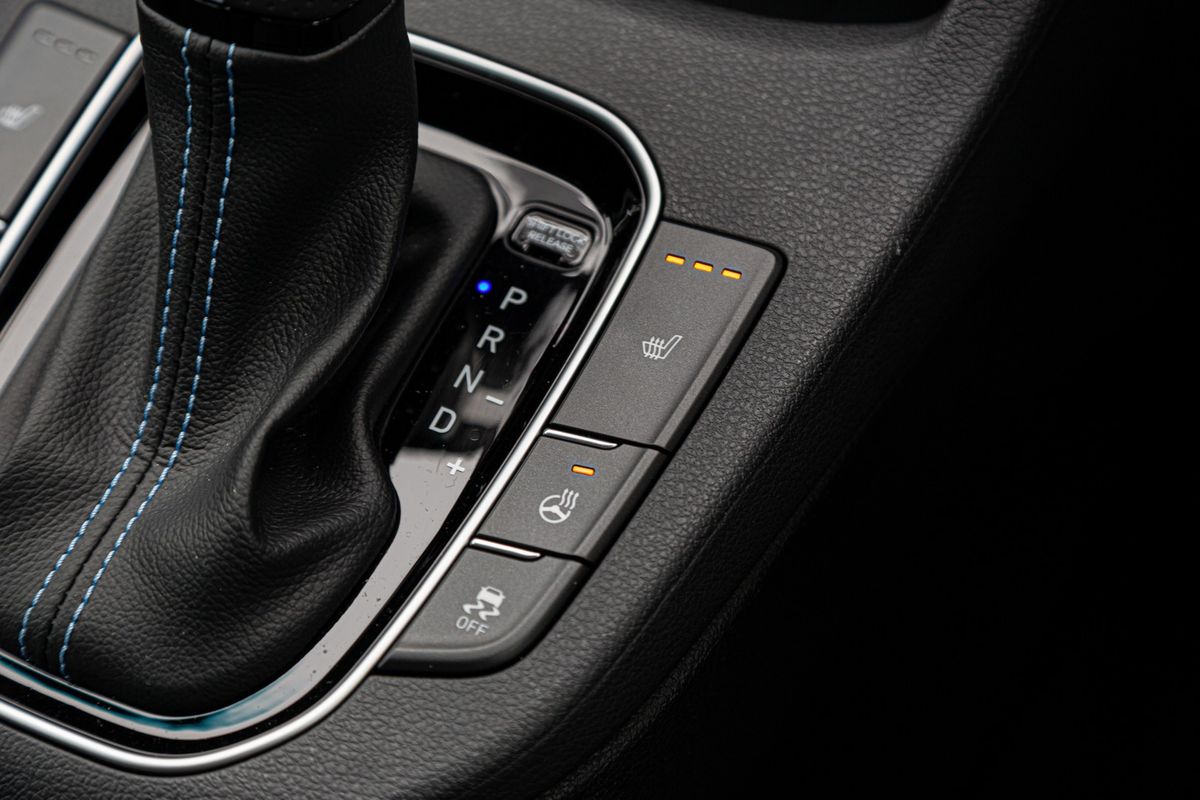
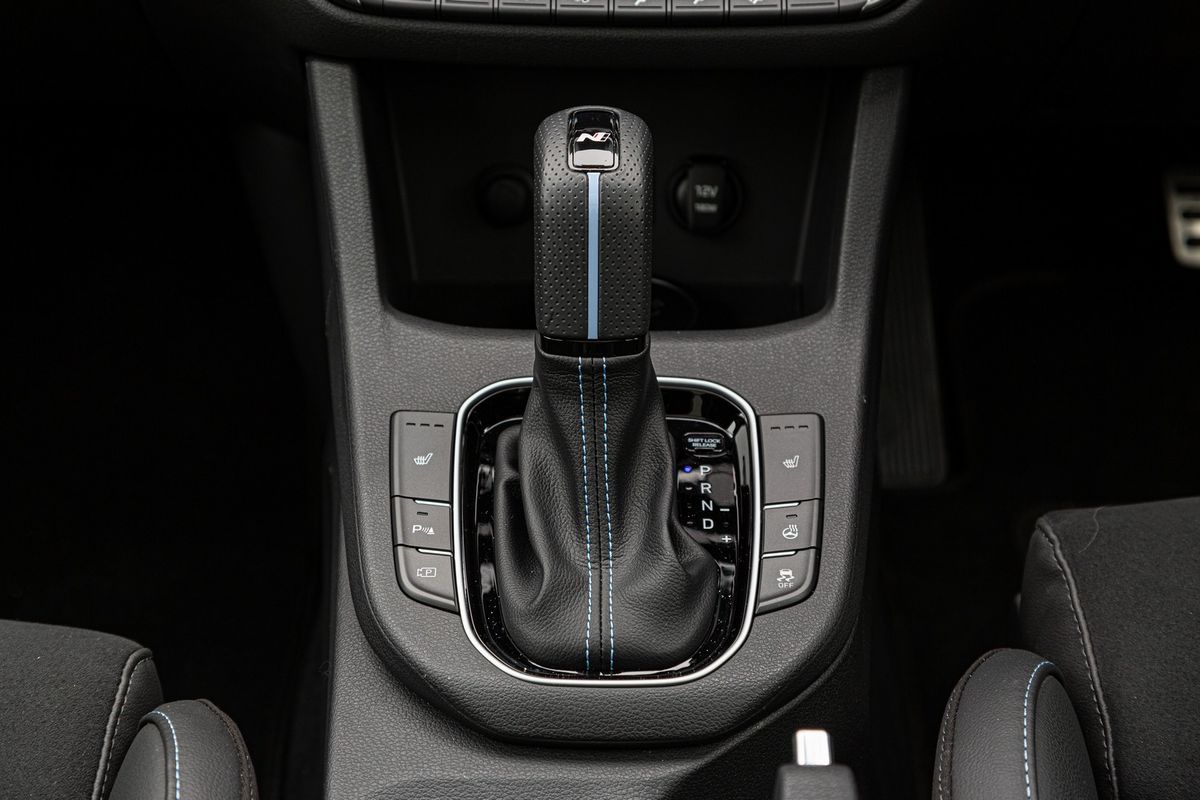
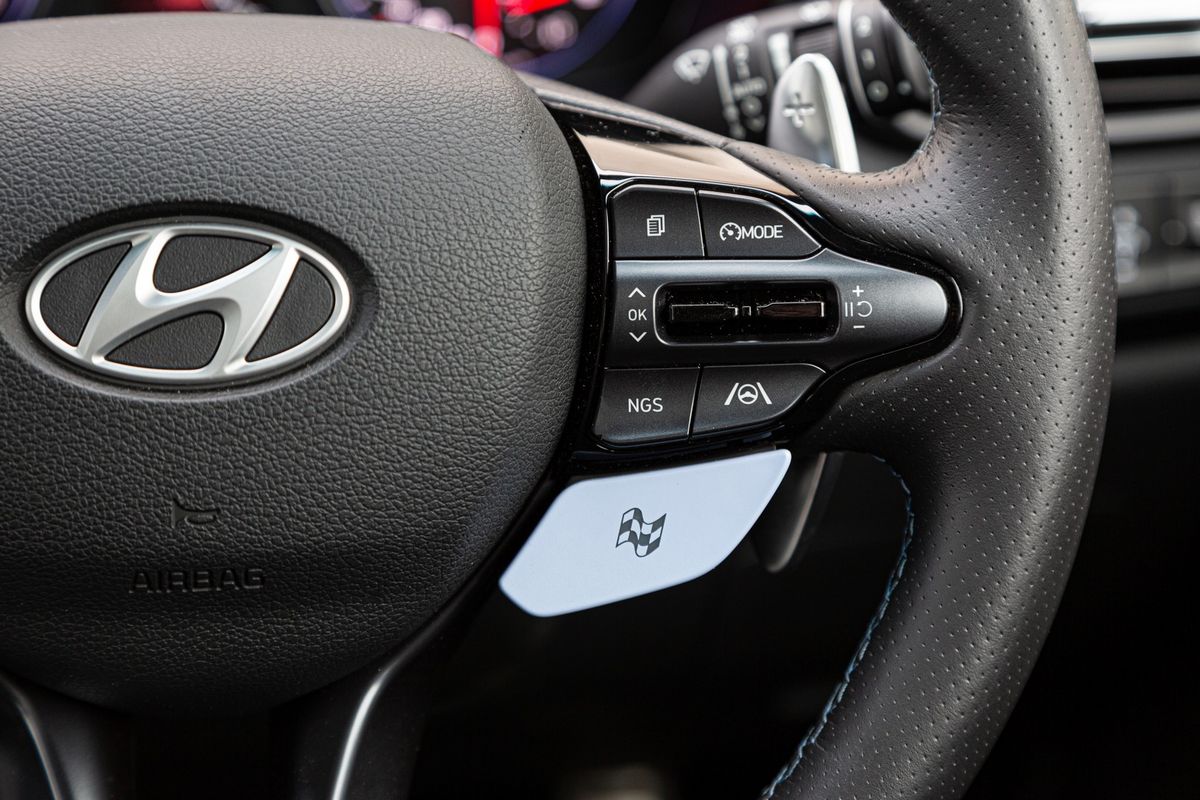
Besides, the important things, such as the steering wheel and transmission lever, feature N touches. The former is adorned with well-placed and -weighted gearshift paddles, as well as large, light blue buttons (one for drive-mode selection and the other with a chequered-flag logo), while the latter has a subtle N badge, an accent stripe and stitching on the leather trim).
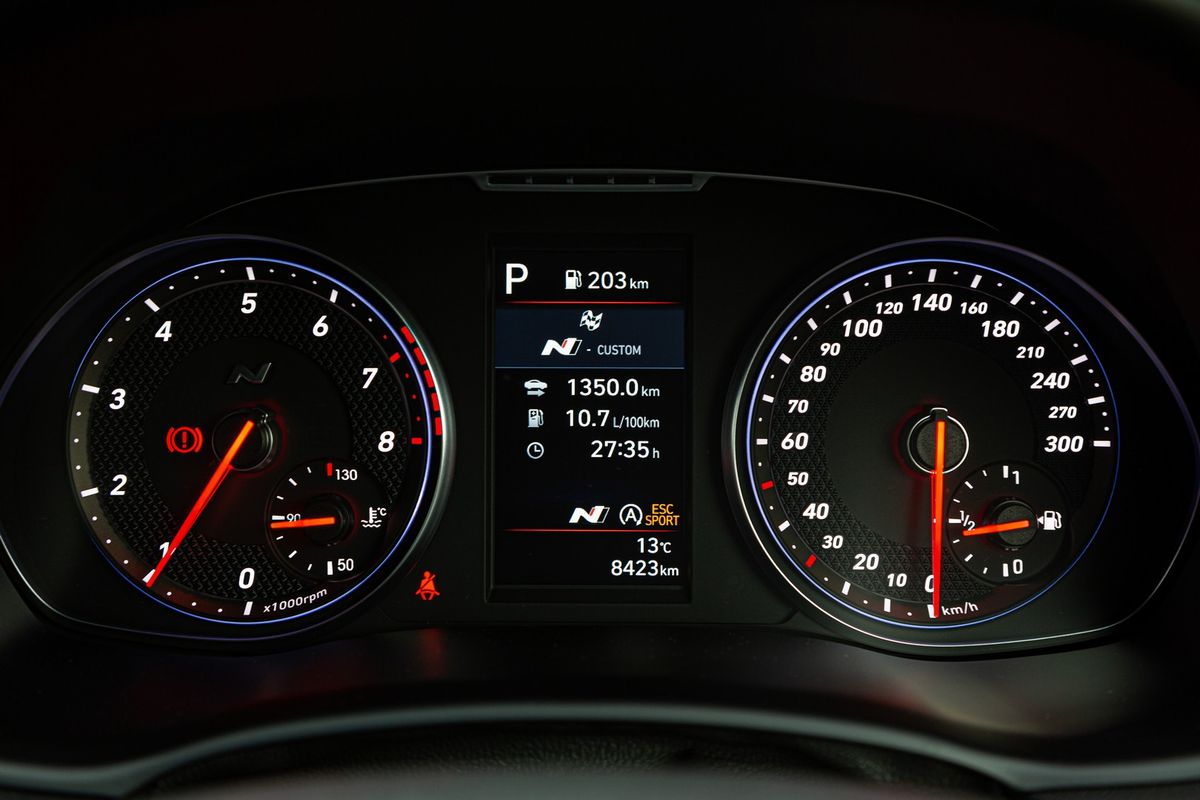
A digital instrument cluster (as featured in the GTI) would have been nice – the Kona N has one, after all – but we could live with the analogue dials; they’re neat and highly legible.
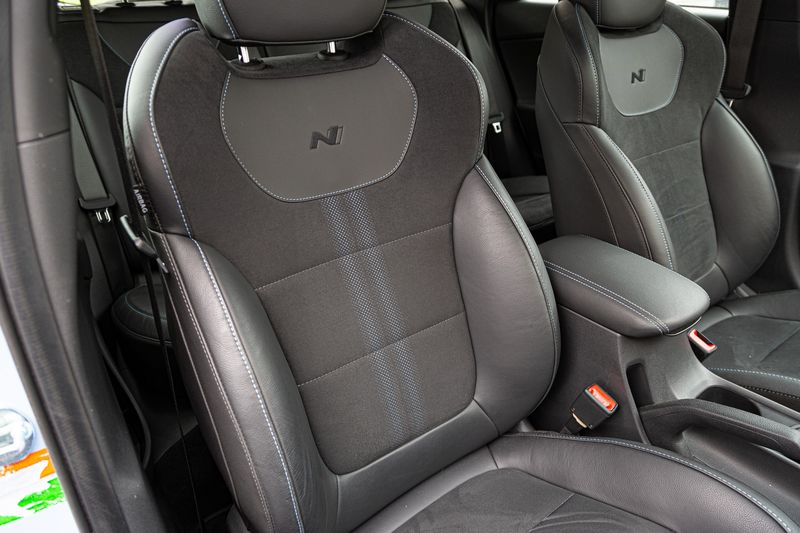
These seats look the part and are comfortable on long(er) trips.
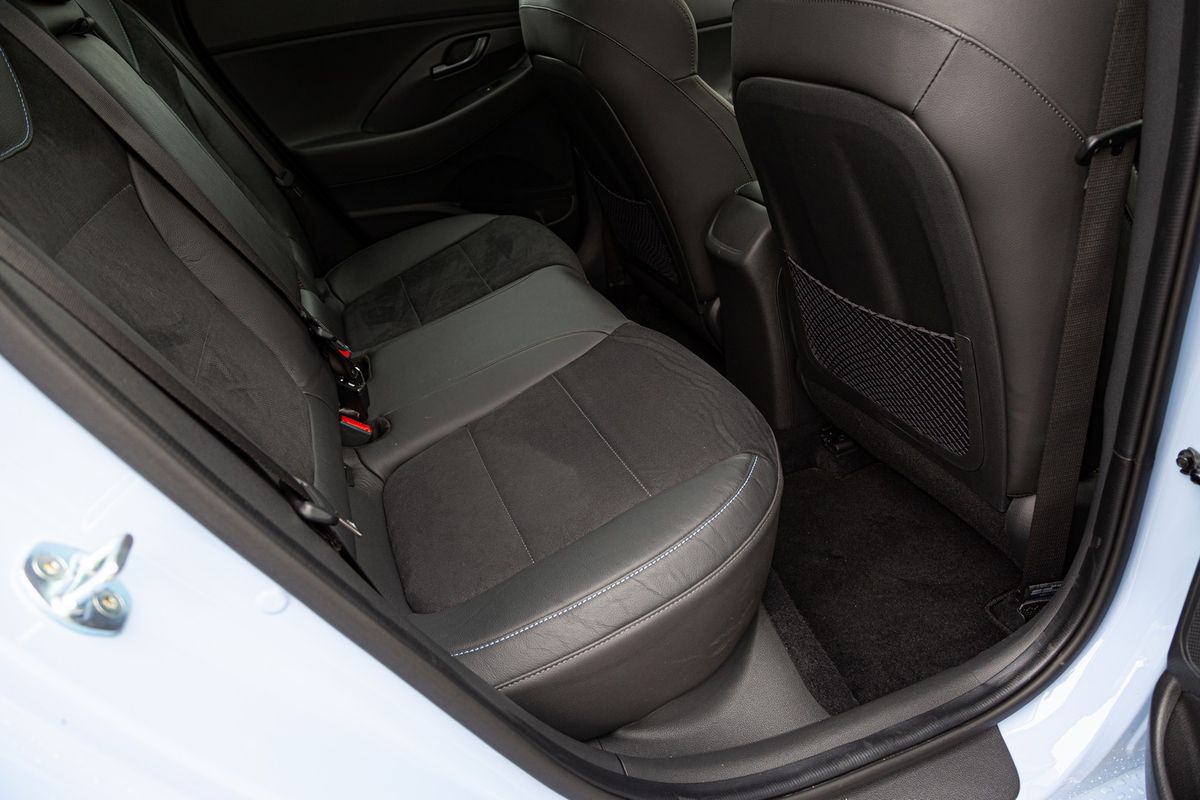
Of course, a hot hatch also needs to be reasonably practical and the i30 N doesn’t disappoint in that regard. Rear legroom is fair (it can seat four adults in reasonable comfort), and the load bay (381 litres) is the second largest in the segment (next to the Civic Type R). When the test unit was used to travel to a long-weekend getaway destination, it accommodated 2 suitcases, cooler bags and more. The rear seatback can be folded to increase cargo capacity.
Standard features
Hyundai has crammed the i30 N full of comfort and convenience features. There are no “options” – apart from your preferred exterior finish (of which there are 5 to choose from). We’ve compared the standard specification of the i30 N and that of the Golf 8 GTI and suffice to say you’ll have to fork out extra to bring the Volkswagen up to the Hyundai’s spec.
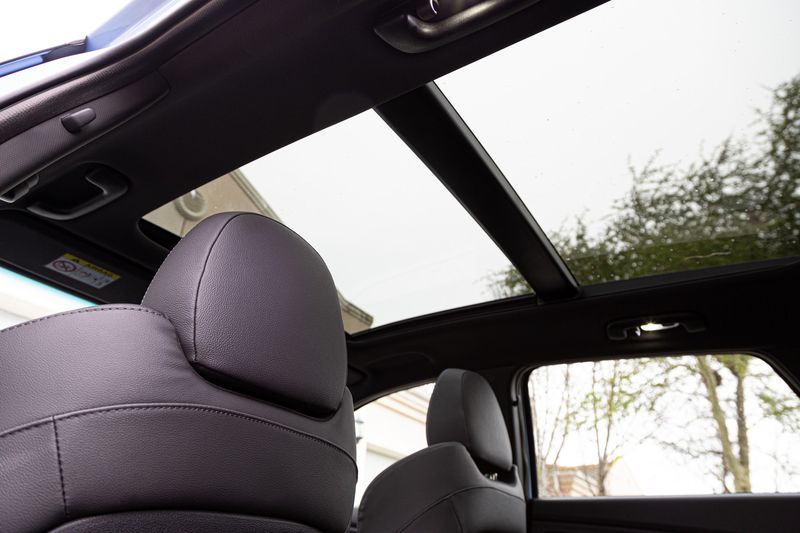
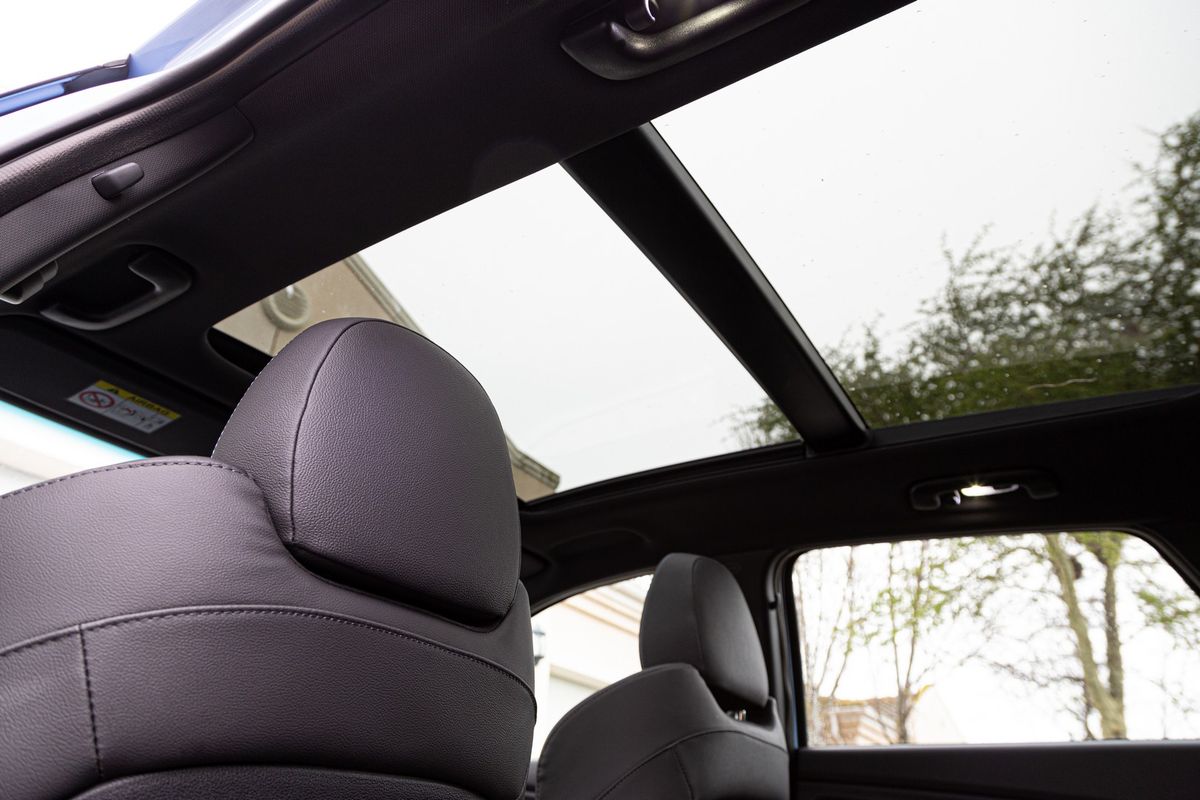
The standard panoramic sunroof beefs up the i30 N’s luxury specification considerably.
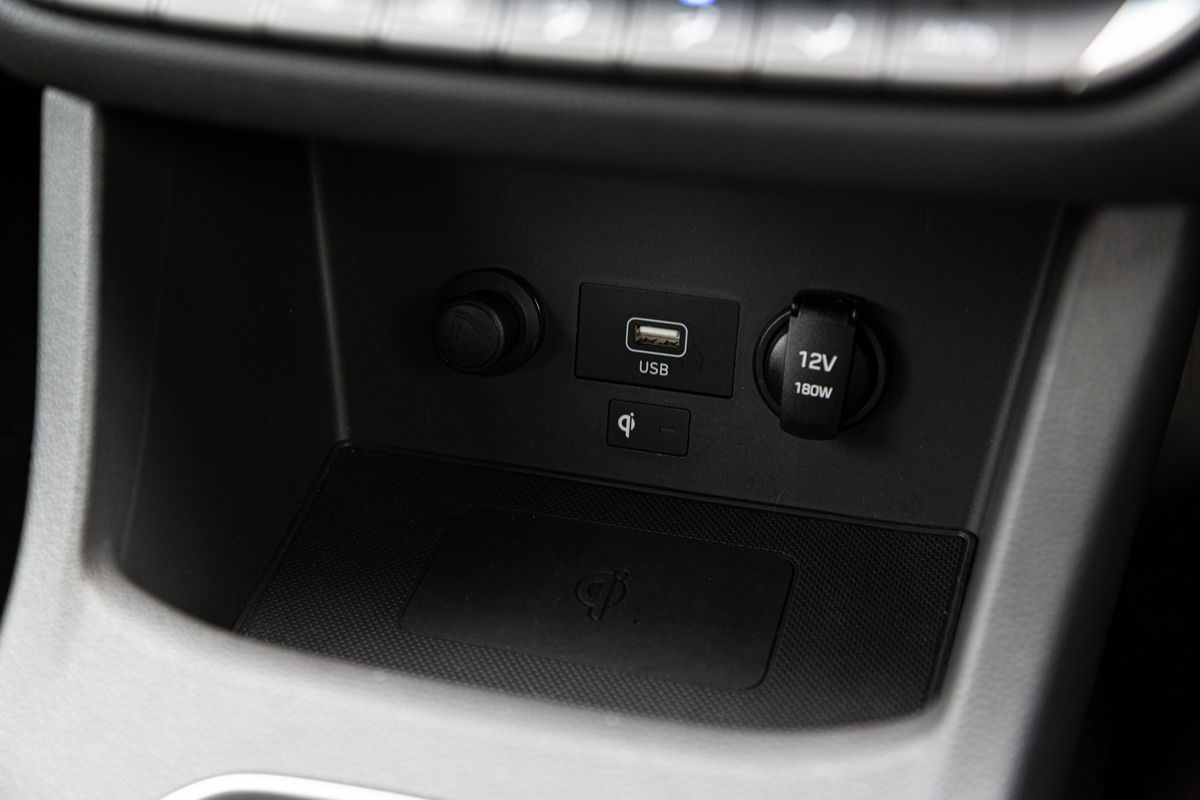
In fact, we think Hyundai has got the i30 N’s interior specification spot on. A heating function for the front seats and ‘wheel is nice to have in the winter months, while the full-length panoramic sunroof lends an airy ambience to the cabin. For the always-connected generation, the vehicle comes with a wireless charging pad, USB charging port and the 10.25-inch infotainment system is compatible with Apple Carplay and Android Auto.
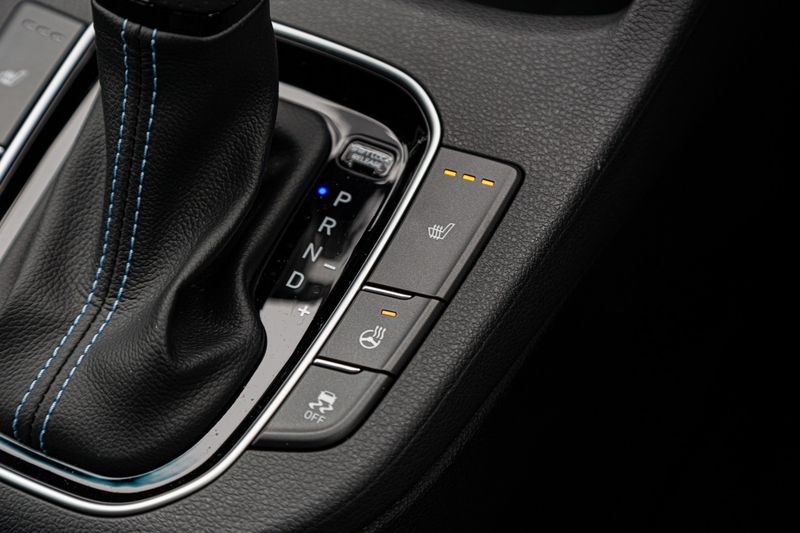
Heated seats and -steering wheel are nice to have in the winter months.
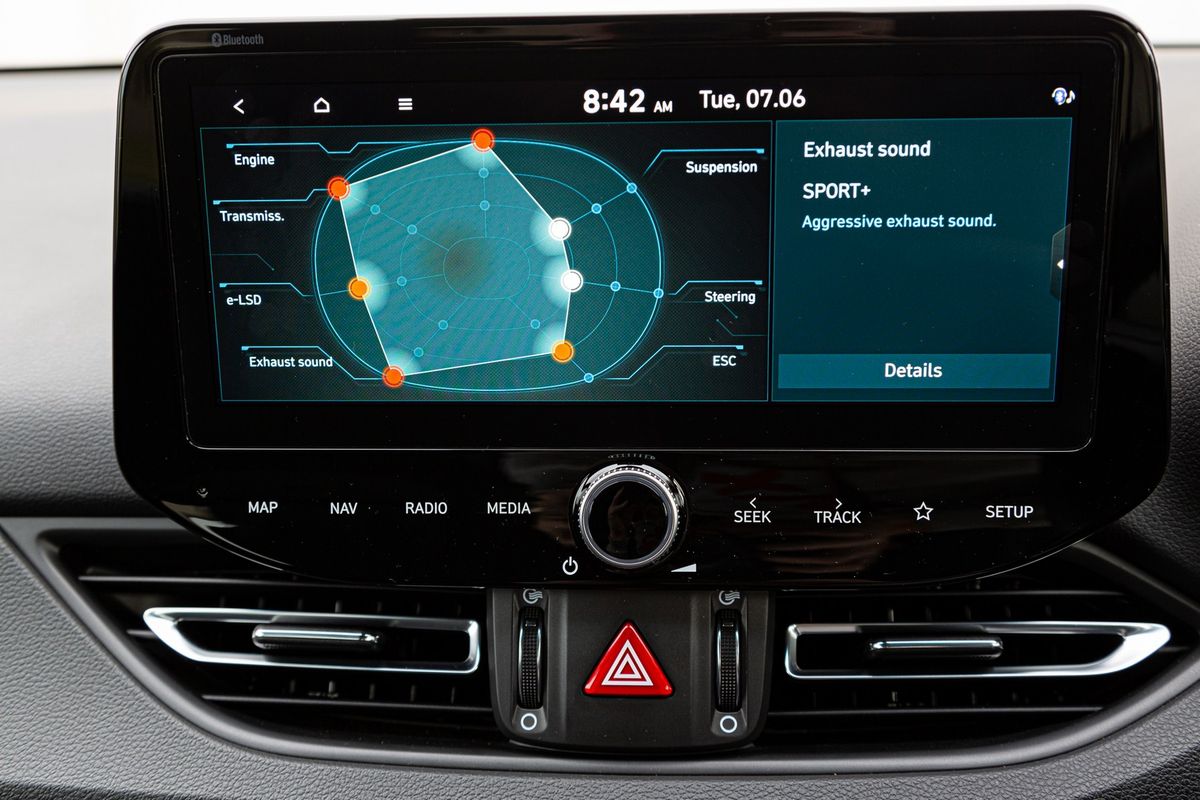
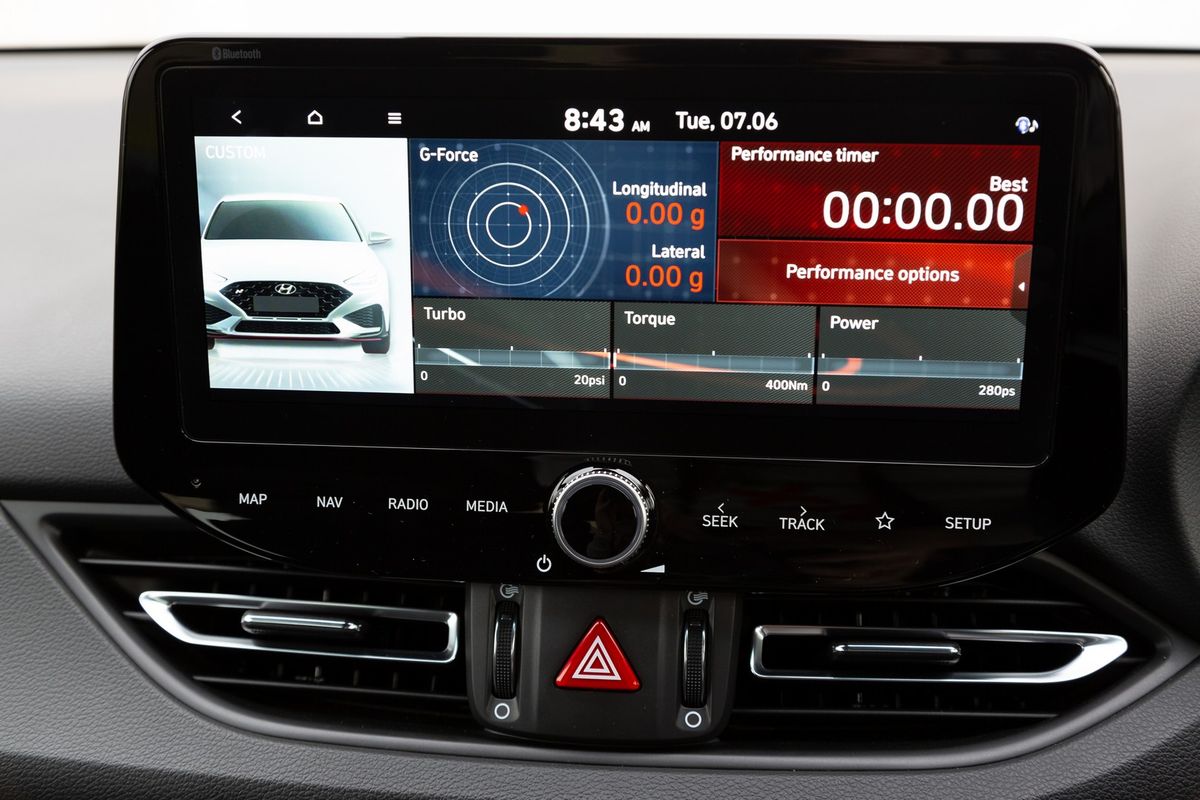
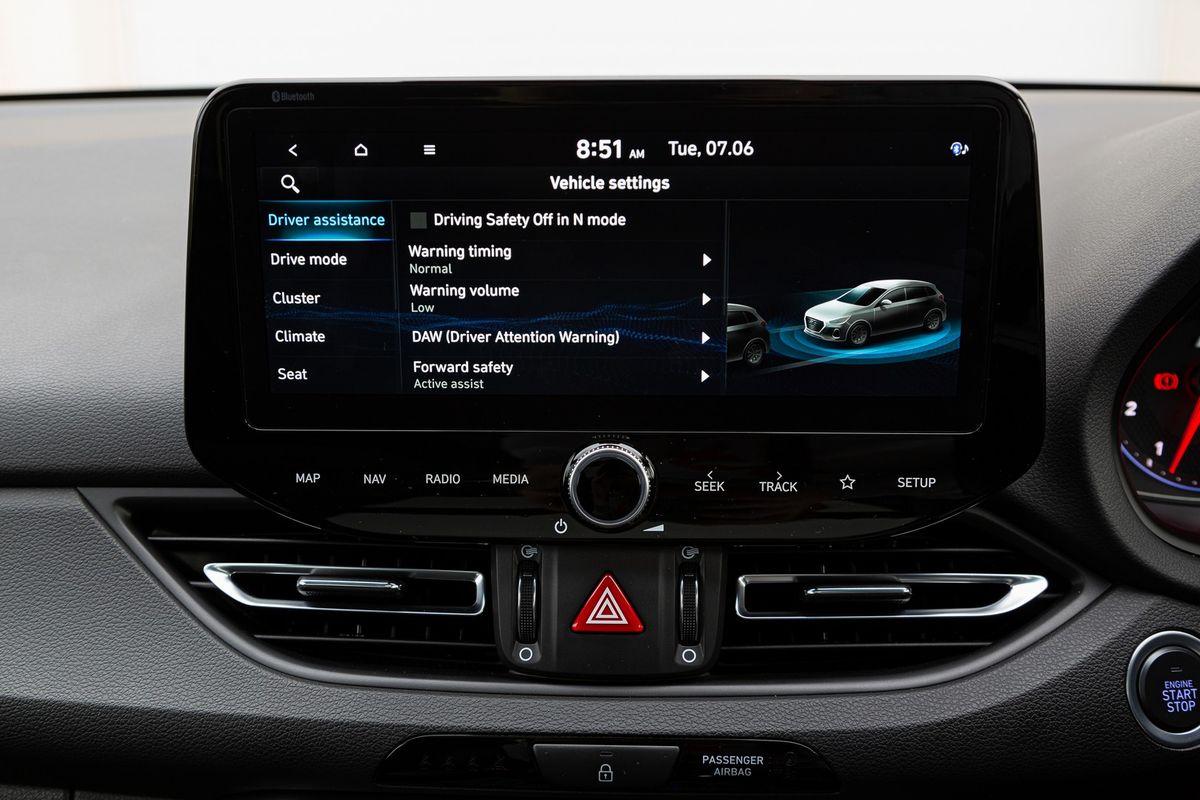
The infotainment system (with built-in satnav) has an assortment of additional content, such as the N menu, which incorporates a lap timer and telemetry, plus you can set up various car systems up to your heart’s content. It will even play sounds of nature to keep you calm in peak hour traffic.
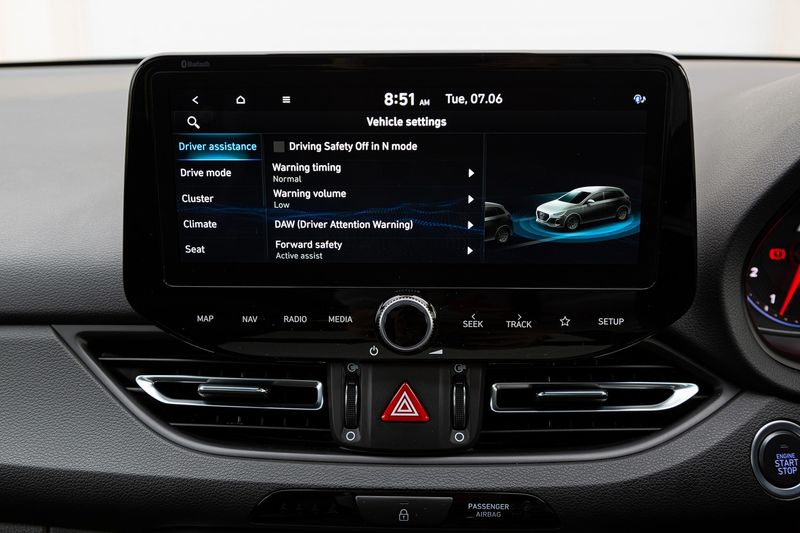
An abundance of safety tech is standard.
Meanwhile, the safety package is truly impressive, with plenty of semi-autonomous features, including forward-collision avoidance, blind-spot collision avoidance, rear cross-traffic alert, radar-guided cruise control, and lane-keeping assist to name but a few. There are 7 airbags.
Performance and Efficiency
As with its predecessor, the i30 N is powered by a 2.0-litre 4-cylinder turbopetrol engine. It produces 206 kW and 392 Nm, with the 8-speed dual-clutch automatic transmission directing power to the front wheels via an electronically controlled limited-slip differential (e-LSD).
Hyundai claims a 0-100 kph time of 5.4 sec and 250-kph top speed – figures that are good enough to position the Hyundai near the top of its segment. The i30 N comes with a launch-control function, but strangely, the vehicle felt a bit quicker when we launched it manually (there was quite a lot of wheelspin under the electronically orchestrated start). If you frequent your local drag strip, you can fine-tune the launch control for that perfect start.
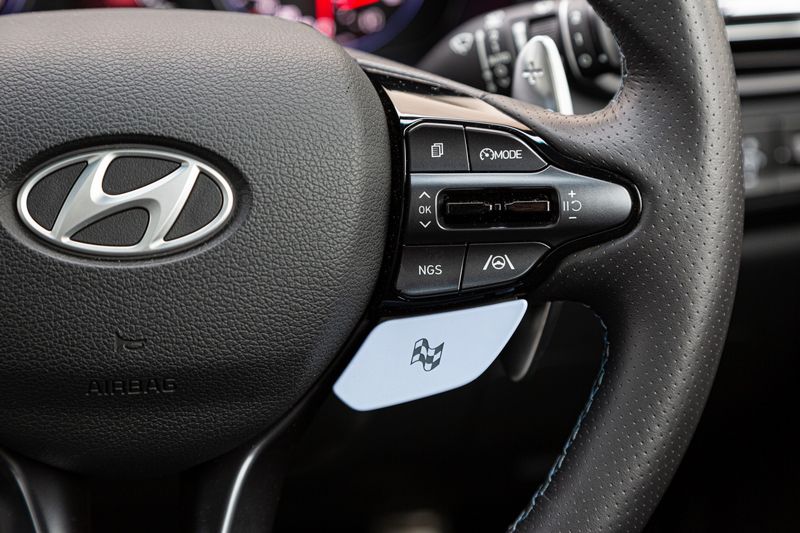
Performance aficionados are likely to utilise this big blue button often.
When you stab that steering-wheel button with the chequered flag on it, every aspect of the powertrain is immediately set to its hardest/fastest/loudest setting. Engine and Transmission? Full power and hard, late ‘shifts. Exhaust? Fully open. Adaptive suspension? Stiffest setting. Stability control? Playful. Steering? Sportiest. With everything set to, well, “Defcon 1”, the Hyundai i30 N is a remarkably wieldy and rapid machine, but you’ll pay for it at the pumps…
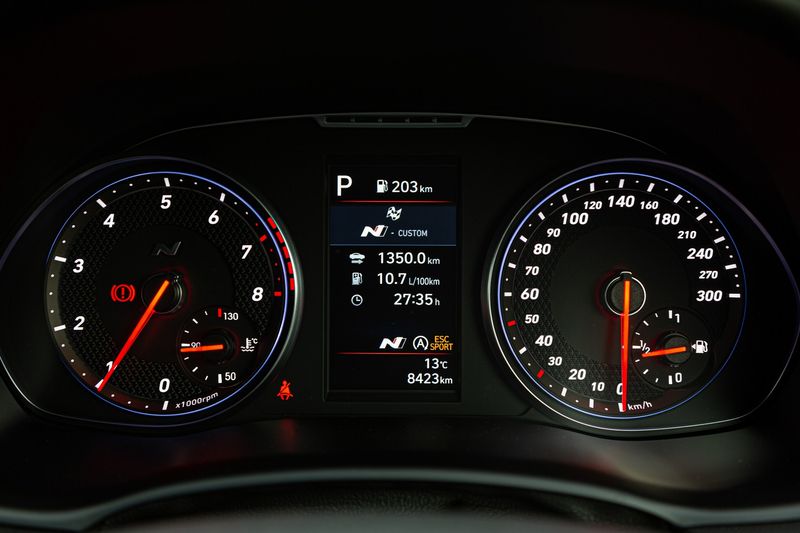
N mode increases fuel consumption, so rein in your heavy right foot!
After a morning of rather enthusiastic driving, we saw an indicated fuel consumption figure of over 10 L/100 km. Yet, when we completed a 500-km weekend trip (with the vehicle operating in its Eco drive mode throughout), we saw a figure as low as 7.8 L/100 km.
The engine revs eagerly to its redline (which is a boon in a turbocharged motor). As you approach the rev limit, shift lights illuminate on the instrument cluster to indicate the ideal point at which to change up a gear (by pulling the right shift paddle behind the ‘wheel). The throttle is ever responsive and the sounds on offer will certainly put a grin on your face.
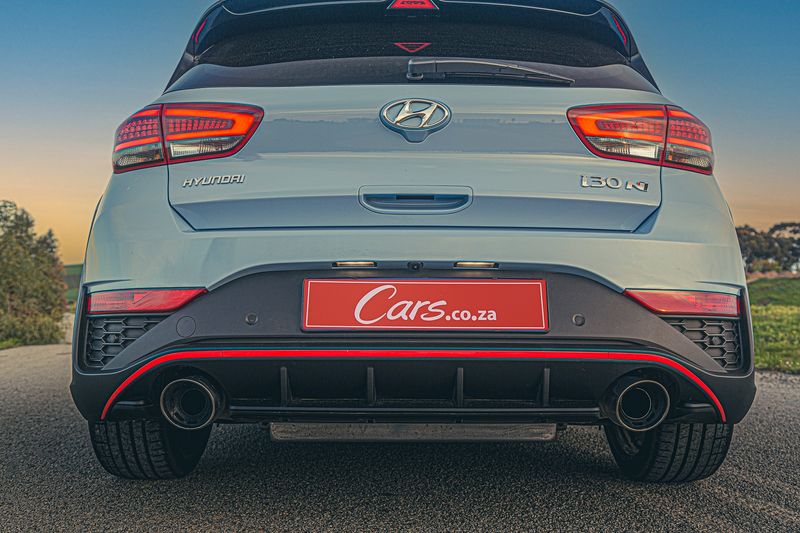
These exhausts are some of the loudest we’ve ever heard.
There’s a great induction roar and, if you come off the throttle, those big-bore exhaust ends emit a barrage of rorty pops and bangs. If you downshift (while in N mode) into high revs, even louder bangs are produced. In an era of muffled car-engine notes, this is a lovely indulgence, but being this loud can be construed as antisocial behaviour – so be mindful.
Meanwhile, the new automatic transmission is the most welcome addition to the i30 N package. Not only does it swap cogs quickly and efficiently, but its programme can be adjusted to alter the severity and speed of the shifts. At full throttle, N Power Shift mitigates any torque reduction during upshifts, which creates the sensation of even harder acceleration.
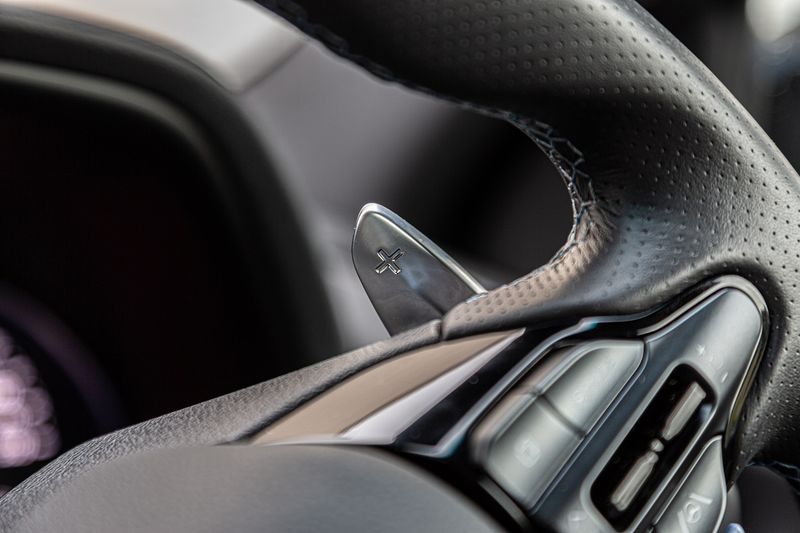
The new 8-speed DCT addresses the main downside of the pre-facelift version of the i30 N.
The vehicle also comes with a very cool party trick. A small button marked NGS (strangely, the Kona N gets a far more prominent red button) refers to the N Grin Shift. Essentially, it’s an overboost function and, for 20 seconds, the engine will produce even more power/torque, with a cool graphic on the dash. It’s ideal for overtaking slower traffic on the open road.
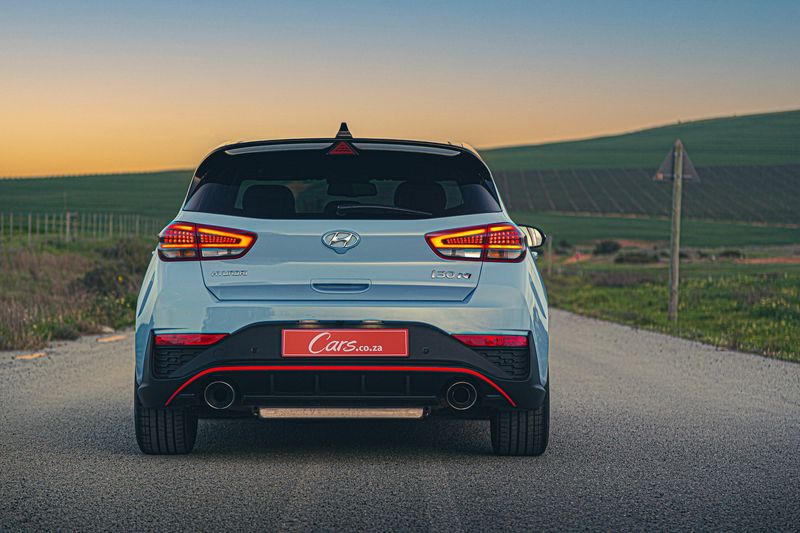
In its sportiest setting, the i30N is one of the most engaging hot hatches in the new-vehicle market.
For everyday driving conditions, Normal, Sport and Eco modes are available. Some may regard N mode as too extreme and, to a degree, it is. The last time we experienced such a level of involvement and engagement, we were in a Civic Type R, but the i30 N is a more multi-faceted machine! It’s fun to drive the i30 N at its most intense settings, but you can’t do it all day, every day, which is why the Hyundai’s adjustability is such an advantage.
Ride and Handling
There is so much more to the i30 N than scintillating straight-line acceleration – that’s what we found out when we “carved up” one of our favourite stretches of twisty blacktop in Hyundai’s newcomer. Granted, the sportiest steering mode is a little too heavy (artificially so), but this is the magic of adjustability – you just need to tweak the appropriate setting.
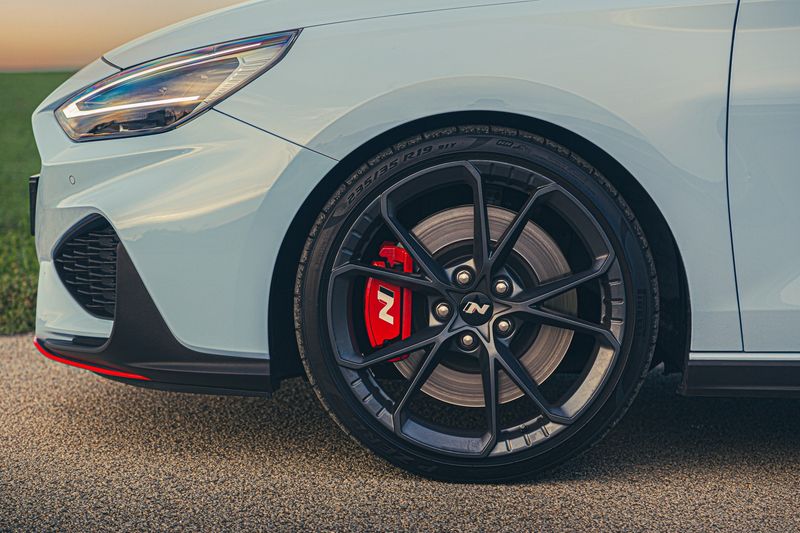
Pirelli rubber provides plenty of grip and the brakes are excellent.
By default, the Hyundai has a quick steering setup, and when you can make quick, small adjustments with the ‘wheel, the i30 N responds promptly and accurately. It’s an eminently wieldy car that instils confidence even as you pile on the pace; grip levels are high, thanks to the excellent Pirelli rubber and the uprated brakes are potent, yet offer pleasing feedback.
There’s an excellent level of focus and poise to the Hyundai i30 N. Yes, the suspension tuning is firm, which facilitates excellent body control, but you can experiment with the adaptive dampers’ settings to find a ride quality that you prefer – or could live with…
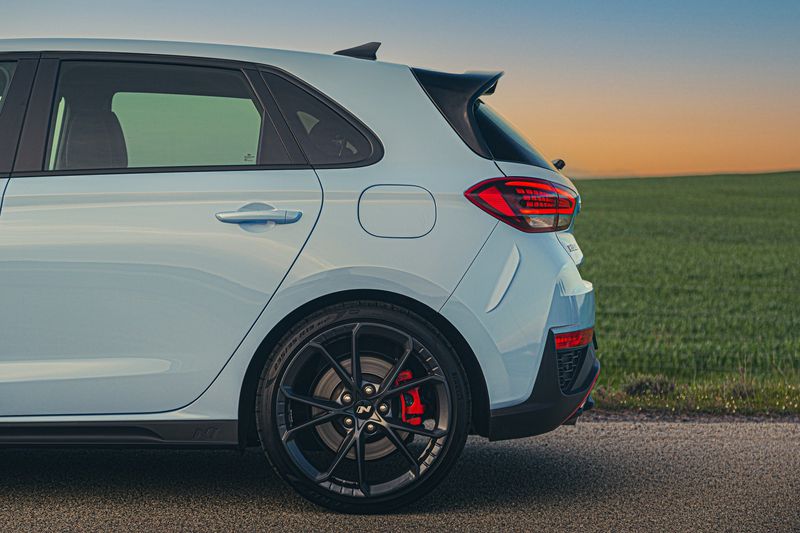
A jack of all trades here, but a master where it counts.
What’s truly impressive about the machine is its sheer adjustability. The transmission, engine, exhaust, suspension, stability control, steering and e-LSD… each of them have 3 settings… and there are hundreds of possible combinations. So, you could have the suspension setup at its comfiest, with the engine in its normal setting and the exhaust at its loudest. You could also set everything but the exhaust to the maximum, for a quieter blast down the back roads. Plus, you can save your preferred setup and access it with a second press of the N button.
And the best part? If you get tired of fun and games, simply select the Eco mode, which makes all those settings go into their most relaxed states. But, with such a reassuring setup, we doubt you’ll tire of the i30 N’s cornering capability. The e-LSD cleverly mitigates torque steer and will allow you to exit corners quicker and earlier. Addictive? Very much so.
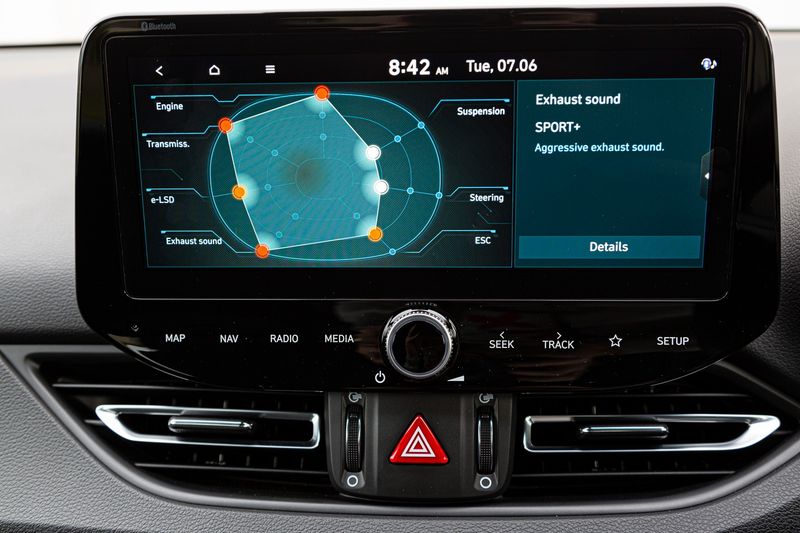
The Cars.co.za setup: comfortable, but fast and noisy!
Price and After-sales support
The Hyundai i30 N retails for R749 900 and is sold with a 5-year/75 000 km maintenance plan, a 5-year/150 000 km general warranty and a 7-year/200 000 km drivetrain warranty.
Some Hyundai dealerships regularly offer great deals. See our New Car Specials!
Looking to sell your car? You can sell your car to SA’s biggest dealer network
Verdict
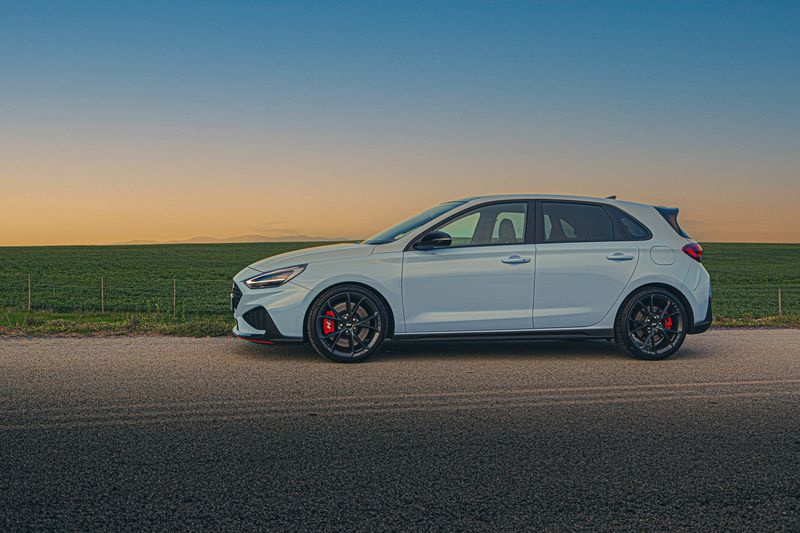
The i30 N took its sweet time to join the fray, but of the few hot hatches that are left, the Hyundai is the closest in spirit – and execution – to the Golf GTI.
Social media has made it fashionable to dismiss a new arrival to a segment with the attitude of “how dare this newcomer try to unseat the established players?” but the facelifted Hyundai i30 N is an utterly accomplished offering. Volkswagen has a loyal following in South Africa and the Golf GTI has legendary status (deservedly so), but that should not detract from the facelifted Hyundai i30 N’s merits, of which there are many. Don’t knock it until you’ve driven it…
The introduction of the dual-clutch automatic transmission has addressed a concern that many had with the first iteration: “it’s only available in manual”; the i30 N’s sheer performance and feel-good factor frankly run rings around the Golf 8 GTI, which is technically a newer model and, when you compare them spec-for-spec, the Korean lands yet another blow. Granted, its day-to-day driveability isn’t quite as polished/refined as that of the VW, but in terms of comfort and refinement, it doesn’t lag far behind. What’s more, VWSA currently has low stock availability of the GTI (due to Covid-related component shortages and, therefore, production delays), which also counts in the Hyundai’s favour.
So, should you buy one? If you’re young at heart and pine for a hot hatch that delivers stonking performance, celebrates the joy of driving and can still do the daily commute with ease, you’d be foolish to ignore Hyundai’s latest offering. The i30 N may not have the pedigree of 7 generations behind it (as the Golf GTI does), but thanks to some deeply impressive engineering and performance, it’s able to deliver smiles and entertainment galore, with very few compromises, plus it comes at a competitive price. There are way too many lukewarm vehicles on sale right now, but the wickedly fun Hyundai i30 N is hard to resist and is hauntingly memorable.
Some Hyundai dealerships regularly offer great deals. See our New Car Specials!
Looking to sell your car? You can sell your car to SA’s biggest dealer network
David Taylor

Having contributed to multiple motoring titles as well helping run the public relations machine of the Johannesburg International Motor Show, Dave has experience in both sides of the motoring industry. He's based in the Western Cape and is responsible for the performance testing, photography & weekly YouTube news for Cars.co.za.