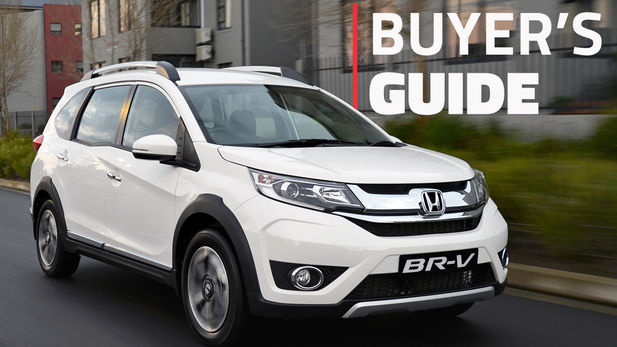
The original Honda BR-V combined MPV-like cabin versatility with SUV-mimicking exterior styling. Here’s what you should know when shopping for a used version of the Japanese brand’s 7-seater…
Back in early 2016, there were just 2 high-riding models in Honda Motor Southern Africa’s line-up: the HR-V and the CR-V. However, the Japanese brand’s local arm added a 3rd option late that year, launching the original Honda BR-V.
Interestingly, the 7-seater BR-V replaced the Mobilio – an MPV to which it was very closely related – in South Africa, with Honda acknowledging the fact local buyers were increasingly favouring crossovers. In effect, though, the DG1-series BR-V fell somewhere between an MPV and an SUV.
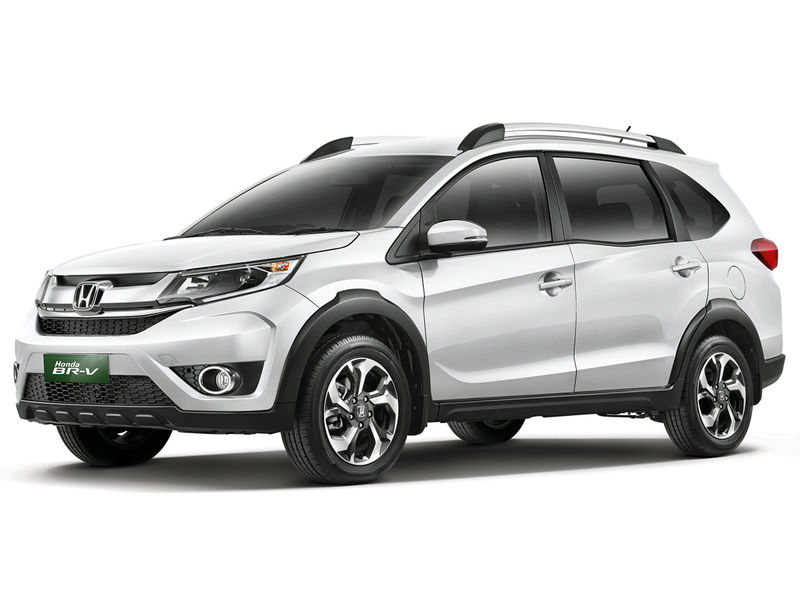
Although Honda’s global division initially said the BR-V was “developed exclusively for the Asian market”, this 3-row model arrived in South Africa within 6 months of its launch in India. It immediately found favour among local buyers, regularly topping the monthly list of Honda’s best sellers.
For the record, the BR-V badge – which, incidentally, stands for “Bold Roundabout Vehicle” – has since been retired in South Africa, with Honda Motor Southern Africa quietly axing the 2nd-generation model (along with the Ballade) late in 2025.
Honda BR-V model line-up in South Africa
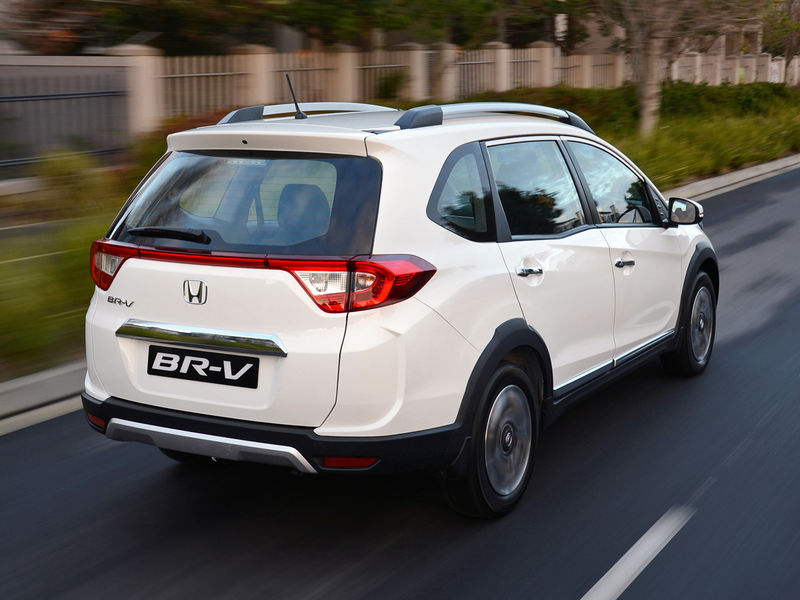
Honda revealed its production-ready BR-V prototype in Indonesia in August 2015, before the Indian-market version was unveiled in February of the following year. By October 2016, the BR-V had touched down in South Africa.
At launch, the local BR-V portfolio comprised 5 front-wheel-drive derivatives, each powered by a naturally aspirated 1.5-litre, 4-cylinder petrol engine. Honda offered a trio of trim levels, with the mid-tier and flagship grades optionally available with a continuously variable transmission (CVT) as opposed to the otherwise standard 6-speed manual gearbox:
- BR-V 1.5 Trend 6MT (88 kW/145 Nm)
- BR-V 1.5 Comfort 6MT (88 kW/145 Nm)
- BR-V 1.5 Comfort CVT (88 kW/145 Nm)
- BR-V 1.5 Elegance 6MT (88 kW/145 Nm)
- BR-V 1.5 Elegance CVT (88 kW/145 Nm)
In February 2020, the facelifted version made local landfall. The make-up of the range was unchanged, with the 5-derivative structure carrying over. However, the BR-V gained (exceedingly) subtle styling updates, extra soundproofing and some additional features. For instance, all variants scored LED daytime running lights, while the mid-spec Comfort and top-spec Elegance derivatives gained rear parking sensors.
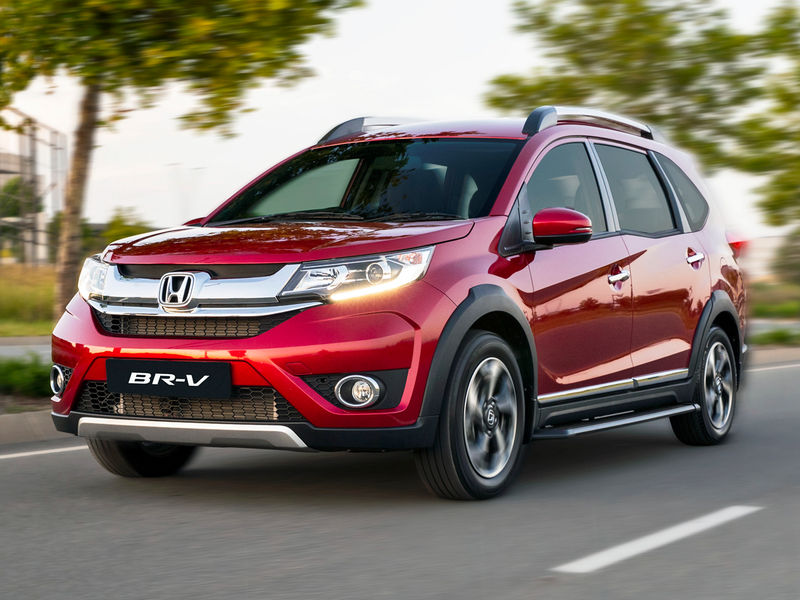
Just 2 months later, after the Japanese brand’s India division announced it would end production of the BR-V, Honda Motor Southern Africa released a statement confirming it had “no plans to discontinue the BR-V” and was “securing sufficient stock of the BR-V from India while the alternate factory is being set up for production”.
The DG1 generation’s time in South Africa finally ended in September 2022, when the 2nd-gen BR-V – which was instead sourced from Honda’s Karawang facility in Indonesia – hit the local market.
What are the original Honda BR-V’s strengths?
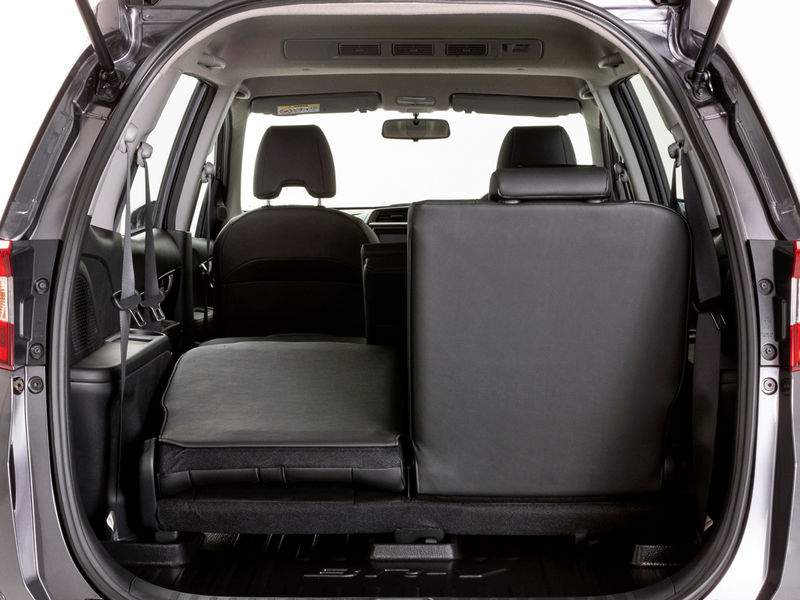
Versatile, spacious cabin: Thanks largely to its 2 655 mm long wheelbase, the BR-V was endowed with a rather roomy cabin (though admittedly one that featured plenty of hard plastics). It was a versatile space, too, with the Comfort and Elegance grades both boasting sliding and reclining functions for the middle row of seats as well as dedicated rear air-conditioning vents.
While space in that 2nd row was indeed generous, note the centre occupant had to make do with a lap belt. The final row of 2 seats was also surprisingly accommodating and access was relatively simple thanks to the 60:40-split folding middle bench, while as many as 11 cupholders were scattered around the MPV-like cabin.
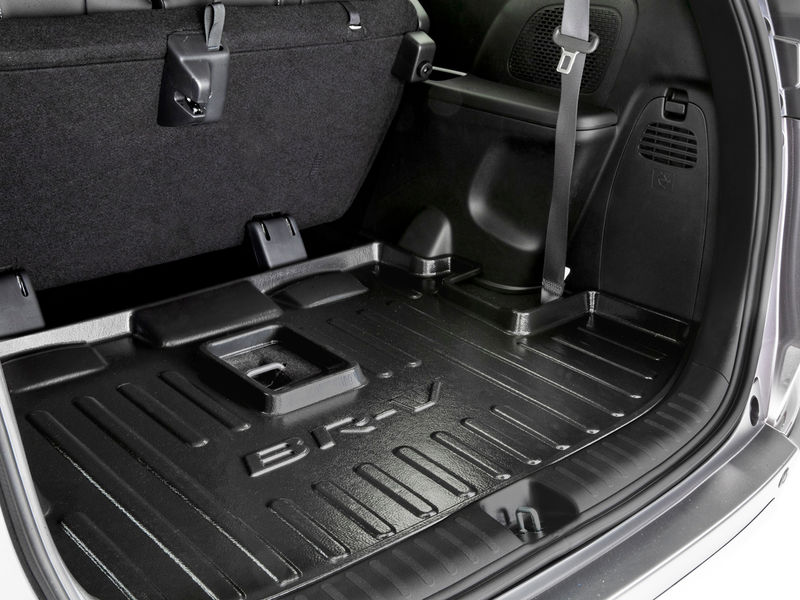
What about luggage space? Well, with all pews in place, the BR-V offered a reasonable 223 litres of packing space, a figure that grew to a considerable 691 litres with the 3rd row stowed. Drop the middle row and utility space ballooned to 1 164 litres (but keep in mind the resulting loading area wasn’t exactly flat).
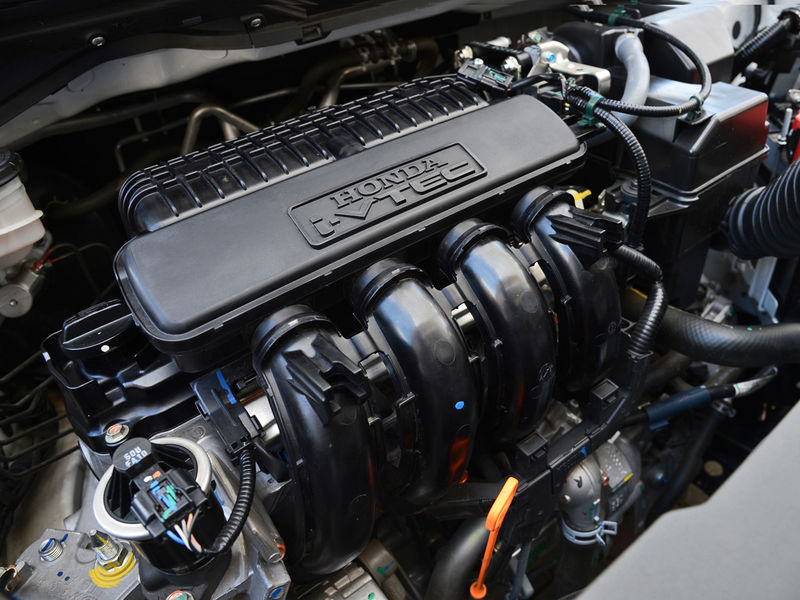
Well-proven engine: The atmospheric 1.5-litre motor (L15Z) that powered the DG1-series BR-V was a widely employed unit, having already proven its worth in various other Honda models, such as the Ballade, HR-V, Jazz and Mobilio.
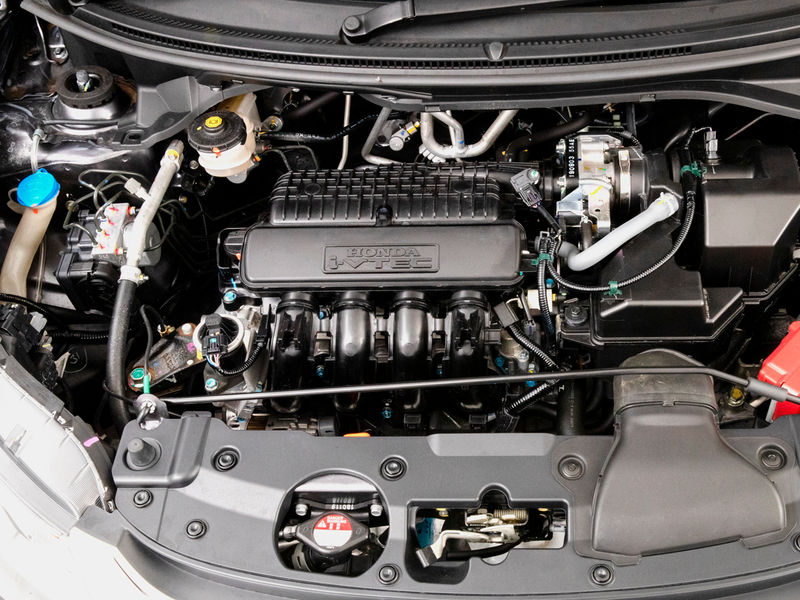
While turbocharged versions of this SOHC 4-cylinder engine have gained a reputation for middling reliability overseas, the naturally aspirated iteration offered locally faced no such criticism. Treat it right by meeting its maintenance requirements and this free-revving i-VTEC mill should provide plenty of trouble-free miles.
It was also relatively fuel efficient, with the Minato-based automaker claiming CVT-equipped derivatives could sip unleaded at 6.2 L/100 km on the combined cycle. The 6-speed manual variants, meanwhile, had a listed fuel economy of 6.3 L/100 km.
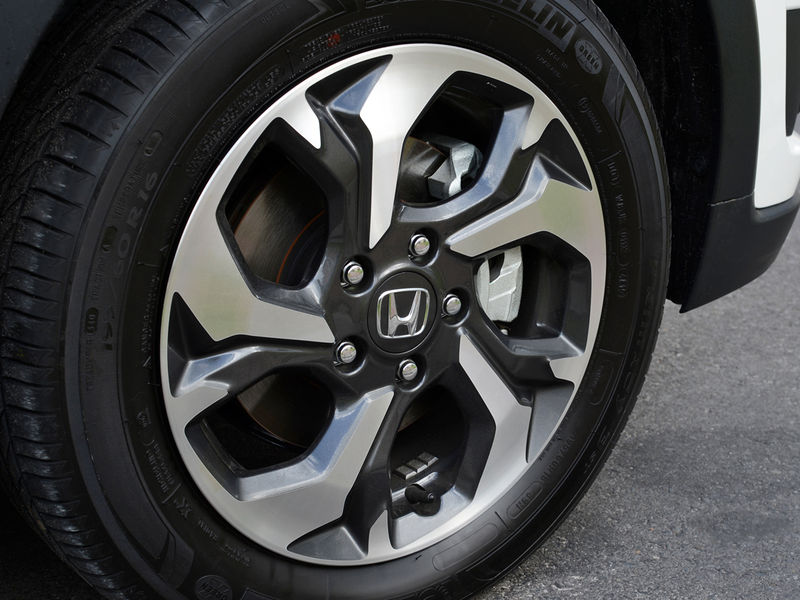
Primed for potholes: Considering the state of South Africa’s road network in various parts of the country, there’s certainly something to be said for a robust suspension system. The BR-V’s set-up offered a handy 210 mm of ground clearance, with all derivatives furthermore benefitting from high-profile tyres (195/60 R16) and a full-size spare wheel.
What are the 1st-gen Honda BR-V’s weaknesses?
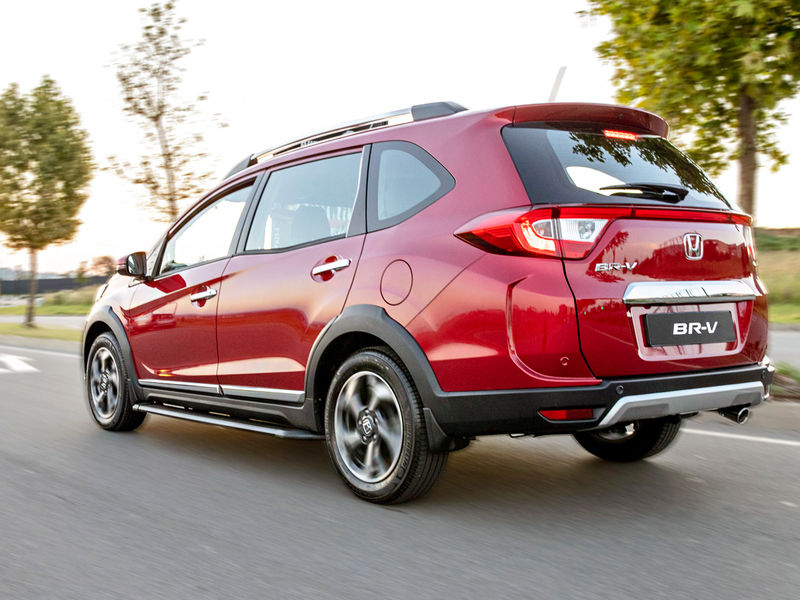
Lack of low-down grunt: Though the BR-V’s atmospheric engine was well proven, it lacked low-down grunt, with its relatively modest peak torque of 145 Nm arriving at a lofty 4 600 rpm. So, with all 7 seats occupied and the luggage compartment stuffed to the gills, the crossover struggled with inclines – particularly at higher altitudes.
Moreover, access to maximum power of 88 kW required the motor to spin to 6 600 rpm, which resulted in a coarse engine note. In fact, the BR-V – which tellingly was not rated to tow – could even sound strained at the national limit, despite having upgraded from the Mobilio’s 5-speed manual gearbox to a 6-speed item.
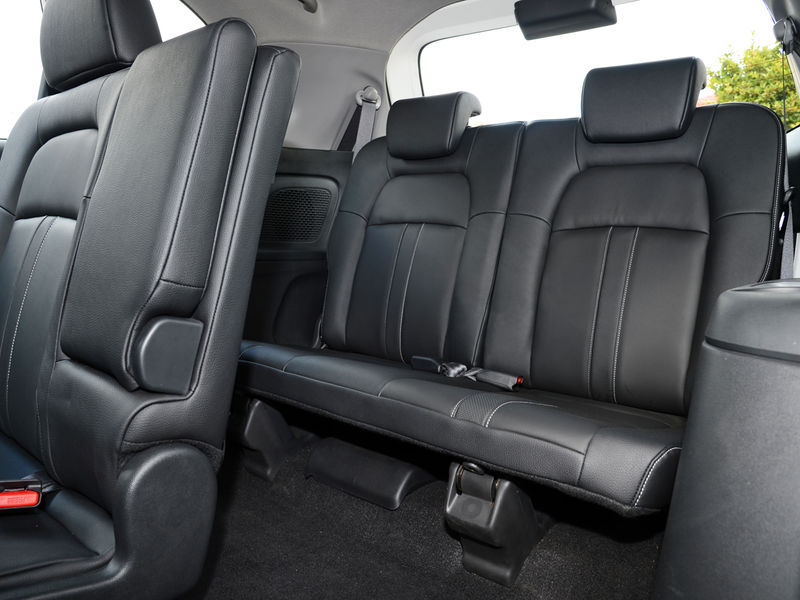
Missing safety features: For a 7-seater crossover billed as a family hauler, the original BR-V was curiously offered with just 2 airbags (dual front items). Furthermore, this model did without any form of electronic stability control, while also (just as surprisingly) lacking ISOFIX child-seat anchors.
Though discs were used up front, the rear axle made do with drum brakes, while the mid- and top-tier grades gained rear parking sensors only at the facelift (with the flagship specification also scoring a reverse-view camera at that time). As mentioned above, the middle passenger in 2nd row had to settle for lap belt, too.
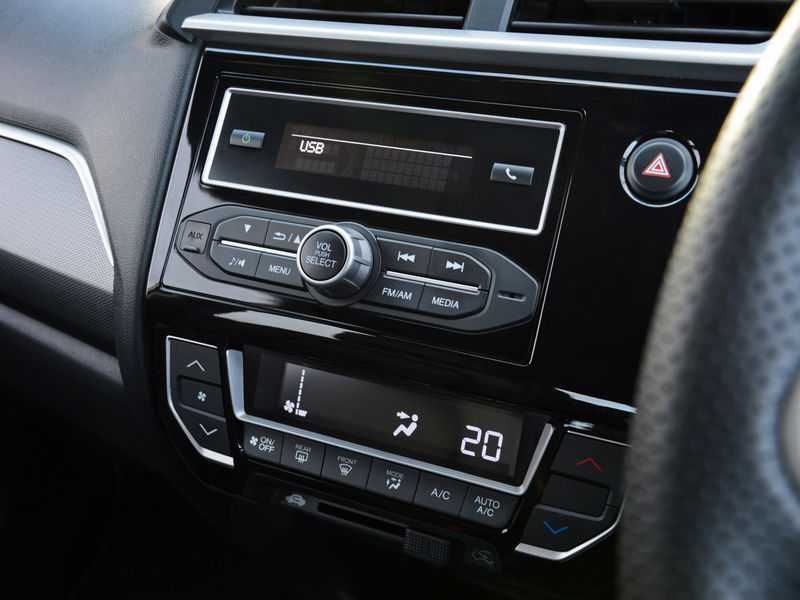
Basic infotainment set-up: At launch, the BR-V shipped with a decidedly rudimentary (though at least Bluetooth-enabled) infotainment system, combining a small dot-matrix display with a 4-speaker radio system. The Elegance grade, though, had an additional 2 tweeters.
Still, at least this set-up featured a large volume dial. In addition, it’s worth keeping in mind the Elegance range-topper upgraded to a 7.0-inch touchscreen system at the model’s mid-cycle update.
How much is a used Honda BR-V in South Africa?
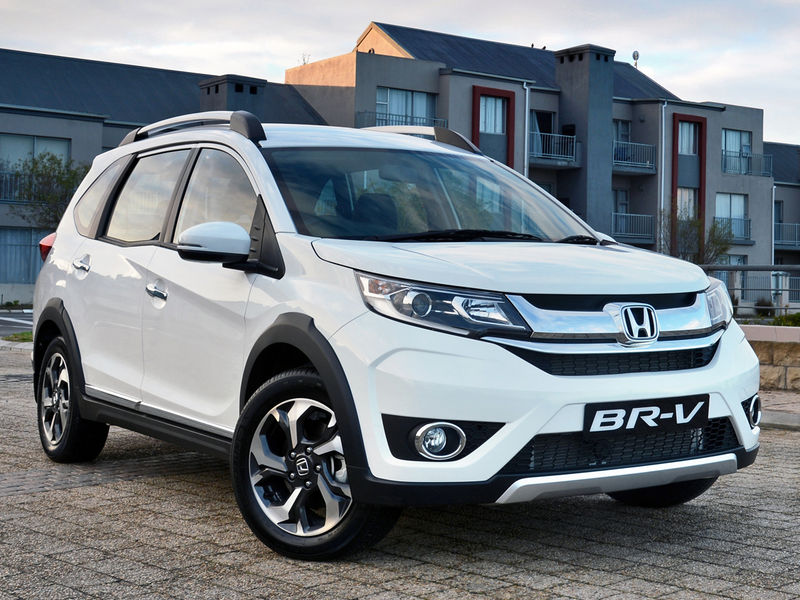
In South Africa, the price of Honda’s DG1-series BR-V included a 5-year/200 000 km warranty. Take note, however, that a service plan was optional for the base Trend derivative, while the Comfort and Elegance models featured a 4-year/60 000 km arrangement (with intervals of 15 000 km) as standard.
Just 4 basic exterior paint colours (red, white, silver and grey) were offered, though the names of these hues were changed at the facelift. Factory-backed accessories available from local Honda dealers included a plastic cargo tray, chunky running boards, chrome tailpipe trim and BR-V-branded side-sill protectors.
Of the 1st-generation Honda BR-V units listed on Cars.co.za at the time of writing, a considerable 68% were fitted with a CVT, while around 53% featured the flagship Elegance grade (with the mid-spec Comfort accounting for 34% and the base Trend just 13%).
The most popular model year was 2019 with 37% of all listed 1st-generation BR-V units, followed by 2018 on 21%. Mileage ranged from 27 500 km (on a 2020 1.5 Elegance CVT) to a considerable 291 000 km (achieved by a 2018 1.5 Comfort CVT).
- Below R200 000: About 33% of listed 1st-generation BR-V units were priced below R200 000. All 3 trim levels were represented in this space, though the vast majority were pre-facelift examples. The high-mileage unit mentioned above was the cheapest listing at R119 999.
- R200 000 to R250 000: This pricing bracket played host to approximately 40% of all listings, with most examples here showing well under 150 000 km on their respective odometers. The overwhelming majority of units positioned between these bookends featured a CVT.
- R250 000 and up: The final 27% of listings were priced north of R250 000, with most being facelifted 1.5 Elegance CVT units. The most expensive 1st-gen BR-V we found was a 2021 flagship derivative (with 77 000 km on the clock) priced at R298 000.
Which Honda BR-V derivative is best?
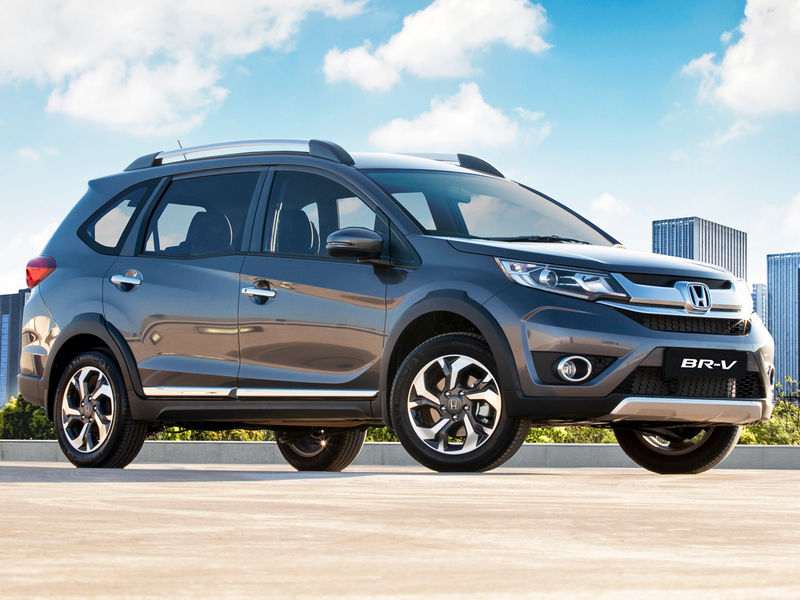
Since the lone engine on offer was the 1.5-litre 4-pot, you need only decide on your preferred transmission. The snappy 6-speed manual gearbox offers the better driving experience, though should you regularly find yourself enduring bumper-to-bumper traffic, you’d be remiss not to test drive a CVT-equipped example, too.
Considering the entry-level Trend grade did without items such as alloy wheels (instead riding on steelies), height adjustment for the driver’s seat and an alarm system (and made do with manual air conditioning, too), we’d point to the mid-spec Comfort derivative as the smarter pick.
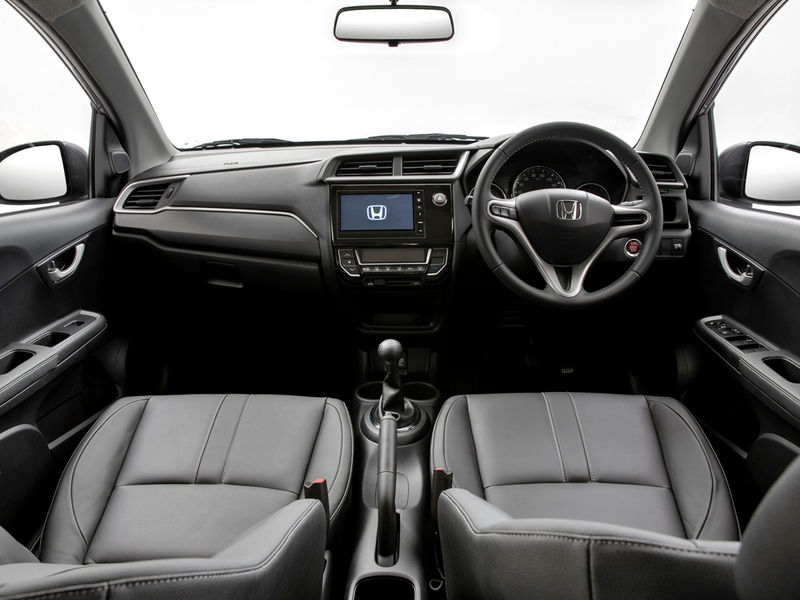
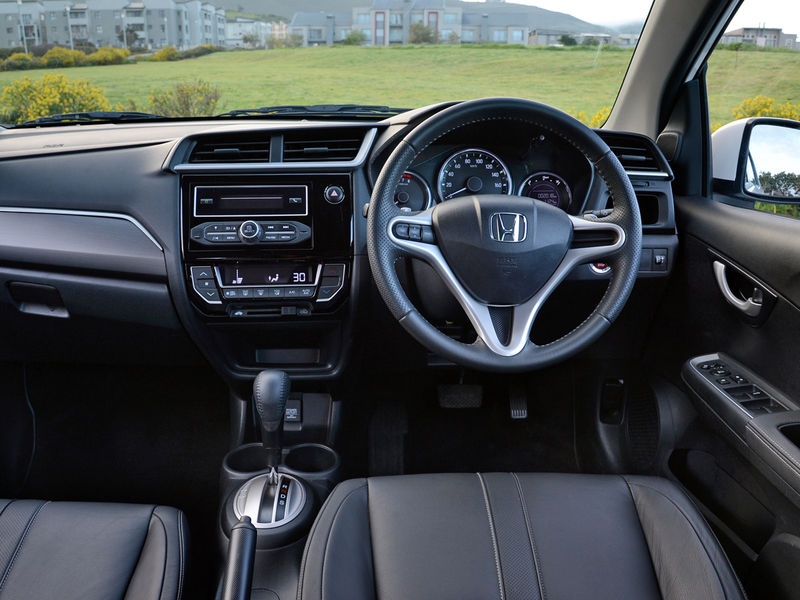
That said, should your budget allow, the Elegance furthermore added niceties like smart keyless entry, a start button, leather upholstery, chrome-effect exterior door handles, front foglamps, power-folding side mirrors and (in facelifted guise) a touchscreen infotainment system.
What are some alternatives to Honda’s BR-V?
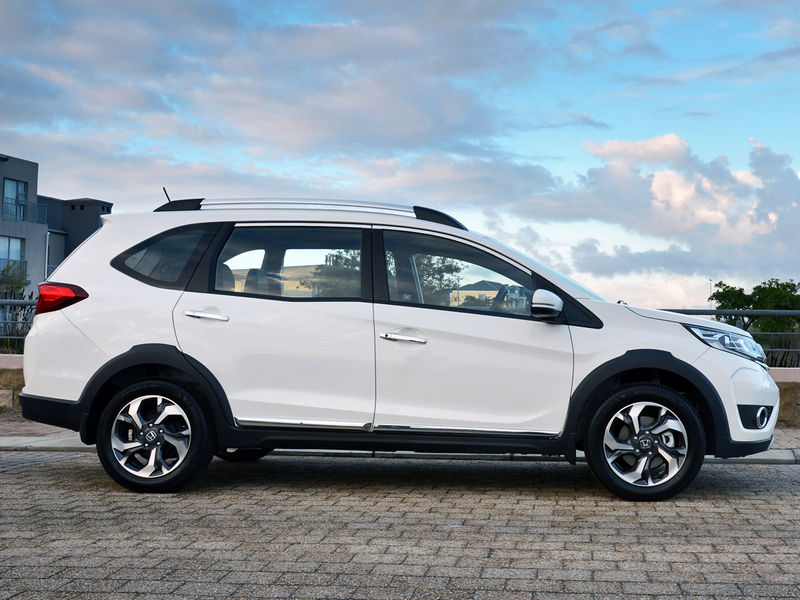
At launch, the original Honda BR-V’s key 7-seater rivals were the Suzuki Ertiga – first the ZE series and later the NC series – and the 2nd-generation Toyota Avanza. While the Toyota Rush was also (relatively briefly) available locally, the SA-spec version was sold in 5-seater guise only.
Still, while the Ertiga and Avanza – along with the Mitsubishi Xpander, the Ertiga-based Toyota Rumion and the Renault Triber that all arrived later in the original BR-V’s local lifecycle – were unmistakably MPVs, Honda Motor Southern Africa made a concerted effort to pitch its contender as a crossover.
As such, popular 5-seater competitors of the era included the B515-series Ford EcoSport, the HM-generation Renault Duster and the LY-series Suzuki Vitara. There was also the Hyundai Creta (in both 1st- and 2nd-generation guise), while the 7-seater Grand Creta arrived just 6 months before the DG1-series BR-V was replaced on the local market.
Is the Honda BR-V a smart used purchase?
So, should you consider a used version of the original Honda BR-V? Well, there’s no doubt this model has its strong points, particularly in terms of cabin space and versatility. Its motor, too, has proven to be a typically reliable thing when maintained properly.
Indeed, a well-looked-after example will in all likelihood provide several years of fuss-free motoring, making it a solid option for several applications. But we would be remiss if we didn’t reiterate that the BR-V doesn’t do its best work when treated as a full-time 7-seater.
Indeed, we’d suggest buyers who plan on regularly filling all 7 seats instead consider a vehicle that features the requisite safety kit (in this case, stability control and additional airbags, items that were thankfully added to the 2nd-gen BR-V) and a powertrain offering a mite more low-down torque.
Looking for a used Honda BR-V to buy?
Looking to sell your car? You can sell it to our dealer network here
Frequently Asked Questions (FAQ) About Buying a Used Honda BR-V (1st Gen)
Q: Is the original Honda BR-V a reliable used car choice?
A: Yes, it’s generally considered so, with the usual caveats. The BR-V uses the well-proven L15 1.5-litre i-VTEC engine, which is known for its longevity if serviced every 15 000 km.
Q: How safe is the first-generation BR-V for a large family?
A: While the BR-V achieved a 5-star ASEAN NCAP rating for structural integrity, its local safety spec is basic. It features only 2 front airbags and lacks electronic stability control and ISOfix anchors (features that were added to the 2nd-generation model).
Q: What is the real-world fuel consumption for the 1.5-litre engine?
A: While Honda claimed 6.2 L/100 km, real-world South African figures typically range between 7.5 and 8.5 L/100 km. Consumption can climb significantly in stop-start traffic or when the vehicle is fully loaded with 7 passengers, as the relatively small engine has to work much harder at higher revs.