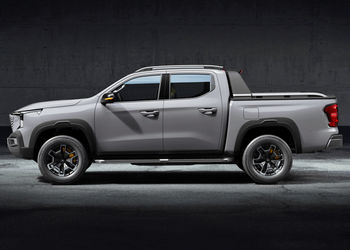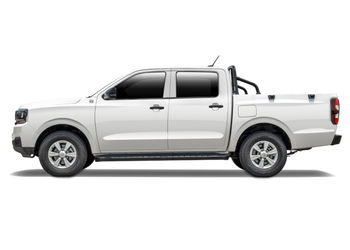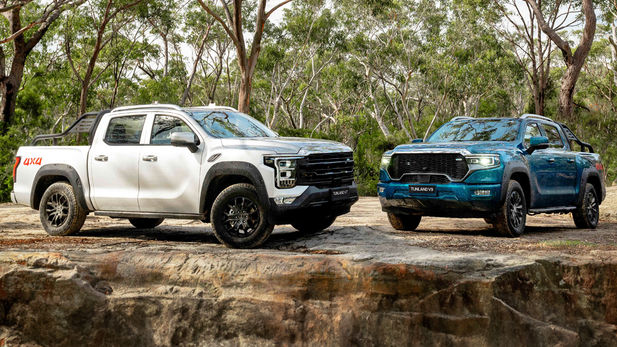
The Foton Tunland V7 and V9 have arrived in South Africa. So, how do these super-sized Chinese double-cab bakkies differ from one another? Let’s take a closer look…
After finding success with its latest Tunland G7 range, Foton South Africa has introduced the Tunland V7 and Tunland V9 double-cab bakkies. Both measuring a whopping 5 617 mm in length, these mammoth newcomers share plenty – but there are also a few key differences.
For the record, the Chinese manufacturer markets 4×2 and 4×4 versions of the Tunland V7 and Tunland V9, meaning there are 4 variants in the V-series line-up in total. Interestingly, all employ a 2.0-litre, 4-cylinder turbodiesel engine (generating 120 kW and 450 Nm), along with a 48V mild-hybrid system.
A ZF-sourced 8-speed automatic transmission (with paddle shifters) is standard across the range, while the claimed fuel consumption is 9.0 L/ 100 km. Foton says the braked towing capacity is 3 500 kg for all variants, while 4×4 versions have front and rear electronically controlled differential locks.
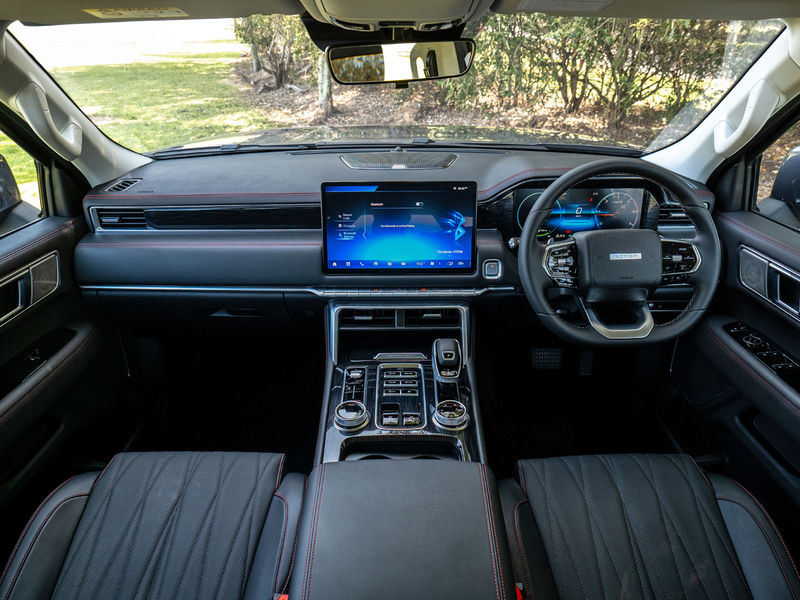
In addition, it’s worth noting that Foton has done little to separate the cabins of the 2 bakkies. All variants feature items such as a 14.6-inch touchscreen, synthetic leather seats (with electric adjustment for the driver and front passenger), dual-zone climate control and wireless smartphone charging.
Rear suspension and steering
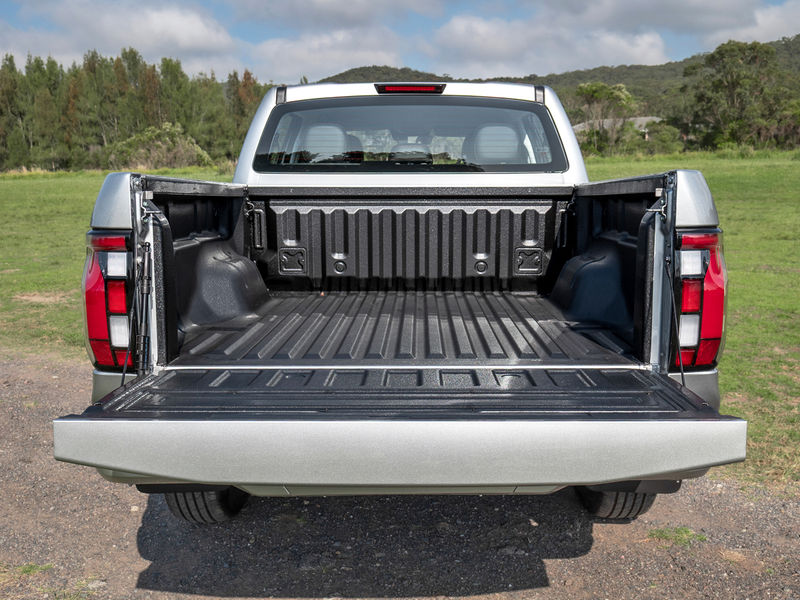
Foton bills the Tunland V7 as something of a workhorse. As such, it’s no surprise this bakkie – like most in the segment – features a traditional leaf-spring rear suspension set-up. In contrast, the Tunland V9 employs a multi-link arrangement at the rear, which the brand claims offers “superior ride comfort”.
Despite this significant distinction in suspension configuration, Foton lists a claimed payload of 1 000 kg across the range. It’s also interesting to note that the Tunland V7 uses hydraulically assisted steering, while the Tunland V9 comes standard with electric power steering.
Exterior styling distinctions
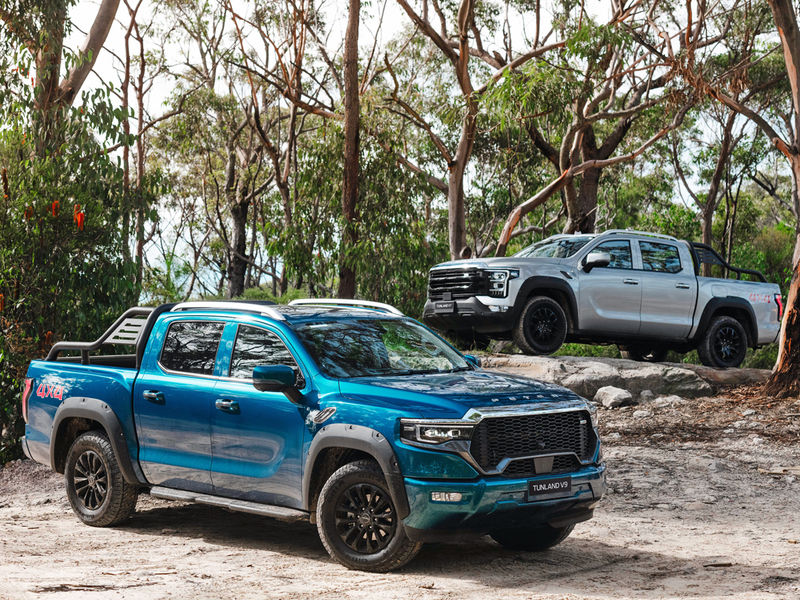
While the Tunland V7 and Tunland V9 clearly share sheet metal from the B-pillar back, their front-end designs are certainly distinct, though both with clear American inspiration.
Indeed, the Tunland V7’s face appears remarkably similar to that of Ford’s F-Series, while the Tunland V9’s front end could easily be mistaken for that of the Ram 1500.
Pricing and trim levels
As you might have guessed, the Tunland V7 is a little more affordable than the Tunland V9. That said, when it comes to the 4×2 versions, these 2 bakkies have virtually identical equipment lists. The key difference in terms of standard kit is found at the very top of the range.
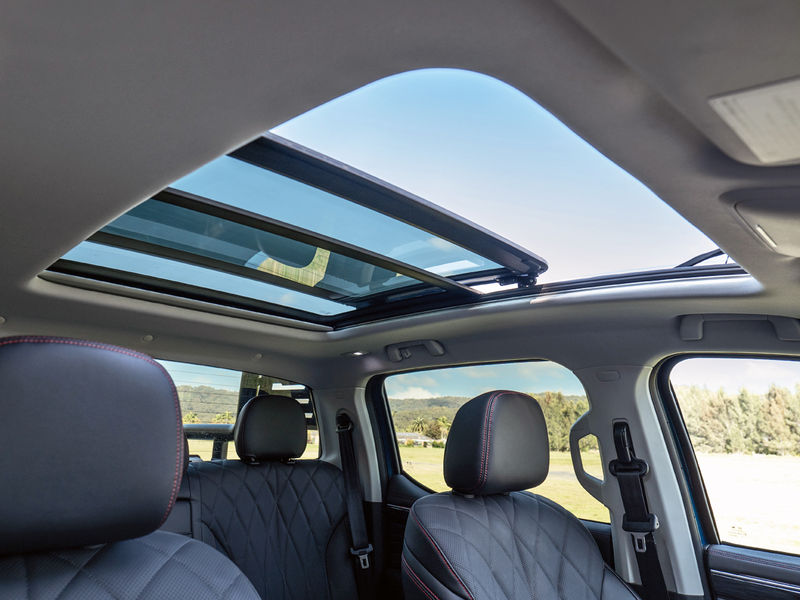
While 3 of the 4 derivatives are offered in VLX form, the 4×4 version of the Tunland V9 comes in LTD guise. As such, it gains some additional equipment, including a panoramic sunroof, ventilated front seats, adaptive cruise control and a raft of additional advanced driver assistance system (ADAS) features.
What do the Tunland V7 and V9 cost in SA?
| DERIVATIVE | PRICE |
| Foton Tunland V7 2.0TD double cab VLX | R689 900 |
| Foton Tunland V7 2.0TD double cab VLX 4×4 | R765 900 |
| Foton Tunland V9 2.0TD double cab VLX | R725 900 |
| Foton Tunland V9 2.0TD double cab LTD 4×4 | R799 900 |
The prices (correct in November 2025) include a 5-year/200 000 km warranty and a 5-year/75 000 km service plan (with intervals of 15 000 km).
Frequently Asked Questions (FAQ)
Q: What are the primary mechanical differences between the Foton Tunland V7 and V9?
A: The main mechanical difference is the rear suspension and steering setup. The V7, which is billed as a workhorse, features a traditional leaf-spring rear suspension and hydraulically assisted steering. In contrast, the V9 employs a multi-link rear arrangement — which the brand claims offers “superior ride comfort” — and comes standard with electric power steering.
Q: What are the engine specifications and performance figures for the Tunland V7 and V9 models?
A: Both the V7 and V9 variants share a 2.0-litre, 4-cylinder turbodiesel engine paired with a 48V mild-hybrid system. This setup generates 120 kW and 450 Nm. A ZF-sourced 8-speed automatic transmission is standard across the range, with paddle shifters. All variants have a claimed fuel consumption of 9.0 L/100 km and a braked towing capacity of 3 500 kg.
Q: What are the prices and warranty details for the Foton Tunland V-series in South Africa?
A: The prices for the four variants (as of the article’s publication) are: Tunland V7 4×2 VLX (R689 900), Tunland V7 4×4 VLX (R765 900), Tunland V9 4×2 VLX (R725 900) and Tunland V9 4×4 LTD (R799 900). These prices include a 5-year/200 000 km warranty and a 5-year/75 000 km service plan, with service intervals of 15 000 km.
Related content:
Tunland G7 range gains 4×4 single cab
Cars.co.za

Providing you with the latest motoring news, new car releases and the simplest way to buy and sell cars.