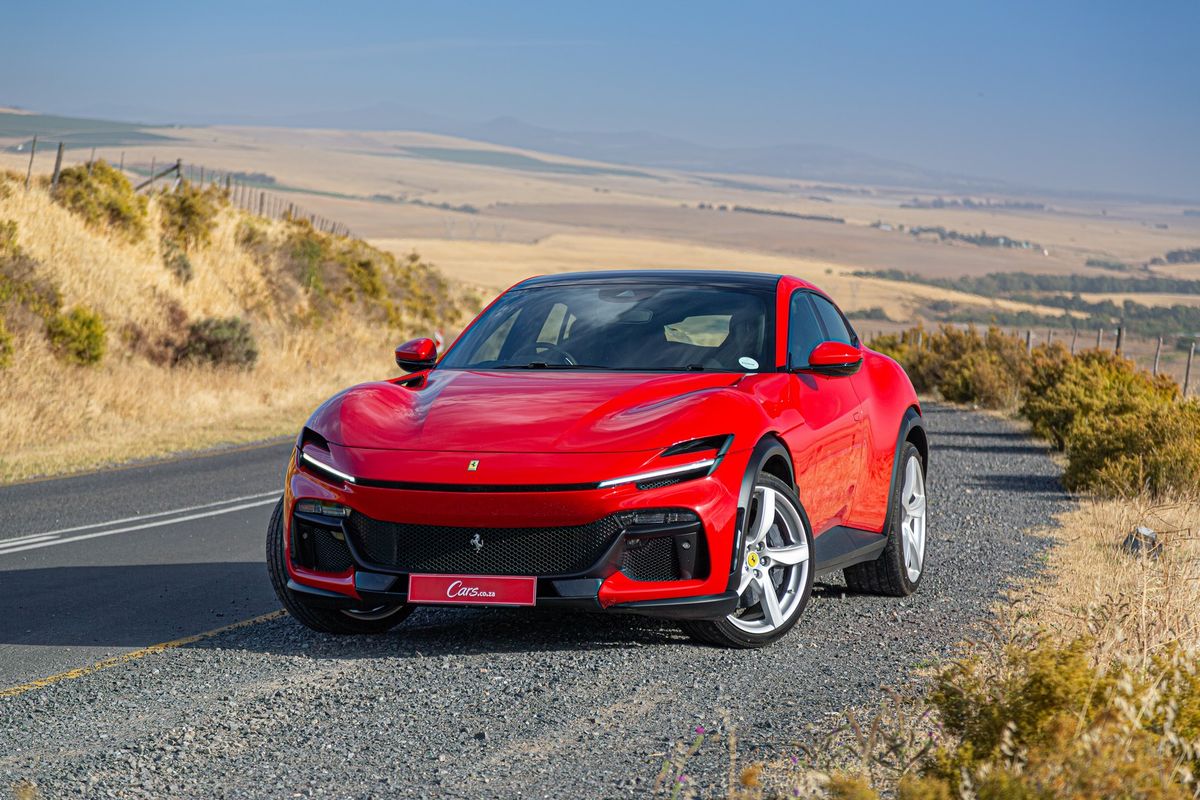
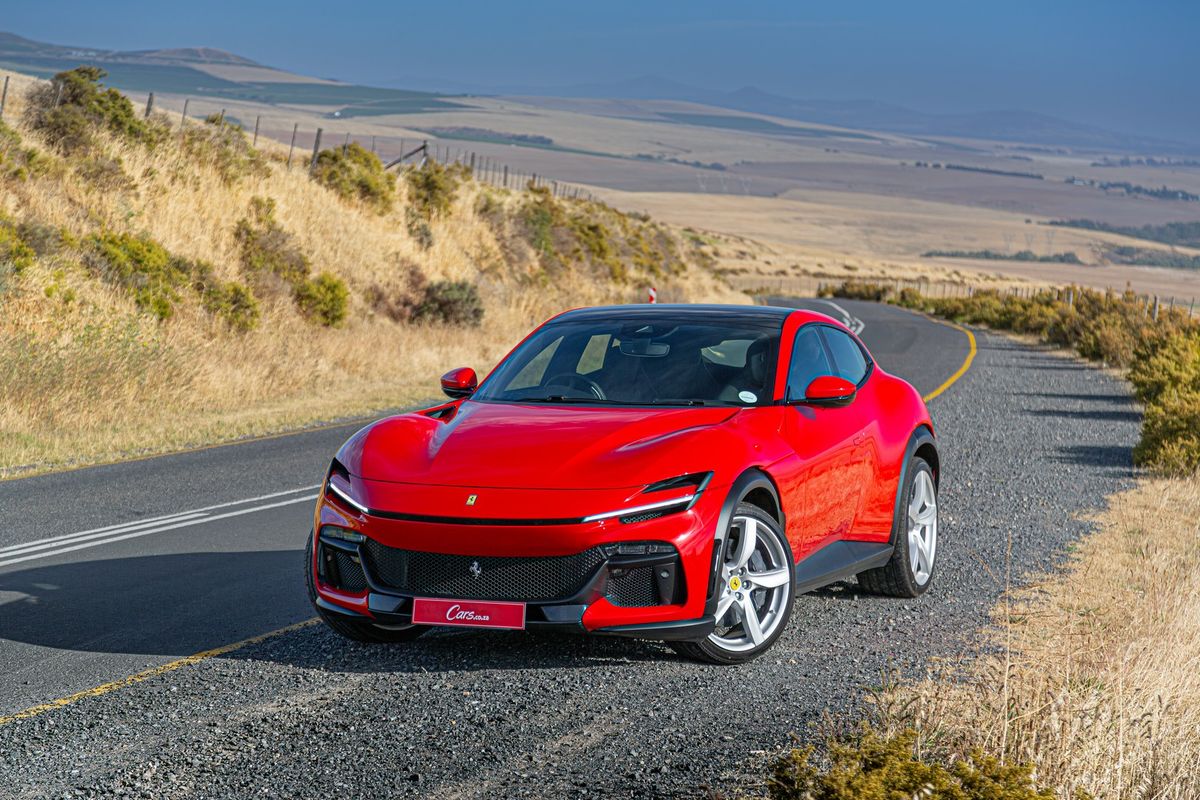


Ferrari doesn’t call the Purosangue an SUV, but it’s considered the iconic brand’s first attempt at cracking this “must-do” segment. What it is, in fact, is something entirely different, and more intoxicating: the world’s best 4-seat sportscar. Ciro De Siena presents a video review and Hannes Oosthuizen shares his impressions below.
We like: Gravity-defying dynamics, fantastic engine, cabin space, lots of “feel”
We don’t like: Eye-watering price, haptic controls on the steering wheel
FAST FACTS
- Model: Ferrari Purosangue
- Price: R9 759 300 (December 2024, before options)
- Engine: 6.5-litre V12 petrol engine
- Transmission: 8-speed dual-clutch
- Power/Torque: 533 kW/716 Nm
- 0-100 kph: 3.3 sec
- Claimed fuel consumption: 17.3 L/100 km
- Luggage capacity: 473 litres
Serious about buying/selling?
Some dealerships regularly offer great deals. See our New Car Specials!
Looking to sell your car? Sell it on Cars.co.za for free
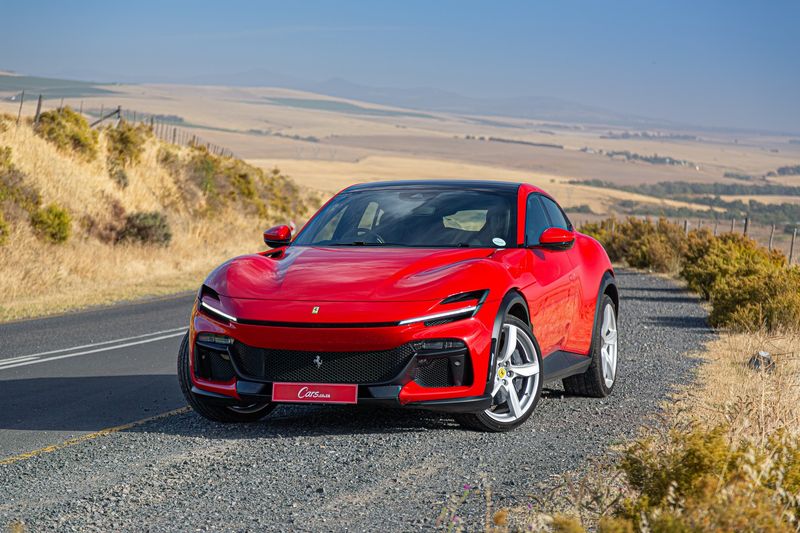
Where does the Ferrari Purosangue fit in?
This is a fitting review to end the year on – a Christmas present to petrolheads! The Ferrari Purosangue is not new (it was launched in 2022) and, if you want one, you’ll have to be patient just to get a chance to order the car! Initial demand was so overwhelming that Ferrari had to suspend production of the model because it undertook to keep Purosangue sales at no more than 20% of the brand’s volume.
As we were finalising this review, we learnt order books for the model had closed again – it’s sold out well into 2026 – so if you’re a serious buyer, stay in touch with your Ferrari dealer for updates about that.
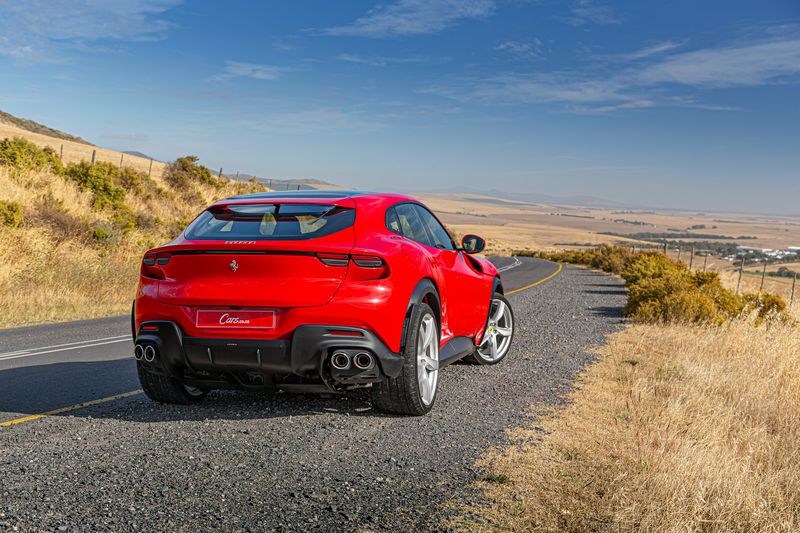
Suffice it to say, the Purosangue has contributed massively to Ferrari’s success in the past 2 years and become something of an unsung hero, which is surprising, given that its very existence is controversial! A few years ago the thought of a Ferrari SUV had purists spilling their espressos, but when the car arrived the concerns, somehow, evaporated. This only happens when a product well and truly nails the brief.
There are a few Purosangues available within the local Ferrari network, but you would have to be willing to part with about R15 million to purchase one that way (see below). That means the usual “consumer journalism” benchmarks don’t apply here. This is a car that you’ll either want, or not, and can afford to buy, or not… Whether it is “better than its rivals” is irrelevant, because, in reality, the Purosangue has no rivals. The only question that merits addressing, we believe, is whether the Purosangue is a pure Ferrari.
Compare the Ferrari Purosangue with the Porsche Cayenne Turbo GT and Bentley Bentayga V8 S
How the Ferrari Purosangue fares in terms of…
Design & Practicality
When information first emerged that Ferrari was planning to introduce an SUV, the firm was on the receiving end of much criticism. The concerns were to be expected: this is a storied, much-admired brand and the thought of a hefty, high-riding SUV was seen to be at odds with the marque’s DNA.
That said and, as has been the case for many of the world’s other luxury/sportscar brands, this segment is appealing because it adds volume and generates a lot of revenue. You could argue that a successful SUV model funds a brand like Ferrari’s ability to produce the extreme sportscars we expect of it.
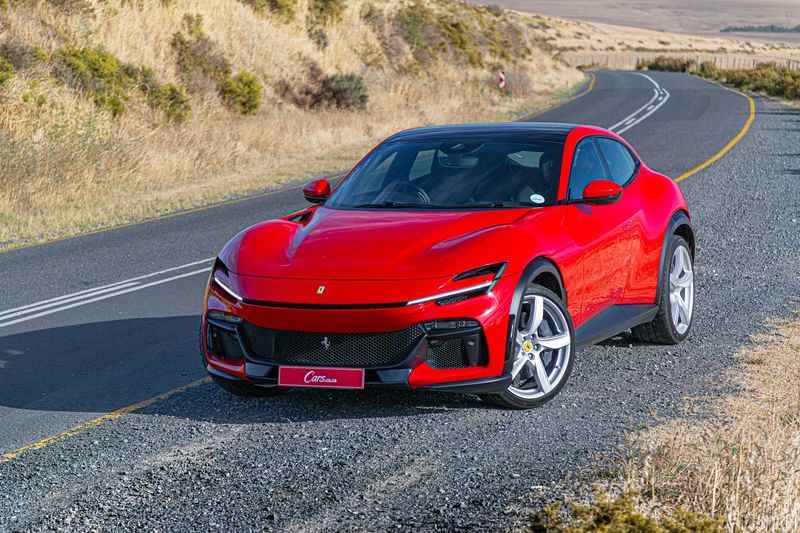
And when Ferrari showed the Purosangue, the criticism (including from us, we’ll admit) continued. To many, it resembled a Mazda CX-30, albeit a very macho, bulked-up one! That inconvenient truth didn’t hurt sales, however, as the Purosangue sold so quickly that Ferrari stopped production. It was recently reported by Motor1 that, according to data from JATO Dynamics, which covers 52 markets worldwide, the Purosangue was the 3rd-best-selling Ferrari between January and August 2024.
The data, which excludes key markets such as the Middle East, says Ferrari sold nearly 1 500 units through August, 3rd only to the 296 and the Roma. Not only is Ferrari selling more cars than ever before, its market valuation recently reached a new zenith. So things are certainly looking healthy at Maranello…
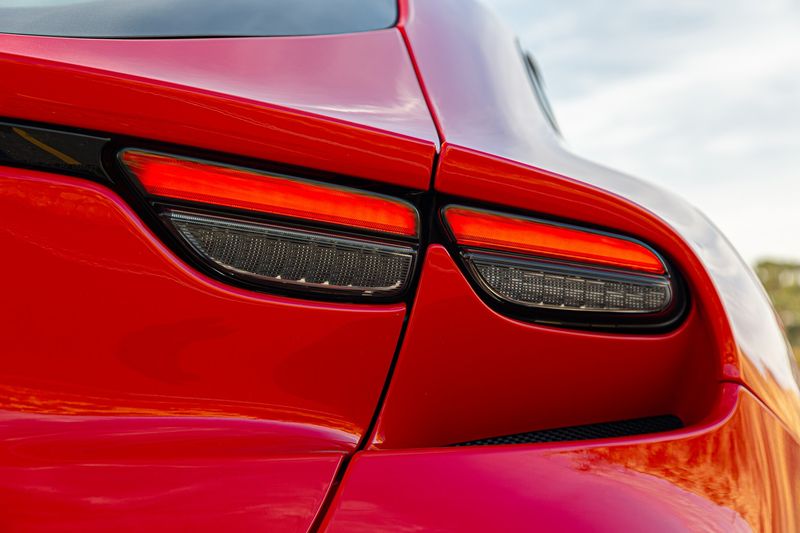
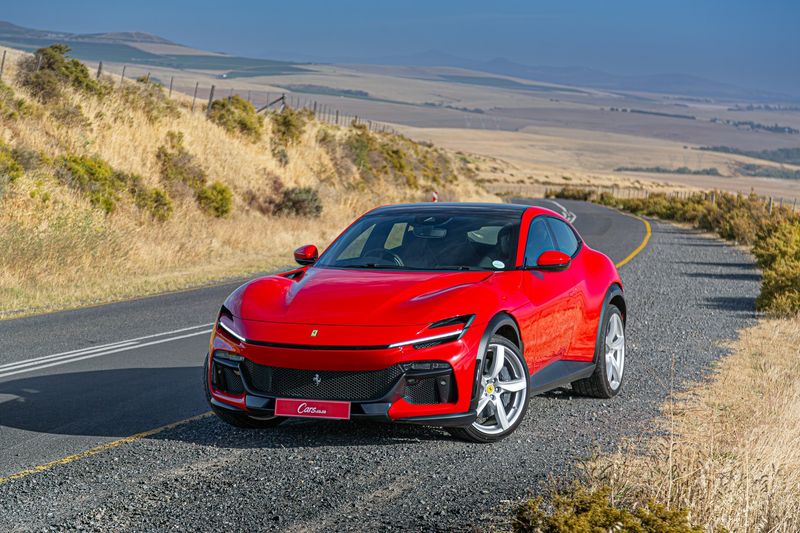
The opportunity to review a new Ferrari model doesn’t come along very often, and we certainly had lots of questions leading up to the big day… The brain twisters start as soon as you see it in the metal. First of all, the Purosangue is 4 973-mm long and 2 028-mm wide.
For some context, a Land Rover Discovery 4, which we happened to have on set on the day, is regarded as a “big boy”, but stretches the tape to 4 829 mm and 2 022 mm. So, the Purosangue is longer and wider than a Discovery 4! Yet, it doesn’t look that big at all. Of course, it is a lot lower than a Discovery, but the visual tricks, in our opinion, are more as a result of its curvy design and expansive bonnet.
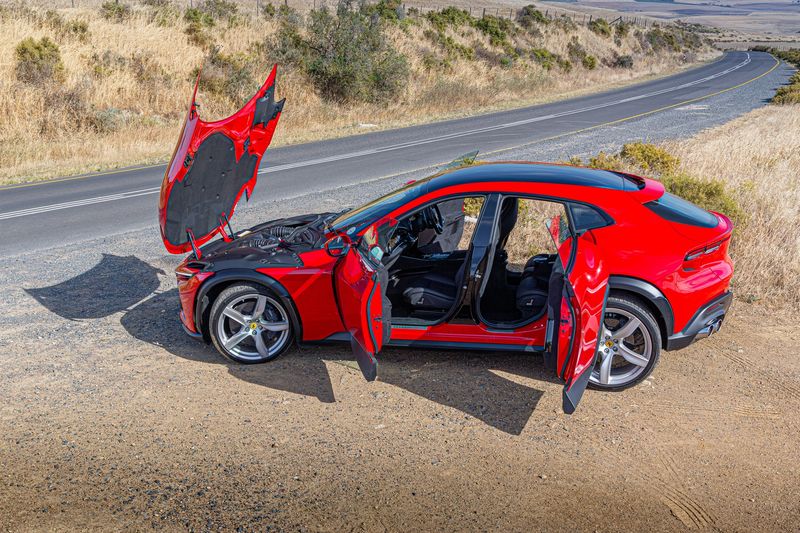
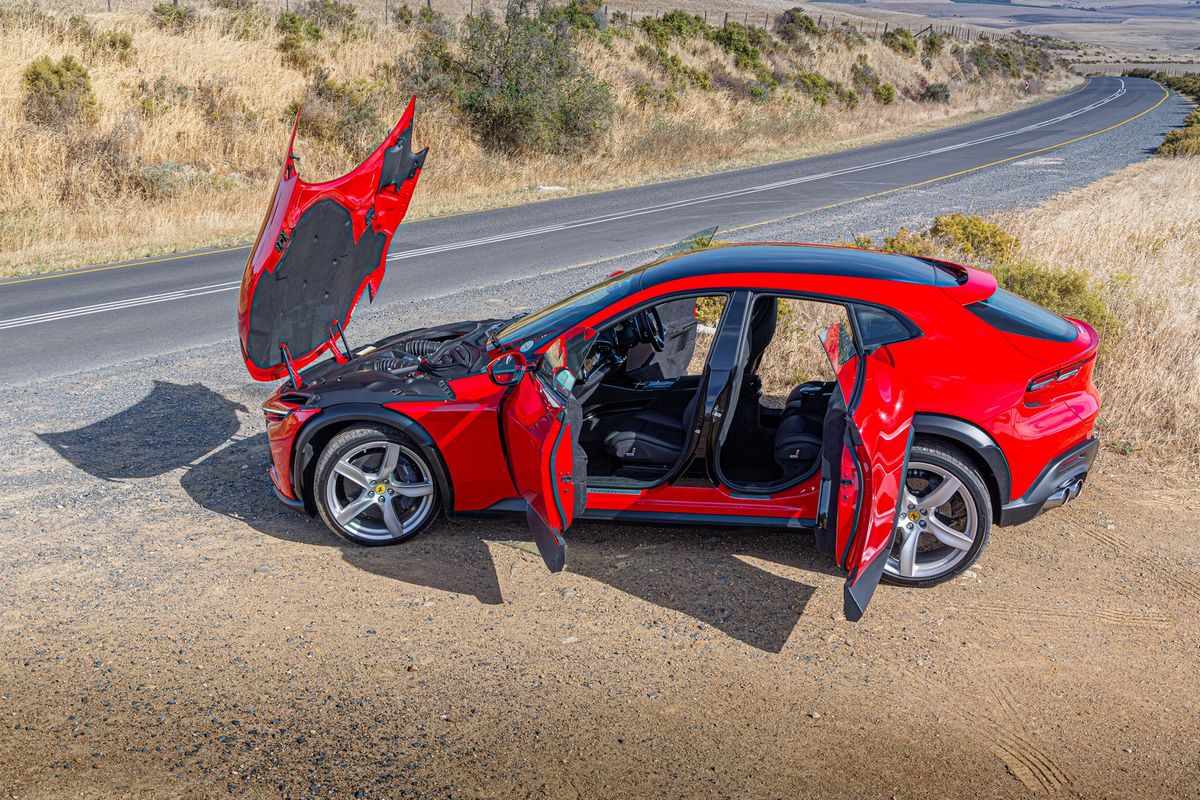
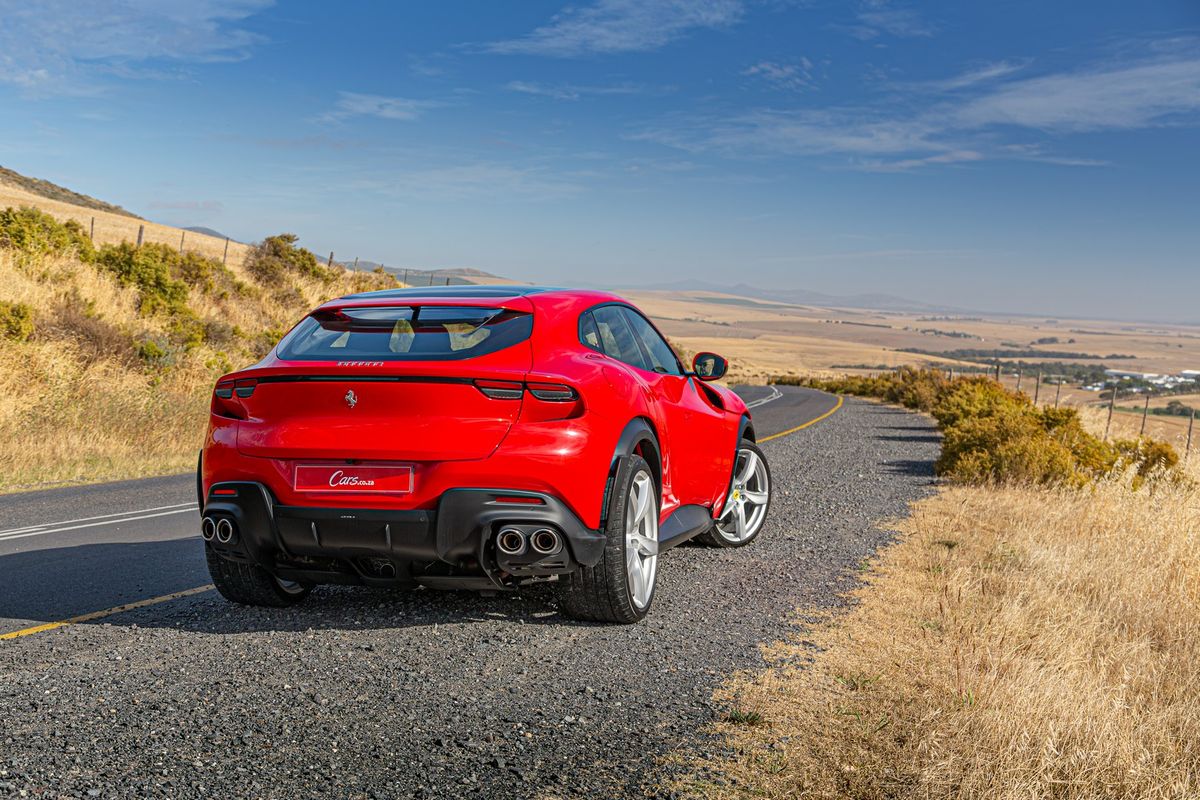
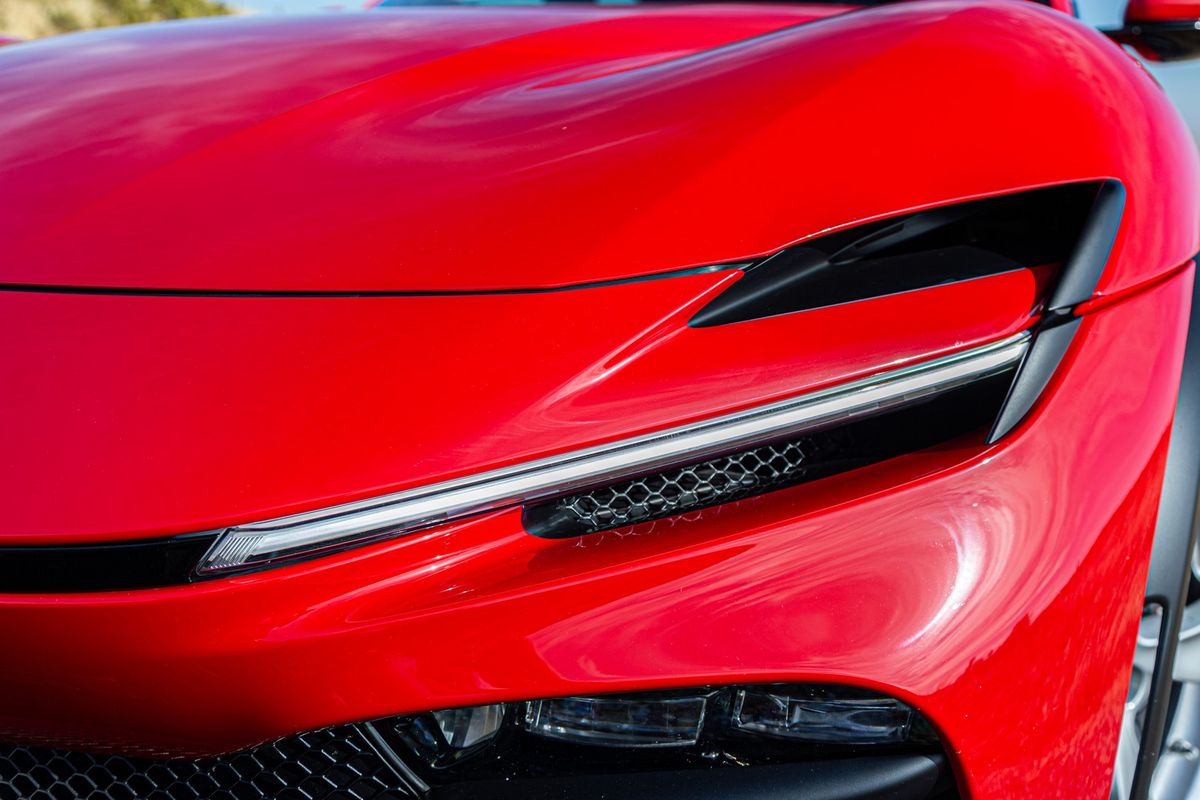
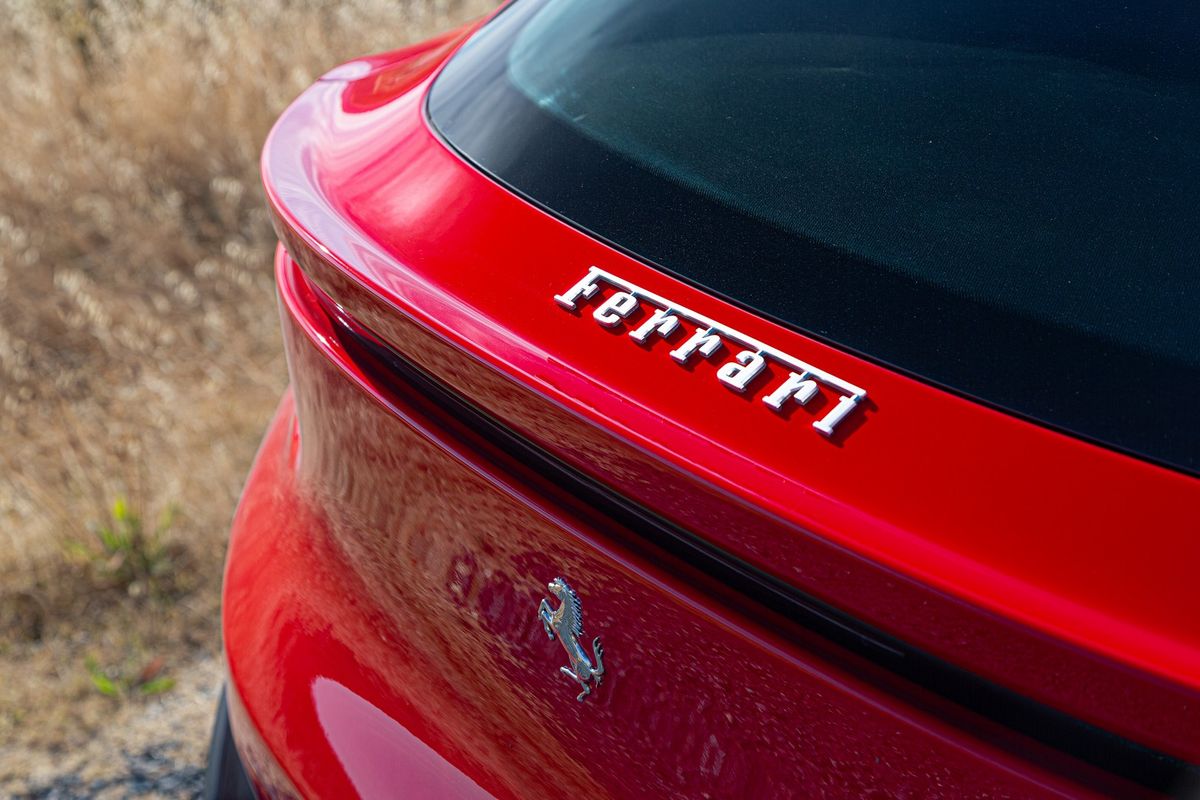
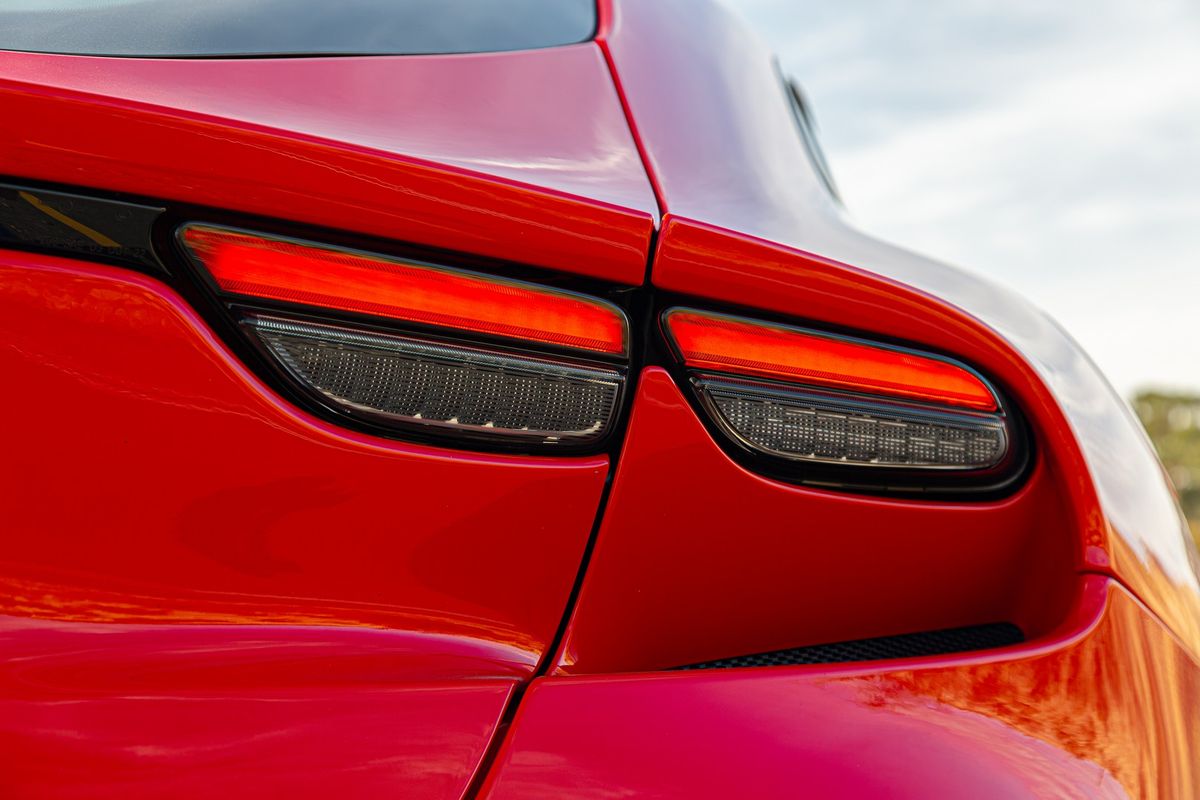
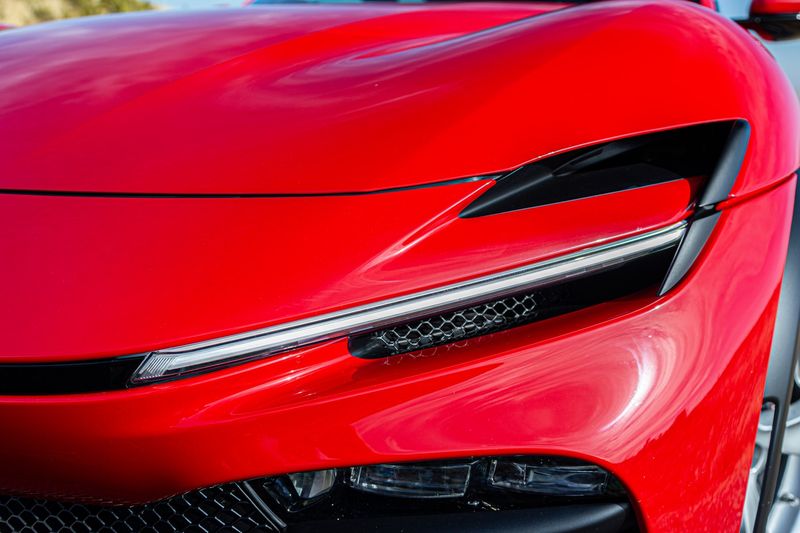
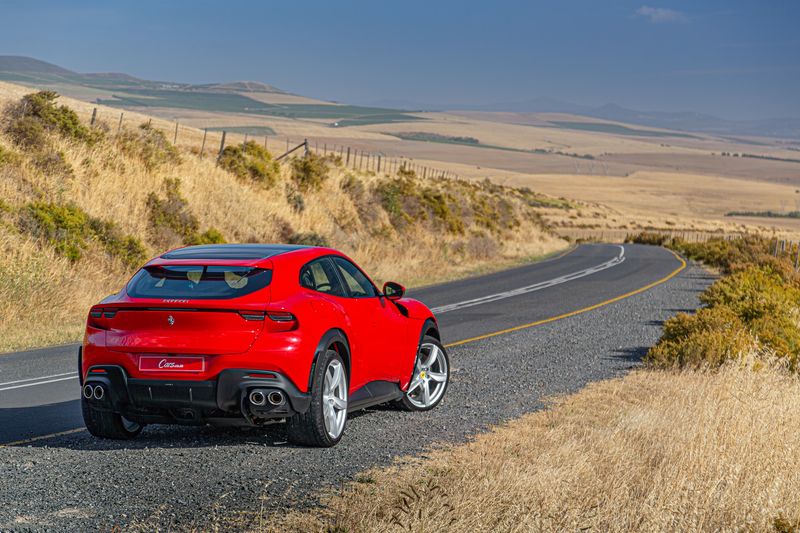
The Purosangue has some of the most complex surface sculpting we’ve ever seen on a modern car and, in the metal, it’s a knock-out. This is certainly not a “demure” Ferrari by any means – it simply demands attention. It is also the marque’s first 4-door Ferrari, but even that aspect of the design is something to behold. With a 4-door configuration, sex appeal is often sacrificed at the altar of practicality, but Ferrari has gone about it in a way that makes those porte integral to the Purosangue’s striking design.
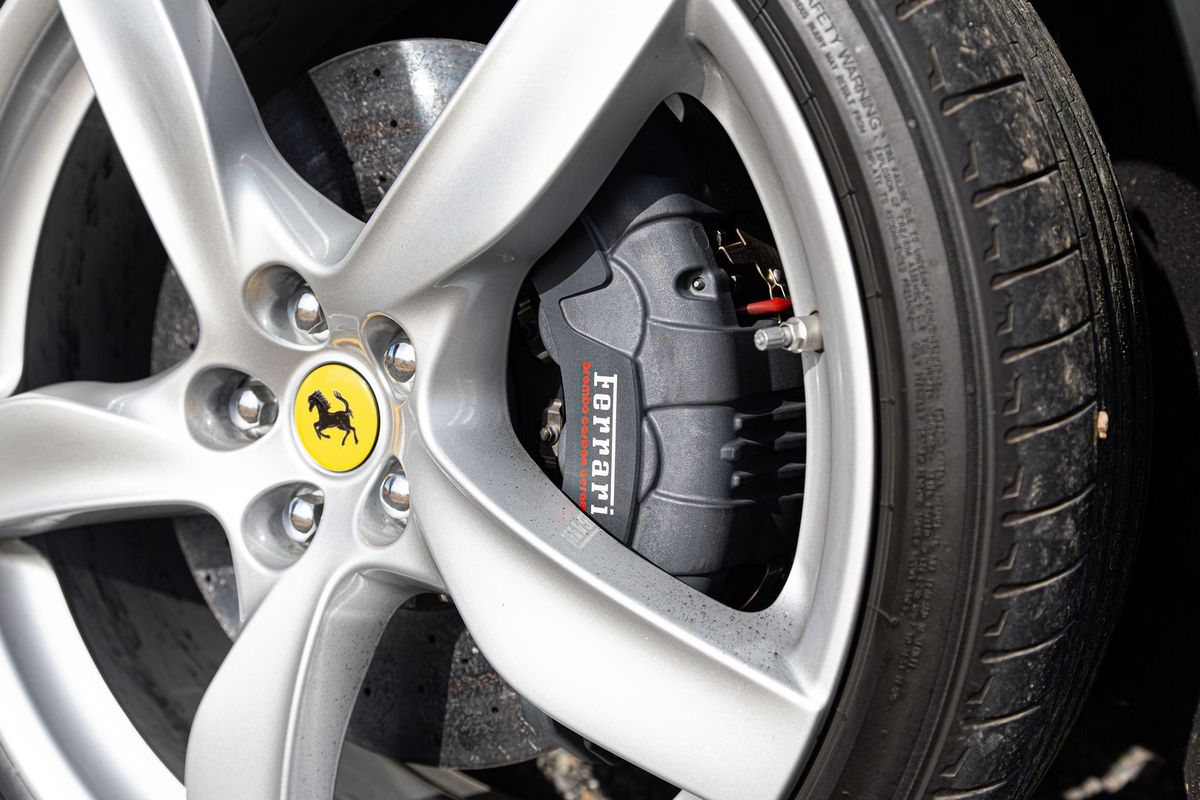
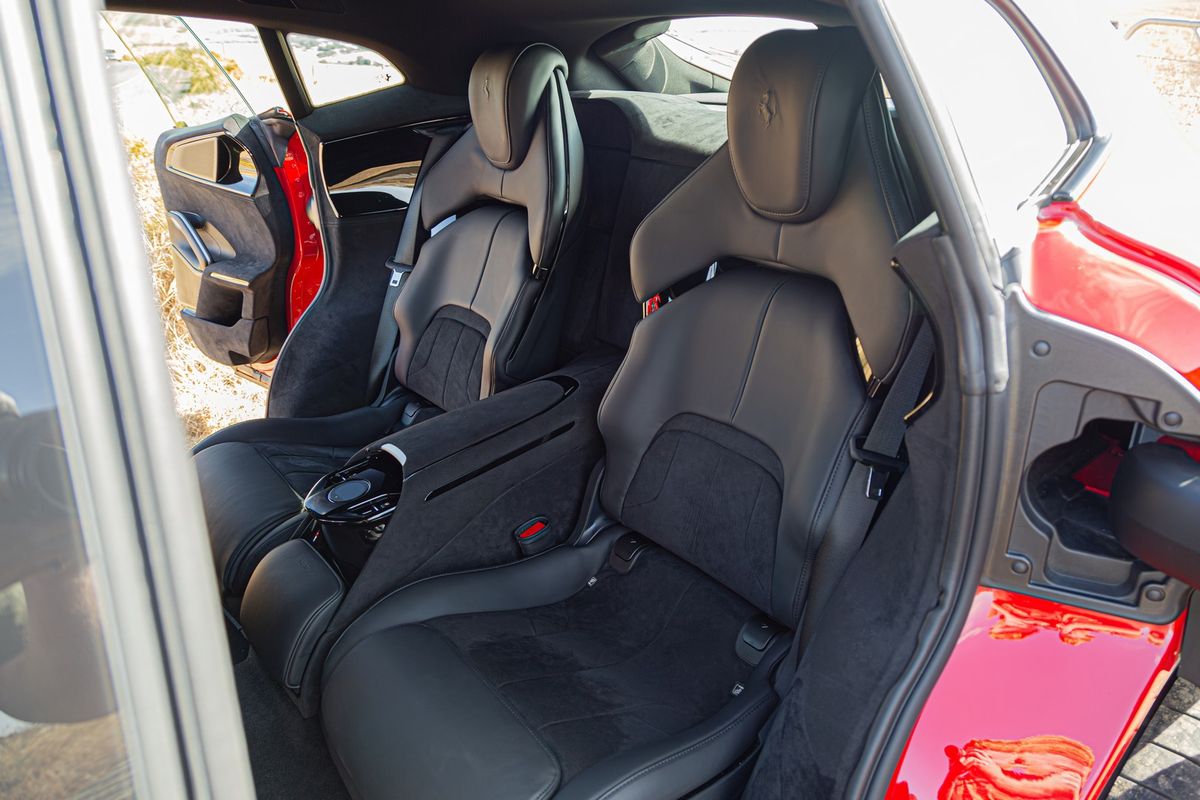
They open rearwards (“suicide”-style) on substantial single-arm hinges, can be operated electrically from inside the vehicle) and swing open on their own power to reveal a genuinely spacious cabin. This is where the dimensions again come into play. The Purosangue’s wheelbase (3 018 mm) is notably longer than a Porsche Cayenne Turbo GT‘s (2 895 mm) and while the long nose is necessary to fit a V12 engine behind the front axle, this is a genuine 4-seater. Four independently adjustable (electric) seats are fitted and legroom, even with tall front occupants, is excellent. There is plenty of shoulder- and headroom too.
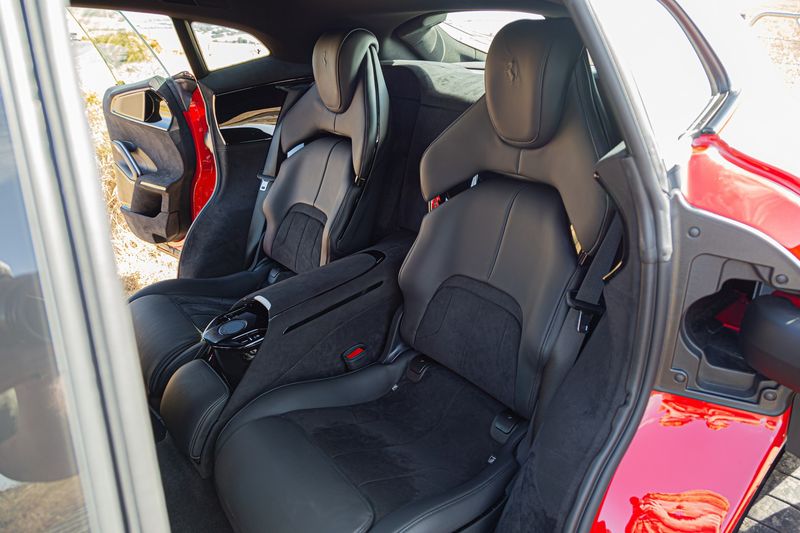
The only place where the Purosangue falls a little short (by conventional SUV standards) is in ultimate “utility space”. The load bay is said to have a respectable luggage capacity of 473 litres, and practicality is aided by a removable false floor and rear seats that fold forward electrically, but the floor isn’t flat and the bay isn’t entirely box-shaped, so forget about popping down to Makro to collect a large appliance!
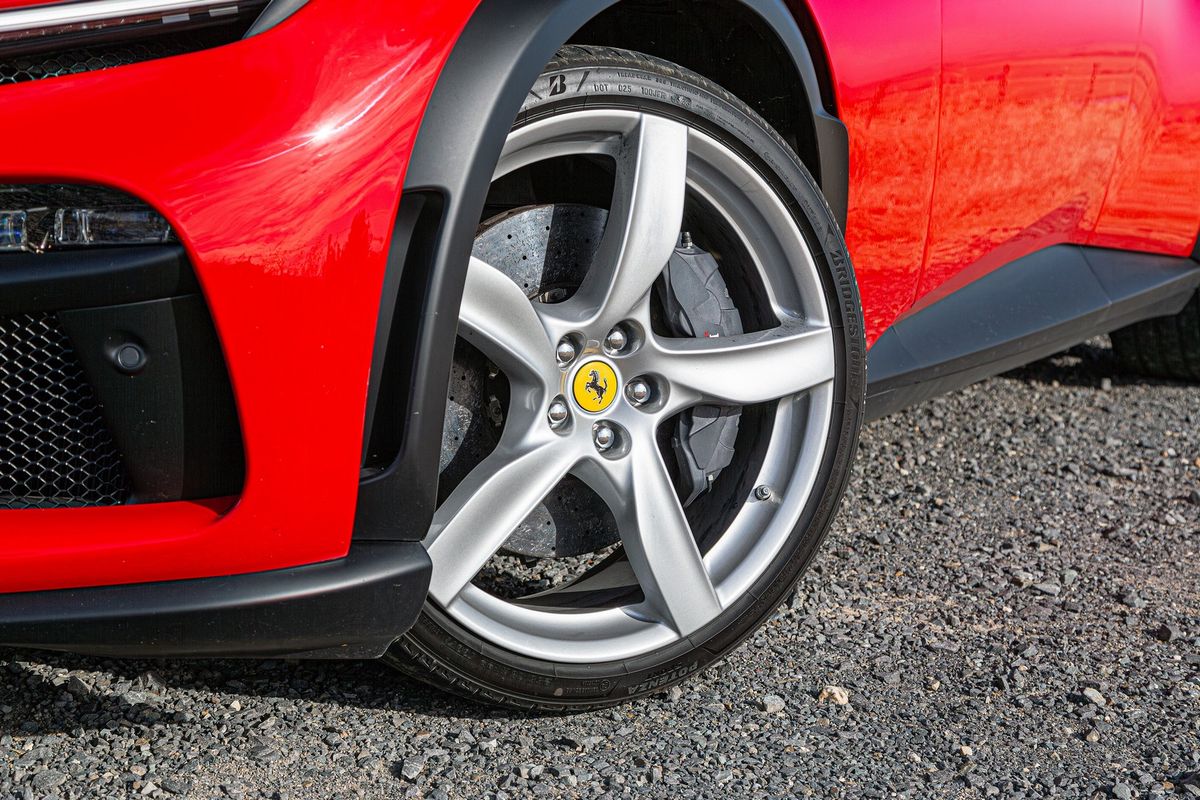
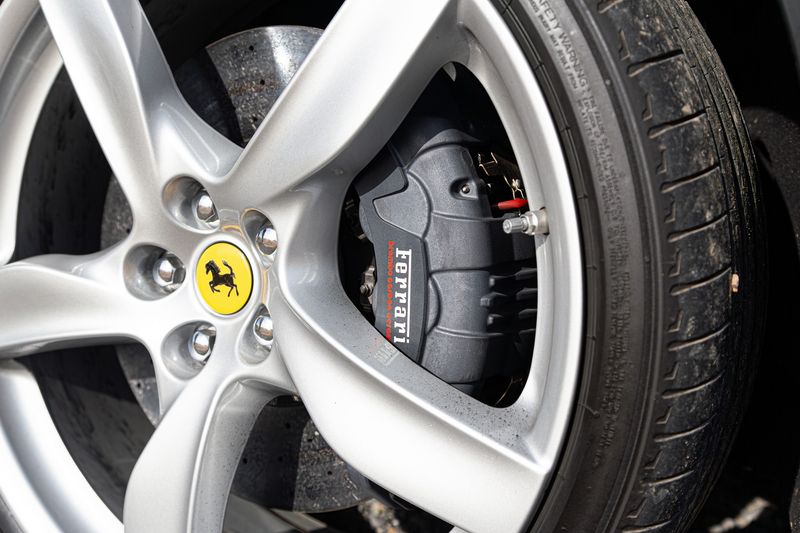
Considering its relatively meagre ground clearance (185 mm), the family-friendly Prancing Horse is not high-riding (again, by SUV standards) and those enormous wheels – 22-inch rims at the front and 23-inch rims at the rear (the latter fitted with 315/30 Bridgestone tyres) – aren’t suitable for off-roading.
So, what is the Purosangue, then? As Ferrari has stated itself, this model is not an SUV. In our view, it is a quite natural evolution of the brand’s shooting-brake line (think FF and GTC4Lusso), but with a more modern, “SUV-themed” twist. Compared with those cars, it’s sufficiently more spacious to render it suitable for long-distance travel with 4 adult occupants, but still capable of handling slippier surfaces and just about high enough to make it a more practical daily runner on our speed-hump littered roads.
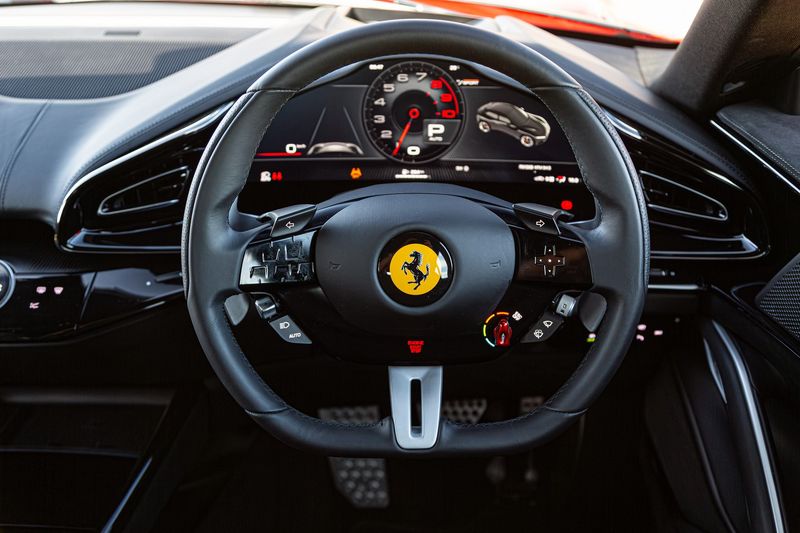
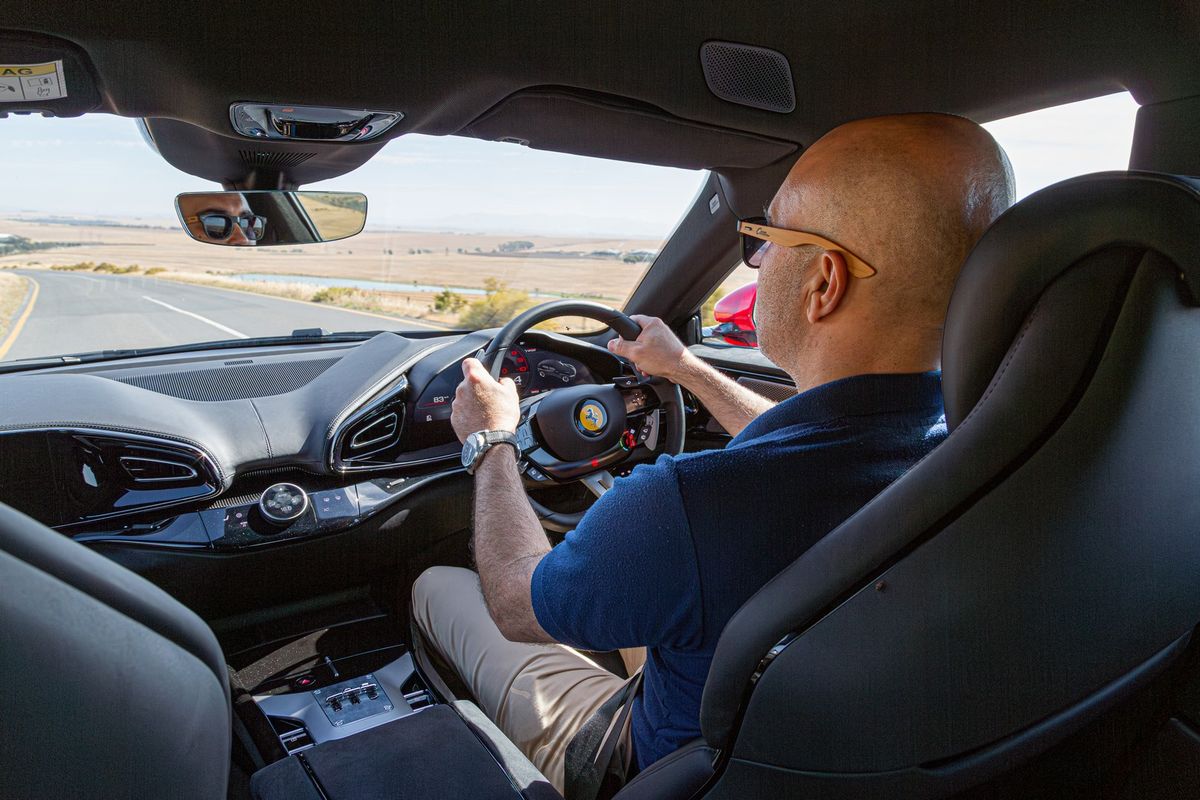
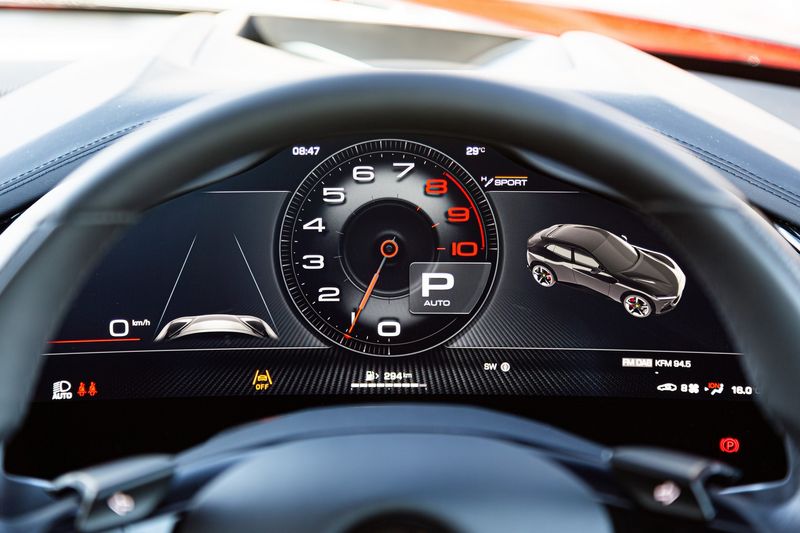
As you would expect in a R10-million-plus car, the design of the cockpit is suitably dramatic. It features 2 pronounced bulges, positioned in front of the driver and front passenger, respectively. Unlike most new cars, there is no massive touchscreen in the middle.
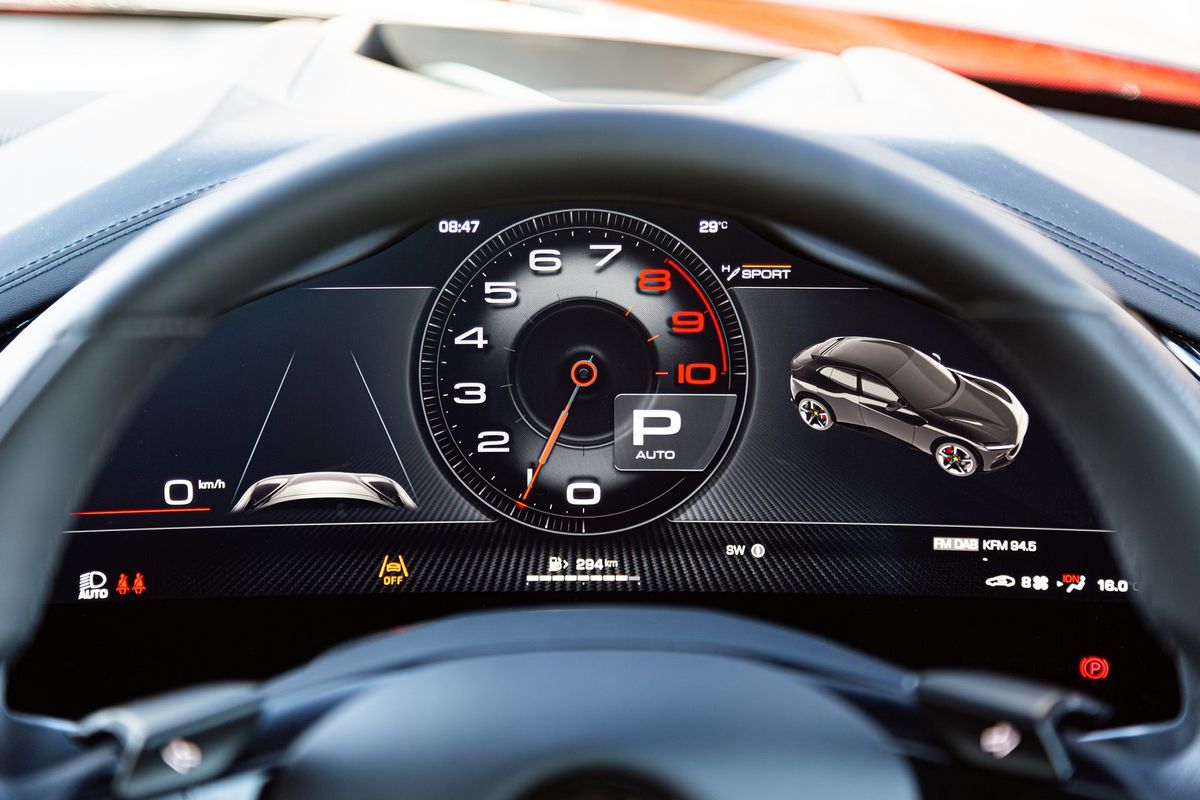
Instead, a clever rotary climate control knob rises out of the centre of the fascia. It seems as if the Purosangue’s designers decided the driver should focus on driving (hence the lovely digital instrumentation) and that the front passenger has no business accessing the same controls/visuals, which is why they are availed of a separate screen from which to access infotainment settings etc.
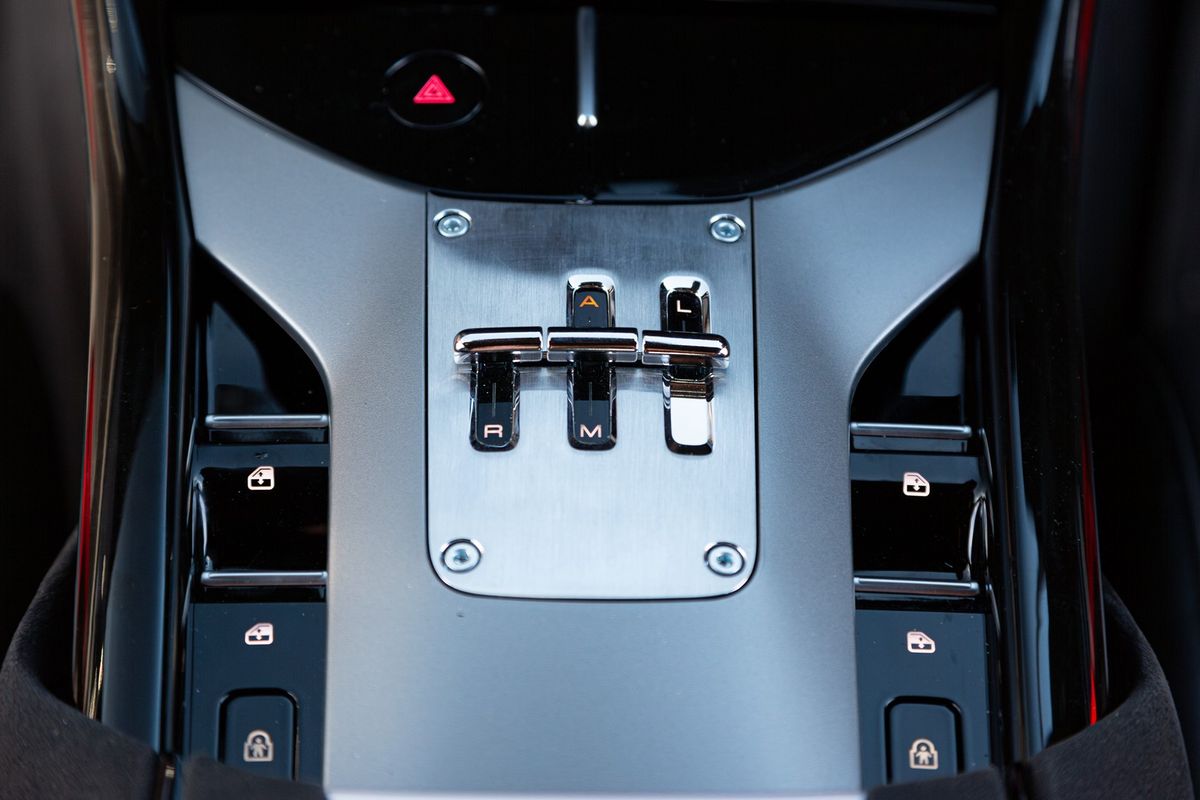
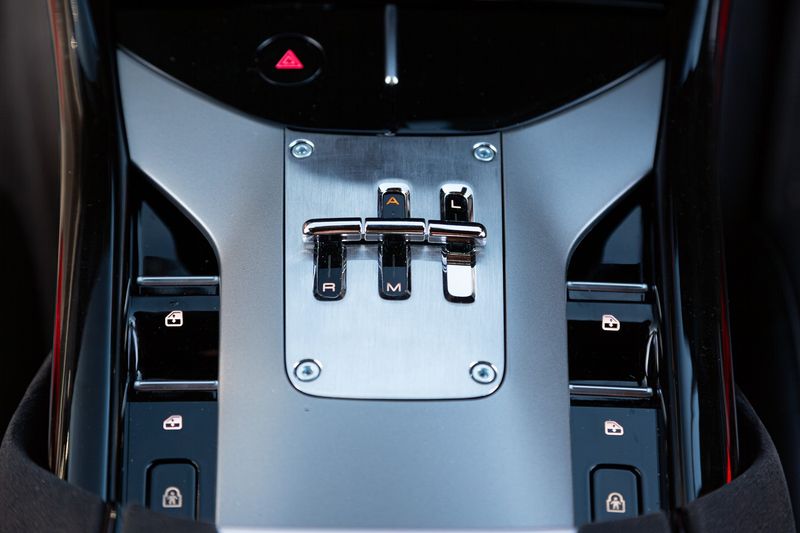
Another nice touch is the design of the transmission buttons on the central tunnel; it harks back to the metallic “gates” of manual Ferraris of the past. Build quality is excellent – our test unit had more than 5 000 km on the odo and still felt brand new, with neither a creak nor rattle evident. Lovely materials, too.
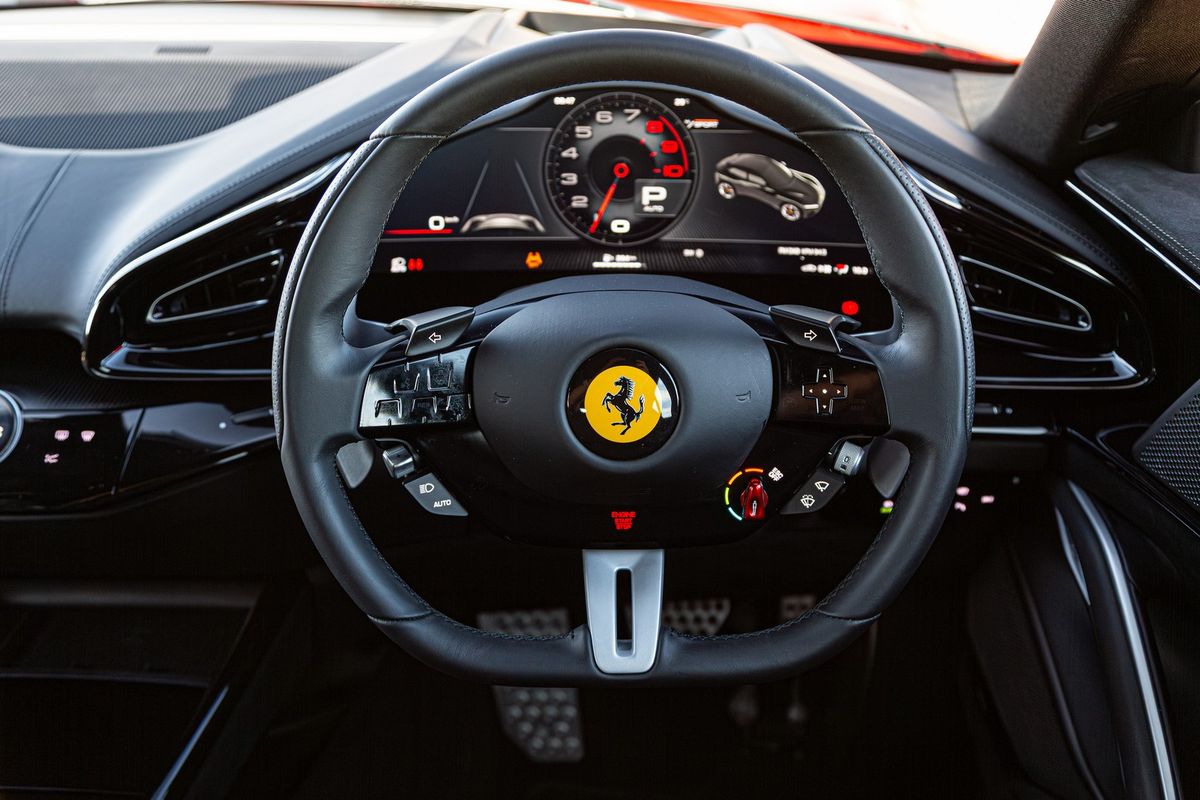
If we have one criticism, it concerns the haptic feedback buttons on the steering wheel. For a Ferrari, a bright red, physical starter button would have been much more suitable. But even some of the minor controls on the steering wheel are a bit fiddly. It’s worth noting that this is not a Ferrari-specific problem; as a team, we don’t rate these types of buttons highly in terms of user-friendliness – they are less than intuitive, which explains why some brands (including Volkswagen) are moving away from them.
Performance & Efficiency
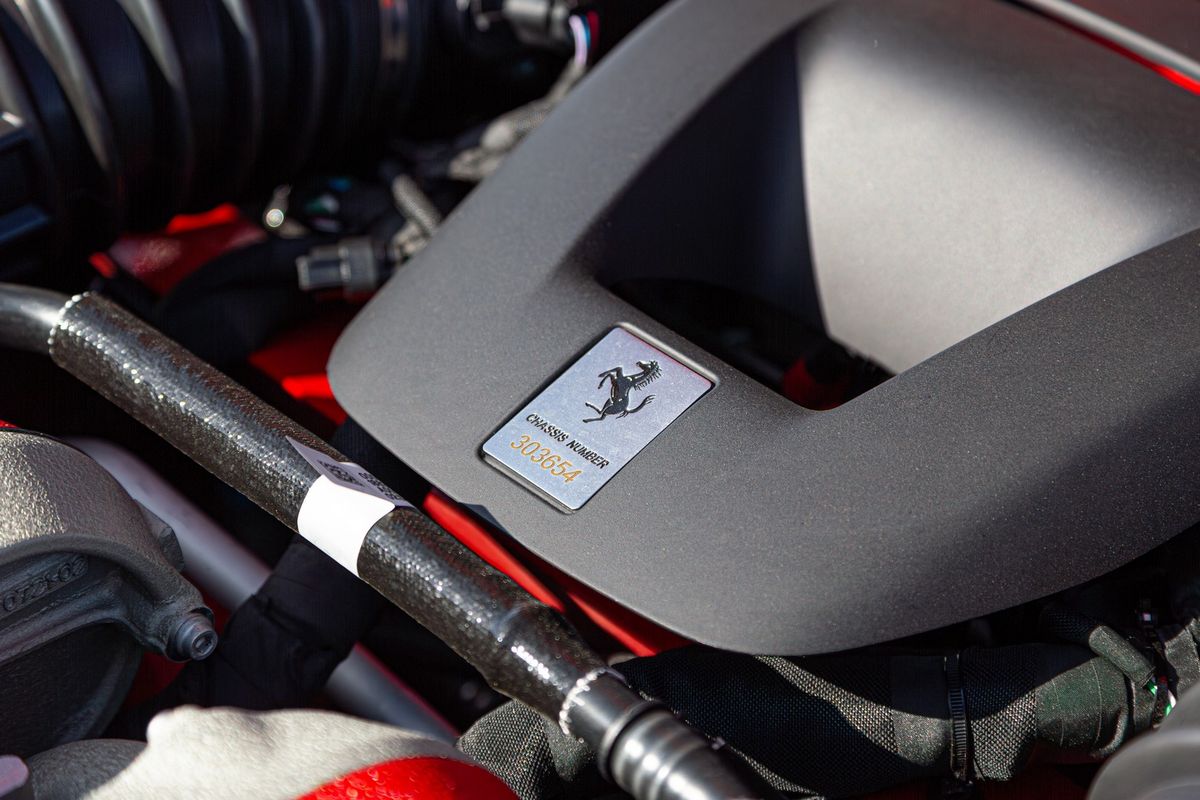
Lift the Purosangue’s massive front-hinged bonnet and you’re presented with a truly rare sight these days – a 6.5-litre V12 engine with no turbocharging or hybrid assistance. It is mounted far back to aid weight distribution, allowing Ferrari to achieve the desired 49/51 front-rear split. No other “SUV” offers anything vaguely similar…
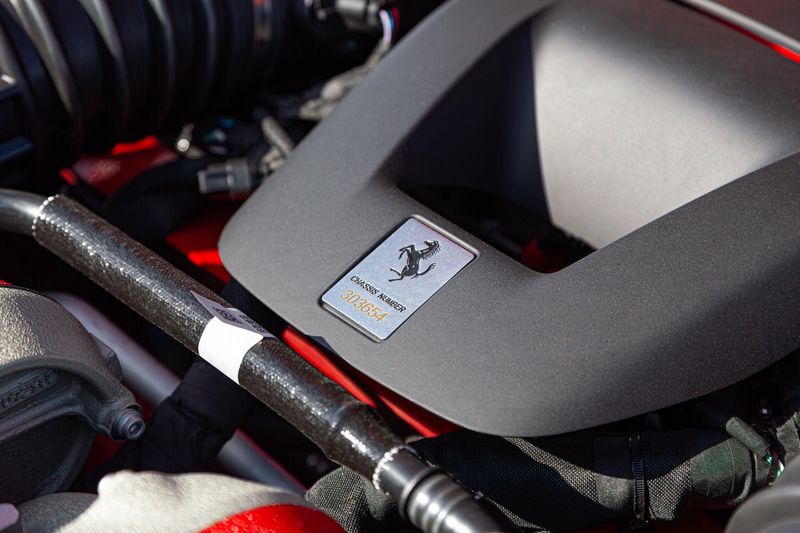
The engine, mated with an 8-speed dual-clutch auto transmission, is an evolution of the one used in the 812 Superfast, but was extensively revised to produce 533 kW and 716 Nm of torque in this application. The model’s claimed 0-100 kph time is 3.3 sec and the top speed is quoted as no less than 310 kph!
The GTC4Lusso’s all-wheel-drive system has been evolved for the Purosangue, but the recipe is similar – 2 gearboxes – an 8-speed transaxle mounted at the rear and a 2nd one, mounted at the front, directly connected to the engine with 2 gears. All of this helps to achieve that highly desired weight distribution.
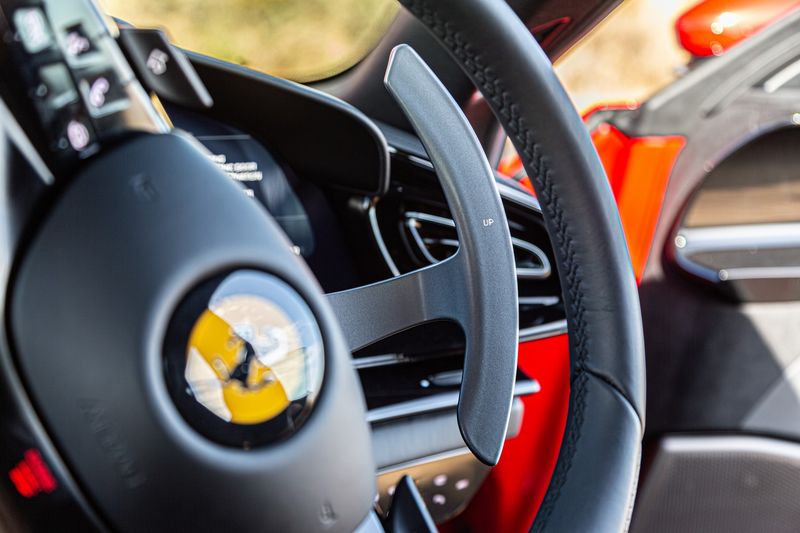
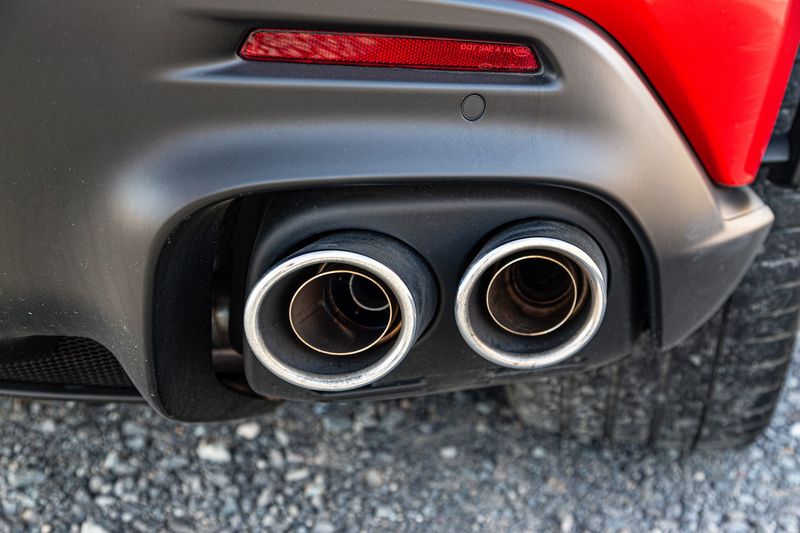
But enough of the specs… how does it go? Well, fire up the Purosangue with its steering wheel mounted “haptic” button, and it barks into life with a crisp, clear-throated growl. Squeeze the accelerator pedal and the engine’s eagerness to rev is immediately apparent – it will rev straight up to the redline and scream its lungs out in Park – no soft-limiter nonsense here! Also, you don’t have to press any buttons to access the evocative noise, the Purosangue is unapologetically full-voiced. It is a Ferrari, after all…
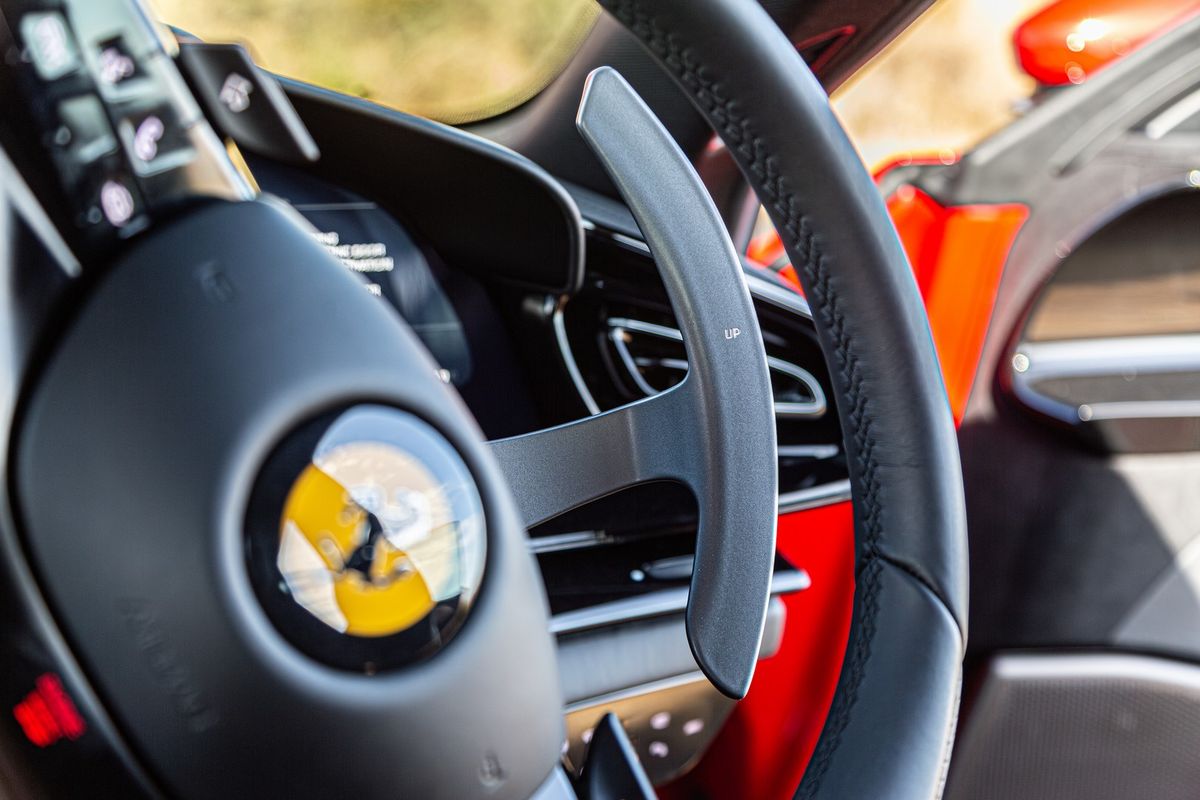
Pull back on the right gearshift paddle (the shifters are enormous) and you’re ready to go. Of course, like in most modern cars, there are drive modes to choose from, but even when you’re driving in Comfort mode, the Ferrari’s response to accelerator-pedal inputs is prompt and lively. The ‘box, too, will initially startle you with its dramatic downshifts. Being a naturally aspirated engine, it requires some revs to unlock the astonishing power, but that is no hardship. Maximum power comes on tap at 7 750 rpm and the redline is at 8 250 rpm. If you knock it into Sport, the throttle response is, frankly, electrifying.
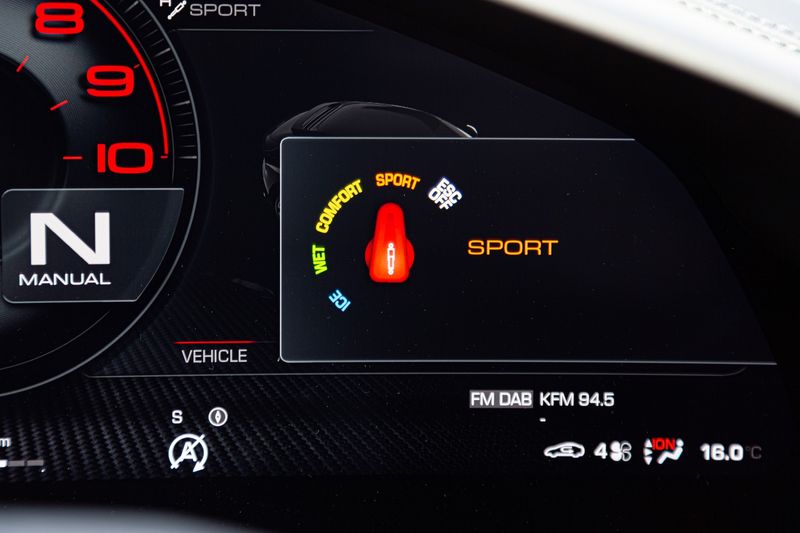
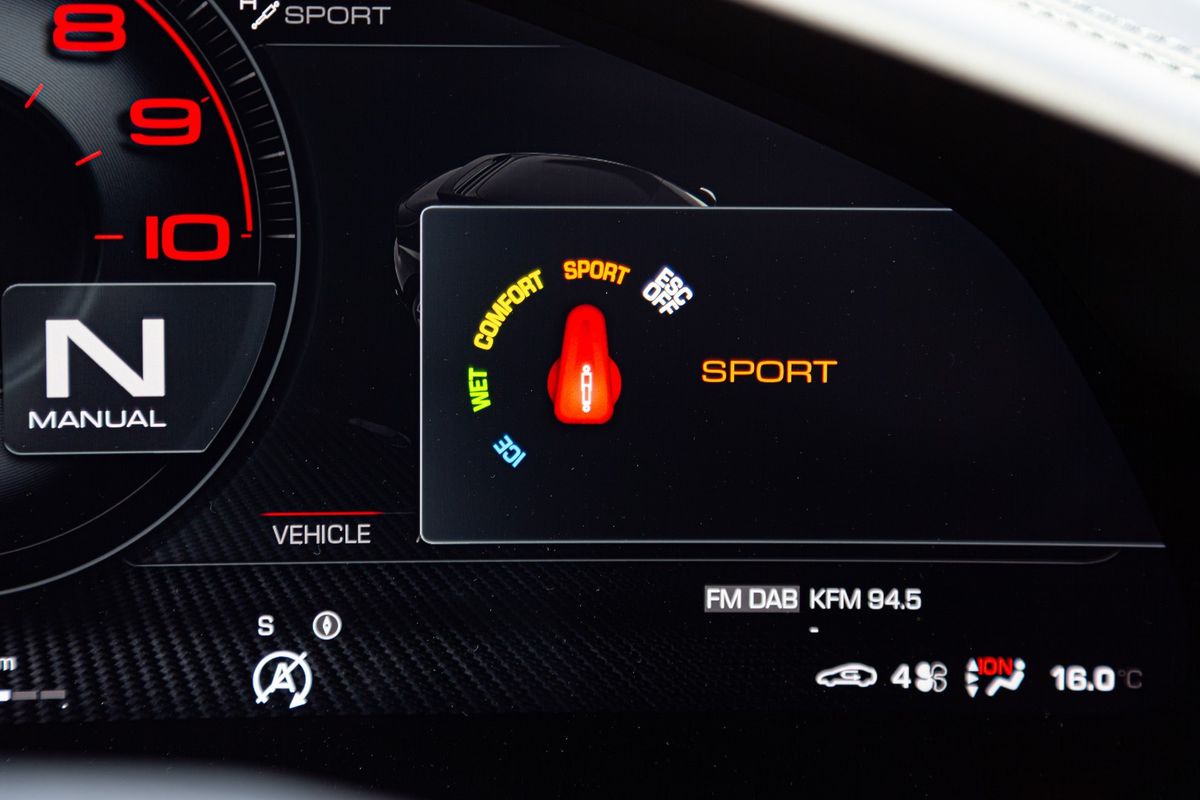
Talking of drive modes… Using the steering-wheel-mounted dial (manettino) you can access Comfort, Sport, Ice, Wet and ESC off. There are no off-road settings.
Fuel economy? Who cares… But Ferrari does claim an average consumption of 17.3 L/100 km which, in our experience, seems achievable. The fuel tank is big (100 litres), resulting in a potential cruising range of almost 600 km.
Ride & Handling
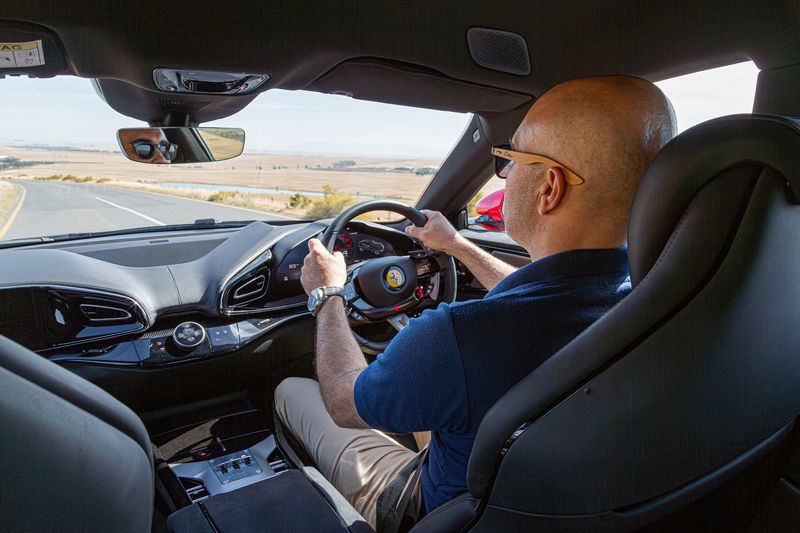
Now for the cherry on the cake… As we’ve explained, the Purosangue is large and, at 2 033 kg, quite hefty. Nevertheless, its driving experience is akin to that of a proper Ferrari supercar – razor-sharp, eminently agile and above all, thrilling.
The technical details of the Purosangue’s chassis and suspension are mind-numbingly complex but, in short, it has an almost “pro-active” suspension system, mated with an all-new aluminium chassis that is 25% stiffer than the GTC4Lusso’s. Developed by Multimatic, the system features 2 independent spool valves (for compression and rebound) on each wheel. Each wheel also has its own electronic “brain” that takes orders from the overarching active suspension system.
The science might be complex, but the result is breathtakingly simple to summarise. Not only does the Purosangue handle better in all measurable aspects than any other quasi-super-SUV – it also delivers its ability in a fantastically engaging, exciting manner. In a way, you have to rewire your brain before going for a fast drive in the Purosangue, because it tracks its blisteringly quick steering precisely with negligible body roll. Yet, it is not a car that just grips. If you push it hard in a certain way, it will fight you and squirm as that magnificent V12 merrily screams up and down its rev range, adding to the visceral experience.
Even in Comfort mode, the ride is firm, but it retains enough suppleness to avoid being crashy. As a matter of fact, the Purosangue’s ride quality feels more “sophisticated” than those of other so-called super-SUVs, yet it will run rings around them in terms of cornering ability. It feels every inch a Ferrari.
Price and After-Sales Support
The Ferrari Purosangue is priced at R9 759 300 before options. Note, however, that it is no longer possible to spec a new Purosangue from the factory, so if you want one right now, you will have to find a suitable offering among the units already imported into South Africa. At the time we published this review, Scuderia Johannesburg listed a Purosangue on Cars.co.za with an asking price of R15 million.
The price includes a 3-year/unlimited km warranty and 7-year/unlimited km service plan. Services are required every year or 20 000km.
Verdict
During a recent discussion in the Cars.co.za office, we pondered what the truly memorable cars of 2024 were. The cars that come through our office are very much a reflection of what is happening in the market. In other words, 2024 was marked by a significant increase in Chinese products, and also EVs.
Almost all the cars were crossovers of some kind or other and collectively, we struggled to recall any memorable new models that were aimed purely at driving enthusiasts. Although the Purosangue can be classified as a “crossover”, it undoubtedly sits alone in the very top echelon of that segment. Whether it is an SUV, FUV, SAV, or whatever – it doesn’t matter. The only thing that matters is that it is a true Ferrari, albeit a more usable one (as an everyday car). In one stunning move, Ferrari has given its shareholders what it wanted (an SUV), and the Tifosi the best-ever 4-seat Ferrari.
View new Ferrari-model car specs now
Find a new/used Ferrari model on Cars.co.za
Related content:
How to buy a new Ferrari: A beginner’s guide
Naturally aspirated Ferrari 12Cilindri revs up
How many Ferraris have been sold in SA in 2023 thus far?
Ferrari F355 Challenge: Classic Drive
Ferrari F40: Enzo’s Greatest – SentiMETAL Ep13