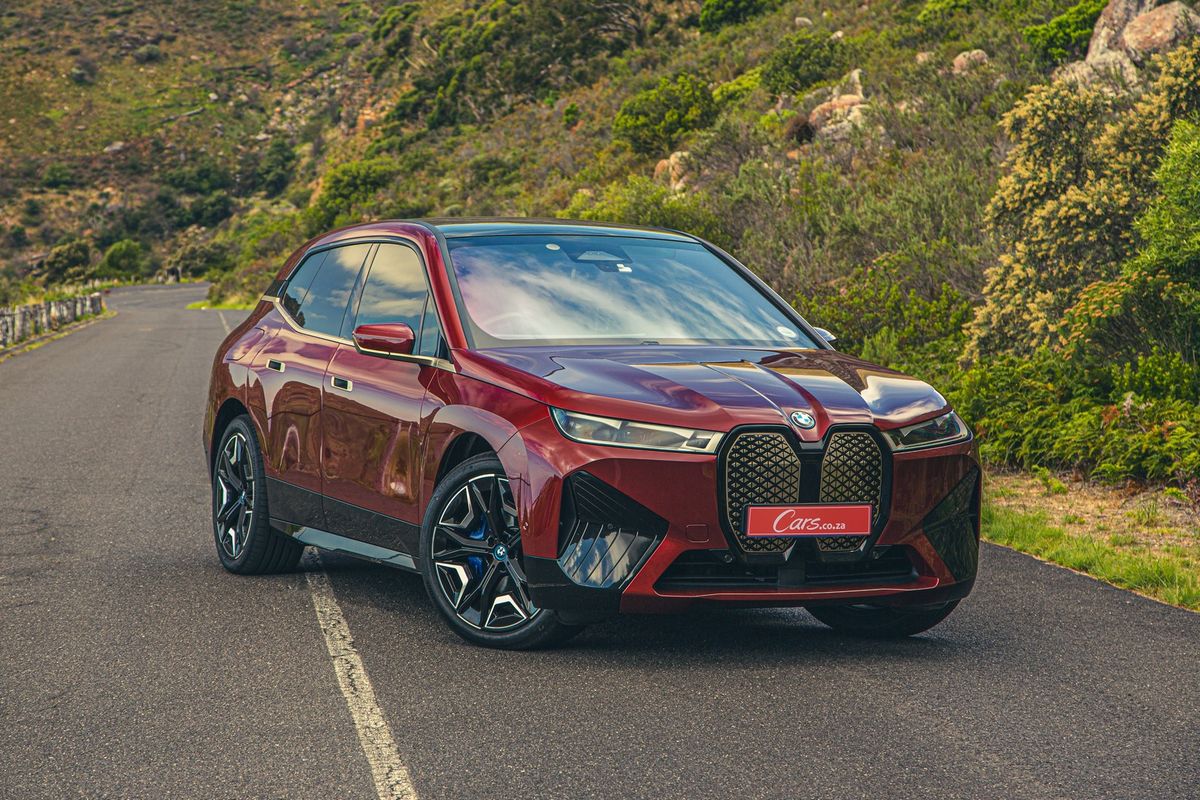

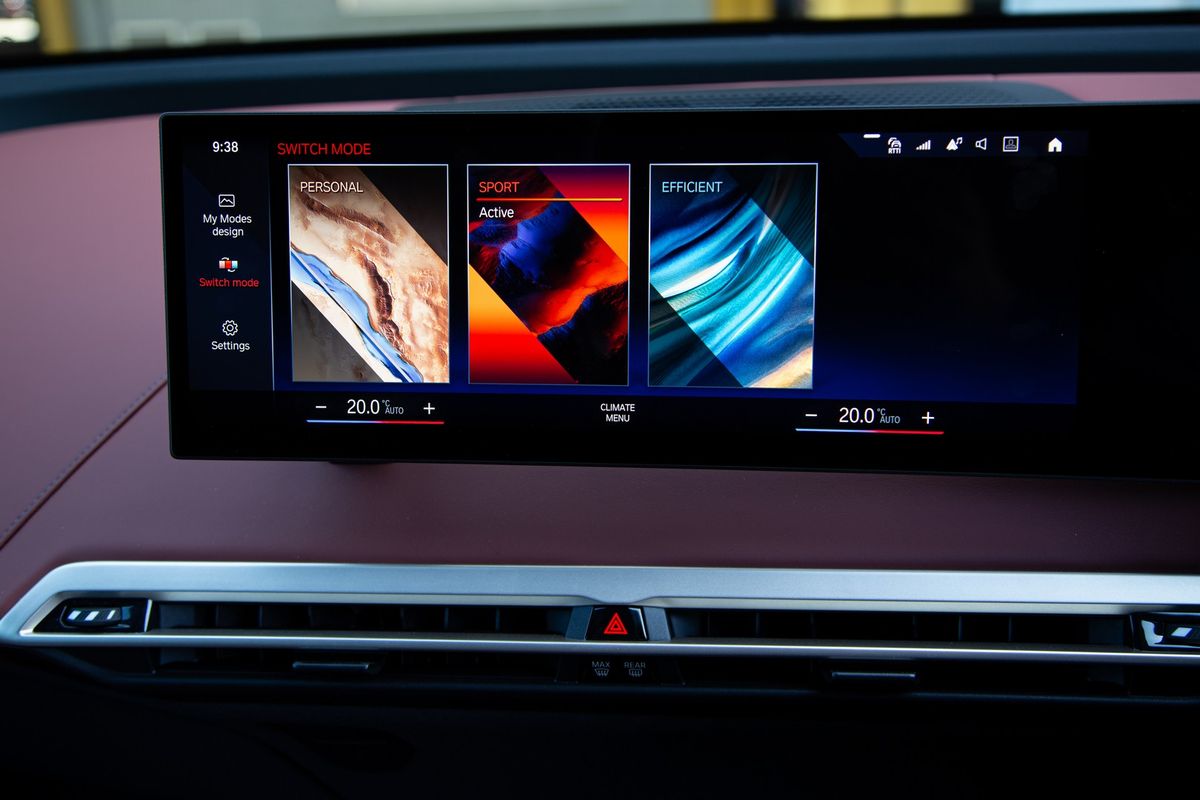
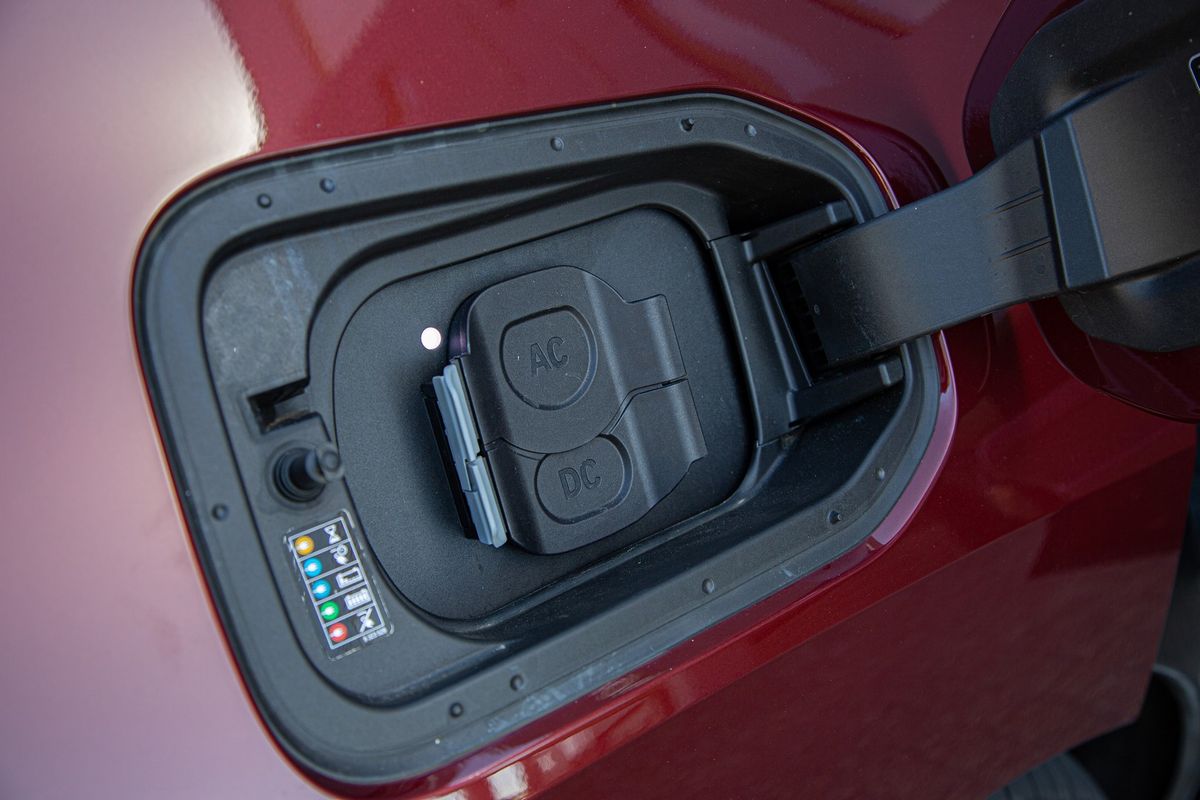
We tested the brand new (and extremely expensive) BMW iX xDrive50 during the holiday season. What’s it like to live with an EV in a city and how does it compare with all the other EVs that have recently been launched in South Africa? Ciro De Siena details his experience with the R2-million battery-electric SUV.
I approached writing this review with some dread. I knew it was going to be lengthy. The iX is just such an interesting, feature-filled and goalpost-setting car, that I was concerned I wouldn’t be able to do it justice, or worse, that I would leave you, our readers, with unanswered questions.
Couple that with the general – but necessary – question marks about living with an electric vehicle in South Africa, and I knew I had my work cut out for me. Hopefully, this article, combined with the video we have produced (which we’ve internally been referring to as a documentary – it is the longest video review we’ve ever published) will cover everything you’d like to know about the BMW iX.
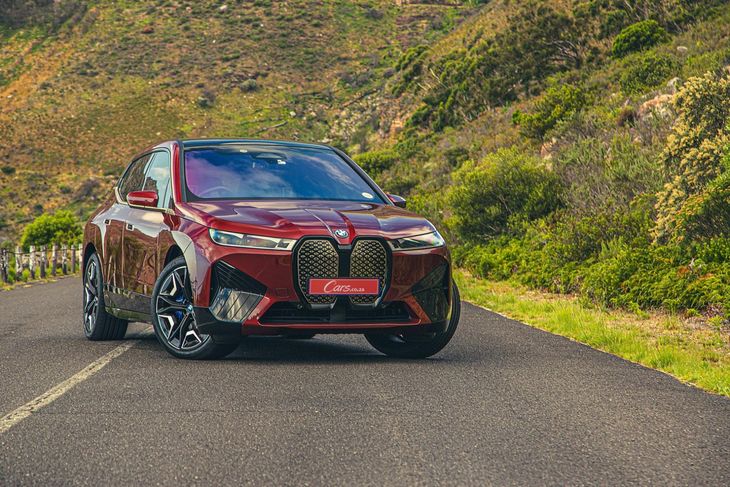
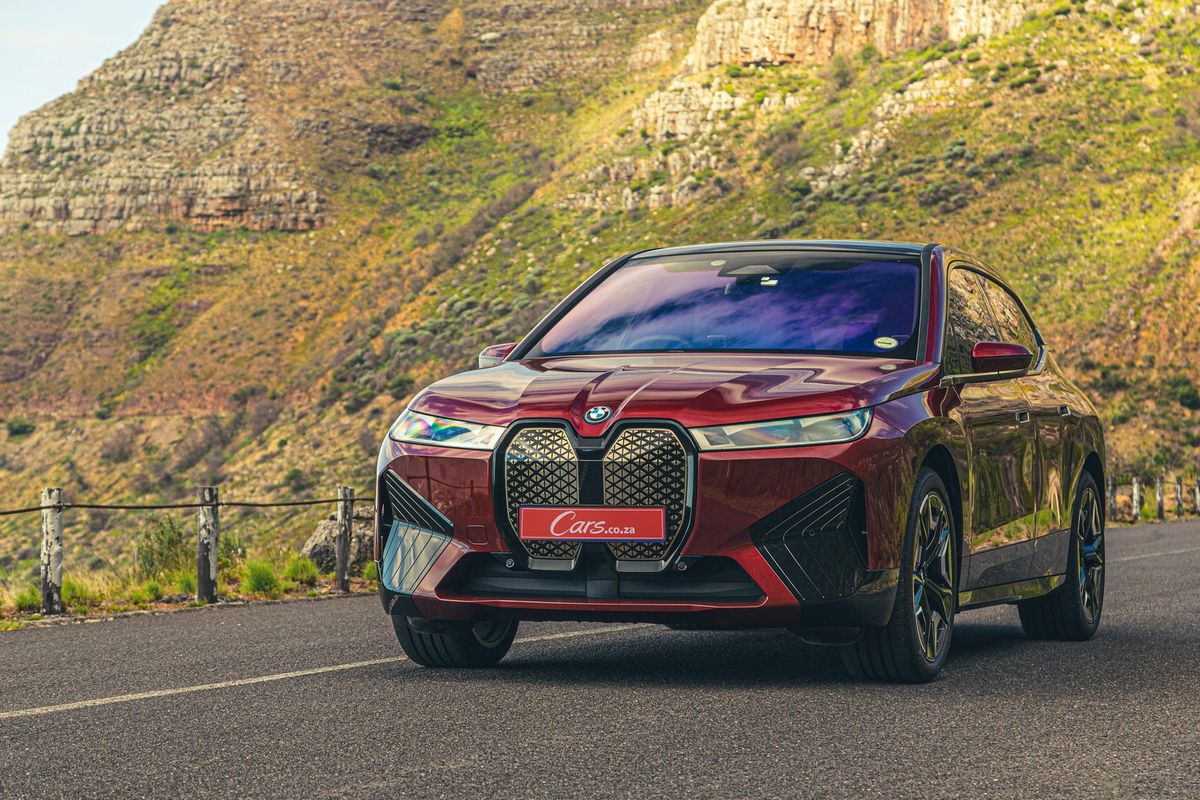
The BMW iX is styled to look as if it has arrived from the future – it’s the poster child for the brand’s electrification strategy.
What is it?
The BMW iX xDrive50 is one of two fully electric BMW SUVs now available in South Africa, the other being its more affordable xDrive40 sibling. The key differences between BMW’s pair of iX battery-electric vehicles (BEVs) lie in the capacity of the lithium-ion battery and the output of the electric motors – the 385-kW iX50 has a higher capacity (111 kWh) battery pack and a significantly higher claimed range.
There is, of course, a sizable price difference too; whereas the iX40 is priced at R1.65 million, the ix50 is priced at R2.17million.
| BMW iX xDrive40 | BMW iX xDrive50 | |
| Price | R1 650 000 | R2 175 000 |
| Range (max) | 390 km | 630 km |
| Battery | 76 kWh | 111 kWh |
| Power output | 240 kW | 385 kW |
| Torque | 630 Nm | 765 Nm |
| 0-100 kph | 6.1 seconds | 4.6 seconds |
The styling
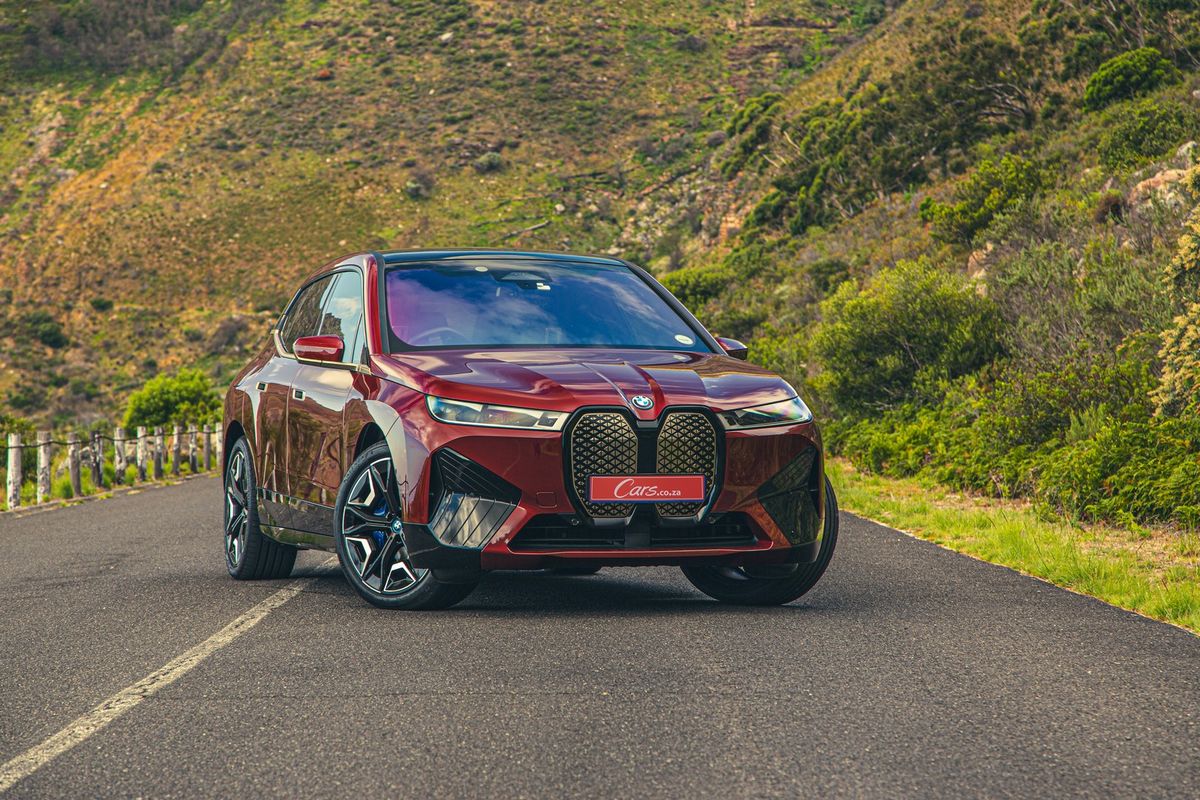
I frequently posted updates about my iX50 long-term test experience on my social media channels and the (many) responses I received ranged from, “Wow, that looks terrible” to “Wow, that looks particularly terrible”. To say the iX’s styling is polarising would be an understatement of note, but I think that also misses the point.
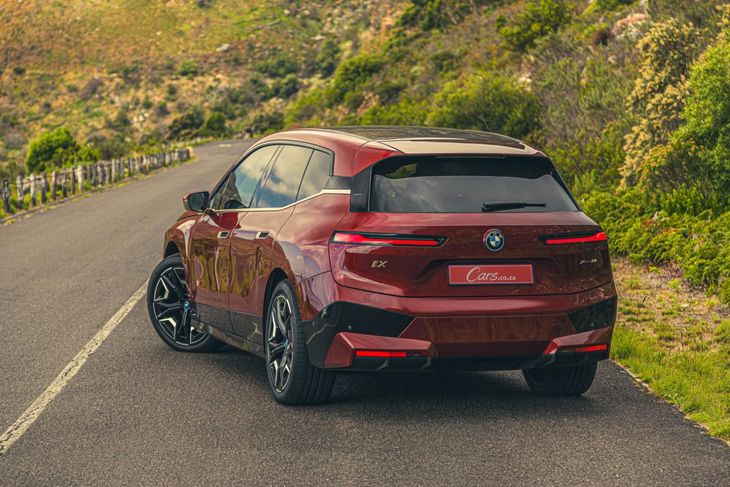
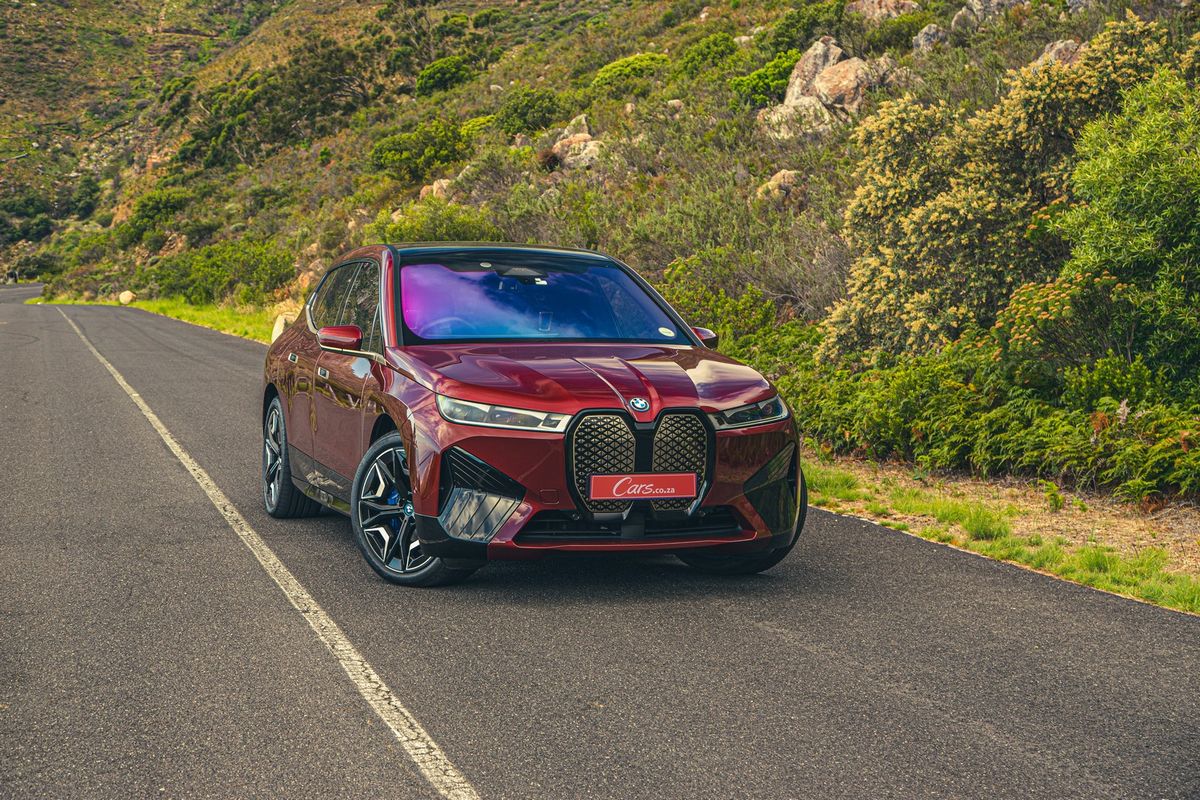
This is the most flattering angle from which to view the iX – there are so many design details to take in.
As one of our generation’s great prophets, Will Ferrell, once said, “I dunno, but it’s provocative. It gets the people going.” I think “provocative” is the perfect word to describe this car’s design. After all, the iX functions as a rolling billboard for BMW’s transition into the Electric Age. Spending 4 weeks with the car was a blur of people taking photos, pointing at the car, giving me the thumbs up, chatting with me in parking lots, asking to see the SUV’s interior, and generally expressing a tremendous amount of interest in something that most South Africans did not know existed until it appeared in front of them.
In my experience, Mzansi loves the new BMW iX – it certainly gets social media “going”.
I think the reason why its styling has to be so left-field is because of the all-electric drivetrain. The problem with BEVs is that they all feel and sound exactly the same, as opposed to the widely differing sounds and power delivery characteristics of ICE vehicles. For example, a supercharged V8 feels very different to a naturally aspirated straight-6, which feels very different to a turbocharged 4-cylinder.
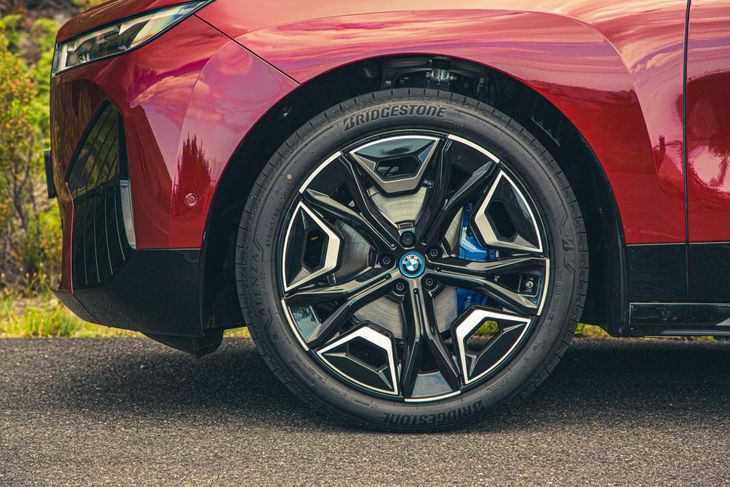
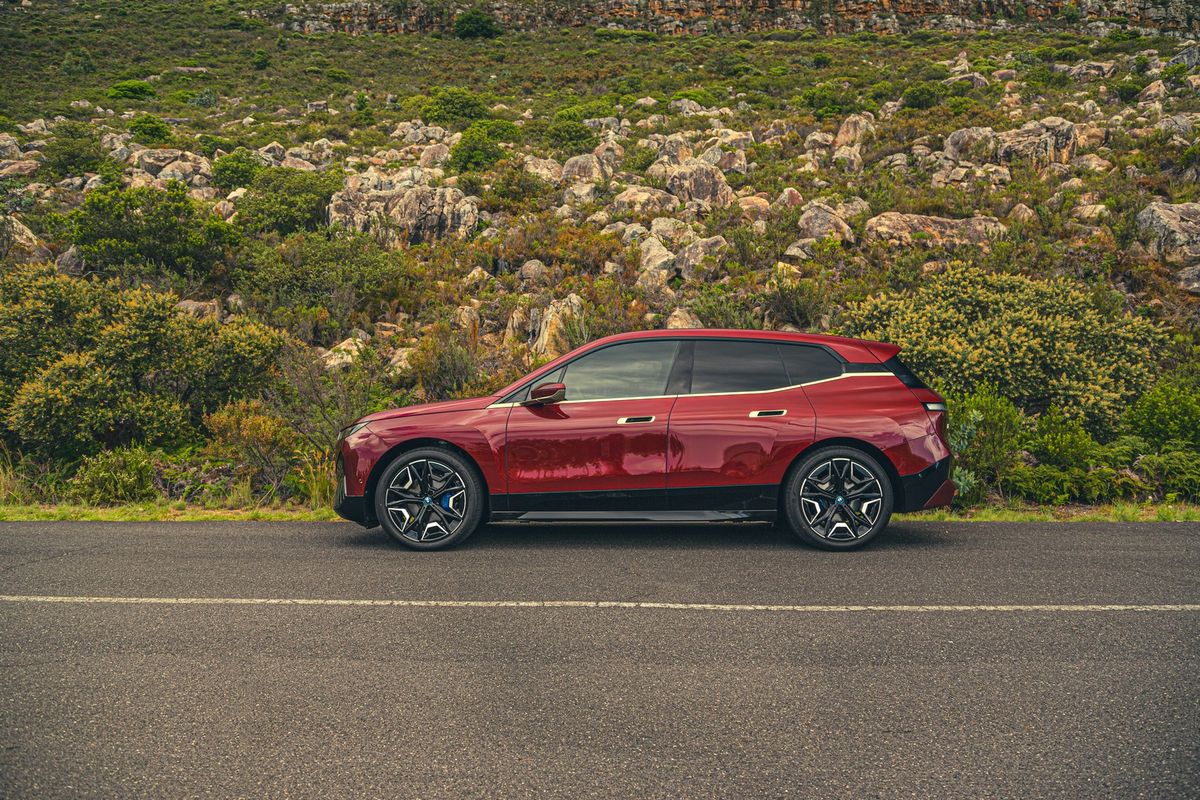
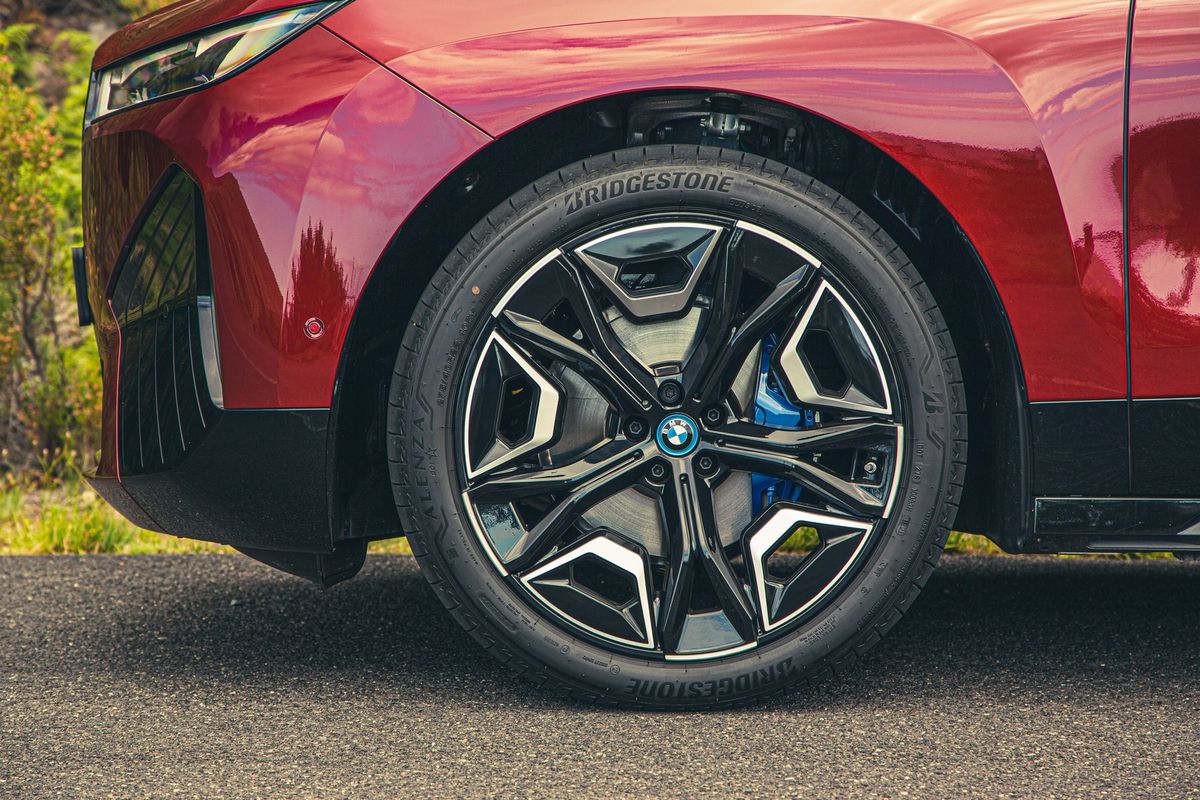
As opposed to most contemporary BMW, the iX is not fitted with run-flat tyres. Its air-spring-aided ride quality is sublime.
With the character that would usually be imbued in a car via its drivetrain taken out of the equation, a manufacturer has no way to differentiate its EV models using the oily bits, because there aren’t any. The only way to stand out is to do just that, stand out. The interior and exterior designs have to grab attention and generate interest, and we’ve seen this in other EVs, such as Hyundai’s superb-looking Ioniq 5.
Something else that plays a critical role in the EV space is aerodynamic efficiency. A low drag coefficient, or the factor of how slippery the car is as it cuts through the air, can make a massive difference in energy consumption, and designers have to keep this in mind when penning a BEV’s exterior design.
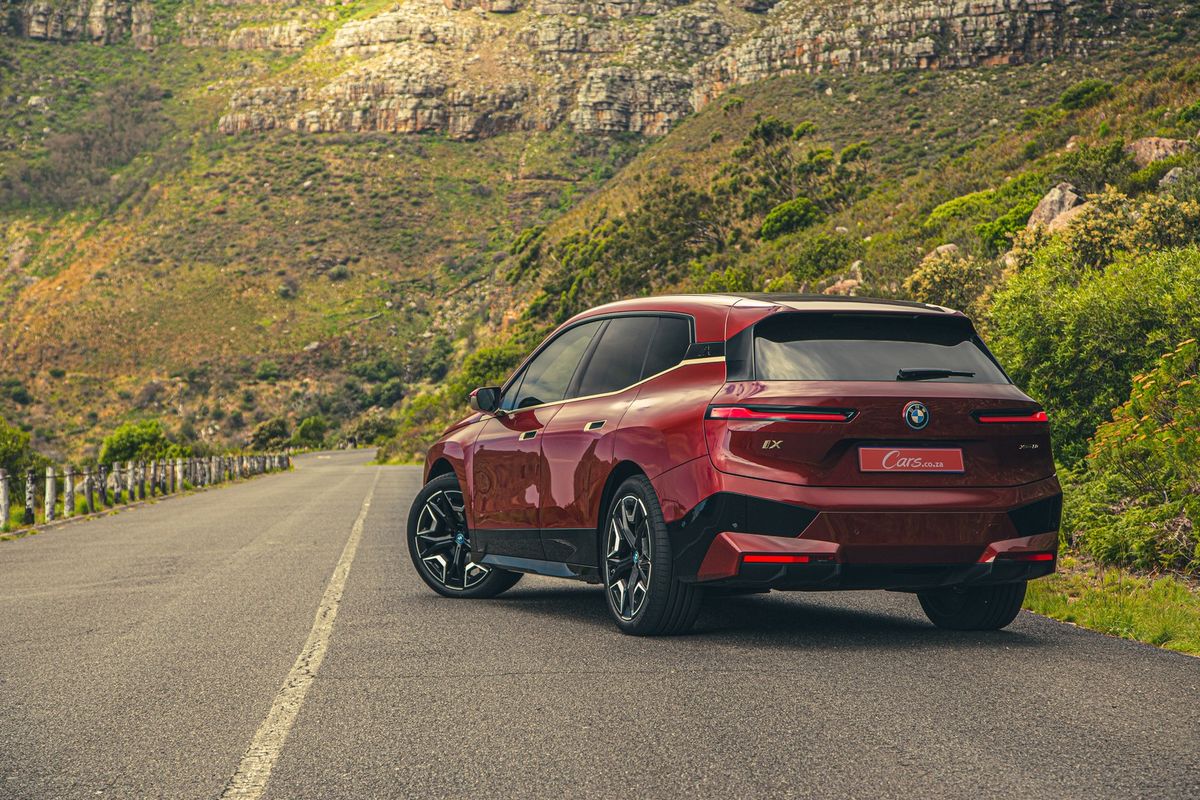
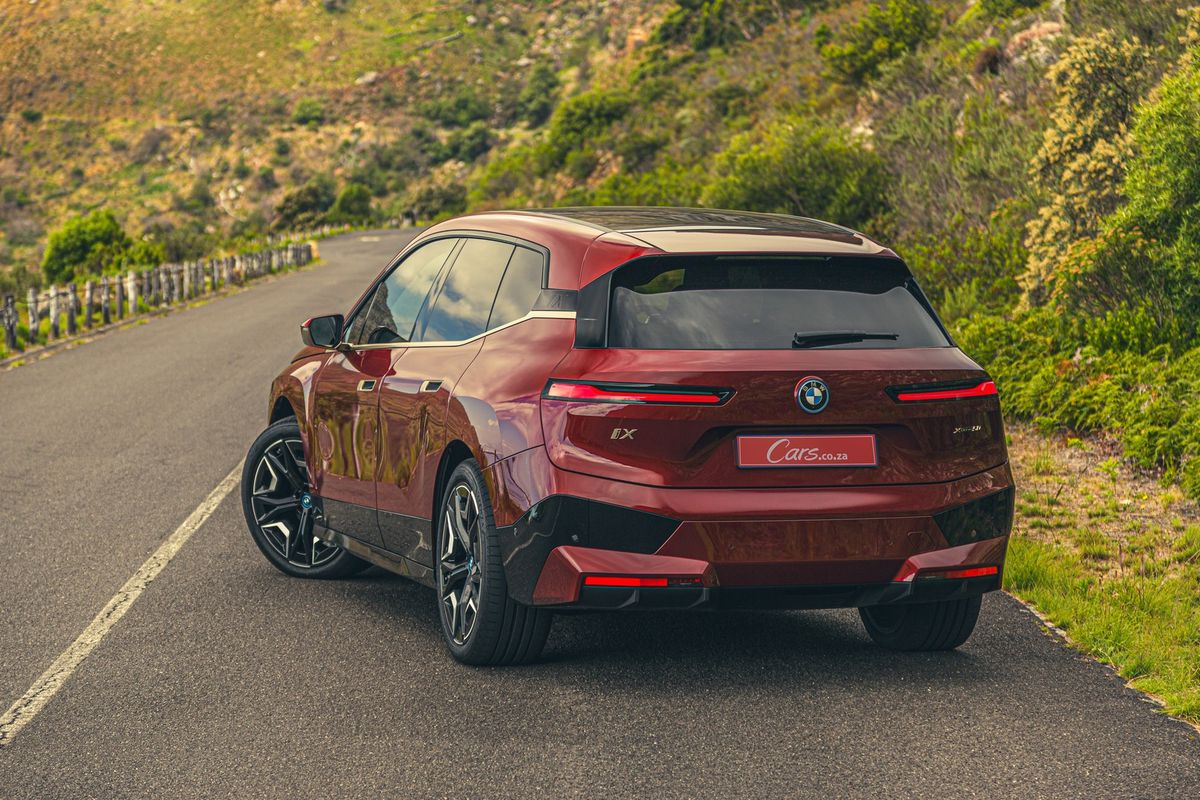
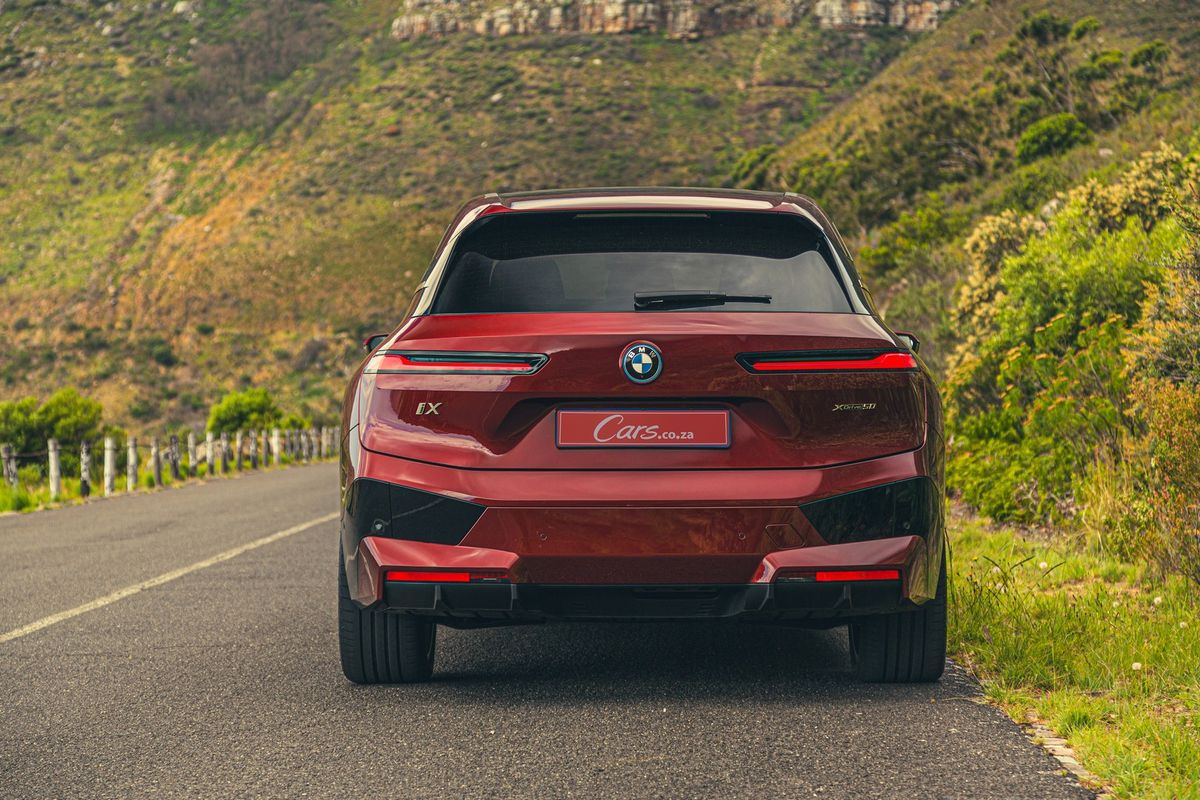
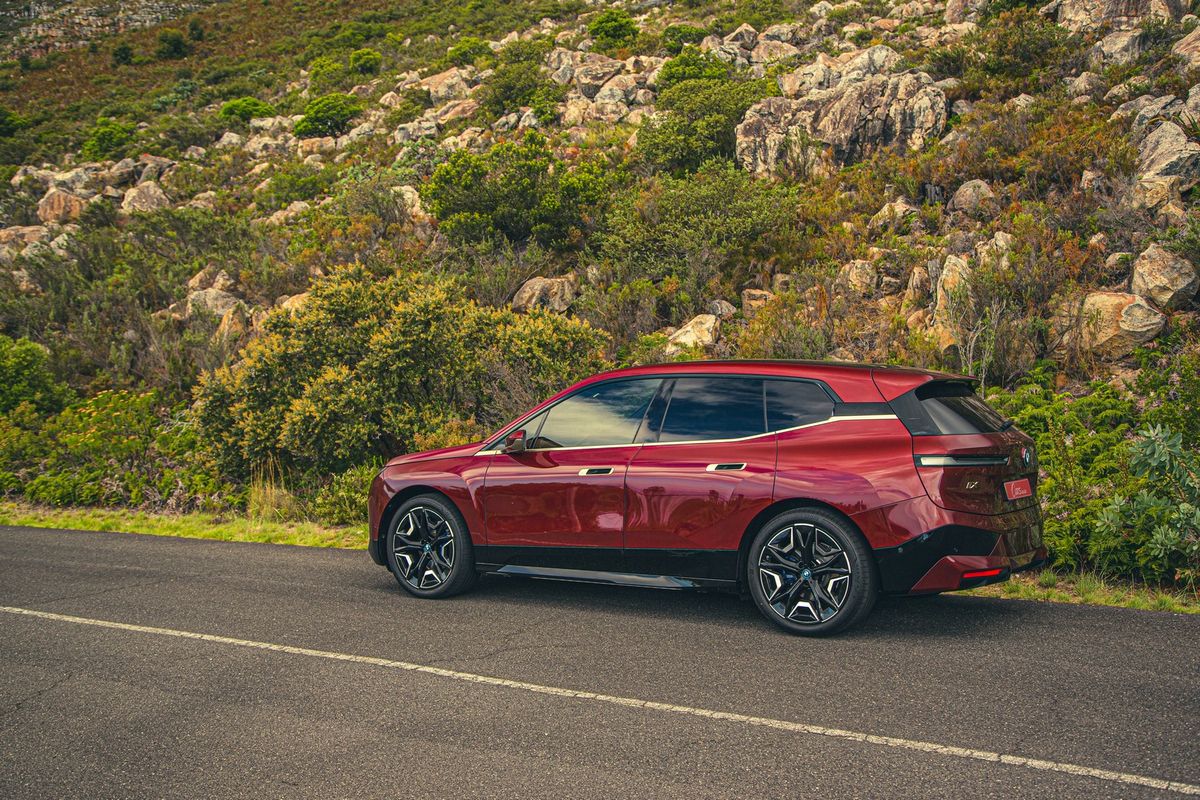
BMW has absolutely nailed it. The iX’s proportions are bang on and its rear 3-quarter view is especially striking. Sure, the double-kidney grille is perhaps comically oversized, but it grew on me. Suffice to say, the iX looks like nothing else on the road and will, I suspect, become an “it” car in the next few months… Other manufacturers may have to play catch up in terms of drawing attention to their BEVs.
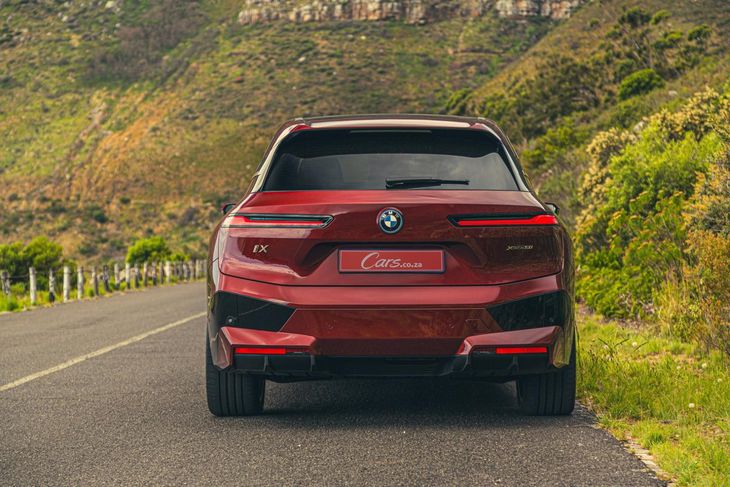
The tailgate may seem a little small compared with the rest of the bodywork, but it provides access to a usefully-sized load bay.
iX xDrive50 vs the X5
The iX50 has a peak power output and claimed performance figures that are comparable with those of high-end V8-powered premium SUVs. With 385 kW and 765 Nm of torque, and a claimed 0-100-kph time of 4.6 sec, the flagship iX compares favourably with its X5 stablemate, the twin-turbo 4.4-litre V8-powered M50i. The latter offers 390 kW and 750 Nm of torque, with a 0-100 time of 4.3 seconds.
Interestingly, the current list price of a BMW X5 M50i is R1 873 000, which is just over R300 000 less than the iX xDrive50. However, the iX is specced, as standard, to the brim with features for which you would have to fork out extra dough in the X5, including, interestingly, a tow bar.
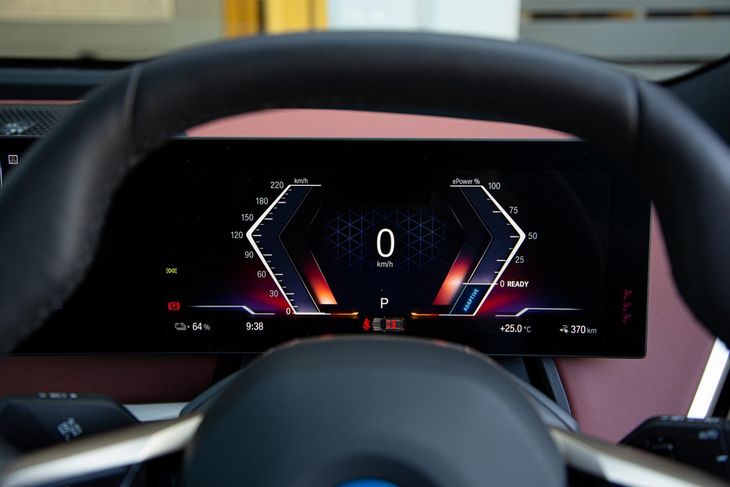
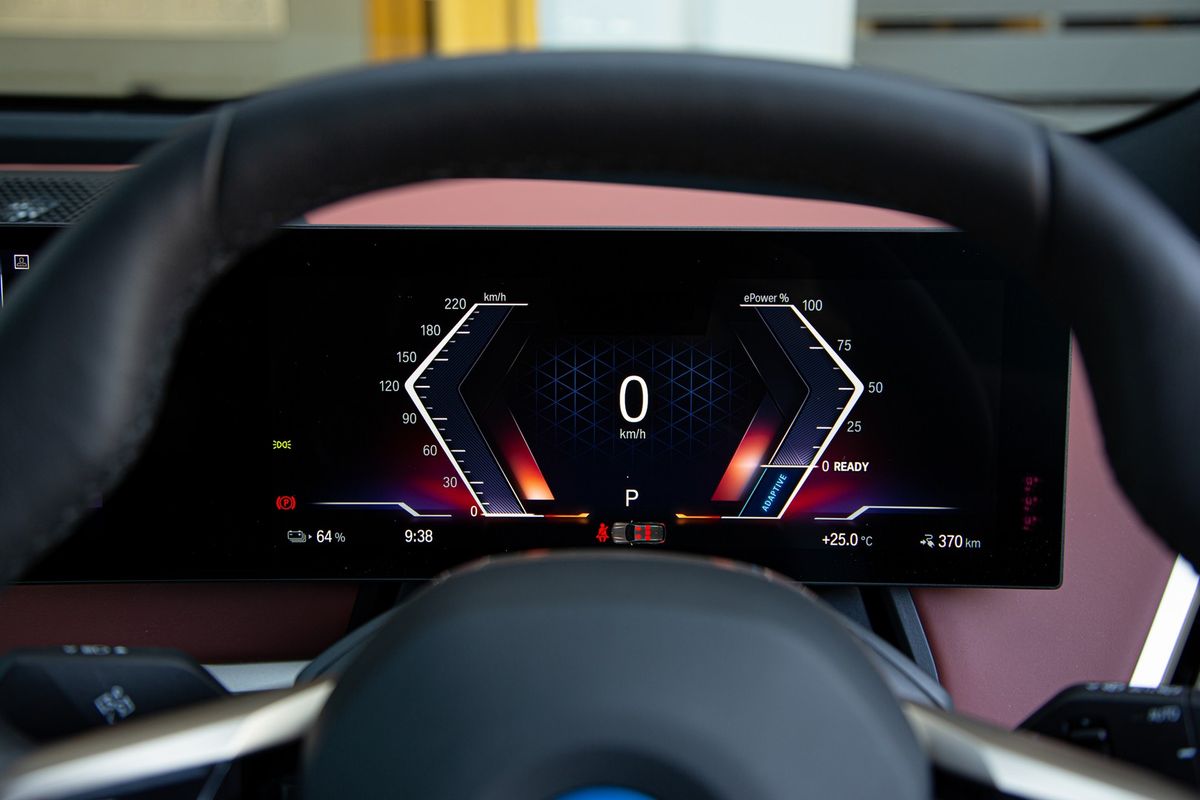
Like so many of the newest luxury cars, the iX does not have a cowled instrument cluster, but a rectangular digital panel.
But, by the time you add adaptive LED Laserlight headlights, a dimmable panoramic roof, reverse- and surround-view cameras, adaptive cruise control, air suspension, lane-keep assist, electric lumbar support and massage seats and memory seat adjustment, you may find your X5 M50i costs as much as the iX xDrive50.
This surely is the moment when BMW EVs and ICE cars start to overlap in terms of pricing, which is very interesting in and of itself.
What is the BMW iX like to drive?
In some ways, driving the iX is an entirely novel experience, and in some ways, it isn’t. Luxury car manufacturers have (for a long time now) been able to largely dial out the sounds and vibrations of an internal combustion engine. While the iX is eerily quiet while it transports you to your chosen destination, its driving experience is not too dissimilar to that of, say, a Bentley or a Rolls-Royce
However, it’s the combination of zero vibration from the drivetrain, almost no noise from the motors, instantaneous mountains of torque (accessible via the merest flex of your right foot), cloud-like ride quality (courtesy of the air suspension) and significant cabin insulation that makes driving the iX one of the most serene motoring experiences you are likely to ever have.
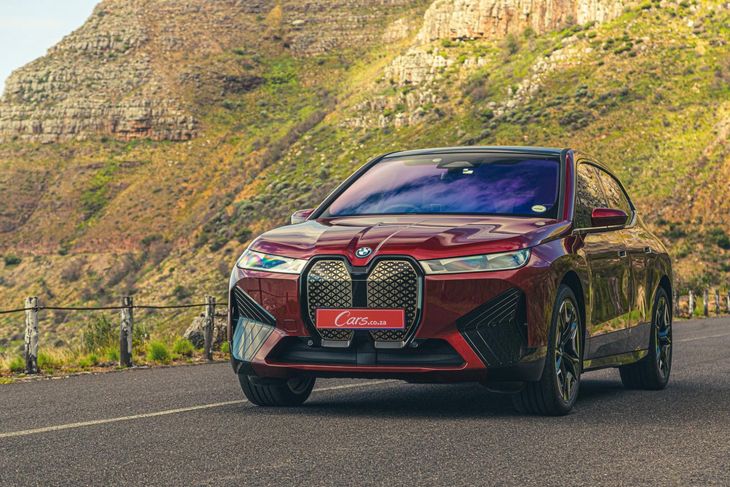
Despite offering punchy, instant acceleration, the iX’s general on-road demeanour is stately, unflustered and serene.
In fact, I found the iX to be unsettlingly quiet, and I think BMW’s focus groups did too, because the car offers IconicSounds – a synthetic soundtrack (BMW co-developed it with Oscar-winning film score composer Hans Zimmer) that plays through the audio system and rises and falls with throttle application and speed.
It sounds gimmicky, but I kept it switched on 95% of the time; I found it comforting, which is perhaps a psychological hangover from my 20 years of driving (mostly) ICE cars.
I found the BMW’s adaptive air-suspension system to be particularly clever and, combined with its very low centre of gravity, the iX feels just about dynamic enough to justify the blue-and-white roundel on its bluff front end. The air-sprung suspension dials out the effects of rough road surfaces with aplomb, but also reacts sufficiently quickly to minimise body roll under hard cornering – and does so seamlessly.
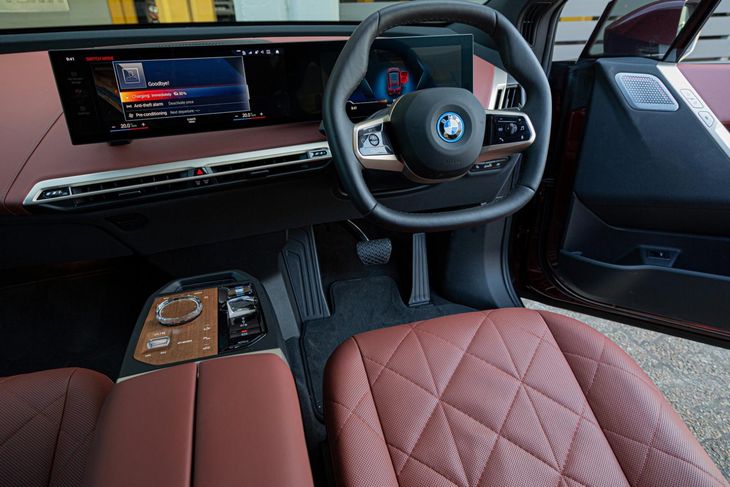
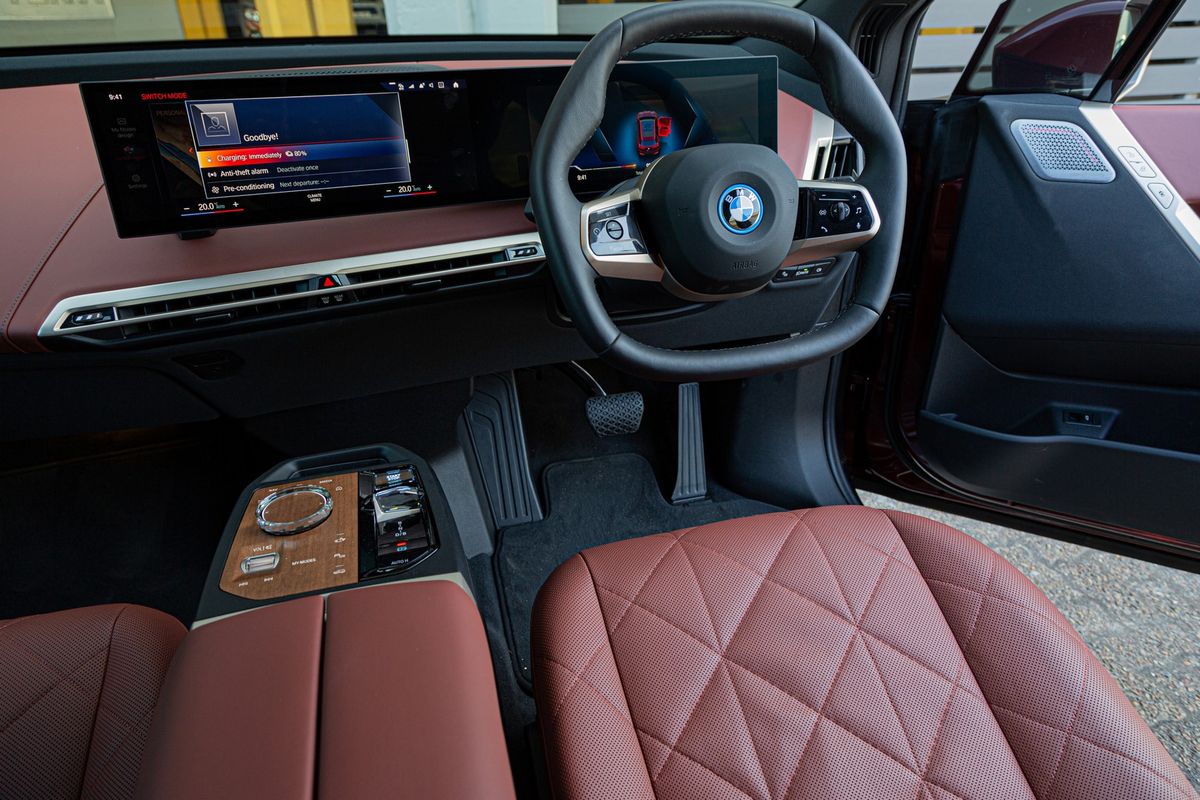
Minimalism is at the order of the day in the BMW’s spacious, plush and tech-laden cabin.
A few people asked me, does the iX handle like a BMW? To which my answer was: “Does it need to?” I doubt that if someone bought an iX, they would really expect it to deliver a driving experience akin to that of a BMW M4. After all, this is a large, luxurious, family-oriented SUV – and it behaves like one, albeit with stonking straight-line performance.
While you can steer the iX enthusiastically through a series of serpentine bends, you will soon start to feel the weight of the vehicle and the tyres begin to chirp in protest. Additionally, under heavy braking, you are again reminded of that 2.6-tonne kerb weight, although the braking system is very much up to the task of arresting progress.
It’s certainly not what I would describe as a “chuckable vehicle”, but as a package, it’s certainly not boring to drive.
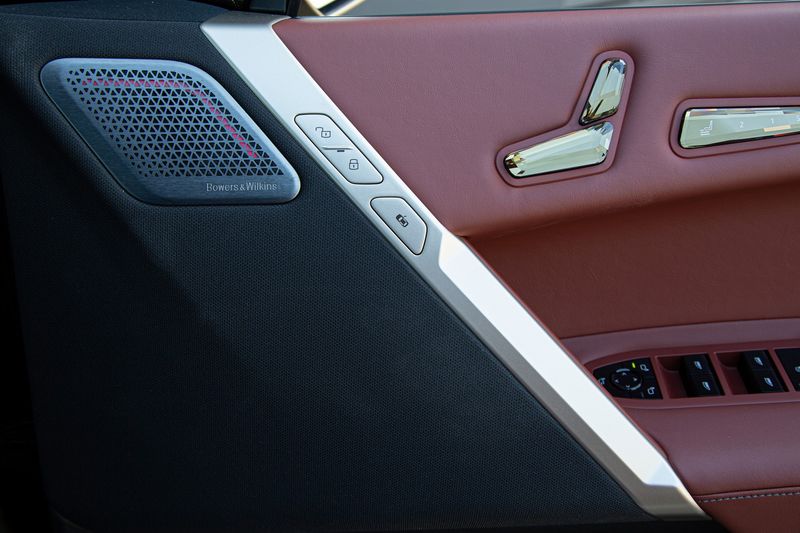
The interior
The interior design is one of the real highlights of the iX. Simply put, the iX’s interior is utterly unique in the motoring world right now. The cabin and particularly the dashboard and driver controls look like those of a concept car that escaped the show stand, and all of those elements successfully combine to make you feel like you are driving something special.
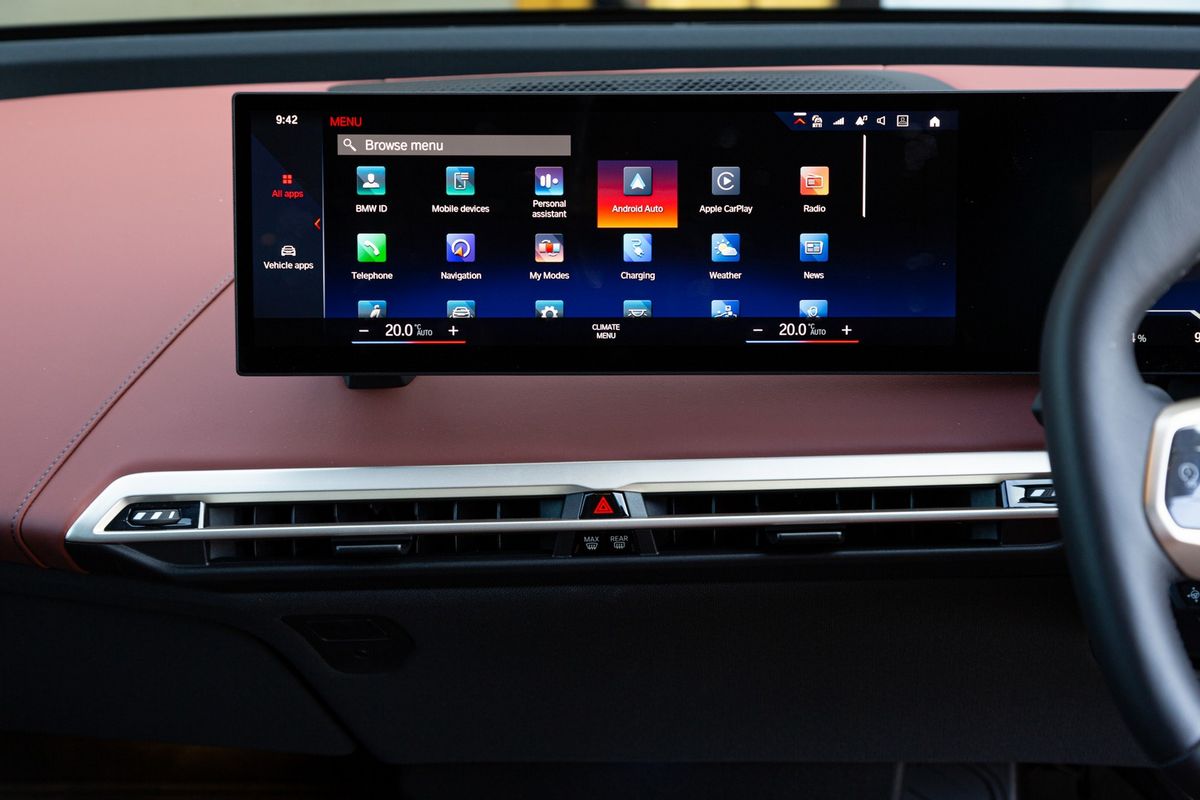
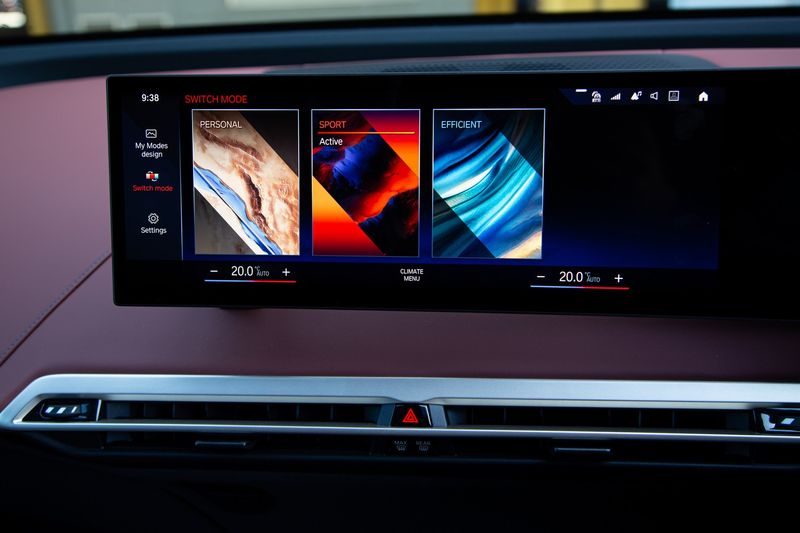
Floating over the minimalist, leather-covered dash is a giant, curved touchscreen that houses the digital instrument panel and the extensive infotainment system. It is one of the more arresting aspects of the interior, and yet BMW has also managed to make the digital interface feel intuitive. I found the touchscreen to be at a very comfortable distance – I rarely made use of the beautiful iDrive jog wheel.
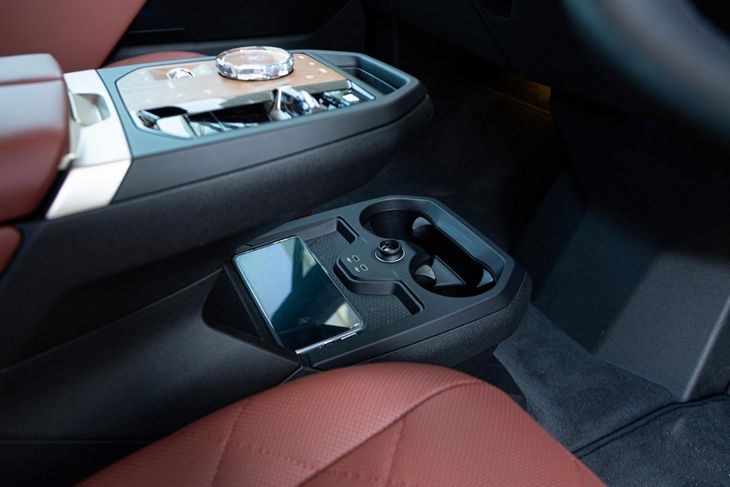
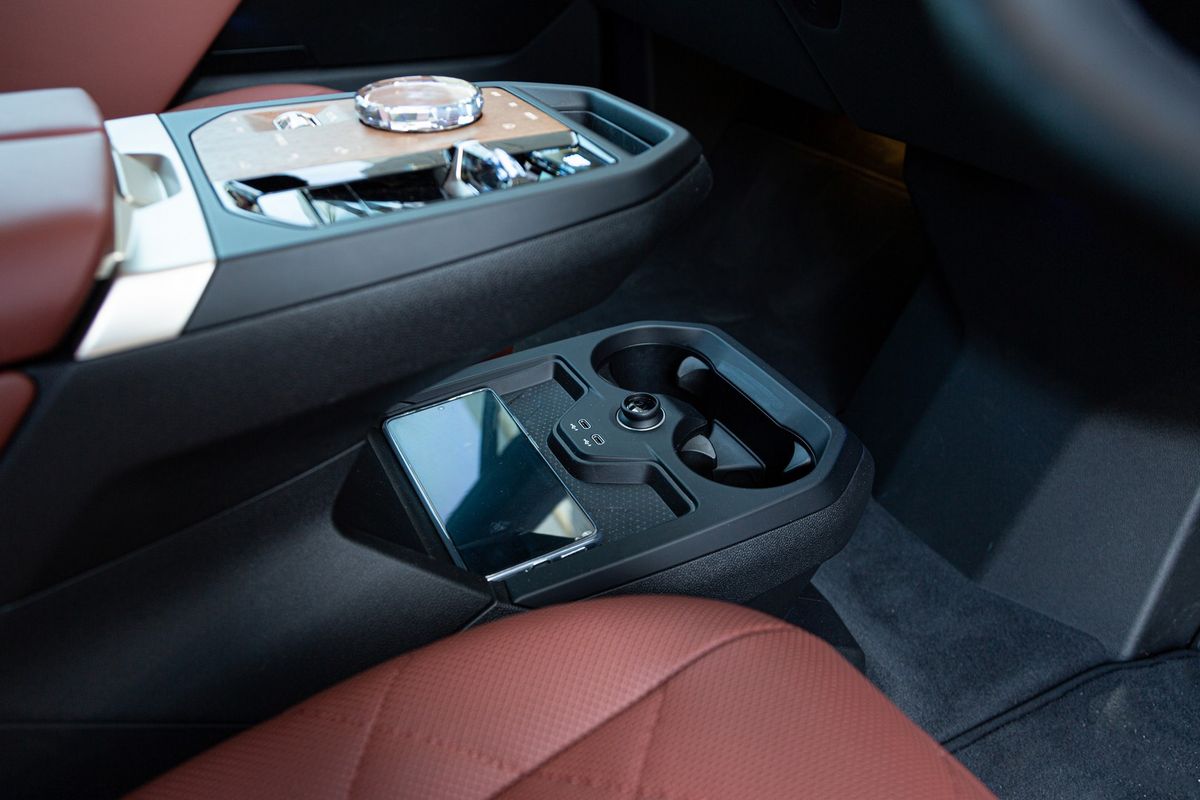
The absence of a transmission tunnel frees up plenty of space between the front seats of the iX.
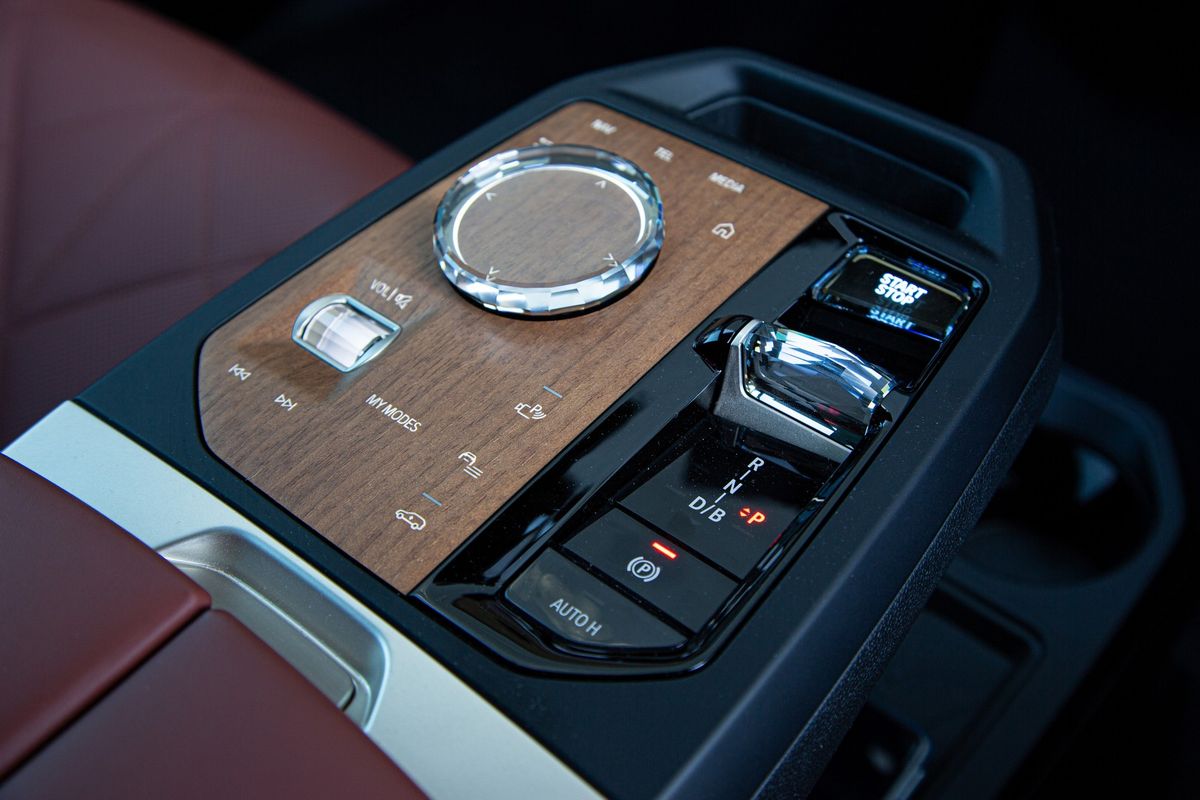
That crystal jog wheel is set on top of a panel of real open-pore wood, which has embedded buttons. The drive selector is another piece of jewellery alongside the jog wheel, which all floats over a wireless charging pad and two drinks holders. Thanks to the electric drivetrain, nothing separates the legs and feet of the driver and front passenger, which makes the front of the cabin feel particularly roomy.
The seats are a real highlight. There is almost no pretence of sportiness here; BMW has shot for sheer comfort and achieved it. Finished in ultra-plush, quilted leather, the seats are fantastically comfortable.
The entire roof is a one-piece panoramic piece of glass, which, at the touch of a button, turns from clear to opaque; a neat party trick that impresses kids… and big kids, such as yours truly.
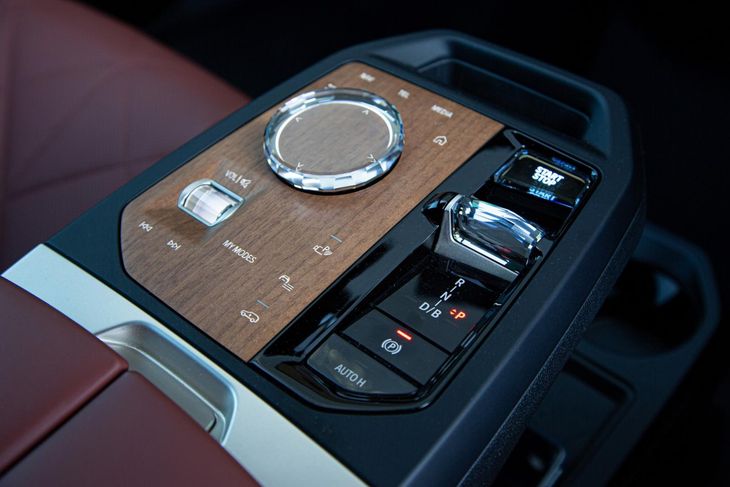
The open-pore wood trim on the centre console is a thing of beauty, note the subtle buttons embedded in the panel.
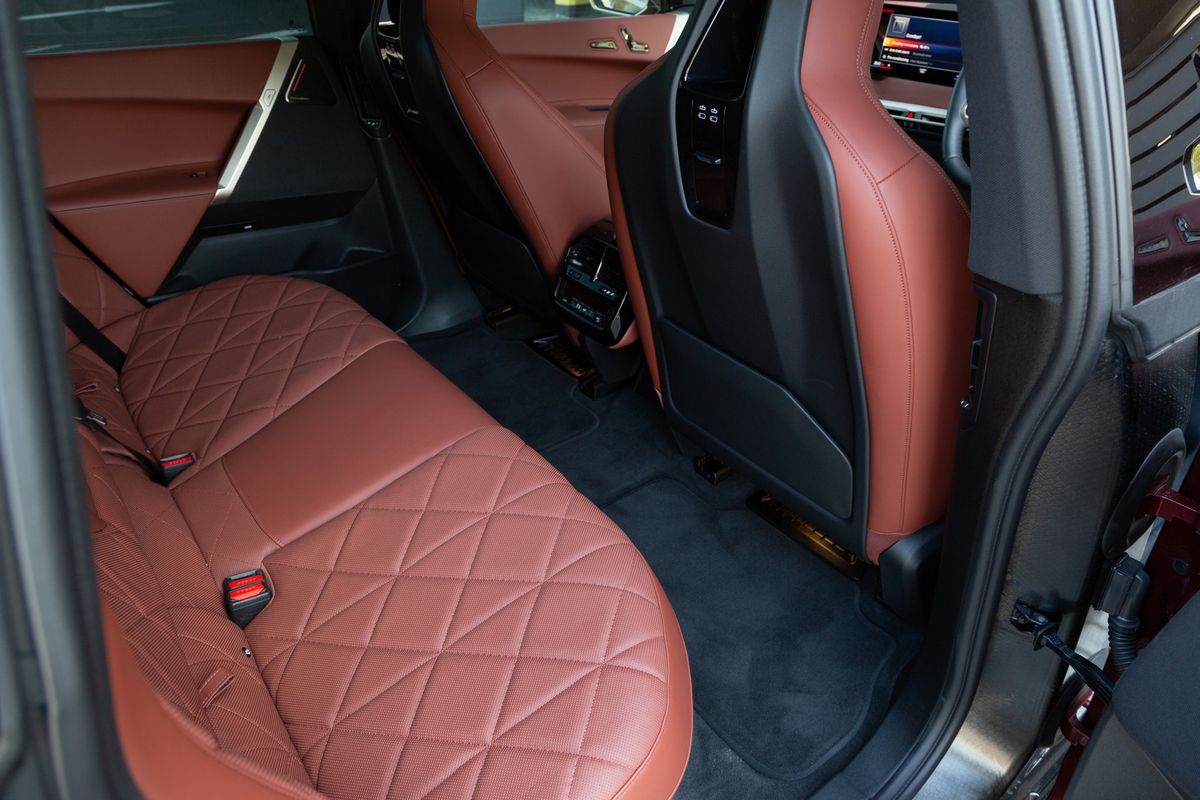
Rear passengers are well catered for with an independent climate control panel (air in funnelling through half of dozen air vents), two USB ports built into the back of the front seats and drinks holders in the centre armrest. Rear cabin space is excellent and again, thanks to that flat floor, feels particularly roomy. ISOfix child seat mounts are hidden under a fold of leather on either side of the bench.
The load bay is relatively capacious. BMW quotes a luggage capacity of 500 litres, which is 20% less than in the BMW X5, a touch less than in the Audi e-tron, but notably larger than in the Jaguar I-Pace.
Under the boot floor is a deep recess, which is perfect for storing the charging cable. The iX is not fitted with run-flats and does not have a spare wheel, but does have a puncture repair kit in the load bay.
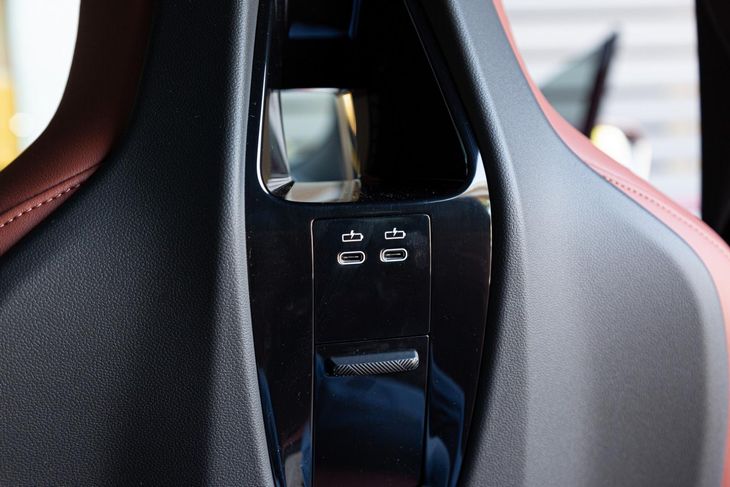
A pair of USB-C charging points are integrated into the backrest of each of the front seats.
BMW iX vs Audi etron S Sportback
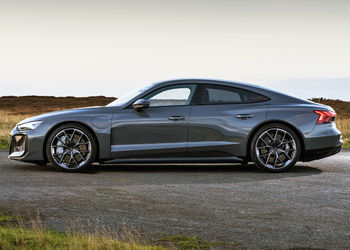
I have been fortunate to sample several electric cars of late, one of which was the Audi e-tron S Sportback. I was genuinely impressed by that car, but, having sampled the iX, the Audi, unfortunately, comes off second best, particularly in one key area: range.
The Audi’s list price is R2 425 000, a good R250 000 more than the iX xDrive50. But its range pales in comparison to that offered by the BMW. On the WLTP test cycle, the Audi offers a maximum range of 380 km, compared to the BMW’s maximum of 630 km.
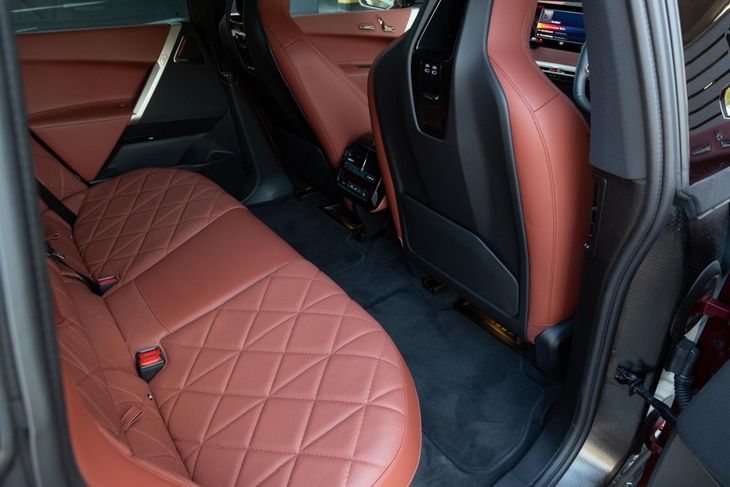
By virtue of its dedicated battery-electric platform, the iX has a flat floor and affords rear occupants plenty of legroom.
The stroke of genius with the BMW is the CFRP (carbon fibre reinforced plastic) chassis. This has allowed the BMW engineers to fit a significantly larger battery pack without incurring a devastating weight penalty. At 96 kWh, the Audi has a smaller battery than the 111-kWh BMW, yet the Audi weighs more.
In terms of power outputs and performance, the Audi offers slightly less power – but significantly more torque – than the BMW, thanks to its 3 motor drivetrain. However, in terms of acceleration at least, the two are only separated by 0.1 of a second from 0-100 kph, with the Audi claiming a figure of 4.5 sec and the BMW 4.6 sec.
However, in EV land, it’s not just about the size of the battery, but how you use it, and the BMW is significantly more efficient than the Audi too.
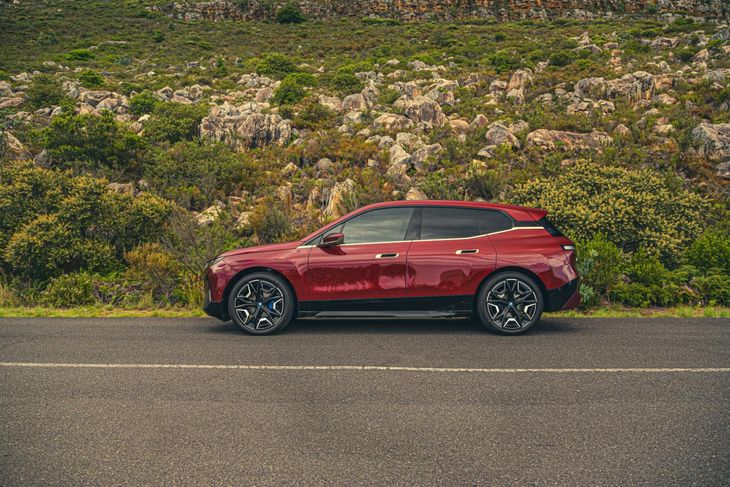
The iX xDrive50 costs R250k less than its Audi e-tron rival, but offers a far superior range from a full state of charge.
BMW ix50 efficiency, energy consumption and running costs vs ICE cars
Indeed, the BMW xDrive50 offers stand-out energy efficiency. The company claims an average of 23 kWh/100 km, but I regularly saw readings of 21 kWh/100 km, especially in urban driving.
The best way to understand the running costs of an electric car versus a traditionally powered (ICE) vehicle is by calculating the relative costs of travelling 100 km.
In ICE vehicles, this is litres of fuel per 100 km. In the case of the X5 mentioned above, BMW claims an average of 11.5L/100 km, which I think we can safely assume is conservative, but let’s run with official figures for the sake of this comparison.
At 23 kWh/100 km, to arrive at the price per 100 km, one multiplies 23 by the price of one unit of electricity. At the moment, in Cape Town, home-use electricity per kWh is R2.30 and 23 times R2.30 is R52.90. To travel 100 km in the X5 M50i, one requires 11.5 litres of petrol, which, at the time of writing, was R19.61 per litre, totalling R225.50.
And so, in a comparatively sized and powered car that offers a similar level of performance, we can see that the EV is dramatically cheaper to run. This is one of the factors that contribute to EVs being superb (what I like to call) “Monday-to-Friday” cars.
What it’s like to drive an electric car in SA
I was very fortunate to live with the iX for just over 4 weeks. In those 4 weeks, I only charged it twice, which was a testament to the impressive range offered by the vehicle. But even so, my number one piece of advice about living with an electric car is this: you have to be able to charge it at home.
Running around looking for chargers can become quite tiresome and inconvenient. All you need at home, as a bare minimum, is a normal plug point within about 3 metres of where you usually park your car, as you cannot plug the charger into an extension cable (for risk of melting the cable) – it has to be plugged straight into the wall.
But I would highly advise having a BMW wall box or standard EV charger (available from Gridcars) installed in your home. Assuming you have single-phase power, you will then be able to charge your car at 11 kW per hour, compared with the 3 kW per hour offered by a standard wall plug. This will result in 100 km of range added to the battery in 1h41m, or a full charge from 0% to full in around 10 hours.
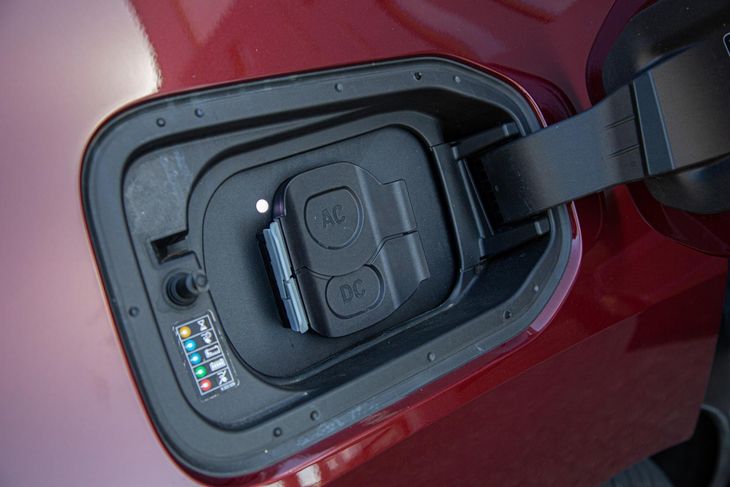
When plugged into a 50-kWh fast-charger, the iX’s battery can be charged up from 14% to 80% in an hour and a half.
Ideally, you want to treat your EV like a smartphone. Arrive home, plug it in, and wake up with a full battery.
I did, however, make use of the (free for BMW owners) 50-kWh fast charger at the SMG BMW dealership in Century City and found this to be quite convenient. I popped into Canal Walk for lunch and some shopping, and the fast charger charged the car from 14% to 80% in under 90 minutes. At 80% battery, the car offers around 430 km of range, which was sufficient for my needs. BMW recommends charging the battery to 80% as often as possible to prolong the life of the battery.
And, of course, Eskom’s ongoing woes and the bane of loadshedding remain concerns for many South Africans. However, I don’t see how it would be a problem for EV owners. As long as you can charge at home overnight, when there is plenty of spare capacity in the grid (and a lower risk of loadshedding), motorists can almost completely nullify the complications posed by bouts of power outages.
BMW iX launch offer, vehicle and battery warranty
The iX range is currently being offered with 1-year comprehensive insurance and a wall box free of charge.
The standard vehicle warranty is 5-year/100 000 km, which can be extended to 7 years or 200 000 km.
There is a separate 8-year/100 000 km warranty on the battery.
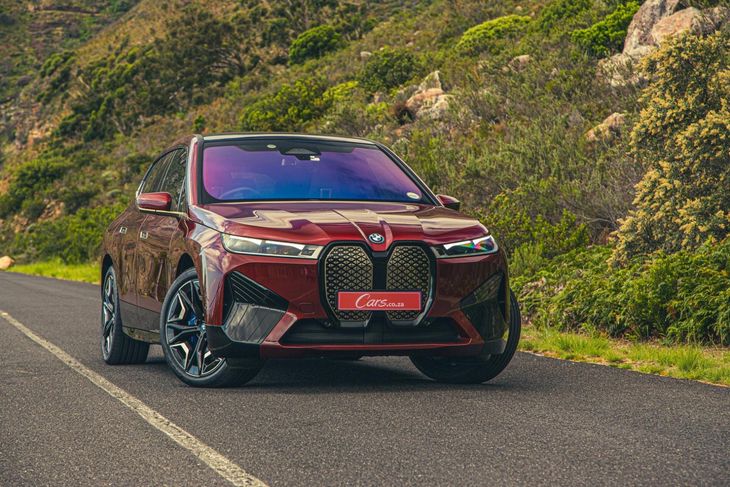
The iX is certainly not the first BEV to be produced by a mainstream car brand, but it is arguably the best in its segment.
Verdict
I’ve driven a variety of electric cars back-to-back recently – the Tesla Model X Performance, the Audi e-tron S Sportback and lastly, the BMW iX, and the experiences have been particularly illuminating.
Firstly, BMW has arrived very late to the party. The Tesla Model X went on sale in 2014 and we sampled the Audi e-tron (albeit in Dubai) as long ago as 2018. Even more curious is the fact that BMW launched the i3 and i8 in 2015, and then didn’t launch another EV until the iX, almost 7 years later.
However, I do get the feeling that BMW deliberately took its time with this one, and it shows. This is quite simply one of the best cars I have driven. Not just one of the best EVs – all cars, full stop. It just does everything brilliantly. I cannot fault it.
In the ways that matter most, it is a better car than the Tesla Model X. While the Tesla is an impressive tech-fest, in the “old-fashioned” ways in which we measure cars – ride comfort, refinement, road noise at speed, build quality, the iX is remarkably better. Overall, it is a better car than the Model X and critically, the BMW offers more range at a lower purchase price.
For me, the iX is a tipping point. Electric vehicles are now as good as ICE vehicles, if not better. And it seems South Africans are beginning to agree. BMW South Africa quickly sold its first shipment of iX units, and more are on the way.
It pains me that currently in South Africa, electric vehicles remain playthings of the wealthy. R2.2 million is simply a staggering amount of money for 99% of South Africans to spend on a motor vehicle. Where are the cheap Hondas, the cheap Renaults, the cheap MGs?
However, I am confident that EVs will go the way of the smartphone. They will become cheaper as manufacturers reach economies of scale and as battery technology improves.
If the iX is a rolling showcase of what the electric car is today, we are in for a very exciting future.
Related content:
New Electric Cars for SA in 2022
Mercedes-Benz SA lays out 2022 EV Strategy
Audi e-tron S Sportback Video Review